The right preparation can turn an interview into an opportunity to showcase your expertise. This guide to Straw Bale Transportation Regulations interview questions is your ultimate resource, providing key insights and tips to help you ace your responses and stand out as a top candidate.
Questions Asked in Straw Bale Transportation Regulations Interview
Q 1. What are the key federal and state regulations governing straw bale transportation?
Federal and state regulations governing straw bale transportation primarily focus on safety and compliance with weight, dimension, and hazardous materials handling. At the federal level, the Department of Transportation (DOT) sets overarching standards for commercial vehicle operations, including load securement and vehicle maintenance. These regulations often dictate aspects like braking systems, tire condition, and driver qualifications. Specific regulations around agricultural commodities like straw bales might be found within these broader regulations, focusing on weight and dimension limitations on highways and interstates.
State regulations often complement federal rules, adding specific requirements related to overweight/overdimensional permits, transportation on specific roadways, and environmental concerns. For instance, a state might have restrictions on transporting large volumes of straw bales during certain times of the year or on particular roads due to potential impacts on local infrastructure or wildlife.
Think of it like this: the federal government sets the general rules of the road, while states add specific local rules based on their unique circumstances.
Q 2. Explain the process of obtaining necessary permits for straw bale transport.
Obtaining permits for straw bale transport depends on whether your shipment exceeds the standard weight and dimension limits established by federal and state regulations. The process typically starts with determining the weight and dimensions of your straw bale shipment. You then contact the relevant state’s Department of Transportation (DOT) or a similar agency. They’ll assess your shipment and decide if permits are needed.
If overweight or overdimensional permits are required, you will likely need to submit an application, possibly including detailed information about your load, route, and vehicle specifications. There might be associated fees. Once approved, you will receive the necessary permit(s), which must be carried during transit and presented to law enforcement upon request.
For example, transporting a large shipment of straw bales on a route with low bridges would require an overdimensional permit, ensuring the safe passage of your load. The process is somewhat similar across states but always verify the specifics with the responsible authority in the state where the transport will occur.
Q 3. How do you ensure compliance with weight limits and dimensional restrictions for straw bale shipments?
Ensuring compliance with weight and dimensional restrictions is crucial for safe and legal straw bale transport. This involves careful planning and accurate measurements. First, weigh your bales individually and the entire load to confirm they’re within the legal limits for the vehicle and route. You can utilize commercial scales for this purpose. Next, measure the dimensions (length, width, and height) of the loaded vehicle to ensure they don’t exceed allowed limits. These measurements should also factor in any overhangs.
To avoid issues, it’s best practice to obtain official weight and dimension certifications for your load before transport. Always confirm that the route you’ve chosen is suitable for the size and weight of your shipment. If the load exceeds the limits, obtain the necessary permits as explained in the previous answer. Improperly documented loads can lead to costly fines and delays.
Imagine trying to navigate a narrow city street in a large truck laden with oversized cargo without the necessary permits – it’s a recipe for disaster!
Q 4. Describe your experience with hazardous materials regulations as they pertain to straw bale transport (e.g., pesticide residue).
Hazardous materials regulations related to straw bale transport are primarily concerned with potential pesticide residue. Straw bales may have been grown in fields treated with pesticides. If these pesticides exceed permitted levels, the bales would be considered hazardous materials, requiring special handling and transportation. This would necessitate adherence to the DOT’s Hazardous Materials Regulations (HMR).
Before transporting straw bales, it’s crucial to know the history of the bales. Check for any documentation regarding pesticide application on the fields where the straw was grown. If pesticide use is indicated, testing might be required to confirm if residue levels are above the permitted limits. Exceeding these limits necessitates special permits, labeling, and transportation procedures. Failure to comply could result in severe penalties.
One real-world example involved a farmer who unknowingly transported straw bales treated with an excessive amount of pesticide. This resulted in delays, fines, and the need for specialized disposal of the contaminated bales. Proper documentation and proactive testing are vital to avoid such scenarios.
Q 5. What are the different types of vehicles suitable for transporting straw bales and their limitations?
Various vehicles are suitable for transporting straw bales, each with limitations. Flatbed trailers are commonly used, offering ample space but requiring careful load securing. They’re ideal for large shipments but vulnerable to weather conditions. Semi-trailers are another option, providing enclosed or open spaces, offering protection from the elements. However, their maneuverability might be limited compared to smaller trucks.
Smaller trucks or vans may be sufficient for smaller quantities, offering better maneuverability but having limited capacity. The choice depends on the volume of straw bales, distance of transport, weather conditions, and road accessibility. It’s crucial to match the vehicle’s load capacity and dimensions with the bale shipment to ensure safe and efficient transport.
Consider a scenario where a farmer needs to transport a small amount of straw to a nearby farm. A pickup truck with a trailer would be suitable. However, for transporting a large volume to a distant location, a semi-trailer would be more practical and efficient.
Q 6. How do you manage potential risks associated with unsecured loads during transportation?
Unsecured loads are a major risk during straw bale transportation, posing dangers to both the driver and other road users. Proper load securing is paramount. This involves using appropriate tie-down straps or nets, strategically positioned to prevent shifting during transit. The number and strength of the securing devices should correspond to the weight and size of the load, and also account for the type of vehicle.
Regular inspections are essential, particularly before commencing the journey and at regular intervals during transport. Ensure all securing devices are taut and correctly fastened. Oversized loads require additional considerations like proper weight distribution to avoid swaying or tipping. Compliance with DOT and state regulations regarding load securement practices is mandatory. Failure to do so leads to increased risk of accidents and hefty fines.
Imagine a scenario where a load of straw bales shifts during transportation, causing an accident. The consequences can range from minor damage to severe injuries or fatalities. This highlights the critical need for meticulously securing all loads.
Q 7. What are your strategies for preventing damage to straw bales during transit?
Preventing damage to straw bales during transit requires a multi-faceted approach. Proper stacking is vital. Bales should be stacked evenly and securely to prevent shifting or collapse. Avoid exceeding the maximum allowable stack height for the type of vehicle used. Using appropriate weather protection, such as tarps or coverings, shields the bales from rain and harsh weather conditions that can lead to deterioration or mold growth.
Careful handling during loading and unloading is also key. Avoid dropping or throwing bales; use mechanical loading equipment whenever possible. Properly maintaining the transporting vehicle to ensure a smooth ride also plays a role in minimizing damage. Regular inspection of the load during transit helps to detect potential issues early on and take corrective measures before the situation worsens.
Consider this: Imagine a long-distance transport of straw bales in a rainy season. Using weatherproof coverings protects the bales from water damage. Regular checks during the journey enable swift action to rectify any potential problems with the load securing and prevent damage.
Q 8. How do you ensure the proper documentation and tracking of straw bale shipments?
Proper documentation and tracking of straw bale shipments are crucial for ensuring efficient delivery and minimizing potential issues. This begins with a well-defined Bill of Lading (BOL) that includes details like the origin and destination, quantity of bales, weight, dimensions, and the consignee’s information. We utilize a robust system combining physical documentation with digital tracking. Each shipment gets a unique identification number, scanned at every stage of the journey. This data feeds into a centralized database allowing real-time monitoring. For instance, if a truck leaves the farm, the BOL is scanned and uploaded; then, upon arrival at the distribution center, another scan updates its status. We even use GPS tracking on our trucks for added visibility. This comprehensive approach ensures accountability and allows us to promptly address any deviations from the planned schedule.
Think of it like tracking a package online, but on a much larger scale. The digital trail provides a clear audit trail for clients, insurance providers, and regulatory bodies.
Q 9. Explain your understanding of insurance requirements for straw bale transportation.
Insurance is paramount in straw bale transportation due to potential risks like damage during transit, theft, or unforeseen events. The type and extent of coverage depend on factors such as the value of the shipment, the mode of transport, and the distance covered. We typically secure cargo insurance that covers loss or damage to the straw bales. This policy also often includes liability coverage, protecting us against claims arising from accidents or incidents caused by our operations. We work with specialized insurance brokers familiar with agricultural transport, ensuring we have the right policy that matches our specific needs and risk profile. The cost of insurance is factored into our pricing structure to ensure a safety net for both us and our clients.
Imagine the devastating impact of a storm damaging a truckload of straw bales – the insurance covers the financial loss, allowing us to continue operations without significant setbacks.
Q 10. Describe your experience with different modes of transport (truck, rail, etc.) for straw bales.
Experience with diverse modes of transport is crucial for optimizing efficiency and cost-effectiveness. Trucking is the most common method for shorter distances, offering flexibility and direct delivery. We leverage partnerships with reputable trucking companies, selecting carriers based on their safety records and insurance policies. For longer distances, rail transport becomes a more economically viable option, particularly for large-volume shipments. We’ve successfully coordinated rail transport, requiring careful planning for loading, unloading, and efficient transfer between rail and truck terminals. In certain cases, where proximity to waterways is advantageous, barge transportation can be used. Each mode presents its own set of logistical challenges; however, understanding these nuances allows us to tailor our approach to each situation, maximizing efficiency and minimizing transportation costs.
For example, a large order going across the country might be shipped primarily by rail, with trucks providing ‘last mile’ delivery to the final destination.
Q 11. How do you handle situations involving accidents or incidents during straw bale transportation?
In case of accidents or incidents, our immediate priority is safety. We have detailed protocols that kick in immediately. First responders are contacted, followed by a thorough assessment of the damage and injuries. We then begin documentation, capturing details like time, location, involved parties, and witness statements. We take photographs and videos of the scene, recording the extent of damage to the bales and the transport vehicle. This documentation is vital for insurance claims and any subsequent investigations. We cooperate fully with any regulatory agencies involved and file detailed reports on the incident. Internal reviews are conducted to identify areas for improvement in safety procedures to prevent similar events in the future.
A structured approach during emergencies ensures a safe and transparent resolution, minimizing disruptions and safeguarding our reputation.
Q 12. What are your strategies for addressing potential delays or disruptions in the transportation process?
Delays or disruptions are inherent risks in transportation. To mitigate them, we implement proactive strategies, including diverse route planning and contingency options. We maintain strong relationships with our carriers, allowing for flexibility and quicker problem-solving. Real-time tracking helps us identify potential delays early on and take corrective action, such as rerouting shipments or arranging alternative transportation. Open communication with clients is crucial to keep them informed and manage expectations. We also factor in buffer time in our schedules to account for unforeseen circumstances. Moreover, we diversify our carrier network and transportation methods, minimizing the impact of individual carrier issues on our overall operations.
Imagine a sudden road closure; having a backup route already planned minimizes the impact on our delivery timeline.
Q 13. How do you maintain accurate records of shipments and comply with auditing requirements?
Maintaining accurate records is vital for compliance and operational efficiency. We utilize a dedicated transportation management system (TMS), which provides a centralized repository for all shipment data. This system generates automated reports required for auditing and regulatory compliance, including BOLs, delivery receipts, and GPS tracking data. All documents are securely archived electronically, and physical records are also maintained in accordance with industry standards and regulations. Regular internal audits are conducted to ensure data accuracy and system integrity. We ensure our staff receives regular training on record-keeping procedures and documentation compliance, ensuring everyone understands the importance of accuracy and adherence to regulations.
This comprehensive approach to record-keeping not only streamlines auditing but also provides valuable operational insights.
Q 14. Describe your experience with using transportation management systems (TMS).
Transportation Management Systems (TMS) are integral to our operations. We utilize a cloud-based TMS that integrates with our other business systems, providing a holistic view of our transportation activities. The system handles tasks like shipment planning, routing optimization, carrier selection, tracking, and documentation. This integration streamlines communication between our dispatchers, drivers, and clients, improving efficiency and transparency. The system’s reporting capabilities provide valuable data-driven insights, enabling us to identify areas for improvement in cost, efficiency, and delivery times. Data analytics from the TMS allow us to assess the performance of different carriers, identify potential bottlenecks, and make informed decisions on route optimization and resource allocation. The TMS also allows for better inventory management, integrating with our warehouse systems to provide real-time updates on stock levels and anticipated delivery times.
Think of the TMS as the central nervous system of our transport operations; it coordinates every aspect of the process, from order placement to final delivery.
Q 15. Explain your understanding of chain of custody documentation in straw bale transport.
Chain of custody documentation in straw bale transport is crucial for traceability and liability. It’s like a detailed diary for your bales, recording their journey from farm to final destination. This documentation ensures that we can account for every bale at every stage, preventing loss, theft, or misidentification. It’s essential for quality control, as well as meeting potential buyer requirements.
- Origin: The documentation begins at the farm, detailing the bale’s origin, date of baling, and any relevant quality certifications (e.g., organic certification).
- Transportation: Each stage of transportation is logged, including the transporter’s name, vehicle identification number, and dates/times of pickup and delivery.
- Storage: If the bales are stored temporarily, the location and duration of storage are recorded.
- Recipient: Finally, the delivery to the final recipient is documented, including date, time, and quantity received, along with a signature for confirmation.
For example, if a dispute arises about the quality of a bale, the chain of custody documentation can quickly identify where any issue may have occurred, thus helping in resolving the dispute fairly and efficiently.
Career Expert Tips:
- Ace those interviews! Prepare effectively by reviewing the Top 50 Most Common Interview Questions on ResumeGemini.
- Navigate your job search with confidence! Explore a wide range of Career Tips on ResumeGemini. Learn about common challenges and recommendations to overcome them.
- Craft the perfect resume! Master the Art of Resume Writing with ResumeGemini’s guide. Showcase your unique qualifications and achievements effectively.
- Don’t miss out on holiday savings! Build your dream resume with ResumeGemini’s ATS optimized templates.
Q 16. How do you manage inventory control and tracking for straw bale shipments?
Inventory control and tracking for straw bale shipments relies on a robust system combining physical and digital tools. Think of it as managing a very large and somewhat unruly LEGO castle – you need to know where each brick is at all times!
- Barcoding or RFID tagging: Each bale is identified with a unique barcode or RFID tag, allowing for quick and accurate scanning during loading, transport, and unloading.
- Database Management: A computerized database maintains a real-time inventory, updating its information as the bales move through the supply chain. This allows for easy tracking of location and status.
- Regular Audits: Periodic physical audits compare the physical inventory with the database records, ensuring accuracy and identifying any discrepancies.
- Reporting: The system generates reports on inventory levels, shipment status, and potential issues. This offers crucial visibility into the entire process.
For instance, imagine a large order of straw bales for a construction project. Our system would immediately show the current location of each bale, predicted arrival time, and if there are any delays. This proactive approach prevents disruptions to the project timeline.
Q 17. What are the best practices for optimizing routes and minimizing transportation costs?
Optimizing routes and minimizing transportation costs requires strategic planning and the use of technology. It’s like finding the shortest, most efficient path through a maze to deliver your precious cargo.
- Route Planning Software: We utilize route optimization software that considers factors like distance, traffic conditions, and delivery schedules to determine the most efficient routes.
- Consolidation of Shipments: Combining multiple smaller shipments into larger ones reduces the number of trips and lowers overall transportation costs.
- Negotiation with Carriers: Developing strong relationships with reliable carriers enables us to negotiate favorable rates and secure consistent service.
- Fuel Efficiency: Choosing fuel-efficient vehicles and employing eco-driving techniques helps reduce fuel consumption and environmental impact.
For example, we might consolidate multiple smaller orders headed to the same region into a single shipment, drastically reducing transport costs compared to making numerous individual deliveries.
Q 18. Describe your experience with load planning and securing procedures for straw bales.
Load planning and securing procedures for straw bales are critical for safety and preventing damage during transit. It’s all about creating a stable and secure stack, similar to building a sturdy tower of blocks.
- Proper Stacking: Bales are stacked to ensure stability, distributing weight evenly across the vehicle. This prevents shifting and toppling during transportation.
- Securement: We use appropriate straps, chains, or nets to securely fasten the bales to the vehicle, preventing movement during transit. The type of securing method depends on the type of vehicle and the length of the journey.
- Weight Distribution: The weight of the bales is evenly distributed across the vehicle’s axles to maintain balance and prevent overloading.
- Pre-Trip Inspection: Before each trip, a thorough inspection is conducted to ensure the load is secure and the vehicle is in good working order.
Imagine a long-haul transport across rough terrain. Without proper load planning and securing, the bales could shift, causing damage to the bales themselves and possibly even an accident. Our meticulous process mitigates these risks.
Q 19. How do you ensure the safe unloading and handling of straw bales at the destination?
Safe unloading and handling of straw bales at the destination requires careful planning and execution to prevent accidents and damage. Think of it as gently placing each Lego brick in its designated spot.
- Communication: Clear communication with the receiver about the unloading process is paramount.
- Proper Equipment: Using appropriate equipment such as forklifts or pallet jacks facilitates safe and efficient unloading.
- Controlled Unloading: Bales are unloaded slowly and carefully, avoiding any sudden movements that could cause them to topple or fall.
- Designated Unloading Area: A designated unloading area ensures a smooth and safe process, preventing damage to the bales or surrounding environment.
For example, we coordinate with the receiver to ensure that the unloading area is clear of obstacles and has the necessary equipment readily available. This ensures that the unloading proceeds smoothly and efficiently without any risk of damage or injury.
Q 20. How do you communicate effectively with drivers, shippers, and receivers regarding straw bale transport?
Effective communication is the cornerstone of successful straw bale transport. It’s like conducting a well-orchestrated symphony, with each player (driver, shipper, receiver) knowing their part.
- Real-time Tracking: We use real-time tracking systems to provide updates on shipment location and status to all parties.
- Clear Documentation: Providing clear and concise documentation, including delivery schedules and any potential delays, keeps everyone informed.
- Regular Check-ins: Regular check-ins with drivers and receivers ensure that any issues are addressed promptly.
- Multiple Communication Channels: Employing multiple communication channels (phone, email, text messages) ensures efficient and timely communication.
Imagine a sudden road closure impacting a shipment. Our efficient communication strategy would immediately notify the shipper and receiver, allowing them to adjust their plans accordingly.
Q 21. Explain your understanding of environmental regulations related to straw bale transportation.
Environmental regulations related to straw bale transportation are increasingly important, focusing on minimizing the environmental footprint of the entire process. It’s about being responsible custodians of our planet.
- Emissions Reduction: We aim to reduce emissions by optimizing routes, using fuel-efficient vehicles, and considering alternative fuels.
- Waste Management: Any waste generated during transport, such as packaging materials, is handled responsibly and according to local regulations.
- Spill Prevention and Response: We have contingency plans in place to address any potential spills or accidents involving straw bales, minimizing environmental damage.
- Compliance with Regulations: We strictly adhere to all relevant environmental regulations at the local, regional, and national levels.
For example, we might choose to use a route that minimizes the impact on sensitive ecosystems, or opt for a carrier known for its sustainable practices. We actively seek ways to minimize our environmental impact at every stage.
Q 22. What are the potential environmental hazards associated with straw bale transport and how do you mitigate them?
Environmental hazards during straw bale transport primarily involve dust pollution, potential for bale dispersal leading to roadside debris, and the risk of soil contamination if bales are damaged and their contents spill. Mitigation strategies are crucial. We implement measures like using covered trucks or trailers to minimize dust dispersion. Secure bale stacking and proper load securing techniques prevent shifting and spillage during transit. In addition, we carefully plan routes, avoiding areas prone to high winds, and ensure that any spills are cleaned up immediately and responsibly, adhering to all relevant environmental regulations and possibly employing specialized cleaning equipment if necessary. For example, we might choose slower speeds on windy days or use additional straps to secure loads destined for long-haul transportation. Regular vehicle maintenance, ensuring the trucks are in optimal condition to minimize the risk of accidents, is also a key part of our strategy.
Q 23. Describe your experience with managing logistics in different weather conditions.
Managing logistics in diverse weather conditions is a critical aspect of our operation. Experience has taught us that flexibility is paramount. For instance, during heavy rain, we might delay shipments or utilize specialized tarpaulins to protect the bales from water damage. This prevents mold growth and ensures bale quality is maintained. In snowy conditions, we may need to use alternative routes or employ vehicles with enhanced traction. Planning is key; we constantly monitor weather forecasts and adjust our schedules accordingly. For example, during a particularly harsh winter storm in 2022, we proactively contacted clients to inform them of potential delays and diverted shipments to a covered storage facility to avoid significant damage to the bales. Open communication with clients and drivers throughout unpredictable weather events helps us maintain efficiency and prevent significant delays or losses.
Q 24. How do you handle discrepancies in documentation or cargo upon arrival?
Discrepancies in documentation or cargo are addressed immediately and methodically. Upon arrival, a thorough inspection is conducted comparing the physical count and condition of the bales with the accompanying documentation. Any discrepancies are documented using photographic evidence and a detailed report. We then initiate a process of tracing the shipment back through each stage of the journey to identify where the error occurred. This might involve reviewing loading manifests, waybills, and collaborating with our transportation partners to rectify the situation. For example, a recent discrepancy involving a missing pallet of bales was traced back to a loading error. We worked with the loading team and the transportation provider to adjust compensation and prevent similar incidents in the future. A standardized reporting system ensures consistent documentation and efficient resolution of such issues.
Q 25. What are your methods for investigating and resolving transportation-related complaints?
We handle transportation-related complaints with a customer-centric approach. Each complaint is thoroughly investigated, collecting all relevant information from involved parties, including the client, the driver, and any relevant witnesses. We utilize a structured complaint resolution process that includes a detailed investigation, providing the client with regular updates on our progress. The goal is to identify the root cause of the complaint and implement corrective actions to prevent similar issues from happening again. For example, if a client complains about late delivery, we analyze factors like traffic conditions, weather delays, and logistical hiccups to assess responsibility and determine appropriate solutions, including possible compensation. Fair and prompt resolution is our priority, building trust and maintaining positive relationships with clients.
Q 26. How do you stay updated on changes and updates to straw bale transportation regulations?
Staying updated on regulations is crucial. We subscribe to industry newsletters, attend relevant conferences and workshops, and actively monitor government websites for updates. We also engage with industry associations dedicated to transportation and logistics, utilizing their expertise and insights. Internal training programs ensure our team is well-versed in the latest regulations, minimizing the risk of non-compliance. We also maintain a comprehensive internal database that tracks regulatory changes and their impact on our operations. This ensures that our practices are always current and compliant.
Q 27. Describe your experience with negotiating rates and contracts with transportation providers.
Negotiating rates and contracts involves a strategic approach that balances cost-effectiveness and reliable service. We analyze market rates, compare various transportation providers, and consider factors such as distance, volume, and delivery timelines. Our negotiation strategies involve a transparent approach, clearly outlining our requirements and expectations. We always seek long-term partnerships with reliable providers, fostering collaborative relationships that prioritize mutual benefit. For example, we recently negotiated a long-term contract with a transport company offering competitive rates and a proven track record. This allows us to secure dependable service and predictable costs, enabling better planning and cost management.
Q 28. Explain your understanding of the liability and responsibility for damages during transportation.
Understanding liability and responsibility for damages is critical. We operate under a clear framework defining responsibilities between us, our transportation partners, and our clients. Insurance plays a key role in mitigating risk. We carry comprehensive cargo insurance to cover potential losses or damages during transit. Contracts with transportation providers clearly outline liability clauses, specifying who is responsible for damages arising from negligence or unforeseen circumstances. Thorough documentation, including condition reports before and after transport, serves as evidence in case of disputes. In the event of damage, we work collaboratively with all involved parties to conduct a fair assessment and determine appropriate compensation or repair measures based on the established liability and insurance policies. Our focus is to resolve the issue promptly and fairly, ensuring minimal disruption to our clients.
Key Topics to Learn for Straw Bale Transportation Regulations Interview
- Weight and Dimension Limits: Understanding regulations concerning the maximum weight and dimensions of straw bale shipments, including variations based on vehicle type and transportation mode.
- Securement and Loading Techniques: Mastering the practical application of safe loading and securing methods to prevent shifting or spillage during transport, minimizing risks and ensuring compliance.
- Permitting and Licensing Requirements: Navigating the process of obtaining necessary permits and licenses for transporting straw bales, including regional variations and potential exemptions.
- Environmental Regulations: Familiarity with environmental regulations impacting straw bale transport, such as dust control measures and waste management protocols.
- Route Planning and Optimization: Applying knowledge of route planning to minimize transportation costs while ensuring adherence to all regulations, considering factors like weight restrictions on certain roads.
- Emergency Procedures and Response: Understanding procedures to follow in case of accidents or incidents involving straw bale shipments, including communication protocols and emergency response plans.
- Documentation and Record Keeping: Mastering the correct documentation procedures for transporting straw bales, including waybills, manifests, and inspection reports, and maintaining accurate records.
- Vehicle Maintenance and Inspection: Understanding the necessary vehicle maintenance and inspection requirements to ensure safe and compliant transportation of straw bales.
- Hazard Communication and Safety Protocols: Understanding and applying safety protocols to minimize risks associated with handling and transporting straw bales, including addressing potential fire hazards.
Next Steps
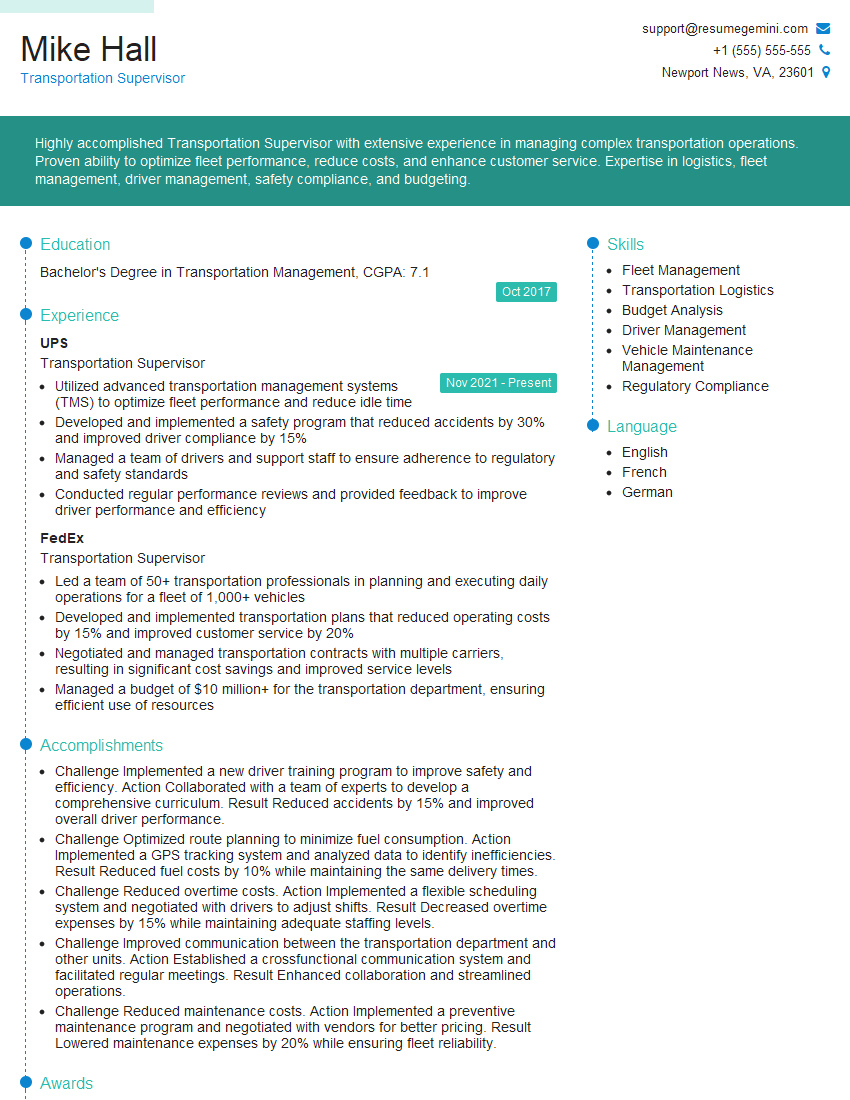
Mastering Straw Bale Transportation Regulations is crucial for career advancement in the agricultural logistics sector. A strong understanding of these regulations demonstrates professionalism, competence, and commitment to safety. To significantly boost your job prospects, invest time in creating an ATS-friendly resume that highlights your relevant skills and experience. ResumeGemini is a trusted resource to help you build a professional and impactful resume. They provide examples of resumes tailored to the Straw Bale Transportation Regulations field to help you craft a winning application. This will significantly improve your chances of securing your dream role.


Explore more articles
Users Rating of Our Blogs
Share Your Experience
We value your feedback! Please rate our content and share your thoughts (optional).
What Readers Say About Our Blog
Very informative content, great job.
good