Unlock your full potential by mastering the most common Sustainability and Environmental Considerations interview questions. This blog offers a deep dive into the critical topics, ensuring you’re not only prepared to answer but to excel. With these insights, you’ll approach your interview with clarity and confidence.
Questions Asked in Sustainability and Environmental Considerations Interview
Q 1. Explain the triple bottom line concept of sustainability.
The triple bottom line (TBL) is a framework that suggests businesses should consider the environmental, social, and economic impacts of their decisions. It moves beyond the traditional focus on solely economic profit to encompass a holistic view of sustainability. Think of it like a three-legged stool – you need all three legs (profit, people, planet) to have a stable and sustainable business.
- Environmental: This considers the ecological footprint of the business, including resource consumption, waste generation, pollution, and greenhouse gas emissions. For example, a company might invest in renewable energy to reduce its carbon footprint.
- Social: This encompasses the impact on employees, customers, communities, and society at large. Fair labor practices, ethical sourcing, and community engagement are key aspects. A company could implement fair trade practices in their supply chain as an example.
- Economic: This focuses on the financial viability and profitability of the business. It includes aspects like revenue generation, cost efficiency, and long-term financial sustainability. A clear example would be investing in energy efficiency measures to reduce operating costs.
TBL is crucial because it encourages businesses to consider the broader consequences of their actions, contributing to a more sustainable and equitable future.
Q 2. Describe your experience with Life Cycle Assessment (LCA).
I have extensive experience conducting Life Cycle Assessments (LCAs). LCAs are a systematic process to evaluate the environmental impacts associated with a product or service throughout its entire life cycle, from raw material extraction to end-of-life disposal. I’ve led numerous LCAs for diverse products, including packaging materials, electronic devices, and food products.
My work typically involves defining the system boundaries, data collection (using databases like ecoinvent), impact assessment using various methods (e.g., ReCiPe, IMPACT 2002+), and interpretation of results to identify environmental hotspots and potential improvement areas. For instance, in an LCA for a coffee cup, we might discover that the manufacturing process has a disproportionately high impact, leading to recommendations for using recycled materials or optimizing manufacturing procedures.
I am proficient in using LCA software such as SimaPro and GaBi, ensuring the accuracy and reliability of our assessments. I also incorporate stakeholder engagement throughout the LCA process to ensure relevant insights and context are incorporated into the findings.
Q 3. What are the key principles of circular economy?
The circular economy is an economic model aiming to eliminate waste and the continual use of resources. Instead of a linear ‘take-make-dispose’ model, it embraces a cyclical approach where materials are kept in use for as long as possible, extracting maximum value and then recovering and regenerating products and materials at the end of each service life.
- Design out waste and pollution: Products are designed from the outset to minimize waste and pollution throughout their lifecycle.
- Keep products and materials in use: This involves extending the lifespan of products through repair, reuse, and refurbishment, and designing for durability.
- Regenerate natural systems: This focuses on using renewable energy and working with natural systems to regenerate resources. For example, using compostable materials that return nutrients to the soil.
A great example of this is the growing popularity of clothing rental services. These services extend the life of garments, reducing the need for new production and minimizing textile waste.
Q 4. How do you measure and report a company’s carbon footprint?
Measuring and reporting a company’s carbon footprint involves a multi-step process. It begins with identifying all sources of greenhouse gas (GHG) emissions, both direct (Scope 1) and indirect (Scope 2 and 3).
- Scope 1: Direct emissions from owned or controlled sources (e.g., company vehicles, on-site energy generation).
- Scope 2: Indirect emissions from purchased energy (e.g., electricity consumption).
- Scope 3: All other indirect emissions in the value chain (e.g., emissions from transportation, waste disposal, and purchased goods and services).
Data is collected through various methods, such as reviewing energy bills, conducting emissions surveys, and using emissions factors from databases like the IPCC. Calculations are performed to quantify the total GHG emissions in tonnes of CO2e (carbon dioxide equivalent). This data is then reported using frameworks like the GHG Protocol, often including a detailed breakdown by emission source and scope. This information is crucial for setting reduction targets, identifying emission hotspots, and demonstrating a commitment to climate action. Companies often use specialized software to manage and analyze this data.
Q 5. Explain the difference between renewable and non-renewable energy sources.
The key difference between renewable and non-renewable energy sources lies in their replenishment rate.
- Renewable energy sources are naturally replenished over a relatively short period. Examples include solar, wind, hydro, geothermal, and biomass energy. These sources are sustainable and have minimal environmental impact compared to fossil fuels.
- Non-renewable energy sources are finite resources that take millions of years to form. Examples include coal, oil, and natural gas. Burning these fuels releases harmful greenhouse gases, contributing to climate change and air pollution. Their extraction and use can also cause significant environmental damage.
Choosing renewable energy sources is a cornerstone of sustainable practices, mitigating climate change and reducing environmental degradation.
Q 6. What are some common environmental regulations you are familiar with?
I’m familiar with a wide range of environmental regulations, including those related to air and water quality, waste management, and emissions control. These vary significantly by jurisdiction but often include:
- Clean Air Act (USA): Regulates air emissions from stationary and mobile sources.
- Clean Water Act (USA): Regulates water pollution discharge.
- European Union Emissions Trading System (EU ETS): A cap-and-trade system for reducing greenhouse gas emissions.
- Waste Framework Directive (EU): Sets targets for waste reduction and recycling.
- REACH (Registration, Evaluation, Authorisation and Restriction of Chemicals): Regulates the production and use of chemicals in the EU.
Understanding these regulations is crucial for ensuring compliance and driving sustainable practices within businesses. The specific regulations relevant to a company depend heavily on its location, industry, and operations.
Q 7. Describe your experience with ISO 14001 or other environmental management systems.
I have significant experience implementing and auditing ISO 14001, the internationally recognized standard for environmental management systems (EMS). I’ve worked with organizations of various sizes and across several sectors to develop, implement, and maintain their EMS. This involves conducting gap analyses, developing environmental policies, setting targets and objectives, and establishing procedures for environmental performance monitoring and improvement.
My experience extends beyond ISO 14001 to other environmental management standards and frameworks. I have helped companies integrate their environmental management practices with other management systems, such as ISO 9001 (quality management) and ISO 45001 (occupational health and safety), to achieve greater synergy and efficiency. This integrated approach fosters a holistic approach to sustainability, minimizing overlaps and maximizing resource utilization. The successful implementation of these systems requires a strong commitment from leadership and ongoing employee engagement.
Q 8. How would you assess the environmental impact of a new product or service?
Assessing the environmental impact of a new product or service requires a holistic approach, encompassing its entire lifecycle – from raw material extraction to disposal. This is often referred to as a Life Cycle Assessment (LCA).
An LCA typically involves these steps:
- Goal and Scope Definition: Clearly defining the product’s boundaries, functional unit (e.g., units produced), and the impact categories to be assessed (e.g., greenhouse gas emissions, water usage, resource depletion).
- Inventory Analysis: Quantifying the inputs and outputs of energy, materials, and emissions throughout the product’s lifecycle. This involves gathering data on raw material sourcing, manufacturing processes, transportation, use, and end-of-life management.
- Impact Assessment: Evaluating the environmental consequences of the identified inputs and outputs using various impact assessment methods. This translates the inventory data into meaningful metrics like global warming potential or eutrophication potential.
- Interpretation: Analyzing the results to identify the major environmental ‘hotspots’ – stages of the lifecycle with the most significant impact. This informs strategies for improvement.
Example: Consider a new type of reusable water bottle. An LCA would assess the environmental impact of plastic production, manufacturing energy, transportation to the market, consumer use, cleaning, and eventual recycling or disposal. It might reveal that while the bottle is reusable, the energy-intensive manufacturing process is the largest contributor to its carbon footprint, suggesting a need for exploring more sustainable materials or manufacturing methods.
Q 9. What strategies can be implemented to reduce waste in a manufacturing process?
Reducing waste in manufacturing involves a multi-pronged strategy focused on prevention, reduction, reuse, and recycling. This is often summarized as the ‘Waste Hierarchy’.
- Waste Prevention: This is the most impactful approach, focusing on designing products and processes to minimize waste generation in the first place. This might include designing products for durability and repairability, optimizing material usage, and using lean manufacturing principles to eliminate unnecessary steps.
- Waste Reduction: Implementing measures to reduce the volume and toxicity of waste generated. Examples include process optimization to minimize material scrap, implementing stricter quality control to reduce defects, and substituting hazardous materials with safer alternatives.
- Waste Reuse: Finding alternative uses for materials that would otherwise be discarded. For example, reusing scrap materials in other processes or creating secondary products from waste streams.
- Waste Recycling: Processing waste materials to recover valuable resources and create new products. This requires investing in appropriate recycling infrastructure and ensuring materials are designed for recyclability.
- Waste Disposal: As a last resort, ensuring waste is disposed of responsibly and in compliance with regulations. This may involve incineration with energy recovery or safe landfilling.
Example: A clothing manufacturer could implement waste reduction strategies by using automated cutting systems to minimize fabric waste, implementing a closed-loop water system to reduce water consumption and wastewater generation, and partnering with recycling facilities to process textile scraps.
Q 10. Explain your understanding of sustainable supply chain management.
Sustainable supply chain management (SSCM) extends environmental and social responsibility throughout the entire supply chain, from raw material sourcing to product delivery and beyond. It aims to minimize the environmental and social footprint of a company’s operations and products while simultaneously improving economic performance.
Key aspects of SSCM include:
- Sustainable Sourcing: Selecting suppliers who prioritize environmental and social responsibility, such as using recycled materials, reducing emissions, and ensuring fair labor practices.
- Green Logistics: Optimizing transportation routes, utilizing fuel-efficient vehicles, and reducing packaging to minimize the environmental impact of transportation and distribution.
- Circular Economy Principles: Incorporating concepts such as reuse, repair, and recycling into the supply chain to minimize waste and maximize resource utilization. This involves designing products for durability, repairability, and recyclability.
- Transparency and Traceability: Ensuring full visibility into the supply chain, including all suppliers and their practices, to identify and mitigate risks.
- Collaboration and Partnerships: Working collaboratively with suppliers, customers, and other stakeholders to achieve shared sustainability goals.
Example: A coffee company might source its beans from farmers who employ sustainable agricultural practices, reducing deforestation and promoting biodiversity. They might also use eco-friendly packaging and carbon-neutral transportation methods.
Q 11. How would you develop a sustainability strategy for an organization?
Developing a sustainability strategy requires a structured approach. I would typically follow these steps:
- Materiality Assessment: Identify the environmental and social issues that are most relevant to the organization’s business and stakeholders. This often involves reviewing the organization’s value chain and engaging with stakeholders to understand their concerns.
- Baseline Assessment: Measure the organization’s current environmental and social performance using key metrics (discussed later).
- Goal Setting: Set ambitious but achievable targets for reducing environmental impact and improving social performance. These targets should align with relevant international frameworks such as the Sustainable Development Goals (SDGs).
- Strategy Development: Outline the specific actions and initiatives required to meet the established targets. This might involve investing in energy-efficient technologies, implementing waste reduction programs, and improving supply chain sustainability.
- Implementation and Monitoring: Put the strategy into action and continuously monitor progress towards targets. This involves tracking key performance indicators (KPIs) and making adjustments as needed.
- Reporting and Communication: Regularly report on progress to stakeholders, including investors, employees, customers, and the public. Transparency is crucial for building trust and accountability.
Example: A technology company might set a target to reduce its carbon footprint by 50% by 2030, implementing initiatives such as renewable energy procurement, energy efficiency improvements in data centers, and sustainable packaging for its products.
Q 12. Describe your experience with stakeholder engagement on sustainability initiatives.
Stakeholder engagement is crucial for successful sustainability initiatives. My approach focuses on building trust and fostering collaboration.
I have experience engaging with diverse stakeholders, including:
- Employees: Internal communication campaigns, training programs, and employee engagement initiatives to foster a culture of sustainability.
- Suppliers: Establishing sustainability requirements for suppliers and providing them with support to improve their environmental and social performance.
- Customers: Communicating sustainability efforts through marketing campaigns, product labeling, and engagement with customer feedback.
- Investors: Demonstrating the financial benefits of sustainability and reporting on environmental, social, and governance (ESG) performance.
- Local Communities: Engaging with local communities to understand their concerns and contributing to local sustainability projects.
- NGOs and Government Agencies: Collaborating with NGOs and government agencies on sustainability initiatives and reporting on progress towards regulatory compliance.
Example: In a previous role, I facilitated workshops with suppliers to help them understand and implement our sustainability requirements, and I developed a stakeholder engagement plan that outlined communication strategies and reporting mechanisms.
Q 13. What are some key metrics used to track sustainability performance?
Many metrics are used to track sustainability performance, depending on the specific goals and context. Some key metrics include:
- Greenhouse Gas (GHG) Emissions: Measured in tons of CO2e (carbon dioxide equivalent), this tracks the organization’s contribution to climate change.
- Energy Consumption: Measured in kilowatt-hours (kWh), this tracks the amount of energy used by the organization.
- Water Consumption: Measured in cubic meters (m³), this tracks the amount of water used in the organization’s operations.
- Waste Generation: Measured in tons or kilograms, this tracks the amount of waste produced by the organization.
- Recycling Rate: Percentage of waste that is recycled.
- Renewable Energy Use: Percentage of energy sourced from renewable resources.
- Carbon Footprint: A holistic measure encompassing GHG emissions across the entire value chain.
- Social Metrics: Metrics that track social performance, such as employee satisfaction, diversity and inclusion, and community engagement.
These metrics can be tracked using various tools and technologies, including environmental management systems (EMS), enterprise resource planning (ERP) systems, and specialized sustainability reporting software.
Q 14. How would you address a conflict between environmental sustainability and economic profitability?
Conflicts between environmental sustainability and economic profitability are often perceived, but not inherent. True sustainability integrates environmental, social, and economic considerations. Addressing this apparent conflict requires a strategic approach focusing on long-term value creation.
Strategies to reconcile both include:
- Innovation and Efficiency: Investing in innovative technologies and processes that improve resource efficiency, reduce waste, and lower costs. For example, adopting circular economy principles can reduce material costs and generate new revenue streams.
- Life Cycle Costing: Assessing the total cost of a product or service throughout its entire lifecycle, including environmental costs and externalities. This often reveals that upfront investment in sustainability can lead to long-term cost savings.
- Value Chain Optimization: Identifying and addressing sustainability risks and opportunities throughout the entire value chain, improving efficiency and resource management across all stages. This can also enhance supply chain resilience.
- Pricing Strategies: Implementing pricing strategies that reflect the environmental cost of products and services, incentivizing more sustainable consumption patterns.
- Strategic Partnerships: Collaborating with other organizations, such as suppliers and customers, to share best practices and pool resources for sustainability initiatives.
- Transparency and Communication: Communicating the organization’s sustainability efforts and the economic benefits to stakeholders. This builds trust and attracts investors and customers who value sustainability.
Example: A company might invest in energy-efficient equipment, initially a higher upfront cost, but leading to lower operating costs over time and positive brand reputation, attracting environmentally conscious customers.
Q 15. What are the challenges associated with implementing sustainable practices?
Implementing sustainable practices, while crucial for long-term well-being, faces numerous hurdles. These challenges can be broadly categorized into economic, social, and technological aspects.
- Economic Barriers: The upfront costs of sustainable technologies and practices (e.g., installing solar panels, implementing waste reduction strategies) can be significantly higher than conventional methods. This can be a major deterrent, especially for smaller businesses or developing nations. Lack of financial incentives and difficulty accessing green financing further complicate matters.
- Social Resistance: Changing ingrained habits and behaviors requires significant effort. Resistance to change can arise from a lack of awareness, skepticism about the effectiveness of sustainable practices, or perceived inconvenience. For instance, persuading people to switch from private vehicles to public transport or to reduce their meat consumption requires careful communication and engagement.
- Technological Limitations: While sustainable technologies are constantly evolving, some still lack the efficiency, scalability, or affordability needed for widespread adoption. For example, while renewable energy sources are growing, they still face intermittency issues and require robust energy storage solutions.
- Policy and Regulatory Gaps: Inconsistent or inadequate environmental regulations can hinder the implementation of sustainable practices. A lack of clear guidelines, weak enforcement, or conflicting policies across different jurisdictions creates uncertainty and discourages investment in sustainable initiatives.
Overcoming these challenges requires a multi-pronged approach involving government incentives, public awareness campaigns, technological innovation, and collaborative partnerships between businesses, governments, and communities.
Career Expert Tips:
- Ace those interviews! Prepare effectively by reviewing the Top 50 Most Common Interview Questions on ResumeGemini.
- Navigate your job search with confidence! Explore a wide range of Career Tips on ResumeGemini. Learn about common challenges and recommendations to overcome them.
- Craft the perfect resume! Master the Art of Resume Writing with ResumeGemini’s guide. Showcase your unique qualifications and achievements effectively.
- Don’t miss out on holiday savings! Build your dream resume with ResumeGemini’s ATS optimized templates.
Q 16. Describe your experience with environmental risk assessment.
My experience with environmental risk assessment involves a structured approach, combining qualitative and quantitative methods. I’ve worked on projects ranging from assessing the environmental impact of industrial facilities to evaluating the risks associated with climate change impacts on coastal communities. This process typically includes:
- Identifying potential hazards: This involves a thorough review of existing data, site visits, and stakeholder consultation to identify potential environmental hazards (e.g., air and water pollution, hazardous waste generation, biodiversity loss).
- Characterizing the risks: This involves evaluating the likelihood and severity of each hazard, considering factors such as exposure pathways, vulnerability of affected populations, and potential consequences.
- Developing risk mitigation strategies: This stage focuses on identifying and implementing measures to reduce or eliminate the identified risks. This could involve engineering controls, administrative measures, or emergency response plans.
- Monitoring and evaluation: Ongoing monitoring and regular reviews are crucial to assess the effectiveness of risk mitigation measures and adapt strategies as needed.
For example, in one project assessing a proposed wind farm, we identified potential impacts on bird populations and developed mitigation strategies like adjusting turbine placement and operational protocols. We then monitored bird activity during and after construction to verify the effectiveness of these measures.
Q 17. What is your understanding of climate change mitigation and adaptation strategies?
Climate change mitigation focuses on reducing greenhouse gas emissions to limit the extent of climate change. Adaptation, on the other hand, involves adjusting to the unavoidable impacts of climate change that are already occurring or are expected in the future. Both strategies are essential to address the challenge effectively.
- Mitigation Strategies: Examples include transitioning to renewable energy sources (solar, wind, hydro), improving energy efficiency in buildings and transportation, promoting sustainable land use practices (reforestation, afforestation), and reducing emissions from industrial processes.
- Adaptation Strategies: Examples include developing drought-resistant crops, constructing seawalls to protect coastal communities from rising sea levels, implementing early warning systems for extreme weather events, and improving water management strategies to cope with water scarcity.
A successful approach requires integrating both mitigation and adaptation strategies. For instance, while investing in renewable energy (mitigation), we must also plan for more frequent heatwaves and water shortages (adaptation) within our urban design and infrastructure planning.
Q 18. How would you communicate sustainability initiatives to different audiences?
Communicating sustainability initiatives requires tailoring the message to the specific audience. Different groups have different levels of understanding, concerns, and motivations.
- Scientists and Experts: Technical reports, peer-reviewed publications, and data-driven presentations are effective communication tools.
- Policymakers: Concise policy briefs, cost-benefit analyses, and clear summaries of recommendations are necessary.
- Businesses: Highlighting economic benefits, such as cost savings, improved efficiency, and enhanced brand reputation, is essential. Case studies demonstrating successful sustainability implementations in similar businesses can be highly persuasive.
- General Public: Using simple, clear language, compelling visuals, and engaging storytelling is crucial. Focusing on relatable examples, such as the impact on local communities or the benefits to future generations, resonates strongly.
For example, when communicating about a carbon offsetting program, I would use scientific data for experts, focus on economic benefits for businesses, and highlight the environmental benefits for the general public using engaging visuals.
Q 19. Describe your experience with data analysis related to environmental sustainability.
My experience with data analysis in environmental sustainability involves utilizing various statistical and analytical techniques to understand environmental trends, assess the effectiveness of interventions, and inform decision-making. This involves:
- Data Collection and Cleaning: Gathering data from various sources (e.g., environmental monitoring sensors, government databases, company records), ensuring data quality, and addressing missing or inconsistent data.
- Statistical Analysis: Applying statistical methods such as regression analysis, time series analysis, and hypothesis testing to identify correlations, trends, and patterns in environmental data.
- Data Visualization: Creating charts, graphs, and maps to effectively communicate complex data insights to different audiences.
- Modeling and Simulation: Using modeling tools to simulate environmental processes and predict the impact of different scenarios or interventions.
For example, I analyzed energy consumption data from a manufacturing plant to identify areas for improvement in energy efficiency and ultimately helped reduce its carbon footprint.
Q 20. What software or tools are you proficient in for sustainability management?
I am proficient in several software and tools for sustainability management. These include:
- Environmental Management Systems (EMS) Software: Such as ISO 14001 compliant software for tracking environmental performance, managing waste, and ensuring compliance.
- Geographic Information Systems (GIS): For mapping environmental data, visualizing spatial patterns, and analyzing the location of environmental hazards and resources.
- Data Analysis Software: Such as R, Python (with libraries like Pandas and NumPy), and statistical software packages like SPSS, for analyzing environmental data, building models, and generating reports.
- Life Cycle Assessment (LCA) Software: Tools like SimaPro or Gabi for conducting LCAs to assess the environmental impacts of products and processes throughout their entire lifecycle.
- Carbon Accounting Software: For tracking and managing greenhouse gas emissions.
My proficiency extends to using these tools to effectively manage data, conduct analyses, and present findings in a clear and concise manner.
Q 21. Explain your understanding of green building principles.
Green building principles aim to create structures that are environmentally responsible and resource-efficient throughout their entire lifecycle. This involves minimizing the environmental impact of the building’s construction, operation, and eventual demolition.
- Sustainable Site Development: Minimizing land disturbance, protecting natural habitats, and utilizing sustainable site design principles like maximizing daylighting and passive ventilation.
- Energy Efficiency: Reducing energy consumption through high-performance building envelopes (e.g., improved insulation, high-performance windows), energy-efficient appliances, and renewable energy sources.
- Water Efficiency: Conserving water through low-flow fixtures, rainwater harvesting, and greywater recycling.
- Materials and Resources: Using sustainable and recycled materials, minimizing waste generation during construction, and selecting materials with low embodied energy and environmental impacts.
- Indoor Environmental Quality: Creating healthy and comfortable indoor environments with good air quality, adequate natural light, and thermal comfort.
For instance, a green building might incorporate solar panels for renewable energy, use recycled materials in its construction, and implement a rainwater harvesting system for irrigation. The overall aim is to create buildings that are not only environmentally friendly but also healthy and comfortable for occupants.
Q 22. How would you implement a corporate sustainability reporting program?
Implementing a robust corporate sustainability reporting program requires a structured approach. It’s not just about ticking boxes; it’s about demonstrating genuine commitment and transparency to stakeholders. I’d begin by defining the scope, identifying key performance indicators (KPIs) aligned with the Global Reporting Initiative (GRI) Standards or the Sustainability Accounting Standards Board (SASB) standards, depending on the industry and company size. This ensures consistency and comparability.
- Materiality Assessment: First, we conduct a thorough materiality assessment to identify the environmental and social issues most relevant to the business and its stakeholders. This involves engaging with various stakeholders – employees, customers, investors, and communities – to understand their priorities.
- Data Collection & Verification: Next, we establish a system for collecting reliable data across various departments. This might involve implementing new software, integrating with existing enterprise resource planning (ERP) systems, or developing standardized data collection protocols. Independent verification of data is crucial for building trust and credibility.
- Reporting Framework Selection: Choosing the right reporting framework (like GRI or SASB) is vital. It provides a structure and ensures consistency. The selected framework should reflect the company’s size, industry, and geographical reach.
- Report Development & Dissemination: The report needs to be clear, concise, and easily accessible to all stakeholders. It should include a narrative explaining the company’s sustainability strategy, progress made, and future goals. It’s also critical to communicate the report effectively through various channels – the company website, social media, and investor relations materials.
- Continuous Improvement: Finally, the reporting process should be iterative. We regularly review the program’s effectiveness, identify areas for improvement, and adapt the KPIs and reporting methodology as needed. This ensures the program remains relevant and responsive to evolving stakeholder expectations.
For example, in my previous role, we implemented a GRI-based reporting program for a manufacturing company, resulting in a 15% reduction in greenhouse gas emissions within three years, directly attributable to the transparency and accountability the program fostered.
Q 23. Describe your experience with environmental remediation projects.
My experience with environmental remediation projects spans various contexts, from brownfield site redevelopment to contaminated water source management. A key aspect is understanding the specific contaminants present and their potential impact on human health and the environment. This requires careful site assessment, often involving soil and water sampling, followed by laboratory analysis to determine the extent of contamination.
For example, I was involved in a project remediating a former industrial site contaminated with heavy metals. We employed a multi-pronged approach:
- Risk Assessment: Thorough assessment to determine the risk to human health and the environment.
- Remediation Strategy: Development of a detailed remediation plan, including options like excavation and removal of contaminated soil, phytoremediation (using plants to remove contaminants), or in-situ bioremediation (using microorganisms). The selection depends on factors such as the type and extent of contamination, cost-effectiveness, and regulatory requirements.
- Regulatory Compliance: Working closely with regulatory agencies (e.g., EPA) throughout the process to ensure compliance with environmental regulations and obtain necessary permits.
- Monitoring & Reporting: Implementing a long-term monitoring program to track the effectiveness of the remediation efforts and ensure the site remains safe.
Successful remediation requires a strong understanding of environmental science, regulatory frameworks, and project management. It’s crucial to balance technical feasibility with cost-effectiveness and the need for long-term environmental protection.
Q 24. How would you manage a team working on sustainability initiatives?
Managing a team working on sustainability initiatives necessitates a collaborative and empowering leadership style. I believe in fostering a shared understanding of the goals and objectives, ensuring everyone feels ownership and responsibility. Key aspects include:
- Clear Communication: Regular communication is key, ensuring transparency about progress, challenges, and the overall strategic vision. I use various communication channels including regular meetings, email updates, and project management software to keep everyone informed.
- Skill Development: Providing opportunities for professional development in sustainability-related areas is crucial for upskilling the team and expanding their capabilities. This could include workshops, training courses, or participation in conferences.
- Delegation & Empowerment: I would delegate responsibilities based on individuals’ strengths and skills, empowering them to take initiative and ownership of their tasks. This promotes a sense of responsibility and fosters innovation.
- Collaboration & Teamwork: Sustainability projects often require cross-functional collaboration. Creating a team culture of collaboration and open communication ensures effective teamwork and shared problem-solving. I use collaborative tools and encourage open communication to support teamwork.
- Recognition & Rewards: Celebrating achievements, both big and small, is essential to boost morale and motivation. Recognizing contributions and rewarding successes reinforces positive behaviors and strengthens team cohesion.
For instance, in a previous team, I implemented a system of regular check-ins and feedback sessions, allowing team members to express concerns and share ideas effectively. This improved team communication and resulted in more efficient project execution.
Q 25. What are some emerging trends in sustainability?
Several emerging trends are shaping the sustainability landscape. We’re seeing a shift from solely focusing on environmental concerns to a more holistic approach incorporating social and governance aspects (ESG). This encompasses:
- Circular Economy: Moving away from a linear “take-make-dispose” model towards a circular economy that emphasizes reuse, recycling, and resource efficiency. This reduces waste and minimizes environmental impact.
- Sustainable Supply Chains: Companies are increasingly focusing on ensuring their supply chains are sustainable, tracing materials, and ensuring ethical and environmental standards are met across their entire value chain. This often involves collaboration with suppliers and implementing robust monitoring systems.
- Climate Action & Net-Zero Commitments: Driven by the urgency of climate change, more businesses are setting ambitious targets to reduce their carbon footprint and achieve net-zero emissions. This involves investing in renewable energy, improving energy efficiency, and adopting carbon offsetting strategies.
- Regenerative Agriculture: Practices that improve soil health, biodiversity, and water management are gaining traction. These practices not only reduce the environmental impact of agriculture but also enhance food security and resilience.
- Nature-Based Solutions: Leveraging natural systems (e.g., forests, wetlands) to address environmental challenges such as climate change, pollution, and biodiversity loss is becoming increasingly important. This includes initiatives like reforestation, ecosystem restoration, and sustainable water management.
- Technology & Innovation: Technological advancements are driving innovation in sustainability, with new materials, processes, and monitoring tools offering solutions for a wide range of environmental challenges. This includes things like AI-driven energy management, blockchain for supply chain transparency, and advanced recycling technologies.
These trends highlight the growing awareness of the interconnectedness of environmental, social, and economic issues, requiring a more integrated and holistic approach to sustainability.
Q 26. What is your understanding of biodiversity and its importance?
Biodiversity refers to the variety of life on Earth at all its levels, from genes to ecosystems. It encompasses the evolutionary, ecological, and cultural processes that sustain life. Its importance is multifaceted and crucial for human well-being and planetary health.
- Ecosystem Services: Biodiversity underpins essential ecosystem services such as pollination, water purification, climate regulation, and nutrient cycling. These services are fundamental for human survival and economic activities.
- Resilience & Stability: Diverse ecosystems are more resilient to disturbances like climate change, invasive species, and disease outbreaks. A greater variety of species provides a safety net, allowing ecosystems to better withstand shocks and recover more quickly.
- Food Security: Biodiversity is crucial for food security, providing a wide range of crops, livestock, and wild foods. Genetic diversity within crops is also essential for adapting to changing environmental conditions.
- Medicine & Pharmaceuticals: Many medicines and pharmaceuticals are derived from natural sources, highlighting the importance of biodiversity for human health.
- Economic Value: Biodiversity supports many industries like tourism, fishing, and forestry, contributing significantly to national and global economies.
- Cultural & Ethical Values: Biodiversity also holds significant cultural and ethical value, providing inspiration for art, literature, and spiritual practices. Many cultures have deep-rooted connections with nature and its biodiversity.
The loss of biodiversity poses a significant threat to human well-being and planetary health. Protecting and restoring biodiversity is therefore crucial for ensuring a sustainable future.
Q 27. How would you evaluate the effectiveness of a sustainability program?
Evaluating the effectiveness of a sustainability program is crucial for demonstrating impact and identifying areas for improvement. This requires a combination of quantitative and qualitative methods:
- Key Performance Indicators (KPIs): Tracking progress against pre-defined KPIs is crucial. This could include reductions in greenhouse gas emissions, water consumption, waste generation, or improvements in energy efficiency. The KPIs should be specific, measurable, achievable, relevant, and time-bound (SMART).
- Data Analysis & Reporting: Regular data analysis and reporting provide insights into the program’s performance. This includes comparing actual results against targets, identifying trends, and highlighting areas where progress is lagging.
- Stakeholder Feedback: Gathering feedback from stakeholders – employees, customers, investors, and communities – provides valuable insights into the program’s impact and effectiveness. This can be done through surveys, focus groups, or interviews.
- Life Cycle Assessment (LCA): Conducting LCAs can help assess the environmental impact of products, processes, and services across their entire life cycle, from raw material extraction to end-of-life disposal. This offers a holistic view of environmental performance.
- Materiality Assessment Review: Regularly reviewing the initial materiality assessment ensures the program remains focused on the most relevant issues and adapts to changing stakeholder expectations.
- External Audits & Verification: Independent verification by third-party auditors provides assurance of the program’s credibility and strengthens stakeholder trust.
By combining these methods, we can gain a comprehensive understanding of the program’s effectiveness, make data-driven decisions, and continuously improve its performance.
Q 28. What are your long-term career goals in the field of sustainability?
My long-term career goals in sustainability involve leveraging my expertise to drive meaningful and large-scale change. I aim to contribute to the development and implementation of innovative solutions that address pressing environmental and social challenges. This includes:
- Leadership Roles: Aspiring to leadership positions in sustainability, where I can influence corporate strategies and policies, driving greater environmental and social responsibility across organizations.
- Strategic Consulting: Providing expert consulting services to businesses and organizations, helping them navigate the complexities of sustainability and develop effective strategies.
- Advocacy & Policy Engagement: Contributing to the development and implementation of effective environmental policies through advocacy and engagement with policymakers and regulators.
- Research & Innovation: Continuing to develop my knowledge and contributing to research and innovation in the field of sustainability, finding novel solutions to complex problems.
- Mentorship & Education: Mentoring and educating future generations of sustainability professionals, ensuring a strong pipeline of skilled individuals committed to a sustainable future.
Ultimately, I want to contribute to a world where business and environmental stewardship are seamlessly integrated, leading to a more equitable and sustainable future for all.
Key Topics to Learn for Sustainability and Environmental Considerations Interview
- Life Cycle Assessment (LCA): Understanding the environmental impacts of products from cradle to grave. Includes practical application in analyzing product sustainability and identifying areas for improvement.
- Circular Economy Principles: Exploring concepts like reduce, reuse, recycle, and the transition from a linear to a circular economic model. Practical applications include designing for disassembly and developing closed-loop systems.
- Environmental Regulations and Compliance: Familiarity with key environmental legislation (e.g., ISO 14001, relevant national/regional regulations). Practical application involves ensuring compliance and mitigating environmental risks.
- Sustainable Supply Chain Management: Analyzing and optimizing the environmental performance of a company’s supply chain. This includes sourcing sustainable materials and reducing transportation impacts.
- Climate Change Mitigation and Adaptation: Understanding greenhouse gas emissions, carbon footprint calculation, and strategies for reducing emissions. Practical application includes developing and implementing climate action plans.
- Renewable Energy Sources and Technologies: Knowledge of various renewable energy options (solar, wind, hydro, etc.) and their applications. Practical application involves evaluating the feasibility and impact of renewable energy projects.
- Environmental Impact Assessments (EIAs): Understanding the process of conducting EIAs and assessing potential environmental impacts of projects. Practical application involves identifying and mitigating potential environmental risks.
- Corporate Social Responsibility (CSR) and Sustainability Reporting: Familiarizing yourself with frameworks for reporting on environmental performance (e.g., GRI standards). Practical application involves communicating sustainability achievements and identifying areas for improvement.
- Waste Management and Resource Efficiency: Understanding waste reduction strategies, waste treatment technologies, and resource optimization techniques. Practical application involves implementing waste minimization programs and maximizing resource utilization.
- Sustainable Development Goals (SDGs): Familiarity with the UN SDGs and how they relate to environmental sustainability. Practical application includes aligning business strategies with the SDGs.
Next Steps
Mastering Sustainability and Environmental Considerations is crucial for career advancement in today’s increasingly environmentally conscious world. Demonstrating a strong understanding of these topics significantly enhances your employability and positions you for leadership roles within organizations committed to sustainability. Creating an ATS-friendly resume is essential for maximizing your job prospects. To build a professional and impactful resume that showcases your skills and experience, we recommend using ResumeGemini. ResumeGemini provides tools and resources to craft a compelling narrative, and offers examples of resumes tailored to Sustainability and Environmental Considerations to guide you.
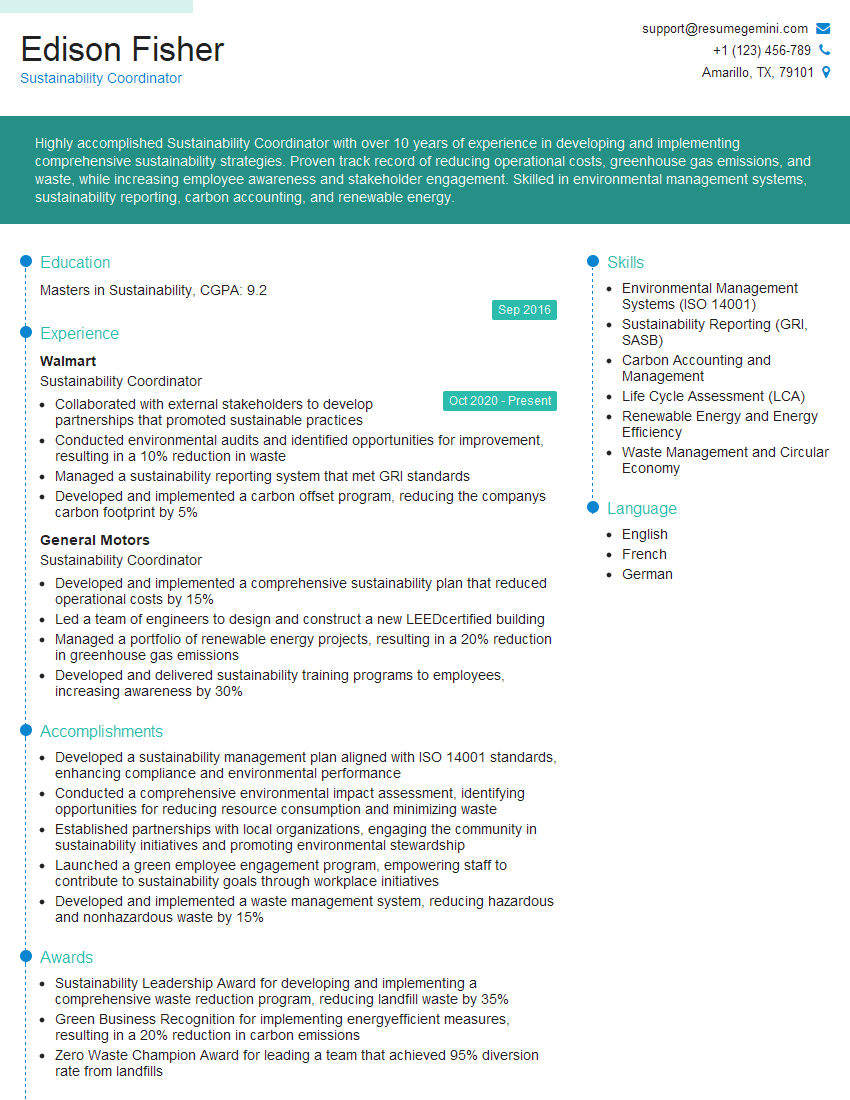
Sustainability Coordinator Resume Sample
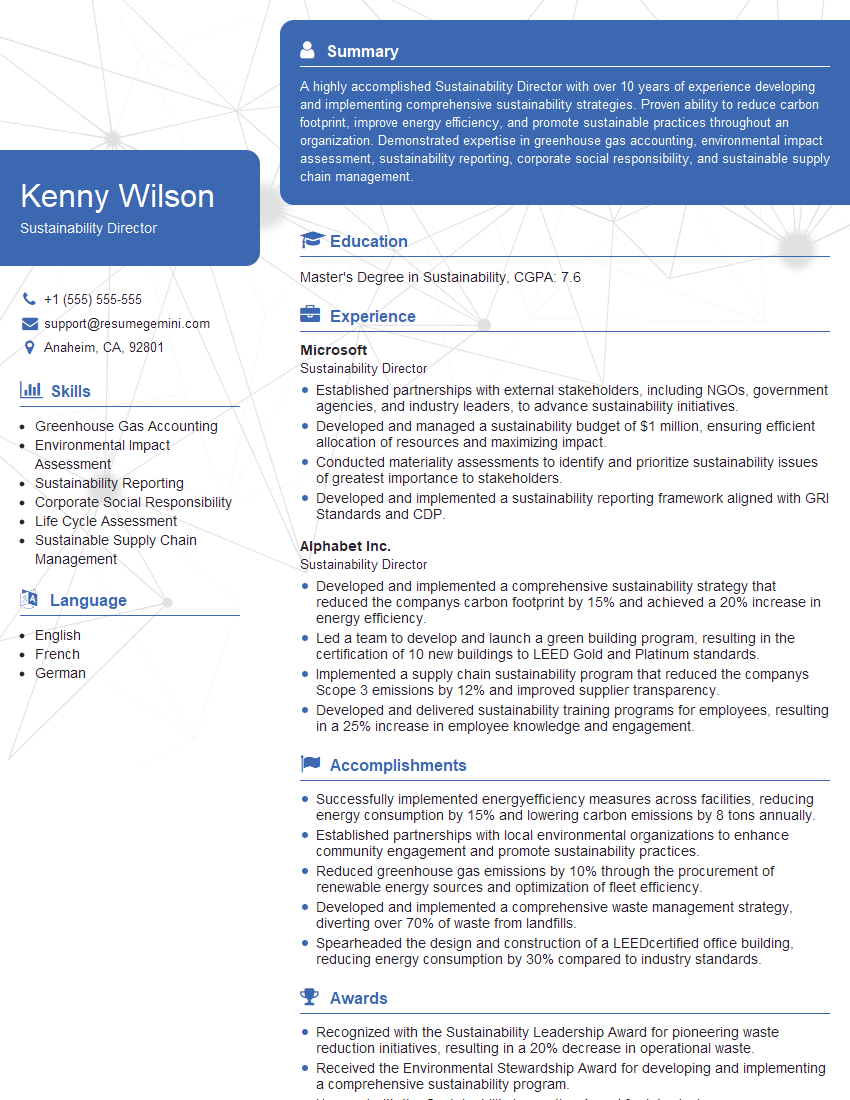
Sustainability Director Resume Sample
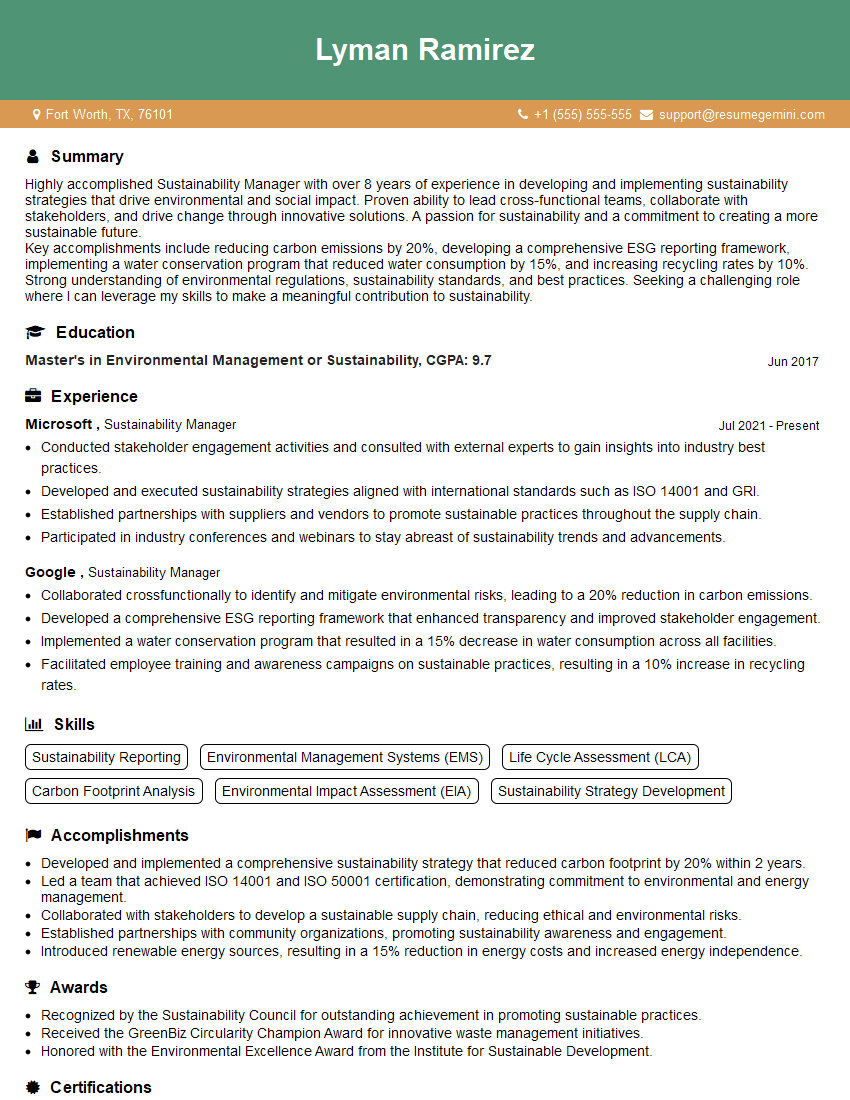
Sustainability Manager Resume Sample
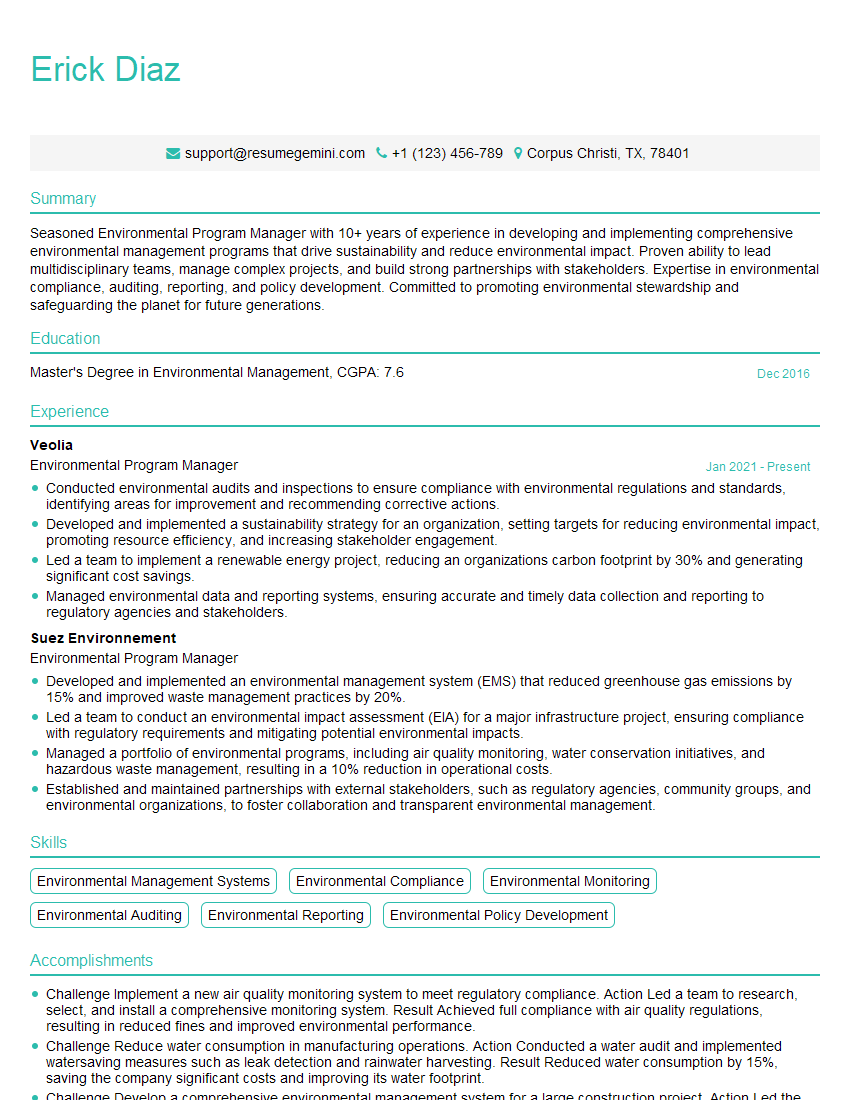
Environmental Program Manager Resume Sample
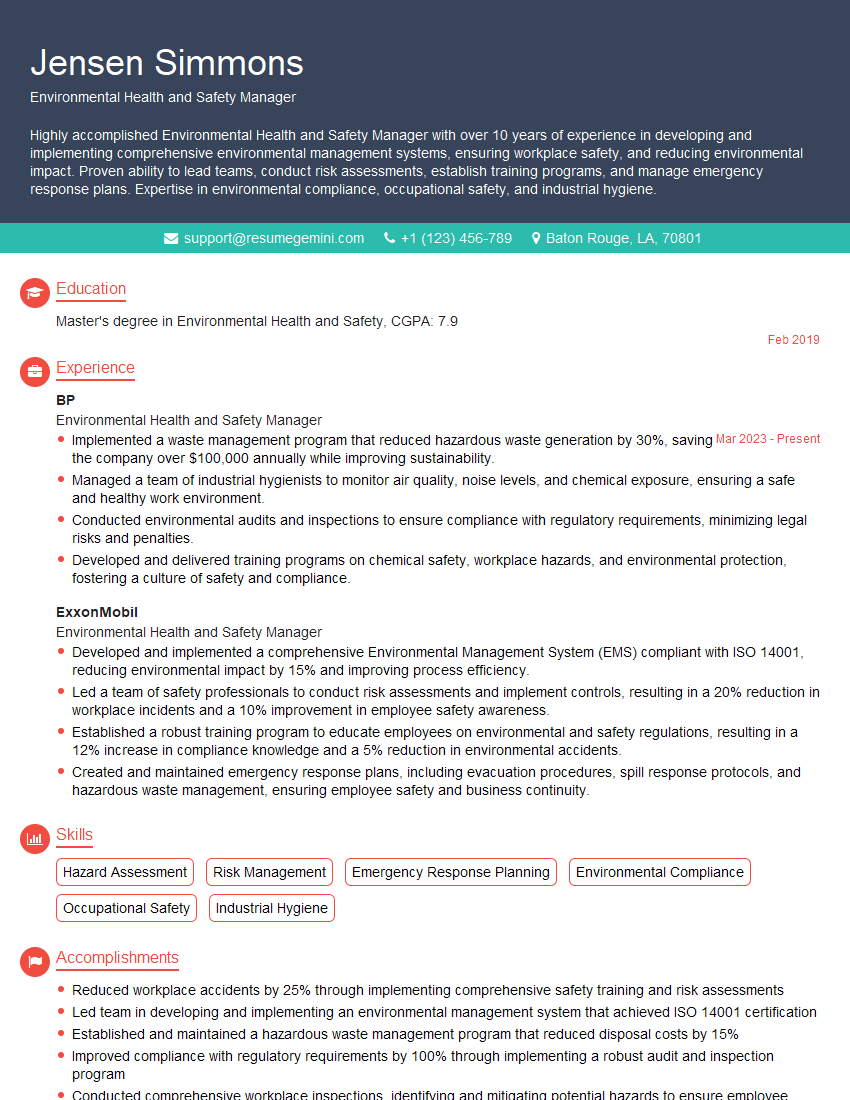
Environmental Health and Safety Manager Resume Sample
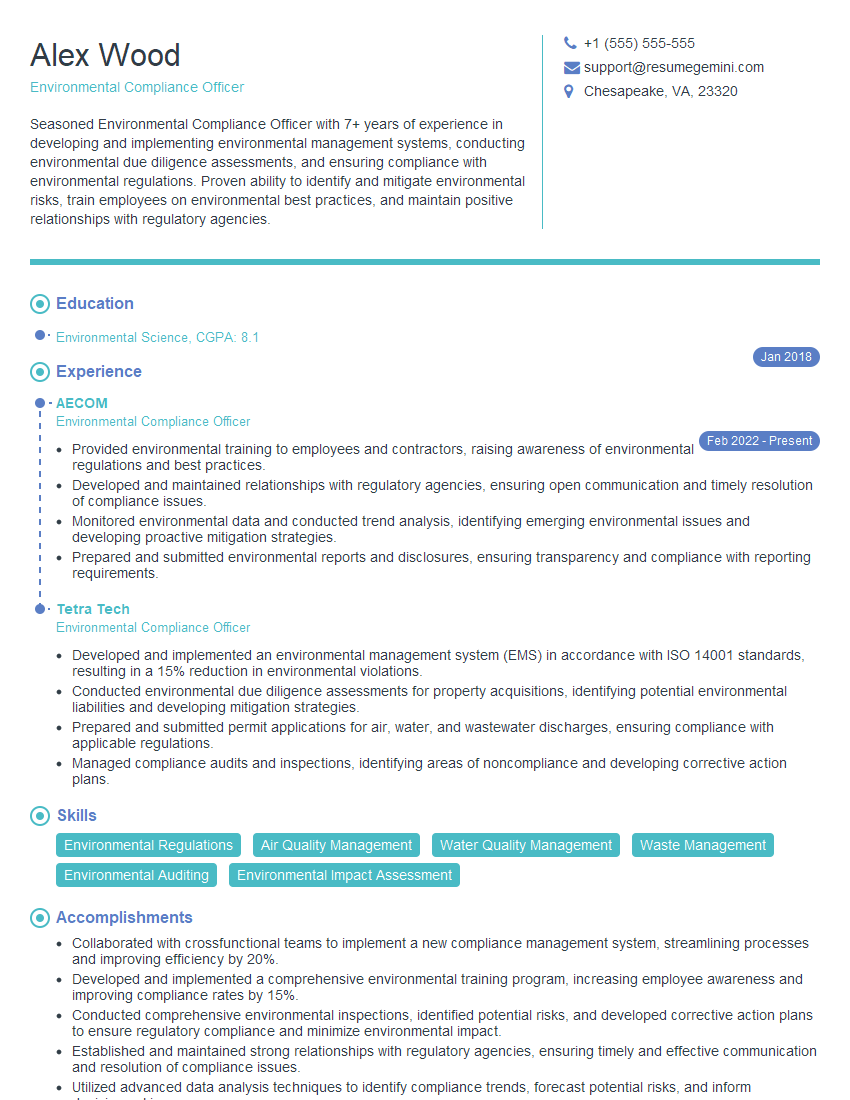
Environmental Compliance Officer Resume Sample
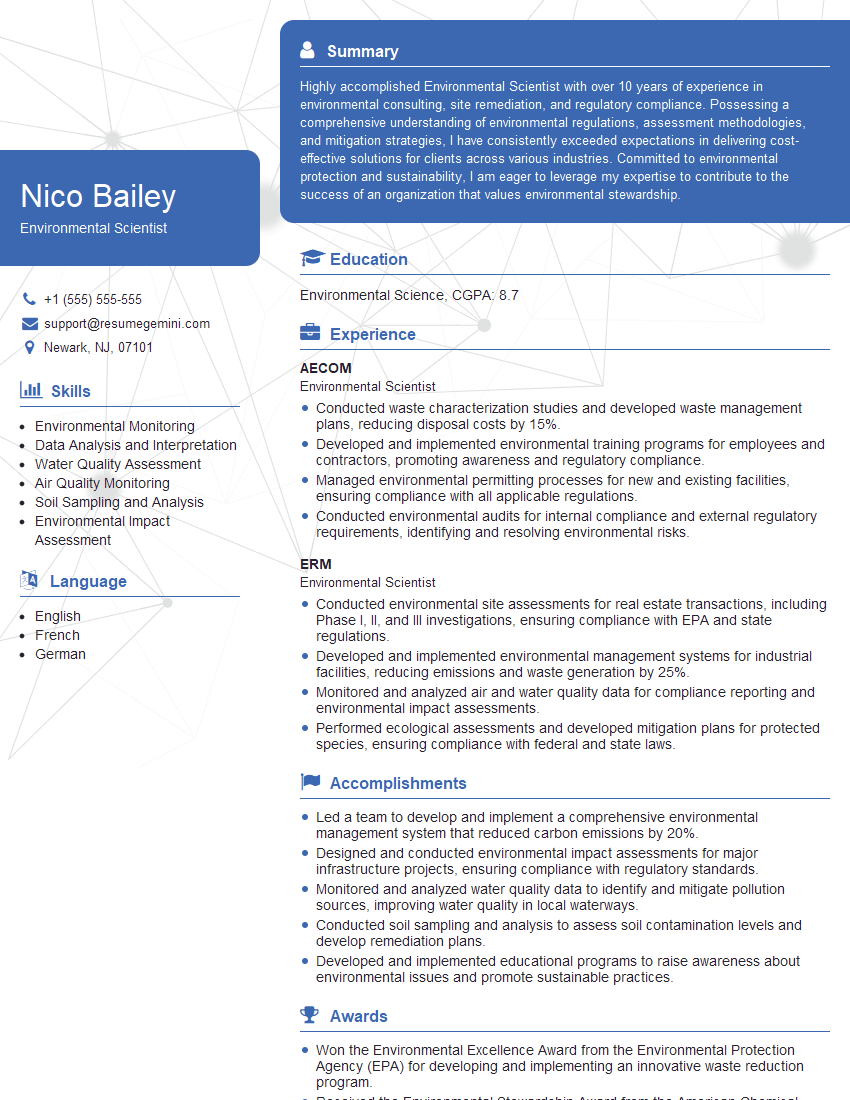
Environmental Scientist Resume Sample
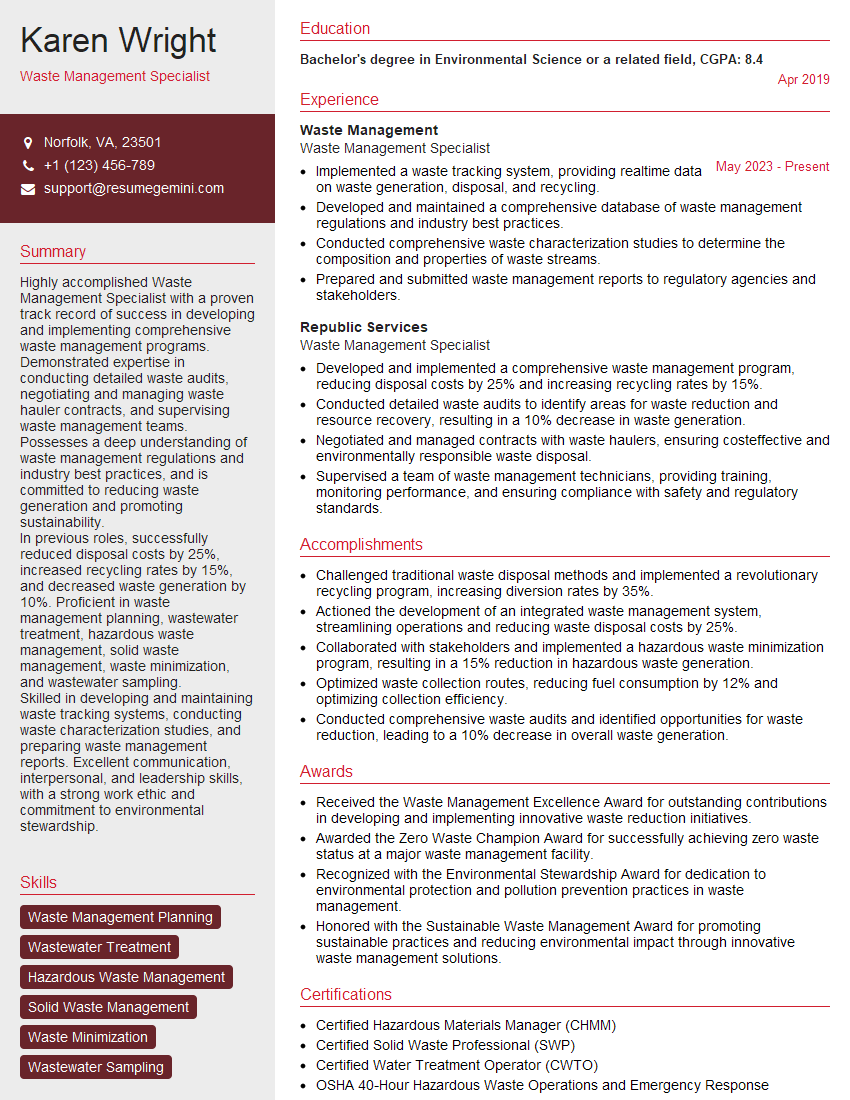
Waste Management Specialist Resume Sample
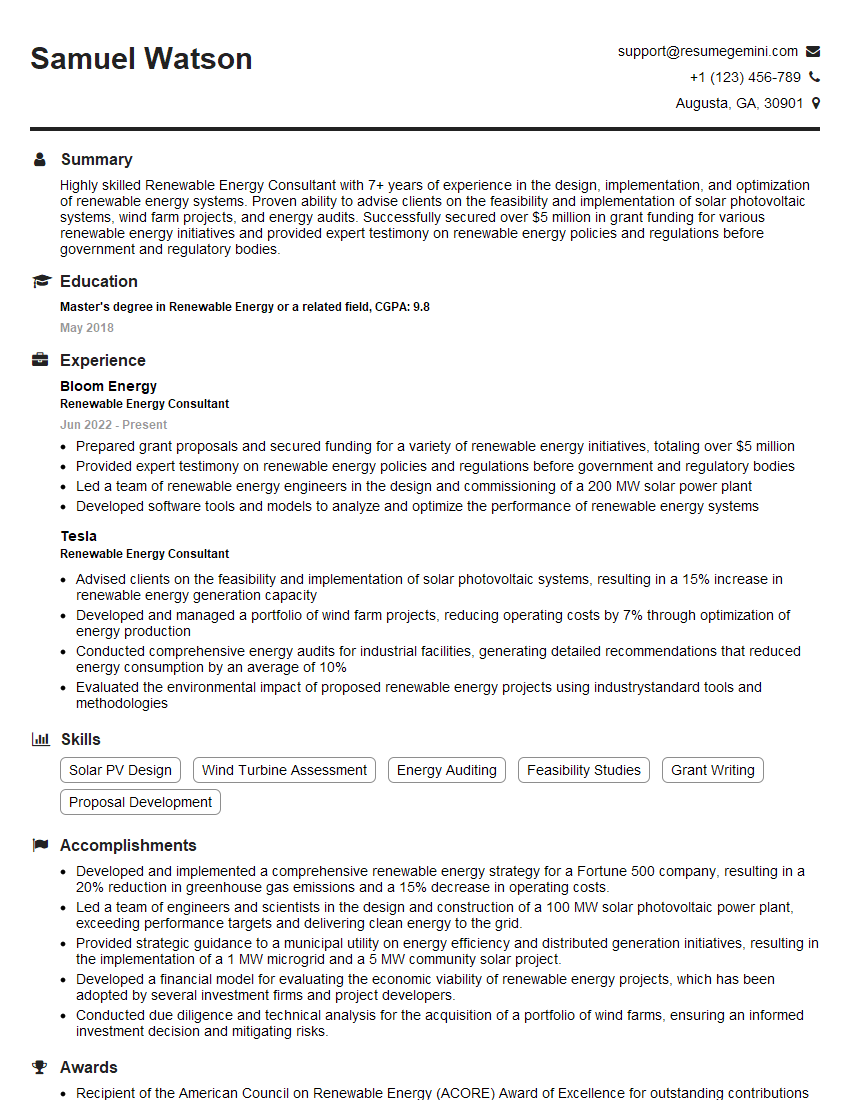
Renewable Energy Consultant Resume Sample
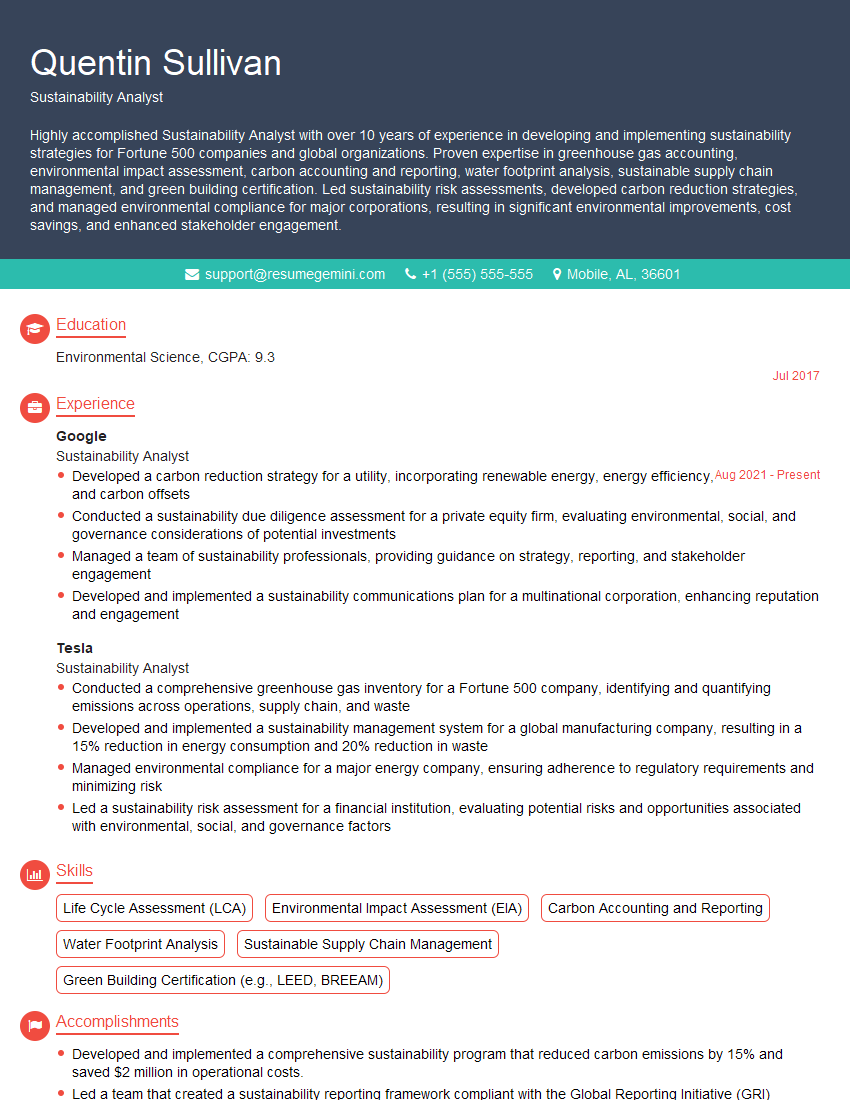
Sustainability Analyst Resume Sample
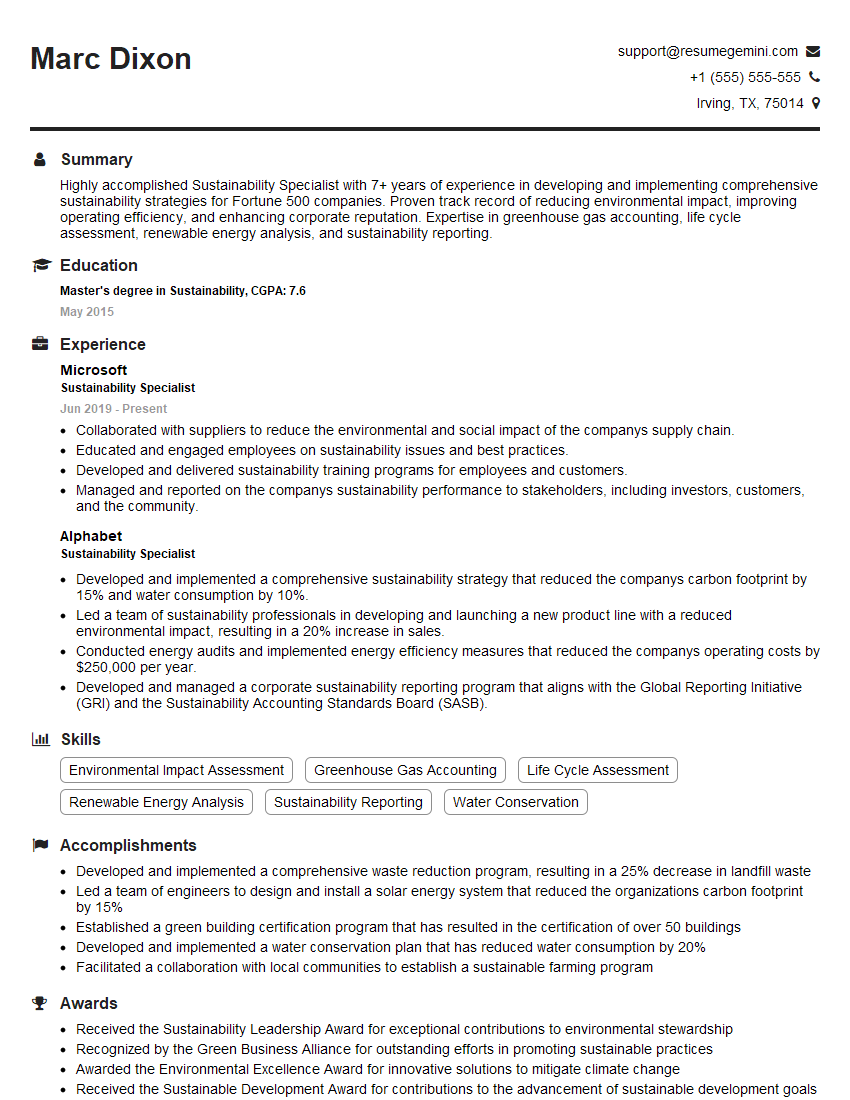
Sustainability Specialist Resume Sample
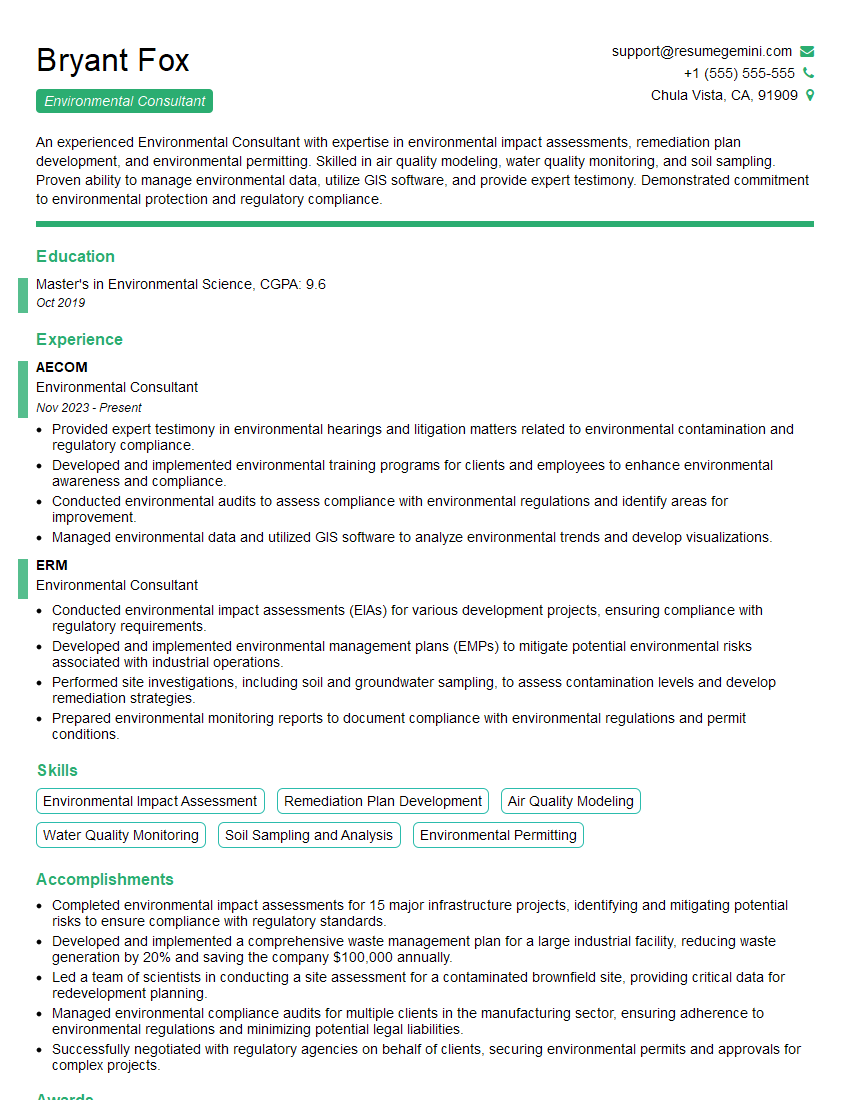
Environmental Consultant Resume Sample
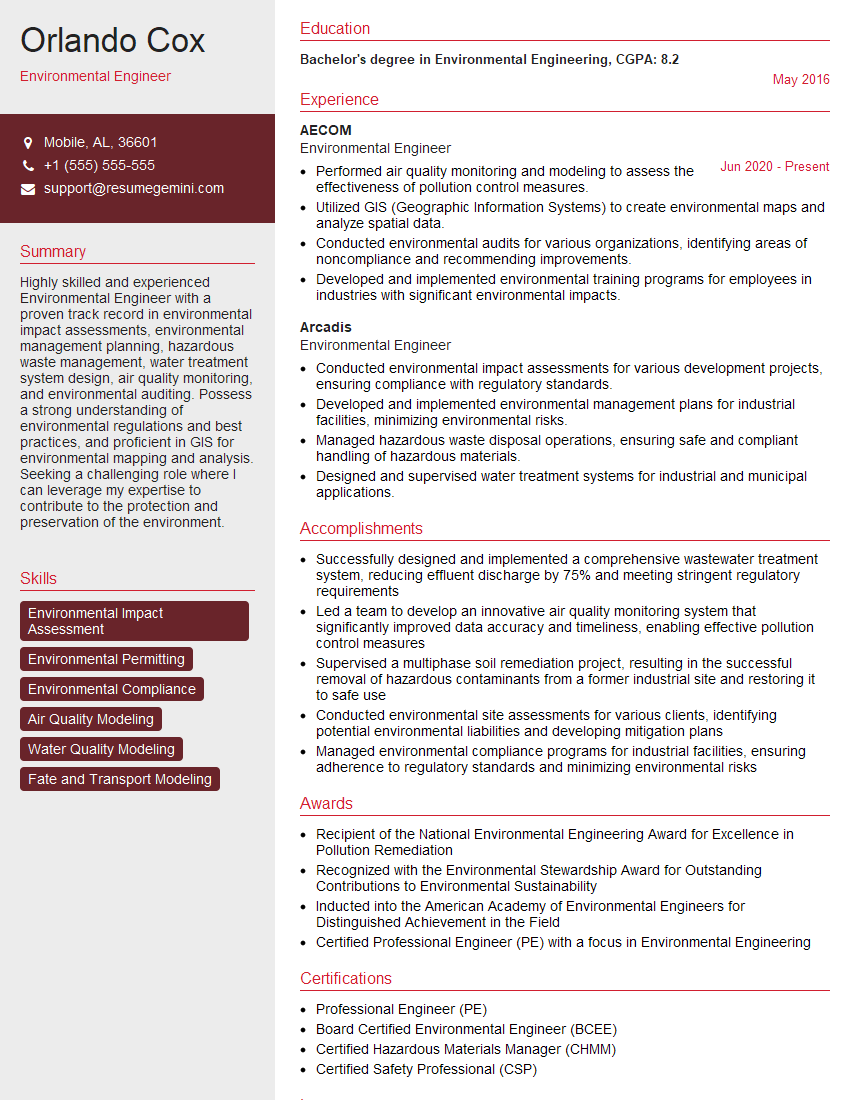
Environmental Engineer Resume Sample
- Sustainability Coordinator
- Sustainability Director
- Sustainability Manager
- Environmental Program Manager
- Environmental Health and Safety Manager
- Environmental Compliance Officer
- Environmental Scientist
- Waste Management Specialist
- Renewable Energy Consultant
- Sustainability Analyst
- Sustainability Specialist
- Environmental Consultant
- Environmental Engineer
Explore more articles
Users Rating of Our Blogs
Share Your Experience
We value your feedback! Please rate our content and share your thoughts (optional).
What Readers Say About Our Blog
Very informative content, great job.
good