Preparation is the key to success in any interview. In this post, we’ll explore crucial Sustainability and Ethical Practices interview questions and equip you with strategies to craft impactful answers. Whether you’re a beginner or a pro, these tips will elevate your preparation.
Questions Asked in Sustainability and Ethical Practices Interview
Q 1. Describe your understanding of the triple bottom line (People, Planet, Profit).
The Triple Bottom Line (TBL) is a framework that acknowledges that businesses must consider the impact of their operations on three interconnected spheres: People, Planet, and Profit. It moves beyond the traditional focus solely on profit (the bottom line) to encompass social and environmental considerations.
- People represents the social impact, including fair labor practices, community relations, employee well-being, and human rights. Think about a company ensuring fair wages and safe working conditions for its employees, or investing in local community development programs.
- Planet encompasses the environmental impact of the business, covering areas like carbon emissions, waste management, resource consumption, and biodiversity. For instance, a company might invest in renewable energy sources or implement sustainable supply chain practices.
- Profit represents the economic dimension, focusing on the financial performance and sustainability of the business. This includes profitability, shareholder value, and long-term economic viability.
TBL isn’t just about balancing these three; it’s about finding synergies where positive outcomes in one area contribute to positive outcomes in the others. For example, investing in renewable energy (Planet) can lead to cost savings (Profit) and improve brand reputation (People).
Q 2. Explain the difference between sustainable and ethical practices.
While closely related, sustainable and ethical practices are distinct concepts. Sustainability focuses on meeting the needs of the present without compromising the ability of future generations to meet their own needs. It’s about resource stewardship and long-term viability of the planet and its systems. Think reducing carbon emissions, conserving water, and using renewable resources.
Ethical practices, on the other hand, focus on moral principles and values in business operations. This encompasses fair treatment of employees, suppliers, customers, and the community, respecting human rights, and avoiding corruption. Examples include fair wages, transparent supply chains, and responsible marketing.
The relationship is symbiotic; ethical practices often contribute to sustainability (e.g., fair labor practices improve worker well-being and reduce turnover, leading to lower environmental impact from hiring and training). However, a company can be sustainable (e.g., efficient use of resources) without necessarily being ethical (e.g., exploiting low-wage workers overseas).
Q 3. What are the key principles of the Global Reporting Initiative (GRI)?
The Global Reporting Initiative (GRI) is a widely used sustainability reporting framework that provides guidelines for organizations to measure and report their economic, environmental, and social performance. Key principles include:
- Materiality: Focusing on the aspects that matter most to the organization and its stakeholders.
- Stakeholder Inclusiveness: Engaging with a range of stakeholders (employees, customers, communities, investors) to understand their concerns and priorities.
- Completeness: Providing comprehensive and balanced information, including both positive and negative impacts.
- Accuracy: Ensuring the data reported is reliable and verifiable.
- Timeliness: Publishing reports regularly and promptly.
- Comparability: Using consistent metrics and reporting standards to allow comparisons between organizations.
The GRI standards provide a structured approach to sustainability reporting, promoting transparency and accountability within organizations. It helps companies demonstrate their commitment to sustainability to stakeholders.
Q 4. How familiar are you with the UN Sustainable Development Goals (SDGs)?
I am very familiar with the UN Sustainable Development Goals (SDGs). These are 17 interconnected goals designed to be a blueprint to achieve a better and more sustainable future for all by 2030. They address a broad range of global challenges, including poverty, hunger, health, education, climate change, gender equality, and peace.
My understanding extends beyond simply knowing the goals. I’ve worked on projects that directly mapped organizational strategies to specific SDGs, helping businesses identify opportunities to align their operations with global sustainability priorities. For example, I helped a client analyze their supply chain to identify areas for improvement in relation to SDG 8 (Decent Work and Economic Growth) and SDG 12 (Responsible Consumption and Production).
Q 5. Describe your experience with lifecycle assessment (LCA) methodologies.
Lifecycle Assessment (LCA) is a method for evaluating the environmental impacts of a product or service throughout its entire life cycle, from raw material extraction to disposal. My experience includes conducting LCAs using various software tools, interpreting the results, and using these findings to advise clients on eco-design improvements and sustainable supply chain solutions.
I am proficient in applying different LCA methodologies, such as ISO 14040/14044, and understand the different stages of an LCA: goal and scope definition, inventory analysis, impact assessment, and interpretation. I have used LCA studies to inform material selection decisions, assess the effectiveness of waste reduction strategies, and demonstrate the environmental benefits of sustainable products compared to conventional alternatives.
Q 6. How would you measure the environmental impact of a product or service?
Measuring the environmental impact of a product or service requires a systematic approach. Here’s a step-by-step process:
- Define the scope: Identify the specific product or service, its boundaries, and the environmental impacts to be assessed (e.g., greenhouse gas emissions, water consumption, waste generation).
- Collect data: Gather data on resource use, emissions, and waste throughout the product’s life cycle. This might involve reviewing bills of materials, process flow diagrams, and conducting field measurements.
- Perform LCA: Use LCA software to analyze the collected data and quantify the environmental impacts. This typically involves applying impact assessment methods to translate the inventory data into meaningful metrics.
- Interpret the results: Analyze the LCA results to identify the key environmental hotspots (stages of the life cycle contributing most to the impact) and potential opportunities for improvement.
- Communicate findings: Report the results clearly and concisely, using visualizations such as charts and graphs to effectively communicate the findings to stakeholders.
It is important to consider using standardized metrics for comparability and transparency. For instance, carbon footprint is commonly expressed in terms of CO2e (carbon dioxide equivalent).
Q 7. What are some common sustainability certifications (e.g., B Corp, LEED)?
Several sustainability certifications recognize and reward organizations demonstrating strong environmental and social performance. Some prominent examples include:
- B Corp Certification: A certification for companies that meet rigorous standards of social and environmental performance, accountability, and transparency.
- LEED (Leadership in Energy and Environmental Design): A rating system for green buildings that assesses environmental performance across several key areas, including energy efficiency, water use, and material selection.
- Fairtrade Certification: Ensures that farmers and workers in developing countries receive fair prices for their products and work under safe and ethical conditions.
- FSC (Forest Stewardship Council) Certification: Certifies forests that are managed responsibly, ensuring sustainable forest management practices.
- Organic Certification: Verifies that agricultural products are produced using environmentally friendly methods without synthetic pesticides or fertilizers.
These certifications not only demonstrate a company’s commitment to sustainability but also provide consumers and investors with assurance of ethical and sustainable practices. Obtaining these certifications requires a significant investment of time and effort, demonstrating a genuine commitment to sustainability.
Q 8. How do you identify and mitigate environmental risks within a business?
Identifying and mitigating environmental risks within a business requires a proactive and multi-faceted approach. It starts with a thorough environmental risk assessment, identifying potential hazards across the entire value chain – from raw material sourcing to product disposal. This involves analyzing factors like greenhouse gas emissions, water consumption, waste generation, resource depletion, and potential pollution incidents.
Mitigation strategies depend on the specific risks identified. For example, if a significant risk is identified regarding greenhouse gas emissions, mitigation could involve transitioning to renewable energy sources, improving energy efficiency, implementing carbon offsetting programs, and investing in technologies that reduce emissions.
For water consumption, solutions might include implementing water-saving technologies, recycling wastewater, and sourcing materials from regions with sustainable water management practices. Waste generation can be addressed through waste reduction strategies, implementing a robust recycling program, and exploring circular economy models.
- Example: A manufacturing company might identify high energy consumption in its production process as a key risk. Mitigation would involve upgrading to energy-efficient machinery, investing in on-site renewable energy generation (solar panels), and optimizing production processes to minimize waste and energy use.
Regular monitoring and reporting are crucial for tracking progress and ensuring the effectiveness of mitigation strategies. This involves collecting data, analyzing trends, and adapting the approach as needed. A robust environmental management system (EMS) can help organize and manage these processes effectively.
Q 9. What are your strategies for engaging stakeholders in sustainability initiatives?
Engaging stakeholders in sustainability initiatives is vital for their success. It’s not just about compliance; it’s about building a shared commitment to environmental responsibility. My strategy focuses on transparency, collaboration, and shared value creation.
- Transparency: Openly communicating the company’s sustainability goals, progress, and challenges is paramount. This includes regularly reporting on environmental performance metrics, both internally and externally, and being responsive to stakeholder feedback.
- Collaboration: Engaging with employees, suppliers, customers, local communities, and NGOs ensures a diverse range of perspectives are considered. This can be achieved through stakeholder workshops, surveys, and regular communication channels.
- Shared Value Creation: Sustainability initiatives shouldn’t be seen as a cost but as an opportunity to create shared value. By demonstrating how sustainability initiatives improve the company’s brand image, enhance operational efficiency, and contribute to a better society, buy-in is more readily achieved. This might include showcasing successful sustainability projects and their positive impact on the business and the community.
For example, actively involving employees in sustainability projects – like a waste reduction initiative or a community cleanup – fosters a sense of ownership and commitment. Similarly, collaborating with suppliers to adopt sustainable practices throughout the supply chain improves transparency and reduces environmental risks.
Q 10. How would you develop a sustainability strategy for a company?
Developing a comprehensive sustainability strategy requires a structured approach. I typically follow a five-step process:
- Materiality Assessment: Identify the most significant environmental and social issues relevant to the business and its stakeholders. This involves assessing the company’s impacts and dependencies on environmental and social factors.
- Setting Goals and Targets: Define specific, measurable, achievable, relevant, and time-bound (SMART) goals and targets aligned with global sustainability frameworks (e.g., SDGs, Paris Agreement). This might include reducing carbon emissions, increasing renewable energy use, or improving waste management.
- Action Planning: Develop detailed action plans outlining the specific steps required to achieve the defined goals. This includes allocating resources, assigning responsibilities, and setting timelines.
- Implementation and Monitoring: Put the action plans into effect, regularly monitor progress, and make adjustments as needed. This involves tracking key performance indicators (KPIs) and reporting on progress.
- Reporting and Communication: Regularly report on sustainability performance to stakeholders, both internally and externally. Transparency builds trust and promotes accountability.
Throughout this process, it’s essential to consider the company’s specific context, industry, and stakeholder expectations. A successful sustainability strategy is integrated into the overall business strategy, not a separate initiative.
Q 11. Describe your experience with carbon footprinting and reduction strategies.
Carbon footprinting is the process of measuring the total greenhouse gas emissions associated with a company’s activities. I have extensive experience in conducting carbon footprint assessments using various methodologies, including the Greenhouse Gas Protocol. This involves collecting data on energy consumption, transportation, waste, and other emission sources across the value chain.
Reduction strategies are tailored to the specific findings of the carbon footprint assessment. They can include:
- Energy Efficiency Improvements: Upgrading equipment, optimizing processes, and improving building insulation.
- Renewable Energy Transition: Switching to renewable energy sources like solar, wind, or hydro power.
- Sustainable Transportation: Implementing fuel-efficient vehicles, promoting cycling and public transport, and optimizing logistics.
- Waste Reduction and Management: Implementing waste reduction strategies, improving recycling rates, and exploring waste-to-energy solutions.
- Carbon Offsetting: Investing in projects that remove carbon dioxide from the atmosphere.
For instance, I once worked with a logistics company to reduce their carbon footprint by optimizing delivery routes using route planning software and transitioning to electric vehicles. This involved a detailed assessment of their current transportation practices, followed by the implementation of new technologies and processes and continuous monitoring to evaluate the effectiveness.
Q 12. How familiar are you with environmental regulations and compliance procedures?
I am very familiar with a wide range of environmental regulations and compliance procedures, both at the national and international level. This includes regulations related to air and water emissions, waste management, hazardous materials handling, and biodiversity protection. My understanding covers legislation like the Clean Air Act, Clean Water Act (US), REACH (EU), and various international environmental agreements.
Compliance procedures involve understanding the specific requirements of each relevant regulation, implementing appropriate management systems, monitoring compliance, and reporting to the relevant authorities. This often includes conducting environmental audits, maintaining environmental records, and ensuring employee training. Non-compliance can lead to significant penalties, reputational damage, and legal repercussions, highlighting the importance of a strong environmental compliance program.
For example, I’ve assisted several clients in obtaining environmental permits for new facilities, ensuring their operations adhere to discharge limits under water quality standards, and developing internal audit programs to monitor ongoing compliance with relevant regulations.
Q 13. What is your understanding of circular economy principles?
The circular economy is an economic model aimed at minimizing waste and maximizing the use of resources. Instead of a linear model (take-make-dispose), it emphasizes a cyclical approach where resources are kept in use for as long as possible, extracting maximum value before being recovered and regenerated at the end of each service life.
Key principles include:
- Design out waste and pollution: Products are designed to be durable, repairable, and recyclable.
- Keep products and materials in use: Extending the lifespan of products through reuse, repair, and refurbishment.
- Regenerate natural systems: Using renewable resources and restoring ecosystems.
Examples of circular economy practices include product-as-a-service models (leasing instead of owning), recycling programs, and the use of recycled materials. Implementing circular economy principles reduces environmental impact, enhances resource efficiency, and creates new business opportunities. A company might adopt a take-back program for its products, allowing for reuse, repair, or recycling of components, reducing waste and resource consumption.
Q 14. How would you address ethical concerns related to supply chain management?
Addressing ethical concerns in supply chain management requires a multi-pronged approach focusing on transparency, traceability, and due diligence. Key areas of concern include labor practices, environmental protection, and human rights.
Strategies include:
- Supplier Code of Conduct: Establishing a clear code of conduct outlining ethical standards that suppliers must adhere to, covering areas such as fair wages, safe working conditions, and environmental protection. Regular audits are essential to monitor compliance.
- Traceability: Implementing systems to track materials and products throughout the supply chain, ensuring transparency and accountability. This can involve blockchain technology or other tracking systems.
- Due Diligence: Conducting thorough risk assessments to identify potential ethical risks in the supply chain and developing mitigation strategies. This includes researching suppliers and their practices and conducting on-site audits.
- Collaboration and Partnerships: Working with NGOs, industry associations, and other stakeholders to promote ethical sourcing and improve supply chain transparency.
- Reporting and Disclosure: Publicly reporting on sustainability performance and addressing any ethical concerns in the supply chain.
For example, a company might collaborate with suppliers to implement fair labor practices, ensuring workers receive fair wages, have access to safe working conditions, and aren’t subjected to forced or child labor. This could involve working with local communities and NGOs to provide training and support for suppliers.
Q 15. Describe your experience with stakeholder engagement and communication on sustainability issues.
Stakeholder engagement is crucial for successful sustainability initiatives. It involves actively listening to and collaborating with all parties impacted by a company’s environmental and social performance. This includes employees, investors, customers, suppliers, local communities, and government agencies. Effective communication is the backbone of this process.
In my previous role at GreenTech Solutions, I led the stakeholder engagement strategy for our flagship project, a large-scale renewable energy development. We used a multi-pronged approach: We held public forums to address community concerns about potential environmental impacts, established a dedicated website and social media presence to share project updates and answer questions, and collaborated with local NGOs to incorporate their expertise into our environmental mitigation plan. We also worked closely with investors to demonstrate the project’s long-term financial viability and sustainability credentials. Regular feedback loops allowed us to adapt our strategies, ensuring transparency and building trust.
- Surveys and feedback forms: Gather quantitative and qualitative data on stakeholder perceptions.
- Focus groups and workshops: Facilitate in-depth discussions and collaborative problem-solving.
- Regular reports and newsletters: Maintain transparency and share project updates.
Career Expert Tips:
- Ace those interviews! Prepare effectively by reviewing the Top 50 Most Common Interview Questions on ResumeGemini.
- Navigate your job search with confidence! Explore a wide range of Career Tips on ResumeGemini. Learn about common challenges and recommendations to overcome them.
- Craft the perfect resume! Master the Art of Resume Writing with ResumeGemini’s guide. Showcase your unique qualifications and achievements effectively.
- Don’t miss out on holiday savings! Build your dream resume with ResumeGemini’s ATS optimized templates.
Q 16. How do you measure the success of a sustainability program?
Measuring the success of a sustainability program requires a multifaceted approach that goes beyond simply tracking environmental metrics. It demands a balanced scorecard that considers environmental, social, and economic impacts. Key Performance Indicators (KPIs) are critical for this process.
- Environmental KPIs: Examples include greenhouse gas emissions reductions (tonnes of CO2e), water consumption rates (liters per unit produced), waste diversion rates (percentage of waste recycled or composted).
- Social KPIs: These might include employee satisfaction scores related to sustainability initiatives, community engagement participation rates, and supplier ethical sourcing compliance rates.
- Economic KPIs: Here, you would look at cost savings from energy efficiency improvements, increased revenue from eco-friendly products, and improved investor relations based on ESG (environmental, social, and governance) performance.
For instance, in a previous project, we measured the success of a waste reduction program by tracking the kilograms of waste generated per unit produced. We also surveyed employees to assess their satisfaction with the new recycling programs. By combining environmental, social, and economic data, we were able to demonstrate the program’s holistic success.
Q 17. What are your thoughts on the role of technology in advancing sustainability?
Technology plays a transformative role in advancing sustainability. It provides us with the tools to monitor, measure, and manage our environmental impact more effectively. From monitoring deforestation using satellite imagery to optimizing energy consumption with smart grids, technology is indispensable.
- Data analytics and AI: Enable predictive modelling of environmental impacts and resource optimization.
- IoT (Internet of Things) sensors: Provide real-time data on energy use, water consumption, and waste generation.
- Blockchain technology: Enhances supply chain transparency and traceability, combating issues like illegal logging and unethical labor practices.
- Renewable energy technologies: Solar, wind, and geothermal power offer sustainable alternatives to fossil fuels.
Imagine using AI-powered platforms to analyze supply chain data and identify high-risk areas for deforestation or forced labor. This allows businesses to proactively address these challenges and minimize their environmental and social footprint.
Q 18. How do you balance environmental sustainability with economic considerations?
Balancing environmental sustainability with economic considerations is not an either/or proposition; rather, it’s about finding synergies. Short-term sacrifices can lead to long-term gains. Sustainability isn’t just about cost reduction; it also encompasses innovation and new business opportunities.
For example, investing in energy-efficient technologies may involve upfront costs, but they result in significant long-term energy savings. Similarly, adopting sustainable sourcing practices might initially increase the cost of materials, but this can enhance brand reputation, attract environmentally conscious customers, and mitigate risks associated with supply chain disruptions. Life cycle costing analyses are crucial here; they factor in the total cost of ownership over a product’s lifespan, including environmental and social costs.
Ultimately, a sustainable business model is a resilient one. By aligning environmental and economic goals, companies can create value for both the planet and their bottom line.
Q 19. Describe a time you had to make a difficult decision related to ethical practices.
In a previous consulting project, we discovered that a client’s flagship product relied on a raw material sourced from a supplier with questionable labor practices. While the material was essential for production and switching suppliers would have been extremely costly and time-consuming, we had a responsibility to ensure ethical sourcing. This posed a difficult ethical dilemma.
After careful consideration, we presented the client with a phased approach. We proposed immediate engagement with the supplier to improve their labor practices, while simultaneously exploring alternative, ethically sourced materials. This involved a significant investment in research and development but ultimately protected our ethical standards and enhanced the client’s reputation. The long-term benefits outweighed the short-term costs.
Q 20. How would you handle conflict between sustainability goals and business objectives?
Conflicts between sustainability goals and business objectives are often perceived as trade-offs, but they should be viewed as opportunities for innovation and long-term value creation. It’s about finding creative solutions that align both priorities.
My approach involves:
- Identifying the root cause of the conflict: Often, perceived trade-offs stem from incomplete information or a lack of understanding about the potential benefits of sustainable practices.
- Quantifying the costs and benefits: Conducting a thorough cost-benefit analysis helps to identify the most economically and environmentally viable options.
- Exploring innovative solutions: Seek out creative solutions that address both sustainability and business goals. This could involve process innovation, new technologies, or strategic partnerships.
- Communicating transparently: Open and honest communication with stakeholders is vital to build trust and support for sustainable initiatives.
For instance, if a company aims to reduce its carbon footprint but faces high costs associated with transitioning to renewable energy, it might explore carbon offsetting projects, energy efficiency improvements, or collaborative partnerships to share renewable energy resources.
Q 21. Explain your understanding of sustainable procurement practices.
Sustainable procurement goes beyond simply purchasing goods and services at the lowest price. It considers the environmental, social, and economic impacts throughout the entire lifecycle of a product or service, from sourcing raw materials to disposal. It’s about making purchasing decisions that minimize environmental damage, promote social equity, and support economic development.
Key aspects of sustainable procurement include:
- Environmental criteria: Prioritizing products with reduced environmental footprints, such as those made from recycled materials, using renewable energy, or minimizing packaging.
- Social criteria: Ensuring that suppliers adhere to fair labor practices, respect human rights, and promote diversity and inclusion.
- Economic criteria: Considering the long-term economic viability of suppliers and promoting local businesses.
- Transparency and traceability: Establishing clear and transparent supply chains to track the origin of materials and ensure accountability.
Implementing sustainable procurement practices requires a shift in mindset – from focusing solely on price to considering the broader impact of purchasing decisions. It requires collaboration with suppliers to establish clear sustainability standards and monitor performance.
Q 22. What are the key challenges in implementing sustainability initiatives?
Implementing sustainability initiatives presents numerous challenges, often intertwined and complex. One major hurdle is the high upfront cost. Investing in renewable energy infrastructure, sustainable supply chains, and waste reduction technologies can require significant capital investment, potentially impacting short-term profitability. This is especially true for smaller organizations with limited resources.
Another key challenge is measuring and tracking progress. Defining appropriate Key Performance Indicators (KPIs) and developing robust monitoring systems can be difficult. Accurate data collection across various departments and supply chain partners is crucial, but often challenging to achieve consistently.
Resistance to change within an organization is a common obstacle. Employees, accustomed to established processes, may resist changes needed for sustainability. This requires strong leadership, communication, and training to foster buy-in and promote a culture of sustainability.
Lack of standardized metrics and reporting creates difficulties in comparing progress across different companies and industries. The absence of universally accepted standards makes it hard to demonstrate the value and impact of sustainability initiatives consistently and persuasively.
Finally, the complexity of interconnected global supply chains adds a layer of complexity. Ensuring sustainability across a vast and intricate network of suppliers and manufacturers demands comprehensive traceability and collaboration, which can be challenging to achieve.
Q 23. How do you stay up-to-date on current trends and best practices in sustainability?
Staying current in the dynamic field of sustainability requires a multi-pronged approach. I regularly subscribe to and actively read leading sustainability journals and publications like Sustainability, Journal of Cleaner Production, and reports from organizations such as the Global Reporting Initiative (GRI) and the World Economic Forum.
I actively participate in industry conferences and workshops, networking with peers and experts to learn about the latest innovations and best practices. Attending these events allows for direct engagement with leading thinkers and practitioners, fostering valuable knowledge exchange.
I leverage online resources such as reputable sustainability websites, databases, and online courses to keep abreast of evolving regulations, technologies, and research. This includes following leading organizations and thought leaders on social media platforms.
Critically, I continuously engage in self-directed learning. I actively seek out reports, case studies, and white papers on specific topics relevant to my current projects and the evolving sustainability landscape. This allows for focused learning and adaptation to the ever-changing environment.
Q 24. How would you communicate complex sustainability data to a non-technical audience?
Communicating complex sustainability data to a non-technical audience necessitates translating technical jargon into clear, concise, and engaging narratives. Instead of using terms like ‘carbon footprint’ or ‘life cycle assessment,’ I would use simpler phrases like ‘environmental impact’ or ‘the full environmental cost of a product.’
Visualizations are incredibly powerful. Charts, graphs, and infographics simplify complex data, making it easily digestible. For instance, a simple bar chart comparing the company’s energy consumption year-over-year is far more effective than a table of raw data.
Storytelling is key. Weaving sustainability data into compelling narratives—highlighting success stories or illustrating the impacts of actions—makes the information more relatable and memorable. For example, I might share a story of how a specific initiative reduced waste and saved the company money, thereby showing both environmental and economic benefits.
Analogies and metaphors can bridge the gap between technical complexity and lay understanding. For example, explaining the concept of a circular economy by comparing it to a natural ecosystem, where waste from one process becomes the input for another, can be very effective.
Finally, I would focus on the ‘so what?’ aspect of the data. Highlighting the relevance of the information for the audience, showing how it directly impacts their lives, the community, or the business bottom line, is crucial for engagement and action.
Q 25. Describe your experience with implementing and managing a sustainability budget.
In my previous role, I was responsible for developing and managing a $500,000 sustainability budget. This involved a multi-step process, starting with identifying key sustainability initiatives aligned with our organization’s overall strategic goals. For example, we prioritized investments in energy efficiency upgrades and waste reduction programs.
Next, I developed detailed budget proposals, justifying each expense with projected ROI and environmental benefits. These proposals included specific cost breakdowns, timelines, and expected outcomes, which I presented to senior management for approval. The proposals often included comparative analysis showing different approaches and their respective costs and benefits.
Once the budget was approved, I actively monitored spending, tracking expenses against the allocated funds. Regular progress reports, detailing both financial and environmental performance against the budget, were presented to stakeholders. This included tracking metrics such as energy savings, waste diversion rates, and the reduction of greenhouse gas emissions.
If unforeseen circumstances arose, I developed contingency plans and sought approval for budget reallocations as needed. This proactive approach ensured that the overall sustainability goals were achieved within budget constraints. For example, a unexpected spike in energy costs might require adjustments in other budget areas.
Q 26. What are the key performance indicators (KPIs) you would use to measure sustainability progress?
The specific KPIs used to measure sustainability progress depend on the organization’s goals and context. However, some commonly used KPIs include:
- Greenhouse Gas (GHG) emissions: Tracking tons of CO2e emitted, reflecting efforts to reduce carbon footprint.
- Energy consumption: Measuring kilowatt-hours (kWh) consumed, reflecting energy efficiency improvements.
- Water consumption: Tracking liters or gallons of water used, reflecting water conservation efforts.
- Waste generation and diversion rates: Measuring tons of waste generated and the percentage diverted from landfills.
- Renewable energy use: Tracking the percentage of electricity from renewable sources.
- Sustainable sourcing: Measuring the percentage of materials sourced from sustainable suppliers.
- Employee engagement in sustainability initiatives: Measuring participation rates in sustainability training and programs.
- Customer satisfaction related to sustainability: Measuring customer perception and feedback on the company’s sustainability efforts.
The selection of KPIs should be strategic, measurable, achievable, relevant, and time-bound (SMART).
Q 27. How would you prioritize various sustainability projects based on their impact and feasibility?
Prioritizing sustainability projects involves a structured approach that balances impact and feasibility. I typically employ a matrix-based prioritization framework. This framework considers various factors and assigns weights to them based on their importance to the organization.
Factors to consider include:
- Environmental impact: Quantifying the reduction in GHG emissions, waste, water use, etc.
- Financial viability: Assessing the return on investment (ROI) and cost-effectiveness of each project.
- Feasibility: Evaluating the technical and operational challenges, required resources, and timelines.
- Alignment with strategic goals: Assessing how well each project contributes to the organization’s overall sustainability objectives.
- Stakeholder engagement: Considering the support and buy-in from key stakeholders.
Each project is then scored based on these factors, allowing for a comparative analysis and informed prioritization. Projects with high environmental impact, good financial viability, and high feasibility score the highest and are prioritized accordingly. A simple weighted scoring system (e.g., weighting environmental impact at 40%, financial viability at 30%, and feasibility at 30%) can be used. This ensures a balance between ambition and practicality.
Q 28. Describe your experience with reporting on sustainability performance.
My experience in sustainability performance reporting involves developing comprehensive reports that clearly communicate progress towards sustainability goals. These reports typically adhere to established frameworks like the Global Reporting Initiative (GRI) Standards or the Sustainability Accounting Standards Board (SASB) standards.
The process starts with data collection and verification. This involves gathering data from various sources across the organization, ensuring data accuracy and consistency. Data validation procedures are crucial to maintaining credibility. This might involve internal audits and external verification.
Next, the data is analyzed and interpreted. Key trends and insights are identified, highlighting achievements and areas for improvement. This involves comparing performance against targets and baselines, and identifying any variances.
Finally, the report is structured for clarity and impact, using visual aids and storytelling to communicate complex information effectively to different audiences. The report includes executive summaries for quick overviews, detailed data tables and graphs for deeper analysis, and case studies to highlight successes. The report is tailored to specific audiences, from internal stakeholders to investors and external stakeholders.
I also ensure that the reporting is transparent and credible, with clear methodologies and data sources disclosed. Regular reporting cycles ensure consistent monitoring and accountability.
Key Topics to Learn for Sustainability and Ethical Practices Interview
- Environmental Sustainability: Understanding key environmental issues like climate change, resource depletion, and biodiversity loss. Explore frameworks like the circular economy and life cycle assessment.
- Social Sustainability: Analyzing ethical labor practices, fair trade principles, and community engagement strategies. Consider the social impact of business decisions and supply chains.
- Governance & Transparency: Familiarize yourself with corporate social responsibility (CSR) reporting, stakeholder engagement, and ethical decision-making frameworks. Understand the role of transparency and accountability in sustainable business.
- Sustainable Business Models: Explore various approaches to integrating sustainability into business operations, including green innovation, sustainable supply chain management, and sustainable marketing.
- Sustainable Finance & Investment: Understand ESG (Environmental, Social, and Governance) factors in investment decisions, green bonds, and impact investing. Learn about the financial implications of sustainability initiatives.
- Practical Application: Prepare examples from your experience (work, projects, volunteering) demonstrating how you’ve applied sustainability principles and ethical considerations. Be ready to discuss problem-solving related to ethical dilemmas or sustainability challenges.
- Technical Aspects (if applicable): Depending on the role, you may need to demonstrate knowledge of specific sustainability metrics, data analysis techniques, or relevant software and tools. Research the job description carefully.
Next Steps
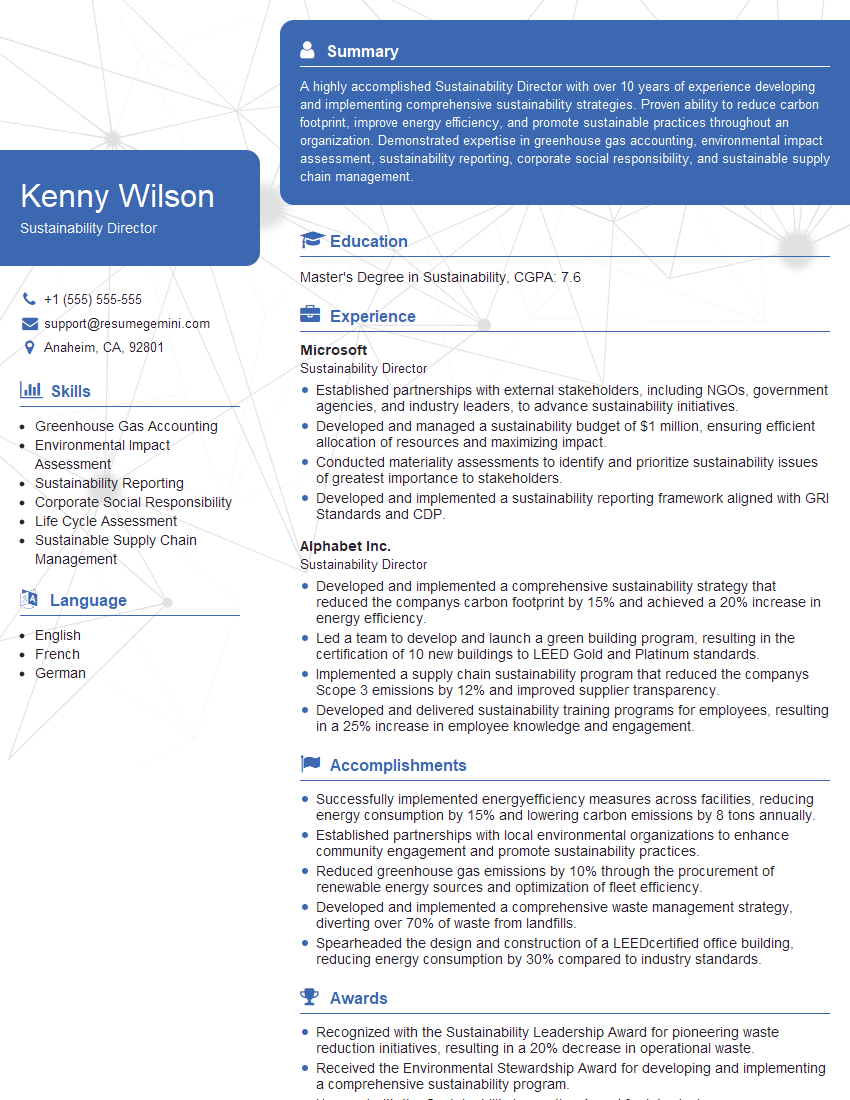
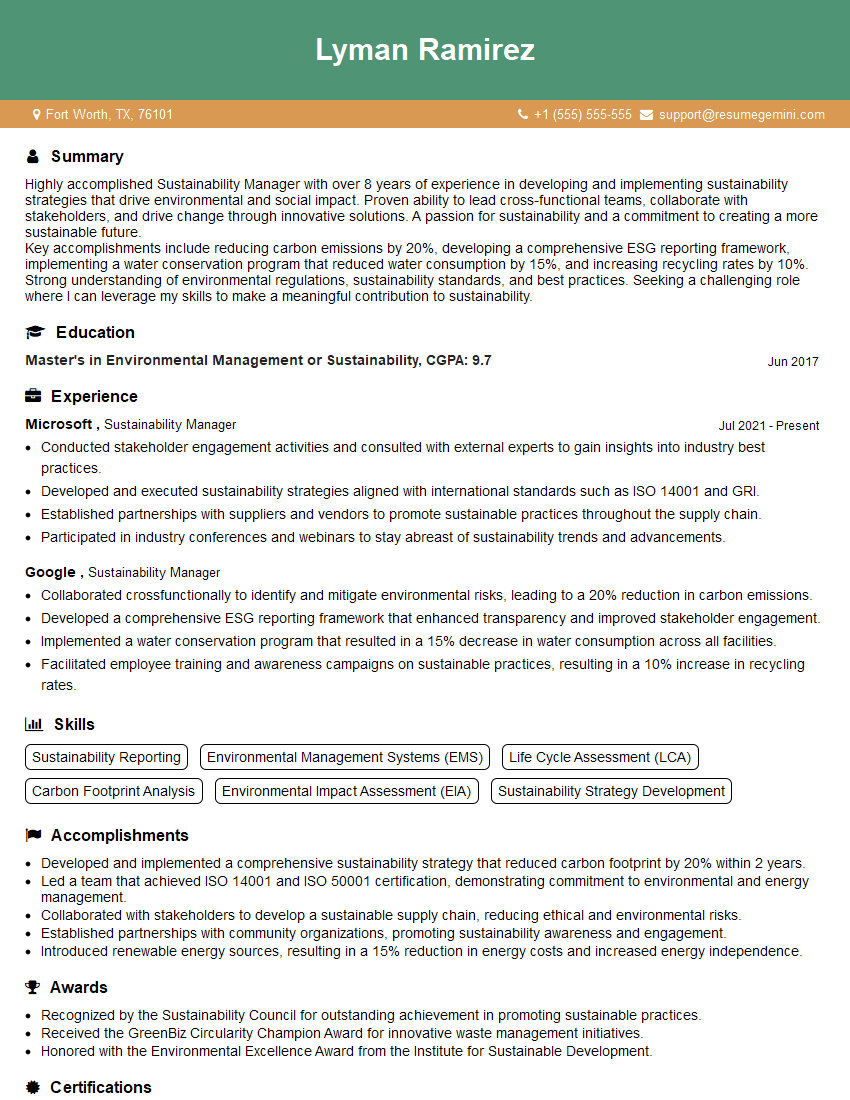
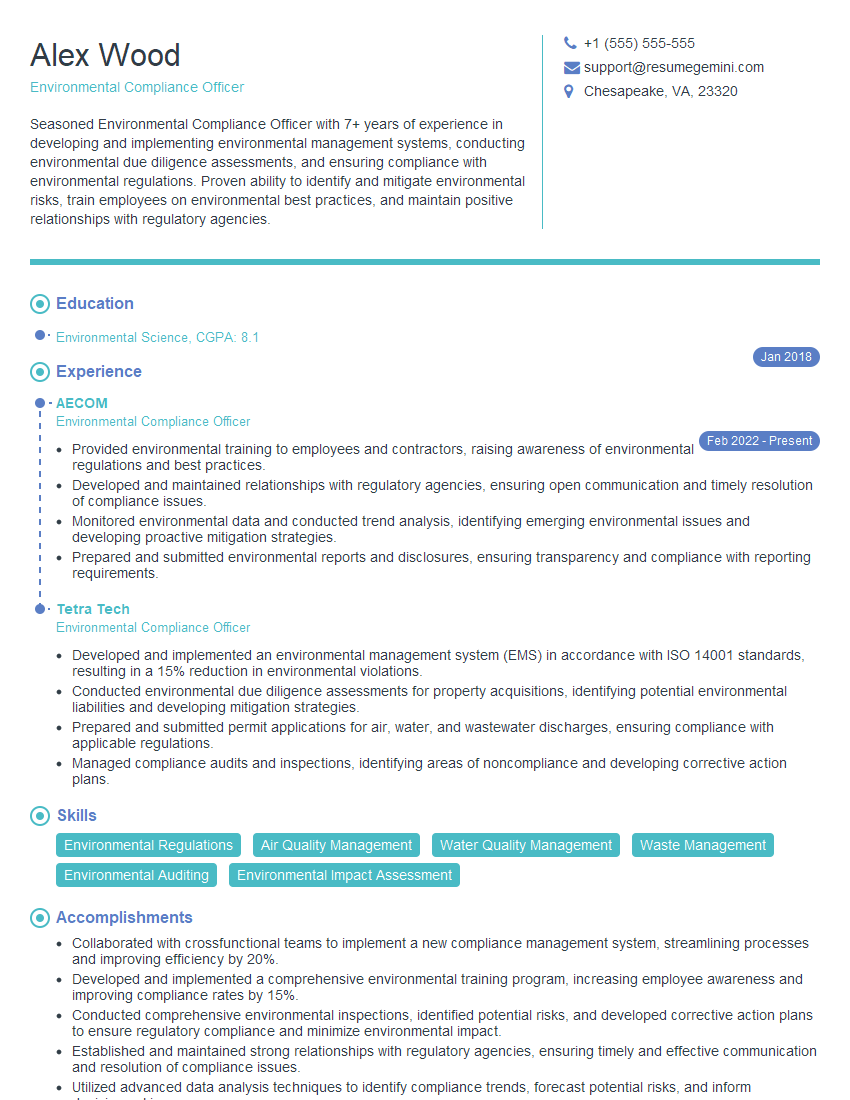
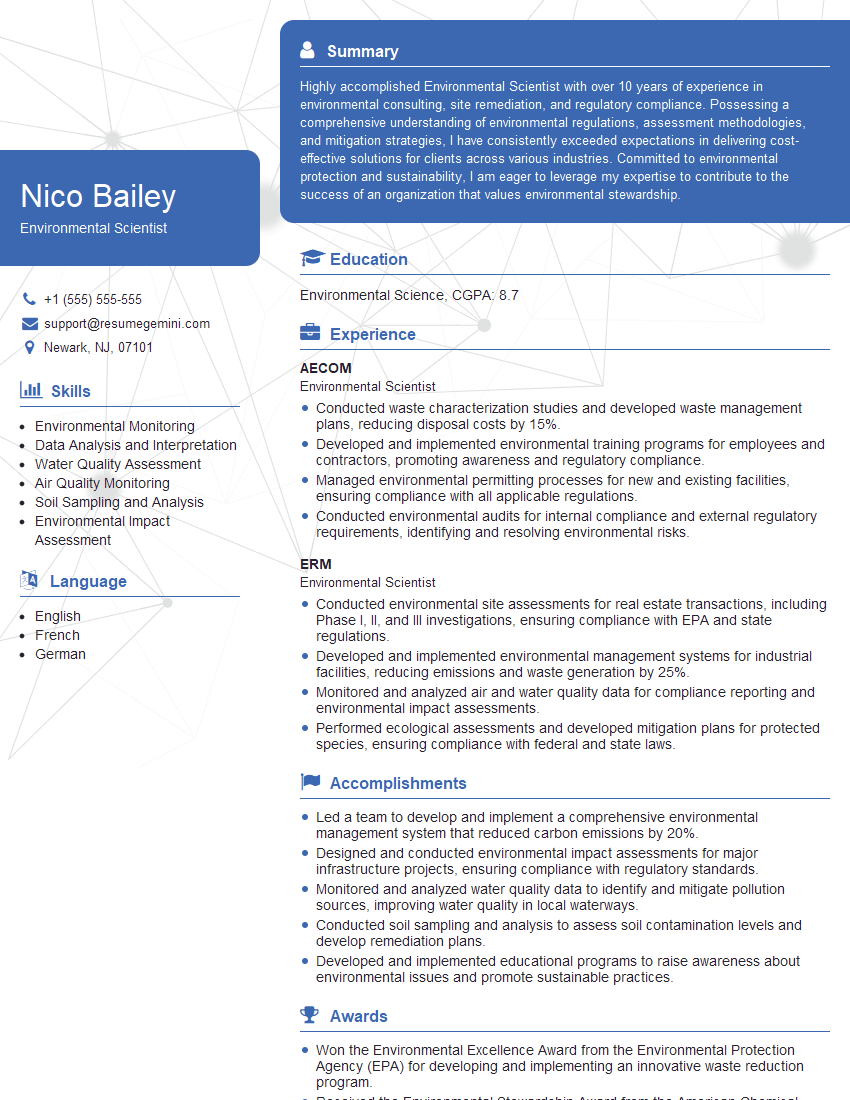
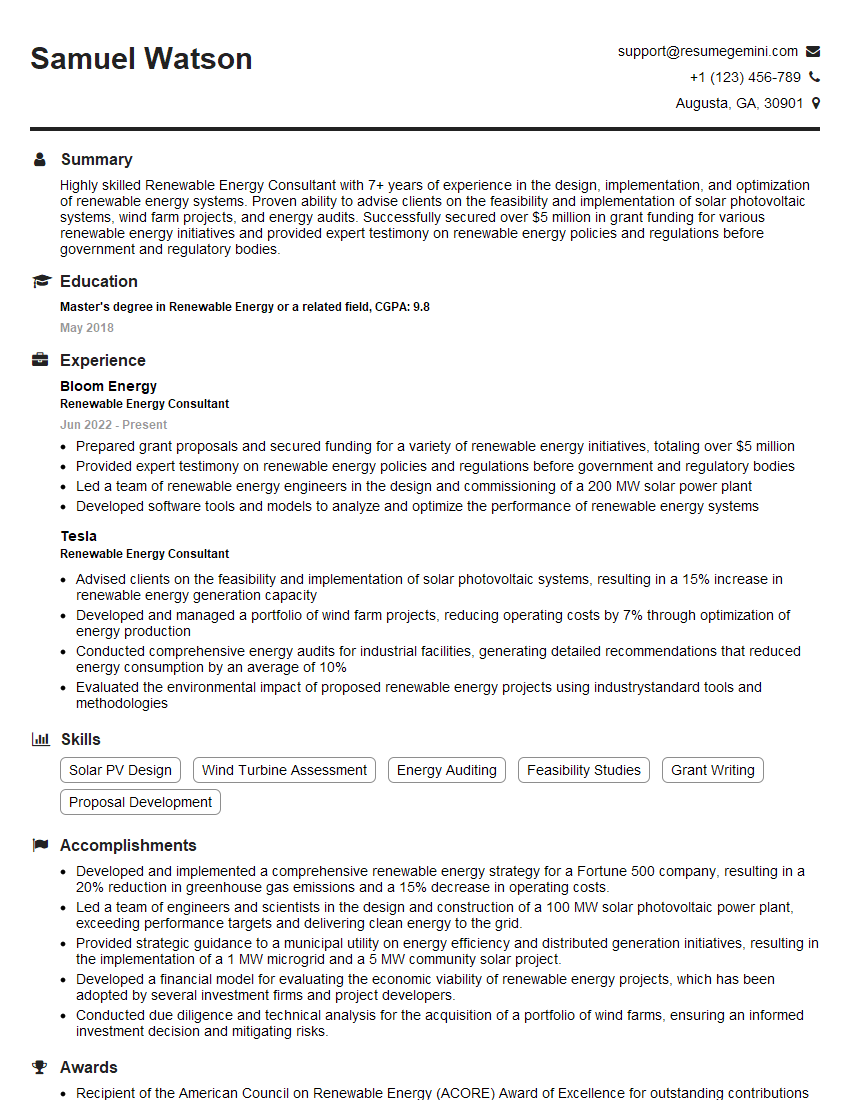
Mastering Sustainability and Ethical Practices is crucial for career advancement in today’s increasingly conscious world. Employers highly value candidates who demonstrate a commitment to responsible business practices and a proactive approach to environmental and social issues. To maximize your job prospects, create a strong, ATS-friendly resume that effectively highlights your skills and experience in this area. ResumeGemini is a trusted resource for building professional resumes that get noticed. Use it to craft a compelling narrative showcasing your qualifications. Examples of resumes tailored to Sustainability and Ethical Practices are available to guide you.

Explore more articles
Users Rating of Our Blogs
Share Your Experience
We value your feedback! Please rate our content and share your thoughts (optional).
What Readers Say About Our Blog
Very informative content, great job.
good