Every successful interview starts with knowing what to expect. In this blog, we’ll take you through the top Sustainable Building Practices Knowledge interview questions, breaking them down with expert tips to help you deliver impactful answers. Step into your next interview fully prepared and ready to succeed.
Questions Asked in Sustainable Building Practices Knowledge Interview
Q 1. Explain the principles of sustainable building design.
Sustainable building design rests on several core principles, all aimed at minimizing the environmental impact of the built environment throughout its entire lifecycle. Think of it like creating a building that’s both healthy and environmentally responsible, from cradle to grave.
- Minimizing environmental impact: This encompasses reducing the building’s carbon footprint, using sustainable materials, and conserving resources like water and energy. For example, choosing locally sourced timber reduces transportation emissions.
- Optimizing resource use: Efficiently using energy, water, and materials is key. Passive solar design, for instance, harnesses sunlight to reduce heating needs.
- Promoting occupant health and well-being: Creating a healthy indoor environment through good air quality, natural light, and thermal comfort is crucial. Think about using non-toxic paints and providing adequate ventilation.
- Enhancing resilience: Designing structures to withstand extreme weather events and other environmental challenges is critical in a changing climate. This may involve incorporating flood-resistant features or using durable, weather-resistant materials.
- Promoting lifecycle thinking: Considering the environmental and economic impacts of a building from its design and construction to its eventual demolition and reuse is essential. This includes planning for deconstruction and material reuse at the end of the building’s life.
Ultimately, sustainable building design is about integrating ecological, social, and economic considerations into the entire building process, resulting in structures that are both environmentally responsible and economically viable.
Q 2. Describe your experience with LEED certification processes.
I have extensive experience with LEED (Leadership in Energy and Environmental Design) certification processes, having led the certification efforts on over ten projects ranging from residential complexes to large-scale commercial developments. My involvement typically spans the entire process, from pre-design planning and documentation to the final submission and certification.
For example, on a recent office building project, I worked closely with the design team to incorporate strategies that maximized points across various LEED categories, such as energy efficiency, water conservation, and sustainable site development. This included specifying high-performance building envelopes, implementing rainwater harvesting systems, and selecting low-VOC (Volatile Organic Compounds) interior finishes. We achieved LEED Gold certification, exceeding the client’s initial expectations.
My expertise encompasses all aspects of LEED certification, including:
- LEED rating system understanding: I’m proficient in navigating the nuances of different LEED rating systems (LEED BD+C, LEED O+M, etc.) and identifying opportunities to maximize points within each category.
- Documentation and reporting: I’m adept at compiling the extensive documentation required for LEED certification, ensuring all necessary data is accurately reported and meets the stringent requirements.
- Third-party review and response: I have experience interacting with Green Building Certification bodies and addressing any comments or issues raised during the review process.
My experience has equipped me to lead teams effectively, manage complex documentation, and achieve successful LEED certifications, consistently exceeding client expectations and driving sustainable practices.
Q 3. What are the key performance indicators (KPIs) for a sustainable building?
Key Performance Indicators (KPIs) for sustainable buildings track the building’s environmental and economic performance, helping to evaluate its overall success in achieving sustainability goals. These KPIs are often used to benchmark the building’s performance against industry standards or other comparable buildings.
- Energy consumption (kWh/m²/year): Measures the building’s energy efficiency.
- Water consumption (L/m²/year): Tracks the building’s water usage.
- Carbon emissions (kgCO2e/m²/year): Quantifies the building’s greenhouse gas emissions.
- Waste diversion rate (%): Indicates the amount of construction and demolition waste diverted from landfills.
- Indoor environmental quality (IEQ) metrics: Includes things like air quality, thermal comfort, and daylighting levels, which are measured using tools and occupant surveys.
- Occupant satisfaction: Assesses how satisfied occupants are with the building’s environmental performance and overall comfort.
- Lifecycle cost (Total cost of ownership): Considers all costs associated with the building over its lifespan (design, construction, operation, maintenance, and demolition).
Regular monitoring of these KPIs is essential for identifying areas for improvement and ensuring that the building remains on track to meet its sustainability objectives.
Q 4. How do you assess the embodied carbon of building materials?
Assessing the embodied carbon of building materials involves quantifying the greenhouse gas emissions associated with their extraction, manufacturing, transportation, and installation. Think of it as the carbon footprint of the materials themselves before they even become part of the building.
Several methods are used for this assessment:
- Environmental Product Declarations (EPDs): These standardized documents provide information on the life-cycle environmental impacts of a product, including embodied carbon. They are becoming increasingly common and are crucial for accurate assessment.
- Life Cycle Assessment (LCA): A more comprehensive method that analyzes the entire life cycle of a material, from cradle to grave, to determine its environmental impacts. This is often used in situations where EPDs are not available or need further clarification.
- Software tools and databases: Numerous software tools and databases (like Athena Impact Estimator) provide embodied carbon data for various materials, simplifying the assessment process.
The process typically involves identifying all the materials used in a building, gathering their embodied carbon data from EPDs or other reliable sources, and then calculating the total embodied carbon of the structure. This information is crucial for making informed material choices and minimizing the overall carbon footprint of the building.
Q 5. Explain the importance of life-cycle cost analysis in sustainable building projects.
Life-cycle cost analysis (LCCA) is a crucial tool in sustainable building projects because it considers all costs associated with a building throughout its entire life, not just the initial construction costs. This holistic approach helps identify cost-effective sustainable solutions and facilitates informed decision-making.
By considering factors like energy consumption, maintenance costs, repair costs, replacement costs, and end-of-life demolition, LCCA provides a comprehensive picture of a building’s overall economic performance. A simple example: While high-performance windows might have a higher upfront cost, their long-term energy savings can significantly reduce operational expenses, leading to lower overall lifecycle costs.
The LCCA process generally involves:
- Defining the building’s lifespan: Establishing a timeframe for the analysis.
- Identifying all relevant costs: Including design, construction, operation, maintenance, and demolition.
- Estimating the cost of each item: Using appropriate data and methodologies.
- Discounting future costs: Adjusting future costs to reflect their present value.
- Comparing different options: Evaluating the lifecycle costs of various design and material choices.
By performing an LCCA, project stakeholders can make informed decisions that optimize both the economic and environmental performance of the building, leading to a more sustainable and cost-effective outcome over the long term.
Q 6. Describe your experience with energy modeling software (e.g., EnergyPlus, IES VE).
I possess extensive experience using energy modeling software, primarily EnergyPlus and IES Virtual Environment (IES VE). These tools are invaluable for analyzing and optimizing the energy performance of buildings during the design phase. They allow us to simulate a building’s energy use under various conditions, identify potential energy-saving strategies, and assess the impact of design decisions on overall energy efficiency.
In a recent project using EnergyPlus, we modeled different building envelope configurations to determine the optimal insulation levels and window types for minimizing energy consumption. The simulations revealed that incorporating high-performance glazing and increasing insulation thickness significantly reduced heating and cooling loads, resulting in substantial energy savings.
My proficiency encompasses:
- Model creation and input data preparation: I can create detailed energy models based on architectural drawings and specifications, including aspects such as geometry, materials, HVAC systems, and occupancy schedules. This involves attention to details like the exact construction of walls, windows, and roofs.
- Simulation setup and execution: I’m experienced in configuring simulations for various climate conditions and operational scenarios to evaluate the building’s performance under different use patterns. We can test how the building responds to differing weather scenarios across multiple years.
- Result analysis and interpretation: I can thoroughly analyze the simulation outputs, identify areas for improvement, and make recommendations for optimizing energy performance. This might involve looking for patterns in peak energy demands and opportunities to better utilize passive design techniques.
My skills in energy modeling enable me to make data-driven decisions that optimize building performance and contribute to more sustainable and efficient designs.
Q 7. What strategies can be implemented to reduce water consumption in buildings?
Reducing water consumption in buildings requires a multi-pronged approach focusing on both efficient fixtures and responsible water management practices. Think of it like creating a water-wise building that minimizes waste at every stage.
- High-efficiency fixtures: Installing low-flow toilets, showerheads, and faucets can significantly reduce water usage. These fixtures can achieve comparable performance using a fraction of the water.
- Water-efficient landscaping: Using drought-tolerant plants, implementing rainwater harvesting systems, and employing smart irrigation technologies can drastically reduce outdoor water consumption. This also includes choosing landscaping appropriate for the climate to avoid unnecessary irrigation.
- Leak detection and repair: Regularly inspecting plumbing systems for leaks and promptly repairing them can prevent significant water waste. Simple leaks can add up to large quantities of water wasted over time.
- Greywater recycling systems: Recycling wastewater from showers and sinks for non-potable uses (e.g., toilet flushing or irrigation) can significantly reduce potable water demand. This requires careful design and filtration to ensure safety and compliance.
- Water metering and monitoring: Installing water meters to track water consumption helps identify areas for improvement and encourages conservation efforts. Regular tracking allows you to spot unexpected usage increases and address potential problems.
- Water-saving appliances: Using high-efficiency washing machines and dishwashers can substantially reduce water usage in the home.
Implementing these strategies in a holistic manner can lead to substantial reductions in water consumption, contributing to both environmental sustainability and cost savings.
Q 8. How do you ensure indoor air quality in a sustainable building?
Ensuring good indoor air quality (IAQ) is paramount in sustainable buildings. It’s not just about comfort; it directly impacts occupant health and productivity. We achieve this through a multi-pronged approach focusing on source control, ventilation, and filtration.
Source Control: This involves minimizing the introduction of pollutants. We select low-VOC (Volatile Organic Compound) emitting materials like paints, adhesives, and furniture. Properly sealing building envelopes prevents radon infiltration. We also educate occupants on the importance of proper cleaning and maintenance to reduce dust and allergens.
Ventilation: Effective ventilation is crucial for diluting indoor pollutants. We utilize balanced mechanical ventilation systems with heat recovery to minimize energy loss while maximizing fresh air intake. Natural ventilation strategies, such as strategically placed operable windows and strategically designed atriums, are incorporated where appropriate.
Filtration: High-efficiency particulate air (HEPA) filters are used in HVAC systems to remove airborne particles. We might also incorporate air purifiers in specific areas, especially in spaces sensitive to air quality, such as classrooms or healthcare facilities. Regular filter replacement is vital.
For example, in a recent project, we implemented a system that monitored CO2 levels and automatically adjusted ventilation rates to maintain optimal IAQ, improving occupant comfort and well-being.
Q 9. Explain the concept of passive solar design and its benefits.
Passive solar design leverages the sun’s energy to heat and light buildings without using mechanical systems. Think of it as harnessing nature’s free energy. It’s all about thoughtful building orientation, window placement, and thermal mass to optimize solar gain in winter and minimize it in summer.
Orientation: Positioning the building to maximize solar exposure on south-facing walls (in the Northern Hemisphere) allows for optimal sunlight penetration during the colder months.
Window Placement & Sizing: Large south-facing windows maximize solar heat gain, while carefully placed overhangs and shading devices prevent overheating during summer. Proper window insulation (low-e glazing) reduces heat loss in winter.
Thermal Mass: Materials like concrete, brick, or stone absorb solar heat during the day and release it slowly at night, regulating indoor temperatures and reducing heating loads.
The benefits are significant: reduced heating and cooling costs, lower energy consumption, decreased carbon footprint, and improved occupant comfort. Imagine a building needing minimal heating or cooling, saving both money and the environment.
Q 10. Discuss the role of building automation systems in optimizing building performance.
Building automation systems (BAS) are the brains of a sustainable building, constantly monitoring and optimizing building performance. They integrate various building systems – HVAC, lighting, security – into a centralized control system, allowing for precise management and efficiency.
Energy Optimization: BAS can automatically adjust lighting and HVAC systems based on occupancy and weather conditions, significantly reducing energy waste. For example, lights automatically switch off in unoccupied rooms.
Environmental Control: They maintain optimal indoor environmental conditions, including temperature, humidity, and air quality. This ensures comfort and productivity.
Fault Detection and Diagnostics: BAS can detect anomalies and potential equipment failures early on, minimizing downtime and preventing costly repairs. This proactive approach saves money in the long run.
Data Analytics: BAS collects data on energy consumption, allowing for informed decisions on energy efficiency improvements and performance tracking over time.
For instance, a BAS can integrate with renewable energy sources, prioritizing the use of solar power before drawing from the grid, maximizing sustainability.
Q 11. What are the different types of renewable energy technologies suitable for buildings?
Several renewable energy technologies are suitable for buildings. The best choice depends on factors like location, climate, and building type.
Photovoltaic (PV) Systems: Solar panels convert sunlight directly into electricity. Rooftop installations are common. Building-Integrated Photovoltaics (BIPV) integrate solar cells into building materials, like roofing tiles or facades.
Solar Thermal Systems: These systems use solar energy to heat water or air for domestic hot water, space heating, or pool heating. They are efficient and cost-effective.
Wind Turbines: Small wind turbines can be installed on rooftops or in open areas to generate electricity, especially effective in windy locations.
Geothermal Heat Pumps: These systems use the relatively constant temperature of the earth to heat and cool buildings, providing highly efficient heating and cooling.
Biomass Boilers: These systems use organic materials like wood pellets or agricultural waste to generate heat for buildings. This is suitable in areas with ample biomass resources.
Combining several renewable energy technologies is often the most effective approach to minimize reliance on fossil fuels.
Q 12. How do you evaluate the environmental impact of different building materials?
Evaluating the environmental impact of building materials is crucial for sustainable building. We use Life Cycle Assessment (LCA) to comprehensively assess the environmental impacts of a material throughout its entire life cycle – from raw material extraction to manufacturing, transportation, installation, use, and disposal. This involves considering various factors:
Embodied Carbon: The greenhouse gas emissions associated with the manufacturing and transportation of a material.
Energy Consumption: The energy required for extraction, processing, and transportation.
Water Usage: The amount of water used in the material’s production.
Waste Generation: The amount of waste produced during manufacturing and at end-of-life.
Recyclability: The potential for the material to be recycled or reused.
Tools and databases like Environmental Product Declarations (EPDs) provide standardized information on a material’s environmental performance, aiding in informed material selection. We always prioritize materials with low embodied carbon and high recyclability, such as recycled steel or sustainably sourced timber.
Q 13. Describe your experience with building commissioning and its importance.
Building commissioning is a quality assurance process that verifies that all building systems are designed, installed, and operated as intended. My experience encompasses all phases, from pre-design collaboration to post-occupancy evaluation. It’s a critical step in ensuring building performance and long-term sustainability.
Pre-design phase: We review design documents to ensure systems are properly designed for energy efficiency and sustainability.
Construction Phase: We observe the installation process, test and verify systems, and document any deviations from the design.
Post-Occupancy Phase: We verify that systems are functioning as expected, identify any operational issues, and recommend improvements. We collect data to benchmark and evaluate the building’s actual performance against the design targets.
The importance of commissioning cannot be overstated. It ensures that the building performs as designed, maximizing energy efficiency, reducing operational costs, and delivering a healthy and comfortable environment for occupants. A poorly commissioned building can lead to significant energy waste and occupant discomfort.
Q 14. How do you address thermal bridging in building design?
Thermal bridging occurs when heat flows through a building envelope more easily in certain areas due to the presence of materials with higher thermal conductivity, like steel studs or concrete. This can lead to heat loss in winter and heat gain in summer, reducing energy efficiency.
Design Strategies: Minimizing thermal bridging starts with design. We use continuous insulation layers to break the thermal bridge. We carefully select materials with high thermal resistance. This includes using insulated metal studs instead of standard steel studs.
Construction Techniques: Using proper insulation techniques is crucial. This includes ensuring continuous insulation around windows and doors, proper sealing of gaps, and the use of appropriate sealants and tapes.
Material Selection: Materials with high thermal resistance are essential. We prioritize materials such as insulated concrete forms (ICFs), which offer excellent thermal performance and minimize thermal bridging.
Addressing thermal bridging is vital for achieving high-performance, energy-efficient buildings. Even small thermal bridges can have a significant impact on overall energy performance. A well-designed building minimizes these effects, resulting in lower energy costs and environmental impact.
Q 15. Explain the importance of daylighting in sustainable building design.
Daylighting is the practice of using natural light to illuminate the interior of a building, reducing reliance on artificial lighting. It’s a cornerstone of sustainable building design because it significantly reduces energy consumption, lowers operating costs, and enhances occupant well-being.
Importance:
- Energy Savings: Daylighting can reduce electricity consumption for lighting by up to 80%, a substantial contribution to a building’s carbon footprint reduction.
- Improved Occupant Health and Productivity: Natural light has been shown to improve mood, sleep patterns, and cognitive function, leading to increased productivity among occupants.
- Reduced Heat Island Effect: Buildings that rely less on artificial lighting also generate less heat, mitigating the urban heat island effect.
- Enhanced Aesthetics: Strategic daylighting can create a more pleasant and inviting atmosphere within a building, improving its overall aesthetic appeal.
Practical Application: This involves careful consideration of window placement, size, and orientation to maximize daylight penetration while minimizing glare. Techniques like light shelves, light wells, and skylights can be employed to distribute daylight effectively throughout the building. For example, in a school design, strategically positioned windows in classrooms can significantly reduce reliance on artificial lighting during daytime hours, while maximizing natural light for better student learning environments.
Career Expert Tips:
- Ace those interviews! Prepare effectively by reviewing the Top 50 Most Common Interview Questions on ResumeGemini.
- Navigate your job search with confidence! Explore a wide range of Career Tips on ResumeGemini. Learn about common challenges and recommendations to overcome them.
- Craft the perfect resume! Master the Art of Resume Writing with ResumeGemini’s guide. Showcase your unique qualifications and achievements effectively.
- Don’t miss out on holiday savings! Build your dream resume with ResumeGemini’s ATS optimized templates.
Q 16. What are your strategies for reducing waste during construction?
Reducing waste during construction is crucial for sustainable building practices. My strategies focus on minimizing material use, optimizing design, and implementing proper waste management protocols.
- Design Optimization: Careful planning and prefabrication reduce material waste by accurately determining material needs upfront. Modular designs and off-site construction are excellent examples.
- Material Selection: Utilizing recycled and reclaimed materials significantly reduces landfill waste. Choosing durable, locally-sourced materials minimizes transportation emissions and waste from replacements.
- Waste Segregation and Recycling: Implementing robust waste management plans that segregate materials (wood, metal, concrete, etc.) during demolition and construction allows for efficient recycling and reduces the amount sent to landfills. This also includes diverting construction debris for reuse as aggregate in road construction or other applications.
- Lean Construction Principles: Applying Lean methodologies reduces waste through continuous improvement, minimizing defects, and streamlining processes. This results in reduced material wastage and increased efficiency.
Example: On a recent project, by implementing a comprehensive waste management plan and using prefabricated components, we achieved a 90% diversion rate for construction and demolition waste, significantly exceeding industry standards.
Q 17. Discuss your experience with sustainable site development practices.
Sustainable site development prioritizes minimizing environmental impact on the land. My experience includes utilizing strategies that protect natural resources, conserve water, and reduce energy consumption.
- Site Assessment and Analysis: A thorough analysis of the site’s existing conditions – including hydrology, soil type, vegetation, and microclimate – informs design decisions to minimize disruption and leverage natural resources.
- Minimizing Site Disturbance: Preserving existing trees and vegetation reduces the need for new planting, minimizes erosion, and maintains biodiversity. Careful grading and drainage strategies reduce soil erosion.
- Water Management: Implementing rainwater harvesting systems, using permeable paving, and incorporating bioswales reduces stormwater runoff and helps manage water resources more sustainably.
- Soil Conservation: Techniques like soil stabilization and erosion control measures are employed to protect soil quality, minimizing the need for imported topsoil.
- Brownfield Redevelopment: Revitalizing previously developed sites reduces sprawl and minimizes environmental impact compared to developing virgin land.
Example: In a recent project, we incorporated a rainwater harvesting system to irrigate landscaping, significantly reducing reliance on municipal water. The system also provided a backup for non-potable water usage in the building, further reducing water demand.
Q 18. How do you integrate renewable energy sources into building design?
Integrating renewable energy sources is fundamental in sustainable building design. This involves carefully selecting appropriate technologies based on site conditions and energy needs.
- Photovoltaic (PV) Systems: Rooftop solar panels are a common way to generate electricity onsite. The system size is determined by the building’s energy demand and available roof area. South-facing roofs are ideal in the Northern Hemisphere.
- Solar Thermal Systems: Solar collectors can be used to heat water for domestic hot water or space heating, significantly reducing reliance on fossil fuels. This is particularly effective in locations with high solar radiation.
- Wind Turbines: In areas with sufficient wind resources, small-scale wind turbines can supplement electricity generation. Their use needs careful consideration regarding noise pollution and visual impact.
- Geothermal Energy: Ground source heat pumps utilize the stable temperature of the earth to provide efficient heating and cooling, reducing energy consumption compared to conventional HVAC systems. This is particularly efficient in areas with consistent ground temperatures.
Example: On a recent project, we incorporated a combination of PV panels and a geothermal heat pump system, resulting in a building that generates a significant portion of its energy needs from renewable sources and reduces its reliance on the grid substantially.
Q 19. Explain your understanding of building codes and regulations related to sustainability.
Building codes and regulations related to sustainability are evolving to promote energy efficiency, resource conservation, and environmental protection. My understanding encompasses both national and local requirements.
- Energy Codes: These specify minimum energy efficiency standards for buildings, often based on factors like climate zone and building type. Compliance involves selecting energy-efficient HVAC systems, building envelope materials, and lighting.
- Water Conservation Codes: These regulations set standards for water usage in buildings, promoting water-efficient fixtures and appliances (low-flow toilets, showerheads).
- Material Codes: Certain codes promote the use of recycled materials, sustainable forestry products, and low-VOC (Volatile Organic Compounds) materials to reduce indoor air pollution and promote material circularity.
- Green Building Standards: Many jurisdictions incorporate elements of green building rating systems (e.g., LEED, BREEAM) into their codes, providing additional incentives for higher levels of sustainability.
Staying abreast of these regulations is critical to ensure compliance and leverage incentives for sustainable development. I regularly consult relevant code books and attend professional development courses to stay updated on the latest requirements.
Q 20. Describe your experience with green building rating systems (e.g., BREEAM, Green Star).
I have extensive experience with various green building rating systems, including LEED, BREEAM, and Green Star. These systems provide frameworks for evaluating and certifying the sustainability performance of buildings.
- LEED (Leadership in Energy and Environmental Design): A widely used system in North America that assesses buildings across several categories, including energy efficiency, water conservation, materials selection, and indoor environmental quality.
- BREEAM (Building Research Establishment Environmental Assessment Method): A prominent system in Europe that offers a comprehensive assessment of building sustainability.
- Green Star (Australia): This system is prevalent in Australia and New Zealand and focuses on environmental, economic, and social sustainability.
My experience involves leading teams through the certification process, guiding design decisions to optimize points, and documenting building performance to meet the requirements of these systems. These systems are not merely checklists; they provide a roadmap towards holistic sustainable building practices. For instance, aiming for LEED Gold certification often leads to innovative designs that surpass basic code requirements, pushing the boundaries of sustainable architecture.
Q 21. How do you manage the budget constraints and time constraints for sustainable projects?
Managing budget and time constraints in sustainable projects requires careful planning and resource allocation. Sustainable practices aren’t necessarily more expensive, but they often require upfront investments that pay off in the long run.
- Value Engineering: Identifying cost-effective solutions while maintaining high sustainability standards. This can involve careful material selection, optimization of building systems, and exploring alternative construction methods.
- Phased Approach: Implementing sustainable strategies incrementally, starting with the most impactful and cost-effective measures. This approach avoids overwhelming the budget upfront while still delivering significant environmental benefits.
- Lifecycle Cost Analysis (LCA): Considering the long-term costs of building operations, including energy consumption and maintenance, alongside initial construction costs. This helps make informed decisions about sustainable investments.
- Effective Project Management: Employing robust project management tools and techniques to track progress, manage resources, and mitigate potential delays.
Example: On a recent project, we successfully integrated a rainwater harvesting system without impacting the budget significantly. By using readily available, locally sourced materials and negotiating favorable pricing with suppliers, we implemented the system cost-effectively, adding considerable value to the overall project’s sustainability profile.
Q 22. What are the challenges you have faced in implementing sustainable practices in the past?
Implementing sustainable practices isn’t always smooth sailing. One major challenge has been the initial higher upfront costs associated with sustainable materials and technologies. For example, sourcing reclaimed wood or installing a sophisticated geothermal heating system can be significantly more expensive than conventional options. This often requires convincing clients and stakeholders of the long-term cost savings and return on investment (ROI) through lifecycle costing analysis, which demonstrates lower operating costs over the building’s lifespan. Another hurdle is navigating the complexities of green building certifications – obtaining LEED or BREEAM certification requires meticulous documentation and adherence to stringent standards, which can add time and resources to the project. Finally, a lack of skilled labor experienced in sustainable construction techniques can also be a significant obstacle.
In one project, we faced resistance to using locally sourced materials due to perceived higher costs compared to imported options. We overcame this by demonstrating that the reduced transportation emissions and the support of the local economy outweighed the slight initial price difference. This involved a thorough lifecycle assessment and transparent communication with the stakeholders.
Q 23. Explain your experience with sustainable procurement strategies.
Sustainable procurement is vital for achieving environmentally responsible building projects. My experience involves developing and implementing strategies that prioritize materials and products with minimal environmental impact throughout their lifecycle. This encompasses evaluating factors like embodied carbon (the carbon emissions associated with the manufacturing, transportation, and installation of materials), recycled content, renewable resources, and the manufacturer’s sustainability credentials. We use tools like Environmental Product Declarations (EPDs) to compare the environmental performance of different products and materials. For example, selecting sustainably harvested timber over rapidly depleting hardwoods or opting for recycled steel instead of virgin steel significantly reduces the environmental footprint.
In a recent project, we implemented a points-based system for material selection, awarding points for factors such as recycled content, local sourcing, and reduced embodied carbon. This system incentivized contractors and suppliers to offer more sustainable options, creating a competitive environment that benefited the project’s sustainability goals.
Q 24. Describe your understanding of circular economy principles in construction.
The circular economy is a revolutionary concept that aims to minimize waste and maximize resource utilization. In construction, this translates to designing buildings that can be easily deconstructed, allowing materials to be reused, repurposed, or recycled at the end of the building’s life. This contrasts with the traditional linear ‘take-make-dispose’ model. Key circular economy principles in construction include designing for disassembly, using modular construction techniques, prioritizing durable and repairable materials, and establishing material passports that track the origin and composition of materials. This allows for easier tracking and responsible end-of-life management.
Imagine a building designed with standardized components that can be easily removed and reused in another project. Or consider using prefabricated modules that can be transported and reconfigured for different purposes. These approaches significantly reduce waste and conserve resources.
Q 25. How do you address the potential conflicts between sustainability goals and other project objectives?
Conflicts between sustainability goals and other project objectives, such as cost or time constraints, are common. Addressing these conflicts requires a holistic approach that considers all stakeholders and their priorities. It often involves collaborative decision-making, trade-off analysis, and creative problem-solving. For example, a higher upfront cost for sustainable materials might be offset by long-term energy savings. This trade-off can be clearly demonstrated through life-cycle cost analysis and compelling visuals.
A useful strategy is to involve stakeholders early in the design process to identify potential conflicts and develop mitigation strategies. Employing a multi-criteria decision analysis (MCDA) can help prioritize competing goals and make informed decisions based on weighted criteria. Sometimes, innovative solutions are required, such as incorporating recycled materials that offer both cost and environmental benefits.
Q 26. How do you communicate the benefits of sustainable building practices to stakeholders?
Communicating the benefits of sustainable building practices effectively is crucial for securing stakeholder buy-in. This requires a multi-pronged approach tailored to the specific audience. For clients, highlighting the long-term cost savings, improved occupant health and wellbeing, and enhanced property value is essential. For contractors, emphasizing the potential for increased efficiency and reduced waste can be persuasive. Visual aids like infographics, 3D models, and simulations are invaluable in showcasing the tangible benefits. Case studies of successful sustainable projects demonstrate the feasibility and positive impacts.
In my experience, storytelling plays a powerful role. Sharing compelling narratives of how sustainable practices have contributed to community benefits or environmental protection can create emotional connections and foster a shared commitment to sustainability.
Q 27. Describe your experience with monitoring and evaluating the performance of sustainable buildings.
Monitoring and evaluating the performance of sustainable buildings is vital for verifying the effectiveness of implemented strategies and identifying areas for improvement. This involves collecting data on energy consumption, water usage, indoor environmental quality, and waste generation. Smart building technologies and building management systems (BMS) are essential tools for data collection and analysis. Regular inspections, occupant surveys, and environmental audits provide valuable insights. The data gathered helps identify deviations from projected performance and inform corrective actions.
We typically use a combination of data loggers, automated metering infrastructure, and post-occupancy evaluations to assess building performance. This data is then analyzed to optimize building operations and identify opportunities for enhancing sustainability. This iterative process of monitoring, evaluation, and improvement is crucial for ensuring long-term sustainability.
Q 28. What are your future goals related to sustainable building practices?
My future goals revolve around advancing the integration of sustainable practices into mainstream construction. This involves promoting the adoption of innovative materials and technologies, such as bio-based materials and advanced energy systems. I aim to contribute to the development of standardized methodologies for lifecycle assessment and embodied carbon calculation to facilitate more informed decision-making. Furthermore, I want to foster collaboration and knowledge sharing within the industry to accelerate the transition towards a more sustainable built environment. Ultimately, my goal is to help create buildings that are not only environmentally responsible but also economically viable and socially equitable.
Specifically, I’m focusing on researching and implementing strategies for carbon sequestration in buildings, further reducing their overall environmental footprint and potentially contributing to carbon-negative construction.
Key Topics to Learn for Sustainable Building Practices Knowledge Interview
- Building Codes and Regulations: Understanding LEED, BREEAM, and other green building rating systems; interpreting and applying relevant codes to design and construction.
- Energy Efficiency Strategies: Passive design principles (orientation, shading, natural ventilation); active systems (HVAC, renewable energy integration); performing energy modeling and analysis.
- Material Selection and Life Cycle Assessment (LCA): Evaluating embodied carbon, recycled content, and material toxicity; understanding the environmental impact of construction materials throughout their lifecycle.
- Water Management: Implementing water-efficient fixtures and appliances; rainwater harvesting and greywater reuse; designing for reduced water consumption.
- Sustainable Site Planning: Minimizing site disturbance; preserving natural habitats; incorporating green infrastructure (e.g., green roofs, bioswales).
- Indoor Environmental Quality (IEQ): Designing for optimal air quality, thermal comfort, and daylighting; understanding the impact of building materials on occupant health.
- Waste Management and Reduction: Implementing strategies for construction waste reduction and recycling; promoting sustainable demolition and deconstruction practices.
- Renewable Energy Technologies: Understanding solar PV, wind, geothermal, and other renewable energy sources; integrating these technologies into building designs.
- Lifecycle Cost Analysis (LCCA): Evaluating the long-term economic and environmental costs of building design and construction decisions.
- Problem-solving and Case Studies: Demonstrating the ability to analyze challenges related to sustainable building practices and propose effective solutions; discussing relevant projects or experiences.
Next Steps
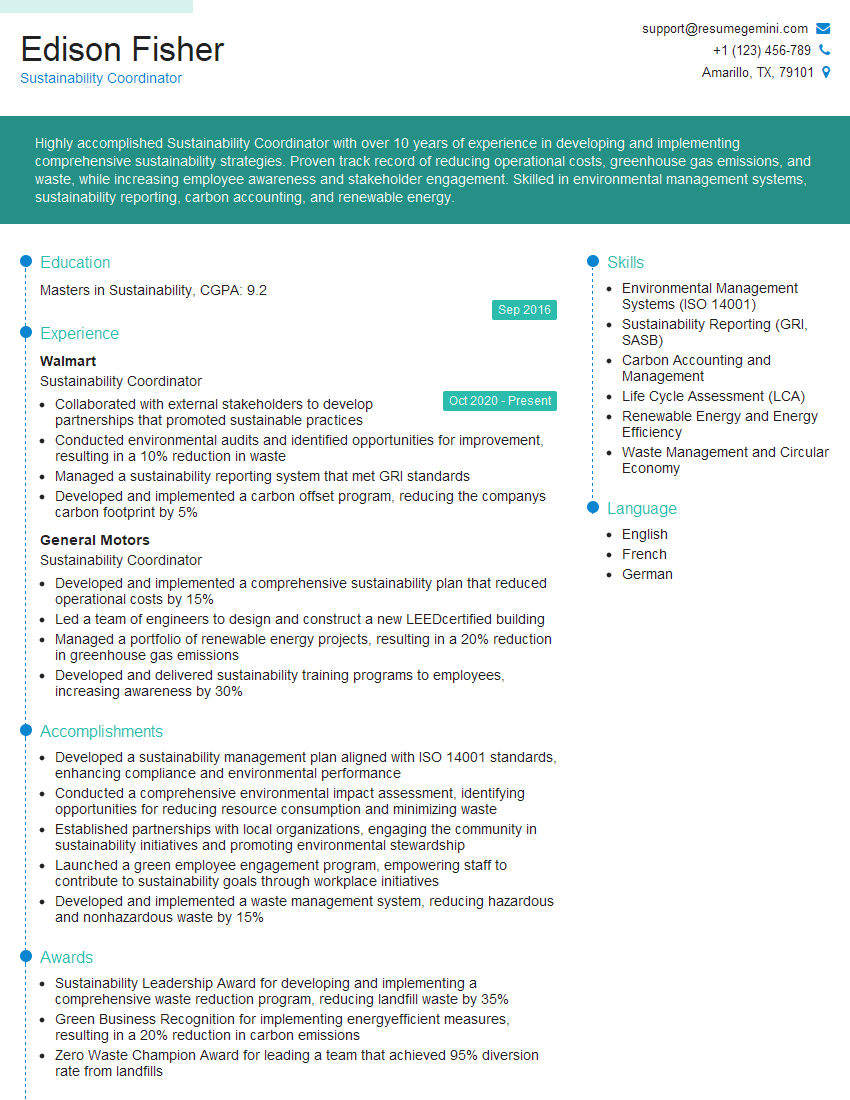
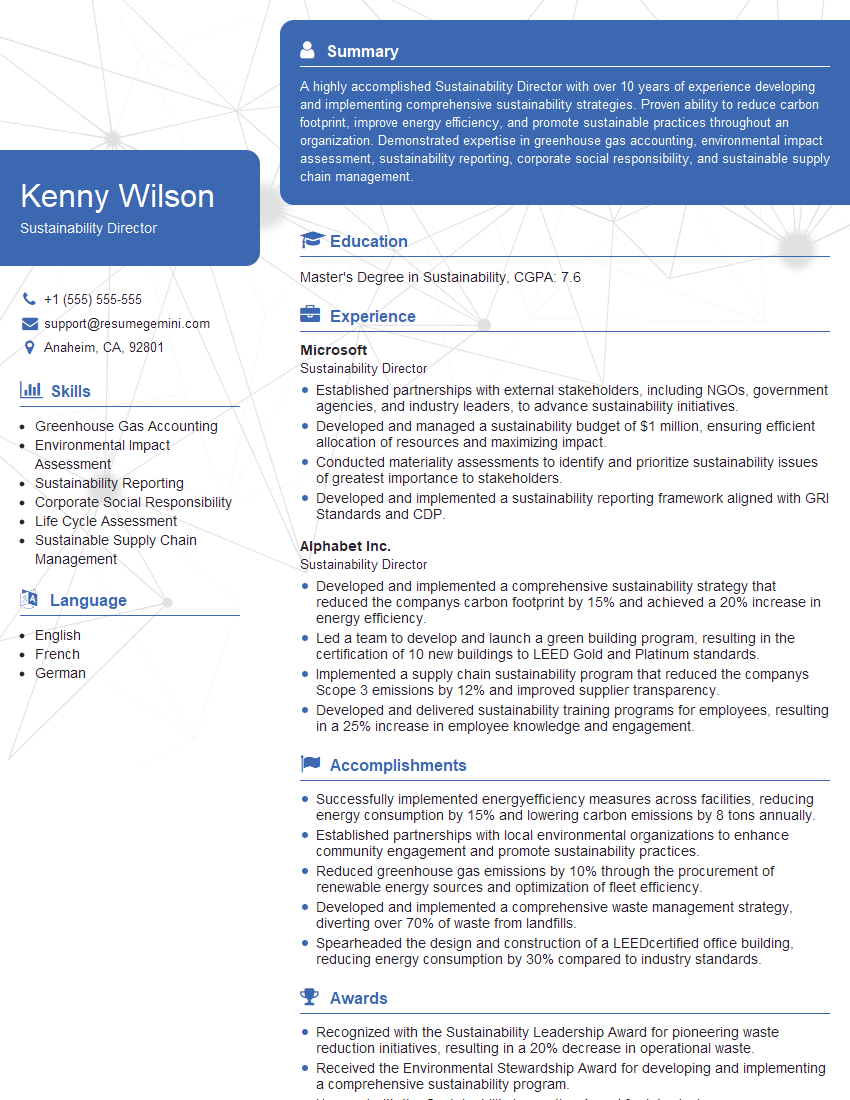
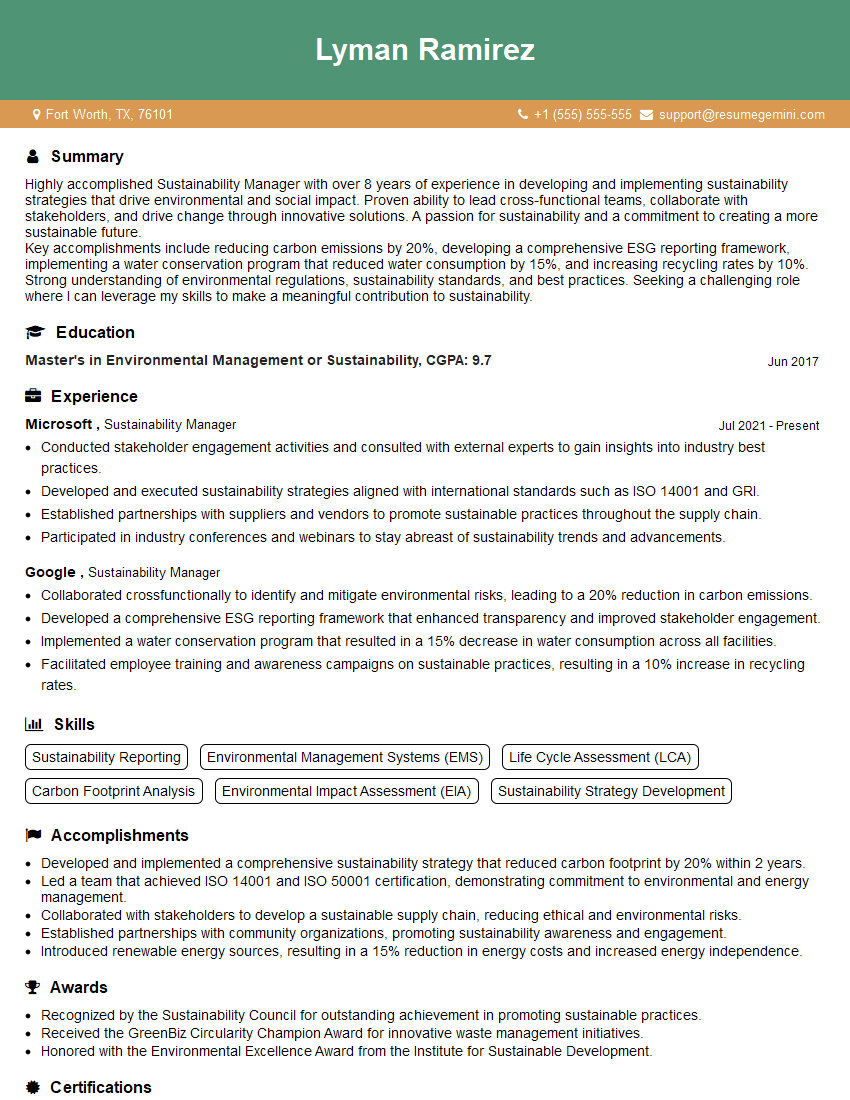
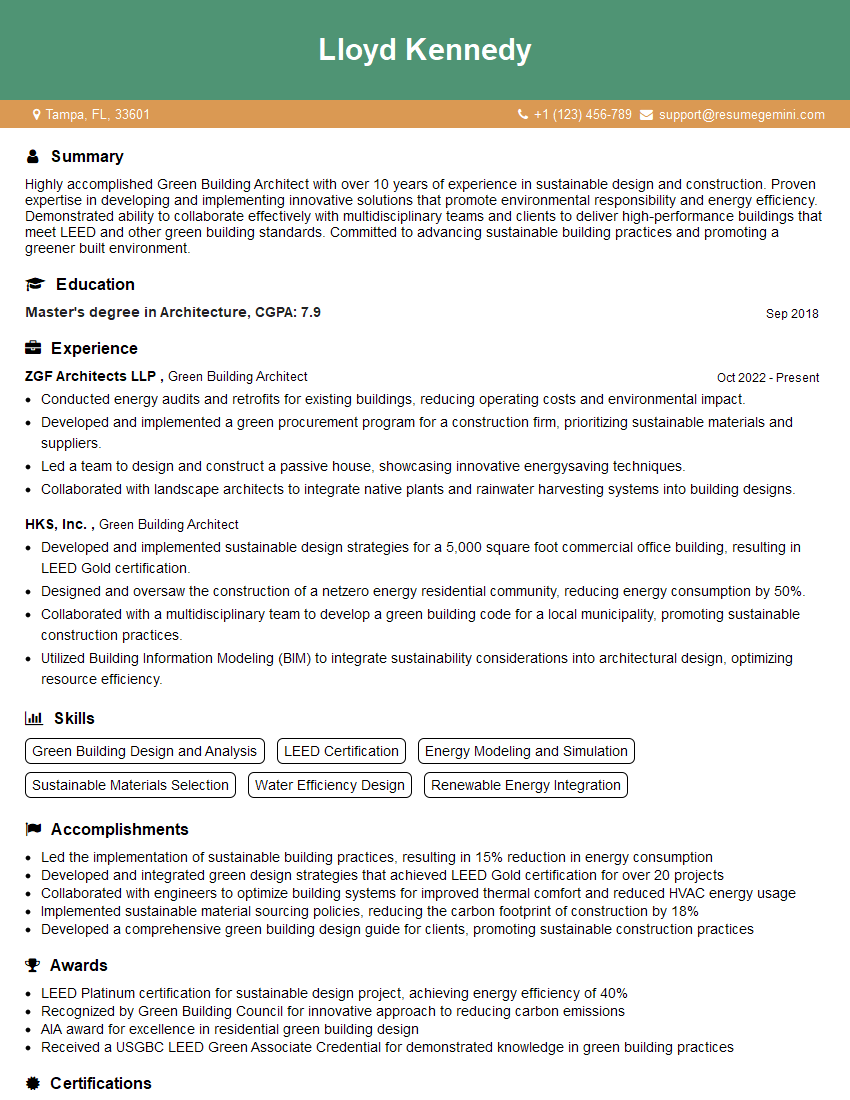
Mastering Sustainable Building Practices Knowledge is crucial for career advancement in the increasingly important field of green building. A strong understanding of these principles will make you a highly competitive candidate. To further enhance your job prospects, create an ATS-friendly resume that effectively highlights your skills and experience. ResumeGemini is a trusted resource to help you build a professional and impactful resume. We offer examples of resumes tailored to Sustainable Building Practices Knowledge to guide you in showcasing your expertise effectively. Let ResumeGemini help you build the perfect resume for your next career step.
Explore more articles
Users Rating of Our Blogs
Share Your Experience
We value your feedback! Please rate our content and share your thoughts (optional).
What Readers Say About Our Blog
Very informative content, great job.
good