Cracking a skill-specific interview, like one for Tactical Communications and Procedures, requires understanding the nuances of the role. In this blog, we present the questions you’re most likely to encounter, along with insights into how to answer them effectively. Let’s ensure you’re ready to make a strong impression.
Questions Asked in Tactical Communications and Procedures Interview
Q 1. Explain the importance of clear and concise communication in tactical situations.
In tactical situations, clear and concise communication is paramount; it’s the lifeblood of effective operations. Ambiguity can lead to misinterpretations, resulting in mission failure or even casualties. Think of it like a finely tuned orchestra – each instrument (team member) needs to play its part precisely and in perfect harmony. The conductor (commander) must provide clear instructions, ensuring everyone understands their role and objectives.
For instance, instead of saying “Move towards the objective,” a clearer instruction would be “Alpha Team, move to grid coordinates 47, 32, utilizing stealth approach, ETA 10 minutes.” This specifies the team, location, tactic, and timeframe, eliminating potential for confusion. Conciseness is equally critical; lengthy transmissions leave room for errors and increase vulnerability to interception.
Q 2. Describe your experience with different types of tactical communication systems (e.g., radio, satellite).
My experience encompasses a wide range of tactical communication systems. I’ve extensively utilized various handheld and vehicular radios, including the AN/PRC-152A and the Harris Falcon III. These systems are vital for short-to-medium range communication within a team or between units. Beyond that, I’ve worked with satellite communication systems, such as the Inmarsat BGAN terminals, which are essential for long-range communication, particularly in remote or challenging environments where terrestrial networks are unavailable. These systems provide critical connectivity when radio signals are unreliable or blocked.
Further, I possess experience with data links, allowing real-time data sharing like maps, imagery, and targeting information. These advanced systems significantly enhance situational awareness and coordination. In addition to these hardwares, I am well versed in utilizing software-based communication tools for secure messaging and information sharing within the team.
Q 3. How would you handle a communication failure during a critical operation?
Communication failure during a critical operation requires immediate and decisive action. My approach involves a layered strategy. First, I would attempt to troubleshoot the primary system. Is it a power issue? Radio frequency interference? Simple things like checking batteries or antenna connections are crucial first steps. If the problem persists, I’d immediately switch to a backup communication method, perhaps a different radio frequency, satellite phone, or pre-arranged alternative contact points. Meanwhile, I would use alternative methods, like visual signals or pre-determined hand signals, to relay critical information.
For example, if a primary radio fails, I would instruct my team to immediately transition to a pre-designated secondary frequency, while I simultaneously attempt to re-establish contact on the primary channel. Failing all else, a runner might be dispatched with a written message to relay vital information, showcasing the importance of redundancy and adaptability within the communication plan.
Q 4. What are the key principles of effective tactical communications procedures?
Effective tactical communication procedures hinge on several key principles. Firstly, simplicity and clarity are paramount; the message should be easily understood by all recipients. Secondly, security is crucial to protect sensitive information, hence encryption and secure communication protocols are essential. Thirdly, reliability demands redundancy in systems and procedures – backups are necessary for system failures. Fourthly, speed is vital during time-sensitive situations, hence concise, well-structured messages are prioritized. Lastly, situational awareness is maintained through consistent communication updates, ensuring everyone has a clear understanding of the operational context.
- Clear Terminology: Using standardized terminology avoids confusion.
- Designated Net Control: Establishing a single point of control for communication minimizes interference.
- Pre-Planned Communication Routes: Establishing alternative routes enhances system resilience.
Q 5. Explain your understanding of communication protocols and standards.
My understanding of communication protocols and standards is comprehensive. I am familiar with various standards, including MIL-STD-188-110 (for radio communication) and various network protocols used in secure data transmission. I understand the importance of adhering to these standards for interoperability and compatibility between different systems and platforms. This means I’m not just technically proficient but also aware of the administrative and regulatory frameworks governing secure communication, ensuring compliance and minimizing risk.
For example, I am familiar with the use of TCP/IP and other network protocols when utilizing data links to share real time information with other team members and command. Compliance with these protocols is vital in ensuring seamless data transfer and preventing errors.
Q 6. Describe your experience with encryption and secure communication methods.
Encryption and secure communication are fundamental aspects of tactical operations. I have extensive experience with various encryption methods, from basic voice scrambling to advanced end-to-end encryption for data transmission. This includes working with various encryption devices and software. I understand the importance of key management and regularly update encryption protocols to maintain optimal security levels, particularly when dealing with classified information.
For example, I’ve used encrypted radios in field operations to prevent enemy interception of sensitive mission data. I’m familiar with the use of Type 1 and Type 2 encryption which are highly secure and regulated in nature. I am also familiar with the potential vulnerabilities of encryption methods and implement strategies to mitigate those risks effectively.
Q 7. How do you ensure interoperability between different communication systems?
Ensuring interoperability between different communication systems is achieved through careful planning and implementation. This involves selecting systems that adhere to common standards and protocols, conducting thorough interoperability testing prior to deployment, and establishing clear procedures for communication between systems. It’s like having a universal translator in a multi-lingual team – everyone needs to be able to understand each other regardless of the language they use.
For instance, before a joint operation involving different branches of the military, we’d conduct comprehensive interoperability tests to ensure seamless communication between the units. This includes verifying compatibility between different radio systems, satellite links, and data networks. This proactive approach avoids costly errors and miscommunication during the critical mission.
Q 8. How would you prioritize communication needs in a high-stress environment?
Prioritizing communication in high-stress situations hinges on understanding the criticality of information. It’s not about volume, but about impact. I use a tiered system based on the principle of ‘need-to-know’.
- Tier 1: Life-critical information. This includes immediate threats to life, safety, or mission success (e.g., ‘friendly fire inbound!’, ‘casualty sustained’). These messages demand immediate, unhindered transmission.
- Tier 2: Mission-critical information. This concerns vital operational details impacting task completion (e.g., ‘target acquired, awaiting confirmation’, ‘requesting immediate air support’). While urgent, these can sometimes be queued if a Tier 1 message is in progress.
- Tier 3: Situational updates and administrative messages. This comprises less urgent information contributing to overall awareness (e.g., ‘fuel levels at 50%’, ‘encountered unexpected terrain’). These updates can often be batched or deferred until less critical moments.
Think of it like a medical triage system: you treat the most critically injured first. This approach ensures efficient use of bandwidth and resources while maintaining focus on what truly matters.
Q 9. Explain your experience with situational awareness and its role in tactical communication.
Situational awareness (SA) is fundamental to effective tactical communication. It’s the understanding of your surroundings and the implications of events and actions. Good SA informs the content, timing, and method of communication. For example, if I’m aware of an approaching enemy patrol, I’ll adjust my communication to minimize radio usage and rely on alternative methods like hand signals or visual cues.
In a past operation, our team was ambushed. My strong SA, gleaned from constant observation and listening, allowed me to quickly assess the threat and initiate a coordinated response, relaying precise location data and enemy strength to command while simultaneously directing my team’s defensive maneuvers. This quick and accurate communication, informed by my SA, was instrumental in repelling the ambush with minimal casualties.
Q 10. Describe a time you had to adapt your communication strategy due to unexpected circumstances.
During a training exercise simulating a communication network failure, our primary radio frequency became unusable due to a simulated jamming attack. Our pre-planned fallback protocols relied on a less secure but still functional satellite network. We immediately transitioned to this alternate system, adjusting our message lengths to reflect the limitations of the satellite uplink. This included using pre-defined code words and abbreviations to conserve bandwidth and transmission time, significantly improving efficiency and security until the primary network was restored.
The experience reinforced the value of contingency planning and highlighted the importance of adaptable communication protocols designed to handle unpredictable situations. The shift from lengthy, detailed reports to concise, coded transmissions prevented information leakage in the compromised environment.
Q 11. What are the common challenges in tactical communications, and how would you address them?
Common challenges in tactical communications include:
- Interference and jamming: Enemy jamming, environmental noise, and competing signals can disrupt communication. Solutions include frequency hopping spread spectrum (FHSS) technology, alternate communication methods (satellites, messengers), and robust error correction coding.
- Limited bandwidth: Capacity limitations restrict the amount of data that can be transmitted, necessitating message prioritization and efficient communication techniques.
- Security breaches: Unauthorized access to communication channels threatens mission success and operational security. Encryption, secure voice protocols, and careful selection of frequencies are essential countermeasures.
- Human error: Improper radio procedures, lack of training, and poor discipline can lead to communication failures. Continuous training, clear protocols, and rigorous adherence to procedures are paramount.
Addressing these requires a multi-pronged approach involving equipment upgrades, robust protocols, comprehensive training, and contingency planning. Regular drills and simulations are invaluable in honing the team’s ability to adapt to unforeseen circumstances.
Q 12. How familiar are you with net radio etiquette and procedures?
I am highly familiar with net radio etiquette and procedures, including:
- Clear and concise communication: Using standardized terminology, avoiding jargon, and keeping messages brief and to the point.
- Proper call signs and identification: Accurately identifying oneself and the intended recipient before transmitting.
- Listening before transmitting: Avoiding overlapping transmissions and ensuring the channel is clear before speaking.
- Using appropriate power levels: Minimizing interference by adjusting transmission power to the necessary range.
- Maintaining radio discipline: Following established communication protocols and avoiding unnecessary chatter.
These procedures are not mere formalities. They’re fundamental to ensuring clear, unambiguous communication in high-stakes situations. Failure to adhere to these can lead to confusion, mission delays, or even catastrophic consequences.
Q 13. Explain your experience with frequency coordination and management.
My experience with frequency coordination and management involves using frequency allocation charts to avoid interference, coordinating with other teams and units to ensure compatible frequencies, applying for and obtaining necessary licenses where applicable, and utilizing frequency management software to monitor and track radio usage. I understand the importance of using the appropriate frequency for the communication task to maximize bandwidth and security.
For instance, in a complex multi-agency operation, I had to coordinate frequencies among police, fire, and emergency medical services personnel using a standardized frequency allocation plan. This meticulous process ensured interoperability and prevented communication interference during a critical incident.
Q 14. How would you maintain communication security in a compromised environment?
Maintaining communication security in a compromised environment requires a layered approach:
- Encryption: Employing strong encryption algorithms to scramble messages, making them unintelligible to unauthorized listeners. This is crucial for sensitive information transmission.
- Frequency hopping: Using a spread spectrum technique that rapidly switches between frequencies, making it difficult for adversaries to intercept consistent signals.
- Alternative communication methods: Utilizing less susceptible methods such as secure messaging apps, couriers, or even hand signals to supplement radio communication, depending on the risk and situation.
- Traffic security procedures: Implementing strict protocols for message handling and transmission, including code words and abbreviations, to make intercepts less useful to adversaries.
- Compartmentalization of information: Ensuring that only necessary personnel have access to sensitive data or communication channels.
Essentially, it’s about redundancy and layered protection. No single method is foolproof, but a combination of these techniques significantly enhances the chances of maintaining communication security even in the face of determined adversaries.
Q 15. How do you ensure the reliability and integrity of tactical communications systems?
Ensuring the reliability and integrity of tactical communications systems is paramount for mission success. It’s a multi-faceted process involving redundancy, robust protocols, and continuous monitoring. Think of it like building a bridge – you wouldn’t use just one beam, would you? You’d use multiple beams, ensuring if one fails, the others can still support the load.
- Redundancy: We employ multiple communication pathways (e.g., radio, satellite, mesh networks). If one fails, others seamlessly take over. This is crucial in dynamic environments where a single point of failure could be catastrophic. For example, during a search and rescue operation in a mountainous region, relying solely on a single radio frequency could be disastrous if that frequency is jammed or experiences interference.
- Robust Protocols: We utilize error-correction codes and data encryption to ensure data integrity. These protocols help to mitigate signal degradation and ensure that messages arrive accurately. This is like using a checksum for a file transfer – it verifies that the data hasn’t been corrupted during transmission.
- Continuous Monitoring: Regular testing, signal strength monitoring, and proactive maintenance are essential. We use tools to continuously assess the health of our communication systems and identify potential problems before they impact operations. Think of it like a car’s check engine light – it alerts you to potential issues before they become major problems.
- Security: Implementing strong encryption and access controls prevents unauthorized access and ensures confidentiality. This is vital for protecting sensitive information exchanged during operations, preventing the enemy from intercepting critical comms.
Career Expert Tips:
- Ace those interviews! Prepare effectively by reviewing the Top 50 Most Common Interview Questions on ResumeGemini.
- Navigate your job search with confidence! Explore a wide range of Career Tips on ResumeGemini. Learn about common challenges and recommendations to overcome them.
- Craft the perfect resume! Master the Art of Resume Writing with ResumeGemini’s guide. Showcase your unique qualifications and achievements effectively.
- Don’t miss out on holiday savings! Build your dream resume with ResumeGemini’s ATS optimized templates.
Q 16. Describe your understanding of different communication networks (e.g., mesh, star).
Different communication networks each have strengths and weaknesses. The choice depends on the operational needs. Imagine choosing the right road for a journey: a straight highway is ideal for speed, while a winding mountain road might be necessary to reach a specific destination.
- Star Network: This is a centralized network, with all communication flowing through a central hub (e.g., a base station). It’s simple to manage but vulnerable to a single point of failure. If the central hub fails, the entire network goes down. Think of a star-shaped network like the spokes of a bicycle wheel.
- Mesh Network: This is a decentralized network where nodes communicate directly with each other, creating multiple pathways for communication. It’s more resilient to failures because if one node goes down, communication can still flow through other paths. This is like a web, where if one connection breaks, others remain intact. Examples include ad-hoc networks used by military units or first responders in disaster relief operations.
- Hybrid Networks: Often, tactical communication systems use hybrid approaches, combining the advantages of different network topologies. For example, a star network might be used for higher-bandwidth communication with a central command post, while mesh networks provide more resilient local communication within smaller teams.
Q 17. How would you train others on effective tactical communications procedures?
Training on effective tactical communications procedures is crucial and involves a blend of theoretical knowledge and hands-on practice. My approach focuses on a layered learning methodology using simulation and realistic scenarios to solidify their understanding.
- Classroom Instruction: I start with theoretical instruction, covering communication protocols, radio etiquette, message format, and emergency procedures. This lays the groundwork for understanding the ‘why’ behind the procedures.
- Simulated Exercises: We then move to simulated scenarios, using radios and communication equipment in a controlled environment to practice various communication scenarios – from simple status updates to emergency response protocols. This helps solidify the theory learned in the classroom.
- Field Training: Finally, field training integrates all aspects into real-world conditions. This allows for assessment of the trainees’ ability to adapt communication strategies in the context of varied obstacles and dynamic situations. For example, we might simulate a search and rescue scenario requiring effective coordination between teams.
- Continuous Feedback: Throughout the training, I provide continuous feedback, identifying areas for improvement and offering constructive criticism. This is pivotal for reinforcing positive behaviour and addressing any knowledge gaps.
Q 18. Explain your experience with troubleshooting communication system failures.
Troubleshooting communication failures requires a systematic approach, combining technical expertise with problem-solving skills. I follow a structured methodology to rapidly diagnose and resolve issues, minimizing downtime.
- Identify the Problem: First, I clearly identify the nature of the failure, such as no communication, garbled audio, or low signal strength. This involves interviewing personnel to gather information about the time of the failure, the impacted systems, and any preceding events.
- Isolate the Cause: This involves checking the equipment itself for damage, verifying power and signal levels, and checking for interference or environmental factors. I might utilize signal analyzers to pin-point the issue, ruling out issues with individual radios, network nodes, or environmental factors.
- Implement Solutions: Depending on the identified cause, I implement solutions ranging from simple repairs (e.g., replacing a faulty battery) to more complex network reconfigurations or software updates. This requires a deep understanding of the different components and how they work together.
- Preventive Measures: Once resolved, I always examine the root cause to implement preventive measures, improving the overall resilience of the communication system. This might involve upgrading equipment, implementing better signal routing, or implementing regular maintenance schedules.
Q 19. Describe your familiarity with relevant regulatory frameworks and compliance requirements.
Familiarity with relevant regulatory frameworks and compliance requirements is vital for ensuring legal and ethical operation of tactical communication systems. This includes understanding frequency allocation, licensing procedures, and data privacy regulations.
- Frequency Allocation: I understand and adhere to national and international regulations governing the use of radio frequencies. This prevents interference with other services and ensures efficient use of the radio spectrum.
- Licensing: I am aware of licensing procedures and ensure all communication equipment and operations are compliant with all necessary regulations.
- Data Privacy: I am knowledgeable about data privacy regulations, ensuring that sensitive information is handled responsibly, encrypted, and protected according to relevant laws and best practices.
- Interoperability Standards: Understanding interoperability standards enables seamless communication with different systems and agencies. This is vital in large-scale operations involving multiple organizations.
Q 20. How do you assess the effectiveness of communication strategies after an operation?
Assessing the effectiveness of communication strategies after an operation is crucial for continuous improvement. My approach combines quantitative and qualitative methods.
- Data Analysis: I analyze data like message delivery rates, response times, and error rates to identify areas for improvement. This provides quantitative measures of communication effectiveness.
- Post-Operation Debriefings: I conduct thorough debriefings with personnel involved in the operation, gathering feedback on communication challenges, successes, and areas for improvement. This captures qualitative aspects that data alone may miss.
- Comparative Analysis: I often compare the effectiveness of different communication strategies used during the operation, identifying which performed best under specific conditions.
- Documentation and Reporting: I document findings and recommendations for future improvement in a structured report. This ensures lessons learned are documented and acted upon, enhancing future communication efficiency.
Q 21. How do you use technology to enhance situational awareness and decision making?
Technology plays a vital role in enhancing situational awareness and decision-making in tactical operations. The right technology provides a holistic view of the operational environment, empowering faster and better informed decisions.
- Mapping and Geospatial Data: Real-time mapping systems integrated with communication networks provide a common operational picture, allowing commanders to visualize the positions of their teams and the enemy. This is like having a real-time GPS tracker for all personnel and assets.
- Data Fusion and Analytics: The ability to fuse data from multiple sources (sensors, communication intercepts, etc.) provides a more complete picture than any single source could provide. This fused data can inform predictive analytics to assist in strategic decision making.
- Collaborative Tools: Real-time chat and video conferencing tools help improve coordination between teams. These tools facilitate communication in dynamic situations that may prevent the use of traditional radio communications.
- Artificial Intelligence (AI): Emerging AI technologies can automate data analysis, identify patterns, and predict potential threats, enhancing situational awareness and assisting in timely decision-making. For example, AI could detect anomalies in communication patterns indicative of enemy activity.
Q 22. Describe your understanding of common communication obstacles (e.g., noise, interference).
Communication obstacles in tactical settings significantly impact operational effectiveness. These obstacles can be broadly categorized as environmental, technological, and human factors.
- Environmental Noise: This includes natural phenomena like wind, rain, or terrain that can mask or distort radio signals. Think of trying to shout across a roaring waterfall – your message is lost in the ambient noise.
- Interference: This stems from competing radio signals, electromagnetic pulses (EMPs) from electronic devices, or even natural occurrences like solar flares. Imagine multiple radio stations broadcasting on the same frequency; you get a garbled mess.
- Technological Limitations: Issues like low battery life, faulty equipment, or inadequate signal strength can cripple communication. A dead radio in the middle of a critical operation is disastrous.
- Human Factors: These include poor communication skills, unclear procedures, jargon, stress, or language barriers. This could be as simple as using unclear radio terminology, leading to misunderstandings.
Understanding these obstacles allows for proactive mitigation strategies, such as selecting appropriate frequencies, using redundancy in communication systems, and implementing clear communication protocols and training.
Q 23. How would you handle a communication breakdown between different teams or agencies?
Handling a communication breakdown requires a systematic approach. My first step would be to identify the root cause – is it a technological failure, a procedural error, or a combination of both?
- Establish Alternate Communication: Immediately switch to backup communication channels – perhaps satellite phones, runners, or a different radio frequency. The goal is to re-establish contact as quickly as possible.
- Isolate the Problem: Determine which team or agency is experiencing the breakdown and pinpoint the specific problem (e.g., radio failure, language barrier).
- Implement Corrective Actions: This could range from repairing or replacing faulty equipment to clarifying communication protocols and providing additional training. Depending on the situation, I may use a messenger to relay critical information.
- Post-Incident Review: After resolving the breakdown, a thorough review is crucial. We’d analyze the communication failure, identify any weaknesses in our procedures or equipment, and implement corrective actions to prevent similar issues in the future.
This structured approach ensures a swift and effective response to restore communication and minimize disruption to operations.
Q 24. How familiar are you with different types of radio protocols (e.g., VoIP, DMR)?
My experience encompasses a variety of radio protocols. I’m proficient in both analog and digital technologies.
- Voice over Internet Protocol (VoIP): I’m familiar with the use of VoIP for secure and encrypted voice communications, especially in situations where secure and reliable internet connectivity is available. It offers features like call recording and integration with other systems, but relies heavily on network infrastructure.
- Digital Mobile Radio (DMR): DMR is a widely used digital radio standard that provides greater clarity, security, and efficiency compared to analog systems. It’s cost-effective and suitable for diverse applications, including public safety and commercial use. I’ve worked extensively with DMR systems in various settings and understand their strengths and limitations.
- Other Protocols: I also possess working knowledge of other protocols such as TETRA and APCO P25, understanding their specific strengths and weaknesses within different operational environments.
This diverse knowledge allows me to select the most appropriate radio technology for the specific operational context, considering factors like budget, security needs, range, and environmental conditions.
Q 25. What is your experience with using mapping and tracking technology for communication purposes?
I have extensive experience integrating mapping and tracking technology into communication strategies. This includes using GPS devices, GIS software, and real-time tracking platforms.
- Situational Awareness: Mapping technologies provide a real-time visual representation of personnel and asset locations. This allows for better coordination of resources and response to incidents.
- Route Planning and Navigation: Real-time mapping aids in optimal route planning and navigation, especially in unfamiliar or challenging terrain.
- Communication Integration: Integration with communication systems enables the overlay of real-time data onto maps, such as the locations of personnel and equipment and ongoing communication channels.
- Data Collection and Analysis: These tools also allow for post-incident analysis of communication flows and resource deployment for the purpose of improving operational efficiency.
For example, during a search and rescue operation, a team leader could use a mapping system to track their team’s location, relay their progress to command, and receive updates on the location of the missing person. This seamless integration of tracking and communication is vital for efficient and safe operations.
Q 26. Describe a time you had to manage conflicting communication priorities.
During a large-scale disaster response, I was faced with conflicting communication priorities. Multiple teams were requesting immediate updates and guidance, but the available communication channels were limited, and information was constantly changing.
To manage this, I prioritized communications based on a tiered system:
- Immediate Life Safety Threats: Urgent requests related to imminent danger were prioritized above all else.
- Critical Operational Needs: Requests vital for maintaining overall operational effectiveness followed.
- Information Requests: Less urgent requests for information were handled on a secondary basis.
I utilized a combination of short, concise broadcasts, targeted communications, and a dedicated team to process information, relaying key information to respective units. While not all requests were addressed instantly, the tiered system ensured timely responses to critical issues. This ensured efficiency and maintained control, preventing chaos and confusion during a stressful situation.
Q 27. How would you maintain communication effectiveness during prolonged or complex operations?
Maintaining communication effectiveness during prolonged or complex operations requires careful planning, resource management, and adaptability.
- Redundancy: Implementing multiple communication systems (e.g., radio, satellite phones, messengers) provides backup options if one system fails.
- Regular Check-ins: Scheduled communication checks ensure consistent updates and address potential issues before they escalate.
- Resource Management: Battery life, equipment maintenance, and personnel rest are critical for sustaining long-term communication effectiveness.
- Adaptability: Being flexible in approach is crucial, adjusting communication strategies based on changing conditions or unforeseen challenges.
- Clear Protocols: Maintaining and reinforcing standardized communication protocols ensures efficiency and reduces ambiguity.
For instance, during a prolonged search and rescue operation, regular check-ins between teams and command provide critical situational updates and facilitate adjustments to search strategies. Regular maintenance of equipment ensures long-term reliability.
Q 28. Explain your understanding of crisis communication and its role in tactical situations.
Crisis communication plays a vital role in tactical situations, ensuring the swift and accurate dissemination of information during high-pressure events. It involves managing the flow of information to various stakeholders, including personnel, command, and the public.
- Accurate and Timely Information: Providing accurate, up-to-date information to all involved parties is crucial for minimizing confusion and maintaining operational efficiency.
- Consistent Messaging: Maintaining a consistent message across all communication channels avoids contradictory information and builds trust.
- Clear Communication Channels: Establishing designated communication channels prevents information overload and ensures messages reach the intended audience.
- Managing Public Perception: In situations involving the public, careful management of information flow is vital for preventing panic and promoting cooperation. Transparency is key, but information should be managed to avoid spreading misinformation.
For example, during a hostage situation, clear and concise communication between negotiators, law enforcement, and the hostage-takers is paramount for a safe resolution. Well-managed public communication minimizes fear and enhances cooperation from the general population.
Key Topics to Learn for Tactical Communications and Procedures Interview
- Clear Communication Protocols: Understanding and applying various communication methods (e.g., radio procedures, written reports) in high-pressure situations. Consider the impact of different communication styles and their effectiveness in various contexts.
- Situational Awareness & Information Dissemination: Analyzing information quickly and accurately to make informed decisions. Practice strategies for effectively relaying critical information to relevant personnel in a timely and concise manner. Consider scenarios requiring prioritizing information flow.
- Crisis Communication Management: Developing and implementing effective communication strategies during emergencies or critical incidents. Explore techniques for maintaining calm and clear communication under stress.
- Interoperability & Collaboration: Working effectively with diverse teams and agencies, ensuring seamless communication and coordination across different communication systems and platforms. Practice scenarios requiring coordination between multiple parties with varying communication methods.
- Security & Confidentiality: Understanding and adhering to security protocols and maintaining confidentiality of sensitive information. Explore potential security breaches and best practices for prevention and mitigation.
- Technology & Equipment Proficiency: Demonstrating a practical understanding of relevant communication technologies and equipment (e.g., radios, encryption systems, satellite communication). Practice troubleshooting common technical issues and explaining their impact on communication effectiveness.
- Ethical Considerations: Understanding and applying ethical principles in all aspects of communication, especially in high-stakes situations. Consider potential ethical dilemmas and how to navigate them appropriately.
Next Steps
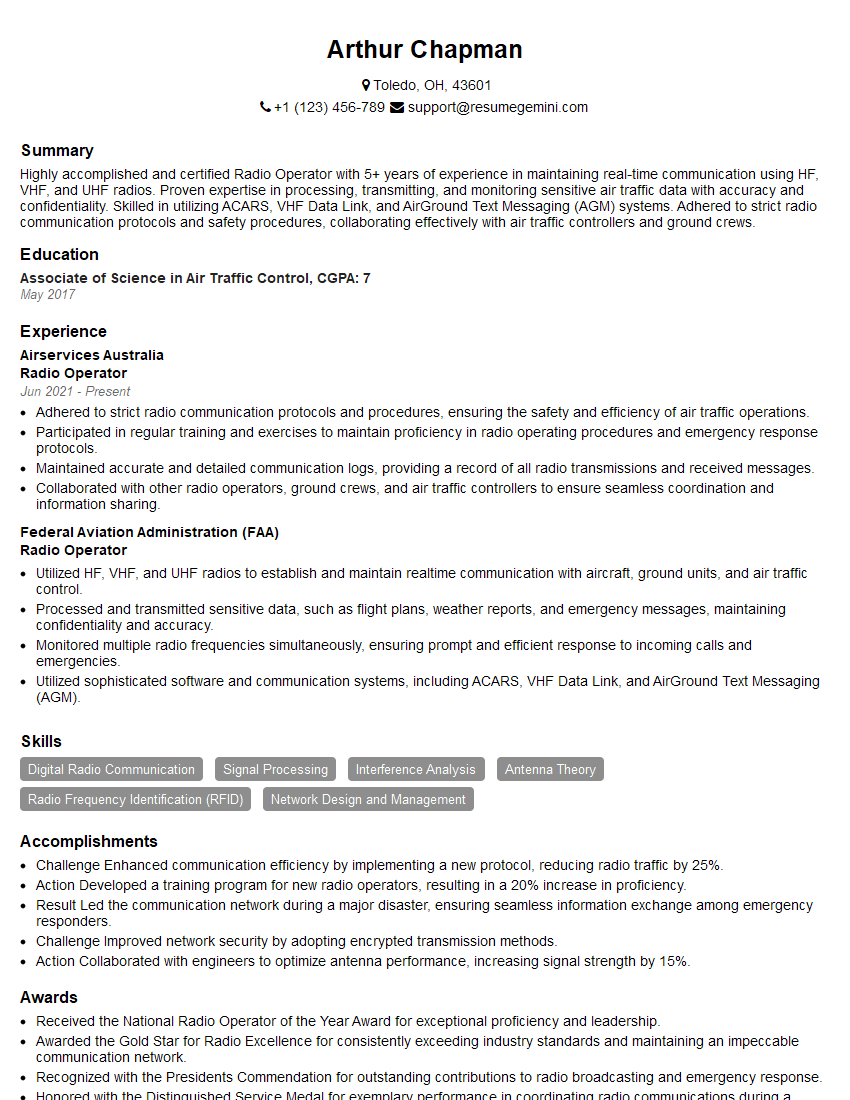
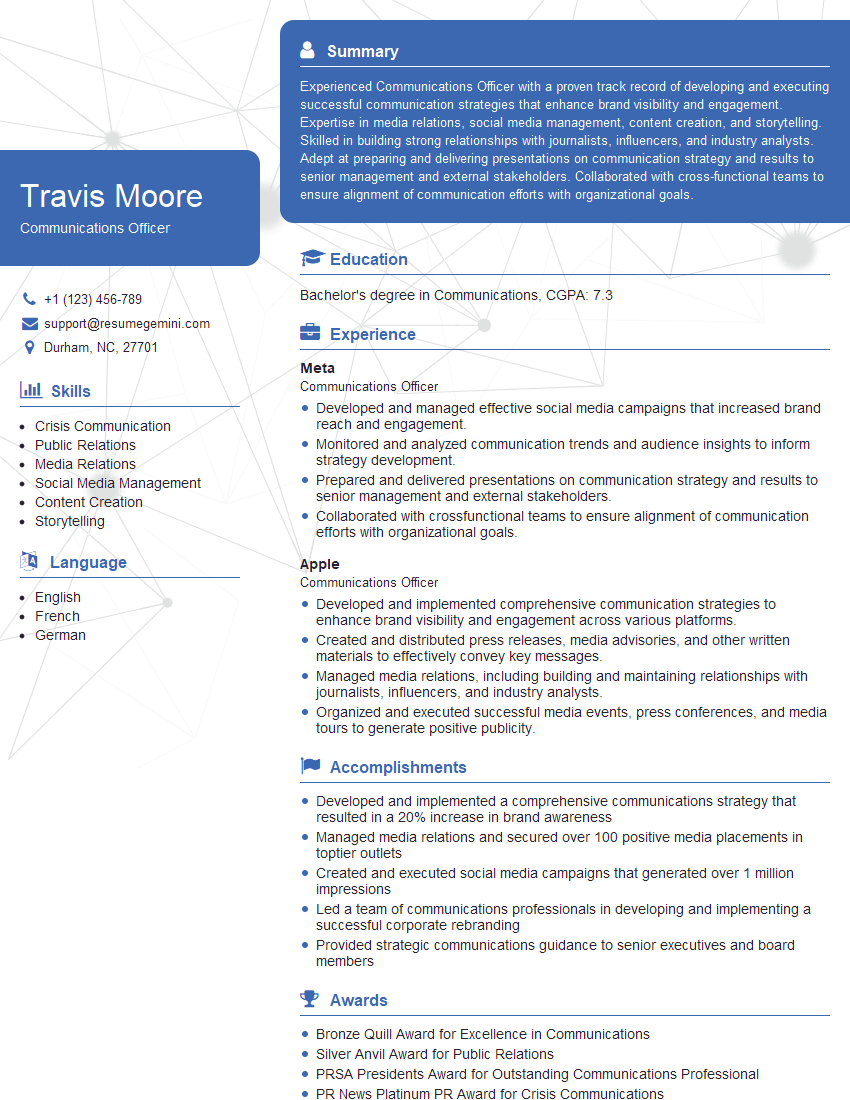
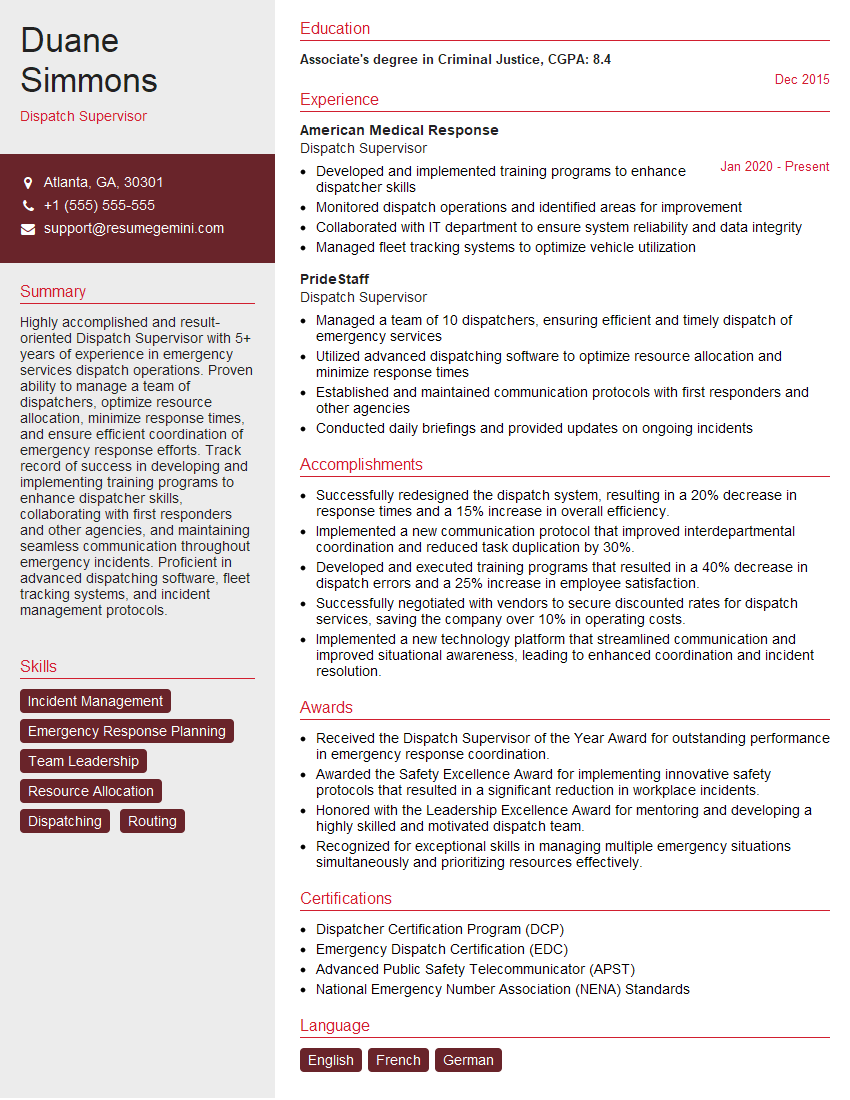
Mastering Tactical Communications and Procedures is crucial for career advancement in high-demand fields requiring precise and effective communication under pressure. A strong resume highlighting these skills is essential for attracting the attention of recruiters. To significantly enhance your job prospects, create an ATS-friendly resume that effectively showcases your abilities. ResumeGemini is a trusted resource that can help you build a professional and impactful resume. We provide examples of resumes tailored specifically to Tactical Communications and Procedures to guide you in crafting a winning application. Take the next step towards your dream career – start building your resume today!
Explore more articles
Users Rating of Our Blogs
Share Your Experience
We value your feedback! Please rate our content and share your thoughts (optional).
What Readers Say About Our Blog
Very informative content, great job.
good