Are you ready to stand out in your next interview? Understanding and preparing for Tactical Navigation interview questions is a game-changer. In this blog, we’ve compiled key questions and expert advice to help you showcase your skills with confidence and precision. Let’s get started on your journey to acing the interview.
Questions Asked in Tactical Navigation Interview
Q 1. Explain the differences between dead reckoning and celestial navigation.
Dead reckoning and celestial navigation are both methods for determining position, but they rely on fundamentally different principles. Dead reckoning (DR) estimates position based on a known starting point, course, speed, and time. Think of it like following a breadcrumb trail – you know where you started, and you know how far and in what direction you’ve traveled. Celestial navigation, on the other hand, uses the positions of celestial bodies (sun, moon, stars) to determine latitude and longitude. It’s like using a giant, natural map in the sky.
Dead Reckoning: Simple, requires minimal equipment (compass, speedometer, timer), prone to accumulating errors over time due to variations in speed, course, and environmental factors (currents, wind). For example, a sailor might use DR to estimate their position after a long night’s sail, but they would likely confirm it with other navigational methods at the first opportunity.
Celestial Navigation: More complex, requiring specialized tools (sextant, nautical almanac), highly accurate if done correctly but weather-dependent. Historically crucial for long sea voyages before the advent of electronic navigation, a skilled navigator could pinpoint their location with impressive accuracy using celestial observations.
In essence, DR is a continuous estimation, while celestial navigation is a point-in-time fix.
Q 2. Describe your experience using GPS and its limitations in challenging environments.
I have extensive experience using GPS across diverse terrains and conditions. Its primary advantage is its accuracy and ease of use; obtaining a precise location is usually straightforward. In ideal situations, GPS delivers reliable positioning data within a few meters. However, GPS’s limitations become apparent in challenging environments.
- Urban Canyons: Tall buildings can obstruct satellite signals, leading to weak or nonexistent GPS reception, resulting in inaccurate or intermittent position updates. I’ve personally experienced this in densely packed city centers, requiring me to rely on alternative methods until a clear signal was obtained.
- Dense Foliage: Similarly, thick tree cover or mountainous terrain can block signals, rendering the GPS unreliable. Working in forests requires supplementing GPS with map and compass navigation.
- Atmospheric Interference: Adverse weather conditions, such as heavy rain, snow, or fog, can affect signal quality, leading to degraded performance. Navigating during a blizzard, for example, demands caution and reliance on multiple navigational strategies.
- Signal Jamming/Spoofing: Deliberate interference with GPS signals can render the system useless. This is a security concern that needs consideration in sensitive operational areas.
Overcoming these limitations often involves employing redundant systems. Combining GPS with other navigational tools like inertial navigation systems (INS), electronic charts, and traditional map and compass techniques ensures robust navigation in challenging situations.
Q 3. How would you plan a route considering terrain, weather conditions, and time constraints?
Route planning incorporates multiple factors – safety is paramount. My process starts with acquiring the necessary information:
- Define Objectives: Starting and ending points, mission objectives, and any intermediate waypoints.
- Terrain Analysis: Study topographic maps and satellite imagery to identify challenging terrain, such as steep inclines, water obstacles, or dense vegetation. This allows for selecting the safest and most efficient route.
- Weather Assessment: Check weather forecasts to anticipate potential hazards like storms, fog, or extreme temperatures. This influences route selection and the equipment needed.
- Time Constraints: Factor in travel time, allowing for contingencies like unforeseen delays or obstacles. This involves estimating travel speeds considering the terrain and weather.
- Route Selection: Considering the above, choose a route that balances safety, efficiency, and feasibility within the time constraints. This may involve using software that models terrain and weather impacts.
- Contingency Planning: Identify potential risks and develop alternative routes in case of unforeseen events. This includes designating safe havens or alternate meeting points.
Example: Planning a mountain expedition requires analyzing altitude profiles, assessing avalanche risks, and determining suitable campsites. Weather forecasts become crucial, as a sudden storm can drastically alter the feasibility and safety of the plan.
Q 4. What are the key components of a navigation system?
A comprehensive navigation system consists of several key components:
- Position Determining Device: This could be GPS, INS, celestial navigation tools, or a combination. It provides the current location.
- Maps and Charts: These provide geographical information necessary for route planning and orientation. The type of map (topographic, nautical, aeronautical) depends on the environment.
- Course Plotting Tools: These include plotters, compasses, protractors, and computer software for planning and tracking routes.
- Data Input/Output Devices: These facilitate the integration of data from various sources, allowing for the display of information relevant to the user.
- Navigation Software: This enhances the overall navigation process, allowing for route optimization, data logging, and integration with various sensors. Examples include specialized software for aviation, maritime, and land navigation.
- Communication System: Essential for coordinating with others or seeking assistance, especially in emergency situations. This could involve satellite communication or standard radio systems.
The effectiveness of a navigation system relies heavily on the user’s skill and knowledge to interpret the data and make informed decisions.
Q 5. Explain your understanding of map projections and their implications for navigation.
Map projections are methods for representing the three-dimensional Earth’s surface on a two-dimensional map. This inherently introduces distortions, as it’s impossible to perfectly flatten a sphere without altering distances, shapes, or areas. Understanding these distortions is critical for accurate navigation.
Different projections prioritize different aspects. For example:
- Mercator Projection: Preserves angles, making it suitable for navigation at sea, as rhumb lines (lines of constant bearing) appear as straight lines. However, it significantly distorts areas, particularly at higher latitudes. Greenland, for instance, appears much larger than it actually is in relation to Africa.
- Lambert Conformal Conic Projection: Minimizes distortion in areas of intermediate latitudes, making it popular for aeronautical charts. It’s less accurate near the poles.
- Gnomonic Projection: Preserves great circle routes as straight lines. Useful for long-distance navigation but distorts shapes and distances significantly.
Navigators must be aware of the projection used on their map and the implications for their navigation. Misinterpreting distances or directions due to projection distortion can lead to errors, underscoring the importance of understanding map projections.
Q 6. How do you handle unexpected obstacles or deviations from a planned route?
Handling unexpected obstacles requires adaptability and a systematic approach. My strategy involves:
- Assess the Situation: Determine the nature and extent of the obstacle, considering its impact on the planned route and timeline.
- Re-evaluate Options: Consult maps and charts, considering alternative routes around or over the obstacle. This might involve finding a detour using available navigational tools.
- Risk Assessment: Evaluate the risk associated with each alternative, considering safety, time, and resource consumption.
- Communicate Changes: If necessary, inform relevant parties about the route change, ensuring everyone is on the same page.
- Execute the Revised Plan: Proceed with the chosen alternative route, carefully monitoring the situation for further complications.
- Document Deviations: Record any deviations from the original plan, including the reasons for the change and the new route taken. This is crucial for future route planning and analysis.
Example: Encountering an unexpected road closure during a road trip necessitates finding an alternative route using a GPS or map, adjusting the schedule accordingly, and informing those waiting at the destination.
Q 7. Describe your experience with different types of charts and maps.
My experience encompasses a variety of charts and maps, tailored to different environments and purposes:
- Topographic Maps: These provide detailed elevation data, useful for land navigation, especially in mountainous or rugged terrain. I’ve extensively used these during hiking and mountaineering expeditions.
- Nautical Charts: Specialized maps for maritime navigation, depicting water depths, hazards (rocks, wrecks), navigational aids (buoys, lighthouses), and coastal features. These are essential for safe and efficient seafaring.
- Aeronautical Charts: Used for air navigation, indicating airfields, navigational aids (VORs, NDBs), and airspace restrictions. My experience with these includes flight planning and route analysis.
- Electronic Charts (ENCs): Digital equivalents of traditional charts, offering dynamic updates, layering capabilities (e.g., overlaying weather information), and other advanced features. ENCs have become increasingly important in modern navigation.
- Geological Maps: These illustrate geological features, which are important for understanding the terrain, potential hazards, and resource availability. Essential in certain types of surveying and exploration.
Understanding the conventions and symbols on each chart type is paramount for safe and effective navigation. Proficiency in reading and interpreting different chart types is fundamental to my navigation expertise.
Q 8. What methods would you employ to determine your precise location without GPS?
Determining precise location without GPS relies on a combination of traditional navigation techniques. These methods often involve triangulation using known points and employing tools like a compass, map, and sextant (for celestial navigation).
Celestial Navigation: Using the positions of stars and the sun, combined with precise timekeeping, to determine latitude and longitude. This requires a sextant, a nautical almanac, and a chronometer. Imagine using the stars as giant, natural landmarks to pinpoint your position.
Map and Compass Navigation: Orienting a map using a compass, taking bearings to visible landmarks, and using resection (locating your position by taking bearings to at least two known points) or intersection (locating your position by plotting lines of bearing from known points) to pinpoint your position. This is like solving a geometric puzzle, using your compass and map as your tools.
Dead Reckoning: Estimating your position based on your last known position, course, speed, and time. This is like following a breadcrumb trail, but you need to account for errors in your course and speed. It’s less precise but useful as a backup or initial estimate.
Triangulation (explained further in the next question): Identifying at least three landmarks, measuring the angle to each from your location, and plotting these angles on a map to pinpoint your intersection point. This is like using several intersecting lines on a treasure map to find X.
Q 9. Explain the concept of triangulation and its application in navigation.
Triangulation is a fundamental navigation technique that uses the angles to known points to determine a location. Imagine you’re at sea and you can see three lighthouses. You use your compass to measure the angle to each lighthouse. By plotting these angles on a nautical chart, where the locations of the lighthouses are already known, the intersection of these angles will pinpoint your boat’s location.
Application in Navigation:
Land Navigation: Identifying three distinct landmarks (mountains, towers, etc.) and taking bearings to each using a compass. These bearings are then plotted on a map, and their intersection gives your location.
Marine Navigation: Using GPS-less methods, this is the same process as land navigation, but landmarks may include buoys, lighthouses, or even prominent coastal features.
Aviation Navigation: Though often supplemented by GPS, triangulation can be used as a backup or when GPS is unavailable. Landmarks would include prominent geographic features or radio beacons.
The accuracy of triangulation depends on the accuracy of the angle measurements and the distance between the landmarks. Larger distances between the landmarks will produce a more accurate fix.
Q 10. How do you interpret navigational aids such as buoys, landmarks, and compass bearings?
Navigational aids provide crucial information for safe and efficient navigation. Understanding their meaning is paramount.
Buoys: Buoys mark channels, dangers, and other important locations. Their color, shape, and light characteristics (if equipped) convey specific information. For instance, a red buoy might indicate that you should keep it to your port (left) side, while a green buoy indicates keeping it to your starboard (right).
Landmarks: Natural or man-made features visible from a distance. These could be mountains, towers, churches, or even distinctive trees. Their identification and accurate bearing using a compass are essential for dead reckoning and triangulation. I always verify the landmark’s location with a chart before trusting the landmark for navigation.
Compass Bearings: The angular direction of a landmark or other object relative to magnetic north. Taking bearings to known landmarks is a fundamental method in navigation. It is crucial to understand magnetic variation (the difference between true north and magnetic north) and to correct your compass readings accordingly using the chart’s declination information.
Proper interpretation involves referencing charts, pilot guides, and other relevant nautical publications to understand the significance of each aid in its specific context.
Q 11. What are the safety procedures you follow during navigation?
Safety during navigation is paramount and involves a multi-layered approach:
Thorough Planning: Before embarking on any journey, I always meticulously plan the route, considering weather conditions, potential hazards, and available navigational aids. This often includes route plotting and contingency planning.
Regular Checks: Throughout the journey, regular checks of the position, course, speed, and surrounding environment are essential. This may involve taking compass bearings to landmarks, comparing my current position against expected position using dead reckoning, and constantly monitoring weather reports.
Redundancy: Utilizing multiple navigation systems (e.g., compass, chart, GPS backup device) provides a safety net in case one system fails.
Emergency Procedures: Familiarizing myself with emergency procedures for various situations (e.g., equipment failure, adverse weather) and ensuring the availability of emergency communication tools and survival equipment is crucial.
Weather Awareness: Weather forecasts are constantly monitored and adjustments are made to the navigation plan as needed. Extreme conditions may necessitate altering the route or delaying the journey entirely.
Q 12. Explain your experience using nautical charts.
Nautical charts are my primary tool for marine navigation. My experience encompasses interpreting chart symbols, scales, and depth contours to plan routes, identify hazards, and determine safe depths. I am proficient in using various chart types, including paper charts and electronic navigational charts (ENCs).
In a recent coastal passage, I utilized a paper chart to navigate through a complex area with shallow waters and numerous rocks. By accurately interpreting the chart’s depth contours, I safely navigated my vessel, avoiding any grounding incidents. Later, I used an ENC to cross-reference my position and ensure that my course was correct during that same passage.
I’m adept at using tools like dividers and parallel rules for measuring distances and plotting courses, and I understand how to apply tidal information to determine safe navigation times.
Q 13. How would you calculate estimated time of arrival (ETA)?
Calculating ETA involves considering distance and speed. It is critical to account for potential delays or changes in speed. The formula is simple: ETA = Current Time + (Distance / Speed)
Example: If I have 100 nautical miles to travel and my vessel speed is 10 knots, the estimated transit time is 10 hours (100 nm / 10 knots = 10 hours). If my current time is 14:00, my estimated time of arrival would be 00:00 the next day. However, I would always add a buffer for potential delays or adverse conditions. This buffer might range from 10% to 50% depending on the complexity of the journey and the reliability of the speed calculation.
Therefore, real-world ETA calculations always include a margin of safety, especially in unpredictable conditions.
Q 14. Describe your proficiency in using navigation software and apps.
I am proficient in using a variety of navigation software and apps, both on desktop and mobile devices. My expertise extends to both general-purpose navigation apps and specialized maritime applications.
I’m familiar with software that allows route planning, chart plotting, and tidal prediction. I use this software for pre-trip planning and in-transit monitoring. In one instance, I used a sophisticated navigation app to plot an optimized route around a series of navigational hazards, resulting in a more efficient and safer journey.
I also understand the limitations of these technologies and understand the importance of combining digital tools with traditional navigational methods for safe and effective navigation.
Q 15. What is your understanding of various coordinate systems (e.g., UTM, WGS84)?
Coordinate systems are fundamental in tactical navigation, providing a common framework for specifying locations. Different systems offer advantages depending on the scale and purpose of navigation.
- WGS84 (World Geodetic System 1984): This is a global, three-dimensional coordinate system based on an Earth-centered, Earth-fixed (ECEF) ellipsoid. It’s commonly used in GPS and many GIS applications. Latitude and longitude are its defining coordinates, expressed in degrees. WGS84 is ideal for worldwide navigation and applications needing high accuracy and consistency globally.
- UTM (Universal Transverse Mercator): This is a projected coordinate system, dividing the Earth into 60 longitudinal zones. Each zone uses a transverse Mercator projection, transforming the spherical Earth’s surface onto a planar grid. Coordinates are given in meters (Easting and Northing), relative to the zone’s central meridian. UTM is excellent for large-scale mapping and surveying where distances need to be accurately measured within a smaller region. Calculations are simpler compared to using latitude and longitude directly for distance and bearing calculations.
Imagine you’re planning a long-distance hike. WGS84 would be suitable for the overall route planning, showing your location on a global map. However, UTM would be better for detailed local navigation, using readily available maps with precise Easting and Northing coordinates. The choice depends on the scale and context of your navigation needs.
Career Expert Tips:
- Ace those interviews! Prepare effectively by reviewing the Top 50 Most Common Interview Questions on ResumeGemini.
- Navigate your job search with confidence! Explore a wide range of Career Tips on ResumeGemini. Learn about common challenges and recommendations to overcome them.
- Craft the perfect resume! Master the Art of Resume Writing with ResumeGemini’s guide. Showcase your unique qualifications and achievements effectively.
- Don’t miss out on holiday savings! Build your dream resume with ResumeGemini’s ATS optimized templates.
Q 16. How do you manage multiple navigational inputs simultaneously?
Managing multiple navigational inputs demands a systematic approach. I use a combination of techniques and tools to synthesize data from various sources. This usually involves:
- Prioritization: Determining the most reliable and relevant input based on accuracy and source credibility. For example, a GPS signal might be prioritized over a compass in open terrain but not in an area with significant signal interference.
- Cross-Referencing: Comparing data from multiple sources to identify discrepancies. Any significant differences trigger a careful review to isolate potential errors. This involves checking the source and sensor integrity, calibration, and any environmental factors affecting the accuracy.
- Data Fusion: Combining data from different sensors (GPS, compass, inertial measurement unit) using algorithms to create a more accurate and robust navigational picture. This might involve weighted averages or Kalman filters, depending on the complexity and available processing power.
- Redundancy: Utilizing backup systems. If one source fails (e.g., GPS loss), other systems (map, compass, celestial navigation) can take over to maintain situational awareness.
For instance, during a maritime operation, I’d integrate GPS data, electronic charts (ENC), radar information, and visual observations from the bridge to create a comprehensive navigational picture. Discrepancies between GPS and visual bearings would prompt me to investigate potential issues like currents or inaccurate chart data.
Q 17. Describe your experience with piloting (if applicable) and its navigation aspects.
While my primary expertise is in tactical navigation, I have significant experience in piloting small aircraft and its navigational facets. This experience highlighted the critical role of effective navigation planning and in-flight decision making. The piloting context emphasizes the importance of accurate pre-flight planning, including route selection, alternate routes, weather analysis and fuel calculations. In flight, effective navigation hinges on monitoring numerous instruments and using multiple methods for cross-checking position and heading.
For example, I’ve had to adapt flight plans due to unexpected weather changes, utilizing VOR navigation (VHF Omnidirectional Range) in conjunction with GPS to safely navigate around weather systems. I’ve learned the value of regularly cross-checking instruments, using pilotage (visual observation) to confirm position, and relying on communication with air traffic control.
Q 18. Explain the concept of course over ground (COG) and speed over ground (SOG).
Course Over Ground (COG) refers to the direction of movement of a vehicle relative to the ground. It’s the true direction in which the vehicle is travelling, not necessarily its heading. Speed Over Ground (SOG) represents the speed of a vehicle relative to the ground. Both COG and SOG are affected by factors like wind, currents, and terrain.
Imagine a boat heading due north (its heading), but a strong current is pushing it slightly east. The COG would be north-northeast, while the SOG might be slower than the boat’s actual speed through the water. GPS receivers provide both COG and SOG data.
Q 19. How do you handle communication failures during navigation?
Communication failures necessitate immediate and decisive action. My approach is to follow this procedure:
- Assess the situation: Determine the extent and nature of the failure. Is it a partial outage, or a complete loss of communication?
- Employ alternate communication methods: If possible, use backup communication systems (satellite phone, VHF radio on a different frequency) to contact support or other personnel. In the absence of electronic communication, consider visual signaling techniques.
- Continue navigation using available resources: Rely on pre-planned routes, maps, compasses, celestial navigation (if applicable) to maintain situational awareness and progress towards the planned objective. The plan B will be highly important to ensure navigational integrity and safety.
- Establish new communication protocols: Once communication is re-established, inform relevant parties about the situation and the actions taken.
For example, during a remote expedition, if satellite communication fails, I’d immediately switch to using pre-marked waypoints on my map, relying on compass bearings and altitude readings to navigate. Visual landmarks and celestial observation could become critical.
Q 20. What is your experience with emergency procedures during navigation?
Experience with emergency procedures underscores the importance of thorough preparation and quick, decisive actions. My approach involves:
- Risk Assessment and Mitigation: Proactively identifying potential hazards and developing mitigation strategies during the pre-mission planning phase. This includes identifying emergency escape routes, communication backup plans and safety protocols for specific scenarios.
- Emergency Procedures Checklist: Following established checklists for specific types of emergencies (e.g., equipment malfunction, sudden weather changes, search and rescue). This ensures consistent responses, minimizing errors under stress.
- Decision Making Under Pressure: Adapting the plan based on real-time conditions and available information, prioritizing safety and risk reduction. It also involves delegating tasks if there are team members.
- Post-Incident Review: Thoroughly evaluating the events, identifying lessons learned and updating procedures to prevent similar incidents in the future.
During a maritime exercise, a sudden engine failure required immediate execution of the emergency procedures, including deploying emergency equipment, initiating distress signals, and using the backup systems to navigate towards a safe harbor. This experience highlighted the importance of maintaining cool under pressure and using resources effectively. Post-incident review improved our emergency procedures and identified areas for improvement in our communication.
Q 21. Describe a situation where you had to adapt your navigation plan due to unforeseen circumstances.
During a mountain expedition, we encountered unexpected heavy snowfall which blocked our planned route. This led to significant changes in our navigation plan:
- Re-route Planning: Using topographic maps and satellite imagery, I identified an alternative, less risky route avoiding the snow-blocked areas. This required calculating new distances, bearing angles, and estimated times of arrival.
- Risk Assessment: The team evaluated the new route for hazards like avalanche potential, terrain difficulty and potential exposure to elements.
- Communication: Updated the support team regarding the change of plans, providing the new estimated arrival time and the new route.
- Execution: Carefully monitored weather conditions and used additional navigation tools like a compass and altimeter to navigate safely along the adjusted route.
Adapting the plan was crucial for safety and success. This highlighted the importance of flexibility, proactive risk assessment and robust communication in navigation.
Q 22. How do you ensure the accuracy of your navigational calculations?
Ensuring accuracy in navigational calculations is paramount. It’s a multi-layered process involving meticulous data collection, employing reliable tools and techniques, and consistently cross-checking results. I prioritize using multiple independent sources of information whenever possible. For instance, I’d combine GPS data with celestial navigation (using a sextant) and even traditional dead reckoning, comparing the results to identify any discrepancies. This triangulation significantly reduces errors.
Furthermore, I meticulously maintain and calibrate my equipment. A poorly calibrated compass or faulty GPS receiver can lead to significant errors. Regular maintenance and calibration checks are non-negotiable. Finally, I understand and account for potential sources of error inherent in each method. GPS, for example, can be affected by atmospheric conditions or intentional interference. Knowing these limitations allows for more informed decision-making and improved accuracy.
For example, during a recent offshore sailing voyage, a temporary GPS outage occurred. My pre-planned celestial navigation solution, confirmed by visual bearings on landmarks, allowed me to maintain accurate positioning and safely reach my destination. Relying solely on GPS would have proven disastrous.
Q 23. Explain your understanding of the effects of tides and currents on navigation.
Tides and currents are significant factors influencing navigation, especially in coastal waters and confined waterways. Tides are the rise and fall of sea level caused by the gravitational pull of the moon and sun. Currents are the continuous, directional movement of water, driven by various factors like wind, temperature differences, or the Earth’s rotation.
Understanding their impact requires considering their combined effect on a vessel’s course and speed. A strong current running counter to your intended course can significantly slow progress, and even push a vessel off course. Similarly, tidal variations can alter water depth, creating navigational hazards such as shallows or rocks that might not be apparent at high tide.
I use tidal charts and current atlases to predict and account for these effects. These resources provide detailed information on tidal ranges and current velocities for specific locations. I integrate this data into my navigation plan, adjusting my course and speed to compensate for the influence of tides and currents. For example, I might choose to depart a harbor at a specific time to take advantage of a favorable current, or plan my arrival to avoid a strong counter-current.
Q 24. What are your preferred methods for recording and documenting navigation data?
Accurate record-keeping is fundamental to safe and effective navigation. I maintain a detailed navigation log, which includes all relevant data such as:
- Time: Precise time of each observation or action.
- Position: Latitude and longitude, obtained from GPS, celestial navigation, or dead reckoning.
- Course and Speed: Vessel’s heading and speed over ground.
- Weather conditions: Wind speed and direction, visibility, sea state.
- Equipment readings: Compass readings, GPS data, depth sounder readings, etc.
- Events: Any significant events or changes in the navigation plan.
I use a combination of paper-based logs and electronic systems for recording data. The paper log provides a backup in case of electronic equipment failure, and electronic logs offer easier data analysis and sharing. Data is always cross-referenced to ensure accuracy and consistency. This detailed record-keeping allows for thorough post-voyage analysis and aids in identifying potential areas for improvement in future navigations.
Q 25. How would you use a sextant for navigation?
A sextant is a precision instrument used for measuring the angle between two points, typically a celestial body (sun, moon, star) and the horizon. This angle, along with the time of the observation and the sextant’s location, can be used to determine latitude and longitude through celestial navigation.
To use a sextant effectively, first, one must understand how to hold it steadily and how to adjust the horizon glass for proper focus. Then, using the sextant’s arc, I align the celestial body’s image with the horizon, taking several measurements to ensure accuracy. The angle obtained is then applied to nautical almanacs or specialized software to compute the vessel’s position. This requires precise timekeeping, ideally using a chronometer, and a thorough understanding of astronomical calculations.
For example, determining the latitude is done by measuring the altitude (angle above the horizon) of the celestial body, while obtaining the longitude requires knowing the Greenwich hour angle (GHA), essentially the celestial body’s longitudinal position.
While less commonly used now, due to the prevalence of GPS, sextant navigation remains a crucial skill, especially in situations where other methods fail.
Q 26. Explain your understanding of magnetic variation and deviation.
Magnetic variation and deviation are two separate but related corrections applied to compass readings to determine true north. Magnetic variation is the angular difference between true north (the geographical north pole) and magnetic north (the point where the Earth’s magnetic field lines converge). This difference varies geographically and is constantly changing, requiring up-to-date charts or information.
Deviation is the error caused by magnetic interference within the vessel itself. Metal objects, electrical equipment, and even the ship’s structure can distort the magnetic field and affect compass readings. Deviation is specific to each vessel and varies with the ship’s heading. It can be determined through a process called ‘swinging the compass’, where compass readings are taken at various headings and compared to a known reference.
I always correct my compass readings for both variation and deviation to obtain a true bearing. Failing to do so would result in significant navigational errors, potentially leading to dangerous situations. I use nautical charts and a compass deviation card (created during the compass swinging process) to apply the necessary corrections to ensure accurate navigation.
Q 27. Describe your proficiency in using a compass for navigation.
Proficiency in using a compass for navigation is a fundamental skill. It involves more than just reading the needle; it’s about understanding the sources of error and applying appropriate corrections. I’m well-versed in using both magnetic and gyro compasses.
Using a magnetic compass requires understanding magnetic variation and deviation, as previously explained. Knowing how to take bearings (angles to landmarks or objects) and using them for navigation, in conjunction with other tools, is critical. I also understand how to take relative bearings (bearings from the ship’s heading) and convert them into true bearings.
A gyrocompass, which uses the Earth’s rotation to maintain a stable heading, offers advantages in terms of accuracy and stability compared to a magnetic compass, particularly in high latitudes where magnetic variation is significant. I understand the limitations of both types and choose the appropriate instrument based on the situation. For example, when approaching land, bearings to prominent landmarks are crucial, and I would use my magnetic compass after correcting for variation and deviation.
Key Topics to Learn for Tactical Navigation Interview
- Map Reading and Interpretation: Understanding various map types (topographic, nautical, etc.), symbols, scales, and projections. Practical application includes route planning and terrain analysis.
- Navigation Instruments and Technologies: Familiarity with compasses, GPS devices, electronic charts, and other relevant technologies. Practical application includes utilizing these tools for accurate position determination and course correction.
- Position Fixing and Piloting: Mastering techniques for determining precise location (e.g., triangulation, GPS) and planning safe and efficient routes, considering factors like weather and terrain.
- Dead Reckoning and Celestial Navigation (where applicable): Understanding the principles of dead reckoning and, if relevant to the role, celestial navigation methods for position determination in the absence of electronic aids. Practical application involves calculating estimated positions and potential errors.
- Route Planning and Decision Making: Developing effective route plans considering factors like time, distance, terrain, obstacles, and potential risks. This includes evaluating alternative routes and making informed decisions based on changing conditions.
- Emergency Procedures and Risk Mitigation: Understanding procedures for handling emergencies (e.g., equipment failure, unexpected weather) and implementing risk mitigation strategies to ensure safety.
- Communication and Teamwork: Effective communication of navigational information to team members and stakeholders, along with collaborative problem-solving in challenging situations.
Next Steps
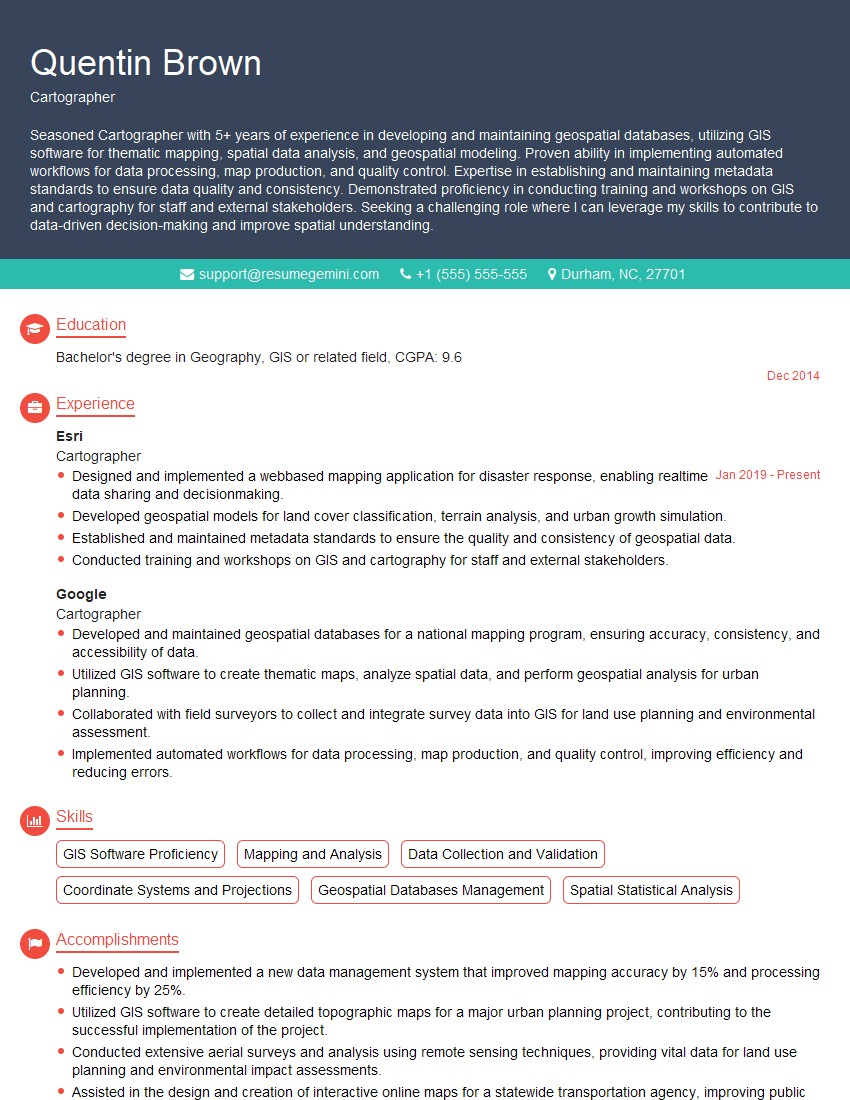
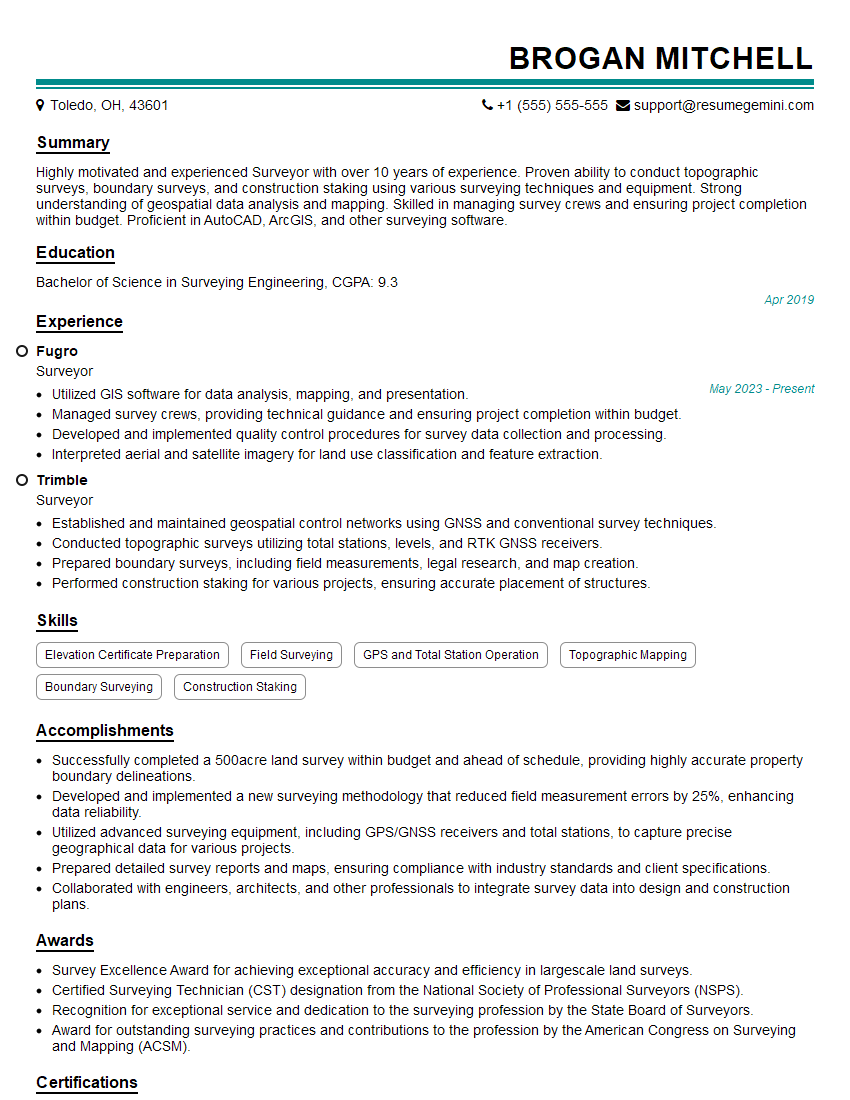
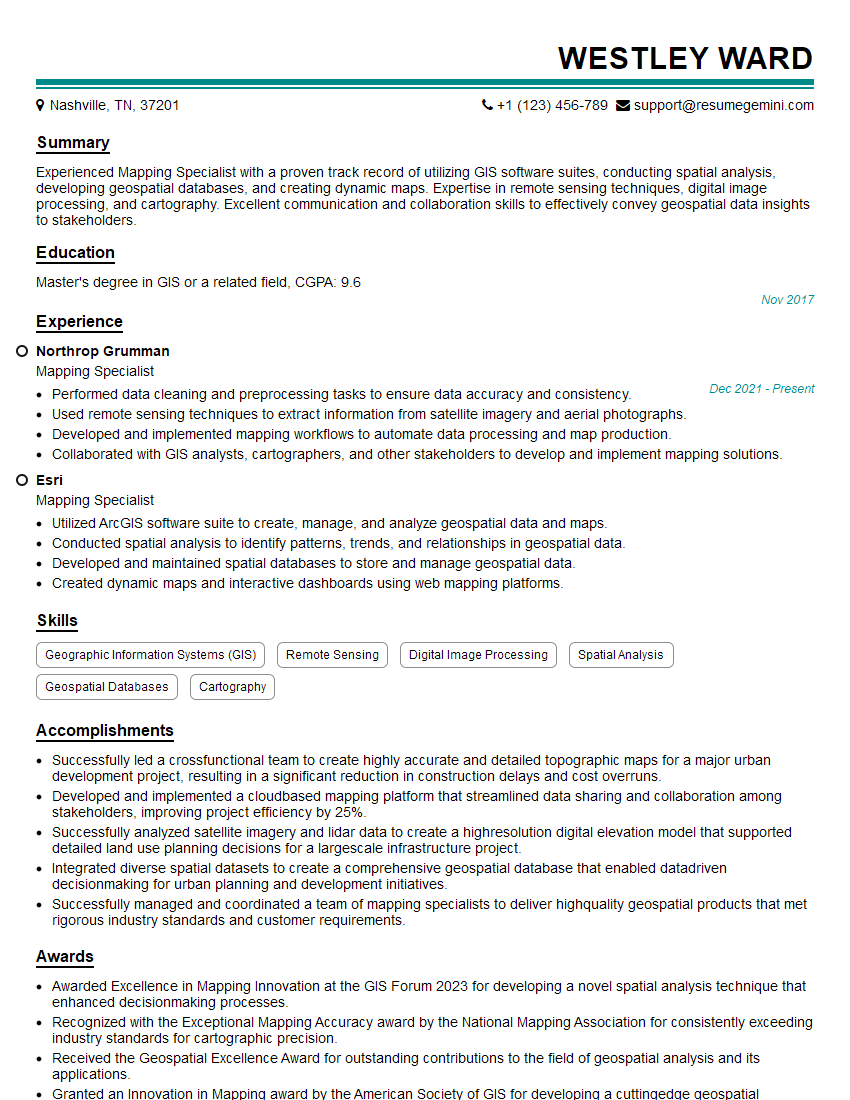
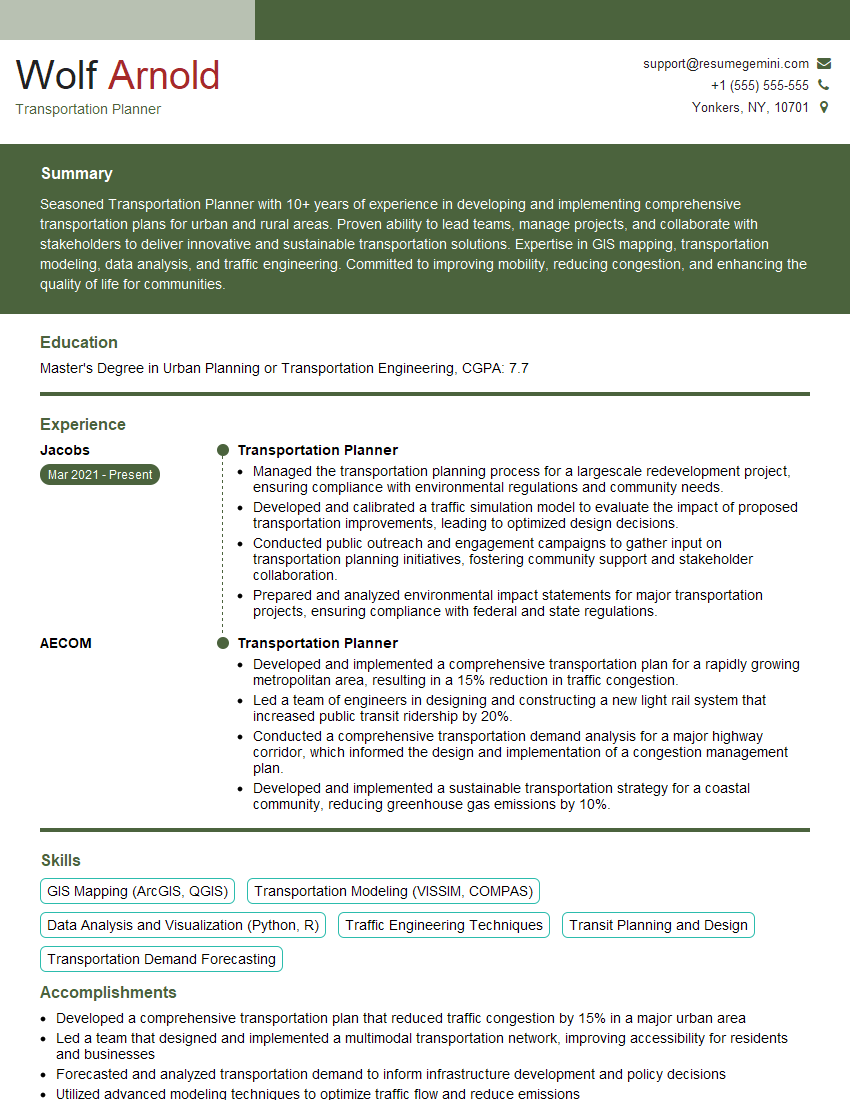
Mastering tactical navigation is crucial for career advancement in many fields, opening doors to exciting opportunities and demonstrating valuable problem-solving and decision-making skills. To maximize your job prospects, it’s essential to have a professional, ATS-friendly resume that highlights your skills and experience effectively. ResumeGemini is a trusted resource that can help you create a compelling resume tailored to your specific experience in Tactical Navigation. Examples of resumes tailored to this field are available to help guide your resume-building process.
Explore more articles
Users Rating of Our Blogs
Share Your Experience
We value your feedback! Please rate our content and share your thoughts (optional).
What Readers Say About Our Blog
Very informative content, great job.
good