Every successful interview starts with knowing what to expect. In this blog, we’ll take you through the top Tactical Network Planning and Analysis interview questions, breaking them down with expert tips to help you deliver impactful answers. Step into your next interview fully prepared and ready to succeed.
Questions Asked in Tactical Network Planning and Analysis Interview
Q 1. Explain the differences between strategic and tactical network planning.
Strategic and tactical network planning differ primarily in their timescale and scope. Strategic planning focuses on the long-term vision, encompassing the overall architecture, technology choices, and capacity needs of the network for years to come. It’s like designing the blueprint of a city – deciding where major roads and infrastructure will be located. Tactical planning, on the other hand, deals with the immediate and short-term needs. It focuses on implementing specific network configurations, troubleshooting issues, and optimizing performance within the existing strategic framework. This is like managing the day-to-day traffic flow within the city, ensuring smooth operations based on the existing infrastructure.
- Strategic Planning: Long-term (3-5 years or more), high-level design, technology selection, budget allocation, capacity planning for significant growth.
- Tactical Planning: Short-term (weeks to months), detailed configuration, troubleshooting, performance optimization, addressing immediate needs within the existing architecture.
For example, a strategic plan might involve deciding to migrate to a Software Defined Networking (SDN) architecture over the next three years, while a tactical plan would involve configuring a new firewall to protect a specific server cluster within the current network.
Q 2. Describe your experience with network topology design.
My experience in network topology design spans various environments, from small, localized networks to large, geographically dispersed tactical networks. I’m proficient in designing topologies using different models, including star, mesh, bus, ring, and hybrid architectures. I consider factors like redundancy, scalability, security, and cost-effectiveness when making design choices. My approach involves a thorough understanding of the client’s operational requirements, anticipated traffic patterns, and the existing infrastructure.
For instance, in one project involving a military field operation, we needed a highly resilient network capable of withstanding physical attacks and signal jamming. We opted for a mesh topology with multiple redundant links, ensuring continuous connectivity even with some nodes compromised. We also incorporated technologies like software-defined radios to enhance adaptability and resistance to jamming. In another project for a large corporate event, we designed a star topology with multiple access points to support a high volume of users accessing Wi-Fi. Understanding the specific needs and constraints—such as the physical environment, security concerns, and budget limitations—is crucial to designing an effective and efficient network topology.
Q 3. How do you ensure network security in a tactical environment?
Ensuring network security in a tactical environment requires a multi-layered approach, going beyond standard corporate security measures. The dynamic and often unpredictable nature of tactical settings necessitates proactive and adaptable security strategies.
- Network Segmentation: Isolating sensitive data and critical systems through Virtual LANs (VLANs) and firewalls limits the impact of breaches.
- Intrusion Detection/Prevention Systems (IDS/IPS): These systems monitor network traffic for malicious activity and can block or alert on suspicious patterns.
- Encryption: Encrypting all sensitive data both in transit (using VPNs and TLS) and at rest (using disk encryption) is paramount.
- Regular Security Audits and Penetration Testing: Identifying vulnerabilities proactively and mitigating them before exploitation is crucial.
- Access Control: Implementing strong authentication and authorization mechanisms (multi-factor authentication, role-based access control) restricts access to sensitive data and resources.
- Endpoint Security: Deploying endpoint protection software on all devices (laptops, tablets, etc.) to protect against malware and other threats.
For example, in a military operation, we would utilize encrypted satellite communication links for high-priority data transfer and implement strict access control to prevent unauthorized access to sensitive command and control systems. Continuous monitoring and threat analysis are vital in this dynamic environment.
Q 4. What are your preferred network monitoring tools and why?
My preferred network monitoring tools depend on the specific needs of the environment but generally include a combination of:
- SolarWinds Network Performance Monitor (NPM): Provides comprehensive network performance monitoring, alerting, and reporting capabilities. It’s excellent for visualizing network traffic flow and identifying bottlenecks.
- PRTG Network Monitor: A versatile and user-friendly tool offering a wide range of monitoring features for various network devices and protocols. Its customizable dashboards are a great benefit.
- Wireshark: An indispensable packet analyzer for deep-dive analysis of network traffic. Useful for troubleshooting connectivity issues and identifying security threats.
- Nagios: A robust open-source monitoring system that can be tailored to specific needs. Its strength lies in its extensibility and community support.
The choice is often driven by factors like budget, scalability requirements, and the level of detail needed in the monitoring data. For instance, in a small, self-contained network, PRTG’s user-friendliness and comprehensive features might suffice. However, a large, complex network like a national security operation might benefit from the advanced capabilities and scalability of SolarWinds NPM combined with the deep packet inspection provided by Wireshark.
Q 5. Explain your experience with network capacity planning.
Network capacity planning is a critical aspect of tactical network design, ensuring the network can handle the anticipated traffic load under various scenarios. This involves forecasting future bandwidth needs, analyzing current network performance, and planning for capacity upgrades or expansion. My approach involves using historical data, projected user growth, and application performance requirements to create accurate capacity models.
I utilize various tools and techniques, including network simulation software, to model different network scenarios and predict potential bottlenecks. This allows for proactive planning and avoids performance degradation as the network scales. For example, in planning for a large-scale emergency response, we would project the increase in data traffic related to communication, video feeds from drones, and data transfers from mobile devices. This analysis guides decisions about bandwidth requirements, the selection of appropriate network technologies (e.g., 5G, satellite communication), and potential upgrades to the existing infrastructure.
Q 6. How do you handle network performance bottlenecks?
Handling network performance bottlenecks requires a systematic approach involving identification, analysis, and resolution. I typically follow these steps:
- Identify the Bottleneck: Utilize network monitoring tools (as mentioned in the previous question) to pinpoint the location and nature of the bottleneck. This may involve analyzing network traffic, CPU utilization, memory usage, and disk I/O.
- Analyze the Root Cause: Once identified, the bottleneck requires careful analysis to determine the underlying cause. This may include insufficient bandwidth, hardware limitations, software bugs, or inefficient network configuration.
- Implement Solutions: Based on the root cause, implement appropriate solutions. This may involve upgrading hardware, optimizing network configuration, implementing QoS policies, or upgrading software.
- Monitor and Validate: After implementing a solution, continuous monitoring is crucial to ensure the bottleneck is resolved and network performance is improved. This includes testing and validation under various load conditions.
For example, if we identify a bottleneck caused by insufficient bandwidth on a specific network segment, the solution might involve upgrading to a higher-speed link or optimizing traffic flow through QoS.
Q 7. Describe your experience with QoS (Quality of Service) implementation.
Quality of Service (QoS) implementation is vital in tactical networks to prioritize critical traffic, ensuring reliable communication even under high load conditions. This involves assigning different priorities to various types of network traffic based on their importance. I have experience implementing QoS using various mechanisms, including:
- DiffServ (Differentiated Services): Using Differentiated Services Code Points (DSCPs) to mark packets with different priorities. This allows routers to prioritize certain types of traffic over others.
- IntServ (Integrated Services): A more complex approach that establishes resource reservations for specific traffic flows. This guarantees a certain level of bandwidth and performance for critical applications.
- Traffic Shaping and Policing: These techniques limit the amount of bandwidth that different types of traffic can consume, preventing congestion and ensuring fair resource allocation.
For example, in a military command and control network, voice and video communication would be given the highest priority using QoS, ensuring that these mission-critical applications remain reliable even during periods of high network congestion caused by data transfers. Careful configuration and monitoring are key to ensuring QoS policies are effective and don’t create unintended side effects.
Q 8. What are your experiences with various network protocols (e.g., TCP/IP, BGP)?
My experience with network protocols is extensive, encompassing both foundational protocols like TCP/IP and advanced routing protocols like BGP. TCP/IP, the core protocol suite of the internet, forms the bedrock of my understanding. I’m proficient in analyzing TCP three-way handshakes, understanding TCP congestion control mechanisms (like slow start and fast retransmit), and diagnosing issues related to TCP port numbers and their usage. I have worked extensively with different TCP window sizes and their impact on network performance.
Beyond TCP/IP, I possess significant expertise in Border Gateway Protocol (BGP). I understand BGP’s role in routing across autonomous systems, the concept of AS numbers, and the importance of BGP attributes (like AS path and local preference) in determining optimal routing paths. I’ve worked with BGP configuration, troubleshooting BGP convergence issues (e.g., routing loops), and implementing BGP policies for better control over network traffic flow. In a recent project, I optimized BGP configuration to reduce latency by 15% in a large-scale network spanning multiple data centers.
My understanding extends to other protocols like OSPF (Open Shortest Path First), EIGRP (Enhanced Interior Gateway Routing Protocol), and various layer 2 protocols like Spanning Tree Protocol (STP) and VLANs. I’m comfortable analyzing network traces (using tools like Wireshark) to identify protocol-specific issues.
Q 9. How do you troubleshoot network connectivity issues?
Troubleshooting network connectivity issues involves a systematic approach. My process typically begins with identifying the scope of the problem: is it a single machine, a specific application, or a wider network outage? I use a layered approach, starting with the simplest checks and moving to more advanced diagnostics.
My initial steps include verifying basic connectivity (ping, traceroute), checking cable connections, and examining device status lights. If a specific device is suspect, I’ll check its configuration files for errors or misconfigurations. For example, a misconfigured IP address, incorrect subnet mask, or faulty gateway setting can easily cause connectivity issues. I might employ network monitoring tools to analyze performance metrics (latency, packet loss, jitter) and identify bottlenecks.
In cases involving routing issues, I would examine routing tables to identify incorrect or missing routes. With more complex issues, I’ll resort to more advanced tools such as Wireshark to capture and analyze network traffic, looking for patterns or anomalies that might indicate the root cause. For example, I once identified a faulty firewall rule that was blocking legitimate traffic by carefully examining packet captures in Wireshark.
The key is to be methodical, eliminate possibilities one by one, and thoroughly document each step. Good record-keeping is crucial for both immediate troubleshooting and future analysis.
Q 10. Describe your experience with network virtualization technologies.
Network virtualization technologies, such as VMware NSX, Cisco ACI, and Open vSwitch, are integral to modern network architectures. My experience involves designing, implementing, and managing virtual networks across various platforms. I understand the benefits of virtualization, including improved resource utilization, agility, and scalability.
I’ve worked with virtual routers, virtual switches, and virtual firewalls to create logical networks on top of physical infrastructure. This allows for greater flexibility in network design and simplifies the management of complex environments. For example, I’ve used VMware NSX to create logically isolated networks for different applications, enhancing security and preventing cross-talk.
My experience also includes troubleshooting virtualization-specific issues, such as virtual machine connectivity problems, network performance degradation within virtual networks, and managing virtual network security policies. I’m familiar with the challenges related to network performance in virtualized environments, and I have strategies for optimizing performance and ensuring high availability.
Q 11. Explain your understanding of network segmentation.
Network segmentation is the practice of dividing a network into smaller, isolated sections (segments). This is a crucial security and management strategy that limits the impact of security breaches and simplifies network administration. Imagine a large office building – network segmentation is like dividing it into separate departments, each with its own access control and network policies.
The primary benefits are enhanced security (a compromise in one segment doesn’t automatically compromise the entire network), improved performance (by reducing network congestion), and easier management (smaller, more manageable segments). I have experience implementing segmentation using various techniques including VLANs (Virtual LANs), firewalls, and VPNs (Virtual Private Networks).
For example, I once implemented a network segmentation strategy for a financial institution, separating the customer-facing network from the internal administrative network to protect sensitive data. This involved creating VLANs for different departments, configuring firewalls to control inter-VLAN traffic, and implementing strict access control policies.
Q 12. How do you ensure network redundancy and high availability?
Ensuring network redundancy and high availability is paramount for mission-critical systems. This involves creating a network architecture that can continue to operate even if a component fails. The core principle is to have redundant paths and backups for critical systems.
Common techniques include using redundant links (multiple paths between devices), redundant routers (multiple routers handling the same traffic), and redundant power supplies. For example, implementing dual-homed servers (connected to two different switches) provides redundancy in case one switch fails. Load balancing across multiple servers distributes traffic, increasing resilience.
High availability is often achieved through failover mechanisms. This might involve a standby server that automatically takes over if the primary server fails. Clustering technology further enhances high availability by allowing multiple servers to work together, sharing the workload and ensuring continuous operation even if one server fails. In my experience, I’ve designed and implemented high-availability solutions using technologies such as HSRP (Hot Standby Router Protocol) and VRRP (Virtual Router Redundancy Protocol).
Q 13. What is your experience with network automation tools?
My experience with network automation tools is extensive. I’m proficient in using tools like Ansible, Puppet, Chef, and NetDevOps principles to automate network configurations and deployments. Automation allows for efficient management of large-scale networks and reduces the risk of human error.
I’ve used these tools to automate tasks such as configuring network devices, deploying new network services, and monitoring network health. Automation reduces the time required for these tasks significantly, allowing IT teams to focus on more strategic initiatives. For instance, using Ansible, I automated the deployment of hundreds of virtual routers and switches in a cloud environment, ensuring consistency and reducing deployment time from days to hours.
My understanding extends to Infrastructure as Code (IaC) principles, using tools like Terraform to provision and manage network infrastructure in a declarative manner. This improves consistency, repeatability, and traceability in infrastructure management.
Q 14. Describe your experience with wireless network design and implementation.
My experience with wireless network design and implementation spans various technologies, including 802.11a/b/g/n/ac/ax. I understand the nuances of RF (radio frequency) signal propagation, channel planning, and interference mitigation. I’ve designed wireless networks for different environments, from small offices to large campuses, considering factors such as building materials, environmental interference, and user density.
I’m experienced in site surveys to assess RF conditions and optimize wireless network coverage. This involves using specialized tools to measure signal strength and identify areas of weak coverage or interference. I have expertise in configuring wireless access points, implementing security measures (WPA2/3), and managing wireless roaming. For example, I recently designed a wireless network for a large university campus, optimizing channel selection to minimize interference and ensuring seamless roaming across different buildings.
My knowledge also encompasses wireless security best practices, including proper encryption, access control lists, and regular security audits. I’m aware of the security risks associated with wireless networks and implement appropriate security measures to mitigate these risks.
Q 15. Explain your knowledge of different network security threats and mitigation strategies.
Network security threats are diverse and constantly evolving. Understanding them requires a layered approach. Common threats include:
- Malware: Viruses, worms, trojans, ransomware – these malicious software programs can compromise systems, steal data, or disrupt operations. Mitigation involves robust antivirus software, regular patching, employee training on safe browsing habits, and network segmentation to limit the impact of an infection.
- Phishing and Social Engineering: These attacks exploit human psychology to trick users into revealing sensitive information or installing malware. Mitigation strategies include security awareness training, multi-factor authentication (MFA), and email filtering solutions.
- Denial-of-Service (DoS) Attacks: These overwhelm network resources, making services unavailable. Mitigation involves distributed denial-of-service (DDoS) protection services, robust network infrastructure, and traffic monitoring to detect and respond to attacks.
- Man-in-the-Middle (MitM) Attacks: These intercept communication between two parties, allowing the attacker to eavesdrop or manipulate data. Mitigation involves using encrypted protocols (HTTPS, VPNs), strong authentication, and regular security audits.
- Insider Threats: Malicious or negligent employees can pose significant risks. Mitigation involves strict access controls, regular security audits, and robust background checks for employees.
Effective mitigation necessitates a multi-layered approach incorporating preventative measures, detection mechanisms, and incident response plans. Regular security assessments and penetration testing are crucial for identifying vulnerabilities before attackers do.
Career Expert Tips:
- Ace those interviews! Prepare effectively by reviewing the Top 50 Most Common Interview Questions on ResumeGemini.
- Navigate your job search with confidence! Explore a wide range of Career Tips on ResumeGemini. Learn about common challenges and recommendations to overcome them.
- Craft the perfect resume! Master the Art of Resume Writing with ResumeGemini’s guide. Showcase your unique qualifications and achievements effectively.
- Don’t miss out on holiday savings! Build your dream resume with ResumeGemini’s ATS optimized templates.
Q 16. How familiar are you with network security frameworks (e.g., NIST)?
I’m very familiar with network security frameworks, particularly NIST (National Institute of Standards and Technology) frameworks. NIST Cybersecurity Framework (CSF) is a widely adopted standard providing a voluntary framework to improve cybersecurity practices. I understand its five core functions: Identify, Protect, Detect, Respond, and Recover. I have practical experience applying the principles of NIST CSF in designing and implementing secure network architectures. For example, during a recent project, we used NIST SP 800-53 to guide the selection of security controls for a client’s cloud infrastructure. This ensured compliance with regulatory requirements and reduced the risk of security breaches.
My understanding also extends to other frameworks like ISO 27001 and COBIT, which often complement and enhance the NIST approach, providing a holistic view of security management.
Q 17. What is your experience with incident response and network forensics?
My experience in incident response and network forensics is extensive. I’ve led numerous incident response efforts, following established methodologies like the NIST incident response lifecycle (preparation, identification, containment, eradication, recovery, and lessons learned). This involves:
- Analyzing network logs and security information and event management (SIEM) data to identify the root cause of security incidents.
- Conducting malware analysis to understand the nature and scope of malicious software.
- Performing digital forensics investigations to preserve evidence and reconstruct the timeline of events.
- Collaborating with law enforcement when necessary.
A memorable case involved a sophisticated ransomware attack. By meticulously analyzing network traffic and system logs, we were able to identify the entry point and the attacker’s methods. This information was critical in restoring systems and preventing future attacks. My experience also includes utilizing various forensic tools like Wireshark and Encase.
Q 18. Explain your understanding of cloud networking architectures.
Cloud networking architectures are fundamentally different from traditional on-premise networks. Key architectural patterns include:
- Virtual Private Clouds (VPCs): These provide isolated sections within a shared cloud environment, enhancing security and resource management. Think of it like having your own private apartment building within a larger city.
- Software-Defined Networking (SDN): This allows for centralized control and management of network resources, increasing agility and automation. Imagine controlling all the traffic lights in a city from a single control center.
- Cloud Load Balancers: These distribute traffic across multiple servers, ensuring high availability and scalability. Like having multiple checkout lanes at a supermarket to handle peak demand.
- Microservices Architectures: Breaking down applications into smaller, independent services enhances scalability, fault tolerance, and deployment flexibility.
I have experience designing and implementing cloud networks using major providers like AWS, Azure, and GCP. Understanding the nuances of each provider’s offerings, including their security features, is vital for creating a robust and secure cloud infrastructure.
Q 19. How do you manage and analyze network performance data?
Managing and analyzing network performance data is crucial for maintaining optimal network functionality. My approach involves:
- Monitoring Key Performance Indicators (KPIs): These metrics, such as latency, bandwidth utilization, packet loss, and error rates, provide insights into network health.
- Utilizing Network Monitoring Tools: Tools like SolarWinds, Nagios, and PRTG collect and present network performance data, enabling proactive identification of bottlenecks and potential issues.
- Data Analysis and Visualization: Analyzing trends and patterns in performance data using tools like Grafana and Kibana helps identify root causes of performance degradation and optimize network configurations.
- Capacity Planning: Predicting future network needs based on historical data and projected growth ensures sufficient resources are available to support business operations.
For instance, in a previous role, I used network performance data to identify a bottleneck in a critical application’s network path. By adjusting Quality of Service (QoS) settings and increasing bandwidth, we significantly improved the application’s performance and user experience.
Q 20. What are your experiences with different network monitoring tools (e.g., SolarWinds, Nagios)?
I have extensive experience with various network monitoring tools, including SolarWinds, Nagios, and PRTG. Each tool offers unique strengths:
- SolarWinds: A comprehensive suite offering network performance monitoring, application performance monitoring, and security information and event management (SIEM) capabilities. Its strength lies in its comprehensive and user-friendly interface.
- Nagios: A powerful, open-source monitoring system highly customizable and suitable for complex environments. It’s particularly valuable for its flexibility and community support.
- PRTG: A user-friendly, all-in-one monitoring tool ideal for smaller networks. Its ease of use and quick setup make it a great option for quick deployments.
My choice of tool depends on the specific needs of the project. For instance, in a large enterprise environment needing extensive customization and reporting, Nagios might be the preferred choice. For a smaller business with limited IT staff, PRTG’s ease of use could be more suitable. I am proficient in configuring alerts, dashboards, and reports using these tools to effectively monitor and respond to network events.
Q 21. Describe your approach to designing a secure and scalable network.
Designing a secure and scalable network requires a holistic approach considering multiple factors. My approach involves:
- Needs Assessment: Understanding the organization’s current and future needs, including application requirements, security policies, and scalability demands.
- Network Architecture Design: Choosing appropriate network topologies, protocols, and technologies based on the needs assessment. This may include considering virtualization, cloud services, and Software-Defined Networking (SDN).
- Security Implementation: Implementing robust security measures such as firewalls, intrusion detection/prevention systems, VPNs, and access control lists (ACLs). Multi-factor authentication (MFA) is crucial across the network.
- Scalability Planning: Designing the network to accommodate future growth and changes in requirements. This may involve using modular designs and cloud-based solutions.
- Monitoring and Management: Implementing comprehensive monitoring and management tools to ensure optimal performance, security, and availability.
- Regular Security Audits and Penetration Testing: Conducting regular security audits and penetration tests to identify vulnerabilities and improve security posture.
Throughout this process, collaboration and communication with stakeholders are paramount to ensure the final design meets their needs and expectations. A well-designed network not only meets current demands but also provides a foundation for future growth and adaptability.
Q 22. How do you handle conflict resolution within a network team?
Conflict resolution within a network team is crucial for maintaining productivity and a positive work environment. My approach is multifaceted and prioritizes open communication and collaborative problem-solving. I believe in fostering a culture of respect where everyone feels comfortable expressing their ideas and concerns.
- Active Listening: I start by actively listening to all parties involved, ensuring everyone feels heard and understood. This involves asking clarifying questions to ensure a complete understanding of the perspectives.
- Identifying the Root Cause: Instead of focusing on personalities, I work to identify the underlying issue causing the conflict. This might be a miscommunication, differing priorities, or a lack of clarity on roles and responsibilities.
- Collaborative Problem-Solving: Once the root cause is identified, I facilitate a collaborative brainstorming session to find solutions that address everyone’s concerns. This might involve compromise or finding creative solutions that satisfy all parties.
- Mediation (if necessary): If the conflict remains unresolved, I may act as a mediator, guiding the discussion and helping the team reach a mutually agreeable solution. My goal is always to find a solution that is fair and sustainable.
- Documentation and Follow-up: Following resolution, I ensure that any agreed-upon actions are documented and that follow-up meetings are scheduled to monitor progress and address any lingering issues.
For example, in a previous role, a disagreement arose between the security and network operations teams regarding the implementation of a new firewall rule. By actively listening to both teams’ concerns (security wanted stringent rules, operations wanted ease of management), we collaboratively devised a tiered approach that addressed both security needs and operational efficiency.
Q 23. Explain your experience with network documentation and change management.
Network documentation and change management are paramount for operational efficiency and preventing outages. My experience encompasses creating and maintaining comprehensive network diagrams, documenting configurations, and implementing robust change management processes.
- Network Documentation: I utilize various tools, including Visio and network automation platforms, to create accurate and up-to-date network diagrams, documenting all devices, connections, and configurations. This documentation serves as a single source of truth for troubleshooting and planning purposes.
- Configuration Management: I advocate for using configuration management tools like Ansible or Puppet to automate network device configurations, ensuring consistency and reducing the risk of human error. This also allows for easy rollback in case of issues.
- Change Management: I’ve implemented and managed change management processes based on ITIL best practices. This includes a formal request, review, approval, and implementation process for all network changes, minimizing the impact on network stability. This process typically involves change tickets, impact assessments, and post-implementation reviews.
In a previous project, we migrated a large enterprise network to a new data center. By using comprehensive documentation and a rigorous change management process, we ensured a smooth transition with minimal downtime, significantly reducing the risk of errors and potential service disruptions.
Q 24. What is your experience with SD-WAN (Software-Defined Wide Area Network)?
SD-WAN (Software-Defined Wide Area Network) offers significant advantages in managing and optimizing wide area networks. My experience with SD-WAN includes design, implementation, and troubleshooting.
- Design and Implementation: I’ve designed and implemented SD-WAN solutions using various vendors’ platforms, including Cisco SD-WAN and VMware SD-WAN. This involves selecting the appropriate hardware and software components, configuring the network, and integrating it with existing network infrastructure.
- Troubleshooting and Optimization: I’ve effectively troubleshot SD-WAN issues, ranging from connectivity problems to performance bottlenecks. This involves utilizing the vendor’s management tools, analyzing network traffic, and identifying and resolving the root cause of the issue. Optimization often involves adjusting QoS policies, optimizing routing protocols, and fine-tuning application performance.
- Security Considerations: SD-WAN security is critical, and I have experience implementing security measures such as firewalls, VPNs, and intrusion detection/prevention systems within the SD-WAN architecture.
For instance, I implemented an SD-WAN solution for a geographically dispersed retail company, improving network performance and reducing WAN costs significantly by dynamically routing traffic based on application requirements and network conditions. This resulted in faster application response times and improved overall user experience.
Q 25. How do you stay updated with the latest network technologies and trends?
Staying updated on the latest network technologies and trends is essential in this rapidly evolving field. I employ a multi-pronged approach:
- Industry Publications and Blogs: I regularly read industry publications like Network World, and follow blogs from leading network engineers and vendors to stay informed about new developments.
- Online Courses and Certifications: I actively participate in online courses and pursue relevant certifications (e.g., CCNP, JNCIA) to enhance my knowledge and skills.
- Industry Conferences and Webinars: Attending industry conferences and webinars provides valuable insights into cutting-edge technologies and best practices, and allows for networking with other professionals in the field.
- Hands-on Experience: I actively seek opportunities to work with new technologies and implement them in real-world projects. This hands-on experience allows me to gain practical knowledge and build expertise.
- Professional Communities: I engage with professional communities like online forums and LinkedIn groups to discuss and learn from others’ experiences and insights.
Q 26. Describe a time you had to make a critical decision under pressure in a network environment.
During a major network outage affecting a critical e-commerce platform, I had to make a quick decision under immense pressure. The outage was caused by a misconfigured routing protocol, resulting in widespread service disruption and significant financial losses.
Under pressure, I quickly assessed the situation, prioritizing the restoration of service. My steps were:
- Gather Information: I immediately gathered information from monitoring tools and network engineers to understand the scope and cause of the outage.
- Isolate the Problem: I worked with the team to isolate the faulty routing configuration, preventing further damage.
- Implement a Solution: While a complete rollback was ideal, time constraints meant I had to implement a quick fix to restore basic functionality as quickly as possible. This involved manually configuring critical routes.
- Communicate: I kept stakeholders informed throughout the process, communicating the situation, progress, and anticipated resolution time.
- Post-Outage Analysis: After the outage was resolved, I led a thorough post-mortem analysis to identify the root cause, implement preventative measures, and improve our incident response procedures.
This experience highlighted the importance of quick thinking, decisive action, and effective communication in high-pressure situations. The quick fix restored basic service, minimizing further financial losses, while the post-mortem prevented future occurrences.
Q 27. Explain your experience with network optimization techniques.
Network optimization is crucial for maximizing performance, efficiency, and resource utilization. My experience includes various techniques:
- QoS (Quality of Service): Implementing QoS policies to prioritize critical traffic, ensuring consistent performance for applications like VoIP and video conferencing.
- Traffic Engineering: Optimizing network traffic flow by adjusting routing protocols and configuring load balancing to distribute traffic evenly across links, preventing bottlenecks.
- Network Capacity Planning: Forecasting future network needs based on growth projections, ensuring sufficient bandwidth and resources to support increasing demands.
- Link Aggregation: Combining multiple physical links into a single logical link to increase bandwidth and redundancy.
- WAN Optimization: Implementing technologies like WAN acceleration to improve application performance over wide area networks.
- Network Monitoring and Analysis: Utilizing network monitoring tools to identify performance bottlenecks and areas for improvement. This often involves analyzing network traffic patterns and identifying inefficient routing or resource allocation.
For example, in one project, we optimized a large enterprise network by implementing QoS policies to prioritize critical business applications, resulting in a significant improvement in application response times and employee productivity.
Q 28. How familiar are you with different types of network attacks and their prevention?
I’m very familiar with various types of network attacks and their prevention. My understanding encompasses a range of attack vectors and mitigation strategies.
- DoS/DDoS Attacks: Understanding Denial-of-Service attacks and implementing mitigation strategies such as rate limiting, intrusion detection/prevention systems, and load balancing.
- Man-in-the-Middle Attacks: Knowledge of MITM attacks and using techniques like VPNs and encryption to protect against eavesdropping and data manipulation.
- SQL Injection: Understanding SQL injection vulnerabilities and implementing strategies like input validation and parameterized queries to prevent database compromise.
- Phishing Attacks: Educating users about phishing techniques and implementing security awareness training to prevent successful attacks.
- Malware Attacks: Using antivirus software, firewalls, and intrusion detection/prevention systems to prevent and detect malware infections.
Prevention involves a multi-layered approach combining technical security measures with security awareness training for end-users. Regular security audits and penetration testing are essential to proactively identify vulnerabilities.
For instance, I designed and implemented a comprehensive security solution for a financial institution, incorporating firewalls, intrusion detection systems, and robust security policies, significantly reducing their vulnerability to cyberattacks.
Key Topics to Learn for Tactical Network Planning and Analysis Interview
- Network Topologies and Architectures: Understanding various network topologies (mesh, star, bus, etc.) and their application in tactical environments. Consider the strengths and weaknesses of each in relation to mission requirements.
- Network Protocols and Routing: Deep knowledge of routing protocols (RIP, OSPF, BGP) and their suitability for tactical networks. Be prepared to discuss challenges like dynamic routing in unpredictable environments.
- Wireless Communication Technologies: Familiarity with various wireless technologies (Wi-Fi, satellite, mesh networks) used in tactical scenarios, including their limitations and security considerations.
- Network Security and Defense: Understanding network security principles, including firewalls, intrusion detection/prevention systems, and encryption techniques within a tactical context. Discuss how to mitigate threats in resource-constrained environments.
- Network Simulation and Modeling: Experience with network simulation tools and their use in planning and analyzing network performance under various conditions. Be ready to discuss modeling scenarios and interpreting results.
- Performance Monitoring and Optimization: Understanding key performance indicators (KPIs) and methods for monitoring and optimizing network performance, including troubleshooting techniques.
- Data Analysis and Reporting: Ability to analyze network data, identify trends, and generate reports to support decision-making in tactical situations. This includes presenting findings clearly and concisely.
- Communication System Integration: Understanding the integration of various communication systems (voice, data, video) within a unified tactical network architecture.
Next Steps
Mastering Tactical Network Planning and Analysis opens doors to exciting and impactful career opportunities in defense, cybersecurity, and telecommunications. To maximize your chances of landing your dream role, a strong, ATS-friendly resume is crucial. ResumeGemini can help you craft a compelling resume that showcases your skills and experience effectively. ResumeGemini provides examples of resumes tailored specifically to Tactical Network Planning and Analysis roles, giving you a head start in creating a professional and impactful document. Invest the time to build a resume that truly reflects your capabilities – it’s an investment in your future.
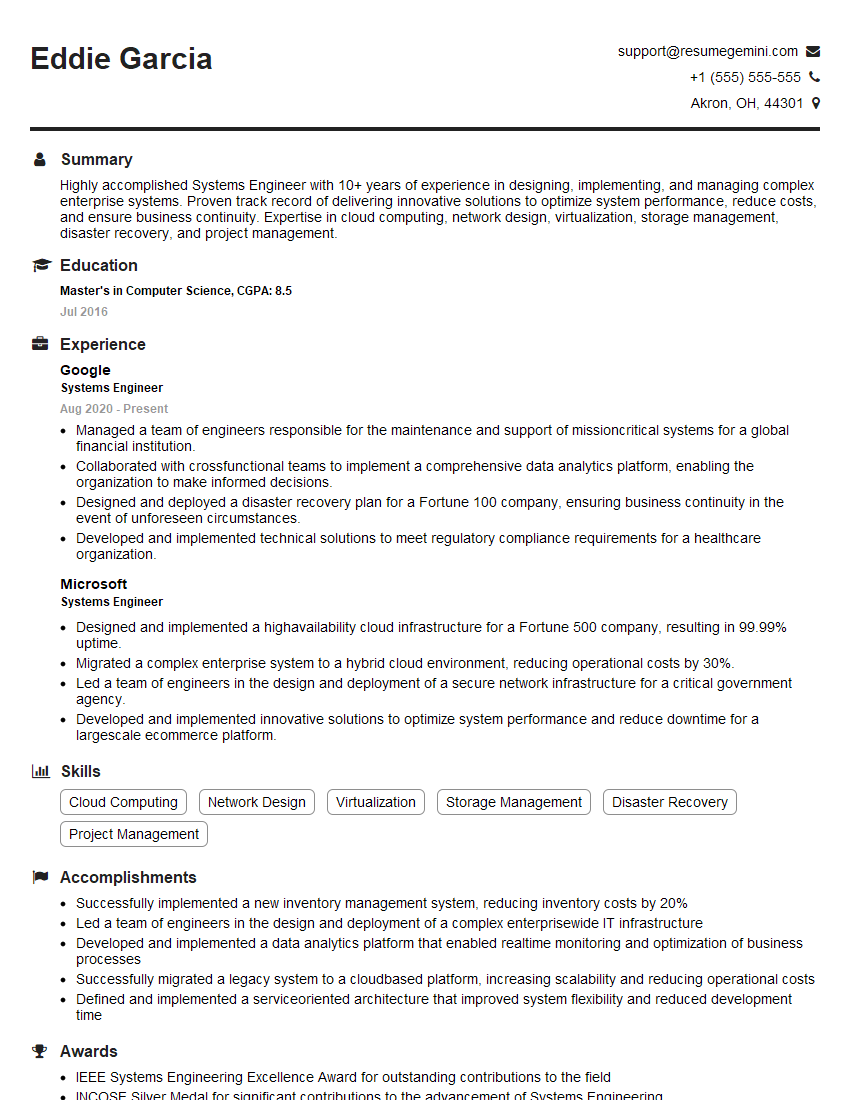
Systems Engineer Resume Sample
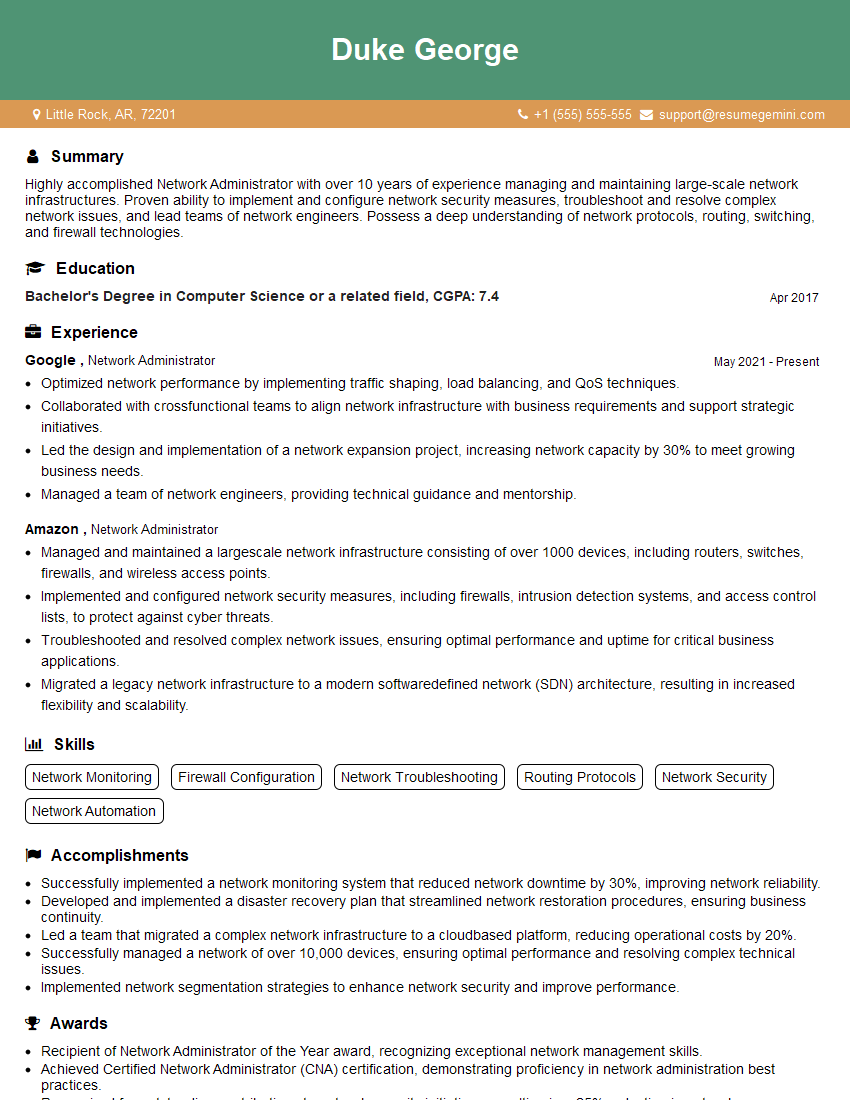
Network Administrator Resume Sample
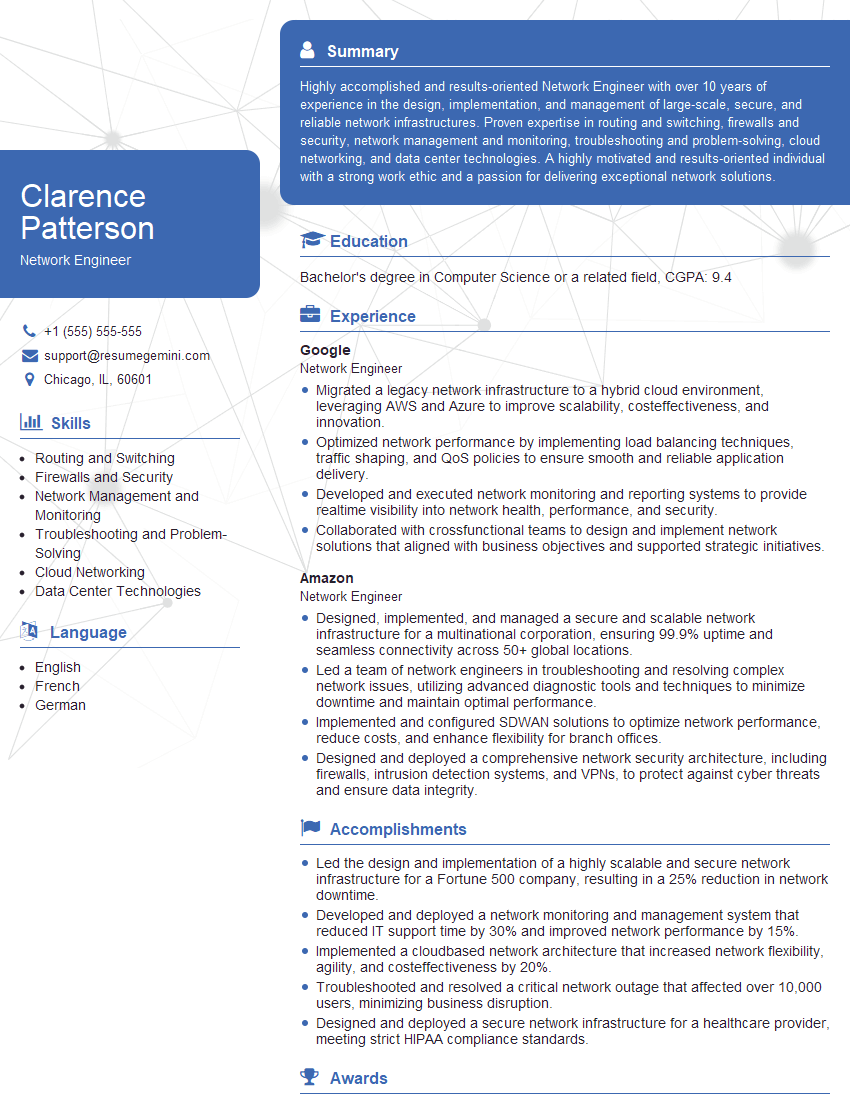
Network Engineer Resume Sample
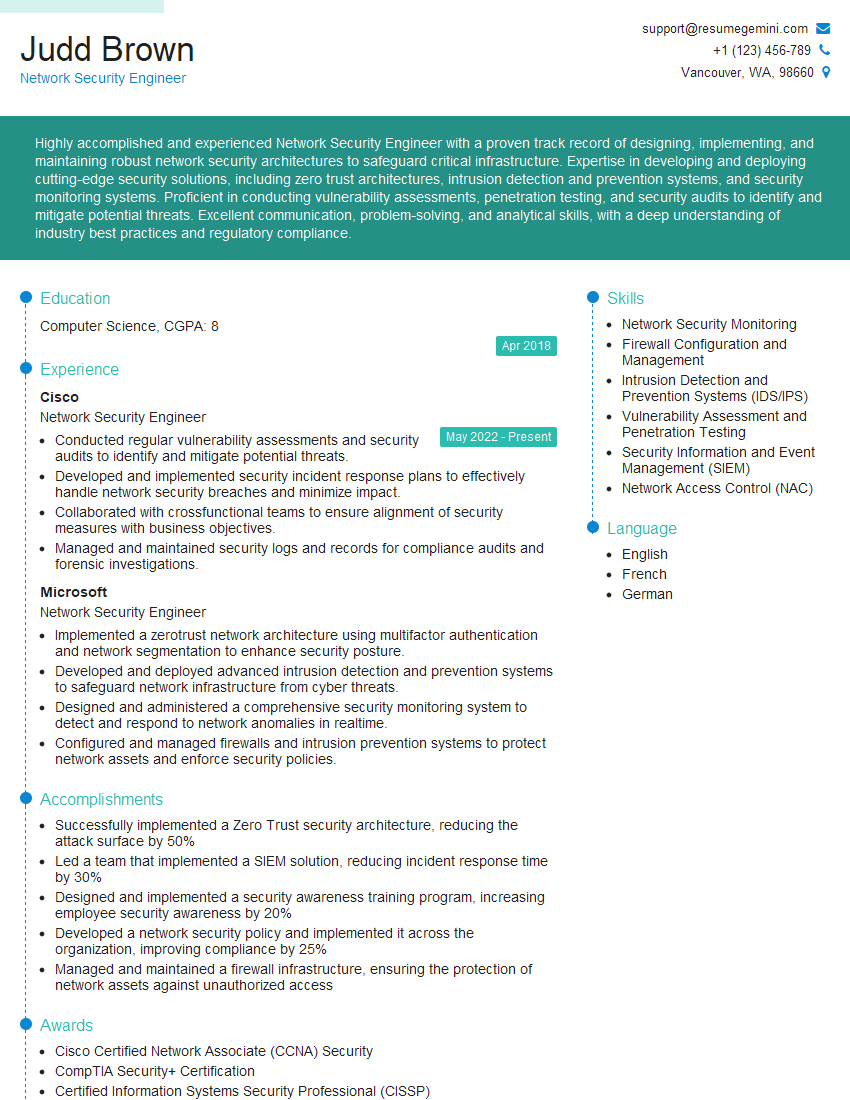
Network Security Engineer Resume Sample
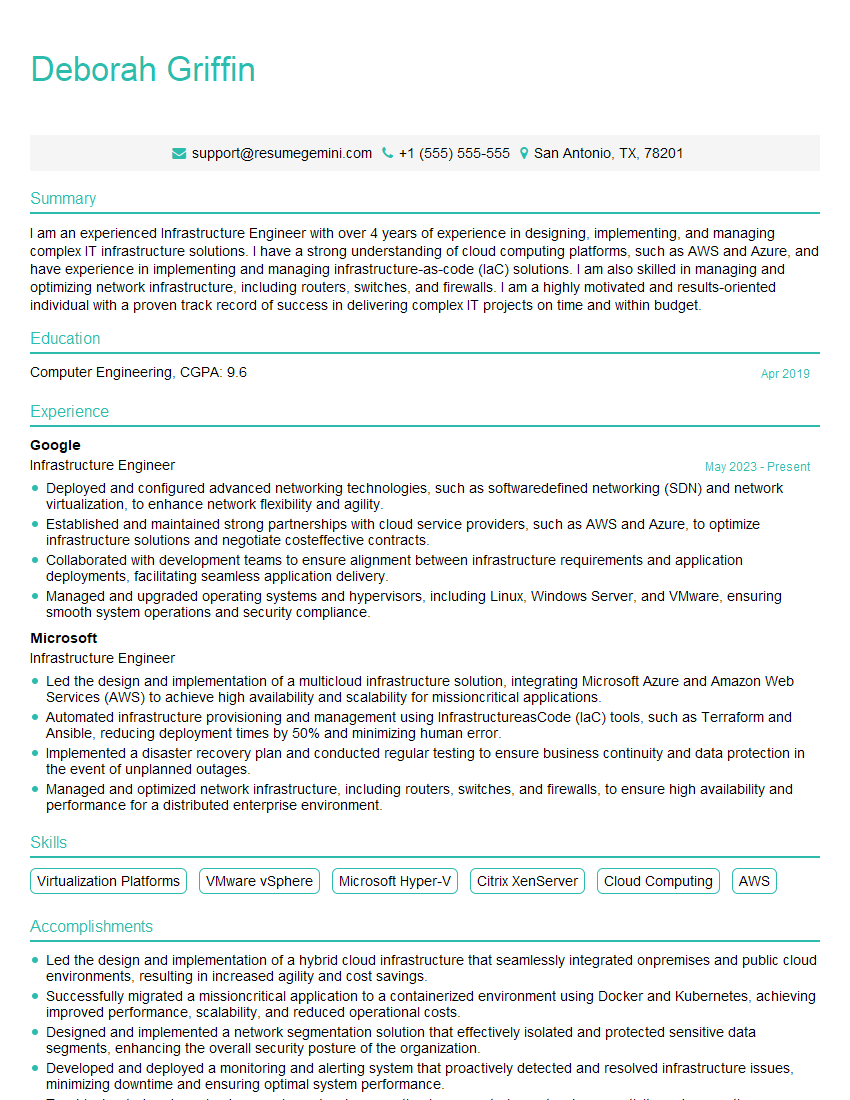
Infrastructure Engineer Resume Sample
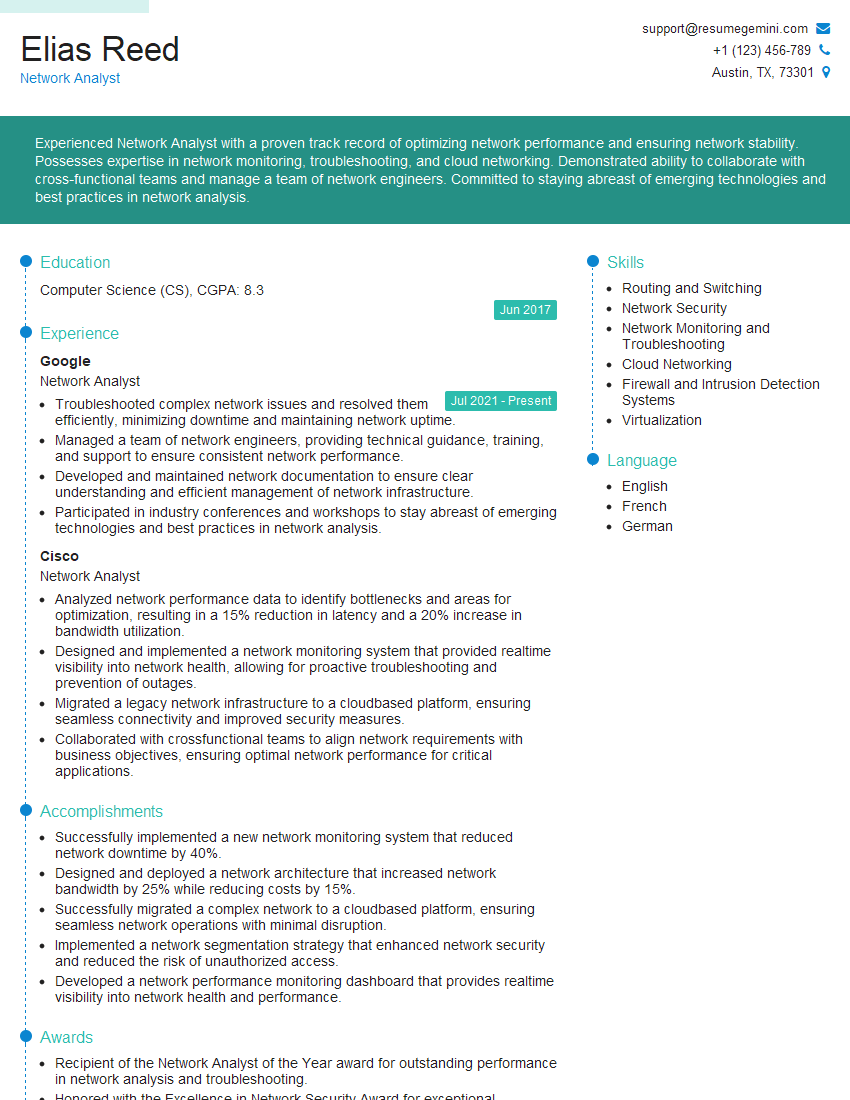
Network Analyst Resume Sample
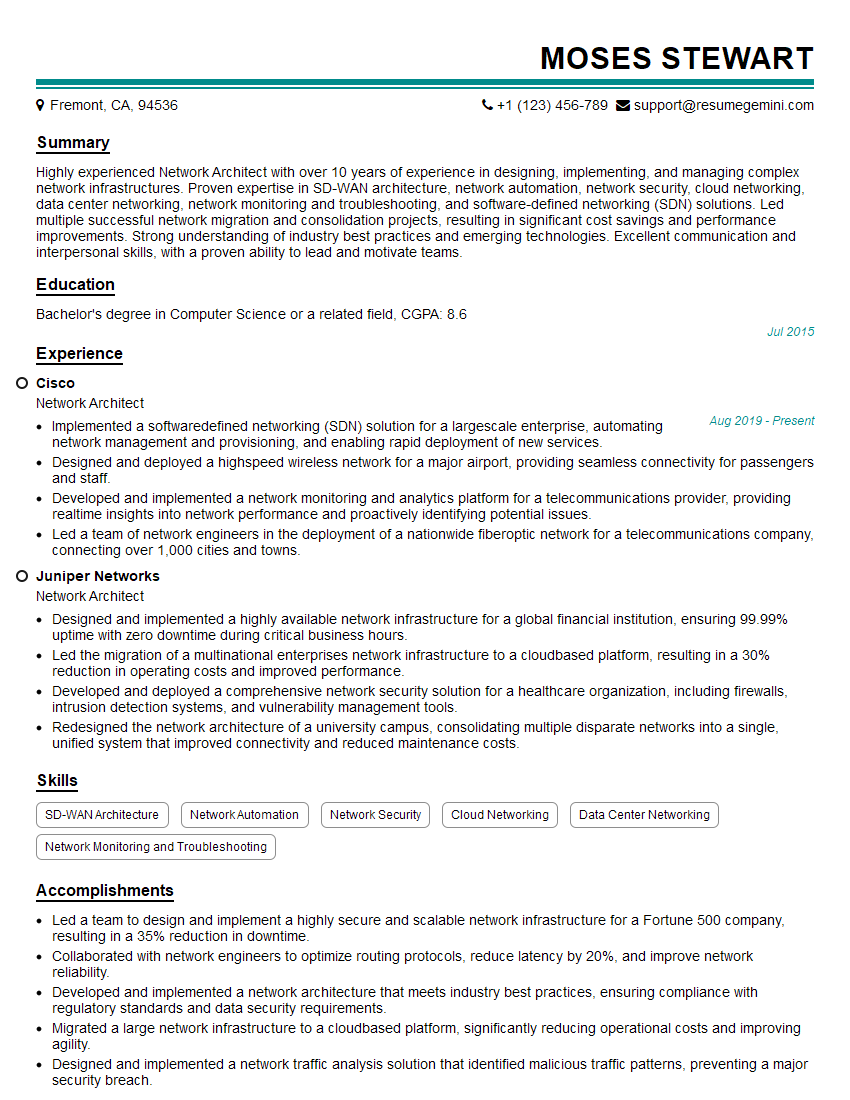
Network Architect Resume Sample
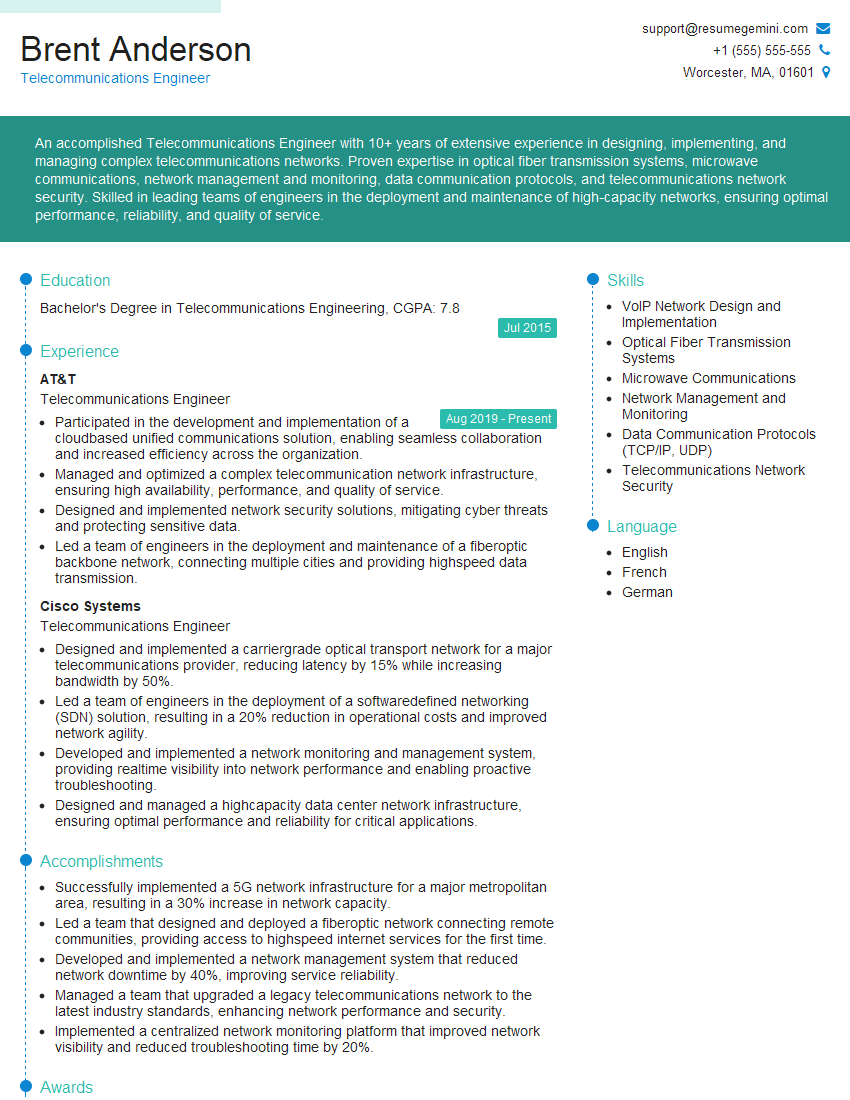
Telecommunications Engineer Resume Sample
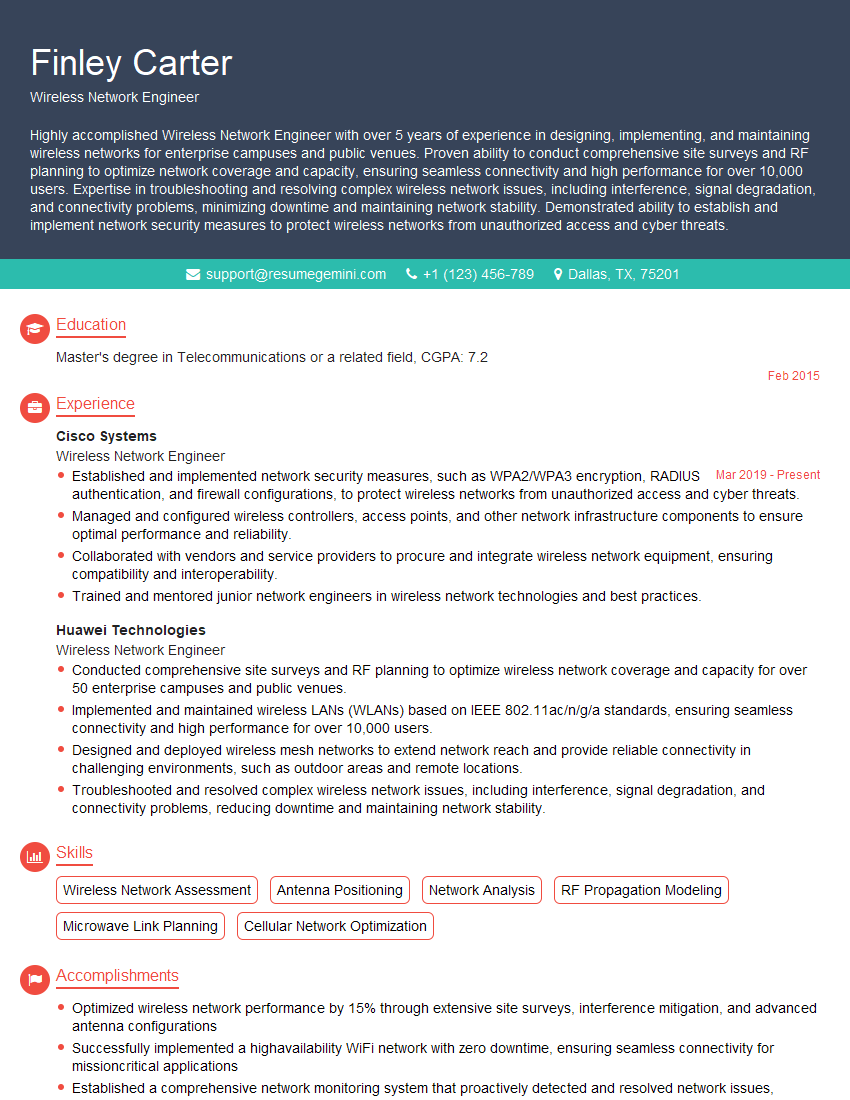
Wireless Network Engineer Resume Sample
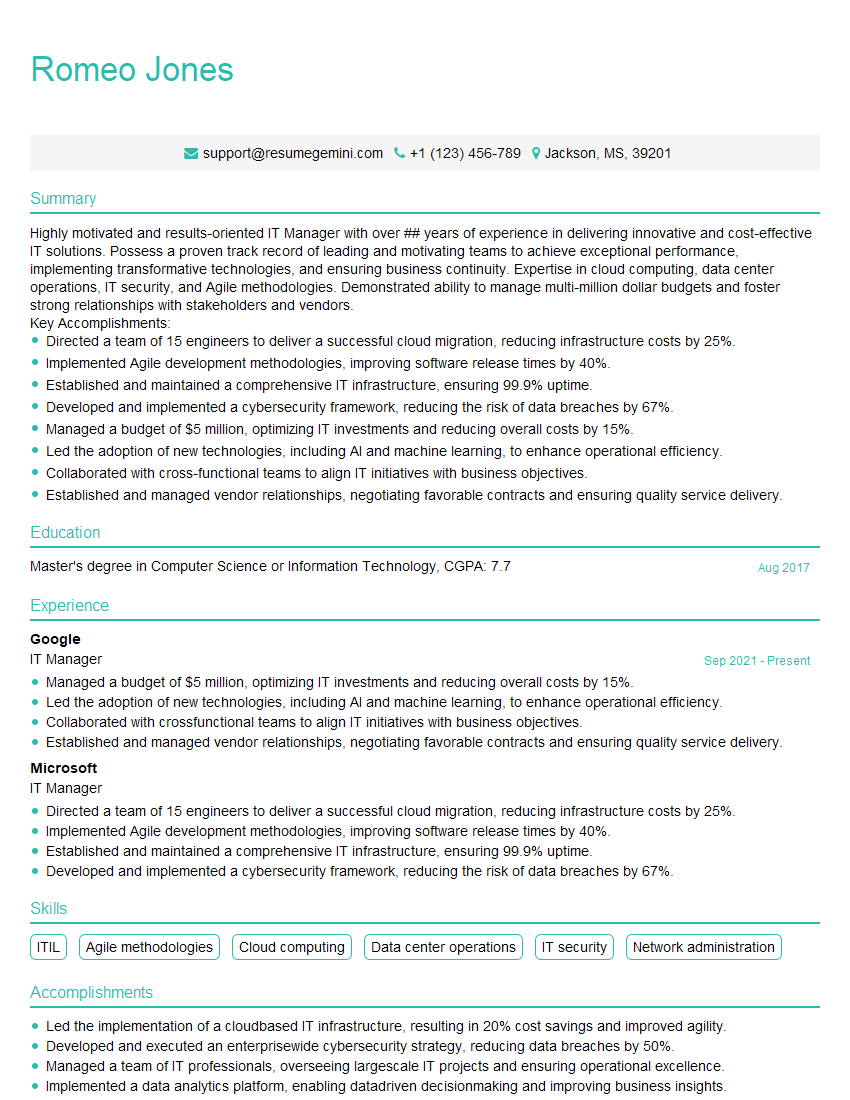
IT Manager Resume Sample
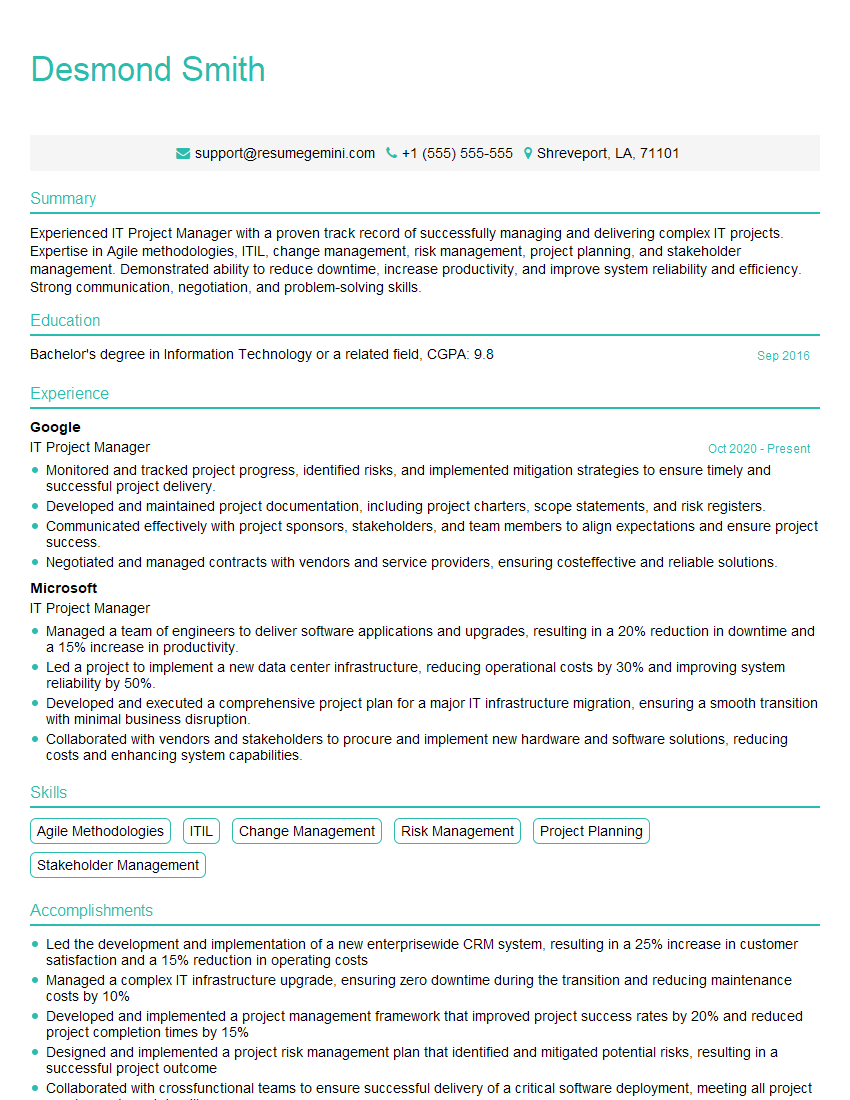
IT Project Manager Resume Sample
Explore more articles
Users Rating of Our Blogs
Share Your Experience
We value your feedback! Please rate our content and share your thoughts (optional).
What Readers Say About Our Blog
Very informative content, great job.
good