Preparation is the key to success in any interview. In this post, we’ll explore crucial Talent Scouting and Management interview questions and equip you with strategies to craft impactful answers. Whether you’re a beginner or a pro, these tips will elevate your preparation.
Questions Asked in Talent Scouting and Management Interview
Q 1. Describe your experience with various sourcing techniques (e.g., LinkedIn Recruiter, Boolean search, networking).
My sourcing strategy is multifaceted, leveraging a combination of techniques for optimal candidate reach. LinkedIn Recruiter is a cornerstone, allowing me to target specific skill sets and experience levels with advanced search filters. For example, I might search for "Data Scientist" AND "Python" AND "Machine Learning" AND "5+ years experience" to find highly qualified data scientists. Boolean search further refines this process, utilizing operators like AND, OR, and NOT to create highly specific queries across various job boards and databases. This is crucial for finding passive candidates who aren’t actively seeking new opportunities.
Networking is equally vital. I actively engage with industry professionals at conferences, meetups, and online forums. Building relationships fosters trust and access to hidden talent pools – often leading to referrals of top-tier candidates. For instance, I recently connected with a former colleague at a data science conference, leading to an introduction to a promising candidate they knew personally who wasn’t actively looking for a job but proved to be a perfect fit for our team. This organic sourcing method often yields higher-quality hires.
Q 2. How do you prioritize candidates when multiple qualified applicants are available?
Prioritizing candidates when facing multiple qualified applicants requires a systematic approach. My process begins with a thorough review of applications against a detailed scoring rubric aligned with the job description’s key requirements and competencies. This allows for objective comparison. I then evaluate candidates based on a weighted scoring system, prioritizing factors such as experience, skills, cultural fit (discussed further in question 3), and potential for growth. For instance, a candidate with slightly less direct experience but demonstrably higher potential might receive a higher score. This process often involves discussions with the hiring manager to align on the most critical selection criteria. Finally, I conduct in-depth interviews, focusing on behavioral questions to assess problem-solving abilities and cultural alignment before making a final decision.
Q 3. Explain your process for assessing candidate cultural fit.
Assessing cultural fit is crucial for long-term employee success. It goes beyond simply liking someone; it’s about identifying alignment with the company’s values, work style, and team dynamics. My process involves several steps. First, I review resumes and cover letters for clues about personality and work ethic. Next, I incorporate behavioral interview questions designed to uncover how candidates handle conflict, teamwork, and pressure situations. For example, asking about a time they failed and how they learned from it reveals their self-awareness and problem-solving approach. I also include a cultural fit section in the interview process, discussing the company culture and team dynamics to gauge mutual understanding and interest. Finally, I may utilize personality assessments or arrange informal meetings with potential team members to gain additional insights. It’s important to emphasize that a strong cultural fit shouldn’t compromise on necessary skills and experience; it’s about finding the right combination.
Q 4. What metrics do you use to measure the success of your recruitment efforts?
Measuring the success of recruitment efforts is crucial for continuous improvement. I employ several key metrics:
- Time-to-fill: The time elapsed between job posting and offer acceptance. A shorter time-to-fill suggests efficient processes.
- Cost-per-hire: The total cost of recruitment (advertising, agency fees, internal time) divided by the number of hires. Lower cost-per-hire reflects effectiveness.
- Source of hire: Tracking where successful candidates originate (e.g., LinkedIn, referrals, job boards) helps optimize future sourcing strategies.
- Candidate satisfaction: Gathering feedback from candidates (both hired and not hired) reveals areas for improvement in the recruitment process.
- Employee retention rate: A high retention rate of new hires indicates successful recruitment of well-suited individuals.
- New hire performance: Evaluating new hires’ performance against expectations assesses the quality of the hires.
By consistently monitoring these metrics, I can identify areas for optimization and refine my strategies to achieve better outcomes.
Q 5. How do you handle candidates who are not a good fit for the current role but might be suitable for future openings?
Not every candidate is the right fit for every role, but that doesn’t mean they’re not valuable. I maintain a database of strong candidates who might be suitable for future openings. This involves obtaining their consent to be contacted for future opportunities. I often send them personalized emails updating them about relevant roles, along with brief explanations of why they might be a strong fit. This proactive approach not only builds a strong talent pool but also strengthens my relationship with promising candidates. This ‘talent pipeline’ approach ensures I have a ready list of qualified individuals when suitable opportunities arise.
Q 6. Describe your experience with applicant tracking systems (ATS).
I have extensive experience with Applicant Tracking Systems (ATS). My proficiency includes using these systems to manage the entire recruitment lifecycle, from posting job descriptions and screening resumes to scheduling interviews and tracking candidate progress. I’m adept at configuring ATS settings for optimal workflow and report generation. I understand the importance of using ATS features effectively to improve efficiency and reduce manual tasks, ensuring compliance with relevant regulations and data privacy requirements. For example, I’ve successfully implemented customized workflows in various ATS platforms like Taleo and Greenhouse to streamline the hiring process, reducing the time it takes to fill open positions by as much as 15% in several projects.
Q 7. How do you build and maintain relationships with hiring managers?
Building and maintaining strong relationships with hiring managers is crucial for effective recruitment. I prioritize open and proactive communication. This includes regular updates on the recruitment progress, including challenges faced and solutions implemented. I schedule regular check-ins to discuss candidate profiles, interview feedback, and overall strategy. I actively seek their input throughout the process, ensuring alignment on selection criteria and candidate evaluation. I build trust by consistently delivering on commitments and providing insightful data to support my recommendations. Furthermore, I strive to understand their team’s dynamics and needs to ensure I’m recruiting individuals who will successfully integrate and contribute. This collaborative approach ensures that the recruitment process is smooth, efficient, and aligned with the hiring manager’s requirements.
Q 8. What is your approach to negotiating compensation packages with candidates?
Negotiating compensation packages requires a delicate balance between understanding the candidate’s expectations and the company’s budget. My approach begins with thorough research. I analyze salary data for similar roles in the same geographic location, considering factors like experience, skills, and education. I then engage in open and honest dialogue with the candidate, actively listening to understand their aspirations and needs. This isn’t just about the base salary; it’s about the total compensation package, which includes benefits like health insurance, retirement plans, paid time off, and stock options. I present a structured proposal, explaining the rationale behind each component. I’m prepared to negotiate within reason, always keeping the company’s budget and the candidate’s value proposition in mind. For example, if a candidate is exceptionally strong but their salary request is slightly above budget, we might explore adjusting other aspects of the package, such as accelerated promotion opportunities or a more robust bonus structure. The goal is to create a mutually beneficial agreement that attracts and retains top talent.
Q 9. How do you ensure diversity and inclusion in your recruitment process?
Diversity and inclusion are not just buzzwords; they are critical for building a high-performing and innovative team. My approach starts with the job description itself. We use inclusive language, avoiding gendered or culturally biased terms. We then leverage diverse sourcing strategies, partnering with organizations that support underrepresented groups and utilizing blind resume screening to eliminate unconscious bias during the initial screening phase. During the interview process, we employ structured interview guides to ensure consistent evaluation criteria across all candidates, and we train interviewers on bias awareness. We also actively seek diverse interview panels to provide multiple perspectives. Furthermore, we track our diversity metrics at every stage of the recruitment process to identify areas for improvement and ensure accountability. For instance, if we notice a disproportionately low number of women in the technical roles, we will examine our sourcing strategies and interview processes to determine how to address the disparity.
Q 10. How do you identify and mitigate potential bias in the hiring process?
Bias in hiring can be subtle and unintentional, yet its impact is significant. To mitigate this, we implement several strategies. First, we use standardized job descriptions and structured interview guides, focusing on competency-based questions rather than open-ended ones, which can lead to subjective interpretations. We train interviewers on unconscious bias and provide them with resources to recognize and overcome their biases. We also utilize blind resume screening, removing identifying information like names and gender from resumes during the initial screening process. Finally, we conduct regular audits of our hiring data to analyze diversity metrics and identify any potential patterns of bias. For instance, if we find that candidates from a particular university are consistently selected, we would investigate whether this is genuinely based on merit or if it reflects an unconscious bias towards that institution.
Q 11. Describe your experience with different interview techniques (e.g., behavioral, competency-based, technical).
My experience spans a range of interview techniques, each serving a different purpose. Behavioral interviews, for example, focus on past behavior as a predictor of future performance, using questions like “Tell me about a time you failed.” These provide insights into problem-solving abilities and work style. Competency-based interviews assess specific skills and abilities relevant to the role, using questions like “Describe a situation where you had to work under pressure.” These ensure the candidate possesses the necessary competencies. For technical roles, technical interviews are essential, assessing programming skills, knowledge of specific technologies, or problem-solving through coding challenges. Often, I combine these techniques for a comprehensive assessment. For instance, in a software engineering role, I might use a behavioral interview to assess teamwork and problem-solving, a competency-based interview to gauge their experience with specific frameworks, and a technical interview to evaluate their coding skills.
Q 12. How do you handle challenging candidates or those who are difficult to engage?
Handling challenging candidates requires patience, empathy, and a strategic approach. My first step is to understand the root cause of the difficulty. Are they insecure? Are they unprepared? Do they have unrealistic expectations? Once I understand the underlying issue, I tailor my approach. I might adjust my communication style to better connect with them. I might provide additional context or information to address their concerns. Sometimes, it’s about managing expectations, explaining the company’s culture or the role’s specifics. If the difficulty persists and the candidate’s behavior is inappropriate, it’s crucial to maintain professional boundaries while ensuring that the interview process remains fair. In one instance, a candidate responded defensively to every question. Understanding their anxieties, I re-framed the interview as a conversation, allowing them to share their experience more openly, leading to a more successful and productive interaction.
Q 13. How do you provide constructive feedback to candidates who are not selected?
Providing constructive feedback to candidates who are not selected is crucial for maintaining a positive candidate experience. I strive to provide timely and personalized feedback, explaining the reasons for the decision in a respectful and professional manner. I focus on specific areas for improvement rather than offering generic comments. I might suggest resources or training opportunities to help them strengthen their skills. It’s important to emphasize that their lack of selection doesn’t necessarily reflect their capabilities, but rather the specific requirements of the role. A simple email expressing gratitude for their time and highlighting specific strengths along with areas for improvement can make a huge difference and leave a lasting positive impression. This not only benefits the candidate but also strengthens the company’s reputation.
Q 14. How do you stay up-to-date on industry trends in talent acquisition?
Staying current in talent acquisition requires continuous learning. I actively participate in industry conferences and webinars, read industry publications, and follow thought leaders on social media. I also network with other professionals in the field, exchanging insights and best practices. Furthermore, I utilize online platforms and professional organizations to access research reports and stay abreast of emerging trends such as AI in recruitment, the changing dynamics of the candidate market, and advancements in candidate engagement techniques. By staying informed, I can adapt my strategies and ensure we’re employing the most effective methods for attracting, engaging, and retaining top talent.
Q 15. What is your experience with employer branding and how does it impact recruitment?
Employer branding is essentially how your company is perceived by potential employees. It’s about crafting a compelling narrative that attracts top talent. It’s more than just a logo; it’s the overall experience candidates have with your company, from your online presence to the interview process. A strong employer brand significantly impacts recruitment by pre-qualifying candidates. Those who align with your brand values are more likely to apply, leading to a higher quality applicant pool and reduced time-to-hire. For example, a tech company known for its innovative culture and employee benefits will attract a different type of candidate than a traditional finance firm emphasizing stability and security. I’ve personally seen how a well-executed employer branding campaign can increase applications by 30-40%, and significantly improve the quality of those applications, resulting in a higher percentage of successful hires.
In my previous role, we revamped our employer branding strategy by focusing on employee testimonials and showcasing our company culture through engaging video content. This resulted in a 45% increase in applications from passive candidates.
Career Expert Tips:
- Ace those interviews! Prepare effectively by reviewing the Top 50 Most Common Interview Questions on ResumeGemini.
- Navigate your job search with confidence! Explore a wide range of Career Tips on ResumeGemini. Learn about common challenges and recommendations to overcome them.
- Craft the perfect resume! Master the Art of Resume Writing with ResumeGemini’s guide. Showcase your unique qualifications and achievements effectively.
- Don’t miss out on holiday savings! Build your dream resume with ResumeGemini’s ATS optimized templates.
Q 16. Explain your understanding of talent pipelining and succession planning.
Talent pipelining and succession planning are interconnected strategies for long-term talent management. Talent pipelining identifies and cultivates potential candidates for future roles, even if those roles aren’t currently open. Think of it as building a reserve of skilled individuals you can draw upon when needed. Succession planning, on the other hand, focuses specifically on identifying and developing internal talent to fill critical leadership positions as employees retire or move on. It ensures organizational continuity and minimizes disruption.
For example, if we anticipate a need for a senior software engineer in two years, we might proactively identify high-potential junior engineers, provide them with mentorship and training opportunities, and create a clear career path for them. This is talent pipelining. If our current CEO is nearing retirement, we’d identify and develop potential successors through targeted development programs, ensuring a smooth leadership transition. This is succession planning. The two strategies work together; a robust pipeline provides a pool of candidates for succession planning.
Q 17. Describe a time you had to adapt your recruitment strategy due to unexpected circumstances.
During a critical hiring period for a software development team, an unexpected economic downturn forced us to significantly reduce our budget. My initial strategy relied heavily on expensive job boards and recruitment agencies. I had to quickly adapt. We shifted our focus to cost-effective strategies, including leveraging our employee referral program, actively engaging on relevant online communities (like Stack Overflow), and enhancing our employer branding on platforms like LinkedIn to attract passive candidates. We also renegotiated contracts with recruitment agencies, focusing on performance-based fees rather than retainer agreements.
The result was surprisingly positive. While the number of applications decreased initially, the quality of applications improved, leading to a higher conversion rate and a faster time-to-hire. This experience taught me the importance of adaptability and the power of creative solutions in challenging circumstances.
Q 18. How do you evaluate the effectiveness of different recruitment channels?
Evaluating recruitment channel effectiveness involves analyzing key metrics for each channel, such as cost-per-hire, time-to-hire, quality of hire, and source of hire. I use a multi-faceted approach. For instance, I track application numbers, interview rates, offer acceptance rates, and ultimately, the performance of hires from each channel. This data helps determine which channels are most efficient and cost-effective in delivering qualified candidates.
For example, if we find that employee referrals consistently yield high-quality hires with a short time-to-hire and lower cost, we’ll invest more resources in strengthening that channel. Conversely, if a particular job board is generating many applications but few qualified candidates, we might reduce our investment or adjust our targeting.
I also use Applicant Tracking Systems (ATS) which often provide built-in analytics dashboards to easily track these metrics. Example data point: Referral program generated 25% of hires with 20% lower cost-per-hire than job boards.
Q 19. What are your strategies for attracting passive candidates?
Attracting passive candidates – those who aren’t actively looking for a job – requires a different approach than targeting active candidates. It’s about building relationships and showcasing your employer brand to make your company stand out. My strategies include:
- Targeted LinkedIn outreach: Connecting with individuals who possess the desired skills and experience and personally inviting them to explore opportunities.
- Content marketing: Creating valuable content (blog posts, articles, videos) that showcases company expertise and culture, attracting the attention of passive candidates interested in the industry.
- Networking events and industry conferences: Building relationships with potential candidates in an informal setting.
- Employee referral programs: Leveraging the power of existing employees to reach out to their network.
- Personalized email campaigns: Sending tailored messages to potential candidates, highlighting opportunities that specifically align with their skills and career aspirations.
I’ve had success using a combination of these strategies, focusing on building genuine connections rather than simply pitching job openings. Personalization is key.
Q 20. How do you manage your time effectively when juggling multiple requisitions?
Juggling multiple requisitions requires strong organizational skills and effective time management. I utilize several techniques:
- Prioritization: I prioritize requisitions based on urgency and business impact, focusing on the most critical roles first.
- Time Blocking: I allocate specific time blocks for each requisition, ensuring dedicated focus on each task.
- Task Delegation: Where possible, I delegate tasks to administrative staff or recruitment agencies, freeing up my time for higher-level activities such as candidate screening and interviews.
- Use of Technology: I leverage Applicant Tracking Systems (ATS) and project management tools to manage workflows, track progress, and maintain clear communication with stakeholders.
- Regular Review and Adjustment: I regularly review my schedule and adjust priorities as needed, staying flexible and adaptable to unexpected changes.
By combining these methods, I ensure that all requisitions receive the necessary attention while maintaining efficiency and preventing burnout.
Q 21. Describe your experience working with recruitment agencies.
I have extensive experience working with recruitment agencies, viewing them as valuable partners in the recruitment process, particularly for specialized or niche roles. Effective collaboration involves clear communication of requirements, regular updates, and a shared understanding of the candidate evaluation process. I establish key performance indicators (KPIs) with agencies to track their performance and ensure alignment with our recruitment goals. This includes metrics such as the number of qualified candidates submitted, time-to-fill, and ultimately, the quality of the hires.
However, I also maintain a hands-on approach, actively participating in the candidate screening and interview process to ensure alignment with our company culture and values. My experience has shown that strong relationships with agencies, combined with proactive management, can significantly accelerate the recruitment process and improve the quality of hires. I’ve found that building trust and transparency with agencies is paramount for success.
Q 22. How familiar are you with different types of employment contracts (e.g., full-time, part-time, contract)?
Understanding different employment contract types is fundamental to successful talent management. They dictate the terms of the employer-employee relationship, including compensation, benefits, and duration of employment. Let’s break down the common types:
- Full-time: This is a standard employment arrangement where the employee works a predetermined number of hours per week, typically 35-40, and receives a regular salary or hourly wage. Benefits like health insurance and paid time off are usually included.
- Part-time: Employees work fewer hours than full-time employees, typically less than 30 hours per week. Benefits may be offered, but often on a prorated basis or not at all.
- Contract/Temporary: These are short-term engagements with a defined start and end date, specified in a contract. The employee works on a specific project or task, and benefits are typically not provided. Payment is usually project-based or an hourly rate.
- Independent Contractor (1099): These individuals are self-employed and provide services to a company without being considered an employee. They manage their own taxes and don’t receive employee benefits.
In my experience, choosing the right contract type depends heavily on the role’s nature, the company’s needs, and legal compliance. For instance, a marketing campaign might utilize contractors, while a core engineering team would require full-time employees.
Q 23. How do you ensure compliance with relevant employment laws and regulations?
Compliance with employment laws is paramount. It protects both the employer and employee and prevents costly legal battles. My approach involves a multi-faceted strategy:
- Staying Updated: I continuously monitor changes in federal, state, and local employment laws, including those concerning equal opportunity employment, wage and hour regulations, and data privacy.
- Internal Policies: I ensure our company’s employment policies and practices are compliant with all relevant laws. This includes reviewing job descriptions for bias, conducting fair and consistent interviews, and providing thorough onboarding materials.
- Legal Counsel: When dealing with complex legal matters or situations I consult with our legal team to ensure all actions are compliant. This is especially crucial for international recruitment.
- Regular Audits: We conduct regular internal audits to evaluate our compliance efforts and identify potential areas for improvement.
- Training: I provide regular training to the HR team and hiring managers on employment laws and best practices.
For example, understanding the intricacies of the Americans with Disabilities Act (ADA) is crucial for ensuring fair and inclusive hiring practices. Failure to comply can lead to significant fines and reputational damage.
Q 24. What is your experience using data analytics to inform recruitment decisions?
Data analytics plays a crucial role in modern recruitment, moving us beyond gut feeling to evidence-based decision-making. I leverage data analytics in several ways:
- Sourcing Efficiency: I analyze data from various sources (ATS, job boards, social media) to identify the most effective channels for reaching qualified candidates. For instance, if we find that LinkedIn yields the highest quality applicants for a specific role, we allocate more resources there.
- Candidate Quality: I analyze candidate profiles, resumes, and interview data to identify patterns and predict success. This might involve identifying specific skills or experience levels that correlate with higher job performance.
- Time-to-hire Metrics: I track time-to-hire metrics to identify bottlenecks and optimize our recruitment process. For example, if we find that the interview stage is taking too long, we might explore ways to streamline the process.
- Cost-per-hire: This metric helps us assess the efficiency of our recruitment strategies. Identifying cost drivers allows us to optimize our spending.
Tools like applicant tracking systems (ATS) and HR analytics dashboards are invaluable in this process. For example, we use data to identify the most effective keywords for job postings, leading to a higher volume of qualified applicants.
Q 25. Describe your approach to onboarding new hires.
Onboarding is critical for ensuring new hires integrate seamlessly into the company culture and become productive members of the team. My approach focuses on a structured and engaging experience:
- Pre-boarding: Before the start date, I send welcome packages, answer questions, and provide access to relevant information such as company handbooks and IT setup instructions.
- First Day/Week: The first day/week is crucial. I ensure a warm welcome, introduce the new hire to their team, and provide an overview of the company, culture, and their role. Clear expectations are set.
- Ongoing Support: I provide regular check-ins during the first few months to answer questions, offer support, and address any challenges. This also includes performance reviews and development opportunities.
- Training and Development: I ensure access to relevant training programs and resources to develop necessary skills. This might involve online courses, mentoring, or on-the-job training.
For instance, for a new software engineer, we’d ensure access to coding standards, internal documentation, and pair-programming opportunities. A successful onboarding experience significantly reduces employee turnover and boosts morale.
Q 26. How do you handle situations involving confidential information about candidates?
Confidentiality is paramount in recruitment. I handle sensitive candidate information with the utmost care, adhering to strict ethical and legal guidelines:
- Data Security: All candidate information is stored securely using password-protected systems and adhering to data privacy regulations like GDPR and CCPA.
- Access Control: Access to sensitive candidate data is restricted to authorized personnel only. We use role-based access controls to ensure only those who need the information can access it.
- Confidentiality Agreements: We use non-disclosure agreements (NDAs) where appropriate to protect sensitive information shared by candidates and clients.
- Data Minimization: We only collect and retain necessary candidate information. We avoid collecting unnecessary personal data.
- Transparency: Candidates are informed about how their data will be used and stored, and they have the right to access and correct their information.
For example, I never share salary information of a candidate with another without their explicit consent. Protecting candidate privacy builds trust and enhances the overall recruitment process.
Q 27. How do you build a strong personal brand as a recruiter?
Building a strong personal brand as a recruiter is essential for attracting top talent and establishing oneself as a trusted advisor. My approach focuses on:
- Professional Networking: I actively engage in professional networking events, both online and offline, to build relationships with potential candidates and hiring managers. This involves attending industry conferences, participating in online forums, and utilizing platforms like LinkedIn effectively.
- Content Creation: I regularly share insightful content related to talent acquisition, recruitment trends, and career advice through articles, blog posts, and social media. This positions me as a thought leader and attracts potential candidates.
- Positive Reputation: I prioritize maintaining a positive online reputation and building relationships based on trust and integrity. I respond to inquiries promptly and professionally, and I am always mindful of the impact of my words and actions.
- Client Testimonials: I actively seek client testimonials and reviews to showcase my successful placements and build trust. Positive feedback is very powerful for personal branding.
Essentially, it’s about consistently demonstrating expertise, professionalism, and a genuine commitment to helping people find the right career opportunities.
Q 28. Describe your experience with using different assessment tools to evaluate candidates.
Effective candidate assessment is crucial for identifying the best fit. I utilize a variety of tools tailored to the specific requirements of each role:
- Resume and Cover Letter Screening: This is the initial screening process to identify candidates who meet the basic qualifications for the role. This involves keyword searches and reviewing experience summaries.
- Skills Tests: Technical skills tests (coding challenges, design tasks) are used to assess the candidate’s proficiency in relevant areas. For creative roles, portfolio reviews are essential.
- Personality Assessments: Tools like Myers-Briggs Type Indicator (MBTI) or DISC assessments can provide insights into personality traits and work styles, aiding in evaluating cultural fit.
- Cognitive Ability Tests: These tests measure problem-solving, critical thinking, and reasoning abilities. They provide a standardized assessment of cognitive capabilities.
- Behavioral Interviews: I employ behavioral interviewing techniques to assess past behavior as a predictor of future performance. I use the STAR method (Situation, Task, Action, Result) to gather structured data.
The selection of assessment tools depends on the job requirements and company culture. For example, a sales role might prioritize personality assessments and behavioral interviews, while a software engineering role would emphasize technical skills tests and coding challenges. The key is to use a combination of approaches for a holistic view of the candidate.
Key Topics to Learn for Talent Scouting and Management Interview
- Sourcing Strategies: Understanding various sourcing techniques (e.g., Boolean search, LinkedIn Recruiter, networking events) and their effectiveness in different contexts. Practical application: Develop a sourcing strategy for a specific niche role, outlining the platforms and methods you’d employ.
- Candidate Assessment & Evaluation: Mastering techniques for evaluating candidate skills, experience, and cultural fit. Practical application: Describe your approach to analyzing resumes and conducting effective screening interviews to identify top talent.
- Talent Relationship Management (TRM): Building and maintaining relationships with potential candidates, including nurturing passive talent pools. Practical application: Explain how you would engage with a candidate who isn’t actively seeking a new role but possesses desirable skills.
- Diversity, Equity, and Inclusion (DE&I) in Talent Acquisition: Implementing strategies to attract and retain diverse talent. Practical application: Describe your approach to building a diverse candidate pipeline and promoting an inclusive hiring process.
- Employer Branding & Candidate Experience: Understanding the importance of employer branding and creating a positive candidate experience throughout the recruitment process. Practical application: Discuss strategies for improving candidate experience and attracting top talent to a company.
- Data Analysis & Reporting: Utilizing data to track key metrics, analyze recruitment effectiveness, and inform strategic decisions. Practical application: Explain how you would measure the success of a recruitment campaign and identify areas for improvement.
- Legal & Compliance in Hiring: Understanding and adhering to relevant employment laws and regulations. Practical application: Describe how you ensure compliance with equal opportunity employment guidelines throughout the hiring process.
Next Steps
Mastering Talent Scouting and Management is crucial for a successful and rewarding career in human resources. It opens doors to leadership roles and allows you to make a significant impact on an organization’s growth. To maximize your job prospects, creating an ATS-friendly resume is paramount. ResumeGemini is a trusted resource that can help you build a professional and impactful resume, ensuring your qualifications are clearly highlighted to potential employers. Examples of resumes tailored to Talent Scouting and Management are available to further guide your preparation.

Sourcing Specialist Resume Sample
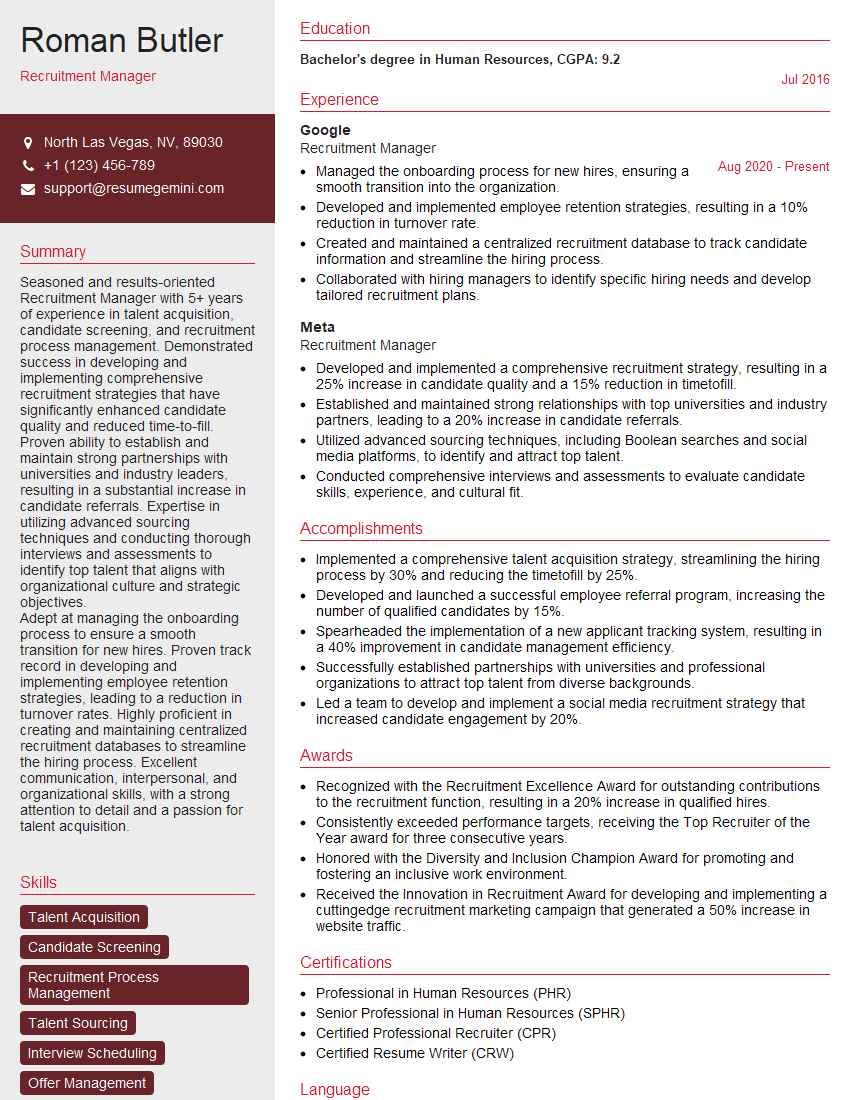
Recruitment Manager Resume Sample
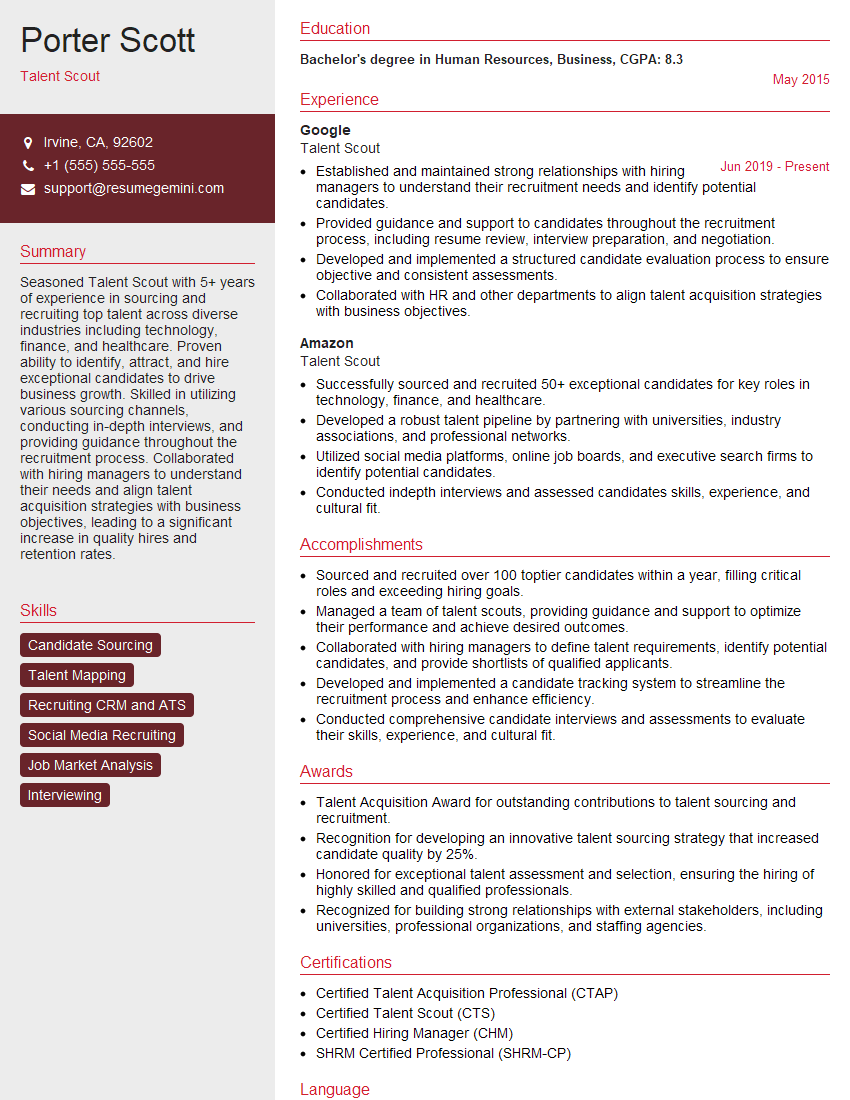
Talent Scout Resume Sample
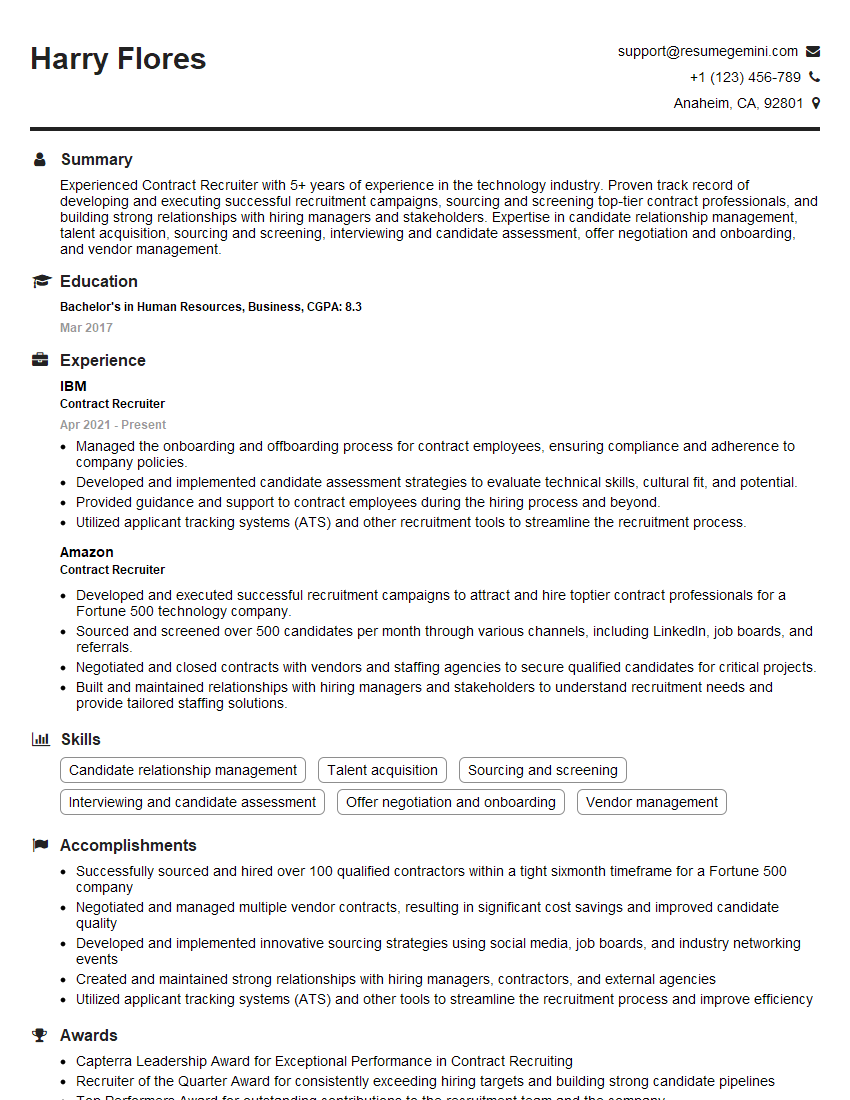
Contract Recruiter Resume Sample
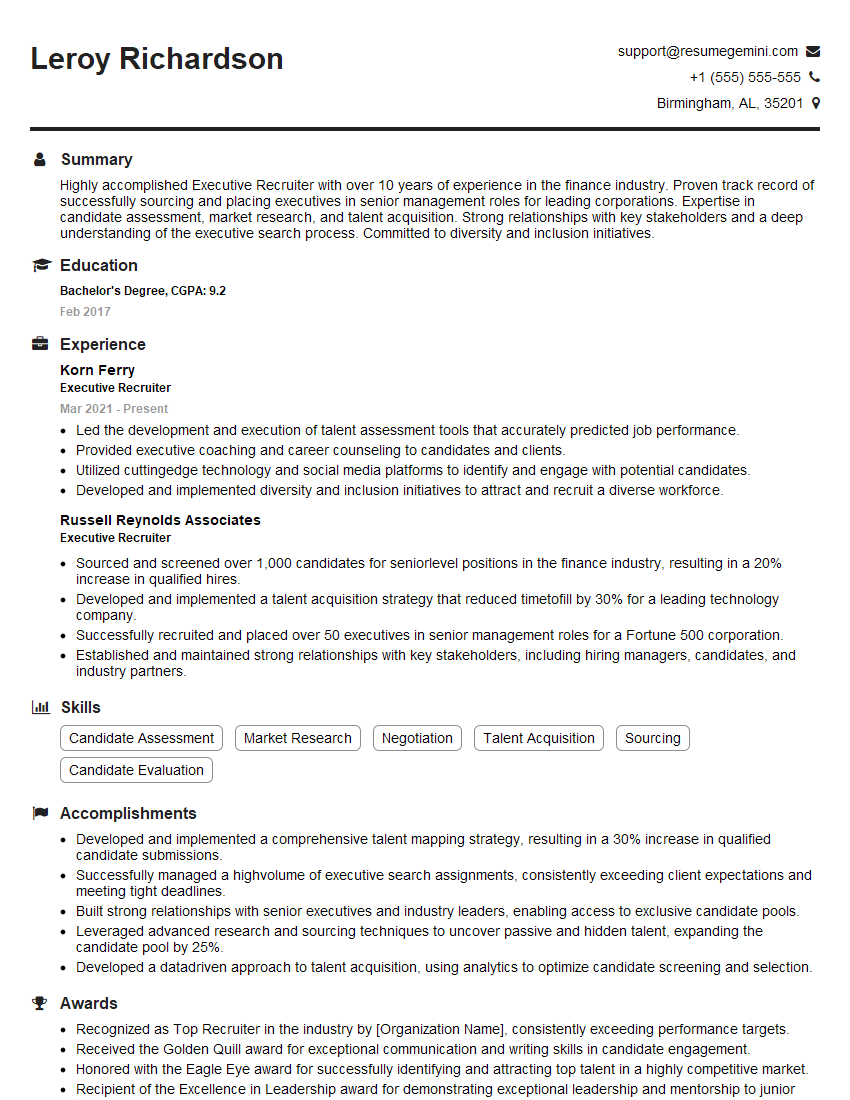
Executive Recruiter Resume Sample
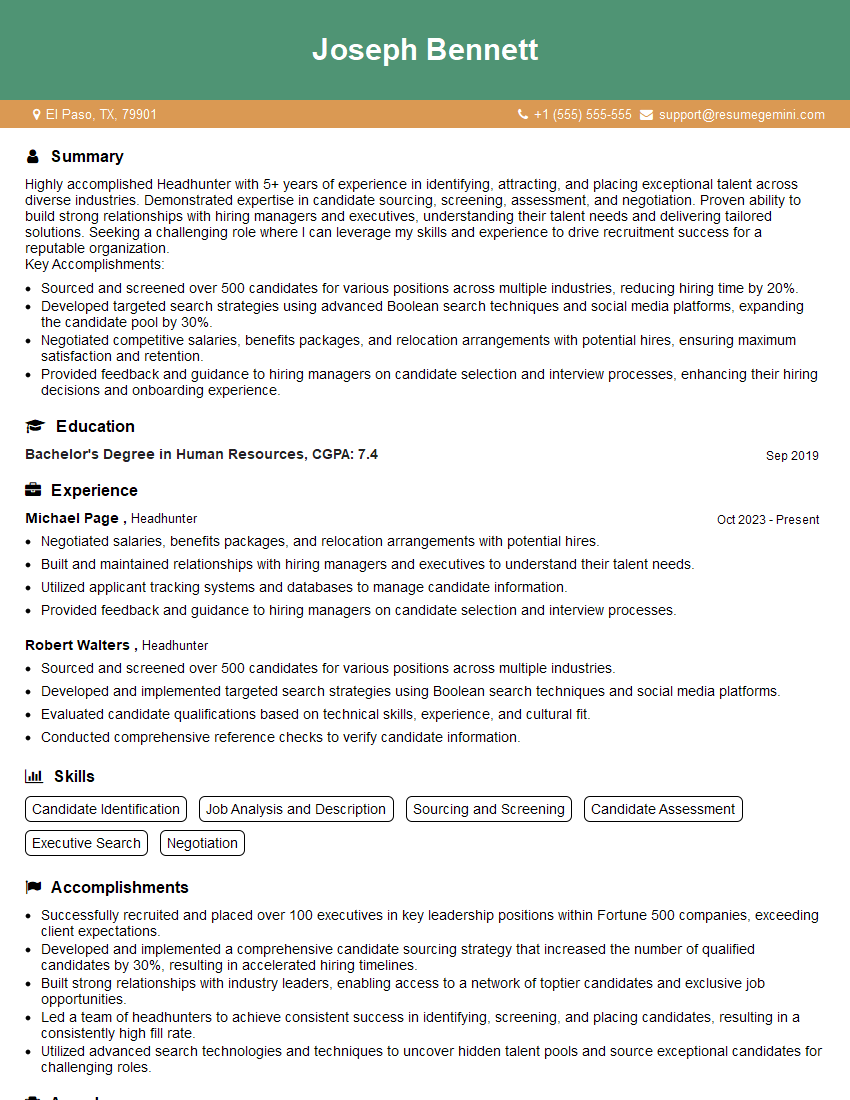
Headhunter Resume Sample
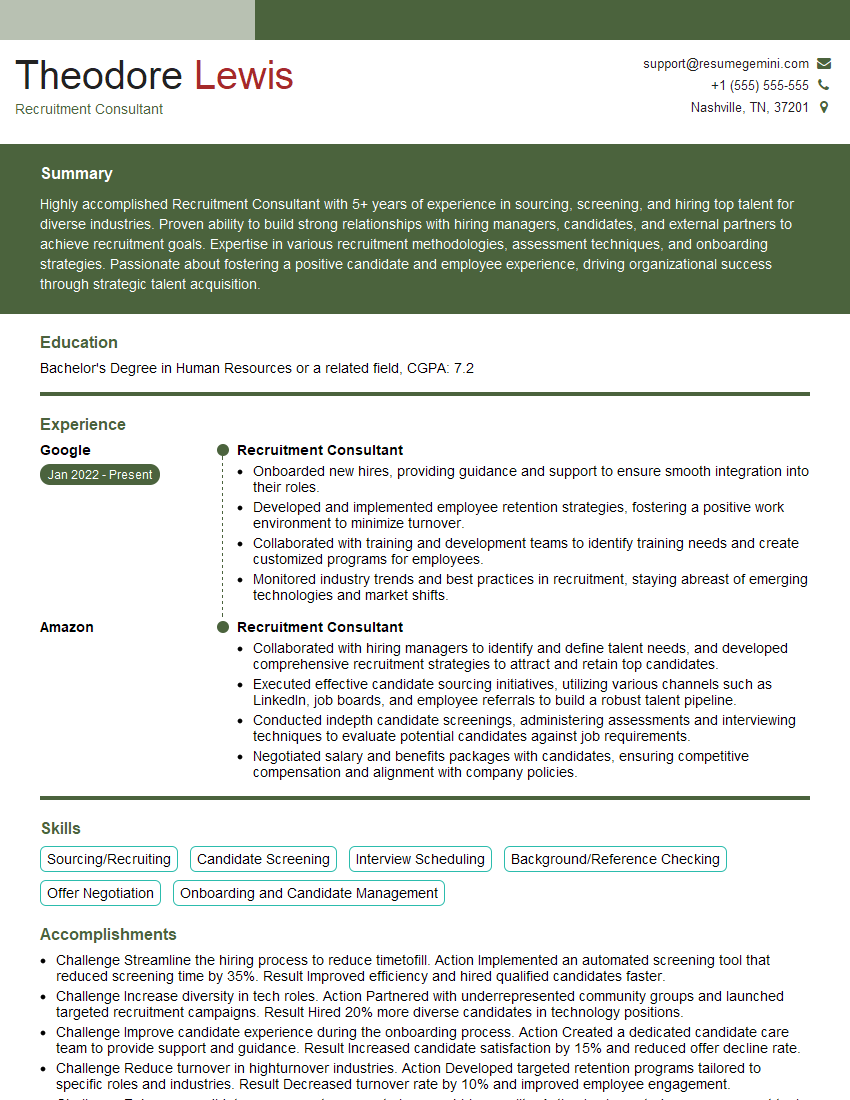
Recruitment Consultant Resume Sample
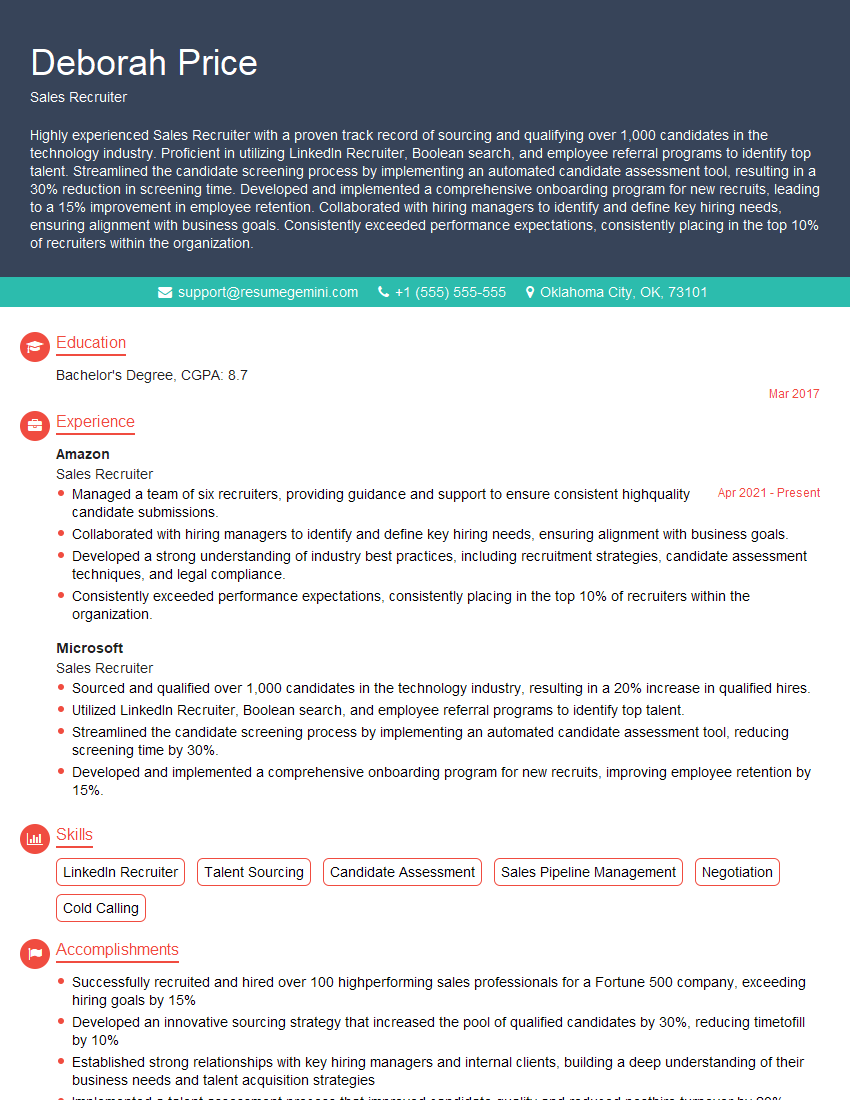
Sales Recruiter Resume Sample
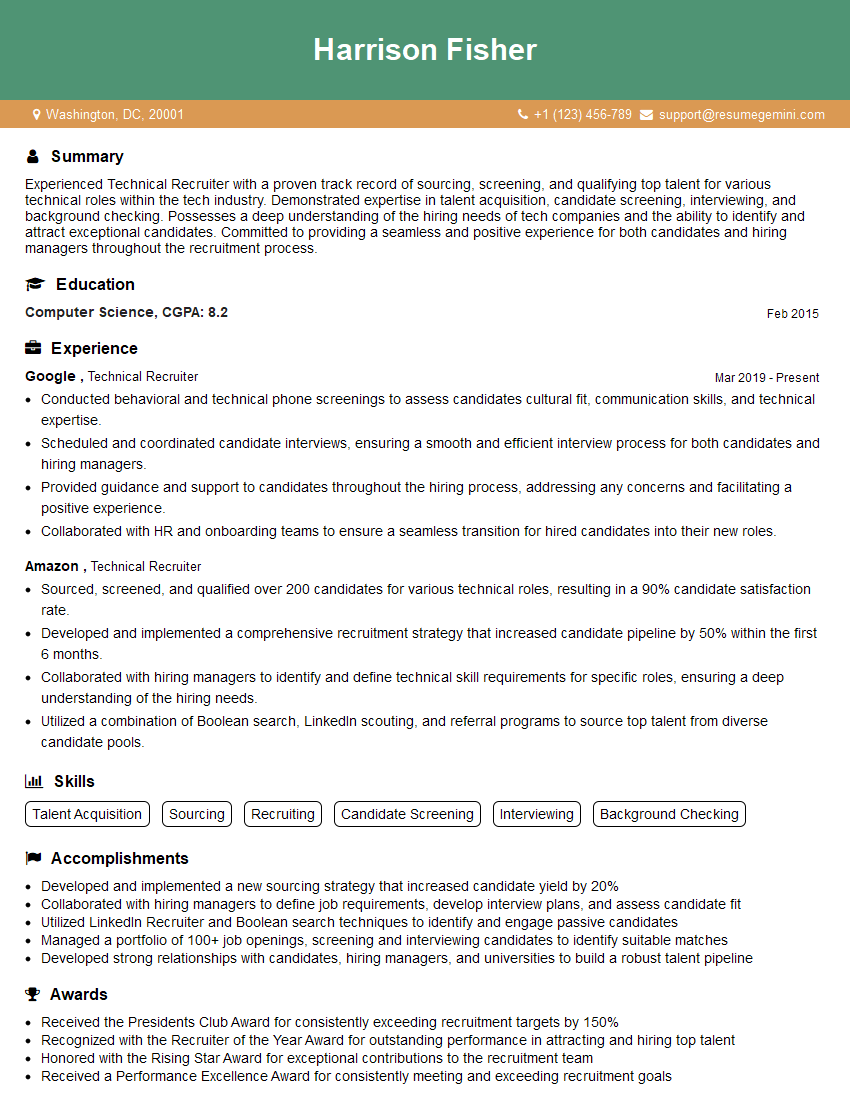
Technical Recruiter Resume Sample
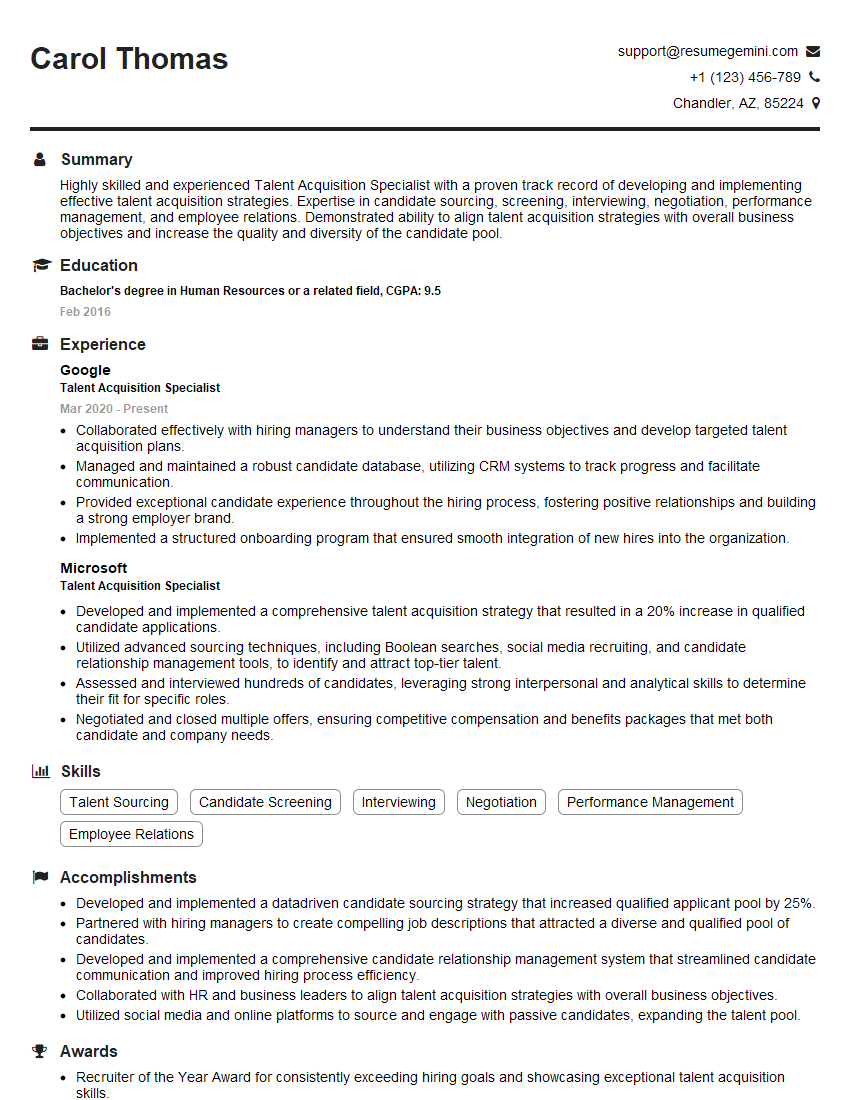
Talent Acquisition Specialist Resume Sample
Explore more articles
Users Rating of Our Blogs
Share Your Experience
We value your feedback! Please rate our content and share your thoughts (optional).
What Readers Say About Our Blog
Very informative content, great job.
good