Interviews are opportunities to demonstrate your expertise, and this guide is here to help you shine. Explore the essential Tank Car Inspection interview questions that employers frequently ask, paired with strategies for crafting responses that set you apart from the competition.
Questions Asked in Tank Car Inspection Interview
Q 1. Describe the different types of tank cars and their respective uses.
Tank cars are specialized railcars designed to transport various liquids and gases. They come in many types, each suited to a specific cargo and its properties. Here are some common examples:
- Pressure Tank Cars: Designed for transporting gases and volatile liquids under pressure. Think propane or other liquefied petroleum gases. These cars have thicker shells and robust pressure relief valves.
- Non-Pressure Tank Cars: Used for liquids that don’t require pressurization, like crude oil or many chemicals. They typically have thicker shells to withstand the weight of the liquid and the forces of transportation.
- Insulated Tank Cars: Equipped with insulation to maintain the temperature of the cargo, crucial for sensitive materials like cryogenic liquids (e.g., liquid nitrogen) or those prone to spoilage. These cars often include sophisticated temperature monitoring systems.
- Cryogenic Tank Cars: Specialized for extremely low-temperature materials. They use advanced insulation and often a vacuum jacket to minimize heat transfer. These cars require extremely rigorous inspections.
- Specialized Tank Cars: These cars are designed for specific products and may incorporate features such as internal compartments or specialized coatings. For instance, some carry hazardous materials requiring stringent containment.
The choice of tank car depends entirely on the product’s properties – its volatility, flammability, corrosiveness, viscosity, and required temperature range. Mismatching the car and cargo is dangerous and illegal.
Q 2. Explain the process of conducting a visual inspection of a tank car.
A visual inspection is the first and arguably most important step in tank car assessment. It’s a systematic examination of the entire car looking for any visible defects. This process involves:
- Overall Assessment: Begin by taking a step back to visually assess the entire tank car for any obvious damage, such as dents, punctures, or significant rust.
- Tank Shell Examination: Carefully inspect the tank shell for dents, gouges, corrosion, leaks, or cracks. Pay close attention to seams and welds. Check for bulging, which can indicate internal pressure problems.
- Undercarriage Inspection: Examine the undercarriage, looking for damage to the trucks, wheels, brakes, and other components. Loose bolts or damaged parts should be noted.
- Fittings and Valves: Carefully inspect all valves, fittings, and pressure relief devices for corrosion, leaks, or damage. Check for proper sealing and ensure that safety devices are functional and undamaged.
- Placards and Markings: Verify that placards and markings (hazard labels, capacity information, etc.) are clearly visible and accurate. Missing or damaged placards are a serious safety concern.
- Documentation: Throughout the inspection, record all observations, including location, type, and severity of any damage. This should be done using a standardized checklist and form.
Think of it like a thorough car inspection but with a much higher safety threshold. Every detail matters because these cars transport hazardous materials.
Q 3. What are the key components of a tank car that require thorough inspection?
Thorough tank car inspection demands attention to several critical components:
- Tank Shell: The main structure holding the cargo. Inspect for corrosion, dents, cracks, and leaks. The integrity of the tank is paramount.
- Valves and Fittings: These control the flow of the cargo in and out. Leaks here can be catastrophic. Inspection needs to check for corrosion, tightness, and proper operation.
- Couplings: These connect tank cars together. Damage or improper coupling can result in derailment or spillage.
- Safety Appliances: Pressure relief valves, safety valves, and other devices are vital for preventing overpressure accidents. These must be carefully inspected and tested.
- Brakes and Undercarriage: Proper braking is essential for safety. Inspect wheels, axles, and brake components for damage and functionality.
- Head Shields and Ladders: Check for structural integrity and damage, as these are used for personnel access.
- Tank Car Markings: These markings (including stenciling, labels, and placards) are critical to identifying the contents and related hazards.
The complexity of the inspection depends on the tank car type and the cargo it carries. High-risk materials necessitate a far more thorough and detailed inspection.
Q 4. How do you identify and report damage or defects found during a tank car inspection?
Damage or defects are documented immediately and precisely. This usually involves:
- Detailed Description: Note the exact location, type, and severity of the defect. Use clear language and avoid ambiguity.
- Photography or Videography: Document the damage visually. Photos and videos provide irrefutable evidence.
- Measurements: Whenever possible, take measurements of the damage (length, depth, width of cracks or dents).
- Severity Assessment: Categorize the damage based on its potential impact on safety. This might involve using a predefined scale (e.g., minor, moderate, major).
- Reporting: Submit a comprehensive report to the appropriate authorities (often the railroad company and regulatory agencies). The report should include all details about the inspection, the identified defects, and recommendations for repairs or other actions. This documentation is usually digital.
A critical aspect is not to just identify the problem but to assess its risk level. A small crack might be insignificant, while a large dent near a seam could indicate structural failure. The reporting must reflect this nuanced assessment.
Q 5. What are the regulatory requirements for tank car inspections (e.g., AAR, FRA)?
Tank car inspections are governed by stringent regulations to ensure safety. Key regulatory bodies include:
- Association of American Railroads (AAR): Sets standards for tank car design, construction, and maintenance. Compliance with AAR standards is essential.
- Federal Railroad Administration (FRA): Enforces federal regulations related to tank car safety and transportation. They regularly inspect and audit railway operations.
Regulations cover various aspects, including inspection frequency, testing procedures, repair requirements, and documentation. These regulations are complex and often updated. Inspectors must stay current with the latest rules and guidelines. Failure to comply can lead to significant fines and potential legal action.
For example, the FRA has specific regulations regarding the frequency of inspections (e.g., visual inspections might be required every trip, while more thorough inspections might be required annually), and the types of testing needed for different materials and cargos.
Q 6. Describe your experience with different types of tank car fittings and valves.
My experience encompasses a wide range of tank car fittings and valves, including:
- Bottom Outlet Valves: These are used for unloading liquid cargo. Different types include ball valves, gate valves, and butterfly valves, each with its strengths and weaknesses.
- Manway Covers: These provide access to the inside of the tank for cleaning or inspection. I’ve worked with various designs, focusing on their sealing mechanisms and structural integrity.
- Pressure Relief Valves: These are crucial safety devices that release excess pressure to prevent explosions. Understanding their functionality and testing methods is critical.
- Vapor Recovery Systems: These systems minimize the release of volatile vapors into the atmosphere. I’ve inspected these systems for leaks and proper operation.
Each valve and fitting has its specific maintenance requirements. For instance, ball valves need regular lubrication, and pressure relief valves require periodic testing to verify their operation. The condition of these components is checked for corrosion, wear, and proper sealing. Leaking fittings are a major concern that demands immediate attention.
Q 7. How do you determine the appropriate testing methods for different tank car materials?
Selecting the appropriate testing method depends entirely on the tank car material and the type of potential defect we’re looking for.
- Visual Inspection: This is always the first step, but it’s not enough on its own. It can reveal obvious damage but misses subtle defects.
- Ultrasonic Testing (UT): This non-destructive method uses sound waves to detect internal flaws, such as cracks or corrosion, in tank shells. It’s particularly useful for thicker shells.
- Magnetic Particle Inspection (MPI): Suitable for ferromagnetic materials (like steel), MPI detects surface and near-surface cracks by magnetizing the material and observing magnetic particle patterns.
- Dye Penetrant Inspection (DPI): This technique reveals surface cracks by applying a dye that seeps into cracks and is later made visible.
- Radiographic Testing (RT): Uses X-rays or gamma rays to create images of the internal structure, revealing hidden flaws. It’s very powerful but also more costly and requires specialized training.
The choice of testing method is crucial. Using the wrong method might miss a critical defect or lead to unnecessary repairs. Factors like material type, thickness, and the type of suspected defect all influence the selection. Often, a combination of methods provides the most comprehensive assessment.
Q 8. Explain the process for documenting tank car inspection findings.
Tank car inspection findings are meticulously documented to ensure accountability, track maintenance needs, and maintain regulatory compliance. The process typically involves using a standardized inspection report form, either paper-based or digital.
- Visual Inspection: We start with a thorough visual examination, noting any dents, cracks, corrosion, leaks, or damage to the tank shell, underframe, valves, fittings, and safety devices. We record the location and severity of each finding using precise descriptions and, where possible, photographic evidence.
- Gauging and Measurement: Measurements of tank shell thickness (often using ultrasonic testing equipment) are recorded to assess the extent of corrosion or thinning. We also document the condition of pressure relief valves, their settings, and any evidence of malfunction.
- Testing and Verification: We document the results of any pressure testing, leak testing, or other non-destructive testing performed. This includes the date, time, pressure levels, and any observed anomalies.
- Reporting: The completed inspection report clearly identifies the tank car number, inspection date, inspector’s name, and a detailed summary of all findings. A clear classification of the findings – from minor cosmetic issues to critical safety violations – is crucial for prioritizing repairs and corrective actions.
For example, if we discover a significant dent near a valve, we’d note its location (e.g., ’10 cm from valve A on the eastern side’), dimensions, and any potential impact on structural integrity. A picture would accompany this entry for future reference.
Q 9. What are the safety precautions you take when inspecting tank cars?
Safety is paramount during tank car inspections. We always follow established safety protocols, which include:
- Personal Protective Equipment (PPE): We always wear appropriate PPE, including safety glasses, gloves, steel-toe boots, and high-visibility clothing, depending on the specific tasks and the nature of the cargo being hauled.
- Lockout/Tagout Procedures: Before commencing any inspection involving opening valves or performing any maintenance on the tank car, we employ stringent lockout/tagout procedures to ensure that the tank is completely isolated and de-pressurized to prevent accidental release of hazardous materials.
- Awareness of Hazardous Materials: We are trained to identify and understand the hazards associated with different types of cargo carried in tank cars. We adhere to the appropriate safety measures for the specific material, consulting the Safety Data Sheet (SDS) if necessary.
- Environmental Considerations: We are mindful of environmental regulations and take precautions to prevent spills or releases of any materials during the inspection process. We employ spill containment measures when necessary.
- Communication and Coordination: Effective communication with other personnel on-site is crucial. We adhere to signaling protocols and inform others of our work activities.
For example, before inspecting a tank car carrying flammable liquids, we’d ensure the area is adequately ventilated, no ignition sources are nearby, and we have access to appropriate fire suppression equipment.
Q 10. How do you handle unexpected findings or situations during an inspection?
Handling unexpected findings is a key aspect of our job. Our response depends on the nature and severity of the finding.
- Immediate Actions: If we encounter a critical safety issue, such as a significant leak or major structural damage, we immediately halt the inspection and notify the appropriate personnel, including supervisors and the relevant transportation authority. We take steps to ensure the tank car’s immediate isolation and safe containment of any hazardous materials.
- Documentation: We document the unexpected finding thoroughly, including photographs and detailed descriptions. This documentation will inform subsequent decision-making concerning repairs or disposal.
- Risk Assessment: We conduct a risk assessment to determine the potential consequences of the unexpected finding and develop a plan to mitigate these risks. This might involve temporary repairs, isolation of the car, or other measures to prevent further incidents.
- Communication and Reporting: Open communication with all relevant parties, including supervisors, repair personnel, and regulatory agencies, is vital to ensure that the appropriate corrective actions are taken promptly.
For instance, if I discovered a significant crack in a tank car during inspection, I’d immediately flag it as a critical safety concern, halt the inspection, and report it to my supervisor, while taking precautions to contain the cargo safely until repairs could be made.
Q 11. Describe your experience with hydrostatic testing of tank cars.
Hydrostatic testing is a crucial method for assessing the structural integrity of tank cars. I have extensive experience overseeing and participating in these tests.
The process involves filling the tank car with water under controlled pressure to simulate the stresses experienced during normal operation. The pressure is carefully monitored and recorded, and any leaks or deformations are carefully noted. We use specialized equipment to measure the pressure and any changes in the tank’s dimensions. Pre-testing includes a visual inspection to ensure there are no obvious defects that could compromise the test.
Post-testing, a thorough inspection is conducted to check for any signs of leakage or deformation. The results are carefully documented and compared to established acceptance criteria to determine the tank car’s fitness for service. Any significant deviations from these criteria necessitate further investigation and may lead to repairs or rejection of the tank car.
I’ve worked on various tank car types and sizes during hydrostatic testing, gaining a thorough understanding of the procedures and limitations of the method. For example, the specific pressure levels used are often dependent on the tank’s design specifications and the nature of the materials used in its construction.
Q 12. What are the common causes of tank car leaks or failures?
Tank car leaks or failures can stem from several sources.
- Corrosion: This is a major contributor, especially in older tank cars or those carrying corrosive materials. Internal corrosion, particularly in areas with stagnant liquids, can weaken the tank shell and lead to leaks.
- Fatigue: Repeated stress from loading, unloading, and transportation can cause metal fatigue, resulting in cracks and eventual failure, especially in areas where there are stress concentrations (e.g., welds or fittings).
- Impact Damage: Collisions, derailments, or accidental impacts can cause dents, cracks, and other damage that can compromise the integrity of the tank.
- Manufacturing Defects: Faulty welds, improper material selection, or other manufacturing defects can lead to weaknesses in the tank’s structure.
- Improper Maintenance: Lack of regular inspection and maintenance, including failure to address minor issues promptly, can exacerbate existing problems and lead to more significant failures.
- Valve and Fitting Failures: Leaks can also originate from faulty valves, fittings, or gaskets.
Understanding these common causes helps us prioritize inspection procedures and emphasize preventative maintenance strategies to improve tank car safety and longevity.
Q 13. How do you identify and address corrosion issues on a tank car?
Corrosion is a significant concern in tank car inspections. We employ several methods to identify and address it:
- Visual Inspection: We start with a thorough visual inspection, looking for signs of rust, pitting, scaling, or other visible signs of corrosion. We pay close attention to areas prone to corrosion, such as welds, seams, and areas where water can accumulate.
- Ultrasonic Testing (UT): UT is a non-destructive testing method that uses sound waves to measure the thickness of the tank shell. This allows us to accurately assess the extent of corrosion and determine whether thinning has reached critical levels.
- Corrosion Mapping: For more comprehensive evaluation, corrosion mapping techniques can be used to create detailed maps of the extent and severity of corrosion. This involves measuring corrosion at multiple points across the tank shell.
- Repair and Mitigation: Corrosion repair techniques range from simple cleaning and repainting to more extensive repairs involving welding or replacement of damaged sections. Applying protective coatings is often employed to prevent further corrosion.
For instance, if ultrasonic testing reveals significant thinning in a specific area, we’d document it, and depending on the severity, recommend repairs or replacement of the damaged section, followed by a thorough inspection and testing after the repairs are completed.
Q 14. What are your experiences with different types of tank car coatings and linings?
I have extensive experience with various tank car coatings and linings. The choice of coating or lining depends on the type of cargo being transported and regulatory requirements.
- Epoxy Coatings: These are commonly used for their chemical resistance and durability, often applied to protect against corrosion and contamination.
- Phenolic Coatings: These offer excellent resistance to chemicals, heat, and abrasion, making them suitable for transporting aggressive materials.
- Polyurethane Coatings: These provide good chemical and abrasion resistance, and are often used in situations where flexibility is required.
- Rubber Linings: Rubber linings are used to protect against abrasion and impact, offering excellent resistance to wear and tear.
- Stainless Steel Linings: For highly corrosive materials, stainless steel linings provide superior protection and longevity.
During inspections, we assess the condition of existing coatings and linings, looking for signs of degradation, cracking, or blistering. Damage to these protective layers can compromise the integrity of the tank and lead to leaks or contamination. We’d note any significant defects in our inspection report, recommending necessary repairs or recoating as needed. Understanding the specific properties of each coating type allows for accurate assessment of their suitability for a particular application and prediction of their expected lifespan.
Q 15. Explain the importance of proper tank car cleaning and purging procedures.
Proper tank car cleaning and purging are paramount to safety and prevent contamination. Think of it like this: imagine a tanker that previously carried highly flammable gasoline; if not thoroughly cleaned and purged, residual vapors could ignite during the next loading, leading to a catastrophic event. The process involves several crucial steps:
- Initial Cleaning: Removing the bulk of the previous cargo using various methods, such as washing with appropriate solvents or water jets.
- Intermediate Cleaning: This step aims for a higher level of cleanliness, often involving specialized detergents and multiple rinses. The goal is to reduce the residue to acceptable levels.
- Purging: This involves displacing the remaining air or vapors inside the tank with an inert gas, such as nitrogen, to eliminate the risk of combustion or reaction with the new cargo. The purging process is carefully monitored to ensure complete displacement of potentially hazardous materials.
- Final Inspection: A thorough visual inspection and, in some cases, air quality testing, confirms the effectiveness of the cleaning and purging process.
Failure to follow these procedures meticulously can lead to product contamination, explosions, and significant environmental damage, highlighting the critical importance of a rigorous cleaning and purging protocol.
Career Expert Tips:
- Ace those interviews! Prepare effectively by reviewing the Top 50 Most Common Interview Questions on ResumeGemini.
- Navigate your job search with confidence! Explore a wide range of Career Tips on ResumeGemini. Learn about common challenges and recommendations to overcome them.
- Craft the perfect resume! Master the Art of Resume Writing with ResumeGemini’s guide. Showcase your unique qualifications and achievements effectively.
- Don’t miss out on holiday savings! Build your dream resume with ResumeGemini’s ATS optimized templates.
Q 16. Describe your experience with using specialized inspection tools and equipment.
My experience encompasses a wide range of specialized inspection tools and equipment. This includes:
- Ultrasonic Thickness Gauges: These devices measure the remaining wall thickness of the tank car, identifying areas of corrosion or thinning that might compromise structural integrity. I’m proficient in interpreting the data obtained and determining if repairs or replacements are necessary.
- Visual Inspection Cameras: These allow for a detailed examination of hard-to-reach areas inside the tank car, identifying defects that might not be visible during a standard external inspection. For example, I once used a camera to detect a small crack inside a valve, preventing a potential leak.
- Leak Detection Systems: These systems use various methods to detect even the smallest leaks in the tank car, ranging from pressure testing to specialized leak detectors that utilize sensitive sensors. This is crucial for maintaining safety and protecting the environment.
- Specialized Gauges and Meters: For example, I’ve utilized specialized gauges to measure the vapor pressure inside the tank car, ensuring it’s within safe operating limits, before loading or unloading.
Regular calibration and maintenance of all equipment are critical to ensuring accurate and reliable inspection results. I always adhere to the manufacturer’s recommendations and participate in ongoing training to stay up-to-date on the latest technologies and best practices.
Q 17. How do you ensure the accuracy and reliability of your inspection reports?
Accuracy and reliability are at the heart of every inspection report. To ensure this, I follow a rigorous process:
- Detailed Checklist: I use a comprehensive checklist that covers all aspects of the tank car inspection, from the external structure to internal components and placards. This helps maintain consistency and avoid overlooking important details.
- Photography and Documentation: I meticulously document all findings with high-quality photographs and detailed written descriptions. This provides indisputable evidence of the tank car’s condition.
- Calibration and Verification: All inspection equipment is rigorously calibrated according to established standards before each inspection, and I cross-reference measurements wherever possible.
- Peer Review: In many cases, I involve other inspectors in critical inspections to ensure accuracy and identify potential biases. This collaborative process enhances the credibility of the report.
- Independent Verification (if required): In cases where major defects are identified, I may recommend an independent verification by a third-party expert.
By adhering to these procedures, I can guarantee the accuracy and reliability of my inspection reports, which are essential for ensuring the safe transportation of hazardous materials.
Q 18. What is your experience with different tank car placards and markings?
I have extensive experience with various tank car placards and markings, understanding their significance in identifying the hazardous materials being transported and associated safety precautions. This knowledge is crucial for safe handling and emergency response planning. The placards are color-coded and use specific symbols to indicate the class of hazardous materials contained within (e.g., flammable liquids, explosives, corrosive materials). Understanding these markings is paramount for safety. For example, a misinterpretation of a placard could lead to inappropriate handling procedures, resulting in accidents or environmental damage. Furthermore, I’m familiar with the UN hazard numbers, which provide additional specifics about the hazardous materials involved and corresponding safety data sheets (SDS). These SDS provide crucial information regarding potential health effects, emergency procedures, and safe handling practices. Thorough knowledge of placards and markings, coupled with the correct interpretation of the SDS, is critical for ensuring safe operations.
Q 19. How familiar are you with the various types of tank car unloading procedures?
I am familiar with various tank car unloading procedures, each tailored to the specific type of cargo and the receiving facility. These methods range from:
- Bottom Unloading: Common for liquids, this method involves opening valves at the bottom of the tank car to allow the cargo to flow out by gravity.
- Top Unloading: Used for some liquids and powders, this involves using pumps or other equipment to transfer the cargo from the top of the tank car.
- Pressure Unloading: This method uses pressure to force the cargo out of the tank car, often employed for viscous materials.
- Vacuum Unloading: Used for materials that are difficult to pump, a vacuum is created to pull the cargo out.
Understanding the proper unloading procedure for each cargo type is vital to prevent spills, maintain safety and prevent damage to the tank car. I am also aware of the safety precautions associated with each method, including proper grounding and bonding to prevent static electricity buildup, which could trigger an explosion in the case of flammable materials.
Q 20. How do you manage and prioritize multiple tank car inspections concurrently?
Managing multiple tank car inspections concurrently requires effective prioritization and organizational skills. I typically use a system that combines:
- Prioritization Matrix: I prioritize inspections based on several factors including the hazard level of the cargo, the tank car’s age and condition, and any reported issues or safety concerns. High-risk situations are always addressed first.
- Scheduling and Time Management: A well-structured schedule is essential to ensure efficient use of time and resources. I coordinate with other inspectors, facility staff, and transportation personnel to ensure smooth operation.
- Digital Tools: I utilize inspection management software to keep track of scheduled inspections, prioritize tasks, and generate reports efficiently. This allows for clear visibility and avoids conflicts.
- Communication: Clear and frequent communication with all stakeholders is essential for resolving conflicts and adjusting the schedule as needed.
This multi-pronged approach ensures all inspections are carried out safely, efficiently and within stipulated timeframes.
Q 21. Describe your experience with working in a team environment during inspections.
Teamwork is crucial in tank car inspections, particularly in complex or high-risk situations. My experience shows that a successful team relies on:
- Clear Roles and Responsibilities: Each member of the team understands their role and responsibilities, promoting efficiency and avoiding duplication of effort.
- Open Communication: Open and transparent communication is essential to share observations, identify potential risks, and coordinate activities. This collaborative approach fosters trust and efficiency.
- Shared Knowledge and Expertise: Team members are encouraged to share their knowledge and experience to identify and solve problems effectively. One inspector’s expertise might fill a gap for another; that collaboration is critical.
- Mutual Respect: A team environment thrives on mutual respect, valuing the contributions of each member. I always approach my fellow inspectors with respect, recognizing their expertise and contributions.
For example, in one instance, we had a disagreement regarding the severity of a crack in a tank. The discussion involved sharing images, reviewing relevant codes, and discussing different remediation approaches. This collaborative effort ultimately led to a more accurate assessment and a safer course of action.
Q 22. How do you ensure compliance with all relevant safety and environmental regulations?
Ensuring compliance with safety and environmental regulations in tank car inspection is paramount. It’s not just about ticking boxes; it’s about preventing accidents and protecting the environment. My approach involves a multi-faceted strategy.
- Thorough Knowledge of Regulations: I maintain a deep understanding of regulations like those from the Department of Transportation (DOT), the Environmental Protection Agency (EPA), and any relevant state or local ordinances. This includes familiarity with specific regulations regarding tank car design, construction, testing, and maintenance.
- Rigorous Inspection Procedures: I follow meticulously documented inspection procedures, ensuring every aspect of the tank car – from valves and fittings to the shell and undercarriage – is thoroughly examined. This includes using checklists, documenting findings accurately, and taking photographs when necessary.
- Proper Documentation and Reporting: Accurate and complete documentation is crucial. I meticulously record all inspection findings, including any defects or deficiencies, in the designated logs and reports. This detailed record-keeping is essential for tracking repairs and demonstrating compliance.
- Staying Current: The regulatory landscape is constantly evolving. I actively seek out updates and training to ensure my knowledge base remains current. This involves attending industry conferences, reviewing regulatory updates, and engaging with professional organizations.
- Proactive Approach to Safety: Beyond simply identifying violations, I actively look for potential hazards. For example, I’d be alert to signs of corrosion, fatigue, or damage that might not be immediately apparent but could pose a future risk. This proactive approach helps prevent incidents before they happen.
Ultimately, compliance isn’t just a matter of following rules; it’s a commitment to responsible handling of hazardous materials and the well-being of people and the environment.
Q 23. How do you stay up-to-date on the latest changes and regulations in tank car inspection?
Staying current in the dynamic field of tank car inspection necessitates a proactive and multi-pronged approach. The regulations, technologies, and best practices are constantly evolving, so continuous learning is essential.
- Subscription to Regulatory Updates: I subscribe to official notifications and updates from agencies like the DOT and EPA. This ensures I receive timely alerts about changes to regulations and interpretations.
- Professional Organizations: Membership in professional organizations dedicated to tank car safety provides access to educational resources, newsletters, and industry best practices. Attending conferences and workshops allows for networking and learning from experts.
- Online Resources and Training: I utilize online resources and participate in webinars and online training courses offered by reputable providers. These resources often cover specific aspects of tank car inspection and maintenance, keeping me sharp on the latest techniques and technologies.
- Collaboration with Peers: Engaging with other inspectors through professional networks fosters knowledge exchange and helps me stay abreast of emerging trends and challenges. Discussions with colleagues often highlight new issues or interpretations of regulations.
- Manufacturer Updates: Keeping up with manufacturers’ updates on tank car designs, materials, and testing procedures is vital. This ensures I’m aware of the latest innovations and safety features.
By using this combination of approaches, I ensure my knowledge remains current and comprehensive, allowing me to consistently perform safe and compliant inspections.
Q 24. Describe a time you had to troubleshoot a complex problem during a tank car inspection.
During an inspection of a tank car carrying highly volatile chemicals, I discovered a significant leak in a seemingly innocuous valve. The leak was small, barely visible to the naked eye, but the location suggested a potentially catastrophic failure if left unaddressed. The initial assessment by my colleague focused on the valve itself, recommending a minor repair. However, I suspected a deeper issue.
My troubleshooting involved:
- Detailed Visual Inspection: I conducted a more thorough visual inspection of the valve and its surrounding components, paying close attention to stress points and signs of corrosion.
- Pressure Testing: I advocated for a pressure test, which revealed a hairline fracture in the valve’s connecting pipe, not just the valve itself. This fracture was invisible during a cursory inspection.
- Consultation with Engineering: I consulted with our engineering team to discuss the findings and assess the structural integrity of the affected area. This confirmed my suspicions and highlighted a serious safety risk.
- Documentation and Reporting: I documented all findings, including the initial assessment, my subsequent findings, the pressure test results, and the engineering consultation. This meticulous record-keeping allowed for proper remediation and prevented a potentially serious incident.
This experience underscored the importance of thorough investigation and critical thinking in tank car inspections. A seemingly minor issue can often be indicative of a much larger problem, and a second opinion or deeper investigation can prevent significant safety hazards.
Q 25. What is your experience with using inspection software or databases?
I possess extensive experience with various inspection software and databases. These tools are vital for efficient and accurate record-keeping, ensuring compliance and facilitating analysis of inspection data.
- Data Entry and Management: I’m proficient in entering and managing inspection data using specialized software. This includes accurately recording observations, defects, repairs, and other relevant information.
- Reporting and Analysis: I’m adept at generating reports and conducting analysis using the software’s built-in features. This allows for identification of trends, tracking of repair rates, and proactive safety measures.
- Database Querying: I can effectively query databases to retrieve specific information, such as inspection history for a particular tank car or all inspections conducted within a specific timeframe. This helps in investigating issues and analyzing historical data.
- Software Familiarity: I’m familiar with various industry-standard software packages, including [mention specific software examples if applicable, e.g., ‘TankCarInspect’, ‘RailSafePro’]. My ability to quickly adapt to new software is a significant asset.
The use of such software and databases streamlines the inspection process, reduces the risk of human error, and provides valuable data for continuous improvement in safety and compliance.
Q 26. How would you handle a situation where you disagree with a colleague’s assessment of a tank car?
Disagreements in professional assessments are inevitable. The key is to resolve them constructively, prioritizing safety and compliance. My approach would involve:
- Professional Dialogue: I would initiate a private conversation with my colleague to understand the rationale behind their assessment. The goal is not to challenge their expertise but to explore any differences in interpretation or overlooked details.
- Review of Evidence: We would jointly review the available evidence, including inspection reports, photographs, and any relevant documentation. This collaborative review often clarifies any misunderstandings.
- Consultation with Supervisor: If the disagreement persists after a thorough discussion, I would involve our supervisor. Their experience and independent perspective can help resolve the conflict.
- Documentation: I would document the disagreement, the steps taken to resolve it, and the final decision. This ensures transparency and provides a record for future reference.
- Emphasis on Safety: The ultimate goal is to ensure the tank car is safe for operation. Any disagreement should be resolved in a way that prioritizes safety and compliance, regardless of individual opinions.
It’s important to remember that healthy professional debate contributes to a safer work environment. Respectful communication and a focus on the facts are essential to resolving such differences.
Q 27. Explain your familiarity with emergency response procedures related to tank car incidents.
I’m thoroughly familiar with emergency response procedures related to tank car incidents. This knowledge is critical for mitigating risks and protecting lives and the environment. My familiarity encompasses:
- Emergency Response Plans (ERPs): I understand and can implement the facility’s ERP, including evacuation procedures, containment strategies, and communication protocols.
- Hazardous Materials Response: I have knowledge of the hazards associated with various types of chemicals transported in tank cars and the appropriate response measures. This includes understanding Safety Data Sheets (SDS) and implementing appropriate personal protective equipment (PPE).
- Communication Protocols: I know the proper channels for communicating with emergency services, including notifying relevant authorities and providing accurate information on the nature of the incident.
- Containment and Mitigation: I understand the techniques used to contain spills and mitigate the environmental impact of a tank car incident, such as deploying booms and absorbent materials.
- First Aid and Basic Medical Response: I am trained in basic first aid and know how to provide initial medical assistance in case of injuries related to a tank car incident. This training includes knowing the appropriate procedures for chemical exposure.
Regular training and drills are essential to maintaining proficiency in these procedures. My commitment to ongoing professional development ensures that my emergency response skills remain current and effective.
Q 28. What are your salary expectations for this role?
My salary expectations are commensurate with my experience and qualifications in the field of tank car inspection. Considering my expertise, certifications, and proven track record, my salary expectations fall within the range of $[Lower Bound] to $[Upper Bound] annually. I am, however, open to discussing this further based on the specifics of the role and the overall compensation package.
Key Topics to Learn for Tank Car Inspection Interview
- Tank Car Components and Systems: Understanding the intricacies of tank car design, including valves, fittings, couplers, and safety devices. This includes knowing the purpose and function of each component.
- Regulatory Compliance and Standards: Familiarity with AAR (Association of American Railroads) standards, DOT regulations, and other relevant safety guidelines governing tank car inspection and maintenance. This involves knowing how to interpret and apply these standards in real-world scenarios.
- Inspection Procedures and Techniques: Mastering visual inspection methods, understanding the use of specialized tools and equipment (e.g., ultrasonic testing), and knowing how to properly document inspection findings. This includes understanding the different types of inspections (e.g., pre-trip, in-service, and post-accident).
- Hazard Recognition and Risk Assessment: Developing the ability to identify potential hazards associated with tank car operations and to effectively assess and mitigate risks. This requires understanding the properties of various hazardous materials transported in tank cars.
- Repair and Maintenance Procedures: Knowledge of common tank car repairs, maintenance practices, and the importance of adhering to safety protocols throughout the repair process. This encompasses understanding when a repair is feasible versus requiring replacement.
- Documentation and Reporting: Proficiency in completing accurate and comprehensive inspection reports, documenting findings clearly and concisely, and effectively communicating issues to supervisors or management. This includes understanding the importance of accurate record-keeping.
- Emergency Response Procedures: Understanding procedures for responding to leaks, spills, or other emergencies involving tank cars. This includes knowing how to safely isolate and contain hazardous materials.
Next Steps
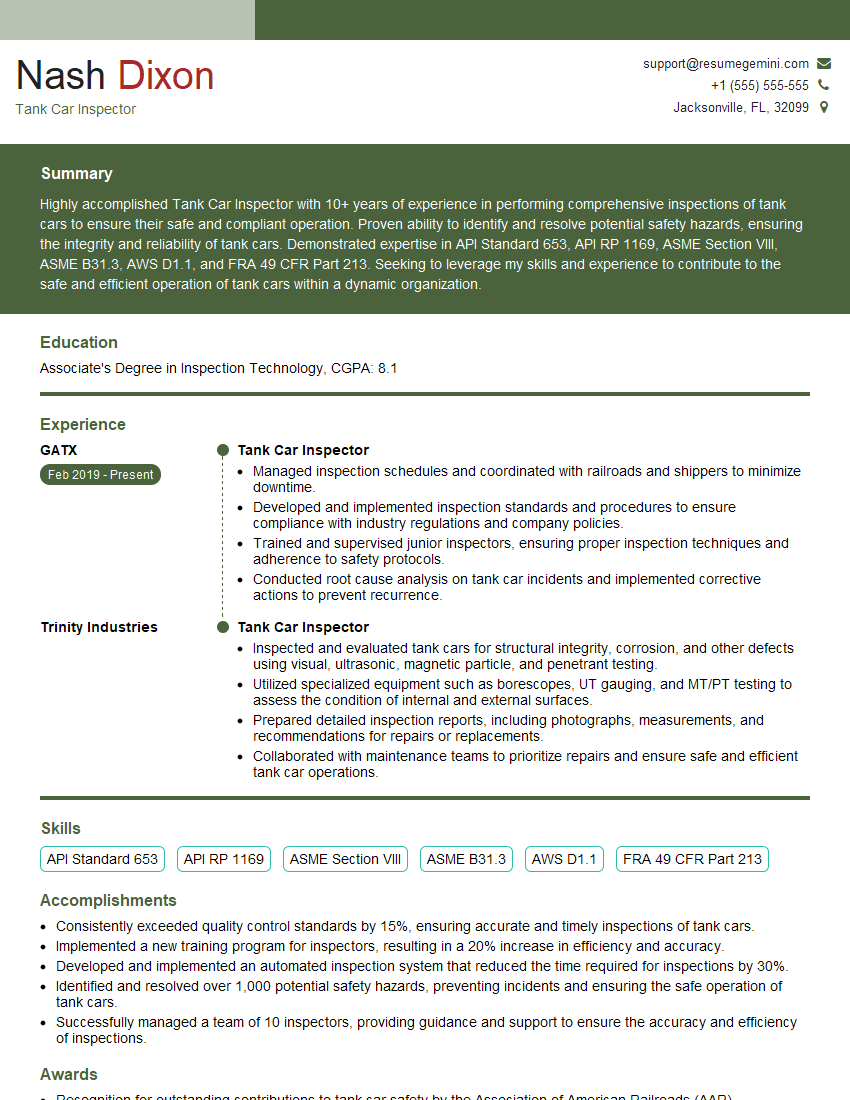
Mastering Tank Car Inspection is crucial for a successful and rewarding career in the transportation industry, offering opportunities for advancement and specialization. A well-crafted resume is your key to unlocking these opportunities. An ATS-friendly resume ensures your qualifications are effectively communicated to potential employers. To create a truly impactful resume that highlights your skills and experience in Tank Car Inspection, we strongly recommend using ResumeGemini. ResumeGemini offers a user-friendly platform and provides examples of resumes tailored to the Tank Car Inspection field, ensuring your application stands out.
Explore more articles
Users Rating of Our Blogs
Share Your Experience
We value your feedback! Please rate our content and share your thoughts (optional).
What Readers Say About Our Blog
Very informative content, great job.
good