Interviews are opportunities to demonstrate your expertise, and this guide is here to help you shine. Explore the essential Tank Car Loading and Unloading interview questions that employers frequently ask, paired with strategies for crafting responses that set you apart from the competition.
Questions Asked in Tank Car Loading and Unloading Interview
Q 1. Describe the safety procedures you follow when loading a tank car.
Safety is paramount when loading tank cars. Before we even begin, a thorough pre-loading inspection is crucial. This involves checking the tank car itself for any visible damage, ensuring the valves and fittings are secure and undamaged, and verifying the integrity of the coupling systems. We also need to confirm the correct tank car is designated for the product we’re loading and that it’s compatible with the material. Then, we verify the loading connections using a drop-leg connection (or equivalent safe practice) to prevent spills or leaks. We then follow the specific loading procedures outlined in the Safety Data Sheet (SDS) for the product, paying close attention to the required loading rate to avoid pressure buildup. Personal Protective Equipment (PPE), including safety glasses, gloves, and appropriate respirators, is always mandatory. Finally, continuous monitoring of the loading process is essential to ensure everything remains within acceptable parameters and to immediately address any anomalies.
For example, I once noticed a slightly loose valve during a pre-load inspection. Had we proceeded without addressing this, it could have led to a significant leak. This highlights how critical the pre-loading checks are for preventing accidents.
Q 2. Explain the process of unloading a tank car containing hazardous materials.
Unloading hazardous materials from a tank car demands even stricter adherence to safety protocols. First, we identify the contents and consult the SDS to understand the specific hazards involved. We then establish a safety perimeter to restrict access to unauthorized personnel. Proper PPE, including respiratory protection, is crucial. Before commencing the unloading, we meticulously check all connections and valves to ensure a leak-free system. We’ll often use specialized unloading equipment, like vacuum systems or pumps designed for hazardous materials, ensuring they’re properly grounded to prevent static electricity build-up. The unloading rate is carefully controlled based on the SDS recommendations. The receiving vessel should be appropriately sized and suitable for the product being transferred. Continuous monitoring, documentation of the entire process, and proper waste disposal of any residues or spills are also critical components.
Imagine unloading a tank car containing highly flammable liquid. A spark from a poorly grounded pump could ignite the vapor, leading to a catastrophic event. This highlights the importance of proper grounding and careful adherence to safety protocols.
Q 3. How do you ensure the accurate measurement of liquid transferred during loading/unloading?
Accurate measurement during loading and unloading is critical for both inventory management and billing accuracy. We commonly utilize calibrated flow meters that provide real-time readings of the liquid transferred. These meters are regularly calibrated to maintain accuracy. For larger quantities or less precise applications, we might use dipsticks and level gauges calibrated to the tank dimensions. Automated systems incorporating weight scales are also employed in some facilities to determine the amount of product loaded or unloaded by measuring changes in the weight of the tank car. In all cases, the readings are thoroughly documented and reconciled with the initial and final inventory measurements to ensure accuracy. Independent verification through double-checking readings is also common best practice.
For instance, a slight inaccuracy in a large-volume transfer could result in significant financial discrepancies. Precise measurement minimizes these risks.
Q 4. What are the common causes of tank car loading/unloading errors, and how do you prevent them?
Errors in tank car loading and unloading can stem from various sources. Human error, such as misreading gauges or incorrect valve operation, is a significant factor. Equipment malfunction, including faulty meters or pumps, can also lead to inaccuracies. Poor communication between the loading/unloading crew and the control center can cause misunderstandings and errors. Inadequate training or lack of proper procedures can contribute to mistakes. Preventive measures include regular equipment maintenance and calibration, thorough staff training on procedures and safety protocols, implementation of robust checklists and verification systems, and clear communication channels. The use of automated systems and double-checking measures can help minimize human error.
For example, a miscommunication regarding the product type could result in mixing incompatible materials, leading to hazardous reactions. Proper communication and verification steps help prevent such incidents.
Q 5. How do you handle a situation where a tank car leaks during loading/unloading?
Leakage during loading or unloading requires immediate and decisive action. The first step is to immediately shut off the flow of the product. Then, we secure the area, preventing access to unauthorized personnel. Emergency response teams are notified to contain the spill and prevent further environmental damage. The type of liquid and the extent of the leak dictate the specific containment and cleanup procedures. We’ll use absorbent materials, booms, and other containment equipment to limit the spread. A thorough investigation is then carried out to determine the cause of the leak and prevent future occurrences. Detailed documentation of the entire incident, including actions taken, is crucial for both safety and regulatory compliance.
One incident I recall involved a small leak from a valve during loading. Quickly shutting down the flow, followed by immediate containment using absorbent pads, prevented a much larger spill.
Q 6. What are the different types of tank cars and their specific loading/unloading requirements?
Tank cars come in various designs, each with specific loading and unloading requirements. Pressure tank cars are designed to withstand high pressure and are commonly used for liquefied gases. They require specialized valves and pressure-regulating equipment. Non-pressure tank cars are used for liquids that don’t require high pressure. Specialized cars exist for carrying cryogenic liquids (those at extremely low temperatures), requiring specialized insulation and handling equipment. The loading and unloading procedures vary significantly based on the type of tank car and the nature of the product being transported. For instance, cryogenic tank cars require specialized cryogenic pumps to maintain the low temperature of the product during transfer. The specific procedures are always detailed in the product’s SDS and the tank car’s specifications.
Understanding these differences is essential to ensure safe and efficient loading and unloading operations.
Q 7. Describe your experience with different pumping systems used in tank car operations.
I have extensive experience with various pumping systems, including centrifugal pumps, positive displacement pumps, and vacuum pumps. Centrifugal pumps are efficient for high-volume transfers of low-viscosity liquids, while positive displacement pumps are better suited for high-viscosity fluids or those with a higher risk of vaporization. Vacuum pumps are often used for unloading sensitive products where gentle handling is required, preventing product degradation. The selection of a specific pumping system depends on the properties of the product being transferred, the required flow rate, and other operational constraints. Regular maintenance and inspection of the pumps are critical to ensure their proper functioning and prevent operational errors or leaks. In some applications, specialized pumps are needed that are compatible with the specific product and capable of maintaining its required temperature or pressure during loading or unloading.
For example, I’ve worked with systems using both centrifugal pumps for bulk liquid transfer and positive displacement pumps for highly viscous materials, demonstrating adaptability to diverse scenarios.
Q 8. How do you ensure the compatibility of the product with the tank car?
Ensuring product compatibility with a tank car is paramount for safety and preventing damage. It involves a multi-step process starting with careful review of the product’s properties – its chemical composition, corrosiveness, temperature sensitivity, viscosity, and potential for reactivity. This information is then compared against the tank car’s specifications, specifically the material of construction (stainless steel, aluminum, carbon steel, etc.), its lining (if any), and its design pressure and temperature ratings.
For example, highly corrosive chemicals require stainless steel tank cars with appropriate linings, while cryogenic liquids necessitate insulated tank cars capable of maintaining extremely low temperatures. A mismatch could lead to corrosion, leaks, or even explosions. We use specialized software and Material Compatibility Charts to cross-reference these properties and confirm compatibility before loading commences. Any doubt necessitates consultation with materials engineers and further testing.
Q 9. Explain the importance of proper grounding and bonding during tank car operations.
Proper grounding and bonding during tank car operations are critical for preventing static electricity buildup, which can cause sparks and ignite flammable or explosive materials. Think of it like this: the tank car can accumulate a static charge during transit, and discharging this suddenly could be catastrophic. Grounding connects the tank car to the earth, providing a path for static electricity to dissipate harmlessly. Bonding connects the tank car to the loading or unloading equipment, equalizing the electrical potential between them and preventing sparks.
We use specialized grounding clamps and bonding wires to create a secure electrical connection. Before any operation, we visually inspect these connections to ensure they are properly made and free from damage. We routinely test the grounding system to verify its effectiveness. Failure to properly ground and bond can lead to fires, explosions, and serious injuries.
Q 10. How do you verify the integrity of tank car valves and seals before loading/unloading?
Verifying the integrity of tank car valves and seals is a crucial safety measure. We conduct a thorough visual inspection, checking for any signs of damage, corrosion, leaks, or missing parts. This includes checking the valve stems, packing glands, and the seals themselves. We also perform a pressure test, using compressed air or inert gas, to identify leaks. This involves isolating sections of the system and pressurizing to check for pressure drops.
For example, we might use a soap solution to detect leaks – bubbles indicate a pressure loss. Any damaged or malfunctioning valve or seal must be repaired or replaced before loading or unloading can proceed. Detailed records of these inspections and tests are maintained for traceability and compliance.
Q 11. What are the regulatory requirements for loading and unloading tank cars?
Regulatory requirements for loading and unloading tank cars are stringent and vary depending on the jurisdiction and the material being handled. However, common regulations generally address safety procedures, emergency response planning, employee training, equipment maintenance, and documentation. We must adhere to regulations set forth by agencies such as the Department of Transportation (DOT) and the Environmental Protection Agency (EPA) in the United States, and equivalent agencies in other countries. These regulations often cover aspects such as:
- Safety Data Sheets (SDS): Understanding the hazards associated with the specific product being handled.
- Emergency Response Plans: Having clear procedures in place to handle spills or leaks.
- Operator Training: Ensuring all personnel involved are properly trained and certified.
- Equipment Inspection and Maintenance: Regular checks to guarantee the safe operation of all equipment.
- Spill Prevention, Control, and Countermeasure (SPCC) Plans: Strategies to mitigate the environmental impact of potential spills.
Non-compliance can result in hefty fines and legal repercussions.
Q 12. How do you manage documentation related to tank car loading/unloading?
Documentation related to tank car loading and unloading is meticulously maintained. This includes pre- and post-loading inspections, pressure test results, valve and seal checks, grounding and bonding verification, and the quantity of product loaded or unloaded. We use both electronic and paper-based systems to record this information. All documents include details like date, time, location, product information, operator names, and any unusual observations. This detailed record-keeping is crucial for demonstrating compliance with regulatory requirements, tracking product flow, and facilitating investigations should an incident occur.
We utilize specialized software to streamline this process, and all documents are archived for a predetermined period, usually several years. This ensures we can readily retrieve information when needed.
Q 13. Describe your experience with different types of tank car couplers.
I have extensive experience with various tank car couplers, including the common AAR (Association of American Railroads) type couplers and specialized couplers for specific applications. AAR couplers are the standard for most North American tank cars, featuring a knuckle-type mechanism for connecting and disconnecting cars. However, some applications, especially involving hazardous materials, may utilize more robust or specialized couplers designed to enhance safety and prevent leaks.
Understanding the intricacies of each coupler type is vital, especially regarding their proper connection, disconnection, and inspection. Damage to these couplers can lead to leaks, derailments, or other serious hazards. Therefore, regular inspections and maintenance of couplers are essential for safe operations.
Q 14. What are the potential hazards associated with tank car loading/unloading operations?
Tank car loading and unloading operations present several potential hazards, including:
- Fire and Explosion: Flammable or explosive materials pose a significant risk.
- Toxic Exposure: Contact with hazardous materials can cause serious health issues.
- Leaks and Spills: Releases of hazardous materials can contaminate the environment.
- Overpressure/Underpressure: Improper pressure management during loading or unloading can cause tank failure.
- Equipment Failure: Malfunctioning valves, pumps, or other equipment can lead to accidents.
- Human Error: Improper procedures, lack of training, or negligence can contribute to accidents.
To mitigate these risks, we implement robust safety protocols, including comprehensive training, thorough inspections, emergency response plans, and the use of appropriate personal protective equipment (PPE). Risk assessment is an integral part of our operations, allowing us to identify and address potential hazards proactively.
Q 15. How do you handle emergencies during tank car loading/unloading?
Emergency response during tank car loading and unloading is paramount. Our procedures prioritize safety and minimizing environmental impact. A well-defined emergency response plan is crucial, including pre-established communication channels, roles, and responsibilities.
For instance, if a leak occurs, the first step is to immediately isolate the affected area, shutting down the loading/unloading operation and activating the emergency shut-off valves. We then initiate the emergency response plan – this typically involves notifying emergency services, evacuating personnel to a safe distance, and containing the spill using booms and absorbent materials. The type of material dictates the specific response. For example, a flammable liquid leak requires a different approach than a corrosive one.
Regular training exercises are critical to ensuring our team is prepared to handle various emergencies effectively. We conduct drills simulating different scenarios, focusing on swift and decisive action to prevent escalation. Post-incident analysis is performed to identify areas for improvement in our protocols and response time.
Career Expert Tips:
- Ace those interviews! Prepare effectively by reviewing the Top 50 Most Common Interview Questions on ResumeGemini.
- Navigate your job search with confidence! Explore a wide range of Career Tips on ResumeGemini. Learn about common challenges and recommendations to overcome them.
- Craft the perfect resume! Master the Art of Resume Writing with ResumeGemini’s guide. Showcase your unique qualifications and achievements effectively.
- Don’t miss out on holiday savings! Build your dream resume with ResumeGemini’s ATS optimized templates.
Q 16. What is your experience with vapor recovery systems?
Vapor recovery systems are essential for minimizing volatile organic compound (VOC) emissions during the loading and unloading of volatile products. My experience includes extensive work with both fixed and portable vapor recovery units. I’m familiar with various system designs, including those that utilize vacuum trucks or dedicated vapor recovery units that condense and recover the vapors.
For example, I’ve worked on projects where we integrated vapor recovery systems into existing loading racks, ensuring compliance with environmental regulations and optimizing operational efficiency. I understand the importance of proper system maintenance, including regular inspections and testing to ensure leak tightness and efficient vapor recovery. This includes understanding pressure and flow rate parameters and troubleshooting issues like vacuum leaks or inadequate condenser performance.
I’m adept at identifying and resolving issues related to vapor recovery system malfunctions. My experience extends to documenting operational data, analyzing performance, and making recommendations for improvements in efficiency and safety.
Q 17. Describe your experience with bottom loading/unloading procedures.
Bottom loading and unloading procedures offer advantages in terms of reduced vaporization and improved product integrity for certain products. My experience involves the safe and efficient execution of these procedures across a variety of products and tank car types.
The process typically involves connecting a flexible hose from the loading/unloading arm to the bottom valve of the tank car, ensuring a tight seal to prevent leaks. Precise control of flow rates is essential to prevent overfilling or surging. I’m proficient in using various types of bottom loading equipment, including those with automated control systems for precise filling. Safety checks are done at every stage, including verification of the product, tank car identification, and ensuring proper grounding to prevent static electricity build-up.
In one project, we implemented a new bottom loading system that significantly improved our loading efficiency and reduced the risk of spills. I played a key role in overseeing the installation, commissioning, and training personnel on the new system. A key part of this included ensuring compliance with the latest safety standards and regulations.
Q 18. How do you prevent overfilling or underfilling of tank cars?
Preventing overfilling or underfilling of tank cars is critical to safety and operational efficiency. This is accomplished through a combination of precise measurement techniques, automated control systems, and diligent operator oversight. Overfilling can lead to spills, while underfilling can result in inaccurate product delivery.
We utilize various methods for accurate measurement, including calibrated flow meters, level indicators, and automated shut-off systems. These systems are regularly calibrated and maintained to ensure accuracy. Operators receive thorough training on these systems and follow standardized procedures to ensure precise filling levels. Regular checks and validation are performed during the loading/unloading process to confirm the accuracy of the measurement systems.
In cases where manual gauging is used, rigorous procedures are in place to ensure accuracy and consistency. Multiple checks are performed and recorded to minimize the risk of errors. Continuous improvement initiatives focus on minimizing measurement variability and ensuring that both overfilling and underfilling are avoided consistently.
Q 19. What is your experience with different types of tank car cleaning procedures?
My experience encompasses various tank car cleaning procedures, adapted to the specific product previously carried. These vary based on the nature of the material handled, ranging from simple washings to complex chemical cleanings and specialized treatments for hazardous materials.
For example, cleaning a tank car that previously contained a non-hazardous product like vegetable oil differs significantly from one that carried a corrosive chemical. For non-hazardous materials, a simple water wash may suffice; however, for hazardous materials, a more rigorous process including multiple rinses and potentially specialized cleaning agents is required. I’m familiar with various cleaning methods, including high-pressure washing, steam cleaning, and chemical cleaning. I also understand the importance of proper disposal of cleaning waste in compliance with environmental regulations.
Documentation plays a key role. We maintain detailed records of cleaning procedures, including the cleaning methods used, the type and amount of cleaning agents employed, and the final residue analysis, ensuring complete compliance with relevant regulations and minimizing environmental impact.
Q 20. How do you ensure the proper cleaning of tank cars after unloading hazardous materials?
Cleaning tank cars after unloading hazardous materials is a highly regulated process that demands meticulous attention to detail. The primary goal is to eliminate all traces of the hazardous material to prevent contamination and ensure the tank car is safe for subsequent use. This process is tailored to the specific hazard class of the material previously carried.
The cleaning procedure typically involves multiple rinses with water or specialized cleaning agents, followed by thorough inspections to confirm the absence of residue. Detailed documentation of the cleaning process, including the type and concentration of cleaning agents used and the results of any residue analysis, is essential for compliance. We adhere strictly to all relevant environmental regulations regarding the disposal of cleaning waste and ensure that any remaining residue is rendered harmless before the tank car is deemed suitable for reuse.
A crucial aspect involves selecting the appropriate cleaning agents based on the specific hazardous material. Compatibility with the tank car material is also critical to prevent damage. Often, specialized equipment and safety protocols are required to handle and dispose of cleaning waste properly. For example, proper disposal of cleaning waste may involve neutralization of corrosive materials before discharge to a wastewater treatment facility.
Q 21. Describe your knowledge of different tank car pressure relief valves.
Tank car pressure relief valves are critical safety devices that protect the tank car and its contents from over-pressurization. My knowledge spans various types, including frangible discs, spring-loaded safety valves, and rupture discs. I understand their operation, maintenance requirements, and selection criteria.
Frangible discs, for example, are designed to burst at a predetermined pressure, releasing the excess pressure. Spring-loaded valves open automatically once a set pressure is reached. Rupture discs are similar to frangible discs but are often designed for single use. The selection of the appropriate type of valve depends on the properties of the product being transported and the operating conditions.
Regular inspection and testing of these valves are crucial for ensuring their proper functionality. I am familiar with various inspection and testing methods and understand the importance of maintaining accurate records of these activities. Faulty pressure relief valves can lead to serious accidents, so their integrity is paramount.
Q 22. How do you identify and address potential safety violations during tank car operations?
Identifying and addressing safety violations during tank car operations is paramount. It’s a multi-layered process starting with a strong safety culture and proactive hazard identification. My approach involves a combination of visual inspections, adherence to established checklists, and the use of monitoring equipment.
- Visual Inspections: Before any operation, I meticulously inspect the tank car for leaks, damage to the shell, valves, or fittings, and ensure proper grounding. I’d look for signs of corrosion, dents, or any other irregularities that could compromise the integrity of the tank car.
- Checklists and Procedures: Strict adherence to pre- and post-operation checklists is vital. These checklists cover all aspects, from ensuring proper valve settings and emergency equipment functionality to verifying the secured condition of the car. Any deviation from established procedures is immediately addressed and reported.
- Monitoring Equipment: Utilizing tank car monitoring systems that measure pressure, temperature, and level is crucial. Any anomalous readings—such as a sudden pressure drop or unexpected temperature spike—would trigger an immediate investigation and halt operations until the issue is resolved. This might involve shutting down the loading/unloading process and contacting the necessary support personnel.
- Reporting and Corrective Actions: Any observed or suspected safety violation, no matter how minor, is documented and reported immediately. This ensures a comprehensive record of safety incidents and allows for the implementation of appropriate corrective actions to prevent future occurrences. For instance, if a valve is found to be malfunctioning, it is immediately tagged out of service and replaced or repaired before further operations can commence.
For example, during a recent loading operation, I noticed a slight leak around a valve. Immediate action was taken: the loading was stopped, the leak isolated, and the maintenance crew notified. The valve was repaired before operations resumed, preventing a potential hazardous spill.
Q 23. Explain the importance of pre-trip inspections for tank cars.
Pre-trip inspections for tank cars are absolutely critical to preventing accidents and ensuring safe operations. They are the first line of defense against potential hazards. A thorough pre-trip inspection identifies issues before they can escalate, preventing costly repairs, environmental damage, and, most importantly, injuries or fatalities.
- Visual Inspection: This involves a careful examination of the entire tank car, including the tank shell for dents, corrosion, or leaks; valves and fittings for damage or leaks; and the undercarriage for any issues with the wheels, brakes, or couplings.
- Documentation: All findings, both positive and negative, are meticulously documented in a pre-trip inspection report. This report serves as a legal record and helps track the condition of the car over time.
- Emergency Equipment: The inspection checks the functionality of all emergency equipment, such as fire extinguishers, spill response kits, and communication devices.
- Placards and Markings: Ensuring that all placards and markings are correct and visible is vital for communicating the hazards associated with the cargo to emergency responders.
Imagine a scenario where a pre-trip inspection reveals a faulty brake system. Addressing this before loading prevents a potential runaway car incident. This proactive approach demonstrates commitment to safety and operational efficiency.
Q 24. What are the common maintenance issues associated with tank cars?
Tank cars, subjected to harsh conditions and the transportation of various corrosive materials, experience several common maintenance issues. These often require specialized knowledge and repair techniques.
- Corrosion: Internal and external corrosion, particularly in older cars, is a major concern. Regular inspections and preventative measures, such as protective coatings, are vital. Severe corrosion may require tank replacement or the car being taken out of service.
- Valve and Fitting Leaks: Leaks in valves, fittings, and other components are common. These can lead to spills and environmental hazards. Regular maintenance, including lubrication and replacement of worn parts, helps prevent these leaks.
- Brake System Malfunctions: Brake system failure poses a serious safety risk. Regular inspections and maintenance, including brake adjustments and replacements, are crucial.
- Coupling Issues: Problems with couplings, which connect tank cars, can lead to derailments. Proper inspection and maintenance of couplings are important to prevent these incidents.
- Tank Shell Damage: Dents, cracks, or other damage to the tank shell can compromise the structural integrity of the car. Such damage often necessitates repair or replacement.
For example, detecting early signs of corrosion can prevent catastrophic tank failure. Regular inspections and proactive maintenance prevent such issues from becoming major safety hazards.
Q 25. How do you communicate effectively with other team members during tank car operations?
Effective communication during tank car operations is crucial for safety and efficiency. My approach focuses on clear, concise communication using multiple channels and ensuring everyone understands their roles and responsibilities.
- Pre-operation Briefing: Before commencing any operation, I conduct a briefing with the entire team, outlining the tasks, procedures, and potential hazards. This clarifies roles and responsibilities.
- Clear and Concise Language: I use clear, concise language, avoiding jargon that might confuse others. I confirm understanding with each team member.
- Non-Verbal Communication: I utilize hand signals and visual cues, especially in noisy environments, to ensure everyone is on the same page. A simple nod or head shake can provide confirmation or request a clarification.
- Two-Way Radios: Two-way radios are essential for maintaining constant communication, especially in large operations or remote locations. Regular radio checks ensure clear communication channels.
- Emergency Procedures: The emergency procedures, including contact information for emergency responders and evacuation plans, are clearly communicated to all team members.
In one instance, using hand signals prevented a near-miss during coupling. A quick gesture communicated a potential snag, allowing for the immediate adjustment, preventing a dangerous situation.
Q 26. Describe your experience with using various tank car monitoring equipment.
My experience with tank car monitoring equipment is extensive. I’m proficient in using a variety of systems, ranging from basic pressure gauges and level indicators to sophisticated automated monitoring systems.
- Pressure Gauges and Level Indicators: I’m experienced in using traditional pressure gauges and level indicators to monitor the pressure and liquid level within the tank car. Accurate readings are essential for safe and efficient loading and unloading.
- Temperature Sensors: I’m familiar with using temperature sensors to monitor the temperature of the product, which is crucial for some hazardous materials to prevent overheating or freezing.
- Automated Monitoring Systems: I’ve worked with automated monitoring systems that provide real-time data on pressure, temperature, level, and flow rates. These systems often provide alerts for abnormal conditions, improving safety and operational efficiency.
- Data Logging and Reporting: I’m proficient in using systems that log and report data from tank car monitoring equipment. This data is used for regulatory compliance and process improvement.
For instance, I once used an automated monitoring system to detect a slow leak in a tank car that was not visible during a standard visual inspection. The early detection prevented a potential major spill.
Q 27. Explain your understanding of the different types of tank car valves and their functions.
Tank car valves are crucial components that control the flow of liquid in and out of the tank. Understanding their functions is essential for safe and efficient operations. Different types of valves serve specific purposes.
- Bottom Outlet Valves: These valves are located at the bottom of the tank car and are used for unloading the product. They typically have a variety of configurations, such as ball valves, gate valves, and butterfly valves, each having its own set of operating characteristics.
- Top Manhole Valves: These valves, situated on top of the tank car, are primarily used for accessing the tank for cleaning, inspection, or sampling. They usually include a pressure-relief device to prevent overpressurization.
- Safety Valves/Relief Valves: Essential safety devices designed to automatically release pressure from the tank car if the pressure exceeds a predetermined limit. This prevents catastrophic tank rupture.
- Filling Valves: These valves control the flow of product into the tank during loading operations. They often incorporate features to prevent overfilling and accidental discharge.
It’s crucial to understand the operating characteristics of each valve type, including proper opening and closing procedures. For example, incorrect operation of a bottom outlet valve could lead to a rapid uncontrolled discharge of the product. Understanding their functionality is key for preventing accidents.
Q 28. What is your experience with tank car testing and certification procedures?
Tank car testing and certification procedures are vital for ensuring the safety and integrity of the equipment. My experience encompasses several aspects of this process.
- Visual Inspections: Regular visual inspections are conducted to identify any damage or deterioration. These are detailed inspections looking for any signs of wear and tear that could compromise the integrity of the tank car.
- Pressure Testing: Hydrostatic pressure testing is a common method for verifying the structural integrity of the tank car. The tank is pressurized with water or other inert fluids to a predetermined level. This ensures the tank can withstand the pressures encountered during operation.
- Non-Destructive Testing (NDT): Various NDT methods, such as ultrasonic testing and radiographic testing, are employed to detect internal flaws or weaknesses in the tank shell without damaging the structure. This is especially important for older cars or those that have been involved in incidents.
- Valve and Fitting Testing: Valves and fittings are tested for leaks and proper operation. This includes checking for proper sealing, appropriate pressure ratings, and ensuring smooth and reliable operation.
- Documentation and Certification: All testing results are meticulously documented and used to issue certifications demonstrating compliance with safety regulations. These certifications are essential for maintaining the car’s operational status.
For example, I participated in a pressure test that identified a small crack in a tank car that was not visible during the initial visual inspection. This early detection prevented a potential catastrophic failure during transport.
Key Topics to Learn for Tank Car Loading and Unloading Interview
- Safety Procedures and Regulations: Understanding and adhering to all relevant safety protocols, including OSHA regulations and company-specific safety guidelines. Practical application includes demonstrating knowledge of Personal Protective Equipment (PPE) and emergency response procedures.
- Loading and Unloading Techniques: Mastering the various methods for loading and unloading different types of liquids and gases, considering factors like pressure, temperature, and viscosity. Practical application involves explaining the process for different tank car types and valve operations.
- Equipment Operation and Maintenance: Familiarity with the operation and maintenance of pumps, valves, hoses, and other equipment used in the process. This includes preventative maintenance procedures and troubleshooting common malfunctions.
- Inventory Management and Documentation: Accurate tracking of inventory levels, maintaining detailed records of loading and unloading operations, and ensuring compliance with reporting requirements. Practical application includes demonstrating understanding of inventory control systems and data entry procedures.
- Hazardous Materials Handling: Safe handling and transportation of hazardous materials, including understanding Material Safety Data Sheets (MSDS) and proper disposal procedures. This requires knowledge of classification, labeling, and emergency response for hazardous materials.
- Quality Control and Testing: Implementing quality control measures to ensure the integrity of the product during loading and unloading. This includes understanding sampling procedures and quality testing methods.
- Troubleshooting and Problem-Solving: Identifying and resolving common issues that arise during loading and unloading operations. This could involve diagnosing pump failures, addressing leaks, or managing unexpected situations.
Next Steps
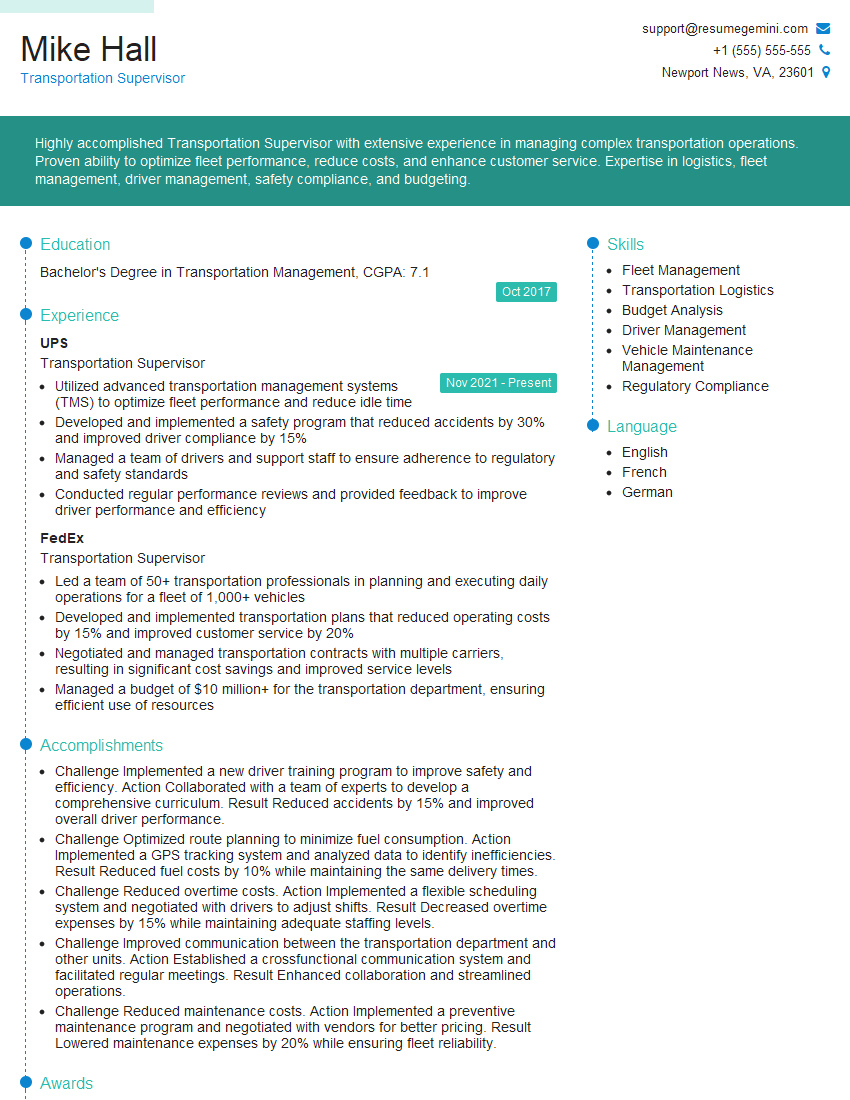
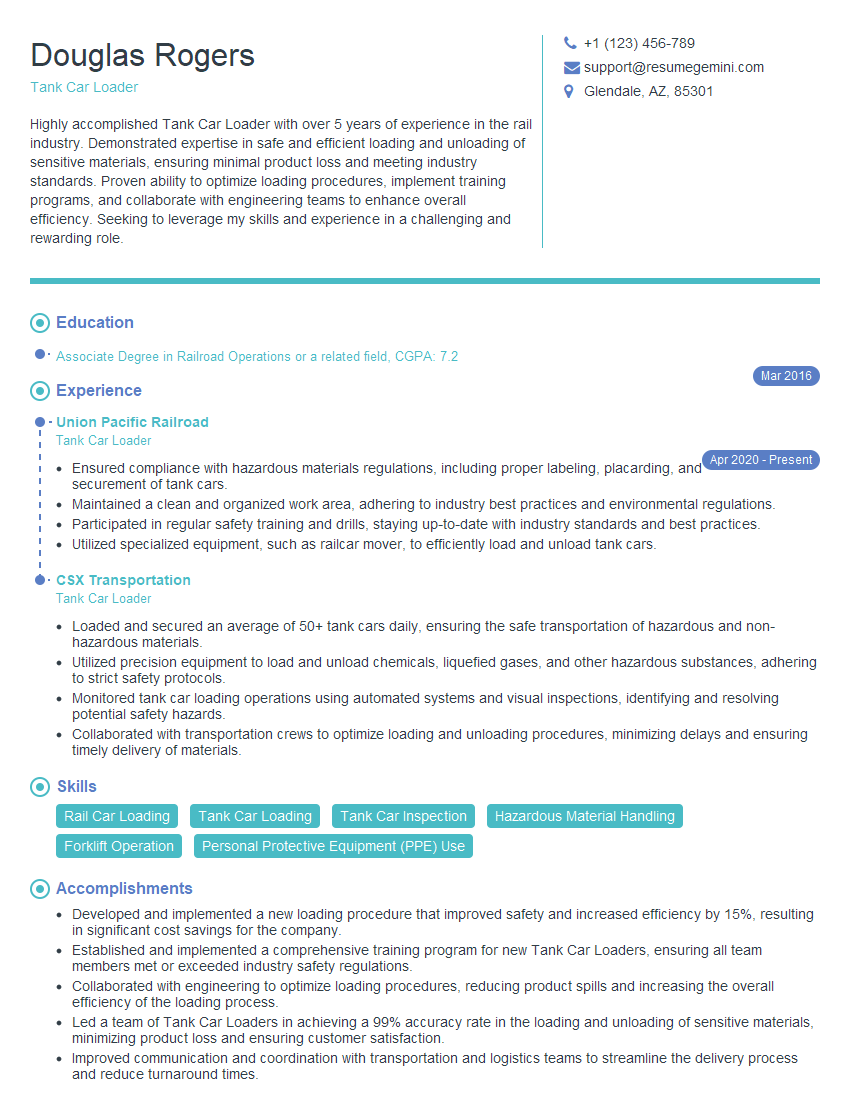
Mastering Tank Car Loading and Unloading opens doors to rewarding and stable careers in the transportation and logistics industries. Demonstrating expertise in this field significantly enhances your job prospects. To maximize your chances of securing your dream role, creating an ATS-friendly resume is crucial. ResumeGemini is a trusted resource that can help you build a professional and effective resume designed to get noticed by recruiters. ResumeGemini provides examples of resumes tailored to the Tank Car Loading and Unloading industry, giving you a head start in showcasing your skills and experience.
Explore more articles
Users Rating of Our Blogs
Share Your Experience
We value your feedback! Please rate our content and share your thoughts (optional).
What Readers Say About Our Blog
Hello,
we currently offer a complimentary backlink and URL indexing test for search engine optimization professionals.
You can get complimentary indexing credits to test how link discovery works in practice.
No credit card is required and there is no recurring fee.
You can find details here:
https://wikipedia-backlinks.com/indexing/
Regards
NICE RESPONSE TO Q & A
hi
The aim of this message is regarding an unclaimed deposit of a deceased nationale that bears the same name as you. You are not relate to him as there are millions of people answering the names across around the world. But i will use my position to influence the release of the deposit to you for our mutual benefit.
Respond for full details and how to claim the deposit. This is 100% risk free. Send hello to my email id: [email protected]
Luka Chachibaialuka
Hey interviewgemini.com, just wanted to follow up on my last email.
We just launched Call the Monster, an parenting app that lets you summon friendly ‘monsters’ kids actually listen to.
We’re also running a giveaway for everyone who downloads the app. Since it’s brand new, there aren’t many users yet, which means you’ve got a much better chance of winning some great prizes.
You can check it out here: https://bit.ly/callamonsterapp
Or follow us on Instagram: https://www.instagram.com/callamonsterapp
Thanks,
Ryan
CEO – Call the Monster App
Hey interviewgemini.com, I saw your website and love your approach.
I just want this to look like spam email, but want to share something important to you. We just launched Call the Monster, a parenting app that lets you summon friendly ‘monsters’ kids actually listen to.
Parents are loving it for calming chaos before bedtime. Thought you might want to try it: https://bit.ly/callamonsterapp or just follow our fun monster lore on Instagram: https://www.instagram.com/callamonsterapp
Thanks,
Ryan
CEO – Call A Monster APP
To the interviewgemini.com Owner.
Dear interviewgemini.com Webmaster!
Hi interviewgemini.com Webmaster!
Dear interviewgemini.com Webmaster!
excellent
Hello,
We found issues with your domain’s email setup that may be sending your messages to spam or blocking them completely. InboxShield Mini shows you how to fix it in minutes — no tech skills required.
Scan your domain now for details: https://inboxshield-mini.com/
— Adam @ InboxShield Mini
Reply STOP to unsubscribe
Hi, are you owner of interviewgemini.com? What if I told you I could help you find extra time in your schedule, reconnect with leads you didn’t even realize you missed, and bring in more “I want to work with you” conversations, without increasing your ad spend or hiring a full-time employee?
All with a flexible, budget-friendly service that could easily pay for itself. Sounds good?
Would it be nice to jump on a quick 10-minute call so I can show you exactly how we make this work?
Best,
Hapei
Marketing Director
Hey, I know you’re the owner of interviewgemini.com. I’ll be quick.
Fundraising for your business is tough and time-consuming. We make it easier by guaranteeing two private investor meetings each month, for six months. No demos, no pitch events – just direct introductions to active investors matched to your startup.
If youR17;re raising, this could help you build real momentum. Want me to send more info?
Hi, I represent an SEO company that specialises in getting you AI citations and higher rankings on Google. I’d like to offer you a 100% free SEO audit for your website. Would you be interested?
Hi, I represent an SEO company that specialises in getting you AI citations and higher rankings on Google. I’d like to offer you a 100% free SEO audit for your website. Would you be interested?
good