The right preparation can turn an interview into an opportunity to showcase your expertise. This guide to Target Acquisition and Analysis interview questions is your ultimate resource, providing key insights and tips to help you ace your responses and stand out as a top candidate.
Questions Asked in Target Acquisition and Analysis Interview
Q 1. Explain the process of target acquisition and analysis.
Target acquisition and analysis is a systematic process of identifying, locating, and assessing potential targets of interest. It’s like a detective’s work, but instead of solving crimes, we’re solving intelligence problems. The process typically involves several key steps:
- Finding Potential Targets: This initial phase relies heavily on intelligence gathering, identifying potential entities (individuals, groups, facilities, etc.) that meet specific criteria relevant to the mission objective.
- Locating Targets: Once potential targets are identified, the next step is pinpointing their exact location using various intelligence sources like satellite imagery, human intelligence (HUMINT), or signals intelligence (SIGINT).
- Analyzing Targets: This crucial step involves assessing the target’s significance, capabilities, vulnerabilities, and surrounding environment. We build a comprehensive profile to understand the target’s value and potential risks associated with engaging it.
- Prioritizing Targets: Based on the analysis, targets are prioritized according to their importance and feasibility of engagement, considering factors like threat level, resource availability, and potential collateral damage.
- Reporting and Updating: Finally, all findings are compiled into reports and continuously updated as new information becomes available, ensuring the information remains current and accurate.
For instance, in a counter-terrorism operation, the process might begin with identifying a suspected terrorist network (finding), then locating their training camps using satellite imagery (locating), and finally assessing their capabilities, personnel, and vulnerabilities to plan a potential operation (analyzing).
Q 2. Describe the different types of intelligence used in target acquisition.
Target acquisition utilizes a diverse range of intelligence types, each offering unique perspectives and insights. Think of it as assembling a puzzle; each piece (intelligence type) contributes to the complete picture:
- Human Intelligence (HUMINT): Information gathered from human sources, such as informants, spies, or defectors. This is often highly valuable but can also be subjective and require careful verification.
- Signals Intelligence (SIGINT): Intercepting and analyzing electromagnetic signals, including communications, radar, and electronic emissions. This provides real-time insights into enemy activities and intentions.
- Geospatial Intelligence (GEOINT): Analyzing imagery, maps, and geospatial data to understand the location, characteristics, and context of targets. Think satellite photos or aerial imagery.
- Measurement and Signature Intelligence (MASINT): Gathering information from non-communication signals, such as acoustic, seismic, or nuclear signatures. This can be extremely useful in detecting hidden activities.
- Open-Source Intelligence (OSINT): Publicly available information from the internet, media, academic publications, and other sources. While readily accessible, it requires careful evaluation to ensure its reliability.
A successful target acquisition effort often leverages a combination of these intelligence types to create a robust and accurate picture of the target.
Q 3. How do you prioritize targets based on various factors?
Prioritizing targets is a critical step, involving a careful balancing act between urgency, feasibility, and impact. We typically use a prioritization matrix that considers several key factors:
- Threat Level: How significant a threat does the target pose? High-threat targets often take precedence.
- Impact: What would neutralizing this target achieve? Targets with the highest potential impact are prioritized.
- Feasibility: Can we realistically engage this target with the resources available? This includes considering logistical challenges, risk to friendly forces, and potential collateral damage.
- Urgency: How time-sensitive is the engagement? Imminent threats often demand immediate action.
- Vulnerability: How susceptible is the target to our planned actions? Targets with higher vulnerabilities are more likely to be prioritized.
Often, we use a weighted scoring system, assigning points to each factor based on its relative importance. This allows for objective comparison of potential targets and informed decision-making.
Q 4. What are the ethical considerations involved in target acquisition?
Ethical considerations are paramount in target acquisition. The potential for collateral damage, violation of human rights, and disproportionate force must be carefully assessed at every stage. We must adhere strictly to the rules of engagement and international law. Key considerations include:
- Minimizing Collateral Damage: Every effort must be made to avoid civilian casualties and minimize damage to civilian infrastructure.
- Respect for Human Rights: All actions must comply with international human rights law, prohibiting targeting of civilians or protected persons.
- Proportionality: The response must be proportionate to the threat posed by the target. Excessive force is unacceptable.
- Transparency and Accountability: Decisions related to target selection and engagement must be transparent and subject to appropriate oversight and accountability mechanisms.
Ethical dilemmas are often complex and require careful consideration of the potential consequences of actions. We must constantly strive to balance the military necessity with ethical obligations.
Q 5. How do you assess the validity and reliability of intelligence sources?
Assessing the validity and reliability of intelligence sources is crucial. We use a process of triangulation and corroboration to verify information. This means comparing information from multiple, independent sources. We consider factors such as:
- Source Credibility: How reliable and trustworthy is the source in the past? Has the source provided accurate information previously?
- Source Motivation: What are the source’s motives for providing information? Are there any biases or incentives that could influence the information’s accuracy?
- Information Corroboration: Does the information align with information from other independent sources? Multiple independent confirmations increase confidence.
- Data Consistency: Does the information remain consistent over time and across different sources?
- Contextual Analysis: Does the information make sense within the broader context of what we already know?
Discrepancies between sources require further investigation to determine the most accurate and reliable information. This rigorous process helps mitigate risks and make informed decisions.
Q 6. Explain your experience with geospatial intelligence (GEOINT) analysis.
My experience with geospatial intelligence (GEOINT) analysis is extensive. I’ve utilized various GEOINT tools and techniques to support target acquisition, including:
- Satellite Imagery Analysis: Interpreting satellite imagery to identify, locate, and characterize targets, including identifying infrastructure, vehicles, and personnel.
- Geographic Information System (GIS) Applications: Using GIS software to map target locations, analyze terrain, and model potential engagement scenarios.
- 3D Modeling and Visualization: Creating 3D models of target areas to enhance situational awareness and support mission planning.
- Change Detection Analysis: Identifying changes over time in satellite imagery to detect new construction, movement of personnel or equipment, or other significant events.
For example, I once used high-resolution satellite imagery to identify a suspected weapons manufacturing facility hidden within a densely populated urban area. By analyzing the imagery and comparing it with historical data, I was able to confirm the facility’s location and provide crucial information for subsequent targeting operations.
Q 7. How do you handle conflicting information from multiple intelligence sources?
Conflicting information from multiple sources is common. Resolving these conflicts requires a systematic and analytical approach:
- Identify and Document Discrepancies: Carefully note the specific points of conflict between the different intelligence sources.
- Evaluate Source Credibility: Re-assess the credibility and reliability of each source involved in the conflicting information.
- Analyze Contextual Information: Examine the broader context of the information and consider how each piece fits into the overall picture.
- Seek Additional Information: Attempt to gather additional information from independent sources to help resolve the conflict.
- Employ Analytical Techniques: Utilize analytical techniques, such as Bayesian analysis or other statistical methods, to weigh the evidence and determine the most likely scenario.
- Document and Justify Conclusions: Clearly document the conflicting information, the analysis performed, and the rationale behind the ultimate conclusion.
It’s important to remember that incomplete or contradictory information is normal. The goal is to develop the most likely and supportable assessment based on the available evidence.
Q 8. Describe your experience with open-source intelligence (OSINT) gathering.
Open-source intelligence (OSINT) gathering is the process of collecting information from publicly available sources. My experience encompasses a wide range of techniques, from utilizing search engines like Google and specialized search engines like Shodan (for identifying internet-connected devices) to exploring social media platforms like Twitter and Facebook, and delving into publicly accessible databases and government records. I’m proficient in using advanced search operators (like Boolean operators) to refine searches and identify relevant information efficiently. For example, I might use a combination of keywords and location data to pinpoint a specific individual or organization. I also possess skills in analyzing imagery from platforms like Google Earth and satellite imagery to visually corroborate information and discover hidden details. A recent project involved identifying potential supply chain vulnerabilities for a client by leveraging OSINT to map out their global supplier network and assess the security posture of each location. This involved meticulously cross-referencing information from multiple sources to build a comprehensive picture.
Q 9. How do you conduct a risk assessment for a potential target?
A risk assessment for a potential target is a systematic process of identifying, analyzing, and prioritizing potential threats and vulnerabilities. It begins with defining the scope of the assessment, clearly identifying the target and the specific objectives of the assessment. I typically follow a structured approach that includes:
- Identifying Potential Threats: This involves considering various threats, such as physical security risks (e.g., unguarded entry points), cyber security risks (e.g., weak passwords, outdated software), and reputational risks (e.g., negative media coverage).
- Assessing Vulnerabilities: This step evaluates the target’s weaknesses that could be exploited by the identified threats. This may involve analyzing security protocols, physical infrastructure, and online presence.
- Analyzing Likelihood and Impact: Each threat and vulnerability is analyzed to determine the likelihood of occurrence and the potential impact if exploited. This often involves assigning probability scores and impact levels.
- Prioritizing Risks: Risks are prioritized based on a combination of likelihood and impact. This helps focus resources on the most critical threats.
- Developing Mitigation Strategies: Finally, appropriate mitigation strategies are developed and documented to reduce or eliminate the identified risks.
For instance, in assessing a financial institution, I might prioritize cyber security vulnerabilities due to the high likelihood of cyberattacks and their potentially devastating financial impact. This would involve a deep dive into their network security, data encryption practices, and employee training protocols.
Q 10. How do you ensure the accuracy and precision of target location data?
Ensuring the accuracy and precision of target location data is paramount. I use a multi-source triangulation approach, combining data from various sources to verify and refine location information. This includes:
- Multiple Geolocation Sources: I utilize multiple geolocation sources such as GPS coordinates, addresses, satellite imagery, and even social media posts with geotags. Inconsistencies in data from different sources will be investigated to find the most accurate location.
- Data Validation and Verification: I employ techniques to verify data accuracy. This could involve checking the data against multiple independent sources, manually verifying address information using online maps, and checking for inconsistencies or anomalies in the data.
- Error Analysis: A thorough understanding of potential errors in each data source helps determine the level of accuracy and identify potential biases. This involves considering potential sources of error, such as GPS drift, inaccurate address data, or deliberate misinformation.
- Coordinate System Consistency: Maintaining consistency in coordinate systems (e.g., WGS 84) is essential for accurate mapping and analysis.
For example, if a target’s address shows slight discrepancies across multiple sources, I would use satellite imagery to physically verify the location and ensure accuracy. This layered approach significantly reduces the chances of relying on inaccurate information.
Q 11. Describe your experience with using data analysis tools for target acquisition.
Data analysis tools are essential for efficient target acquisition and analysis. My experience includes proficiency in using a range of software, from statistical packages like R and Python with libraries such as Pandas and Scikit-learn, to specialized Geographic Information Systems (GIS) software like ArcGIS and QGIS. I also utilize data visualization tools like Tableau and Power BI to effectively communicate findings.
For instance, I might use R to perform statistical analysis on large datasets of social media activity to identify patterns and correlations relevant to a specific target. Or, using ArcGIS, I can map various datasets – population density, infrastructure, crime rates – to identify potential target areas based on specific criteria. Furthermore, I use Python scripting to automate data collection, cleaning, and analysis, enhancing efficiency and reducing human error. # Example Python code snippet (Illustrative): import pandas as pd; df = pd.read_csv('data.csv'); df['location'] = df['latitude'].astype(str) + ',' + df['longitude'].astype(str) This snippet shows how Python and Pandas can be used to create location strings from latitude and longitude data for geo-mapping.
Q 12. How do you present your findings to stakeholders?
Presenting findings to stakeholders requires clear, concise communication tailored to the audience’s understanding. I create comprehensive reports that include a summary of the findings, detailed methodology, supporting evidence, and recommendations. The format depends on the audience. For technical audiences, I might include detailed data analysis and technical specifications. For executive-level stakeholders, the focus would be on high-level summaries and actionable insights. I often utilize visual aids like maps, charts, and graphs to effectively convey complex information. Interactive dashboards that allow for dynamic exploration of data are also employed where appropriate. For example, when presenting to a law enforcement agency, I would focus on the actionable intelligence for investigations, emphasizing the credibility of the data and sources. For a business intelligence context, the focus would be on business implications, risks, and opportunities.
Q 13. Explain your understanding of the intelligence cycle.
The intelligence cycle is a continuous process of collecting, processing, analyzing, and disseminating information to support decision-making. It typically involves these key phases:
- Planning & Direction: Identifying intelligence requirements and setting priorities.
- Collection: Gathering raw data from various sources (e.g., HUMINT, SIGINT, OSINT).
- Processing: Organizing and formatting raw data into a usable format.
- Analysis & Production: Interpreting data to produce intelligence assessments and reports.
- Dissemination: Sharing intelligence with relevant stakeholders.
- Feedback: Evaluating the effectiveness of the intelligence and making adjustments as needed.
Think of it like a loop. The feedback from the end of the cycle influences the next iteration of planning and direction. Each phase is crucial, and weaknesses in any part can compromise the overall effectiveness of the intelligence process.
Q 14. How do you adapt your analysis to changing circumstances?
Adaptability is key in target acquisition and analysis. Changing circumstances—new information, evolving threats, or shifts in the target’s behavior—require constant adjustments to the analysis. This involves:
- Continuous Monitoring: Regularly monitoring the target and relevant information sources to detect changes.
- Data Updates & Re-analysis: Integrating new data into the existing analysis, potentially requiring re-evaluation of previous findings.
- Scenario Planning: Developing contingency plans for different potential scenarios, considering various possibilities and their impact.
- Flexible Methodology: Employing adaptable methodologies that can be adjusted to meet the changing demands of the situation.
For instance, if a target unexpectedly changes its location or operational procedures, I would update the analysis to reflect these changes, potentially re-assessing the risks and adjusting the operational plan accordingly. This continuous adaptation ensures that the analysis remains relevant and useful in a dynamic environment.
Q 15. Describe a time you had to deal with incomplete or ambiguous intelligence.
Dealing with incomplete or ambiguous intelligence is a common challenge in target acquisition. It requires a methodical approach combining available data with sound judgment and critical thinking. In one operation, we were tasked with identifying a high-value target (HVT) suspected of operating within a specific urban area. Initial intelligence was limited to a vague description and a possible alias.
To overcome this, we employed a multi-pronged strategy. First, we meticulously analyzed all available information, however fragmented, searching for even minor details that could help narrow down the search area or refine the target’s profile. This involved cross-referencing various databases, open-source intelligence (OSINT), and human intelligence (HUMINT) reports. Next, we developed multiple hypotheses about the target’s potential location and activities based on the scant information we had. These were tested by deploying various reconnaissance techniques such as surveillance and social media analysis. Finally, we continuously refined our understanding of the target as new information became available, adapting our approach as needed. Through this systematic process of data collection, analysis, hypothesis generation and testing, we were eventually able to successfully identify and locate the HVT.
Career Expert Tips:
- Ace those interviews! Prepare effectively by reviewing the Top 50 Most Common Interview Questions on ResumeGemini.
- Navigate your job search with confidence! Explore a wide range of Career Tips on ResumeGemini. Learn about common challenges and recommendations to overcome them.
- Craft the perfect resume! Master the Art of Resume Writing with ResumeGemini’s guide. Showcase your unique qualifications and achievements effectively.
- Don’t miss out on holiday savings! Build your dream resume with ResumeGemini’s ATS optimized templates.
Q 16. How do you manage large datasets and maintain data integrity?
Managing large datasets and maintaining data integrity is crucial in target acquisition. We utilize a combination of database management systems (DBMS), data cleaning techniques, and version control systems. Think of it like building a meticulously organized library – you need a system to catalogue, store, and retrieve information efficiently and accurately.
We leverage relational databases like PostgreSQL or MySQL to store structured data, ensuring data integrity through constraints, data validation, and regular backups. For unstructured data such as images or videos, we use object storage services with appropriate metadata tagging for efficient search and retrieval. Data cleaning involves identifying and correcting or removing inaccurate, incomplete, irrelevant, duplicated, or improperly formatted data. Tools like Python libraries (Pandas, NumPy) are essential in this process. Finally, a version control system (like Git) helps track changes to the dataset, allowing us to revert to previous versions if necessary and maintaining a clear audit trail.
Q 17. Explain your understanding of different targeting methodologies.
Targeting methodologies vary based on the nature of the target and the available intelligence. Several key approaches exist.
- Deliberate Targeting: This involves a thorough investigation and detailed analysis of the target, often using multiple intelligence sources. It is time-consuming but ensures accuracy and reduces collateral damage. This is ideal for high-value targets or sensitive operations.
- Time-Sensitive Targeting: This approach prioritizes speed and immediate action, often employed when there is an imminent threat or a rapidly evolving situation. The available intelligence may be less comprehensive, requiring quicker decision-making.
- Area Targeting: This involves targeting a geographic area rather than a specific individual or object. This is used when the exact location of a target is unknown, or when the objective is to affect a broader area. It is important to carefully assess potential collateral effects.
- Reactive Targeting: This method focuses on responding to emerging threats or opportunities in real-time, and often relies heavily on sensor data and situational awareness.
The choice of methodology depends heavily on the context of the operation and the resources available. Often, a blended approach is used, incorporating elements from multiple methodologies.
Q 18. What are the limitations of current target acquisition technologies?
Current target acquisition technologies, while advanced, have several limitations. These include:
- Environmental Constraints: Adverse weather conditions, dense foliage, or urban environments can significantly hinder sensor capabilities such as satellite imagery or UAV surveillance.
- Technological Limitations: Current sensor technology may not be able to detect camouflaged targets, targets in heavily shielded locations, or targets employing deception techniques.
- Data Fusion Challenges: Integrating and analyzing data from diverse sources (e.g., satellite imagery, signals intelligence, human intelligence) can be complex and time-consuming, requiring sophisticated algorithms and skilled analysts.
- Ethical Considerations: The use of advanced targeting technologies raises ethical concerns regarding privacy, potential for bias, and the risk of civilian casualties.
These limitations highlight the need for continuous research and development in sensor technology, data analytics, and operational procedures to improve the effectiveness and reliability of target acquisition.
Q 19. How do you identify and mitigate potential biases in your analysis?
Identifying and mitigating biases is paramount in target acquisition analysis to ensure objective and accurate results. Confirmation bias (favoring information confirming pre-existing beliefs), availability bias (overestimating the likelihood of easily recalled events), and anchoring bias (over-relying on initial information) are common pitfalls.
We mitigate these through several strategies:
- Diverse Teams: Assembling teams with varied backgrounds and perspectives helps challenge assumptions and identify potential biases.
- Structured Analysis: Utilizing standardized methodologies and checklists ensures a consistent and rigorous approach, reducing the influence of individual biases.
- Data Validation: Cross-referencing information from multiple independent sources helps confirm the accuracy of intelligence and reduce reliance on single, potentially biased sources.
- Regular Reviews: Peer reviews and independent assessments provide an opportunity to identify and correct potential biases in the analysis process.
By proactively addressing potential biases, we strive to ensure the integrity and objectivity of our target acquisition analyses.
Q 20. Describe your experience with using specific targeting software or platforms.
I have extensive experience with various targeting software and platforms, including Palantir Gotham, ArcGIS, and commercially available geospatial intelligence (GEOINT) platforms. Palantir Gotham, for example, allows for the integration and analysis of diverse datasets, facilitating the creation of comprehensive target profiles. Its visual interface and powerful analytical tools enhance the efficiency and effectiveness of target acquisition. ArcGIS provides robust geospatial analysis capabilities, allowing us to map and visualize target locations, movement patterns, and potential risk areas. The specific platform selected depends on the mission requirements and the nature of the available data.
Q 21. Explain how you would validate a target’s identity and location.
Validating a target’s identity and location requires a multi-faceted approach combining different intelligence sources and verification techniques.
Identity Validation: This involves corroborating information from multiple independent sources. This could include comparing biometric data (fingerprints, facial recognition), reviewing financial records, cross-referencing communication intercepts, and analyzing social media activity. We look for consistency across sources to build a high degree of confidence in the target’s identity.
Location Validation: This often involves using multiple geolocation techniques. For example, we might use satellite imagery to confirm the presence of the target at a specific location, corroborate this with data from ground sensors or UAVs, and even use cell phone data or social media posts to verify location claims. We use triangulation and cross-referencing to ensure accuracy and reduce the possibility of errors.
Ultimately, successful validation requires a rigorous process of information gathering, analysis, and verification to minimize uncertainty and ensure operational success.
Q 22. How do you integrate intelligence from different disciplines into a coherent picture?
Integrating intelligence from diverse disciplines, like human intelligence (HUMINT), signals intelligence (SIGINT), and open-source intelligence (OSINT), requires a structured approach. Think of it like assembling a jigsaw puzzle – each piece of intelligence is a fragment, and the final image is the complete understanding of the target. I use a fusion cell methodology, where analysts from different specializations collaborate. This starts with a clear understanding of the intelligence requirements (IRs). We then identify relevant data sources and use data mining techniques to extract valuable insights. Each piece of intelligence is analyzed for its credibility, source reliability, and potential bias. Inconsistencies are flagged and investigated. Finally, all information is consolidated into a comprehensive assessment, using tools like Bayesian networks to manage uncertainty and improve accuracy. For instance, if HUMINT suggests a target is actively developing a weapon, but SIGINT reveals no unusual communications activity, we reconcile these discrepancies to reach a more accurate assessment.
Q 23. Describe your experience with collaborative intelligence analysis.
My experience in collaborative intelligence analysis spans several high-stakes projects. I’ve worked extensively within multidisciplinary teams, employing collaborative tools and communication platforms to foster seamless information sharing. In one particular project involving the identification of a smuggling ring, we combined SIGINT data (intercepting communication patterns) with OSINT data (analyzing publicly available information on shipping routes and company records) and HUMINT (informants providing ground-level intelligence). The collaborative effort not only enabled a more comprehensive understanding of the operation but also improved efficiency, reducing the time to reach actionable conclusions.
Effective collaboration requires clear roles and responsibilities, regular communication channels (both formal and informal), and a culture of mutual respect and trust among team members. We regularly utilize collaborative platforms for shared document editing and real-time data visualization, ensuring everyone has access to the most up-to-date information. Conflict resolution strategies and open communication are crucial to maintaining a productive environment.
Q 24. How do you stay current with developments in target acquisition technologies?
Staying current in the rapidly evolving field of target acquisition technologies requires a multi-faceted approach. I regularly attend industry conferences and workshops, participate in professional development courses, and actively engage with professional organizations like the Association of Old Crows. I closely monitor industry publications and journals, focusing on emerging technologies in areas like automated target recognition (ATR), hyperspectral imaging, and AI-driven analysis. I also leverage online resources such as webinars and research papers. Specifically, I’m focusing on advancements in AI and Machine Learning in target identification and tracking, which are increasingly crucial in overcoming challenges posed by complex operating environments.
Q 25. What are the key performance indicators (KPIs) for success in target acquisition?
Key Performance Indicators (KPIs) for target acquisition are multifaceted and depend on the specific mission objectives. However, several overarching KPIs consistently demonstrate success. These include:
- Timeliness: Acquiring targets within the required timeframe.
- Accuracy: Identifying and verifying the correct targets with minimal false positives.
- Completeness: Gathering sufficient intelligence to fully characterize the target.
- Effectiveness: Achieving the desired outcome related to the target (e.g., neutralization, capture, or surveillance).
- Cost-effectiveness: Optimizing resource allocation to minimize costs while maximizing results.
These KPIs are often monitored and tracked using quantitative metrics, such as the number of targets acquired, the time taken for acquisition, the accuracy rate, and the cost per target acquired.
Q 26. How do you measure the effectiveness of your target acquisition efforts?
Measuring the effectiveness of target acquisition efforts requires a blend of quantitative and qualitative analysis. Quantitative metrics, like those mentioned above (timeliness, accuracy, completeness), provide objective measures of performance. Qualitative analysis involves evaluating the impact of target acquisition on the overall mission. For instance, we assess whether the acquired information directly contributed to mission success, such as disrupting a planned operation or preventing an attack. Post-mission analysis plays a key role, using feedback from those directly involved to assess whether the information obtained was accurate, useful, and acted upon effectively. This feedback loop continuously improves future target acquisition efforts.
Q 27. Describe a challenging target acquisition project and how you overcame the challenges.
One particularly challenging project involved identifying a highly mobile, sophisticated terrorist cell operating in a dense urban environment. The target was exceptionally elusive, utilizing encrypted communications and constantly changing locations. The initial challenges included the limited availability of reliable HUMINT, difficulty in confirming target locations using SIGINT, and the presence of significant civilian populations in the operating area, which limited the types of actions that could be taken.
To overcome these challenges, we implemented a multi-pronged approach: first, by improving the quality of our HUMINT sources through more effective recruiting and incentivization programs. Second, we developed advanced signal processing algorithms to filter out noise and identify critical communication patterns within the encrypted data. Third, we combined this data with detailed OSINT analysis to better understand potential movement patterns and likely hiding places. By integrating these diverse intelligence streams, we were able to successfully locate and track the target, eventually leading to their apprehension. The project highlighted the importance of adaptability, resourcefulness, and innovation in target acquisition when faced with complex and dynamic threats.
Q 28. How do you maintain data security and confidentiality in your work?
Data security and confidentiality are paramount in my work. We adhere to strict protocols and procedures governed by stringent regulations. This includes using encrypted communication channels, employing access control measures to restrict access to sensitive information based on the need-to-know principle, regularly auditing systems for vulnerabilities and implementing appropriate security patches. We use data encryption both in transit and at rest, and all personnel undergo rigorous security clearances and regular training on data handling practices. We also employ robust data loss prevention (DLP) systems to monitor and prevent unauthorized data exfiltration. Furthermore, all handling of classified information is meticulously documented, and data retention policies are followed closely.
Key Topics to Learn for Target Acquisition and Analysis Interview
- Intelligence Gathering & Analysis: Understanding various intelligence gathering methods (OSINT, HUMINT, SIGINT, etc.) and how to effectively analyze collected data to identify key insights.
- Target Prioritization & Selection: Developing criteria for prioritizing targets based on risk assessment, value, and feasibility. Applying this in real-world scenarios like competitive analysis or identifying high-value prospects.
- Data Modeling & Visualization: Utilizing data analysis techniques to model target behavior, identify trends, and visualize findings for clear communication to stakeholders. Practical application includes creating compelling presentations based on analyzed data.
- Risk Assessment & Mitigation: Identifying and evaluating potential risks associated with target acquisition strategies. Developing mitigation plans to minimize exposure and ensure successful outcomes. Consider scenarios involving legal, ethical and operational risks.
- Technology & Tools: Familiarity with relevant software and technologies used in target acquisition and analysis, including data mining tools, mapping software, and intelligence databases.
- Communication & Reporting: Effectively communicating findings and recommendations to both technical and non-technical audiences through clear, concise reports and presentations.
- Ethical Considerations: Understanding and applying ethical principles and legal frameworks relevant to target acquisition and analysis. This includes compliance with regulations and data privacy laws.
Next Steps
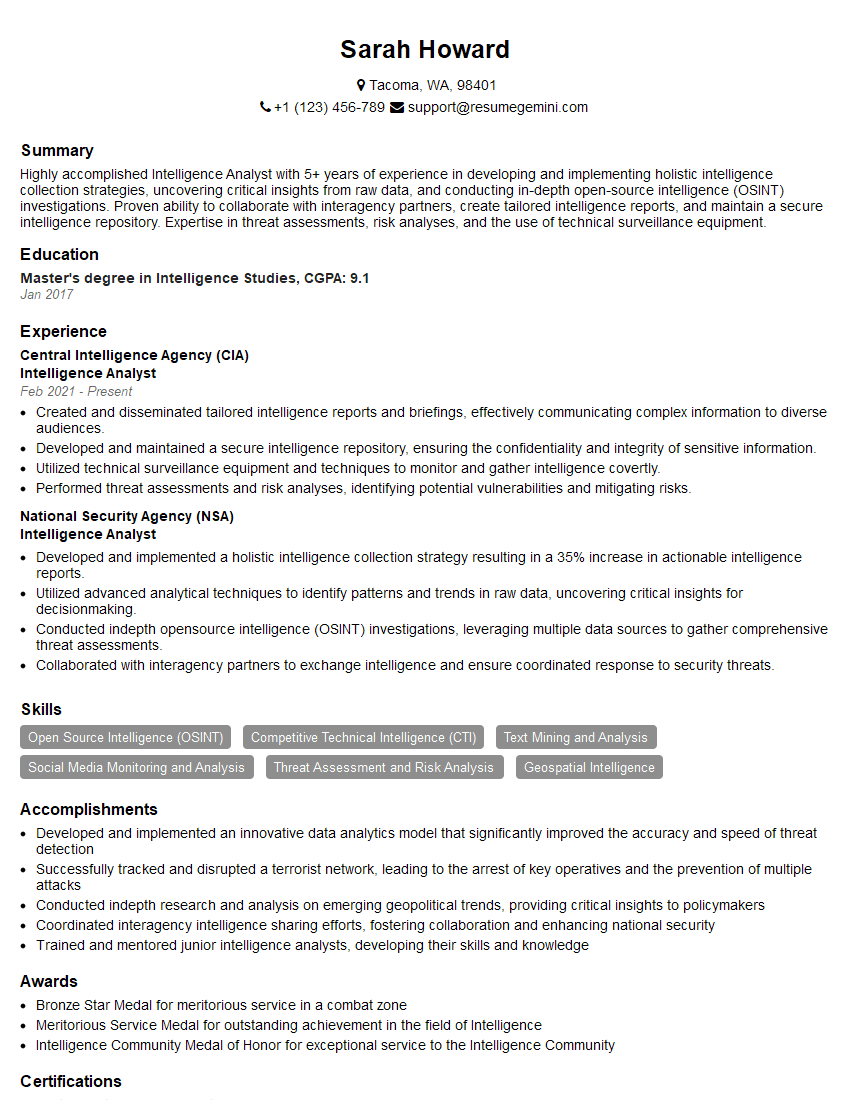
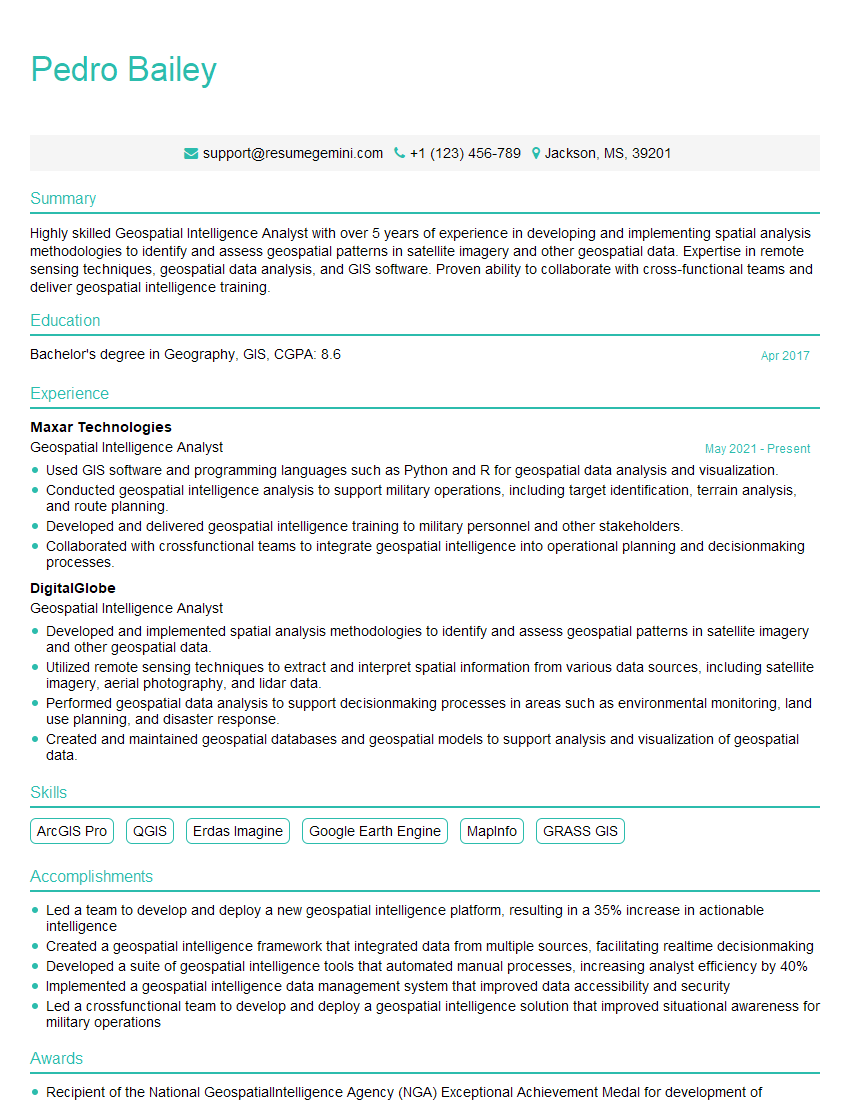
Mastering Target Acquisition and Analysis opens doors to exciting and impactful career opportunities in various sectors. To stand out, create an ATS-friendly resume that showcases your skills and experience effectively. ResumeGemini is a trusted resource to help you build a professional and compelling resume that highlights your unique qualifications. We provide examples of resumes tailored to Target Acquisition and Analysis roles to help you get started. Take advantage of these resources to elevate your job search and land your dream role.
Explore more articles
Users Rating of Our Blogs
Share Your Experience
We value your feedback! Please rate our content and share your thoughts (optional).
What Readers Say About Our Blog
Very informative content, great job.
good