Every successful interview starts with knowing what to expect. In this blog, we’ll take you through the top Team Leadership and Coordination interview questions, breaking them down with expert tips to help you deliver impactful answers. Step into your next interview fully prepared and ready to succeed.
Questions Asked in Team Leadership and Coordination Interview
Q 1. Describe your experience in delegating tasks within a team.
Effective delegation is crucial for team success. It’s not just about assigning tasks; it’s about matching the right task to the right person, based on their skills, experience, and capacity. I begin by clearly defining the task, outlining expected outcomes, setting deadlines, and allocating necessary resources. I then ensure the team member understands the task, has the resources they need, and knows who to contact if they encounter obstacles. I follow up regularly, not to micromanage, but to offer support and address any roadblocks. This ensures accountability and allows me to adjust my approach as needed. For example, in a previous project involving the development of a new software module, I delegated coding tasks based on each developer’s specialization – front-end, back-end, or database. I provided detailed specifications, regular check-ins, and ensured open communication channels for any questions or challenges.
I also believe in empowering team members by giving them autonomy and ownership over their tasks. This fosters a sense of responsibility and encourages initiative. It’s a collaborative process, not a top-down directive.
Q 2. How do you motivate team members to achieve common goals?
Motivating a team involves understanding individual needs and aspirations. I believe in recognizing and appreciating individual contributions, both publicly and privately. This could be through verbal praise, written acknowledgment, or even small tokens of appreciation. I also focus on setting clear, achievable goals that are aligned with the team’s overall objectives. Using the SMART framework (Specific, Measurable, Achievable, Relevant, Time-bound) helps ensure everyone is on the same page and understands their role in achieving success. Furthermore, I encourage open communication, creating a safe space for team members to share their ideas, concerns, and feedback. I foster a collaborative environment where everyone feels valued and heard. For instance, in a previous team, I implemented a peer recognition program where team members could nominate colleagues for outstanding work, fostering a culture of appreciation.
Finally, I believe in leading by example. My own dedication and enthusiasm are contagious and inspire my team to perform at their best. It’s about creating a positive and supportive environment where everyone feels empowered to succeed.
Q 3. Explain your approach to conflict resolution within a team.
Conflict is inevitable in any team, but how we handle it determines its impact. My approach is to address conflicts directly and constructively, focusing on understanding the root cause rather than assigning blame. I facilitate open and honest dialogue, encouraging team members to express their perspectives clearly and respectfully. I act as a neutral mediator, ensuring all voices are heard and understood. I then work with the team to brainstorm solutions collaboratively, focusing on finding mutually acceptable outcomes. I might use techniques like active listening, summarizing perspectives to ensure understanding, and exploring various options until a solution is reached that addresses everyone’s concerns. A recent example involved a disagreement between two team members regarding the best approach to a design problem. Instead of imposing a solution, I guided them through a collaborative process, exploring both viewpoints, and eventually arriving at a hybrid solution that incorporated the best aspects of each proposal.
Documentation of the agreed-upon solution and follow-up to ensure its effectiveness are also crucial steps in my conflict resolution process.
Q 4. How do you measure team performance and identify areas for improvement?
Measuring team performance involves a multi-faceted approach. I use a combination of qualitative and quantitative metrics. Quantitative metrics might include project completion rates, on-time delivery, adherence to budgets, and customer satisfaction scores. Qualitative metrics include team member feedback, peer evaluations, and assessments of teamwork and collaboration. Regularly scheduled team meetings provide an opportunity to discuss performance, identify areas of strength and weakness, and collectively develop improvement plans. I use tools like project management software to track progress and identify bottlenecks, enabling data-driven decision-making. For example, in a recent project, we tracked our velocity using an Agile methodology, allowing us to adjust our sprint plans and address any roadblocks promptly.
Regular feedback sessions provide an opportunity for both positive reinforcement and constructive criticism. This continuous improvement cycle is key to sustained high performance.
Q 5. What strategies do you use to foster collaboration and communication within a team?
Fostering collaboration and communication requires a deliberate and proactive approach. I start by establishing clear communication channels and protocols. This could include regular team meetings, instant messaging platforms, project management tools, and shared document repositories. I emphasize the importance of active listening, clear and concise communication, and respectful dialogue. Team-building activities, both formal and informal, help build trust and rapport among team members. These activities can range from simple team lunches to more structured exercises designed to improve communication and problem-solving skills. For instance, I’ve incorporated icebreaker games at the start of meetings to create a relaxed and open atmosphere.
Encouraging open feedback and constructive criticism further enhances collaboration. Creating a culture of psychological safety where team members feel comfortable expressing their ideas and concerns without fear of judgment is essential for productive collaboration.
Q 6. Describe a time you had to manage competing priorities within a team.
In a previous project, we were tasked with launching a new product while simultaneously addressing critical bugs in an existing product. This presented competing priorities, demanding careful resource allocation and prioritization. I employed a prioritization matrix, assigning weights to each task based on urgency and importance. This matrix helped us visually represent the competing demands and make informed decisions about resource allocation. We utilized a Kanban board to visualize the workflow and track progress on both projects. Regular stand-up meetings were crucial for coordinating efforts, addressing roadblocks, and ensuring both projects remained on track. Transparent communication across the team was paramount, ensuring everyone understood the priorities and the rationale behind the allocation of resources. By carefully balancing the competing priorities, we successfully launched the new product on time while simultaneously addressing critical bugs in the existing product. The project’s success underscored the importance of clear communication, effective prioritization, and diligent resource allocation when managing competing demands.
Q 7. How do you handle team members who are underperforming?
Addressing underperformance requires a sensitive yet firm approach. I start by having a private conversation with the team member, focusing on understanding the root cause of the underperformance. This may involve open-ended questions to encourage them to share their perspective. It’s important to create a safe space for them to express themselves without feeling judged. Once the root cause is identified, I work collaboratively with the team member to develop an action plan. This might involve providing additional training, mentorship, or reassigning tasks to better align with their skills and strengths. Regular check-ins and consistent feedback are crucial for monitoring progress and offering support. If the underperformance persists despite these interventions, I might need to explore more formal performance management processes, involving HR if necessary. The goal is always to support the team member’s growth and development, while also ensuring the team’s overall performance is not compromised. It’s vital to balance support and accountability.
Q 8. How do you build trust and rapport with your team members?
Building trust and rapport is foundational to effective team leadership. It’s not a one-time event, but an ongoing process of demonstrating integrity, empathy, and consistent support. I achieve this through several key strategies:
Open and Honest Communication: I foster a culture where team members feel comfortable sharing their thoughts, concerns, and ideas without fear of judgment. Regular check-ins, both one-on-one and group meetings, are crucial. I make sure to actively listen and provide constructive feedback.
Vulnerability and Transparency: I believe in being authentic and sharing relevant information, even when it’s challenging. This helps build a sense of shared experience and understanding. For example, if a project faces unexpected setbacks, I openly discuss the situation, outlining the challenges and the steps being taken to address them. This honesty builds trust and shows I value the team’s input.
Recognizing and Celebrating Successes: Acknowledging individual and team accomplishments, both big and small, reinforces positive behaviors and fosters a sense of shared achievement. This could involve public recognition during meetings, small team celebrations, or even personalized thank-you notes.
Fairness and Consistency: Applying rules and expectations fairly and consistently across the team ensures everyone feels valued and treated equitably. This is essential for maintaining trust and reducing the perception of bias.
Respecting Boundaries: Understanding and respecting team members’ personal and professional boundaries demonstrates consideration and builds a strong working relationship. I always try to be mindful of work-life balance and ensure my requests are reasonable and achievable.
Q 9. Explain your experience with different team structures (e.g., agile, hierarchical).
I’ve had extensive experience working within diverse team structures. My experience spans:
Agile Teams: I’ve led several agile teams utilizing Scrum and Kanban methodologies. In this environment, I focused on fostering collaboration, iterative development, and continuous feedback. For example, during a recent software development project, we implemented daily stand-up meetings, sprint reviews, and retrospectives to ensure continuous improvement and transparency. The emphasis was on self-organizing teams and rapid adaptation to changing requirements.
Hierarchical Teams: I’ve also worked in more traditional hierarchical structures where roles and responsibilities are clearly defined. My approach in these situations involves clear communication of expectations, providing necessary support to team members at each level, and ensuring effective delegation of tasks. The focus is on streamlined processes and clear reporting structures. For instance, I used a detailed project charter, outlining responsibilities, deliverables, and timelines for each team member in a large-scale marketing campaign.
My approach adapts to the specific team structure, prioritizing clear communication and collaboration regardless of the organizational framework.
Q 10. How do you ensure accountability within a team?
Accountability is critical for team success. I ensure accountability through a multi-faceted approach:
Clearly Defined Roles and Responsibilities: From the outset, I ensure every team member understands their individual roles, responsibilities, and how their work contributes to the overall project goals. This involves using detailed project plans, RACI matrices (Responsible, Accountable, Consulted, Informed), and job descriptions.
Regular Progress Monitoring and Feedback: Regular check-ins, progress reports, and performance reviews provide opportunities for constructive feedback, identifying potential roadblocks, and ensuring tasks are on track. This involves using project management software and regular team meetings.
Open and Honest Communication about Performance: Addressing performance issues directly and constructively is essential. I use a coaching approach, providing support and guidance while holding individuals accountable for their work. I’ve found that focusing on solutions rather than blame fosters a more collaborative and productive environment.
Empowerment and Ownership: Empowering team members to take ownership of their tasks fosters a sense of responsibility and accountability. I encourage them to proactively identify and solve problems, rather than relying solely on my direction. This includes providing sufficient autonomy and resources.
Consequences for Non-Performance: While I prioritize support and development, I also need to address situations of persistent non-performance. This might involve performance improvement plans, additional training, or, as a last resort, disciplinary actions. These measures are always implemented fairly and transparently.
Q 11. Describe your experience with project planning and scheduling.
Project planning and scheduling are vital for successful project execution. My experience includes:
Defining Project Scope and Objectives: I begin by clearly defining the project scope, objectives, and deliverables. This often involves working collaboratively with stakeholders to ensure alignment and buy-in.
Work Breakdown Structure (WBS): I utilize WBS to break down large projects into smaller, manageable tasks. This provides a clear roadmap for the project and allows for better task assignment and progress tracking.
Gantt Charts and Project Management Software: I’m proficient in using Gantt charts and project management software (like MS Project, Asana, Jira) to create realistic schedules, allocate resources, and monitor progress.
Risk Management: Identifying and mitigating potential risks is crucial. I use risk assessment techniques to proactively address potential challenges and develop contingency plans.
Resource Allocation: Effectively allocating resources (people, budget, time) is a key skill. I consider individual skill sets, workload capacity, and project dependencies when making resource allocation decisions.
Regular Monitoring and Adjustment: Project plans are not static; regular monitoring and adjustments are essential. I use progress reports, sprint reviews (in Agile projects), and regular team meetings to track progress, identify deviations from the plan, and take corrective actions.
Q 12. How do you manage team dynamics and address personality clashes?
Managing team dynamics and resolving personality clashes is a critical aspect of team leadership. My approach involves:
Early Intervention: Addressing minor conflicts promptly before they escalate is crucial. I encourage open communication and facilitate discussions between team members to help them understand each other’s perspectives.
Mediation and Facilitation: If conflicts persist, I act as a neutral mediator, facilitating constructive dialogue and helping the team find mutually acceptable solutions. I focus on understanding the root cause of the conflict and helping the individuals find common ground.
Setting Clear Expectations and Ground Rules: Establishing clear expectations for professional conduct, communication styles, and teamwork early on can help prevent many conflicts. This includes defining norms of respect and collaboration.
Team Building Activities: Engaging the team in activities that foster collaboration and trust can improve team cohesion. These activities can range from simple team lunches to more structured team-building exercises.
Addressing Individual Behaviors: If individual behaviors are consistently disruptive, I address them directly and privately, focusing on constructive feedback and providing guidance on improving their workplace interactions. This might involve coaching or mentoring.
Separation if Necessary: In rare cases, if efforts to resolve conflicts are unsuccessful and the behavior is significantly detrimental to the team, separation might be necessary. This is a last resort, and appropriate HR procedures are followed.
Q 13. What tools or technologies do you use to facilitate team communication and collaboration?
Effective communication and collaboration are crucial for team success. I leverage several tools and technologies, depending on the project and team needs:
Project Management Software: Asana, Jira, Trello, and Microsoft Project are used for task management, progress tracking, and file sharing.
Communication Platforms: Slack, Microsoft Teams, and Google Chat facilitate real-time communication and quick information sharing.
Video Conferencing: Zoom, Google Meet, and Microsoft Teams are used for virtual meetings, presentations, and remote collaboration.
Document Collaboration Tools: Google Docs, Microsoft Office 365, and SharePoint allow for collaborative document editing and version control.
Knowledge Management Systems: Internal wikis or knowledge bases are used to store project documentation, best practices, and other important information.
The choice of tools depends on the specific project needs and team preferences, but the key is selecting tools that enhance communication, collaboration, and information sharing.
Q 14. How do you adapt your leadership style to different team members and situations?
Adaptability is a key leadership skill. My leadership style is not fixed but adapts to the specific needs of the team and the situation. I draw upon different leadership approaches, including:
Transformational Leadership: Inspiring and motivating the team to achieve shared goals, especially when working on complex or challenging projects requiring high levels of innovation and commitment.
Transactional Leadership: Setting clear expectations, providing rewards and recognition for performance, and addressing performance issues directly, particularly useful for routine tasks and processes.
Servant Leadership: Prioritizing the needs of the team, providing support and resources, and empowering team members to develop their skills, especially when working with teams requiring high levels of autonomy and skill development.
For example, with a highly experienced team working on a creative project, I might adopt a more transformational approach, focusing on vision and inspiration. Conversely, with a newly formed team working on a well-defined process, a more transactional approach might be more effective in establishing clear expectations and ensuring accountability. I am always mindful of the team’s individual needs and tailor my style accordingly. I actively seek feedback to understand what leadership approach resonates best with my team and allows them to perform optimally.
Q 15. How do you provide constructive feedback to team members?
Constructive feedback is about helping team members improve, not criticizing them. It focuses on specific behaviors and their impact, offering actionable suggestions for growth. I follow a structured approach:
- Situation-Behavior-Impact (SBI) Model: I start by describing the specific situation, the observable behavior, and the impact of that behavior. For example, “During the last project meeting (Situation), you interrupted several colleagues (Behavior), which prevented others from fully contributing their ideas (Impact).”
- Focus on observable behaviors: I avoid making subjective judgments or personality assessments. The focus remains on actions and their consequences.
- Balance positive and negative feedback: I always begin by highlighting strengths and positive contributions before addressing areas for improvement. This creates a receptive environment for the feedback.
- Offer concrete suggestions: Instead of just pointing out problems, I provide specific, actionable steps for improvement. For example, “Next time, you could try using the ‘parking lot’ technique to note your ideas and then allow others to share theirs.”
- Collaborative discussion: I encourage a two-way conversation, allowing the team member to share their perspective and ask questions. This demonstrates respect and fosters a sense of shared ownership in the improvement process.
- Follow-up: I schedule a follow-up meeting to discuss progress and provide additional support if needed.
This structured approach ensures feedback is received positively and leads to tangible improvements.
Career Expert Tips:
- Ace those interviews! Prepare effectively by reviewing the Top 50 Most Common Interview Questions on ResumeGemini.
- Navigate your job search with confidence! Explore a wide range of Career Tips on ResumeGemini. Learn about common challenges and recommendations to overcome them.
- Craft the perfect resume! Master the Art of Resume Writing with ResumeGemini’s guide. Showcase your unique qualifications and achievements effectively.
- Don’t miss out on holiday savings! Build your dream resume with ResumeGemini’s ATS optimized templates.
Q 16. Describe your experience with mentoring or coaching team members.
Mentoring and coaching are integral parts of my leadership style. I’ve mentored junior team members on technical skills and project management. My approach is tailored to the individual’s needs and learning style. I utilize a combination of techniques:
- Active Listening and Empathetic Understanding: I create a safe space where mentees feel comfortable sharing challenges and seeking guidance.
- Goal Setting and Action Planning: We collaboratively define specific, measurable, achievable, relevant, and time-bound (SMART) goals and outline clear steps to achieve them.
- Regular Check-ins and Feedback: I provide regular feedback, both positive reinforcement and constructive criticism, to track progress and provide support.
- Resource Sharing and Knowledge Transfer: I share relevant resources and leverage my experience to guide mentees through challenges.
- Skill Development Opportunities: I identify opportunities for skill development such as training programs or challenging assignments.
For example, I mentored a junior developer who struggled with version control. We established clear goals, focusing on mastering Git. Through regular check-ins and practical exercises, he significantly improved his skills and confidence.
Q 17. How do you handle stress and pressure when managing a team?
Managing stress and pressure is crucial for effective team leadership. My approach involves a multi-pronged strategy:
- Proactive Planning and Delegation: I meticulously plan projects, allocate tasks effectively, and delegate responsibilities based on individual strengths and capabilities, reducing my workload and that of the team.
- Open Communication: I maintain transparent communication within the team, addressing concerns and challenges promptly. This prevents small issues from escalating into larger problems.
- Time Management Techniques: I prioritize tasks, utilizing methods like Eisenhower Matrix (urgent/important), to focus on high-impact activities.
- Self-Care Practices: I prioritize my well-being through regular exercise, sufficient sleep, and mindfulness techniques. This helps me manage stress more effectively.
- Seeking Support: I am not afraid to seek support from colleagues, mentors, or even professional help when needed. Recognizing limitations and asking for help is a sign of strength.
During a particularly demanding project launch, I utilized these techniques to successfully navigate the pressure and ensure the team remained focused and motivated.
Q 18. How do you prioritize tasks and manage workloads effectively within a team?
Effective task prioritization and workload management are crucial for team success. I use a combination of techniques:
- Prioritization Matrices: We use tools like the Eisenhower Matrix to categorize tasks based on urgency and importance, focusing on high-impact activities first.
- Agile Methodologies: Employing agile methodologies, such as Scrum or Kanban, allows for flexible task management and continuous prioritization based on changing needs.
- Team Collaboration Tools: We utilize project management software (e.g., Jira, Asana) to track progress, manage dependencies, and ensure transparency.
- Regular Team Meetings: We have regular meetings to review progress, re-prioritize tasks, and address any roadblocks.
- Workload Balancing: I ensure workload distribution is fair and equitable, considering individual skill sets and capacity. Overloaded team members are a recipe for burnout and reduced productivity.
For example, during a project with multiple deadlines, we used a Kanban board to visualize workflow, identify bottlenecks, and adjust priorities in real-time, ensuring successful project delivery.
Q 19. What is your approach to setting clear expectations and goals for a team?
Setting clear expectations and goals is fundamental for team alignment and success. My approach emphasizes:
- SMART Goals: We collaboratively define Specific, Measurable, Achievable, Relevant, and Time-bound goals. This ensures everyone understands what needs to be accomplished and by when.
- Roles and Responsibilities: Clear roles and responsibilities are defined for each team member, avoiding ambiguity and overlap.
- Open Communication and Feedback: I encourage open communication and regular feedback sessions to ensure everyone is on track and address any concerns.
- Performance Metrics: We establish key performance indicators (KPIs) to track progress towards goals and measure success objectively.
- Regular Review and Adjustment: We regularly review progress, adapt goals as needed, and celebrate successes along the way.
By using this approach, the team remains focused, motivated, and aligned towards achieving shared objectives.
Q 20. Describe a situation where you had to make a difficult decision that impacted your team.
In a previous project, we faced a critical bug just days before the launch deadline. Fixing it required significant overtime and potential delays. I had to make the difficult decision to prioritize the bug fix, even if it meant sacrificing some planned, but less critical features.
I communicated this decision transparently to the team, explaining the rationale and potential impact. I also emphasized the importance of teamwork and mutual support to overcome the challenge. We worked extended hours collaboratively, successfully fixing the bug and launching the project on time. While it was stressful, it strengthened the team’s bond and demonstrated the value of shared commitment and problem-solving.
Q 21. How do you facilitate decision-making processes within a team?
Effective decision-making is essential for team productivity. My approach depends on the situation’s complexity and urgency. I often employ the following techniques:
- Brainstorming and Idea Generation: I facilitate brainstorming sessions to generate a wide range of ideas and perspectives, encouraging open discussion and creative thinking.
- Data-Driven Decision Making: When possible, I rely on data and analytics to inform decision making, ensuring objectivity and minimizing bias.
- Collaboration and Consensus Building: I strive for consensus whenever feasible. However, I understand that unanimous agreement may not always be possible, and I will make a timely decision when needed, ensuring everyone understands the rationale.
- Structured Decision-Making Frameworks: For complex decisions, I might employ frameworks like the Kepner-Tregoe method, which uses a systematic approach to problem-solving and decision making.
- Decision Log: A decision log tracks all key decisions, their rationale, and the individuals involved, promoting transparency and accountability.
I adapt my approach based on the context, ensuring the decision-making process is efficient, inclusive, and leads to the best possible outcomes for the team.
Q 22. How do you ensure that your team is aligned with organizational goals?
Aligning a team with organizational goals requires a multifaceted approach that goes beyond simply stating objectives. It’s about fostering a shared understanding and commitment to the overall vision.
- Transparent Communication: I begin by ensuring everyone understands the organization’s strategic goals and how the team’s work directly contributes to achieving them. This often involves presentations, Q&A sessions, and regular updates on progress.
- Clearly Defined Roles and Responsibilities: Each team member needs a clear understanding of their individual role and how it fits into the larger picture. This clarity minimizes confusion and ensures everyone is working towards the same targets. I use tools like RACI matrices (Responsible, Accountable, Consulted, Informed) to clearly define roles.
- Regular Check-ins and Feedback: Frequent team meetings, both formal and informal, are crucial. These provide opportunities to discuss progress, address challenges, and ensure everyone stays focused. I use these check-ins to provide constructive feedback and adjust strategies as needed.
- Goal Setting and Tracking: I work with the team to set SMART (Specific, Measurable, Achievable, Relevant, Time-bound) goals that directly support organizational objectives. We track progress regularly using project management tools, allowing for course correction if needed.
For example, in my previous role, we were tasked with improving customer satisfaction scores. I ensured everyone understood the impact of their individual tasks on that ultimate goal, providing regular updates on our progress towards that target.
Q 23. How do you measure the success of your team’s projects or initiatives?
Measuring team success goes beyond simply completing projects; it’s about evaluating the impact of our work. I use a combination of quantitative and qualitative measures to gain a holistic view of our performance.
- Key Performance Indicators (KPIs): These are crucial for tracking tangible progress. Depending on the project, KPIs might include things like project completion rate, customer satisfaction scores, cost savings, or revenue generated. For example, for a software development project, KPIs could be lines of code, bug fixes, or successful deployments.
- Qualitative Assessments: These provide insights into the process and team dynamics. This can include regular feedback sessions, customer testimonials, and post-project retrospectives to assess what worked well and what could be improved.
- Project Reviews and Post-Mortems: Formal project reviews and post-mortems are essential for analyzing what went right, what went wrong, and what lessons we can learn for future projects. This process helps identify areas for improvement in both the project execution and the team’s collaboration.
For instance, in one project, our KPI was the reduction in customer support tickets. While we met the quantitative target, our post-project review highlighted areas where we could improve the user experience to further reduce those tickets, demonstrating the importance of both quantitative and qualitative measurements.
Q 24. Describe your experience with remote team management.
My experience with remote team management has been extensive and rewarding. It requires a different set of skills and strategies compared to in-person management, emphasizing communication and trust.
- Communication Tools: I leverage various communication platforms including project management software (e.g., Asana, Jira), video conferencing (e.g., Zoom, Google Meet), and instant messaging (e.g., Slack) to ensure seamless communication and collaboration.
- Asynchronous Communication: Understanding the time zone differences and promoting asynchronous communication is key. This allows team members to work at their own pace and access information at their convenience.
- Regular Virtual Meetings: While asynchronous communication is important, scheduled virtual meetings are essential for maintaining team cohesion and addressing issues promptly. I aim to strike a balance between formal project meetings and informal check-ins.
- Building Trust and Relationships: Building strong relationships and trust with remote team members requires effort. I make it a point to have informal virtual coffee chats, celebrate team successes, and show appreciation for individual contributions.
In my previous role, I successfully managed a completely remote team across three continents. Using the tools and strategies outlined above, we not only met our project deadlines but also cultivated a strong sense of team camaraderie despite the geographical distance.
Q 25. How do you handle disagreements or conflicts between team members?
Disagreements and conflicts are inevitable in any team, and handling them constructively is crucial. My approach emphasizes active listening, open communication, and finding mutually beneficial solutions.
- Active Listening: I ensure that all parties involved feel heard and understood. I encourage individuals to clearly express their viewpoints without interruption, before offering any input.
- Focus on Issues, Not Personalities: I guide the discussion to focus on the specific issues at hand rather than resorting to personal attacks. This helps to maintain a professional and respectful environment.
- Mediation and Facilitation: If necessary, I act as a mediator to facilitate a productive conversation. I help the team identify common ground, explore alternative solutions, and reach a consensus.
- Documentation and Follow-up: Once a resolution is reached, I document the agreement and ensure that all parties involved understand the next steps. I also follow up to ensure the agreement is being implemented effectively.
In one instance, two team members had a significant disagreement about the best approach to a technical problem. By facilitating a discussion that focused on the technical merits of each approach rather than the personalities involved, we were able to identify a hybrid solution that satisfied both parties and led to a superior outcome.
Q 26. What is your experience with performance reviews and feedback?
Performance reviews and feedback are essential for employee growth and team improvement. My approach is focused on providing constructive, actionable feedback that helps individuals develop and contribute more effectively.
- Regular Feedback: I don’t wait for formal performance reviews to provide feedback. Regular check-ins and informal discussions provide opportunities for ongoing coaching and support.
- Specific and Actionable Feedback: I avoid vague statements. Instead, I provide specific examples of both strengths and areas for improvement, suggesting concrete steps for development.
- Two-Way Conversation: Performance reviews are not one-sided. I encourage open dialogue, providing an opportunity for team members to share their perspectives and self-assess their performance.
- Goal Setting and Development Plans: Based on the feedback, we collaboratively set goals for future performance and develop action plans to help individuals achieve them. These plans are revisited regularly to monitor progress and make adjustments as needed.
For example, during a recent review, I provided a team member with specific examples of their excellent communication skills and suggested ways they could further develop their technical expertise through online courses and mentoring opportunities.
Q 27. How do you onboard new team members effectively?
Effective onboarding is crucial for integrating new team members quickly and smoothly. My process focuses on both the practical aspects of the role and the social integration into the team.
- Pre-boarding Communication: Before the first day, I send a welcome email outlining the onboarding plan, key contacts, and any necessary pre-reading materials.
- Structured Onboarding Program: I create a structured onboarding program that includes introductions to team members, a clear explanation of roles and responsibilities, an overview of company policies, and training on relevant tools and technologies.
- Buddy System: I assign a buddy to the new team member to provide ongoing support, answer questions, and facilitate integration into the team’s social dynamics.
- Regular Check-ins: I schedule regular check-in meetings with the new team member to address concerns, answer questions, and provide support. These check-ins allow me to tailor the onboarding process to individual needs and provide early course correction if needed.
In my experience, a well-structured onboarding program significantly reduces the time it takes for a new team member to become fully productive and integrated into the team. This not only benefits the individual but also boosts overall team efficiency.
Q 28. Describe a time you had to build consensus within a team on a challenging issue.
In a previous project, we faced a significant challenge regarding the selection of a new technology platform. Two factions within the team strongly supported different platforms, each with valid arguments. Building consensus required a strategic approach.
- Data-Driven Decision Making: First, I ensured we had access to all relevant data, including cost comparisons, performance benchmarks, and potential scalability issues. Presenting this data neutrally removed some of the emotional element from the debate.
- Structured Discussion: We held a series of facilitated workshops where each faction presented their arguments, backed by data, allowing for open debate and clarifying misconceptions.
- Identifying Common Goals: We emphasized our shared goal of selecting a platform that would best serve the project’s needs and benefit the organization as a whole. This helped refocus the discussion on the overarching objective rather than individual preferences.
- Compromise and Collaboration: Ultimately, we arrived at a hybrid solution that incorporated the best aspects of both proposed platforms. This demonstrated that a win-win outcome was possible through collaboration and compromise.
This experience highlighted the importance of fostering a culture of open dialogue, data-driven decision making, and collaborative problem-solving to effectively navigate challenging issues and build consensus within a team.
Key Topics to Learn for Team Leadership and Coordination Interview
- Understanding Team Dynamics: Learn to identify different team personalities, communication styles, and potential conflict areas. Explore strategies for building trust and fostering collaboration.
- Delegation and Empowerment: Master the art of effectively delegating tasks, providing clear expectations, and empowering team members to take ownership. Practice explaining your decision-making process regarding task assignments.
- Conflict Resolution and Negotiation: Develop skills in proactively addressing conflicts, mediating disagreements, and negotiating solutions that satisfy all parties. Be prepared to discuss real-world scenarios and your approach.
- Motivation and Performance Management: Understand different motivational theories and how to apply them to boost team performance. Practice outlining strategies for providing constructive feedback, setting achievable goals, and recognizing achievements.
- Communication Strategies: Explore various communication methods (written, verbal, visual) and their effectiveness in different team contexts. Be ready to discuss how you adapt your communication style to various audiences and situations.
- Project Management Fundamentals: Demonstrate your understanding of project planning, execution, monitoring, and closure. Be prepared to discuss methodologies like Agile or Waterfall and their applicability to different projects.
- Decision-Making Processes: Explain your approach to making decisions, considering various factors like risk assessment, resource allocation, and stakeholder input. Be ready to justify your choices in a clear and concise manner.
Next Steps
Mastering Team Leadership and Coordination is crucial for career advancement, opening doors to more challenging and rewarding roles with increased responsibility and impact. An ATS-friendly resume is essential for getting your application noticed by recruiters and hiring managers. To significantly enhance your job prospects, we strongly encourage you to use ResumeGemini to craft a professional and compelling resume that highlights your skills and experience in this field. Examples of resumes tailored to Team Leadership and Coordination are available to help guide you through the process.
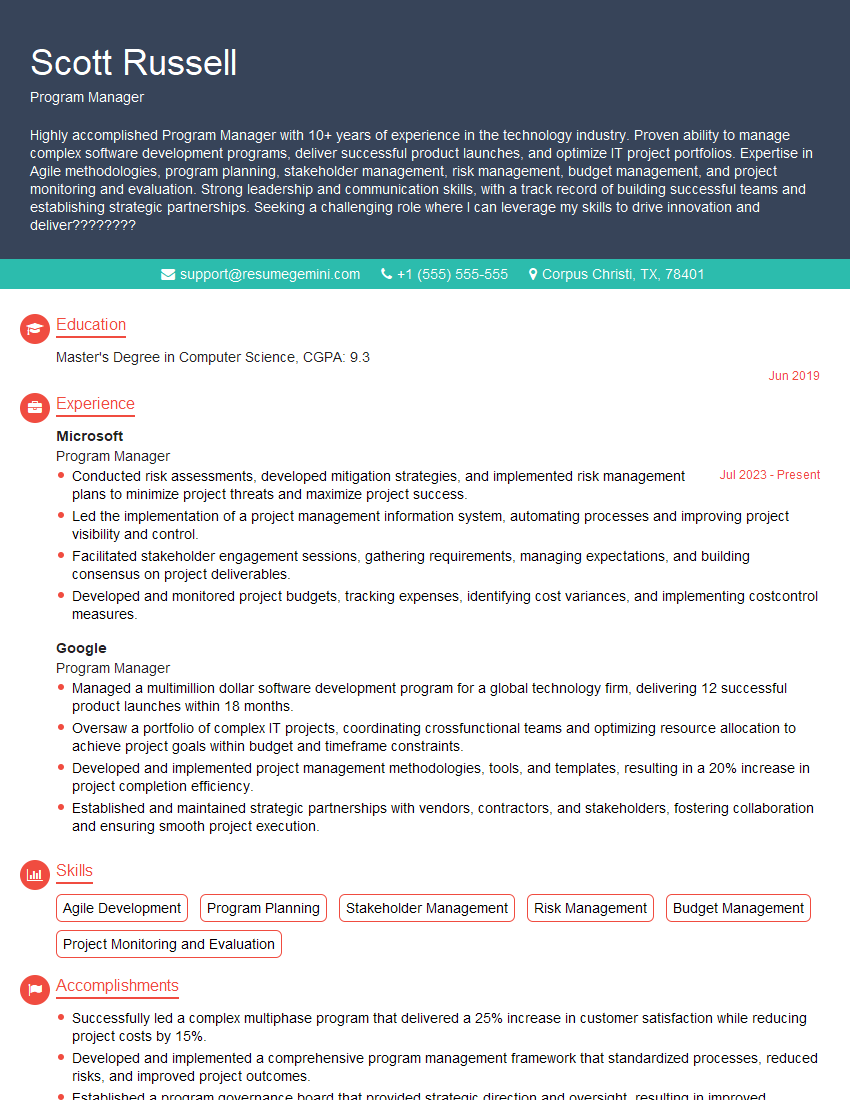
Program Manager Resume Sample
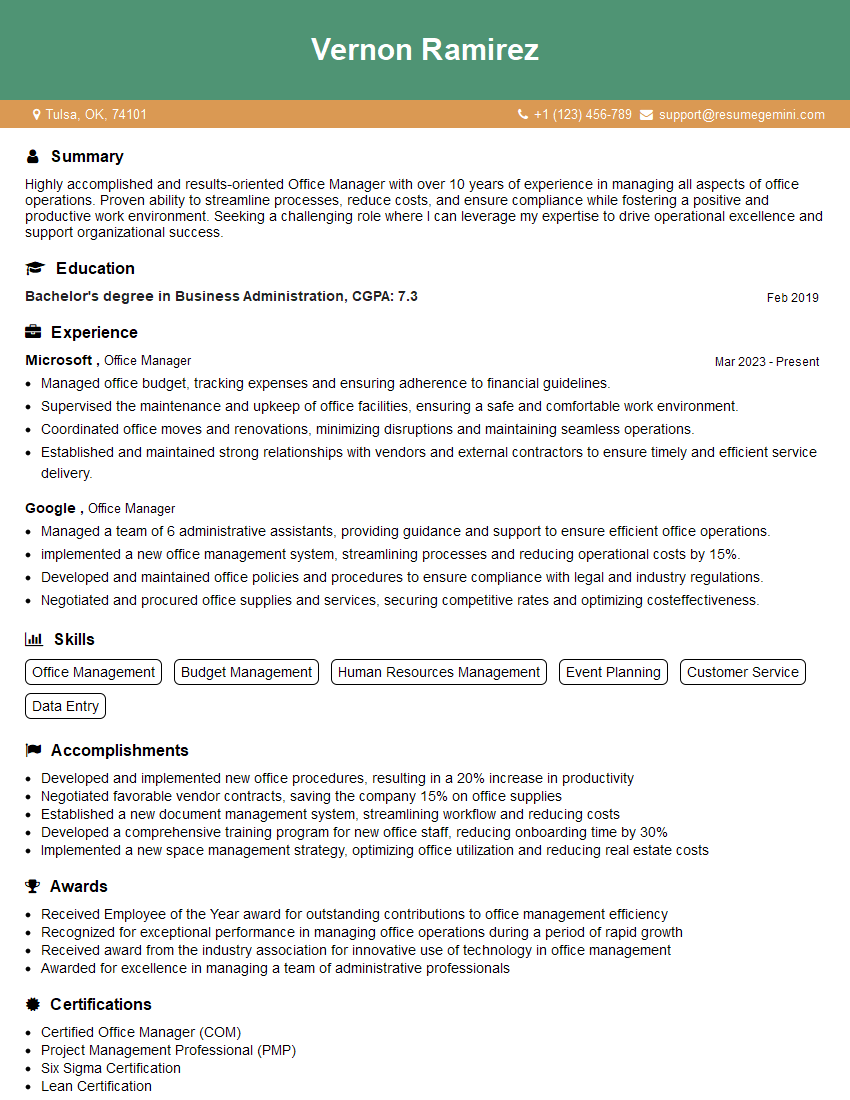
Office Manager Resume Sample
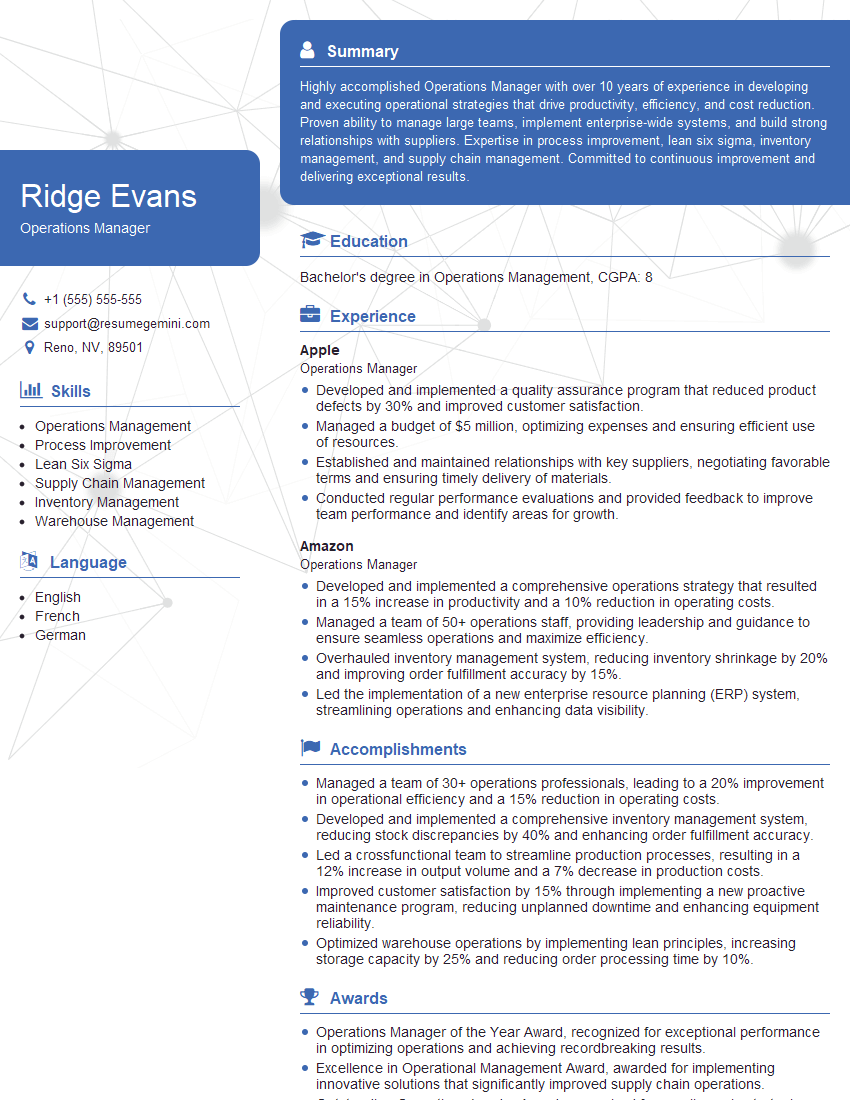
Operations Manager Resume Sample
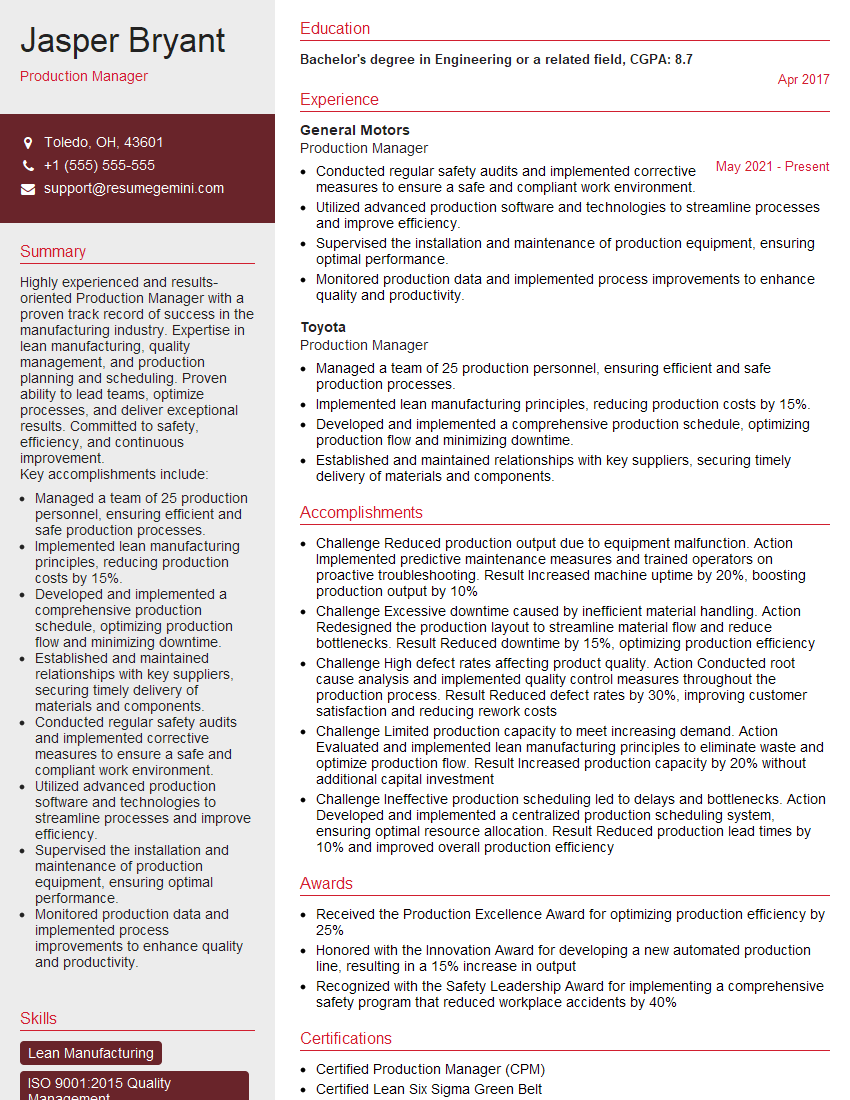
Production Manager Resume Sample
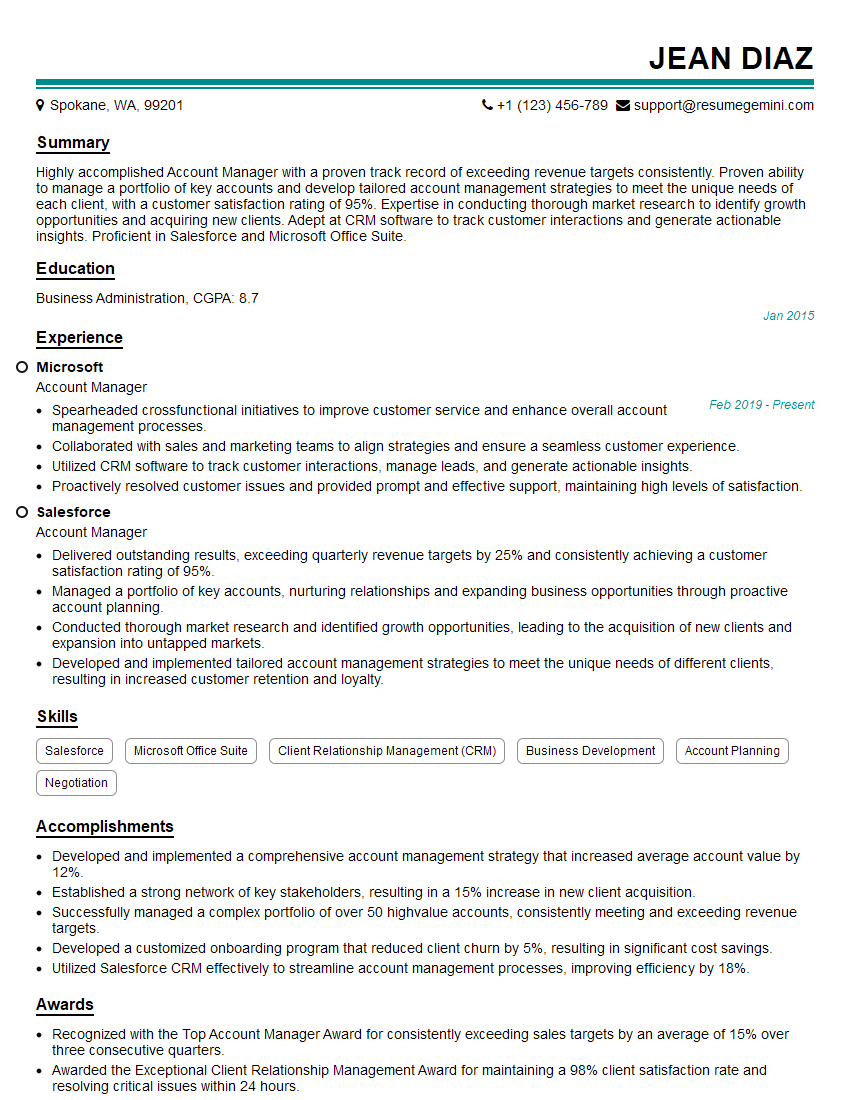
Account Manager Resume Sample
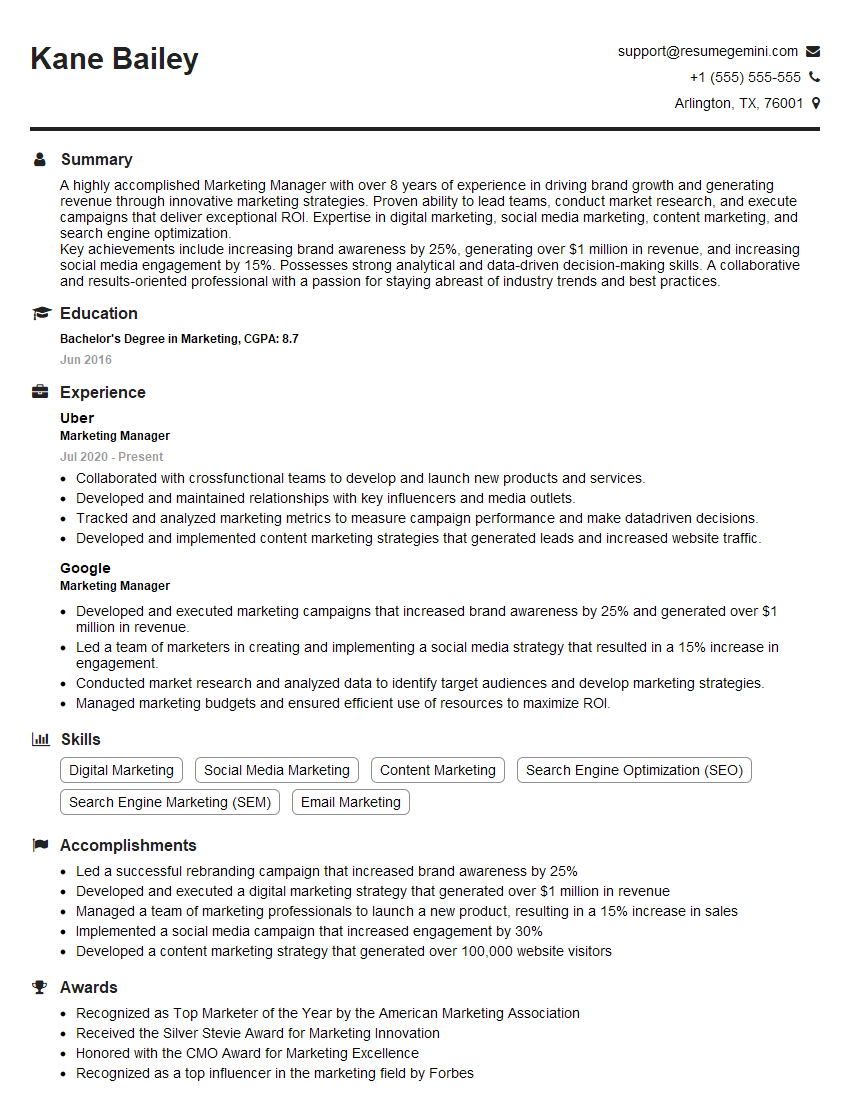
Marketing Manager Resume Sample
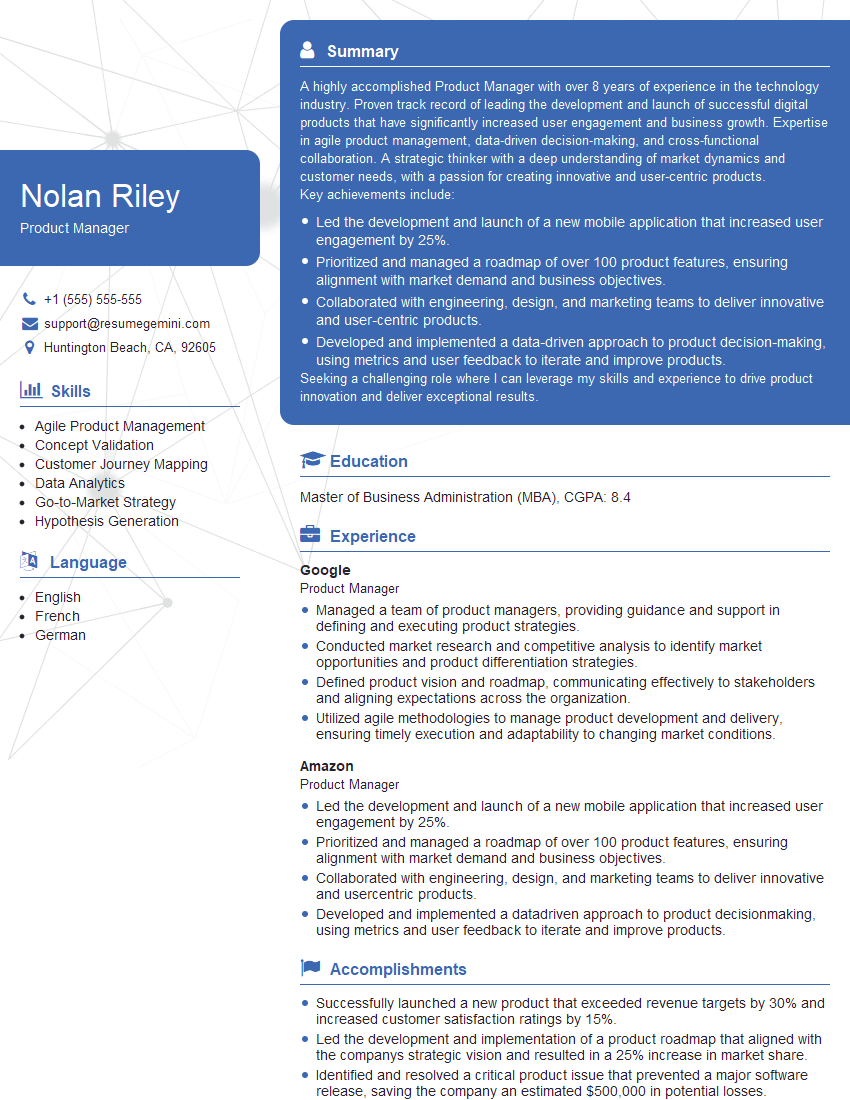
Product Manager Resume Sample
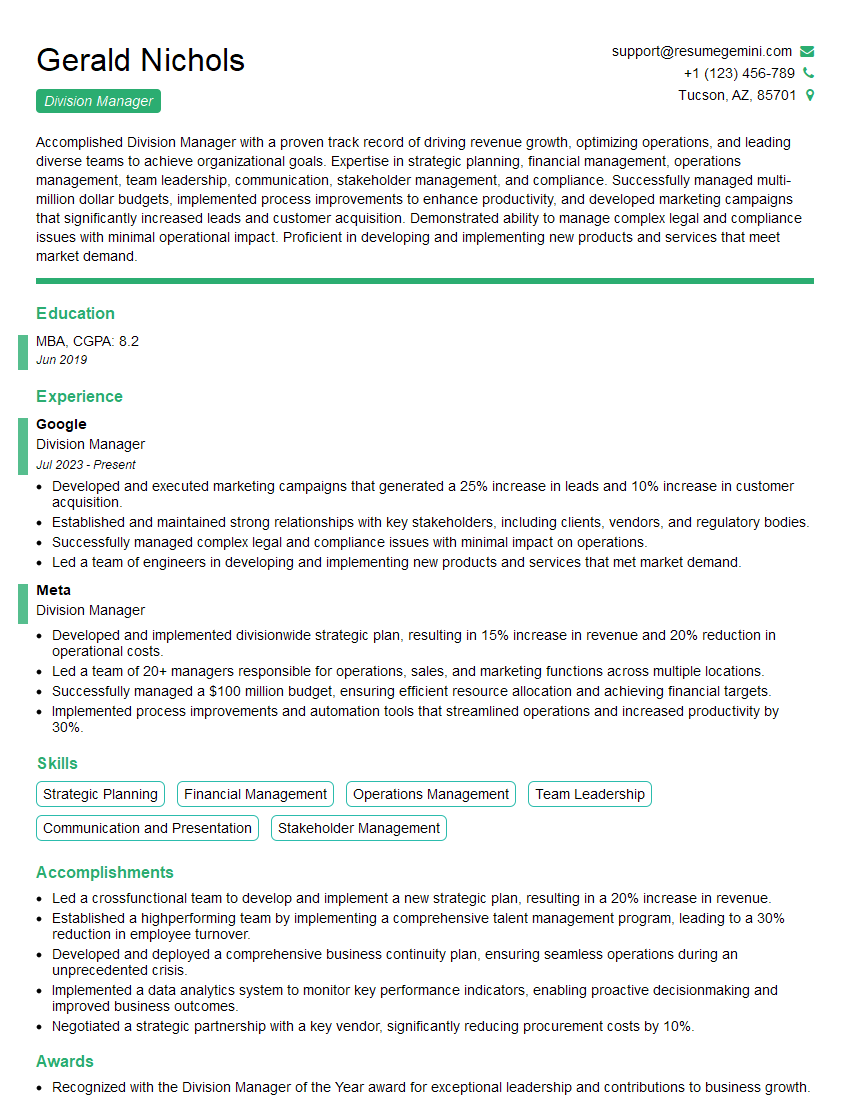
Division Manager Resume Sample
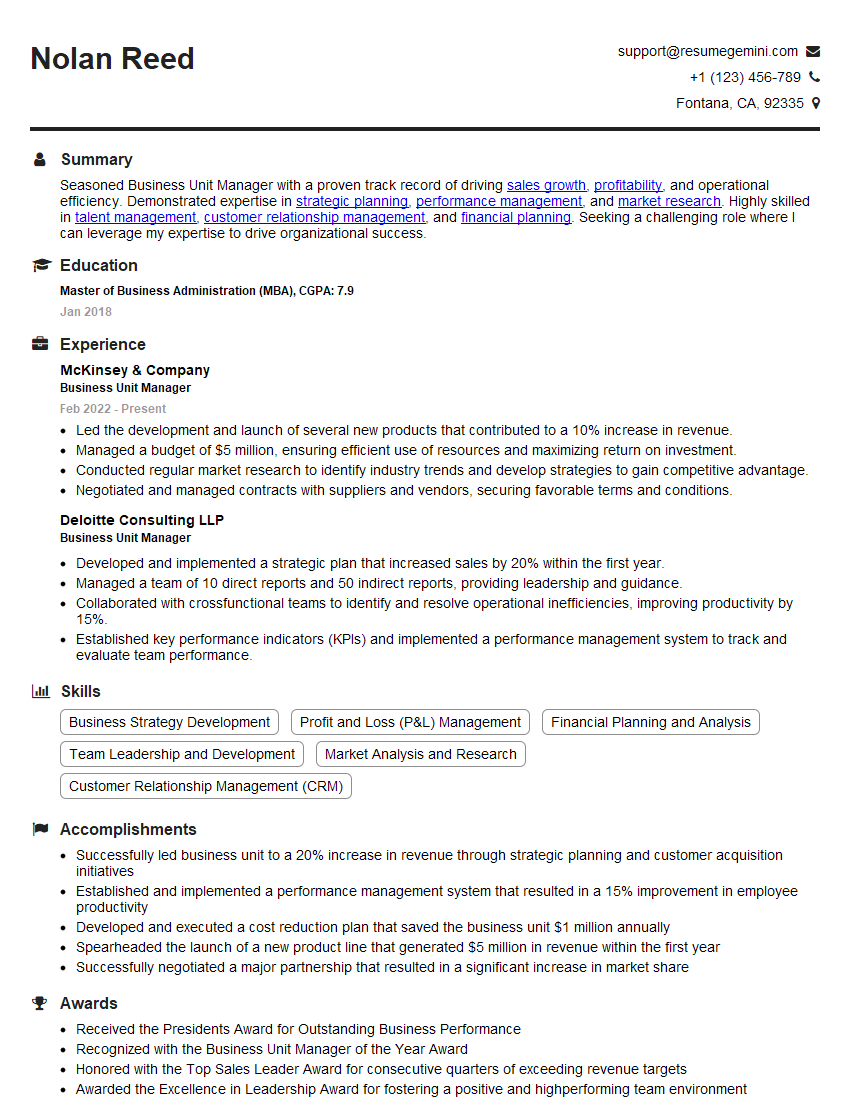
Business Unit Manager Resume Sample
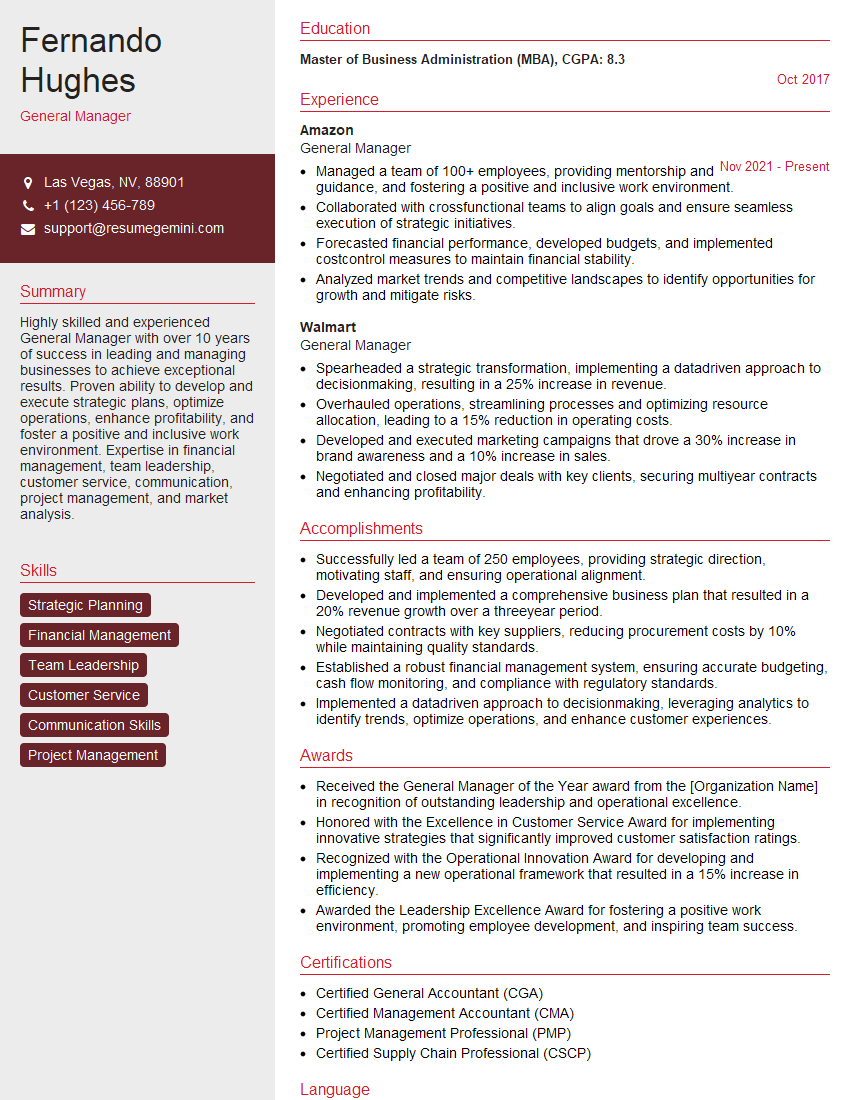
General Manager Resume Sample
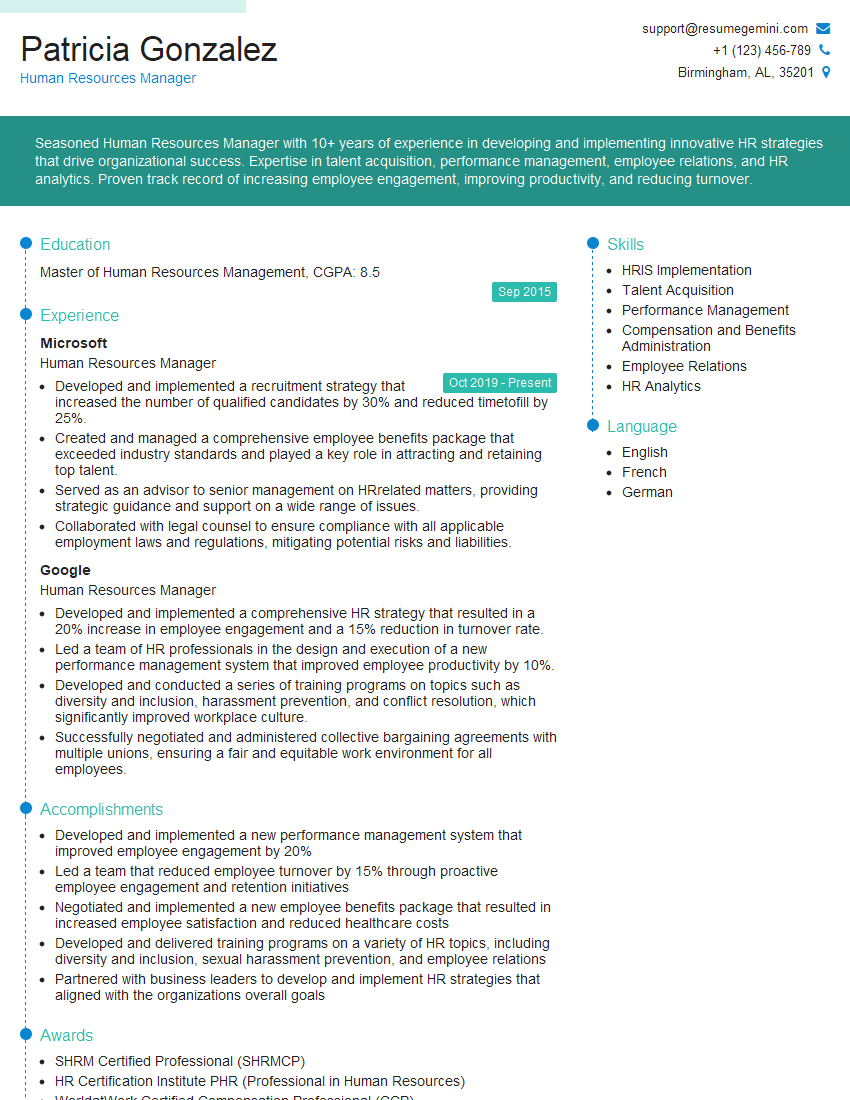
Human Resources Manager Resume Sample
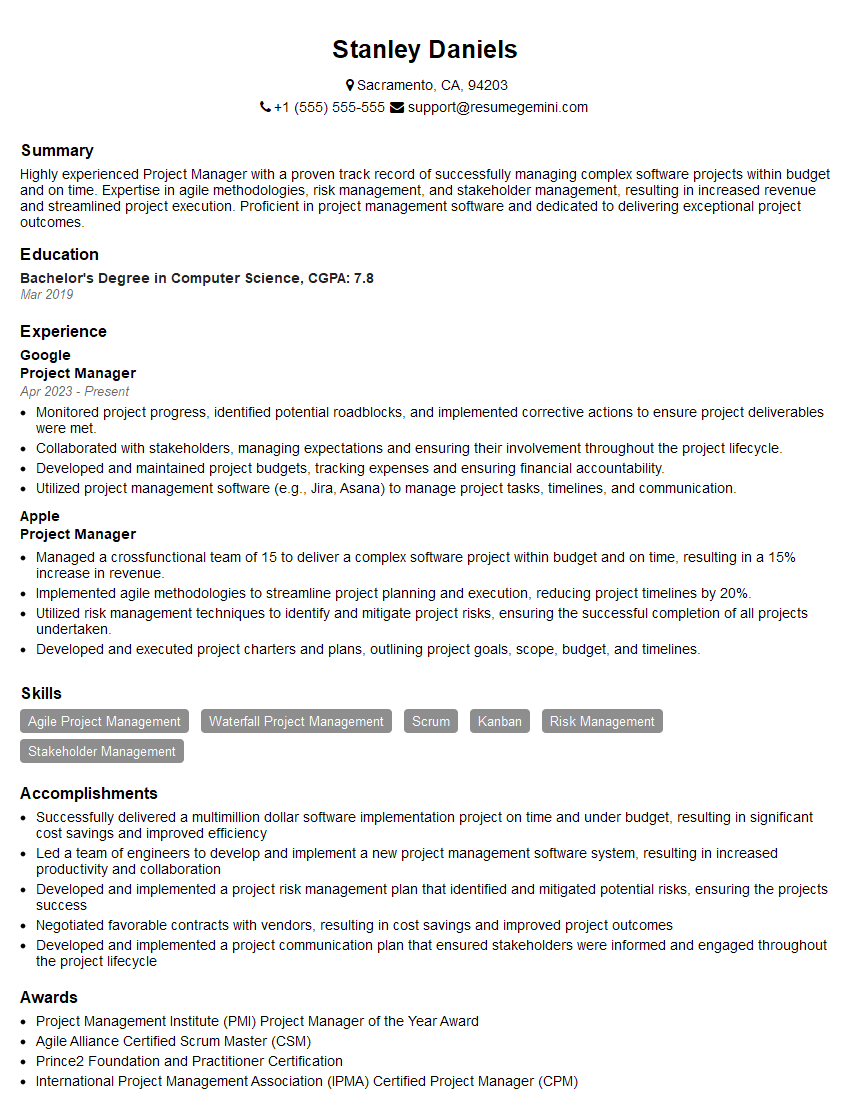
Project Manager Resume Sample
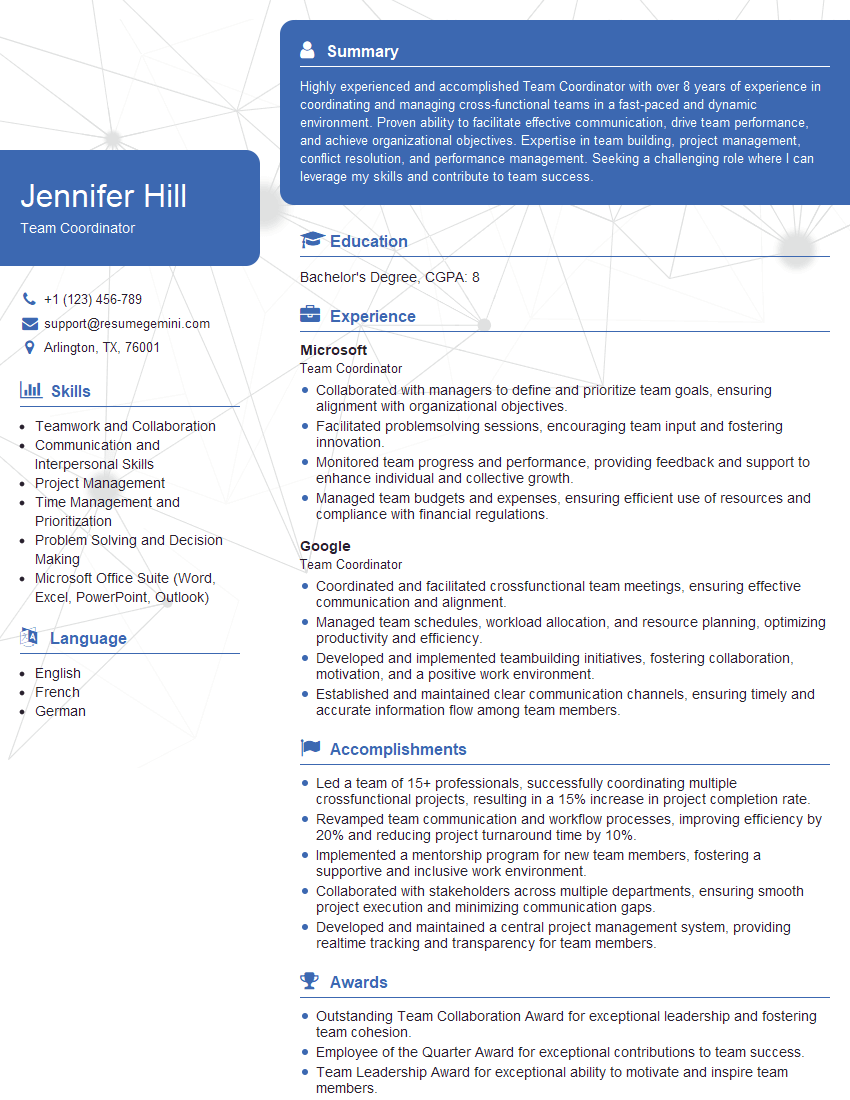
Team Coordinator Resume Sample
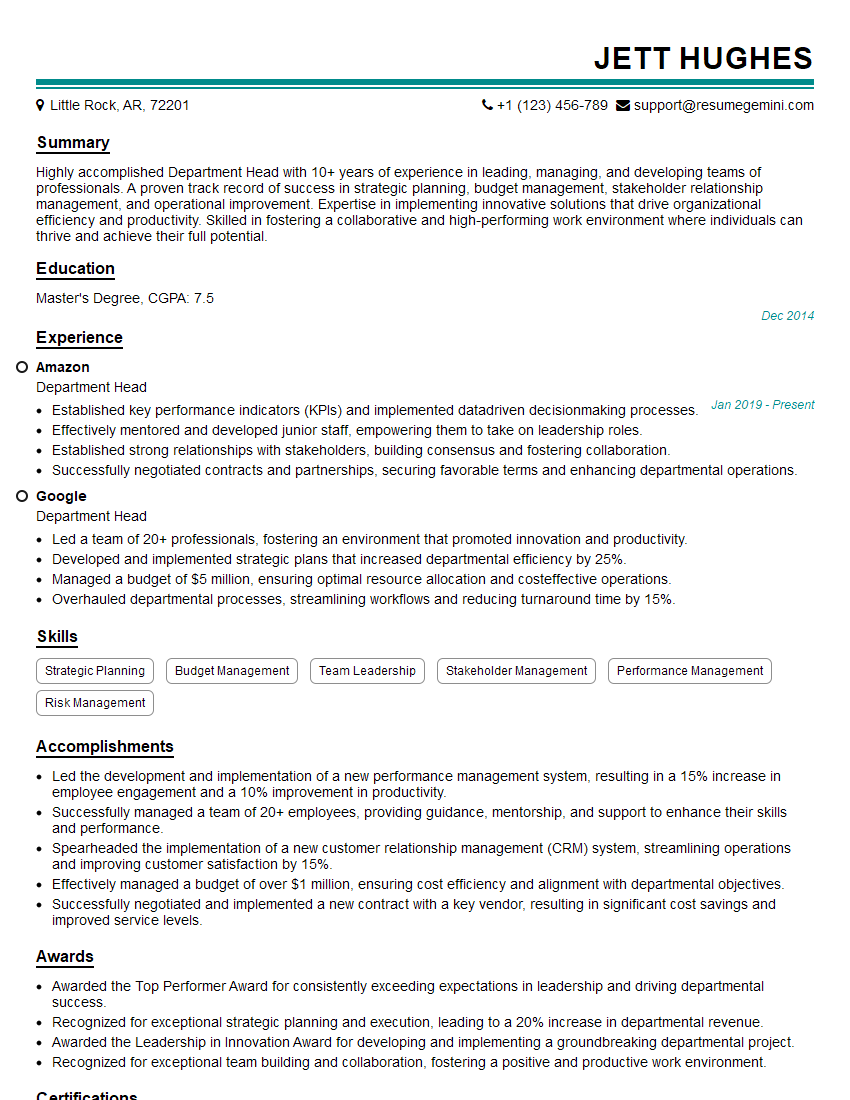
Department Head Resume Sample
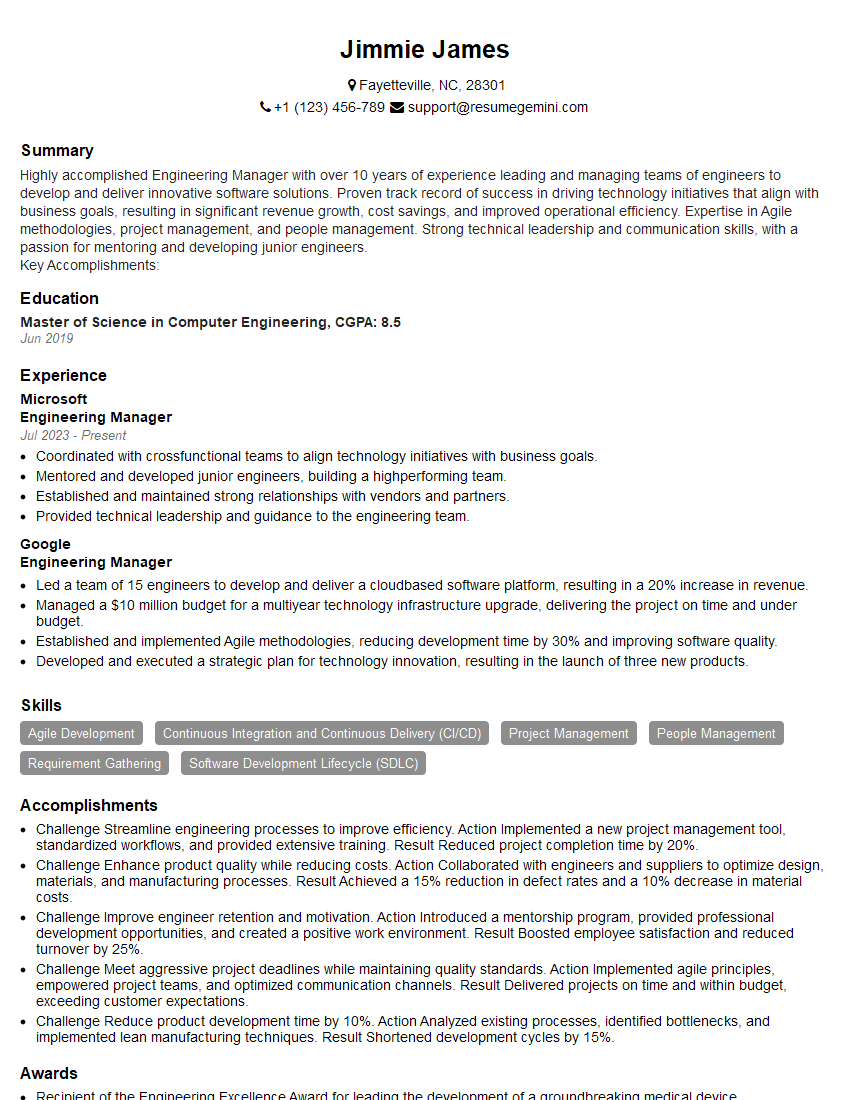
Engineering Manager Resume Sample
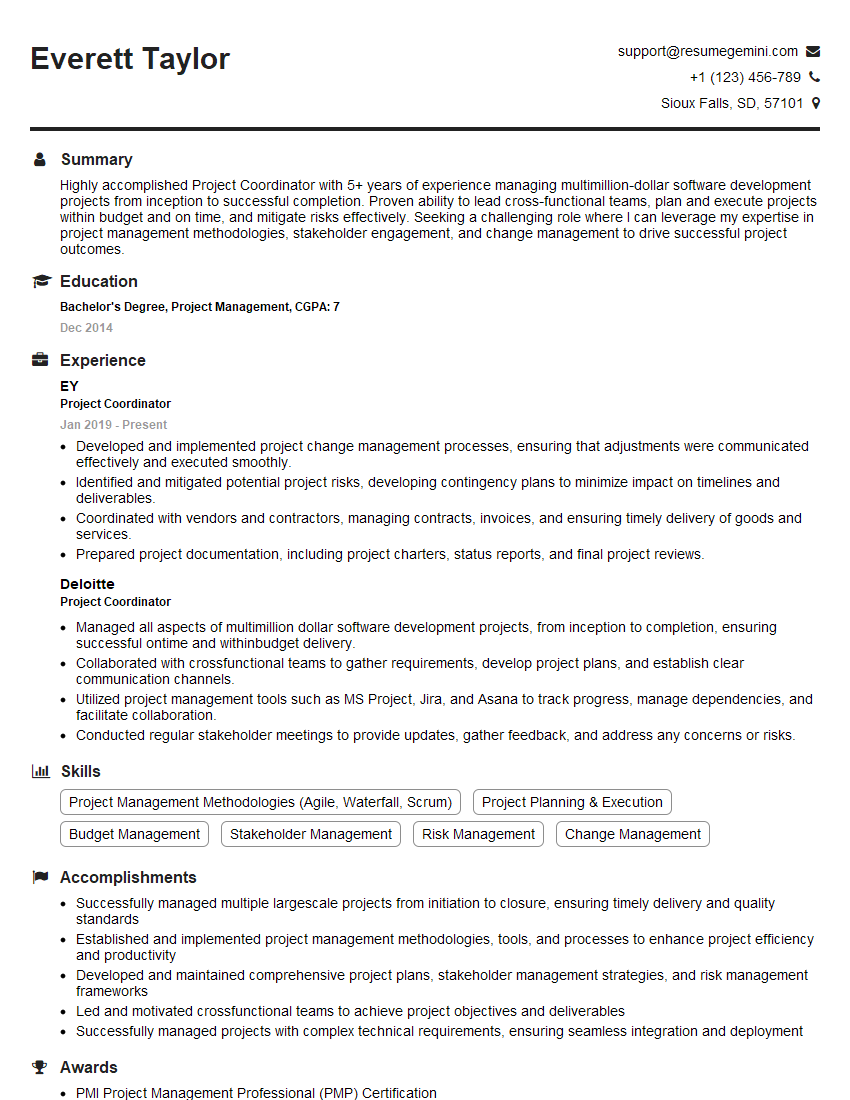
Project Coordinator Resume Sample
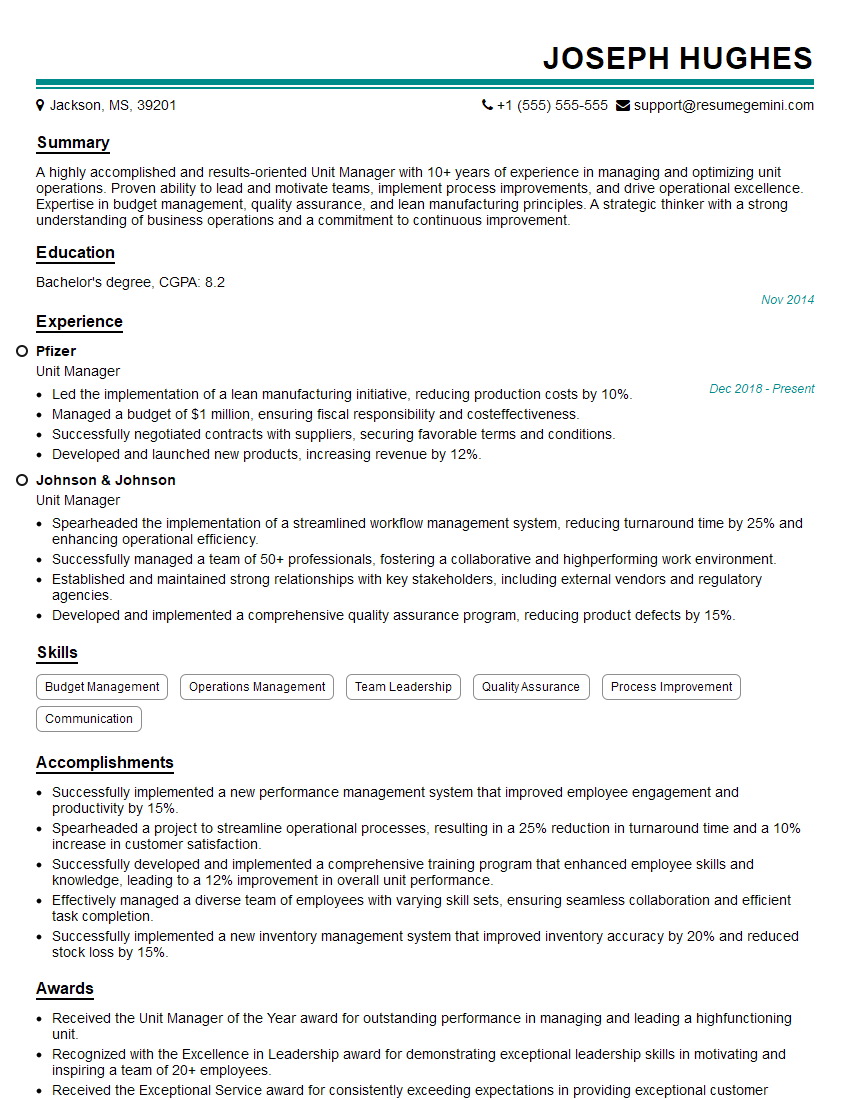
Unit Manager Resume Sample
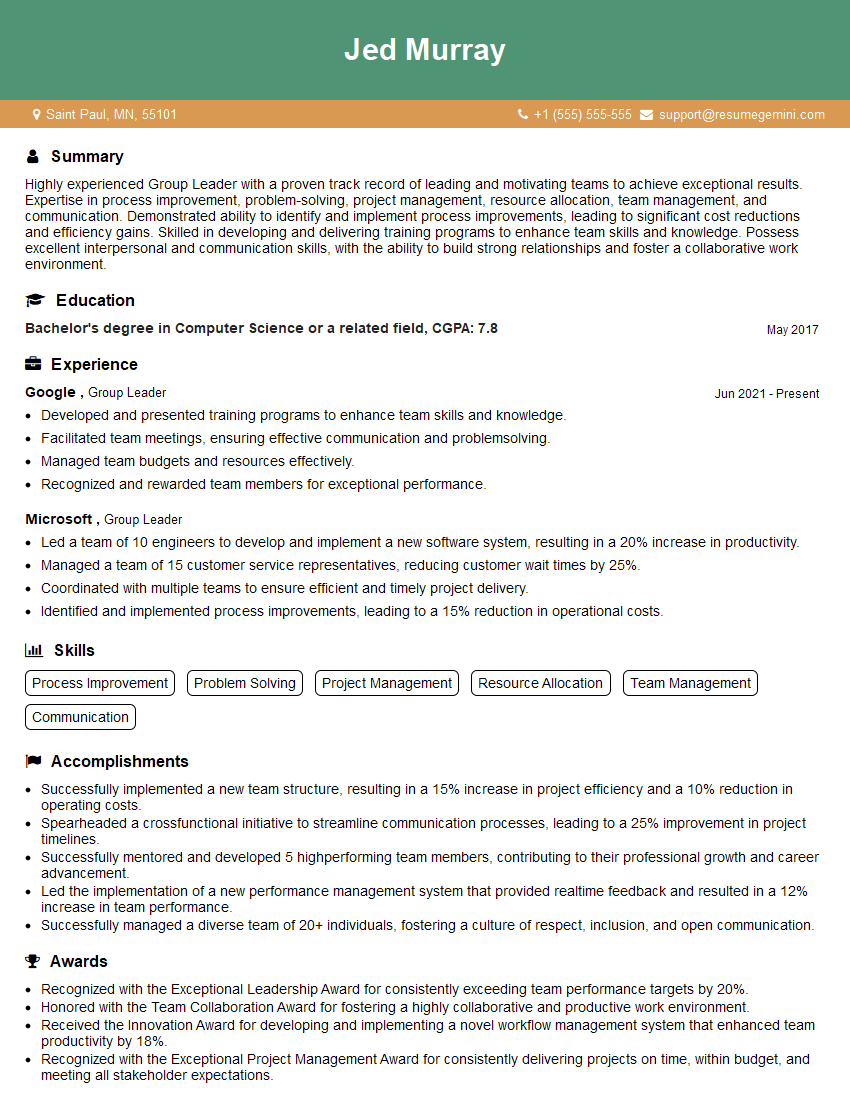
Group Leader Resume Sample
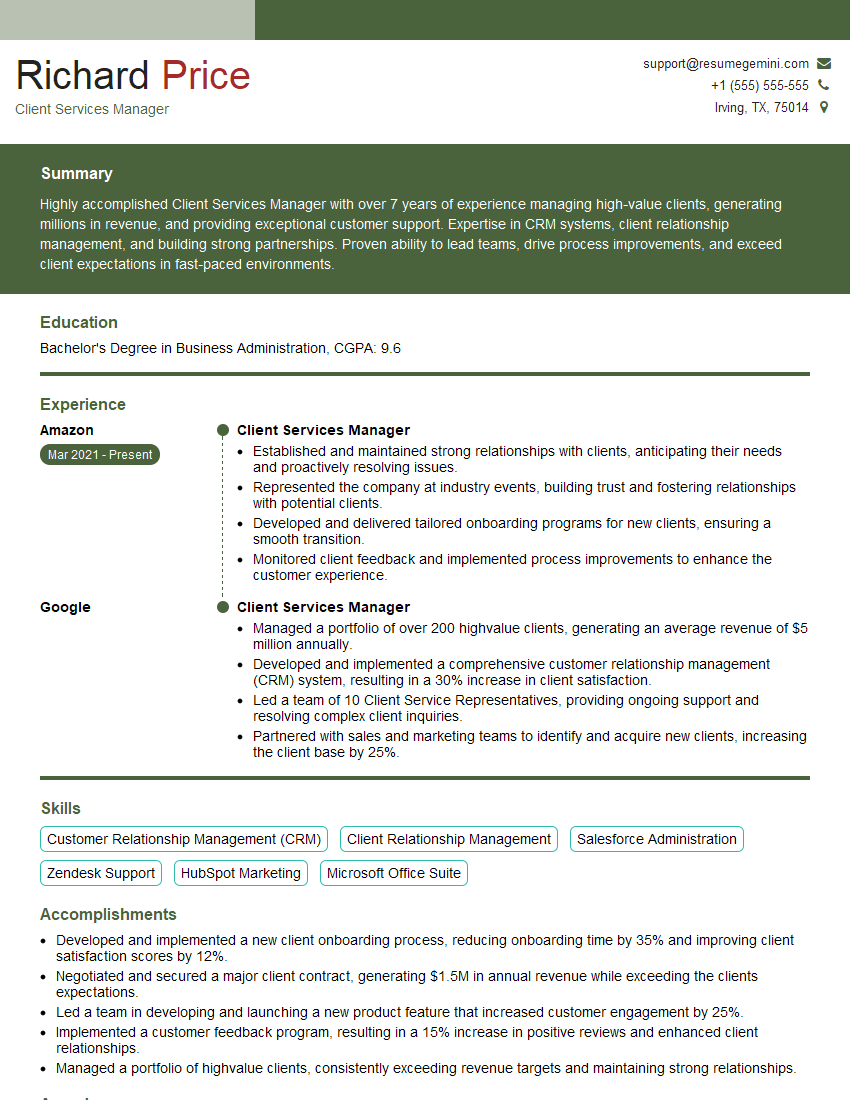
Client Services Manager Resume Sample
- Program Manager
- Office Manager
- Operations Manager
- Production Manager
- Account Manager
- Marketing Manager
- Product Manager
- Division Manager
- Business Unit Manager
- General Manager
- Human Resources Manager
- Project Manager
- Team Coordinator
- Department Head
- Engineering Manager
- Project Coordinator
- Unit Manager
- Group Leader
- Client Services Manager
Explore more articles
Users Rating of Our Blogs
Share Your Experience
We value your feedback! Please rate our content and share your thoughts (optional).
What Readers Say About Our Blog
Very informative content, great job.
good