Interviews are opportunities to demonstrate your expertise, and this guide is here to help you shine. Explore the essential Technical Disclosure Writing interview questions that employers frequently ask, paired with strategies for crafting responses that set you apart from the competition.
Questions Asked in Technical Disclosure Writing Interview
Q 1. Explain the purpose of a technical disclosure document.
A technical disclosure document serves as a crucial record of an invention or discovery. Its primary purpose is to establish a verifiable date of conception, detailing the invention’s key features and functionalities. This is vital for protecting intellectual property (IP) rights, particularly in the context of patent applications. Think of it as a detailed diary entry for your invention, providing evidence of your work should disputes arise.
It’s a safeguard against future patent challenges, demonstrating that you were the first to conceive of the invention, even if you haven’t yet filed a patent application. This is especially important in situations where you might be collaborating with others or needing to prove priority in a contested patent situation.
Q 2. What are the key elements of a comprehensive technical disclosure?
A comprehensive technical disclosure should include several key elements:
- Title and Date: Clearly identifies the invention and the date of disclosure.
- Inventor(s): Names and affiliations of all individuals who contributed to the invention.
- Background: Contextualizes the invention, explaining the problem it solves and prior art.
- Summary of the Invention: A concise overview of the invention’s core concept and functionality.
- Detailed Description: A step-by-step explanation of how the invention works, including schematics, diagrams, or algorithms where applicable. This should be comprehensive enough for someone skilled in the art to understand and reproduce the invention.
- Claims (optional): While not a requirement, preliminary claims can outline the novel aspects of the invention that might be patentable. These are less formal than patent claims.
- Drawings and Figures: Visual representations of the invention, enhancing understanding and clarity.
- Examples and Test Data: Demonstrates the invention’s functionality and effectiveness.
- Witnesses (optional): Signatures from independent witnesses who can attest to the date and contents of the disclosure.
The level of detail required will depend on the complexity of the invention and the intended use of the disclosure.
Q 3. Describe the process for identifying and documenting patentable inventions.
Identifying and documenting patentable inventions is a systematic process that begins with regular brainstorming and idea generation sessions within your team. The key is to focus on identifying novel and non-obvious innovations.
- Identify Potential Inventions: Regularly review your work, looking for innovations that could be protected by patents. This often involves keeping a detailed lab notebook.
- Assess Patentability: Determine if the invention is novel, useful, and non-obvious – the three fundamental requirements for patentability. This might involve a preliminary patentability search.
- Document the Invention: Create a thorough technical disclosure, following the elements outlined above. The more complete and detailed the disclosure, the stronger the evidence of conception and reduction to practice.
- Seek Legal Advice: Consult with an experienced patent attorney to review the disclosure and determine the best strategy for protecting the intellectual property. This is crucial to ensure compliance with patent laws and secure strong patent claims.
- File a Patent Application (if applicable): Once the invention has been adequately documented and evaluated, a formal patent application can be filed with the appropriate patent office.
Example: Imagine a team develops a new algorithm for image recognition. They document the algorithm’s functionality, test results, and comparison with existing algorithms in a technical disclosure. This disclosure would then support a future patent application, proving they were the first to develop and document the innovation.
Q 4. How do you ensure the confidentiality of disclosed information?
Confidentiality is paramount when handling sensitive technical information. Here’s how to protect disclosed information:
- Limited Access: Restrict access to the disclosure document to only authorized personnel on a need-to-know basis. Use password protection and access controls.
- Non-Disclosure Agreements (NDAs): Require all individuals involved in the development or review of the invention to sign NDAs that protect the confidentiality of the information.
- Secure Storage: Store the disclosure in a secure location, whether physical or digital, with appropriate security measures in place. Use encrypted storage for digital documents.
- Controlled Distribution: When sharing the disclosure, use secure methods such as encrypted email or secure file-sharing platforms. Avoid using unsecure channels like regular email.
- Regular Audits: Conduct periodic audits to ensure compliance with confidentiality policies and procedures.
Remember, breaches of confidentiality can have severe legal and financial consequences.
Q 5. What are the differences between a patent application and a technical disclosure?
While both relate to protecting inventions, a technical disclosure and a patent application serve distinct purposes:
- Technical Disclosure: An internal document that establishes a verifiable date of conception and details the invention. It’s a record-keeping tool, primarily for internal use and as evidence of priority.
- Patent Application: A formal legal document filed with a patent office to seek legal protection for an invention. It’s a public document, and its purpose is to secure exclusive rights to the invention.
Think of it this way: the technical disclosure is like a detailed draft, while the patent application is the polished, finalized document submitted for official review. A strong technical disclosure significantly strengthens the support for a subsequent patent application.
Q 6. How do you handle conflicting information within a technical disclosure?
Conflicting information within a technical disclosure can significantly weaken its value as evidence. Handling it requires careful attention to detail and transparency.
- Identify and Document Conflicts: Clearly identify any inconsistencies, discrepancies, or conflicting information. Note where these conflicts appear.
- Investigate the Source: Determine the reason for the conflict. Were there errors in measurement, recording, or interpretation? Was there a change in design or approach?
- Resolve the Conflicts: If possible, reconcile the conflicts through further experimentation, review of data, or clarification. Explain the process used to resolve the inconsistencies in the document.
- Document Resolutions: Clearly explain the resolution process in the disclosure. Include any supporting data or evidence.
- Retain Original Data: Don’t erase or alter original data. It’s essential to maintain a complete record, even if some data has been superseded or corrected.
Maintaining detailed records of the investigation and resolution is essential. This process of transparency helps ensure that even with conflicts, the disclosure remains credible.
Q 7. Explain the importance of accurate and detailed documentation in technical disclosures.
Accurate and detailed documentation is crucial for several reasons:
- Establishes Priority: A detailed disclosure provides strong evidence that you were the first to conceive of the invention, crucial in patent disputes.
- Supports Patent Application: A comprehensive disclosure makes filing a robust patent application easier and more effective. It serves as a foundation for claims.
- Minimizes Disputes: Clear documentation leaves less room for misinterpretations or disagreements about the invention’s features and functionality.
- Facilitates Collaboration: A well-documented disclosure allows others to easily understand and reproduce the invention, aiding collaboration and technology transfer.
- Improves Commercialization: A thorough disclosure helps in licensing or selling the invention, as potential buyers or licensees can understand its capabilities and limitations.
Consider this: a poorly documented invention is like a poorly written recipe – you might have the ingredients, but without precise instructions, others may struggle to create the same outcome. A robust technical disclosure provides a clear and repeatable recipe for your invention.
Q 8. How do you ensure the clarity and completeness of a technical disclosure?
Ensuring clarity and completeness in a technical disclosure is paramount for protecting intellectual property and facilitating smooth technology transfer. It’s like writing a detailed recipe – leaving out crucial ingredients (information) or using vague instructions (descriptions) will lead to a failed outcome (protection or transfer).
- Structured Approach: I use a standardized template that guides me through all necessary sections: Title, Invention Summary, Background, Detailed Description, Drawings/Figures, Claims (what’s novel), Potential Applications, and Commercialization Potential.
- Precise Language: I avoid jargon wherever possible, defining any technical terms used. Instead of saying ‘utilize a heuristic algorithm,’ I would say ‘use a problem-solving method that learns from past data.’
- Peer Review: Before finalizing the disclosure, I always have it reviewed by a colleague with expertise in the relevant field for both technical accuracy and clarity. This second set of eyes helps identify ambiguities or omissions.
- Inventor Collaboration: Regular communication with inventors is key. I conduct interviews to gather all necessary information, and then provide a draft for their review and input to guarantee accuracy and completeness from the source.
For instance, if the invention involved a novel material, the disclosure needs complete compositional details, characterization data (e.g., spectroscopy results), synthesis methods, and a clear statement of its novel properties compared to prior art.
Q 9. How do you determine the appropriate level of detail for a technical disclosure?
Determining the appropriate level of detail is a balancing act. Too little detail makes the disclosure insufficient for patent protection or commercialization, while too much can make it cumbersome and difficult to understand. It’s like writing a novel versus a short story – you need enough information to engage your reader (potential licensee or patent examiner), but not so much that it’s overwhelming.
- Target Audience: The level of detail depends on the intended audience. A disclosure for internal review might be more detailed than one submitted to a potential licensee. The level of detail must be adequate for the potential recipient’s technical expertise.
- Competitive Landscape: The disclosure needs to be detailed enough to clearly delineate the invention’s novelty over existing technologies. If the technology is very close to the cutting edge, a higher level of technical detail is required.
- Strategic Goals: The intended use (patent filing, licensing, etc.) dictates the needed detail. A patent application, for example, requires a higher degree of detail than a disclosure for a potential investor.
For example, a disclosure for a new software algorithm would require a detailed description of the algorithm’s steps, pseudo-code, input/output specifications, and the overall architecture. However, the source code itself wouldn’t typically be included in the initial disclosure, unless absolutely necessary for understanding.
Q 10. How do you manage multiple technical disclosures simultaneously?
Managing multiple disclosures simultaneously demands organization and prioritization. It’s like juggling several projects, each with its own deadlines and requirements. Effective project management techniques are crucial.
- Project Management Software: I use project management tools like Asana or Trello to track deadlines, assign tasks, and manage communications across multiple disclosures. Each disclosure is treated as a separate project with clearly defined milestones.
- Prioritization Matrix: I create a matrix that prioritizes disclosures based on factors like urgency (e.g., upcoming deadlines), potential impact (e.g., commercial value or patent landscape), and inventor availability.
- Dedicated Time Blocks: I allocate specific blocks of time each day or week for working on each disclosure. This minimizes context switching and ensures focused attention on each individual project.
- Regular Check-ins: I schedule regular check-ins with inventors to gather updates and address any questions.
For instance, if I’m managing disclosures for three different projects—a novel material, a software algorithm, and a medical device—I might prioritize the medical device disclosure due to an upcoming regulatory deadline, while allocating time for the material disclosure based on its potential commercial value.
Q 11. Describe your experience with different disclosure management systems.
My experience spans several disclosure management systems, each with its own strengths and weaknesses. Choosing the right system is crucial, similar to choosing the right tool for a job.
- Proprietary Systems: Many large companies have their own internal systems that are typically highly customized to their workflows. These offer strong integration with other internal systems but lack flexibility for external collaborations.
- Commercial Platforms: I have experience with platforms like [mention a commercial platform, e.g., Intellectual Property Management systems] that offer centralized management, collaboration features, and often integration with patent attorney platforms. They offer greater flexibility but might require adapting to their specific workflows.
- Spreadsheet-based Systems: In smaller settings, I’ve used spreadsheets to track disclosures; this is simple but lacks the robust capabilities of dedicated systems, especially for larger numbers of disclosures. It can become unwieldy and error-prone as the number of disclosures increases.
My preference depends on the organization’s size and specific needs. For a large corporation, a sophisticated, integrated system is critical. For a smaller company, a commercial platform or even a well-designed spreadsheet system can be sufficient, focusing on clarity and ease of access.
Q 12. How do you prioritize disclosure submissions based on urgency and potential impact?
Prioritizing disclosure submissions requires a structured approach, balancing urgency and potential impact. Think of it like a triage system in a hospital – the most critical cases are addressed first.
- Urgency Matrix: I employ a matrix ranking disclosures based on impending deadlines (e.g., patent filing deadlines, conference presentations). High urgency items are prioritized regardless of potential impact.
- Impact Assessment: I evaluate potential impact, considering factors like commercial potential, competitive advantage, and overall strategic alignment with the organization’s goals. High-impact disclosures might receive higher priority even if they have less urgent deadlines.
- Risk Assessment: Some disclosures carry higher risk of losing intellectual property rights if not filed promptly (e.g., public disclosure). These receive high priority.
- Resource Allocation: The availability of inventor time and other resources influences prioritization. I need to ensure I have the necessary resources to effectively handle the highest-priority disclosures.
For example, if a disclosure has a patent filing deadline in two weeks and is for a technology with significant commercial potential, it will naturally get the highest priority over a disclosure with a less critical deadline and lower commercial value, even if that latter disclosure is more technologically innovative.
Q 13. How do you work with inventors to gather information for a technical disclosure?
Working effectively with inventors is key to obtaining complete and accurate information for a technical disclosure. It’s a collaborative process; I am a facilitator, not a dictator.
- Initial Interviews: I start with a structured interview to gather initial information about the invention. This helps me understand the technical details, potential applications, and any prior art that the inventor is aware of.
- Follow-up Questions: Based on the initial interview, I formulate follow-up questions to clarify ambiguities and obtain further details. I avoid overwhelming the inventor with too many questions at once.
- Documentation Review: I might review any existing documentation (e.g., lab notebooks, design documents) relevant to the invention.
- Iterative Process: The process is iterative, with multiple rounds of communication and information gathering to ensure the disclosure is complete and accurate.
- Draft Review and Feedback: I always share drafts with inventors for review and feedback, allowing for corrections and clarifications. This ensures accuracy and ownership.
Building trust and rapport with the inventors is essential. I need to clearly explain the importance of accurate and complete information and make the process as smooth and efficient as possible for them, acknowledging that their time is valuable.
Q 14. What are the ethical considerations involved in technical disclosure writing?
Ethical considerations are paramount in technical disclosure writing. Maintaining integrity and upholding professional standards are non-negotiable.
- Accuracy and Completeness: The disclosure must be accurate and complete, representing the invention fairly and without misleading information. Omitting critical information or exaggerating the invention’s capabilities is unethical.
- Confidentiality: Maintaining confidentiality is crucial. I ensure that the disclosure’s information is handled securely and only accessed by authorized personnel. Non-disclosure agreements (NDAs) are essential when necessary.
- Inventor Recognition: Proper attribution to the inventors is essential. Their contributions must be accurately acknowledged, and their rights should be protected.
- Avoiding Plagiarism: The disclosure must be original, avoiding plagiarism or misrepresentation of others’ work. Proper citation of prior art is crucial.
- Conflicts of Interest: I must disclose any potential conflicts of interest that might influence my work on the disclosure.
For example, if I discovered during the process that the invention might infringe on an existing patent, I am ethically obligated to report this to the relevant parties and consider this potential infringement in my disclosure.
Q 15. How do you handle situations where inventors are reluctant to disclose information?
Handling reluctant inventors requires a delicate balance of empathy and firm guidance. The key is building trust and demonstrating the value of disclosure. I start by emphasizing the why – highlighting the benefits of protecting intellectual property, such as securing funding, preventing infringement, and potentially licensing the technology. I often use analogies to explain complex concepts, for instance, comparing a patent to a legal shield protecting their invention.
If resistance persists, I address their specific concerns directly. Are they worried about their contributions not being recognized? Do they fear potential repercussions if the invention isn’t successful? I work to alleviate these fears by clearly outlining the disclosure process, emphasizing confidentiality, and assuring them of proper attribution and credit. In some cases, I involve their manager or a senior member of the IP team to reinforce the importance of disclosure and provide additional reassurance.
Finally, I focus on making the disclosure process as streamlined and straightforward as possible, using simple language and clear instructions, and offering ongoing support throughout the process. Open communication and proactive engagement are paramount in overcoming reluctance and fostering a collaborative environment.
Career Expert Tips:
- Ace those interviews! Prepare effectively by reviewing the Top 50 Most Common Interview Questions on ResumeGemini.
- Navigate your job search with confidence! Explore a wide range of Career Tips on ResumeGemini. Learn about common challenges and recommendations to overcome them.
- Craft the perfect resume! Master the Art of Resume Writing with ResumeGemini’s guide. Showcase your unique qualifications and achievements effectively.
- Don’t miss out on holiday savings! Build your dream resume with ResumeGemini’s ATS optimized templates.
Q 16. How do you ensure compliance with company policies and regulations regarding disclosures?
Ensuring compliance with company policies and regulations concerning disclosures is critical. I begin by thoroughly familiarizing myself with all relevant internal guidelines and external regulations, such as those pertaining to patent law, trade secrets, and export controls. This involves regular review of updated policies and training materials.
I establish a clear and documented process for handling disclosures, encompassing everything from initial submission to final review and approval. This process usually involves standardized forms, clear instructions, and checklists to guide inventors through each step. We use a secure system for storing sensitive information, adhering to strict access control protocols. Regular audits and compliance checks ensure adherence to both internal and external regulations.
For example, if a disclosure involves sensitive technology with export control implications, I ensure compliance with the relevant regulations (ITAR, EAR) by clearly identifying the technology’s classification and following the required reporting procedures. Non-compliance can lead to severe penalties, therefore meticulous attention to detail and adherence to procedures is non-negotiable.
Q 17. Describe your experience with intellectual property rights (IPR) management.
My experience with intellectual property rights (IPR) management spans several years, encompassing all stages of the IP lifecycle. I’ve been directly involved in preparing and filing patent applications, conducting prior art searches, and working closely with patent attorneys to secure and maintain IP protection. I’m proficient in managing intellectual property portfolios, tracking patent applications, and coordinating licensing agreements.
Beyond patents, my experience includes working with trademarks and copyrights. I’ve assisted in developing and implementing strategies to protect our company’s branding and creative assets. I understand the nuances of different IP rights and their applicability to various technologies and creative works. For example, I helped secure a patent for a novel manufacturing process while simultaneously registering a trademark for the resulting product line.
Data management plays a crucial role in effective IPR management, and I am experienced in using various IP management software solutions to track and manage our company’s IP assets. This allows for seamless tracking and reporting, ensuring that we are proactive in protecting our valuable intellectual property.
Q 18. How do you ensure that technical disclosures are consistent with company IP strategy?
Aligning technical disclosures with the company’s IP strategy is essential to maximizing the value of our innovations. Before starting the disclosure process, I thoroughly review the company’s IP strategy document, ensuring a clear understanding of our priorities and objectives. This strategy typically outlines which technologies are most valuable for commercialization or licensing. I then tailor the disclosure process to reflect these priorities.
For example, if the company’s strategy prioritizes certain market segments or specific technologies, I will emphasize those aspects during the disclosure process. If we’re focusing on protecting core technologies, the disclosure process will focus on capturing those innovations for patent protection. If the invention is better suited to trade secret protection, we’ll emphasize confidential handling.
This strategic alignment ensures that we are investing our time and resources in protecting the most valuable aspects of our innovations and maximizing their potential return on investment. Regular review of the company’s IP strategy and feedback from leadership are crucial to maintain alignment.
Q 19. How familiar are you with different IP protection mechanisms (patents, trademarks, copyrights)?
I am very familiar with different IP protection mechanisms. Patents grant exclusive rights to inventors for their inventions, typically for a limited period. There are different types of patents (utility, design, plant) depending on the nature of the invention. Trademarks protect brand names, logos, and other distinctive brand identifiers, preventing others from using similar marks that could cause confusion in the marketplace.
Copyrights protect original creative works, including literary, musical, artistic, and other intellectual works. They automatically protect the expression of an idea, not the idea itself. Understanding the nuances of each mechanism is vital. For instance, a novel algorithm might be patentable, while the user interface associated with it might be protected by both a patent and a copyright, and the brand name might be a trademark. The choice of protection often depends on the nature of the innovation and the company’s strategic goals.
My experience allows me to advise inventors on the most appropriate mechanism to protect their specific innovations, carefully considering factors like novelty, inventiveness, and commercial viability.
Q 20. Explain the process for reviewing and updating existing technical disclosures.
Regular review and updating of existing technical disclosures are crucial to maintain their accuracy and relevance. The process begins with a periodic review of all disclosures, typically annually, or whenever significant changes or improvements are made to the underlying technology. This includes checking for any errors or omissions in the initial disclosure and considering whether further protection might be necessary. For example, if a patent application has matured and been granted, it needs to be reflected in the disclosure.
If changes are necessary, I work with the inventors to update the disclosure document accordingly, ensuring that it reflects the current state of the technology. This updated disclosure might lead to additional patent applications, adjustments to the IP strategy, or simply a refined understanding of the invention’s capabilities. The updated disclosure is then reviewed and approved following the standard internal procedures before being archived or stored securely within the company’s IP management system.
This ongoing review process helps ensure that our IP records are always up-to-date and compliant, reducing the risks associated with outdated information and protecting the company’s investment in innovation.
Q 21. How do you track the status of submitted disclosures and follow up on any outstanding issues?
Tracking the status of submitted disclosures and following up on outstanding issues is a critical part of my role. I utilize a dedicated IP management system to track all disclosures from submission to final approval, including the various stages of review, any requests for additional information, and ultimate disposition (e.g., patent application filed, trade secret designated). This system provides real-time updates on the status of each disclosure.
I implement a system of regular reminders and follow-up emails to ensure timely completion of each step in the process. For example, if an inventor hasn’t responded to a request for clarification, a reminder email is sent after a predetermined timeframe. If the issue remains unresolved, a meeting is scheduled to discuss the matter and resolve the outstanding issue. Reports are generated regularly to summarize the status of all disclosures, highlighting those requiring attention.
This proactive approach minimizes delays and ensures that disclosures are processed efficiently, optimizing our ability to protect valuable intellectual property while simultaneously maintaining strong lines of communication with inventors.
Q 22. What are the common pitfalls to avoid when writing technical disclosures?
Common pitfalls in technical disclosure writing often stem from a lack of clarity, insufficient detail, or overlooking legal and business implications. One major pitfall is ambiguity. Using vague language can lead to misinterpretations and disputes. For instance, instead of saying “the system is fast,” specify the processing speed or throughput. Another common mistake is incomplete information. Failing to detail crucial aspects, such as limitations, assumptions, or potential risks, can severely undermine the disclosure’s value. Imagine a disclosure for a new drug that omits crucial side effects – the consequences could be catastrophic. Finally, neglecting the target audience is a significant error. A disclosure written for engineers won’t resonate with legal counsel, who need specific language to assess potential liabilities.
- Ambiguity: Avoid vague terms like “efficient,” “effective,” or “significant.” Use quantifiable data instead.
- Incomplete Information: Thoroughly document all relevant aspects, including limitations, assumptions, and potential risks.
- Ignoring the Audience: Tailor your language and level of detail to the specific needs of each recipient (technical, legal, business).
Q 23. How do you adapt your writing style to different audiences (technical, legal, business)?
Adapting writing style to different audiences is crucial for effective communication. Technical audiences appreciate precision and detail. Use specific terminology, diagrams, and flowcharts to explain complex concepts. Legal audiences require precise language that minimizes ambiguity and clearly defines responsibilities and liabilities. Business audiences, on the other hand, need a concise summary highlighting the key benefits, risks, and financial implications. Think of it like this: you wouldn’t explain quantum physics to a five-year-old in the same way you’d explain it to a physics professor.
- Technical Audience: Detailed explanations, technical jargon, diagrams, and data analysis.
- Legal Audience: Precise and unambiguous language, clear definition of terms, attention to potential liabilities.
- Business Audience: Concise summary, focus on key benefits, risks, and financial implications, avoiding technical jargon.
For example, when describing a new algorithm, a technical disclosure might delve into the mathematical underpinnings, while a business disclosure would focus on its efficiency gains and potential for market disruption.
Q 24. How do you utilize technology and tools to improve the efficiency of the disclosure process?
Technology significantly enhances the efficiency of the disclosure process. Document management systems allow for centralized storage and version control, ensuring everyone accesses the most up-to-date information. Collaboration tools, like shared online documents, facilitate feedback and revisions among team members. Specialized software for creating technical diagrams and schematics streamlines the visual presentation of complex information. Finally, AI-powered tools can assist in tasks such as grammar and style checking, ensuring consistent quality and reducing editing time.
- Document Management Systems (e.g., SharePoint, Google Drive): Centralized storage and version control.
- Collaboration Tools (e.g., Google Docs, Microsoft Teams): Facilitates feedback and revisions.
- Diagram/Schematic Software (e.g., Visio, Lucidchart): Creates professional-looking visuals.
- AI-powered Tools (e.g., Grammarly): Improves writing quality and reduces editing time.
Q 25. Describe a challenging technical disclosure project you worked on and how you overcame the challenges.
One challenging project involved disclosing a novel semiconductor manufacturing process. The challenge lay in balancing the need for detailed technical information with the need to protect confidential intellectual property. We addressed this by using a multi-layered approach. First, we created a comprehensive technical document outlining the process in detail, but using general terminology wherever possible. Second, we developed a separate document containing the proprietary details, marked as confidential and shared only with authorized personnel. Third, we created a presentation summarizing the key features and benefits for business stakeholders. This multi-layered approach ensured we communicated the key information effectively while safeguarding sensitive intellectual property.
Q 26. How do you ensure the accuracy and completeness of technical data within the disclosure?
Ensuring accuracy and completeness requires a meticulous approach. This includes rigorous testing and verification of the technical data. We use independent verification whenever possible, comparing results from different sources to identify inconsistencies. Data traceability is essential, allowing us to track the origin and validity of all information. A detailed review process, involving multiple stakeholders with varied expertise, is critical to identify any errors or omissions. Finally, using established standards and guidelines, like those from IEEE or ISO, provides a framework for ensuring the quality and integrity of the technical data.
Q 27. How do you balance the need for brevity with the need for sufficient detail in a technical disclosure?
Balancing brevity with sufficient detail is a constant challenge. The key is to prioritize the most essential information, focusing on what is crucial for the audience to understand the core concepts. Instead of lengthy descriptions, use bullet points, tables, and figures to present key information efficiently. If more details are needed, provide references to supporting documents or appendices. Think of it like an executive summary: you need to convey the key message concisely but provide enough detail to prevent misunderstanding.
Q 28. How would you handle a situation where a disclosure reveals a potential conflict of interest?
Handling a potential conflict of interest requires immediate transparency and ethical action. The first step is to identify and document the conflict. This involves clearly outlining the nature of the conflict, the parties involved, and the potential impact. Next, the disclosure needs to be reviewed by an ethics committee or legal counsel to determine the appropriate course of action. This might involve revising the disclosure to mitigate the conflict, seeking independent expert review, or disclosing the conflict upfront to all relevant stakeholders. Ignoring a conflict of interest can have severe consequences, leading to legal issues and reputational damage.
Key Topics to Learn for Technical Disclosure Writing Interview
- Understanding Confidentiality and Intellectual Property: Grasping the legal and ethical implications of disclosing technical information, including patent law basics and trade secret protection.
- Structuring Technical Documents: Mastering clear and concise writing styles tailored for technical audiences, including the use of headings, subheadings, and visuals to enhance readability and comprehension. Practical application: Creating a disclosure document for a novel algorithm.
- Effective Communication of Complex Technical Information: Developing the ability to translate complex technical concepts into easily understandable language for both technical and non-technical stakeholders. Problem-solving approach: Practicing simplifying intricate processes into digestible steps.
- Data Presentation and Visualization: Choosing appropriate methods for presenting technical data, including tables, charts, and graphs, to effectively convey key findings and support claims. Practical application: Creating compelling visuals for a patent application.
- Audience Analysis and Adaptation: Tailoring your disclosure writing to the specific needs and expertise level of your intended audience (e.g., investors, legal counsel, engineers). Problem-solving approach: Understanding and addressing potential audience questions proactively.
- Review and Revision Processes: Understanding the importance of thorough review and revision to ensure accuracy, clarity, and completeness of technical disclosures. Practical application: Implementing a robust peer-review process for a technical report.
Next Steps
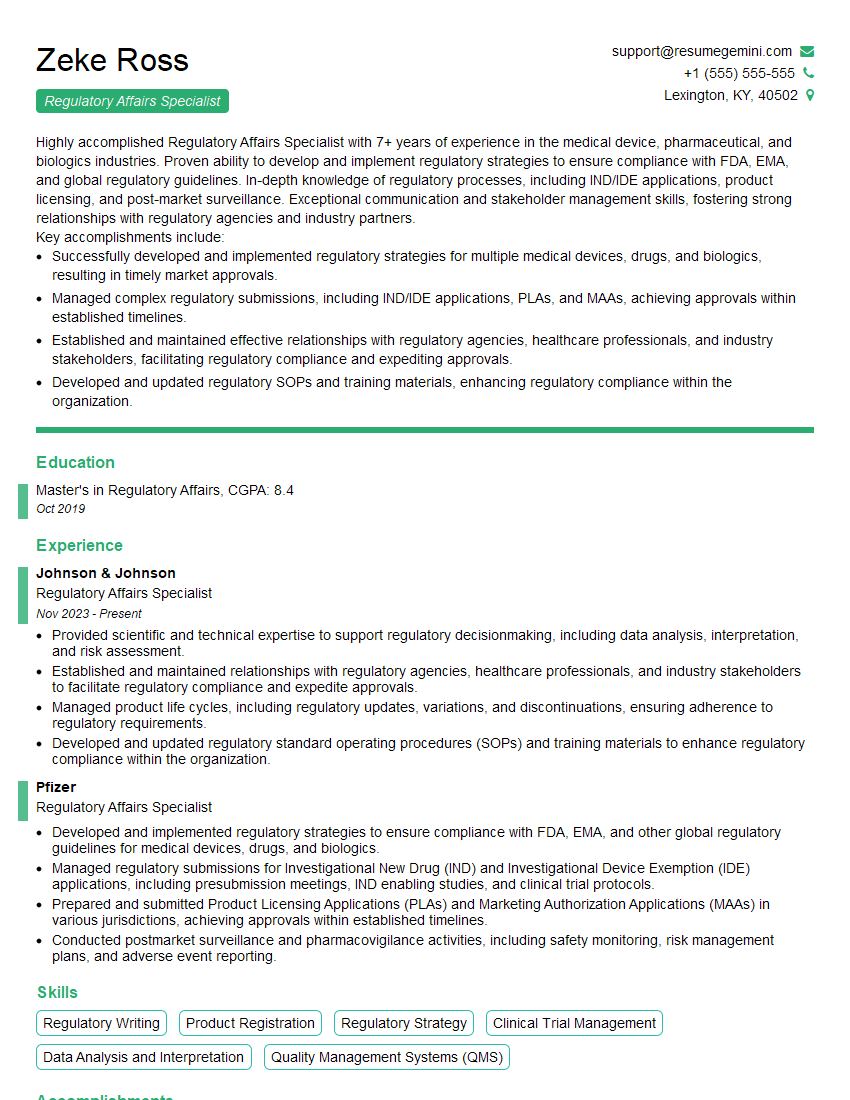
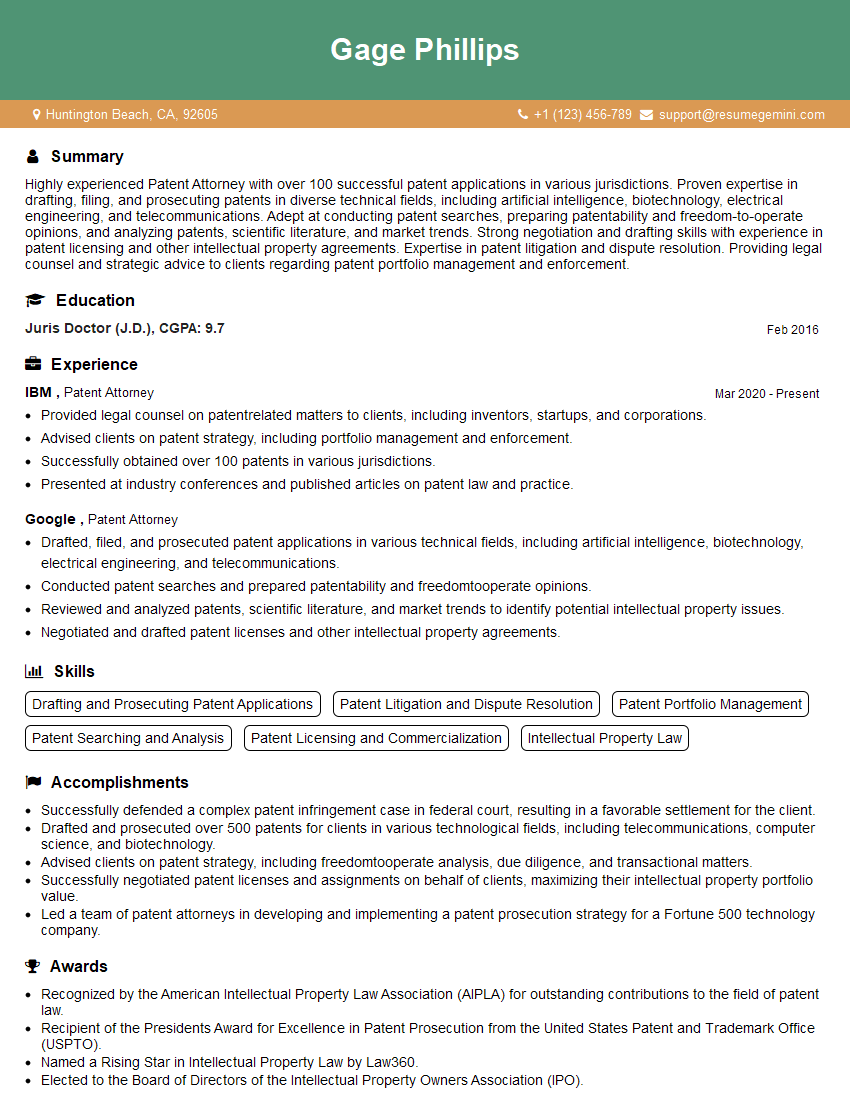
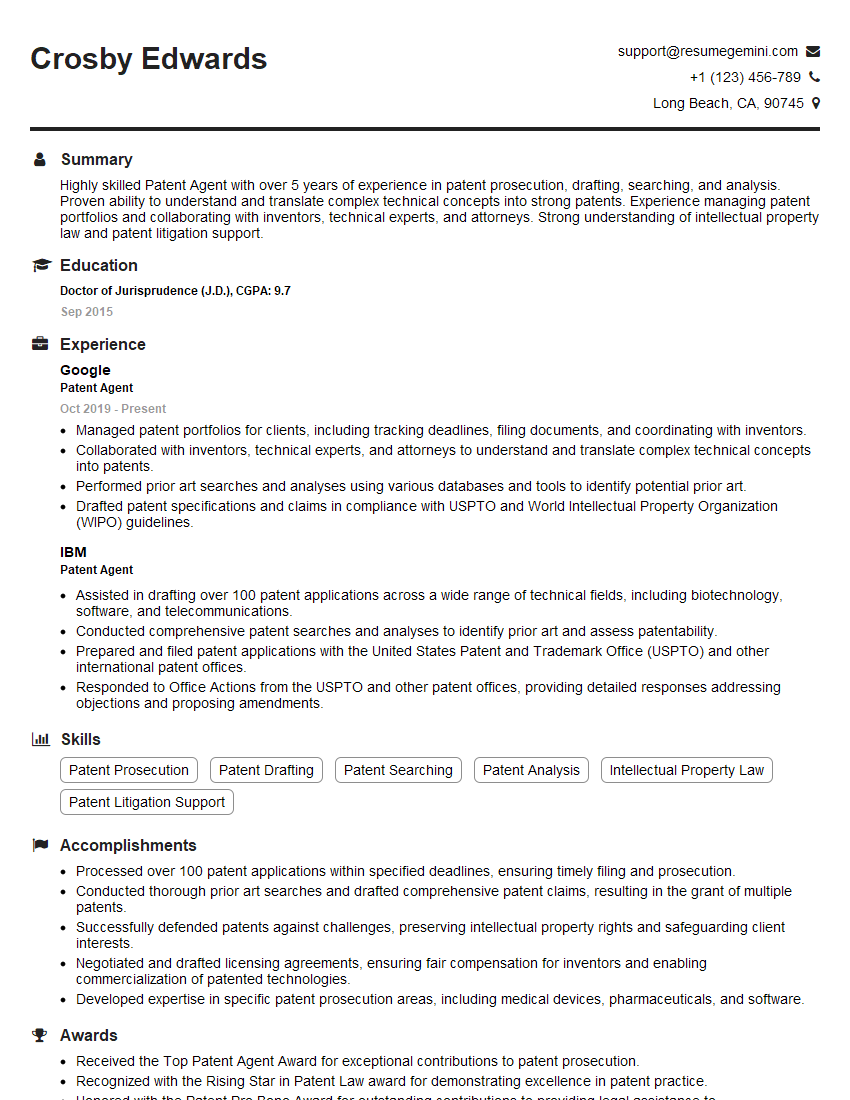
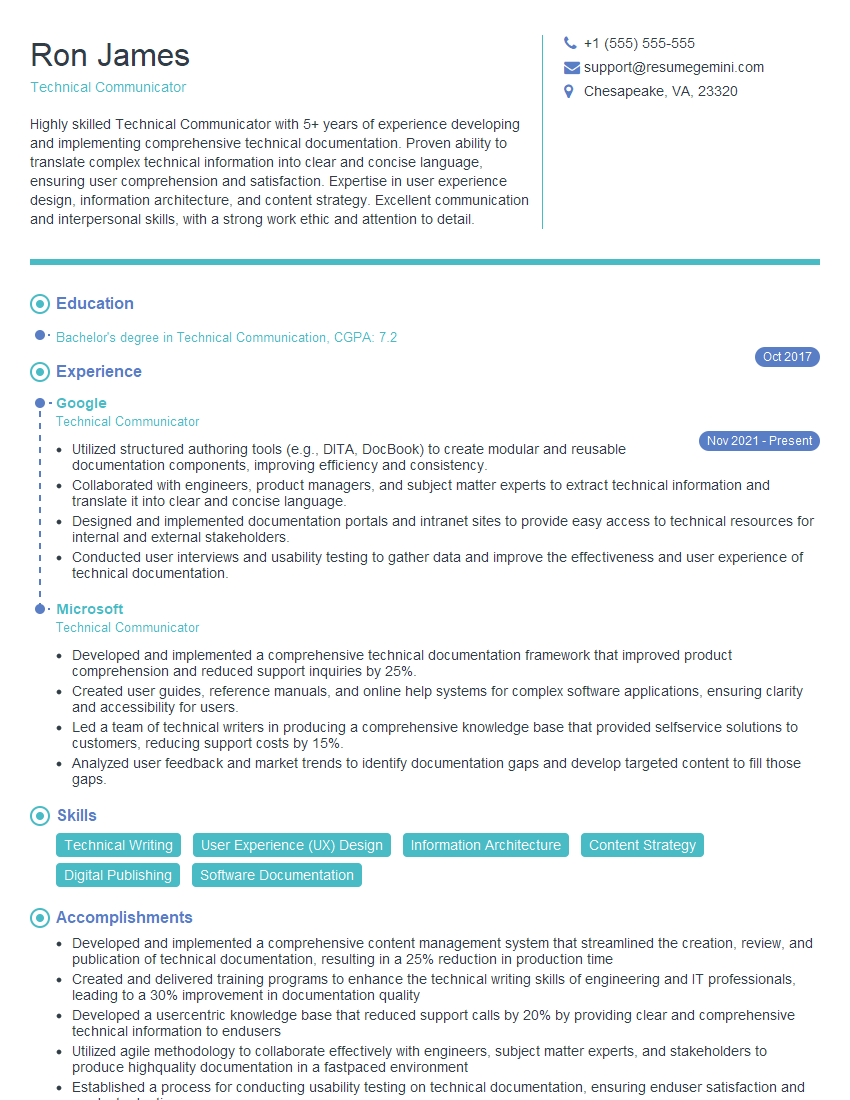
Mastering technical disclosure writing is crucial for career advancement in many technical fields, opening doors to leadership roles and high-impact projects. A strong understanding of this skillset demonstrates your professionalism and attention to detail – qualities highly valued by employers. To maximize your job prospects, crafting an ATS-friendly resume is paramount. ResumeGemini can significantly enhance your resume-building experience, helping you create a compelling document that showcases your skills and achievements effectively. Examples of resumes tailored to Technical Disclosure Writing are available to help you get started.
Explore more articles
Users Rating of Our Blogs
Share Your Experience
We value your feedback! Please rate our content and share your thoughts (optional).
What Readers Say About Our Blog
Very informative content, great job.
good