Preparation is the key to success in any interview. In this post, we’ll explore crucial Technical Drawing and Pattern Making interview questions and equip you with strategies to craft impactful answers. Whether you’re a beginner or a pro, these tips will elevate your preparation.
Questions Asked in Technical Drawing and Pattern Making Interview
Q 1. Explain the difference between a sloper and a basic block.
Both slopers and basic blocks are foundational pattern pieces used in garment construction, but they differ significantly in their purpose and level of detail. Think of a sloper as a truly fundamental, personalized ‘blank canvas,’ while a basic block is a more developed foundation with some design elements already incorporated.
Sloper: A sloper is a two-dimensional representation of the body’s basic shape, typically created using draping techniques or very close-fitting measurements. It’s incredibly precise and unique to the individual it’s made for. It’s devoid of design details like seam allowances, darts, or necklines; it’s a pure representation of the body’s contours. It’s the starting point for designing numerous garments; you can alter a sloper to produce many designs.
Basic Block: A basic block is a more versatile pattern. While it’s still based on body measurements, it’s a standardized pattern that is not specifically tailored to one individual. It incorporates standard design elements, such as seam allowances, a basic neckline, and dart placement. Think of it as a generic template, that you then adapt to style elements. Many different styles of clothing can be made starting from one basic block.
In essence: A sloper is highly personalized and detailed, while a basic block is a more general, standardized template with some design features already added.
Q 2. Describe your experience with various pattern making software (e.g., Gerber, Optitex, Lectra).
I have extensive experience using various pattern making software, including Gerber Accumark, Optitex, and Lectra Modaris. My expertise ranges from creating initial designs and grading patterns to generating marker layouts for optimal fabric utilization. I’m proficient in using the advanced features of each program.
Gerber Accumark: I’ve utilized Accumark’s powerful features for grading and marker making in large-scale production environments. Its automation capabilities for creating pattern pieces and markers improve efficiency dramatically.
Optitex: I appreciate Optitex’s 3D capabilities, which are crucial for visualizing how a garment will drape and fit before production. This helps prevent costly errors in the later stages of production.
Lectra Modaris: My experience with Lectra Modaris includes advanced techniques like pattern automation and integration with CAD systems for seamless workflow. Its high-end features are ideal for high-volume production and complex designs.
I’m comfortable adapting my skills to any software system required by a project, as the underlying principles of pattern making remain the same.
Q 3. How do you handle inconsistencies in fabric drape when creating patterns?
Inconsistencies in fabric drape are a major challenge in pattern making. The key is to understand the properties of the fabric and to account for them during pattern design and construction. Here’s my approach:
Fabric Testing: Before starting, I conduct thorough fabric testing, assessing factors like drape, stretch, and shrinkage. This testing informs my pattern adjustments.
Muslin Testing: I always create muslin (cheap prototype fabric) mock-ups to test the drape and fit of the pattern. This allows me to identify and correct any issues early on. For particularly challenging fabrics, multiple muslins might be needed to refine the design.
Pattern Adjustments: Based on the muslin fitting, I make necessary pattern adjustments, such as adding or reducing ease (extra fabric for comfort and movement), altering seam allowances, or changing the shape of certain areas to improve drape. For example, a fabric with poor drape might require additional darts or shaping to create a desired silhouette.
Grading Considerations: Grading (sizing) a pattern can also exaggerate or minimize issues with drape. I’m careful to ensure grading doesn’t compromise the intended drape in different sizes.
Experience and a keen eye are essential for effectively handling fabric drape inconsistencies. The iterative process of testing, adjusting, and retesting is paramount.
Q 4. What methods do you use for grading patterns?
Grading patterns involves scaling the pattern pieces to create different sizes. There are several methods, and the best choice depends on the complexity of the garment and the available tools. Here are the common methods I utilize:
Manual Grading: This involves using a ruler and other tools to manually adjust each pattern piece to create different sizes. It’s precise but time-consuming, suitable for smaller projects.
Spreadsheeting: Using spreadsheets allows for a more systematic approach to grading, especially when dealing with many sizes. This method involves setting up grading rules for different areas of the pattern, ensuring consistent changes between sizes.
Software-Assisted Grading: I’m proficient in using pattern-making software for grading. This is by far the most efficient method for complex patterns or large-scale productions, as software can automatically scale and adjust pattern pieces, maintaining the original design integrity as much as possible.
Regardless of the method, accuracy is paramount. I always double-check my grading to ensure seamless transitions between sizes and consistent proportions.
Q 5. Explain the process of creating a marker for efficient fabric utilization.
Creating an efficient marker is crucial for minimizing fabric waste and maximizing profitability. It’s like a sophisticated puzzle, arranging pattern pieces to fit within the fabric’s width and length with minimal gaps.
Understanding Fabric Properties: I first consider the fabric’s width, grain, and any directional designs. This information dictates how the pattern pieces are placed.
Software Utilization: I primarily use specialized software (like Gerber Accumark or Lectra Modaris) to generate markers automatically. This allows for intricate layouts and optimizations that are difficult to achieve manually.
Manual Marker Making: For smaller projects or when dealing with unique fabric requirements, I can create markers manually using graph paper. This requires a keen eye for efficiency and attention to detail.
Marker Optimization Strategies: I use various strategies to optimize marker layout, such as mirroring pieces, rotating pieces to better fit the space, and using nesting techniques to minimize gaps.
Spread Optimization: Even within the software, I pay attention to spread optimization—the arrangement of multiple markers on a roll—to achieve the best possible yield.
The goal is to minimize fabric waste and maximize the number of garments produced per roll, reducing production costs and increasing profitability. It requires both technical skills and creative problem-solving.
Q 6. How do you interpret technical design specifications and translate them into patterns?
Interpreting technical design specifications and translating them into patterns is a core aspect of my work. It involves a systematic approach:
Thorough Review: I begin by thoroughly reviewing the design specifications, including sketches, measurements, material details, and any special construction requirements. This often includes detailed discussions with designers to clarify any ambiguities.
Reference Patterns: I might use existing patterns as a starting point, modifying them to meet the new design brief. This speeds up the process.
Drafting & Adjusting: I draft or adjust existing patterns to match the design specifications using appropriate techniques such as flat pattern making or draping. I often use software for this stage, as it allows for easy modification and adjustments.
Testing & Refinement: A muslin prototype is always made to test the fit and construction. Adjustments are made based on the muslin fitting. This iterative process continues until the pattern accurately reflects the design specification.
Clear communication with the design team is key to ensure the final pattern meets expectations. I’m experienced in bridging the gap between design vision and technical realization.
Q 7. Describe your experience with different types of pattern making (e.g., draping, flat pattern making).
My pattern-making experience encompasses both draping and flat pattern making, each with its strengths and weaknesses:
Draping: Draping involves directly manipulating fabric on a dress form to create the garment’s shape. It’s particularly effective for creating unique, flowing silhouettes and garments with complex three-dimensional forms. It’s more intuitive, but less precise than flat pattern making. I use draping especially for creating designs that are form-fitting or have unique contours.
Flat Pattern Making: Flat pattern making involves drafting patterns from two-dimensional measurements and technical drawings. It’s a more precise and repeatable method, ideal for mass production and garments requiring greater accuracy and consistency. This allows for greater control and replication of the design.
I’m adept at choosing the appropriate method based on the design’s requirements. Often, a combination of both techniques is used to achieve the best results; for example, I might drape a basic form and then use flat pattern techniques to refine the details and create a graded pattern.
Q 8. How do you troubleshoot pattern fitting issues?
Troubleshooting pattern fitting issues requires a systematic approach. It’s like detective work, carefully examining the garment to pinpoint the problem area. I begin by comparing the finished garment to the original design sketch and the pattern pieces. Discrepancies often point to the source of the problem.
Ease: Insufficient ease (extra fabric for comfort and movement) leads to tightness. Too much ease results in a baggy fit. I meticulously check my ease calculations and adjust the pattern accordingly.
Grainlines: Incorrect grainline placement is a common culprit. Fabric should be cut precisely along the indicated lines on the pattern. Off-grain fabric will distort the garment’s shape. I always double-check grainlines before cutting.
Seams: Inconsistent seam allowances or uneven stitching can distort the garment. I carefully measure and mark seam allowances, using a seam gauge for precision, and ensure consistent stitching.
Dart Manipulation: Incorrect placement or manipulation of darts can significantly impact the fit. I often use test garments on dress forms to refine dart placement.
Pattern Adjustments: If the problem is widespread, it may necessitate altering the base pattern. I’d use fitting adjustments, such as adding or removing fullness at specific points (e.g., shoulder, bust, waist, hips), depending on the fit issues.
For example, if a sleeve cap is too tight, I might pivot the pattern piece to increase the cap height, or I might add a sleeve cap ease adjustment to the pattern itself. Using a muslin (test garment) is crucial; I make several muslins until the fit is perfect before cutting the final fabric.
Q 9. What are the key considerations when choosing a fabric for a specific garment design?
Fabric selection is paramount in garment making. The right fabric can elevate a design, while the wrong one can ruin it. My considerations include:
Drape: How the fabric hangs and flows is crucial. A structured fabric (like linen) works well for tailored garments, while a fluid fabric (like silk) is better for flowing designs.
Weight: The fabric’s weight affects the garment’s drape and overall feel. Heavier fabrics are ideal for coats, while lighter fabrics suit dresses or blouses.
Texture: The surface texture – smooth, rough, ribbed – adds visual interest. The chosen texture should complement the design aesthetic.
Fiber Content: Natural fibers like cotton, silk, or wool offer breathability and comfort; synthetics provide durability and wrinkle resistance. I select fibers based on intended use, season, and desired comfort level. For example, silk is perfect for a summer evening gown, while wool is better for a winter coat.
Stretch: Knit fabrics have stretch, affecting both fit and construction. Woven fabrics generally don’t, requiring accurate pattern adjustments for a proper fit.
Color and Pattern: The fabric’s color and print will influence the final garment’s visual appeal. I consider how these elements interact with the design details and overall silhouette.
For instance, when designing a structured blazer, I might choose a medium-weight wool for its tailored drape and warmth. Conversely, for a flowing summer skirt, I would opt for a lightweight cotton or rayon for its breathability and drape.
Q 10. Explain the importance of seam allowances and how they vary between different garments.
Seam allowances are the extra fabric added to raw edges before stitching. They provide space for clean finishes, prevent fraying, and accommodate ease adjustments. The standard seam allowance is 5/8 inch (1.5cm), but this varies depending on the garment and designer preference.
Garment Type: Tailored garments (e.g., jackets, trousers) often use narrower seam allowances (e.g., 3/8 inch) for a cleaner, more precise finish. Less structured garments (e.g., dresses, skirts) might use wider allowances (e.g., 1 inch) for more ease or for specific finishes like french seams.
Seam Finish: The chosen seam finish dictates the required allowance. A simple overlock stitch requires less allowance than a French seam, which requires a wider allowance to accommodate the double stitching.
Design Details: Detailed designs or those with multiple layers might need adjustments to seam allowances. For example, a garment with multiple interfacings or layers of fabric would require larger allowances to manage bulk.
I always specify seam allowances on my patterns to maintain consistency and precision in construction. In my experience, clear communication of seam allowances is vital for consistent and professional-quality results.
Q 11. How familiar are you with different types of closures (e.g., zippers, buttons, snaps)?
I’m very familiar with various closures. Each closure has its own advantages and limitations, influencing both the design and construction of a garment.
Zippers: Offer a secure and versatile closure, suitable for various garments. I’m proficient with different zipper types – center-front, invisible, lapped, etc. – and the techniques for installing them neatly and invisibly.
Buttons: Classic and widely used. I know how to choose buttons that complement the garment, and I’m skilled in creating buttonholes and attaching buttons securely.
Snaps: Suitable for less-demanding closures, like on cuffs or pockets. I’m experienced with different snap types (e.g., Kam snaps, magnetic snaps) and their installation.
Hooks and Eyes: Often used in conjunction with other closures (e.g., zippers), they provide additional security and a neat finish.
Toggles and Loops: Stylish and functional, particularly for coats or jackets.
Velcro: Primarily used for casual garments, or as a supporting closure.
My choice of closure depends on the design, fabric, and intended use of the garment. A formal gown would call for elegant hooks and eyes, whereas a child’s jacket might suit sturdy Velcro.
Q 12. Describe your experience with creating patterns for different body types and sizes.
Creating patterns for diverse body types and sizes is a cornerstone of my expertise. I’ve developed proficiency in using both standard size charts and adapting patterns to unique measurements. I often start with a sloper (basic bodice and skirt block) which serves as the foundation for various designs and sizes.
Standard Size Charts: I’m familiar with various grading systems, allowing me to scale patterns accurately to different sizes. However, I acknowledge that standard charts don’t always perfectly capture individual body variations.
Custom Measurements: I take detailed measurements and use these to adjust my base patterns. This might involve making adjustments to shoulder width, bust, waist, hip circumference, and other body parameters.
Body Shape Considerations: I adapt patterns to various body shapes. For instance, patterns for plus-size garments require careful adjustment to ensure comfort and a flattering silhouette. Likewise, I account for differences in posture, shoulder slope, and other individual nuances.
Grading: I’m proficient in pattern grading, which is the process of adjusting patterns for different sizes while maintaining the design’s integrity.
For example, a standard size 10 pattern might need adjustments to the bust area for someone with a larger bust, or a modification to the waist for someone with a different waist-to-hip ratio. This ensures a proper and comfortable fit, regardless of body shape or size.
Q 13. How do you incorporate design details, such as darts and pleats, into your patterns?
Incorporating design details like darts and pleats requires precise pattern manipulation. It’s like sculpting fabric to achieve a specific shape or effect.
Darts: Darts are used to shape the fabric and create curves that conform to the body. I precisely place and shape darts to achieve a desired fit and silhouette. I often use a french curve to smoothly shape the dart and ensure it’s balanced. The dart placement can significantly influence the fit and drape. For example, a bust dart lifts and shapes the bust area, while a waist dart defines the waistline.
Pleats: Pleats add volume and texture to garments. I carefully plan the pleat type (e.g., knife pleat, box pleat, inverted pleat), size, and placement to create the desired effect. I account for the fabric’s drape and the overall design aesthetic, making sure that the pleats lie smoothly and add to the garment’s design rather than detract from it.
I use various techniques to incorporate these design elements. For example, I may use a pattern-making software to create precise darts and pleats, or use traditional drafting techniques and tools to modify an existing pattern. Accuracy and precision are critical to ensure the final garment looks polished and professional.
Q 14. Describe your process for creating a prototype from a pattern.
Creating a prototype from a pattern is a crucial step in garment development. It’s like a test run before the final production. My process involves:
Muslin Mock-up: I begin by creating a muslin (test garment) from a lightweight, inexpensive fabric (like muslin or calico). This allows me to check the fit, make adjustments to the pattern, and test the design details.
Fitting and Adjustments: I try the muslin on a dress form or a model to assess the fit and make any necessary alterations. This might involve adjustments to seam lines, darts, or overall size.
Pattern Revision: Based on the fitting, I revise the pattern to address any fit issues. This is an iterative process; I might create several muslins before achieving the desired fit.
Final Prototype: Once the muslin fit is satisfactory, I create a prototype using the final fabric. This prototype serves as a reference for the final production run and allows me to check the overall construction and finish.
Documentation: Throughout the process, I meticulously document my adjustments to the pattern. This documentation serves as a valuable reference for future production.
Creating a prototype is essential for ensuring a well-fitting and aesthetically pleasing final product. It allows me to identify and correct any potential issues before proceeding to mass production, ultimately saving time and resources.
Q 15. What are your preferred methods for documenting your pattern-making process?
My preferred method for documenting the pattern-making process is a multi-faceted approach, ensuring comprehensive and easily accessible records. This involves a combination of digital and physical methods.
- Digital Documentation: I utilize CAD software (primarily [mention specific software, e.g., Gerber Accumark, Optitex] ) to create and save all pattern pieces digitally. This allows for easy version control, scaling, and modification. I also maintain a detailed digital log, including sketches, measurements, notes on fabric choices, and any adjustments made during the process. This is often done within the CAD software’s annotation tools, or a linked project management system.
- Physical Documentation: I always keep a physical copy of the final approved patterns, clearly labeled with size, date, and any relevant notes. This is crucial for reference, especially in production settings where digital access might be limited. I also maintain a physical notebook with sketches and written notes as ideas develop or alterations are made.
- Photography: Photos are incredibly helpful to track progress and highlight key construction details. I include photos of the process, from initial sketching to the finished garment, which are added to the digital log.
This combined approach ensures that the entire pattern-making process is meticulously documented and readily available, irrespective of technological issues.
Career Expert Tips:
- Ace those interviews! Prepare effectively by reviewing the Top 50 Most Common Interview Questions on ResumeGemini.
- Navigate your job search with confidence! Explore a wide range of Career Tips on ResumeGemini. Learn about common challenges and recommendations to overcome them.
- Craft the perfect resume! Master the Art of Resume Writing with ResumeGemini’s guide. Showcase your unique qualifications and achievements effectively.
- Don’t miss out on holiday savings! Build your dream resume with ResumeGemini’s ATS optimized templates.
Q 16. How do you ensure accuracy in your pattern making?
Accuracy in pattern making is paramount. My approach is built around a series of checks and balances throughout the entire process.
- Precise Measurements: I begin with extremely accurate measurements of the intended wearer or a suitable sloper (base pattern). I double-check these measurements multiple times using various tools (measuring tapes, rulers) and always record them meticulously.
- Consistent Techniques: I follow established pattern making techniques consistently. This involves using standardized seam allowances, accurately transferring markings, and carefully cutting the fabric.
- Test Garments: I always create a toile (muslin prototype) before cutting into the final fabric. The toile allows me to check the fit and make any necessary adjustments to the pattern before committing to the main fabric.
- CAD Software Verification: When using CAD software, I regularly verify measurements and pattern shapes both digitally and, where necessary, through printing and physical checking. The software’s built-in functions for accuracy checking are vital here.
- Peer Review (where applicable): When working on complex projects, a peer review process can help identify potential errors or inconsistencies.
By consistently implementing these steps, I minimise errors and ensure that the final patterns are accurate and produce well-fitting garments.
Q 17. How do you utilize CAD software to create and manipulate patterns?
CAD software is an indispensable tool in modern pattern making. I use it to:
- Create Patterns: I utilize the software’s drafting tools to create patterns from scratch or to modify existing ones. This allows for quick and precise manipulation of shapes and lines.
- Manipulate Patterns: I use CAD software to easily grade patterns, which involves scaling the patterns for different sizes. The software automates this process, saving significant time and ensuring consistency across sizes. I can also easily make adjustments to individual pattern pieces without redrawing the entire pattern.
- Create Pattern Blocks: For production, CAD software helps create efficient marker layouts (placing multiple pattern pieces onto a fabric bolt), minimizing fabric waste.
- Generate Cutting Instructions: Many CAD software packages can generate detailed cutting instructions for the factory floor, including precise cutting lines and marker layouts.
- Store and Manage Patterns: Digital storage through the CAD software is very efficient. This ensures easy access to patterns and allows for easy version control and backup.
For instance, if I need to adjust the sleeve length on a pattern, I can easily make the change digitally and immediately see the effect on the overall garment shape, something far more difficult and time-consuming to achieve manually.
Q 18. Explain your understanding of different pattern grading methods.
Pattern grading involves scaling a base pattern to create different sizes. There are several methods:
- Manual Grading: This traditional method involves manually adjusting the pattern pieces using rulers and other measuring tools. It requires significant experience and precision.
- Computer-Aided Grading (CAG): This method uses specialized software (like the grading tools in most CAD software) to automatically scale patterns. This is far more efficient and accurate than manual grading. The software often allows for customized grading rules to account for different body shapes and fabric types.
- Proportional Grading: This method scales all pattern pieces proportionally based on a set of grading rules, typically using a specific grading increment (e.g., 1/2 inch per size). It’s simple, yet may not always account for subtle variations in body proportions.
- Graded Slopers: Some designers create a set of graded slopers (base patterns in multiple sizes), speeding up the overall pattern creation process for similar garments. This method requires more upfront work but simplifies subsequent design iterations.
The choice of method depends on factors like the complexity of the design, the production volume, and available resources. For larger productions, CAG is almost always preferred for its speed and accuracy.
Q 19. How do you manage revisions and changes during the pattern-making process?
Managing revisions and changes is crucial for maintaining accuracy and avoiding confusion. I use a version control system within my CAD software and a detailed revision log.
- Version Control: The CAD software automatically saves each revision, allowing me to revert to previous versions if necessary. Each version is clearly labeled with a date and a brief description of the changes.
- Revision Log: I maintain a detailed log documenting all changes made to the patterns. This includes the date, the specific alteration (e.g., ‘increased sleeve width by 1 inch’), the reason for the change, and who made the change.
- Communication: Clear and concise communication with designers and other stakeholders is essential to managing revisions effectively.
- Clear Labeling: All patterns and pattern pieces are clearly labeled with the version number, date, and any relevant information to avoid confusion.
This system ensures that everyone involved is aware of the current version and can easily track changes throughout the design process. This is particularly valuable in collaborative settings.
Q 20. How do you handle complex pattern construction techniques?
Complex pattern construction techniques, such as those involving intricate draping, multiple fabric layers, or unusual silhouettes, require a structured approach.
- Detailed Sketching and Planning: I start with meticulous sketches and diagrams, breaking down the complex design into smaller, manageable components. This helps to visualize the construction process and identify potential challenges early on.
- Gradual Construction: I avoid tackling all complexities at once. Instead, I construct the pattern in stages, testing and refining each section before moving on to the next. This approach allows for easier troubleshooting and modification.
- Prototyping and Testing: Multiple toiles are frequently necessary, ensuring proper fit and function of all complex sections. Each toile allows me to refine the pattern before making the final version.
- Specialized Techniques: I am proficient in various advanced techniques, such as draping, pattern manipulation, and using specialized software tools to simulate fabric behavior.
- Collaboration (when appropriate): For truly intricate designs, I value collaboration with other pattern makers or designers to share knowledge and insights.
For example, when working on a garment with complex draping, I might start by draping the fabric on a dress form to create a basic shape. Then, I would translate that shape into a paper pattern, making incremental adjustments as needed. Each step would be meticulously documented to ensure reproducibility and accuracy.
Q 21. Describe your experience with working with different fabric types (e.g., woven, knit, stretch).
Experience with various fabric types is essential for successful pattern making. The chosen pattern and construction techniques must account for the unique properties of each fabric type.
- Woven Fabrics: Woven fabrics (like cotton, linen, silk) have a distinct grain and tend to drape in predictable ways. Patterns for woven fabrics generally require less ease (additional fabric for comfort and movement) and can be cut more precisely.
- Knit Fabrics: Knit fabrics (like jersey, rib knit) are more stretchy and tend to drape differently than woven fabrics. Patterns for knit fabrics often require more ease to accommodate their stretch. The method of seam finishing is also crucial to prevent unraveling.
- Stretch Fabrics: Stretch fabrics (like Lycra blends) combine characteristics of both woven and knit fabrics. Patterns for stretch fabrics often need to incorporate design elements (like darts or seams) to control the stretch and ensure a good fit.
My experience encompasses adapting pattern techniques for different fabric types, considering factors like grain direction, drape, stretch, and recovery. For example, when working with a highly drapey fabric, I would account for the potential for distortion during construction by utilizing techniques like underlining or interfacing. Similarly, with a highly stretchy fabric, I would ensure enough ease is added into the pattern to accommodate the stretch without it becoming distorted or uncomfortable.
Q 22. How do you ensure the accuracy of your measurements throughout the pattern-making process?
Accuracy in pattern making is paramount. It’s the foundation of a well-fitting garment. I employ a multi-pronged approach to ensure precision throughout the process. This starts with meticulous measurement taking using calibrated tools like measuring tapes and rulers. I always double-check measurements, and I use a variety of techniques to account for fabric stretch and drape. For example, when working with knit fabrics, I account for ease and potential growth. With woven fabrics, I might incorporate a small amount of extra fabric to accommodate shrinkage during washing.
Furthermore, I utilize precision cutting techniques. I use sharp shears and rotary cutters to ensure clean, accurate cuts. I also carefully mark all pattern pieces before cutting, double-checking my markings against the pattern instructions. After cutting, I meticulously check the pieces against the original pattern to catch any errors before proceeding to assembly. Finally, I always create a test garment using a less expensive fabric to check the fit and make any necessary adjustments before cutting the final fabric.
Q 23. What are some common mistakes to avoid in pattern making?
Common mistakes in pattern making can lead to ill-fitting garments and wasted materials. One frequent error is inaccurate measurements. Failing to account for fabric grain, drape, and shrinkage can lead to distortion. For instance, cutting on the bias without considering the stretch will result in a garment that’s disproportionate. Another is neglecting to add seam allowances; this results in garments that are too small. Inaccurate grading (sizing up or down the pattern) is another common issue.
Incorrectly transferring markings from the pattern to the fabric is also a significant problem. Missing markings, misaligned markings, or inconsistent placement can all affect the garment’s final shape and fit. Finally, not accounting for ease – extra fabric added for comfort and movement – often results in a garment that is too tight or restrictive. To avoid these mistakes, meticulous planning, double-checking at each stage, and careful attention to detail are essential. A test garment is invaluable in catching and correcting these errors before committing to the final fabric.
Q 24. How do you prioritize tasks and manage deadlines in a fast-paced environment?
In a fast-paced environment, effective task prioritization and deadline management are critical. I utilize a combination of techniques to stay organized and productive. First, I prioritize tasks based on urgency and importance using methods like the Eisenhower Matrix (urgent/important). This ensures that time-sensitive tasks receive immediate attention.
Next, I break down larger projects into smaller, more manageable tasks. This makes the overall project less daunting and allows for better tracking of progress. I use project management tools like checklists and digital calendars to track deadlines and milestones. Regular review of my schedule ensures I stay on track and proactively address potential delays. Collaboration and communication with team members are crucial to identifying and resolving conflicts that may impact deadlines. Finally, I always build in buffer time to accommodate for unforeseen issues or delays, preventing last-minute rushes.
Q 25. Describe your understanding of industrial sewing and its impact on pattern design.
Industrial sewing significantly impacts pattern design. Understanding industrial sewing techniques is crucial for creating patterns that are both aesthetically pleasing and feasible to manufacture efficiently. For example, the type of seam finish (serged, French seam, etc.) impacts the seam allowance required. The capabilities of industrial sewing machines, such as different stitch types and feed mechanisms, influence design choices.
Patterns designed for industrial production need to be simpler and more efficient to sew than those intended for handmade garments. The need for speed and precision in mass production means that intricate details or complex construction methods might be impractical. For example, overly complicated darts or multiple layers of fabric might be replaced with simpler design elements that can be manufactured more efficiently. The choice of fabrics is also important; some fabrics might be easier to sew on high-speed industrial machines than others. I always ensure my patterns are suitable for the intended production environment and machinery.
Q 26. How familiar are you with different types of pattern adjustments (e.g., full bust, sway back)?
I’m very familiar with various pattern adjustments, including those for full bust, sway back, and other body shape variations. These adjustments are essential for creating well-fitting garments for diverse body types. A full bust adjustment involves adding width to the bust area of the pattern without affecting other areas. This might involve creating a shaped wedge and adding it to the pattern. Sway back adjustments accommodate a curved spine, often by adding length to the back bodice pattern.
Other common adjustments include those for high or low hip, broad or narrow shoulders, and long or short torso. I utilize both standard techniques and advanced methods for making these adjustments, considering the garment type and fabric properties. Sometimes, slopers (basic patterns) are altered to accommodate specific fit requirements. Creating a good fit involves more than just numerical measurements; it also demands an understanding of the body’s anatomy and how different body shapes interact with the pattern.
Q 27. How do you collaborate effectively with other members of the design team?
Effective collaboration is essential in a design team. Open communication is key; I ensure that I actively listen to my colleagues and contribute my expertise while valuing others’ input. I utilize clear and concise communication channels, whether verbal or written, and maintain a positive and respectful working environment. I actively participate in team discussions and contribute my technical skills, often providing solutions to complex challenges, offering a diverse perspective.
I also believe in proactively sharing information and progress updates. This ensures everyone remains informed and can efficiently contribute to the overall project goals. I focus on building strong working relationships with my colleagues based on trust and mutual respect. This promotes a team environment where everyone feels comfortable sharing ideas and providing constructive feedback. This collaborative environment fosters creativity and innovation in our designs.
Key Topics to Learn for Your Technical Drawing and Pattern Making Interview
Ace your interview by mastering these key areas. Remember, demonstrating a solid understanding of both theory and practical application is crucial.
- Geometric Constructions: Understanding and applying fundamental geometric principles (e.g., circles, ellipses, tangents) to create accurate technical drawings. This forms the bedrock of all pattern making.
- Orthographic Projection: Skillfully creating and interpreting multi-view drawings, ensuring your understanding of how 2D representations translate to 3D forms. Practical application includes creating accurate garment patterns.
- Drafting Standards and Conventions: Familiarity with industry standards for technical drawing, including line weights, annotations, and dimensioning. This shows attention to detail and professionalism.
- Pattern Making Techniques: Mastery of various pattern making methods (e.g., drafting, draping, sloper construction). Be prepared to discuss the advantages and limitations of each.
- Computer-Aided Design (CAD) Software: Proficiency in relevant CAD software (e.g., AutoCAD, Gerber, OptiTex) is highly valuable. Highlight your experience and specific skills within the software.
- Material Properties and Selection: Understanding the impact of fabric properties (e.g., drape, stretch, weight) on pattern design and garment construction. This demonstrates your holistic approach to the process.
- Problem-Solving and Adaptability: Be prepared to discuss how you approach challenges in pattern making, particularly those involving fit adjustments or unexpected issues with materials.
- Industry Trends and Innovation: Stay abreast of current trends in technical drawing and pattern making, including sustainable practices and new technologies. This shows initiative and forward-thinking.
Next Steps: Unlock Your Career Potential
Mastering Technical Drawing and Pattern Making opens doors to exciting career opportunities in fashion design, apparel manufacturing, and related industries. To maximize your chances of landing your dream job, a strong resume is paramount. An ATS-friendly resume, optimized for applicant tracking systems, significantly improves your visibility to recruiters.
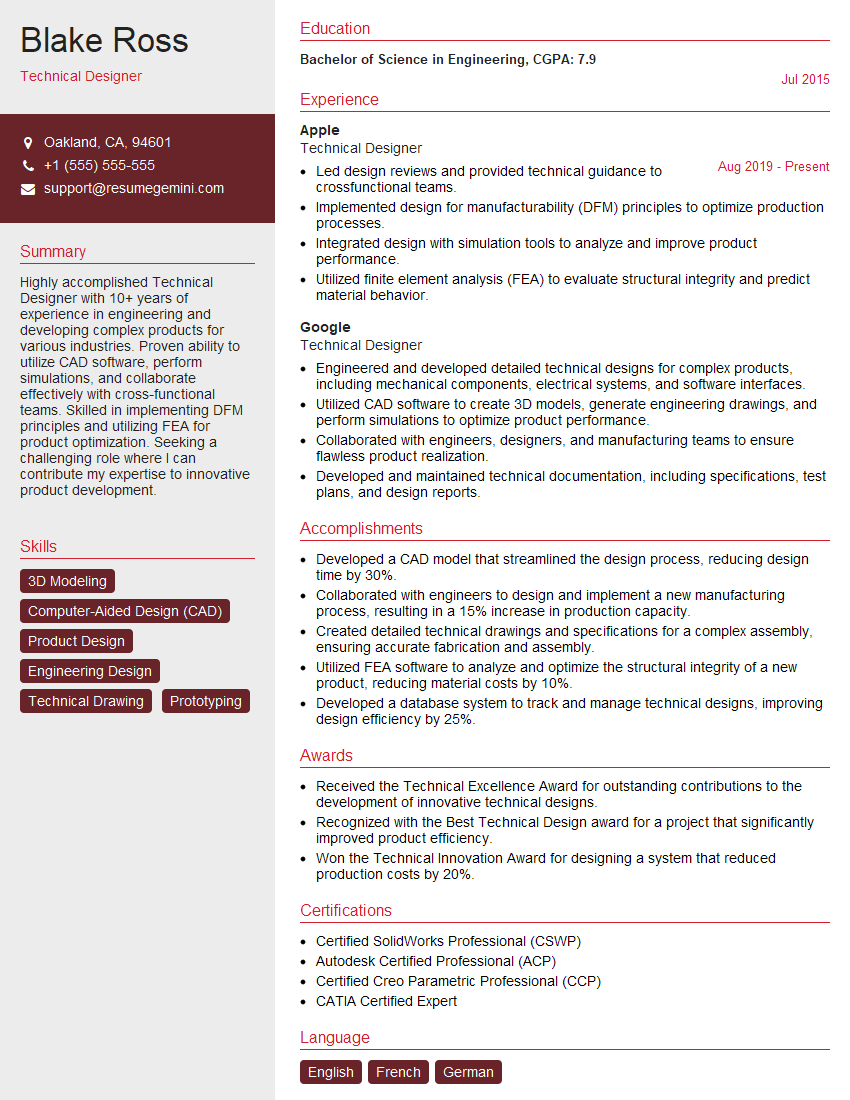
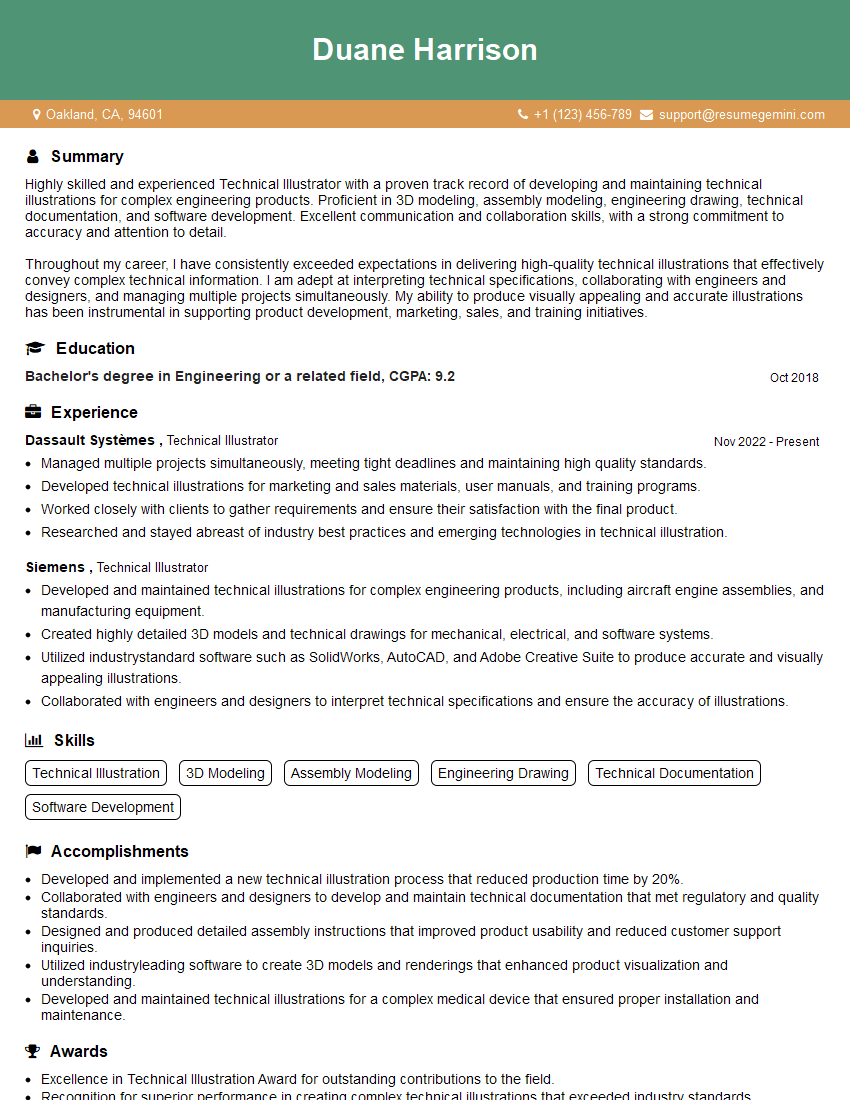
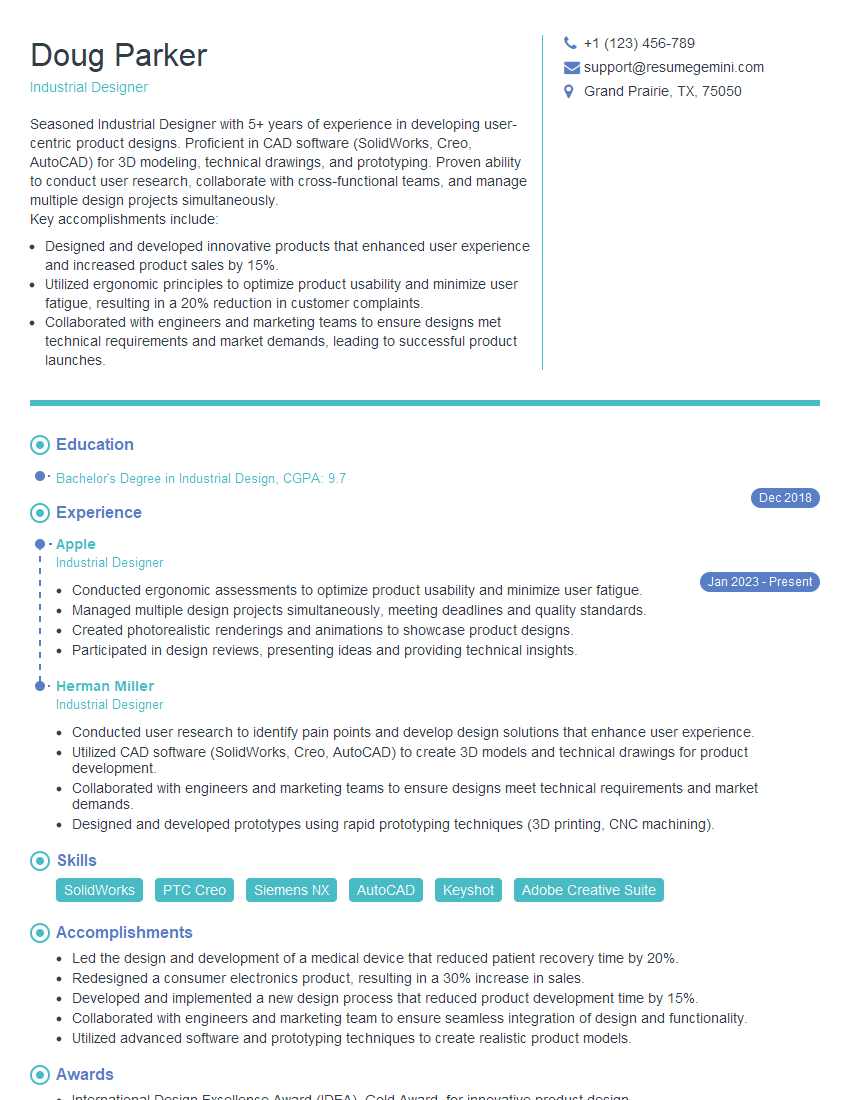
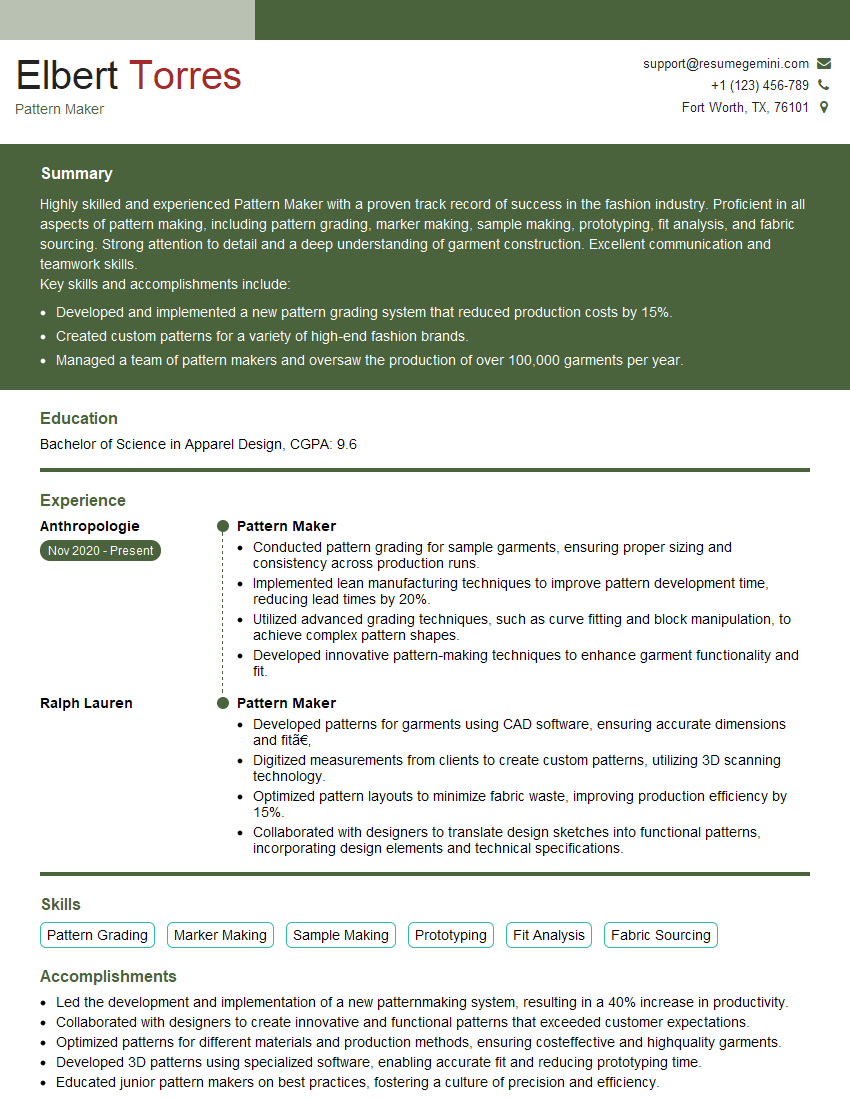
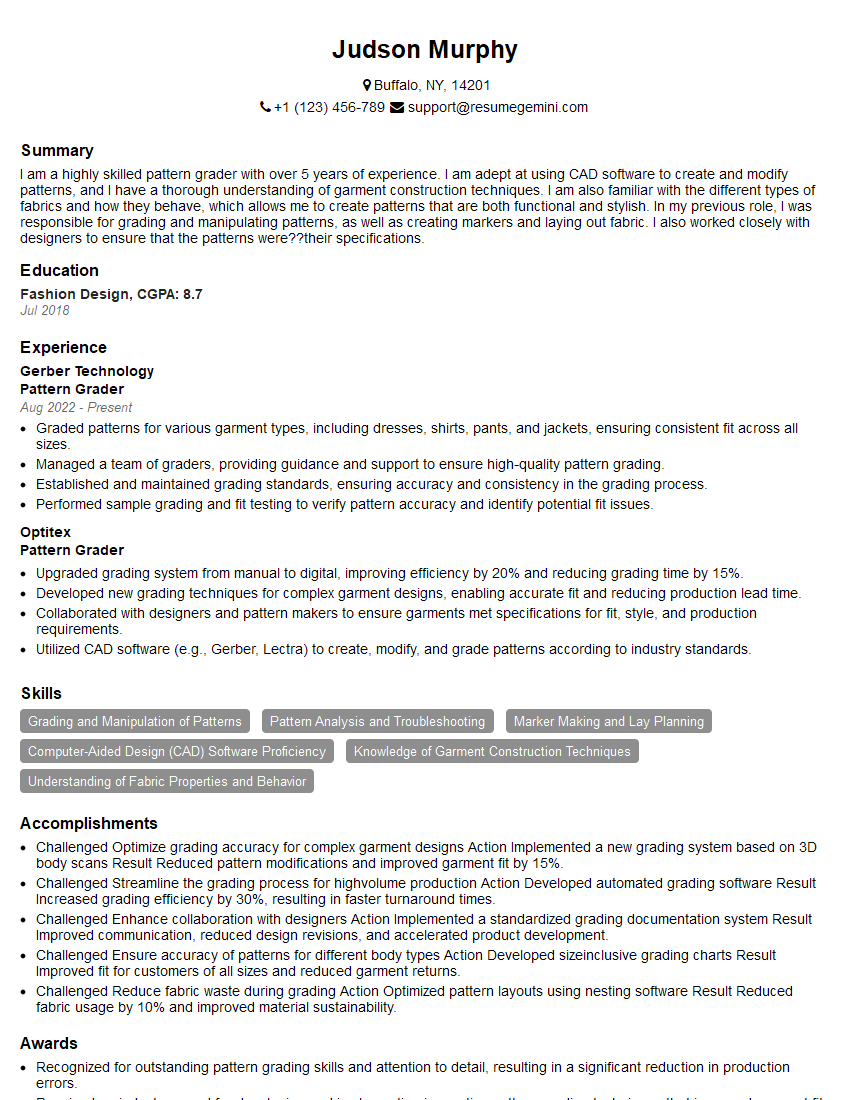
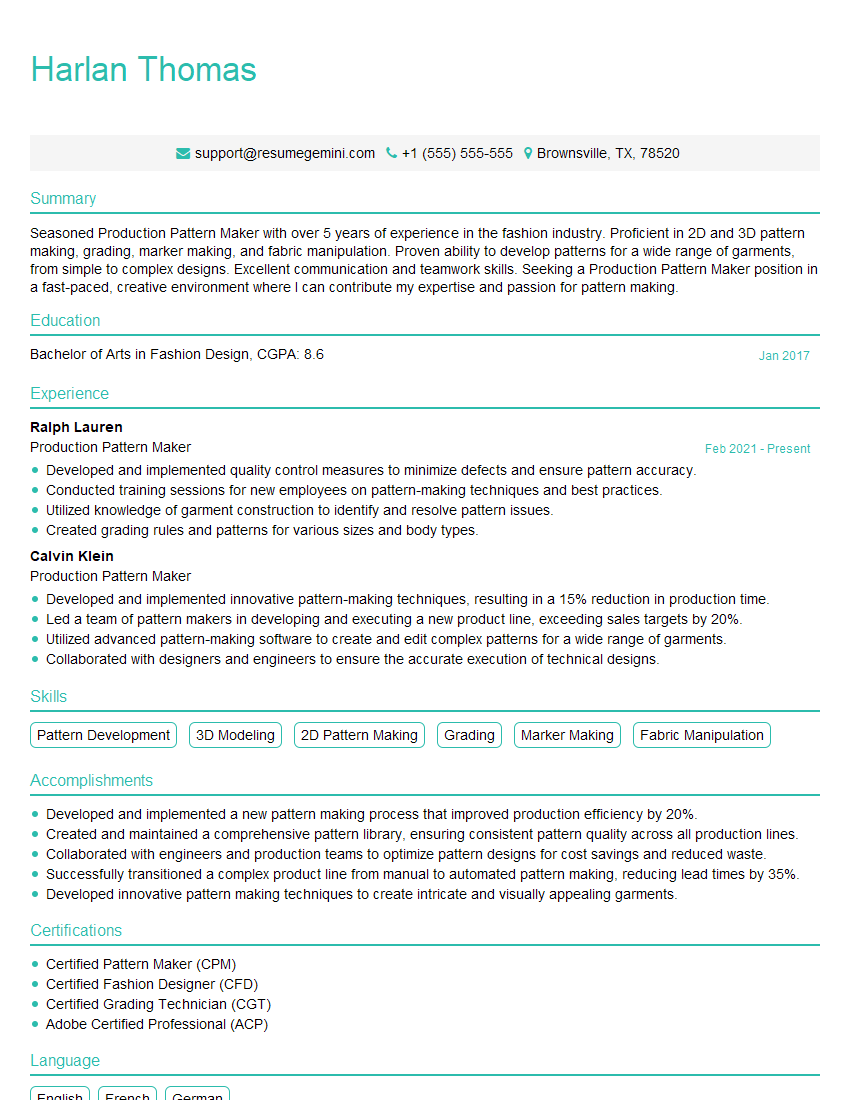
We recommend using ResumeGemini to craft a professional and impactful resume. ResumeGemini provides tools and resources to build a compelling resume, and we even offer examples tailored specifically to Technical Drawing and Pattern Making professionals. Invest in your future – create a resume that showcases your skills and experience effectively.


Explore more articles
Users Rating of Our Blogs
Share Your Experience
We value your feedback! Please rate our content and share your thoughts (optional).
What Readers Say About Our Blog
Very informative content, great job.
good