Interviews are more than just a Q&A session—they’re a chance to prove your worth. This blog dives into essential Technical Inspection interview questions and expert tips to help you align your answers with what hiring managers are looking for. Start preparing to shine!
Questions Asked in Technical Inspection Interview
Q 1. Explain the different types of inspection methods you are familiar with.
Technical inspections utilize various methods depending on the object being inspected and the information needed. These methods can be broadly categorized as visual inspections, dimensional inspections, and non-destructive testing (NDT).
- Visual Inspection: This is the most basic method, involving a thorough visual examination of the component for surface defects like cracks, corrosion, dents, or misalignment. Think of a mechanic checking a car engine for obvious problems. This often includes using magnification tools like magnifying glasses or borescopes to see hard-to-reach areas.
- Dimensional Inspection: This focuses on verifying the physical dimensions of a component against specified tolerances. This is crucial in manufacturing, where precise measurements are critical. Tools like calipers, micrometers, and coordinate measuring machines (CMMs) are employed here. Imagine inspecting a machined part to ensure it meets the blueprint’s exact dimensions.
- Non-Destructive Testing (NDT): These advanced methods allow for the detection of internal flaws without damaging the component. This is essential for safety-critical applications. Common NDT methods include ultrasonic testing (UT), radiographic testing (RT), magnetic particle testing (MT), and liquid penetrant testing (PT), which I’ll detail further in the next answer.
Q 2. Describe your experience with non-destructive testing (NDT) methods.
I have extensive experience with various NDT methods. My work has included:
- Ultrasonic Testing (UT): Using ultrasonic waves to detect internal flaws like cracks, voids, or inclusions in materials. I’ve used this extensively on welds in pressure vessels, ensuring their integrity and safety. A common example is using UT to check for flaws in a pipeline before it’s put into service.
- Radiographic Testing (RT): Employing X-rays or gamma rays to create images of internal structures and identify defects. I’ve used this method for inspecting castings and forgings to detect porosity or shrinkage cavities. Think of it like a medical X-ray, but for industrial components.
- Magnetic Particle Testing (MT): This method uses magnetic fields and iron particles to detect surface and near-surface cracks in ferromagnetic materials. I’ve used MT to inspect aircraft components and other high-stress parts for cracks that might lead to catastrophic failure.
- Liquid Penetrant Testing (PT): This is used to detect surface-breaking flaws. A dye is applied, then excess is removed, revealing the flaw. I have utilized PT to inspect for cracks in components with complex geometries, like turbine blades.
I’m proficient in interpreting the results obtained from these NDT methods, and I am certified in several of these techniques, ensuring I adhere to industry best practices.
Q 3. How do you ensure accuracy and consistency in your inspection reports?
Accuracy and consistency in inspection reports are paramount. To ensure this, I follow a rigorous process:
- Standardized Procedures: I strictly adhere to pre-defined inspection procedures and checklists, ensuring every aspect of the inspection is covered consistently. These procedures often include specific measurement techniques, acceptance criteria, and reporting formats.
- Calibration and Verification: All inspection equipment is meticulously calibrated and regularly verified to ensure accuracy and traceability. Calibration certificates are maintained and included in the documentation.
- Data Logging and Traceability: All inspection data, including measurements, observations, and images, is meticulously recorded electronically or on standardized forms. This allows for easy traceability and verification of findings.
- Peer Review: Where appropriate, my inspection reports undergo a peer review process to ensure accuracy and consistency in interpretation. A second set of eyes can often catch subtle errors or inconsistencies.
- Template and Format Consistency: Using standardized report templates ensures consistency in format and content. The report clearly defines the scope of the inspection, methodology employed, findings, and recommendations.
This structured approach ensures reports are clear, complete, and consistently meet the highest quality standards.
Q 4. What are your skills in using inspection equipment (e.g., calipers, micrometers)?
I possess a high level of proficiency in using various inspection tools, including:
- Calipers: I’m adept at using both vernier and digital calipers to accurately measure linear dimensions with precision to the nearest 0.01mm (or 0.0005”). I understand the importance of proper techniques to avoid measurement errors, such as parallax error.
- Micrometers: I can accurately measure dimensions to even finer tolerances using both inside and outside micrometers. This is vital for precision components. For example, accurately measuring the thickness of a thin-walled tube.
- Height Gauges: I am proficient in utilizing height gauges for precise measurements, particularly in situations where surface flatness is critical.
- Dial Indicators: I use dial indicators for checking runout, flatness, and other dimensional deviations. This is frequently used to assess the concentricity of rotating parts.
Beyond these, I’m familiar with other measuring tools including CMMs (Coordinate Measuring Machines) used for highly precise and automated measurements of complex parts. My skills are not limited to just operating these tools; I understand their limitations and sources of error.
Q 5. How do you handle discrepancies found during an inspection?
Discrepancies found during inspection are handled systematically and professionally:
- Documentation: The discrepancy is documented in detail, including clear photographic or video evidence. The location, nature, and severity of the discrepancy are clearly outlined.
- Verification: The discrepancy is verified through re-inspection using multiple methods if necessary, to eliminate the possibility of a false positive.
- Root Cause Analysis: An attempt is made to identify the root cause of the discrepancy. This might involve collaborating with engineering, manufacturing or other relevant teams.
- Reporting and Communication: The discrepancy and its root cause are clearly reported to the relevant stakeholders. Clear, concise communication is vital to prevent any misunderstandings. This often includes a recommendation for corrective action.
- Corrective Action: A plan for corrective action is developed and implemented, including verification of the effectiveness of the corrective action. This might involve repairs, rework, or changes to manufacturing processes.
The goal is to resolve the issue efficiently, effectively, and safely, while documenting the entire process for traceability and future reference.
Q 6. Describe your experience with quality control documentation and procedures.
My experience with quality control documentation and procedures is extensive. I’m proficient in:
- Creating and Maintaining Inspection Plans: I have a proven ability to develop comprehensive inspection plans that align with project specifications and industry standards. These plans detail the scope of work, inspection methods, acceptance criteria, and reporting requirements.
- Utilizing Quality Management Systems (QMS): I’m familiar with various QMS frameworks such as ISO 9001. I know how to utilize these systems effectively to ensure consistency in quality control practices.
- Maintaining Inspection Records: I am experienced in managing and maintaining accurate and organized inspection records, ensuring traceability and data integrity. This involves using both paper-based and electronic systems to ensure compliance with auditing requirements.
- Generating and Reviewing Inspection Reports: I am skilled in creating detailed and accurate inspection reports that clearly communicate findings and recommendations. This includes providing clear and concise interpretations of inspection results.
- Participating in Internal Audits: I’ve actively participated in internal audits to ensure compliance with quality control procedures and identification of areas for improvement.
My experience covers a range of industries, ensuring I can adapt to diverse quality control processes and documentation requirements.
Q 7. Explain your understanding of relevant industry codes and standards (e.g., ASME, ASTM).
I have a solid understanding of various industry codes and standards relevant to technical inspection. This includes:
- ASME (American Society of Mechanical Engineers): I am familiar with ASME Boiler and Pressure Vessel Code (BPVC), specifically sections relevant to inspection and testing of pressure vessels and piping systems. I understand the requirements for in-service inspections, non-destructive examination, and pressure testing. For example, I know the specific requirements for the inspection of safety relief valves.
- ASTM (American Society for Testing and Materials): I’m well-versed in numerous ASTM standards related to materials testing and properties. I’m familiar with standards for various NDT methods, mechanical testing, and material specifications. For instance, I know the specific procedures for conducting tensile testing and interpreting the results as per ASTM standards.
- Other Relevant Codes and Standards: Depending on the project and industry, I am also familiar with other relevant codes and standards, such as those related to aerospace, construction, or specific regulatory bodies. My adaptability allows me to quickly learn and apply the necessary standards for different projects.
My understanding of these standards goes beyond simple knowledge; I understand the reasoning behind their requirements, and how to apply them effectively to ensure safe and reliable operation of inspected equipment.
Q 8. How do you prioritize tasks and manage your time effectively during inspections?
Prioritizing tasks and managing time effectively during inspections is crucial for efficiency and thoroughness. My approach involves a multi-step process. First, I carefully review the inspection scope and checklist, identifying critical areas and potential time sinks. This allows me to create a prioritized schedule, focusing on high-risk areas or components first. For instance, in a building inspection, structural integrity checks would take precedence over cosmetic issues. Second, I allocate specific time blocks for each task, factoring in potential delays or unforeseen complications. I utilize time management techniques like the Pomodoro Technique to maintain focus and prevent burnout. Finally, I regularly monitor my progress against the schedule, adapting as needed. If I encounter unexpected issues, I re-prioritize tasks to ensure critical elements are addressed promptly while documenting any changes to the inspection plan. Think of it like assembling a complex puzzle – you start with the edges (high-priority items) before filling in the details (lower-priority items).
Q 9. How do you identify and mitigate potential safety hazards during an inspection?
Identifying and mitigating safety hazards is paramount in technical inspections. My process begins with a systematic visual inspection, followed by hands-on checks where appropriate. I look for obvious hazards like exposed wiring, damaged equipment, unsafe working conditions (e.g., lack of proper fall protection), and potential trip hazards. For example, during an electrical inspection, I’d check for proper grounding, insulation integrity, and overload protection. Beyond visual inspection, I also consider potential hazards based on my knowledge of industry best practices and relevant regulations. Once a hazard is identified, I document it immediately, including photos and detailed descriptions. I then assess the severity and likelihood of the hazard occurring, applying a risk matrix to determine the appropriate mitigation strategy. This might range from issuing a simple recommendation for corrective action to issuing a stop-work order if the hazard poses an imminent threat.
Q 10. What is your experience with root cause analysis for inspection failures?
Root cause analysis (RCA) is essential for preventing recurring inspection failures. My experience with RCA involves applying structured methodologies like the ‘5 Whys’ technique or the Fishbone diagram (Ishikawa diagram). For example, if an inspection reveals a cracked pipe in a building, the ‘5 Whys’ approach would delve deeper: Why did the pipe crack? (Corrosion). Why was there corrosion? (Lack of proper insulation). Why was there inadequate insulation? (Poor initial installation). Why was the installation poor? (Inadequate training for the installer). Why was there inadequate training? (Lack of budget for staff development). This identifies the root cause, allowing us to implement lasting solutions such as improved installation practices, regular maintenance schedules, and better staff training. Documenting the entire RCA process is vital for future reference and to share lessons learned with other stakeholders.
Q 11. Describe a challenging inspection you encountered and how you overcame it.
During a pressure vessel inspection at a chemical plant, we encountered an area with severely corroded components hidden behind an access panel which was difficult to open. The initial access panel removal methods proved unsuccessful due to years of corrosion and sealant build-up. This posed a significant challenge as accessing these critical components was necessary for a complete inspection. To overcome this, we first consulted the plant’s operational manuals and blueprints, to carefully plan the removal. We then utilized specialized tools, including pneumatic chisels and cutting tools, working methodically to avoid further damage to the vessel. Safety procedures were strictly adhered to throughout this process, including lockout/tagout procedures and respiratory protection due to potential exposure to hazardous materials. Through careful planning, teamwork, and the use of appropriate tools, we successfully accessed the components, performed the necessary inspection, and documented our findings. The extra effort ensured a thorough and safe assessment.
Q 12. How familiar are you with various types of inspection reports and their formats?
I am familiar with various inspection report formats, including concise checklists, detailed narrative reports, and those using standardized templates (e.g., ISO 17020 compliant reports). The format used depends on the client’s requirements, the complexity of the inspection, and regulatory mandates. For example, a simple visual inspection of a small electrical appliance might only require a checklist, while a major construction project would need a comprehensive narrative report with detailed photographic evidence. I also have experience with creating reports that include risk assessments, recommendations for corrective action, and schedule timelines for repairs. I understand the importance of clear, concise, and unambiguous reporting, adhering to the relevant standards and legal requirements in each case.
Q 13. How do you effectively communicate inspection findings to different stakeholders?
Effective communication of inspection findings is critical. My approach involves tailoring my communication style to the audience. For technical stakeholders like engineers, I use precise technical language and detailed data. For management, I focus on the high-level summary, key findings, and potential business impacts. For non-technical stakeholders, I use plain language, avoiding jargon and utilizing visual aids like photographs or diagrams to enhance understanding. Regardless of the audience, I ensure that my communication is clear, concise, and objective, presenting both positive and negative findings transparently. I also actively encourage questions and feedback to ensure everyone understands the inspection results and the recommended actions. Follow-up communications are key to ensuring timely corrective actions and to provide any necessary clarification.
Q 14. What is your experience with using inspection software or databases?
I have extensive experience using various inspection software and databases. I am proficient in using software for creating and managing inspection checklists, scheduling inspections, recording data, generating reports, and storing inspection records. Specific software experience includes [mention specific software used, e.g., iAuditor, eMaint, or other relevant software]. These tools help streamline the inspection process, enhance data management, and reduce errors. Furthermore, I am familiar with using databases to store and analyze inspection data, allowing for trend analysis, identifying potential problems, and improving overall inspection efficiency. This data-driven approach allows for proactive identification of recurring issues and facilitates informed decision-making.
Q 15. Describe your knowledge of statistical process control (SPC) techniques.
Statistical Process Control (SPC) is a powerful methodology used to monitor and control the variability in manufacturing or any process that produces data. It employs statistical techniques to identify and analyze patterns, helping us to understand whether a process is stable and producing consistent results or drifting towards undesirable outcomes. Think of it like a health check for your process.
My knowledge of SPC encompasses several key techniques:
- Control Charts: These are the cornerstone of SPC. I’m proficient in using various control charts like X-bar and R charts (for continuous data), p-charts (for proportions), and c-charts (for counts), to monitor process parameters. For example, I used X-bar and R charts to monitor the diameter of machined parts in a previous role, quickly identifying a tool wear issue that led to increased variation.
- Process Capability Analysis: This involves assessing whether a process is capable of meeting predefined specifications. I’m experienced in calculating Cp, Cpk, and Pp, PpK indices to determine process capability, ensuring products meet customer requirements. In one project, we used process capability analysis to demonstrate that our manufacturing process was capable of meeting the tight tolerances required by a demanding aerospace client.
- Acceptance Sampling: This is crucial when full inspection is impractical. I know how to design sampling plans based on Acceptable Quality Limits (AQL) to ensure acceptable quality levels are maintained while balancing efficiency and thoroughness.
Beyond these core techniques, I also have experience with advanced SPC methods such as Multivariate Control Charts, designed to monitor multiple variables simultaneously, and using statistical software packages like Minitab and JMP for data analysis and visualization.
Career Expert Tips:
- Ace those interviews! Prepare effectively by reviewing the Top 50 Most Common Interview Questions on ResumeGemini.
- Navigate your job search with confidence! Explore a wide range of Career Tips on ResumeGemini. Learn about common challenges and recommendations to overcome them.
- Craft the perfect resume! Master the Art of Resume Writing with ResumeGemini’s guide. Showcase your unique qualifications and achievements effectively.
- Don’t miss out on holiday savings! Build your dream resume with ResumeGemini’s ATS optimized templates.
Q 16. How do you stay updated with the latest industry standards and technologies in your field?
Staying current in the dynamic field of Technical Inspection requires a multi-faceted approach. I actively participate in several key strategies:
- Professional Organizations: Membership in organizations like ASQ (American Society for Quality) and similar professional bodies provides access to industry publications, conferences, and networking opportunities, exposing me to the latest best practices and technologies.
- Industry Publications and Journals: I regularly read leading journals and industry magazines like Quality Progress and others specializing in material science and inspection technologies, keeping myself updated on emerging trends and research.
- Online Resources and Webinars: Numerous online platforms and educational institutions provide webinars and courses focusing on new inspection techniques and regulatory changes. I dedicate time to actively participate in these to maintain my expertise.
- Conferences and Workshops: Attending industry conferences and workshops allows for direct interaction with experts, leading researchers, and practitioners, offering a unique opportunity for knowledge sharing and professional development.
- Certifications: I actively pursue and maintain relevant certifications, demonstrating commitment to continued professional development and mastery of industry standards.
This combination of proactive learning approaches keeps my knowledge base fresh and relevant.
Q 17. What is your experience with different types of materials and their inspection requirements?
My experience spans a wide variety of materials and their unique inspection requirements. I’ve worked extensively with:
- Metals: From ferrous materials like steel and cast iron to non-ferrous metals such as aluminum and copper alloys, my experience includes visual inspection, dimensional measurements, hardness testing, and non-destructive testing (NDT) methods like ultrasonic testing and magnetic particle inspection. I have detailed knowledge of material specifications and relevant standards (e.g., ASTM).
- Plastics and Composites: I have experience inspecting various plastic polymers and composite materials, focusing on techniques relevant to their specific properties – for example, tensile strength testing for plastics and visual inspection for composite layups.
- Ceramics and Glass: Inspection of these brittle materials requires careful handling and different techniques. Visual inspection, dimensional measurements and specialized testing are essential to ensure integrity.
- Wood and other natural materials: Inspection requirements here are unique and involve checking for defects, checking moisture content, and evaluating grain structure.
Each material presents its own challenges. For example, inspecting welds in high-strength steel requires different NDT methods and expertise than inspecting the surface finish of a plastic component. My expertise lies in selecting and applying appropriate inspection techniques based on material type, intended application, and relevant standards.
Q 18. How do you ensure the integrity and confidentiality of inspection data?
Data integrity and confidentiality are paramount in Technical Inspection. I ensure this through a combination of strategies:
- Secure Data Storage and Access Control: All inspection data is stored on secure servers with restricted access, following strict password management and access control protocols. Only authorized personnel have access to sensitive data.
- Chain of Custody: A meticulous chain of custody is maintained throughout the entire inspection process, documenting the handling, storage, and analysis of all data to ensure traceability and accountability.
- Data Validation and Verification: Rigorous data validation and verification processes are implemented to ensure accuracy and consistency. This includes using check-sheets, quality control checks, and data validation software.
- Data Encryption: When data is transferred electronically, encryption methods are used to protect its confidentiality. We often use secure file transfer protocols (SFTP) and encrypt files before transmission.
- Compliance with Regulations: I adhere to all relevant data privacy regulations and industry standards, including GDPR and ISO 27001.
Ultimately, my goal is to maintain the highest levels of data integrity and security, protecting both the client’s intellectual property and the reliability of the inspection results.
Q 19. Explain your experience with auditing and compliance procedures related to inspections.
My experience includes extensive work with auditing and compliance procedures related to inspections. This involves:
- Internal Audits: Conducting regular internal audits of inspection processes to ensure adherence to established procedures and quality standards. This includes reviewing inspection reports, calibration records, and personnel qualifications.
- External Audits: Participating in external audits conducted by clients or regulatory bodies, providing evidence of compliance with relevant industry standards and regulations. I’m prepared to answer audit questions regarding our procedures and provide the necessary documentation.
- Compliance with Standards: I have a deep understanding of various industry standards and regulatory requirements relevant to inspections, such as ISO 9001, ISO 17025, and any other specific standards relevant to the particular industry or project.
- Corrective Actions: Identifying and implementing corrective and preventative actions (CAPA) based on findings from audits or non-conformances. This might include modifying procedures, providing additional training, or updating equipment.
Throughout my career, ensuring compliance and achieving auditable results has been a priority, demonstrating my commitment to delivering reliable and trustworthy inspection services.
Q 20. Describe your experience working with multidisciplinary teams during inspections.
Effective collaboration within multidisciplinary teams is crucial for successful inspections, particularly in complex projects. My experience includes working with engineers, technicians, specialists, and clients from various backgrounds. I’ve found that strong communication and a collaborative spirit are key:
- Clear Communication: I prioritize clear and concise communication, ensuring everyone understands their roles, responsibilities, and the overall objectives of the inspection. This includes regular meetings, clear reporting, and the use of shared documentation platforms.
- Respectful Collaboration: I foster a respectful and collaborative environment where everyone’s expertise is valued and contributions are welcomed. Open dialogue and active listening are vital in resolving disagreements and making informed decisions.
- Shared Understanding of Goals: I work towards establishing a shared understanding of inspection goals and requirements from the outset. This may involve initial scoping meetings and discussions to clarify expectations and define success criteria.
- Conflict Resolution: I am adept at addressing conflicts constructively and fairly, seeking consensus and finding solutions that align with the project’s goals while respecting the diverse perspectives of team members. Sometimes this involves mediating between individuals with conflicting viewpoints.
A recent project involved a team of engineers, materials scientists, and NDT specialists working together to inspect a critical component for a power plant. By fostering effective communication and collaboration, we successfully completed the inspection on time and within budget, delivering a high-quality report that satisfied all stakeholders.
Q 21. How do you handle conflicts or disagreements regarding inspection results?
Disagreements regarding inspection results are inevitable, but they shouldn’t derail the process. My approach to handling such conflicts is systematic and focuses on maintaining objectivity and professionalism:
- Review the Evidence: The first step is a thorough review of all evidence, including inspection reports, data logs, and supporting documentation. This ensures we have a solid understanding of the facts.
- Open Communication: I initiate open and frank discussions with all involved parties, encouraging them to clearly explain their perspectives and concerns. This often clarifies misunderstandings and reveals potential biases.
- Independent Verification: If necessary, an independent verification of the results is sought using another qualified inspector or utilizing more advanced testing methods. This adds an extra layer of objectivity to the assessment.
- Documentation and Reporting: All disagreements, the steps taken to resolve them, and the final conclusions are meticulously documented and included in the final inspection report. Transparency is crucial.
- Escalation if Necessary: In cases where a resolution cannot be reached internally, I would escalate the matter to senior management or other designated authorities for a decision.
My goal is always to resolve conflicts efficiently and fairly, prioritizing the accuracy and reliability of the inspection report. It’s crucial to maintain trust with all parties and preserve the integrity of the inspection process, even in the face of disagreement.
Q 22. What is your proficiency in using blueprints, schematics, and technical drawings?
My proficiency in interpreting blueprints, schematics, and technical drawings is extensive. I’ve worked with a wide variety of formats, from hand-drawn sketches to sophisticated 3D models created using software like AutoCAD and Revit. I’m not only able to understand the information presented – dimensions, materials, specifications – but also to visualize the finished product and identify potential issues during the design phase. For example, during an inspection of a newly constructed bridge, I was able to quickly identify a discrepancy between the designed steel beam supports and those actually installed by referencing the structural drawings. The drawings clearly indicated a heavier gauge steel was specified, but a lighter gauge was used. This could have resulted in structural instability.
My skills extend to understanding symbols, annotations, and revision history, ensuring that I’m working with the most up-to-date and accurate information. I regularly use these drawings not only for initial inspections but also throughout the project lifecycle, to monitor progress and identify deviations from the original plan.
Q 23. How do you identify and address potential conflicts of interest during inspections?
Identifying and addressing potential conflicts of interest is paramount in maintaining the integrity of any inspection. My approach involves a proactive and transparent strategy. First, I disclose any potential conflicts, no matter how minor, to the client before commencing the inspection. This includes any prior relationships with the involved parties, ownership interests, or even past work on similar projects. I also carefully review the scope of work and any related documentation to uncover any potential biases.
For instance, if a previous employer was involved in the construction of the facility I’m inspecting, I would fully disclose this to the client to ensure transparency and avoid any appearance of favoritism. If a conflict cannot be mitigated effectively, I would recommend an alternative inspector to maintain the impartiality of the inspection process. My ethical obligations guide my actions to ensure a fair and unbiased outcome.
Q 24. What is your experience with conducting inspections in diverse environments (e.g., indoor/outdoor, high-rise buildings)?
I have extensive experience conducting inspections in diverse environments. This ranges from routine inspections of residential properties and commercial buildings to more challenging projects like high-rise structures and outdoor industrial sites. My experience with high-rise buildings involves working safely at heights, understanding the specific structural challenges involved, and adhering to stringent safety regulations.
Inspecting outdoor environments requires adapting to varying weather conditions and understanding the impacts of environmental factors on infrastructure. For instance, during an inspection of an offshore wind farm, I had to account for weather conditions and ensure safety procedures were fully adhered to while examining the structural integrity of the turbines. Adaptability and thorough preparation are crucial for successful inspections in such varied contexts. I always prioritize safety while performing my inspections.
Q 25. How do you manage and document changes or deviations from inspection plans?
Managing and documenting changes or deviations from inspection plans is a critical aspect of my work. I maintain a detailed record of any deviations using a combination of written reports, photographic evidence, and digital documentation. Any changes are clearly documented, including the reason for the change, the proposed solution, and the impact on the overall project.
For example, if during an inspection I discover a discrepancy in the installation of a critical component, I would photograph the issue, note its location and details in my report, and recommend a course of action based on relevant standards and codes. This detailed documentation not only provides a record of the findings but also facilitates effective communication with all stakeholders.
Q 26. How proficient are you in using measurement tools and data analysis software?
I am highly proficient in using a variety of measurement tools and data analysis software. This includes precision measuring instruments like calipers, laser levels, and distance meters, as well as software packages such as spreadsheets, statistical software (e.g., R, Minitab), and specialized CAD software for analyzing dimensional data and creating detailed reports.
My data analysis skills allow me to identify trends and patterns in inspection data, enabling me to pinpoint potential problem areas and inform preventative maintenance strategies. For example, I might use statistical analysis to identify recurring defects in a production line or to determine if the rate of deterioration of a specific building material is within acceptable limits.
Q 27. Describe your experience with preventative maintenance inspections.
Preventative maintenance inspections aim to identify potential problems before they become major issues, saving time and money in the long run. My experience in this area involves the development and implementation of inspection checklists tailored to the specific equipment or infrastructure being inspected. These checklists cover critical components, common points of failure, and safety considerations.
For example, during a preventative maintenance inspection of a large industrial boiler, I would meticulously examine safety devices, check pressure gauges and valves, and look for any signs of corrosion, leaks, or damage. The goal is to prevent costly breakdowns and ensure ongoing safe operation. My reports always include recommendations for necessary repairs or replacements, alongside a prioritized schedule for their implementation.
Q 28. What are your skills in interpreting and applying technical specifications?
Interpreting and applying technical specifications is fundamental to my role. I’m adept at understanding various standards, codes, and regulations relevant to different industries and projects. I can translate complex technical language into clear and concise reports that are easily understood by clients who may not have a technical background.
For instance, when inspecting a building’s electrical system, I utilize the relevant electrical codes to ensure compliance with safety standards. Understanding these specifications allows me to make informed judgments about the adequacy and safety of the installations. Furthermore, I always remain updated on changes and revisions within these specifications to ensure my inspections remain accurate and current.
Key Topics to Learn for Technical Inspection Interview
- Inspection Planning & Methodology: Understanding different inspection types (visual, dimensional, non-destructive), planning efficient inspection routes, and selecting appropriate tools and techniques.
- Dimensional Measurement & Tolerancing: Practical application of measurement tools (calipers, micrometers, etc.), interpreting engineering drawings and specifications, and understanding geometric dimensioning and tolerancing (GD&T).
- Non-Destructive Testing (NDT): Familiarization with various NDT methods (ultrasonic, radiographic, magnetic particle inspection) and their applications in detecting defects without damaging the inspected item.
- Defect Identification & Classification: Developing the ability to accurately identify, classify, and document various types of defects (surface imperfections, internal flaws, dimensional discrepancies).
- Report Writing & Documentation: Creating clear, concise, and accurate inspection reports, including detailed descriptions of findings, supporting evidence (photos, measurements), and recommendations.
- Quality Control & Assurance Principles: Understanding the principles of quality control and assurance, statistical process control (SPC), and their relevance to technical inspection.
- Safety Procedures & Regulations: Knowledge of relevant safety regulations and procedures for working in various inspection environments and using specialized equipment.
- Troubleshooting & Problem-Solving: Applying critical thinking skills to diagnose the root cause of defects and propose effective solutions.
Next Steps
Mastering Technical Inspection opens doors to exciting career advancements, offering opportunities for specialization and increased responsibility within engineering, manufacturing, and quality control fields. A strong resume is crucial for showcasing your skills and experience to potential employers. Creating an ATS-friendly resume maximizes your chances of getting noticed by recruiters. To build a professional and effective resume that highlights your expertise in Technical Inspection, we highly recommend using ResumeGemini. ResumeGemini provides tools and resources to craft a compelling narrative and increase your interview success rate. Examples of resumes tailored to Technical Inspection are available to help you get started.
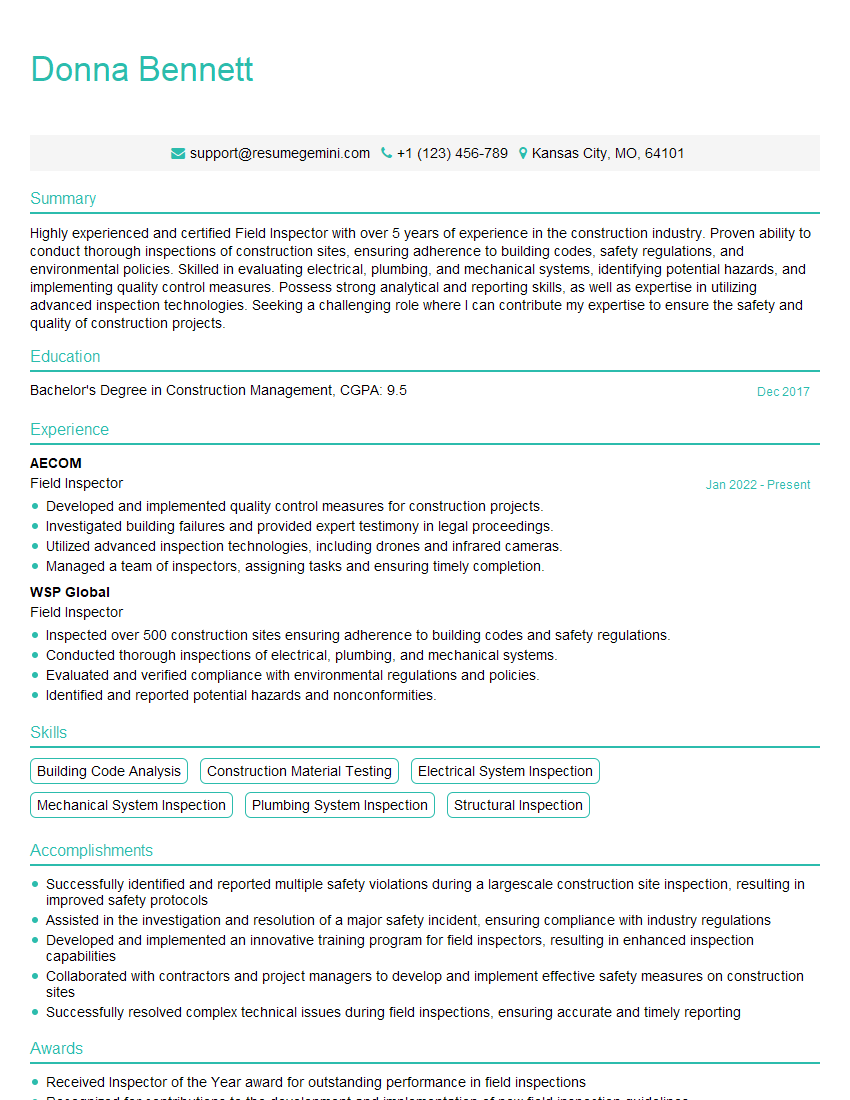
Field Inspector Resume Sample
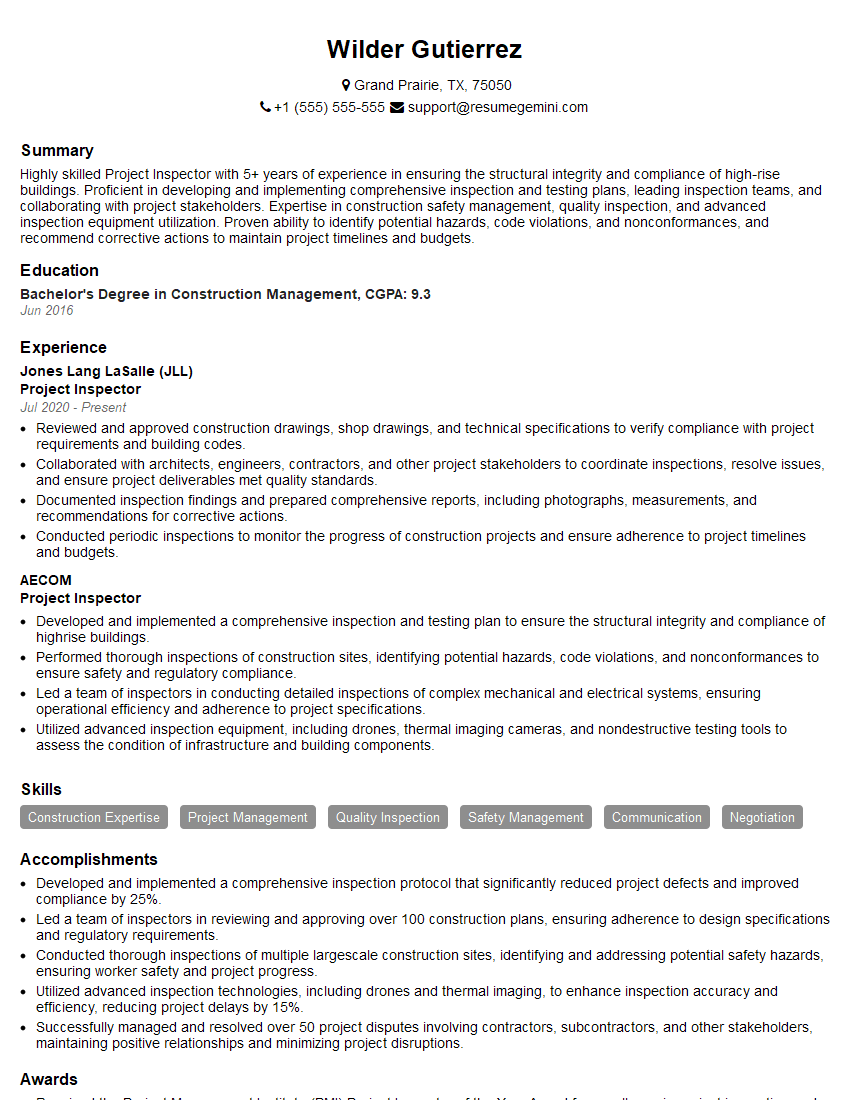
Project Inspector Resume Sample
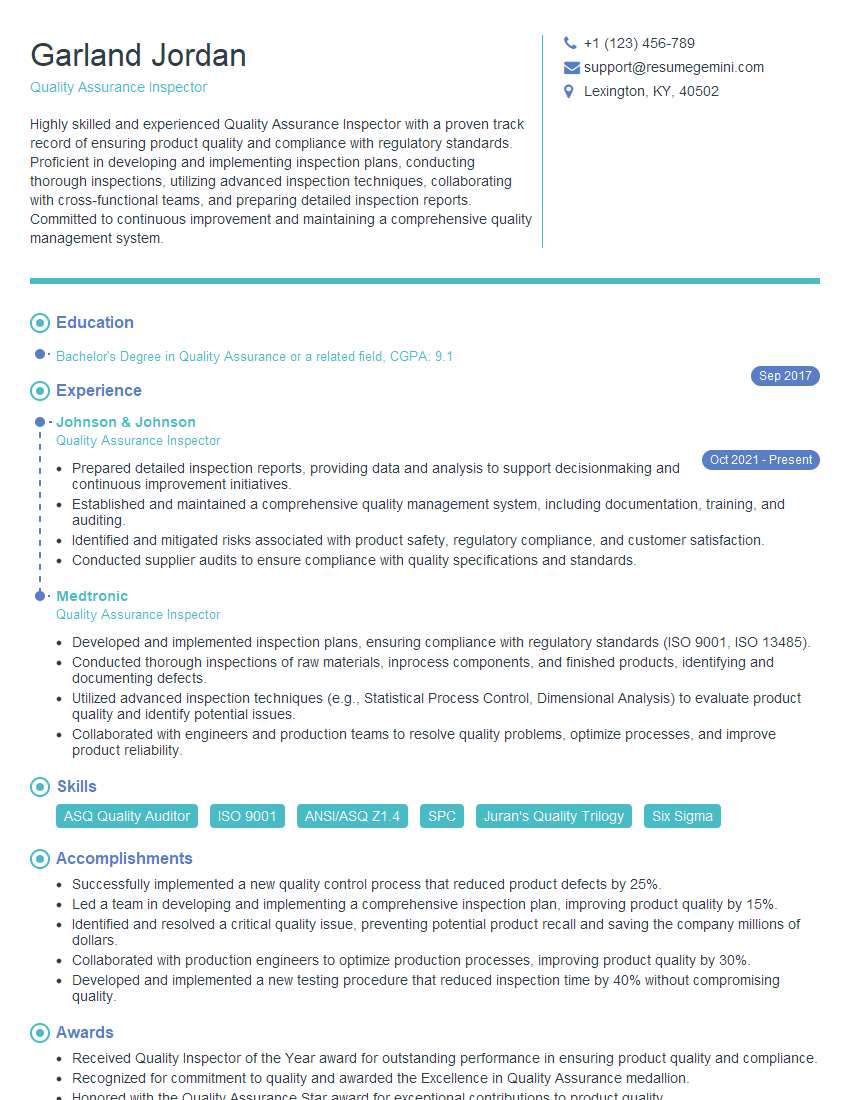
Quality Assurance Inspector Resume Sample
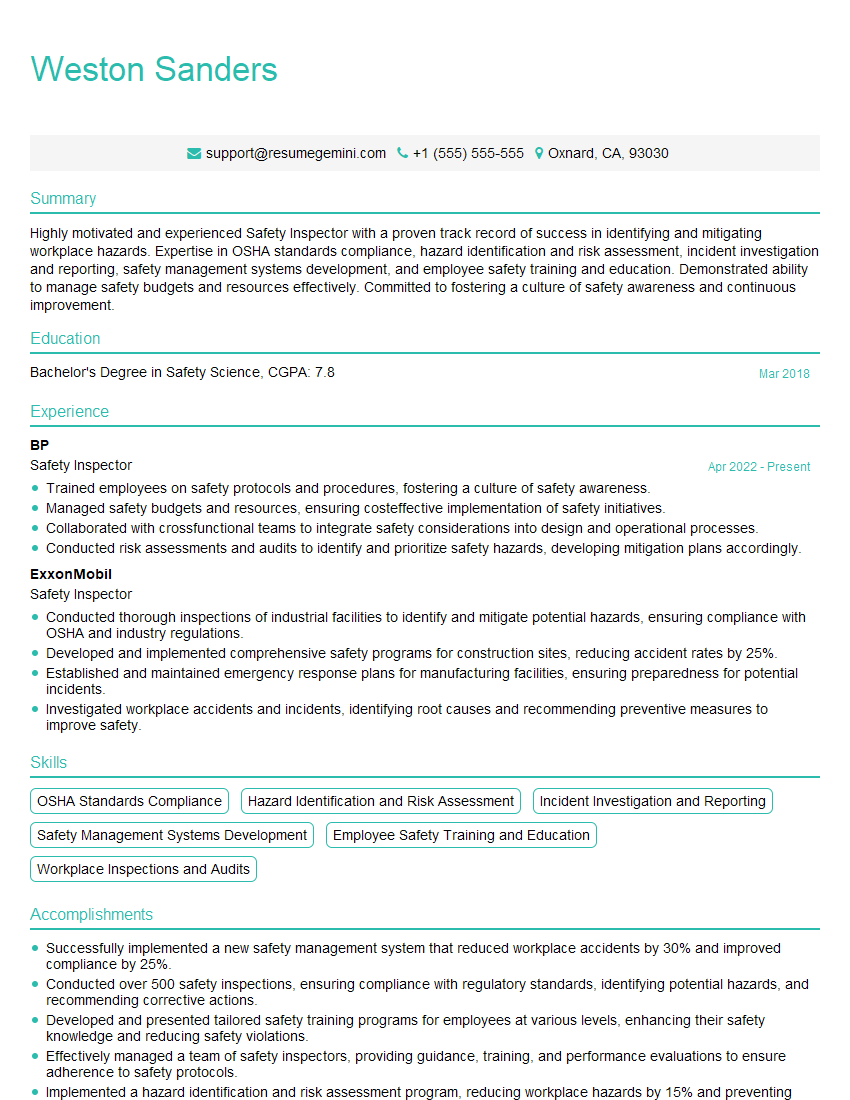
Safety Inspector Resume Sample
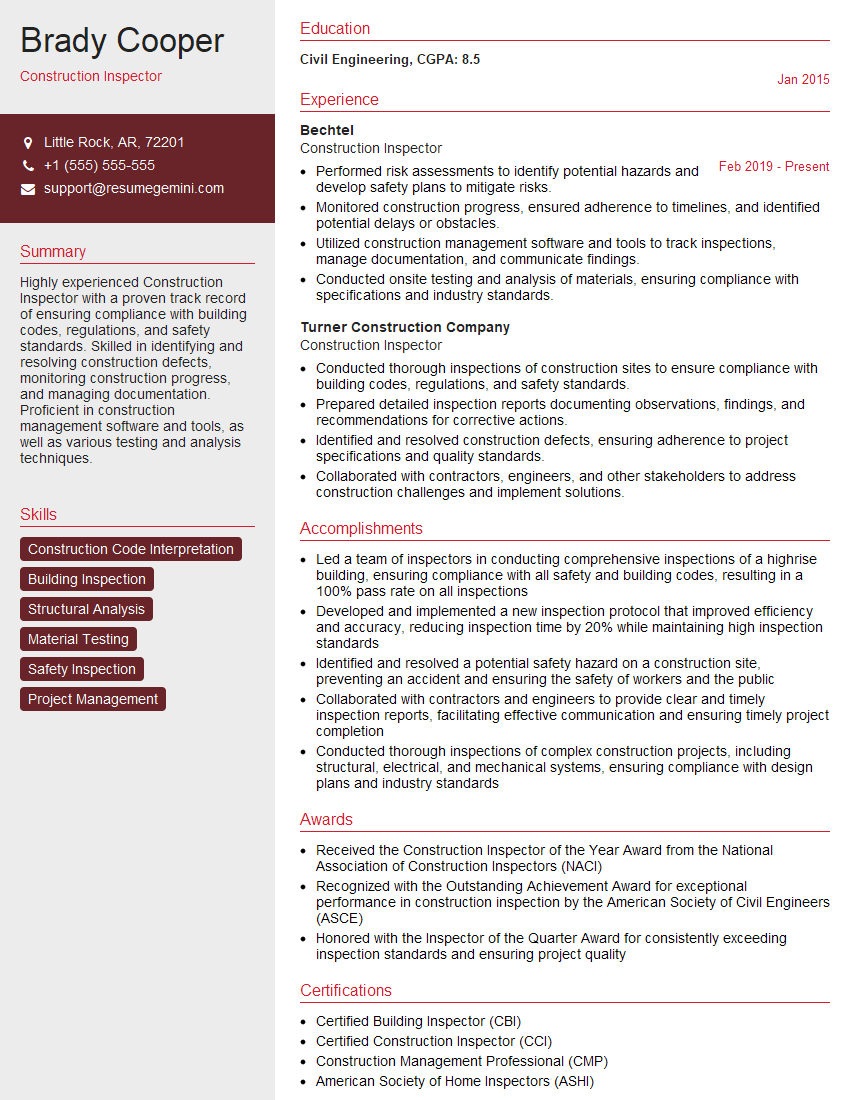
Construction Inspector Resume Sample
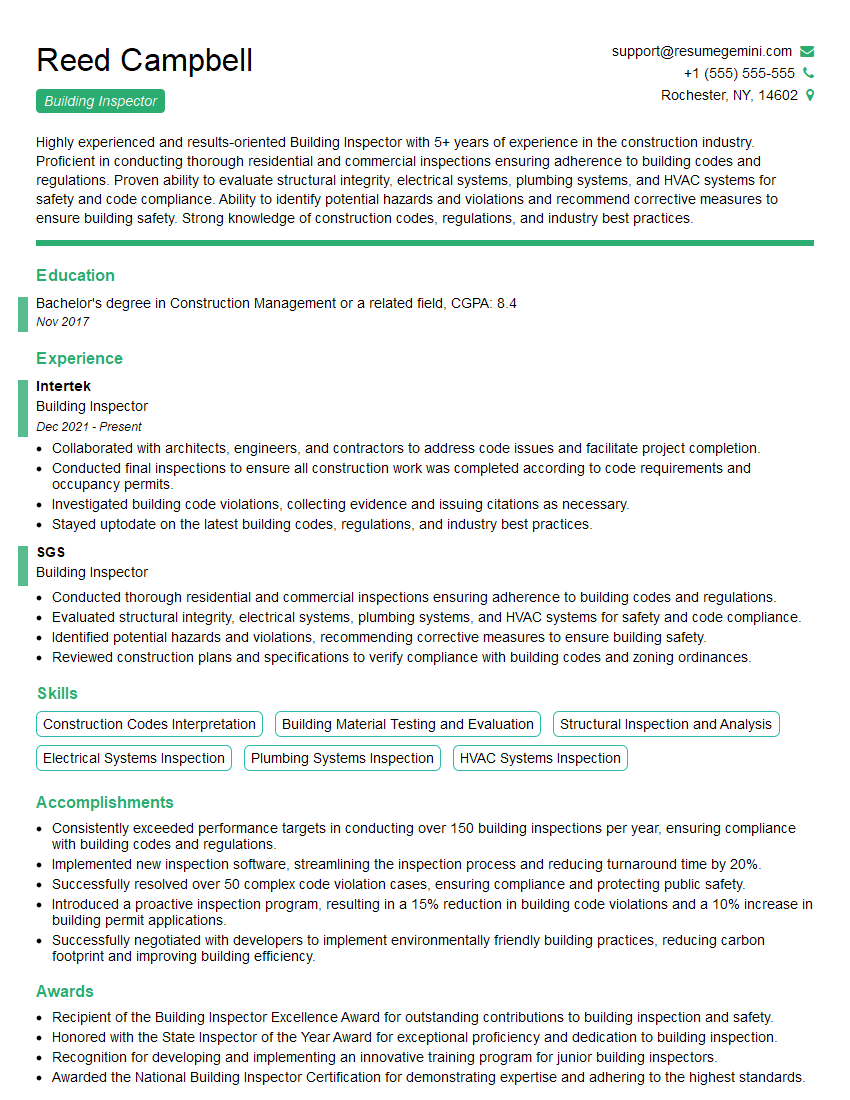
Building Inspector Resume Sample
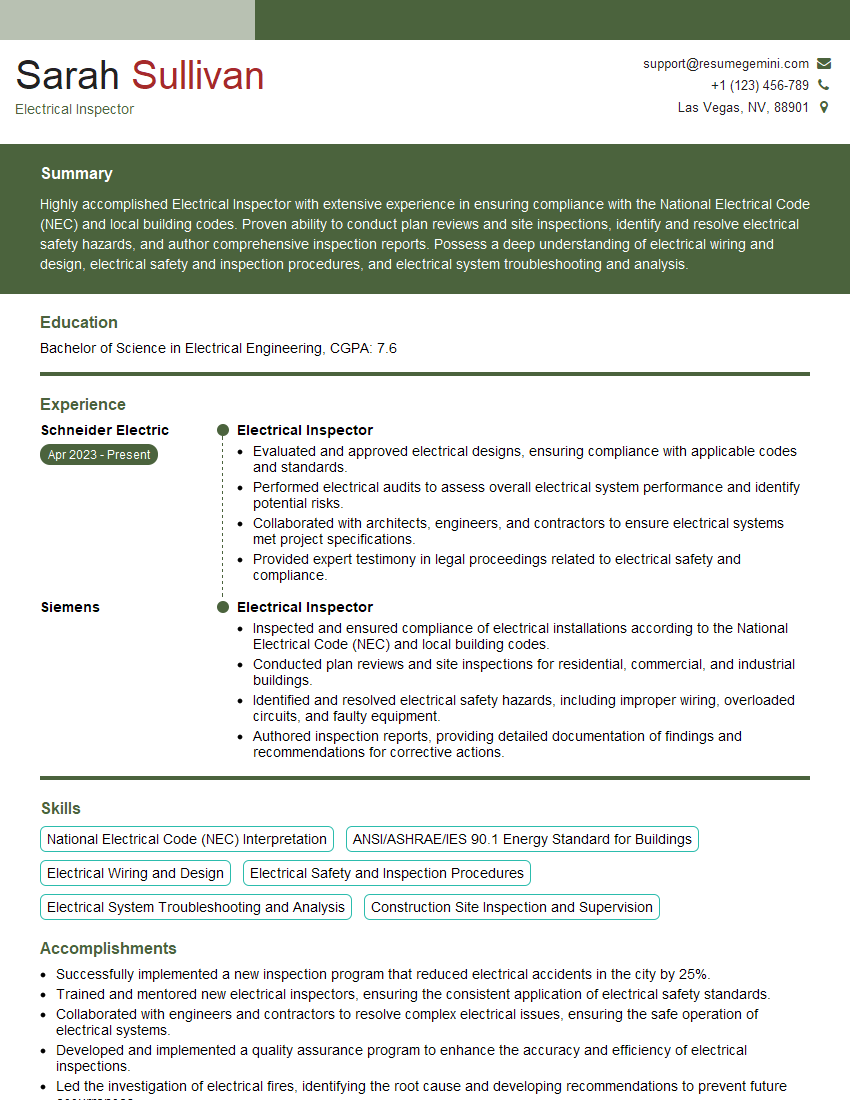
Electrical Inspector Resume Sample
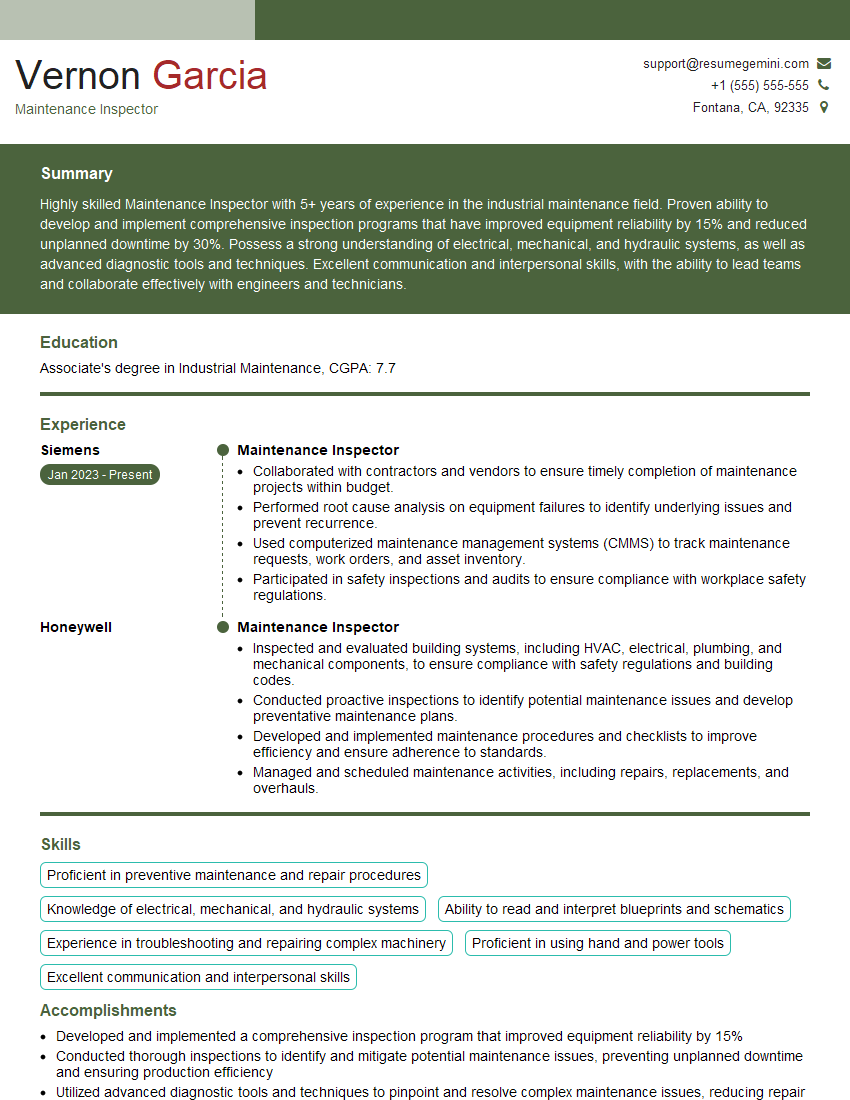
Maintenance Inspector Resume Sample
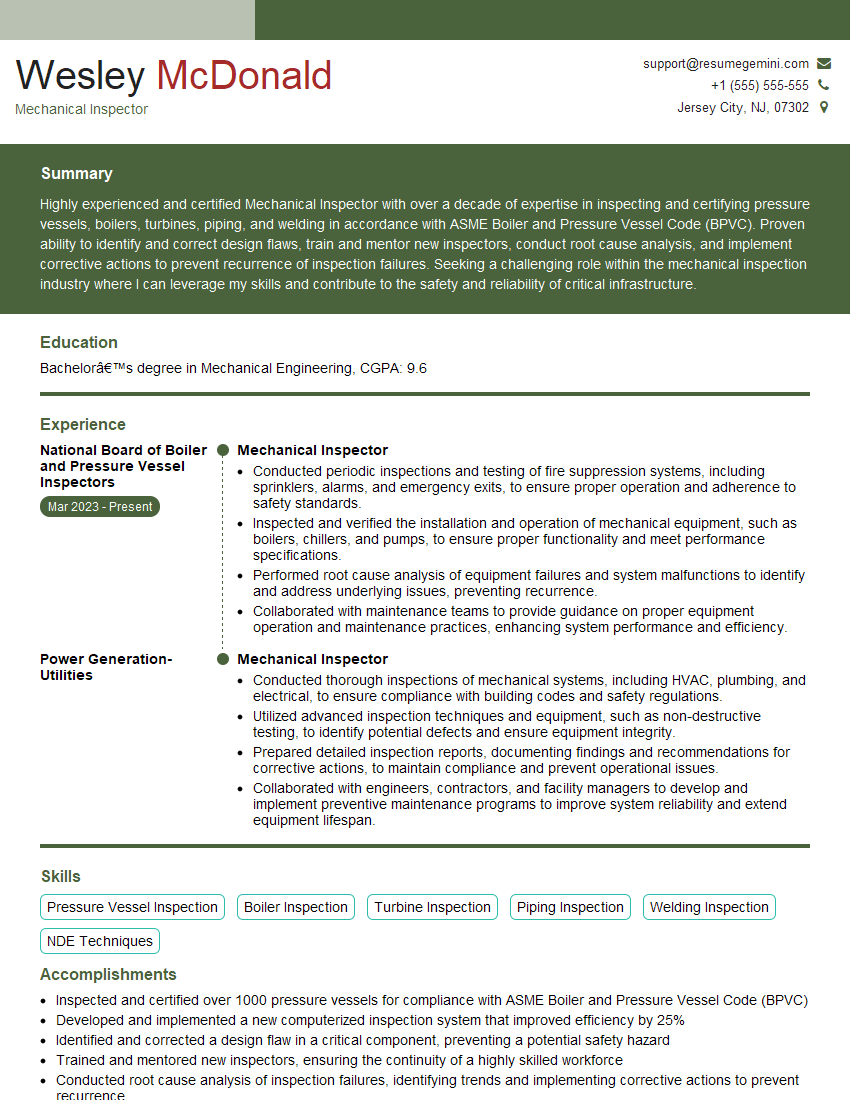
Mechanical Inspector Resume Sample
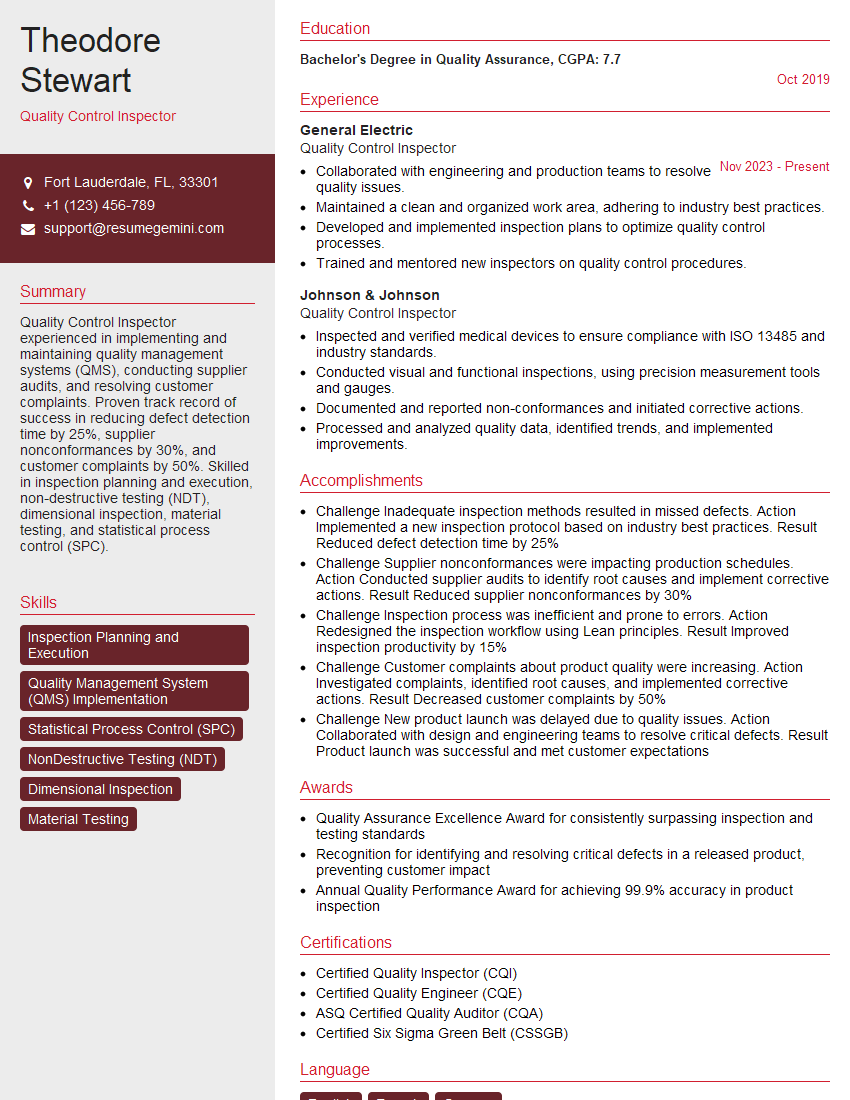
Quality Control Inspector Resume Sample
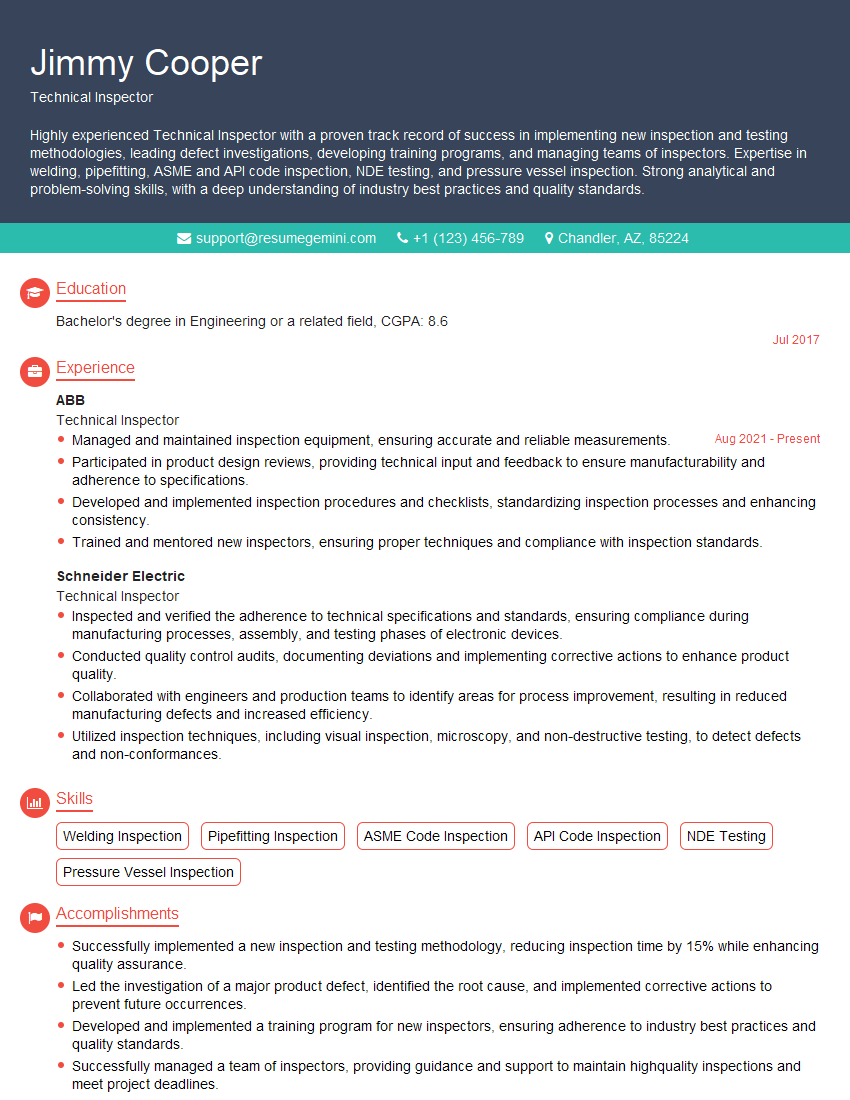
Technical Inspector Resume Sample
Explore more articles
Users Rating of Our Blogs
Share Your Experience
We value your feedback! Please rate our content and share your thoughts (optional).
What Readers Say About Our Blog
Very informative content, great job.
good