Interviews are opportunities to demonstrate your expertise, and this guide is here to help you shine. Explore the essential Temperament Evaluation interview questions that employers frequently ask, paired with strategies for crafting responses that set you apart from the competition.
Questions Asked in Temperament Evaluation Interview
Q 1. Describe the four major temperament types according to a chosen model (e.g., Keirsey, Hippocrates).
Let’s explore the four temperaments according to the ancient Greek model attributed to Hippocrates. This model, while not as nuanced as modern approaches, provides a foundational understanding. The four temperaments are based on the balance (or imbalance) of four humors: blood, phlegm, yellow bile, and black bile.
- Sanguine: Associated with an abundance of blood, this temperament is characterized by optimism, sociability, and enthusiasm. Sanguine individuals are typically extroverted, talkative, and enjoy being around others. Think of someone who is always the life of the party, readily embracing new experiences.
- Phlegmatic: Predominantly phlegm, this temperament describes individuals who are calm, peaceful, and even-tempered. They are often reserved, reliable, and thoughtful, preferring stability and predictability. A good example might be a quiet, dependable colleague who always gets the job done efficiently.
- Choleric: Dominated by yellow bile, this temperament is associated with ambition, energy, and determination. However, it can also manifest as irritability, impatience, and a tendency towards anger. Think of a driven entrepreneur who can be assertive and sometimes demanding.
- Melancholic: Associated with an excess of black bile, this temperament is characterized by introspection, creativity, and sensitivity. Melancholic individuals can be thoughtful, analytical, and prone to mood swings, sometimes experiencing periods of sadness or depression. A melancholic person might be a gifted artist deeply affected by their emotions.
It’s crucial to remember that these are archetypes; most individuals exhibit a blend of temperaments rather than fitting neatly into a single category. The Hippocratic model serves as a useful starting point for understanding basic temperament patterns.
Q 2. Explain the strengths and limitations of at least three different temperament assessment instruments.
Several temperament assessment instruments exist, each with its strengths and limitations. Let’s examine three:
- Myers-Briggs Type Indicator (MBTI): A widely used instrument, the MBTI is based on Carl Jung’s psychological types. Its strength lies in its accessibility and ease of understanding, making it popular in various settings. However, it’s criticized for its lack of strong psychometric properties, particularly its reliability and validity. The categories can be too broad, leading to oversimplification of personality.
- Keirsey Temperament Sorter II: This instrument is closely related to the MBTI but offers a more refined categorization of temperaments into four clear types (Guardian, Artisan, Idealist, and Rational). It’s better at predictive validity than MBTI in some aspects, and the categorizations can be more helpful for self-understanding. However, it still shares the limitations of the MBTI regarding psychometric rigor.
- Temperament Assessment Battery for Children (TABC): Designed specifically for children, the TABC focuses on assessing the dimensions of temperament—such as activity level, rhythmicity, approach/withdrawal, adaptability, intensity of reaction, etc.—rather than assigning types. This is a strength because it provides a more nuanced and detailed picture than the categorical approaches above. However, it requires trained professionals for administration and interpretation and might be too complex for certain applications.
Ultimately, the best instrument depends on the specific needs of the assessment and the available resources. A thorough understanding of the limitations of each tool is essential for responsible interpretation.
Q 3. How do you ensure the ethical and responsible use of temperament evaluation data?
Ethical and responsible use of temperament evaluation data is paramount. This involves several key considerations:
- Informed Consent: Individuals must understand the purpose of the assessment, how the data will be used, and their right to withdraw at any time.
- Confidentiality: All data must be kept strictly confidential, adhering to relevant data protection regulations.
- Competence: Only qualified professionals should administer and interpret temperament assessments. Incorrect interpretation can lead to misdiagnosis and harmful consequences.
- Avoidance of Labeling: Temperament assessments should not be used to label individuals, but rather to gain a deeper understanding of their strengths, weaknesses, and preferences. It’s crucial to avoid stereotyping based on temperament type.
- Cultural Sensitivity: Assessments should be culturally appropriate and avoid bias against particular groups. Interpretation must be nuanced, acknowledging cultural variations in temperament expression.
By adhering to these ethical guidelines, we ensure that temperament evaluations are used beneficially, promoting individual growth and understanding rather than causing harm or discrimination.
Q 4. Compare and contrast different methods for administering and interpreting temperament assessments.
Temperament assessments can be administered and interpreted in various ways. The choice depends on factors like the age and capabilities of the individual being assessed, the context of the assessment, and the chosen instrument:
- Self-Report Questionnaires: These are commonly used, especially with adults. Individuals answer questions about their behavior and preferences. Examples include the MBTI and Keirsey Temperament Sorter. Strengths include ease of administration and cost-effectiveness. Limitations include potential for response bias (social desirability bias, etc.).
- Observer Ratings: Parents, teachers, or other observers rate an individual’s behavior. This is particularly helpful for young children or individuals who may have difficulty self-reporting. The TABC often uses this method. Strengths lie in obtaining multiple perspectives. However, observer bias is a key limitation.
- Interviews: Structured or semi-structured interviews allow for a more nuanced understanding of temperament, clarifying responses from questionnaires or observations. Strengths include the possibility for clarification and exploring complexities. Limitations are the time and expertise required.
Interpretation varies depending on the method and instrument used. Some assessments offer standardized scoring and interpretation guides, while others require professional judgment and clinical experience. Understanding the strengths and limitations of each method is critical for accurate and meaningful interpretation.
Q 5. What are the key considerations for choosing an appropriate temperament assessment for a specific context (e.g., clinical, educational, organizational)?
Selecting the appropriate temperament assessment for a given context requires careful consideration of several factors:
- Purpose of the Assessment: Is it for clinical diagnosis, educational planning, team building in an organization, or personal growth? The goal will dictate the choice of instrument and interpretation focus.
- Target Population: The age, developmental level, and cultural background of the individual being assessed must be considered. Instruments designed for adults are inappropriate for children, and vice versa. Cultural biases must also be carefully evaluated.
- Time and Resources: Some assessments are more time-consuming and resource-intensive than others. Consider the feasibility of administering and interpreting the chosen assessment given the available time and budget.
- Psychometric Properties: The reliability and validity of the assessment instrument are crucial. A reliable instrument consistently yields similar results, while a valid instrument measures what it intends to measure. Reviewing the psychometric data for a given assessment is essential.
- Practicality: Consider the ease of administration and scoring. Instruments that are easy to understand and administer will be more practical in certain contexts.
For example, a clinical setting might require a comprehensive assessment with strong psychometric properties, while an organizational setting might prioritize a shorter, simpler instrument that provides quick insights into team dynamics.
Q 6. Describe your experience with scoring and interpreting various temperament assessment scales.
My experience with scoring and interpreting various temperament assessment scales is extensive. I’ve worked with a range of instruments, including the MBTI, Keirsey Temperament Sorter, TABC, and various other self-report questionnaires and observational rating scales. My expertise lies in understanding the nuances of each instrument, including its scoring system, the underlying theoretical framework, and the limitations of the interpretation.
For example, when scoring the MBTI, I pay close attention to the preference scores. A slight difference between two preferences doesn’t necessarily indicate a strong preference for one over the other. Contextual factors and life experiences need to be considered before final interpretation. Similarly, with observational scales, inter-rater reliability is paramount, and I always strive to minimize potential bias by incorporating multiple observers’ data. I have worked with many cases involving children, and integrating observational data with parent and teacher reports forms a more complete picture than reliance on any single method alone.
My approach emphasizes careful consideration of individual circumstances, avoiding oversimplification of complex personalities. I always prioritize clear and ethical communication with clients and stakeholders, ensuring a thorough understanding of the results and their implications.
Q 7. How do you address potential biases or cultural considerations when conducting temperament evaluations?
Addressing potential biases and cultural considerations is critical for ensuring fair and accurate temperament evaluations. Bias can arise from various sources, including the instrument itself, the administrator, and the interpretation process. Here’s how I address them:
- Instrument Selection: I prioritize using instruments that have been validated across diverse populations and have shown minimal cultural bias. If using an instrument that hasn’t been extensively studied in specific cultural groups, I proceed cautiously, acknowledging potential limitations.
- Cultural Contextualization: I recognize that temperament is expressed differently across cultures. I avoid making generalizations about temperament based on cultural stereotypes. I carefully consider cultural norms and values when interpreting assessment results. For example, what might be considered “introverted” in one culture could be interpreted differently in another.
- Administrator Bias: I am aware of my own potential biases and strive for objectivity in the administration and interpretation process. This involves careful self-reflection and ongoing professional development to enhance my cultural competence.
- Client Communication: I engage in open and sensitive communication with clients from diverse cultural backgrounds, creating a safe space for them to express themselves freely. This is crucial for obtaining accurate information and ensuring the client understands the assessment’s results within their cultural context.
By proactively addressing these potential biases, I strive to ensure that my temperament evaluations are fair, culturally sensitive, and ethically sound.
Q 8. Explain the importance of obtaining informed consent before administering a temperament assessment.
Informed consent is paramount in temperament assessment because it ensures ethical and legal compliance. It means the individual (or their legal guardian) understands the purpose of the assessment, the procedures involved, the potential benefits and risks, and their right to withdraw at any time without penalty. This process fosters trust and ensures the person feels empowered and in control of their participation.
Obtaining informed consent typically involves a detailed explanation in clear, understandable language, free from jargon. It might include a written consent form that outlines all the relevant information, allowing the individual time to review and ask questions before agreeing to proceed. For children, parents or guardians must provide consent, ensuring they fully understand the implications for their child.
For example, before administering a temperament questionnaire to a preschooler, I would explain to the parents in simple terms the types of questions, how the information will be used (e.g., to understand their child’s tendencies), and how the results will be kept confidential. I’d also ensure they understand their right to refuse the assessment or withdraw at any point.
Q 9. How do you maintain the confidentiality of temperament evaluation data?
Maintaining confidentiality in temperament evaluation is crucial for protecting the privacy and well-being of individuals. I adhere to strict ethical guidelines and legal regulations regarding data protection. This includes:
- Anonymization and De-identification: Whenever possible, I remove identifying information from data sets before storage or analysis.
- Secure Storage: Assessment records are stored in locked cabinets and/or secure electronic databases with password protection and access restrictions.
- Limited Access: Only authorized personnel involved in the assessment process have access to the data.
- Data Encryption: For electronic data, strong encryption methods are employed to prevent unauthorized access.
- Compliance with Regulations: I strictly follow relevant data protection laws and regulations, such as HIPAA (in the US) or GDPR (in Europe).
Imagine a scenario where I’m conducting temperament assessments for a school. I would never publicly disclose individual scores or identify children by name in any reports or presentations. Aggregated data might be shared with the school, but only in a way that protects individual privacy.
Q 10. Describe a situation where you had to interpret ambiguous results from a temperament assessment. What was your approach?
Ambiguous results in temperament assessment are not uncommon, particularly when using multiple methods or when a child presents with atypical behaviors. For instance, a child might score moderately high on both ‘Approach’ and ‘Withdrawal’ in a temperament inventory, seemingly contradictory. In such cases, I employ a multifaceted approach:
- Triangulation: I cross-reference the results with data from other sources, like observations, interviews with parents and teachers, or other assessment tools. This helps validate findings or offer alternative explanations.
- Contextual Understanding: I delve deeper into the child’s developmental history, environment, and current stressors. Perhaps family issues or a recent move might be contributing to inconsistent behaviors.
- Qualitative Data: I prioritize qualitative data (e.g., narrative descriptions of behavior) alongside quantitative data (scores). This adds richness and nuance to the interpretation.
- Consultation: I may consult with colleagues or supervisors for a second opinion or different perspectives.
For example, I once encountered ambiguous results on a child’s activity level. The questionnaire showed moderate activity, but observations indicated very high energy levels. By talking to the parents, I discovered that the child’s energy was often channeled into structured activities, explaining the discrepancy. This underscores the importance of considering all sources of information.
Q 11. How do you communicate complex temperament assessment findings to clients or stakeholders with varying levels of understanding?
Communicating complex temperament findings effectively requires adapting the language and approach to the audience’s understanding. I use several strategies:
- Plain Language: I avoid jargon and technical terms whenever possible, using simple and clear language tailored to the client’s or stakeholder’s level of knowledge.
- Visual Aids: Charts, graphs, or simple diagrams can effectively convey complex data and make it easier to grasp.
- Analogies and Metaphors: Relating temperament characteristics to familiar concepts (e.g., comparing a child’s approach tendency to a curious explorer) makes abstract ideas more concrete.
- Lay Summary: I provide a concise summary of the key findings before delving into detailed explanations, especially for clients who might not be familiar with temperament theory.
- Interactive Discussion: I encourage open questions and discussion to clarify any misunderstandings or concerns.
When explaining results to parents, I would use simple terms like ‘easygoing’ or ‘intense’, instead of relying on complex temperament dimensions. For researchers, however, I would employ more technical language and statistical details.
Q 12. What are the common challenges in interpreting temperament assessments, and how do you overcome them?
Several challenges can arise when interpreting temperament assessments. These include:
- Methodological Limitations: Different assessment methods may yield different results. No single measure is perfect, and they are sensitive to things like observer bias and the child’s mood.
- Cultural Bias: Temperament assessments developed in one culture might not be equally valid across cultures. Cultural norms influence how temperament is expressed and perceived.
- Situational Factors: Temperament is not a fixed trait; it can be influenced by the situation and environment. A child who is typically shy might be more outgoing in a familiar setting.
- Individual Differences: The same temperament score doesn’t necessarily imply the same experience or behavioral outcome in different individuals.
To overcome these challenges, I use multiple methods (e.g., questionnaires, observations, interviews), carefully consider the context of the assessment, and consult relevant research to validate findings. Understanding the limitations of each assessment method is critical for accurate interpretation.
Q 13. Discuss the relationship between temperament and other psychological constructs (e.g., personality, intelligence, emotional regulation).
Temperament, personality, intelligence, and emotional regulation are interconnected but distinct psychological constructs. Temperament refers to the biologically based individual differences in reactivity and self-regulation that are present from early infancy. It forms the foundation upon which personality develops.
Temperament and Personality: Temperament is considered a precursor to personality. Personality encompasses a broader range of traits, including values, beliefs, and social attitudes, shaped by both temperament and experience. For example, a child with an easy temperament might be more likely to develop a sociable personality.
Temperament and Intelligence: While not directly related, temperament can influence cognitive development. For example, a highly distractible child might find it challenging to focus in school, impacting their academic performance. However, intelligence isn’t determined by temperament.
Temperament and Emotional Regulation: Temperament strongly influences emotional regulation. Children with difficult temperaments (e.g., high reactivity) may require more support in developing effective emotional regulation skills. Conversely, effective regulation strategies can mitigate some of the negative consequences of a difficult temperament.
Q 14. How can temperament evaluations be used to inform intervention strategies or treatment plans?
Temperament evaluations are valuable tools for informing intervention strategies and treatment plans, especially in areas like child development, education, and mental health.
Parenting Strategies: Understanding a child’s temperament can help parents tailor their parenting style to the child’s needs. For example, parents of a highly sensitive child might learn strategies for creating a calming and predictable environment.
Educational Interventions: Educators can use temperament information to adjust classroom strategies and create a learning environment that supports each child’s needs. A highly active child might benefit from frequent movement breaks, while a more cautious child might benefit from a slower pace of instruction.
Mental Health Treatment: Temperament can inform the selection of therapeutic techniques. For instance, a child with a highly reactive temperament might benefit from techniques that focus on emotional regulation and coping skills.
By understanding an individual’s temperament, we can develop more effective and tailored interventions that improve their overall well-being and promote successful development.
Q 15. Explain how temperament evaluations can contribute to improved team dynamics or organizational effectiveness.
Temperament evaluations, which assess inherent personality traits influencing behavior, significantly contribute to improved team dynamics and organizational effectiveness. Understanding team members’ temperaments allows for optimized team composition, conflict resolution strategies, and communication approaches. For example, a team composed of individuals with a mix of introverted and extroverted temperaments can leverage both the strengths of focused collaboration (introverts) and the strengths of brainstorming and outward communication (extroverts).
Specifically, knowing an individual’s temperament can help anticipate their work style and communication preferences. A manager can then tailor their approach, providing more detailed written instructions to someone who prefers a methodical approach, or verbal encouragement and quick feedback to someone who is more spontaneous. This reduces misunderstandings and fosters a more collaborative and supportive work environment. By understanding temperamental differences, organizations can build stronger teams, improve productivity, and reduce conflict.
Career Expert Tips:
- Ace those interviews! Prepare effectively by reviewing the Top 50 Most Common Interview Questions on ResumeGemini.
- Navigate your job search with confidence! Explore a wide range of Career Tips on ResumeGemini. Learn about common challenges and recommendations to overcome them.
- Craft the perfect resume! Master the Art of Resume Writing with ResumeGemini’s guide. Showcase your unique qualifications and achievements effectively.
- Don’t miss out on holiday savings! Build your dream resume with ResumeGemini’s ATS optimized templates.
Q 16. Describe your experience in utilizing temperament assessments in career counseling or vocational guidance.
I’ve extensively used temperament assessments, primarily the Myers-Briggs Type Indicator (MBTI) and the Temperament Sorter, in career counseling and vocational guidance. My experience shows that understanding an individual’s temperament provides invaluable insights into their ideal work environments and potential career paths. For instance, a client with a strong preference for structure and detail (e.g., ISTJ in MBTI) might thrive in a role requiring meticulous work, like accounting or data analysis, whereas a client with a preference for innovation and creativity (e.g., ENFP) might be better suited to roles such as marketing or entrepreneurship.
I use the assessment results to guide clients towards career options that align with their natural tendencies and preferences, minimizing potential job dissatisfaction arising from mismatches between personality and work demands. We often discuss not only ideal jobs but also potential challenges and strategies for success in those chosen paths, acknowledging that while temperament provides a foundation, it doesn’t fully define capabilities.
Q 17. How do you integrate findings from temperament evaluations with other assessment data (e.g., clinical interviews, behavioral observations)?
Integrating temperament evaluation findings with other assessment data is crucial for a comprehensive understanding. I view temperament as one piece of the puzzle; it’s not the whole picture. While temperament assessments reveal inherent behavioral tendencies, clinical interviews uncover personal history and motivations, and behavioral observations provide concrete examples of actual behavior in different contexts.
For instance, a temperament assessment might suggest a client has a tendency toward introversion. A clinical interview might then reveal that this introversion stems from past social anxieties, while behavioral observations in a group setting could confirm or challenge the assessment by demonstrating either withdrawn behavior or active participation in discussions. By integrating these perspectives, I can create a holistic picture, enabling better informed recommendations and intervention strategies.
Q 18. Describe a situation where you had to adapt your temperament evaluation approach to meet the specific needs of a client or situation.
I once worked with a client who was hesitant to participate fully in a standard temperament assessment, fearing it would be overly judgmental. To adapt, I employed a more narrative approach. Instead of directly administering a structured test, I engaged her in a conversation, asking open-ended questions about her preferences, work style, and how she handles challenges. I then subtly incorporated key elements from different temperament models (drawing on my knowledge of various assessment tools) into the conversation, using the client’s own words and experiences to gauge her temperamental tendencies. This flexible approach allowed her to feel comfortable and engaged while still gathering meaningful data for accurate evaluation.
Q 19. What professional development activities have you undertaken to enhance your skills in temperament evaluation?
My professional development in temperament evaluation has involved a multifaceted approach. I have participated in advanced workshops on various temperament assessment tools, including the MBTI, the Enneagram, and the Thomas-Kilmann Conflict Mode Instrument (TKI). This training has deepened my understanding of their theoretical underpinnings, psychometric properties, and practical application. I have also completed continuing education courses focusing on ethical considerations in assessment and the interpretation of complex assessment data. Furthermore, I actively participate in professional conferences and regularly review peer-reviewed journal articles to keep abreast of current research and best practices.
Q 20. How do you stay up-to-date with the latest research and best practices in temperament assessment?
Staying current in temperament assessment involves continuous learning. I subscribe to relevant professional journals, such as the Journal of Personality Assessment and the Journal of Vocational Behavior, which publish cutting-edge research on personality and temperament. I also actively participate in professional organizations, such as the Association for Psychological Science, attending conferences and workshops to learn about the latest developments in the field. Regularly reviewing updated guidelines and best practices from credentialing organizations and professional associations (e.g., APA) ensures my practice remains ethical and effective.
Q 21. What are some of the ethical considerations related to using temperament assessments in hiring decisions?
Using temperament assessments in hiring decisions carries significant ethical considerations. Primarily, it’s crucial to avoid discrimination. Temperament assessments should never be the sole determinant of hiring. Using them to exclude individuals from certain roles based solely on their temperamental profile can be discriminatory and legally problematic.
Ethical use requires ensuring the assessment is valid and reliable for the specific job, using the results as one factor among many in the selection process, and ensuring transparency with candidates about how their data will be used. We must focus on whether a candidate possesses the skills and competencies needed for the job, and use temperament assessments to support – not replace – a comprehensive evaluation of suitability. Moreover, organizations must carefully consider potential biases in the assessment instruments themselves and train evaluators to interpret results in a fair and unbiased manner.
Q 22. How do you ensure the validity and reliability of the temperament assessments you utilize?
Ensuring the validity and reliability of temperament assessments is paramount. Validity refers to whether the assessment measures what it claims to measure – in this case, temperament traits. Reliability refers to the consistency of the assessment; will it yield similar results under similar conditions? I achieve this through a multi-pronged approach:
- Using established and well-researched instruments: I primarily rely on assessments with strong psychometric properties, such as those with proven validity and reliability coefficients (e.g., the Child Behavior Checklist, the EAS Temperament Survey). These assessments undergo rigorous testing and validation processes.
- Considering multiple data sources: I avoid relying solely on one assessment. I integrate information from multiple sources like parent/caregiver reports, teacher observations, and direct behavioral observations. This triangulation of data increases the accuracy and reduces biases inherent in any single method.
- Considering the context: Temperament is not static. I factor in the child’s or adult’s developmental stage, cultural background, and current life circumstances. A behavior might be interpreted differently depending on these factors. For instance, shyness might be adaptive in one culture but maladaptive in another.
- Regular review and updating: The field of temperament assessment is constantly evolving. I stay current with the latest research and best practices to ensure that my methods remain accurate and effective.
Q 23. Describe your experience working with different populations (e.g., children, adults, diverse cultural backgrounds) in the context of temperament evaluation.
My experience spans diverse populations, including children of various ages, adolescents, adults, and individuals from various cultural backgrounds. Working with children often involves engaging parents or caregivers actively in the assessment process. This includes gathering information through questionnaires, interviews, and observations. With adults, I incorporate self-report measures and explore their life experiences in relation to their temperament.
Cultural sensitivity is vital. I acknowledge that temperament expressions can vary across cultures. For instance, what might be considered high activity level in one culture could be viewed differently in another. To address this, I use culturally adapted assessments whenever possible and tailor my approach to the individual’s unique cultural context. I’m careful to avoid imposing my own cultural biases onto the interpretation of their temperament.
Q 24. What are some limitations of temperament evaluations, and how do you address them in your practice?
Temperament evaluations have limitations. One significant limitation is that temperament is not destiny. Assessments provide insights into tendencies and predispositions, not fixed traits. A child identified as having a difficult temperament can learn coping mechanisms and develop adaptive behaviors. Another limitation is the subjectivity inherent in some assessment methods. Observer bias can influence interpretations.
To address these limitations, I emphasize that:
- Temperament is malleable: I always stress that temperament is not deterministic. With the right support and interventions, individuals can modify their behavioral patterns.
- Assessments provide information, not labels: I avoid labeling individuals based on assessment results. Instead, I focus on understanding their strengths and challenges.
- Multiple perspectives are crucial: I actively seek information from various sources to minimize bias and get a more complete picture.
- Context is key: I take into account the individual’s developmental stage, culture, and life experiences when interpreting the results.
Q 25. How do you handle situations where a client or stakeholder disagrees with the results of a temperament evaluation?
Disagreement with assessment results is a possibility. My approach focuses on open communication and collaboration. I begin by respectfully acknowledging their perspective and validating their feelings. I then clearly explain the methodology used and the evidence that supports the assessment’s findings. Crucially, I emphasize that the evaluation is not a judgment but an attempt to understand their temperament profile better.
If the discrepancy persists, I may consider additional assessments or seek input from other professionals. The goal is to reach a shared understanding, not to impose a diagnosis or interpretation. Sometimes, simply providing more context or clarification can resolve the disagreement. If the disagreement is intractable, I may suggest seeking a second opinion. Transparency and collaboration are key to navigating such situations.
Q 26. Explain your approach to providing feedback to clients based on temperament assessment results.
Providing feedback on temperament assessment results is a delicate process that requires sensitivity and clarity. I employ a phased approach:
- Summarizing the key findings: I present the results in a clear, jargon-free manner, using simple language that is easy to understand. I avoid technical terms unless fully explained.
- Highlighting strengths and challenges: I balance the focus on both strengths and challenges. This fosters a positive and constructive conversation, rather than one centered solely on deficits.
- Connecting findings to real-life experiences: I relate the temperament traits to observable behaviors the individual exhibits, making the connection relevant and tangible. For example, explaining how a tendency towards high reactivity might manifest in specific situations.
- Emphasizing strengths and potential: I conclude with a focus on the individual’s strengths and potential for growth. I underscore their capacity for change and adaptation.
- Providing tailored recommendations: I follow up with practical, actionable recommendations on how to manage challenges and leverage strengths.
Q 27. How do you use temperament evaluation results to provide tailored recommendations?
Temperament evaluation results are invaluable for tailoring recommendations. They provide a framework for understanding an individual’s behavioral tendencies and responses to their environment. Based on these results, I can develop personalized strategies that support healthy development and well-being.
For example, if a child is identified as having a highly sensitive temperament, I might recommend strategies for creating a calmer, more predictable environment to minimize overstimulation. Similarly, if an adult exhibits a tendency towards impulsivity, recommendations might focus on developing self-regulation strategies. This could involve mindfulness practices, cognitive behavioral techniques, or other interventions tailored to their specific needs.
Q 28. Describe a time you had to explain a complex temperament concept to someone who lacked a psychology background.
I once needed to explain the concept of “effortful control” to a parent who lacked a psychology background. Effortful control refers to a child’s ability to regulate their emotions and behaviors. Instead of using the technical term, I used an analogy.
I explained it like this: “Imagine your child is like a car. Some cars have great brakes – they can stop quickly and easily. Other cars have weaker brakes – it takes longer to stop them. Effortful control is like the brakes in a car. A child with strong effortful control can easily calm down when they’re upset, while a child with weaker effortful control might need more help to manage their emotions and behavior.” This analogy helped the parent understand the concept in a relatable and practical way, facilitating a more productive discussion about their child’s development.
Key Topics to Learn for Temperament Evaluation Interview
- Understanding Temperament Models: Explore different temperament theories (e.g., Four Temperaments, Keirsey Temperament Sorter) and their underlying principles. Compare and contrast their strengths and limitations.
- Assessment Methods: Familiarize yourself with various assessment tools used in temperament evaluation, including questionnaires, interviews, and observational techniques. Understand their applications and potential biases.
- Interpreting Results: Practice analyzing temperament profiles and drawing meaningful conclusions. Develop your ability to identify patterns and make accurate predictions based on the data.
- Ethical Considerations: Understand the ethical implications of temperament evaluation, including confidentiality, informed consent, and potential misuse of results. This is crucial for responsible practice.
- Practical Applications in Various Settings: Explore how temperament evaluation is utilized in different fields, such as HR, education, counseling, and clinical settings. Consider specific case studies to strengthen your understanding.
- Strengths and Limitations of Temperament Evaluation: Critically analyze the strengths and weaknesses of using temperament assessments in real-world situations. Prepare to discuss the limitations and potential for misinterpretation.
- Cultural Considerations: Understand how cultural factors can influence temperament and the interpretation of assessment results. This demonstrates sensitivity and cultural awareness.
Next Steps
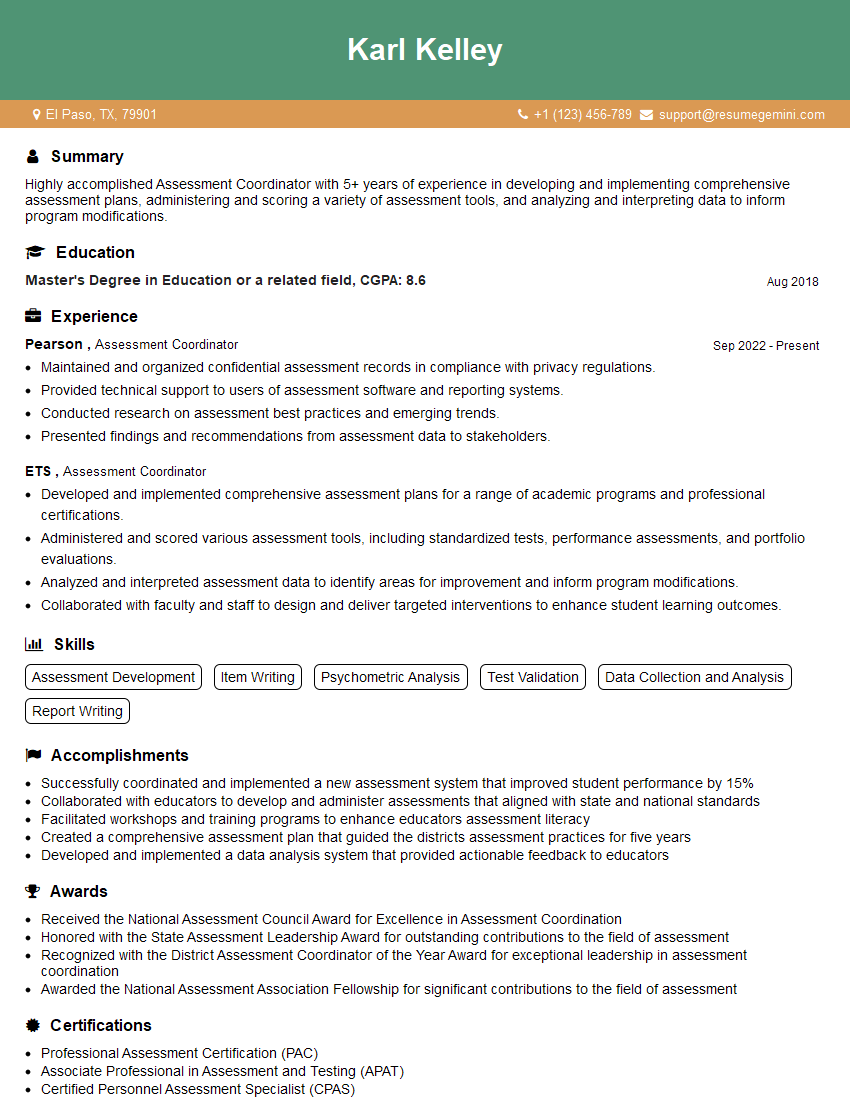
Mastering temperament evaluation opens doors to exciting career opportunities in fields requiring nuanced understanding of human behavior. A strong understanding of this subject significantly enhances your profile and makes you a more competitive candidate. To maximize your chances of landing your dream role, it’s crucial to have an ATS-friendly resume that highlights your skills and experience effectively. ResumeGemini is a trusted resource to help you craft a professional and impactful resume that stands out from the competition. We provide examples of resumes tailored to Temperament Evaluation to give you a head start. Take the next step towards your career goals by building a compelling resume today.

Explore more articles
Users Rating of Our Blogs
Share Your Experience
We value your feedback! Please rate our content and share your thoughts (optional).
What Readers Say About Our Blog
Very informative content, great job.
good