Interviews are more than just a Q&A session—they’re a chance to prove your worth. This blog dives into essential Terrorism Financing Investigation interview questions and expert tips to help you align your answers with what hiring managers are looking for. Start preparing to shine!
Questions Asked in Terrorism Financing Investigation Interview
Q 1. Explain the concept of layering in money laundering.
Layering in money laundering is the process of disguising the origins of illegally obtained funds by moving them through a series of transactions designed to obscure their trail. Think of it like trying to hide a marble in a massive pile of sand – you move it from one part of the pile to another, making it increasingly difficult to trace its original location.
This process typically involves multiple accounts, businesses, and financial instruments. For example, illicit cash might be deposited into a seemingly legitimate business account, then transferred to offshore accounts, converted into different currencies, or invested in various assets before finally being used for legitimate-appearing purchases. The goal is to break the direct link between the criminal activity and the final destination of the money.
- Example: Drug money is deposited into a shell company’s account in a tax haven. The money is then transferred to another company, used to purchase real estate, and finally used to make investments in various financial instruments.
Each transaction makes the source progressively harder to trace, blurring the trail and making it increasingly difficult for investigators to link the money to its criminal origin.
Q 2. Describe the different methods used by terrorist organizations to finance their activities.
Terrorist organizations employ a range of methods to finance their activities, often creatively exploiting vulnerabilities in the global financial system. These methods can be broadly categorized as:
- Criminal Activities: This includes drug trafficking, arms smuggling, human trafficking, kidnapping for ransom, and extortion. These activities generate substantial illicit funds that can be laundered and used to fund terrorist operations.
- Charitable Organizations and Non-Profit Entities: Terrorist groups often exploit legitimate charities or NGOs, using them as fronts to collect donations that are diverted to fund terrorism. Donations can be solicited through various means, some disguised as aid for victims of natural disasters or other crises.
- Hawala Systems and Informal Value Transfer Systems (IVTS): These informal money transfer systems operate outside traditional banking channels and offer a degree of anonymity, making them attractive for terrorist financiers who want to avoid detection. They often rely on trust networks and oral agreements.
- Business Activities: Some terrorist groups may own or control legitimate businesses, using them to generate income that can be used to fund terrorism. These businesses can range from small-scale enterprises to larger corporations.
- State Sponsorship: Some states provide direct or indirect financial support to terrorist groups, either openly or covertly, often through the provision of arms, training, or funding.
- Cryptocurrencies: The anonymity and decentralized nature of cryptocurrencies present challenges in combating terrorism financing, although efforts are underway to mitigate these risks.
The specific methods used can vary widely depending on the group’s capabilities, resources, and operational environment.
Q 3. What are the key components of an effective Anti-Money Laundering (AML) program?
An effective Anti-Money Laundering (AML) program is crucial for financial institutions and businesses to prevent their involvement in money laundering activities, including those supporting terrorism. Key components include:
- Customer Due Diligence (CDD): Thorough identification and verification of customers to determine their identity and risk profile. This involves collecting and verifying information like identification documents and address proofs. Know Your Customer (KYC) is a fundamental part of CDD.
- Transaction Monitoring: Implementing systems to monitor transactions for suspicious activity. This might involve flagging transactions that exceed certain thresholds, those involving unusual patterns, or those that involve high-risk jurisdictions.
- Risk Assessment: Regularly assessing the risks of money laundering and terrorism financing, taking into account factors such as the nature of the business, the customer base, and the geographic location. This helps to tailor AML controls to specific risks.
- Internal Controls: Establishing strong internal policies, procedures, and controls to prevent, detect, and report money laundering and terrorist financing activities. This includes regular training for employees on AML compliance.
- Suspicious Activity Reporting (SAR): Promptly filing SARs with the relevant authorities when suspicious activity is detected. This is crucial for law enforcement and regulatory bodies to investigate potential crimes.
- Independent Audits: Regular independent audits to ensure the AML program is effectively implemented and complies with all relevant regulations.
The effectiveness of an AML program depends on its ongoing adaptation to evolving threats and technologies.
Q 4. How do you identify suspicious transactions related to terrorism financing?
Identifying suspicious transactions related to terrorism financing requires a multifaceted approach that combines advanced technology with human expertise. It involves analyzing transactions for patterns and indicators that deviate from normal behavior. This includes:
- Unusual Transaction Patterns: Frequent, small transactions that aggregate to a larger amount, or unusually large or infrequent transactions, can be suspicious.
- Structuring: Breaking down large transactions into smaller amounts to avoid detection by financial institutions is a classic money laundering technique also used by terrorist financiers.
- Complex Transaction Chains: Tracing the movement of funds through multiple accounts and jurisdictions can reveal hidden connections to terrorist groups.
- High-Risk Jurisdictions: Transactions involving countries known for weak AML/CFT controls or for harboring terrorist organizations should be scrutinized more closely.
- Use of Shell Companies or Nominees: Using companies with little or no apparent business activity or individuals acting as fronts for terrorist groups to disguise the true source of funds.
- Unusually high volume of cash transactions: While not always indicative of terrorism financing, significant cash transactions deserve closer examination.
Advanced analytics and machine learning techniques are increasingly employed to detect subtle patterns and anomalies that may not be apparent through manual review. Human expertise, however, remains essential in interpreting data and making informed decisions.
Q 5. What are the red flags indicating potential terrorist financing?
Several red flags can indicate potential terrorist financing. These vary depending on the context but often include:
- Large, unusual, or frequent cash transactions, especially those involving high-risk countries or individuals known to be associated with terrorist activities.
- Transactions involving known or suspected terrorist organizations or individuals. This requires access to and understanding of relevant sanction lists and intelligence reports.
- Use of shell companies or other legal entities to obscure the source of funds. Investigating the beneficial ownership of these entities is vital.
- Unusual wire transfers, especially those with unclear purposes or routed through multiple jurisdictions. Analyzing the routing of funds is crucial for detecting layering.
- Donations to charities or non-profit organizations with unclear legitimacy or links to known terrorist groups. Due diligence on these organizations is critical.
- Transactions involving individuals or entities subject to sanctions or known to be associated with terrorist financing networks. Keeping up-to-date with sanctions lists is essential.
- Attempts to circumvent AML/CFT controls. These can include using informal money transfer systems or cryptocurrency.
Identifying these red flags requires careful monitoring, analysis, and a deep understanding of terrorist financing techniques.
Q 6. Explain the role of financial institutions in combating terrorism financing.
Financial institutions play a critical role in combating terrorism financing. Their responsibilities include:
- Implementing robust AML/CFT programs: This involves implementing comprehensive programs that comply with national and international regulations and best practices.
- Conducting thorough due diligence on customers: This helps to identify and mitigate risks associated with potential terrorist financing.
- Monitoring transactions for suspicious activity: Promptly identifying and reporting suspicious transactions is crucial for disrupting terrorist financing networks.
- Cooperating with law enforcement agencies: Providing relevant information to assist with investigations and prosecutions of terrorist financing cases.
- Investing in technology and training: Utilizing advanced technologies and providing regular training to staff on AML/CFT issues are essential for maintaining effectiveness.
- Sharing information with other financial institutions: Collaborating with other institutions can help to identify broader patterns of suspicious activity and to enhance overall effectiveness.
By effectively fulfilling these responsibilities, financial institutions contribute significantly to the global effort to disrupt terrorist financing.
Q 7. What is the significance of the Financial Action Task Force (FATF) recommendations?
The Financial Action Task Force (FATF) is an intergovernmental organization that develops and promotes policies to combat money laundering and terrorist financing. Its recommendations are globally recognized as the international standard for AML/CFT compliance. Their significance lies in:
- Setting international standards: The FATF recommendations provide a framework for countries to develop and implement effective AML/CFT measures. This creates a more consistent and effective approach globally.
- Promoting mutual evaluation: The FATF conducts mutual evaluations of its member countries to assess their compliance with the recommendations. This process helps to identify areas for improvement and ensures accountability.
- Identifying high-risk jurisdictions: The FATF identifies countries that have weak AML/CFT systems, urging its members to take extra precautions when dealing with them. This helps to limit the flow of illicit funds.
- Influencing national legislation and policies: FATF recommendations significantly influence the development of national legislation and policies related to AML/CFT. Compliance is often a requirement for maintaining good international standing.
- Enhancing international cooperation: The FATF promotes international cooperation in combating money laundering and terrorist financing by facilitating information exchange and joint investigations.
Compliance with FATF recommendations is increasingly important for countries and financial institutions to maintain their reputation and access to the international financial system.
Q 8. Describe the challenges in tracing terrorist funds through international financial systems.
Tracing terrorist funds internationally is incredibly challenging due to the inherent complexity and anonymity offered by the global financial system. Terrorist organizations are masters of obfuscation, employing a range of techniques to mask the origin and destination of their funds.
- Layer upon layer of transactions: Funds are often moved through numerous accounts in different jurisdictions, making it difficult to establish a clear audit trail. This might involve using shell companies, money mules, and informal value transfer systems (like hawala).
- Use of virtual assets: Cryptocurrencies and other digital assets provide a degree of anonymity that makes tracing funds even more difficult. The decentralized nature of these systems makes it challenging for authorities to track transactions effectively.
- Exploiting regulatory gaps: Terrorist financiers exploit weaknesses in regulatory frameworks, particularly in jurisdictions with lax anti-money laundering (AML) and counter-terrorism financing (CTF) controls. This allows them to move money relatively freely.
- Cross-border cooperation challenges: Effective investigation requires international collaboration, which can be hampered by differing legal frameworks, data-sharing limitations, and political considerations. Getting information across borders can be a lengthy and frustrating process.
Imagine trying to follow a drop of water as it flows through an underground network of interconnected pipes – that’s the scale of the challenge.
Q 9. How do sanctions regimes impact terrorism financing?
Sanctions regimes, such as those imposed by the UN, the US, or the EU, significantly impact terrorism financing by targeting individuals, entities, and states known or suspected of supporting terrorism. These sanctions typically involve asset freezes, financial restrictions, and travel bans.
- Freezing assets: This prevents terrorist organizations from accessing their funds, crippling their operational capabilities. For example, freezing the assets of a designated individual or entity linked to a terrorist group would immediately curtail their funding.
- Restricting financial transactions: Sanctions can prohibit financial institutions from engaging in transactions with designated parties, making it harder for terrorists to move money through the formal banking system. This forces them to rely on more risky, less efficient methods.
- Imposing travel restrictions: This limits the ability of individuals involved in terrorism financing to travel internationally, making it more difficult to coordinate activities and move funds.
- International cooperation: Effective sanctions regimes rely on international cooperation to ensure their effectiveness. This involves sharing information and coordinating enforcement efforts among different countries.
Think of sanctions as a financial blockade, isolating the targeted entities and hindering their ability to obtain resources.
Q 10. What are the legal and ethical considerations in Terrorism Financing investigations?
Terrorism financing investigations involve navigating a complex landscape of legal and ethical considerations. Investigators must adhere to strict legal requirements while simultaneously respecting individual rights and upholding ethical principles.
- Due process and privacy: Investigators must ensure that investigations are conducted lawfully, respecting individuals’ rights to due process and privacy. This requires obtaining appropriate warrants and adhering to strict data protection rules.
- Data protection and confidentiality: Handling sensitive financial information necessitates strong data protection measures and maintaining strict confidentiality to prevent unauthorized access or disclosure.
- International legal cooperation: Investigations often require cooperation with foreign authorities, raising complex issues related to jurisdiction, evidence admissibility, and mutual legal assistance treaties.
- Avoiding entrapment: Investigators must avoid techniques that might constitute entrapment, ensuring that the evidence gathered is genuine and not coerced.
- Ethical conduct: Maintaining the highest ethical standards is crucial, particularly when dealing with sensitive information and potentially damaging allegations.
Finding the balance between effectively disrupting terrorist financing and safeguarding fundamental rights is a constant challenge.
Q 11. Explain the use of technology and data analytics in detecting terrorism financing.
Technology and data analytics play a vital role in detecting terrorism financing. Sophisticated tools and techniques allow investigators to sift through vast amounts of financial data, identifying suspicious patterns and connections that would be impossible to detect manually.
- Financial intelligence units (FIUs): These specialized agencies collect and analyze financial data to detect and disrupt illicit financial flows, including those related to terrorism financing.
- Data mining and machine learning: These techniques allow investigators to identify complex patterns and anomalies in large datasets, such as unusual transaction amounts, frequent transfers between seemingly unrelated accounts, or sudden increases in activity.
- Network analysis: This approach helps visualize the relationships between individuals and entities involved in financial transactions, uncovering hidden connections and networks used by terrorist organizations.
- Predictive policing techniques: These techniques can help anticipate future terrorist financing activities by identifying high-risk individuals or entities based on past behavior and trends.
Think of these tools as powerful microscopes, allowing investigators to zoom in on specific transactions and uncover hidden connections within vast amounts of financial data.
Q 12. How do you analyze financial data to identify patterns and connections related to terrorism financing?
Analyzing financial data to identify terrorism financing involves several key steps:
- Data collection: Gathering data from various sources, including banks, financial institutions, and FIUs.
- Data cleaning and preparation: Preparing the data for analysis by correcting errors, standardizing formats, and removing irrelevant information.
- Pattern identification: Using data analytics tools to identify unusual patterns, such as large, unexplained cash deposits, frequent transfers to offshore accounts, or suspicious activity related to known terrorist entities.
- Network analysis: Mapping the relationships between individuals and entities involved in suspicious transactions to reveal hidden networks.
- Correlation analysis: Identifying connections between seemingly unrelated transactions or events.
- Timeline analysis: Tracking the flow of funds over time to reveal patterns and connections.
For example, an investigator might identify a pattern of small, frequent transactions from multiple individuals into a single account, which could indicate a money-laundering scheme used by a terrorist group.
Q 13. What are the limitations of using financial data alone in investigating terrorism financing?
While financial data is crucial in terrorism financing investigations, relying solely on it has limitations:
- Limited scope: Financial data alone cannot reveal the entire picture. It doesn’t necessarily provide insights into the group’s ideology, operational structure, or recruitment methods. It’s only one piece of the puzzle.
- Obfuscation techniques: Terrorist organizations employ sophisticated techniques to conceal their financial activities, making it difficult to trace funds accurately.
- Lack of context: Financial data needs to be interpreted within a broader context, such as intelligence reports, open-source information, and physical evidence.
- Data gaps: Not all financial transactions are recorded, particularly those involving informal or underground systems.
Imagine trying to solve a mystery using only a financial ledger – you’d only have part of the story.
Q 14. How do you build a case for prosecution involving terrorism financing?
Building a successful prosecution case for terrorism financing requires meticulous evidence gathering and a robust legal strategy:
- Establishing a link to terrorism: Demonstrating a clear and direct link between the financial activities and a terrorist organization or activity is crucial.
- Proving intent: Prosecutors need to prove that the individuals or entities involved intended to provide financial support to terrorism.
- Gathering sufficient evidence: This includes financial records, witness testimonies, communications intercepts, and other forms of evidence.
- Adhering to legal procedures: Following proper legal procedures, including obtaining warrants and adhering to admissibility rules, is essential.
- International cooperation: Collaboration with foreign authorities might be necessary, requiring mutual legal assistance and effective information sharing.
A strong case involves a chain of evidence, connecting the dots between the financial transactions and the terrorist act, proving intent and establishing clear violations of relevant laws.
Q 15. What is your experience with using financial intelligence databases?
My experience with financial intelligence databases is extensive. I’ve worked extensively with systems like the Financial Crimes Enforcement Network’s (FinCEN) database in the US, and similar international databases. These databases are crucial for identifying suspicious activity, tracing financial flows, and uncovering complex networks involved in terrorism financing. For instance, I once used FinCEN’s database to identify a series of seemingly innocuous transactions that, when analyzed together, revealed a complex money laundering scheme funneling funds to a known terrorist organization. My expertise extends beyond simply querying the databases; I’m proficient in data mining, analytical techniques, and visualizing complex financial relationships to build compelling investigative narratives.
I understand the importance of utilizing advanced search techniques to effectively navigate these vast datasets, employing filters based on various criteria like transaction amounts, entities involved, geographical locations, and transaction types. I am also skilled in interpreting the results and recognizing patterns that might indicate illicit activity. The use of these databases is not simply about data retrieval, but about strategic investigation and analytical thinking.
Career Expert Tips:
- Ace those interviews! Prepare effectively by reviewing the Top 50 Most Common Interview Questions on ResumeGemini.
- Navigate your job search with confidence! Explore a wide range of Career Tips on ResumeGemini. Learn about common challenges and recommendations to overcome them.
- Craft the perfect resume! Master the Art of Resume Writing with ResumeGemini’s guide. Showcase your unique qualifications and achievements effectively.
- Don’t miss out on holiday savings! Build your dream resume with ResumeGemini’s ATS optimized templates.
Q 16. Describe your experience with conducting interviews and interrogations.
Conducting interviews and interrogations in terrorism financing investigations requires a delicate balance of rapport-building and assertive questioning. My approach is always built on a foundation of respect, while maintaining a firm and professional demeanor. I begin by establishing a clear and comfortable environment, fostering trust to encourage open communication. However, I am also trained to recognize deception and employ techniques to elicit truthful responses. I understand the importance of active listening, precise questioning, and careful observation of both verbal and nonverbal cues.
For example, in one investigation, I successfully elicited crucial information from a seemingly uncooperative witness by building rapport and demonstrating empathy for their situation. By gradually gaining their trust, I was able to uncover critical financial details that were central to the case. Documenting every detail of the interview, including the witness’s statements, my observations, and any evidence obtained, is paramount to maintain the integrity of the investigation and ensure admissibility in court.
Q 17. How do you handle sensitive information and maintain confidentiality in terrorism financing investigations?
Handling sensitive information and maintaining confidentiality is paramount in terrorism financing investigations. It’s a core principle that underpins everything I do. I adhere strictly to all relevant legal and regulatory frameworks concerning data protection and confidentiality, including those outlined in laws such as the USA PATRIOT Act (in the US context) and equivalent legislation in other jurisdictions. My work consistently involves handling classified information, so I’m adept at operating within secure systems and environments.
This includes employing strong password management practices, utilizing secure communication channels, and strictly adhering to data access protocols. Furthermore, I only share information on a need-to-know basis, ensuring that all disclosures are justified and documented. Protecting sensitive information is not just about following rules; it’s about safeguarding national security and protecting the integrity of ongoing investigations.
Q 18. What are your skills in using financial software and analytical tools?
My skills in using financial software and analytical tools are highly developed. I am proficient in a range of software, including specialized financial analysis programs such as ACL, IDEA, and Palantir, as well as standard data visualization tools like Tableau and Power BI. I’m also adept at using scripting languages like Python for data manipulation and analysis, automating tasks, and building custom analytical tools. This enables me to efficiently process large datasets, identify anomalies, and uncover hidden patterns in financial transactions.
For example, I once used Python scripting to automate the analysis of thousands of bank transactions, identifying unusual patterns that manually reviewing would have been impossible. These patterns subsequently led to the identification of a significant money laundering operation. My ability to leverage these tools to enhance investigative efficiency is a critical asset in my work.
Q 19. Explain your understanding of the concept of ‘Know Your Customer’ (KYC).
Know Your Customer (KYC) is a crucial process for financial institutions and other regulated entities to verify the identity of their clients and understand the nature of their business relationships. This process helps prevent financial institutions from being used for illicit activities like money laundering and terrorism financing. It involves collecting and verifying identifying information, such as proof of address, identification documents, and beneficial ownership details.
A robust KYC program involves ongoing monitoring of client activity to detect suspicious transactions or changes in client behavior. Failing to conduct thorough KYC checks can expose an institution to significant financial and legal risks, including hefty fines and reputational damage. Think of it as a financial background check for businesses and individuals. Without it, financial institutions would be vulnerable to exploitation by criminals.
Q 20. How would you handle a situation where a suspicious transaction report (STR) is inconclusive?
When a Suspicious Transaction Report (STR) is inconclusive, my approach is systematic and multi-faceted. I wouldn’t simply dismiss it. First, I would thoroughly review all available information, ensuring no detail is overlooked. This would include scrutinizing the transaction details, reviewing any related documents, and cross-referencing information across various databases.
Next, I would explore additional investigative avenues. This might involve obtaining supplementary information from the reporting institution, conducting further analysis of linked accounts, or even conducting interviews with relevant individuals. If necessary, I would collaborate with other law enforcement agencies or international partners to obtain additional information or insights. The goal is to either fully resolve the suspicions or to identify a clear path forward for further investigation, perhaps refining the focus of the inquiry.
Q 21. Describe your experience with working under pressure and meeting deadlines.
Working under pressure and meeting deadlines is an integral part of my role. Terrorism financing investigations often involve time-sensitive situations, requiring quick analysis and decisive action. My approach focuses on effective time management, prioritization, and delegation when appropriate. I’m adept at breaking down complex tasks into manageable components, allowing me to track progress and ensure timely completion.
For instance, during a high-pressure situation involving a suspected imminent terrorist attack, I was able to coordinate a team effectively to analyze numerous financial transactions within a tight timeframe, identifying crucial information that led to the prevention of the attack. I thrive in high-pressure environments due to my ability to remain calm, focused, and efficient, even under significant time constraints. Maintaining a clear head and strong organizational skills is crucial in high-stakes investigations.
Q 22. What is your understanding of different types of terrorist financing techniques?
Terrorist financing techniques are diverse and constantly evolving, making them challenging to detect. They can be broadly categorized, though often overlap. Think of it like a toolbox – terrorists choose the tools that best suit their needs at a particular time.
- Cash-Based Methods: This includes using physical currency, often obtained through illicit activities like drug trafficking or smuggling, to fund operations. The lack of electronic trail makes this difficult to trace. Imagine someone using cash to buy weapons – the transaction is discreet and leaves minimal evidence.
- Hawala and Other Informal Value Transfer Systems (IVTS): These operate outside formal banking systems, relying on trust and networks of agents to transfer money. It’s like a sophisticated underground banking system where trust replaces traditional financial records, making tracing challenging.
- Formal Financial Systems: Terrorist groups exploit the formal banking system by creating shell companies, using complex financial instruments, and layering transactions to obscure their activities. This is akin to using sophisticated accounting maneuvers to hide money laundering, making it hard to identify the true source of funds.
- Fundraising and Charitable Organizations: Legitimate charities can be exploited by terrorists who disguise their donations as charitable contributions, making it difficult to discern between genuine philanthropy and terrorist financing. This is similar to a wolf in sheep’s clothing – a seemingly benevolent organization could be a front for illicit activities.
- Cryptocurrencies: The anonymity and decentralized nature of cryptocurrencies offer an attractive alternative for terrorist financing, particularly due to the difficulty in tracing transactions on the blockchain. It’s like using digital cash that’s hard to track, offering a higher degree of anonymity than traditional methods.
Understanding the nuances of each method is crucial for effective investigation. For example, recognizing patterns in cash deposits from specific regions might indicate involvement in drug trafficking, a common source of terrorist financing.
Q 23. How do you assess the risk of terrorism financing in different sectors?
Assessing terrorism financing risk requires a multi-faceted approach, varying significantly across sectors. The key is to identify vulnerabilities and indicators within each sector.
- Financial Institutions: Banks and other financial institutions are high-risk due to their role in processing large sums of money. We look for unusual activity patterns, suspicious transactions, and relationships with known or suspected terrorists or their associates. Think of it like using fraud detection software to scan for anomalies in transactions.
- Non-Profit Organizations (NPOs): Charities and NPOs are susceptible to exploitation. We scrutinize funding sources, financial reporting transparency, and beneficiaries to ensure funds aren’t diverted to terrorist activities. Here, we would be examining the organization’s annual reports, comparing its expenses with its stated mission.
- Real Estate: Purchasing property can be used to launder money or create assets. Investigators focus on unusually large transactions, opaque ownership structures, and links to known terrorist organizations or individuals. It is like tracing the origin and flow of money through various real estate transactions, looking for any incongruities.
- Businesses and Trade: Businesses can be used as fronts for money laundering or to channel funds to terrorist groups. Investigators examine import/export records, supply chain activities, and financial statements. This might involve looking into inconsistencies between a company’s reported revenue and its operations.
Risk assessment requires a combination of quantitative and qualitative analysis. Quantitative data might include transaction volumes, while qualitative data could include information gathered through intelligence or human sources.
Q 24. Explain your knowledge of relevant national and international laws and regulations.
My knowledge of national and international laws and regulations concerning terrorism financing is extensive. This includes a deep understanding of the:
- United Nations Security Council Resolutions (UNSCR): These resolutions, particularly those targeting Al-Qaeda and ISIS, provide the international legal framework for combating terrorism financing. They outline sanctions, asset freezes, and other measures.
- Financial Action Task Force (FATF) Recommendations: The FATF sets international standards for combating money laundering and terrorist financing. These recommendations guide national legislation and enforcement. They serve as a benchmark for countries to improve their anti-money laundering and combating the financing of terrorism (AML/CFT) regimes.
- National Legislation: Each country has specific laws and regulations criminalizing terrorist financing, often mirroring FATF recommendations. Examples include laws against money laundering, terrorist financing, and the proliferation of weapons of mass destruction. It is imperative to be fully aware of the specific laws within a given jurisdiction.
- Patriot Act (USA PATRIOT Act): This legislation significantly enhanced U.S. capabilities in surveillance, money laundering and terrorist financing investigations. It increased intelligence sharing and strengthened bank secrecy laws, affecting how financial institutions manage risk.
Staying current on amendments and interpretations of these laws is crucial for effective investigation. For example, changes in cryptocurrency regulations require constant attention, given their increasing use by terrorist organizations.
Q 25. Describe your proficiency in conducting financial investigations.
My proficiency in conducting financial investigations is rooted in years of experience utilizing various methodologies and tools. This involves:
- Financial Statement Analysis: Scrutinizing financial records (bank statements, tax returns, etc.) to detect anomalies and inconsistencies that may indicate illegal activities. This could involve identifying unusual patterns, large cash deposits, or inconsistencies between income and expenses.
- Transaction Tracing: Following the flow of funds through various accounts and entities to identify the source of money and its ultimate destination. This might involve mapping complex transactions across multiple jurisdictions and financial institutions.
- Network Analysis: Mapping the relationships between individuals, entities, and accounts involved in suspicious financial transactions. This could lead to uncovering hidden financial networks and identifying key players within a terrorist organization.
- Data Analytics: Employing data mining and other analytical techniques to identify suspicious patterns within large datasets of financial transactions. This involves using specialized software to analyze large amounts of data, searching for indicators that may be missed through manual analysis.
- Use of Specialized Software: Proficiency in using various software tools for financial investigation, including AML/CFT software, case management systems, and data visualization platforms. This includes staying current with advances in financial analytics and software.
My approach is methodical, starting with identifying suspicious activity, then tracing the funds, and ultimately building a comprehensive case file.
Q 26. Explain how you collaborate effectively with other law enforcement agencies.
Effective collaboration with other law enforcement agencies is paramount in combating terrorism financing. This requires:
- Information Sharing: Establishing secure channels for exchanging intelligence and investigative findings with national and international partners. This involves participating in joint operations and task forces.
- Joint Investigations: Working collaboratively with other agencies to conduct joint investigations, leveraging each agency’s expertise and resources. This often necessitates overcoming differing national laws and investigation protocols.
- Mutual Legal Assistance (MLA): Utilizing MLA treaties to obtain evidence and conduct investigations across international borders. This process can involve complex legal procedures and international cooperation.
- Liaison Officers: Working closely with liaison officers from other agencies to foster communication and coordination. This is an ongoing process demanding regular communication and mutual respect.
- Building Relationships: Cultivating strong professional relationships with counterparts in other agencies through regular communication and trust-building. This is crucial for effective information exchange and cooperation in fast-moving situations.
A recent case involved a joint operation with a foreign agency to trace funds linked to a terrorist group. Effective collaboration allowed us to successfully freeze assets and disrupt the group’s financial operations.
Q 27. How do you stay updated on emerging trends in terrorism financing?
Staying updated on emerging trends in terrorism financing is a continuous process that requires a multi-pronged approach.
- Monitoring Financial Intelligence Units (FIUs): Regularly reviewing FIU reports and advisories to stay informed about new and emerging threats. This provides insights into current methods and trends in terrorist financing.
- Academic Research and Publications: Tracking scholarly research and publications on terrorism financing to understand the latest trends and methodologies employed by terrorist organizations. This keeps me aware of new challenges and helps in developing countermeasures.
- Industry Conferences and Workshops: Attending conferences and workshops to network with experts and learn about the latest developments in the field. This offers opportunities to exchange best practices and understand the evolving landscape.
- Open-Source Intelligence (OSINT): Utilizing open-source intelligence sources, such as news articles, social media, and online forums, to gather information on emerging terrorist financing methods. This might uncover information that isn’t publicly available through official channels.
- Government and International Organization Reports: Following reports from governmental agencies and international organizations such as the UN, FATF, and Interpol to gain insights into current threats and trends. These reports provide invaluable data on evolving terrorist financing strategies.
The rapid evolution of technology, especially in the realm of cryptocurrencies, requires constant vigilance and adaptation.
Q 28. What is your experience with presenting findings and providing recommendations?
Presenting findings and providing recommendations is a critical part of my role. This involves:
- Clear and Concise Reporting: Preparing well-structured reports that clearly present the findings of the investigation, including evidence and supporting documentation. This ensures that all information is presented logically and in an easily digestible format.
- Data Visualization: Utilizing charts, graphs, and other visual aids to present complex financial data in an easily understandable way. This makes it easier for audiences to grasp complex information quickly.
- Evidence-Based Recommendations: Formulating evidence-based recommendations based on the investigation’s findings. This ensures recommendations are well-supported and can be practically implemented.
- Tailoring Presentations: Adapting presentations to suit the audience, whether it’s a technical audience or senior management. The language and level of detail should align with the audience’s expertise.
- Q&A Sessions: Engaging in Q&A sessions to address any questions or concerns about the findings and recommendations. This shows confidence in findings and fosters greater understanding.
I have extensive experience presenting findings to various audiences, including law enforcement agencies, government officials, and international organizations. My goal is always to ensure that my findings are clearly understood and that the recommendations are actionable and effective.
Key Topics to Learn for Terrorism Financing Investigation Interview
- Financial Intelligence: Understanding the flow of illicit funds, including money laundering techniques commonly used by terrorist organizations. Practical application: Analyzing suspicious transaction reports (STRs) and identifying patterns of financial activity.
- Terrorist Financing Typologies: Recognizing the various methods used to finance terrorist activities, such as hawala systems, charities, and virtual currencies. Practical application: Developing investigative strategies based on identified typologies.
- International Sanctions and Regulations: Familiarity with international laws, treaties, and regulations related to combating terrorism financing, including UN Security Council resolutions. Practical application: Applying relevant legal frameworks to investigative processes.
- Investigative Techniques: Mastering data analysis, surveillance techniques, and interview methodologies relevant to financial investigations. Practical application: Building a case using financial evidence and witness testimonies.
- Counter-Terrorism Strategies: Understanding the broader context of counter-terrorism efforts and how financial investigations contribute to national security. Practical application: Assessing the effectiveness of various counter-terrorism strategies and their impact on terrorist financing.
- Data Analysis and Technology: Proficiency in using financial software and databases to analyze large datasets and identify suspicious activities. Practical application: Utilizing data visualization techniques to present findings effectively.
- Legal and Ethical Considerations: Understanding the legal and ethical implications of conducting terrorism financing investigations, including protecting sources and evidence. Practical application: Ensuring adherence to legal procedures and ethical guidelines throughout the investigation process.
Next Steps
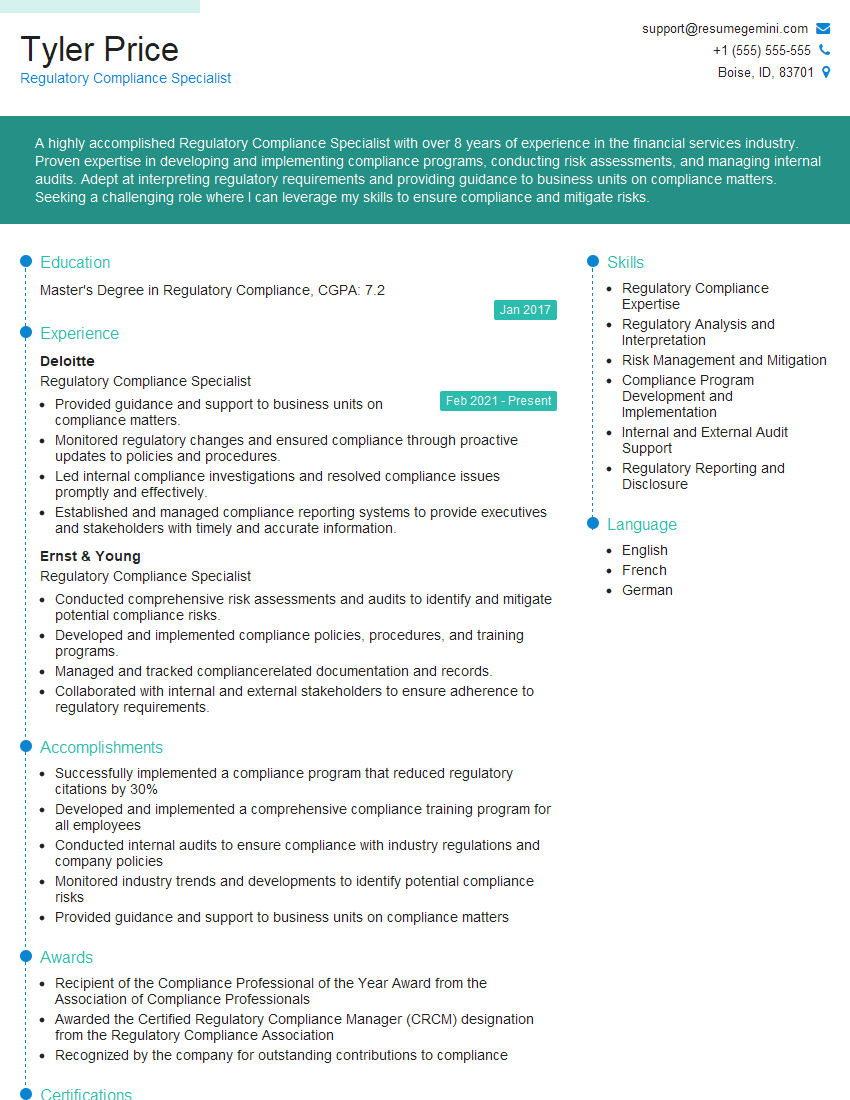
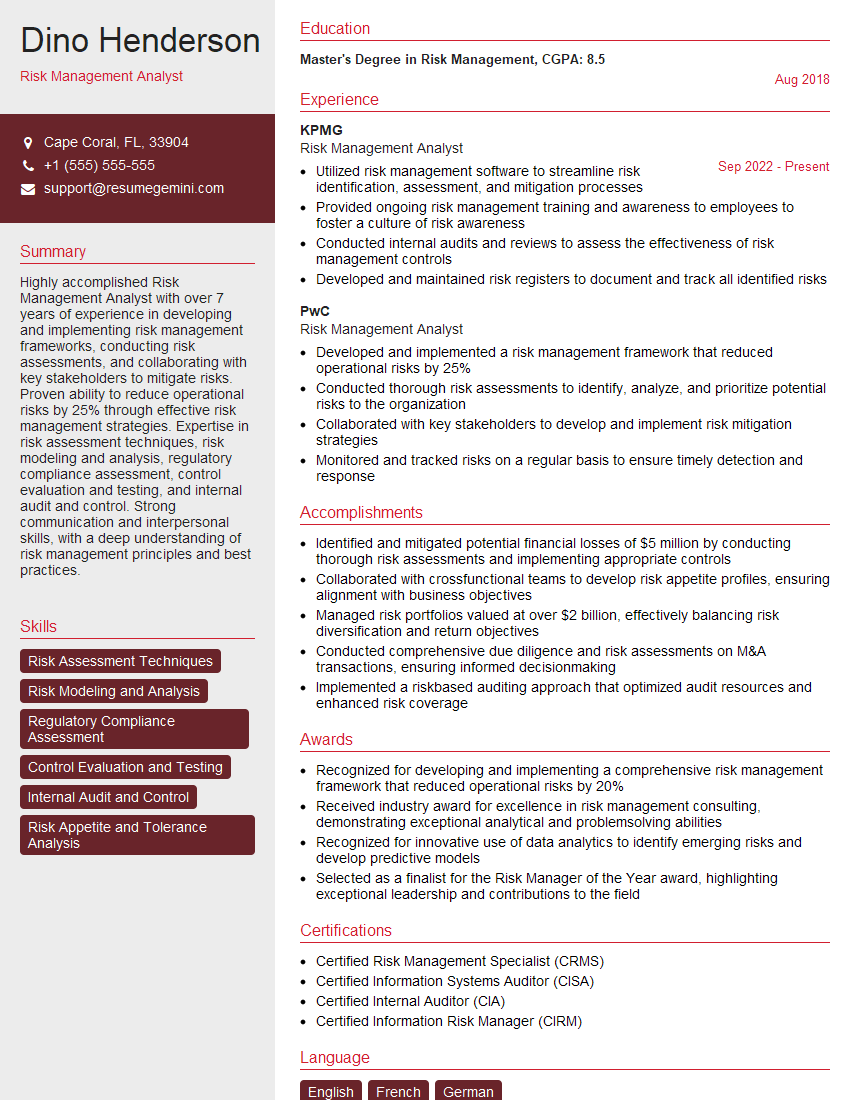
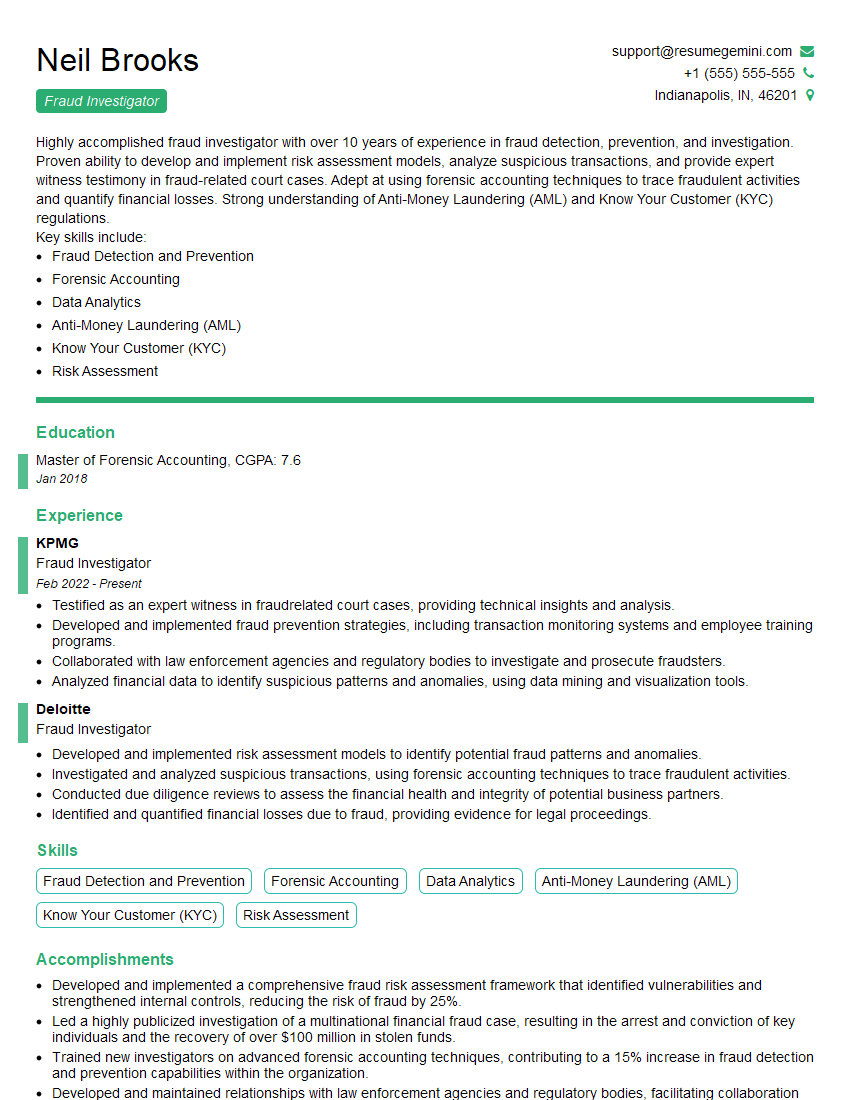
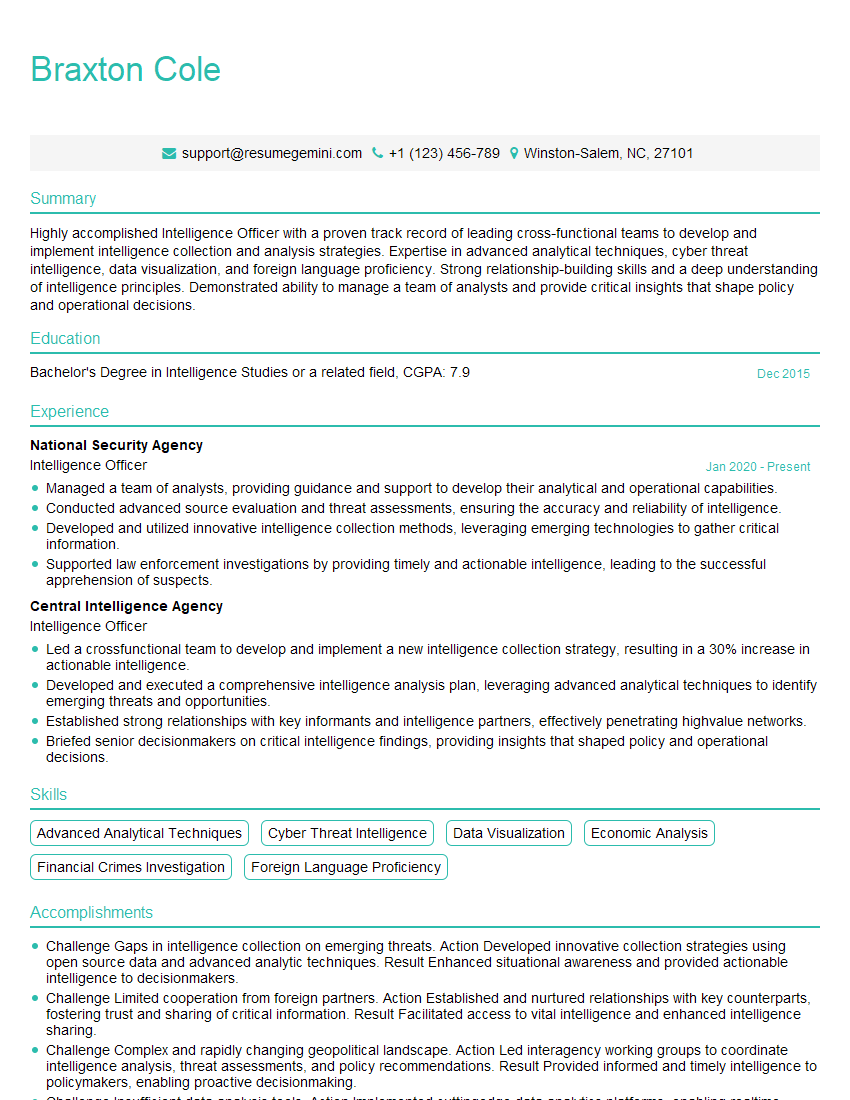
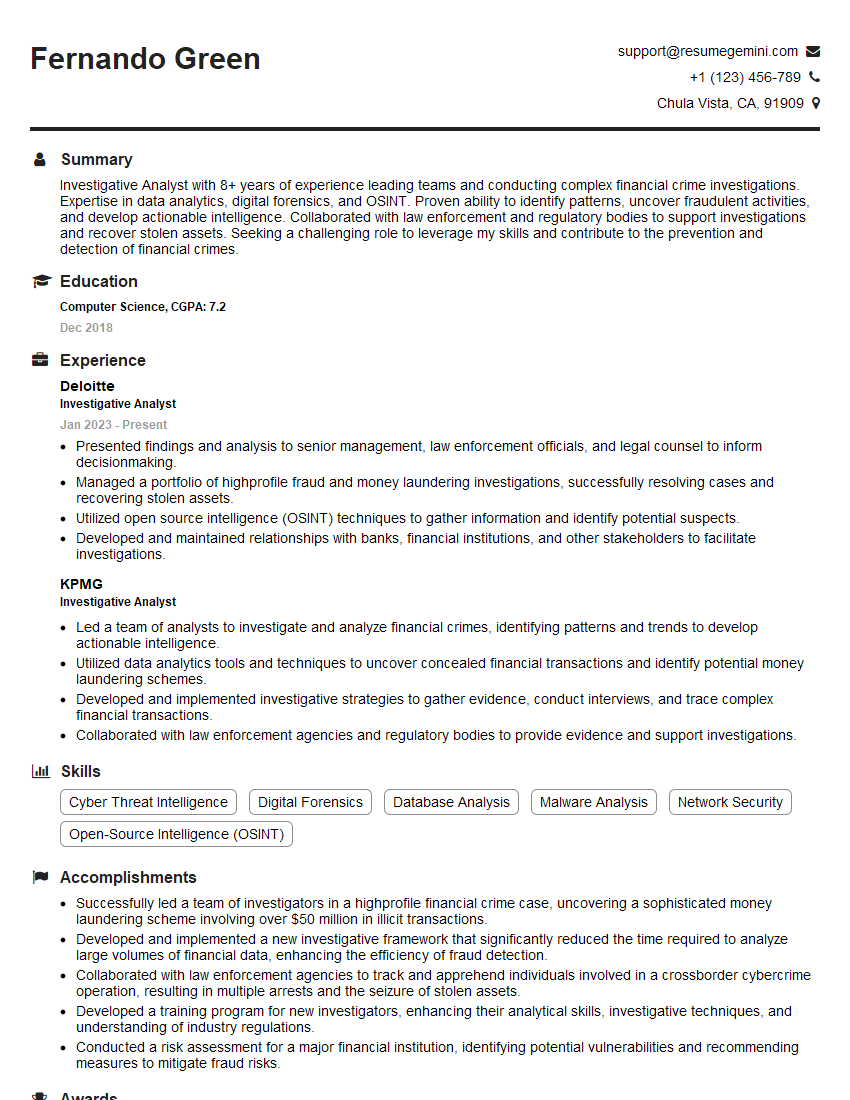
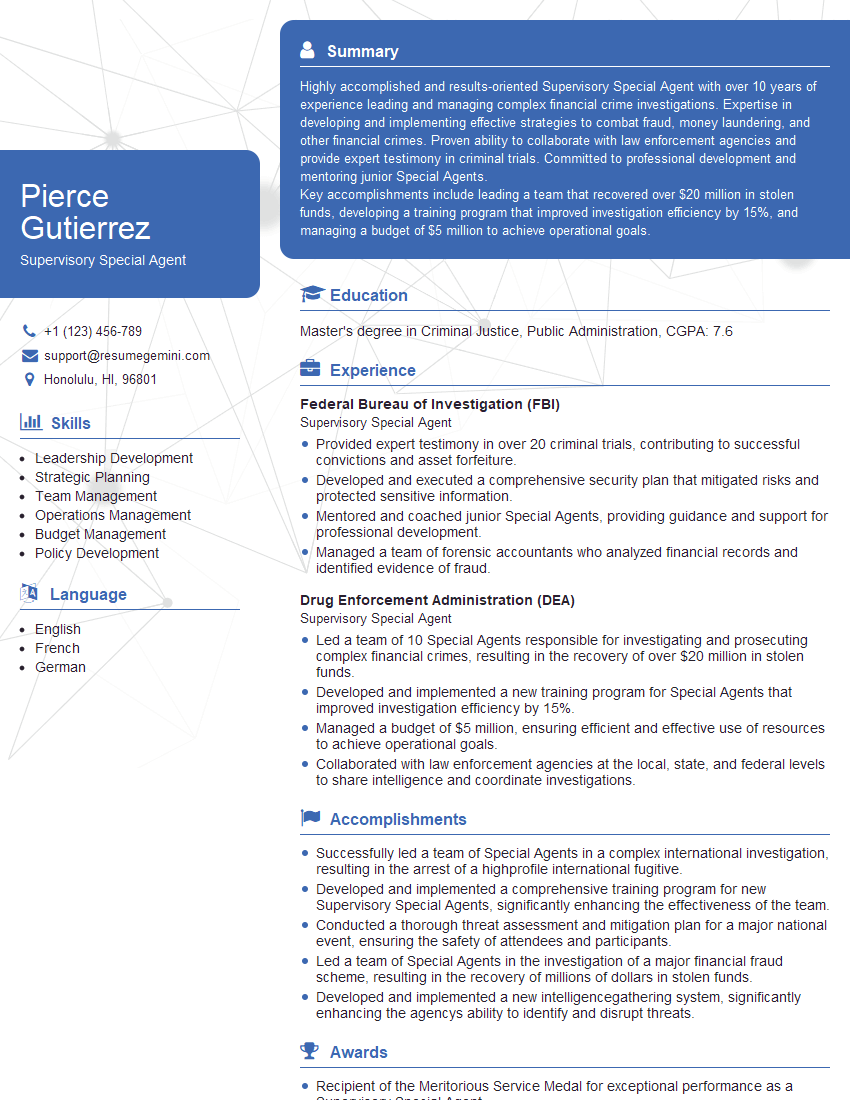
Mastering Terrorism Financing Investigation opens doors to a rewarding career combating a significant global threat. This specialized field offers opportunities for impactful work and continuous professional development. To maximize your job prospects, creating a strong, ATS-friendly resume is crucial. ResumeGemini is a trusted resource to help you build a compelling resume that highlights your skills and experience effectively. Examples of resumes tailored to Terrorism Financing Investigation are available within ResumeGemini to guide your creation process. Invest in your future; invest in a professionally crafted resume.
Explore more articles
Users Rating of Our Blogs
Share Your Experience
We value your feedback! Please rate our content and share your thoughts (optional).
What Readers Say About Our Blog
Very informative content, great job.
good