Interviews are more than just a Q&A session—they’re a chance to prove your worth. This blog dives into essential Thermal and Mechanical Property Evaluation interview questions and expert tips to help you align your answers with what hiring managers are looking for. Start preparing to shine!
Questions Asked in Thermal and Mechanical Property Evaluation Interview
Q 1. Explain the difference between tensile strength and yield strength.
Tensile strength and yield strength are both crucial measures of a material’s resistance to deformation under tensile loading, but they represent different stages of that process. Think of pulling on a rubber band.
Tensile strength represents the maximum stress a material can withstand before it breaks or fractures. It’s the ultimate strength point. Imagine the point where the rubber band snaps. This value is determined from the stress-strain curve as the highest point on the curve. It’s usually expressed in units of Pascals (Pa) or megapascals (MPa).
Yield strength, on the other hand, indicates the stress at which the material begins to deform plastically – meaning the deformation becomes permanent, even after the load is removed. It’s the point where the rubber band starts to stretch and doesn’t quite return to its original length when you let go. Yield strength is usually determined using an offset method from the stress-strain curve (e.g., 0.2% offset yield strength). It’s also expressed in Pa or MPa. A material’s yield strength is often more practically relevant than its tensile strength because it predicts the onset of permanent deformation, which can be crucial for structural design.
In essence, tensile strength tells us how much force a material can handle before failure, while yield strength tells us how much force it can handle before permanent deformation occurs.
Q 2. Describe different techniques for measuring thermal conductivity.
Measuring thermal conductivity involves determining how efficiently a material transmits heat. Several techniques exist, each with its strengths and weaknesses:
- Steady-State Methods: These methods involve establishing a constant temperature gradient across a sample and measuring the resulting heat flow. Examples include:
- Comparative Method: The sample’s thermal conductivity is determined by comparing its heat flow to a material with a known thermal conductivity under identical conditions.
- Guarded Hot Plate Method: A highly accurate method using a precisely controlled hot plate to establish a uniform heat flux.
- Transient Methods: These methods measure the heat flow as a function of time. Examples include:
- Laser Flash Method: A short laser pulse heats one side of a sample, and the temperature rise on the opposite side is monitored to determine thermal diffusivity, which is then used to calculate thermal conductivity.
- 3ω-Method: A thin heater wire is placed on the sample, and the temperature rise is measured using the same wire, offering excellent sensitivity for thin films.
The choice of method depends on factors such as the material’s properties, sample geometry, and desired accuracy. For instance, the Laser Flash method is ideal for small samples, while the Guarded Hot Plate method is better suited for larger, more homogeneous samples.
Q 3. How do you determine the coefficient of thermal expansion of a material?
The coefficient of thermal expansion (CTE) quantifies how much a material expands or contracts per degree Celsius (or Fahrenheit) change in temperature. Think of how roads expand and contract with temperature changes.
Determining the CTE typically involves measuring the dimensional change of a material over a temperature range. Common techniques include:
- Dilatometry: A dilatometer measures the change in length of a sample as temperature is varied. This is a very precise method.
- Thermomechanical Analysis (TMA): TMA is a technique that can measure dimensional changes (expansion or contraction) as a function of temperature and force, providing more comprehensive data.
- Interferometry: This optical method uses interference patterns to measure very small changes in length, making it suitable for high-precision CTE measurements.
The CTE is calculated from the measured dimensional change and temperature change using the formula: CTE = (ΔL/L₀) / ΔT, where ΔL is the change in length, L₀ is the original length, and ΔT is the temperature change. The unit for CTE is typically per degree Celsius (°C⁻¹).
Q 4. What are the common methods for measuring hardness?
Hardness testing measures a material’s resistance to indentation or scratching. Several methods are commonly employed, each using a different indenter and force application:
- Brinell Hardness Test: Uses a hardened steel or carbide ball indenter. The diameter of the indentation is measured to determine hardness.
- Rockwell Hardness Test: Employs a diamond cone or steel ball indenter. Hardness is determined from the depth of the indentation.
- Vickers Hardness Test: Uses a diamond pyramid indenter. The diagonal length of the square indentation is measured.
- Shore Durometer: Measures hardness by the depth of penetration of an indenter into the material surface.
The choice of method depends on the material’s hardness range and the type of information required. For instance, the Brinell test is suitable for softer metals, while the Rockwell test is preferred for harder materials. Vickers is widely used for a broad range of materials because of its high precision and applicability to various geometries. Shore Durometer is often employed for plastics and rubber.
Q 5. Explain the concept of fatigue failure.
Fatigue failure is a progressive and localized structural damage that occurs when a material is subjected to cyclic loading (repeated stress and strain). Imagine repeatedly bending a paper clip back and forth – eventually, it will break, even if the force applied in each cycle is less than the material’s ultimate tensile strength. This is fatigue failure.
The process begins with the initiation of micro-cracks at stress concentration points (such as surface flaws, inclusions, or notches) within the material. These micro-cracks propagate gradually with each loading cycle, ultimately leading to macro-crack formation and eventual failure. This is typically a sudden and catastrophic event.
Several factors influence fatigue failure, including the magnitude of the cyclic stress, the number of cycles, the material’s properties (e.g., microstructure, yield strength), and the presence of surface defects. Fatigue testing is crucial in designing components that withstand repeated loading, such as aircraft wings or automotive parts. S-N curves (stress vs number of cycles to failure) are commonly used to characterize a material’s fatigue resistance.
Q 6. How does temperature affect material properties?
Temperature significantly impacts material properties. Many properties change non-linearly with temperature, often showing complex relationships.
- Strength and Ductility: Generally, increasing temperature reduces yield strength and increases ductility (ability to deform plastically before fracturing) for most metals. However, there are exceptions such as some high-temperature alloys.
- Elastic Modulus: The elastic modulus (stiffness) of most materials decreases with increasing temperature.
- Thermal Conductivity: Thermal conductivity varies with temperature, often increasing with decreasing temperature for metals. Insulators behave differently.
- Coefficient of Thermal Expansion: CTE is strongly dependent on temperature; it isn’t always a constant.
- Creep: At elevated temperatures, materials exhibit creep, which is a time-dependent plastic deformation under sustained stress.
Understanding the temperature dependence of material properties is crucial for designing components that operate in various temperature environments. For example, designing high-temperature components for jet engines requires consideration of materials with high creep resistance and sufficient strength at elevated temperatures. Low-temperature applications may require considerations for brittleness and reduced ductility.
Q 7. Discuss the influence of microstructure on mechanical properties.
Microstructure, the arrangement of grains, phases, and defects at a microscopic level, significantly influences a material’s mechanical properties. Imagine a brick wall: the arrangement of bricks determines its overall strength and stability.
Examples of microstructure’s influence:
- Grain Size: Smaller grain sizes typically lead to higher strength and hardness due to the increased grain boundary area, which hinders dislocation movement (dislocations are crystal imperfections that contribute to plastic deformation). Larger grain sizes usually result in greater ductility.
- Phase Distribution: The distribution and morphology of different phases in a material impact its properties. For instance, the presence of a second phase can strengthen a material by impeding dislocation movement or enhancing the material’s toughness.
- Defects: Defects such as dislocations, vacancies, and grain boundaries can significantly influence the material’s mechanical behavior. Dislocations act as obstacles to dislocation movement, increasing material strength. Grain boundaries can affect fracture behavior.
- Precipitation Hardening: This technique involves creating a fine dispersion of precipitates within a matrix, increasing strength and hardness by hindering dislocation motion. Examples include aluminum alloys.
Techniques like microscopy (optical, electron) and diffraction methods (XRD) are used to characterize the microstructure and relate it to the mechanical properties. Controlling microstructure through processing techniques, such as heat treatments or alloying, allows tailoring of material properties for specific applications.
Q 8. Describe different types of stress and strain.
Stress and strain are fundamental concepts in mechanics describing how materials respond to applied forces. Stress is the internal force per unit area within a material caused by an external force, while strain is the resulting deformation or change in shape and size. Different types exist:
- Normal Stress: Acts perpendicular to the surface. Think of pushing down on a block – the stress inside is normal stress. It can be tensile (pulling apart) or compressive (pushing together).
- Shear Stress: Acts parallel to the surface. Imagine trying to slide two layers of a deck of cards – the stress between layers is shear stress.
- Normal Strain: The change in length divided by the original length. A stretched rubber band experiences tensile normal strain.
- Shear Strain: The change in angle between two initially perpendicular lines. This occurs when you twist a rod.
- Volumetric Strain: The change in volume divided by the original volume. This is relevant for materials under hydrostatic pressure.
Understanding these different stress and strain types is crucial for designing structures and components that can withstand various loading conditions.
Q 9. What are the limitations of different material testing methods?
Material testing methods, while powerful, have limitations. These depend on the method and material:
- Tensile Testing: Assumes uniform stress and strain, which isn’t always true in real-world components. It might also be difficult to test brittle materials that fracture before yielding.
- Compression Testing: Buckling can be a major issue, especially with slender specimens. Specimen preparation is also crucial for accurate results.
- Hardness Testing: Measures resistance to indentation, but doesn’t directly give strength or ductility information. It’s also surface-sensitive and can be affected by surface treatments.
- Impact Testing: Measures the energy absorbed during fracture, providing information about toughness. However, the results can be highly sensitive to temperature and specimen geometry.
- Fatigue Testing: Time-consuming and requires specialized equipment to induce cyclic loading. Results can be highly dependent on loading conditions and surface finish.
It’s important to select the appropriate test method based on the material’s properties and the application’s requirements. Often, multiple tests are used to obtain a comprehensive understanding.
Q 10. Explain the concept of creep and stress relaxation.
Creep and stress relaxation are time-dependent material behaviors at elevated temperatures:
- Creep: The tendency of a material to deform slowly under a constant load over time. Imagine a metal component in a jet engine – the high temperature causes it to gradually deform even under a constant load, potentially leading to failure. The rate of creep increases with temperature and applied stress.
- Stress Relaxation: The decrease in stress in a material held at constant strain over time. Consider a plastic component clamped tightly; the clamping force gradually decreases over time due to stress relaxation.
Both phenomena are crucial considerations in designing components for high-temperature applications, such as power plants, aerospace, and chemical processing industries.
Q 11. How do you interpret a stress-strain curve?
A stress-strain curve graphically represents the relationship between stress and strain for a material under uniaxial loading (typically tensile testing). It reveals key material properties:
- Elastic Region: The linear portion where the material deforms elastically (returns to its original shape after unloading). The slope of this region represents Young’s modulus (E), a measure of stiffness.
- Yield Strength: The stress at which the material starts to deform plastically (permanent deformation). This is crucial for determining the load-bearing capacity of a component.
- Ultimate Tensile Strength: The maximum stress the material can withstand before fracture. This is a key measure of strength.
- Fracture Strength: The stress at which the material fractures.
- Ductility: The ability of a material to deform plastically before fracture. It’s often represented by elongation or reduction in area.
The shape of the stress-strain curve depends heavily on the material type – ductile materials exhibit a significant plastic region before fracture, whereas brittle materials fracture with little to no plastic deformation.
Q 12. Describe different types of fracture.
Fracture is the separation of a material into two or more pieces. Different types of fracture exist:
- Ductile Fracture: Characterized by significant plastic deformation before fracture, often with necking (reduction in cross-sectional area) and cup-and-cone fracture surfaces. This type of fracture is usually accompanied by visible warning signs before failure.
- Brittle Fracture: Occurs suddenly with little or no plastic deformation. The fracture surface is usually flat and perpendicular to the applied stress. Brittle fractures can be catastrophic and often occur without warning.
- Fatigue Fracture: Results from repeated cyclic loading, often with a characteristic fatigue crack initiation and propagation. It starts with small cracks that gradually grow until final fracture occurs.
- Creep Fracture: Occurs at elevated temperatures due to long-term creep deformation. It’s typically characterized by intergranular cracking (cracking along grain boundaries).
Understanding the type of fracture is critical for failure analysis and design improvements to prevent future failures.
Q 13. What are the common non-destructive testing methods for material characterization?
Non-destructive testing (NDT) methods are used to characterize materials without damaging them. Common methods include:
- Ultrasonic Testing (UT): Uses high-frequency sound waves to detect internal flaws and measure thickness. Think of it like a medical ultrasound but for materials.
- Radiographic Testing (RT): Uses X-rays or gamma rays to create images of internal structures, revealing defects like cracks, porosity, and inclusions.
- Magnetic Particle Testing (MT): Detects surface and near-surface flaws in ferromagnetic materials by magnetizing the material and applying magnetic particles. The particles accumulate at the flaw, making it visible.
- Liquid Penetrant Testing (PT): Detects surface-breaking flaws by applying a dye penetrant that seeps into the flaw and is then revealed by a developer.
- Eddy Current Testing (ECT): Uses electromagnetic induction to detect surface and subsurface flaws in conductive materials. It’s often used for inspecting tubing and wires.
The choice of NDT method depends on the material type, the type of defect expected, and the accessibility of the component.
Q 14. Explain the difference between elastic and plastic deformation.
The difference between elastic and plastic deformation lies in the material’s ability to recover its original shape after the load is removed:
- Elastic Deformation: The material deforms temporarily under load and returns to its original shape and size once the load is removed. Think of stretching a rubber band – it returns to its original length when released. This is governed by Hooke’s Law.
- Plastic Deformation: The material deforms permanently and does not return to its original shape after the load is removed. Think of bending a paper clip – it retains its bent shape. Plastic deformation involves the rearrangement of atoms within the material’s crystal structure.
The transition between elastic and plastic deformation is marked by the yield strength, a crucial parameter for material selection and structural design. Understanding this distinction is essential for ensuring the structural integrity of components.
Q 15. How do you handle outliers in experimental data during material testing?
Handling outliers in experimental data is crucial for maintaining the integrity of material testing results. Outliers, data points significantly deviating from the rest, can skew analysis and lead to inaccurate conclusions. The approach involves a combination of visual inspection and statistical methods. First, I’d create a scatter plot or histogram of the data to visually identify any potential outliers. Then, I employ statistical tests like the Grubbs’ test or the Chauvenet’s criterion to determine if the outlier is statistically significant. These tests assess the probability that the outlier is part of the same population as the rest of the data. If the outlier is deemed statistically significant, several strategies can be employed. I might investigate the experimental setup for possible errors (e.g., equipment malfunction, human error) that might have caused the outlier. If no error is found and the outlier is genuinely part of the data distribution, I could consider using robust statistical methods that are less sensitive to outliers, such as median instead of mean, or non-parametric tests. Alternatively, if the reason for the outlier is identified and correctable, I might re-run the experiment, and if not correctable, I may justify excluding the data point with a thorough explanation in my report.
For instance, during a tensile test, an unusually low yield strength could be due to a flaw in the specimen unseen prior to testing. A careful examination of the failed sample might reveal this. Simply removing the outlier without investigation would be a mistake.
Career Expert Tips:
- Ace those interviews! Prepare effectively by reviewing the Top 50 Most Common Interview Questions on ResumeGemini.
- Navigate your job search with confidence! Explore a wide range of Career Tips on ResumeGemini. Learn about common challenges and recommendations to overcome them.
- Craft the perfect resume! Master the Art of Resume Writing with ResumeGemini’s guide. Showcase your unique qualifications and achievements effectively.
- Don’t miss out on holiday savings! Build your dream resume with ResumeGemini’s ATS optimized templates.
Q 16. Discuss the importance of proper sample preparation for material testing.
Proper sample preparation is paramount in material testing; it directly impacts the accuracy and reliability of the results. Imperfect sample preparation can introduce artificial flaws or inconsistencies, leading to misleading conclusions. The exact procedure depends on the material and the type of test. Generally, this includes several key steps: First, careful selection of the material representative of the whole batch is crucial, avoiding any bias. Second, precise machining or cutting to the required dimensions and geometry ensures consistent results. Surface finish is also important, as surface roughness can affect properties like fatigue life or friction. In some cases, specific surface treatments (polishing, etching) may be needed. Finally, careful handling and storage prevent damage to the samples before testing. For example, in a hardness test, slight surface imperfections can greatly influence the indentation measurement. In fracture toughness testing, surface scratches can act as stress concentrators, leading to premature failure, leading to an underestimation of toughness.
Q 17. Explain the concept of thermal shock resistance.
Thermal shock resistance describes a material’s ability to withstand rapid temperature changes without fracturing or significant degradation. It’s a critical property for materials exposed to sudden temperature fluctuations, like those used in engines, nuclear reactors, or aerospace applications. A material’s resistance to thermal shock depends on its thermal properties (thermal conductivity, thermal expansion coefficient), mechanical properties (strength, fracture toughness), and its geometry and microstructure. High thermal conductivity allows heat to dissipate quickly, reducing temperature gradients and thermal stress. Low thermal expansion minimizes the dimensional changes caused by temperature variations. High strength and fracture toughness prevent crack propagation in the presence of stresses. Imagine quenching a hot ceramic mug in cold water. A mug with poor thermal shock resistance would likely crack because of the rapid and uneven cooling, creating high internal stresses. Conversely, a mug with good thermal shock resistance will manage the temperature difference without damage.
Q 18. How does porosity affect material properties?
Porosity, the presence of voids or pores within a material, significantly affects its mechanical and thermal properties. Increased porosity generally leads to decreased strength, stiffness, and thermal conductivity. The voids disrupt the continuous material structure, reducing the load-bearing capacity and making the material more susceptible to failure. Furthermore, pores can act as stress concentrators, initiating and propagating cracks under load. The effect on thermal conductivity is due to the low thermal conductivity of air or gas within the pores, hindering efficient heat transfer. In contrast, porosity can sometimes enhance certain properties. For instance, porous materials can exhibit better sound absorption or insulation properties due to increased surface area and air pockets. Consider the example of concrete. High porosity reduces its strength and durability, making it more susceptible to cracking and weathering. Conversely, in some applications, controlled porosity is desirable, for instance, in filter media where pores allow fluid to pass while retaining solids.
Q 19. Describe the different types of heat transfer.
Heat transfer, the movement of thermal energy from a hotter region to a cooler region, occurs through three primary mechanisms: conduction, convection, and radiation.
- Conduction: Heat transfer through direct contact. Energy is transferred through molecular vibrations within a material. Materials with high thermal conductivity, like metals, conduct heat efficiently. Think of touching a hot stove—the heat quickly transfers to your hand via conduction.
- Convection: Heat transfer through the movement of fluids (liquids or gases). Warmer fluid rises, carrying heat away, and cooler fluid sinks to replace it. This creates a convection current. Boiling water is a great example; convection currents circulate the heat throughout the pot.
- Radiation: Heat transfer through electromagnetic waves. No medium is required; heat can travel through a vacuum. The sun warms the Earth through radiation. This is also relevant in industrial furnaces where thermal radiation is a major contributor to heat transfer.
Q 20. What is the difference between thermal diffusivity and thermal conductivity?
Both thermal diffusivity and thermal conductivity describe a material’s ability to conduct heat, but they represent different aspects. Thermal conductivity (k) measures the rate at which heat is transferred through a material under a temperature gradient. It’s essentially how easily heat flows through the material. Materials with high thermal conductivity, like copper, transfer heat rapidly. Thermal diffusivity (α) represents how quickly a temperature change propagates through a material. It considers both thermal conductivity and the material’s heat capacity (how much energy is required to raise its temperature). A higher thermal diffusivity implies that a temperature change will spread more rapidly throughout the material. Consider two materials with the same thermal conductivity but different heat capacities. The material with lower heat capacity will have a higher thermal diffusivity and thus a temperature change will propagate more quickly.
Q 21. Explain the concept of finite element analysis (FEA) in thermal and mechanical simulations.
Finite Element Analysis (FEA) is a powerful computational technique used to simulate thermal and mechanical behavior of materials and structures. It works by dividing the object into a mesh of smaller, simpler elements (finite elements). The governing equations (heat equation for thermal analysis, stress-strain relationships for mechanical analysis) are then solved for each element, considering the boundary conditions and material properties. The results from individual elements are then assembled to obtain the overall solution for the entire object. FEA allows engineers to predict how a material will behave under various conditions without the need for costly and time-consuming physical experiments. For example, FEA could be used to simulate the temperature distribution in a heat exchanger to optimize its design, or to predict the stress distribution in an aircraft component under load, enabling engineers to design lighter, more efficient structures. The use of software packages such as ANSYS or Abaqus are common in performing FEA simulations.
Q 22. Describe your experience with different material characterization techniques (e.g., XRD, SEM, TEM).
My experience with material characterization techniques is extensive, encompassing a wide range of methods, including XRD, SEM, and TEM. Let’s break down each one:
- XRD (X-ray Diffraction): I’ve used XRD extensively to determine the crystal structure and phase composition of materials. For example, I utilized XRD to analyze the crystalline phases in a newly developed ceramic composite, identifying the presence of unwanted secondary phases which impacted its overall performance. This allowed us to refine the synthesis process. Understanding peak intensities and positions helps determine grain size and strain within the material.
- SEM (Scanning Electron Microscopy): SEM provides high-resolution surface imaging, crucial for evaluating microstructure. In one project, I used SEM to analyze the fracture surface of a failed component, revealing brittle fracture initiating from microscopic voids. This helped us understand the failure mechanism and improve the material’s processing parameters.
- TEM (Transmission Electron Microscopy): TEM offers even higher resolution, allowing for the study of crystal defects and nanoscale structures. I’ve employed TEM to characterize the grain boundaries and defect density in advanced alloys, correlating these microstructural features with their mechanical properties. This level of detail is critical when developing high-performance materials.
Beyond these techniques, my experience includes other methods such as optical microscopy, nanoindentation, and thermal analysis techniques like DSC (Differential Scanning Calorimetry) and TGA (Thermogravimetric Analysis).
Q 23. How do you ensure data accuracy and reliability in thermal and mechanical testing?
Ensuring data accuracy and reliability in thermal and mechanical testing is paramount. It involves a multi-faceted approach:
- Proper Calibration and Validation: All equipment must be meticulously calibrated according to established standards. This includes regular checks of load cells, thermocouples, and extensometers to verify their accuracy. We also use standard reference materials to validate the test procedures themselves.
- Sample Preparation: Consistent and representative sample preparation is crucial. This often involves precise machining, polishing, and surface cleaning to avoid introducing artifacts that can skew results. The size and geometry of the sample must also adhere to the specific test standards.
- Controlled Environment: Testing conditions need to be tightly controlled, maintaining constant temperature, humidity, and loading rate. Environmental chambers are frequently used to ensure consistent conditions across experiments.
- Statistical Analysis: We use proper statistical methods, like ANOVA and regression analysis, to evaluate the significance of the results and to quantify uncertainty. Repeating tests multiple times and performing error analysis are essential for confirming reproducibility.
- Documentation and Traceability: Complete and accurate record-keeping of test parameters, procedures, and raw data is crucial. This ensures transparency and allows for future verification and analysis. This includes detailed sample history and traceability.
Through this rigorous approach, we build confidence in the accuracy and reliability of our data, providing dependable information for engineering decisions.
Q 24. Describe a challenging thermal or mechanical problem you solved.
One challenging problem I solved involved a high-performance polymer composite used in aerospace applications. The composite exhibited unexpected and inconsistent creep behavior under specific stress and temperature conditions. This was a significant issue as it impacted the design life of the components.
My approach involved a systematic investigation. I began with a detailed characterization of the material’s microstructure using SEM and TEM. This revealed microscopic voids and weak interfacial bonding between the polymer matrix and reinforcing fibers. I then conducted a series of creep tests under varying conditions, carefully analyzing the data using a viscoelastic constitutive model. This allowed us to identify the dominant creep mechanisms and their dependence on temperature and stress.
Based on these findings, we implemented changes in the processing parameters to reduce voids and improve interfacial bonding. Subsequent testing demonstrated significantly improved creep resistance, resolving the problem and ensuring the material met the stringent performance requirements.
Q 25. Explain your experience using different software for thermal or mechanical analysis.
My experience with software for thermal and mechanical analysis is extensive. I’m proficient in several industry-standard packages, including:
- ANSYS: I use ANSYS for finite element analysis (FEA) of complex structures, simulating stress, strain, heat transfer, and other phenomena. For instance, I used ANSYS to model the thermal stress distribution in a turbine blade under high-temperature operating conditions.
- ABAQUS: Similar to ANSYS, ABAQUS allows for detailed FEA simulations. I’ve used it for simulating crack propagation and failure in components under cyclic loading, which are crucial for fatigue analysis and life prediction.
- MATLAB: I use MATLAB extensively for data processing, analysis, and visualization. I’ve developed custom scripts for processing large datasets from mechanical and thermal tests, performing statistical analysis, and creating insightful visualizations.
- COMSOL: This software is well-suited for multiphysics simulations that combine thermal and mechanical effects. For example, I used COMSOL to model the thermal and stress fields during the laser welding of two materials.
Proficiency in these software packages allows me to tackle complex engineering problems effectively and efficiently.
Q 26. How do you stay updated on the latest advancements in thermal and mechanical property evaluation?
Staying updated in this rapidly evolving field requires a multi-pronged approach:
- Reading Scientific Literature: I regularly read journals such as the Journal of Materials Science, Scripta Materialia, and International Journal of Thermal Sciences to keep abreast of the latest research and innovations.
- Attending Conferences and Workshops: Participation in conferences such as TMS (The Minerals, Metals & Materials Society) and conferences focused on specific materials like composites allows direct interaction with researchers and engineers, learning about the newest technologies and techniques.
- Networking with Professionals: I actively participate in professional organizations such as ASM International and engage in discussions with colleagues and experts to exchange knowledge and insights.
- Online Resources and Courses: Utilizing platforms like researchgate and taking online courses on specialized topics helps me to keep updated on specific areas of interest.
This combination of strategies ensures I remain at the forefront of advancements in thermal and mechanical property evaluation.
Q 27. Describe your experience with statistical analysis of experimental data.
Statistical analysis is fundamental to my work. I’m experienced in various methods including:
- Descriptive Statistics: Calculating means, standard deviations, and other descriptive measures to summarize experimental data.
- Hypothesis Testing: Using t-tests, ANOVA, and other tests to assess the statistical significance of differences between groups or treatments. For example, I’ve used t-tests to compare the tensile strength of two different materials.
- Regression Analysis: Developing mathematical models to describe the relationships between variables. I’ve used regression analysis to correlate material microstructure with its mechanical properties.
- Design of Experiments (DOE): Planning efficient experiments to optimize processes and minimize the number of tests required. DOE helped in optimizing processing parameters for a new polymer composite, leading to improved material properties.
- Uncertainty Analysis: Quantifying the uncertainty associated with experimental measurements and modeling predictions. This is crucial for reliable reporting and decision making.
My understanding of statistical analysis ensures the robustness and reliability of my conclusions, driving informed decision-making in material selection and design.
Q 28. What are your salary expectations?
My salary expectations are commensurate with my experience and skills, and are in line with the industry standard for a domain expert in thermal and mechanical property evaluation with my background. I am open to discussing this further based on the specifics of the role and compensation package offered.
Key Topics to Learn for Thermal and Mechanical Property Evaluation Interview
- Thermal Properties: Understanding concepts like thermal conductivity, specific heat capacity, thermal expansion, and their measurement techniques. Consider practical applications in material selection for heat exchangers or insulation design.
- Mechanical Properties: Mastering concepts like tensile strength, yield strength, elasticity, plasticity, fatigue, and fracture toughness. Explore how these properties are determined through experimental testing (e.g., tensile testing, hardness testing).
- Material Characterization Techniques: Familiarize yourself with various techniques used to evaluate thermal and mechanical properties, including Differential Scanning Calorimetry (DSC), Thermogravimetric Analysis (TGA), and various types of microscopy.
- Data Analysis and Interpretation: Practice interpreting experimental data, identifying trends, and drawing meaningful conclusions. Understanding statistical analysis and error analysis is crucial.
- Finite Element Analysis (FEA): Gain a basic understanding of how FEA is used to predict the thermal and mechanical behavior of components and structures. This is highly valuable for many engineering roles.
- Failure Analysis: Learn about common failure mechanisms and how to identify the root cause of failures based on material properties and loading conditions. This demonstrates problem-solving skills.
- Material Selection: Develop your ability to select appropriate materials based on their thermal and mechanical properties for a given application. This often involves trade-offs between different properties.
Next Steps
Mastering Thermal and Mechanical Property Evaluation is vital for career advancement in various engineering fields, opening doors to exciting opportunities in research, development, and manufacturing. A strong understanding of these concepts demonstrates your technical expertise and problem-solving capabilities to potential employers.
To significantly increase your job prospects, it’s essential to create a resume that’s not only impressive but also optimized for Applicant Tracking Systems (ATS). An ATS-friendly resume ensures your qualifications are effectively highlighted, maximizing your chances of getting noticed.
We strongly recommend leveraging ResumeGemini, a trusted resource for building professional and impactful resumes. ResumeGemini provides tools and templates to create a resume that showcases your skills and experience effectively. Examples of resumes tailored specifically for professionals in Thermal and Mechanical Property Evaluation are available to help guide you.

Engineering Manager Resume Sample

Project Engineer Resume Sample

Research Associate Resume Sample

Process Engineer Resume Sample

Test Engineer Resume Sample

Product Development Engineer Resume Sample

Manufacturing Engineer Resume Sample

Metrologist Resume Sample

Quality Control Engineer Resume Sample

Materials Engineer Resume Sample

Application Engineer Resume Sample
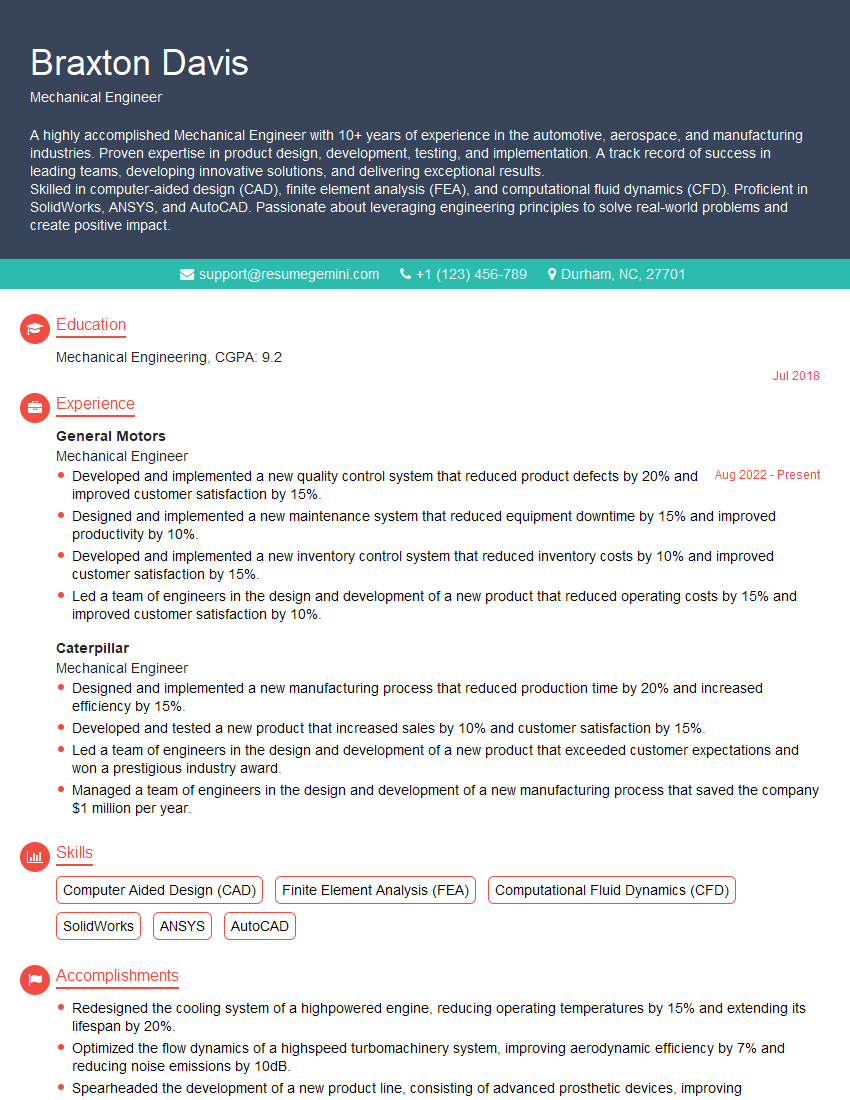
Mechanical Engineer Resume Sample

Senior Materials Scientist Resume Sample
Explore more articles
Users Rating of Our Blogs
Share Your Experience
We value your feedback! Please rate our content and share your thoughts (optional).
What Readers Say About Our Blog
Very informative content, great job.
good