The thought of an interview can be nerve-wracking, but the right preparation can make all the difference. Explore this comprehensive guide to Recycling and Waste Diversion interview questions and gain the confidence you need to showcase your abilities and secure the role.
Questions Asked in Recycling and Waste Diversion Interview
Q 1. Explain the difference between recycling and waste diversion.
Recycling and waste diversion are closely related but distinct concepts. Recycling specifically refers to the process of collecting and processing materials that would otherwise be considered waste, transforming them into new materials and products. Think of it as giving materials a second life. Waste diversion, on the other hand, is a broader term encompassing any strategy that reduces the amount of waste sent to landfills or incinerators. This includes recycling, composting, reuse, and other waste reduction initiatives.
For example, collecting aluminum cans for smelting and remanufacturing into new cans is recycling. However, composting food scraps to create garden fertilizer is waste diversion, even though it doesn’t involve traditional recycling processes. Waste diversion aims for a holistic reduction in waste, while recycling is a key component within that broader goal.
Q 2. Describe your experience with different recycling methods (e.g., curbside, drop-off).
I’ve worked extensively with various recycling methods. Curbside recycling programs are incredibly common; residents place sorted recyclables in designated bins for collection by municipal services. This approach is convenient but relies heavily on public education and participation to ensure material purity. I’ve been involved in optimizing curbside programs through public awareness campaigns and improvements to collection routes to enhance efficiency.
Drop-off recycling centers offer another approach. These facilities allow residents to bring their recyclables directly, often with more specialized sorting capabilities for various materials (e.g., electronics, textiles). I’ve managed a drop-off center, focusing on improving the sorting process, handling hazardous materials safely, and educating the public about acceptable materials. My experience also includes working with material recovery facilities (MRFs), large-scale operations that sort and process recyclables from various sources, optimizing the sorting lines to maximize recovery rates and minimize contamination.
Q 3. What are the challenges in implementing a successful recycling program?
Implementing successful recycling programs presents numerous challenges. Contamination is a major hurdle. Non-recyclable materials mixed with recyclables contaminate the entire batch, rendering it unusable. Lack of public awareness and understanding about proper sorting practices also hinder effectiveness. Residents may not understand what’s recyclable, leading to contamination or simply discarding items that could be recycled.
Economic factors play a significant role. Fluctuating market prices for recycled materials can make programs financially unsustainable. Infrastructure limitations, such as insufficient collection vehicles or processing facilities, can also hamper progress. Finally, political will and funding are critical for successful long-term programs.
Q 4. How do you measure the effectiveness of a recycling program?
Measuring recycling program effectiveness requires a multi-faceted approach. Key metrics include:
- Recycling rate: The percentage of generated waste that is recycled. This is a primary indicator of overall program success.
- Diversion rate: The percentage of waste diverted from landfills and incinerators, which incorporates recycling, composting, and other diversion methods.
- Contamination rate: The percentage of recyclables contaminated by non-recyclable materials. A low contamination rate is crucial for efficient processing.
- Material recovery rate: The percentage of collected recyclables that are successfully processed and used to create new products. This shows the efficiency of the entire recycling chain.
- Public participation rate: The percentage of households or individuals actively participating in the program. This demonstrates public engagement and program acceptance.
Tracking these metrics over time provides insights into program performance and helps identify areas for improvement. Regular audits and data analysis are crucial for informed decision-making.
Q 5. What are some common contaminants in recycling streams and how can they be mitigated?
Common contaminants in recycling streams include:
- Plastics: Non-recyclable plastics, especially films and bags, often clog sorting equipment.
- Food waste: Attracts pests and creates foul odors, contaminating other recyclables.
- Textiles: Can wrap around machinery and cause jams.
- Glass: Breaks easily and contaminates other materials.
- Hazardous materials: Batteries, needles, etc., pose safety risks to workers.
Mitigation strategies include: public education campaigns to emphasize proper sorting; improved sorting technologies at MRFs; stricter enforcement of contamination regulations; and community-based initiatives like drop-off centers with dedicated bins for problem materials.
Q 6. Explain the concept of a circular economy and its relevance to waste management.
The circular economy is an economic model aimed at eliminating waste and the continual use of resources. It replaces the traditional linear model (take-make-dispose) with a cyclical approach where resources are kept in use for as long as possible, extracting maximum value before being recovered and regenerated at the end of each service life.
Its relevance to waste management is paramount. By designing products for durability, repairability, and recyclability, and by establishing robust recycling and reuse systems, the circular economy minimizes waste generation. This reduces landfill reliance, conserves resources, and decreases environmental impact. It’s about shifting from a ‘waste management’ mindset to a ‘resource management’ approach.
Q 7. What are the different types of waste and how are they handled?
Waste is broadly categorized into several types, each requiring different handling methods:
- Municipal Solid Waste (MSW): Everyday trash from households and businesses, including paper, plastics, food scraps, etc. Handling involves collection, sorting, recycling, composting, or landfilling.
- Hazardous Waste: Waste posing substantial or potential threats to public health or the environment (e.g., batteries, chemicals, medical waste). Requires specialized handling, treatment, and disposal to prevent contamination.
- Industrial Waste: Generated by industrial processes; varies greatly depending on the industry. Management strategies range from on-site treatment and recycling to specialized disposal.
- Construction and Demolition (C&D) Waste: Debris from construction and demolition activities, including concrete, wood, metals, etc. Often recycled or reused in other construction projects.
- Electronic Waste (E-waste): Discarded electronic devices containing hazardous materials. Requires careful handling, recycling, and safe disposal to prevent environmental contamination.
- Medical Waste: Infectious and non-infectious waste from healthcare facilities. Requires rigorous sterilization and disposal protocols to prevent disease spread.
Effective waste management involves a tailored approach to each waste stream, combining prevention, reduction, reuse, recycling, and responsible disposal to minimize environmental impact and maximize resource recovery.
Q 8. Describe your experience with waste audits and their benefits.
Waste audits are systematic assessments of the type and quantity of waste generated by a specific source, such as a business, institution, or community. They involve meticulously sorting and weighing waste to determine its composition. This data is crucial for developing effective waste reduction and recycling strategies.
The benefits are numerous. A waste audit provides a baseline understanding of current waste generation practices. It identifies opportunities for waste reduction through source reduction, reuse, and recycling. For instance, a waste audit at a large office might reveal that a significant portion of waste is comprised of recyclable paper and plastic, highlighting an area for improvement. By analyzing audit data, we can create tailored strategies for waste diversion, leading to significant cost savings and environmental benefits. It also allows for performance tracking; by conducting repeat audits, we can measure the effectiveness of implemented programs and make necessary adjustments.
In my experience, I’ve conducted waste audits for various clients, from large manufacturing facilities to small municipalities. One notable case involved a university campus where the audit revealed a surprisingly high volume of organic waste. This led to the implementation of a comprehensive composting program, significantly reducing landfill waste and creating a valuable soil amendment.
Q 9. How do you ensure compliance with relevant environmental regulations related to waste management?
Ensuring compliance with environmental regulations related to waste management is paramount. This involves a multifaceted approach, beginning with a thorough understanding of all applicable laws and regulations at the local, state, and federal levels. These laws often dictate waste handling procedures, disposal methods, and reporting requirements. For example, regulations might specify acceptable disposal methods for hazardous waste, or mandate recycling rates for certain materials.
My approach involves developing and implementing comprehensive compliance programs. This includes creating detailed waste management plans that clearly outline procedures for waste segregation, storage, transportation, and disposal. We establish internal training programs to ensure staff are aware of and adhere to all regulations. Regular internal audits are conducted to monitor compliance and identify areas for improvement. Furthermore, we maintain meticulous records of all waste generation, handling, and disposal activities to satisfy reporting requirements. We also proactively engage with regulatory agencies to stay informed about changes in legislation and ensure ongoing compliance.
For instance, we worked with a client facing potential non-compliance related to hazardous waste handling. By implementing a robust training program and improving their record-keeping systems, we ensured they met all regulatory requirements and avoided potential penalties.
Q 10. What are some innovative technologies used in waste management and recycling?
The field of waste management and recycling is constantly evolving, with numerous innovative technologies emerging. These technologies are designed to improve efficiency, reduce environmental impact, and enhance resource recovery.
- Advanced Sorting Technologies: Automated sorting systems using artificial intelligence (AI) and machine learning are becoming increasingly sophisticated. These systems can identify and separate various materials with much greater accuracy than manual sorting, leading to purer recyclable streams.
- Chemical Recycling: Chemical recycling processes, such as pyrolysis and gasification, break down plastic waste into its constituent molecules, allowing for the creation of new plastics or other valuable products. This is particularly promising for dealing with plastics that are difficult to recycle through conventional mechanical methods.
- Robotics and Automation: Robots are being employed in various stages of waste management, from sorting and processing materials to operating material handling equipment. This improves efficiency, reduces labor costs, and enhances safety.
- Anaerobic Digestion: This biological process breaks down organic waste in the absence of oxygen, producing biogas (a renewable energy source) and digestate (a valuable soil amendment).
These technologies are not just theoretical; they are already being implemented in various parts of the world, significantly improving the efficiency and effectiveness of recycling programs.
Q 11. Discuss your experience with waste reduction strategies.
Waste reduction strategies are crucial for minimizing environmental impact and maximizing resource efficiency. My experience encompasses a wide range of strategies focusing on source reduction, reuse, and recycling.
- Source Reduction: This focuses on minimizing waste generation at the source. Examples include designing products for durability and repairability, using less packaging, and promoting the use of reusable items. In one project, we helped a manufacturing company redesign their packaging, resulting in a significant reduction in waste generation.
- Reuse: Encouraging the reuse of items before disposal is crucial. This includes initiatives such as implementing company-wide reuse programs for office supplies or supporting community-based reuse centers.
- Recycling: Implementing and improving recycling programs is key. This involves providing clear labeling and signage, ensuring proper collection and sorting infrastructure, and promoting public awareness.
A holistic approach is needed, combining all three elements to achieve maximum impact. For example, in one project involving a large-scale event, we implemented a comprehensive waste management plan that included source reduction measures (using reusable cups and plates), a robust recycling program, and a composting system for organic waste, resulting in a drastically reduced landfill footprint.
Q 12. How do you manage and resolve conflicts with stakeholders regarding recycling initiatives?
Conflicts with stakeholders regarding recycling initiatives can arise from various sources, including differing opinions on program design, cost considerations, or perceived inconvenience. Successful conflict resolution requires proactive communication, transparency, and a collaborative approach.
My approach involves: First, establishing clear communication channels and actively soliciting input from all stakeholders. This includes residents, businesses, community groups, and government agencies. We use surveys, public forums, and individual meetings to understand differing perspectives. Second, we aim to identify the root causes of conflicts and address them directly, finding common ground and mutually agreeable solutions. This may involve compromising on certain aspects of the program design or offering incentives to encourage participation.
For instance, we faced resistance from some businesses during the implementation of a commercial recycling program due to concerns about added costs and logistical challenges. Through open dialogue and collaborative problem-solving, we developed a customized program that addressed their specific concerns, leading to successful implementation and high levels of participation.
Q 13. Explain the importance of public education and outreach in a successful recycling program.
Public education and outreach are absolutely vital for the success of any recycling program. Without public awareness and engagement, even the best-designed program will struggle to achieve its goals. People need to understand why recycling is important, what materials are recyclable, and how to properly sort and dispose of their waste.
Effective outreach involves a multi-pronged approach: This includes creating clear and accessible educational materials – such as brochures, websites, and videos – that explain the program and its benefits. We also utilize public awareness campaigns through various media channels to reach a wider audience. Engaging with the community through events, workshops, and school programs creates direct interaction and fosters a sense of ownership. Regular communication updates keep residents informed about program changes or successes. Clear and consistent messaging avoids confusion and promotes best practices.
For example, in a community with low recycling participation, we implemented a comprehensive public education campaign that included interactive workshops, a community-wide recycling contest, and an easily accessible website with information on proper sorting techniques. This resulted in a significant increase in recycling rates.
Q 14. What are the economic benefits of effective recycling and waste diversion?
Effective recycling and waste diversion programs offer significant economic benefits. These benefits extend beyond simple cost savings to create new economic opportunities.
- Reduced Waste Disposal Costs: Diverting waste from landfills reduces the need for expensive landfill space and associated fees.
- Resource Recovery: Recycling creates valuable secondary materials that can be used in the manufacturing of new products, creating economic activity in the recycling industry.
- Job Creation: The recycling industry provides jobs in collection, processing, and manufacturing, contributing to local economies.
- Energy Savings: Recycling often requires less energy than producing new materials from virgin resources, saving energy costs.
- Increased Property Values: Communities with strong recycling programs and a commitment to sustainability may experience increased property values.
For example, a municipality that successfully implemented a comprehensive recycling program saw a significant reduction in its annual waste disposal costs and was able to generate revenue from the sale of recovered materials. This, in turn, freed up funds for other community projects.
Q 15. Describe your experience with different types of composting.
Composting is the natural process of decomposing organic matter, transforming it into a nutrient-rich soil amendment. There are several types, each with its own requirements and applications.
- Home Composting: This involves using a compost bin in your backyard to decompose kitchen scraps and yard waste. It’s a great way to reduce household waste and create fertile soil for your garden. Methods range from simple piles to more sophisticated bin designs with aeration systems.
- Industrial Composting: Larger-scale facilities use specialized equipment to compost large volumes of organic waste, often including municipal green waste, food waste from restaurants and industries, and even sewage sludge. They employ techniques like windrow composting (large piles aerated with machinery) and in-vessel composting (closed systems with controlled temperature and aeration).
- Vermicomposting: This unique method utilizes worms (usually red wigglers) to break down organic material. It’s ideal for smaller spaces and produces a high-quality compost known as vermicast or worm castings.
- Aerated Static Pile Composting: This method involves creating large, static piles of organic material with forced aeration provided through pipes or other mechanisms. It’s popular for managing larger volumes of organic waste and is often employed in industrial settings.
The choice of composting method depends on factors like the volume of waste, available space, budget, and desired quality of the end product. For example, a small restaurant might choose vermicomposting, while a large city might opt for industrial windrow composting.
Career Expert Tips:
- Ace those interviews! Prepare effectively by reviewing the Top 50 Most Common Interview Questions on ResumeGemini.
- Navigate your job search with confidence! Explore a wide range of Career Tips on ResumeGemini. Learn about common challenges and recommendations to overcome them.
- Craft the perfect resume! Master the Art of Resume Writing with ResumeGemini’s guide. Showcase your unique qualifications and achievements effectively.
- Don’t miss out on holiday savings! Build your dream resume with ResumeGemini’s ATS optimized templates.
Q 16. How do you prioritize waste streams for recycling or other diversion methods?
Prioritizing waste streams for recycling or diversion hinges on several factors: market demand, material value, ease of processing, and environmental impact. We use a tiered approach.
- Highest Priority: Materials with high market value and readily available recycling infrastructure. This includes materials like aluminum cans (high recycling rate and valuable scrap metal) and certain plastics (e.g., PET bottles).
- Medium Priority: Materials with some market value but require more complex processing or have lower recycling rates. Examples include mixed paper, glass, and certain types of plastics. We might focus on improving source separation and public education to increase the quality of these streams.
- Lower Priority (but still important): Materials that are difficult to recycle or have limited market demand but can be diverted from landfills through other means. This includes organic waste (composting), textiles (donation or recycling), and certain types of construction debris (reuse or specialized recycling programs).
- Last Resort: Materials that cannot be practically recycled or diverted. These should be minimized through source reduction, reuse, and responsible disposal.
A critical aspect is contamination reduction. Even highly valuable materials become unrecyclable if contaminated. For instance, pizza boxes (cardboard) are usually recyclable unless heavily soiled with food.
Q 17. What are some strategies for improving the quality of recycled materials?
Improving the quality of recycled materials involves a multi-pronged strategy focused on both pre- and post-consumer stages.
- Source Reduction and Improved Sorting: Encouraging source separation at the household and business level is crucial. Public education campaigns can significantly improve the purity of recycling streams by reducing contamination. Automated sorting systems at Material Recovery Facilities (MRFs) further enhance quality.
- Advanced Processing Technologies: Investing in technologies like optical sorters, eddy current separators, and air classifiers improves the separation and purification of different materials. This allows for the recovery of higher-quality recyclables.
- Design for Recyclability: Collaborating with product manufacturers to design products that are easily recyclable is essential. This involves using fewer materials, simplifying product design, and utilizing recyclable materials.
- Market Development: Stronger market demand for recycled materials incentivizes investment in recycling infrastructure and processing technologies. Government policies like Extended Producer Responsibility (EPR) programs can further encourage this.
For example, the development of new technologies that can separate different types of plastics from mixed plastic streams is dramatically increasing the value and usability of recycled plastics.
Q 18. Explain the process of designing and implementing a comprehensive waste management plan.
Designing and implementing a comprehensive waste management plan is an iterative process.
- Assessment and Characterization: This initial step involves analyzing the current waste stream, quantifying waste generation rates, and identifying the types of waste produced. We use waste audits and surveys to collect this data.
- Goal Setting and Policy Development: Based on the assessment, establish clear goals, such as recycling rates, diversion rates, and landfill diversion targets. Develop policies and regulations to support these goals. This might include source separation requirements, waste reduction incentives, and regulations on landfills.
- Program Design and Implementation: Design programs and services to achieve the goals. This includes public education campaigns, infrastructure development (e.g., new recycling facilities, composting programs), and waste collection systems. Pilot programs and phased implementation allow for adjustments along the way.
- Monitoring and Evaluation: Continuously monitor key performance indicators (KPIs) like recycling rates, diversion rates, and landfill volumes. Regular audits and data analysis help evaluate the effectiveness of the plan and identify areas for improvement. Adjust the plan as needed based on these findings.
- Stakeholder Engagement: Collaboration with residents, businesses, and other stakeholders is vital. Public input and community engagement can lead to a more effective and accepted plan.
For example, a city might implement a phased approach, starting with a pilot program in one neighborhood before city-wide implementation, allowing for adjustments based on initial results.
Q 19. How do you calculate recycling rates and diversion rates?
Recycling rates and diversion rates are key indicators of the success of a waste management program. They are calculated differently.
- Recycling Rate: This represents the percentage of materials that are collected for recycling out of the total amount of recyclable materials generated.
Recycling Rate = (Weight of materials recycled / Weight of materials generated) x 100% - Diversion Rate: This measures the percentage of waste materials diverted from landfills through recycling, composting, and other diversion methods, relative to the total waste generated.
Diversion Rate = (Weight of waste diverted / Total weight of waste generated) x 100%
It’s crucial to use consistent measurement units (e.g., tons) and data collection methods to ensure accurate comparisons over time.
Q 20. What are the environmental impacts of landfills?
Landfills have significant environmental impacts, primarily through:
- Greenhouse Gas Emissions: Decomposing organic waste in landfills generates methane, a potent greenhouse gas that contributes to climate change. Landfills are a major source of methane emissions.
- Leachate Generation: Rainwater percolates through the waste, dissolving various compounds and creating leachate, a contaminated liquid that can contaminate groundwater and soil if not properly managed. Effective leachate collection and treatment systems are essential.
- Air Pollution: Landfills can emit volatile organic compounds (VOCs) and other air pollutants, affecting air quality and potentially human health. Proper landfill design and operation are crucial for mitigating these emissions.
- Habitat Loss and Degradation: The construction of landfills often involves clearing land, leading to habitat loss and soil degradation. Careful site selection and minimizing land use are important.
- Resource Depletion: Landfills consume significant amounts of land and resources for their construction and operation. They represent a loss of potentially valuable land for other uses.
The environmental impact of landfills can be minimized through waste reduction, reuse, recycling, and composting, reducing the amount of waste sent to landfills.
Q 21. What are the key performance indicators (KPIs) for a successful waste management program?
Key Performance Indicators (KPIs) for a successful waste management program are crucial for tracking progress, identifying areas for improvement, and demonstrating accountability.
- Recycling Rate: Percentage of materials recycled.
- Diversion Rate: Percentage of waste diverted from landfills.
- Landfill Disposal Rate: Percentage of waste sent to landfills.
- Composting Rate: Percentage of organic waste composted.
- Waste Generation Rate: Amount of waste generated per capita or per unit area.
- Contamination Rate: Percentage of recyclables contaminated with non-recyclables.
- Cost per Ton of Waste Managed: Efficiency of waste management operations.
- Public Satisfaction: Through surveys and feedback mechanisms.
- Compliance Rates: Adherence to waste management regulations.
Regular monitoring and analysis of these KPIs help fine-tune programs and ensure effectiveness. For example, a high contamination rate in a recycling stream would indicate a need for improved public education or changes to source separation practices.
Q 22. Describe your experience with data analysis in the context of waste management.
Data analysis is crucial for optimizing waste management strategies. I’ve extensively used data analysis techniques to identify waste generation patterns, understand material composition, and evaluate the effectiveness of recycling programs. For instance, in a previous role, we analyzed municipal waste data to identify hotspots of illegal dumping. This involved using geographic information systems (GIS) to map the locations of reported incidents and correlating this data with socioeconomic factors and accessibility to waste collection services. This allowed us to pinpoint areas requiring increased enforcement or improved collection infrastructure. We also employed statistical methods to model waste generation based on population density, seasonality, and economic activity, thereby predicting future waste volumes and optimizing resource allocation. Another project involved analyzing the composition of recyclables to identify contamination rates and improve the efficiency of material recovery facilities (MRFs). This involved using data from automated sorting systems and manual audits to track the presence of contaminants and inform public education campaigns aimed at reducing contamination.
Q 23. How do you stay updated on the latest advancements in recycling and waste diversion technologies?
Staying current in this rapidly evolving field requires a multi-pronged approach. I regularly subscribe to and actively read leading journals such as Waste Management and Resources, Conservation and Recycling. I attend industry conferences like the Waste Management & Recycling Conference & Expo and participate in webinars and online courses offered by organizations like the Environmental Protection Agency (EPA) and the Institute of Scrap Recycling Industries (ISRI). I also actively network with colleagues through professional organizations like the Solid Waste Association of North America (SWANA) and participate in online forums and discussion groups to share knowledge and learn about innovative solutions. Following key players and innovators in the waste management technology sector on social media and subscribing to industry newsletters keeps me aware of the latest breakthroughs in areas such as AI-powered sorting, advanced recycling technologies, and innovative waste-to-energy solutions. This combination ensures I stay at the forefront of the advancements in recycling and waste diversion technologies.
Q 24. What are the challenges in managing hazardous waste?
Managing hazardous waste presents unique and significant challenges due to its potential to cause harm to human health and the environment. These challenges include:
- Proper identification and characterization: Accurately identifying the types and quantities of hazardous waste is crucial for selecting appropriate management methods. Incorrect identification can lead to environmental contamination or health risks.
- Storage and transportation: Hazardous waste requires specialized containers and transportation methods to prevent leaks or spills. Strict regulations govern the transportation of hazardous waste to ensure safety.
- Treatment and disposal: Treatment methods for hazardous waste vary depending on the type of waste. Secure landfills, incineration, and other specialized treatment facilities are often necessary, and these options can be expensive and have stringent permitting requirements.
- Regulatory compliance: Stringent regulations govern the handling, storage, treatment, and disposal of hazardous waste, requiring meticulous record-keeping and compliance monitoring. Failure to comply can result in significant fines and legal repercussions.
- Liability and financial responsibility: Generators of hazardous waste are legally responsible for its proper management, even after disposal. This can involve long-term liability for environmental cleanup costs.
Effective hazardous waste management requires a robust framework encompassing strict regulations, proper training, technological advancements in treatment and disposal, and a strong emphasis on waste minimization and prevention.
Q 25. Explain your understanding of life cycle assessments and their application in waste management.
Life cycle assessment (LCA) is a comprehensive method for evaluating the environmental impacts of a product or process throughout its entire life cycle, from raw material extraction to disposal. In waste management, LCA is used to compare the environmental impacts of different waste management options, such as recycling, composting, incineration, and landfilling. For example, an LCA might compare the greenhouse gas emissions associated with recycling plastic bottles versus manufacturing new bottles from virgin materials. The LCA would consider the energy used in collection, sorting, processing, and transportation, as well as the emissions from manufacturing and the disposal of the end-of-life product. The results of an LCA help inform decision-making by providing a quantitative assessment of the environmental trade-offs associated with various waste management strategies. This ensures that decisions are made based on a comprehensive understanding of the environmental implications, promoting sustainable and environmentally responsible practices.
Q 26. How do you handle situations where there is a lack of resources or funding for recycling programs?
Resource constraints often necessitate creative and strategic solutions. When faced with limited funding, I prioritize a phased approach, focusing on high-impact, cost-effective initiatives first. This might involve targeting easily recyclable materials with high market value, such as aluminum cans or certain plastics. We could initiate pilot projects in smaller communities or specific areas to demonstrate the feasibility and benefits of recycling programs before scaling them up. We would seek out partnerships with local businesses and organizations to secure in-kind donations of resources or services, such as transportation or processing. Grant applications to government agencies and private foundations become critical, requiring carefully crafted proposals highlighting the program’s potential impact and alignment with funding priorities. Public-private partnerships can be explored, where the private sector can contribute resources or expertise in exchange for incentives or benefits. Finally, robust public education campaigns to increase community participation and reduce contamination can significantly improve the efficiency and cost-effectiveness of existing recycling programs.
Q 27. Describe your experience collaborating with various departments or stakeholders to achieve waste reduction goals.
Collaboration is paramount in waste management. In my previous role, I collaborated extensively with various departments, including public works, environmental health, and community outreach, to achieve waste reduction goals. For instance, we worked with the public works department to optimize collection routes, ensuring efficient and timely pickup of recyclables. With environmental health, we collaborated to develop protocols for handling hazardous waste, including proper labeling, storage, and disposal. Community outreach involved designing and implementing public education campaigns, engaging with local residents through workshops and community events to increase recycling participation and reduce contamination. Collaboration extends beyond internal departments; I’ve successfully worked with businesses to develop waste reduction programs customized to their operations. This includes conducting waste audits, implementing waste segregation strategies, and establishing recycling and composting systems. Successful collaboration relies on clear communication, shared goals, and mutual respect among all stakeholders.
Q 28. What are your strategies for motivating individuals and communities to participate in recycling programs?
Motivating individuals and communities requires a multi-faceted approach encompassing education, incentives, and convenience. Public education campaigns should use clear and concise messaging, emphasizing the environmental and economic benefits of recycling. This could involve community workshops, informative videos, interactive online resources, and targeted communication through local media. Incentives can range from financial rewards like deposit schemes to recognition programs that celebrate individuals and communities with high recycling rates. Making recycling convenient is essential. This includes providing easily accessible recycling bins in convenient locations, such as parks, schools, and public spaces. Clearly labeled bins, user-friendly sorting instructions, and regular collection schedules reduce confusion and encourage consistent participation. Furthermore, leveraging social influence and community engagement by highlighting success stories and celebrating achievements, fostering a sense of collective responsibility and ownership, encourages broader participation in recycling programs. Addressing concerns and misconceptions about recycling, for instance, through clear information about acceptable materials and the recycling process, also plays a vital role.
Key Topics to Learn for Recycling and Waste Diversion Interview
- Waste Stream Characterization: Understanding the composition of different waste streams (residential, commercial, industrial) and its implications for diversion strategies.
- Material Recovery Facilities (MRFs): Knowing the operational aspects of MRFs, including sorting technologies, process optimization, and quality control of recyclables.
- Recycling Technologies: Familiarizing yourself with various recycling methods for different materials (plastics, metals, paper, glass) and their associated challenges and advancements.
- Composting and Anaerobic Digestion: Understanding the principles and applications of organic waste processing, including benefits, limitations, and infrastructure requirements.
- Waste Reduction and Prevention Strategies: Exploring various approaches to minimizing waste generation at the source, such as design for recyclability, extended producer responsibility (EPR), and public awareness campaigns.
- Lifecycle Assessment (LCA): Applying LCA principles to evaluate the environmental impacts of different waste management options, from material extraction to disposal.
- Waste Diversion Policies and Regulations: Understanding relevant local, regional, and national regulations and policies related to recycling, waste management, and environmental protection.
- Data Analysis and Reporting: Ability to collect, analyze, and interpret data related to waste generation, diversion rates, and program effectiveness.
- Sustainability and Circular Economy Principles: Demonstrating a strong understanding of sustainable waste management practices and the transition towards a circular economy.
- Problem-solving and Critical Thinking: Prepare to discuss how you would approach challenges related to contamination, recycling infrastructure limitations, or improving waste diversion rates.
Next Steps
Mastering Recycling and Waste Diversion principles is crucial for a successful career in this growing field. It showcases your commitment to environmental sustainability and your ability to contribute to innovative solutions for a cleaner future. To significantly boost your job prospects, focus on creating an ATS-friendly resume that highlights your relevant skills and experience effectively. ResumeGemini is a trusted resource for building professional and impactful resumes. They offer examples of resumes tailored specifically to the Recycling and Waste Diversion sector, helping you present your qualifications in the best possible light. Use their tools to craft a resume that will catch the attention of recruiters and help you land your dream job.
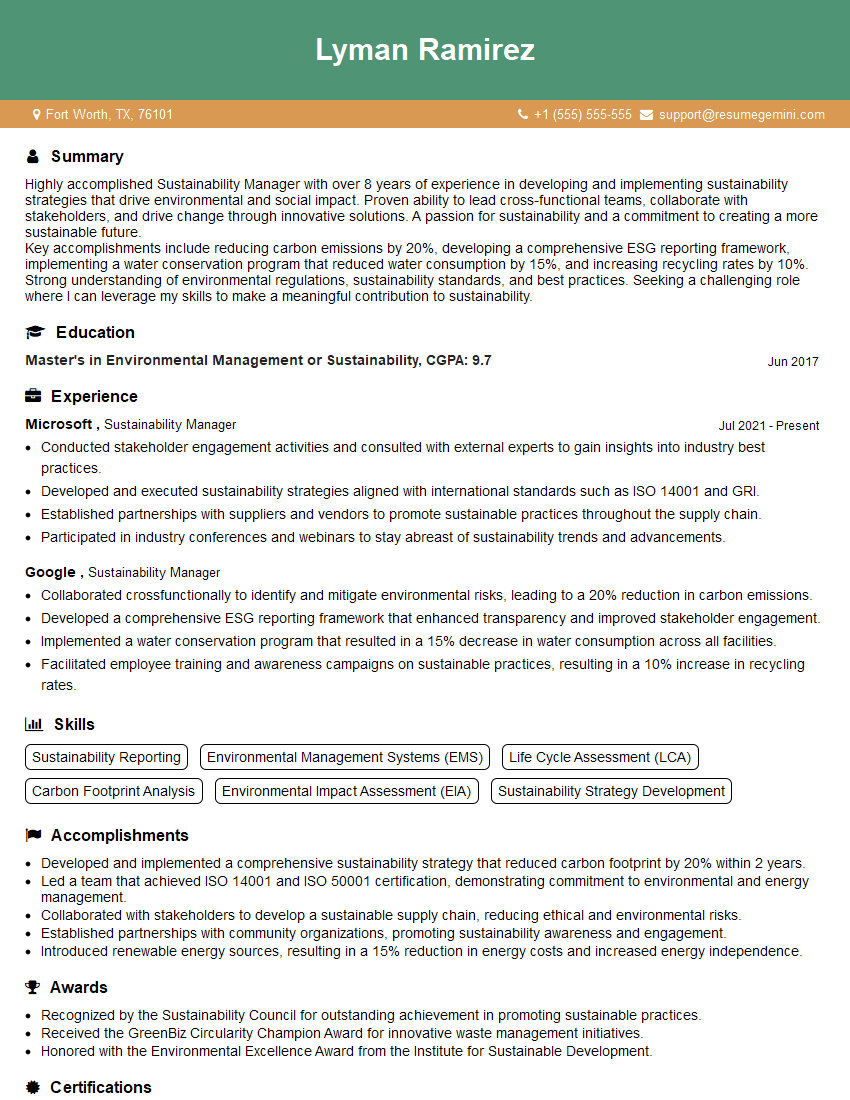
Sustainability Manager Resume Sample
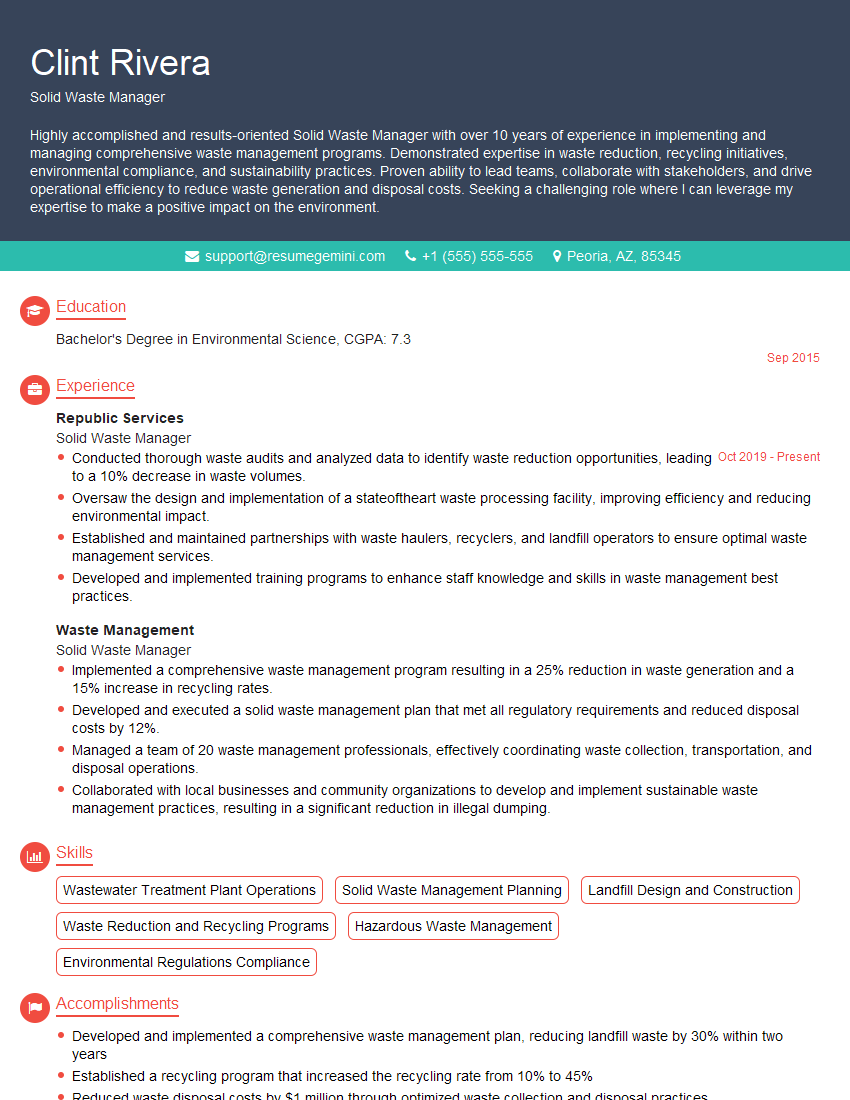
Solid Waste Manager Resume Sample
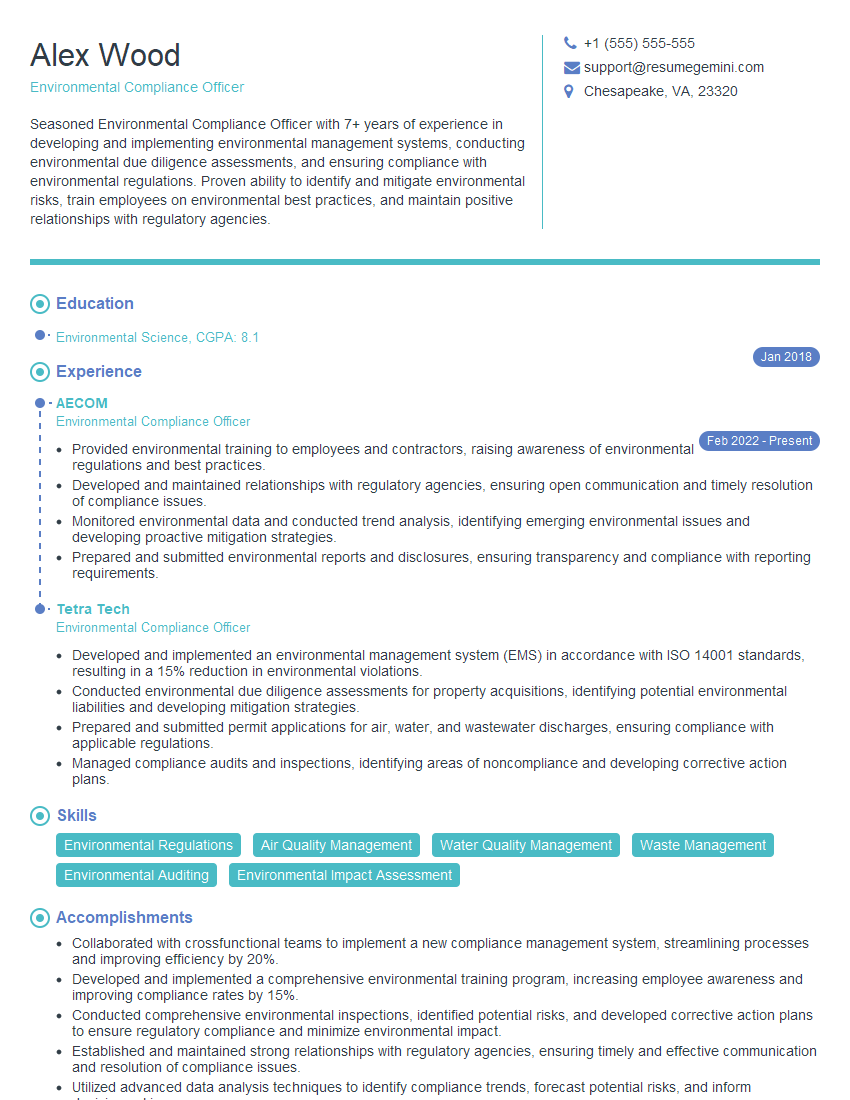
Environmental Compliance Officer Resume Sample

Sustainability Consultant Resume Sample
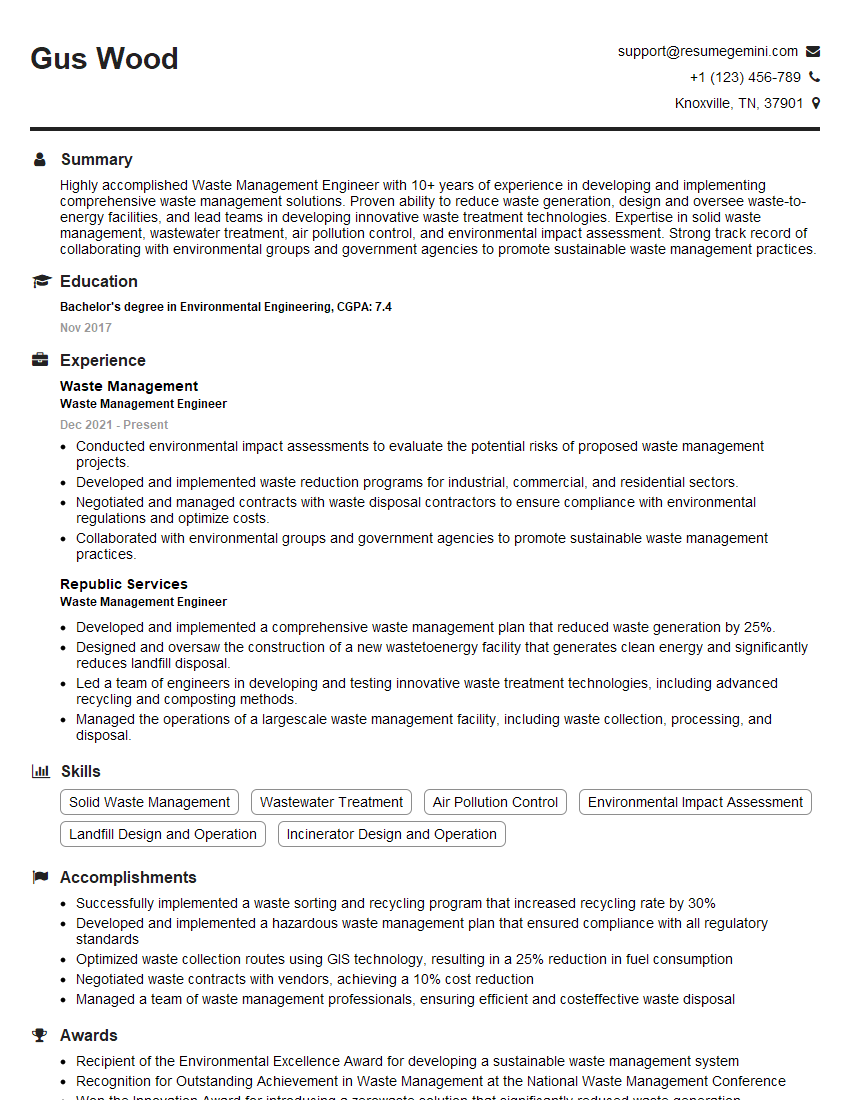
Waste Management Engineer Resume Sample
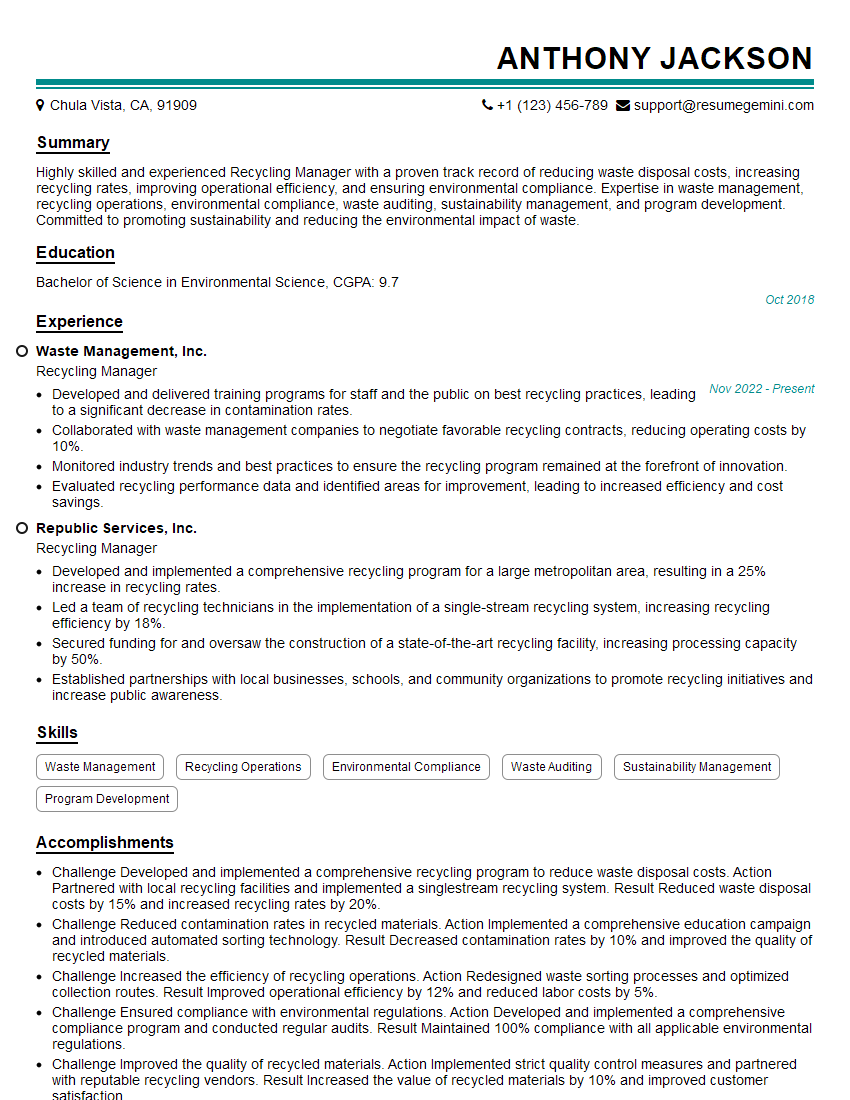
Recycling Manager Resume Sample
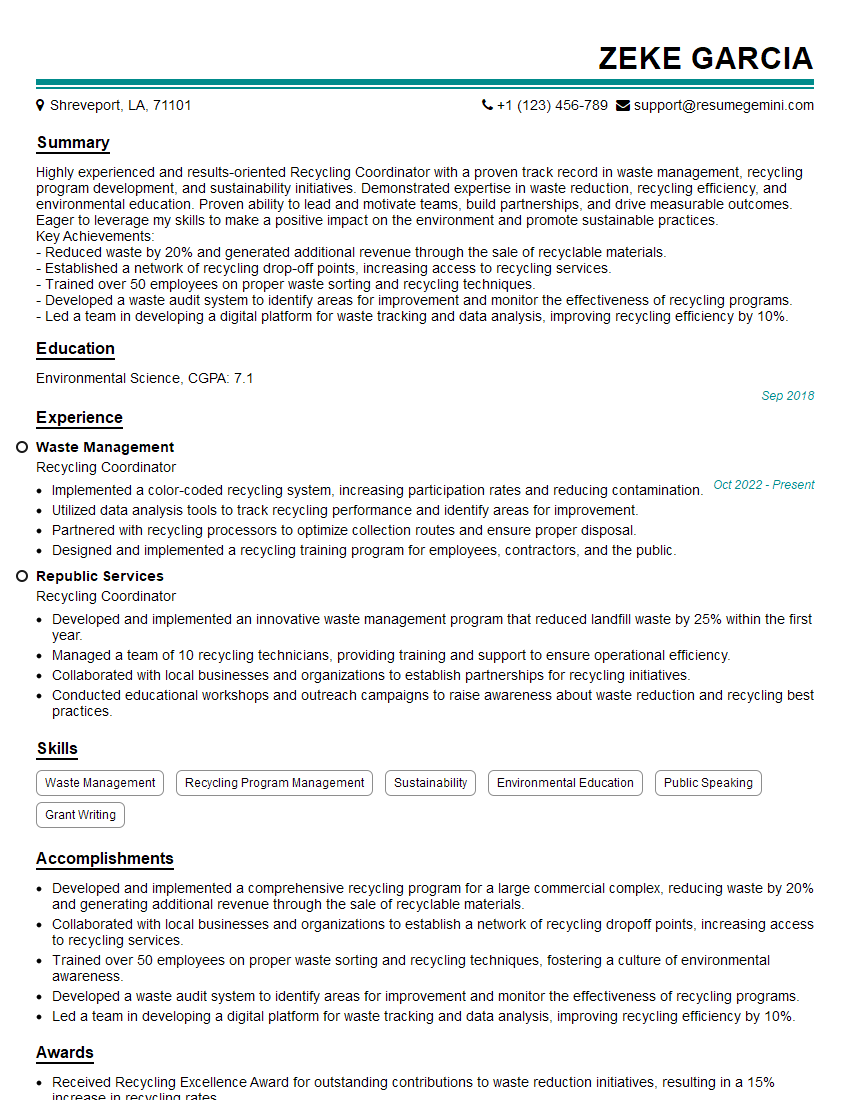
Recycling Coordinator Resume Sample
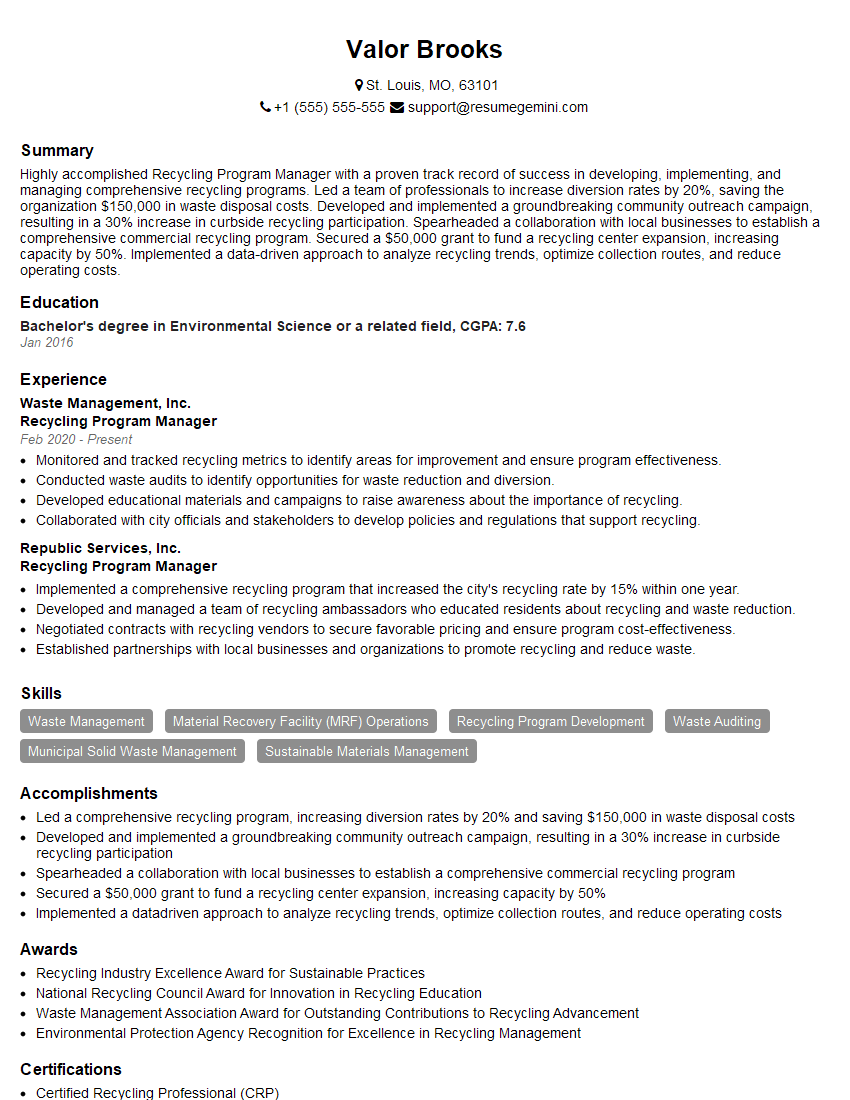
Recycling Program Manager Resume Sample
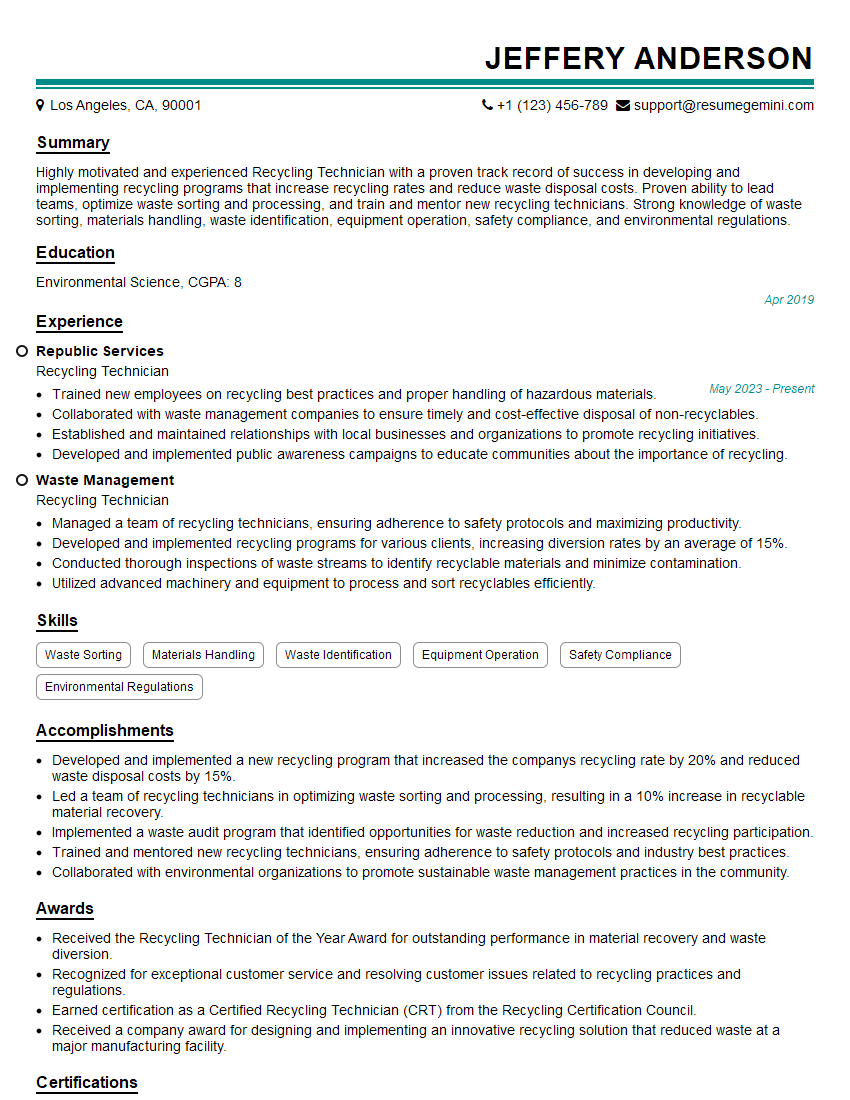
Recycling Technician Resume Sample
Explore more articles
Users Rating of Our Blogs
Share Your Experience
We value your feedback! Please rate our content and share your thoughts (optional).
What Readers Say About Our Blog
Very informative content, great job.
good