Interviews are opportunities to demonstrate your expertise, and this guide is here to help you shine. Explore the essential Thesis Binding interview questions that employers frequently ask, paired with strategies for crafting responses that set you apart from the competition.
Questions Asked in Thesis Binding Interview
Q 1. Describe the different types of thesis binding methods.
Thesis binding methods cater to different needs and budgets. The choice often depends on the thesis length, desired aesthetic, and available resources. Here are some key methods:
- Perfect Binding: Pages are glued together along the spine, then a cover is wrapped around the block. Think of paperback books – this is a common and cost-effective method for shorter theses.
- Case Binding: This is the most robust and professional method, often used for longer, high-quality theses. It involves sewing the pages together, adding cover boards, and then covering the whole assembly with a durable cloth or leather cover. This binding style is incredibly durable and gives a very prestigious look.
- Saddle Stitch Binding: Pages are folded in half and stapled along the spine. Suitable only for very short documents, not typically used for theses unless it’s exceptionally short.
- Spiral Binding (Coil Binding): Pages are punched with holes down the spine and bound with a plastic or metal comb. Easy and quick, but less professional-looking and pages can easily be removed.
- Wire-O Binding: Similar to spiral binding, but uses double-loop wire instead of a coil. More durable than spiral binding and allows the book to lay flatter.
Each method has its own strengths and weaknesses, making it crucial to choose the one that best suits your thesis requirements.
Q 2. What are the advantages and disadvantages of perfect binding?
Perfect binding is a popular choice due to its cost-effectiveness and relatively simple process.
- Advantages: Relatively inexpensive, quick to produce, suitable for a good range of page counts, and allows for a clean, professional look (especially with high-quality covers).
- Disadvantages: The spine can be susceptible to cracking if the book is frequently opened, especially if it’s thicker. The pages can also be difficult to open flat completely. It’s not ideal for very long or heavy theses, as the glue may not be sufficient to bind the pages securely.
I remember one student who chose perfect binding for her substantial history thesis. While initially pleased with the cost, the spine cracked within a few months of use. This highlighted the need to carefully consider the length and anticipated usage when selecting a binding method.
Q 3. Explain the process of case binding.
Case binding is a sophisticated process that produces a high-quality, durable result. Imagine building a sturdy house; case binding is like constructing a robust framework for your thesis. Here’s a breakdown:
- Gathering and Sewing: The individual pages are gathered in the correct order and sewn together through the spine using either thread or a wire-stitching method. This forms a cohesive text block.
- Adhesive Binding: A thin layer of adhesive is applied to the spine of the text block.
- Covering the Spine: The spine and inside covers are glued onto this spine.
- Case Making: Separate boards (covers) are prepared. These add strength and provide a surface for covering. They might be made of cardboard, binder board, or even something more decorative.
- Covering the Case: Cloth, leather, or other suitable material is adhered to the boards.
- Attaching Text Block: The text block is then attached to the prepared case, usually with adhesive, creating a complete and robust volume.
The result is a strong, long-lasting bound thesis that is visually appealing and feels luxurious to the touch.
Q 4. How do you ensure the quality of a bound thesis?
Ensuring the quality of a bound thesis requires attention to detail throughout the entire process. I always recommend a thorough quality check at each stage:
- Page Order and Alignment: Verify that the pages are in the correct order and that there are no missing or misplaced pages. Pages should be aligned neatly.
- Spine Straightness: The spine should be straight and without any bends or creases. This is especially important in perfect binding.
- Cover Attachment: The cover should be securely attached to the text block, without any gaps or loose sections. In case binding, the cover should be tight against the text block.
- Print Quality: Check for clear, crisp print. No smudging or faded ink is acceptable.
- Material Quality: Use durable, high-quality materials that are appropriate for the binding method and the intended use. The cover should resist wear and tear.
- Inspection After Binding: A final check should be performed after binding to ensure everything is perfect.
By carefully attending to each of these aspects, you can ensure that the final product is of the highest quality and will stand the test of time.
Q 5. What are the common issues encountered during thesis binding?
Common issues during thesis binding often arise from unforeseen circumstances or slight oversights. Some common issues include:
- Incorrect Page Order: This is a very common problem and can be devastating if not caught before binding.
- Loose Pages: Pages may come loose due to insufficient adhesive or improper binding techniques.
- Uneven Spine: A crooked or uneven spine can result from improper preparation or handling of the document.
- Print Bleed Through: Ink bleed-through can occur with low-quality paper or excessive ink saturation.
- Cover Damage: Scratches or dents on the cover can mar the appearance of the finished product.
- Improper Glue Application: Insufficient or uneven glue application can lead to weak binding and pages falling out.
Careful preparation, attention to detail during the binding process, and using high-quality materials can help minimize these issues.
Q 6. How do you troubleshoot problems with a binding machine?
Troubleshooting binding machines requires a systematic approach. Start by identifying the specific problem and then work through potential causes.
- Machine Malfunctions: Refer to the machine’s manual for troubleshooting guides, and possibly contact the manufacturer or a qualified repair technician for more complex issues. This often involves checking for power issues, jammed components, or worn-out parts.
- Binding Issues: If pages are coming loose, check the glue application, the machine settings, and the quality of the adhesive. If the spine is uneven, check for proper alignment and pressure.
- Paper Jams: Clear any paper jams and ensure that the paper is properly fed into the machine. Check that the paper size is correct for the machine.
- Maintenance: Regular cleaning and maintenance are essential to prevent problems. Regular lubrication is key for some binding machines.
Remember that safety should always be the priority when working with binding machines. If you are unsure about anything, it is always best to seek professional assistance.
Q 7. What materials are typically used in thesis binding?
The materials used in thesis binding vary depending on the chosen method and the desired aesthetic. High-quality materials are key to a durable and professional result.
- Paper: The core material; different weights and types (e.g., acid-free paper for archival quality) are available. The choice impacts both the feel and longevity of the thesis.
- Cover Stock: Provides the protective exterior; options include card stock, cloth-covered boards (for case binding), and leather.
- Adhesives: Bind the pages together (perfect binding) or attach covers (case binding). High-quality adhesives are crucial for durability.
- Thread or Wire: Used in case binding to sew the pages together. Different types of thread offer varying strength and aesthetics.
- Covering Material: For case binding, this could be cloth (linen, buckram), leather, or even decorative paper. This greatly impacts both the look and feel of the bound thesis.
- Hardware (for some binding): Metal coils or plastic combs for spiral binding, wire for wire-o binding.
Choosing appropriate materials is crucial. A cheaply made thesis might break apart after only a short time, while investing in high-quality materials ensures a durable, long-lasting end product.
Q 8. How do you determine the appropriate binding method for a given thesis?
Choosing the right binding method for a thesis depends on several factors: the thesis’s length, the desired aesthetic, the budget, and the intended use. Think of it like choosing a frame for a valuable painting – you wouldn’t use a flimsy frame for a masterpiece!
- For shorter theses (under 100 pages): Saddle stitch binding (stapling) or perfect binding (gluing the pages together and attaching a cover) are often sufficient and cost-effective. Saddle stitch is best for thinner documents, while perfect binding is better for slightly thicker ones and gives a more professional look.
- For longer theses (100+ pages): Case binding (sewing the pages together and encasing them in a hardcover) is generally preferred. This method provides durability and a prestigious appearance, ideal for a significant academic work. It’s more robust and better suited to withstand repeated handling.
- For very large theses or those needing to lie flat: Spiral binding or wire-o binding can be practical options. These methods allow the book to lay flat, which is beneficial for presentations or ease of reading. However, they may not be as aesthetically pleasing for a formal thesis.
I always consult with the client to understand their preferences and then recommend the most appropriate and cost-effective binding method based on the document’s specifications.
Q 9. Describe your experience with different types of binding equipment.
My experience spans a wide range of binding equipment, from simple manual saddle stitchers to sophisticated automated case binding machines. I’m proficient in operating:
- Saddle Stitchers: I’ve used both manual and electric saddle stitchers, understanding the nuances of adjusting stitch depth and ensuring accurate placement for different paper thicknesses. This is crucial for avoiding misaligned staples or paper jams.
- Perfect Binding Machines: I’m skilled in using machines that glue and trim pages precisely for a clean, professional finish. This includes understanding the process of applying adhesive correctly to avoid issues like glue seepage or weak binding.
- Case Binding Machines: My expertise extends to operating these sophisticated machines, including preparing the text block (sewing sections together), creating the case (the hard cover), and applying the cover accurately. The precision required here is essential for a high-quality, durable finish.
- Spiral and Wire-O Binding Machines: I’m familiar with operating various models that punch and bind documents with plastic combs or wire, adjusting the settings for different paper thicknesses and binding styles.
This broad experience allows me to efficiently and effectively handle a diverse range of thesis binding projects, guaranteeing high-quality results regardless of the chosen method.
Q 10. How do you handle large-volume thesis binding projects?
Handling large-volume projects requires meticulous planning and efficient workflow management. I approach these projects systematically:
- Project Assessment: A thorough assessment of the project scope, including the number of theses, specifications (page count, binding type, cover material), and deadlines is crucial.
- Resource Allocation: This includes assigning personnel, scheduling equipment, and ordering sufficient materials to ensure timely completion without compromising quality. Prioritizing tasks is essential.
- Quality Control Implementation: Stringent quality checks at every stage, from page collation to final binding, are paramount to maintain consistency and accuracy throughout a large volume of work.
- Teamwork and Communication: Efficient team communication and collaboration are necessary, especially when dealing with large quantities. Clear instructions and regular progress updates ensure everyone is on the same page.
- Post-Project Review: A post-project review allows for identifying areas for improvement in future large-volume projects.
For example, I once managed a project involving over 200 theses. By implementing this structured approach, we were able to deliver all bound theses within the stipulated timeframe and to the client’s complete satisfaction.
Q 11. Explain your understanding of quality control in thesis binding.
Quality control in thesis binding is paramount. It’s about ensuring the final product meets the highest standards of professionalism and accuracy. My quality control measures include:
- Pre-Binding Checks: Careful inspection of pages for any damage, misprints, or missing pages before binding commences. This includes verifying page order and numbering.
- Binding Process Monitoring: Close observation of the binding process to ensure that the chosen method is applied correctly and consistently. This helps in early detection of any potential issues.
- Post-Binding Inspection: Thorough examination of the finished product to check for any binding flaws, misalignments, or damage to the cover. This includes checking for spine tightness and cover adherence.
- Random Sampling: Periodically selecting a random sample of bound theses for a more comprehensive quality check. This helps to identify any systemic issues.
- Client Approval: Presenting a sample of the bound theses to the client for approval before proceeding with the entire batch.
Think of it as a chef carefully inspecting every dish before it leaves the kitchen – ensuring it’s perfect before it’s served!
Q 12. How do you maintain and clean binding equipment?
Regular maintenance and cleaning are essential to keep binding equipment functioning optimally and to extend its lifespan. My routine includes:
- Daily Cleaning: Removing any paper scraps, dust, or glue residue from the machine’s working parts. This prevents jams and ensures smooth operation.
- Weekly Inspection: Checking for any signs of wear and tear, loose parts, or malfunctioning components. Lubricating moving parts is essential.
- Monthly Deep Cleaning: A more thorough cleaning, including dismantling certain parts for a more detailed cleaning. This helps in removing accumulated dirt and debris.
- Regular Servicing: Scheduling professional servicing by trained technicians to inspect and maintain the equipment. This includes replacing worn-out parts and performing necessary adjustments.
Consistent maintenance not only improves machine performance but also ensures safety and prevents costly repairs down the line.
Q 13. What safety precautions do you follow when operating binding machinery?
Safety is my top priority when operating binding machinery. I strictly adhere to safety protocols, including:
- Proper Training: Ensuring I am fully trained on all equipment before operation.
- Personal Protective Equipment (PPE): Using appropriate PPE, such as safety glasses and gloves, to protect against potential injuries.
- Machine Guards: Ensuring all safety guards are in place and functioning correctly before operating any equipment.
- Emergency Shut-off Procedures: Knowing the location of emergency shut-off switches and how to use them effectively.
- Safe Handling of Materials: Carefully handling heavy materials and avoiding potential pinch points.
- Regular Inspections: Performing regular safety checks on all equipment before commencing work.
Safety is non-negotiable; I’d rather pause work than risk injury.
Q 14. How do you handle special requests or non-standard thesis sizes?
Handling special requests or non-standard thesis sizes requires flexibility and problem-solving skills. I approach these situations by:
- Consultation: Discussing the specific requirements with the client to understand their needs and constraints. This may involve examining the unusual dimensions or content requirements.
- Material Sourcing: Identifying appropriate materials, such as covers or specialized paper, to accommodate the non-standard size or specifications.
- Equipment Adjustment: Adjusting the binding equipment settings to handle the unique dimensions of the thesis. This might involve custom cutting or modifying the binding process.
- Creative Solutions: Exploring alternative binding methods if the standard ones are unsuitable. This could involve a combination of techniques or a completely different approach.
- Testing and Refinement: Testing the binding process on a sample thesis before proceeding with the entire batch to ensure the desired result.
For instance, I once bound a thesis with oversized maps, requiring custom-made pockets within the binding. Careful planning and creative problem-solving ensured the final product met the client’s expectations perfectly.
Q 15. What is your experience with different cover materials and their suitability?
Choosing the right cover material is crucial for a thesis’s longevity and aesthetic appeal. My experience encompasses a wide range of materials, each with its own strengths and weaknesses.
- Hardback Covers: I’m proficient with various board thicknesses and coverings like linen, buckram (a durable cotton fabric), and leatherette (a synthetic leather alternative). Linen offers a classic, sophisticated look, but it’s more prone to scratching. Buckram is incredibly strong and durable, ideal for frequently handled theses. Leatherette provides a luxurious look at a more affordable price point. The choice often depends on the client’s budget and desired aesthetic.
- Softback Covers: These are generally less expensive and suitable for shorter theses. I’ve worked extensively with cardstock in various weights and finishes, including matte, gloss, and textured options. The weight of the cardstock is key – a heavier weight provides better protection for the pages.
- Speciality Materials: I also have experience with more unique materials like recycled paper covers, which are becoming increasingly popular for environmentally conscious clients, or even covers with unique textures or embedded designs. The selection depends on the client’s preferences and the overall thesis theme.
Ultimately, my approach involves consulting with the client to understand their requirements, budget, and the overall tone of their thesis before recommending the most suitable cover material.
Career Expert Tips:
- Ace those interviews! Prepare effectively by reviewing the Top 50 Most Common Interview Questions on ResumeGemini.
- Navigate your job search with confidence! Explore a wide range of Career Tips on ResumeGemini. Learn about common challenges and recommendations to overcome them.
- Craft the perfect resume! Master the Art of Resume Writing with ResumeGemini’s guide. Showcase your unique qualifications and achievements effectively.
- Don’t miss out on holiday savings! Build your dream resume with ResumeGemini’s ATS optimized templates.
Q 16. Describe your experience with pre-binding preparation, such as trimming and folding.
Pre-binding preparation is critical for a professional-looking and durable bound thesis. This stage involves meticulous attention to detail to ensure the final product is pristine. My process includes:
- Trimming: Using a guillotine trimmer, I precisely trim the pages to ensure straight edges and uniform size. This is crucial for a neat and professional appearance. I always check the alignment carefully to prevent uneven edges.
- Folding (if applicable): For certain binding methods, like pamphlet stitching, folding the pages accurately is essential. I use a professional folding machine to ensure precise and consistent folds, avoiding creases or misalignments.
- Gathering and Collating: I meticulously check the order of pages before binding to avoid any errors or missing pages. This step requires concentration and accuracy. Using a collating machine speeds up the process and ensures consistency.
- Signature Creation (for sewn binding): For sewn bindings, I create ‘signatures’ by folding sets of pages and sewing them together. This requires a steady hand and experience to maintain the strength and integrity of the binding.
I always double-check my work at each stage, ensuring accuracy and preventing costly mistakes later in the process. Think of it like building a house – a strong foundation is essential for a lasting structure.
Q 17. How do you manage your time effectively when handling multiple binding tasks?
Managing multiple binding tasks effectively involves a combination of planning, organization, and prioritization. I utilize a project management system, where I schedule and track each task with estimated completion times. This allows me to visualize my workload and identify potential bottlenecks.
I often employ techniques like time blocking, allocating specific time slots for particular tasks. This prevents multitasking and improves focus. For example, I might dedicate the morning to trimming and collating and the afternoon to binding.
Furthermore, I regularly review my schedule and adjust as needed, accommodating urgent requests while maintaining the overall project timeline. Flexibility is key, especially in a busy bindery environment. I think of this like conducting an orchestra; each instrument (task) needs to be played at the right time and with the right intensity to create a beautiful piece of music (a perfectly-bound thesis).
Q 18. How do you prioritize tasks in a busy bindery environment?
Prioritization in a busy bindery hinges on several factors: urgency, deadline, and complexity. I typically employ a system combining urgency and importance, often visualized using a matrix.
- Urgent and Important: These tasks, like a rush order for a thesis with an imminent deadline, are handled immediately.
- Important but Not Urgent: These tasks, perhaps a large project with a longer deadline, are scheduled into my workflow accordingly.
- Urgent but Not Important: These tasks require careful assessment. Can they be delegated or postponed without significant consequences? Often, communication with the client is key.
- Neither Urgent nor Important: These tasks are generally postponed until there’s capacity.
Open communication with clients about expected turnaround times is crucial. By setting realistic expectations, I ensure client satisfaction and maintain a manageable workflow. I treat each task with the same importance as if it were my own thesis; a level of dedication that ensures quality and satisfaction.
Q 19. Describe a time you had to solve a complex binding problem.
I once encountered a complex problem involving a thesis with unusually thick pages and a unique binding specification. The client wanted a perfect binding with a specific type of cover material that proved difficult to adhere to the thick block of pages.
My initial attempts with standard adhesive failed, resulting in the cover detaching. To solve this, I systematically tried different adhesives, varying the application method and drying time. I also experimented with different types of cover board to provide extra strength. Ultimately, I combined a high-strength, flexible adhesive with a thicker cover board, applying the adhesive in layers and allowing sufficient drying time between each layer. This approach yielded a perfectly bound thesis that met the client’s specifications.
This experience taught me the importance of thorough testing and experimentation when facing unforeseen challenges. It’s all about problem-solving and finding creative solutions.
Q 20. How familiar are you with different types of adhesives used in binding?
My familiarity with adhesives used in thesis binding is extensive. The choice of adhesive depends heavily on the binding method and the materials being used.
- Hot Melt Adhesives: These are commonly used in perfect binding, offering fast setting times and strong bonds. However, they require specialized equipment.
- PUR (Polyurethane Reactive) Adhesives: These provide superior flexibility and durability, making them ideal for high-quality, longer-lasting bindings. They bond well to a wider range of materials.
- Case Binding Adhesives: These are specifically designed for case binding and are usually strong and durable, allowing for strong adhesion of the cover boards to the text block.
- Animal Glue (for traditional bindings): Used in more traditional, artisanal bindings, animal glue offers a classic approach but requires specific application techniques and experience.
Understanding the properties of each adhesive—its drying time, flexibility, and adhesion strength—is crucial to choosing the appropriate one for each binding job. Choosing the wrong adhesive can lead to a poorly bound thesis that falls apart.
Q 21. Explain your understanding of color matching in cover materials.
Color matching in cover materials is essential for ensuring the final product aligns with the client’s expectations and the overall design of the thesis. I understand this process deeply. My approach involves several steps:
- Client Consultation: Clearly discussing color preferences and referencing color swatches (Pantone, for instance) are essential to avoid misunderstandings. I ensure the client knows the limitations of color reproduction depending on the cover material.
- Material Selection: Some materials are better suited to certain color ranges than others. For example, achieving a vibrant, true-to-life color on linen can be more challenging than on a coated cardstock.
- Color Calibration and Proofing: Where possible, I create a physical proof or digital mock-up to verify the color matches the client’s vision before proceeding. This step prevents costly reprints or adjustments.
- Light Source Considerations: The appearance of a color can change based on the lighting conditions. This is factored into proofing and final production to avoid discrepancies.
Accurate color matching requires a keen eye for detail and a thorough understanding of the properties of different cover materials and their color reproduction capabilities. It’s about precision and exceeding client expectations.
Q 22. How do you deal with damaged or misprinted pages before binding?
Dealing with damaged or misprinted pages before binding is crucial for delivering a high-quality thesis. My process involves a careful inspection of each document upon arrival. I look for things like smudged ink, torn pages, missing pages, or printing errors.
- Minor Damages: For minor imperfections like small tears or ink smudges, I carefully repair them using archival-quality adhesive and, if needed, a small amount of white correction fluid for very small imperfections. This ensures the repair is barely noticeable and doesn’t damage the integrity of the page.
- Significant Damages: If a page is significantly damaged or a crucial section is misprinted, I’ll contact the client immediately. We’ll discuss options, which could involve reprinting the affected pages, substituting with a clean copy if available, or, in extreme cases, potentially adjusting the binding method to accommodate the damage. Transparency and open communication are key here.
- Missing Pages: Missing pages are a more serious issue. I will immediately contact the client to request replacement pages or, if unavailable, explore alternative solutions such as inserting a note explaining the missing content.
Think of it like this: I’m the final editor, ensuring the thesis is in perfect condition before its journey into its final, bound form. This meticulous attention to detail guarantees a professional and polished final product.
Q 23. How do you ensure the longevity and durability of the bound thesis?
Ensuring longevity and durability is paramount. I achieve this through a combination of factors. First, I use high-quality materials: acid-free paper is crucial to prevent yellowing and degradation over time. I also use durable binding methods, selecting the appropriate one based on the thesis’ length and the client’s preferences. For instance, a longer thesis might be better suited to case binding for its sturdiness, while a shorter one could use perfect binding. The choice of cover material also plays a critical role; linen or buckram covers offer superior protection compared to cheaper alternatives.
Beyond material selection, proper handling and storage post-binding also play a significant role. The bound thesis should be handled carefully, avoiding bending or creasing. Using protective covers for transport and storage further enhances its lifespan.
Imagine it as building a house – using high-quality materials like strong wood and durable roofing is essential, but regular maintenance and protection from the elements are equally crucial for its longevity. That same principle applies to ensuring a thesis remains in pristine condition for years to come.
Q 24. What are your preferred methods for storing bound theses?
The best way to store bound theses is in a cool, dry environment, away from direct sunlight and excessive humidity. Direct sunlight can cause fading and degradation of the paper and cover materials, while high humidity can encourage mold growth. I usually recommend vertical storage, using shelving units with adequate spacing between the theses to prevent damage or warping.
For long-term storage, acid-free boxes are ideal. These boxes provide additional protection from dust, light, and moisture. They also help prevent damage from accidental bumps or knocks. For clients who need to keep the theses for many years, I would suggest clearly labeling and cataloging them, making it easy to locate them without excessive handling.
Think of it as storing valuable documents – much like how museums meticulously care for their artifacts, proper storage is essential for preserving the thesis for future reference.
Q 25. What software or tools do you use to manage binding orders?
For managing binding orders, I use a combination of software and tools to streamline the process. I employ a project management software like Asana or Trello to track orders, deadlines, and client communications. This allows me to maintain a clear overview of my workflow and easily assign tasks and prioritize orders based on urgency.
I also use a dedicated spreadsheet to record client details, thesis specifications (e.g., type of binding, cover material, number of pages), pricing, and order status. This detailed record-keeping ensures accuracy and allows for easy retrieval of information whenever needed. This digital system also integrates seamlessly with our customer communication system for easy updates.
Q 26. Describe your experience with working within tight deadlines.
Meeting tight deadlines is a regular part of this business. My approach involves careful planning and prioritization. I break down large orders into smaller, manageable tasks and create a detailed timeline. This approach allows me to effectively monitor progress and identify potential delays early on. Open communication with clients is critical; keeping them updated about the progress of their order helps manage expectations and resolve any potential issues promptly.
I’ve had many instances where clients have needed their theses bound urgently for upcoming deadlines, for example, an upcoming graduation or conference. In such cases, my team prioritizes these urgent orders, and we often work extra hours to ensure we meet the deadline without compromising quality. It’s all about organization, efficient workflows, and a dedicated team.
Q 27. How do you communicate effectively with clients and colleagues?
Effective communication is vital. I prioritize clear and concise communication with both clients and colleagues. I ensure all instructions are clearly understood and confirmed before starting the work. This minimizes misunderstandings and ensures that the final product meets the client’s expectations. I utilize various communication channels, including email, phone, and in-person meetings as needed, choosing the most appropriate method based on the context and urgency.
With colleagues, clear and consistent communication is key for seamless collaboration. I use project management software to track progress, assign tasks, and share important updates in real time. Regular team meetings also help keep everyone informed about ongoing projects and potential challenges. A collaborative spirit and open feedback mechanism are crucial for problem-solving and teamwork.
Q 28. How do you stay updated on new trends and technologies in thesis binding?
Staying updated on new trends and technologies is crucial for remaining competitive. I regularly attend industry conferences and workshops, keeping abreast of the latest binding techniques and materials. I also subscribe to relevant industry journals and publications and actively participate in online forums and communities to learn about new innovations and best practices. I closely follow emerging technologies such as digital printing advancements and new binding options that improve efficiency and the final product’s quality and longevity. Continuous learning is essential in this constantly evolving field.
Key Topics to Learn for Thesis Binding Interview
- Binding Methods: Understanding various binding techniques (e.g., perfect binding, saddle stitch, spiral binding, case binding) and their suitability for different thesis types and page counts. Consider the advantages and disadvantages of each.
- Material Selection: Knowledge of different paper stocks, cover materials, and their impact on the final product’s quality, durability, and aesthetic appeal. Be prepared to discuss factors influencing material choice (budget, project requirements, desired look).
- Pre-press Preparation: Familiarity with pre-binding processes, including page sequencing, cover design, and ensuring the document is correctly formatted for the chosen binding method. This includes understanding potential issues like bleed and margins.
- Equipment Operation & Maintenance: Practical knowledge of the machinery used in thesis binding (e.g., guillotines, stitching machines, binding machines). This could also include basic troubleshooting and maintenance procedures.
- Quality Control: Understanding quality assurance processes and how to identify and resolve potential binding issues before delivery. This includes visual inspection and understanding quality metrics.
- Project Management & Client Interaction: Discuss your approach to managing deadlines, communicating with clients (understanding their needs and expectations), and handling potential challenges or revisions.
- Cost Estimation & Pricing: Ability to accurately estimate costs based on materials, labor, and equipment usage. Understanding pricing strategies and profit margins.
Next Steps
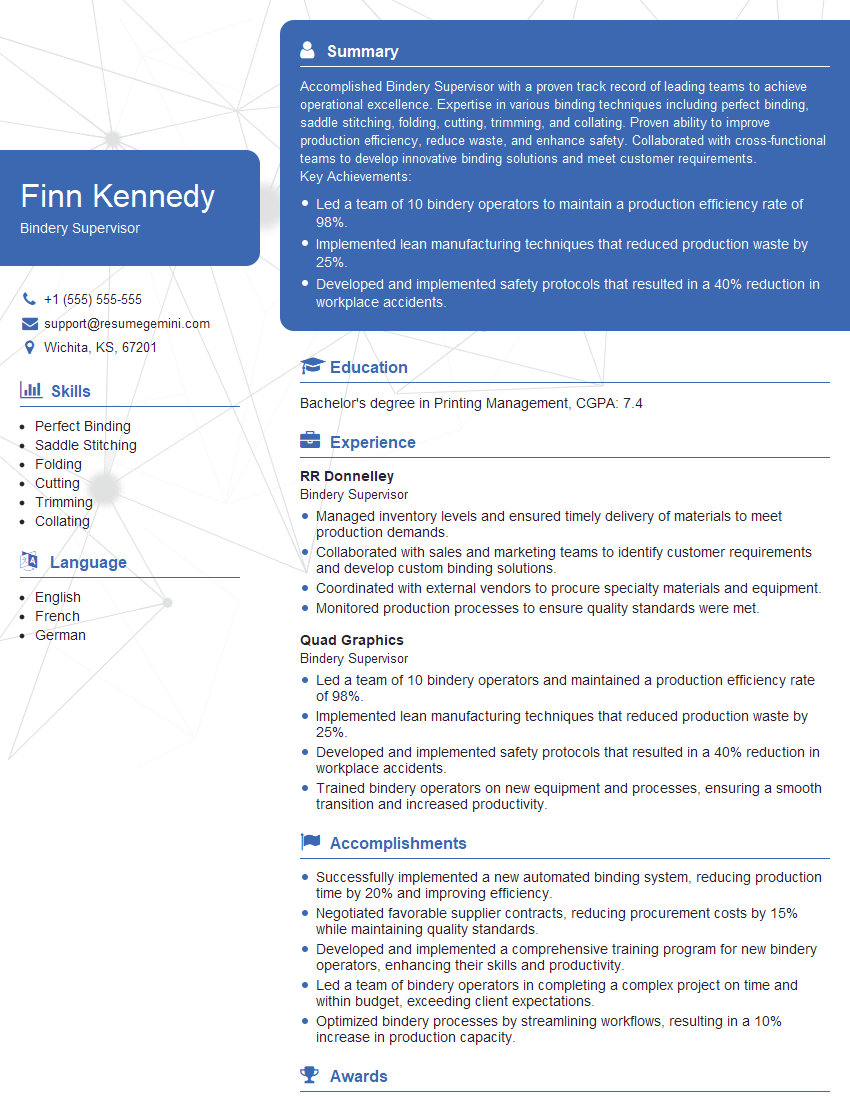
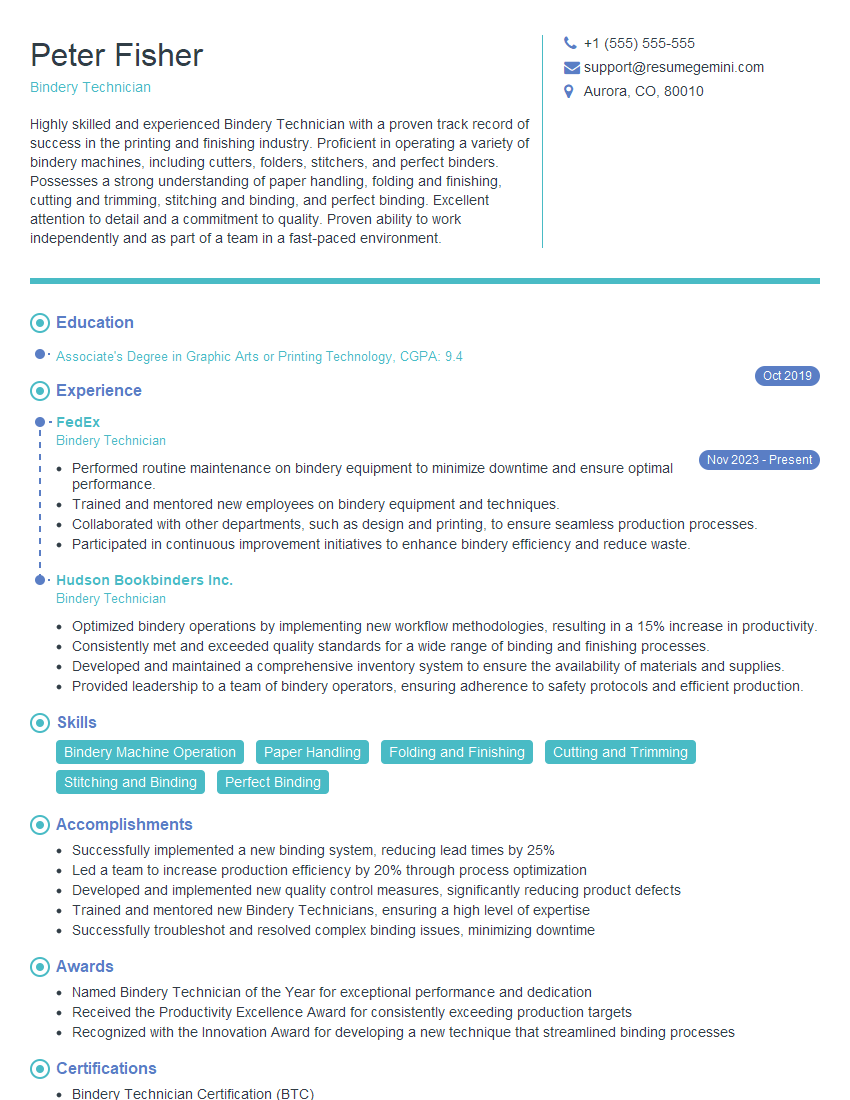
Mastering thesis binding opens doors to a fulfilling career in print finishing and publishing, offering opportunities for growth and specialization. A strong resume is crucial for showcasing your skills and experience to potential employers. To significantly improve your job prospects, crafting an ATS-friendly resume is essential. We recommend using ResumeGemini, a trusted resource, to build a professional and impactful resume. Examples of resumes tailored to the Thesis Binding industry are available to help you create the perfect application.
Explore more articles
Users Rating of Our Blogs
Share Your Experience
We value your feedback! Please rate our content and share your thoughts (optional).
What Readers Say About Our Blog
Very informative content, great job.
good