Interviews are more than just a Q&A session—they’re a chance to prove your worth. This blog dives into essential Joint Operations Planning and Execution System (JOPES) interview questions and expert tips to help you align your answers with what hiring managers are looking for. Start preparing to shine!
Questions Asked in Joint Operations Planning and Execution System (JOPES) Interview
Q 1. Describe your experience using the JOPES system.
My experience with JOPES spans over eight years, encompassing various roles from junior planner to lead planner for several large-scale joint operations. I’ve used JOPES to plan and execute everything from small-scale training exercises to complex, multi-national deployments involving thousands of personnel and substantial logistical requirements. This experience has provided me with a comprehensive understanding of its capabilities, limitations, and best practices for effective utilization. I’m proficient in all modules and have actively contributed to process improvements within our organization’s JOPES implementation.
For instance, during Operation [Redacted], I was instrumental in using JOPES to coordinate the logistical movement of supplies across a challenging terrain. The system’s ability to visualize assets and routes in real-time was crucial to the operation’s success, enabling us to optimize delivery timelines and minimize resource waste.
Q 2. Explain the different modules within JOPES and their functions.
JOPES is a modular system, and the specific modules available can vary slightly based on the implementation. However, core modules generally include:
- Planning Module: This is the core of JOPES, allowing users to create and manage plans, timelines, and taskings. It supports collaborative planning, enabling multiple users to work concurrently on the same plan.
- Visualization Module: This module uses map-based interfaces to visualize the operational environment, units, assets, and planned activities. This provides a clear visual representation of the operation’s progress and facilitates informed decision-making.
- Logistics Module: This module tracks and manages resources, personnel, and equipment. It aids in optimizing the allocation and distribution of resources throughout the operation.
- Communications Module: This module facilitates communication and collaboration amongst planners and operational units. It can be integrated with various communication platforms.
- Intelligence Module: (Often integrated or a separate system) This module allows the integration and analysis of intelligence data, which informs the planning process and contributes to a more accurate and realistic operational picture.
Think of it like a sophisticated, integrated suite of tools specifically designed for military planning and execution. Each module contributes to a holistic understanding of the operation, and their seamless integration is key to JOPES’s effectiveness.
Q 3. How would you utilize JOPES to plan a complex military operation?
Planning a complex military operation using JOPES is a systematic process. I would begin by establishing a clear and concise operational objective, defining the scope and desired end state. This would be documented in the Planning Module.
Next, I’d use the Visualization Module to create a detailed map of the operational area, incorporating terrain, infrastructure, and potential threats. I would then utilize the Logistics Module to determine resource requirements, including personnel, equipment, and supplies, allocating them based on their intended use and location. This planning would be an iterative process, constantly refined based on data analysis and risk assessments.
Throughout this process, I would heavily leverage collaborative features of JOPES, facilitating regular meetings with stakeholders using the Communications Module. Finally, I would conduct rigorous rehearsals and simulations using the JOPES system to identify and mitigate potential issues before the actual operation begins. This iterative approach would involve constant feedback loops and adjustments to ensure optimal efficiency and the operation’s success.
Q 4. What are the limitations of JOPES, and how would you mitigate them?
JOPES, while powerful, isn’t without limitations. One key limitation is its reliance on accurate and up-to-date data. Inaccurate or incomplete data can lead to flawed planning and execution. Another limitation can be the system’s complexity; requiring extensive training and expertise to use effectively.
To mitigate these limitations, I would prioritize robust data validation and verification procedures. This includes regularly auditing data, implementing quality control measures, and training personnel on proper data entry and management techniques. Additionally, focusing on comprehensive training programs tailored to different user roles within the organization addresses the complexity issue. Finally, leveraging supplementary planning tools and techniques alongside JOPES can help to provide a more comprehensive and robust approach.
Q 5. Describe your experience in data entry and management within JOPES.
My experience with data entry and management in JOPES is extensive. I’ve managed large datasets, including personnel information, equipment inventories, and logistical plans. I’m proficient in using various data entry methods, including bulk uploads and manual entry, ensuring data consistency and integrity. I’m familiar with data validation rules and procedures to maintain data accuracy.
For example, during a recent deployment, I was responsible for the accurate entry and management of over 5000 personnel records within the JOPES system, ensuring all data complied with stringent security and privacy protocols. This meticulous data management was critical to the operation’s success as it ensured personnel could be properly tracked and supported.
Q 6. How would you ensure data accuracy and integrity within JOPES?
Data accuracy and integrity are paramount in JOPES. To ensure this, I employ a multi-layered approach.
- Data Validation Rules: Implementing and enforcing stringent data validation rules within JOPES, ensuring data conforms to predefined standards and prevents incorrect entries.
- Data Auditing and Reconciliation: Regularly auditing data for inconsistencies and errors, comparing JOPES data with external sources to identify discrepancies.
- Data Backup and Recovery: Implementing robust backup and recovery procedures to protect against data loss.
- User Training and Accountability: Providing thorough user training on data entry procedures and assigning clear accountability for data accuracy.
- Version Control: Utilizing JOPES’s version control capabilities to track changes and revert to previous versions if needed.
This layered approach creates a system of checks and balances that minimizes errors and maximizes confidence in the data’s accuracy.
Q 7. Explain the process of developing a JOPES-based plan.
Developing a JOPES-based plan is a structured process typically following the military planning process (e.g., MDMP). It starts with receiving a mission and defining the operational environment. This involves intelligence gathering and analysis, using the Intelligence module if available, to understand the situation fully.
Next comes the course of action (COA) development. This involves brainstorming various approaches and evaluating their feasibility. Each COA is meticulously documented in JOPES’s Planning Module. The selected COA is then detailed, including timelines, task assignments, and resource allocation. The Logistics Module plays a significant role here, ensuring resources are optimally assigned.
Subsequently, the plan is reviewed and refined through a series of briefings and rehearsals. This iterative process involves feedback from different stakeholders, leading to adjustments and improvements within JOPES. Once finalized, the plan is approved and distributed, making it the single source of truth for the operation.
Q 8. How would you use JOPES to track the progress of an operation?
Tracking operational progress in JOPES involves leveraging its various modules to monitor the execution of plans against established timelines and objectives. Think of it like a highly detailed, interactive Gantt chart, but far more powerful.
Firstly, I’d utilize the Planning and Execution module to visualize the operational timeline, identifying critical tasks and their current status. This might involve reviewing scheduled versus actual completion dates for various activities, using the built-in progress tracking features. For example, if we’re conducting a humanitarian aid operation, I’d track the movement of relief supplies using the geospatial tools, monitoring their transit across various checkpoints.
Secondly, the Reporting and Visualization module provides crucial insights. Here, I’d generate reports and dashboards to present progress visually, easily highlighting areas ahead or behind schedule. Customizable dashboards allow me to focus on specific KPIs, such as the percentage of completed tasks, resource utilization, and logistical efficiency.
Finally, I’d engage in regular situation updates and briefings, facilitated by JOPES’ communication capabilities, to integrate real-time updates from subordinate units. This iterative process ensures the tracking remains dynamic and responsive to evolving operational conditions.
Q 9. What are the key performance indicators (KPIs) you would monitor in JOPES?
The key performance indicators (KPIs) I’d monitor in JOPES would depend on the specific operation, but some common ones include:
- Task Completion Rate: Percentage of planned tasks completed within the scheduled timeframe.
- Resource Utilization: Efficiency of resource allocation (personnel, equipment, funds).
- Logistical Success Rate: Effectiveness of supply chain and transportation operations.
- Timely Intelligence Dissemination: Speed and accuracy of information flow.
- Personnel Safety: Number and severity of incidents involving personnel.
- Achievement of Operational Objectives: Measuring progress toward the overall goals outlined in the operational plan.
Visualizing these KPIs through JOPES’ reporting tools gives a clear picture of operational health and allows for proactive adjustments.
Q 10. How would you troubleshoot common JOPES system errors?
Troubleshooting JOPES errors involves a systematic approach, starting with the basics. Think of it like a doctor diagnosing a patient: a thorough examination is crucial.
- Check System Logs: The first step is always to examine the system logs for error messages. This provides crucial clues about the nature of the problem.
- Verify Network Connectivity: Ensure a stable network connection, as poor connectivity is a frequent source of JOPES issues.
- Check Database Integrity: Problems with the database can disrupt operations. Database administrators should be consulted for diagnostics.
- Review User Permissions: Access issues frequently stem from incorrect user permissions. Confirm that the user has appropriate authorization to access specific data and functionalities.
- Consult JOPES Documentation and Help Desk: JOPES has extensive documentation, and there is usually a dedicated help desk to assist with technical issues.
- Software Updates: Outdated software often introduces bugs. Regular software updates are essential to prevent errors.
If the problem persists, escalating it to the appropriate system administrators is necessary. Detailed error logs will prove invaluable for their diagnosis.
Q 11. Describe your experience with JOPES reporting and visualization tools.
My experience with JOPES reporting and visualization tools is extensive. I’m proficient in generating a variety of reports, from simple progress updates to complex analyses of resource allocation.
I’ve used JOPES to create customized dashboards that provide real-time insights into key performance indicators (KPIs), enabling quick identification of potential problems. For example, I created a dashboard visualizing the movement of troops during a large-scale exercise, revealing potential bottlenecks in the transportation process. We were able to adjust our deployment schedule proactively, thanks to the clear visual representation provided by JOPES.
I’m also skilled in exporting data into various formats for integration with other analytical tools, allowing for comprehensive analysis of operational data. The flexibility and power of JOPES’ visualization tools have proven invaluable in providing clear, concise information to commanders and decision-makers at all levels.
Q 12. How would you use JOPES to coordinate with different units or agencies?
Coordinating with different units or agencies in JOPES hinges on its collaborative capabilities. It’s like a shared online workspace, allowing everyone to contribute and view the same information.
The system’s secure communication features facilitate real-time information sharing, updates, and discussions. For example, during a disaster response, we’d leverage JOPES to share situational awareness information between various rescue teams, humanitarian organizations, and government agencies. This ensures everyone is on the same page, promoting a unified response.
Furthermore, JOPES’ access control features allow the granting of specific data permissions to different users, ensuring data security and integrity while facilitating collaboration. This targeted access allows for a streamlined and secure workflow amongst diverse teams.
Q 13. Explain the role of JOPES in joint force operations.
JOPES plays a crucial role in joint force operations by providing a centralized platform for planning, execution, and assessment of complex military operations. Think of it as the central nervous system for a military campaign.
It facilitates seamless information sharing and collaboration between different branches of the military and even allied forces, enabling efficient coordination and decision-making. By integrating various operational elements into a single system, JOPES streamlines the process, reducing redundancies and improving overall efficiency. This integration minimizes potential confusion and conflicting orders.
The system’s powerful tools allow commanders to monitor operational progress in real-time, providing valuable insights for adaptation and improved decision-making throughout the operation’s lifecycle.
Q 14. How does JOPES support decision-making at different levels of command?
JOPES supports decision-making at all levels of command by providing tailored information and tools at each echelon. It’s like having a personalized dashboard adjusted to the needs of each user.
At the strategic level, commanders use JOPES to visualize the broad operational picture, assessing resource allocation, force deployment, and overall progress against strategic goals. This might involve assessing the success of different campaigns or comparing projected outcomes against actual progress.
At the operational level, JOPES provides detailed information to support the execution of specific operations, with tailored reports and dashboards. Tactical commanders, on the other hand, utilize JOPES to manage their units’ activities on a granular level, monitoring real-time updates from the field.
In all cases, JOPES ensures that decision-makers have the right information at the right time, supporting timely and informed decisions across all levels of command. The system’s ability to adapt to various reporting and visualization needs is key to this success.
Q 15. What are the security protocols associated with JOPES?
JOPES security is multi-layered and robust, mirroring the sensitivity of the operational data it handles. It employs a combination of strategies including:
- Access Control: Role-Based Access Control (RBAC) is fundamental. Users are granted access only to the information and functionalities relevant to their roles and responsibilities. This prevents unauthorized access to sensitive planning documents and operational data. For instance, a junior analyst wouldn’t have access to the same level of detail as a commander.
- Data Encryption: Data both in transit and at rest is encrypted using strong encryption algorithms to protect against unauthorized disclosure. This ensures that even if data is intercepted, it remains unreadable without the correct decryption keys.
- Network Security: JOPES typically resides within a secure network environment, protected by firewalls, intrusion detection/prevention systems, and other network security measures. This forms a crucial barrier against external threats.
- Auditing and Logging: The system meticulously tracks all user activity, providing an audit trail for security and accountability purposes. This allows for the identification and investigation of any suspicious activity.
- Physical Security: For installations housing physical servers, robust physical security measures, including access controls and environmental monitoring, are critical components. This protects the hardware infrastructure itself.
These security protocols work together to create a secure environment for planning and executing joint operations, safeguarding sensitive information and ensuring the integrity of the system.
Career Expert Tips:
- Ace those interviews! Prepare effectively by reviewing the Top 50 Most Common Interview Questions on ResumeGemini.
- Navigate your job search with confidence! Explore a wide range of Career Tips on ResumeGemini. Learn about common challenges and recommendations to overcome them.
- Craft the perfect resume! Master the Art of Resume Writing with ResumeGemini’s guide. Showcase your unique qualifications and achievements effectively.
- Don’t miss out on holiday savings! Build your dream resume with ResumeGemini’s ATS optimized templates.
Q 16. Describe your experience with JOPES system upgrades or maintenance.
I’ve been involved in several JOPES system upgrades and maintenance activities, ranging from minor patch updates to major version upgrades. A recent experience involved migrating our JOPES instance from an older version to the latest release. This entailed:
- Thorough Planning and Testing: We conducted extensive testing in a simulated environment to ensure the upgrade wouldn’t disrupt ongoing operations. This included testing data migration, functionality, and performance.
- Data Backup and Recovery: Before initiating the upgrade, a complete backup of the entire JOPES database was performed. We also meticulously developed and tested a recovery plan in case of unforeseen complications.
- Training: Post-upgrade, we conducted training sessions for all users to familiarize them with any new features and changes in the system’s interface and workflows. This ensured a seamless transition and prevented user confusion.
- Post-Upgrade Monitoring: Following the upgrade, we closely monitored the system’s performance and stability, addressing any issues that arose promptly. This involved checking data integrity, system logs, and user feedback.
Successful system upgrades require meticulous planning, robust testing, and effective user training. A phased rollout approach, starting with a pilot group, can minimize disruption and allow for iterative improvements.
Q 17. How would you handle conflicting information or data within JOPES?
Conflicting information in JOPES is a serious concern. My approach involves a systematic process:
- Identification and Verification: The first step is to identify the conflicting data points precisely. This often involves reviewing multiple sources of information within JOPES, such as different plans, reports, or intelligence updates. Next, I’d verify the source’s credibility and accuracy.
- Data Reconciliation: Once identified, I try to reconcile the conflicting data. This might involve cross-referencing with other reliable sources, conducting further analysis, or consulting with subject matter experts to determine the most accurate information.
- Documentation and Resolution: The reconciliation process, including any decisions made regarding the conflicting data, should be carefully documented. This documentation should be stored within JOPES alongside the data, providing transparency and traceability.
- Escalation if Necessary: If the conflict cannot be resolved internally, it should be escalated to the appropriate authorities for resolution. This could involve senior leadership or relevant intelligence agencies.
Ultimately, maintaining data integrity and accuracy is paramount. A robust process for identifying, reconciling, and documenting conflicting information is essential for ensuring the reliability of JOPES in operational planning.
Q 18. Explain your understanding of JOPES’s role in crisis management.
JOPES plays a crucial role in crisis management by providing a centralized platform for coordinating and managing responses. During a crisis, timely and accurate information is vital. JOPES facilitates this by:
- Real-time Situational Awareness: It provides a single, unified view of the evolving situation, allowing decision-makers to assess the situation comprehensively and make informed decisions.
- Resource Allocation: JOPES enables efficient allocation of resources, including personnel, equipment, and supplies, by providing a clear picture of available assets and their locations.
- Communication and Collaboration: The system facilitates seamless communication and collaboration among different agencies and units involved in the crisis response, preventing communication breakdowns.
- Planning and Execution: JOPES supports the rapid development and execution of response plans, enabling a swift and coordinated response to unfolding events.
In a recent exercise, JOPES allowed us to track the deployment of emergency response teams, monitor resource consumption, and coordinate communications effectively, significantly improving the overall efficiency of our response.
Q 19. How would you train others on the use of JOPES?
Training others on JOPES requires a multifaceted approach. I typically utilize:
- Modular Training: I break down the training into modules, starting with basic functionalities and progressively moving to more advanced features. This allows for a gradual understanding and reduces the initial cognitive load.
- Hands-on Exercises: I incorporate numerous hands-on exercises and scenarios. This allows trainees to apply what they’ve learned in a practical context, reinforcing their understanding.
- Scenario-Based Training: We use realistic scenarios to simulate real-world operational challenges, allowing trainees to apply their knowledge in a dynamic environment. This increases engagement and retention.
- Mentorship and Support: Ongoing mentorship and support are vital, particularly in the initial stages of JOPES usage. This ensures that trainees can receive assistance when they need it and build confidence in using the system.
- Regular Refresher Courses: Periodic refresher courses are crucial to maintain proficiency and address any updates or changes in the system. This helps keep the training current and relevant.
Effective JOPES training is an iterative process. Continuous feedback from trainees helps to refine the training materials and methods, leading to improved user proficiency.
Q 20. What are the key differences between JOPES and other planning systems?
While several planning systems exist, JOPES distinguishes itself through its comprehensive capabilities specifically designed for joint operations. Key differences include:
- Joint Capability: JOPES is explicitly designed to support joint operations involving multiple services (Army, Navy, Air Force, Marines, etc.) and potentially international partners. Other systems might focus on single-service or less complex operations.
- Scalability and Flexibility: JOPES can handle highly complex operations with numerous participants and vast amounts of data. Other systems may have limitations in terms of scalability or the types of operations they can support.
- Integration Capabilities: JOPES often integrates with other crucial systems, like intelligence platforms and communications networks, providing a holistic view of the operational environment. This level of integration isn’t always present in other systems.
- Security and Access Control: JOPES’s robust security features are tailored to the sensitive nature of joint operations, often exceeding the security provisions of other planning tools.
The choice of planning system depends on the specific operational context. For large-scale, complex joint operations, JOPES’s unique capabilities are unmatched.
Q 21. How would you use JOPES to manage resources during an operation?
JOPES facilitates resource management through several key functionalities:
- Resource Tracking: The system allows for the tracking of various resources, including personnel, equipment, and supplies, providing real-time visibility of their availability and location.
- Allocation and Assignment: JOPES facilitates the efficient allocation and assignment of resources based on operational requirements and priorities. This includes capabilities for scheduling, tasking, and monitoring resource utilization.
- Demand Forecasting: The system can support demand forecasting based on operational plans and scenarios, allowing for proactive resource procurement and management.
- Visualization and Reporting: JOPES provides tools for visualizing resource allocation and generating reports to track resource consumption and identify potential shortages or overages. This enables informed decision-making and efficient resource management.
For example, during a humanitarian assistance operation, JOPES can track the delivery of food, water, and medical supplies, ensuring that resources reach those in need efficiently and effectively. The system’s reporting capabilities can also help demonstrate accountability and transparency to stakeholders.
Q 22. Describe your experience in using JOPES for contingency planning.
My experience with JOPES in contingency planning spans several large-scale exercises and operational deployments. I’ve used it extensively to develop detailed plans, incorporating various scenarios and potential threats. This includes constructing robust timelines, allocating resources (personnel, equipment, and supplies), defining communication protocols, and identifying potential risks and mitigation strategies. For example, during a recent exercise simulating a humanitarian crisis, JOPES allowed us to model the logistical challenges of distributing aid, factoring in variables like terrain, infrastructure limitations, and security threats. We were able to iterate on the plan multiple times, refining the process and resource allocation based on JOPES’ analytical capabilities. The system’s visualization tools were crucial in communicating the plan’s complexities to diverse stakeholders.
Furthermore, JOPES facilitated collaborative planning, allowing different teams (logistical support, medical teams, security forces, etc.) to input their unique perspectives and requirements. This ensured a more comprehensive and realistic contingency plan. The ability to conduct ‘what-if’ analyses within JOPES, adjusting variables to test the plan’s robustness, proved invaluable in identifying potential bottlenecks and improving overall operational readiness.
Q 23. How would you ensure interoperability between JOPES and other systems?
Ensuring interoperability between JOPES and other systems is critical for seamless information flow. This involves a multi-faceted approach. First, understanding the data exchange standards employed by the other systems is paramount. This often involves using standard formats like XML or JSON for data transfer. We need to establish clear data mapping protocols to ensure consistent interpretation of data across different platforms. For example, if we’re integrating JOPES with a geospatial intelligence system, we need to ensure compatibility between coordinate systems and data representations.
Secondly, we should leverage Application Programming Interfaces (APIs) to facilitate automated data exchange between JOPES and other systems. APIs allow for controlled access and transfer of data, minimizing errors and redundancies. A robust API-driven approach also makes the integration process more scalable and adaptable to future system upgrades. Finally, thorough testing is crucial. Before full integration, we would conduct rigorous testing to verify data integrity, accuracy, and the overall performance of the integrated systems. This iterative testing process is crucial for identifying and resolving any interoperability challenges before operational use.
Q 24. What are the ethical considerations when using JOPES?
Ethical considerations in using JOPES are paramount. The system’s power to model complex scenarios and resource allocation carries a responsibility for ethical use. Bias in data input can lead to skewed outcomes. We must ensure that data used in JOPES is accurate, unbiased, and representative of the real-world situation. This means rigorous data validation and a keen awareness of potential biases in the information we input.
Furthermore, the transparency of JOPES’s outputs is critical. The ability to explain the rationale behind the system’s recommendations and projections is essential for maintaining trust and accountability. Any automated decision-making processes driven by JOPES should be carefully scrutinized, ensuring they align with ethical principles and legal frameworks. Finally, we must be mindful of the potential for misuse, ensuring that JOPES is not used to justify discriminatory or disproportionate actions.
Q 25. How do you ensure compliance with regulations when working with JOPES?
Compliance with regulations when using JOPES is achieved through adherence to data privacy laws, security protocols, and any specific regulations governing military operations or intelligence activities. This starts with strict access control procedures, ensuring only authorized personnel can access sensitive data within JOPES. We must maintain rigorous audit trails documenting all changes and accesses, ensuring accountability.
Furthermore, we must comply with data encryption standards to protect sensitive information both in transit and at rest. Regular security assessments and penetration testing are essential to identify and mitigate potential vulnerabilities. We must stay updated on evolving regulations and best practices, ensuring our JOPES usage aligns with the latest security guidelines and standards. Regular training for personnel on security protocols and data handling procedures reinforces compliance.
Q 26. Describe a situation where you had to adapt your use of JOPES to changing circumstances.
During a complex multinational exercise, a sudden change in the simulated geopolitical landscape required a rapid adaptation of our JOPES-based operational plan. The initial plan assumed a stable environment; however, a simulated escalation between two participating nations introduced new variables such as restricted airspace and potential interdiction of our supply lines.
We had to quickly adjust the plan within JOPES, re-routing supply lines, adjusting timelines, and reassessing resource allocation to account for the new constraints. The flexibility and real-time analytical capabilities of JOPES allowed us to quickly evaluate the impact of the changes and create a revised plan within a critical timeframe. This involved collaborative work across multiple teams using the JOPES collaborative environment. The experience demonstrated the critical importance of having a dynamic and adaptive approach to planning and the power of JOPES in facilitating rapid response to unforeseen circumstances.
Q 27. How would you use JOPES to support after-action reviews?
JOPES is a valuable tool for supporting after-action reviews (AARs). The system’s ability to capture and store detailed operational data throughout an exercise or operation provides a rich source of information for analysis. For instance, we can analyze resource consumption, track timelines against actual events, and review communications logs to identify areas of strength and weakness in the operational plan and execution.
By analyzing the data within JOPES, we can identify deviations from the plan, understand their causes, and draw lessons learned. The system’s visualization tools also assist in presenting the AAR findings in a clear and concise manner to stakeholders. This allows for easier identification of areas for improvement, contributing to better preparedness and future operational efficiency. It facilitates a more data-driven and objective AAR process.
Q 28. What are your plans for staying up-to-date with JOPES advancements?
Staying up-to-date with JOPES advancements is a continuous process. I actively participate in professional development courses and workshops offered by the system’s developers and relevant organizations. I regularly review official documentation, updates, and best-practice guides released by the JOPES community.
Furthermore, I maintain active engagement within professional networks and online forums dedicated to JOPES, enabling me to learn from other users’ experiences and insights. By staying abreast of the latest developments, I can ensure my JOPES skills remain current and I can effectively leverage the system’s full potential in planning and execution of operations.
Key Topics to Learn for Joint Operations Planning and Execution System (JOPES) Interview
Landing your dream JOPES-related role requires a deep understanding of the system’s intricacies. Success hinges on not just knowing the theoretical concepts, but also on demonstrating practical application and problem-solving skills. Here’s a breakdown to guide your preparation:
- JOPES Data Structures and Functionality: Understand how data is organized, accessed, and manipulated within JOPES. Consider the different data types and their relationships.
- Planning Process within JOPES: Explore the various stages of the planning process facilitated by JOPES, from initial planning through execution and assessment. Focus on your ability to contribute effectively at each stage.
- Scenario Development and Execution: Practice developing realistic scenarios within the JOPES environment and demonstrate your proficiency in executing plans and adapting to changing conditions.
- Collaboration and Communication Tools in JOPES: Highlight your understanding of the collaborative features within JOPES and how effective communication contributes to successful mission outcomes.
- Reporting and Analysis in JOPES: Master the art of extracting meaningful insights from JOPES data to create concise and effective reports. Practice interpreting data and drawing conclusions.
- Troubleshooting and Problem Solving in JOPES: Be prepared to discuss your experience in identifying and resolving issues within the JOPES system. Illustrate your ability to think critically and solve problems efficiently.
- Security and Access Control in JOPES: Understand the importance of security protocols and best practices within the JOPES environment. Demonstrate awareness of data sensitivity and appropriate handling procedures.
Next Steps
Mastering JOPES significantly enhances your career prospects within the defense and operational planning sectors. It demonstrates a high level of technical proficiency and adaptability, opening doors to diverse and challenging opportunities. To maximize your chances of landing your ideal role, invest time in crafting an ATS-friendly resume that showcases your JOPES expertise.
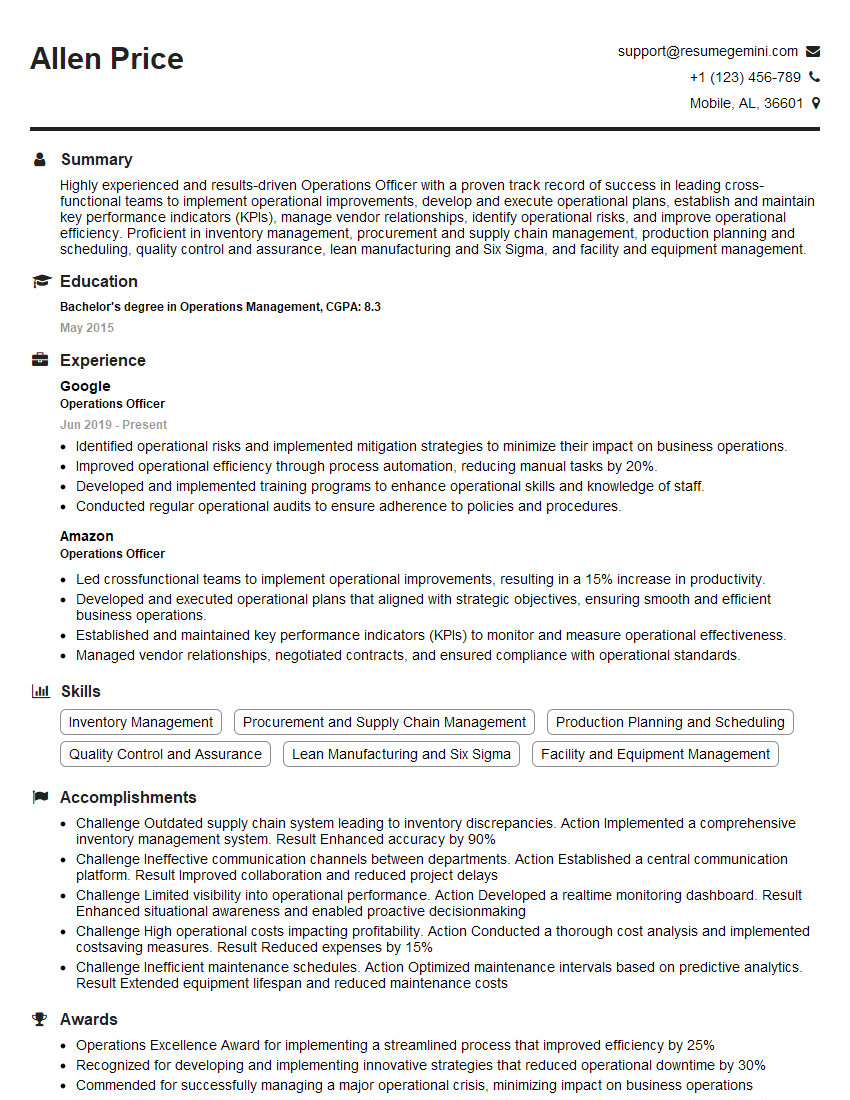
ResumeGemini can be a trusted partner in this process. It offers tools and resources to help you build a professional, impactful resume that highlights your skills and experience effectively. We provide examples of resumes tailored to Joint Operations Planning and Execution System (JOPES) roles to further assist you in this crucial step. Take control of your career journey – start building your resume today!
Explore more articles
Users Rating of Our Blogs
Share Your Experience
We value your feedback! Please rate our content and share your thoughts (optional).
What Readers Say About Our Blog
Very informative content, great job.
good