Unlock your full potential by mastering the most common Threat Identification and Assessment interview questions. This blog offers a deep dive into the critical topics, ensuring you’re not only prepared to answer but to excel. With these insights, you’ll approach your interview with clarity and confidence.
Questions Asked in Threat Identification and Assessment Interview
Q 1. Explain the difference between vulnerability, threat, and risk.
Think of it like this: a vulnerability is a weakness, a flaw in your system – like a crack in a wall. A threat is something that could exploit that weakness, like a mischievous child with a ball. And risk is the potential damage that could happen if the threat exploits the vulnerability – the hole in the wall getting bigger, possibly causing the entire wall to collapse.
More formally:
- Vulnerability: A weakness in a system’s design, implementation, operation, or internal controls that could be exploited by a threat agent. Example: An outdated software version with known security holes.
- Threat: Any potential danger that could exploit a vulnerability. Example: A malicious hacker attempting to infiltrate a system.
- Risk: The likelihood that a threat will exploit a vulnerability, resulting in an undesirable outcome. Example: The probability of a data breach due to the outdated software and the hacker’s attack.
Understanding these distinctions is crucial for prioritizing security efforts. We need to identify vulnerabilities, assess the threats that could exploit them, and then quantify the risk to determine where to focus our resources.
Q 2. Describe the process of conducting a threat modeling exercise.
Threat modeling is a systematic process to identify and mitigate potential security risks. It’s like a pre-emptive strike against vulnerabilities before they can be exploited. A typical process involves these steps:
- Define the scope: Identify the system or application you’re analyzing, including its functionality and boundaries.
- Choose a method: Select a threat modeling methodology, such as STRIDE (Spoofing, Tampering, Repudiation, Information disclosure, Denial of service, Elevation of privilege), PASTA (Process for Attack Simulation and Threat Analysis), or DREAD (Damage Potential, Reproducibility, Exploitability, Affected Users, Discoverability).
- Identify assets: Determine the valuable components of the system (data, applications, hardware) that need protection.
- Identify threats: Brainstorm potential threats that could target the assets. This often involves considering various attack vectors and attacker motivations.
- Identify vulnerabilities: Examine the system for weaknesses that could be exploited by the identified threats.
- Assess risks: Analyze the likelihood and impact of each threat exploiting each vulnerability.
- Define mitigation strategies: Develop plans to address the identified risks, such as implementing security controls (firewalls, intrusion detection systems, etc.).
- Document and communicate: Record the findings and mitigation plans for future reference and communication to stakeholders.
For example, when modeling a web application, we’d consider threats like SQL injection, cross-site scripting (XSS), and denial-of-service attacks. We’d then analyze vulnerabilities in the application code and database that could enable these threats.
Q 3. What are the key components of a comprehensive threat assessment?
A comprehensive threat assessment requires a multi-faceted approach. Key components include:
- Threat identification: Identifying potential threats, including their sources, capabilities, and motivations.
- Vulnerability identification: Identifying weaknesses in systems, applications, and processes that could be exploited.
- Risk analysis: Assessing the likelihood and impact of threats exploiting vulnerabilities.
- Impact assessment: Determining the potential consequences of a successful attack, including financial losses, reputational damage, and legal liabilities. Consider factors like data loss, downtime, and regulatory fines.
- Threat actor profiling: Understanding the characteristics, capabilities, and motivations of potential attackers (e.g., nation-state actors, organized crime, hacktivists).
- Attack vector analysis: Analyzing the methods attackers might use to compromise systems (e.g., phishing emails, malware, exploits).
- Mitigation strategies: Defining steps to reduce or eliminate identified risks, including security controls and incident response plans.
The output should be a prioritized list of risks with recommendations for remediation.
Q 4. How do you prioritize threats based on likelihood and impact?
Threat prioritization is crucial for efficient resource allocation. We use a risk matrix that combines likelihood and impact. Likelihood represents the probability of a threat occurring, while impact measures the severity of the consequences. Several methods exist:
- Qualitative methods: Assign subjective ratings (e.g., low, medium, high) to both likelihood and impact. This relies on expert judgment and experience.
- Quantitative methods: Assign numerical values to likelihood and impact based on historical data or statistical models. This often involves assigning probabilities and monetary values to potential losses.
A risk matrix typically presents likelihood on one axis and impact on the other, creating quadrants representing different risk levels. High likelihood and high impact threats receive top priority. For example, a threat with a high likelihood of occurrence and a high potential for financial loss will receive higher priority than a low likelihood, low impact threat. This allows us to focus resources on the most critical risks first.
Q 5. Explain the concept of a kill chain and its relevance to threat identification.
The kill chain is a model that depicts the stages of a cyberattack, from initial reconnaissance to achieving the attacker’s objective. Understanding the kill chain helps us identify vulnerabilities and implement defensive measures at each stage. It’s like understanding the steps of a heist; stopping them at any point prevents the final outcome.
Typical stages include:
- Reconnaissance: Gathering information about the target.
- Weaponization: Developing the attack tool (malware, exploit).
- Delivery: Sending the attack payload to the target.
- Exploitation: Exploiting a vulnerability to gain access.
- Installation: Establishing a foothold on the system.
- Command and control: Establishing communication with the attacker’s infrastructure.
- Actions on objectives: Achieving the attacker’s goal (data exfiltration, system disruption).
By analyzing the kill chain, we can pinpoint weaknesses in our defenses and implement controls to disrupt the attack at various stages. For instance, strong email security measures can prevent weaponized emails from reaching the target, and intrusion detection systems can detect and block exploitation attempts.
Q 6. What are some common attack vectors used by malicious actors?
Malicious actors employ various attack vectors, which are the paths they use to breach security. Some common ones include:
- Phishing: Deceiving users into revealing sensitive information or downloading malware.
- Malware: Malicious software designed to damage, disrupt, or gain unauthorized access.
- Exploits: Taking advantage of software vulnerabilities.
- SQL injection: Injecting malicious SQL code into database queries.
- Cross-site scripting (XSS): Injecting malicious scripts into websites.
- Denial-of-service (DoS): Overwhelming a system with traffic, making it unavailable.
- Man-in-the-middle (MitM) attacks: Intercepting communication between two parties.
- Supply chain attacks: Targeting software or hardware suppliers to compromise their products.
- Social engineering: Manipulating individuals into divulging confidential information or performing actions that compromise security.
Understanding these vectors is essential for designing comprehensive security measures. For instance, security awareness training helps mitigate phishing attacks, while secure coding practices reduce the risk of exploits and SQL injection.
Q 7. Describe your experience with vulnerability scanning tools.
I have extensive experience using various vulnerability scanning tools, including Nessus, OpenVAS, QualysGuard, and Nexpose. These tools automate the process of identifying vulnerabilities in systems and applications. They work by probing systems for known weaknesses, comparing their findings to vulnerability databases, and reporting potential security risks.
My experience encompasses:
- Performing vulnerability scans: Configuring and running scans on various systems, including servers, networks, and web applications.
- Analyzing scan results: Identifying critical vulnerabilities and prioritizing them based on severity and likelihood of exploitation.
- Generating reports: Creating comprehensive reports summarizing scan results and providing recommendations for remediation.
- Integrating with other security tools: Integrating vulnerability scan data with other security tools like SIEM (Security Information and Event Management) systems for enhanced threat detection and incident response.
- False positive management: Identifying and mitigating false positives reported by the scanning tools.
I understand the limitations of vulnerability scanning tools – they don’t identify all vulnerabilities, and some findings require manual verification. However, they are invaluable for proactively identifying potential security weaknesses and improving the overall security posture of an organization.
Q 8. How do you validate identified vulnerabilities?
Validating identified vulnerabilities is crucial to ensure we’re not addressing false positives and prioritizing genuine risks. It’s a multi-step process involving several techniques. First, we need to reproduce the vulnerability. This involves attempting to exploit the vulnerability in a controlled environment, mirroring the conditions under which it was discovered. If successful, we’ve confirmed the vulnerability’s existence. Next, we determine the severity. This involves assessing the potential impact of successful exploitation. Factors considered include data exposure, system disruption, and potential financial loss. We use standardized scoring systems like CVSS (Common Vulnerability Scoring System) to quantify the severity. Finally, we verify the vulnerability’s fixability. This involves checking for patches, workarounds, or configuration changes that mitigate or eliminate the risk. For instance, if a vulnerability is in a third-party library, we’d check for updated library versions.
Example: Imagine a vulnerability scanner reports a SQL injection flaw in a web application. To validate, we’d craft a malicious SQL query and try to inject it into the application’s input fields. If the application executes the malicious query, the vulnerability is confirmed. We’d then assess the potential data access it grants, assigning a CVSS score, and research patches or mitigation strategies from the application vendor or our own development team.
Q 9. Explain the difference between static and dynamic vulnerability analysis.
Static and dynamic vulnerability analysis are two complementary approaches to identifying weaknesses in software. Static analysis examines the code without executing it. It’s like reviewing blueprints before construction; you check for design flaws without building the actual structure. Tools analyze the code’s structure, looking for potential issues like buffer overflows, SQL injection vulnerabilities, or insecure coding practices. This approach is good for early detection, but it may miss runtime vulnerabilities. Dynamic analysis, on the other hand, involves running the application and observing its behavior. It’s like testing the building after it’s completed to check its stability and functionality. Tools monitor the application’s interactions, looking for vulnerabilities that only appear during execution, such as memory leaks or cross-site scripting (XSS) flaws. This approach is excellent for identifying runtime vulnerabilities but might miss vulnerabilities that don’t manifest during testing.
In short: Static analysis is proactive and focuses on code structure; dynamic analysis is reactive and focuses on runtime behavior. Using both provides a more comprehensive security assessment.
Q 10. How do you stay updated on the latest threat intelligence?
Staying updated on threat intelligence is paramount in this ever-evolving landscape. I utilize a multi-faceted approach. Firstly, I subscribe to reputable threat intelligence feeds from organizations like SANS Institute, CERT, and various vendors specializing in threat intelligence. These feeds provide real-time alerts on emerging threats, malware variants, and attack techniques. Secondly, I actively monitor industry news and security blogs. Publications like KrebsOnSecurity and Threatpost offer valuable insights into current threats and attack trends. Thirdly, I participate in security communities and forums, engaging in discussions and sharing knowledge with other professionals. This provides a platform to learn about new threats from a diverse range of sources and perspectives. Finally, I leverage security information and event management (SIEM) tools which often provide threat intelligence feeds integrated into their platforms, allowing for proactive threat detection and response.
Think of it like receiving daily briefings from multiple intelligence agencies – you get a more holistic view of the threat landscape.
Q 11. Describe your experience with SIEM tools and log analysis.
I have extensive experience with various SIEM tools, including Splunk, QRadar, and ELK stack. My expertise encompasses log collection, normalization, correlation, and analysis. I’m proficient in using these tools to identify security events, investigate potential threats, and generate security alerts. For instance, I can configure alerts to detect suspicious login attempts, unusual data access patterns, or malware infections. Log analysis involves systematically examining log data to pinpoint the root cause of security incidents. This often requires using advanced query languages, like Splunk Query Language (SPL) or Elasticsearch Query DSL, to filter, aggregate, and analyze large datasets. I am also proficient in developing custom dashboards and reports for monitoring key security metrics and providing insights to security stakeholders.
Example: Using Splunk, I might create a search to identify all failed login attempts from unusual geographic locations within a specific time frame. This could reveal a brute-force attack attempting to compromise user accounts.
Q 12. How do you investigate and respond to security incidents?
Investigating and responding to security incidents follows a structured approach. It begins with incident identification and confirmation – verifying that an actual security event has occurred. Then, containment is crucial. This involves isolating the affected system or network segment to prevent further damage. Next, eradication aims to remove the malicious actor or threat completely. This may involve removing malware, resetting compromised accounts, or patching vulnerable systems. Following eradication, we perform a thorough recovery. This restores systems to their operational state, ensuring data integrity and business continuity. Finally, we conduct a post-incident review to analyze the incident’s root cause, identify vulnerabilities, and implement improvements to prevent future occurrences. This often involves updating security policies, enhancing security controls, and providing training to staff.
Example: If a ransomware attack is detected, we’d immediately isolate the affected systems from the network to prevent further spread, then work to remove the ransomware and recover data from backups. A post-incident review would examine how the attacker gained access and implement improvements like stronger access controls and improved endpoint protection.
Q 13. Explain your understanding of different types of malware.
Malware is a broad category encompassing various types of malicious software. Viruses are self-replicating programs that spread by attaching themselves to other files. Worms, unlike viruses, are self-replicating and can spread independently without needing to attach to other files. Trojans disguise themselves as legitimate software, deceiving users into installing them, often leading to data theft or system compromise. Ransomware encrypts user data and demands a ransom for its release. Spyware secretly monitors user activity and collects personal information. Adware displays unwanted advertisements. Rootkits gain administrator-level control over a system, making them difficult to detect and remove. Bots are malicious programs that form part of botnets, which can be used for distributed denial-of-service (DDoS) attacks or other malicious activities.
Understanding these different types is essential for effective malware detection and response. Each type has unique characteristics and requires different countermeasures.
Q 14. How do you perform a risk assessment for a specific system or application?
Performing a risk assessment for a system or application requires a systematic approach. I typically utilize a framework like NIST Cybersecurity Framework or ISO 27005. It begins by identifying assets – the valuable resources that need protection, such as databases, applications, and servers. Then, we identify threats – potential events that could compromise these assets, such as malware attacks, denial-of-service attacks, or insider threats. Next, we evaluate the vulnerabilities that could make these assets susceptible to threats. This involves vulnerability scanning and penetration testing. The next step is to analyze the likelihood of threats exploiting vulnerabilities and the resulting impact. This involves assessing potential losses, including financial costs, data breaches, and reputational damage. Finally, we determine the risk by combining likelihood and impact and prioritize mitigation efforts based on the highest risks. This often results in a prioritized list of recommendations, addressing the most significant risks first.
Example: Assessing a web application, we’d identify assets like customer databases and application code. Threats might include SQL injection, cross-site scripting, and denial-of-service attacks. We’d then perform vulnerability scans and penetration testing to identify vulnerabilities. By combining the likelihood of a successful attack with the potential impact (e.g., data breach, financial loss), we can calculate a risk score and prioritize mitigation actions.
Q 15. What are the key elements of a security incident response plan?
A robust Security Incident Response Plan (SIRP) is a crucial document outlining the steps an organization takes to prepare for, identify, analyze, contain, eradicate, recover from, and learn from security incidents. It’s essentially a playbook for handling any breach or attack.
- Preparation: This involves identifying potential threats, vulnerabilities, and critical assets. It also includes establishing roles and responsibilities within the response team, defining communication protocols, and conducting regular training exercises.
- Identification: This stage focuses on detecting security incidents through various means, such as intrusion detection systems, security information and event management (SIEM) tools, and log analysis. Identifying the source and nature of the incident is crucial.
- Containment: Once an incident is identified, the immediate priority is to contain it to prevent further damage. This may involve isolating infected systems, blocking network access, or disabling compromised accounts.
- Eradication: The goal here is to completely remove the threat from the system. This might include removing malware, patching vulnerabilities, and restoring data from backups.
- Recovery: After the threat is removed, systems need to be restored to their operational state. This includes recovering data, restoring services, and verifying system integrity.
- Post-Incident Activity: This final stage involves analyzing the incident to understand what happened, how it happened, and how to prevent similar incidents in the future. It also includes updating the SIRP based on lessons learned.
For example, imagine a phishing attack successfully compromises employee credentials. A well-defined SIRP will guide the team through isolating affected accounts, changing passwords, investigating the extent of the breach, restoring data, and implementing stronger security awareness training to prevent future attacks.
Career Expert Tips:
- Ace those interviews! Prepare effectively by reviewing the Top 50 Most Common Interview Questions on ResumeGemini.
- Navigate your job search with confidence! Explore a wide range of Career Tips on ResumeGemini. Learn about common challenges and recommendations to overcome them.
- Craft the perfect resume! Master the Art of Resume Writing with ResumeGemini’s guide. Showcase your unique qualifications and achievements effectively.
- Don’t miss out on holiday savings! Build your dream resume with ResumeGemini’s ATS optimized templates.
Q 16. How do you communicate security risks to both technical and non-technical audiences?
Communicating security risks effectively requires tailoring the message to the audience. Technical audiences appreciate detailed explanations, while non-technical audiences need a simpler, more concise approach.
For technical audiences: I’d use precise terminology, provide detailed technical analysis of vulnerabilities and risks, and possibly include diagrams or code snippets illustrating the threats. For example, I might explain a specific exploit using a vulnerability in a particular software version.
For non-technical audiences: I focus on the impact of a security breach on the business – potential financial losses, reputational damage, and legal liabilities. I use analogies and simple language, avoiding technical jargon. For instance, I might explain a phishing attack as someone trying to trick you into giving up your password by disguising themselves as a trusted source.
In both cases, clear and concise communication is key, using visual aids where appropriate to enhance understanding and retention.
Q 17. What are some common security frameworks (e.g., NIST, ISO 27001)?
Several well-regarded security frameworks provide a structured approach to managing information security risks.
- NIST Cybersecurity Framework (CSF): This framework from the National Institute of Standards and Technology provides a flexible approach for organizations of all sizes. It focuses on identifying, assessing, managing, and mitigating cybersecurity risks. It uses a five-function model: Identify, Protect, Detect, Respond, and Recover.
- ISO 27001: This international standard specifies the requirements for establishing, implementing, maintaining, and continually improving an information security management system (ISMS). It provides a comprehensive framework for managing risks related to information security.
- CIS Controls: The Center for Internet Security (CIS) provides a set of security controls that can be implemented to reduce the risk of cyberattacks. They are prioritized based on their effectiveness in reducing risk.
These frameworks provide a common language and methodology for organizations to address security concerns. The choice of framework often depends on industry regulations, organizational size, and specific needs.
Q 18. Describe your experience with penetration testing methodologies.
My experience with penetration testing encompasses various methodologies, primarily focusing on a combination of black-box, white-box, and grey-box testing.
Black-box testing simulates a real-world attack, where the tester has no prior knowledge of the target system. This approach helps identify vulnerabilities that might be overlooked in other testing methods. I’ve used this approach extensively to assess the security posture of web applications and network infrastructure.
White-box testing provides the tester with complete knowledge of the system’s architecture, code, and configuration. This allows for a more thorough analysis of the system’s internal workings and identification of specific vulnerabilities within the code base. This methodology has proven invaluable when working closely with development teams to ensure security best practices are built into the system from the start.
Grey-box testing falls between black-box and white-box testing, where the tester has partial knowledge of the system. This approach helps to reveal vulnerabilities that are difficult to uncover using only black-box or white-box techniques. I often combine grey-box testing with dynamic application security testing (DAST) and static application security testing (SAST) tools to obtain a comprehensive overview of the system’s security.
Throughout my penetration testing engagements, I’ve always followed a structured approach, beginning with reconnaissance, followed by vulnerability scanning, exploitation, and finally reporting the findings with remediation recommendations.
Q 19. How do you identify and mitigate social engineering threats?
Social engineering threats exploit human psychology to gain access to sensitive information or systems. Identifying and mitigating these threats requires a multi-faceted approach.
- Employee Training: Regular security awareness training is critical. This includes educating employees about various social engineering techniques, such as phishing, baiting, and pretexting, and teaching them how to identify and respond to these attempts.
- Technical Controls: Implementing technical measures such as email filtering, multi-factor authentication, and intrusion detection systems can help detect and prevent social engineering attacks. For example, strong email filtering can prevent many phishing emails from ever reaching employees’ inboxes.
- Incident Response Plan: A comprehensive incident response plan should include procedures for handling social engineering incidents, including isolating compromised accounts, restoring data, and conducting a post-incident review.
- Phishing Simulations: Regularly conducting simulated phishing attacks helps assess employees’ vulnerability to social engineering and identifies areas for improvement in training and awareness.
For example, a successful phishing attack might trick an employee into revealing their credentials. By implementing strong authentication and educating employees to spot suspicious emails, we can significantly reduce the risk of such attacks.
Q 20. What are your experiences with cloud security threats?
Cloud security threats are unique due to the shared responsibility model between the cloud provider and the customer. The threats are numerous and ever-evolving.
- Data Breaches: Unauthorized access to sensitive data stored in the cloud is a major concern. Misconfigured cloud storage buckets, weak access controls, and lack of data encryption can lead to data breaches.
- Insider Threats: Employees with access to cloud resources can pose a significant threat. Implementing strong access controls, monitoring user activity, and conducting regular security audits are crucial.
- Misconfigurations: Incorrectly configured cloud services can lead to vulnerabilities. Regular security assessments and automated configuration checks can help identify and address these misconfigurations.
- Third-Party Risks: Relying on third-party cloud providers introduces additional risks. Thorough due diligence and contract negotiation are crucial to ensure the provider’s security practices meet your organization’s requirements.
My experience includes implementing and managing cloud security solutions, including Identity and Access Management (IAM), data loss prevention (DLP), and cloud security posture management (CSPM) tools. I’ve worked with various cloud providers, including AWS, Azure, and GCP, to develop and implement secure cloud architectures. A real-world example would be securing a database in AWS by using encryption at rest and in transit, along with implementing strict access control policies via IAM.
Q 21. Explain the concept of zero trust security.
Zero Trust security is a security model that assumes no implicit trust granted to any user, device, or network, regardless of location (inside or outside the organizational network). Instead, every access request is verified before granting access.
Think of it as a fortress with multiple checkpoints and strict verification at each step, unlike traditional security models that primarily focus on perimeter security. The core principles of Zero Trust are:
- Least Privilege Access: Granting only the minimum necessary access rights to users and devices.
- Microsegmentation: Dividing the network into smaller, isolated segments to limit the impact of a breach.
- Continuous Verification: Continuously verifying the identity and trustworthiness of users, devices, and applications before granting access.
- Data Encryption: Encrypting data both in transit and at rest to protect it from unauthorized access.
- Strong Authentication: Implementing robust multi-factor authentication (MFA) to protect against unauthorized access.
This model significantly reduces the attack surface and limits the impact of successful breaches, as even if one segment is compromised, the attacker’s access is limited to that specific segment.
Q 22. How do you evaluate the effectiveness of security controls?
Evaluating the effectiveness of security controls involves a multi-faceted approach that goes beyond simply checking if they’re in place. We need to assess their effectiveness in preventing, detecting, and responding to threats. This involves a combination of technical assessments, policy reviews, and simulated attacks.
Technical Assessments: This includes vulnerability scans to identify weaknesses, penetration testing to simulate real-world attacks, and log analysis to monitor control performance. For example, if we implement a firewall, we wouldn’t just check if it’s running, but also analyze its logs to see if it’s blocking malicious traffic effectively. We might look for patterns of blocked IP addresses known for malicious activity.
Policy Reviews: We need to ensure that security controls align with organizational policies and best practices. Are the controls properly configured according to security standards (like CIS Benchmarks)? Are employees trained on how to use them effectively? For instance, a strong password policy is useless if employees are using easily guessable passwords.
Simulated Attacks: Penetration testing and red teaming exercises are crucial. These simulated attacks help uncover vulnerabilities that might be missed during routine checks. A successful penetration test reveals gaps in our security defenses, prompting improvements in our controls.
Ultimately, effectiveness is measured by the reduction in risk. We might track metrics like the number of successful attacks, the time it takes to detect a breach, and the overall impact of incidents. A robust security control framework continuously monitors and adjusts based on these metrics.
Q 23. Describe your experience with different types of security audits.
My experience encompasses various types of security audits, each serving a different purpose. These include:
Vulnerability Assessments: These audits scan systems and networks for known security weaknesses. I’ve used tools like Nessus and OpenVAS to identify vulnerabilities in web applications, operating systems, and databases. The results inform remediation efforts.
Penetration Testing: This involves actively attempting to exploit vulnerabilities to assess the effectiveness of security controls. I’ve conducted both black-box (no prior knowledge) and white-box (full system knowledge) tests, simulating different attack vectors like phishing, SQL injection, and cross-site scripting. The findings provide a realistic picture of our security posture.
Compliance Audits: These audits ensure adherence to industry regulations (like PCI DSS, HIPAA, or GDPR). I’ve helped organizations prepare for and successfully pass these audits by documenting security controls, implementing necessary policies, and ensuring compliance with regulatory requirements. This often involves creating detailed evidence trails to demonstrate compliance.
Security Posture Assessments: These comprehensive audits provide a holistic view of an organization’s security by evaluating people, processes, and technology. This helps identify areas for improvement across the entire security landscape, not just specific technologies.
Each audit type utilizes different methodologies and tools, but they all aim to identify weaknesses and provide recommendations for improvement. The key is to interpret the findings accurately and prioritize remediation efforts based on risk.
Q 24. What are some common indicators of compromise (IOCs)?
Indicators of Compromise (IOCs) are pieces of evidence that suggest a security incident has occurred or is underway. They are crucial for detection and response. IOCs can be categorized in several ways, and examples include:
Network IOCs: These relate to network traffic and activity. Examples include suspicious IP addresses, unusual port activity (e.g., unexpected outbound connections to known command-and-control servers), and abnormal network bandwidth consumption.
Host-based IOCs: These indicators reside on compromised systems. Examples include unusual process activity (e.g., creation of suspicious processes), registry modifications, file changes (e.g., creation of malicious files), and unusual login attempts.
Malware IOCs: These are specific characteristics of malicious software. Examples include unique malware hashes (MD5, SHA-1, SHA-256), domain names used for command and control, and specific malware signatures.
Email IOCs: These indicators are associated with malicious emails. Examples include suspicious email attachments, malicious URLs in email bodies, and unusual sender addresses.
Identifying IOCs is crucial in the threat identification and incident response process. Security tools like Security Information and Event Management (SIEM) systems are often used to detect and analyze these indicators. Sharing IOCs within threat intelligence communities is also critical for collective defense.
Q 25. How do you use threat intelligence to improve your security posture?
Threat intelligence plays a vital role in proactive security. It’s not just about reacting to incidents; it’s about anticipating them. I use threat intelligence in several ways:
Vulnerability Management: Threat intelligence feeds help prioritize vulnerability remediation efforts. If a vulnerability is being actively exploited (as indicated by threat intelligence reports), we address it immediately. For example, knowing about a specific zero-day exploit targeting a particular application allows us to patch that vulnerability before attackers can use it.
Security Monitoring: Threat intelligence informs the creation of custom security rules and alerts. For instance, if we know a particular IP address or domain is associated with malicious activity, we can create alerts to detect any communication with it. This enhances our detection capabilities.
Incident Response: Threat intelligence helps to understand the context of an incident. Knowing the attacker’s tactics, techniques, and procedures (TTPs) enables faster and more effective incident response. This includes identifying the source of the attack and the specific techniques used.
Security Awareness Training: Threat intelligence helps in creating relevant and timely security awareness training for employees. Highlighting current threats and attack techniques makes the training more impactful and relevant.
I leverage various sources of threat intelligence, including commercial feeds, open-source intelligence (OSINT), and collaboration with other security professionals. The key is to integrate threat intelligence into our security operations to improve our preparedness and resilience.
Q 26. Explain your understanding of data loss prevention (DLP) measures.
Data Loss Prevention (DLP) measures aim to prevent sensitive data from leaving the organization’s control. This involves a layered approach encompassing several strategies:
Data Classification and Inventory: The first step is identifying and classifying sensitive data. We need to know what data we’re protecting, where it resides, and its sensitivity level (e.g., financial data, personal identifiable information). This creates a clear understanding of our data assets.
Access Control: Restricting access to sensitive data based on the principle of least privilege is essential. Only authorized personnel should have access to specific data, and their access should be reviewed periodically.
Data Encryption: Encrypting sensitive data at rest and in transit helps protect it even if it’s compromised. This makes the data unreadable without the proper decryption key.
Data Loss Prevention (DLP) Tools: These specialized tools monitor data movement and prevent sensitive information from leaving the organization’s control. They can scan emails, files, and network traffic to detect and block attempts to exfiltrate data. This might involve keyword filtering or pattern matching based on predefined rules.
Employee Training: Educating employees about data security best practices and the importance of protecting sensitive information is crucial. They are the first line of defense against data loss.
A comprehensive DLP strategy requires a combination of these measures. Regularly auditing and reviewing these controls is essential to maintain their effectiveness and adapt to evolving threats.
Q 27. Describe your experience with incident response automation tools.
My experience with incident response automation tools has significantly improved our efficiency and effectiveness in handling security incidents. These tools automate various aspects of the incident response lifecycle, enabling faster detection, analysis, and remediation. I’ve worked with tools that automate:
Threat Detection and Alerting: SIEM systems and other security tools automate the process of detecting suspicious activity and generating alerts. This reduces the time it takes to identify potential incidents.
Incident Triage and Prioritization: Automated tools can analyze alerts and prioritize them based on severity and impact. This ensures that critical incidents are addressed promptly.
Containment and Remediation: Some tools can automatically isolate compromised systems or automatically disable accounts to limit the impact of an attack. This helps to contain the spread of an incident quickly.
Forensic Analysis: Automation can assist in the collection and analysis of forensic data. Tools can automatically collect logs, memory dumps, and other evidence, streamlining the investigation process.
While automation improves efficiency, human expertise remains crucial. Automation tools should be integrated with well-defined processes and incident response playbooks. Human oversight and judgment are still necessary for making critical decisions during an incident. For example, while a tool might automatically block a suspicious IP address, a human analyst needs to verify the action to ensure it doesn’t disrupt legitimate activity.
Key Topics to Learn for Threat Identification and Assessment Interview
- Threat Modeling Methodologies: Understanding and applying various threat modeling frameworks (e.g., STRIDE, PASTA) to identify potential vulnerabilities in systems and applications. This includes practical experience in choosing the appropriate methodology for different contexts.
- Vulnerability Analysis Techniques: Mastering techniques like static and dynamic analysis, penetration testing methodologies, and code review best practices to pinpoint security weaknesses. Consider practical examples of identifying vulnerabilities in specific systems or code segments.
- Risk Assessment and Prioritization: Learn to effectively assess the likelihood and impact of identified threats, prioritize vulnerabilities based on risk level, and articulate clear recommendations for remediation. Focus on quantitative and qualitative risk analysis techniques.
- Security Controls and Mitigation Strategies: Gain a solid understanding of various security controls (technical, administrative, physical) and how they can effectively mitigate identified threats. Be prepared to discuss practical examples of implementing security controls.
- Compliance and Regulatory Frameworks: Familiarize yourself with relevant compliance standards (e.g., NIST, ISO 27001) and regulations (e.g., GDPR, HIPAA) and how they impact threat identification and assessment processes. This includes understanding how to map threats to compliance requirements.
- Communication and Reporting: Develop strong communication skills to effectively present threat assessments, risk analyses, and remediation plans to both technical and non-technical audiences. Practice structuring reports concisely and clearly.
- Emerging Threats and Technologies: Stay updated on the latest threat landscape, including emerging threats and vulnerabilities related to cloud computing, IoT, and AI. Demonstrating awareness of current trends is crucial.
Next Steps
Mastering Threat Identification and Assessment is crucial for career advancement in cybersecurity, opening doors to leadership roles and higher earning potential. A strong resume is your key to unlocking these opportunities. Creating an ATS-friendly resume is essential to ensure your application gets noticed by recruiters. ResumeGemini is a trusted resource to help you build a professional and impactful resume tailored to the cybersecurity field. We provide examples of resumes specifically tailored to Threat Identification and Assessment roles to help guide you. Take the next step towards your dream career – build a compelling resume with ResumeGemini today!
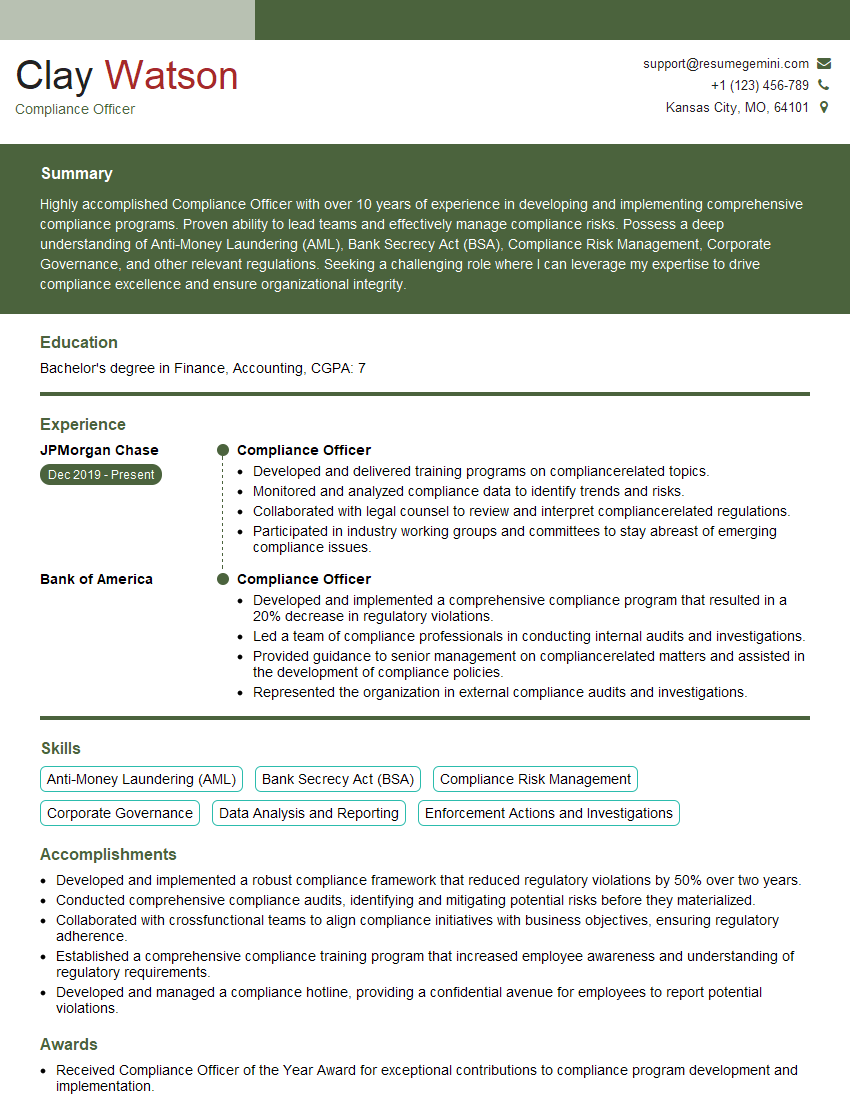
Compliance Officer Resume Sample
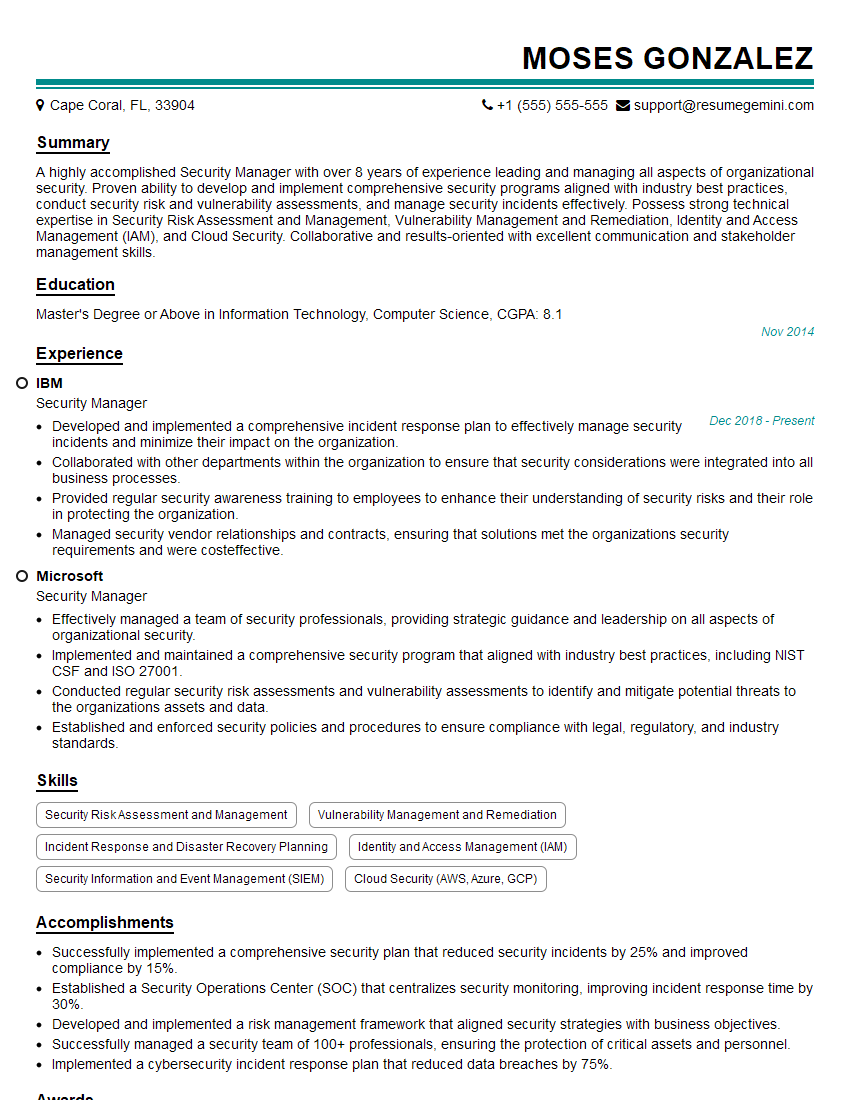
Security Manager Resume Sample
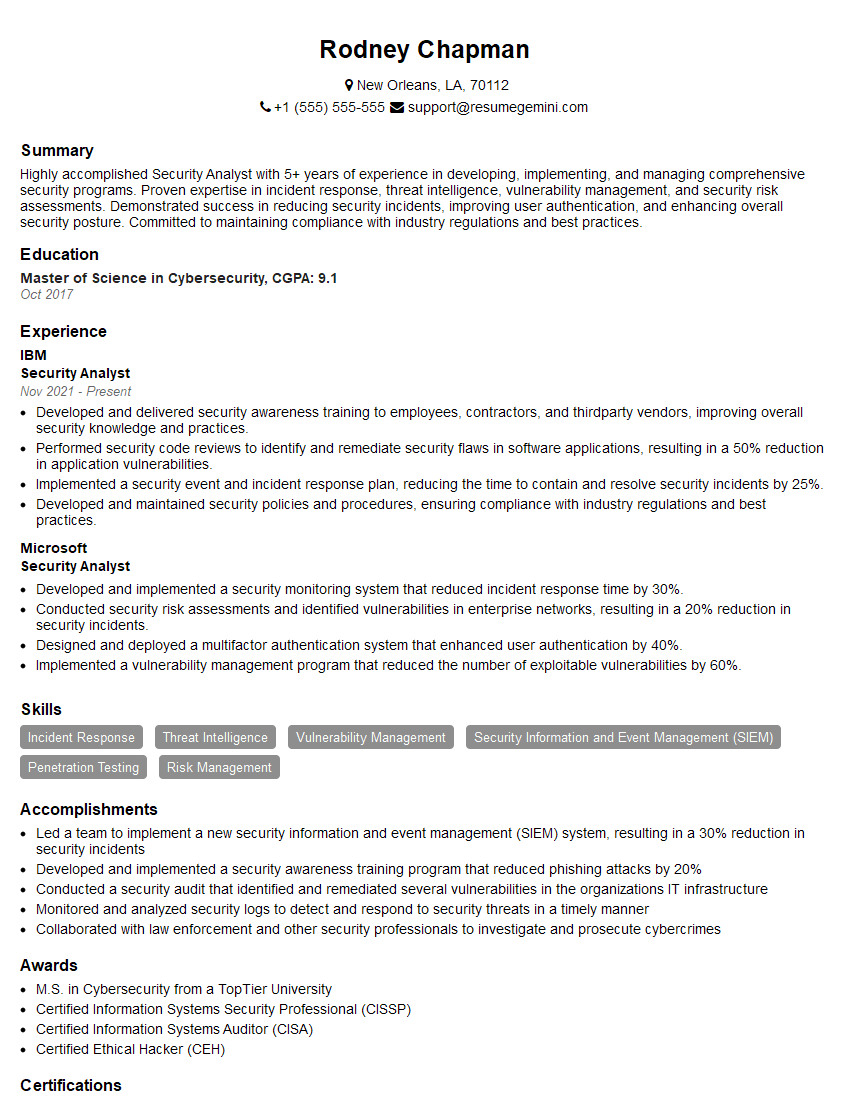
Security Analyst Resume Sample
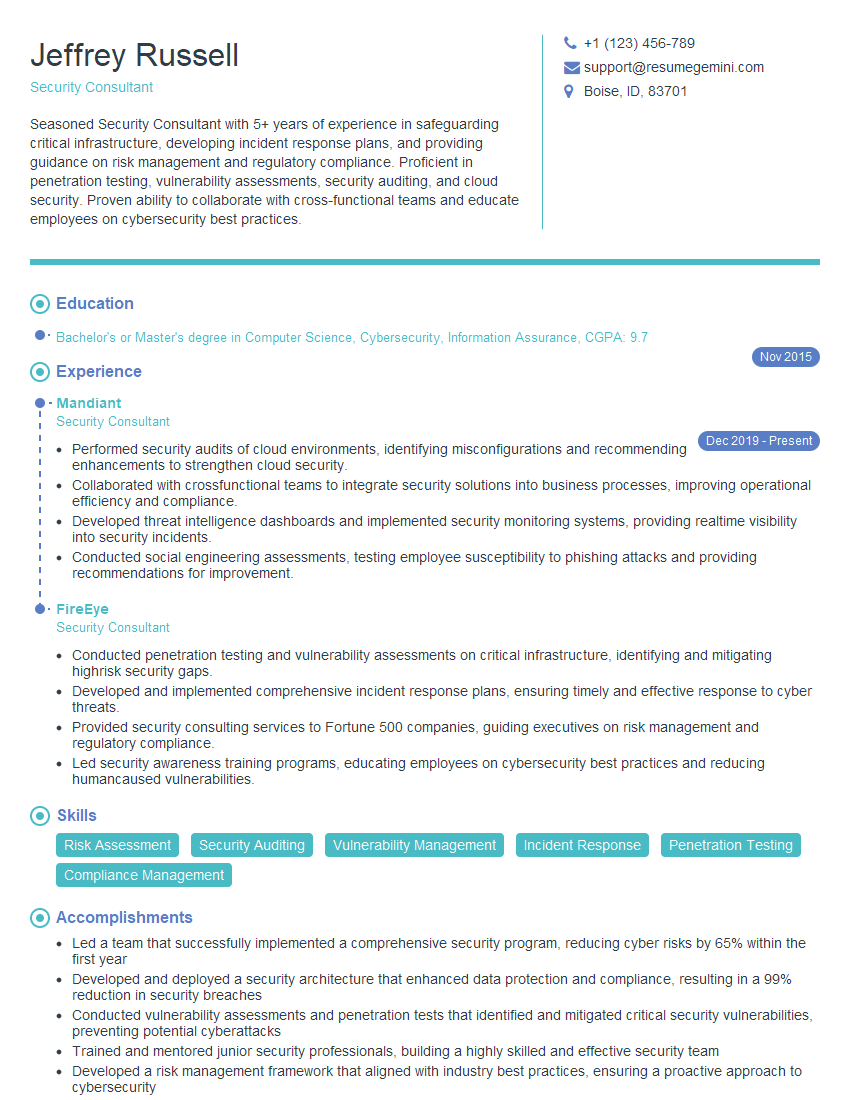
Security Consultant Resume Sample
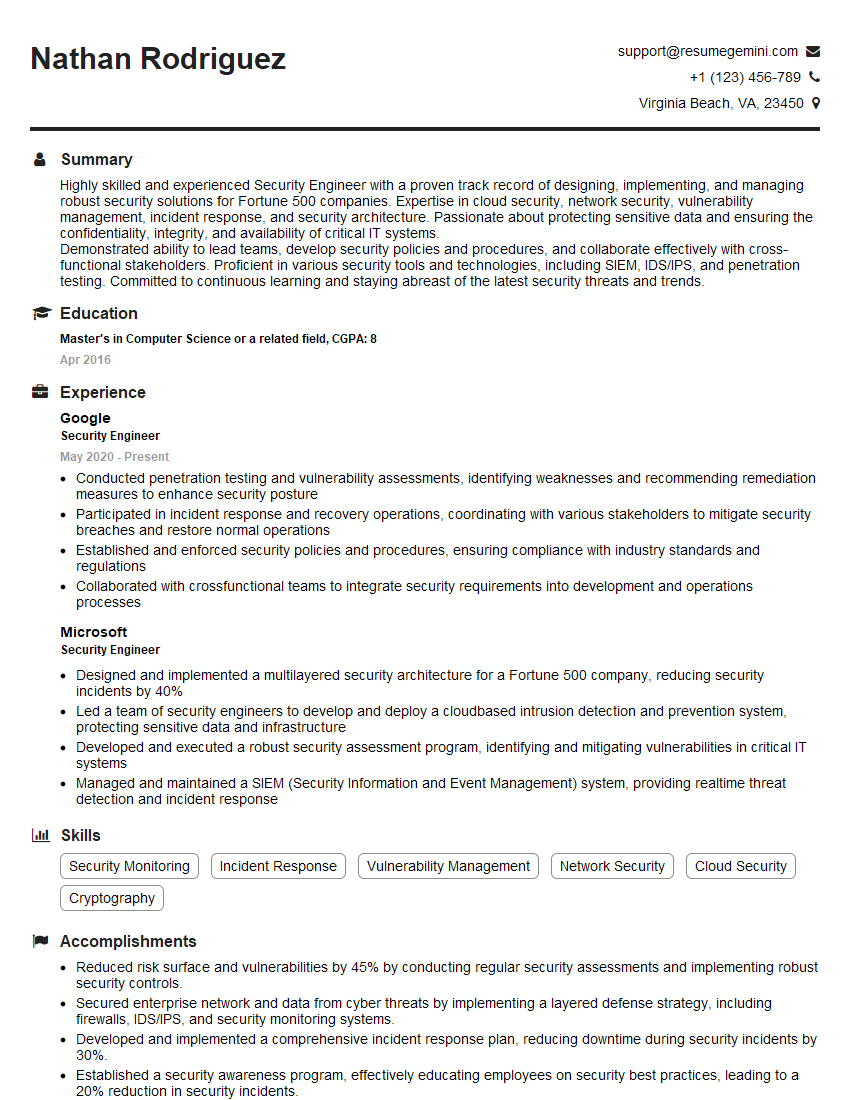
Security Engineer Resume Sample
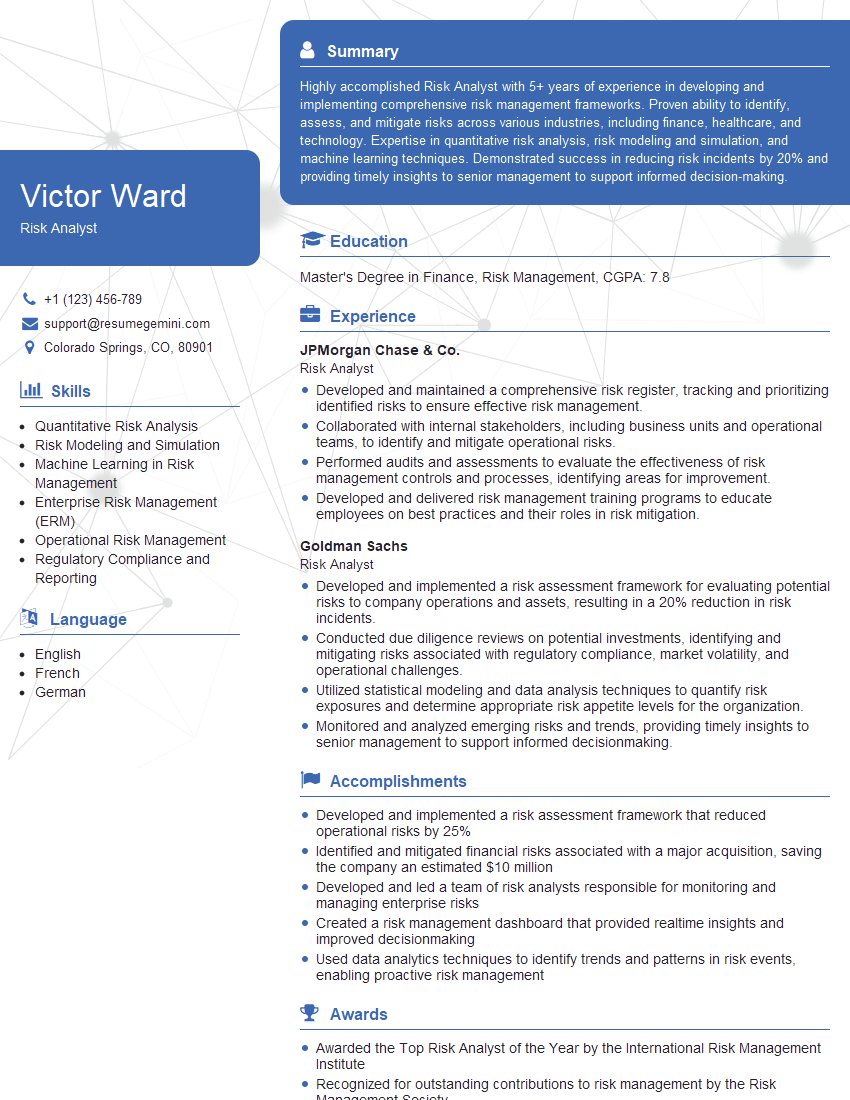
Risk Analyst Resume Sample
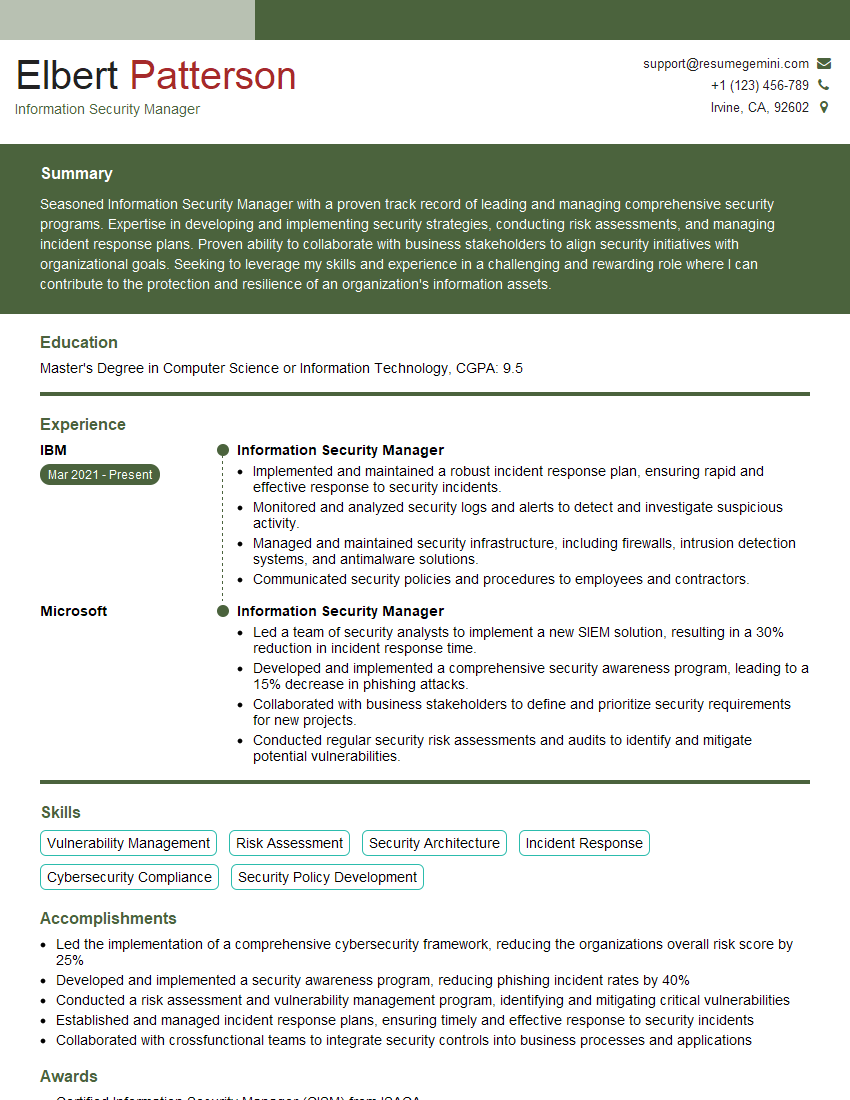
Information Security Manager Resume Sample
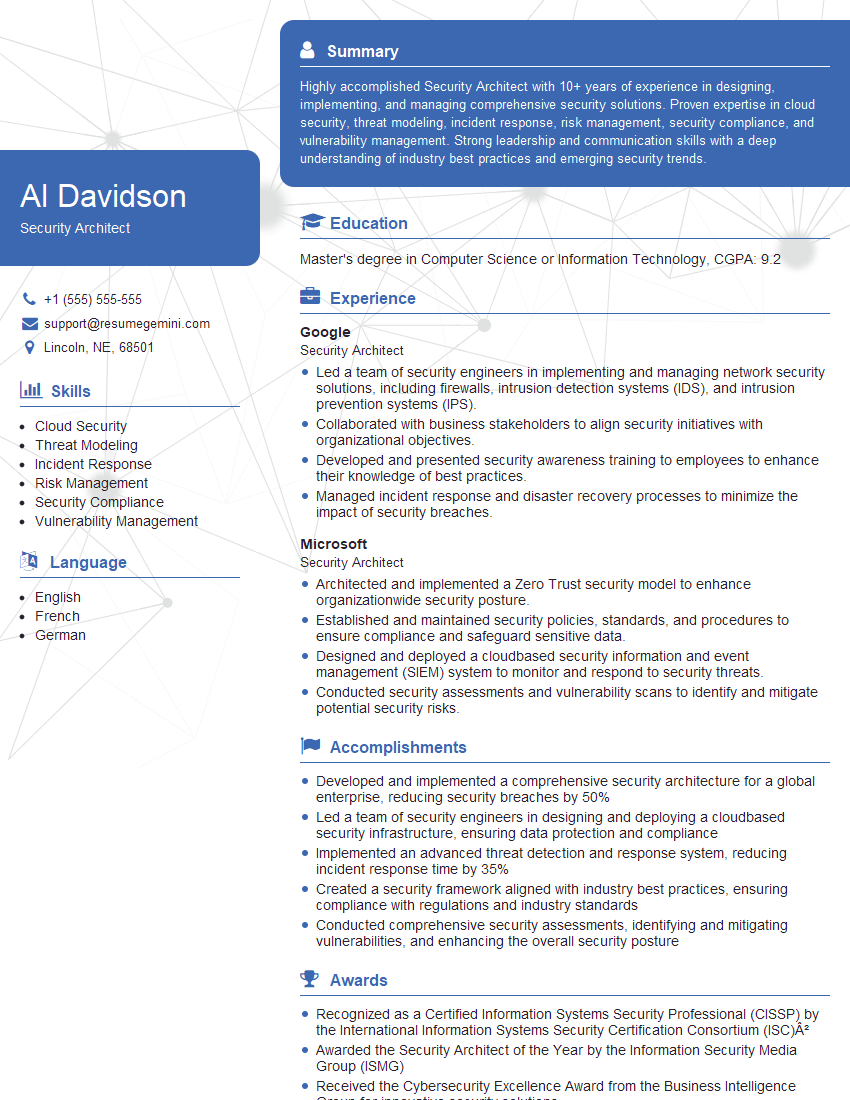
Security Architect Resume Sample

IT Security Specialist Resume Sample
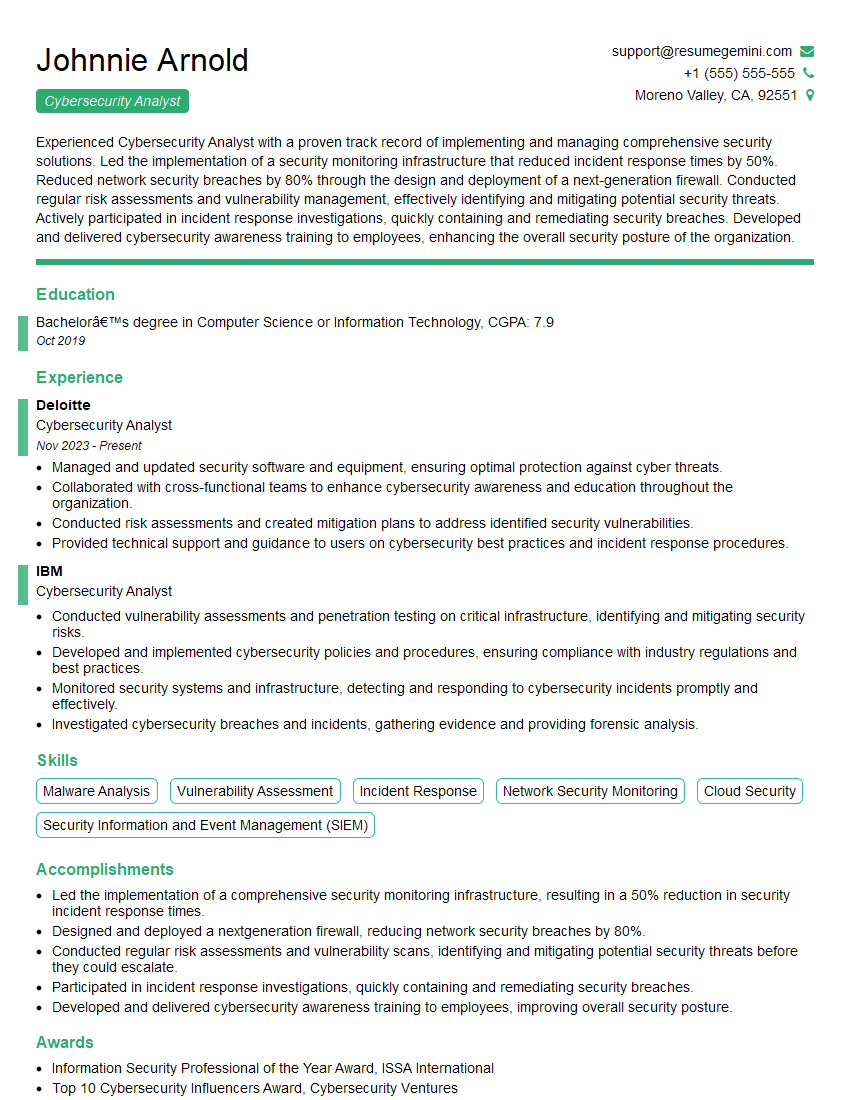
Cybersecurity Analyst Resume Sample
Explore more articles
Users Rating of Our Blogs
Share Your Experience
We value your feedback! Please rate our content and share your thoughts (optional).
What Readers Say About Our Blog
Very informative content, great job.
good