Feeling uncertain about what to expect in your upcoming interview? We’ve got you covered! This blog highlights the most important Timber Felling interview questions and provides actionable advice to help you stand out as the ideal candidate. Let’s pave the way for your success.
Questions Asked in Timber Felling Interview
Q 1. Describe your experience with different felling techniques (e.g., directional felling, hinge cutting).
Felling techniques are crucial for safe and efficient timber harvesting. Directional felling, my most frequently used method, involves carefully planning the tree’s fall path to avoid hazards. This requires assessing the tree’s lean, wind direction, and surrounding obstacles. I use a combination of notches – typically a face cut and a back cut – to control the direction of fall. The face cut is a notch shaped to guide the fall, and the back cut is made opposite the face cut to sever the tree. Hinge cutting is a vital part of directional felling, creating a hinge of wood that controls the tree’s rotation and prevents unpredictable falls. I’ve also used other techniques, like open-face felling for smaller trees or specialized methods for difficult situations, such as trees leaning heavily or those close to power lines.
For example, I once had to fell a large oak leaning precariously over a stream. Using directional felling with a carefully placed hinge, I was able to direct the tree to fall away from the stream, avoiding damage and potential hazards.
Q 2. What safety measures do you employ when using chainsaws?
Chainsaw safety is paramount. My safety protocols begin before I even start the engine. I always inspect the saw for damage and ensure all guards and safety features are in place. I wear appropriate personal protective equipment (PPE), including chainsaw chaps, safety helmet with face shield, gloves, and sturdy boots. Before each cut, I carefully assess the surrounding area, identifying escape routes and potential hazards. I maintain a safe distance from other workers and never operate the chainsaw above shoulder height. I constantly check for any potential snags, kickbacks, or other risks. Proper body positioning, using the saw’s weight to assist the cut, and maintaining a firm grip are also crucial aspects of safe operation.
Q 3. Explain your understanding of proper chainsaw maintenance and sharpening.
Proper chainsaw maintenance is essential for both safety and efficiency. After each use, I clean the saw thoroughly, removing sawdust and debris. I regularly check the chain for sharpness and tension, ensuring proper lubrication. A dull chain increases the risk of kickback and requires more effort, leading to fatigue and potential accidents. Sharpening is done using a chainsaw file, following the manufacturer’s recommendations for filing angles. I also regularly inspect the air filter, spark plug, and fuel system, ensuring everything is functioning correctly. A well-maintained chainsaw runs smoothly, cuts efficiently, and minimizes the risk of mechanical failures.
Imagine trying to cut wood with a dull knife – it’s difficult, inefficient, and dangerous. The same applies to chainsaws. Regular sharpening and maintenance are not merely good practice; they’re fundamental to safe and efficient operation.
Q 4. How do you assess tree risk and potential hazards before felling?
Assessing tree risk involves a thorough examination of the tree and its surroundings. I consider factors like the tree’s species, size, health (signs of disease or decay), lean, and the presence of dead branches. I also examine the surrounding area for obstacles like power lines, buildings, or other trees. Wind conditions and soil type are crucial elements that can influence the tree’s fall path. I use specialized tools, like climbing spikes or a high-limb saw, to assess the condition of the tree from various perspectives when necessary. A detailed risk assessment allows me to plan the felling operation safely and efficiently, mitigating potential hazards.
For instance, a tree with a significant lean towards a power line requires a much more cautious and possibly different approach compared to one standing in an open field. Understanding the tree’s weaknesses and the environment’s constraints is crucial for successful and safe felling.
Q 5. Describe your experience with various felling tools and equipment.
My experience encompasses a wide range of felling tools and equipment. In addition to chainsaws (both petrol and battery powered), I’m proficient with felling axes, wedges (both metal and plastic), and various climbing equipment such as ropes, harnesses, and climbing spikes for accessing difficult-to-reach trees. I’ve also used specialized tools like rigging gear for lowering large trees safely and mechanically assisted felling equipment such as grapples for larger-scale operations. The choice of equipment depends on the specific conditions and the size and type of trees being felled.
Q 6. What are the common causes of chainsaw accidents, and how can they be prevented?
Common chainsaw accidents often stem from kickback (the saw suddenly recoiling towards the operator), contact with the moving chain, or improper handling. Kickback can be mitigated by maintaining proper technique, avoiding pinching the chain during the cut, and using the appropriate saw for the task. Contact with the moving chain is usually due to carelessness or a lack of PPE. Preventing this is simple: always wear appropriate safety gear and maintain a safe working distance.
Many accidents can be avoided by following safety procedures, such as proper training, regular equipment maintenance, and adherence to safety regulations. Remember, a moment of carelessness can have devastating consequences.
Q 7. How do you handle emergency situations during felling operations?
Emergency situations can arise unexpectedly during felling operations. My response depends on the nature of the emergency. If a tree falls unexpectedly, I immediately ensure my safety by moving to a pre-determined safe zone. If someone is injured, I prioritize first aid and call for emergency medical assistance. If the situation involves equipment malfunction, I immediately shut down the equipment and report the issue. I’m trained in first aid and emergency procedures specific to forestry operations, and I always work with a team and communication is key.
Effective communication and a pre-planned emergency response plan are essential for mitigating the impact of accidents and ensuring the safety of everyone on site.
Q 8. Explain your knowledge of different tree species and their felling characteristics.
Understanding different tree species and their felling characteristics is paramount in safe and efficient timber felling. Different species possess unique properties influencing how they react during felling. For example, a mature oak, known for its density and strength, requires a different approach compared to a softerwood like pine.
- Hardwoods (e.g., Oak, Maple, Beech): These are generally denser and stronger, requiring more powerful equipment and precise cuts to avoid splitting or kickback. Their strong grain can cause unpredictable reactions during felling.
- Softwoods (e.g., Pine, Spruce, Fir): These are usually easier to fell due to their lower density and straighter grain. However, certain softwoods can still present challenges, such as those with internal rot or unusual branching patterns.
- Species-Specific Considerations: Beyond density and grain, factors like the presence of knots, disease, or previous damage significantly influence felling strategy. A tree with significant rot might require more cautious felling to prevent unexpected breakage.
For instance, I once encountered a large oak with a hidden decay cavity. A pre-felling assessment revealed this, allowing us to adjust our felling technique to minimize risk, such as using a more controlled direction of fall and setting up extra safety precautions. This highlights the importance of species-specific knowledge in risk mitigation.
Q 9. Describe your experience working with different terrain and weather conditions.
My experience spans diverse terrains and weather conditions. Adaptability is key in this profession. I’ve worked on steep slopes, navigating challenging terrain to ensure both safety and efficiency. Weather significantly impacts felling; strong winds, heavy rain, or snow necessitate different approaches and increased safety measures.
- Steep Slopes: Felling on slopes requires careful consideration of the tree’s direction of fall, using additional rigging equipment, and potentially employing specialized felling techniques to prevent uncontrolled roll or slide.
- Wet Conditions: Muddy ground can make the worksite unstable, necessitating the use of specialized equipment and increased caution. Wet wood is also heavier and potentially more prone to breakage.
- Windy Conditions: Strong winds significantly impact the direction and speed of a falling tree. Felling in windy conditions demands a more precise assessment and potentially delaying the operation.
I remember one operation where heavy rainfall made the ground incredibly slippery. We had to modify our plan, using a different felling technique and additional personnel to maintain stability and safety. We also closely monitored the ground conditions for any signs of soil instability.
Q 10. How do you ensure the safety of yourself and others during felling operations?
Safety is the absolute top priority. My approach is built around a layered safety system, combining pre-felling assessment, meticulous planning, and adherence to strict safety protocols during the operation itself.
- Pre-Felling Assessment: Identifying hazards such as dead limbs, unstable ground, power lines, and nearby structures.
- Escape Routes: Establishing clear escape routes for everyone involved in the operation.
- Designated Safety Zones: Creating and maintaining a safe working zone and exclusion zone around the felling area.
- Communication: Clear and consistent communication among all team members using hand signals and radio communication.
- PPE (Personal Protective Equipment): Consistent use of appropriate PPE, including helmets, high-visibility clothing, safety glasses, hearing protection, and steel-toed boots.
For instance, before any cut, I always conduct a thorough visual inspection of the tree and surrounding area. I’ll also brief my crew on the plan, highlighting potential hazards and escape routes. This proactive approach has prevented accidents in many challenging situations.
Q 11. What is your experience with pre-felling assessments and planning?
Pre-felling assessments and planning are critical for safe and efficient timber harvesting. This involves a thorough examination of the trees to be felled, the surrounding terrain, and the overall operational environment.
- Tree Assessment: Evaluating the tree’s health, size, lean, and any potential hazards such as dead branches or internal decay.
- Terrain Assessment: Analyzing the ground’s stability, slope, and potential obstacles.
- Environmental Considerations: Assessing nearby structures, power lines, bodies of water, and other potential hazards.
- Felling Plan: Developing a detailed plan that includes the felling direction, escape routes, and safety zones.
In one instance, a pre-felling assessment revealed a significant lean in a large tree. This information allowed us to modify the felling direction, effectively mitigating the risk of the tree landing in an undesired location, thereby protecting nearby equipment.
Q 12. Explain your understanding of timber harvesting regulations and best practices.
I have a thorough understanding of timber harvesting regulations and best practices, which vary depending on location. These regulations cover aspects like permit requirements, environmental protection, worker safety, and responsible forest management.
- Permitting: Understanding and obtaining the necessary permits before commencing any felling operations.
- Environmental Impact Assessment: Minimizing environmental impact through careful planning and execution of the felling operations.
- Worker Safety Regulations: Adhering to all worker safety regulations and using appropriate safety equipment.
- Sustainable Harvesting Practices: Following sustainable harvesting practices to protect the forest ecosystem.
For example, I’m familiar with regulations concerning protected species, buffer zones around waterways, and post-harvest site restoration. Adherence to these regulations is essential for responsible timber harvesting.
Q 13. How do you manage felling debris and waste after an operation?
Managing felling debris and waste is a crucial aspect of responsible timber harvesting. This includes both the safety aspect and environmental considerations.
- Debris Removal: Safe and efficient removal of debris from the felling site to prevent hazards and maintain access for future operations.
- Waste Management: Proper disposal or recycling of waste materials generated during the operation, minimizing environmental impact.
- Site Restoration: Implementing measures for site restoration, such as replanting or soil stabilization.
In previous operations, we’ve employed various methods like chipping debris for mulch, removing larger logs for sale, and carefully stacking smaller branches to aid in natural decomposition. This careful management minimizes environmental impact and fosters responsible land use practices.
Q 14. What is your experience with using personal protective equipment (PPE)?
Using Personal Protective Equipment (PPE) is non-negotiable. It’s a cornerstone of my safety practices. I always ensure that I and my team have the right PPE for the task at hand.
- Helmets: Protecting against falling debris and potential head injuries.
- High-Visibility Clothing: Ensuring visibility in all conditions.
- Safety Glasses/Face Shields: Protecting eyes from flying debris.
- Hearing Protection: Mitigating noise pollution and protecting hearing.
- Steel-Toed Boots: Protecting feet from falling objects and potential crushing hazards.
- Chainsaw Chaps: Protecting legs from chainsaw injuries.
I’ve seen firsthand the life-saving potential of PPE. In one instance, a colleague’s chainsaw chaps prevented a serious leg injury during a kickback event, highlighting its vital role in workplace safety.
Q 15. How do you maintain your physical fitness and stamina for demanding work?
Maintaining peak physical fitness is paramount in timber felling, a job demanding significant strength, endurance, and agility. It’s not just about brute strength; it’s about controlled power and stamina to avoid injury and work efficiently all day. My routine focuses on a combination of cardiovascular fitness and targeted strength training.
- Cardiovascular Fitness: I incorporate regular activities like running, hiking (often carrying weight for added resistance), and cycling to build stamina and endurance. This helps me withstand the prolonged physical exertion of felling trees and hauling logs.
- Strength Training: I focus on exercises that strengthen my core, legs, and back, essential for safe and effective operation of chainsaws and handling heavy timber. This includes weightlifting, focusing on compound movements like squats, deadlifts, and overhead presses. I also incorporate exercises that build grip strength, crucial for controlling the chainsaw.
- Flexibility and Mobility: Regular stretching and yoga are crucial for preventing injuries. The repetitive movements of felling can strain muscles, so maintaining flexibility is key to avoiding problems.
- Proper Diet and Rest: Fueling my body with a balanced diet and ensuring adequate rest are just as important as the exercise itself. A healthy diet provides the energy needed for demanding work, and sufficient rest allows muscles to recover and prevents burnout.
For example, on a particularly challenging day felling large Douglas firs, my cardiovascular fitness allowed me to maintain a steady pace throughout the day, while my strength training helped me safely maneuver and fell the trees without strain.
Career Expert Tips:
- Ace those interviews! Prepare effectively by reviewing the Top 50 Most Common Interview Questions on ResumeGemini.
- Navigate your job search with confidence! Explore a wide range of Career Tips on ResumeGemini. Learn about common challenges and recommendations to overcome them.
- Craft the perfect resume! Master the Art of Resume Writing with ResumeGemini’s guide. Showcase your unique qualifications and achievements effectively.
- Don’t miss out on holiday savings! Build your dream resume with ResumeGemini’s ATS optimized templates.
Q 16. Describe your experience working as part of a team in a timber felling operation.
Timber felling is inherently a team effort; safety and efficiency are significantly enhanced by effective teamwork. My experience has shown that successful operations rely on clear communication, mutual respect, and a shared understanding of roles and responsibilities.
- Role Specialization: In my teams, we often have individuals specializing in different aspects of the operation: felling, bucking (cutting into sections), limbing, skidding (moving logs), and loading. This division of labor optimizes efficiency.
- Communication and Safety Protocols: Before commencing any felling operation, we hold a thorough briefing to discuss the plan, identify potential hazards, and establish clear communication protocols. We use hand signals and radio communication to ensure everyone is aware of the location and movement of each team member, particularly when operating heavy equipment near each other.
- Problem Solving and Adaptability: Inevitably, unexpected situations arise. A strong team is able to adapt quickly, problem-solve collaboratively, and re-assess the plan as needed. For instance, encountering an unexpectedly rotten tree mid-felling required immediate adjustment to our approach to ensure everyone’s safety.
- Mutual Support and Respect: A supportive team environment fosters trust and enhances overall productivity. We help each other out when needed, providing assistance and sharing our expertise to overcome challenges.
One specific example involved a challenging terrain; the team effectively collaborated to create a safe path for equipment, ensuring the logs were extracted without causing damage to the surrounding environment. This showcased the power of teamwork and effective communication.
Q 17. How do you communicate effectively with supervisors and colleagues?
Effective communication is the cornerstone of safety and productivity in timber felling. I prioritize clear, concise, and respectful communication with both supervisors and colleagues.
- Active Listening: I actively listen to instructions and feedback, asking clarifying questions if anything is unclear. I believe in a two-way conversation, ensuring mutual understanding.
- Clear and Concise Communication: I avoid jargon and use plain language to ensure everyone understands the message, regardless of their background. In situations involving potential hazards, I’m especially meticulous in conveying information.
- Non-Verbal Communication: Hand signals and visual cues are critical in noisy environments or when operating machinery. I’m proficient in using standardized safety signals.
- Regular Check-ins and Feedback: I proactively initiate communication, checking in with my supervisor and colleagues to discuss progress, identify potential issues, and offer updates. I actively seek and provide feedback to improve overall efficiency and safety.
- Conflict Resolution: Should disagreements arise, I approach them constructively, focusing on finding solutions that prioritize safety and productivity. I believe in open dialogue and a collaborative approach to conflict resolution.
For example, when a colleague was having trouble with a piece of equipment, I offered assistance, explaining the correct operating procedure clearly and patiently. This not only resolved the immediate problem but also fostered a stronger working relationship.
Q 18. Explain your understanding of environmental considerations in timber felling.
Environmental considerations are paramount in responsible timber felling. My understanding encompasses minimizing environmental impact, adhering to regulations, and contributing to sustainable forestry practices.
- Selective Harvesting: We prioritize selective harvesting techniques, focusing on removing specific trees while preserving the overall forest ecosystem. This helps maintain biodiversity and protect sensitive habitats.
- Soil Protection: We take precautions to minimize soil erosion and compaction by using appropriate equipment and techniques. This includes planning skid trails carefully and using appropriate ground protection measures where necessary.
- Water Resource Management: We are careful to avoid damaging streams and wetlands during operations. This involves planning routes to avoid these sensitive areas and employing water-sensitive harvesting techniques.
- Wildlife Habitat Preservation: We are mindful of wildlife habitats during felling operations. This includes preserving key habitats and minimizing disturbance to wildlife.
- Reforestation and Regeneration: Responsible timber felling involves planning for reforestation or natural regeneration of the harvested areas. This ensures long-term sustainability of the forest resource.
- Compliance with Regulations: We strictly adhere to all relevant environmental regulations and permits, ensuring our operations comply with legal requirements.
For example, in a recent operation, we carefully planned the felling path to avoid a protected stream and ensured that post-harvest debris was strategically managed to minimize soil erosion and impact to nearby water sources.
Q 19. How do you handle challenging or unexpected situations during felling operations?
Handling unexpected situations is a crucial skill in timber felling. My approach involves a combination of preparedness, quick thinking, and decisive action.
- Risk Assessment and Planning: A thorough risk assessment prior to any operation is key to anticipating potential problems. This helps us develop contingency plans to address unforeseen circumstances.
- Quick Thinking and Problem-Solving: When unexpected issues occur – for example, a tree falling in an unexpected direction – quick thinking and decisive action are essential to mitigate risks. This often involves immediately halting operations and re-assessing the situation.
- Safety First: Safety always takes precedence. If a situation is deemed unsafe, work is immediately stopped, and the problem addressed before resuming operations.
- Communication and Collaboration: Effective communication with the team and supervisor is essential in managing unexpected situations. This ensures everyone is aware of the problem and can contribute to a safe and effective solution.
- Adaptability and Flexibility: A willingness to adapt and adjust the felling plan based on unexpected conditions is crucial. This might involve modifying the approach to felling a particular tree or changing the sequence of operations.
For instance, during a storm, we had to quickly secure equipment and halt operations to prevent accidents. By communicating effectively and adapting our plan, we were able to minimize any potential damage and ensure everyone’s safety.
Q 20. What is your experience with different types of logging equipment (e.g., skidders, loaders)?
I have extensive experience operating a variety of logging equipment, including skidders, loaders, and chainsaws. My proficiency extends to both their safe and efficient operation and their maintenance.
- Chainsaws: I’m highly proficient in operating different types of chainsaws, from small, hand-held models to larger, more powerful machines. I understand the importance of proper maintenance, safety protocols, and techniques for felling trees of varying sizes and in diverse terrains.
- Skidders: I’m experienced in operating skidders, machines used for dragging felled trees from the felling site to a landing area. This includes understanding their operational capabilities, limitations, and the techniques for maximizing efficiency and minimizing ground damage.
- Loaders: I’m also skilled in operating loaders, used for loading logs onto trucks for transport. This involves understanding the safe and efficient loading procedures and the techniques for preventing damage to logs and the loader itself.
- Other Equipment: My experience extends to other related equipment such as feller bunchers, which combine felling and bunching operations, and grapple skidders, which use a grapple to pick up and move logs.
For example, I’ve used my skidder expertise to efficiently extract logs from a particularly steep and challenging terrain, minimizing damage to the environment while maximizing productivity. Similarly, my experience with loaders has enabled me to load logs quickly and safely, reducing downtime and improving the overall efficiency of the logging operation.
Q 21. How do you ensure the efficient and productive use of timber felling equipment?
Ensuring efficient and productive use of timber felling equipment is a combination of proper operation, regular maintenance, and strategic planning.
- Proper Operation Techniques: Correct operation techniques are essential for maximizing productivity and minimizing equipment wear. This includes understanding the capabilities and limitations of each piece of equipment and using it according to manufacturer specifications.
- Regular Maintenance and Inspections: Regular maintenance is crucial for preventing breakdowns and ensuring equipment operates at peak efficiency. This includes daily inspections, regular servicing, and prompt attention to any signs of wear or damage.
- Strategic Planning and Optimization: Efficient equipment utilization involves strategic planning of the felling operation to minimize downtime and maximize productivity. This includes careful planning of felling paths and log extraction routes to optimize equipment usage.
- Operator Skill and Training: Skilled and well-trained operators are essential for maximizing equipment efficiency and safety. Ongoing training ensures that operators are up-to-date on best practices and safety procedures.
- Equipment Selection: Selecting the appropriate equipment for the specific terrain and timber type is crucial. For example, a smaller skidder may be better suited to navigate tight spaces in a dense forest compared to a larger machine.
For instance, by proactively scheduling regular maintenance and performing daily inspections, I’ve prevented costly breakdowns and maintained consistent productivity throughout projects. Similarly, careful planning of log extraction routes using the skidder resulted in more efficient use of the equipment and reduced fuel consumption.
Q 22. Explain your experience with timber measurement and volume calculation.
Accurate timber measurement is crucial for efficient forest management and profitability. My experience encompasses various methods, from traditional techniques to utilizing modern technology. I’m proficient in using instruments like diameter tapes, Biltmore sticks, and hypsometers to determine tree dimensions – diameter at breast height (DBH), height, and merchantable height. These measurements are then used in various volume calculation formulas, such as Smalian’s formula (for individual logs) or the Huber formula (for the entire tree), which consider the tree’s shape and taper. For larger-scale assessments, I’ve utilized more sophisticated methods, including LiDAR and aerial photography data analysis, allowing for efficient estimation of timber volume across entire stands.
For example, when assessing a stand of Douglas fir, I’d measure the DBH of multiple trees per hectare, take height measurements, and then use Smalian’s formula (Volume = (0.25 * π * (D12 + D22) * L ) to calculate the volume of individual logs, before summing these to estimate total tree volume. The accuracy of this process relies heavily on the precision of initial measurements and careful selection of representative samples. I am equally comfortable using software applications that facilitate this process, accelerating calculations and generating comprehensive reports.
Q 23. Describe your experience with timber extraction and transportation.
Timber extraction and transportation require careful planning and execution to minimize damage to both the remaining forest and the harvested timber. My experience includes a wide range of techniques, from the use of skidders and forwarders in relatively accessible areas to employing cable logging systems in steeper, more challenging terrains. I understand the importance of selecting appropriate equipment based on the terrain, the type of timber, and the volume being extracted. This often involves assessing ground conditions, ensuring adequate access roads, and considering the weight-bearing capacity of bridges and roads.
For instance, in a dense, steep slope environment, using a cable logging system is safer and more efficient than ground-based equipment. The selection of appropriate rigging techniques is paramount, ensuring the safe and controlled movement of logs to the landing area. Following this, transportation involves loading logs onto trucks or trailers, ensuring secure fastening to prevent shifting during transit. This requires knowledge of safe loading practices and compliance with regulations related to load limits and securement. I’m experienced in coordinating these processes, from felling and extraction to transportation and delivery to mills, optimizing the entire supply chain.
Q 24. How do you adapt your felling techniques to different tree sizes and shapes?
Adapting felling techniques to different tree sizes and shapes is critical for safety and efficiency. My approach begins with a thorough assessment of the tree’s characteristics: size, shape, lean, defects (rot, cavities), and surrounding vegetation. For smaller trees, a simple felling cut might suffice. However, with larger, taller trees, or those with significant lean, a more complex approach is required to ensure controlled felling and minimize the risk of damage or injury.
For example, a large tree with a significant lean would require a directional felling cut, incorporating undercuts and backcuts to guide the tree’s fall in a predetermined direction. The use of wedges and felling levers might be necessary to control the direction and speed of the fall. Trees with significant defects might require specialized techniques, such as piece-by-piece felling or the use of rigging equipment to manage the risk of breakage. In each case, the safety of the crew and the surrounding environment is paramount. My experience enables me to apply the most appropriate technique for each unique situation.
Q 25. What is your understanding of forest management practices?
Forest management practices are fundamentally about balancing sustainable timber harvesting with the long-term health and biodiversity of the forest ecosystem. My understanding encompasses a range of techniques, including sustainable yield forestry, clear-cutting, shelterwood cutting, and selective logging. Each method has its own advantages and disadvantages, and the optimal approach depends on the specific objectives and the characteristics of the forest itself. Sustainable yield forestry aims for a continuous supply of timber without compromising the ecological integrity of the forest. This involves careful planning, including assessment of growth rates, regeneration potential, and environmental impact.
For instance, selective logging allows for the harvesting of mature trees while leaving younger trees to grow, promoting biodiversity and maintaining forest structure. Clear-cutting, although often controversial, can be beneficial in creating habitats for species that thrive in open areas, but requires careful consideration of its impact on soil erosion and water quality. My experience in applying and evaluating these different methods ensures that timber harvesting can be conducted while safeguarding the long-term health and resilience of the forest.
Q 26. How do you contribute to the safety and productivity of a timber felling crew?
Safety and productivity are inextricably linked in timber felling. My contribution focuses on several key areas: pre-felling planning and risk assessment, training and supervision of crew members, and the implementation and enforcement of safe work practices. Before commencing any felling operation, I conduct a thorough risk assessment, identifying potential hazards such as unstable ground, overhead hazards, and the presence of wildlife. This assessment guides the development of a safe work plan, including the selection of appropriate equipment and techniques.
I actively participate in the training and supervision of crew members, emphasizing safe work procedures, the proper use of personal protective equipment (PPE), and emergency response protocols. Regular communication and a strong emphasis on teamwork contribute to a safe and productive work environment. I’m skilled in spotting potential hazards and implementing corrective actions to maintain a high standard of safety. Moreover, I promote a culture of open communication where team members feel comfortable reporting safety concerns without fear of reprisal.
Q 27. Describe your experience working with different types of wood and their properties.
My experience encompasses a variety of wood species, each with unique properties influencing their suitability for different applications. For example, I’m familiar with the strength and durability of oak, making it ideal for construction and flooring, the lightweight yet strong properties of pine, suitable for general carpentry, and the unique properties of hardwoods like mahogany, prized for its beauty and used in fine furniture making. Understanding these properties is critical for effective timber harvesting and subsequent processing.
Understanding wood density, grain patterns, and susceptibility to rot and insect infestation is essential for planning safe felling procedures and ensuring the quality of the harvested timber. For example, a tree with significant rot might require special felling techniques to prevent unexpected breakage. Recognizing the differences between softwoods and hardwoods is important in selecting appropriate harvesting and processing techniques, ensuring the optimal yield and minimizing waste.
Q 28. How do you stay up-to-date with the latest safety regulations and industry best practices?
Staying current with safety regulations and industry best practices is an ongoing process crucial for maintaining a high standard of safety and operational efficiency. I achieve this through several avenues. I actively participate in industry associations and professional development programs, attending workshops, conferences, and training courses focused on timber harvesting safety and new technologies. This allows me to learn about the latest developments in equipment, techniques, and safety regulations. I regularly review and update my knowledge of relevant legislation and codes of practice. My commitment to continuous learning ensures that I am always at the forefront of current safety standards and industry best practices.
Additionally, I subscribe to relevant industry publications and journals, keeping abreast of new research and developments in safe work practices. I also stay informed through online resources and networking with colleagues within the timber industry. This multi-faceted approach enables me to maintain a high level of competence and ensure that my work is aligned with the most current safety standards and industry best practices. Continuous learning ensures that I’m not only safe but efficient and effective in my work.
Key Topics to Learn for Timber Felling Interview
- Tree Physiology and Identification: Understanding tree species, growth patterns, and their impact on felling techniques. Practical application: Identifying weak points in a tree for safe felling.
- Felling Techniques and Safety Procedures: Mastering various felling methods (e.g., directional felling, undercutting) and adhering to strict safety protocols. Practical application: Demonstrating knowledge of personal protective equipment (PPE) and hazard mitigation strategies.
- Equipment Operation and Maintenance: Familiarity with chainsaws, felling wedges, and other equipment, including their safe operation and maintenance. Practical application: Describing preventative maintenance procedures and troubleshooting common equipment malfunctions.
- Environmental Considerations: Understanding the impact of timber felling on the environment and applying sustainable harvesting practices. Practical application: Explaining strategies for minimizing soil erosion and protecting surrounding vegetation.
- Legal and Regulatory Compliance: Knowledge of relevant regulations, permits, and safety standards related to timber felling in your region. Practical application: Discussing the importance of adhering to local and national forestry regulations.
- Risk Assessment and Mitigation: Ability to assess potential hazards and implement appropriate mitigation strategies before, during, and after felling operations. Practical application: Describing a scenario where you identified and mitigated a potential safety hazard.
- First Aid and Emergency Response: Understanding basic first aid procedures and emergency response protocols in case of accidents. Practical application: Explaining your approach to handling injuries and emergencies in a remote work environment.
Next Steps
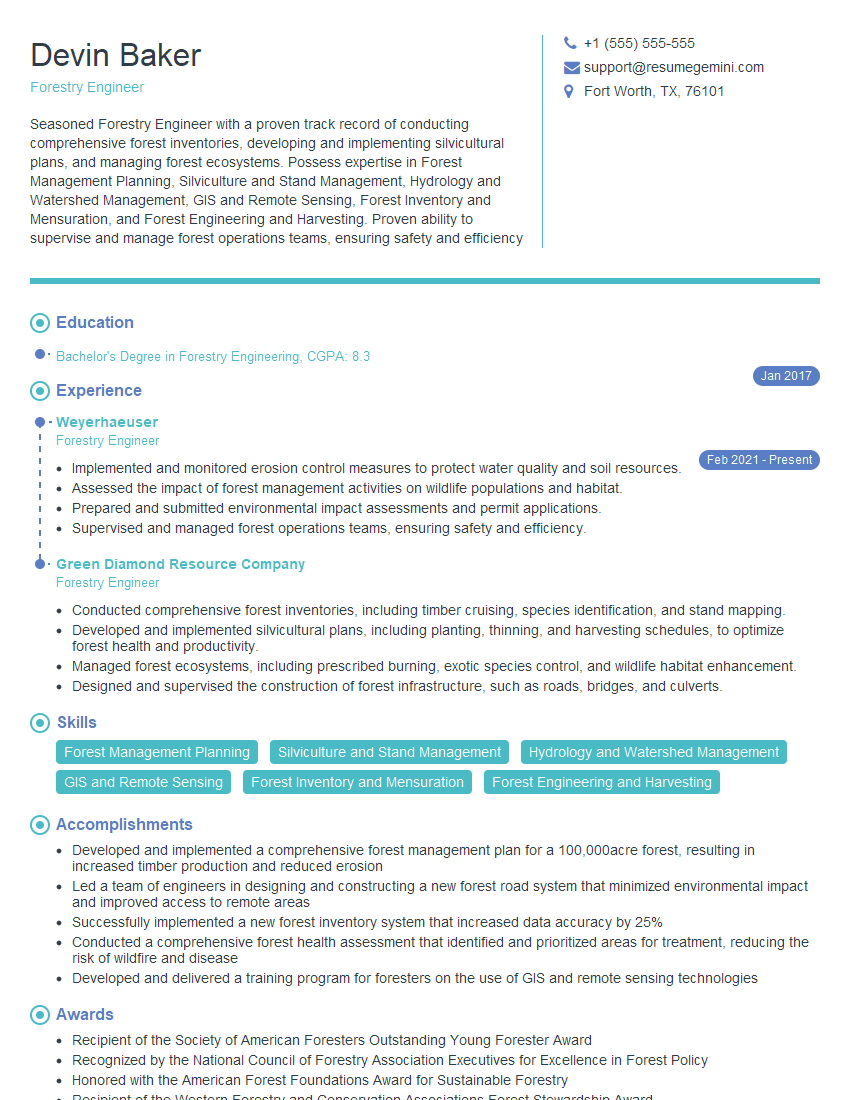
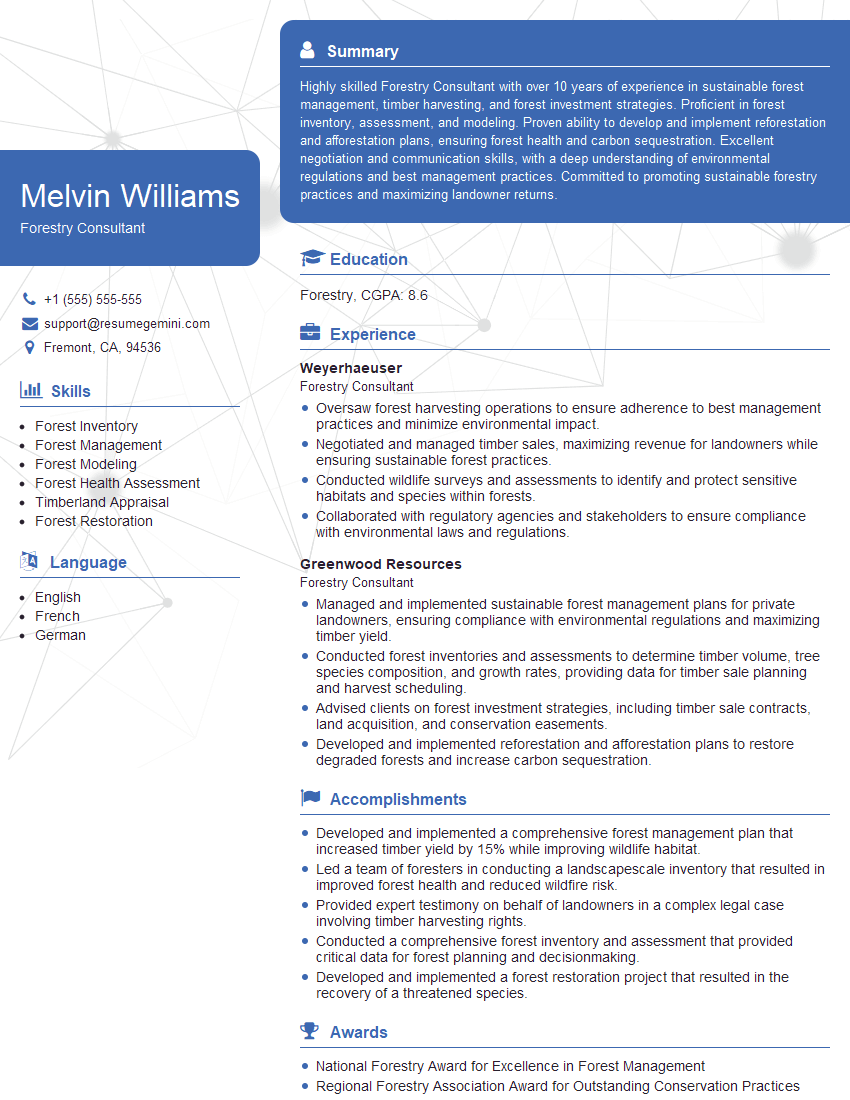
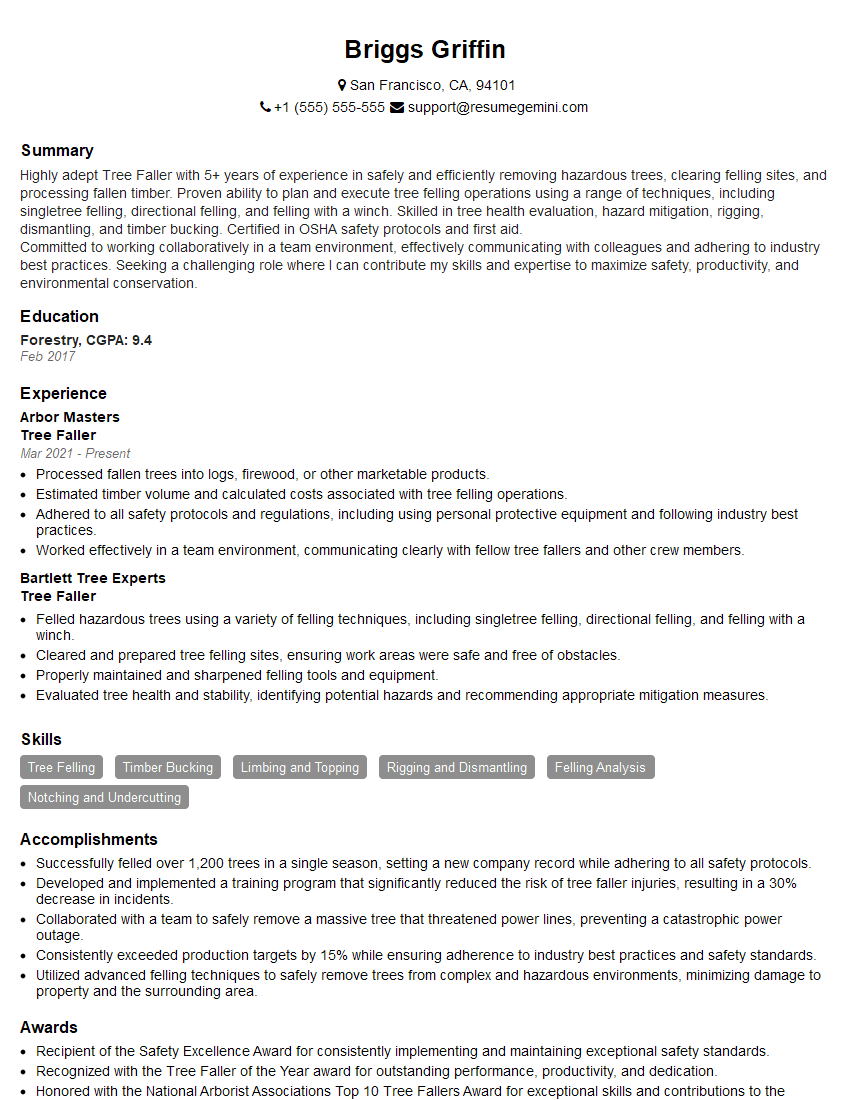
Mastering timber felling opens doors to a rewarding career with opportunities for growth and specialization. A strong resume is crucial for showcasing your skills and experience to potential employers. Creating an ATS-friendly resume is key to getting your application noticed. ResumeGemini is a trusted resource that can help you build a professional, impactful resume designed to highlight your qualifications effectively. Examples of resumes tailored to the timber felling industry are available to guide you. Take the next step towards your dream career – craft a winning resume today!




Explore more articles
Users Rating of Our Blogs
Share Your Experience
We value your feedback! Please rate our content and share your thoughts (optional).
What Readers Say About Our Blog
Very informative content, great job.
good