Feeling uncertain about what to expect in your upcoming interview? We’ve got you covered! This blog highlights the most important Timely and meticulous preparation and disassembly of stage sets interview questions and provides actionable advice to help you stand out as the ideal candidate. Let’s pave the way for your success.
Questions Asked in Timely and meticulous preparation and disassembly of stage sets Interview
Q 1. Describe your experience with different types of stage rigging systems.
My experience encompasses a wide range of stage rigging systems, from simple counterweight systems to complex motorized fly systems. I’m proficient with both traditional and modern rigging techniques. For instance, I’ve worked extensively with the counterweight system commonly found in proscenium theaters, understanding the crucial balance and safety checks involved in setting and operating lines. I’ve also utilized automated rigging systems, programming cues and ensuring smooth operation, which often involve detailed understanding of the control software. My experience also includes working with various types of lifting equipment, ensuring safe working loads are never exceeded. I’m familiar with both chain and wire rope systems and their respective maintenance needs. Understanding the specific limitations and capabilities of each system is key to safe and efficient stage production.
- Counterweight Systems: Setting lines, checking weights, ensuring proper balance.
- Motorized Fly Systems: Programming cues, troubleshooting malfunctions, ensuring safety during operation.
- Lifting Equipment: Safe operation of chain hoists, motorized winches, and other lifting mechanisms.
Q 2. Explain your process for accurately following a set construction plan.
Accurately following a set construction plan is paramount. My process begins with a thorough review of the blueprints, ensuring I understand every detail, including material specifications, dimensions, and assembly instructions. I then create a detailed workflow, breaking down the plan into manageable tasks, prioritizing those with interdependencies. Regular checks against the plan throughout the process ensure accuracy. I also maintain meticulous records of materials used and progress made, often through photographic documentation. If any discrepancies arise, I immediately consult the designer or stage manager for clarification, ensuring the final product aligns precisely with the vision.
For example, if the plan calls for specific types of screws, I’ll verify that’s what we have before starting, avoiding costly delays. Similarly, if there are complex joinery techniques involved, I’ll create mock-ups to ensure I fully understand the construction method before applying it to the main set pieces. This detailed approach prevents errors and ensures the set is built to the highest standards.
Q 3. How do you prioritize tasks during the load-in process?
Load-in prioritization is crucial for efficient and timely set-up. My approach centers around a critical path analysis. I identify tasks that are essential for the next stage of construction, which might involve setting up the main structural elements first, before the scenic elements, or laying down the essential electrical and plumbing runs before building around them. Heavy and bulky items are loaded and positioned first. The tasks that have dependencies on others are prioritized to avoid unnecessary delays. For example, large backdrops might require specific rigging points before they can be hung. These critical dependencies are carefully considered and factored into the overall plan.
We often use a Kanban board to visually manage our workload and track progress of individual tasks. This helps us to immediately identify and address any bottlenecks.
Q 4. What safety protocols do you follow when disassembling a stage set?
Safety is my top priority during the disassembly of a stage set. We always begin with a detailed risk assessment, identifying potential hazards such as sharp edges, unstable structures, and heavy equipment. The next step includes having clear communication protocols, utilizing appropriate personal protective equipment (PPE) such as gloves, safety glasses, and harnesses. We ensure all equipment is properly secured and de-energized before disassembly commences. Heavy items are lowered slowly and carefully, and the area is kept clear of personnel to avoid accidents. Each stage of the deconstruction is carefully supervised, and tools are used correctly. All materials are carefully organized for efficient transport and storage, minimizing the risk of damage or injury.
Q 5. How do you manage time constraints during both set-up and strike?
Managing time constraints during both setup and strike requires meticulous planning and effective teamwork. I use detailed schedules, breaking down the process into smaller, time-bound tasks. This is done by estimating the required time and making contingency for any unexpected issues or delays. Clear communication among the team members is crucial – regular check-ins allow us to identify and address potential setbacks early. For instance, during a particularly tight deadline, we developed a visual timer and a system of colored flags to indicate task progress which provided more efficient communication compared to conventional methods. We might also employ techniques like parallel processing where certain tasks can be undertaken simultaneously. Flexible scheduling, allowing for small deviations while sticking to the overall timeline also makes a significant difference.
Q 6. Describe your experience working with different types of stage materials.
My experience includes working with a wide variety of stage materials, from traditional wood and fabrics to modern composite materials and plastics. I’m familiar with the properties and handling requirements of each. Working with wood requires understanding grain direction for strength, while metal requires consideration of weight and potential rust. Fabrics demand careful consideration of drape and potential flammability. Understanding each material’s strengths and weaknesses is vital to prevent failures and ensure structural integrity of the set. For example, when dealing with lightweight materials, extra support might be required to withstand the forces of movement or unexpected weight. Similarly, for heavier, more rigid materials, a more robust construction technique is required.
Q 7. How do you handle unexpected issues that arise during set construction?
Handling unexpected issues during set construction requires a calm and methodical approach. The first step is to thoroughly assess the problem and its impact on the overall construction timeline. After that, we engage in problem-solving, exploring potential solutions collaboratively with the team. We look at readily available materials or substitute materials, if required, while always adhering to safety regulations. For example, if a piece of wood is damaged unexpectedly, we assess the extent of the damage, quickly determine a solution – whether it requires replacement, repair, or even a slight design adjustment. Thorough documentation of solutions aids in future productions by providing a valuable record of challenges and effective solutions. Open communication with the director and design team is crucial to find the best solution within the constraints of time and resources.
Q 8. What tools and equipment are you proficient in using?
My proficiency spans a wide range of tools and equipment crucial for efficient and safe stage set construction and disassembly. This includes, but is not limited to:
- Hand Tools: Hammers, screwdrivers (various types), wrenches (adjustable and specific sizes), pliers (needle-nose, slip-joint), levels, measuring tapes, saws (hand saws, circular saws – with appropriate safety measures), chisels, utility knives, and various types of drills.
- Power Tools: Drills (cordless and corded, with various bits), circular saws, reciprocating saws, impact drivers, sanders (orbital and belt), nail guns (pneumatic and battery-powered), and power planers (used cautiously and with appropriate safety gear). I am also experienced with operating pneumatic and hydraulic lifts for moving heavy pieces.
- Specialized Tools: Stage specific tools such as rigging hardware, counterweight system components, specialized clamps for joining set pieces, and tools for working with specific materials like PVC pipe, wood, or metal.
- Lifting Equipment: I am certified and experienced in using forklifts, cherry pickers, and various types of hoists, always adhering to strict safety protocols.
Regular maintenance and inspection of all tools are a priority. A dull blade, for instance, is a safety hazard and makes for inefficient work.
Q 9. How do you ensure the safety of yourself and your colleagues during set construction?
Safety is paramount. My approach to ensuring a safe work environment begins with thorough pre-planning. This involves a risk assessment of the project identifying potential hazards specific to the set design and the tools involved. I then create a safety plan outlining preventive measures and emergency procedures.
- Personal Protective Equipment (PPE): This is non-negotiable. Everyone on the crew uses appropriate PPE, including safety glasses, hearing protection, work gloves, steel-toed boots, and hard hats. Specific PPE, such as respirators, is utilized when working with materials such as paint or dust.
- Safe Work Practices: We follow strict protocols for lifting heavy objects, using power tools, and working at heights. We use lifting harnesses and proper lifting techniques, utilizing equipment like come-alongs and chain blocks when appropriate. Tools are inspected before use and any damaged tools are immediately taken out of service.
- Communication: Clear and constant communication among team members is crucial to avoid accidents. We use hand signals and verbal confirmations before initiating any potentially dangerous operations. Designated safety officers monitor the work area, reinforcing safety guidelines and addressing concerns immediately.
- Emergency Procedures: We have established clear emergency procedures, including protocols for dealing with injuries, fires, and equipment malfunctions, and everyone on the crew is trained on these procedures.
Think of it like a well-orchestrated symphony – every instrument (crew member) plays their part safely and effectively, guided by a conductor (the safety plan).
Q 10. What is your experience with different types of stage weights and load capacities?
My experience encompasses a wide range of stage weights and load capacities. I am well-versed in calculating weight distribution, understanding load-bearing capabilities of different materials and structures, and ensuring compliance with safety regulations.
- Understanding Weight Distribution: I can accurately calculate the weight of individual set pieces and their cumulative weight, ensuring that they are evenly distributed to avoid overloading any single point of support. This is vital for the stability and safety of the entire set.
- Load-Bearing Capacity: I have extensive experience working with different materials (wood, metal, and composite materials) and their respective load-bearing capacities. I understand how factors such as material thickness, construction techniques, and support structures affect the overall strength and stability of a set.
- Rigging and Counterweight Systems: I’m proficient in working with rigging systems and counterweight systems to safely lift and position heavy set pieces. This includes understanding the weight limits of each component, ensuring proper balancing, and adhering to all safety regulations.
- Practical Application: For instance, when designing a large platform, I’d meticulously calculate the weight of the platform itself, the actors, set pieces, and any potential audience interaction to ensure appropriate structural support to avoid collapse.
Q 11. How do you coordinate with other crew members during the assembly and disassembly process?
Effective coordination is the backbone of successful set construction and disassembly. Before the project begins, we hold pre-production meetings to clarify roles, responsibilities, and the sequence of operations. We utilize detailed blueprints and technical drawings as our roadmap.
- Clear Communication: Throughout the process, clear communication is essential. We use both verbal and written communication tools, including checklists and radio communication for real-time updates during assembly and disassembly.
- Team Roles and Responsibilities: We assign specific tasks and responsibilities to team members based on their skills and expertise. For instance, one team might focus on assembling the main structure while another handles the detailing and finishing touches.
- Step-by-Step Approach: We follow a well-defined, step-by-step approach, ensuring that each stage of construction is completed before moving to the next. This prevents errors and avoids unnecessary delays.
- Regular Check-ins: We have regular check-ins to monitor progress, identify potential issues, and adjust the plan as needed. This iterative approach allows for flexibility and efficient problem-solving.
Think of it as a perfectly choreographed dance – every crew member moves in unison, knowing their role and contributing to a seamless performance.
Q 12. Describe your experience with hand and power tools related to set construction.
My experience with hand and power tools is extensive and encompasses both the theoretical understanding and the practical application of their safe and efficient use. I understand the limitations of each tool and the specific safety precautions required for each.
- Hand Tools: Proficiency in using hand tools is fundamental. Accuracy and precision are essential when working with intricate details or delicate materials. I am very familiar with techniques like mortise and tenon joinery or using specialized woodworking planes.
- Power Tools: I am comfortable and skilled in operating various power tools, including drills, saws, sanders, and nail guns. Safety training is ongoing, ensuring I always use the appropriate safety equipment and adhere to safe operating procedures.
- Material-Specific Techniques: My experience extends to various materials, including wood, metal, and plastics. I know which tools and techniques are best suited for each material to ensure efficiency and avoid damage.
- Maintenance: Regular maintenance of all tools is crucial for both safety and efficiency. I regularly inspect, clean, and lubricate tools to keep them in optimal condition.
For example, using the correct drill bit for a specific material prevents the bit from breaking, ensuring accuracy and efficiency. Similarly, the appropriate saw blade for the cutting material greatly influences the outcome.
Q 13. How do you ensure the structural integrity of a set during assembly?
Ensuring structural integrity is a top priority. It starts with a thorough review of the blueprints and specifications to understand the design’s structural components and their interactions. This understanding informs all subsequent decisions.
- Material Selection: Selecting the correct materials is crucial. The choice depends on factors such as strength, durability, weight, and budget. I consider factors like the expected load and the environmental conditions the set will be subjected to.
- Construction Techniques: Proper construction techniques are vital. This includes using appropriate fasteners, ensuring proper alignment, and adhering to building codes and safety regulations. I use techniques such as bracing and shoring to provide extra support during construction and prevent instability.
- Regular Inspections: Regular inspections throughout the construction process are critical for early detection of any structural issues. I use levels, plumb bobs, and measuring tapes to ensure accuracy and detect any misalignments or weaknesses.
- Testing and Adjustments: After assembly, I perform a thorough inspection to confirm the structural integrity of the set. This might involve applying test loads or conducting stress tests. Any adjustments needed are made to ensure the set is sturdy and safe.
Imagine building a house – every nail, beam, and connection is crucial for a sturdy structure. Set construction is similar; every joint and connection must be meticulously executed for safety and stability.
Q 14. What is your experience with drafting and reading blueprints?
Proficiency in drafting and reading blueprints is fundamental to my work. I can interpret technical drawings, understand construction details, and identify potential challenges before construction begins.
- Blueprint Interpretation: I can easily interpret various types of technical drawings, including orthographic projections, isometric views, and detailed sections. I understand the meaning of symbols, dimensions, and specifications. I can understand architectural and engineering drawings to ensure correct measurements and placement.
- Identifying Materials and Construction Methods: I understand how blueprints specify materials, construction methods, and finishes. I can use this information to source the appropriate materials and select appropriate tools and techniques for construction.
- Identifying Potential Issues: I can identify potential construction issues or conflicts by carefully reviewing the blueprints and specifications before starting the construction phase. This allows for adjustments or alterations early on, preventing costly and time-consuming mistakes later.
- Software Proficiency: I have experience using CAD software (such as AutoCAD) for visualizing and modifying designs, preparing shop drawings and fabrication details, and creating detailed construction documents.
Blueprint reading is like deciphering a map for building the set – it’s the guide that ensures everything is built correctly, safely, and efficiently.
Q 15. How do you maintain a clean and organized work environment during set construction?
Maintaining a clean and organized work environment during set construction is paramount for efficiency and safety. Think of it like a well-oiled machine – each part needs its space to function optimally. We start with a pre-production plan, designating specific areas for different materials: lumber here, paint there, electrical components over yonder. This prevents tripping hazards and streamlines workflow. During construction, we employ the 5S methodology: Sort, Set in Order, Shine, Standardize, and Sustain. We sort through materials regularly, discarding unnecessary items. Tools are meticulously organized in designated toolboxes and clearly labeled. We regularly sweep and clean up debris, ensuring a safe working space. Standardization involves establishing consistent processes for material handling and tool placement. And finally, sustaining this order requires consistent effort from the entire team – daily clean-ups, regular tool checks, and ongoing communication. For instance, during a recent production of Hamlet, we used color-coded bins for different screw sizes, preventing delays and frustration when constructing the castle set.
Career Expert Tips:
- Ace those interviews! Prepare effectively by reviewing the Top 50 Most Common Interview Questions on ResumeGemini.
- Navigate your job search with confidence! Explore a wide range of Career Tips on ResumeGemini. Learn about common challenges and recommendations to overcome them.
- Craft the perfect resume! Master the Art of Resume Writing with ResumeGemini’s guide. Showcase your unique qualifications and achievements effectively.
- Don’t miss out on holiday savings! Build your dream resume with ResumeGemini’s ATS optimized templates.
Q 16. Describe your experience working under pressure and meeting tight deadlines.
Working under pressure and meeting tight deadlines is the norm in theatre. I thrive in this environment. My approach involves meticulous planning and proactive problem-solving. We break down large tasks into smaller, manageable chunks, assigning deadlines to each. This allows us to monitor progress effectively and identify potential bottlenecks early. Communication is key. I maintain open lines of communication with the director, stage manager, and crew, keeping everyone informed of progress and potential issues. During a frantic week preparing for a Broadway production of Chicago, we faced a major setback when a crucial set piece arrived damaged. Instead of panicking, we immediately assessed the situation, sourced replacement materials, and worked overtime to repair the damage, ultimately meeting the deadline and avoiding any performance disruption. My experience has taught me that adaptability and teamwork are vital in high-pressure situations.
Q 17. Explain your process for troubleshooting problems with stage set components.
Troubleshooting problems with stage set components requires a systematic approach. I begin by identifying the problem precisely – is it a structural issue, a mechanical malfunction, or an aesthetic concern? Then, I carefully examine the affected component, looking for visible damage or defects. Next, I consult the set plans and construction documents, looking for potential errors in design or assembly. If necessary, I’ll use diagnostic tools such as multimeters (for electrical problems) or levels (for structural issues). Communication is crucial here – I often consult with other crew members, sharing information and seeking alternative solutions. Sometimes, a fresh perspective can uncover a simple solution that I’ve overlooked. For example, during a recent performance, a revolving stage stopped rotating. After checking the power supply and motor, we discovered a small object lodged in the mechanism. A quick fix, but a timely one that prevented a significant disruption to the show.
Q 18. How do you manage inventory and track materials during a production?
Inventory management and material tracking are crucial for efficient set construction and cost control. We use a combination of digital and physical methods. We begin by creating a detailed inventory list at the start of the production, specifying each material and quantity. This list is updated regularly as materials are used. We utilize barcoding or RFID tags for precise tracking of individual items. A digital spreadsheet is maintained to track the location and status of every item. This allows us to identify shortages or potential supply issues early on. Physical inventory checks are performed at regular intervals to cross-reference the digital records. This ensures accuracy and minimizes discrepancies. For example, during a large-scale outdoor production, we used a specialized software to track the location of every piece of lumber, ensuring efficient material retrieval and minimizing waste.
Q 19. How do you handle disagreements or conflicts with other crew members?
Disagreements or conflicts are inevitable in a collaborative environment. My approach focuses on open communication and respectful dialogue. I encourage everyone to express their opinions and concerns openly, creating a safe space for discussion. I listen actively to all perspectives, identifying the root cause of the conflict. I then work with the involved parties to find a mutually acceptable solution. Sometimes, this may require compromise or mediation. The goal is to resolve the conflict constructively, reinforcing teamwork and mutual respect. In one instance, a disagreement arose about the best way to construct a complex set piece. By facilitating a discussion and considering all viewpoints, we arrived at a solution that combined the best aspects of each proposal, resulting in a more efficient and aesthetically pleasing outcome.
Q 20. What is your experience with different stage automation systems?
I have experience with a range of stage automation systems, including computerized fly systems, motorized turntables, and automated curtains. My experience includes working with both the older, mechanical systems and newer, computer-controlled systems. I’m proficient in programming and operating various control consoles. My understanding extends to both the technical aspects of operation and safety protocols. For example, I have experience working with both the HoistSmart and Kinesys systems. This includes programming cues, setting safety limits and troubleshooting system malfunctions. A thorough understanding of the system’s capabilities and limitations is essential to ensure safety and efficient operation.
Q 21. Describe your experience with different types of stage lighting equipment.
My experience with stage lighting equipment encompasses a broad range of technologies, from traditional incandescent fixtures to modern LED lighting systems. I’m familiar with various lighting instruments, including Fresnels, ellipsoidal reflectors, PAR cans, and moving lights. I understand the principles of color mixing, light intensity control, and beam shaping. I have hands-on experience with both manual and automated lighting systems and am proficient in using lighting consoles. I’m adept at troubleshooting lighting equipment malfunctions and ensuring that all lighting systems are properly maintained and comply with safety regulations. For instance, I’m experienced with both ETC Ion and MA Lighting grandMA consoles. This includes creating lighting cues, programming effects and implementing various lighting techniques to enhance the production’s visual impact.
Q 22. How do you ensure that the stage set meets the artistic vision of the production?
Ensuring the stage set aligns with the artistic vision requires meticulous collaboration from the initial design phase. I begin by carefully reviewing the director’s vision, set designer’s sketches, and technical drawings. This involves understanding the mood, themes, and specific requirements for each scene. For example, a dark, brooding play will demand different set elements and lighting considerations than a vibrant, comedic musical. I then translate this artistic direction into a detailed construction plan, specifying materials, dimensions, and construction techniques. Regular communication with the set designer throughout the build process is crucial to address any questions or revisions. Think of it like translating a masterpiece painting into a three-dimensional reality; precision and understanding are paramount.
During the construction phase, I meticulously oversee every step, ensuring that the final product faithfully reflects the initial vision. This includes regular quality checks and prompt adjustments to address any discrepancies. For example, if a specific texture or color isn’t quite right, I would immediately work with the designer to correct it, ensuring the artistic integrity remains intact.
Q 23. What is your experience with working with various types of set designs?
My experience encompasses a wide range of set designs, from elaborate, historically accurate period pieces to minimalist, abstract installations. I’ve worked on sets utilizing traditional materials such as wood, plaster, and fabric, as well as more contemporary materials like metal, plastics, and projection surfaces.
- Traditional Sets: I’ve built detailed Victorian-era interiors complete with period furniture and props, requiring extensive research and craftsmanship.
- Modern & Minimalist Sets: I’ve also worked on productions utilizing clean lines and geometric shapes, focusing on precise construction and innovative material combinations to achieve a specific aesthetic.
- Transformative Sets: I’ve been involved in productions where the set itself transforms dramatically throughout the performance, requiring intricate mechanics and careful planning. This often includes the use of rotating platforms, hidden compartments, or quick-change mechanisms.
This diversity of experience enables me to adapt to any design challenge and find creative solutions, regardless of the complexity or style.
Q 24. Describe your experience with the use of computer-aided design (CAD) software for set design and construction.
I’m proficient in various CAD software, including Vectorworks and AutoCAD. I use these tools to create detailed 2D and 3D models of sets, ensuring accuracy in measurements and facilitating collaborative design. This is essential for generating accurate construction documents, including detailed drawings, material lists, and cutting diagrams.
For example, using CAD, I can create precise models of complex set pieces, ensuring that all components fit together perfectly. This minimizes errors during construction and reduces material waste. Furthermore, these models allow for virtual walkthroughs and simulations, enabling the design team to identify potential issues or make adjustments before the physical construction begins. Think of it as a digital blueprint that allows for flawless execution of the set designer’s vision.
I also utilize CAD for generating detailed shop drawings for fabrication, enabling external contractors to accurately build components off-site before assembly. This improves efficiency and time management dramatically.
Q 25. How do you ensure the set is compliant with all relevant safety regulations?
Safety is my top priority. I ensure compliance with all relevant regulations by incorporating safety measures into every stage of the design and construction process. This starts with risk assessments, which identify potential hazards and outline preventative measures. These assessments cover areas such as:
- Fire Safety: Using fire-retardant materials, ensuring adequate fire exits, and establishing clear evacuation procedures.
- Structural Integrity: Ensuring set pieces are robust and properly supported to prevent collapses or accidents.
- Electrical Safety: Proper wiring and grounding of lighting and sound equipment to prevent electrical shocks.
- Height Safety: Utilizing appropriate fall protection measures when working at heights.
- Trip Hazards: Minimizing trip hazards by ensuring sufficient space, proper cable management, and secure flooring.
Throughout the build, I conduct regular safety checks and brief the crew on safe working practices. A safe working environment is not just a regulation; it’s the foundation of a successful production.
Q 26. What are your preferred methods for documenting the set construction process?
My preferred method for documenting the set construction process is a multi-faceted approach that combines digital and physical records. I utilize high-resolution photography throughout the entire process, capturing progress at various stages from initial construction to final assembly. This photographic record is invaluable for future reference and troubleshooting.
Additionally, I maintain a detailed digital log, including dates, materials used, personnel involved, and any modifications made during construction. This is supplemented by sketches, annotated drawings, and CAD files, providing a comprehensive history of the set’s development. Physical labels are attached to constructed components to improve organization and reduce confusion during the assembly and strike phases. This combination ensures that the entire process is fully documented and easily understood by anyone reviewing the records. Think of it as a comprehensive case study for every set I build.
Q 27. Describe your experience with different types of stage flooring and its preparation.
My experience includes working with a variety of stage flooring, each with its own unique preparation requirements.
- Marley Floor: This versatile vinyl flooring requires a clean, level subfloor before installation. Any unevenness can create tripping hazards or damage the flooring. We typically use adhesive to secure it and ensure seams are taped properly for a seamless surface.
- Hardwood Floor: Requires careful sanding and finishing to create a smooth, level surface suitable for dance and other performances. It also needs to be protected with appropriate coverings depending on the production’s demands.
- Dance Floor: Special sprung dance floors require meticulous installation to ensure correct support and shock absorption to protect performers. The subfloor must be meticulously prepared to ensure a level and stable base.
The preparation process always begins with a thorough assessment of the existing floor condition. We address any imperfections like cracks, unevenness, or loose boards before laying down the chosen flooring. The goal is always to create a safe and stable surface appropriate for the performance and the demands it will face.
Q 28. How do you handle the disposal and recycling of materials after a stage strike?
After a stage strike (the dismantling of the set), responsible disposal and recycling of materials are crucial. We begin by carefully sorting materials into different categories: recyclable materials (metal, wood, cardboard, plastics), reusable materials (set pieces, props), and waste materials.
Recyclable materials are sent to appropriate recycling facilities, adhering to local regulations and guidelines. Reusable materials are cleaned and stored for future productions. This minimizes waste and promotes sustainability. Waste materials are disposed of responsibly, following environmental regulations. We maintain detailed records of material disposal and recycling to ensure transparency and accountability. Sustainable practices are not just environmentally responsible, but also economically beneficial in the long run.
Key Topics to Learn for Timely and Meticulous Preparation and Disassembly of Stage Sets Interview
- Understanding Stage Plans & Designs: Interpreting technical drawings, identifying set pieces, and understanding the overall stage layout.
- Efficient Workflow & Time Management: Developing strategies for prioritizing tasks, managing resources, and adhering to strict timelines during both setup and strike.
- Safe Handling of Set Pieces & Equipment: Proper lifting techniques, use of rigging and other equipment, and adherence to safety regulations to prevent accidents.
- Problem-Solving & Troubleshooting: Identifying and resolving on-site challenges, adapting to unexpected issues, and finding creative solutions under pressure.
- Inventory Management & Organization: Tracking materials, tools, and set pieces throughout the entire process, ensuring accuracy and accountability.
- Communication & Teamwork: Effectively communicating with stage managers, designers, and other crew members to ensure a smooth and coordinated workflow.
- Maintenance & Care of Set Pieces: Understanding proper storage techniques, cleaning procedures, and minor repairs to prolong the life of set pieces.
- Disassembly Procedures & Techniques: Developing efficient methods for dismantling sets safely and methodically, minimizing damage and maximizing time efficiency.
- Adherence to Safety Protocols: Understanding and applying relevant health and safety regulations, including hazard identification and risk mitigation.
Next Steps
Mastering timely and meticulous preparation and disassembly of stage sets is crucial for career advancement in the theatre and events industries. It demonstrates essential skills such as organization, problem-solving, and teamwork – qualities highly valued by employers. To maximize your job prospects, create an ATS-friendly resume that highlights these skills effectively. ResumeGemini is a trusted resource that can help you build a professional and impactful resume. Examples of resumes tailored to this specific skill set are available to guide you through the process.
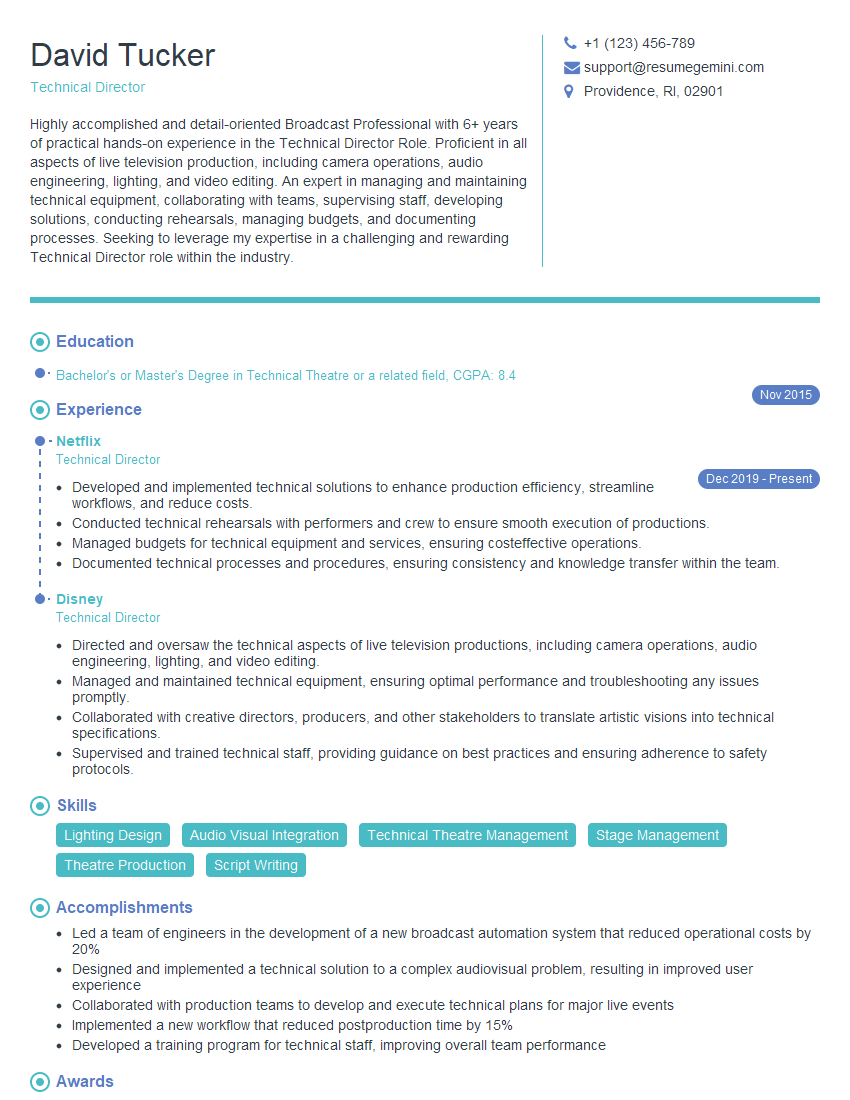
Technical Director Resume Sample
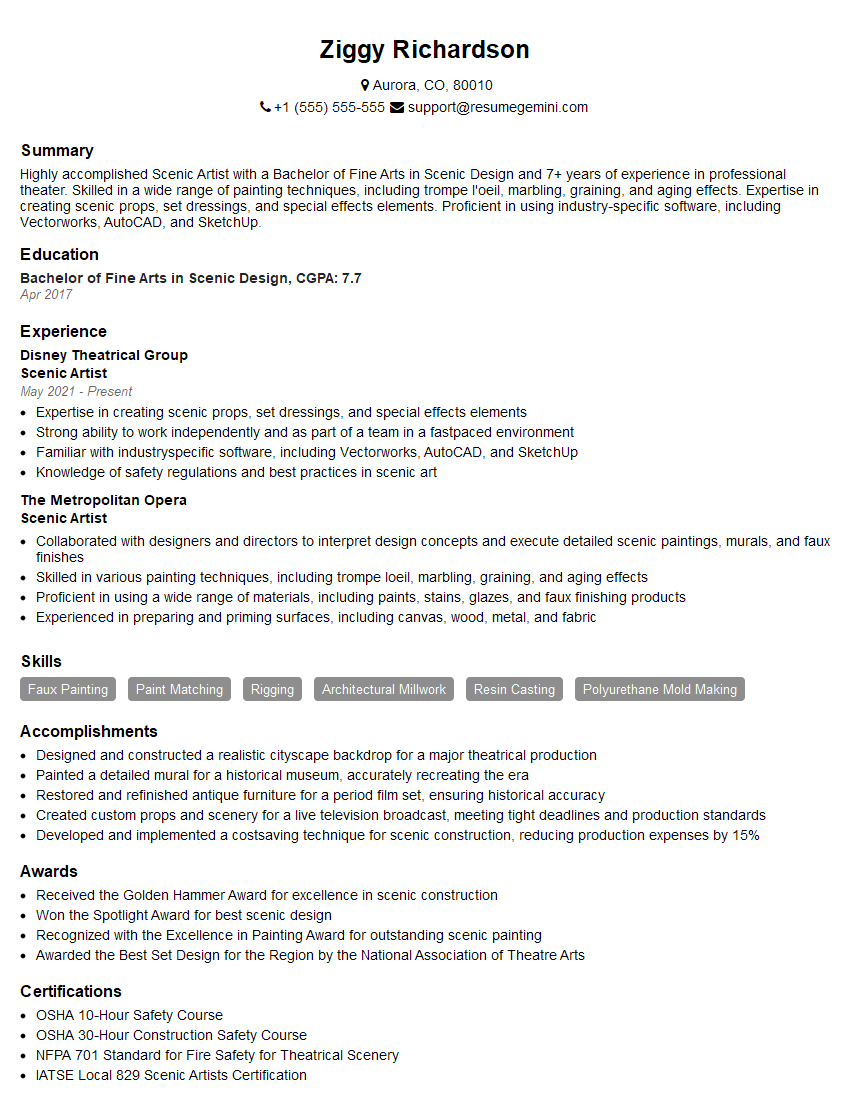
Scenic Artist Resume Sample
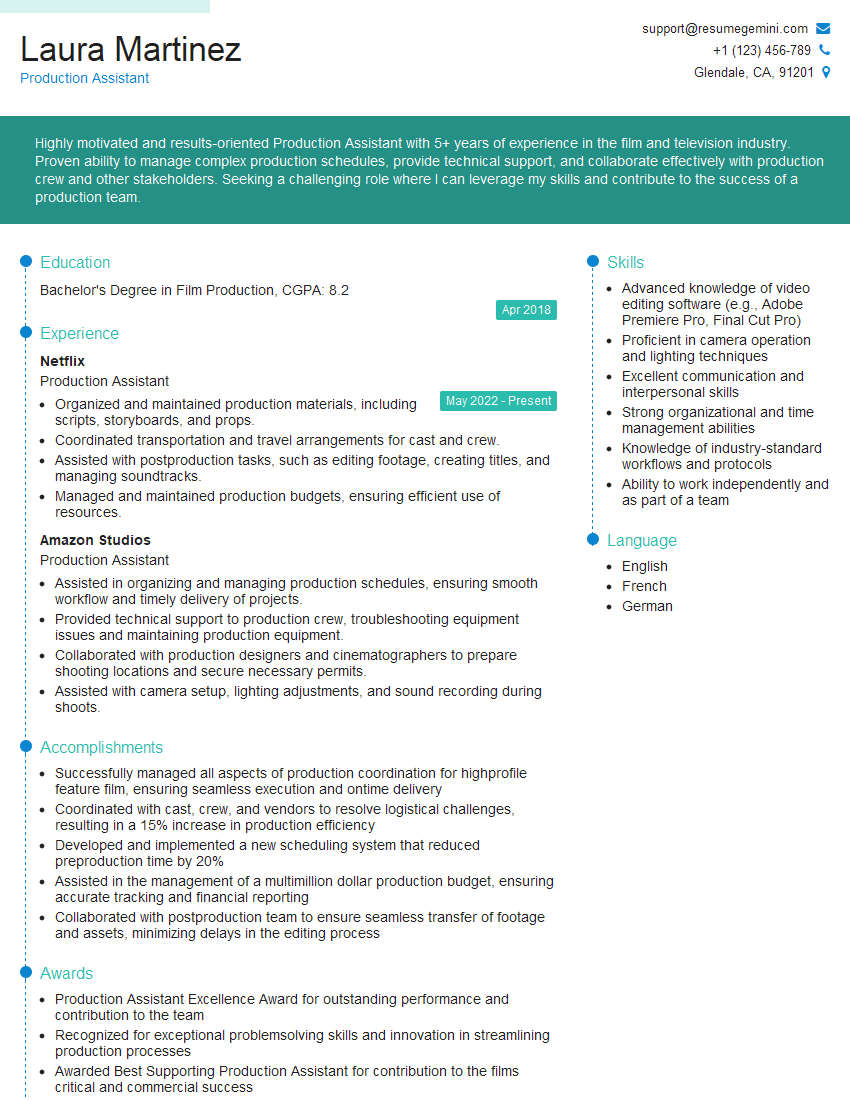
Production Assistant Resume Sample
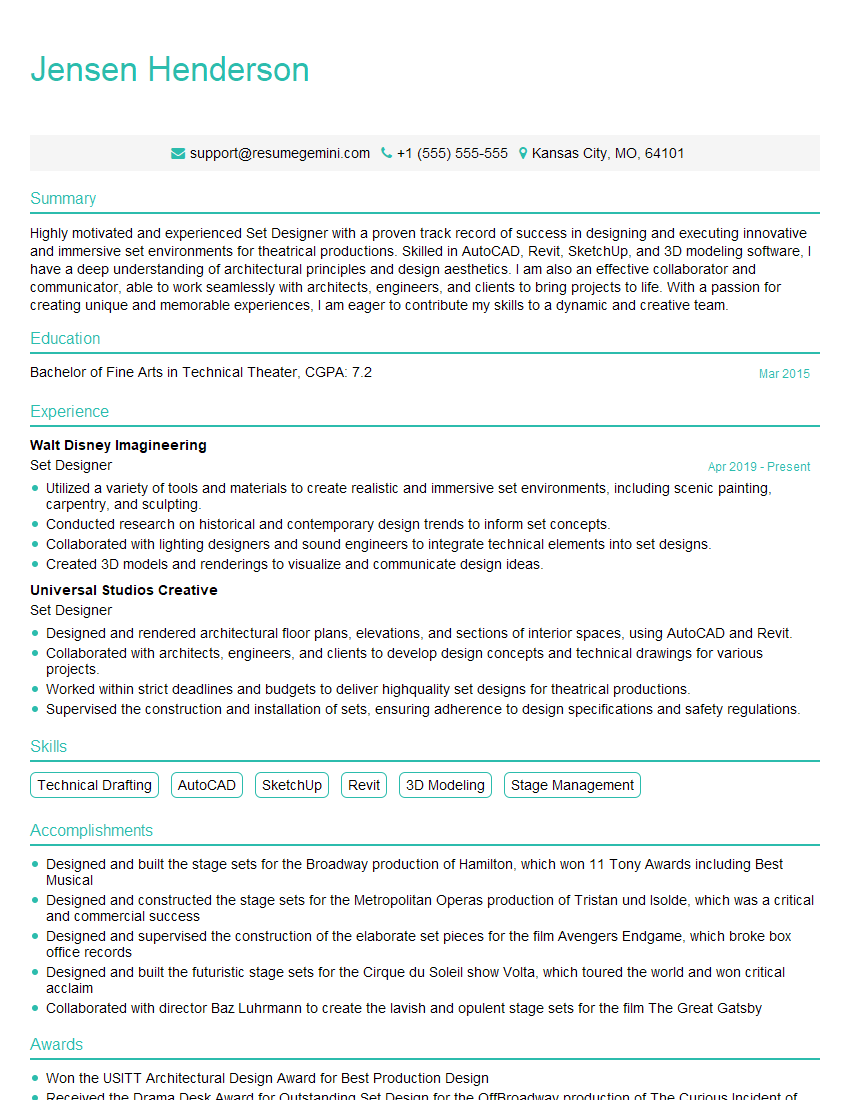
Set Designer Resume Sample
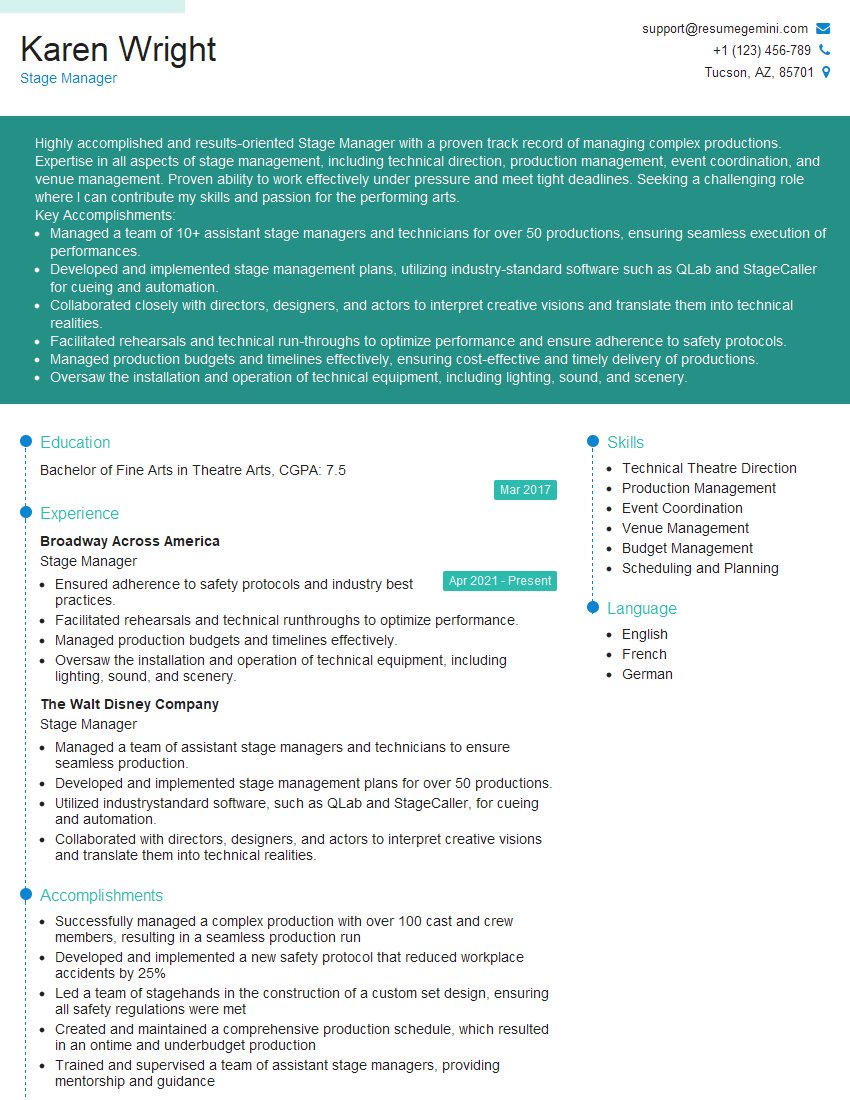
Stage Manager Resume Sample
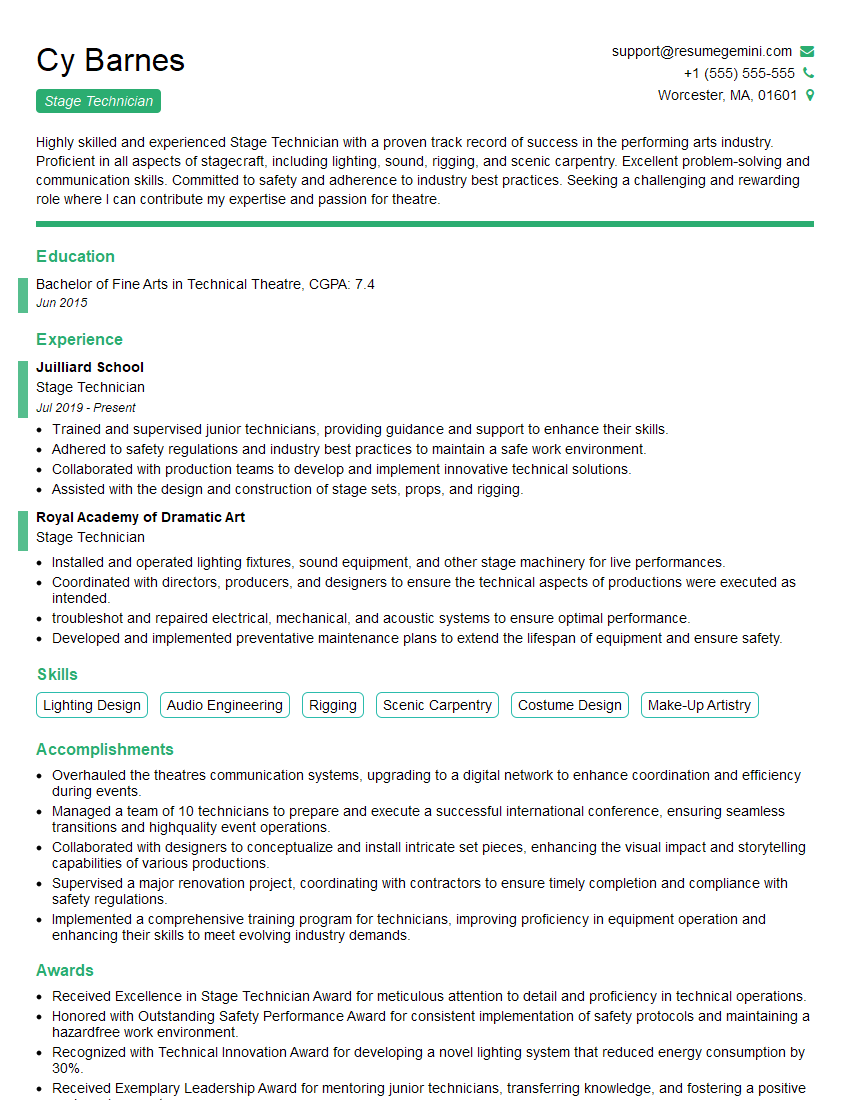
Stage Technician Resume Sample
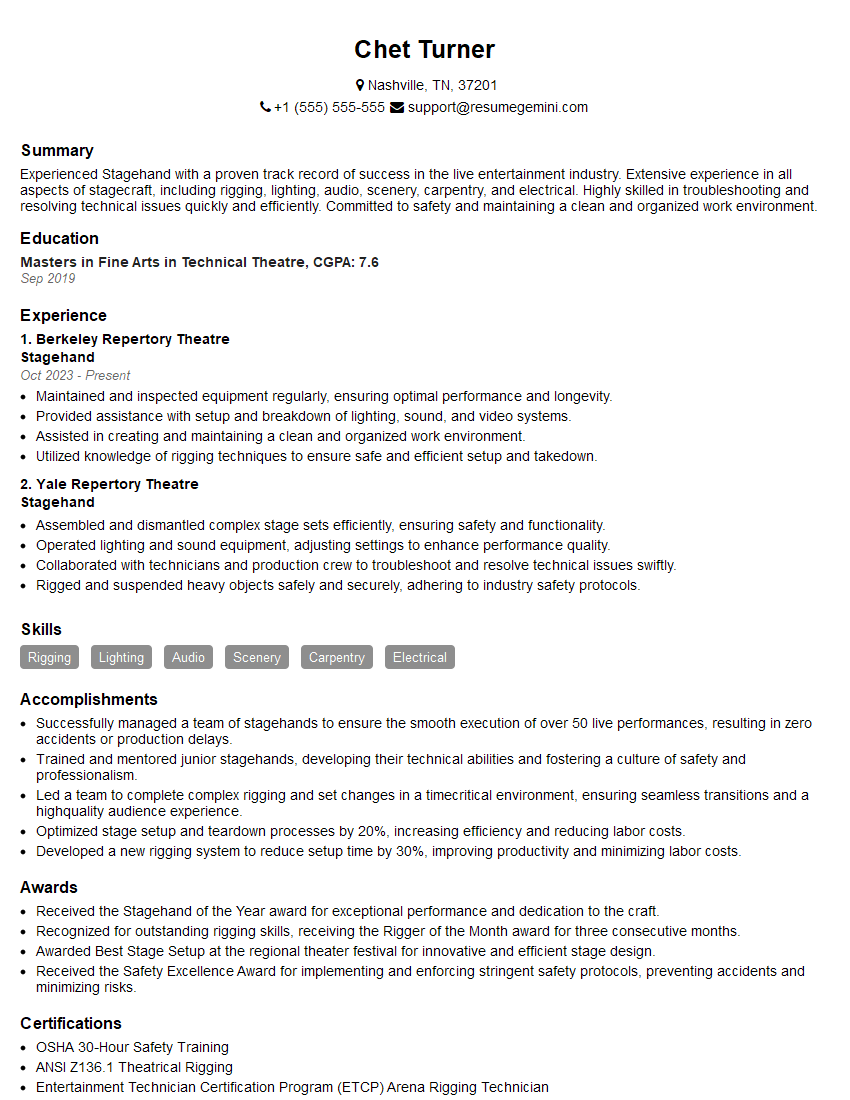
Stagehand Resume Sample
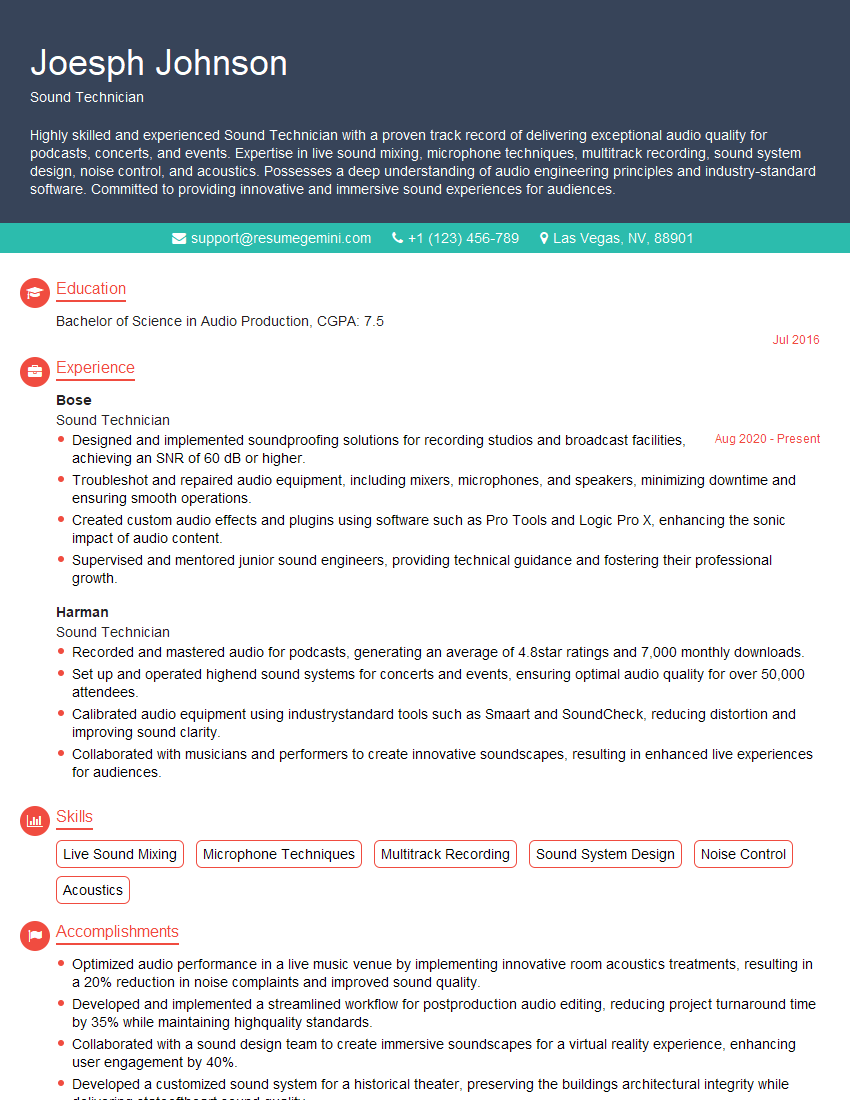
Sound Technician Resume Sample
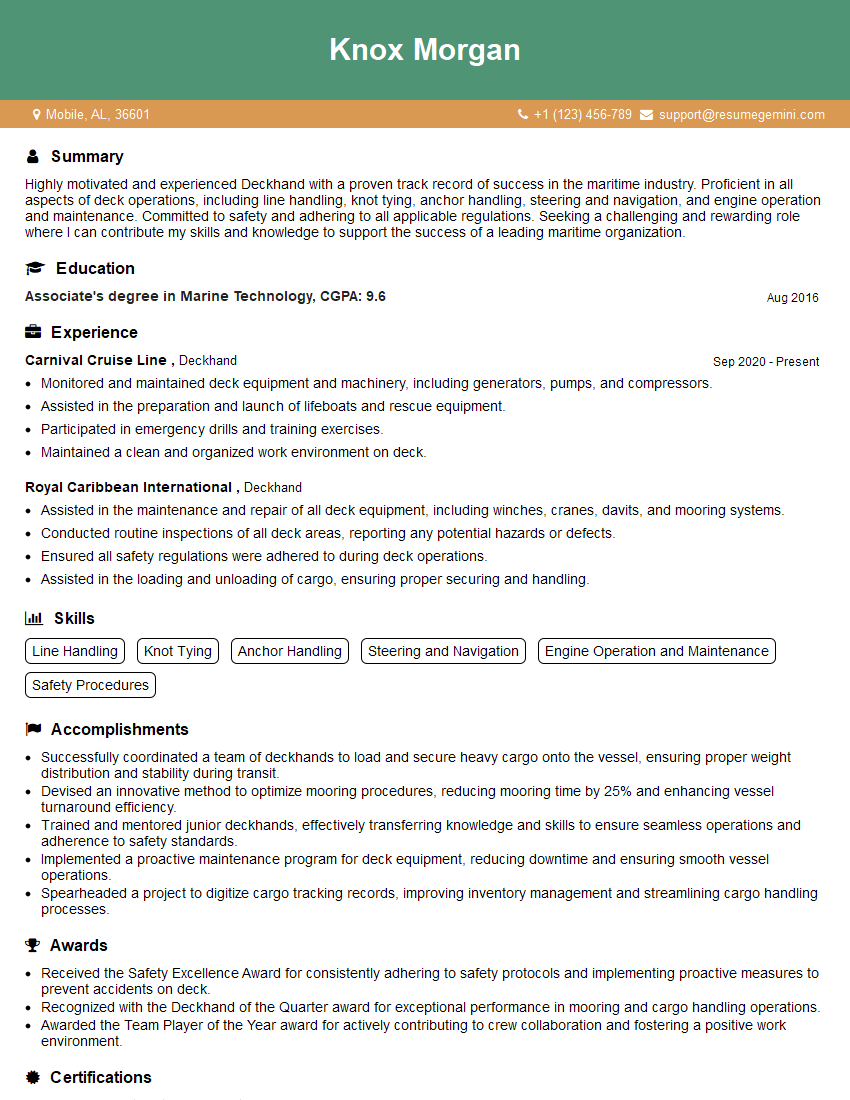
Deckhand Resume Sample
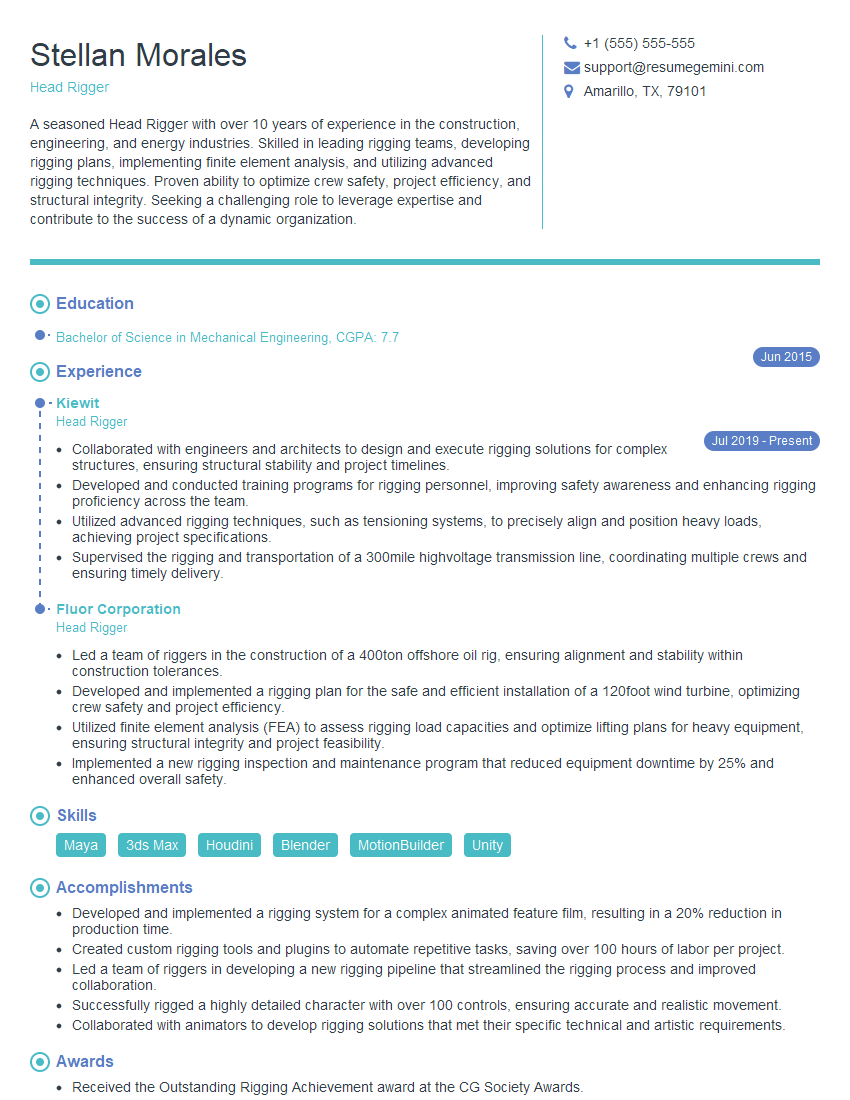
Head Rigger Resume Sample
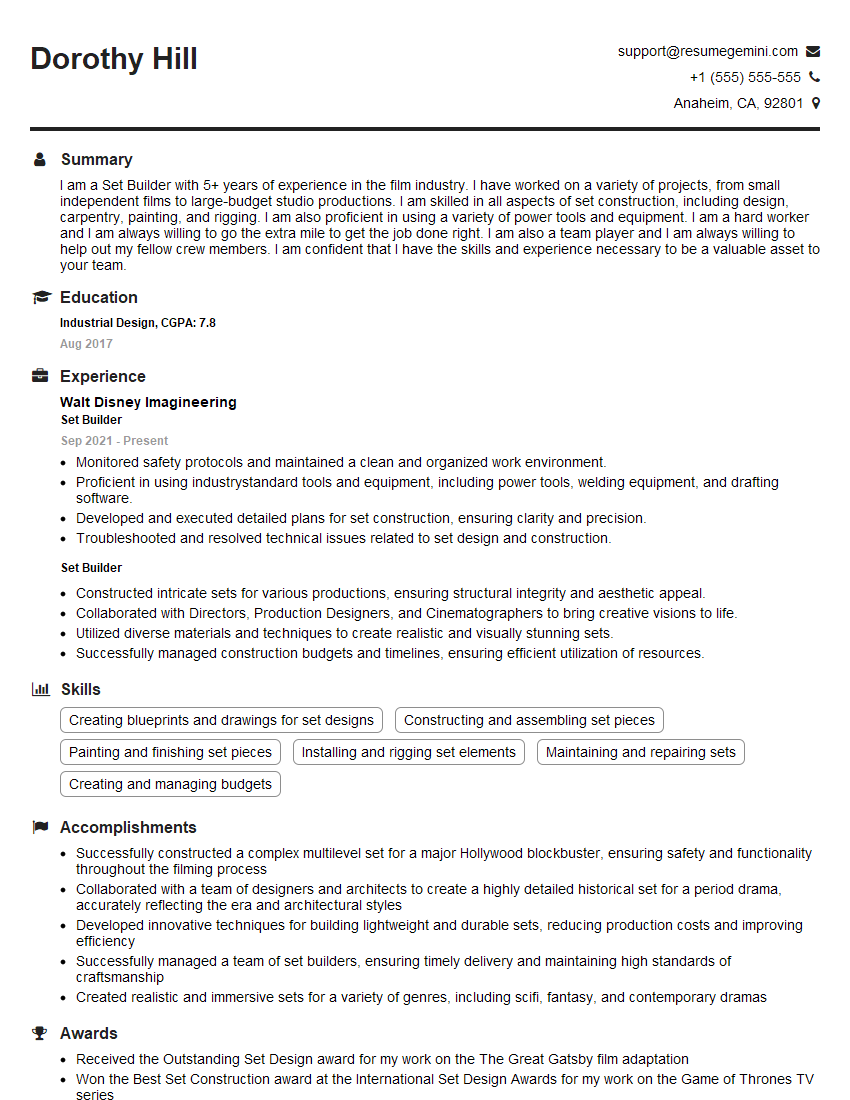
Set Builder Resume Sample
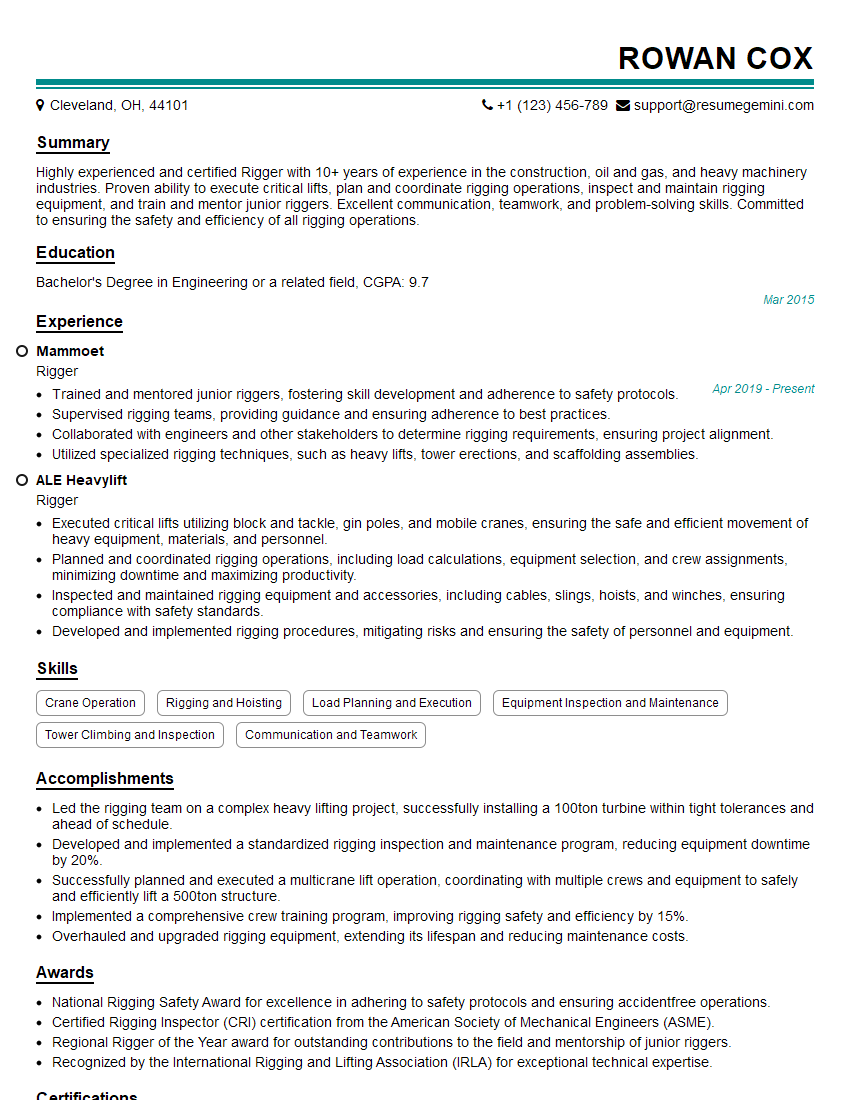
Rigger Resume Sample
Explore more articles
Users Rating of Our Blogs
Share Your Experience
We value your feedback! Please rate our content and share your thoughts (optional).
What Readers Say About Our Blog
Very informative content, great job.
good