Preparation is the key to success in any interview. In this post, we’ll explore crucial Track and Switch Maintenance interview questions and equip you with strategies to craft impactful answers. Whether you’re a beginner or a pro, these tips will elevate your preparation.
Questions Asked in Track and Switch Maintenance Interview
Q 1. Describe your experience with different types of track switches.
My experience encompasses a wide range of track switches, from the simplest hand-thrown points to complex electronically controlled systems. I’ve worked extensively with:
- Manually Operated Switches: These require manual operation using a lever or similar mechanism. They’re common in low-traffic areas and require regular inspection for proper alignment and locking.
- Spring Switches: These utilize spring mechanisms to return the switch to a default position. Regular lubrication is crucial to ensure smooth operation and prevent premature wear. I’ve overseen maintenance programs focusing on lubrication schedules and spring tension checks to prevent derailments.
- Electrically Operated Switches: These are controlled remotely using electric motors and are often found in high-traffic areas. My work here involves troubleshooting electrical faults, ensuring the reliability of control systems, and understanding the integration with signaling systems. For instance, I’ve diagnosed and repaired faulty solenoids causing switch malfunctions, significantly improving operational efficiency.
- Hydraulically Operated Switches: These utilize hydraulic power for actuation and are suitable for heavy-duty applications. Maintenance includes regular checks of hydraulic fluid levels and pressure, leakage detection and repair, and overall system performance evaluation. I’ve led several projects optimizing hydraulic switch performance, minimizing downtime and maximizing safety.
Understanding the nuances of each type is critical for effective maintenance, ensuring safety and operational efficiency.
Q 2. Explain the process of inspecting track geometry.
Inspecting track geometry is crucial for ensuring safe and smooth train operation. It involves using specialized equipment to measure various parameters and identify deviations from the ideal alignment and level. The process typically involves:
- Visual Inspection: A thorough visual check for obvious defects such as misaligned rails, broken ties, or uneven ballast. This often involves walking the track and looking for any irregularities.
- Track Geometry Car Measurements: A track geometry car uses sophisticated sensors to measure parameters such as track gauge (distance between rails), alignment (straightness), elevation (levelness), and cross-level (difference in elevation between the two rails). The data collected is then analyzed to identify any deviations from the specified limits. For example, excessive gauge widening can lead to derailments.
- Data Analysis and Reporting: The data collected from the geometry car is analyzed to identify areas needing attention. Reports are generated, prioritizing repairs based on severity and potential safety risks. I’ve used several sophisticated software packages for this purpose, generating detailed reports that inform maintenance strategies.
Regular and accurate geometry inspection is essential for preventing derailments and ensuring the longevity of the track infrastructure. I have extensive experience utilizing various geometry car technologies and interpreting the data to formulate efficient repair strategies.
Q 3. How do you identify and address track defects?
Identifying and addressing track defects requires a systematic approach. It starts with regular inspections, using both visual observation and specialized equipment. Common defects include:
- Broken Rails: These are a serious safety hazard and require immediate attention. Repair typically involves cutting out the damaged section and welding in a replacement piece.
- Gauge Widening/Narrowing: Deviations from the standard gauge (distance between rails) can cause derailments. Correction involves adjusting the rail alignment and securing the track components.
- Spikes and Bolts loosening: Regularly checking the tightness of spikes and bolts is crucial. Loose fastenings cause instability and can lead to larger problems.
- Broken or damaged ties: Damaged ties need immediate replacement. Ignoring this can compromise the structural integrity of the track.
The approach to addressing defects depends on their severity. Minor issues can often be addressed through routine maintenance, while major defects require immediate repairs and, sometimes, track closures for safety reasons. I’ve developed proficiency in utilizing various techniques, from basic track maintenance to more complex repairs, to efficiently solve these issues.
Q 4. What are the common causes of switch failures?
Switch failures can stem from various causes, many related to wear and tear, improper maintenance, or environmental factors. Common causes include:
- Mechanical Wear: Moving parts of switches experience significant wear over time, leading to loosening of components, broken parts, and binding. Regular lubrication and inspection are crucial for mitigating this.
- Lack of Lubrication: Insufficient lubrication causes increased friction, leading to accelerated wear and potential failure. Implementing and adhering to a robust lubrication schedule is key.
- Improper Adjustment: Switches need to be precisely adjusted to ensure proper operation. Misalignment can lead to binding, derailment risks, and premature failure. This requires precise measurements and adjustment.
- Environmental Factors: Extreme weather conditions, such as heavy rainfall or freezing temperatures, can damage switches and compromise their performance. Proper drainage and winterization procedures are important countermeasures.
- Electrical Failures (for powered switches): Malfunctioning motors, solenoids, or control circuits can prevent switches from operating correctly. Regular testing and maintenance of electrical components are essential.
Proactive maintenance, including regular inspections and preventative measures, can significantly reduce switch failures and enhance safety.
Q 5. Describe your experience with track maintenance equipment.
My experience with track maintenance equipment is extensive. I’m proficient in operating and maintaining a wide range of equipment, including:
- Tamper Machines: These machines are used for lifting, aligning, and consolidating the track structure. I’m familiar with operating various models, understanding their capabilities and limitations.
- Rail Grinders: These machines are used to smooth out irregularities in the rail surface, improving ride quality and reducing wheel wear. I’ve been involved in the planning and execution of rail grinding operations.
- Tie Renewal Machines: These machines expedite the process of replacing worn-out ties. Understanding their operation is critical for efficient track maintenance.
- Measuring Equipment (e.g., Track Geometry Cars): I have extensive experience in using various types of measurement equipment to assess track conditions and geometry, as mentioned before.
- Welding Equipment: For repairing broken rails and other track components, proficiency in various welding techniques is essential.
Safe and efficient operation of this equipment requires specialized training and ongoing competency assessments. I’ve always prioritized safety and have a strong track record of accident-free operation.
Q 6. How do you maintain track drainage systems?
Maintaining track drainage systems is critical for preventing water damage to the track substructure. Poor drainage can lead to washout, ballast degradation, and ultimately, track instability. Maintenance involves:
- Regular Cleaning: Keeping ditches and culverts free of debris is essential for efficient water flow. This often involves manual cleaning and the use of specialized equipment.
- Inspection of Drainage Structures: Regular inspection of culverts, pipes, and ditches is necessary to identify any blockages, damage, or erosion. Repairing these issues is crucial.
- Ballast Condition Assessment: The condition of the ballast directly impacts drainage. Excessive fine material can reduce permeability, hindering proper drainage. Addressing this might involve ballast cleaning or replacement.
- Slope Stabilization: Maintaining stable slopes prevents erosion and ensures effective water flow away from the track. This may include measures like vegetation management.
Effective track drainage is essential for long-term track stability and safety. I’ve been involved in numerous projects improving drainage systems and resolving drainage-related issues.
Q 7. What safety procedures do you follow during track maintenance?
Safety is paramount during track maintenance. I always adhere to strict safety procedures, including:
- Rule Book Compliance: Strict adherence to all relevant railway rules and regulations is non-negotiable. I am well versed in the regulations and procedures specific to each area of operation.
- Risk Assessments: Before commencing any work, a thorough risk assessment is conducted to identify potential hazards and implement appropriate control measures. This is a critical step in ensuring everyone’s safety.
- Proper Signaling and Protection: Appropriate signaling and protection procedures are always followed to prevent accidents involving moving trains. This includes using track protection equipment and having clear communication with train dispatchers.
- Personal Protective Equipment (PPE): All personnel wear appropriate PPE, including high-visibility clothing, safety helmets, safety footwear, and hearing protection, depending on the task.
- Tool Safety: Proper tool inspection and maintenance are essential for preventing accidents. I ensure that tools are in good working order and are used safely.
- Emergency Procedures: All personnel are familiar with emergency procedures and know how to respond appropriately in case of an accident.
My commitment to safety has consistently resulted in a zero-accident record throughout my career. Safety is not just a procedure; it’s a core value deeply ingrained in my work ethic.
Q 8. Explain the importance of regular track inspections.
Regular track inspections are paramount to ensuring the safety and efficiency of railway operations. Think of it like a doctor’s checkup for the railway – preventative maintenance is key. Neglecting inspections can lead to catastrophic failures, derailments, and significant delays, impacting both the railway company and its passengers/freight customers.
Inspections cover a wide range of aspects, from checking the gauge (distance between the rails) and alignment to identifying signs of wear and tear on the rails, sleepers, and ballast. We use various methods, including visual inspections, ultrasonic testing to detect internal rail flaws, and geometry cars that measure track alignment with high precision. For instance, a seemingly minor crack in a rail, if undetected, could eventually lead to a complete rail fracture, posing serious risks. Early detection through regular inspections allows for timely repairs, preventing major incidents.
- Visual inspection for obvious defects like broken rails, missing fasteners, or excessive ballast fouling.
- Use of specialized equipment like ultrasonic flaw detectors to identify internal rail defects.
- Regular geometry car runs to assess track alignment and gauge.
Q 9. Describe your experience with ballast cleaning and renewal.
Ballast cleaning and renewal is crucial for maintaining track stability and drainage. Ballast, the crushed stone under the sleepers, acts as a foundation and drainage system. Over time, it becomes contaminated with fines (small particles), vegetation, and other debris, reducing its effectiveness. This can lead to track settlement, poor drainage, and ultimately, track instability.
My experience includes overseeing projects involving both cleaning and renewal. Cleaning involves removing the contaminated ballast, often using specialized machinery like ballast cleaners that sift out the fines. Renewal involves completely replacing the old ballast with fresh material. I’ve been involved in projects where we used different cleaning techniques depending on the severity of contamination and accessibility. For instance, in one project with significant fouling, we employed a combination of mechanical cleaning and high-pressure water jets to ensure complete removal of contaminants before replacing the ballast.
The choice between cleaning and renewal depends on the condition of the ballast. Minor contamination might only require cleaning, while heavily contaminated or aged ballast necessitates renewal for optimal performance and longevity.
Q 10. How do you ensure the proper alignment of track components?
Ensuring proper alignment of track components is fundamental for safe and smooth train operation. Misalignment can lead to wheel flange wear, derailments, and increased track maintenance. We use a variety of methods to achieve and maintain proper alignment.
This starts with accurate initial track laying, employing precision tools and surveying techniques. Once in place, regular monitoring and adjustments are vital. We use track geometry cars that use laser and other sensors to measure track parameters with extreme accuracy, identifying deviations from the ideal alignment. These deviations are then corrected using specialized track maintenance equipment, like tampers that precisely adjust the position of the sleepers, bringing the track back to its specified alignment and gauge. Furthermore, regular inspections by skilled track workers are essential to catch minor misalignments before they become major problems.
Think of it like building a house – you need a solid foundation (ballast), precise construction (laying the track), and regular checks (inspections) to prevent structural damage (misalignment) over time.
Q 11. What are the different types of rail fasteners and their applications?
Rail fasteners are critical for securing the rails to the sleepers. Different types cater to specific needs and track conditions. Some common types include:
- Screw spikes: These provide excellent holding power and are suitable for various track conditions.
- Clip fasteners: These offer ease of installation and maintenance and are often used in high-speed rail lines.
- Elastic fasteners: Designed to absorb vibrations and reduce noise, making them ideal for areas near residential areas.
- Plate fasteners: A robust option often seen in heavy-haul railways.
The selection of rail fasteners depends on factors like track speed, traffic volume, and environmental conditions. For instance, high-speed lines might require elastic fasteners for enhanced stability and noise reduction, while heavy-haul lines may benefit from the robustness of plate fasteners. In my experience, choosing the right fastener is a crucial decision that directly impacts the overall performance and longevity of the track.
Q 12. How do you handle emergency situations on the track?
Handling emergency situations requires swift action and a clear protocol. This involves immediate track closure to prevent accidents, followed by assessing the nature of the emergency – be it a derailment, a track obstruction, or a signal failure. My experience includes coordinating emergency responses involving derailments and track damage.
The immediate priority is safety – ensuring the safety of passengers, railway staff, and the public. This involves evacuating affected areas if necessary, implementing traffic control measures, and contacting emergency services as needed. Following the initial response, a thorough investigation is necessary to identify the root cause and implement corrective actions to prevent similar incidents. Documentation is crucial, recording the events, damages, and actions taken.
Effective communication is vital, ensuring seamless coordination between track maintenance crews, train operators, and emergency responders. A well-defined emergency response plan, regularly practiced through drills, is essential for efficient and effective handling of such scenarios.
Q 13. Explain your experience with track circuit testing.
Track circuit testing is essential for ensuring the safe and reliable operation of railway signaling systems. A track circuit is a section of track electrically isolated from adjacent sections, allowing the signaling system to detect the presence or absence of a train within that section. Testing involves verifying the electrical continuity and integrity of the track circuits to ensure accurate signal indications.
My experience involves using specialized testing equipment to measure the resistance and continuity of track circuits. We use these tests to identify faults like broken wires, damaged insulation, or faulty components. Regular testing prevents signal failures that could lead to train collisions or delays. These tests are usually conducted using portable testing equipment or dedicated test trains which can simultaneously test multiple circuits in a comprehensive manner.
During testing, it’s crucial to follow safety protocols to avoid electrical shock and ensure the safety of personnel involved in the testing procedures. We always follow strict safety procedures and guidelines in this kind of work.
Q 14. Describe your knowledge of different types of rail materials.
Rail materials significantly impact track performance and longevity. The most common material is steel, but different grades are used depending on the application.
- Carbon steel: This is the most common type, offering a good balance of strength and cost-effectiveness.
- Alloy steel: Contains added elements to enhance strength, hardness, and wear resistance, ideal for high-speed and heavy-haul lines.
- Heat-treated steel: This undergoes heat treatment to improve its properties and extend service life.
In recent years, composite materials and other advanced materials are also being researched and tested to enhance rail properties, reduce weight, and improve sustainability. However, steel remains the dominant rail material due to its established reliability and cost-effectiveness.
The selection of rail material depends on factors such as expected traffic volume, speed, and environmental conditions. For instance, high-speed lines might use advanced alloy steels for improved wear resistance and enhanced fatigue strength. My work often involves understanding the properties of different rail materials and selecting the appropriate ones based on the specific requirements of each project.
Q 15. How do you interpret track alignment data?
Interpreting track alignment data involves analyzing measurements to ensure the track geometry meets specified tolerances. This data, typically collected using sophisticated surveying equipment like laser trackers or total stations, provides insights into various aspects of track alignment, including:
- Gauge: The distance between the inner faces of the running rails. Deviations indicate potential problems with track stability and safety.
- Crosslevel: The difference in elevation between the two rails. Significant crosslevel can lead to wheel flange wear and uncomfortable ride quality.
- Alignment: The horizontal positioning of the rails. Excessive curvature or misalignments increase stress on the track structure and rolling stock.
- Surface irregularities: These include dips, high points, and twists, all of which affect ride quality and track longevity. Data is often analyzed using software to create a profile of the track.
For instance, imagine a section of track showing a consistent gauge widening. This suggests potential issues like worn-out rail fasteners or excessive thermal expansion. By comparing the measured data to the allowed tolerances, engineers can determine the severity of the problem and plan necessary corrective actions such as rail replacement, ballast adjustment, or tightening fasteners.
Career Expert Tips:
- Ace those interviews! Prepare effectively by reviewing the Top 50 Most Common Interview Questions on ResumeGemini.
- Navigate your job search with confidence! Explore a wide range of Career Tips on ResumeGemini. Learn about common challenges and recommendations to overcome them.
- Craft the perfect resume! Master the Art of Resume Writing with ResumeGemini’s guide. Showcase your unique qualifications and achievements effectively.
- Don’t miss out on holiday savings! Build your dream resume with ResumeGemini’s ATS optimized templates.
Q 16. What are the common causes of derailments related to track and switch issues?
Derailments linked to track and switch problems frequently stem from issues such as:
- Broken or damaged rails: Rail failures due to fatigue, defects, or improper maintenance can lead to derailments. A classic example is a broken rail causing a sudden drop in the track.
- Improper switch maintenance: Malfunctioning switches, including misaligned points, broken locking mechanisms, or worn-out switch components, can cause trains to derail. Imagine a switch not properly aligning to the desired track, sending a train onto the wrong path.
- Gauge widening or narrowing: Excessively wide or narrow gauge can force the wheels off the rails. This often results from insufficient track maintenance, inadequate ballast, or excessive thermal stress.
- Track misalignment: Severe track misalignments or curvature beyond tolerance can lead to derailments, especially at high speeds. This creates unusual forces on the train’s wheels.
- Ballast issues: Inadequate ballast, poorly maintained ballast shoulders, or fouling of the ballast (e.g., with vegetation) compromise track stability, increasing the risk of derailments.
Regular track inspections and preventative maintenance are crucial in mitigating these risks. A robust inspection program, including visual inspections and advanced measurements, aids in detecting potential issues before they lead to serious accidents.
Q 17. How do you ensure compliance with railway safety regulations?
Ensuring compliance with railway safety regulations is paramount. This involves a multi-faceted approach:
- Adherence to codes and standards: We strictly follow all applicable national and international railway safety standards, such as those published by organizations like AREMA (American Railway Engineering and Maintenance-of-Way Association). These standards cover track geometry, maintenance procedures, and safety protocols.
- Regular inspections and audits: Rigorous inspections of track and switch systems are conducted routinely, often using specialized equipment. These inspections identify potential safety hazards early on.
- Proper documentation and record-keeping: Meticulous documentation of all maintenance activities, inspections, and repairs is maintained to demonstrate compliance and track the history of each track segment.
- Training and competency assurance: Our maintenance teams undergo thorough training in safe working practices, the use of specialized tools, and compliance regulations. Competency is regularly assessed.
- Incident reporting and investigation: Any safety incidents or near misses are thoroughly investigated to identify root causes and implement corrective measures to prevent recurrence. This includes analyzing data from derailment investigations to understand the contributing factors.
Compliance isn’t just a checklist; it’s a continuous process of improvement and a dedication to safety.
Q 18. Explain your experience with track welding techniques.
My experience encompasses various track welding techniques, including:
- Flash butt welding: This is a widely used method for joining rails. The ends of the rails are heated to a high temperature and then forced together under pressure. The resulting weld is strong and continuous.
- Thermite welding: A chemical reaction generates intense heat to melt the rail ends and create a strong weld. It’s often used for repairs in the field where heavier equipment isn’t readily available.
- Electric resistance welding: This involves passing a high current through the rail ends to heat them and forge a weld. Precise control is crucial for optimal weld quality.
The choice of welding technique depends on factors like track location, accessibility, and the required weld strength. For example, flash butt welding is ideal for long continuous welds in a yard environment, while thermite welding might be preferred for on-site repairs. In all cases, careful weld inspection and testing are essential to ensure the integrity of the welded joint.
Q 19. Describe your knowledge of signal systems related to track and switch operations.
My understanding of signal systems related to track and switch operations is extensive. Signal systems are crucial for safe and efficient train movements, and they directly interact with the track and switch infrastructure. This includes:
- Interlocking systems: These systems ensure that switches and signals are operated in a coordinated manner to prevent conflicting movements. This is fundamental to preventing collisions.
- Switch machines: These motorized mechanisms are controlled by the signaling system to position switches accurately and reliably. They are crucial for route setting.
- Track circuits: These circuits detect the presence or absence of trains on specific sections of track, providing information to the signal system. This helps determine which signals should be displayed.
- Signal indications: Understanding how signals are displayed and interpreted is key. This includes the different types of signals (e.g., color light, semaphore) and their meanings.
For instance, a malfunctioning track circuit might fail to detect a train occupying a section of track, leading to a potentially dangerous situation. Therefore, regular testing and maintenance of these systems are critical for overall safety.
Q 20. How do you manage a team during track maintenance work?
Managing a team during track maintenance involves a blend of strong leadership, clear communication, and meticulous safety planning. Here’s my approach:
- Pre-work planning: Detailed planning, including safety briefings, task assignments, and resource allocation, is paramount. This ensures everyone understands their roles and responsibilities.
- Clear communication: Maintaining clear and open communication throughout the project is vital. This involves regular updates, addressing concerns promptly, and fostering a collaborative environment.
- Safety emphasis: Safety is my top priority. I enforce strict adherence to safety regulations, utilize proper personal protective equipment (PPE), and conduct regular safety checks.
- Motivation and support: I motivate my team by recognizing achievements, providing constructive feedback, and creating a supportive work environment. I am always available to answer questions and help solve problems.
- Problem-solving: Inevitably, unexpected issues arise. My experience allows me to identify potential problems, develop solutions, and adapt the plan accordingly to ensure timely and efficient completion.
For example, if a piece of equipment malfunctions, I’ll quickly assess the situation, reassign tasks, and find a solution to prevent project delays without compromising safety.
Q 21. What software or tools do you use for track maintenance planning?
Track maintenance planning relies heavily on specialized software and tools. My experience includes using:
- Geographic Information Systems (GIS): GIS software allows us to visualize track data, plan maintenance activities based on location, and manage assets effectively.
- Computer-aided design (CAD) software: CAD is used for detailed design and modeling of trackwork, ensuring accurate alignment and layout.
- Track geometry measurement software: This software processes data from track surveying equipment to identify irregularities and assess track condition.
- Maintenance management systems (MMS): These systems help schedule and track maintenance activities, manage work orders, and track resource allocation.
- Track inspection vehicles equipped with data acquisition systems: These systems automatically collect data on track geometry and conditions, speeding up the inspection process.
For example, using GIS, we can identify sections of track with a high incidence of defects based on historical data, allowing for proactive maintenance and minimizing the risk of derailments. This data-driven approach is central to efficient and effective track maintenance planning.
Q 22. Describe your experience with the maintenance of different switch types (e.g., point switches, slip switches).
My experience encompasses a wide range of switch types, from the common point switches used in most rail yards to more specialized designs like slip switches, which allow for changing tracks without slowing down significantly. Point switches, the most prevalent, use movable points to direct trains onto different tracks. Their maintenance focuses on the points themselves – ensuring proper alignment, lubrication, and checking for wear and tear on the point operating mechanism, often a switch machine. Slip switches, on the other hand, are more complex, involving a curved section of track that allows the train wheels to smoothly transition to another track. Their maintenance is more involved, demanding precise adjustments to ensure a smooth transition and prevent derailments. I’ve worked extensively on both types, performing tasks such as inspecting for broken parts, adjusting throw distances, cleaning and lubricating moving components, and regularly tightening bolts to prevent loosening over time. For example, on one project, we identified a critical issue with a slip switch’s locking mechanism, a problem that could have resulted in a derailment. By carefully inspecting and repairing the locking mechanism, we averted a significant safety hazard.
Q 23. How do you troubleshoot issues with switch machines?
Troubleshooting switch machines requires a systematic approach. First, I visually inspect the machine for any obvious issues, like broken parts, loose connections, or signs of damage. Then, I’ll check the power supply to ensure it’s functioning correctly. A common issue is low voltage, which can lead to sluggish operation or complete failure. Many modern switch machines utilize diagnostics which can pinpoint faults – these systems often log error codes, providing valuable clues. If no clear fault is found, I use a multimeter to test electrical connections and check for continuity. Sometimes, the problem lies within the ground system, causing interference. For instance, a recent incident involved a switch machine that failed to operate. After a thorough inspection, we discovered a corroded ground connection leading to a faulty signal. Repairing the ground effectively resolved the problem, demonstrating the importance of checking seemingly unrelated systems. Beyond this, there are hydraulic systems, pneumatic systems, and even electrical systems, all of which require specific troubleshooting techniques.
Q 24. What are the critical parameters for ensuring track stability?
Track stability is paramount for safety and efficient operations. Several critical parameters influence this. Proper alignment is essential, meaning the track must be straight and level. This reduces stress on the rails and wheels, preventing premature wear and potential derailments. Gauge, the distance between the rails, must also be maintained precisely. A deviation in gauge can lead to wheel flange damage and derailment risk. Finally, the ballast, the material supporting the track, must be appropriately compacted and well-drained. This ensures the track remains stable under varying weather and load conditions. Poor drainage can lead to washouts, causing track subsidence and potential failures. Regularly measuring and adjusting these parameters during track inspections is critical. For example, using a track gauge and laser level to frequently check the gauge and alignment, keeping records to track changes over time, is fundamental. Proper ballast maintenance is also key—this involves ensuring proper depth and compaction through the use of specialized equipment.
Q 25. Explain your understanding of track maintenance schedules and their importance.
Track maintenance schedules are crucial for ensuring safety and extending track life. These schedules vary based on factors such as track traffic volume, train speed, and environmental conditions. A typical schedule includes routine inspections, which may occur daily, weekly, or monthly depending on the specific track section’s criticality. These inspections involve visual checks for any defects, such as broken rails, damaged ties, or ballast degradation. More extensive maintenance, such as rail grinding or tie replacement, is scheduled periodically, perhaps annually or every few years. The importance lies in proactive identification and mitigation of potential problems. A well-defined schedule helps prevent catastrophic failures and unplanned disruptions, minimizes operating costs by preventing extensive damage, and maximizes the operational lifespan of the track structure. I’ve seen the stark difference between railways with well-defined maintenance schedules and those without – the former operates smoothly and safely, while the latter suffers from frequent delays and safety incidents.
Q 26. How do you deal with different types of ground conditions during track maintenance?
Ground conditions significantly impact track maintenance. Different soils have varying levels of stability and drainage capacity. Clay soils, for instance, are prone to expansion and contraction with changes in moisture content, which can destabilize the track. Sandy soils, on the other hand, may provide less support and are more susceptible to washouts. We use various techniques to address these issues. For clay soils, we may incorporate drainage systems to manage water flow. This might involve installing ditches, drains, or even sub-ballast layers with better drainage properties. For sandy soils, we may need to increase the ballast depth or use specialized ballast materials that provide better stability. Soil stabilization techniques, like adding lime or cement to improve soil strength, may also be employed. Understanding the local geology is paramount and using the appropriate techniques is crucial for a successful and long-lasting maintenance effort. A recent project required us to deal with expansive clay. We used specialized drainage solutions and created a sub-base to counteract the soil’s movement, guaranteeing long-term track stability.
Q 27. Describe your experience with the use of tamper machines for track maintenance.
Tamper machines are essential for efficient and precise track maintenance. These heavy-duty machines lift, level, and consolidate the track ballast. They automate tasks that were previously very labor intensive, and allow for significant increases in track quality and maintenance speed. My experience with tampers involves both operating them and overseeing their use in various projects. I am trained on several tamper models and am familiar with their functionalities, safety protocols, and maintenance requirements. We use them to adjust track alignment, gauge, and surface level and to correct irregularities caused by wear, ground settlement or other factors. The use of tampers significantly increases efficiency in maintaining track quality, minimizes human error, and ensures a consistently stable track profile. For instance, during a recent track rehabilitation project, using a tamper machine allowed us to complete the work in a significantly shorter timeframe compared to the traditional methods. This minimized service disruption and reduced overall project costs. The precision they afford ensures superior long-term track integrity compared to manual methods.
Q 28. What are your preferred methods for documenting track inspections and repairs?
Accurate and detailed documentation is vital for efficient track maintenance. We use a combination of methods. Digital record-keeping is increasingly important, and we utilize specialized software to log inspections, repairs, and maintenance activities. This software often includes GPS coordinates, photographs, and detailed descriptions of the work performed. This allows for easy retrieval of historical data and enables effective tracking of track conditions over time. Hard copies of inspection reports and work orders are also kept for redundancy and in case of system failures. A crucial aspect is photographic documentation. Before and after photos of repairs are invaluable, particularly for significant interventions, offering irrefutable evidence of the work performed and ensuring accountability. Detailed sketches are occasionally helpful for complex repairs or unusual track geometry. A systematic and well-documented approach is key to ensuring safety, minimizing risks, and maximizing the efficiency of future maintenance.
Key Topics to Learn for Track and Switch Maintenance Interview
- Track Geometry and Alignment: Understanding proper track gauge, alignment, and surface irregularities. Practical application: Identifying and correcting track defects using surveying tools and techniques.
- Switch and Crossing Maintenance: Detailed knowledge of switch components, their function, and common maintenance procedures. Practical application: Diagnosing and resolving issues with switch points, throw rods, and locking mechanisms.
- Rail Welding and Repair: Understanding different rail welding techniques (e.g., thermite, flash butt) and repair methods for damaged rails. Practical application: Assessing the need for rail repair and executing appropriate solutions.
- Ballast and Substructure Maintenance: Knowledge of ballast composition, drainage systems, and subgrade stability. Practical application: Identifying and addressing issues related to ballast fouling, drainage problems, and subgrade settlement.
- Safety Regulations and Procedures: In-depth understanding of relevant safety regulations and procedures for track maintenance work. Practical application: Implementing safety protocols and ensuring compliance with industry standards.
- Track Inspection and Reporting: Proficiency in conducting thorough track inspections and accurately documenting findings. Practical application: Using specialized inspection equipment and reporting software to create comprehensive inspection reports.
- Problem-Solving and Troubleshooting: Ability to diagnose and resolve complex track and switch maintenance issues efficiently and effectively. Practical application: Applying critical thinking skills to identify the root cause of track defects and develop appropriate solutions.
- Preventive Maintenance Strategies: Understanding and implementing preventive maintenance programs to minimize track and switch failures. Practical application: Developing and implementing a schedule for regular inspections and maintenance tasks.
Next Steps
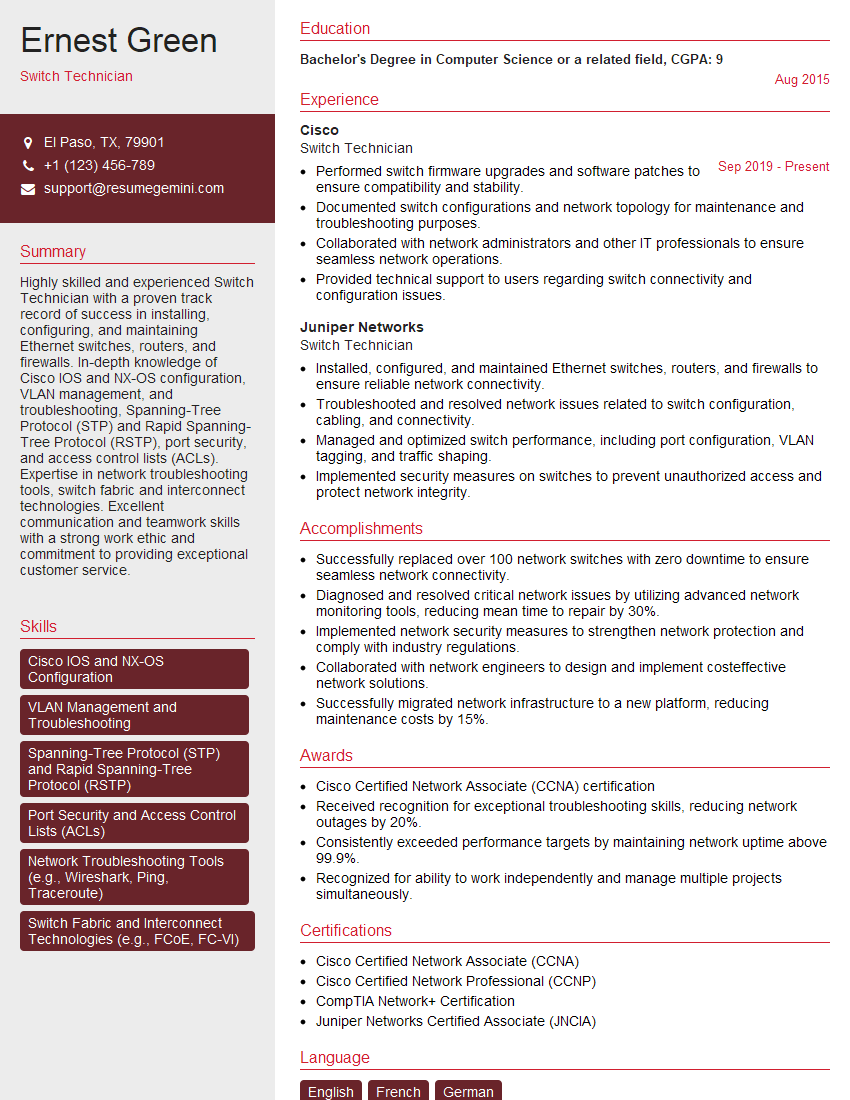
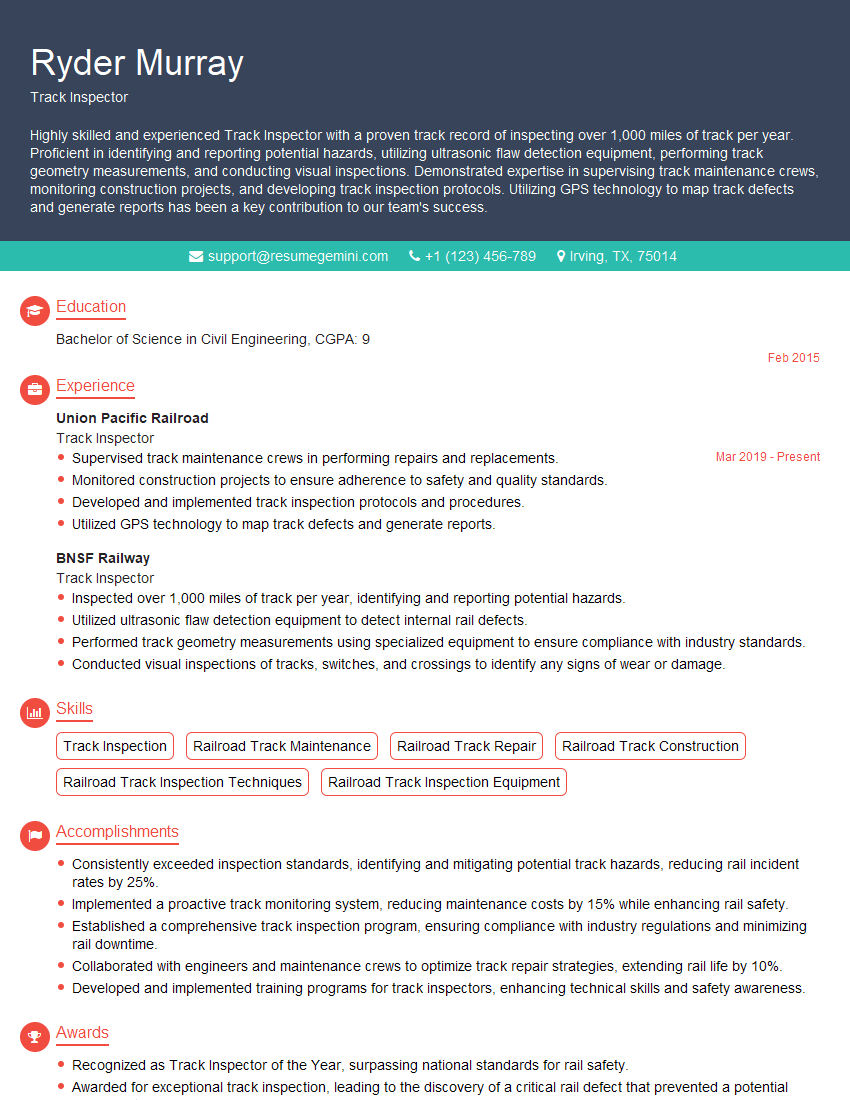
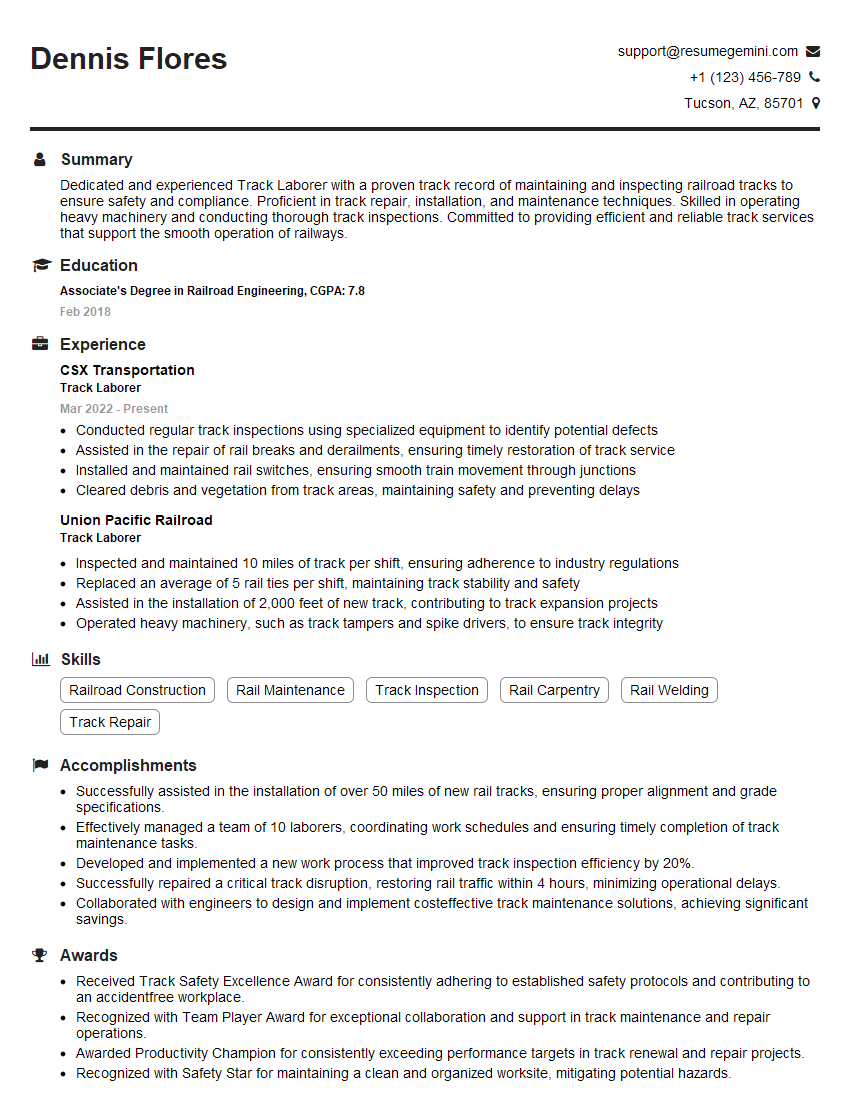
Mastering Track and Switch Maintenance opens doors to a rewarding career with excellent growth potential. This specialized skillset is highly sought after, leading to increased earning potential and career advancement opportunities. To maximize your job prospects, focus on creating an ATS-friendly resume that highlights your qualifications effectively. ResumeGemini is a trusted resource that can help you build a professional and impactful resume, ensuring your application stands out. Examples of resumes tailored to Track and Switch Maintenance are available to guide you.

Explore more articles
Users Rating of Our Blogs
Share Your Experience
We value your feedback! Please rate our content and share your thoughts (optional).
What Readers Say About Our Blog
Very informative content, great job.
good