Every successful interview starts with knowing what to expect. In this blog, we’ll take you through the top Train Arrival and Departure Coordination interview questions, breaking them down with expert tips to help you deliver impactful answers. Step into your next interview fully prepared and ready to succeed.
Questions Asked in Train Arrival and Departure Coordination Interview
Q 1. Explain the process of managing train arrivals and departures in a busy railway station.
Managing train arrivals and departures in a busy station is a complex orchestration involving precise scheduling, real-time monitoring, and swift response to unforeseen events. Think of it like conducting a symphony orchestra – each instrument (train) must play its part at the right time and in the right place to avoid a cacophony.
- Scheduling and Planning: This begins well in advance, using sophisticated software to optimize train paths, considering platform availability, maintenance schedules, and expected passenger volume. The goal is to minimize conflicts and delays.
- Real-time Monitoring: Throughout the day, controllers use advanced systems to track trains’ precise locations and speeds. Any deviations from the schedule are instantly visible, enabling proactive interventions.
- Communication: Clear and concise communication is paramount. Controllers communicate with station staff, train drivers, and signaling engineers to manage the flow of trains. This often involves specialized communication systems and protocols.
- Platform Allocation: Assigning trains to specific platforms requires careful consideration. This ensures smooth passenger flow and avoids bottlenecks. Algorithms often aid in optimizing platform allocation.
- Incident Management: Unexpected events – delays, signal failures, or passenger emergencies – require immediate and effective responses. This involves diverting trains, making announcements, and coordinating with emergency services.
For example, during peak hours, a slight delay in one train’s arrival can create a ripple effect, impacting the entire schedule. Effective coordination minimizes the impact of such delays.
Q 2. Describe your experience with real-time train tracking systems.
My experience with real-time train tracking systems spans several years, involving both operational and analytical roles. I’ve worked extensively with systems that integrate GPS data, Automatic Train Control (ATC) information, and signaling data to provide a comprehensive picture of train movements. These systems are crucial for efficient scheduling, proactive delay management, and accurate passenger information.
For instance, I’ve used systems that provide real-time maps showing the location of each train, its speed, and its predicted arrival time at various points along its route. These systems often include alerts for potential delays or disruptions, allowing for timely interventions.
The data from these systems also feed into analytics platforms, enabling us to identify recurring bottlenecks, predict potential delays based on historical data, and continuously improve operational efficiency. One example is analyzing historical data to predict delays based on weather conditions or peak-hour congestion.
Q 3. How do you handle unexpected delays or disruptions in train schedules?
Handling unexpected delays or disruptions requires a structured and decisive approach. My experience shows that a calm, methodical response is essential to minimizing the disruption to passengers and the overall schedule.
- Immediate Assessment: The first step is to quickly assess the nature and severity of the disruption. Is it a signaling fault, a track obstruction, or a train malfunction?
- Communication: Immediate and accurate communication to passengers, staff, and other stakeholders is vital. Announcements are crucial, and updates should be provided regularly.
- Decision Making: Quick decisions are often necessary. This could involve rerouting trains, holding trains at stations, or implementing alternative transport arrangements.
- Coordination: Collaboration with various teams – signaling engineers, maintenance crews, and customer service – is paramount to resolve the issue and restore the schedule as quickly as possible.
- Post-Incident Review: After the disruption is resolved, a thorough review is essential to identify the root cause and implement measures to prevent similar incidents in the future.
For example, a signaling failure might necessitate diverting trains onto alternative routes, leading to delays for other services. Careful coordination and communication are critical to minimizing the widespread impact.
Q 4. What methods do you use to ensure on-time performance of trains?
Ensuring on-time performance is a multifaceted challenge that involves several key strategies:
- Preventive Maintenance: Regular and thorough maintenance of tracks, signaling systems, and rolling stock is crucial for minimizing breakdowns and delays.
- Optimized Scheduling: Sophisticated scheduling algorithms consider various factors, including passenger demand, track capacity, and maintenance schedules, to create the most efficient timetable.
- Real-time Monitoring and Control: Continuously monitoring train movements and using real-time data to identify and address potential delays allows for proactive intervention.
- Effective Communication: Clear and consistent communication between controllers, drivers, and maintenance crews minimizes confusion and maximizes efficiency.
- Staff Training: Well-trained staff are essential for managing a complex operation smoothly and responding effectively to disruptions.
For example, predictive maintenance, using data analytics to anticipate potential equipment failures, can help prevent unexpected breakdowns and delays.
Q 5. Explain your understanding of train signaling and its role in coordination.
Train signaling is the nervous system of a railway network, providing the essential control and safety mechanisms that allow for safe and efficient train movements. It dictates which sections of track are occupied, regulates train speeds, and prevents collisions.
The role of signaling in coordination is indispensable. Signals provide real-time information about track occupancy and speed restrictions, which controllers utilize in their scheduling decisions. This ensures that trains maintain safe distances from each other and operate within speed limits. Without a robust signaling system, coordinating train movements would be incredibly risky and inefficient.
Different signaling systems have varying levels of sophistication, ranging from simple semaphore signals to advanced computer-based systems that automatically control train movements (ATC). Modern ATC systems often integrate directly with train control centers, providing real-time information and enhancing coordination capabilities.
Q 6. How do you prioritize train movements during peak hours?
Prioritizing train movements during peak hours requires a sophisticated strategy that balances several competing factors. It’s akin to managing traffic flow in a busy city center.
- Passenger Demand: Priority is usually given to trains carrying the highest number of passengers, especially during the morning and evening commutes.
- Express vs. Local Services: Express trains often have priority over local services to ensure timely arrival at major destinations.
- Connection Times: Coordinating arrival and departure times to minimize connection times between different train services is vital for passenger convenience.
- Track Capacity: The physical capacity of the tracks and stations must be considered to avoid overcrowding and bottlenecks.
- Dynamic Scheduling: Sophisticated scheduling systems adjust the train schedule in real-time based on current conditions, allowing for flexible responses to delays and unexpected events.
Algorithms often play a key role in optimizing this prioritization process, weighing various factors to determine the most efficient sequence of train movements.
Q 7. Describe your experience with communication protocols within a train control center.
Communication protocols within a train control center are critical for efficient and safe operation. These protocols ensure the seamless exchange of information between controllers, signaling engineers, train drivers, and other stakeholders.
I’ve worked with various communication systems, including dedicated voice communication channels, data networks for real-time information exchange, and specialized software interfaces for monitoring and control. These systems often integrate multiple data sources, providing a comprehensive overview of the rail network’s status. For instance, a centralized system might show the location of each train, the status of signals, and any reported incidents.
Clear and concise communication is paramount. Standard operating procedures and specialized terminology ensure that messages are understood unambiguously. For example, using specific codes to indicate the nature and location of a disruption facilitates quick and effective responses.
Furthermore, redundancy is often built into the system to ensure that communication continues even in the event of a failure. This is crucial for maintaining safety and operational efficiency.
Q 8. How do you coordinate with other departments (e.g., maintenance, customer service) during disruptions?
During disruptions, seamless coordination with other departments is crucial for minimizing delays and passenger inconvenience. This involves a multi-pronged approach, starting with immediate communication. I leverage our internal communication system to instantly alert Maintenance, Customer Service, and Operations teams about the nature and scope of the disruption – be it a signaling fault, a track obstruction, or an equipment malfunction.
- Maintenance: I work closely with them to get an accurate estimate of repair time, and we collaboratively devise contingency plans, such as rerouting trains or utilizing alternative platforms. For instance, if a signal failure impacts a specific track, we might reroute trains to adjacent tracks, providing regular updates to passengers through our communication channels.
- Customer Service: Real-time information updates are vital. I ensure Customer Service is equipped with the most current information about delays, cancellations, and alternative travel arrangements. This often involves providing them with pre-written announcements for various scenarios, making sure the information disseminated is consistent and reliable.
- Operations: Constant communication with Operations is essential to manage train schedules, platform assignments, and crew coordination. We jointly make decisions to either delay, divert, or cancel trains, prioritizing passenger safety and minimizing overall disruption.
The key is proactive, transparent communication and collaborative problem-solving. Regular debriefings after major disruptions help us identify areas for improvement and strengthen our response protocols.
Q 9. What are the key performance indicators (KPIs) you monitor for train arrival and departure efficiency?
Several KPIs are crucial for evaluating train arrival and departure efficiency. These metrics provide insights into operational performance and help identify areas for optimization. Key indicators include:
- On-Time Performance (OTP): The percentage of trains arriving and departing within their scheduled time window. This is a fundamental measure of punctuality and overall efficiency.
- Train Dwell Time: The time a train spends at a station platform. Minimizing dwell time is crucial for maximizing capacity and punctuality, especially during peak hours. Reducing dwell time involves improving passenger boarding and alighting processes.
- Passenger Delay Minutes (PDM): The total number of minutes of delay experienced by passengers due to train disruptions or irregularities. This metric helps to quantify the impact of disruptions on passengers.
- Platform Occupancy Rate: How effectively platforms are utilized. High occupancy suggests efficient platform allocation, while low occupancy indicates potential for improved scheduling and resource allocation.
- Dispatch Reliability: The frequency and impact of unscheduled delays or cancellations. This reflects the overall robustness of the scheduling and operation systems.
By continuously monitoring these KPIs, we can proactively identify bottlenecks, implement improvements, and ensure a smooth and efficient train service.
Q 10. How do you manage passenger flow and platform allocation?
Managing passenger flow and platform allocation requires a strategic approach combining real-time data analysis with pre-emptive planning. We use a combination of methods:
- Real-time Passenger Monitoring: Utilizing CCTV feeds, passenger counters, and potentially even passenger flow prediction models, we monitor passenger numbers to anticipate crowding and adjust platform allocation accordingly. This might involve assigning larger platforms to trains with higher expected passenger loads.
- Dynamic Platform Allocation: Our scheduling system allows for dynamic adjustments to platform assignments based on real-time conditions. This is particularly crucial during disruptions, where we might need to re-allocate platforms to minimize passenger congestion and optimize train flow.
- Signage and Announcements: Clear and timely announcements and well-placed signage guide passengers to their designated platforms and minimize confusion, especially during periods of high passenger volume or platform changes.
- Staff Deployment: Strategic deployment of staff at platforms and entrances helps to manage queues, provide assistance to passengers, and ensure a safe and orderly passenger flow.
For example, during large events or peak hours, we might pre-allocate specific platforms to particular services to anticipate expected high passenger numbers, reducing potential congestion and delays.
Q 11. Explain your experience using specific software or systems for train scheduling and control.
I have extensive experience with various train scheduling and control systems, including TracTrac and RailMaster. TracTrac provides real-time monitoring of train movements, allowing for proactive intervention during disruptions. Its graphical interface displays train locations, speeds, and delays, facilitating effective decision-making. I’ve used this system to optimize train schedules, identify potential conflicts, and manage resources efficiently. For example, if a train is delayed, TracTrac enables me to immediately assess the knock-on effects on downstream trains and make necessary adjustments.
RailMaster is a powerful scheduling and planning tool. It facilitates the creation and optimization of train timetables, considering factors like track capacity, rolling stock availability, and maintenance schedules. I have used RailMaster to simulate different scenarios, identify bottlenecks, and optimize the overall train schedule, reducing delays and enhancing efficiency. For instance, by simulating various train configurations, I have been able to identify the optimal train composition to maximize passenger capacity while adhering to operational constraints.
Q 12. How do you handle emergency situations impacting train operations?
Handling emergency situations requires a swift and coordinated response. Our protocols emphasize passenger safety and minimizing disruption. Our emergency response plan is well-rehearsed and tested regularly. Steps involved are:
- Immediate Assessment: The nature and location of the emergency are assessed rapidly, involving communication with relevant parties (emergency services, security personnel, operations control).
- Evacuation Procedures (if necessary): Safe and orderly passenger evacuation is prioritized, guided by emergency personnel and clearly communicated instructions.
- Communication: Clear and frequent updates are issued to passengers, staff, and the wider public via multiple channels (e.g., public announcement systems, website, social media).
- Containment and Recovery: The emergency is contained, and efforts focus on restoring normal operations as safely and swiftly as possible. This often involves coordinating with emergency services, conducting necessary repairs, and implementing alternative transport arrangements.
- Post-incident Review: Thorough investigation and debriefing following each emergency incident allows for identifying areas where protocols could be improved.
We use a tiered emergency response system, escalating responses depending on the severity of the incident.
Q 13. Describe your experience in resolving conflicts between different train services.
Resolving conflicts between different train services demands a fair and efficient approach, prioritizing the needs of passengers while maintaining operational efficiency. I use a systematic process:
- Identify the Conflict: Clearly define the nature of the conflict – for example, conflicting train schedules, platform allocation issues, or competing resource needs.
- Gather Information: Collect all relevant data, including train schedules, passenger volumes, and resource availability.
- Prioritize Solutions: Evaluate potential solutions, prioritizing those that minimize passenger disruption and maintain overall network efficiency. This may involve adjusting schedules, re-allocating resources, or coordinating with other stakeholders.
- Implement Solution: Communicate the chosen solution clearly to all affected parties, ensuring everyone understands their roles and responsibilities.
- Monitor and Evaluate: Monitor the impact of the implemented solution and make any necessary adjustments. Regular post-incident reviews help to identify areas for improvement in conflict resolution procedures.
A real-world example involved coordinating multiple freight and passenger services competing for track access during peak hours. Through a careful evaluation of train priorities and resource constraints, I was able to implement a revised schedule that minimized delays for both freight and passenger services. Transparency and clear communication were key to finding a mutually acceptable solution.
Q 14. How familiar are you with safety regulations related to train arrival and departure procedures?
I am very familiar with safety regulations related to train arrival and departure procedures. My knowledge encompasses national and international standards, including those related to signaling, train control, platform safety, and passenger evacuation procedures. This includes a deep understanding of:
- Signaling Systems: I am proficient in understanding and interpreting various signaling systems and their role in ensuring safe train operations.
- Train Control Systems: Knowledge of automatic train protection (ATP) systems and their function in preventing collisions and derailments.
- Emergency Procedures: Thorough understanding of emergency protocols for handling incidents, including passenger evacuations, emergency communications, and first aid response.
- Platform Safety: Knowledge of regulations related to platform design, safety measures, and the prevention of accidents on platforms.
- Track Maintenance: Awareness of track maintenance regulations and their significance in ensuring the safe and reliable operation of the railway network.
Regular training and updates keep my knowledge current, ensuring compliance with the latest safety standards. Safety is paramount, and my adherence to regulations is unwavering.
Q 15. What strategies do you employ to minimize delays caused by infrastructure issues?
Minimizing delays due to infrastructure issues requires a proactive, multi-faceted approach. It starts with robust preventative maintenance schedules for tracks, signaling systems, and rolling stock. Think of it like regularly servicing your car – preventative maintenance is far cheaper and more effective than emergency repairs.
- Predictive Maintenance: We leverage data analytics (discussed later) to predict potential failures before they occur, allowing for scheduled repairs during off-peak hours. For instance, if sensor data shows a particular section of track experiencing increased wear and tear, we can schedule maintenance before a complete failure causes widespread delays.
- Redundancy and Fail-Safes: Designing systems with redundancy is crucial. For example, having backup power systems for signaling ensures that even if one system fails, the train operations can continue, albeit potentially at reduced speed or capacity.
- Real-time Monitoring: Continuous monitoring of infrastructure through sensors and CCTV allows for immediate identification and response to any emerging problems. This is like having a mechanic constantly checking your car’s vitals – any anomaly is noticed and addressed swiftly.
- Improved Communication: Effective communication between maintenance crews, control centers, and train operators is vital for efficient problem-solving and minimizing disruption. This includes clear protocols for reporting and responding to issues.
For example, during a recent heatwave, we proactively slowed train speeds on sections of track known to be susceptible to buckling. This prevented a potential derailment and associated delays.
Career Expert Tips:
- Ace those interviews! Prepare effectively by reviewing the Top 50 Most Common Interview Questions on ResumeGemini.
- Navigate your job search with confidence! Explore a wide range of Career Tips on ResumeGemini. Learn about common challenges and recommendations to overcome them.
- Craft the perfect resume! Master the Art of Resume Writing with ResumeGemini’s guide. Showcase your unique qualifications and achievements effectively.
- Don’t miss out on holiday savings! Build your dream resume with ResumeGemini’s ATS optimized templates.
Q 16. How do you ensure accurate and timely communication of schedule changes to passengers?
Accurate and timely communication of schedule changes is paramount to passenger satisfaction. We utilize a multi-channel approach to reach passengers wherever they are.
- Real-time updates on digital platforms: This includes our website, mobile app, and digital displays at stations. Passengers can easily check the status of their train. We push notifications directly to passengers’ phones to keep them abreast of any changes.
- Announcements at stations: Clear and frequent announcements via PA systems and digital signage keep passengers informed within the station environment.
- Integration with third-party apps: We work with popular navigation and transit apps to ensure real-time data is shared across various platforms. This provides passengers with consistent information regardless of the app they are using.
- Email and SMS notifications: Passengers who have registered their details with us receive timely alerts about significant delays via email and SMS.
We prioritize clear, concise messaging, avoiding jargon and using plain language to ensure everyone understands the situation. We also actively manage passenger expectations, providing realistic estimates of delays whenever possible.
Q 17. Describe your experience with incident reporting and investigation in a rail environment.
Incident reporting and investigation are critical for safety and operational efficiency. Our process is structured around a clear framework:
- Immediate Reporting: Any incident, no matter how minor, is immediately reported through established channels. This involves detailed reporting of the incident’s nature, location, time, and any potential contributing factors.
- On-site Investigation: A team of investigators is dispatched to the site to gather evidence, interview witnesses, and assess the damage.
- Data Analysis: We collect data from various sources like CCTV footage, train data recorders (black boxes), and witness statements to comprehensively analyze the event.
- Root Cause Analysis: We use techniques like the “5 Whys” to identify the underlying causes of the incident, not just the symptoms. This helps us develop preventative measures.
- Action Plan and Reporting: Based on the findings, we develop an action plan to mitigate the risk of similar incidents in the future. A detailed report is generated, shared with relevant stakeholders, and used to improve safety procedures.
For instance, a recent incident involving signaling failure led to a thorough review of our maintenance procedures and an investment in more robust backup systems.
Q 18. Explain how you manage staff resources during peak demands on train operations.
Managing staff resources during peak demands requires careful planning and flexible scheduling. We use a combination of strategies:
- Forecasting and Scheduling: We use historical data and predictive modeling to forecast peak demand periods. This enables us to proactively adjust staffing levels accordingly.
- Flexible Scheduling: We employ flexible scheduling practices, allowing staff to work different shifts to meet fluctuating demands. This could involve overtime pay or shift swaps to cover peak periods.
- Cross-training: Cross-training employees allows them to fill multiple roles, providing flexibility and adaptability during peak times. If one area needs extra support, staff can be reassigned from less busy areas.
- Real-time Monitoring and Adjustment: We continuously monitor staffing levels and adjust as needed, making real-time decisions to optimize resource allocation.
- Technology Assisted Scheduling: We utilize scheduling software that automates some aspects of rostering, considers employee preferences, and optimizes workforce allocation based on anticipated demand.
For example, during major sporting events, we increase staffing levels at key stations and deploy additional staff to assist with passenger flow.
Q 19. How do you handle situations where trains are delayed due to unforeseen circumstances?
Handling unforeseen delays requires a calm and coordinated response. Our approach focuses on:
- Immediate Assessment: First, we accurately assess the nature and severity of the delay. Is it due to a track obstruction, a signaling problem, or something else?
- Communication: We immediately inform passengers through our multi-channel communication system (as described earlier). Honest and transparent communication is critical in managing passenger expectations.
- Problem Solving: We activate our incident response team to address the root cause of the delay, implementing mitigation strategies as quickly as possible.
- Replanning and Rescheduling: If necessary, we replan train schedules to minimize further disruption and get trains back on track as efficiently as possible. This may involve rerouting trains, adjusting train speeds, or temporarily suspending services on affected routes.
- Passenger Assistance: We provide assistance to stranded passengers, which may include providing refreshments, alternative transport options, or rebooking tickets.
For example, if a train is delayed due to a medical emergency on board, we prioritize passenger safety and work with emergency services to resolve the situation. Once the situation is resolved, we communicate with passengers and get the train moving again as soon as possible.
Q 20. Describe your approach to optimizing train schedules to maximize efficiency.
Optimizing train schedules involves balancing passenger demand, operational efficiency, and infrastructure constraints. We employ several techniques:
- Simulation and Modeling: We use sophisticated simulation software to test different scheduling scenarios, predicting potential bottlenecks and optimizing for efficiency. This helps us avoid conflicts and maximize track utilization.
- Data-driven optimization: We analyze historical data on passenger demand, train performance, and infrastructure constraints to identify inefficiencies and make data-backed decisions.
- Headway Optimization: We carefully manage the time interval (headway) between trains, ensuring a safe and efficient flow of traffic. This is a complex optimization problem that requires sophisticated algorithms.
- Rolling Stock Allocation: Proper allocation of train types and sizes based on passenger demand and route characteristics is essential. We optimize this to make the most efficient use of our assets.
- Integration with other transport modes: Where applicable, we integrate our train schedules with other modes of transport (buses, subways) to offer passengers seamless travel options.
A recent optimization project involved adjusting departure times during peak hours to reduce overcrowding at key stations and improve overall network capacity.
Q 21. How do you use data analytics to improve train arrival and departure coordination?
Data analytics plays a crucial role in improving train arrival and departure coordination. We leverage data from various sources:
- Automatic Train Control (ATC) data: Real-time data on train speed, location, and performance.
- Passenger ticketing data: Information on passenger flows and demand patterns.
- Infrastructure sensor data: Data on track conditions, signal status, and other infrastructure components.
- Weather data: Information on weather conditions that can impact train operations.
We use this data to:
- Predict delays: By analyzing historical data and current conditions, we can predict potential delays and proactively implement mitigation strategies.
- Optimize scheduling: We use data-driven insights to refine our scheduling algorithms and improve overall network efficiency.
- Improve resource allocation: We use data to optimize staff deployment and rolling stock allocation.
- Enhance passenger information: Data analytics allows us to provide passengers with more accurate and timely information about train schedules and potential disruptions.
- Identify maintenance needs: Analyzing sensor data helps predict and prevent infrastructure failures, reducing delays.
For instance, by analyzing historical passenger data, we were able to identify periods of peak demand and adjust the frequency of trains to better accommodate passengers, reducing overcrowding and wait times.
Q 22. What are some common challenges in managing train operations, and how do you overcome them?
Managing train operations presents numerous challenges, often intertwined and demanding a holistic approach. One major hurdle is unpredictable delays – think unexpected track maintenance, signaling failures, or even severe weather. These ripple effects can cascade through an entire network, causing significant disruptions to schedules and passenger experiences. Another significant challenge is optimizing resource allocation. This involves efficiently managing train crews, rolling stock (the actual trains), and platform space at busy stations, all while considering varying passenger demand throughout the day and across different lines. Finally, integrating data from diverse sources – real-time passenger information, weather forecasts, and infrastructure status reports – is crucial but can be complex.
To overcome these, I advocate for a multi-pronged strategy. Firstly, robust contingency planning is essential. This involves creating detailed plans for handling various disruptions, including fallback schedules and communication protocols. Secondly, we need advanced scheduling and optimization software that can dynamically adjust train schedules in real-time, minimizing delays and maximizing resource utilization. Thirdly, investing in predictive maintenance technologies can help identify potential issues before they lead to breakdowns. Finally, real-time data integration and visualization tools are crucial for a clear, unified view of the entire operational landscape, empowering informed decision-making.
For example, in a past role, we implemented a predictive maintenance program that reduced unplanned downtime by 15%, significantly improving punctuality and passenger satisfaction.
Q 23. Explain your understanding of different train control systems and technologies.
Train control systems are the nervous system of rail operations, managing the safe and efficient movement of trains. These systems range from older, less sophisticated technologies to advanced, computerized systems. Let’s look at a few key types:
- Automatic Train Control (ATC): This system uses trackside signals and onboard equipment to automatically regulate train speed, ensuring trains don’t exceed safe limits. This is a fundamental safety feature, preventing collisions and derailments. Think of it as a sophisticated cruise control system for trains.
- Automatic Train Protection (ATP): ATP is an enhanced version of ATC, often incorporating more advanced technologies like GPS and communication-based train control (CBTC). ATP not only controls speed but can also automatically apply the brakes if a train exceeds safe limits or approaches a danger zone.
- Communication-Based Train Control (CBTC): CBTC uses digital communication to precisely manage train movement. Instead of relying solely on trackside signals, CBTC uses continuous communication between trains and the central control system, enabling more precise train spacing and higher capacity.
- Centralized Traffic Control (CTC): This system allows a single operator to oversee and control the movement of trains over a large section of track, optimizing traffic flow and minimizing delays. Think of it as an air traffic control system for trains.
The choice of system depends on factors like the size and complexity of the network, safety requirements, and budget. Modern systems often integrate several of these technologies for optimal performance and safety.
Q 24. How do you balance the need for punctuality with the safety of passengers and operations?
Balancing punctuality and safety is paramount in train operations. It’s not a simple trade-off; rather, it’s about optimizing both through a comprehensive approach. Safety can never be compromised for the sake of punctuality. For instance, enforcing speed limits, carrying out regular maintenance, and prioritizing signal integrity are non-negotiable safety measures that are fundamental. However, this does not mean we ignore the necessity of reliable punctuality.
My approach involves leveraging advanced scheduling systems that account for both safety margins and expected delays. This might involve incorporating buffer times into schedules to accommodate unexpected events, without compromising safety. Real-time monitoring and control systems allow us to react quickly to unforeseen circumstances while maintaining a high level of safety. For example, if a minor delay occurs, the system may adjust the speed of following trains slightly to mitigate the delay’s impact while ensuring all safety protocols are maintained.
Furthermore, investing in robust training programs for train operators and maintenance crews helps establish a strong safety culture that prioritizes both safety and timeliness. Regular safety audits and risk assessments are also indispensable in identifying potential weaknesses and proactively improving the balance between these crucial aspects.
Q 25. Describe your experience with capacity planning for train arrival and departure operations.
Capacity planning for train arrival and departure operations is a complex undertaking, involving forecasting passenger demand, optimizing platform usage, and ensuring sufficient rolling stock. It’s not just about the number of trains but also their size, frequency, and the overall efficiency of the system. I’ve extensive experience in this area, using both historical data and predictive modeling to create accurate forecasts.
My approach begins with analyzing historical passenger data to identify peak travel times and patterns. This data allows us to accurately predict demand and allocate resources accordingly. I then use simulation software to model various scenarios, testing different train schedules and platform configurations to identify the optimal configuration for maximizing capacity while ensuring minimal wait times and platform congestion. This could involve adjusting train frequencies during peak hours, optimizing platform layouts to accommodate more trains simultaneously, or even considering the implementation of additional tracks or platforms. Finally, this data also guides decisions around procuring new rolling stock – understanding peak passenger counts directly influences how many trains and of what size we need to acquire.
In a previous project, we implemented a new scheduling system that increased the capacity of a major station by 15% during peak hours, reducing passenger wait times significantly.
Q 26. What are your strategies for maintaining efficient communication during complex operational scenarios?
Maintaining efficient communication during complex operational scenarios is critical. Think of it as the communication backbone of the entire system. In situations such as severe weather, major incidents or unexpected disruptions, clear and timely communication is paramount. It’s not just about the technology; it’s about the processes and the people involved.
My strategy relies on a multi-layered communication system. This involves establishing a clear communication hierarchy, using designated channels for different types of information, and employing multiple communication methods. For example, we might use a centralized control system for real-time updates on train locations and status, radio communication for immediate updates to train crews, and public address systems for informing passengers. Furthermore, having readily accessible communication plans (for different scenarios) ensures that information flow does not break down even in unexpected crises. Regular communication drills, encompassing both technology and people, help to ensure everyone is well-prepared for such scenarios.
Beyond technology, building trust and clear roles within the team is crucial. This enables efficient decision-making and problem-solving during high-pressure situations. Having a unified communication system across different departments (operations, maintenance, customer service) is also vital in providing seamless and consistent information to all stakeholders.
Q 27. How do you stay updated on industry best practices and technological advancements in train operations?
Staying updated on industry best practices and technological advancements is an ongoing process. I actively participate in industry conferences and workshops, attending seminars and webinars to learn about new technologies and techniques. I also engage with professional organizations like the Association of American Railroads (AAR) and similar international bodies for networking, collaboration, and access to the latest industry publications and research.
Beyond formal channels, I regularly review industry publications, journals, and online resources to stay informed about the latest developments. I also actively follow the work of leading rail companies and research institutions, studying their innovative approaches and technological solutions. I frequently read reports and case studies from different organizations, comparing different successful (and unsuccessful) implementations of new technologies. This helps me to critically evaluate new approaches and choose the ones best suited to our specific operational needs and constraints.
Moreover, fostering strong professional relationships within the industry enables continuous learning and the exchange of best practices. This includes collaborations with peers, attending industry events, and actively participating in relevant online forums and discussion groups.
Key Topics to Learn for Train Arrival and Departure Coordination Interview
- Scheduling and Optimization: Understanding train schedules, platform allocation, and optimizing train movements to minimize delays and maximize efficiency. Consider the practical application of different scheduling algorithms and their impact on passenger flow.
- Real-time Monitoring and Control: Mastering the use of technology and systems for tracking train locations, identifying potential delays, and implementing corrective actions. Explore how to effectively communicate delays and disruptions to passengers and other stakeholders.
- Communication and Collaboration: Effective communication with train crews, station staff, and control centers is paramount. Practice scenarios involving coordinating information flow during unexpected events.
- Safety Procedures and Regulations: Thorough understanding of safety protocols, emergency procedures, and relevant industry regulations is essential. Consider how to apply these regulations in various scenarios, including platform safety and emergency response.
- Problem-Solving and Decision-Making: Train coordination often involves unexpected challenges. Practice analyzing scenarios, identifying root causes of delays, and implementing effective solutions under pressure. Consider different problem-solving methodologies.
- Passenger Flow Management: Understanding passenger flow patterns and implementing strategies to manage passenger volume efficiently, especially during peak hours or major events. Explore practical applications of crowd management techniques.
- Data Analysis and Reporting: Utilizing data to identify trends, predict potential issues, and improve overall efficiency. Practice interpreting key performance indicators (KPIs) related to on-time performance and passenger satisfaction.
Next Steps
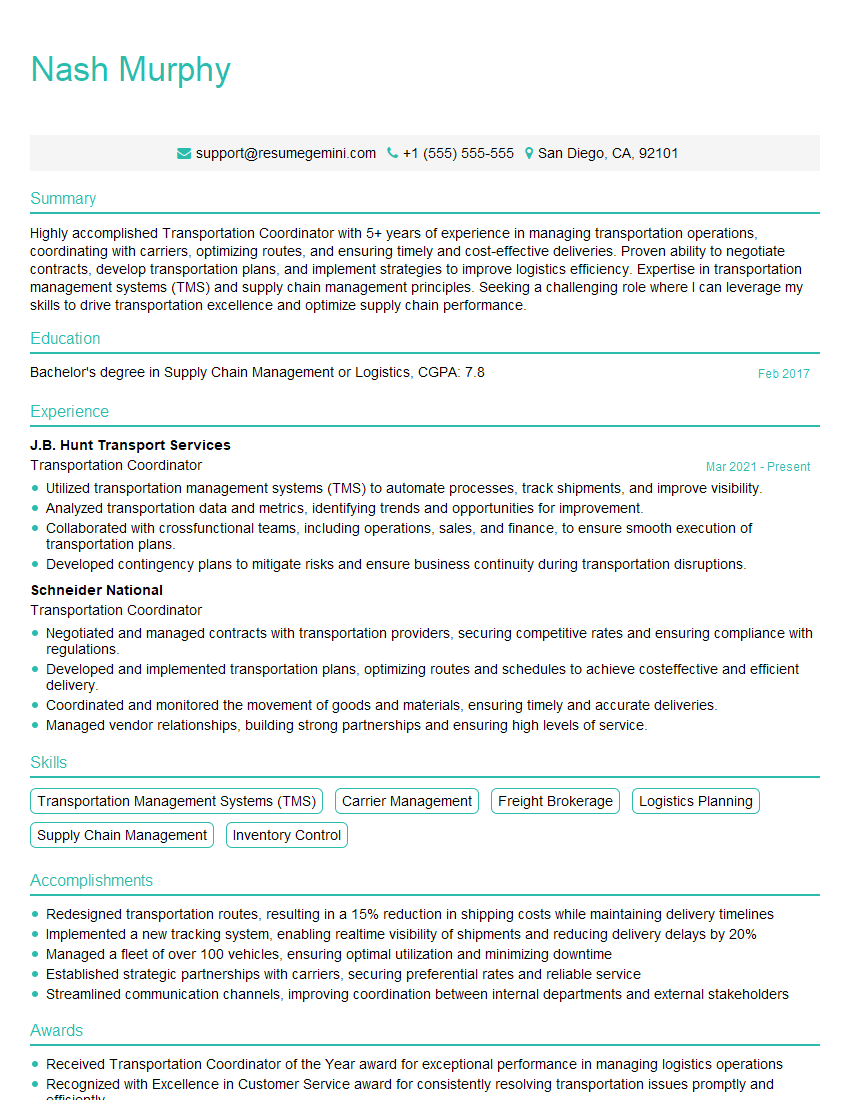
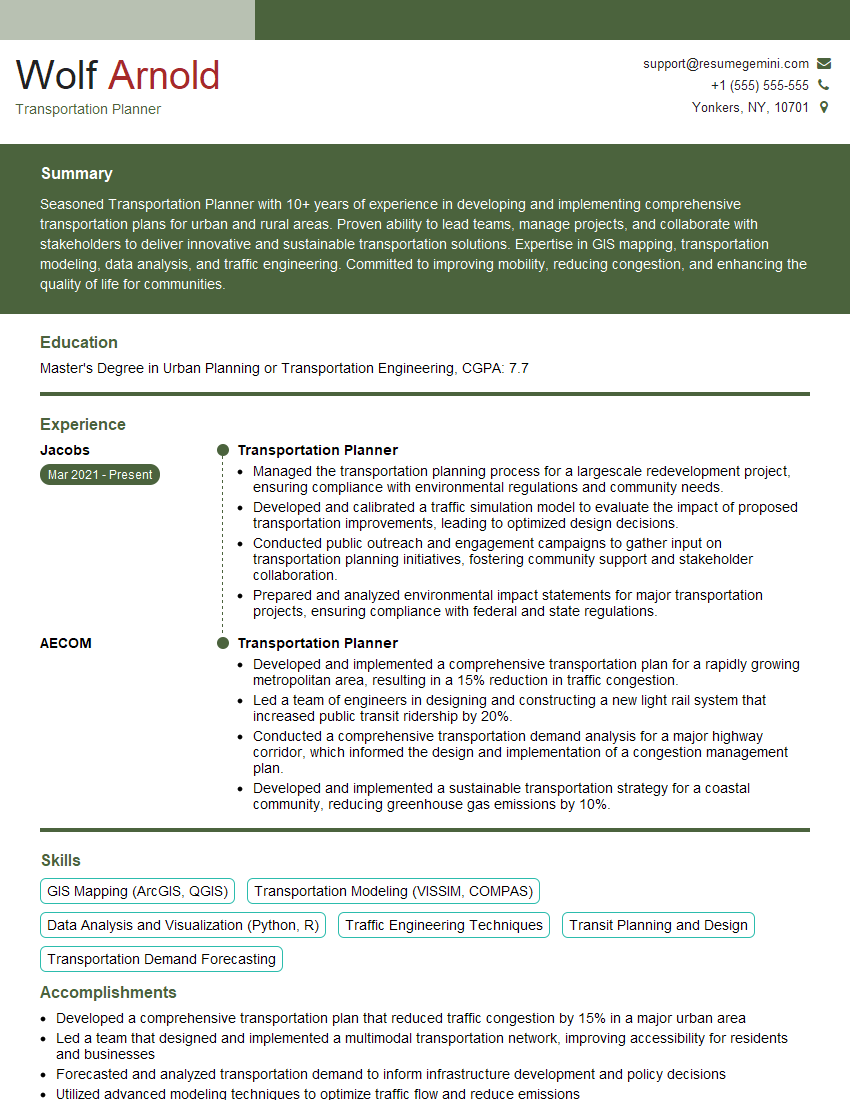
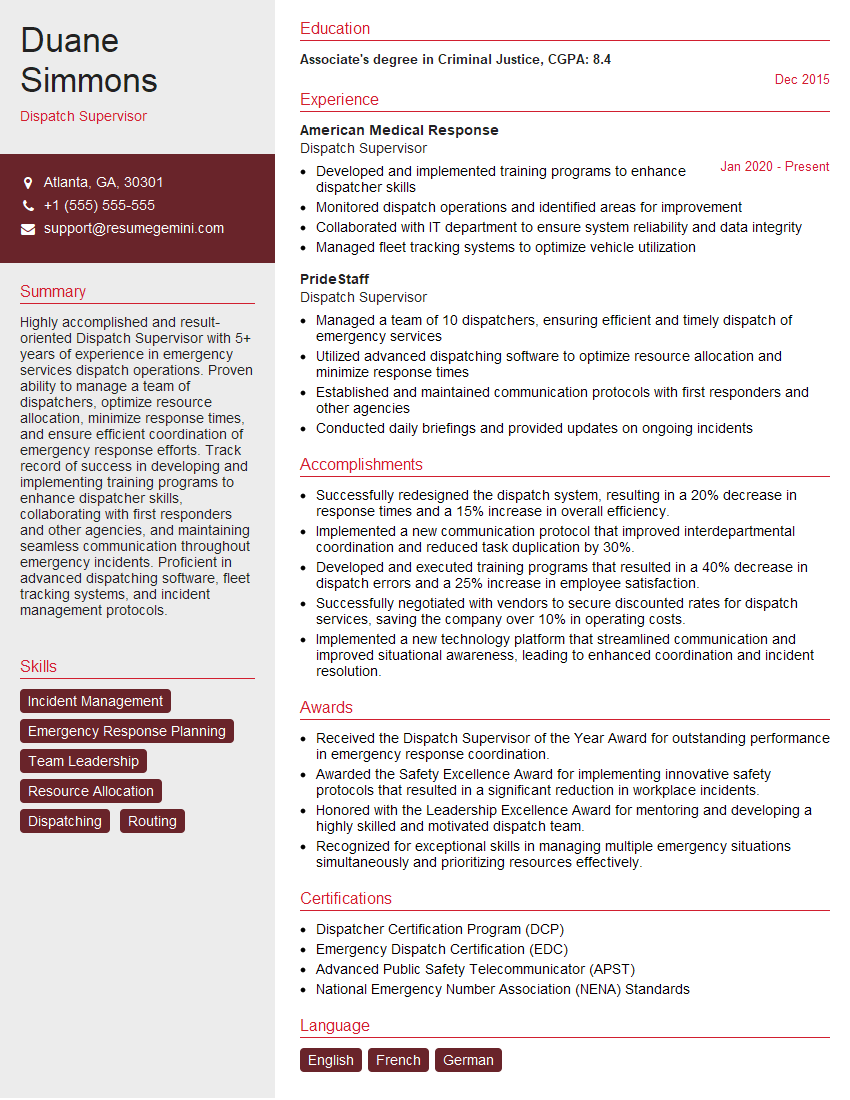
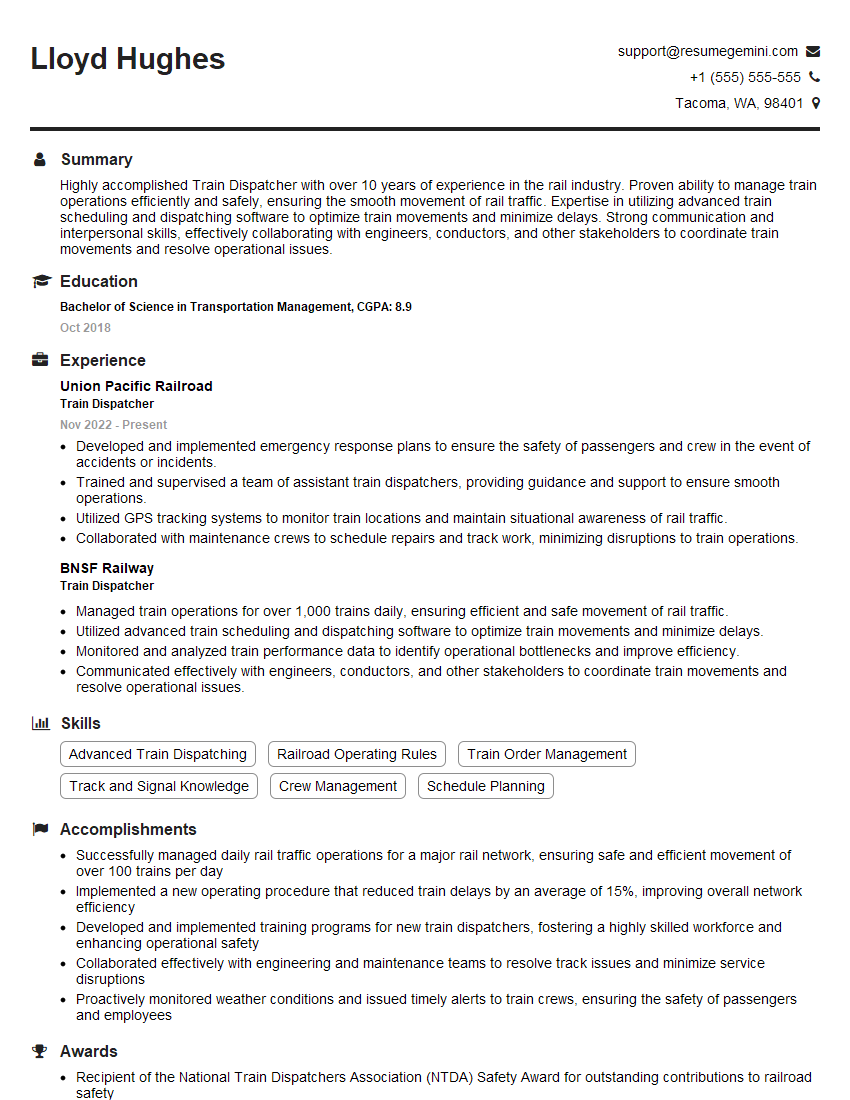
Mastering Train Arrival and Departure Coordination opens doors to a rewarding career with excellent growth potential within the transportation industry. Developing a strong understanding of these key areas will significantly enhance your interview performance and job prospects. Creating an ATS-friendly resume is crucial for getting your application noticed. We strongly encourage you to use ResumeGemini to build a professional and impactful resume that highlights your skills and experience effectively. ResumeGemini provides examples of resumes tailored to Train Arrival and Departure Coordination roles to help guide you in creating a standout application.
Explore more articles
Users Rating of Our Blogs
Share Your Experience
We value your feedback! Please rate our content and share your thoughts (optional).
What Readers Say About Our Blog
Very informative content, great job.
good