Interviews are opportunities to demonstrate your expertise, and this guide is here to help you shine. Explore the essential Training and Development of Subordinates interview questions that employers frequently ask, paired with strategies for crafting responses that set you apart from the competition.
Questions Asked in Training and Development of Subordinates Interview
Q 1. Describe your experience designing and delivering training programs.
Designing and delivering training programs is a multifaceted process that requires careful planning and execution. It starts with a thorough needs analysis to identify skill gaps and learning objectives. Then, I develop a curriculum that incorporates various learning methods – lectures, group discussions, hands-on activities, and simulations – to cater to diverse learning styles. I’ve designed programs ranging from onboarding for new hires to advanced technical skills training for experienced staff. For example, I once developed a three-day workshop on project management for a team of engineers. This involved creating detailed lesson plans, sourcing relevant materials, and designing interactive exercises to solidify their understanding of project lifecycle management and risk assessment. The program incorporated real-world case studies relevant to their projects, leading to significant improvements in project completion rates and budget adherence. Another example includes designing an online training module on customer service best practices, employing interactive scenarios and quizzes to enhance engagement and knowledge retention. The success of these programs was measured through post-training assessments and observed improvements in employee performance.
Q 2. What training evaluation methods are you familiar with?
I’m familiar with a range of training evaluation methods, categorized broadly as Kirkpatrick’s Four Levels of Evaluation. This model provides a comprehensive framework:
- Level 1: Reaction: Assessing participant satisfaction with the training through surveys and feedback forms. This measures the trainees’ immediate response to the program.
- Level 2: Learning: Measuring the knowledge and skills gained through pre- and post-training assessments, quizzes, and tests. This verifies the acquisition of new knowledge and skills.
- Level 3: Behavior: Observing changes in on-the-job performance after the training. This is often done through performance reviews, 360-degree feedback, or direct observation.
- Level 4: Results: Evaluating the impact of the training on organizational outcomes, such as increased productivity, improved customer satisfaction, or reduced errors. This demonstrates the overall return on investment of the training program.
Beyond Kirkpatrick’s model, I also utilize methods like return on investment (ROI) analysis to quantify the financial benefits of training and control groups for comparison to measure the effectiveness of the training against a non-trained group.
Q 3. How do you identify training needs within a team or organization?
Identifying training needs is crucial for effective training program design. I typically use a multi-pronged approach:
- Performance Reviews & Data Analysis: Reviewing performance appraisals, sales figures, customer feedback, and other relevant data to identify areas where performance falls short of expectations.
- Surveys & Questionnaires: Administering surveys and questionnaires to employees and managers to gain insights into their perceived skills gaps and training needs. This provides valuable first-hand perspectives.
- Interviews & Focus Groups: Conducting individual interviews and focus group discussions to explore specific challenges, gather more in-depth information, and clarify needs identified through other methods.
- Observation & Shadowing: Observing employees in their work environment to identify areas where training could improve their efficiency and effectiveness. This offers real-time insights into workflow and skill application.
- Skills Gap Analysis: Comparing the current skills of employees to the skills required for optimal performance. This often involves using competency models to identify specific areas for improvement.
For instance, if sales figures are consistently below targets, I might conduct interviews with sales representatives to understand the underlying issues. This could reveal a need for training on sales techniques, product knowledge, or customer relationship management.
Q 4. Explain your approach to creating engaging and effective training materials.
Engaging and effective training materials are key to successful learning. My approach involves:
- Know Your Audience: Tailoring content to the learners’ prior knowledge, learning styles, and job roles. This ensures relevance and maximizes comprehension.
- Variety of Methods: Using a mix of visual aids (videos, infographics), interactive exercises (simulations, games), real-world examples, and case studies to maintain learner engagement and cater to different learning preferences.
- Clear and Concise Language: Avoiding jargon and using simple, straightforward language. Complex concepts are broken down into smaller, easily digestible chunks.
- Storytelling and Real-World Application: Incorporating narratives and real-world examples to make the training relatable and impactful. This helps learners connect the training to their jobs and daily lives.
- Regular Feedback & Revision: Gathering feedback from participants after each training session and revising the materials based on that feedback to continually improve the program’s effectiveness. Iterative refinement is critical.
For example, when developing a safety training module, I might use a short, engaging video showcasing a real-life workplace accident to illustrate the importance of safety procedures, followed by interactive scenarios simulating different safety challenges.
Q 5. What experience do you have with different training delivery methods (e.g., online, in-person, blended)?
I have extensive experience delivering training using various methods:
- In-person training: This offers direct interaction and allows for immediate feedback and adjustments. I’ve conducted numerous workshops and seminars using this method.
- Online training: This provides flexibility and scalability, reaching a wider audience. I’ve developed and delivered numerous e-learning modules using platforms like Moodle and Articulate Storyline. These modules often incorporate interactive elements, gamification, and personalized learning paths.
- Blended learning: This combines online and in-person training to leverage the strengths of both. For example, I might deliver introductory material online and follow up with hands-on practice sessions in person. This approach caters to diverse learning styles and preferences.
The choice of delivery method depends on factors like budget, learner availability, the complexity of the training content, and the learning objectives. A blended approach often offers the best balance of flexibility and engagement.
Q 6. How do you measure the effectiveness of a training program?
Measuring the effectiveness of a training program involves a holistic approach. I use a combination of quantitative and qualitative data:
- Pre- and Post-Training Assessments: Measuring knowledge and skill acquisition through tests and quizzes. This provides a clear indication of learning gains.
- Performance Data: Tracking changes in key performance indicators (KPIs) like productivity, efficiency, error rates, and customer satisfaction after the training. This shows the practical impact of the training.
- Participant Feedback: Gathering feedback through surveys and focus groups to understand learners’ perspectives on the training’s effectiveness and identify areas for improvement. This captures learner experiences and identifies areas for improvement.
- Return on Investment (ROI): Calculating the return on the investment in training by comparing the costs of the program to the benefits achieved. This demonstrates the financial value of the training.
- Follow-up Observation: Observing employee performance on the job over time to assess the long-term impact of the training. This measures sustained behavior change.
By combining these methods, a comprehensive picture of training effectiveness emerges, allowing for data-driven improvements and demonstrating its value to the organization.
Q 7. How do you handle resistance to training from subordinates?
Resistance to training can stem from various factors, including fear of change, lack of perceived relevance, or negative past experiences. My approach to handling resistance involves:
- Understanding the Root Cause: First, I identify the reasons behind the resistance through open communication and active listening. This might involve individual conversations or group discussions.
- Addressing Concerns Directly: I directly address the concerns and anxieties expressed by employees. This might involve demonstrating the value and relevance of the training to their job roles and career progression.
- Emphasizing the Benefits: Highlighting the benefits of the training, both for the individual and the organization. This includes focusing on skill development, career advancement, and improved job satisfaction.
- Making the Training Relevant: Tailoring the training content to the specific needs and challenges of the employees. This makes it more meaningful and engaging.
- Providing Support and Encouragement: Offering ongoing support and encouragement throughout the training process. This creates a positive learning environment and builds confidence.
- Incentivizing Participation: Providing incentives, such as rewards or recognition, to motivate employees to participate actively in the training.
For example, if an employee expresses concern about the time commitment, I might offer flexible learning options or break down the training into smaller, more manageable modules. If the resistance stems from a fear of technology, I might offer one-on-one coaching or extra support.
Q 8. Describe your experience with performance management systems and their integration with training.
Performance management systems are crucial for identifying skill gaps and areas for improvement, directly informing training needs. I’ve extensively used systems like Performance360 and BambooHR, integrating them with training by first analyzing performance reviews. For instance, if consistent feedback shows a team struggles with project management software, I’d develop targeted training on that specific software. This might involve workshops, online modules, or one-on-one coaching. The system allows us to track employee progress, measuring the effectiveness of the training and its impact on subsequent performance reviews. We create a closed loop: performance review highlights a need, training addresses it, and future reviews measure the improvement.
In one instance, after analyzing performance data showing low sales conversion rates, we identified a deficiency in sales presentation skills. We then developed a comprehensive sales training program incorporating role-playing exercises, feedback sessions, and access to online resources. Post-training performance reviews showed a significant improvement in conversion rates, validating the direct link between performance management and effective training.
Q 9. How do you adapt training materials to meet the diverse learning styles of subordinates?
Catering to diverse learning styles is essential for effective training. I utilize a multi-modal approach, offering a variety of learning materials to accommodate visual, auditory, and kinesthetic learners. This includes:
- Visual aids: PowerPoint presentations, infographics, videos, and interactive simulations.
- Auditory learning: Podcasts, lectures, group discussions, and audio-based training modules.
- Kinesthetic learning: Hands-on activities, role-playing, simulations, and practical exercises.
For example, when training employees on new software, I might use a video tutorial for visual learners, provide a narrated walkthrough for auditory learners, and allow for hands-on practice with the software for kinesthetic learners. Pre-training assessments can help determine learning styles, further personalizing the experience.
Q 10. What are some common challenges in delivering training, and how have you overcome them?
Common challenges in delivering training include time constraints, limited resources, lack of engagement, and resistance to change. I’ve tackled these by:
- Time constraints: Utilizing microlearning techniques – short, focused modules delivered regularly – to fit busy schedules.
- Limited resources: Exploring cost-effective solutions like online resources, open educational resources (OER), and leveraging existing internal expertise.
- Lack of engagement: Incorporating interactive elements like games, quizzes, and collaborative activities to make training more engaging and memorable.
- Resistance to change: Addressing concerns proactively, highlighting the benefits of training, and providing ongoing support and encouragement.
For instance, to overcome employee resistance to a new CRM system, I organized a series of interactive workshops where employees could directly address their concerns and practice using the system in a safe, supportive environment.
Q 11. Explain your experience with creating and managing training budgets.
I have significant experience managing training budgets, from developing proposals to tracking expenditures. This involves:
- Needs assessment: Identifying training needs and prioritizing them based on organizational goals and ROI.
- Budget development: Creating a detailed budget that outlines all costs, including instructor fees, materials, technology, and travel.
- Vendor selection: Evaluating potential vendors based on cost, quality, and experience.
- Expense tracking: Monitoring expenses throughout the training process and ensuring that the budget is adhered to.
For example, when managing the budget for a large-scale leadership development program, I successfully negotiated discounts with vendors, utilized free online resources, and optimized training schedules to reduce costs while maintaining program quality. Regular reporting to stakeholders kept them informed of budget status and allowed for proactive adjustments.
Q 12. How do you ensure training programs align with organizational goals?
Alignment between training programs and organizational goals is paramount. I ensure this by:
- Strategic planning: Closely collaborating with leadership to understand organizational objectives and identify skill gaps that hinder their achievement.
- Needs assessment: Conducting thorough needs assessments to pinpoint specific training requirements aligned with strategic goals.
- Performance metrics: Defining clear, measurable outcomes for training programs, ensuring that the training directly contributes to organizational success.
- Regular evaluation: Continuously evaluating the effectiveness of training programs against predetermined metrics and adjusting them as needed.
For example, if the company’s goal is to increase market share, training programs might focus on sales techniques, product knowledge, and competitive analysis. The success of these training programs would be measured by actual increases in market share and sales figures.
Q 13. Describe your experience with different learning management systems (LMS).
I have experience with several Learning Management Systems (LMS), including Moodle, Canvas, and TalentLMS. My experience encompasses:
- Course creation: Designing and uploading training materials, including videos, documents, and quizzes.
- User management: Managing user accounts, assigning courses, and tracking progress.
- Reporting and analytics: Generating reports on learner progress, completion rates, and performance.
- Integration: Integrating the LMS with other HR systems for seamless data flow.
The choice of LMS depends on the organization’s specific needs and budget. I’m proficient in selecting and utilizing the most appropriate system to effectively deliver and track training.
Q 14. How do you stay current with the latest trends in training and development?
Staying current in training and development is crucial. I achieve this through:
- Professional development: Regularly attending conferences, workshops, and webinars.
- Industry publications: Subscribing to relevant journals and newsletters, such as Training Magazine and ATD (Association for Talent Development) publications.
- Online courses: Taking online courses and certifications in emerging technologies and training methodologies.
- Networking: Actively participating in professional organizations and networking events.
This ensures that I remain informed about the latest trends, best practices, and innovative technologies in training and development, enabling me to continually improve my approach and adapt to evolving organizational needs.
Q 15. What is your experience with needs analysis and instructional design?
Needs analysis is the cornerstone of effective training. It involves systematically identifying the gap between current performance and desired performance. This involves analyzing individual, team, and organizational needs to pinpoint specific skill deficiencies or knowledge gaps. Instructional design, on the other hand, is the process of creating learning experiences that effectively bridge this gap. It’s about crafting engaging and effective training materials and delivery methods. I have extensive experience in both. For example, at my previous role, I conducted a thorough needs analysis using surveys, interviews, and performance data to determine that our sales team lacked proficiency in using our new CRM software. This led to an instructional design phase where I developed a blended learning program incorporating online modules, hands-on workshops, and on-the-job coaching to address the identified need. My approach typically involves using the ADDIE model (Analysis, Design, Development, Implementation, and Evaluation) to ensure a structured and effective training process.
Career Expert Tips:
- Ace those interviews! Prepare effectively by reviewing the Top 50 Most Common Interview Questions on ResumeGemini.
- Navigate your job search with confidence! Explore a wide range of Career Tips on ResumeGemini. Learn about common challenges and recommendations to overcome them.
- Craft the perfect resume! Master the Art of Resume Writing with ResumeGemini’s guide. Showcase your unique qualifications and achievements effectively.
- Don’t miss out on holiday savings! Build your dream resume with ResumeGemini’s ATS optimized templates.
Q 16. Describe a time you had to develop a training program from scratch.
In my previous role, we needed a training program for new customer service representatives on handling complex customer inquiries. There wasn’t an existing program. I started by defining the learning objectives – what specific skills and knowledge the representatives needed to master. Next, I conducted a thorough needs analysis through interviews with experienced representatives and managers, analyzing call logs to identify common challenges. Then I designed the program structure, choosing a blended learning approach. This included e-learning modules for foundational knowledge, followed by role-playing simulations to practice handling difficult situations, and finally, on-the-job coaching and mentoring. I developed engaging scenarios for the simulations and ensured the e-learning modules included interactive elements to keep trainees engaged. The program was a huge success, leading to measurable improvements in customer satisfaction scores and call resolution times.
Q 17. How do you use technology to enhance the learning experience?
Technology is crucial in enhancing the learning experience. I leverage various technologies to create engaging and accessible training. For instance, I utilize Learning Management Systems (LMS) like Moodle or Canvas to deliver online courses, track progress, and facilitate communication. I also incorporate interactive elements such as simulations, gamification, and virtual reality (VR) to make learning more engaging and immersive. For example, a VR training module can immerse trainees in realistic scenarios, allowing them to practice skills in a safe and controlled environment. Microlearning – short, focused learning modules delivered through mobile apps – is another effective tool to improve knowledge retention and cater to busy learners. I also use video conferencing tools for live training sessions and webinars, enabling remote participation and interaction. Data analytics from these platforms helps to continually improve the training design based on learner performance.
Q 18. What are some key performance indicators (KPIs) you would use to track the success of a training program?
Key Performance Indicators (KPIs) are essential for measuring training success. Some of the KPIs I use are:
- Participant Satisfaction: Measured through post-training surveys.
- Knowledge Gain: Assessed through pre- and post-training assessments, measuring the increase in knowledge and understanding.
- Skill Application: Evaluated through on-the-job observations, performance reviews, or simulations, focusing on whether trainees can apply learned skills effectively.
- Return on Investment (ROI): Calculated by comparing the cost of the training program to the benefits realized, such as increased productivity, improved performance, reduced errors, or increased sales.
- Behavioural Change: Observed changes in employee behaviour that directly relate to training objectives. For example, improved customer service skills or increased efficiency.
By tracking these KPIs, we can determine the effectiveness of the training program and make necessary adjustments for future iterations.
Q 19. How do you facilitate knowledge transfer and sharing among team members?
Facilitating knowledge transfer and sharing is crucial for a high-performing team. I use several strategies:
- Mentorship programs: Pairing experienced employees with newer ones for guidance and support.
- Knowledge-sharing sessions: Regular meetings where team members share best practices, lessons learned, and innovative ideas. This can involve presentations, workshops, or informal discussions.
- Communities of practice: Creating online or in-person forums where team members can connect, collaborate, and discuss relevant topics. These groups foster a culture of continuous learning.
- Internal wikis or knowledge bases: Creating a centralized repository for important documents, procedures, and best practices, accessible to all team members.
- Job shadowing and cross-training: Allowing employees to observe and participate in different roles to gain a broader perspective and expand their skillsets.
By creating a culture of collaboration and open communication, knowledge is readily shared and utilized across the team.
Q 20. Describe your experience in mentoring or coaching subordinates.
Mentoring and coaching are integral parts of my role. I approach it with a focus on both professional and personal growth. I use a combination of techniques such as active listening, goal setting, providing constructive feedback, and celebrating achievements. For example, I mentored a subordinate who was struggling with public speaking. We established clear goals, developed a plan with specific steps, and practiced regularly. I provided constructive feedback after each practice session, focusing on both strengths and areas for improvement. The result was a significant improvement in his confidence and presentation skills, as evidenced by his positive performance reviews and improved client interactions. I believe in fostering a trusting relationship based on mutual respect and open communication.
Q 21. How do you assess the learning outcomes of training programs?
Assessing learning outcomes is critical to evaluating training effectiveness. I use a multi-faceted approach:
- Pre- and post-training assessments: These measure the change in knowledge and understanding before and after the training. These can be quizzes, tests, or practical exercises.
- Performance evaluations: Reviewing employee performance on the job to see if the training has resulted in improved skills and behaviors.
- Observations: Directly observing employees applying the skills learned in a real-world setting. This can involve on-the-job shadowing or simulations.
- 360-degree feedback: Gathering feedback from peers, supervisors, and subordinates to gain a comprehensive view of the trainee’s performance improvement.
- Surveys and feedback forms: Collecting feedback from trainees on their learning experience and the usefulness of the training.
By combining these methods, I get a comprehensive understanding of the impact of the training program and can make adjustments as needed.
Q 22. What is your approach to providing constructive feedback to trainees?
My approach to providing constructive feedback centers around the SBI model: Situation, Behavior, Impact. I start by describing the specific situation I observed (Situation), then clearly articulate the behavior I witnessed (Behavior), and finally, explain the impact that behavior had on the outcome, the team, or the project (Impact). This avoids vague criticisms and focuses on concrete examples. For instance, instead of saying “You’re not a team player,” I might say, “During the project kickoff meeting (Situation), you didn’t participate in the brainstorming session and didn’t offer your input (Behavior), which resulted in the team missing out on some potentially valuable ideas and leading to a slightly less efficient planning phase (Impact).” I always follow this feedback with open-ended questions to encourage reflection and discussion, such as “What are your thoughts on this?” or “How might you approach this differently next time?” I also ensure the feedback is balanced, highlighting both strengths and areas for improvement. Finally, I create an action plan together with the trainee, establishing concrete steps for improvement and setting realistic goals.
Q 23. How do you address performance gaps identified through training evaluation?
Addressing performance gaps identified through training evaluation is a multi-step process. First, I analyze the evaluation data to pinpoint specific areas where trainees struggled. This might involve reviewing test scores, observing performance in practical exercises, or gathering feedback from both trainees and supervisors. Once the gaps are identified, I design targeted interventions. This could range from supplemental training modules focused on the weak areas, to one-on-one coaching sessions, mentoring opportunities, or providing access to additional resources like online tutorials or relevant articles. The type of intervention depends on the nature of the gap and individual learning styles. Regular follow-up is crucial. I monitor progress using methods such as observation, quizzes, and performance reviews to ensure that the interventions are effective and to make necessary adjustments if the performance gap persists. It’s vital to maintain open communication, providing ongoing support and encouragement to help trainees overcome challenges and develop their skills.
Q 24. How do you manage multiple training initiatives simultaneously?
Managing multiple training initiatives simultaneously requires strong organizational skills and effective time management. I utilize project management techniques, such as creating detailed project plans with clear timelines and milestones for each initiative. This involves outlining specific tasks, assigning responsibilities, and setting deadlines. I also leverage collaboration tools, like shared calendars and project management software, to track progress and ensure effective communication among the team. Prioritization is key; I focus on initiatives with the most urgent deadlines or highest impact first, and I allocate resources accordingly. Regular status meetings help to maintain transparency, identify potential roadblocks, and ensure that all initiatives remain on track. Delegation is also essential; I trust my team members to take ownership of their tasks, allowing me to focus on strategic aspects of the training programs. Finally, I regularly review my workload to ensure that I am not over-committed, and I am proactive in adjusting priorities as needed.
Q 25. What is your experience with creating and delivering onboarding programs?
I have extensive experience in creating and delivering engaging onboarding programs. My approach focuses on providing new hires with the knowledge, skills, and resources they need to be successful in their roles. I typically begin by conducting thorough needs assessments to understand the specific requirements of each role and the organization’s culture. This includes interviewing managers, reviewing job descriptions, and analyzing existing onboarding materials. Then, I design a comprehensive onboarding program that includes elements such as organizational orientation, department-specific training, role-specific training, and introductions to key stakeholders. The program emphasizes practical application through activities like shadowing, mentoring, and early project involvement. I always incorporate feedback loops to assess the program’s effectiveness and make necessary adjustments. For example, I once developed a gamified onboarding program for a tech startup that significantly improved new hire engagement and reduced the time it took for them to become productive. The program included interactive modules, quizzes, and team-based challenges, making the learning experience more enjoyable and effective.
Q 26. Describe your experience with adult learning principles.
My experience with adult learning principles heavily influences my training methods. I understand that adults learn differently from children; they are self-directed, bring extensive experience to the learning environment, and are motivated by the relevance of the material to their jobs and lives. I apply several key principles: First, I ensure that the training content is relevant and practical, focusing on real-world applications rather than abstract concepts. Second, I actively involve trainees in the learning process through discussions, group activities, and problem-solving exercises. Third, I create a supportive and collaborative learning environment that encourages questions and peer learning. I use a variety of teaching methods, such as case studies, simulations, and role-playing, to cater to different learning styles. I also incorporate regular feedback and opportunities for reflection to reinforce learning and promote knowledge retention. Finally, I encourage trainees to set their own learning goals, empowering them to take ownership of their professional development.
Q 27. How do you foster a positive and supportive learning environment?
Fostering a positive and supportive learning environment is paramount. I create this by establishing clear expectations and a safe space for trainees to ask questions, share ideas, and express concerns without fear of judgment. I start by building rapport with each trainee, getting to know their individual learning styles and preferences. I encourage collaboration through group activities and peer learning, fostering a sense of community among the trainees. I use positive reinforcement and celebrate successes, creating a culture of encouragement and mutual support. I provide regular feedback, both positive and constructive, focusing on growth and development. Open communication is vital; I maintain consistent contact with trainees, both during and after the training sessions, to provide ongoing support and address any concerns they may have. I also actively solicit feedback from trainees to improve the learning experience and ensure it remains relevant and engaging.
Q 28. How do you handle difficult questions or challenges from trainees?
Handling difficult questions or challenges from trainees requires patience, empathy, and a willingness to actively listen. I start by acknowledging the trainee’s concern and demonstrating that I value their input. I actively listen to fully understand their perspective before responding. If I don’t know the answer, I will honestly admit it and commit to finding the answer and getting back to them. If the question reflects a misunderstanding of the material, I patiently re-explain the concept using different methods or examples to ensure clarity. If the challenge is related to the training material itself, I actively seek feedback and use it to improve the training content for future sessions. I always try to frame challenges as opportunities for learning and growth. For example, if a trainee expresses frustration with a specific exercise, I might ask them to help identify ways to improve the exercise for others, making them an active participant in the improvement process. This demonstrates respect for their viewpoint and encourages a constructive dialogue.
Key Topics to Learn for Training and Development of Subordinates Interview
- Needs Assessment: Identifying skill gaps and training requirements within your team. Practical application: Conducting performance reviews and using data to pinpoint areas needing improvement.
- Learning Styles and Delivery Methods: Adapting your training approach to suit different learning styles (visual, auditory, kinesthetic). Practical application: Designing engaging training programs incorporating diverse methods like workshops, online modules, and mentoring.
- Training Design and Development: Creating effective training materials, including objectives, content, and evaluation methods. Practical application: Developing a training program on a new software system, including hands-on exercises and assessments.
- Performance Management and Coaching: Providing regular feedback, setting goals, and supporting employee growth. Practical application: Utilizing coaching techniques to address performance issues and foster professional development.
- Mentorship and On-the-Job Training: Utilizing experienced employees to guide and train new hires or those needing skill development. Practical application: Establishing a formal mentorship program within the team.
- Evaluation and Measurement: Assessing the effectiveness of training programs through various methods. Practical application: Developing key performance indicators (KPIs) to measure the impact of training on employee performance.
- Technology in Training: Utilizing technology and learning management systems (LMS) to enhance training delivery and accessibility. Practical application: Implementing e-learning modules or virtual training sessions.
- Budgeting and Resource Allocation: Effectively managing the resources dedicated to training and development initiatives. Practical application: Creating a training budget proposal that justifies the investment.
Next Steps
Mastering Training and Development of Subordinates is crucial for career advancement, demonstrating your ability to build high-performing teams and contribute to organizational success. To significantly boost your job prospects, create a compelling and ATS-friendly resume that highlights your relevant skills and experience. We strongly recommend using ResumeGemini to build a professional resume that showcases your expertise in this critical area. ResumeGemini offers numerous examples of resumes tailored to Training and Development of Subordinates to help you create a document that truly stands out. Invest the time to craft a strong resume – it’s your first impression and a key step towards securing your dream role.

Knowledge Manager Resume Sample
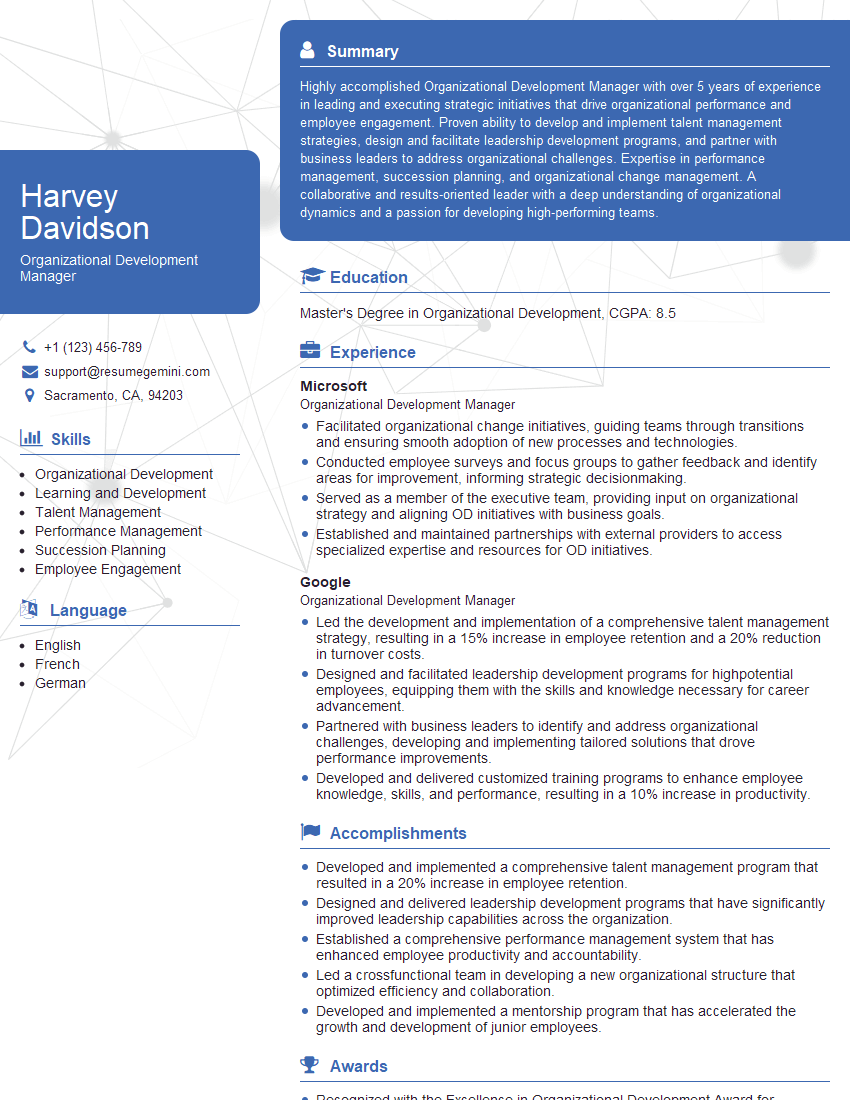
Organizational Development Manager Resume Sample
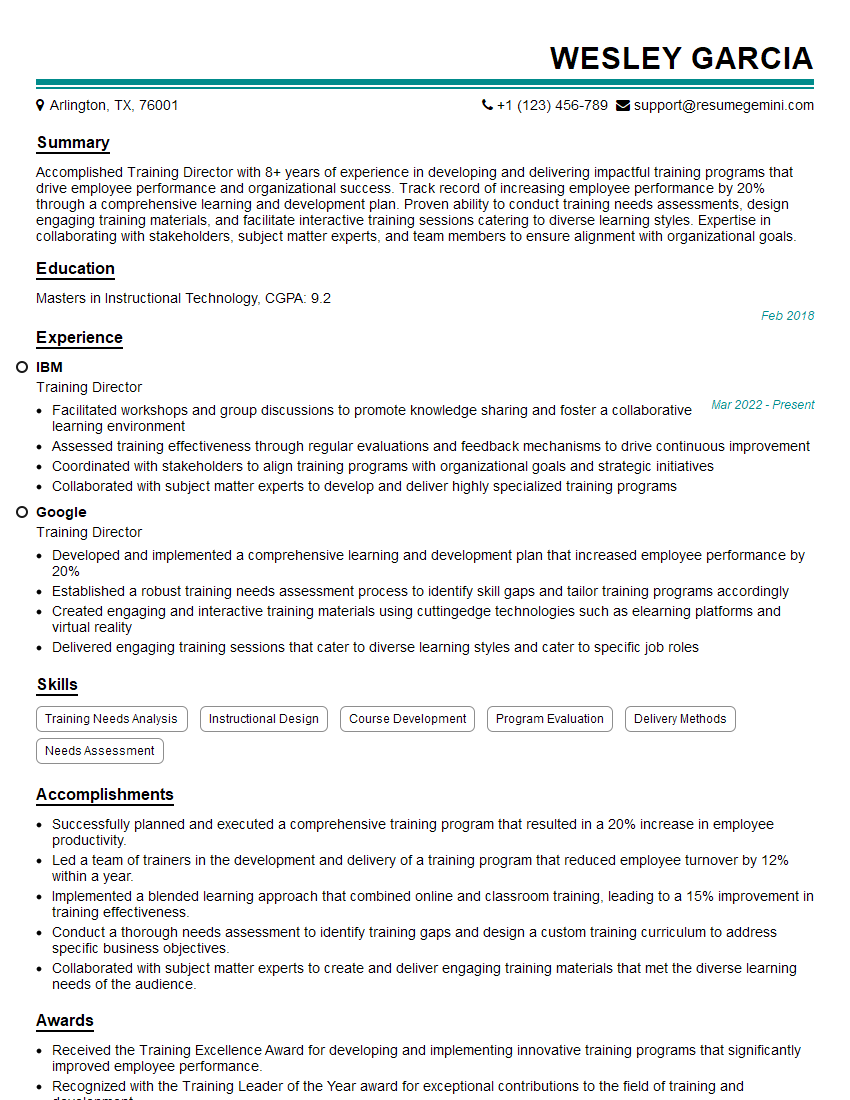
Training Director Resume Sample
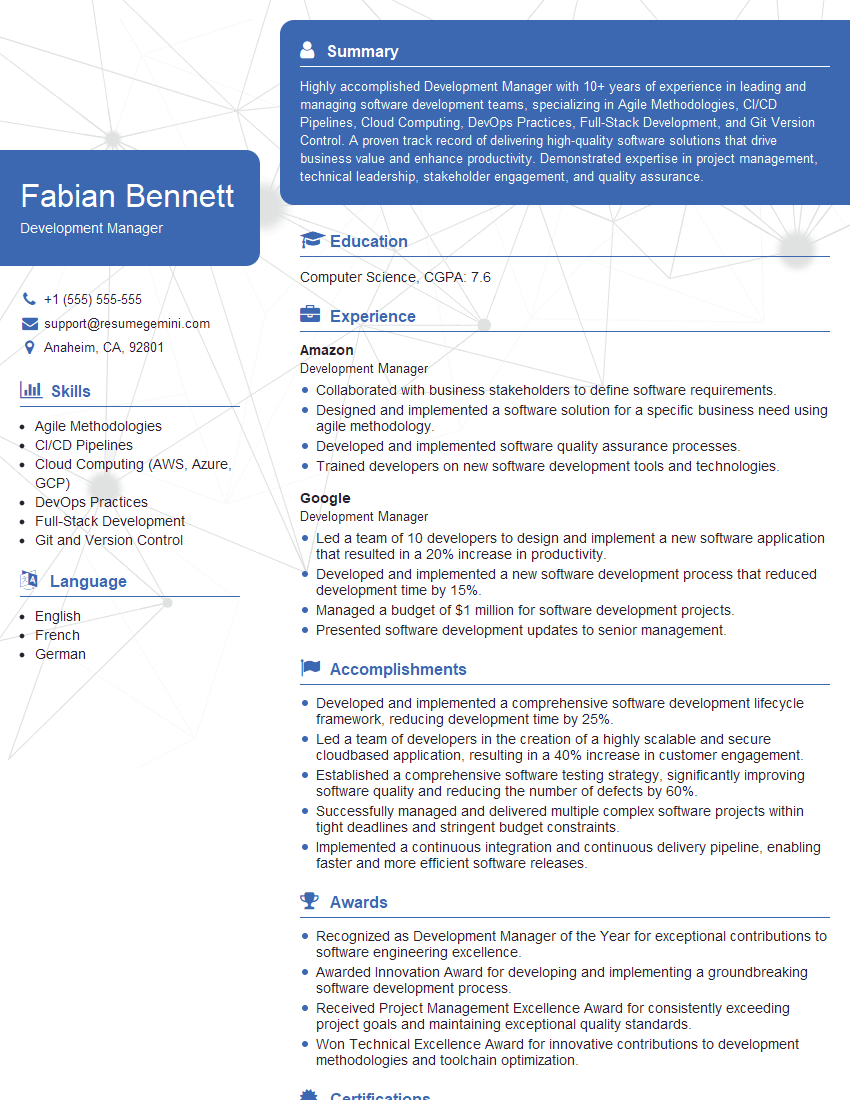
Development Manager Resume Sample
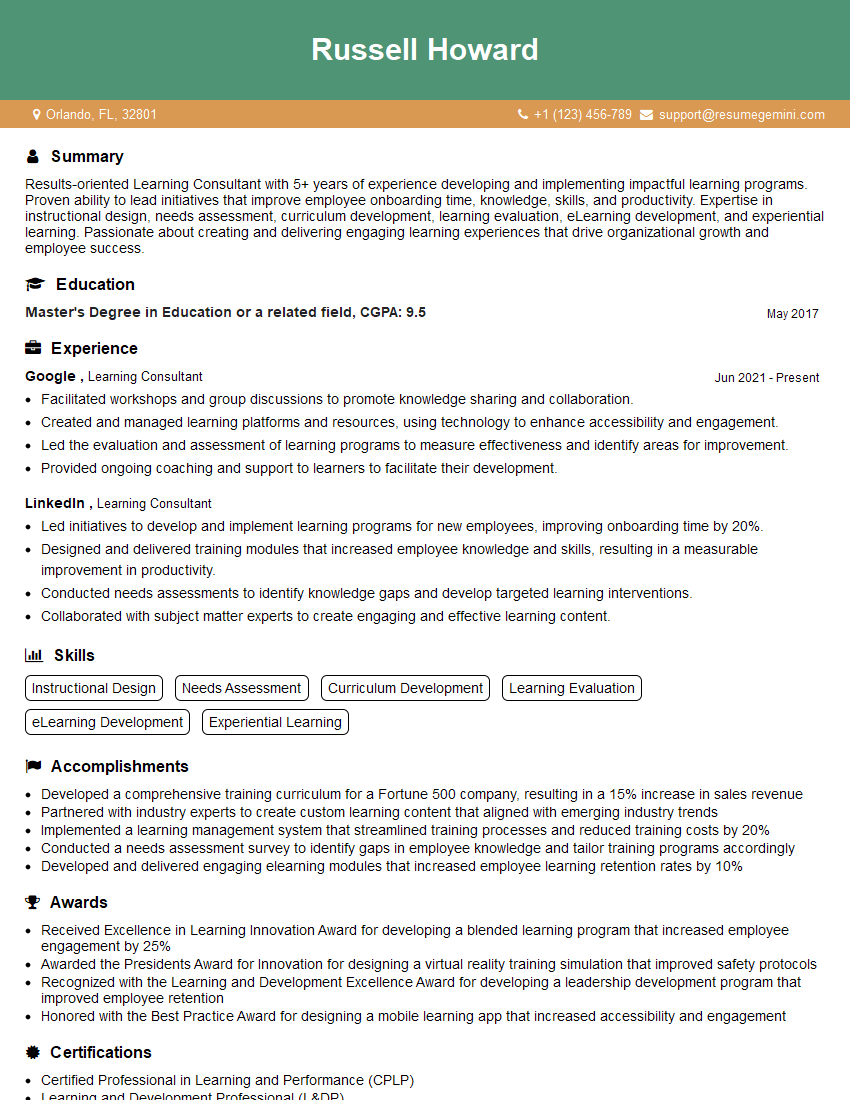
Learning Consultant Resume Sample
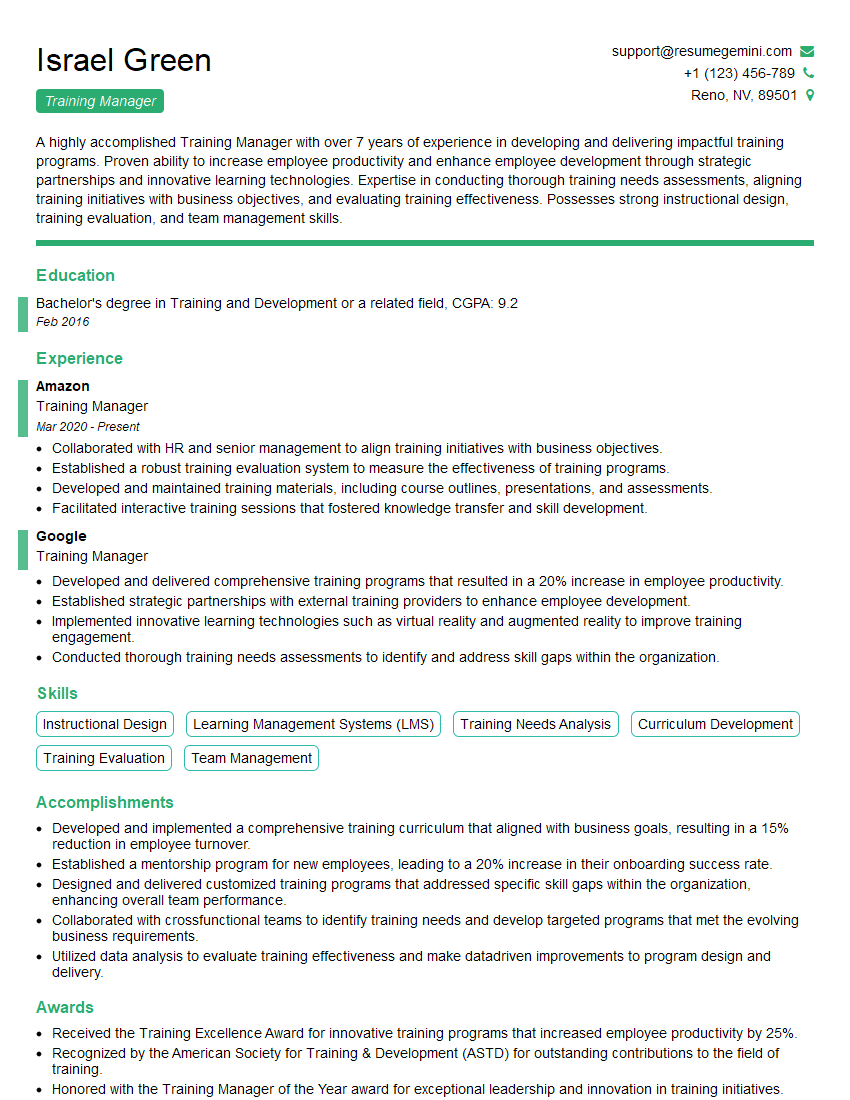
Training Manager Resume Sample
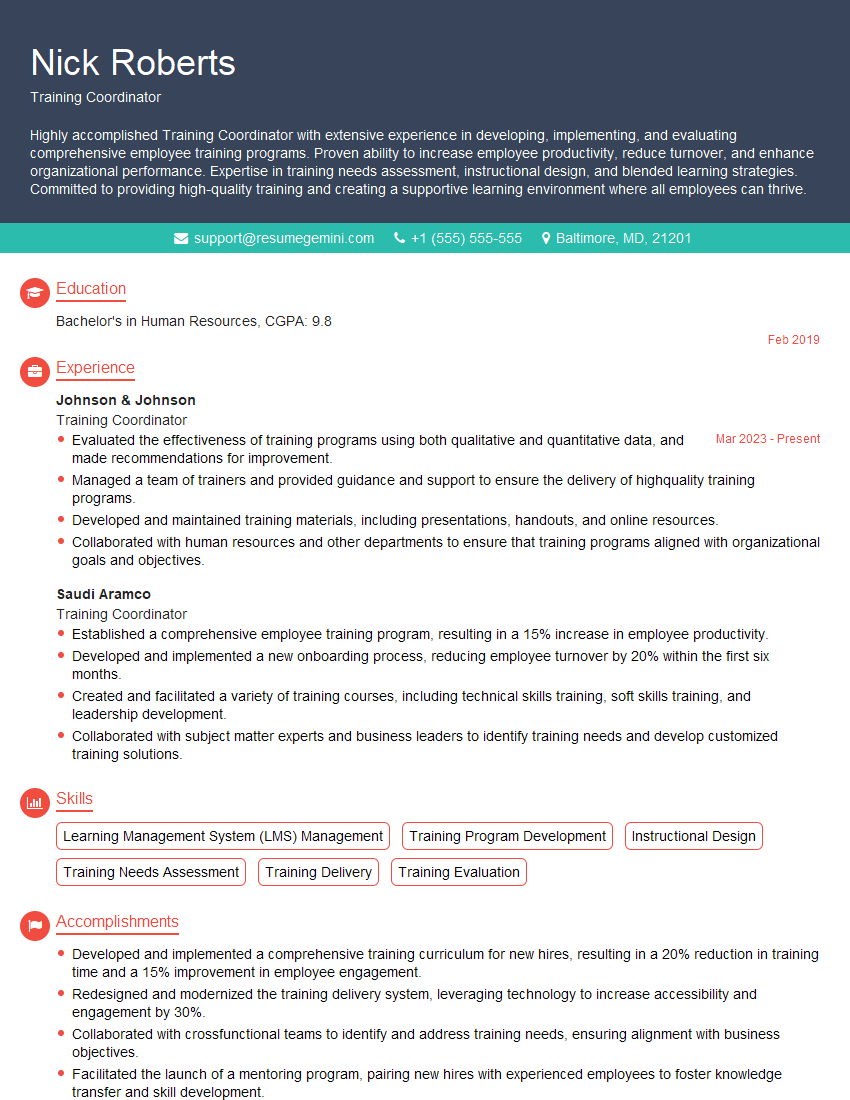
Training Coordinator Resume Sample
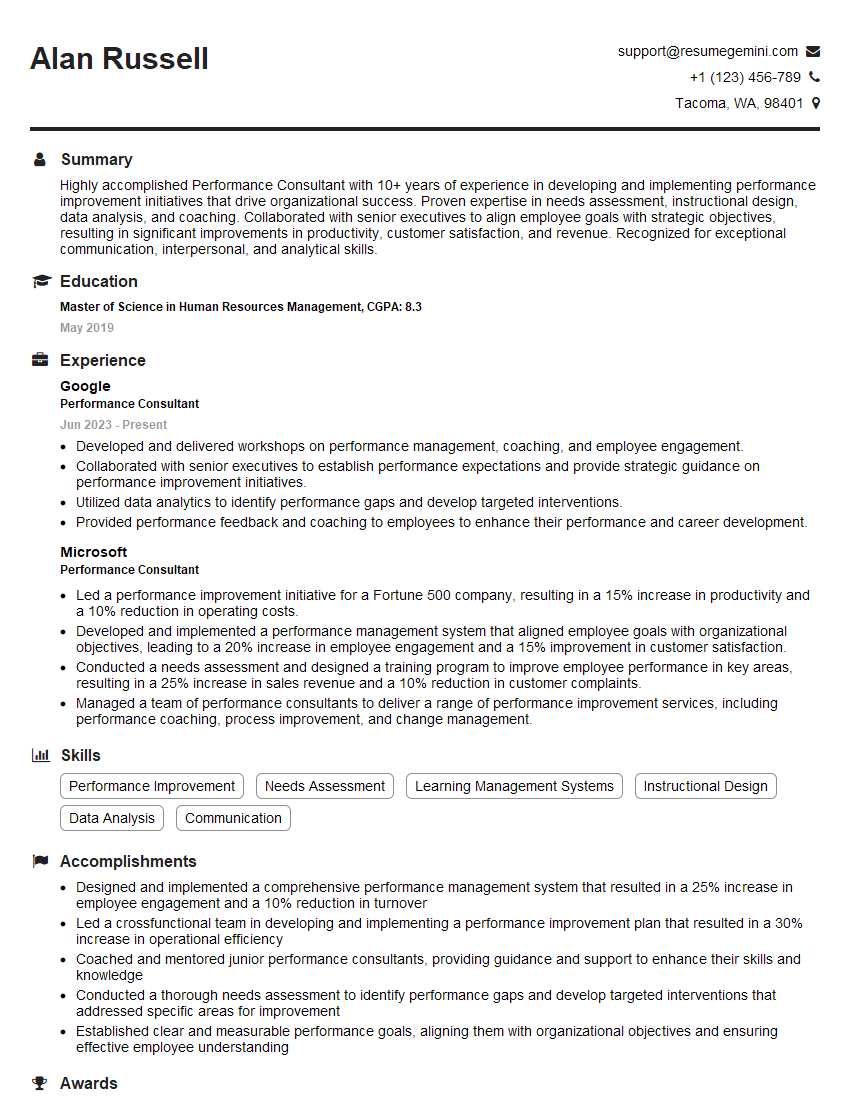
Performance Consultant Resume Sample
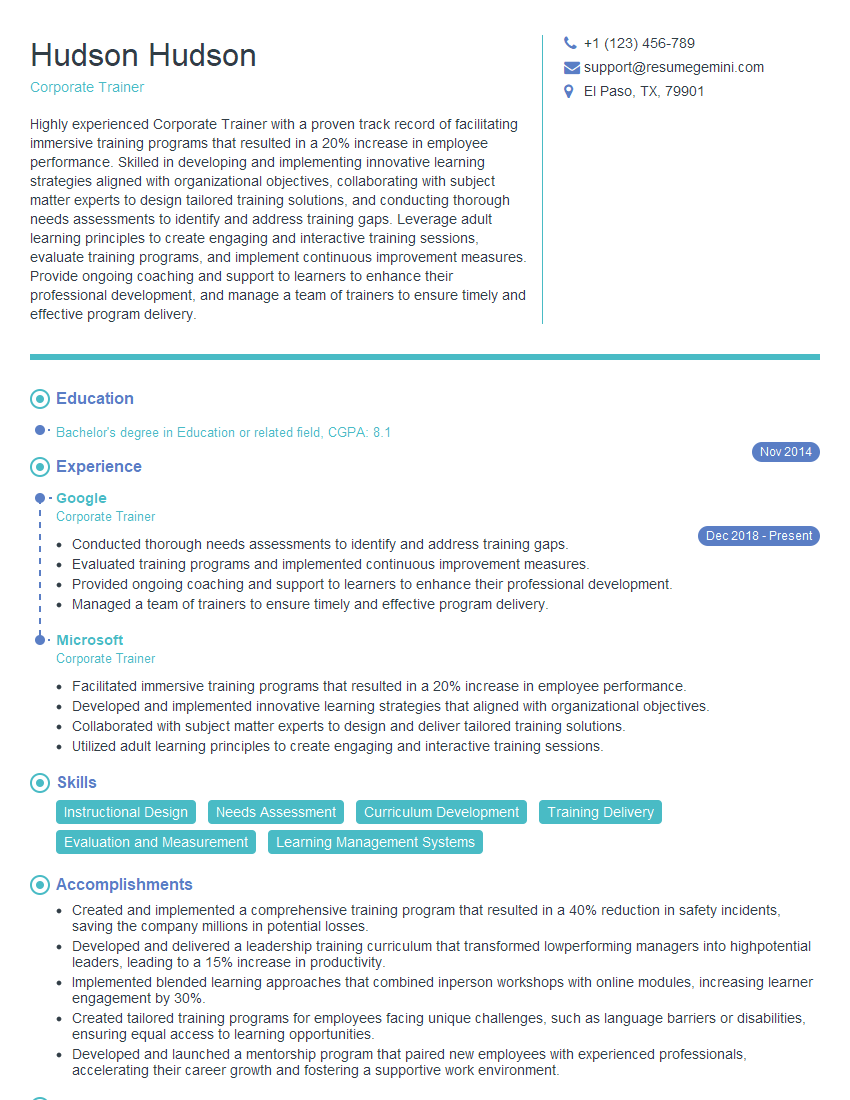
Corporate Trainer Resume Sample

Curriculum Developer Resume Sample

Training Specialist Resume Sample
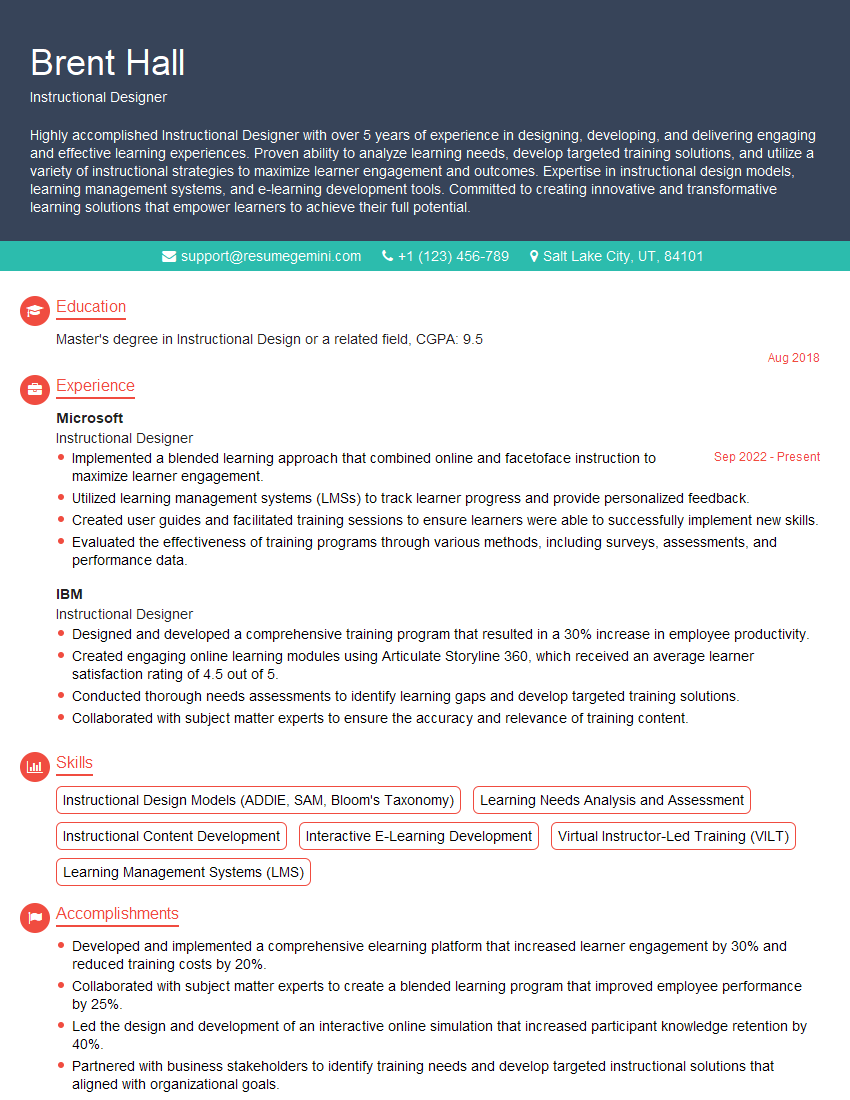
Instructional Designer Resume Sample
Explore more articles
Users Rating of Our Blogs
Share Your Experience
We value your feedback! Please rate our content and share your thoughts (optional).
What Readers Say About Our Blog
Very informative content, great job.
good