The thought of an interview can be nerve-wracking, but the right preparation can make all the difference. Explore this comprehensive guide to Training Camp Organization interview questions and gain the confidence you need to showcase your abilities and secure the role.
Questions Asked in Training Camp Organization Interview
Q 1. Describe your experience in budgeting and financial management for a training camp.
Budgeting and financial management for a training camp are critical for its success. It’s not just about tracking expenses; it’s about strategic allocation of resources to maximize impact and ensure profitability (or responsible spending if it’s a non-profit initiative). My approach begins with a comprehensive budget template that categorizes all anticipated costs. This includes:
- Venue rental and utilities: This covers the cost of the training facility, including electricity, water, and internet access.
- Equipment and materials: This encompasses all training materials, from sports equipment to stationery, and any potential technology needs. For example, if we’re running a tech training camp, this section will have a bigger budget than for a wilderness survival course.
- Instructor fees and staff salaries: This part outlines compensation for all trainers, support staff, and potentially administrative personnel.
- Marketing and advertising: Costs associated with promoting the training camp and attracting participants are crucial.
- Participant meals and accommodation (if applicable): If the camp includes these provisions, these costs need to be meticulously factored in.
- Contingency fund: A crucial aspect, a percentage is always set aside to cover unforeseen expenses.
I then meticulously track actual expenses against the budgeted amounts, regularly reviewing the budget to ensure we stay on track. Using specialized software like QuickBooks or spreadsheets with robust formulas aids in this process significantly. For instance, in one camp, we underestimated the cost of transportation for equipment. By closely monitoring our budget, we were able to identify this deviation early and make adjustments without jeopardizing the entire program. Finally, post-camp, a thorough financial report is generated to analyze the overall financial performance and inform future planning.
Q 2. How do you handle unexpected logistical challenges during a training camp?
Unexpected logistical challenges are inevitable in training camps. My approach to handling them focuses on proactive planning and swift, decisive action. This involves:
- Developing contingency plans: Before the camp even starts, I identify potential problems (e.g., equipment malfunction, sudden weather changes, participant injury) and create detailed plans to address each scenario. For example, having backup instructors or alternate training locations.
- Building a strong communication network: Maintaining clear and open communication with all stakeholders (participants, instructors, staff, vendors) is key. This enables rapid information sharing in case of an emergency.
- Problem-solving skills: I use a structured problem-solving approach (define the problem, brainstorm solutions, evaluate options, implement the best solution, review the outcome) to tackle unforeseen issues calmly and effectively. For example, a sudden power outage might necessitate a temporary shift to alternative training methods or a postponement of certain sessions.
- Adaptability: Training camps frequently deal with unexpected situations. The ability to adapt the schedule or training methods quickly is very important. For instance, a sudden downpour in an outdoor camp could necessitate moving activities indoors and adjusting the schedule accordingly.
For example, during a wilderness survival camp, a severe storm led to the flooding of our designated campsite. Thanks to a pre-planned backup location and strong communication with participants, we safely relocated and continued the camp with minor schedule adjustments.
Q 3. Explain your process for developing a training camp schedule.
Developing a training camp schedule requires careful consideration of several factors. My process involves:
- Defining learning objectives: Clearly outlining the skills and knowledge participants should gain determines the content and structure of the training.
- Identifying training modules: Breaking down the overall training into manageable modules ensures a structured learning experience. Each module usually includes theoretical instruction, practical exercises, and assessments.
- Allocating time for each module: This involves considering the complexity of each module and allocating sufficient time for effective learning. It’s crucial to avoid overly packed schedules.
- Incorporating breaks and rest periods: Regular breaks are vital for participant engagement and retention. I ensure sufficient time for breaks, meals, and rest.
- Considering participant needs: Schedules should accommodate different learning styles and pace, as well as potential physical limitations.
- Building in flexibility: While a well-structured schedule is crucial, leaving room for flexibility allows adapting to unexpected circumstances or participant needs.
I utilize scheduling software or project management tools to visually represent the schedule, helping to spot potential conflicts or gaps. For example, a visually represented Gantt chart will show the different training modules, their durations, and any interdependencies clearly.
Q 4. What safety protocols do you implement in a training camp setting?
Safety is paramount in any training camp. My safety protocols are comprehensive and cover all aspects of the camp environment:
- Risk assessment: Before the camp begins, a thorough risk assessment identifies potential hazards (e.g., equipment malfunction, environmental risks, participant injuries). This helps to develop preventative measures.
- Emergency procedures: Clear emergency procedures (e.g., first aid, evacuation plans, contacting emergency services) are established and communicated to all participants and staff.
- First aid training: At least one staff member is trained in first aid and CPR. We keep a well-stocked first-aid kit accessible at all times.
- Equipment safety checks: All equipment is checked for safety and functionality before each session. For example, sports equipment gets inspected for damages, and climbing gear is meticulously tested before any activity.
- Environmental safety: Participants receive orientation on environmental hazards (e.g., poisonous plants, wild animals, extreme weather conditions). They are provided with necessary safety equipment and instructions.
- Participant waivers and medical forms: All participants are required to complete waivers acknowledging the inherent risks and provide relevant medical information. This will protect both the participant and the organization.
For example, during a rock climbing camp, our safety protocols include detailed equipment checks, supervised climbing sessions, and emergency procedures that cover rappelling and evacuation from cliff faces.
Q 5. How do you ensure the quality and effectiveness of training sessions?
Ensuring high-quality and effective training sessions is a multi-faceted process. My approach incorporates:
- Experienced and qualified instructors: I prioritize recruiting instructors with expertise in their field and excellent teaching skills. I’ll carefully review their credentials and past experience.
- Well-designed training materials: Training materials are meticulously crafted and reviewed for clarity, accuracy, and engagement. I use interactive methods to maximize participation.
- Effective teaching methodologies: Instructors are encouraged to use a variety of teaching methods (e.g., lectures, discussions, group activities, hands-on exercises) to cater to various learning styles.
- Regular feedback mechanisms: Feedback is collected from participants throughout the camp through surveys, informal discussions, and observations, allowing me to adjust the training as needed.
- Post-training evaluation: A post-training evaluation measures participant learning outcomes and identifies areas for improvement in future training sessions.
- Continuous improvement: I use data from post-training evaluations and participant feedback to make ongoing adjustments, and continually improve the training program.
For instance, if we find that a certain module isn’t effectively transferring knowledge, we might incorporate more practical exercises or utilize different teaching techniques in future sessions.
Q 6. Describe your experience with recruiting and managing staff for a training camp.
Recruiting and managing staff for a training camp involves a systematic process. It begins with clearly defining roles and responsibilities. Then I use a combination of approaches to attract and retain the best staff:
- Job postings on relevant platforms: I advertise the available positions on job boards, social media platforms and professional networks targeted at relevant professional sectors.
- Networking: I leverage my network of contacts to reach potential candidates. Word-of-mouth referrals can be extremely effective.
- Thorough screening process: Candidates undergo a rigorous selection process that includes reviewing applications, conducting interviews, and potentially background checks (depending on the roles and the context of the camp).
- Clear expectations and training: Once hired, staff members receive clear instructions about their roles and responsibilities. They also receive training on relevant safety procedures and camp-specific protocols.
- Performance management: Regular performance reviews and feedback sessions are key to maintaining a high-performing team and ensuring alignment with camp goals.
- Staff appreciation and retention strategies: I prioritize staff wellbeing and engagement through fostering a positive work environment, providing opportunities for professional development, and offering competitive compensation and benefits.
In one instance, I built a strong team by actively networking with instructors from related fields, leading to a highly skilled and motivated group that greatly enhanced the quality of the camp.
Q 7. How do you handle participant complaints or conflicts?
Handling participant complaints or conflicts requires a calm, empathetic, and fair approach. My process involves:
- Active listening: I begin by actively listening to the participant’s concerns and validating their feelings. This sets a foundation for a constructive discussion.
- Understanding the root cause: I attempt to understand the reasons behind the complaint or conflict, which could range from logistical issues to dissatisfaction with the training content or interpersonal conflicts.
- Mediation and conflict resolution: I strive to mediate the situation fairly and find mutually acceptable solutions. If it is a conflict between two or more participants, I’ll use mediation techniques to help them reach an understanding. If the conflict involves a breach of safety regulations or unacceptable behavior, I might have to take more decisive actions, including expulsion.
- Documentation: All incidents, complaints, and resolutions are documented thoroughly. This protects the organization and enables learning from the situation.
- Follow-up: I follow up with the participant to ensure the issue is resolved to their satisfaction and to gather feedback on the resolution process.
For example, if a participant was unhappy with the pace of the training, I might have them work one-on-one with an instructor or offer supplementary materials to help them catch up. Open communication and clear expectations go a long way in preventing conflicts and achieving a smoother training camp experience.
Q 8. How do you maintain effective communication with participants, staff, and parents?
Effective communication is the backbone of a successful training camp. I utilize a multi-pronged approach, ensuring clear and consistent messaging reaches all stakeholders. For participants, this includes pre-camp information packets outlining schedules, expectations, and emergency procedures. Regular updates during the camp, perhaps through a daily newsletter or group chat, keep everyone informed about activities and any changes. For staff, clear roles and responsibilities are outlined beforehand, and regular meetings provide opportunities for feedback and coordination. A dedicated communication channel, like a shared online platform, is crucial for efficient information sharing. Finally, for parents, I utilize a combination of email updates, a dedicated parent portal on the camp website, and even occasional phone calls to address specific concerns or provide updates on their child’s progress. This proactive and transparent communication style builds trust and ensures everyone feels informed and valued.
Q 9. What marketing strategies have you used to promote a training camp?
Marketing a training camp requires a strategic blend of online and offline tactics. I’ve found success using social media platforms like Instagram and Facebook to showcase engaging visuals and highlight the unique aspects of the camp. Targeted advertising on these platforms allows me to reach specific demographics interested in our program. A well-designed website is essential, acting as a central hub for information about the camp, registration, and testimonials. Word-of-mouth marketing is powerful; encouraging past participants to share their experiences through referrals can significantly increase enrollment. Collaborating with local schools, sports organizations, and community centers helps to broaden reach. Lastly, local print advertising, such as flyers in community centers or ads in local newspapers, can also be very effective in reaching specific geographic areas.
Q 10. What technology tools do you utilize to streamline training camp operations?
Technology plays a vital role in streamlining operations. I leverage a Customer Relationship Management (CRM) system like Salesforce or Zoho CRM to manage registrations, track participant information, and handle communications. A scheduling and planning tool like Google Calendar or Microsoft Outlook helps organize daily activities and staff assignments. Online payment gateways like Stripe or PayPal simplify the registration process. For communication, platforms like Slack or Microsoft Teams facilitate quick internal communication among staff. I also use a learning management system (LMS) like Moodle or Canvas to deliver online pre-camp training materials or post-camp feedback forms.
Q 11. Describe your experience in risk management and emergency preparedness for a training camp.
Risk management is paramount in training camps. I develop a comprehensive risk assessment identifying potential hazards, from weather-related incidents to injuries during activities. This assessment informs the creation of detailed emergency protocols that cover scenarios such as medical emergencies, severe weather events, and evacuations. Regular safety drills, including first aid and CPR training for staff, ensure everyone is prepared to respond effectively. I also maintain comprehensive insurance coverage and ensure that all staff have undergone appropriate background checks. Having clear communication protocols in emergencies ensures that information flows effectively and efficiently to all stakeholders – participants, staff, and parents.
Q 12. How do you ensure compliance with relevant regulations and safety standards?
Compliance with regulations and safety standards is non-negotiable. This involves staying updated on all relevant legislation, including child protection laws, health and safety regulations, and any specific requirements related to the type of training provided. We meticulously maintain accurate records of participant health information, ensuring compliance with data protection regulations. Regular safety inspections of facilities and equipment are undertaken to identify and address any potential hazards. Staff training encompasses these regulations to ensure everyone understands and adheres to them. We also maintain certifications relevant to our operations and activities, ensuring we meet the required standards of best practice.
Q 13. Explain your experience with facility management and maintenance for a training camp.
Facility management is a critical aspect, ensuring a safe and functional environment. This starts with a thorough inspection of the facilities before the camp begins, addressing any maintenance needs proactively. Regular cleaning and upkeep are scheduled throughout the camp’s duration. We maintain detailed inventories of equipment, ensuring everything is in good working order and properly maintained. Adequate security measures are in place to protect participants and property. Emergency exits and fire safety systems are routinely checked and tested. I also ensure that the facilities are appropriate for the age and ability of the participants, with consideration given to accessibility for individuals with disabilities.
Q 14. How do you track and measure the success of a training camp program?
Measuring the success of a training camp program involves both qualitative and quantitative data. Quantitative data can include participant satisfaction surveys, enrollment numbers, and completion rates. Analyzing this data helps to understand participant demographics, preferences and areas for improvement. Qualitative data, such as feedback from staff and participants, provides valuable insights into program effectiveness. Observing participant engagement during activities and gauging their overall enjoyment provides qualitative assessment. I regularly analyze this data to identify areas of strength and areas that need improvement, adapting the program to continuously enhance the participant experience and achieve program goals. A feedback loop allows iterative program enhancement for future sessions.
Q 15. What is your experience with volunteer management in a training camp setting?
Volunteer management is crucial for a successful training camp. It involves recruiting, training, scheduling, and supervising volunteers effectively. My approach begins with clear role descriptions and expectations, communicated well in advance. I use a dedicated volunteer management system (often a simple spreadsheet initially, scaling up to dedicated software for larger camps) to track availability, assign tasks, and monitor performance. For instance, in a past camp, I organized volunteers into teams – registration, activity support, first aid – each with a team lead. This fostered a sense of responsibility and streamlined operations. Regular check-ins, both individual and group, are key to addressing concerns and maintaining morale. We also incorporate a robust feedback system to improve our processes year over year. Post-camp, volunteers receive thank-you notes and are invited to participate in future events, strengthening relationships and building loyalty.
Career Expert Tips:
- Ace those interviews! Prepare effectively by reviewing the Top 50 Most Common Interview Questions on ResumeGemini.
- Navigate your job search with confidence! Explore a wide range of Career Tips on ResumeGemini. Learn about common challenges and recommendations to overcome them.
- Craft the perfect resume! Master the Art of Resume Writing with ResumeGemini’s guide. Showcase your unique qualifications and achievements effectively.
- Don’t miss out on holiday savings! Build your dream resume with ResumeGemini’s ATS optimized templates.
Q 16. How do you handle participant registration and record-keeping?
Participant registration and record-keeping are paramount for smooth camp operations and legal compliance. I typically utilize online registration platforms that provide automated confirmation emails, payment processing, and secure data storage. This also allows for easy access to participant information, including contact details, medical history (with consent), emergency contacts, and any specific needs or dietary restrictions. A customized database is created to ensure that all necessary information is readily available. For instance, I’ve used platforms that allowed for detailed participant profiles, facilitating customized communication and efficient management of diverse participant groups. All data is handled in strict accordance with data privacy regulations.
Q 17. Describe your experience in developing and implementing training camp curriculum.
Curriculum development is a collaborative process involving subject matter experts and stakeholders. It begins with defining clear learning objectives aligned with the camp’s overall goals. The curriculum is then structured into modules, incorporating a variety of teaching methods – lectures, hands-on activities, group projects, and simulations. I prioritize incorporating interactive elements and real-world applications to make learning engaging and relevant. For example, in a leadership training camp, we designed a ‘mock crisis’ scenario where participants had to collaboratively problem-solve under pressure. Post-camp, evaluations are used to refine the curriculum and enhance future iterations.
Q 18. How do you ensure accessibility and inclusivity for all participants?
Ensuring accessibility and inclusivity is a non-negotiable aspect of camp organization. This requires proactive planning and careful consideration of diverse needs. We start by identifying potential barriers for participants with disabilities, including physical access to facilities, communication needs, and learning styles. We collaborate with accessibility specialists to create a welcoming and inclusive environment. This includes providing options for alternative formats of materials, ensuring wheelchair accessibility, and employing sign language interpreters where necessary. We also create a welcoming culture that values diversity and actively encourages participation from all backgrounds. This includes promoting an environment of respect and understanding.
Q 19. How do you manage equipment inventory and maintenance?
Equipment inventory and maintenance are managed using a robust system that combines physical inventory checks with a digital database. Each piece of equipment is tagged with a unique identifier linked to its details in the database – purchase date, condition, maintenance history. This allows for easy tracking, scheduling of maintenance, and identification of missing or damaged equipment. Regular checks and preventative maintenance are essential to prevent costly repairs or replacements. I also incorporate a system for reporting equipment issues, allowing for prompt repairs and ensuring that all equipment remains functional throughout the camp.
Q 20. How do you handle media relations and public relations for a training camp?
Effective media and public relations are essential for attracting participants and building a positive reputation. This involves developing a comprehensive communication strategy, which may include press releases, social media engagement, and website updates. I also build relationships with local media outlets and influencers to secure positive coverage. A dedicated media contact person ensures consistent and timely responses to media inquiries. Creating engaging content that highlights the camp’s unique aspects and value proposition is critical. Post-camp, follow-up communication with media outlets maintains the positive momentum and lays the groundwork for future engagement. For example, we secured local TV coverage by highlighting participant success stories and showcasing the camp’s impact on the community.
Q 21. What are your strategies for creating a positive and engaging camp environment?
Creating a positive and engaging camp environment involves a holistic approach encompassing various elements. Firstly, it begins with fostering a strong sense of community amongst participants and staff. Team-building activities, icebreakers, and shared meals are effective in building camaraderie. Secondly, maintaining a well-structured schedule that balances learning and recreational activities is crucial to keep participants engaged and motivated. Thirdly, open communication channels ensure that concerns or feedback are addressed promptly. Finally, providing positive reinforcement and celebrating achievements creates a positive learning atmosphere. For instance, we organized evening campfires with storytelling and talent shows to provide participants with opportunities to connect outside formal learning sessions. This helped nurture a vibrant and supportive community.
Q 22. Describe your experience with transportation planning and management for a training camp.
Transportation planning for a training camp is crucial for ensuring timely arrival, participant safety, and overall logistical efficiency. It involves more than just booking buses; it requires a comprehensive understanding of participant numbers, locations, travel times, and potential challenges like airport transfers or navigating difficult terrain.
In my experience, I start by creating a detailed travel matrix, documenting each participant’s origin, desired arrival time, and any special needs (wheelchair accessibility, dietary restrictions impacting travel time, etc.). This allows me to optimize routes, minimizing travel time and cost. For example, during a mountain biking camp, I coordinated shuttle services from the airport to the base camp, and then utilized a fleet of smaller vans to transport participants to different trailheads based on skill level and the day’s training schedule. I also factored in potential traffic delays and implemented contingency plans, such as having backup transportation options ready in case of vehicle breakdowns.
Further, effective communication is key. Participants receive detailed travel instructions well in advance, including maps, contact information, and emergency procedures. On-site, a dedicated staff member is responsible for managing transportation logistics, ensuring smooth transitions between activities and resolving any unexpected issues promptly.
Q 23. What is your experience with developing and maintaining relationships with sponsors?
Building and maintaining strong sponsor relationships is vital for securing funding and resources for training camps. This involves more than just securing a check; it’s about creating mutually beneficial partnerships that align with both the sponsor’s and the camp’s goals.
My approach begins with identifying potential sponsors whose values and target audience align with the camp’s mission. I then develop a comprehensive sponsorship package outlining the benefits of partnering, including exposure to a specific demographic, logo placement on materials, speaking opportunities, and social media mentions. For example, I successfully secured a sponsorship from a sports equipment company by showcasing how their products would be integrated into the training curriculum and highlighting the exposure they would receive to our participants—a group of highly motivated athletes actively seeking the best gear.
Ongoing communication and transparent reporting are critical. I regularly provide sponsors with updates on the camp’s progress, participant engagement, and the impact of their contribution, using data to showcase the return on their investment. This consistent communication fosters trust and helps solidify the long-term relationship.
Q 24. How do you use data analytics to improve training camp outcomes?
Data analytics plays a critical role in enhancing training camp effectiveness. By tracking key metrics, we can identify areas for improvement and personalize the experience for participants.
We collect data on various aspects, such as participant performance (e.g., times, distances, scores), attendance rates, feedback surveys, and injury reports. This data is then analyzed to identify trends and patterns. For instance, if we notice a high injury rate during a specific drill, we can adjust the training program to reduce the risk. Or, if participant feedback suggests a lack of engagement in a particular activity, we can modify the schedule or the way the activity is delivered.
Tools such as spreadsheets, specialized sports analytics software, and even basic statistical analysis can be used. The key is to use data to drive informed decisions, making the training more efficient and effective. For example, if we find a correlation between sleep quality and performance, we could incorporate sleep education into the camp’s program.
Q 25. How do you ensure the appropriate ratio of staff to participants?
Maintaining the appropriate staff-to-participant ratio is crucial for safety, effective instruction, and individual attention. The ideal ratio varies depending on the activity, participants’ age and skill level, and the complexity of the training program.
For example, a beginner’s hiking camp might have a 1:8 or 1:10 ratio, while a more advanced rock climbing camp might require a 1:4 or even 1:3 ratio due to the higher level of supervision needed for safety. I use a tiered system, allocating more staff members to activities with higher risk levels or those involving younger, less experienced participants. I also consider the staff’s expertise; some activities might benefit from having specialists on hand.
This ratio isn’t just about numbers; it’s also about staff deployment. Staff are strategically positioned to ensure adequate supervision throughout the training area. Regular check-ins and communication channels are established to facilitate quick responses to any issues that may arise.
Q 26. What are your strategies for dealing with homesickness or behavioral issues amongst participants?
Homesickness and behavioral issues can significantly impact a training camp’s success. A proactive and empathetic approach is crucial.
To address homesickness, we foster a welcoming and supportive environment. This includes encouraging team-building activities, providing opportunities for communication with family (scheduled phone calls or video chats), and offering individual support from trained staff. We also promote open communication so participants feel comfortable sharing their feelings.
Dealing with behavioral issues requires a structured approach. We have clearly defined rules and expectations, consistently enforced with a focus on positive reinforcement and restorative practices. Severe behavioral issues may require parental contact and, in extreme cases, removal from the camp. In all cases, we prioritize the safety and well-being of all participants.
Q 27. How do you handle cancellations and refunds?
A clear and fair cancellation and refund policy is essential. This policy should be readily available to potential participants before registration and should outline the circumstances under which refunds will be issued, along with any applicable fees or deadlines.
Typically, we allow for full refunds up to a certain date, then offer partial refunds with a penalty for cancellations closer to the camp’s start date. Non-refundable deposits help cover administrative costs. Unexpected cancellations due to injury or illness are handled on a case-by-case basis, often involving some form of partial refund or credit for a future camp. Transparency and clear communication are crucial to maintain positive relationships with participants.
The policy needs to be balanced, protecting the camp’s financial stability while being fair to participants. This is usually reflected in detailed terms and conditions that are reviewed with participants or their legal guardians.
Q 28. How do you prepare for and respond to inclement weather?
Inclement weather can pose significant challenges to a training camp. Preparation and a well-defined response plan are vital.
Before the camp, we assess potential weather risks based on historical data and forecasts. This helps us determine what contingency plans need to be put in place. This might involve having backup indoor training facilities, flexible schedules to allow for postponements, and access to appropriate gear such as rain gear or extra layers of clothing. Emergency contact lists and communication channels (e.g., text alerts) are essential.
During inclement weather, the safety of the participants is paramount. We follow a strict protocol, including canceling outdoor activities, implementing alternative indoor programs, and ensuring participants are sheltered appropriately. Regular updates are provided to participants and their guardians on the situation and the plan for proceeding.
Key Topics to Learn for Training Camp Organization Interview
- Camp Structure & Logistics: Understanding the flow of a training camp, from scheduling and resource allocation to participant management and daily operations.
- Curriculum Development & Delivery: Designing engaging and effective training programs, considering learning styles and objectives. Practical application includes assessing the effectiveness of various teaching methodologies.
- Participant Assessment & Feedback: Methods for evaluating participant progress and providing constructive feedback, including formative and summative assessment strategies.
- Safety & Risk Management: Identifying and mitigating potential risks within a training camp environment, developing and implementing safety protocols.
- Budget Management & Financial Planning: Understanding the financial aspects of running a training camp, including budgeting, expense tracking, and resource allocation.
- Teamwork & Collaboration: Working effectively within a team environment to achieve common goals, including communication and conflict resolution strategies.
- Technology Integration: Utilizing technology to enhance the training camp experience, from learning management systems to communication tools. Problem-solving would involve troubleshooting technical difficulties.
- Compliance & Regulations: Adherence to relevant regulations and legal requirements pertaining to training camps, ensuring compliance and ethical practices.
Next Steps
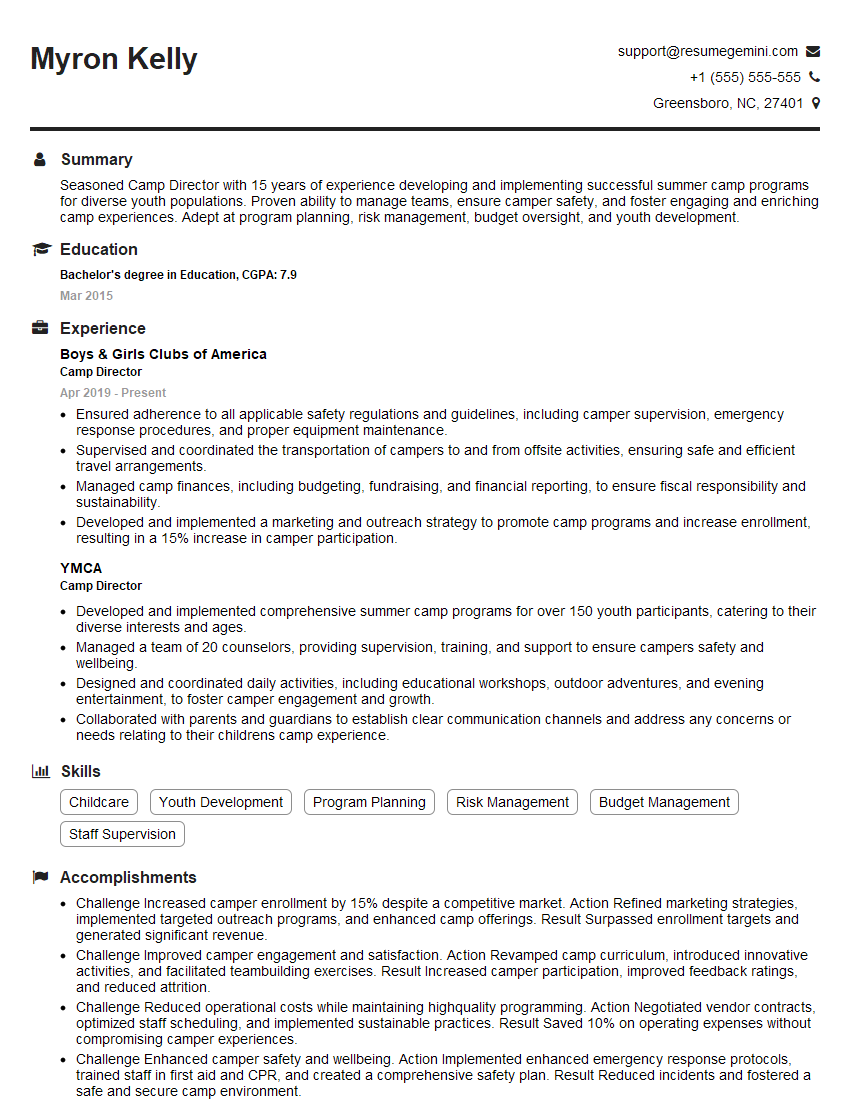
Mastering Training Camp Organization is crucial for career advancement in this dynamic field. A strong understanding of these key areas will significantly enhance your interview performance and future success. To maximize your job prospects, create an ATS-friendly resume that highlights your relevant skills and experience. We highly recommend using ResumeGemini, a trusted resource for building professional resumes. Examples of resumes tailored to Training Camp Organization are available to help guide you in crafting your perfect application. Take the next step towards your dream career today!
Explore more articles
Users Rating of Our Blogs
Share Your Experience
We value your feedback! Please rate our content and share your thoughts (optional).
What Readers Say About Our Blog
Very informative content, great job.
good