Unlock your full potential by mastering the most common Knowledge of Intelligence Cycle interview questions. This blog offers a deep dive into the critical topics, ensuring you’re not only prepared to answer but to excel. With these insights, you’ll approach your interview with clarity and confidence.
Questions Asked in Knowledge of Intelligence Cycle Interview
Q 1. Describe the five phases of the intelligence cycle.
The intelligence cycle is a continuous process that transforms raw information into actionable intelligence. It’s often depicted as a cyclical process, but in reality, the phases overlap and iterate. The five key phases are:
- Planning and Direction: This initial phase identifies the intelligence needs of policymakers and formulates specific intelligence requirements (IRs). It involves understanding the decision-makers’ priorities and translating those needs into clear, measurable, achievable, relevant, and time-bound (SMART) objectives for intelligence collection.
- Collection: This phase involves gathering raw information from various sources using diverse collection methods, including human intelligence (HUMINT), signals intelligence (SIGINT), open-source intelligence (OSINT), imagery intelligence (IMINT), and measurement and signature intelligence (MASINT). It’s crucial to ensure the collected data is relevant to the IRs defined in the previous phase.
- Processing and Exploitation: Raw data collected is transformed into usable intelligence. This includes tasks like translating languages, analyzing images, deciphering signals, and verifying the authenticity of the source. The aim is to extract meaningful information from the collected data.
- Analysis and Production: This critical phase involves analyzing processed information to assess its significance and derive meaning. Analysts synthesize information from multiple sources, identify patterns, draw inferences, and create intelligence products tailored to the needs of consumers. This may involve developing assessments, briefings, or reports.
- Dissemination and Feedback: The final phase involves distributing the finished intelligence products to the intended consumers—decision-makers, policymakers, and other relevant parties. It’s essential to provide timely and relevant intelligence. This phase also includes collecting feedback on the intelligence provided to improve future efforts and refine the cycle.
Think of it like baking a cake: Planning is deciding what kind of cake to bake, collection is gathering the ingredients, processing is preparing them, analysis is baking the cake, and dissemination is serving it to your guests, who then provide feedback to help you improve your recipe next time.
Q 2. Explain the difference between strategic and tactical intelligence.
Strategic and tactical intelligence differ primarily in their scope and timeframe.
- Strategic intelligence focuses on long-term issues and broad trends relevant to national security or major policy decisions. It provides a longer-term perspective, often examining geopolitical trends, economic forecasts, or long-term technological developments. For example, assessing the long-term economic impact of climate change on a particular region would be considered strategic intelligence.
- Tactical intelligence addresses immediate or short-term operational needs. It supports specific military or law enforcement operations, providing timely information to guide decisions in the field. For instance, locating a specific individual for arrest or providing real-time information during a military engagement is tactical intelligence.
Essentially, strategic intelligence informs what to do, while tactical intelligence informs how to do it.
Q 3. What are some common challenges in the planning and direction phase?
The planning and direction phase, while seemingly simple, faces several crucial challenges. Some common ones include:
- Defining clear and concise intelligence requirements: Ambiguous or poorly defined IRs lead to inefficient collection efforts and ultimately, irrelevant intelligence. This requires close collaboration with policymakers to fully understand their needs.
- Resource constraints: Budgetary limitations, personnel shortages, and technological constraints can all hamper effective planning. Prioritization and efficient resource allocation are critical.
- Balancing competing priorities: Multiple stakeholders often have different intelligence needs, requiring careful prioritization based on urgency and relevance to overall strategic goals.
- Managing competing agencies and jurisdictions: Intelligence collection often involves multiple agencies with different mandates and methods. Coordination and cooperation are essential to avoid duplication and inconsistencies.
- Predicting future needs: Anticipating future intelligence requirements can be challenging. Effective planning must incorporate flexibility and adaptability.
Successfully navigating these challenges often requires strong leadership, effective communication, and robust collaboration across different organizations and levels of expertise.
Q 4. How do you prioritize intelligence requirements in a high-pressure environment?
Prioritizing intelligence requirements in high-pressure situations necessitates a structured approach. I typically employ a method that combines urgency, impact, and feasibility.
- Urgency Assessment: Categorize IRs based on their immediacy. Those with immediate implications for ongoing operations or imminent threats receive top priority.
- Impact Assessment: Evaluate the potential consequences of not fulfilling each IR. Those with high-impact potential, such as preventing a terrorist attack or averting a major financial crisis, are prioritized.
- Feasibility Assessment: Consider the resources and time required to fulfill each IR. Some IRs might be highly desirable but currently unattainable due to resource constraints. Prioritize those where success is reasonably achievable.
- Matrix Prioritization: A simple matrix combining Urgency, Impact, and Feasibility can help visually prioritize. Those scoring high across all three categories receive immediate attention.
- Continuous Re-evaluation: In a dynamic environment, priorities shift continuously. Regular reassessment, incorporating new information and circumstances, is critical to ensure ongoing effectiveness.
This method helps ensure that resources are allocated to the most critical needs while acknowledging the limitations imposed by time and resources in a high-pressure environment.
Q 5. Describe your experience with collection methods (HUMINT, SIGINT, OSINT, etc.).
My experience encompasses a wide range of collection methods. I’ve been involved in:
- HUMINT: Working with human sources requires strong interpersonal skills, careful source vetting, and robust security protocols. I’ve been involved in managing human assets, conducting interviews, and assessing the reliability of information obtained from human sources. Ethical considerations are paramount in this area.
- SIGINT: My experience here includes analyzing intercepted communications, utilizing technical expertise to identify patterns and extract meaningful intelligence. This often involves the use of specialized software and collaboration with technical specialists.
- OSINT: I have extensive experience collecting and analyzing open-source data from various public sources, including news reports, social media, academic publications, and government websites. This often requires identifying reliable sources, validating information, and synthesizing data from diverse sources.
- IMINT: I have experience interpreting satellite imagery and aerial photography, using specialized software to analyze geographical features and identify potential threats or targets.
- MASINT: While I have less direct experience with MASINT (due to its specialized nature), I have worked in projects that integrated MASINT data, understanding its value in providing comprehensive intelligence.
Each method has its strengths and weaknesses, and effective intelligence gathering relies on a balanced approach, integrating different methods to corroborate information and gain a holistic understanding.
Q 6. How do you ensure the accuracy and reliability of intelligence data?
Ensuring the accuracy and reliability of intelligence data is paramount. Several techniques are employed:
- Source Vetting: Rigorous assessment of the credibility and reliability of sources, including past performance, motivations, and potential biases.
- Cross-Referencing and Corroboration: Comparing information from multiple independent sources to verify its accuracy and consistency. Discrepancies need careful investigation.
- Data Validation: Using independent data points or analytical techniques to check the validity of intelligence findings.
- Open-Source Verification: Comparing intelligence derived from classified sources with publicly available information to ensure consistency and reduce bias.
- Analytical Rigor: Applying critical thinking, evaluating assumptions, considering alternative explanations, and documenting the reasoning behind conclusions.
- Chain of Custody: Maintaining a clear record of how data was collected, processed, and analyzed to ensure traceability and accountability.
These methods contribute significantly to increasing confidence in the intelligence product’s reliability, minimizing the risk of flawed conclusions and ensuring that decisions are based on sound information.
Q 7. What techniques do you use to analyze and process large datasets of intelligence information?
Analyzing large intelligence datasets requires sophisticated techniques and tools. My approaches include:
- Data Mining and Machine Learning: Employing algorithms to identify patterns, anomalies, and correlations within massive datasets that might be missed by human analysts. This allows for rapid identification of trends and potential threats.
- Natural Language Processing (NLP): Utilizing NLP techniques to analyze textual data, such as transcripts of intercepted communications or social media posts, to identify key themes, sentiments, and entities. This helps in efficient summarization and thematic analysis of large volumes of textual information.
- Data Visualization and Geographic Information Systems (GIS): Creating visual representations of data to facilitate pattern recognition and understand spatial relationships. GIS, in particular, is powerful for mapping intelligence data, revealing geographically relevant patterns and connections.
- Link Analysis: Building networks to visualize relationships between individuals, entities, or events. This helps identify connections, networks, and hierarchies that contribute to a more complete understanding of the situation.
- Statistical Analysis: Using statistical methods to test hypotheses, identify outliers, and draw quantitative conclusions from the data.
The selection of techniques depends on the specific nature of the data and the intelligence questions being addressed. Often, a combination of these approaches provides a comprehensive analysis.
Q 8. How do you identify and assess biases and limitations in intelligence reporting?
Identifying and assessing biases and limitations in intelligence reporting is crucial for producing accurate and reliable assessments. It involves a rigorous process of self-reflection and critical analysis at every stage of the Intelligence Cycle.
- Source Bias: We must critically examine the source’s motivations, potential biases, and inherent limitations. For example, a report from a known adversary might be intentionally misleading, while a report from a friendly nation might omit crucial details to avoid embarrassment. We use techniques like triangulation—comparing information from multiple independent sources—to mitigate this.
- Analyst Bias: Our own preconceived notions, cultural background, and even personal experiences can unconsciously influence our interpretations. To mitigate this, we employ structured analytic techniques like Devil’s Advocacy and Red Teaming, where we actively challenge our own assumptions and explore alternative explanations.
- Data Limitations: Intelligence is rarely complete. Gaps in information, limited access to certain areas, and the inherent limitations of surveillance technologies must be acknowledged and transparently reported. We carefully qualify our assessments based on the data availability and reliability, using terms like ‘likely,’ ‘possible,’ and ‘unlikely’ to reflect the level of certainty.
- Cognitive Biases: We are susceptible to various cognitive biases, like confirmation bias (seeking only information that confirms our existing beliefs) and anchoring bias (over-relying on the first piece of information received). Formal training, regular self-assessment, and peer review help minimize the impact of these biases.
By systematically evaluating these potential biases and limitations, we enhance the credibility and trustworthiness of our intelligence reporting. We strive to present a balanced picture, highlighting both uncertainties and potential consequences.
Q 9. How do you create concise and effective intelligence products for various audiences?
Creating concise and effective intelligence products requires tailoring the information to the specific audience and their needs. This means understanding their level of expertise, their decision-making responsibilities, and the context in which they’ll use the information.
- Executive Summaries: For senior decision-makers, we provide concise executive summaries highlighting the key findings and implications, often accompanied by clear visual aids like charts and maps.
- Detailed Assessments: For analysts and specialists, we provide more comprehensive reports with detailed analysis, supporting evidence, and caveats.
- Tailored Briefings: Oral briefings are often adapted to suit the audience’s time constraints and level of understanding. Visual aids and interactive elements can help engage the audience and enhance comprehension.
- Clear and Concise Language: We avoid jargon and technical terms unless absolutely necessary, and explain complex concepts in simple, straightforward language.
- Actionable Intelligence: The most effective intelligence products not only present facts but also suggest potential courses of action and their probable consequences.
For example, a briefing for a military commander might emphasize immediate threats and tactical options, while a briefing for a diplomat might focus on long-term implications and strategic considerations. Effective communication requires empathy and a thorough understanding of the target audience.
Q 10. Explain the process of disseminating intelligence information.
Disseminating intelligence information is a critical process that requires careful planning and execution to ensure the information reaches the right people at the right time and in the right format. This involves several key steps:
- Targeting: Identifying the specific individuals or organizations that need the information based on their roles and responsibilities.
- Format: Selecting the most appropriate format for the information – written reports, oral briefings, secure databases, or classified communications channels.
- Security: Ensuring the information is handled according to appropriate security protocols to protect sensitive data from unauthorized access or disclosure.
- Channels: Utilizing secure communication channels appropriate to the classification level of the information, such as classified email, secure networks, or physical delivery.
- Feedback Mechanisms: Establishing mechanisms for recipients to provide feedback on the usefulness and accuracy of the information received, which is crucial for continuous improvement.
Each stage must consider the security classification and handling procedures to prevent leaks or compromise of sensitive data. The dissemination plan must be tailored to the urgency of the information, its sensitivity, and the needs of the recipient.
Q 11. How do you handle conflicting or contradictory pieces of intelligence?
Handling conflicting or contradictory intelligence requires a systematic approach to identify the source of the discrepancy, evaluate the reliability of each piece of information, and ultimately reach a well-supported conclusion.
- Source Evaluation: We carefully assess the credibility and potential biases of each source. Is one source more reliable than another based on its past track record? Are there reasons to suspect deliberate misinformation?
- Data Reconciliation: We attempt to reconcile the conflicting information by looking for common threads or underlying patterns. Could the discrepancies be explained by timing differences, different interpretations, or the use of conflicting terminology?
- Additional Information Gathering: If the conflict remains unresolved, we may need to gather additional information from other sources or through further analysis.
- Alternative Explanations: We develop alternative explanations for the conflicting information, considering various scenarios and possibilities.
- Qualification of Assessment: Finally, we clearly document the conflict and the reasoning behind our conclusions, acknowledging areas of uncertainty and emphasizing any limitations in the available data.
For example, if one source reports a planned terrorist attack and another source denies it, we may need to look at other indicators such as intelligence from signals intelligence (SIGINT) or human intelligence (HUMINT) to determine the likelihood of an attack.
Q 12. Describe a situation where you had to make a critical decision based on incomplete intelligence.
During a previous assignment focusing on a potential civil unrest situation in a volatile region, we had limited access to reliable information from within the affected area. Communication lines were unstable, and our human sources were limited in number and scope. We had fragmented intelligence on troop movements, potential flashpoints, and the general mood of the populace.
Based on the incomplete intelligence, we had to make a critical decision regarding the deployment of additional assets. We used a combination of techniques: we created a range of possible scenarios based on the available data, weighting each scenario based on its likelihood. We assessed the potential risks and benefits of each course of action and then chose the option that minimized potential negative outcomes while maximizing chances of mitigating escalation. The decision was ultimately successful in preventing wider conflict, but it highlighted the challenges of working with incomplete data.
This experience underscored the importance of clearly articulating the uncertainty associated with incomplete intelligence in decision-making briefings. Transparency and clear communication about the limitations of our knowledge was as crucial as the intelligence itself.
Q 13. How do you maintain confidentiality and security while handling sensitive intelligence information?
Maintaining confidentiality and security while handling sensitive intelligence information is paramount. It requires adhering to strict protocols and best practices at every stage of the intelligence process:
- Classification System: We strictly adhere to the established classification system, ensuring all information is marked with the appropriate classification level (e.g., Confidential, Secret, Top Secret).
- Access Control: Access to sensitive information is restricted to authorized personnel with a ‘need-to-know’ basis. We use secure databases and access control systems to manage access effectively.
- Secure Communication: We use secure communication channels like encrypted email, secure networks, and approved communication devices to transmit sensitive information.
- Physical Security: Physical security measures, such as secure storage facilities, restricted access areas, and surveillance systems, protect sensitive documents and materials.
- Personnel Security: Thorough background checks and security clearances are required for all personnel handling sensitive information. We undergo regular security awareness training.
- Data Handling Procedures: We follow strict data handling procedures to prevent accidental disclosure or compromise. This includes proper document disposal, secure data storage, and regular system audits.
Breaches of security can have severe consequences. Constant vigilance and adherence to security protocols are essential to prevent leaks and protect national security.
Q 14. What are the ethical considerations in intelligence analysis?
Ethical considerations are central to intelligence analysis. Our actions must always be guided by principles of legality, morality, and responsibility.
- Legality: All intelligence activities must be conducted within the bounds of the law. This includes respecting human rights, international law, and the relevant laws of the target country.
- Proportionality: The means used to gather intelligence should be proportionate to the threat being assessed. We must avoid disproportionate or excessive measures.
- Accuracy: We are obligated to strive for accuracy and objectivity in our analysis. We must avoid manipulating or misrepresenting information to serve a particular agenda.
- Accountability: We are accountable for our actions and decisions. We must be prepared to justify our methods and conclusions.
- Transparency: Where possible, we strive for transparency in our processes, particularly regarding our methods and the potential limitations of our analyses.
- Privacy: We must respect the privacy of individuals, even those suspected of wrongdoing. We must adhere to strict guidelines for the collection and use of personal data.
Ethical dilemmas are inevitable in intelligence work. Continuous reflection on these ethical considerations is essential to ensure our actions are guided by principles of fairness, justice, and respect for human dignity.
Q 15. Explain the concept of ‘all-source intelligence’ and its benefits.
All-source intelligence is the integration and analysis of information gathered from diverse sources to create a comprehensive understanding of a particular issue or threat. Instead of relying solely on one type of intelligence (e.g., human intelligence or signals intelligence), all-source intelligence leverages the strengths of multiple sources to compensate for their individual weaknesses and biases. Think of it like a puzzle – each source provides a piece, and only when you combine them do you get the complete picture.
Benefits:
- Improved Accuracy: Combining various perspectives reduces the impact of errors or biases inherent in individual sources.
- Enhanced Completeness: It provides a more holistic view, revealing insights that might be missed by relying on a single source.
- Increased Timeliness: Different sources may offer information at different speeds, allowing for faster responses to emerging threats.
- Greater Contextual Understanding: Integrating various data types provides richer context, enabling analysts to better understand the “why” behind events.
Example: Analyzing a potential terrorist threat might involve combining HUMINT (human intelligence from informants), SIGINT (signals intelligence from intercepted communications), OSINT (open-source intelligence from news reports and social media), and IMINT (imagery intelligence from satellite photos). Each source contributes unique data points, leading to a much more informed assessment of the threat’s capabilities and intentions than any single source could provide.
Career Expert Tips:
- Ace those interviews! Prepare effectively by reviewing the Top 50 Most Common Interview Questions on ResumeGemini.
- Navigate your job search with confidence! Explore a wide range of Career Tips on ResumeGemini. Learn about common challenges and recommendations to overcome them.
- Craft the perfect resume! Master the Art of Resume Writing with ResumeGemini’s guide. Showcase your unique qualifications and achievements effectively.
- Don’t miss out on holiday savings! Build your dream resume with ResumeGemini’s ATS optimized templates.
Q 16. How do you use technology to enhance your intelligence analysis capabilities?
Technology is absolutely critical to modern intelligence analysis. We utilize a range of tools to enhance our capabilities, focusing on data collection, analysis, and visualization.
- Data Mining and Analytics Platforms: These tools allow us to sift through massive datasets – think terabytes of information – identifying patterns and anomalies that might otherwise go unnoticed. This is particularly crucial in identifying trends and forecasting potential threats.
- Geospatial Intelligence (GEOINT) Software: Programs that integrate satellite imagery, maps, and other geographic data are crucial for understanding the spatial dynamics of events. For example, we can use this to track the movement of individuals or equipment.
- Natural Language Processing (NLP) and Machine Learning (ML): These technologies help automate tasks like translating foreign languages, analyzing large volumes of text data from social media or news sources, and identifying key entities and relationships. ML algorithms can also help predict future events based on historical data.
- Data Visualization Tools: Effective visualization is key to communicating complex findings. We use tools that create interactive dashboards and charts to show relationships between different data points, making it easier for decision-makers to grasp the situation.
Example: Imagine tracking the movement of a suspected weapons shipment. We could use GEOINT software to monitor its progress via satellite imagery, SIGINT to intercept communications related to its movement, and NLP to analyze news articles that might mention it. All this is then visualized on a map, allowing for easy tracking and timely intervention.
Q 17. What are some common analytic traps or biases to avoid?
Analytic traps and biases are common pitfalls that can severely distort intelligence assessments. Awareness and careful methodology are essential to avoid them.
- Confirmation Bias: This is the tendency to favor information that confirms pre-existing beliefs and ignore contradictory evidence. We combat this by actively seeking out dissenting opinions and rigorously testing our hypotheses.
- Mirror Imaging: Assuming that other actors think and act like we do can lead to inaccurate assessments. We must strive to understand their unique perspectives, cultures, and motivations.
- Availability Bias: Overestimating the likelihood of events that are easily recalled or readily available in memory. We mitigate this by ensuring our assessments are based on comprehensive data, not just the most salient information.
- Groupthink: Pressure to conform within a team can suppress dissenting opinions. We encourage open discussion, debate, and challenge assumptions within our analytical teams.
Example: During the Cold War, assumptions about Soviet decision-making processes (mirror imaging) sometimes led to inaccurate assessments of their intentions. Understanding the unique dynamics of the Soviet system is crucial for avoiding misinterpretations of their actions.
Q 18. Describe your experience with intelligence databases and systems.
My experience with intelligence databases and systems is extensive. I’ve worked with both classified and unclassified systems, ranging from large, centralized databases to smaller, specialized tools.
I’m proficient in querying and analyzing data within these systems, using structured query language (SQL) and other analytical tools to extract relevant information. My experience includes:
- Data Integration: Combining data from multiple sources to create a unified view.
- Data Cleaning and Validation: Ensuring data accuracy and reliability.
- Data Security: Adhering to strict protocols for handling classified information.
- Database Management Systems (DBMS): Experience with relational databases like Oracle and specialized intelligence databases.
I understand the importance of data governance and the need for robust security measures to protect sensitive information. I’m also familiar with the ethical considerations involved in accessing and utilizing intelligence data.
Q 19. How do you evaluate the credibility of various intelligence sources?
Evaluating the credibility of intelligence sources is paramount. We use a multi-faceted approach:
- Source Track Record: We assess the historical accuracy of the source’s previous information. A consistent track record of reliable information is a key indicator of credibility.
- Source Motivation: Understanding the source’s potential biases and motivations is critical. Are they seeking to manipulate or mislead? Do they have personal agendas?
- Method of Collection: How was the information obtained? Different collection methods have different levels of reliability. Human intelligence gathered from a well-vetted informant, for instance, is generally considered more reliable than open-source information.
- Corroboration: We always seek to corroborate information from multiple independent sources. The convergence of information from different sources significantly strengthens its credibility.
- Data Analysis Techniques: Applying analytical techniques such as statistical analysis and trend identification to assess the reliability and consistency of information.
Example: If a single source reports a major geopolitical event, we would exercise caution until we can corroborate the information from other reliable sources. We also critically examine the source’s potential biases or reasons for providing the information.
Q 20. What is the role of collaboration and communication within the intelligence cycle?
Collaboration and communication are the lifeblood of the intelligence cycle. Effective intelligence gathering and analysis require seamless information sharing among various agencies, departments, and even international partners.
Role of Collaboration:
- Information Sharing: Facilitates the pooling of resources and expertise, leading to more comprehensive and accurate assessments.
- Enhanced Analysis: Diverse perspectives contribute to more robust analysis and identification of biases.
- Joint Operations: Collaboration is essential for coordinating intelligence operations across different agencies and countries.
Role of Communication:
- Clear and Concise Reporting: Accurate and timely dissemination of intelligence information to decision-makers.
- Feedback Mechanisms: Enabling dialogue and the refining of assessments based on feedback.
- Coordination of Efforts: Preventing duplication and ensuring efficient allocation of resources.
Example: Counter-terrorism efforts rely heavily on collaboration between national intelligence agencies and law enforcement to share information, coordinate investigations, and prevent attacks.
Q 21. How do you measure the effectiveness of intelligence operations?
Measuring the effectiveness of intelligence operations is challenging, as success often means the prevention of something that might not have happened otherwise. However, several metrics can be used:
- Timeliness: How quickly was critical information delivered to decision-makers?
- Accuracy: How accurate were the intelligence assessments?
- Relevance: How relevant was the information to the decision-makers’ needs?
- Impact: Did the intelligence contribute to the successful prevention or mitigation of a threat? Did it inform key policy decisions?
- Cost-Effectiveness: How much did it cost to gather and analyze the information, relative to its value?
Methods for Evaluation:
- Post-Operation Reviews: Examining the performance of the intelligence process after the completion of an operation to identify areas for improvement.
- Feedback from Consumers: Gathering feedback from decision-makers who utilized the intelligence to assess its usefulness.
- Comparison with Alternatives: Evaluating the impact of the intelligence compared to what might have happened without it.
Example: The success of a counter-terrorism operation can be assessed by the prevention of a planned attack, based on timely and accurate intelligence information.
Q 22. Describe your understanding of the link between intelligence and decision-making.
Intelligence is the lifeblood of effective decision-making. It’s the process of collecting, analyzing, and interpreting information to understand a situation, anticipate future events, and inform choices. Without good intelligence, decisions are made in the dark, potentially leading to flawed strategies and undesirable outcomes. The link is direct and vital: quality intelligence directly impacts the quality of decisions.
Think of it like this: a doctor wouldn’t perform surgery without a proper diagnosis. The diagnosis is the intelligence; the surgery is the decision. Similarly, a military commander needs accurate intelligence on enemy movements and capabilities before planning an attack. A business leader relies on market research (intelligence) to make informed decisions about product development or investment.
The process involves several stages: First, intelligence gathering identifies relevant data. Then, analysis interprets this data, identifying patterns and drawing conclusions. Finally, this processed intelligence is used to inform the decision-making process, allowing for a more informed, strategic, and effective outcome.
Q 23. How do you deal with pressure and deadlines in an intelligence environment?
Pressure and tight deadlines are inherent in the intelligence world. My approach is a structured one, prioritizing tasks based on urgency and impact. I employ techniques like time blocking and prioritization matrices to manage my workload effectively. This includes identifying key deliverables and establishing clear checkpoints.
Furthermore, I’m a strong advocate for teamwork and open communication. When facing overwhelming pressure, I leverage my team’s expertise and collaborate closely, ensuring efficient distribution of tasks and mutual support. This collaborative approach not only ensures timely delivery but also fosters a more resilient and supportive work environment. Finally, I prioritize maintaining a clear head and utilizing stress management techniques to ensure I can consistently perform at my best, even under pressure.
For instance, during a particularly intense period involving a rapidly evolving international crisis, I used a Kanban board to visualize tasks and progress, allowing me and my team to quickly adapt to changing priorities and maintain transparency throughout the process. This method helped us deliver critical intelligence analysis well within the stringent deadlines.
Q 24. Explain the concept of ‘intelligence fusion’ and its importance.
Intelligence fusion is the process of integrating information from multiple sources and disciplines to create a more comprehensive and accurate understanding of a situation. It’s about combining different types of intelligence – human intelligence (HUMINT), signals intelligence (SIGINT), open-source intelligence (OSINT), etc. – to create a synergistic effect greater than the sum of its parts.
Its importance is paramount. Relying solely on one type of intelligence can lead to biased or incomplete analyses. Fusion, however, allows analysts to cross-reference information, identify inconsistencies, and build a more robust and reliable picture. This leads to better decision-making, reduced risk, and improved situational awareness. Consider a counter-terrorism operation: combining satellite imagery (SIGINT), intercepted communications (SIGINT), and informant reports (HUMINT) allows for a more accurate assessment of threat levels and potential targets.
Effective intelligence fusion requires careful consideration of data provenance, reliability, and potential biases inherent in each source. Techniques such as data visualization and collaborative analysis platforms are crucial in facilitating this process, ensuring diverse perspectives are incorporated into the final intelligence product.
Q 25. How do you stay current with emerging trends and technologies relevant to intelligence analysis?
Staying current in the rapidly evolving world of intelligence analysis is crucial. I utilize a multifaceted approach to maintain my expertise. This includes regularly reading industry publications, attending conferences and workshops, and actively participating in professional development opportunities. I also actively engage with online communities and forums dedicated to intelligence analysis and emerging technologies. Further, I actively pursue formal training courses to develop skills in new areas such as AI and machine learning, which are transforming how intelligence is collected and analyzed.
Specifically, I subscribe to several leading journals in the field and regularly utilize online resources like government reports and academic databases. I actively engage with colleagues from other agencies and organizations, fostering a network for the exchange of knowledge and insights into the latest developments. Continuous learning is not just a professional obligation; it’s an essential element of success in this dynamic field.
Q 26. What is your experience with predictive analytics in intelligence work?
My experience with predictive analytics in intelligence work has been significant. I’ve utilized various techniques, including statistical modeling and machine learning algorithms, to forecast potential threats and anticipate future events. This includes using historical data and current trends to create predictive models for things like conflict escalation, economic instability, or the spread of misinformation campaigns.
However, it’s crucial to remember that predictive analytics in this context isn’t about fortune-telling. Instead, it’s about enhancing the analytical process by quantifying uncertainty and identifying potential risks. The insights gained from predictive models need to be carefully considered in conjunction with qualitative assessments and expert judgment. I’ve found that the most effective approach is to combine quantitative and qualitative methods, leading to a balanced and well-informed assessment of future possibilities.
For example, in a project concerning transnational crime, I used machine learning algorithms to analyze patterns in financial transactions to identify potential money laundering operations. While the model provided a probabilistic assessment of risk, human analysts were crucial in validating those findings and investigating potential leads. Predictive modeling greatly streamlined the investigation process, focusing human resources on the highest-risk areas.
Q 27. Describe a situation where you had to adapt your analysis to new or unexpected information.
During an investigation into a complex cyberattack, our initial analysis pointed towards a single perpetrator with a known modus operandi. However, as we received new information from a collaborating agency, the picture drastically changed. The new data revealed a much more sophisticated attack with multiple actors involved, operating from different geographical locations and employing previously unseen techniques.
Adapting to this new information required a significant shift in our analytical approach. We had to revise our initial hypotheses, re-evaluate the existing data, and integrate the new information effectively. This involved leveraging different analytic tools and techniques, including network analysis and data visualization to map the relationships between the different actors and their activities. The collaborative effort and flexible analytical methodology were key in adjusting our understanding of the cyberattack, leading to a more accurate assessment of the threat landscape and improved strategies for mitigation.
This experience underscored the importance of adaptability and the capacity to adjust analytical strategies in response to emerging evidence. The initial assessment was useful but proved to be only a partial picture. Our ability to integrate new information and revisit our assumptions was crucial in accurately understanding the situation and effectively informing the response.
Key Topics to Learn for Knowledge of Intelligence Cycle Interview
- Planning & Direction: Understand the crucial role of setting clear intelligence requirements, defining objectives, and resource allocation within the intelligence cycle. Consider the impact of different prioritization methods.
- Collection: Explore various intelligence collection methods (OSINT, HUMINT, SIGINT, IMINT, MASINT) and their strengths and weaknesses. Analyze how to effectively manage and evaluate the volume and variety of collected data.
- Processing & Exploitation: Master techniques for data analysis, including data cleansing, formatting, and the use of analytical tools. Discuss the importance of identifying biases and ensuring data integrity.
- Analysis & Production: Focus on converting raw data into actionable intelligence. Practice formulating clear, concise, and objective assessments. Understand different analytical methodologies and their applications.
- Dissemination & Feedback: Examine how intelligence is effectively communicated to decision-makers. Discuss the importance of tailored reporting and the iterative feedback loop within the cycle for continuous improvement.
- Ethical Considerations: Discuss the ethical implications of intelligence gathering and analysis, including privacy concerns and the responsible use of information.
- Technological Advancements: Explore the impact of emerging technologies (AI, machine learning, big data analytics) on the intelligence cycle and their potential challenges.
- Case Studies & Problem Solving: Practice applying your knowledge to hypothetical scenarios and real-world case studies, demonstrating your problem-solving skills within the context of the intelligence cycle.
Next Steps
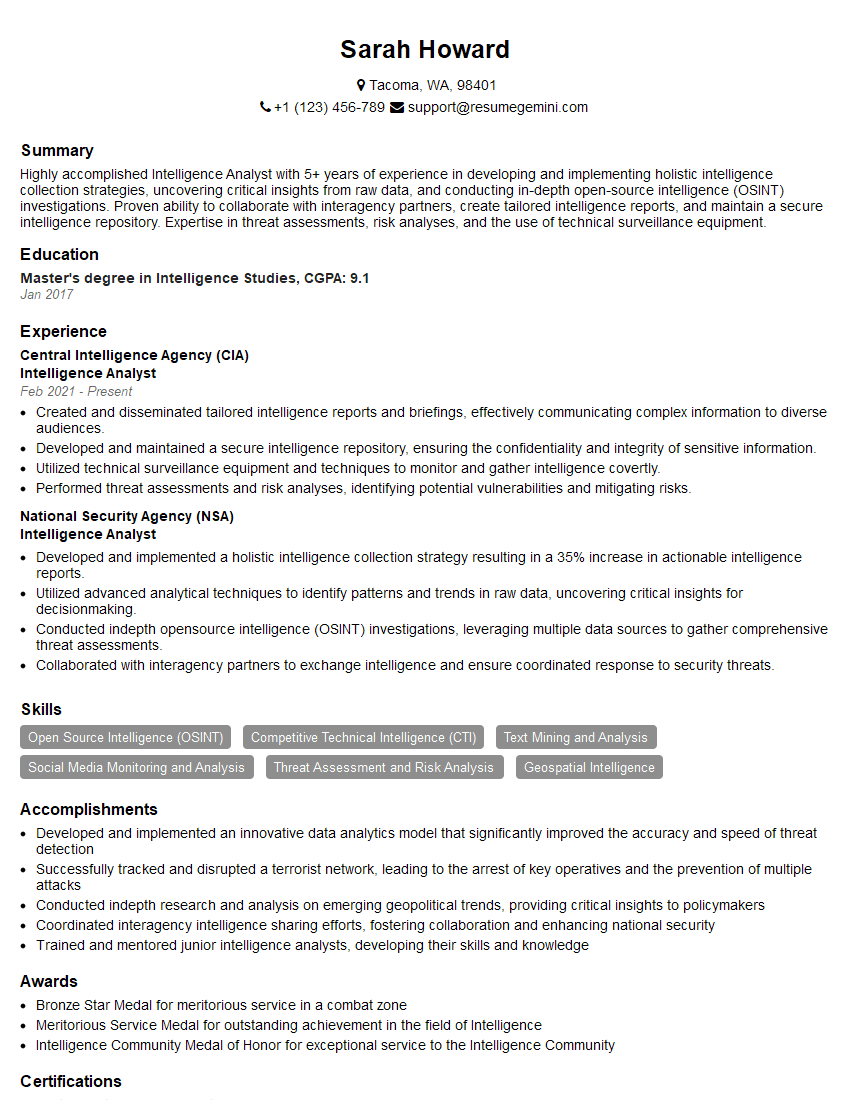
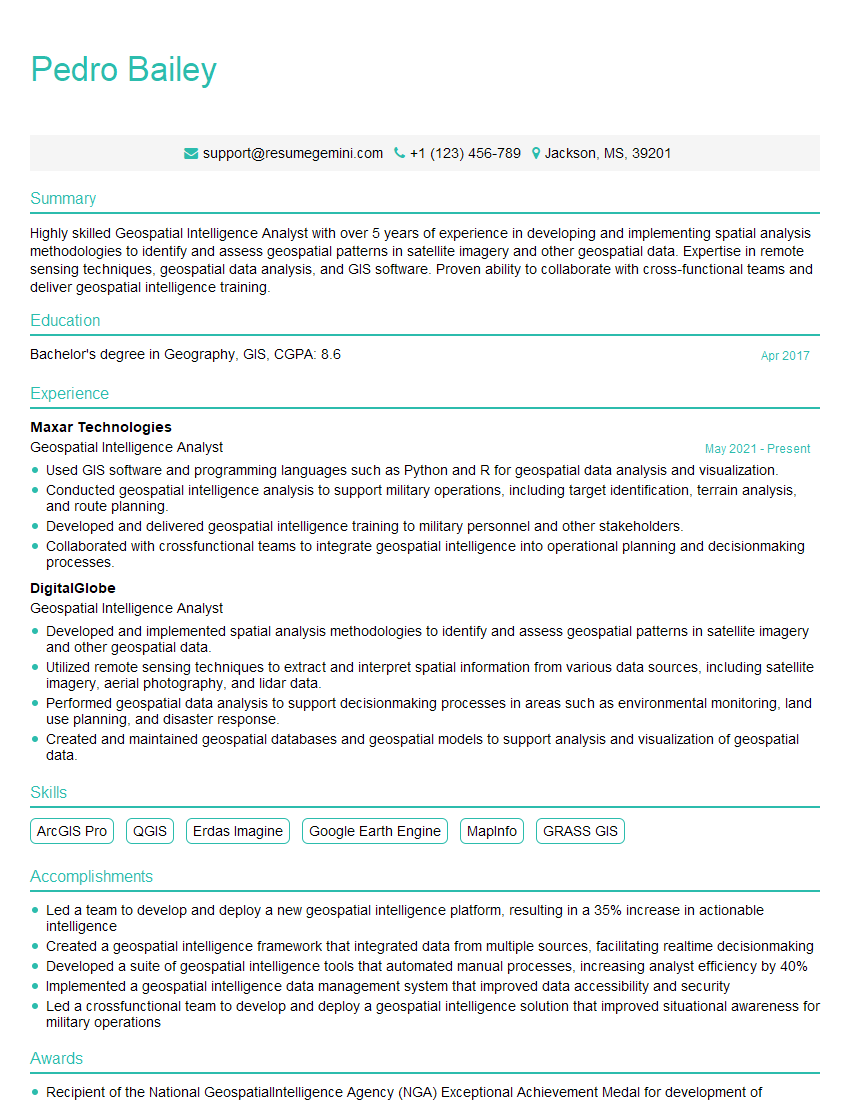
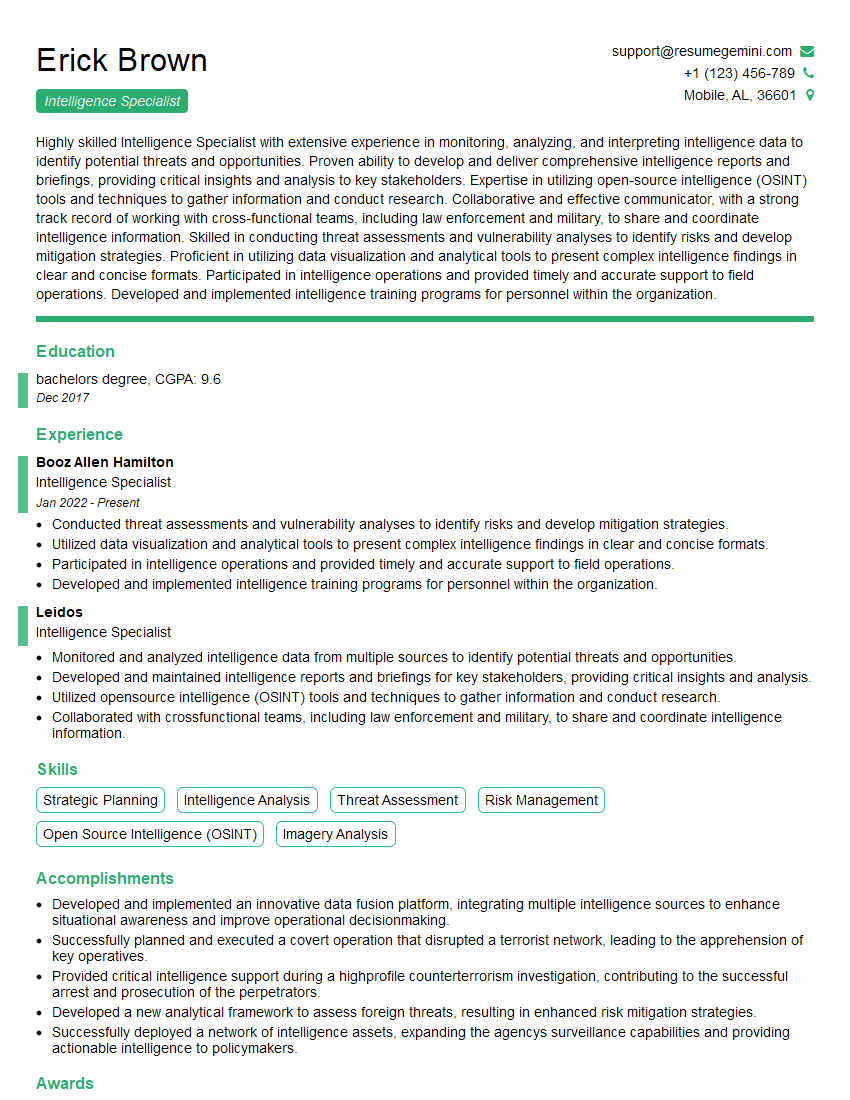
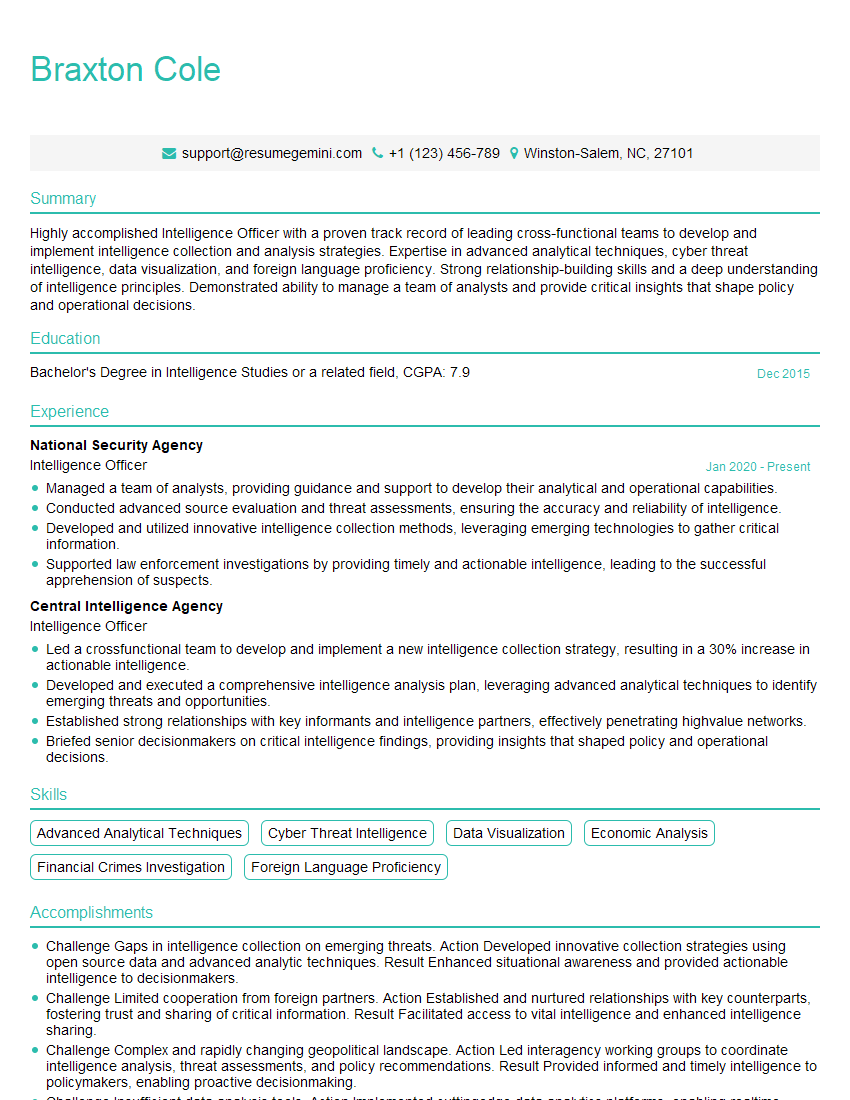
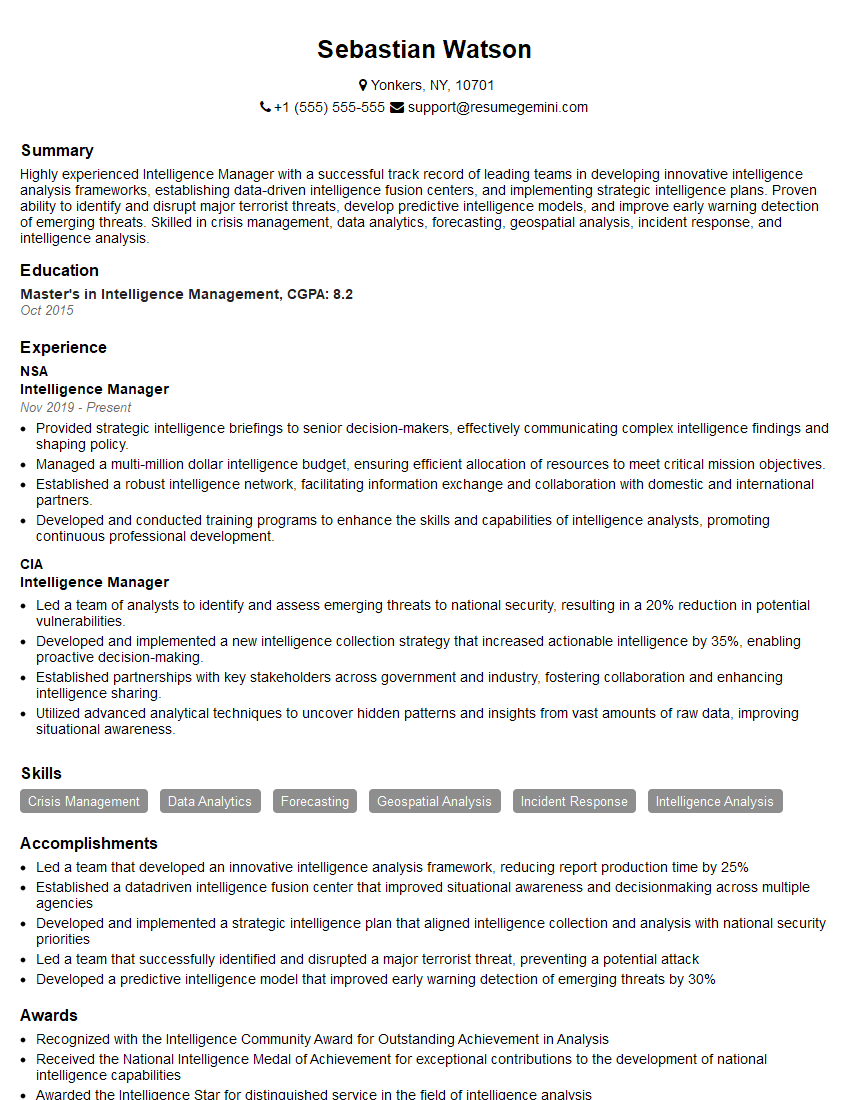
Mastering the Knowledge of Intelligence Cycle is paramount for career advancement in this field. A strong understanding of its intricacies will significantly enhance your analytical capabilities and decision-making skills, making you a highly valuable asset to any organization. To maximize your job prospects, creating an ATS-friendly resume is crucial. This ensures your application gets noticed by recruiters and hiring managers. We highly recommend using ResumeGemini to build a professional and impactful resume. ResumeGemini offers a streamlined process and provides examples of resumes tailored to the Knowledge of Intelligence Cycle, ensuring your qualifications shine.
Explore more articles
Users Rating of Our Blogs
Share Your Experience
We value your feedback! Please rate our content and share your thoughts (optional).
What Readers Say About Our Blog
Very informative content, great job.
good