Unlock your full potential by mastering the most common Transportation of Materials and Equipment interview questions. This blog offers a deep dive into the critical topics, ensuring you’re not only prepared to answer but to excel. With these insights, you’ll approach your interview with clarity and confidence.
Questions Asked in Transportation of Materials and Equipment Interview
Q 1. Explain the difference between LTL and FTL shipping.
LTL (Less than Truckload) and FTL (Full Truckload) shipping refer to different ways of transporting goods by truck. The key difference lies in how much cargo space is utilized. FTL involves using an entire truck for a single shipment, while LTL uses shared space on a truck with other shippers’ goods.
Think of it like this: FTL is like hiring a private taxi, you have the entire vehicle to yourself. LTL is like taking a shared shuttle bus – you share the space with other passengers (shipments) and the cost is shared accordingly.
FTL Advantages: Faster transit times (no stops for other pickups/deliveries), greater security, potentially lower overall cost for large shipments. Disadvantages: Higher cost for smaller shipments, less flexibility in scheduling.
LTL Advantages: Cost-effective for smaller shipments, greater flexibility and frequency of shipments. Disadvantages: Longer transit times due to multiple stops, higher risk of damage or loss due to handling, potentially less security.
Q 2. What are the main modes of transportation and their advantages/disadvantages?
The main modes of transportation include:
- Road (Trucking): Offers door-to-door service, high flexibility and accessibility, suitable for diverse cargo. Advantages: Speed, versatility, widespread reach. Disadvantages: Susceptible to traffic congestion, higher fuel costs, limited capacity compared to rail or sea.
- Rail: Ideal for long distances and large volumes. Advantages: High capacity, cost-effective for bulk transport, less affected by traffic congestion. Disadvantages: Slower than trucking, requires specialized loading/unloading facilities, limited accessibility to some locations.
- Sea (Ocean Freight): Most cost-effective for very large volumes over long distances. Advantages: Low cost per unit, high capacity. Disadvantages: Very slow transit times, vulnerable to weather conditions, requires port facilities.
- Air: Fastest mode for time-sensitive goods. Advantages: Speed, high security. Disadvantages: Very expensive, limited capacity, suitable only for high-value or perishable goods.
Q 3. Describe your experience with transportation management systems (TMS).
I have extensive experience implementing and managing Transportation Management Systems (TMS). In my previous role, I led the implementation of a TMS software that integrated our warehouse management system (WMS), providing real-time visibility across our entire supply chain. This resulted in a 15% reduction in transportation costs and a 10% improvement in on-time delivery performance. My responsibilities encompassed system configuration, user training, data migration, and ongoing system optimization. Specifically, I’ve worked with both cloud-based and on-premise TMS solutions, leveraging their capabilities for route optimization, carrier selection, freight auditing, and performance reporting. I am proficient in utilizing key performance indicators (KPIs) to monitor and improve transportation efficiency.
Q 4. How do you optimize transportation routes for efficiency?
Optimizing transportation routes involves a combination of strategies. I typically utilize route optimization software that considers factors like distance, traffic patterns, delivery windows, and even fuel prices. For instance, I’ve used software that employs algorithms like Dijkstra’s algorithm or more advanced heuristics to find the shortest or most efficient routes. Beyond software, I also consider:
- Consolidation of shipments: Combining smaller shipments into larger ones to maximize truck capacity.
- Load balancing: Distributing shipments evenly across trucks to avoid overloading or underutilization.
- Strategic warehouse location: Positioning warehouses closer to major shipping lanes or customer bases to reduce transportation distances.
For example, in a previous project, by implementing a route optimization algorithm, we managed to reduce our delivery time by 12% and fuel consumption by 8%, leading to significant cost savings.
Q 5. What are your strategies for managing transportation costs?
Managing transportation costs requires a multi-faceted approach. Some key strategies I employ include:
- Negotiating favorable rates with carriers: Building strong relationships with carriers to secure competitive pricing and volume discounts.
- Optimizing load factors: Ensuring trucks are fully utilized to maximize the return on investment.
- Fuel management: Implementing fuel-efficient driving practices, selecting fuel-efficient vehicles, and hedging against fuel price fluctuations.
- Mode selection: Carefully evaluating the cost-effectiveness of different transportation modes (truck, rail, sea, air) based on factors like distance, shipment size, and delivery time requirements.
- Effective use of TMS: Using a TMS to automate tasks, track shipments, and identify areas for cost reduction.
For example, through careful negotiation with our carriers and route optimization, we were able to reduce our annual transportation costs by over 18% in one year.
Q 6. Explain your experience with different types of carriers (e.g., truckload, LTL, rail).
My experience spans various carrier types. I’ve worked extensively with truckload carriers for large, dedicated shipments requiring speed and efficiency. I’ve also managed relationships with LTL carriers for smaller, consolidated shipments that prioritize cost-effectiveness. Furthermore, I’ve utilized rail carriers for large-volume, long-distance transport of bulk materials, where cost efficiency was paramount. Selecting the appropriate carrier involves careful consideration of the shipment characteristics (size, weight, destination, time sensitivity) and the carrier’s capabilities and pricing.
Q 7. How do you handle unexpected delays or disruptions in the transportation process?
Handling unexpected delays or disruptions requires a proactive and responsive approach. My strategy involves:
- Real-time tracking and monitoring: Using GPS tracking and communication tools to constantly monitor shipments and identify potential issues early.
- Contingency planning: Developing backup plans to mitigate the impact of potential disruptions (e.g., alternative routes, backup carriers).
- Effective communication: Keeping all stakeholders (customers, carriers, internal teams) informed about any delays and their potential impact.
- Problem-solving and decision-making: Quickly assessing the situation, identifying the root cause of the delay, and making informed decisions to minimize the disruption.
For example, when a major snowstorm caused widespread transportation delays, I promptly rerouted shipments using alternative routes and communicated the changes transparently to customers, avoiding unnecessary disruptions.
Q 8. Describe your experience with freight documentation and compliance.
Freight documentation is the backbone of efficient and compliant transportation. It ensures everything from customs clearance to insurance claims runs smoothly. My experience encompasses a wide range of documents, including bills of lading (BOLs), commercial invoices, packing lists, certificates of origin, and hazardous materials declarations. I’m proficient in understanding and adhering to regulations like the International Maritime Dangerous Goods (IMDG) Code, the International Air Transport Association (IATA) Dangerous Goods Regulations, and various customs regulations depending on the destination country.
For example, I once worked on a shipment of sensitive electronics to Japan. Accurate and complete documentation was crucial to avoid delays caused by customs inspections. I meticulously ensured that all required documentation, including the specific Japanese customs forms and export licenses, was prepared and submitted well in advance, resulting in a seamless delivery.
- I’m adept at using electronic data interchange (EDI) for seamless data transfer between different stakeholders.
- I’m skilled in managing documentation discrepancies and resolving issues with customs authorities.
- I ensure all documentation complies with current regulations and international standards.
Q 9. How do you ensure the safety and security of transported goods?
Safety and security of goods are paramount. My approach is multifaceted, starting with proper load planning and securing cargo (which I’ll elaborate on later). Beyond that, I leverage several strategies:
- Secure Transportation: Selecting reputable carriers with a proven track record of safe handling and security measures is essential. This includes verifying their insurance and safety certifications.
- Cargo Insurance: Comprehensive cargo insurance protects against loss or damage during transit. The level of coverage is tailored to the specific goods and the risks involved.
- Tracking and Monitoring: Real-time tracking systems allow us to monitor the shipment’s location and identify any potential security breaches promptly. This allows for immediate intervention if necessary.
- Security Seals and Measures: Utilizing tamper-evident seals and employing advanced security technologies, where applicable, adds an extra layer of protection against theft or unauthorized access.
- Emergency Response Plan: Having a clear contingency plan in place for dealing with unexpected incidents, such as accidents or hijackings, is vital. This plan includes communication protocols, emergency contact information, and procedures for reporting and investigation.
For instance, when transporting high-value medical equipment, we employed GPS tracking with real-time alerts, tamper-proof seals, and escorted transport to ensure maximum safety and security.
Q 10. What are your methods for tracking and tracing shipments?
Tracking and tracing shipments relies on a combination of technologies and processes. I utilize several methods:
- GPS Tracking: Real-time tracking devices provide the location of the shipment throughout its journey. This data is accessible through online platforms, enabling us to monitor progress and identify delays.
- Barcode and RFID Technology: Barcodes and Radio-Frequency Identification (RFID) tags allow for efficient identification and tracking of individual packages within larger shipments.
- Transportation Management Systems (TMS): TMS software integrates with various carriers and provides a centralized platform for tracking shipments across different modes of transport.
- Carrier Communication: Regular communication with carriers, through calls or electronic updates, ensures up-to-date information on the shipment’s progress.
- Proactive Monitoring: Actively monitoring shipments, particularly those considered high-risk, enables us to identify potential issues early on and take preventive measures.
Think of it like using a package tracking number online, but on a much larger and more sophisticated scale. We can even receive alerts if a shipment deviates from its planned route or experiences unexpected delays.
Q 11. Explain your experience with load planning and securing cargo.
Load planning and securing cargo are crucial for safety and efficiency. It involves optimizing the placement of goods within the transport vehicle to maximize space, minimize weight distribution issues, and prevent shifting during transit. This is achieved using various techniques and considerations:
- Weight Distribution: Ensuring the weight is evenly distributed prevents overloading and improves vehicle stability.
- Center of Gravity: Maintaining a low center of gravity minimizes the risk of tipping.
- Securing Methods: Using appropriate securing methods such as straps, chains, and dunnage (protective material) prevents cargo from shifting during transit.
- Packaging Considerations: Ensuring the goods are properly packaged to withstand the rigors of transportation is crucial.
- Compliance Regulations: Adhering to all relevant safety regulations and guidelines is essential.
For example, when loading a truck with heavy machinery, I would use specialized tie-down equipment and ensure that the weight is distributed evenly to prevent shifting and potential damage. Proper dunnage would also be used to prevent the machinery from moving and to absorb shocks.
Q 12. How do you manage driver scheduling and communication?
Efficient driver scheduling and communication are critical for on-time delivery. I utilize several approaches:
- Route Optimization Software: This software considers factors such as traffic patterns, delivery windows, and driver availability to create the most efficient delivery routes.
- Dispatch Systems: Real-time dispatch systems allow for efficient communication with drivers, providing them with up-to-date information on deliveries and any changes to schedules.
- Mobile Communication: Utilizing mobile devices and communication apps ensures drivers are easily reachable and can provide updates on their progress.
- Driver Feedback Mechanisms: Encouraging open communication and feedback from drivers helps to identify potential issues and optimize scheduling processes.
- Driver Training: Providing regular training to drivers on safety protocols, communication procedures, and route optimization helps to improve efficiency and minimize delays.
Imagine a symphony orchestra – each driver is an instrumentalist, and I’m the conductor, ensuring everyone plays their part in perfect harmony to achieve a timely and efficient performance (delivery).
Q 13. How familiar are you with Incoterms?
Incoterms (International Commercial Terms) are a set of standardized trade terms published by the International Chamber of Commerce (ICC). They clearly define the responsibilities of buyers and sellers in international trade transactions, including the point at which responsibility for the goods transfers. My familiarity with Incoterms is extensive. I understand the nuances of each term, including EXW (Ex Works), FOB (Free On Board), CIF (Cost, Insurance, and Freight), and DDP (Delivered Duty Paid), and how they impact the transportation process.
For example, understanding the difference between FOB and CIF is crucial in determining who is responsible for arranging and paying for the freight insurance. Incorrect interpretation can lead to significant financial and legal complications.
My experience includes using Incoterms to draft and interpret contracts, manage documentation according to Incoterm rules, and resolve disputes arising from differing interpretations.
Q 14. What is your experience with warehouse management systems (WMS)?
Warehouse Management Systems (WMS) are software applications designed to manage and optimize warehouse operations. My experience with WMS includes implementing, configuring, and utilizing such systems to improve efficiency and inventory control. This includes functions such as:
- Inventory Tracking: Real-time tracking of inventory levels, locations, and movements.
- Order Fulfillment: Optimizing order picking and packing processes to minimize handling time.
- Receiving and Shipping: Managing the receiving and shipping of goods efficiently and accurately.
- Space Optimization: Efficiently utilizing available warehouse space.
- Reporting and Analytics: Generating reports and analyses to track key performance indicators (KPIs) and identify areas for improvement.
In a previous role, I implemented a new WMS that resulted in a 20% reduction in order fulfillment time and a 15% decrease in inventory holding costs. This system provided real-time visibility into inventory, allowing for more accurate forecasting and preventing stockouts.
Q 15. How do you handle claims and disputes related to damaged goods?
Handling claims for damaged goods involves a systematic process prioritizing thorough documentation and clear communication. It begins with a prompt investigation, where we assess the extent of the damage, its cause, and the responsibility involved. This often includes reviewing the bill of lading, carrier’s inspection reports, and any photos or videos documenting the damage. We then determine if the damage occurred during our handling or before it came into our care.
If we are found liable, we initiate a claims process based on the terms of the contract of carriage. This may involve negotiating with insurers, the carrier, or the customer to reach a fair settlement. We might offer a refund, replacement of the goods, or a repair, depending on the circumstances and the agreement with the customer. If the damage is the responsibility of the carrier, we work closely with them to pursue a claim against their insurance. Clear documentation at every stage—from initial receipt to damage assessment to resolution—is crucial for a smooth and successful claim process.
For example, imagine a shipment of delicate glassware arriving with cracks. We would first document the damage with photos and a detailed report, noting the condition of the packaging. We would then contact the carrier for their report and compare the condition on arrival with the condition at the point of pickup. Depending on the findings, we would then process the claim, either with the carrier or with the customer’s insurance, if applicable. This approach ensures fairness and minimizes disruptions to our customers’ operations.
Career Expert Tips:
- Ace those interviews! Prepare effectively by reviewing the Top 50 Most Common Interview Questions on ResumeGemini.
- Navigate your job search with confidence! Explore a wide range of Career Tips on ResumeGemini. Learn about common challenges and recommendations to overcome them.
- Craft the perfect resume! Master the Art of Resume Writing with ResumeGemini’s guide. Showcase your unique qualifications and achievements effectively.
- Don’t miss out on holiday savings! Build your dream resume with ResumeGemini’s ATS optimized templates.
Q 16. Describe your experience with customs regulations and procedures.
My experience with customs regulations and procedures spans over a decade, encompassing various countries and commodities. I’m proficient in navigating complex import and export processes, including preparing and submitting necessary documentation such as commercial invoices, packing lists, certificates of origin, and other compliance documents. I understand the nuances of different customs codes and tariffs and am adept at identifying potential issues and proactively addressing them to avoid delays or penalties.
For instance, I’ve managed the import of specialized machinery from several countries, including China and Germany, requiring intricate knowledge of their specific regulations and documentation requirements. This includes understanding the nuances of HS Codes (Harmonized System Codes) and applying appropriate duty and tax calculations. I’m also well-versed in various customs clearance procedures, including bonded warehousing and temporary import schemes. My focus is always on compliance, efficiency, and minimizing delays at the border. To mitigate risks, I regularly consult updated customs guidelines and seek expert advice when necessary, ensuring smooth passage of shipments and minimizing delays.
Q 17. What are the key performance indicators (KPIs) you use to measure transportation efficiency?
Key Performance Indicators (KPIs) for transportation efficiency are crucial for optimizing operations and identifying areas for improvement. We track several metrics, including:
- On-Time Delivery Rate: This measures the percentage of shipments delivered on or before the scheduled delivery date, reflecting our reliability.
- Transit Time: The average time it takes for a shipment to travel from origin to destination. Reducing transit time improves efficiency and customer satisfaction.
- Cost Per Shipment: This tracks the total cost (fuel, labor, insurance, etc.) divided by the number of shipments, helping to identify cost-saving opportunities.
- Freight Damage Rate: Measures the percentage of shipments damaged in transit, indicating improvements needed in handling or packaging.
- Inventory Turnover Rate: While not strictly a transportation KPI, this is crucial because efficient transportation directly impacts inventory levels.
- Fuel Consumption Rate: Particularly relevant now, monitoring fuel usage helps reduce environmental impact and control costs.
Regular monitoring and analysis of these KPIs allow us to identify trends, pinpoint bottlenecks, and implement data-driven improvements to our transportation processes.
Q 18. How do you stay up-to-date with changes in transportation regulations?
Staying current with transportation regulations requires a multi-pronged approach. I subscribe to industry publications such as JOC.com and Logistics Manager, ensuring I receive regular updates on legislative changes. I also participate in industry conferences and webinars, networking with peers and experts to exchange knowledge and insights.
Moreover, I actively monitor government websites for changes in regulations at both the national and international level, particularly those concerning safety, environmental protection, and customs. Utilizing online resources and engaging with regulatory bodies directly helps to maintain the highest level of compliance. Maintaining up-to-date knowledge ensures we can efficiently manage risk and avoid legal issues.
Q 19. How do you prioritize shipments based on urgency and deadlines?
Prioritizing shipments based on urgency and deadlines involves a structured approach. We use a combination of factors to determine the priority level, including:
- Delivery Deadline: Shipments with imminent deadlines are naturally given higher priority.
- Customer Importance: Strategic clients or those with long-standing relationships often receive expedited handling.
- Product Sensitivity: Perishable goods or those requiring special handling (temperature-sensitive, hazardous materials) are prioritized.
- Shipment Value: High-value shipments receive heightened attention to ensure security and timely delivery.
We often use a system of prioritization flags, color-coding, or a dedicated scheduling system to effectively manage shipments and ensure those with the tightest deadlines get the required attention. This structured approach guarantees timely delivery while managing overall workload effectively.
Q 20. What software or tools do you use for transportation management?
My experience encompasses various Transportation Management Systems (TMS). I am proficient in using software like SAP Transportation Management, Oracle Transportation Management, and Blue Yonder. These systems offer features such as route optimization, shipment tracking, carrier management, and reporting and analytics capabilities.
These TMS platforms allow us to manage shipments effectively from origin to destination, automatically generating shipping documents, monitoring shipment status in real-time, and optimizing routes for maximum efficiency. They also provide comprehensive reporting, enabling data-driven decision-making and continuous improvement. My familiarity extends to various complementary software, including Warehouse Management Systems (WMS) which facilitate integration of transportation with warehouse operations.
Q 21. How do you handle customer inquiries and complaints related to transportation?
Handling customer inquiries and complaints related to transportation requires prompt, professional, and empathetic responses. We typically prioritize responding within a specific timeframe, ensuring customers feel valued and heard.
Our process begins with acknowledging the inquiry or complaint, expressing empathy and understanding, and ensuring a clear grasp of the issue. We then launch an investigation, utilizing tracking information, communication logs, and any relevant documentation. Our goal is to identify the root cause of the problem and find a satisfactory resolution. This may involve providing updated tracking information, rerouting shipments, issuing refunds or credits, or offering compensation for incurred losses. We strive for transparency throughout the process, keeping customers informed every step of the way. Detailed documentation is maintained to ensure all interactions are meticulously recorded and easily accessible for future reference.
For example, if a customer complains about a late shipment, we investigate using our TMS to determine the reasons for delay. We then inform the customer about the delay’s cause and offer solutions like expedited delivery options or a partial refund. A follow-up to ensure satisfaction is crucial to maintaining positive client relationships.
Q 22. Describe a time you had to solve a complex transportation problem.
One particularly challenging transportation problem involved the urgent shipment of a large, delicate piece of machinery – a specialized laser cutter – from our manufacturing facility in Germany to a client in Japan. The machinery was highly sensitive to vibrations and temperature fluctuations, and the delivery deadline was incredibly tight.
The initial challenge was finding a carrier that could guarantee the specialized handling and temperature control required. Standard shipping methods were ruled out due to the risk of damage. We had to meticulously research and compare several specialized carriers, evaluating their track records, insurance policies, and past experiences with similar fragile goods.
Further complicating matters, the laser cutter was significantly oversized for standard air freight containers. This necessitated the creation of a custom-designed crate with advanced shock absorption and temperature regulation systems. We collaborated with packaging engineers to ensure the crate met all safety standards. We also had to navigate various customs regulations and documentation requirements in both Germany and Japan, which added another layer of complexity to the timeline.
Ultimately, we successfully negotiated a contract with a specialized air freight company experienced in handling oversized, sensitive equipment. The custom crate ensured safe transport, and our diligent documentation ensured smooth customs clearance. The laser cutter arrived on time and in perfect condition. This experience underscored the importance of thorough planning, meticulous attention to detail, and strong vendor relationships in addressing complex transportation issues.
Q 23. Explain your experience with different types of transportation contracts.
My experience with transportation contracts spans various types, including:
- Contract carriage: This involves negotiating specific contracts with carriers for dedicated transportation services. I’ve used this extensively for high-value or time-sensitive goods, ensuring a dedicated level of service and accountability. For instance, we used contract carriage for the shipment of pharmaceutical products requiring strict temperature control and specific delivery windows.
- Common carriage: This involves using common carriers that offer services to the public. While it’s generally less expensive, it often lacks the personalized service of contract carriage. We utilize common carriage for less time-sensitive and less valuable goods.
- Intermodal contracts: These agreements involve multiple modes of transportation, such as a combination of sea, rail, and road transport. I’ve managed contracts incorporating intermodal transportation for global shipments, optimizing for cost and efficiency. For example, we shipped manufactured components from China via ocean freight, then via rail to a distribution center and finally via trucking to our client’s location.
In each case, the contract specifics are crucial, focusing on aspects like liability, insurance, payment terms, and service-level agreements (SLAs) to ensure the smooth and safe delivery of goods.
Q 24. How do you assess the risk involved in transporting different types of goods?
Assessing the risk in transporting goods requires a holistic approach considering several factors:
- Goods characteristics: Fragile, perishable, hazardous, or high-value goods necessitate specialized handling and higher insurance coverage. For example, transporting hazardous materials requires adherence to strict safety regulations and specialized containers.
- Route and mode of transport: Some routes are prone to theft, political instability, or natural disasters. The choice of transportation mode (air, sea, rail, road) impacts the risk profile, with airfreight generally faster but more expensive, and sea freight slower but more cost-effective.
- Carrier reputation and reliability: Thorough due diligence on carriers, reviewing their safety records, insurance, and past performance, is crucial in mitigating risks.
- Environmental factors: Weather conditions can significantly impact transportation, particularly for sensitive goods or those travelling via road or sea.
- Political and economic factors: Geopolitical instability, customs regulations, tariffs, and other economic factors can disrupt transportation and impact risk.
A risk assessment matrix, which quantifies the likelihood and impact of different risks, can be a valuable tool in making informed decisions about transportation strategies and insurance needs.
Q 25. What is your experience with carrier selection and negotiation?
Carrier selection and negotiation are critical to efficient and cost-effective transportation. My approach involves:
- Identifying potential carriers: This involves researching and comparing carriers based on their service offerings, reputation, reliability, and pricing. Online databases and industry associations are valuable resources.
- Request for Proposals (RFPs): Issuing RFPs to multiple carriers allows for a fair comparison of bids and service offerings. The RFP should clearly outline the requirements, including shipment details, timelines, and service-level expectations.
- Negotiating contracts: Negotiating involves reaching mutually beneficial agreements on pricing, service levels, liability, insurance, and payment terms. This process requires a deep understanding of the market and negotiation skills.
- Performance monitoring: After selecting a carrier, ongoing performance monitoring is essential to ensure they are meeting the agreed-upon service levels. This includes tracking delivery times, damage rates, and customer service.
For example, when negotiating a contract for the transportation of temperature-sensitive pharmaceuticals, I focused on securing robust insurance, precise temperature control guarantees, and a clear escalation process for handling any deviations from the agreed-upon service levels.
Q 26. How do you ensure compliance with environmental regulations in transportation?
Ensuring compliance with environmental regulations is paramount in transportation. My approach focuses on:
- Understanding applicable regulations: This involves staying up-to-date on local, national, and international environmental laws and regulations related to emissions, waste disposal, and hazardous materials transport. This includes knowledge of regulations like those governing greenhouse gas emissions and the proper handling and disposal of hazardous waste.
- Selecting environmentally friendly modes of transport: Prioritizing rail or sea freight over road freight where feasible can reduce carbon emissions. Investigating carriers’ sustainability initiatives and commitments is crucial.
- Optimizing routes and logistics: Efficient route planning minimizes fuel consumption and emissions. Consolidating shipments can also reduce the overall environmental impact.
- Using fuel-efficient vehicles: Working with carriers that use newer, more fuel-efficient vehicles or those employing alternative fuels (e.g., biofuels, electricity) contributes to environmental responsibility.
- Proper waste management: Ensuring the responsible handling and disposal of packaging materials and other waste generated during transportation. This requires working closely with packaging suppliers and waste management companies.
For example, in one project, we opted for rail transport over road transport for a large shipment of building materials to reduce CO2 emissions and demonstrated our commitment to environmental sustainability.
Q 27. Explain your understanding of supply chain risk management in relation to transportation.
Supply chain risk management in transportation involves identifying, assessing, and mitigating potential disruptions that can impact the timely and cost-effective delivery of goods. This requires a proactive and holistic approach encompassing:
- Risk identification: This involves identifying potential disruptions throughout the transportation network, including geopolitical instability, natural disasters, carrier failures, port congestion, and cybersecurity threats.
- Risk assessment: Assessing the likelihood and impact of each identified risk, prioritizing those with the highest potential for disruption.
- Risk mitigation strategies: Developing strategies to mitigate identified risks. This can include diversifying transportation routes and carriers, investing in robust technology for tracking and monitoring shipments, and developing contingency plans for handling potential disruptions.
- Contingency planning: Developing backup plans for handling disruptions. This can include identifying alternative carriers or transportation routes, establishing buffer stocks of inventory, and establishing clear communication protocols for responding to emergencies.
- Monitoring and review: Regularly monitoring the effectiveness of risk mitigation strategies and reviewing the risk landscape to adapt to changing circumstances.
For instance, during the COVID-19 pandemic, we proactively diversified our carrier base and implemented robust real-time tracking of our shipments to mitigate disruptions caused by port closures and labor shortages.
Q 28. How do you leverage technology to improve transportation visibility and efficiency?
Technology plays a crucial role in improving transportation visibility and efficiency. I leverage several technologies, including:
- Transportation Management Systems (TMS): TMS software provides a centralized platform for managing all aspects of transportation, from planning and routing to tracking and reporting. This enhances visibility and efficiency by optimizing routes, reducing transportation costs, and improving communication between stakeholders.
- Global Positioning System (GPS) tracking: Real-time GPS tracking allows for monitoring the location and status of shipments, providing increased visibility and allowing for proactive responses to potential delays or disruptions. We’ve used GPS extensively to monitor shipments of time-sensitive goods.
- Electronic Data Interchange (EDI): EDI facilitates electronic exchange of documents between trading partners, streamlining communication and reducing paperwork. This improves efficiency by automating tasks such as order processing, shipping notifications, and invoice payments.
- Blockchain technology: Blockchain can enhance supply chain transparency and security by providing a secure and immutable record of transactions and shipment movements. This can improve traceability and reduce the risk of fraud.
- Predictive analytics: Using data analytics and machine learning to predict potential delays, disruptions, or other issues that may impact transportation. This enables proactive risk management and improved decision-making.
For example, using TMS and GPS, we were able to identify a potential delay due to road closures and reroute our shipment in real-time, avoiding significant delays and keeping our customer informed every step of the way.
Key Topics to Learn for Transportation of Materials and Equipment Interview
- Logistics and Supply Chain Management: Understanding the entire process from origin to destination, including planning, scheduling, and execution. Consider the impact of various transportation modes on efficiency and cost.
- Transportation Modes and Selection: Analyze the advantages and disadvantages of different modes (road, rail, sea, air) based on factors like cost, speed, capacity, and environmental impact. Be prepared to discuss case studies where a specific mode was chosen and justify the decision.
- Freight Consolidation and Optimization: Explore techniques for maximizing efficiency and minimizing costs by combining shipments, optimizing routes, and utilizing available space effectively. Understand concepts like load planning and capacity utilization.
- Risk Management and Safety Regulations: Discuss common risks associated with material transportation (damage, theft, delays) and relevant safety regulations and compliance procedures. Showcase your understanding of mitigation strategies.
- Technology in Transportation: Explore the use of GPS tracking, telematics, and other technologies to improve efficiency, safety, and visibility within the supply chain. Discuss the practical applications and benefits of such technologies.
- Cost Analysis and Budgeting: Demonstrate your ability to estimate transportation costs, including fuel, labor, insurance, and potential delays. Be ready to discuss cost-saving strategies and budget management techniques.
- Inventory Management and Warehousing: Understand the role of inventory management in optimizing transportation processes. Discuss the importance of efficient warehouse operations and their impact on overall supply chain performance.
- Legal and Regulatory Compliance: Familiarize yourself with relevant transportation regulations, permits, and documentation requirements. Be able to discuss how compliance impacts logistical planning and operations.
Next Steps
Mastering the transportation of materials and equipment is crucial for career advancement in logistics, supply chain management, and related fields. It opens doors to higher-paying roles and increased responsibility. To enhance your job prospects, create a strong, ATS-friendly resume that highlights your skills and experience effectively. ResumeGemini is a trusted resource that can help you build a professional and impactful resume, tailored to your specific experience. Examples of resumes tailored to Transportation of Materials and Equipment are available to help guide you.
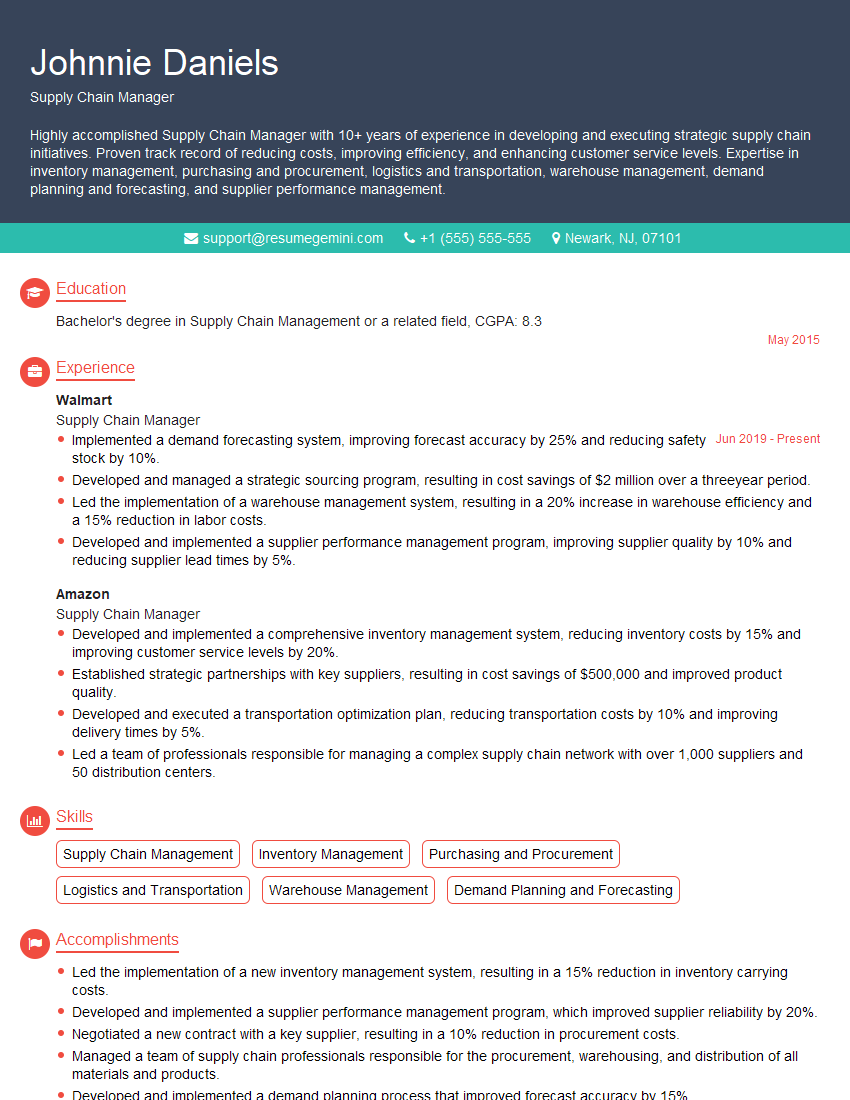
Supply Chain Manager Resume Sample
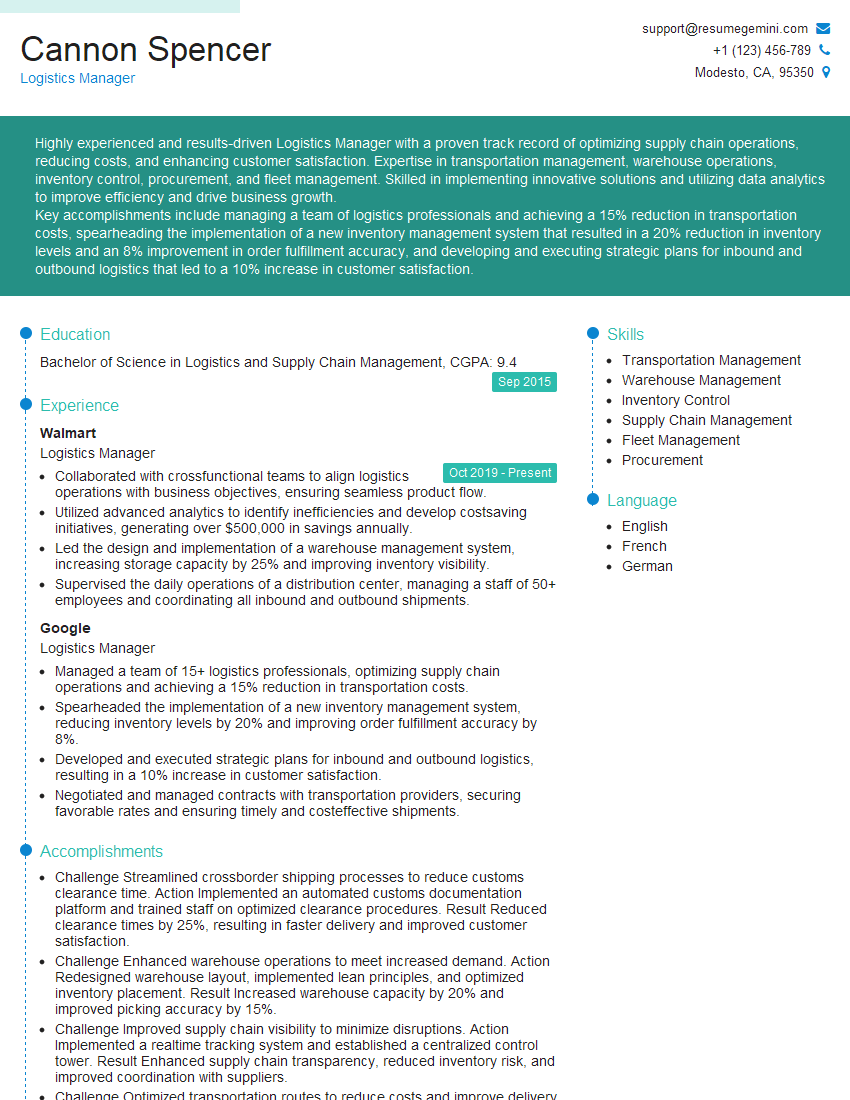
Logistics Manager Resume Sample
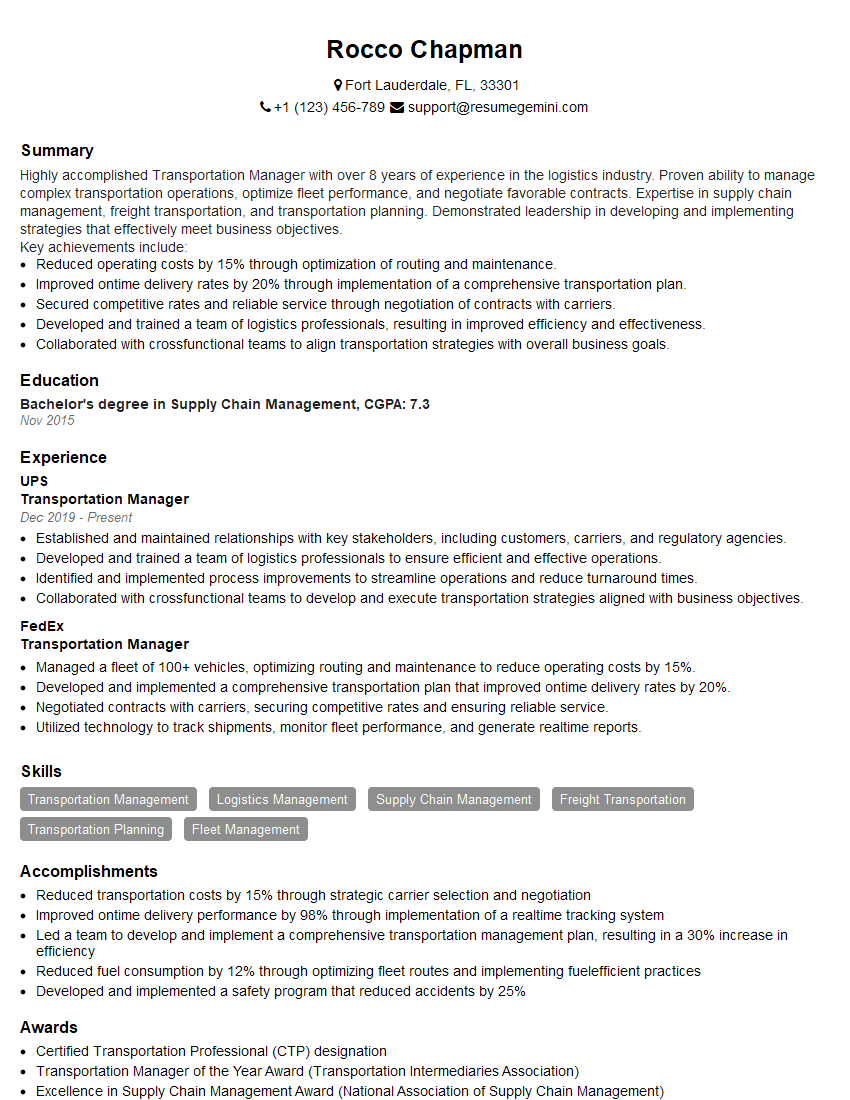
Transportation Manager Resume Sample
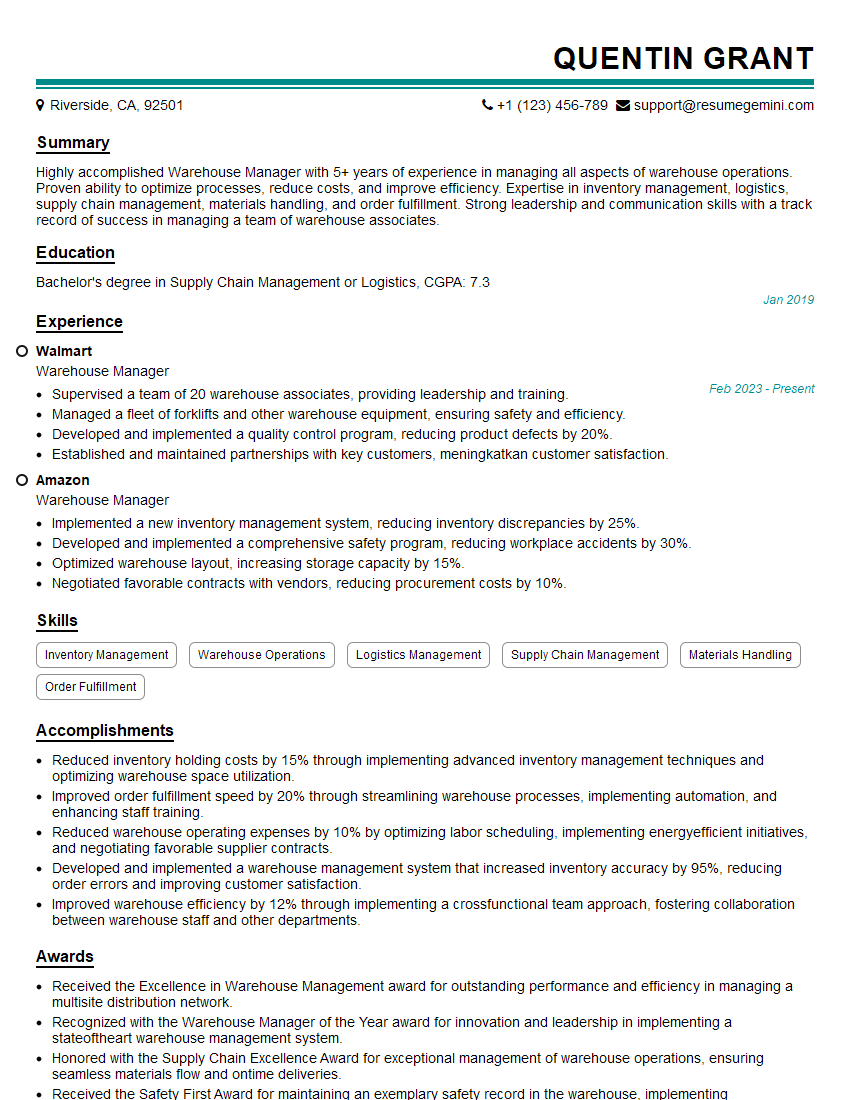
Warehouse Manager Resume Sample
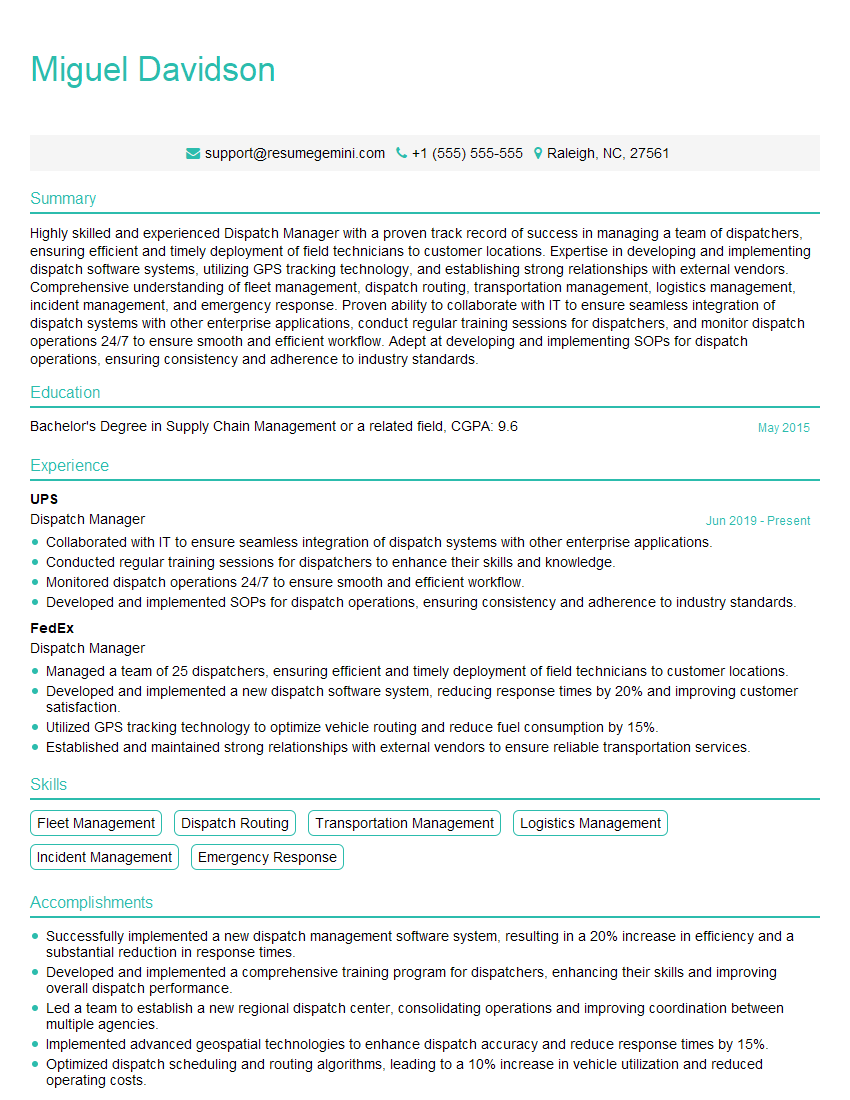
Dispatch Manager Resume Sample
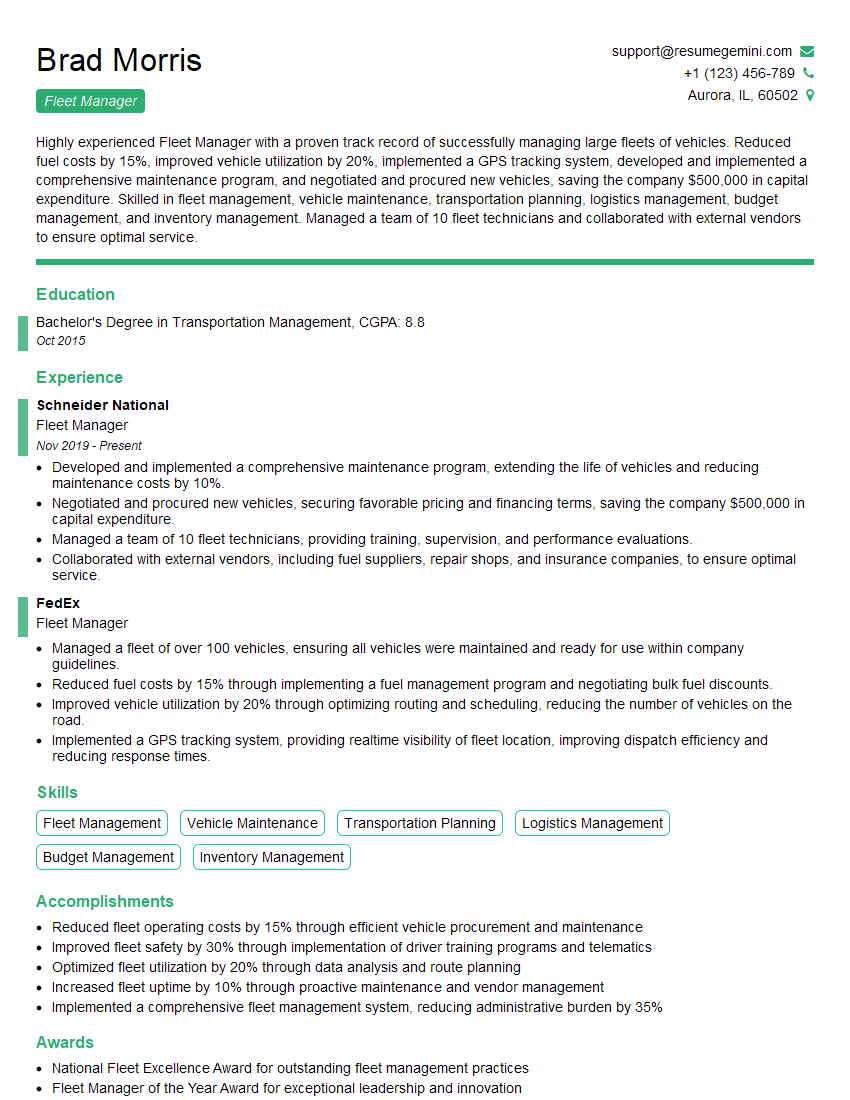
Fleet Manager Resume Sample
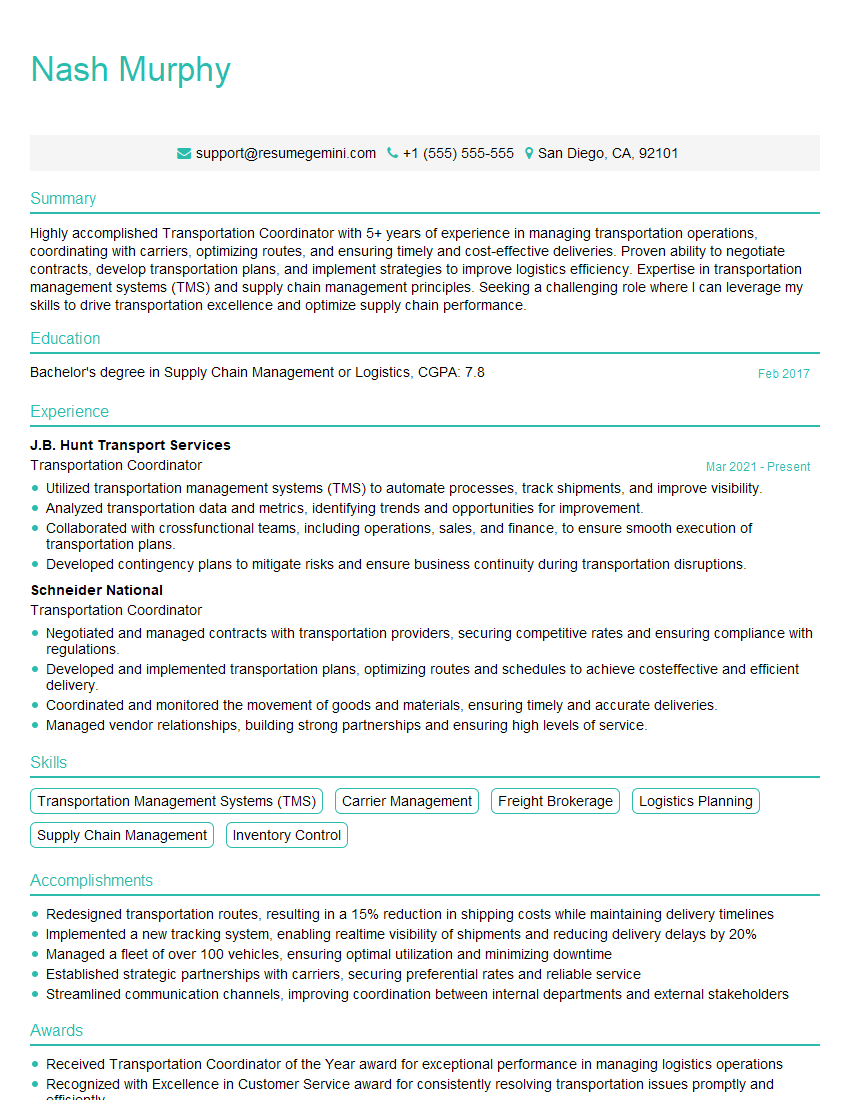
Transportation Coordinator Resume Sample
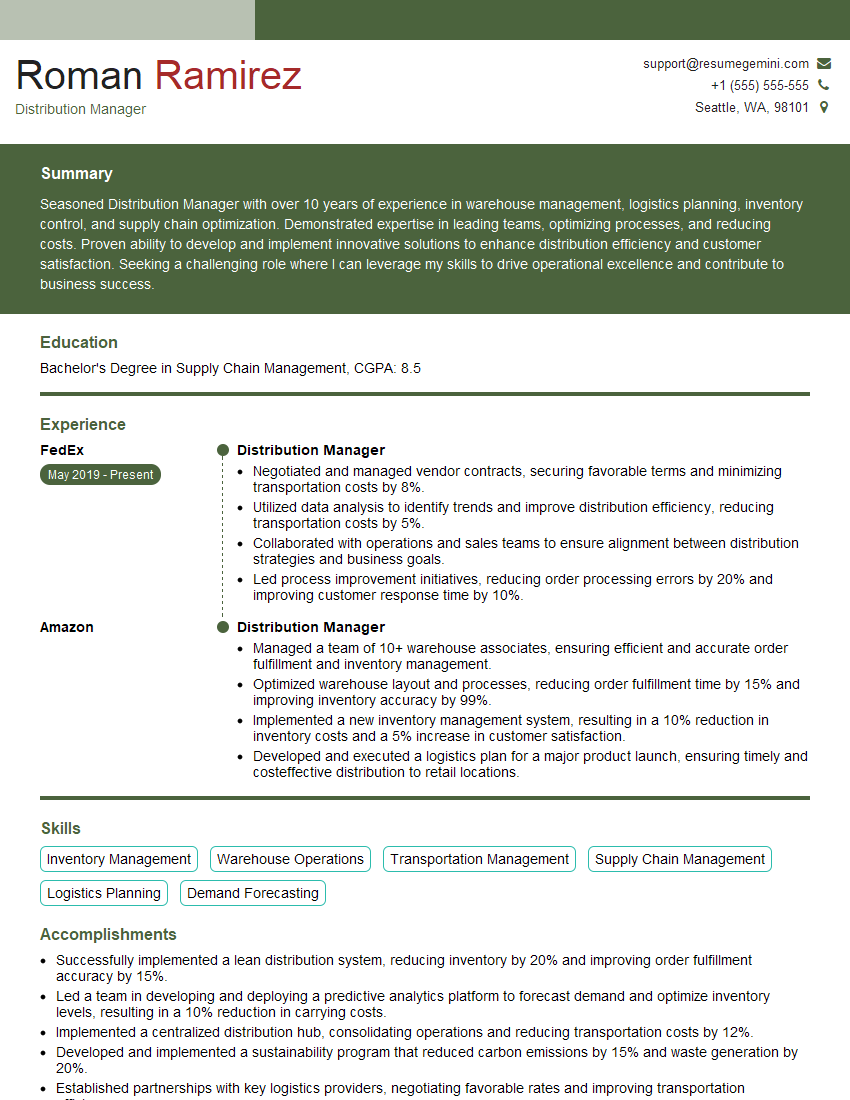
Distribution Manager Resume Sample
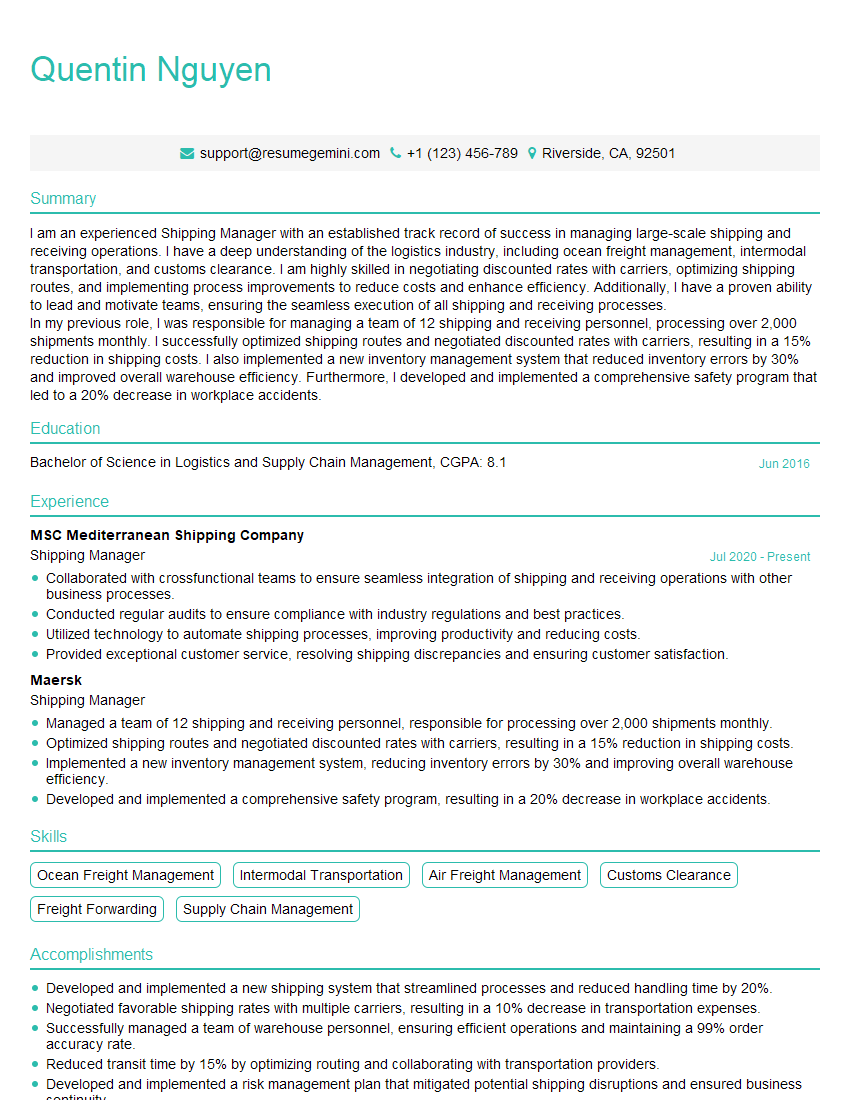
Shipping Manager Resume Sample
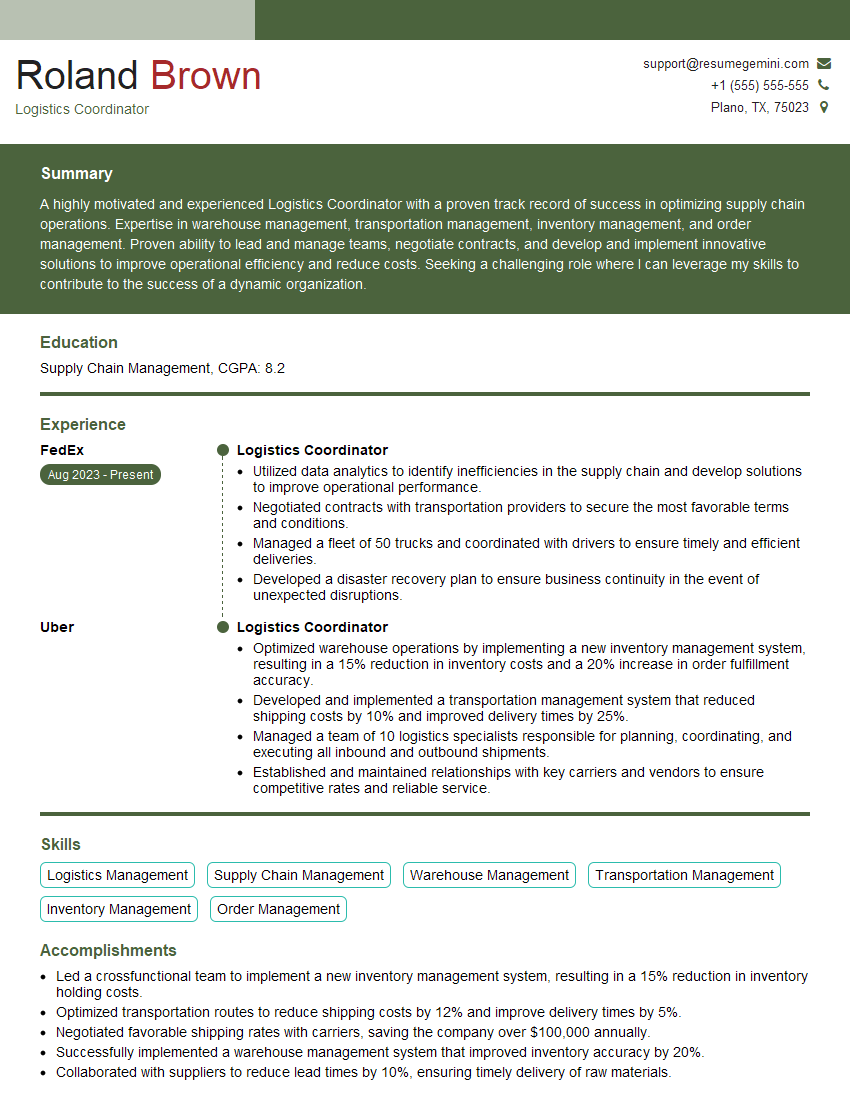
Logistics Coordinator Resume Sample
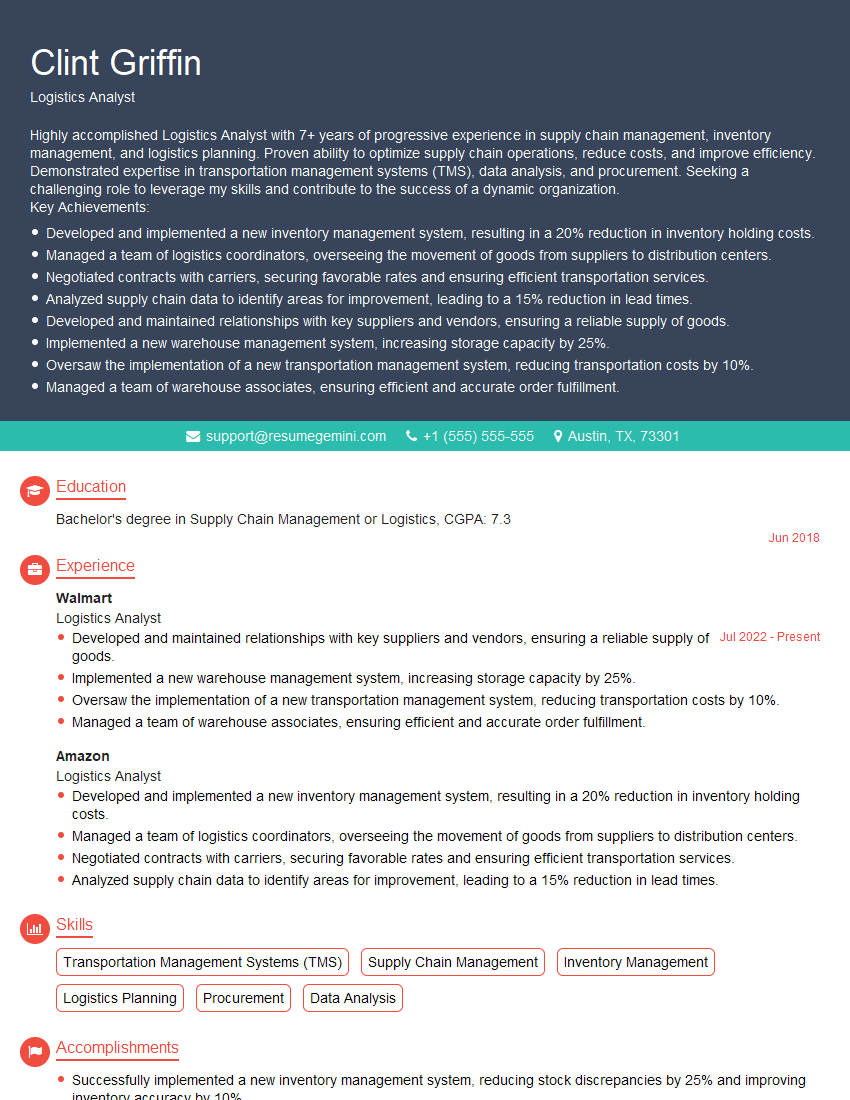
Logistics Analyst Resume Sample
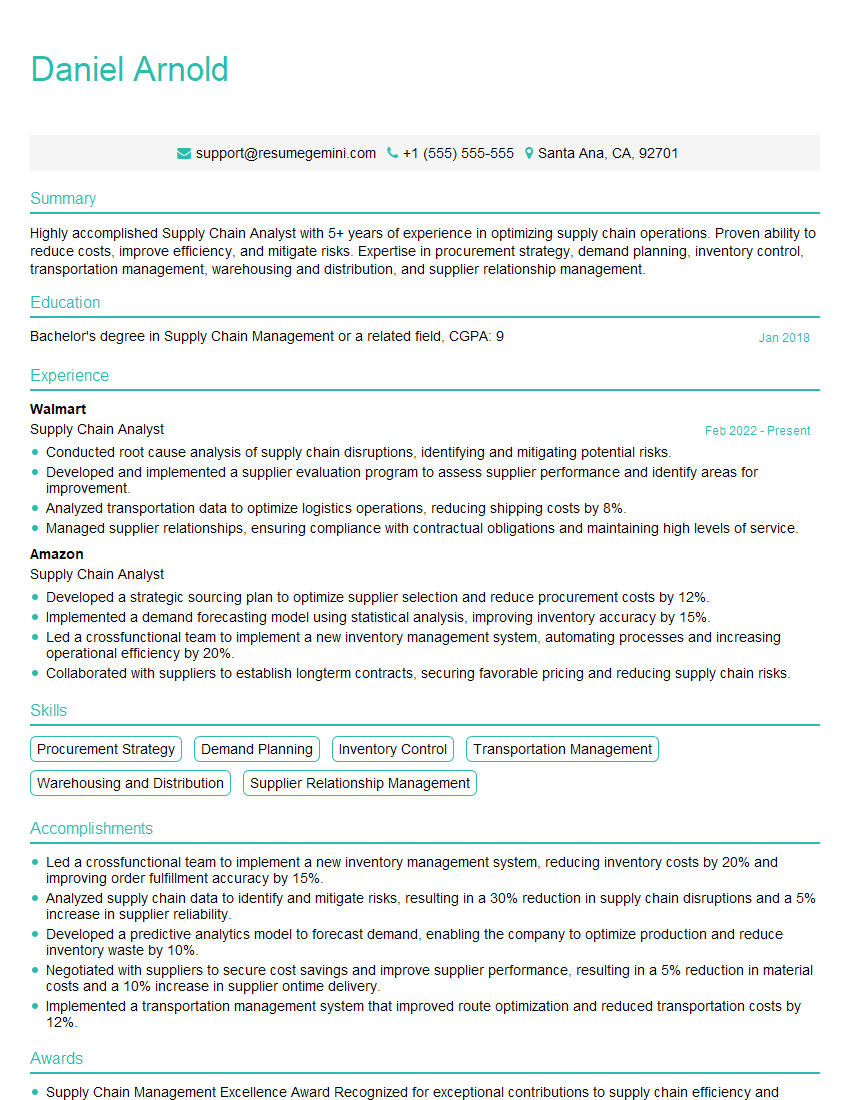
Supply Chain Analyst Resume Sample
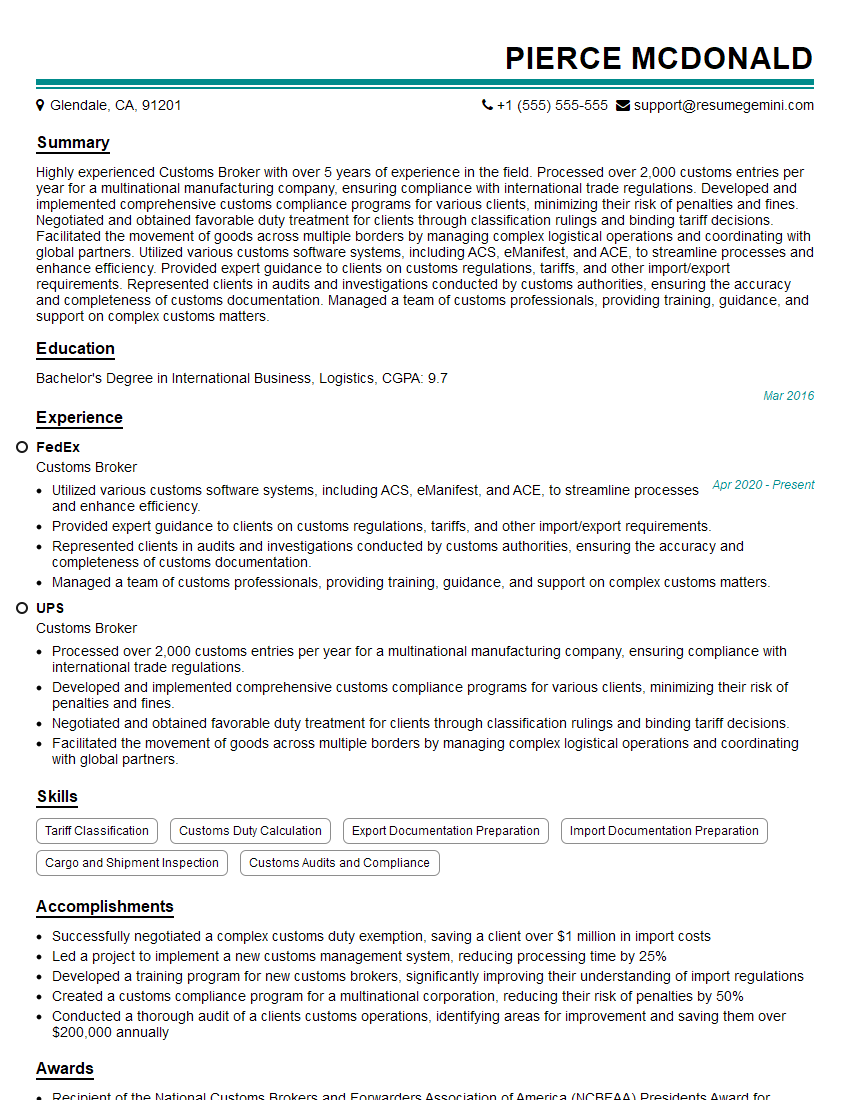
Customs Broker Resume Sample
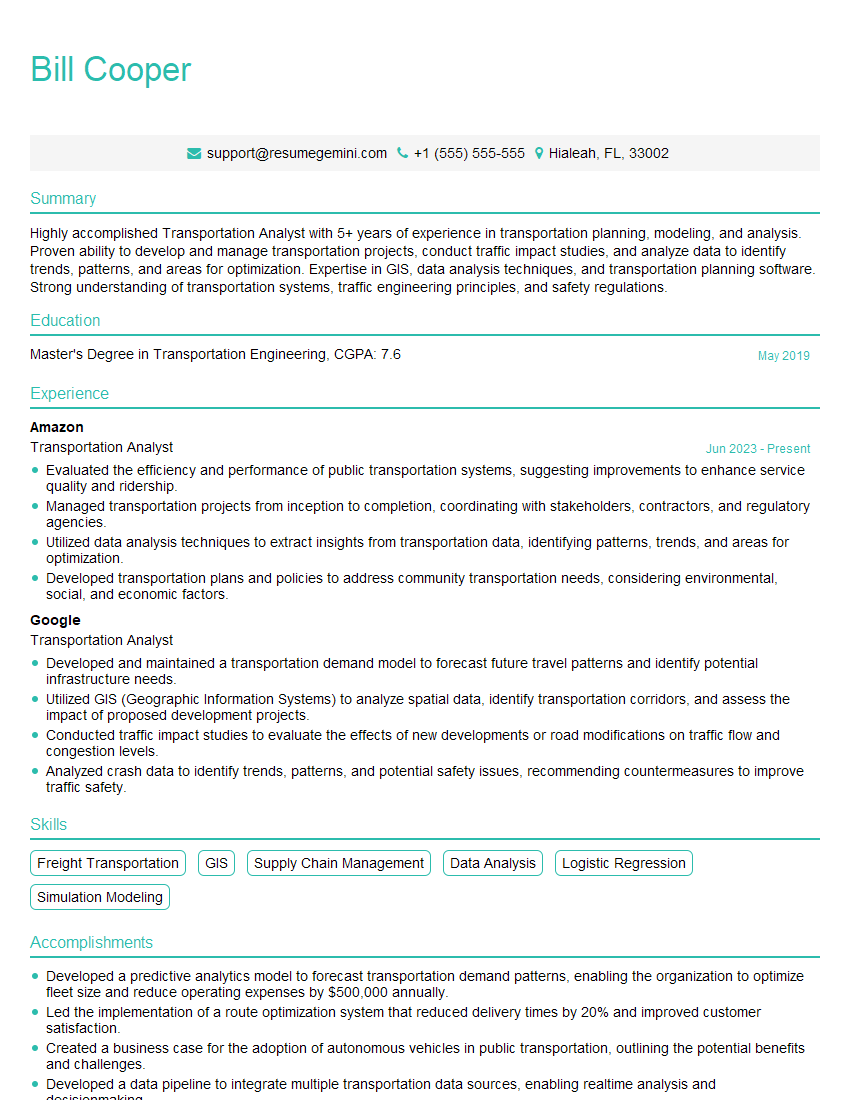
Transportation Analyst Resume Sample
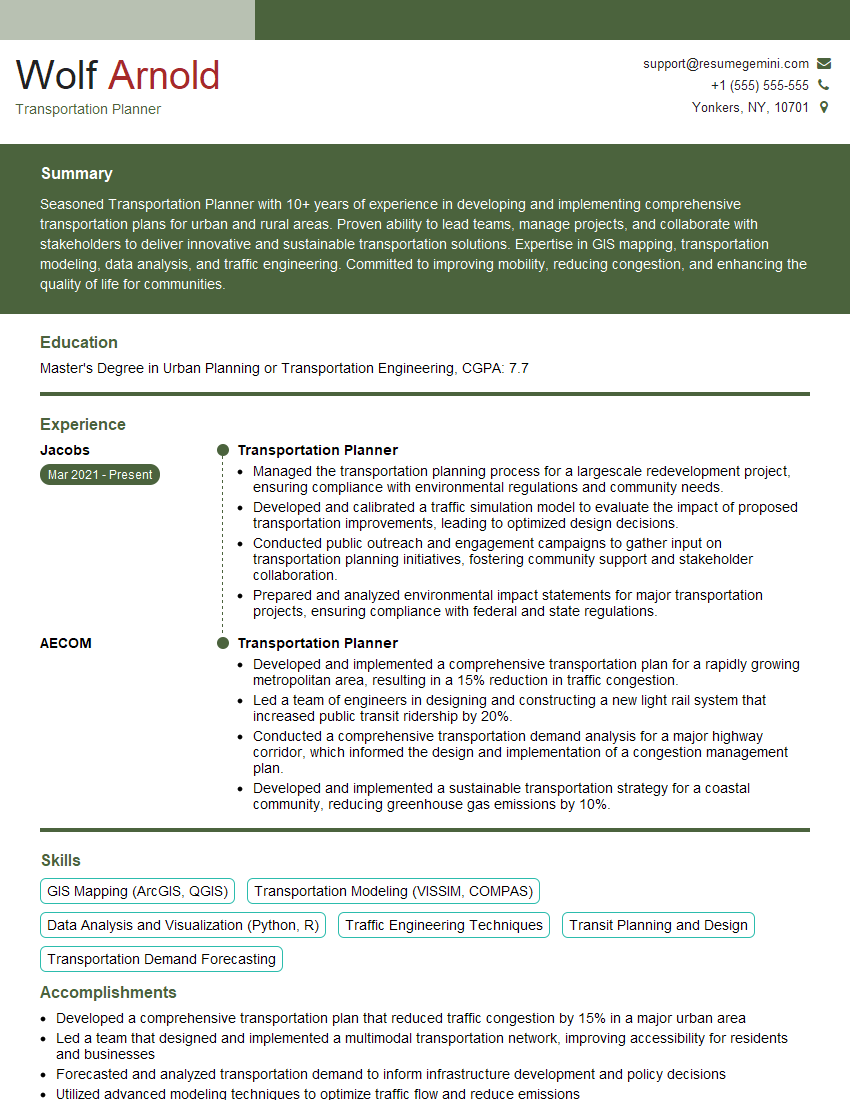
Transportation Planner Resume Sample
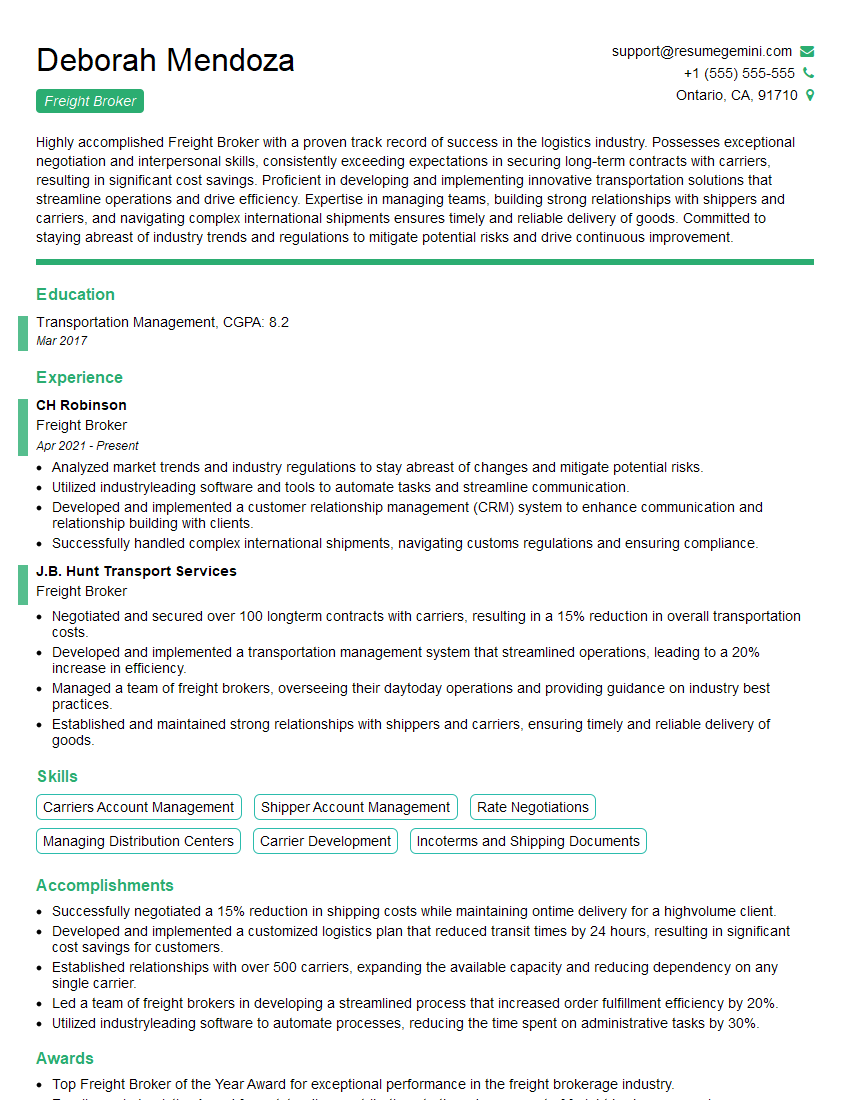
Freight Broker Resume Sample
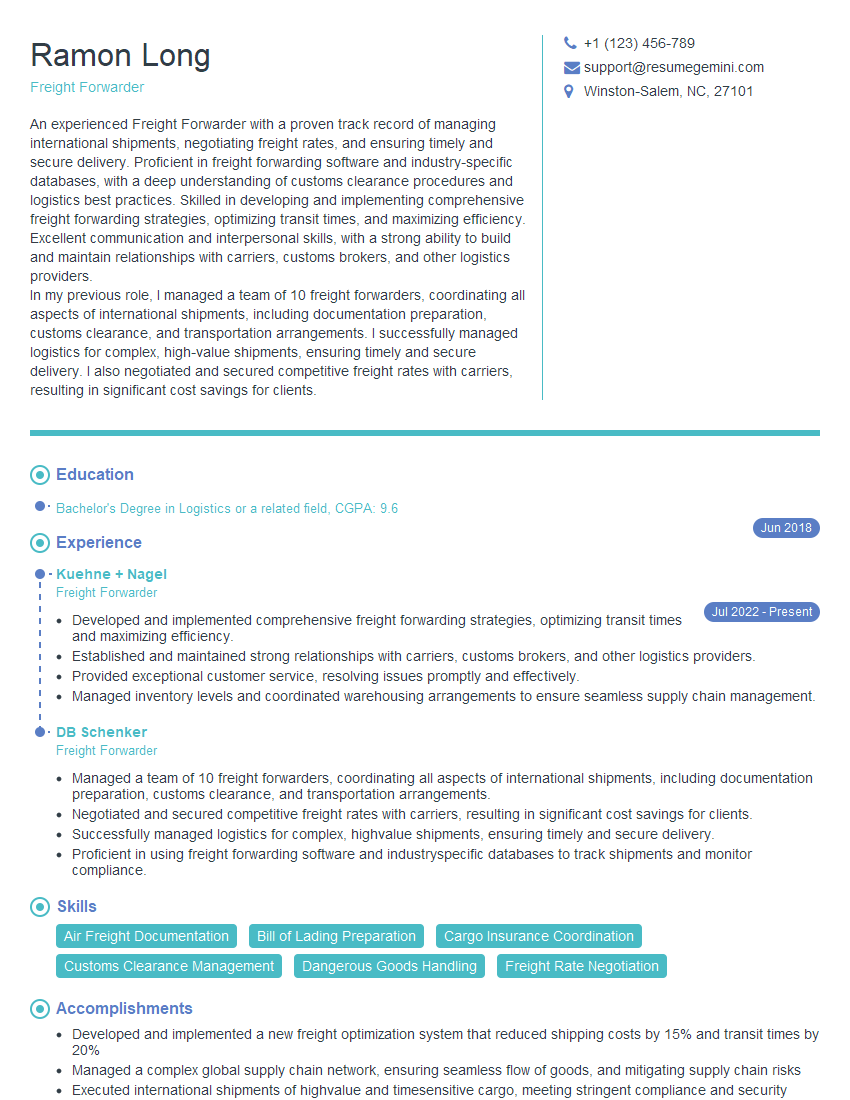
Freight Forwarder Resume Sample
- Supply Chain Manager
- Logistics Manager
- Transportation Manager
- Warehouse Manager
- Dispatch Manager
- Fleet Manager
- Transportation Coordinator
- Distribution Manager
- Shipping Manager
- Logistics Coordinator
- Logistics Analyst
- Supply Chain Analyst
- Customs Broker
- Transportation Analyst
- Transportation Planner
- Freight Broker
- Freight Forwarder
Explore more articles
Users Rating of Our Blogs
Share Your Experience
We value your feedback! Please rate our content and share your thoughts (optional).
What Readers Say About Our Blog
Very informative content, great job.
good