Interviews are more than just a Q&A session—they’re a chance to prove your worth. This blog dives into essential Traumatology interview questions and expert tips to help you align your answers with what hiring managers are looking for. Start preparing to shine!
Questions Asked in Traumatology Interview
Q 1. Describe the different types of traumatic injuries.
Traumatic injuries encompass a wide spectrum of physical harm resulting from sudden, forceful external events. They can be broadly categorized based on the affected body system.
- Blunt Trauma: This involves impact without penetration, causing internal injuries like contusions, lacerations, fractures, and organ damage. Think of a car accident where the chest impacts the steering wheel, causing rib fractures and potential lung contusion.
- Penetrating Trauma: This involves an object piercing the skin and underlying tissues, potentially causing damage to internal organs. Gunshot wounds and stab wounds are prime examples. The severity depends on the object’s velocity, trajectory, and the affected organ.
- Blast Injuries: These result from explosions, encompassing primary (direct blast wave effects), secondary (impact of propelled objects), tertiary (body being thrown against objects), and quaternary (burns, inhalation injury) injuries. Imagine a soldier injured in a bomb blast, suffering from lung damage, shrapnel wounds, and burns.
- Thermal Injuries: Burns from flames, hot liquids, or steam. The depth (superficial, partial thickness, or full thickness) determines the severity and treatment approach.
Beyond these classifications, injuries are also categorized by their severity (minor, moderate, severe) and the specific body region affected (head, chest, abdomen, extremities).
Q 2. Explain the principles of damage control surgery.
Damage control surgery (DCS) is a life-saving approach for managing severely injured trauma patients. It focuses on rapidly stabilizing the patient to improve their chances of survival. The core principles are:
- Resuscitation First: Prioritize controlling bleeding, restoring blood volume and oxygenation. This might involve blood transfusions and fluid resuscitation.
- Rapid Surgical Control of Hemorrhage: Stop life-threatening bleeding as quickly as possible. This might mean packing a wound, ligating a vessel, or using other advanced techniques.
- Limited Initial Exploration: Avoid extensive surgical exploration, focusing only on the most life-threatening injuries. Extensive surgery can worsen the patient’s condition, especially when already hemodynamically unstable.
- Temporary Closure/Packing: Sometimes, wounds might be temporarily packed or closed, with plans for a definitive surgery later once the patient is stabilized.
- Early Re-exploration if Necessary: Close monitoring is crucial. If bleeding recurs or complications arise, further surgery might be necessary.
Think of it like this: In a battlefield setting, you wouldn’t meticulously clean and suture a soldier’s wounds before stopping major bleeding. DCS prioritizes immediate life-saving interventions to stabilize the patient before more extensive and precise treatment.
Q 3. What are the key components of a trauma assessment?
A comprehensive trauma assessment follows a systematic approach, typically using the ABCDE algorithm:
- A – Airway and Cervical Spine Control: Ensure a patent airway, protecting the cervical spine to prevent further injury. This may involve intubation if necessary.
- B – Breathing and Ventilation: Assess respiratory rate, depth, and effort. Address any life-threatening issues like pneumothorax (collapsed lung) or tension pneumothorax (life threatening).
- C – Circulation and Hemorrhage Control: Assess heart rate, blood pressure, capillary refill time, and skin perfusion. Control any external or internal bleeding.
- D – Disability (Neurological Assessment): Assess level of consciousness (Glasgow Coma Scale), pupillary response, and motor function.
- E – Exposure and Environmental Control: Completely undress the patient to look for any hidden injuries, taking care to maintain patient warmth.
Beyond ABCDE, the assessment also includes a detailed history (mechanism of injury, past medical history) and a focused physical examination targeted to the suspected injuries.
Q 4. How do you prioritize patients in a mass casualty incident?
Mass casualty incidents (MCIs) demand rapid and efficient triage to maximize survival. The START (Simple Triage and Rapid Treatment) method is commonly used. It categorizes patients based on their immediate need for care:
- Immediate (Red): Patients with life-threatening injuries requiring immediate attention, such as compromised airway, severe bleeding, or circulatory shock.
- Delayed (Yellow): Patients with serious injuries but not immediately life-threatening, such as open fractures or moderate burns.
- Minor (Green): Patients with minor injuries who can wait for treatment.
- Expectant (Black): Patients with unsurvivable injuries or those who require extensive resources that are unavailable during the MCI.
The process involves assessing respiration, perfusion, and mental status. Patients are rapidly categorized and prioritized based on their potential for survival given available resources. This ensures that the most critically injured receive immediate attention.
Q 5. Describe your experience with managing post-traumatic stress disorder (PTSD).
Managing PTSD in trauma survivors is a significant part of comprehensive care. My experience involves working collaboratively with psychiatrists and psychologists. We utilize a multimodal approach, combining:
- Psychotherapy: Cognitive Processing Therapy (CPT) and Prolonged Exposure (PE) are evidence-based treatments that help patients process traumatic memories and reduce avoidance behaviors.
- Medication: Selective Serotonin Reuptake Inhibitors (SSRIs) and other medications can help manage symptoms like anxiety and depression.
- Support Groups: Connecting patients with peer support groups provides a sense of community and shared experience.
- Stress Management Techniques: Techniques like mindfulness, relaxation exercises, and yoga can help patients manage their symptoms and improve their coping mechanisms.
Each patient’s journey is unique; treatment plans are individualized based on their specific needs and preferences. The goal is to help survivors regain control of their lives and manage their symptoms effectively. I have found a patient-centered approach, building trust and rapport is fundamental to successful PTSD management.
Q 6. Explain the role of different healthcare professionals in a trauma team.
A trauma team is a multidisciplinary group, each member playing a vital role. Key professionals include:
- Trauma Surgeon: Leads the surgical management, making critical decisions regarding operative interventions.
- Emergency Physician: Initial assessment, resuscitation, and stabilization of the patient.
- Anesthesiologist: Manages pain and provides airway and ventilation support during surgery.
- Trauma Nurse: Assists the surgeon and other members of the team, providing direct patient care and monitoring. They are crucial in resuscitation efforts.
- Respiratory Therapist: Manages ventilation, oxygenation, and other respiratory issues.
- Radiologist: Interprets imaging studies (X-rays, CT scans) guiding surgical decisions.
- Critical Care Nurse: Post-operative care in the ICU.
Effective teamwork and clear communication are crucial for optimal patient outcomes in trauma care. A well-coordinated team significantly improves efficiency and effectiveness, particularly during complex cases.
Q 7. How do you communicate effectively with patients and families during a traumatic event?
Communicating effectively during a traumatic event is paramount. My approach focuses on:
- Empathy and Compassion: Acknowledge the distress and fear experienced by patients and families.
- Clear and Simple Language: Avoid medical jargon and explain things clearly.
- Honest and Upfront Communication: Provide updates about the patient’s condition in a timely manner, even if the news is difficult.
- Active Listening: Allow patients and families to express their concerns and answer their questions.
- Involving Family Members: If appropriate, involve family members in decision-making processes.
- Providing Support Resources: Offer information about support groups, counseling, and other resources.
I always aim to be transparent and provide hope, even in challenging situations. Building trust and understanding eases the emotional burden during an already difficult time for everyone involved.
Q 8. Describe your experience with various trauma imaging techniques.
My experience encompasses a wide range of trauma imaging techniques, crucial for accurate diagnosis and treatment planning. This includes plain radiography, which provides a quick overview of bony structures and is essential in the initial assessment of fractures and dislocations. Computed tomography (CT) scans offer detailed cross-sectional images, invaluable for visualizing complex fractures, internal bleeding (hematomas), and organ injuries. Magnetic resonance imaging (MRI) excels in evaluating soft tissue injuries like ligament sprains, muscle tears, and spinal cord damage, offering superior soft tissue contrast compared to CT. Finally, ultrasound is a readily available, portable tool used for rapid assessment of things like pneumothorax (collapsed lung) and assessing the presence of free fluid in the abdomen (indicative of internal bleeding). The choice of technique depends on the suspected injury, the clinical setting, and the availability of resources. For example, a patient presenting after a high-speed motor vehicle accident would likely undergo a CT scan of the head, chest, abdomen, and pelvis to rule out life-threatening injuries. A patient with a suspected ankle sprain might only require radiographs to rule out a fracture before further evaluation with an MRI.
Q 9. Explain your understanding of the physiological response to trauma.
The physiological response to trauma is complex and multifaceted, involving the nervous, endocrine, and immune systems. The initial response is characterized by the activation of the sympathetic nervous system, leading to the release of catecholamines (adrenaline and noradrenaline), resulting in increased heart rate, blood pressure, and respiratory rate – a classic ‘fight or flight’ response. The body prioritizes blood flow to vital organs, potentially leading to decreased perfusion to injured limbs. The inflammatory response is crucial in healing but can also contribute to complications like sepsis. The endocrine system releases cortisol and other hormones, influencing metabolism and immune function. The body’s overall stress response can affect wound healing, immune competence, and susceptibility to infections. Think of it like this: a car crash triggers a cascade of events; the immediate response is about survival (increased heart rate), followed by repair (inflammation) and long-term recovery (hormonal influence on healing). Understanding this complex interplay is critical for providing effective trauma care.
Q 10. What are the common complications associated with traumatic injuries?
Traumatic injuries carry a significant risk of various complications. Early complications include hypovolemic shock (due to blood loss), acute respiratory distress syndrome (ARDS), and compartment syndrome (pressure buildup in a confined space, compromising blood supply). Later complications can include infections (wound infections, pneumonia), deep vein thrombosis (DVT) and pulmonary embolism (PE), chronic pain, post-traumatic stress disorder (PTSD), and functional limitations. For example, a femur fracture can lead to complications like fat embolism (fat globules entering the bloodstream), delayed union or nonunion of the bone, and chronic pain. These complications highlight the importance of prompt, comprehensive trauma care, including appropriate fluid resuscitation, infection prevention strategies (prophylactic antibiotics), and pain management.
Q 11. How do you manage pain in trauma patients?
Pain management in trauma patients is a crucial aspect of care, aiming to control pain while minimizing side effects. The approach is multi-modal, combining pharmacological and non-pharmacological methods. Pharmacological interventions include analgesics like opioids (morphine, fentanyl) for severe pain, nonsteroidal anti-inflammatory drugs (NSAIDs) for moderate pain and inflammation, and adjuvant medications (for example, gabapentin for neuropathic pain). Non-pharmacological methods include splinting and immobilization to reduce pain from movement, elevation of injured limbs to decrease swelling, and physical and occupational therapy as recovery progresses. Regular pain assessments using validated pain scales are essential to guide treatment. The choice of pain management strategy depends on the severity of injury, the patient’s overall condition, and potential drug interactions. A balanced approach is crucial to optimize pain relief while minimizing risks of respiratory depression (with opioids) or gastrointestinal bleeding (with NSAIDs).
Q 12. What are the ethical considerations in trauma care?
Ethical considerations in trauma care are paramount, often involving challenging situations. Resource allocation in a mass casualty incident requires careful prioritization based on triage systems, balancing the needs of multiple patients with limited resources. Informed consent is crucial, but may be difficult in situations where patients are unconscious or incapacitated. Balancing the need for aggressive resuscitation with the patient’s wishes and prognosis is a key ethical dilemma, especially in cases of severe and irreversible injury. Maintaining patient confidentiality is essential, particularly with sensitive information regarding injuries or personal details. Furthermore, ethical considerations extend to end-of-life decisions, ensuring patients receive respectful and compassionate care, even if curative treatment is not feasible. These ethical considerations require ongoing reflection, collaboration with colleagues, and adherence to professional guidelines.
Q 13. Describe your experience with different wound management techniques.
My experience with wound management spans a range of techniques, tailored to the specific characteristics of each wound. This includes wound cleansing with saline solution to remove debris and contaminants, wound debridement (removal of dead or infected tissue), and the application of appropriate dressings. For simple lacerations, primary closure (suturing) might be sufficient. More complex wounds might require delayed primary closure or secondary healing (allowing the wound to heal naturally). Negative pressure wound therapy (NPWT) is employed for large or contaminated wounds to facilitate healing by removing excess fluid and promoting tissue granulation. Skin grafts or flaps may be necessary for significant tissue loss. The choice of technique depends on factors such as wound size, depth, location, contamination, and the patient’s overall health. For example, a clean, sharply incised wound may be suitable for primary closure, while a heavily contaminated wound from a road traffic accident might require debridement and NPWT before eventual closure.
Q 14. How do you utilize evidence-based practice in trauma care?
Evidence-based practice (EBP) forms the cornerstone of my approach to trauma care. This involves integrating the best available research evidence with clinical expertise and patient values to make informed decisions. I routinely consult high-quality research, such as randomized controlled trials and meta-analyses, to guide my choices regarding treatment protocols, pain management strategies, and infection prevention. I utilize clinical guidelines from reputable organizations such as the American College of Surgeons (ACS) and the Advanced Trauma Life Support (ATLS) program to ensure consistent and effective care. Critically appraising research and integrating the findings into my practice ensures that I am employing the most current and effective methods. For example, the current evidence strongly supports the use of damage control surgery in severely injured patients to stabilize their condition before definitive repairs, a practice I regularly integrate into my approach. Regular professional development and participation in continuing medical education are also crucial in staying current with the latest evidence and best practices.
Q 15. Explain your understanding of the Glasgow Coma Scale (GCS).
The Glasgow Coma Scale (GCS) is a neurological assessment tool used to objectively measure a patient’s level of consciousness. It’s crucial in evaluating patients with head injuries. The scale assesses three key responses: eye opening, verbal response, and motor response. Each response is scored numerically, with a total score ranging from 3 (indicating deep coma) to 15 (indicating full alertness).
- Eye Opening: Scores from 1 (none) to 4 (spontaneous).
- Verbal Response: Scores from 1 (none) to 5 (oriented).
- Motor Response: Scores from 1 (none) to 6 (obeys commands).
For example, a patient who opens their eyes to pain (score 2), uses inappropriate words (score 3), and withdraws from pain (score 4) would have a GCS score of 9. This score indicates a moderate to severe brain injury requiring immediate attention. The GCS provides a standardized way to track neurological changes over time, aiding in treatment decisions and prognostication. Regular GCS assessments are vital for monitoring a patient’s progress and identifying any deterioration.
Career Expert Tips:
- Ace those interviews! Prepare effectively by reviewing the Top 50 Most Common Interview Questions on ResumeGemini.
- Navigate your job search with confidence! Explore a wide range of Career Tips on ResumeGemini. Learn about common challenges and recommendations to overcome them.
- Craft the perfect resume! Master the Art of Resume Writing with ResumeGemini’s guide. Showcase your unique qualifications and achievements effectively.
- Don’t miss out on holiday savings! Build your dream resume with ResumeGemini’s ATS optimized templates.
Q 16. Describe your experience with different types of shock.
My experience encompasses various types of shock, all characterized by inadequate tissue perfusion. These include:
- Hypovolemic Shock: This results from a significant loss of blood or fluids, such as from severe hemorrhage or dehydration. I’ve managed numerous cases involving trauma patients with significant blood loss, utilizing rapid fluid resuscitation protocols to restore circulating volume.
- Cardiogenic Shock: Caused by the heart’s inability to effectively pump blood, often due to myocardial infarction or severe heart failure. Managing these cases often involves inotropic support, afterload reduction, and close collaboration with cardiology.
- Septic Shock: This life-threatening condition arises from an overwhelming infection, leading to systemic vasodilation and decreased perfusion. Early recognition and aggressive antibiotic therapy, along with fluid resuscitation and vasopressor support, are crucial in improving outcomes. I have extensive experience in the early identification and management of septic shock, including source control.
- Neurogenic Shock: Caused by disruption of the autonomic nervous system, often due to spinal cord injury. This results in widespread vasodilation. Management centers around maintaining blood pressure with fluids and vasopressors, while addressing the underlying spinal injury.
- Anaphylactic Shock: A severe allergic reaction causing widespread vasodilation and bronchospasm. Immediate administration of epinephrine and supportive measures are vital. I’ve treated numerous cases, emphasizing the importance of rapid recognition and intervention.
In each type of shock, early recognition and prompt, aggressive treatment are paramount to improve survival and minimize long-term complications. A systematic approach involving careful assessment, hemodynamic monitoring, and tailored interventions is essential.
Q 17. How do you assess and manage intracranial pressure (ICP)?
Assessing and managing intracranial pressure (ICP) requires a multi-faceted approach. Elevated ICP can be life-threatening, causing brain herniation.
Assessment: This involves several methods:
- Clinical Examination: Monitoring the patient’s level of consciousness (GCS), pupillary response, and signs of herniation (e.g., Cushing’s triad—bradycardia, hypertension, and irregular respirations).
- Imaging: Computed tomography (CT) and magnetic resonance imaging (MRI) scans provide detailed images of the brain, helping identify the cause of elevated ICP (e.g., hematoma, edema).
- ICP Monitoring: Invasive methods, such as placing an intraventricular catheter or subarachnoid bolt, directly measure ICP. This allows for continuous monitoring and facilitates targeted interventions.
Management: Strategies depend on the underlying cause and severity:
- Head Elevation: Elevating the head of the bed to 30 degrees can improve venous drainage and reduce ICP.
- Hyperventilation: Controlled hyperventilation can transiently decrease ICP by reducing cerebral blood volume. However, prolonged hyperventilation can be detrimental.
- Osmotherapy: Administering mannitol or hypertonic saline draws fluid out of the brain tissue, reducing ICP.
- Sedation and Analgesia: Minimizing patient agitation helps reduce ICP.
- Surgical Intervention: In cases of significant mass effect (e.g., epidural hematoma), surgical evacuation is often necessary.
Managing ICP is a dynamic process, requiring continuous monitoring and adjustment of treatment strategies based on the patient’s response.
Q 18. Explain your understanding of the different types of fractures.
Fractures are classified in several ways, depending on the type of bone break, the location, and the pattern of the fracture.
- Complete vs. Incomplete: Complete fractures break the bone into two or more separate pieces; incomplete fractures involve only a partial break.
- Open (Compound) vs. Closed (Simple): Open fractures involve a break in the skin, increasing the risk of infection; closed fractures do not involve a break in the skin.
- Comminuted: The bone is broken into multiple pieces.
- Linear: The fracture line runs parallel to the long axis of the bone.
- Transverse: The fracture line runs perpendicular to the long axis of the bone.
- Oblique: The fracture line runs at an angle to the long axis of the bone.
- Spiral: The fracture line spirals around the bone, often seen in twisting injuries.
- Greenstick: An incomplete fracture that bends one side of the bone and breaks the other; more common in children.
- Avulsion: A piece of bone is pulled away from the main bone by a tendon or ligament.
- Impacted: The broken ends of the bone are forced into each other.
- Stress: A small crack in the bone caused by repetitive stress.
Accurate classification is critical for appropriate treatment planning. For instance, an open fracture requires prompt surgical intervention to prevent infection, unlike a simple closed fracture which may be managed non-operatively.
Q 19. How do you identify and manage compartment syndrome?
Compartment syndrome is a serious condition where increased pressure within a confined muscle compartment compromises blood supply to the tissues. This can lead to muscle necrosis and permanent disability.
Identification: The classic presentation includes the six Ps:
- Pain: Out of proportion to the injury.
- Paresthesia: Numbness or tingling.
- Pallor: Pale skin.
- Pulselessness: Diminished or absent pulses.
- Paralysis: Weakness or inability to move the affected limb.
- Poikilothermia: Coolness of the extremity.
However, early detection is crucial, as these signs may not always be present. Any suspicion of compartment syndrome requires immediate attention. Measuring compartment pressures using a needle manometer may be necessary to confirm the diagnosis.
Management: The primary treatment is fasciotomy—a surgical procedure to relieve pressure by cutting open the fascia (the fibrous sheath surrounding the muscles). This must be done promptly to prevent irreversible damage. Delays can lead to amputation or severe functional impairment. Supportive measures include elevation of the limb and pain management.
Q 20. Describe your experience with airway management in trauma patients.
Airway management in trauma patients is a high priority, often the most critical intervention in the initial resuscitation phase. Compromised airways are common in trauma due to injury to the face, neck, or spine.
My experience includes a wide range of techniques:
- Initial Assessment: This involves assessing the patient’s airway patency, breathing, and circulation (ABCs). This initial assessment is crucial to determine the airway’s status.
- Simple Adjuncts: For mild airway obstruction, maneuvers such as head tilt-chin lift or jaw thrust may suffice.
- Oropharyngeal and Nasopharyngeal Airways: These are used to maintain airway patency in unconscious patients.
- Endotracheal Intubation: This involves placing a tube into the trachea, securing the airway and allowing for mechanical ventilation. This is often necessary in patients with severe airway compromise or respiratory failure.
- Surgical Airways: In cases where intubation is impossible or contraindicated, cricothyroidotomy or tracheostomy may be necessary. I am proficient in performing cricothyroidotomy in emergency situations.
- Rapid Sequence Intubation (RSI): This involves the simultaneous administration of a sedative and paralytic agent to facilitate safe and rapid endotracheal intubation.
Airway management in trauma demands a high level of skill and experience. Proper training and regular practice are vital for ensuring effective and safe airway management in critical situations.
Q 21. How do you assess and manage hypovolemic shock?
Hypovolemic shock, caused by significant blood or fluid loss, is a life-threatening emergency.
Assessment: Early recognition is key. Signs and symptoms include:
- Hypotension: Low blood pressure.
- Tachycardia: Rapid heart rate.
- Tachypnea: Rapid breathing.
- Cool, clammy skin: Due to peripheral vasoconstriction.
- Altered mental status: From decreased cerebral perfusion.
- Decreased urine output: The kidneys receive less blood flow.
Measuring blood pressure, heart rate, respiratory rate, and assessing the patient’s mental status are critical steps. Identifying the source of bleeding is also important.
Management: The primary goal is to restore circulating volume and control bleeding:
- Fluid Resuscitation: Administering intravenous fluids, such as crystalloids (e.g., normal saline, lactated Ringer’s) and colloids (e.g., albumin), is essential to improve blood volume. Blood transfusion may be necessary in cases of significant blood loss.
- Hemorrhage Control: Controlling the source of bleeding is crucial. This may involve direct pressure, tourniquets, or surgical intervention.
- Oxygen Therapy: Supplying supplemental oxygen helps ensure adequate tissue oxygenation.
- Monitoring: Closely monitoring vital signs, urine output, and central venous pressure (CVP) helps guide fluid management.
Effective management of hypovolemic shock demands a swift, coordinated response, prioritizing fluid resuscitation and hemorrhage control. Failure to act promptly can have fatal consequences.
Q 22. Explain your understanding of the principles of fluid resuscitation.
Fluid resuscitation is the cornerstone of trauma management, aiming to restore adequate tissue perfusion and organ function after significant blood loss. It involves replacing lost fluids, primarily blood and its components, but also crystalloids and colloids. The principles revolve around quickly identifying hypovolemia (low blood volume), restoring blood pressure and tissue oxygenation, and closely monitoring the patient’s response. This is not a one-size-fits-all approach; the type and amount of fluid administered depend on the patient’s individual needs, the severity of their injuries, and their ongoing physiological status.
For instance, a patient experiencing hemorrhagic shock (shock caused by blood loss) might initially receive large volumes of crystalloid solutions like lactated Ringer’s solution or normal saline to rapidly expand intravascular volume. However, crystalloids leak out of the vascular space more quickly than colloids (like albumin or synthetic colloids), so blood products (red blood cells, plasma, platelets) are crucial for sustained resuscitation, especially in cases of significant ongoing bleeding. The goal is to maintain adequate urine output, capillary refill time, and blood pressure while minimizing fluid overload, which can be detrimental.
A key aspect is continuous monitoring of vital signs, urine output, and lab results like hemoglobin and hematocrit to assess the effectiveness of resuscitation and adjust the fluid management strategy accordingly. The process requires a multidisciplinary approach involving surgeons, anesthesiologists, and intensivists working together.
Q 23. What are the indications for blood transfusion in trauma patients?
The decision to transfuse blood in trauma patients is complex and depends on several factors, primarily the severity of blood loss and the patient’s clinical condition. It’s guided by the principle of balancing the risks and benefits. A permissive hypotension approach (allowing a slightly lower blood pressure than normal) might be employed initially in certain situations, for example, to decrease the risk of further bleeding. However, this approach requires close monitoring.
Indications for transfusion often include:
- Symptomatic Hypovolemia: Tachycardia (rapid heart rate), hypotension (low blood pressure), altered mental status, and cool, clammy skin strongly suggest the need for blood products.
- Significant Hemorrhage: Active bleeding, particularly from major vascular injuries, necessitates rapid blood replacement.
- Hemoglobin/Hematocrit Levels: While these lab values are helpful, they shouldn’t be the sole determinant. The clinical picture is paramount.
- Oxygen-Carrying Capacity: Maintaining adequate oxygen delivery to the tissues is the ultimate goal, and transfusion is necessary when blood loss compromises this.
The type of blood product(s) used—packed red blood cells, fresh frozen plasma, platelets—depends on the specific nature of the patient’s injuries and the cause of bleeding. For instance, patients with coagulopathy (clotting disorders) require plasma and platelets in addition to red blood cells.
Q 24. Describe your experience with the management of traumatic brain injury (TBI).
Managing traumatic brain injury (TBI) is a multifaceted endeavor requiring a team approach. My experience involves managing the initial resuscitation and stabilization of patients, followed by comprehensive neurological assessment, imaging (CT scan), and neurosurgical consultation if necessary. Initial management focuses on securing the airway, protecting the cervical spine, and maintaining adequate cerebral perfusion pressure (CPP). This often involves managing swelling, reducing intracranial pressure (ICP), and preventing secondary brain injuries.
The treatment depends on the severity of the TBI, ranging from observation and supportive care for mild injuries to intensive interventions, including surgical evacuation of hematomas (blood clots) or craniotomy (surgical opening of the skull) for severe injuries. Monitoring includes close observation of neurological status (Glasgow Coma Scale, pupillary reflexes), ICP monitoring, and management of associated injuries. Pharmacological interventions may include osmotic diuretics (e.g., mannitol) to reduce cerebral edema and medications to control seizures.
Long-term management often involves rehabilitation, addressing potential cognitive, motor, and emotional deficits. Collaboration with neurologists, neurosurgeons, therapists (physical, occupational, speech), and social workers is vital for optimal patient outcomes.
One case that stands out involved a young adult with a severe diffuse axonal injury who required prolonged intensive care and extensive rehabilitation. The multidisciplinary approach and careful management significantly impacted their recovery, though long-term cognitive effects remain.
Q 25. Explain your understanding of the different types of burns.
Burns are classified by depth, extent, and location. Depth refers to the layers of skin affected:
- First-degree burns (superficial): Involve only the epidermis (outer skin layer). They are characterized by redness, pain, and mild swelling. Sunburn is a common example.
- Second-degree burns (partial-thickness): Extend into the dermis (deeper skin layer). They are characterized by blisters, intense pain, and significant swelling. These can be further subdivided into superficial partial-thickness (blistering) and deep partial-thickness (less blistering, more damage).
- Third-degree burns (full-thickness): Involve complete destruction of the epidermis and dermis, sometimes extending to subcutaneous tissues, muscle, or even bone. The skin appears white, charred, or leathery, and sensation is often absent.
- Fourth-degree burns: Extend deeper than third-degree burns, involving muscle, tendons, and/or bone.
The extent of a burn is usually expressed as a percentage of total body surface area (TBSA) using the rule of nines or other specialized charts. Location matters as burns to the face, hands, feet, perineum, and major joints carry a higher risk of complications.
Q 26. How do you manage thermal injuries?
Management of thermal injuries begins with addressing life-threatening conditions such as airway compromise, hypovolemia, and inhalation injury. The initial approach is based on ABCDE principles (Airway, Breathing, Circulation, Disability, Exposure). This includes securing the airway, providing oxygen, administering intravenous fluids to counteract fluid shifts, and monitoring vital signs.
Wound care involves cleaning, debridement (removal of dead tissue), and appropriate dressings. Early excision and grafting are often considered for larger and deeper burns to promote healing and minimize scarring. Pain management is crucial, employing analgesics and other methods. Infection prevention is critical and requires proactive measures, such as antibiotic prophylaxis and meticulous wound care. Nutritional support is also essential due to the high metabolic demands associated with burns. Finally, psychological support and rehabilitation are integral parts of long-term management.
A critical aspect is fluid resuscitation guided by Parkland formula or similar methods which guide fluid replacement based on TBSA and weight. Careful monitoring of fluid balance is crucial to prevent complications.
Q 27. Describe your experience with the management of multiple trauma patients.
Managing multiple trauma patients presents unique challenges requiring a coordinated and systematic approach. The initial assessment and resuscitation are guided by Advanced Trauma Life Support (ATLS) principles. This involves a rapid assessment of the patient’s condition (primary survey), addressing immediate life threats (ABCDE), and performing a secondary survey to identify and treat all injuries.
Multiple trauma often involves injuries to multiple organ systems, requiring a multidisciplinary approach. This necessitates the involvement of surgeons (orthopedic, vascular, general, neurosurgery), intensivists, anesthesiologists, and other specialists. The management often involves damage control surgery, where life-threatening injuries are addressed initially, and more extensive repairs are delayed until the patient’s condition is stabilized.
Effective communication and teamwork are paramount to successful management. Prioritization of injuries based on severity and potential for survival is key. Monitoring involves close observation of vital signs, organ function, and overall clinical status. A structured approach, effective teamwork, and rapid decision-making are critical to improving patient outcomes.
I’ve been involved in cases where patients arrived with multiple injuries (e.g., head injury, chest trauma, pelvic fractures). A well-coordinated resuscitation effort, damage control surgery, and close postoperative monitoring were crucial in saving lives and minimizing long-term disabilities in such cases.
Q 28. What are the long-term implications of trauma injuries?
The long-term implications of trauma injuries can be far-reaching and affect various aspects of a patient’s life. These implications can be physical, psychological, and social.
Physical Implications: May include chronic pain, functional limitations due to impaired mobility or organ dysfunction, and the need for ongoing medical care and rehabilitation. Scarring, contractures (muscle shortening), and phantom limb pain (pain felt in a missing limb) are also potential long-term consequences. The severity of these physical implications varies greatly depending on the type and severity of the initial injury.
Psychological Implications: Can be significant, including post-traumatic stress disorder (PTSD), anxiety, depression, and other mental health issues. The trauma experience itself, the pain, and the physical limitations can contribute to psychological distress, affecting a patient’s quality of life.
Social Implications: Trauma injuries can affect a patient’s ability to work, maintain relationships, and participate in social activities. The need for ongoing medical care and rehabilitation can impose financial and social burdens.
Long-term follow-up care is crucial to minimize these long-term effects and facilitate optimal recovery. This often involves a multidisciplinary rehabilitation program and ongoing support from healthcare professionals and support groups.
Key Topics to Learn for Traumatology Interview
- Fracture Management: Understanding different fracture types, classifications (e.g., AO classification), and appropriate treatment strategies (conservative vs. surgical).
- Practical Application: Be prepared to discuss case studies involving specific fracture patterns and the rationale behind your chosen treatment plan, including potential complications and their management.
- Soft Tissue Injuries: In-depth knowledge of various soft tissue injuries (sprains, strains, lacerations), wound management, and reconstructive techniques.
- Practical Application: Explain your approach to assessing and treating a complex soft tissue injury, considering factors like location, severity, and patient factors.
- Emergency Trauma Care: Mastering the principles of initial assessment and stabilization of trauma patients, including ABCDE approach and understanding shock management.
- Practical Application: Describe your experience or knowledge of managing a hypotensive trauma patient, highlighting your decision-making process.
- Imaging Interpretation: Proficiency in interpreting X-rays, CT scans, and MRI scans relevant to trauma, identifying key features and guiding treatment decisions.
- Practical Application: Analyze a provided radiological image and explain your interpretation, linking findings to potential diagnoses and treatment strategies.
- Post-Traumatic Rehabilitation: Understanding the principles of rehabilitation following trauma, including range of motion exercises, functional restoration, and patient education.
- Practical Application: Discuss a rehabilitation plan for a patient recovering from a specific injury, considering both short-term and long-term goals.
- Ethical and Legal Considerations: Awareness of ethical dilemmas and legal aspects related to trauma care, including informed consent and documentation.
- Practical Application: Discuss the ethical considerations in a hypothetical scenario involving a severely injured patient with limited decision-making capacity.
Next Steps
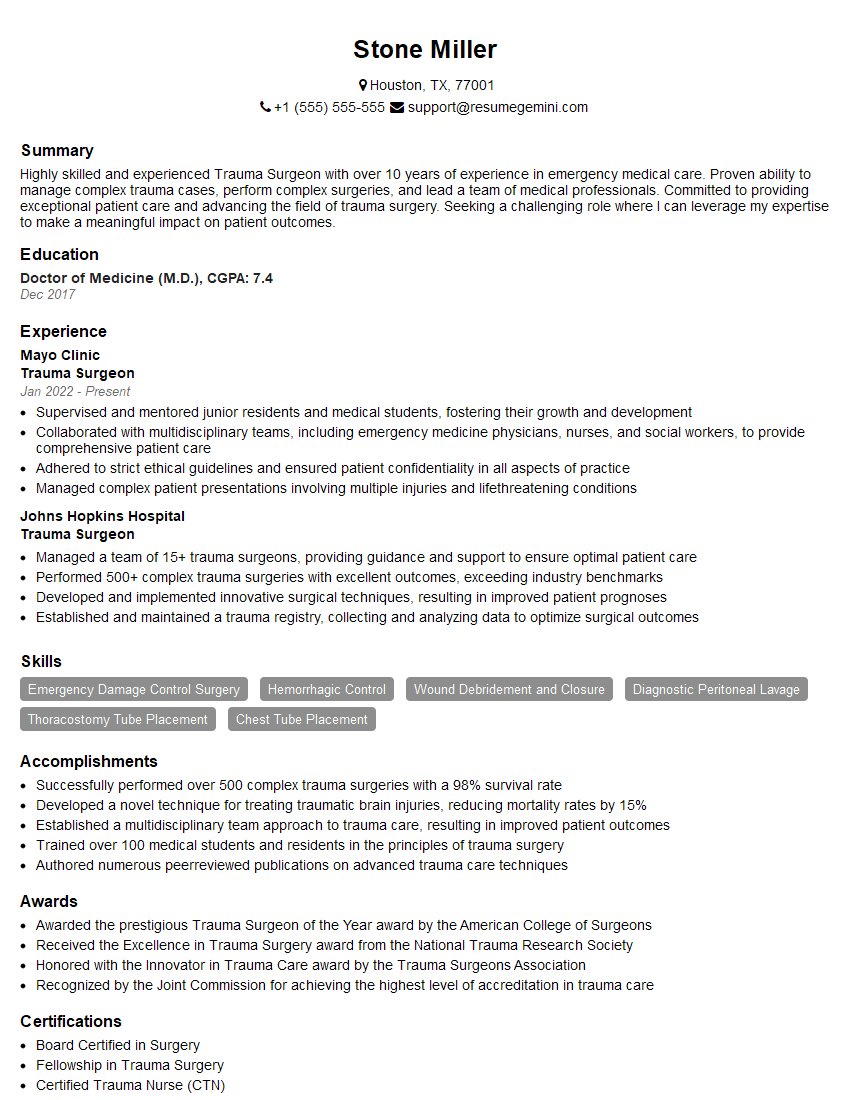
Mastering Traumatology is crucial for advancing your career and securing rewarding opportunities in this dynamic field. A strong foundation in these key areas will significantly enhance your interview performance and showcase your expertise. To maximize your job prospects, create an ATS-friendly resume that highlights your skills and experience effectively. ResumeGemini is a trusted resource that can help you build a professional and impactful resume tailored to the Traumatology field. Examples of resumes specifically designed for Traumatology positions are available to guide you.
Explore more articles
Users Rating of Our Blogs
Share Your Experience
We value your feedback! Please rate our content and share your thoughts (optional).
What Readers Say About Our Blog
Very informative content, great job.
good