Feeling uncertain about what to expect in your upcoming interview? We’ve got you covered! This blog highlights the most important Tree Pruning and Maintenance interview questions and provides actionable advice to help you stand out as the ideal candidate. Let’s pave the way for your success.
Questions Asked in Tree Pruning and Maintenance Interview
Q 1. What are the different pruning techniques used for various tree species?
Pruning techniques vary significantly depending on the tree species, its age, and the desired outcome. The goal is always to promote tree health and safety, but the methods differ. For instance, thinning, which involves selectively removing branches to improve light penetration and air circulation, is suitable for many deciduous trees like oaks and maples. It’s crucial to avoid creating stubs during thinning. Heading, on the other hand, involves cutting back a branch to a smaller stub, commonly used to reduce the height or spread of a tree. However, heading often leads to weak growth and is generally discouraged except in specific situations like removing deadwood that poses a hazard. Reduction is a more controlled method of shortening branches, aiming for a natural shape, unlike heading’s blunt approach. Renewal pruning is employed on older trees or shrubs, rejuvenating them by removing old, unproductive branches to encourage new growth. Finally, cleaning involves removing dead, damaged, diseased, or crossing branches to enhance the tree’s health and aesthetic appeal. The choice of technique greatly depends on the tree’s species and the pruning objective.
- Example: An oak tree might benefit from thinning to alleviate overcrowding, while a fruit tree might require renewal pruning to improve fruit production.
Q 2. Explain the importance of proper pruning cuts and wound dressing.
Proper pruning cuts are critical for minimizing damage and promoting rapid healing. The goal is to make a clean cut that minimizes the risk of disease entry. A good pruning cut is made just beyond a lateral branch collar—the slightly swollen area at the base of a branch—avoiding cutting into the branch collar itself. This allows the tree to naturally compartmentalize the wound, effectively walling off the damaged area and preventing disease spread. Improper cuts leave stubs, which are vulnerable to rot and decay. Wound dressing, while once commonly practiced, is now generally discouraged by arborists as it can trap moisture, hindering the tree’s natural healing process. Healthy trees can usually effectively compartmentalize wounds on their own.
- Example: Incorrectly pruning a branch by leaving a stub can lead to decay, potentially weakening the branch and increasing the risk of breakage.
Q 3. Describe the process of assessing tree health and identifying disease or pest infestation.
Assessing tree health involves a thorough visual inspection, looking for signs of stress, disease, or pest infestation. This includes examining the leaves for discoloration, wilting, or unusual spots. The bark should be checked for damage, lesions, or abnormal growths. Branches should be examined for deadwood, cankers, or signs of insect activity. The root flare (where the trunk meets the roots) should be visible and free from soil cover. A deeper assessment might involve taking soil samples or conducting laboratory tests to confirm suspicions of specific diseases or pests. Looking at the overall tree structure, considering factors like its location, and any environmental stressors can also provide valuable clues.
- Example: Yellowing leaves could indicate nutrient deficiency, while unusual growths or cankers might suggest a fungal infection.
Q 4. How do you determine the appropriate time of year for pruning different types of trees?
The ideal time for pruning varies considerably depending on the tree species and the type of pruning being performed. Generally, late winter or early spring, before the tree begins active growth, is preferred for most deciduous trees. This minimizes stress and allows the wounds to heal before new growth begins. However, some trees, like maples, bleed excessively if pruned during this period, making late summer or early fall a more suitable time. Evergreen trees, particularly conifers, are usually pruned in late winter or early spring as well, but avoid pruning during periods of hot, dry weather. Knowing the specific species is crucial in determining the best time to prune; this information can often be found in regional tree guides or by consulting an arborist.
- Example: Pruning oaks in late winter minimizes bleeding and allows them to heal before new growth starts, while pruning maples in late summer prevents excessive sap loss.
Q 5. What safety equipment and procedures are essential for tree pruning?
Safety is paramount during tree pruning. Essential equipment includes appropriate hand tools like loppers, pruning saws, and pole saws, depending on the height and size of the branches. A safety harness and climbing ropes are necessary for working at heights. Protective gear, including helmets, eye protection, gloves, and sturdy footwear, is mandatory. Before commencing any work, it is crucial to assess the worksite for potential hazards like overhead power lines, other obstacles, and unstable ground. Working with a partner and having a spotter is highly recommended, especially when working at heights. Regular maintenance and inspection of all equipment are vital to ensure safety. Following all OSHA regulations is crucial.
- Example: Working near power lines requires additional safety precautions, such as contacting the utility company to de-energize the lines before commencing work.
Q 6. How do you identify and mitigate risks associated with tree pruning?
Risk mitigation in tree pruning starts with a thorough assessment of the tree’s condition, size, and surrounding environment. This includes identifying any potential hazards, such as decaying branches, deadwood, or unstable soil conditions. The height and location of the tree should also be considered. If necessary, specialized equipment or techniques may be required. The use of appropriate safety gear and adherence to safe working practices are crucial. A detailed pruning plan should be developed, outlining the specific cuts to be made and the methodology to ensure safety and minimize tree damage. In cases of high-risk pruning, it’s advisable to consult with a certified arborist.
- Example: A large, leaning tree near a building might require specialized techniques and equipment to ensure safe removal of potentially hazardous branches.
Q 7. What are the common signs of a diseased or damaged tree?
Several signs indicate a diseased or damaged tree. These include dead or dying branches, extensive leaf loss, discoloration of leaves (yellowing, browning, or spotting), presence of cankers (sunken lesions on the bark), unusual growths or swellings, evidence of insect infestation (holes in leaves, presence of webbing or insects themselves), excessive bleeding from wounds, and cracks or splits in the trunk or branches. The overall appearance of the tree—its vigor, density of foliage, and overall health—also provides valuable insights. It is important to note that some signs can be subtle and require a keen eye to detect. If unsure, consult a professional arborist for accurate diagnosis and treatment.
- Example: A tree with significant dieback (death of branches) and numerous dead twigs could indicate a severe problem requiring professional attention.
Q 8. Describe your experience with different pruning tools and equipment.
My experience with pruning tools spans decades and encompasses a wide variety of equipment, from hand tools to power tools. Hand tools, like loppers, hand saws, and pruning shears, are essential for precision work on smaller branches and delicate shaping. I’m proficient with different types of loppers, selecting the appropriate size and style based on branch diameter and accessibility. For example, bypass loppers are ideal for clean cuts on live wood, while anvil loppers are better suited for dead or thicker branches. My expertise also extends to power tools; I’m comfortable and highly trained in the safe and efficient use of chainsaws (various sizes), pole saws (both gasoline and electric), and aerial lifts. Regular maintenance and safety checks are paramount for all equipment, ensuring optimal performance and preventing accidents. I understand the importance of choosing the right tool for the job – using the wrong tool can lead to inefficient work, damage to the tree, or injury to the operator.
For example, I recently worked on a project where we needed to remove several large, overhanging branches from a mature oak. While hand saws could have been used, it would have been incredibly time-consuming and potentially dangerous. Using a chainsaw with appropriate safety precautions, including a harness and safety helmet, enabled the team to complete the work quickly and safely. Similarly, for reaching high branches, I’m skilled with various pole saws and understand how to use their different extensions and blade configurations for various tasks and branch sizes.
Q 9. How do you handle difficult or dangerous pruning situations?
Difficult and dangerous pruning situations require a methodical and cautious approach. Safety is always my paramount concern. I start by thoroughly assessing the situation, identifying potential hazards such as power lines, nearby structures, or unstable ground. Detailed risk assessments are done prior to starting any job, involving consideration of tree health, weather conditions, and site specifics. I will always use appropriate personal protective equipment (PPE), including safety glasses, gloves, helmets, and specialized climbing gear when necessary. For particularly challenging situations, I may employ specialized techniques such as using ropes and rigging equipment to control the fall of large branches. If I deem a situation too risky, I won’t hesitate to consult with arborist colleagues, seek additional resources, or decline the project altogether. The safety of my crew and the public is always a top priority.
For instance, I once encountered a large branch that was severely damaged and leaning precariously over a house. Instead of directly cutting it, we used ropes to carefully control its descent, ensuring it landed safely away from the house and other personnel.
Q 10. Explain your understanding of tree growth and development.
Understanding tree growth and development is fundamental to effective pruning. Trees grow from apical buds at the tip of branches (apical dominance) and lateral buds along the sides. Hormones play a crucial role; auxins produced at the apex inhibit the growth of lateral buds, creating a central leader. Pruning techniques aim to influence this growth by removing specific branches to encourage desired shapes, improve health, or address structural issues. Different species exhibit diverse growth habits – some are fast-growing and require more frequent pruning, while others are slower growing and may need less intervention. Knowing the specific growth patterns of each species is key to determining appropriate pruning strategies. Understanding the tree’s vascular system (xylem and phloem) allows for precise cuts that minimize damage and promote healing.
For example, a proper understanding of apical dominance helps in shaping young trees by selectively removing lateral branches to promote strong central leaders. This prevents weak branching patterns. Similarly, understanding the growth habit and specific flowering characteristics of fruit trees allows for the pruning techniques to maximize fruit production and health of the tree.
Q 11. What are the legal and regulatory aspects of tree pruning in your area?
Legal and regulatory aspects of tree pruning vary by location. In my area, permits are often required for removing trees on public property or those protected by local ordinances. There are specific regulations regarding the proximity of work to power lines, requiring specialized training and qualifications (such as working at heights certification). Understanding these regulations and adhering to all relevant local, state, and federal laws is vital. This includes proper disposal of tree debris and adherence to environmental regulations. I always obtain the necessary permits before commencing any work that falls under specific regulations and stay well-informed on any changes or updates to the laws.
For example, we recently had a project near a major highway, and we were required to submit a detailed plan to the city and obtain a permit before commencing any work. Failure to do so could result in hefty fines or potential legal action. Our detailed plan included all safety measures we’d be implementing, plus disposal methods for the pruned materials.
Q 12. How do you manage a team of tree pruners during a project?
Managing a team of tree pruners requires effective communication, delegation, and safety oversight. I emphasize clear instructions and regular safety briefings before starting any project, and I ensure all team members are adequately trained and equipped with the proper PPE. Tasks are assigned based on individual skill levels, and close supervision is maintained, especially during potentially hazardous operations. I implement a system for regular communication and updates, encouraging open dialogue to address concerns or problems. Teamwork and collaboration are essential, and I foster a positive and supportive environment to maximize efficiency and safety. Pre-job site meetings are crucial in ensuring the crew understands the scope of work, potential hazards, and the planned strategy.
For example, during a large-scale pruning job, I divided the team into smaller groups, each assigned a specific section of the project with a designated leader. This ensured efficient work flow and allowed for targeted supervision. Regular communication checks ensured the entire team was progressing according to the safety and work plan.
Q 13. Describe your experience with climbing and using specialized climbing equipment.
My experience with climbing and specialized climbing equipment is extensive. I’m certified in arboricultural climbing techniques, proficient in using various climbing systems, including SRT (Single Rope Technique), DRT (Double Rope Technique), and advanced climbing systems. I regularly inspect and maintain my climbing gear, adhering to strict safety protocols. Understanding knot tying, rope management, and fall protection is paramount. This experience also involves the safe use and maintenance of harnesses, ascenders, descenders, and other specialized equipment used for tree access and work at heights. Safety is always the primary concern, and I continuously update my knowledge and skills through professional development courses and workshops.
In the past I worked on a project requiring access to a tall tree with a complex branching structure. Using advanced SRT techniques, I was able to efficiently and safely access all necessary areas and complete the delicate pruning work in a timely manner. I have also instructed and mentored newer climbers on proper climbing and safety procedures.
Q 14. How do you manage customer expectations and communication during a tree pruning project?
Managing customer expectations and communication is crucial for successful tree pruning projects. I begin by providing a detailed consultation, carefully assessing the customer’s needs and concerns. I clearly explain the proposed pruning plan, outlining the scope of work, potential risks, and expected outcomes. Realistic timelines and costs are provided upfront. I maintain open communication throughout the process, providing regular updates and addressing any questions or concerns promptly. After completion, I conduct a thorough walk-through with the customer, answering any remaining questions, providing aftercare advice, and obtaining feedback. Addressing any unforeseen complications or adjustments with transparency and professionalism is key to customer satisfaction.
For example, I recently had a client concerned about the potential damage to their lawn during a large tree removal. I explained our approach in detail, outlining the steps we would take to minimize ground disturbance and cleanup procedures afterward. The clear communication addressed their concerns, ensuring their confidence in our ability to deliver the project to their satisfaction. We followed up after the job to address any minor issues or answer any questions they might have.
Q 15. What is your experience with tree removal techniques?
Tree removal is a complex process requiring careful planning and execution. My experience encompasses various techniques, from simple felling of small trees to intricate dismantling of large specimens in confined spaces. I’m proficient in using various tools and equipment, including chainsaws (with all safety certifications), climbing gear, rigging systems, and cranes, selecting the most appropriate method based on the tree’s size, species, location, and surrounding environment. For example, a large oak in a residential area might necessitate a section-by-section dismantling technique to prevent damage to property, while a smaller tree in an open field could be felled directly. Safety is paramount; risk assessments are always conducted before commencing any removal operation. I’ve successfully managed numerous removals, minimizing disruption and ensuring environmental protection.
Career Expert Tips:
- Ace those interviews! Prepare effectively by reviewing the Top 50 Most Common Interview Questions on ResumeGemini.
- Navigate your job search with confidence! Explore a wide range of Career Tips on ResumeGemini. Learn about common challenges and recommendations to overcome them.
- Craft the perfect resume! Master the Art of Resume Writing with ResumeGemini’s guide. Showcase your unique qualifications and achievements effectively.
- Don’t miss out on holiday savings! Build your dream resume with ResumeGemini’s ATS optimized templates.
Q 16. How do you deal with unexpected problems during a tree pruning job?
Unexpected problems are commonplace in tree work. My approach centers around preparedness and quick thinking. This includes having contingency plans for potential issues like encountering hidden decay, encountering underground utilities, or experiencing adverse weather conditions. For instance, if I discover extensive internal rot during a pruning job that wasn’t visible beforehand, I would immediately reassess the situation, potentially adjusting the pruning plan or calling for assistance if necessary. This may involve using specialized equipment like a sonic tomography device for a more detailed assessment of the tree’s internal structure. Open communication with the client is crucial to ensure they’re informed of any changes and the impact on the project timeline and cost.
Q 17. How do you ensure the safety of yourself and others during tree pruning operations?
Safety is my top priority. I adhere strictly to industry best practices and regulations, including using appropriate Personal Protective Equipment (PPE) such as helmets, safety harnesses, eye protection, and chainsaw chaps at all times. Before starting any operation, I conduct a thorough risk assessment identifying potential hazards, including weather conditions, proximity to power lines, and the presence of obstacles. I also regularly inspect my equipment to ensure it’s in optimal working condition. Furthermore, I maintain a clear communication system with my team and any bystanders, establishing safe zones and warning systems. I believe that a proactive approach to safety, coupled with proper training and experience, is essential for preventing accidents. For example, I’ve previously used flag lines to clearly define work zones and warn others of potential hazards.
Q 18. What is your experience with different types of tree diseases and pests?
My knowledge of tree diseases and pests is extensive, covering common issues like Dutch elm disease, oak wilt, various cankers, and infestations by insects like borers, aphids, and scale. I can identify symptoms, understand their impact on tree health, and recommend appropriate management strategies, which might involve pruning infected branches, applying targeted treatments, or implementing preventative measures. For instance, I’ve successfully managed outbreaks of scale insects using horticultural oils and biological control agents, reducing infestation and improving tree health without resorting to harmful chemicals whenever possible. Accurate diagnosis is crucial, and I’m familiar with the various diagnostic tools and techniques used to identify the specific problem. Accurate identification of the disease or pest is essential to select effective control measures.
Q 19. What is your knowledge of tree species identification?
Accurate tree species identification is fundamental to my work. I possess a comprehensive understanding of various tree species common to this region, identifying them based on their leaves, bark, buds, flowers, and overall form. I use field guides, online resources, and my practical experience to confirm identification. This knowledge is critical for selecting appropriate pruning techniques, managing diseases and pests, and assessing potential risks. For instance, I know that different species have unique growth patterns and structural weaknesses, impacting the pruning methods needed to maintain their health and stability. Proper identification ensures I can provide the most effective and appropriate care for each tree.
Q 20. How do you plan and organize a tree pruning project?
Planning and organization are paramount for successful tree pruning projects. It starts with a thorough on-site assessment to determine the tree’s condition, size, location, and the client’s objectives. This assessment informs the creation of a detailed pruning plan, specifying the techniques to be employed, the extent of pruning, the tools required, and the timeline. I then obtain any necessary permits or approvals, communicate clearly with the client, and assemble my team and equipment. Safety protocols are clearly defined and communicated to the team. A well-structured plan ensures efficiency, safety, and successful project completion. For example, for a large-scale project, I might divide the work into phases, addressing high-risk areas first.
Q 21. What are the key factors to consider when selecting pruning tools?
Selecting the right pruning tools is crucial for efficiency and safety. Factors to consider include the size and species of the tree, the type of pruning required (e.g., thinning, reduction, shaping), and the access conditions. For example, lightweight, sharp hand pruners are suitable for smaller branches, while powerful pole saws are necessary for reaching higher branches. Chainsaws require specialized training and safety measures. The quality and sharpness of the tools are essential for clean cuts that promote healing. Regular maintenance and sharpening of the tools are vital to ensure their effectiveness and the safety of the operator. I prioritize using high-quality, ergonomically designed tools to minimize fatigue and improve precision.
Q 22. What is your understanding of the impact of pruning on tree health and growth?
Pruning, when done correctly, significantly benefits tree health and growth. It’s like giving a tree a haircut – removing dead, damaged, or diseased branches allows the tree to focus its energy on healthy growth. Improper pruning, however, can weaken the tree, making it susceptible to disease and pests.
For example, removing large branches without proper techniques can create large wounds that are slow to heal, increasing the risk of decay. Conversely, strategically removing crossing branches can improve airflow, reducing the risk of fungal diseases. Proper pruning also helps maintain the tree’s structure, preventing it from becoming unbalanced and potentially leading to failure.
- Improved Aesthetics: Pruning enhances the tree’s shape and appearance.
- Disease Prevention: Removing diseased branches prevents the spread of pathogens.
- Increased Light Penetration: Thinning the canopy allows more sunlight to reach the interior, promoting healthier growth.
- Enhanced Safety: Removing weak or hazardous branches reduces the risk of damage to property or injury to people.
Q 23. Explain your experience with different types of pruning saws and their applications.
My experience encompasses a wide range of pruning saws, each suited for specific tasks. Think of it like having the right tool for the right job in a carpentry shop.
- Hand Saws: These are versatile for smaller branches and detailed work. Bow saws are excellent for reaching into tight spaces, while pruning saws with curved blades make cuts easier and smoother.
- Lopping Shears: Ideal for thicker branches, usually up to 2 inches in diameter. They provide a clean, precise cut with minimal damage to surrounding tissue.
- Pole Saws: Essential for reaching high branches without needing ladders, particularly useful for taller trees. Gas-powered pole saws are powerful for larger branches while electric options offer lighter weight and quieter operation.
- Chainsaws: Used for removing large branches and limbs; however, they require advanced skill to avoid damaging the tree. The choice depends on the branch size, tree species, and the overall pruning strategy.
For instance, I’d use a hand saw for shaping a young ornamental tree, while a pole saw would be necessary to remove a dead branch high in a mature oak tree. Incorrect saw selection can lead to ragged cuts, increased risk of disease, and potential injury.
Q 24. Describe your knowledge of cabling and bracing techniques.
Cabling and bracing are crucial for supporting weak or structurally unsound branches, preventing them from breaking. It’s like adding extra support to a wobbly table to prevent it from collapsing.
Cabling involves using strong, flexible cables to connect separate branches, distributing weight and providing added support. Bracing uses rigid supports, such as metal rods or bolts, to provide direct support to a weak branch or the main trunk.
The choice between cabling and bracing depends on several factors, including the type of tree, the location of the weakness, and the extent of the structural damage. Proper installation is critical to avoid causing further harm to the tree. Techniques vary depending on the specific needs, but generally involve drilling holes and carefully securing the cables or braces to avoid damaging the bark and cambium (the living layer of the tree).
For example, a large, heavy branch overhanging a house might be cabled to the main trunk to prevent it from breaking. A cracked branch might need bracing to prevent it from splitting further. Poor cabling and bracing can lead to damage to the tree, failure of the support system, and potential injury.
Q 25. How do you assess the risk of tree failure?
Assessing the risk of tree failure requires a thorough evaluation of several factors. It’s not simply a matter of looking at a tree and making a guess; it’s a detailed assessment process.
- Visual Inspection: Checking for visible signs of decay, cracks, leaning, or other structural weaknesses. This is similar to a home inspector checking for foundational issues.
- Species Identification: Certain tree species are more prone to failure than others. For instance, certain species have naturally weak wood and thus are prone to structural failure
- Site Conditions: Soil type, wind exposure, and surrounding structures all contribute to the risk.
- Previous Damage: History of storms, lightning strikes, or past pruning practices can also influence risk assessment.
- Instrumentation (if needed): Sophisticated tools like sonic tomography can reveal internal decay.
Based on these factors, I can then assign a risk level, ranging from low to high, and recommend appropriate management strategies, which may include pruning, cabling, bracing, or tree removal.
Q 26. What are the ethical considerations in tree pruning?
Ethical considerations in tree pruning are paramount. It’s about respecting the tree as a living organism and balancing human needs with its well-being.
- Minimizing Harm: Using appropriate techniques to minimize damage to the tree during pruning. This involves making clean cuts, avoiding excessive removal, and protecting the bark and cambium.
- Avoiding Over-Pruning: Removing only necessary branches to maintain tree health and safety and not more; this can harm the tree and potentially result in tree death.
- Species-Specific Knowledge: Understanding the growth habits and pruning requirements of different tree species; for instance, evergreens vs. deciduous trees.
- Transparency and Client Communication: Clearly explaining pruning plans and risks to clients, and obtaining their informed consent.
- Environmental Considerations: Minimizing the environmental impact of pruning practices, such as properly disposing of pruned materials.
For example, topping a tree (removing the top of the tree) is generally unethical because it severely damages the tree and increases its susceptibility to disease and failure.
Q 27. How do you maintain and repair tree pruning equipment?
Proper maintenance of tree pruning equipment is crucial for safety and efficiency. It’s like regularly servicing a car to ensure it runs smoothly and safely.
- Cleaning: After each use, thoroughly clean the equipment to remove sap, dirt, and debris. This prevents the spread of disease and prolongs the tool’s life.
- Sharpening: Regularly sharpen blades to maintain cutting efficiency and prevent damage to the tree. Dull blades cause ragged cuts, increasing the risk of disease.
- Lubrication: Lubricate moving parts to prevent wear and tear. This is especially important for chainsaws and pole saws.
- Storage: Store equipment in a dry, secure location to protect it from rust and damage.
- Safety Checks: Before each use, inspect the equipment for any damage or defects, ensuring all parts are in good working order and replace or repair as needed.
Neglecting maintenance can lead to equipment failure, potential injury, and inefficient pruning practices.
Q 28. What are your professional development goals related to tree pruning and maintenance?
My professional development goals center around expanding my knowledge and skills in advanced tree care techniques.
- Advanced Pruning Techniques: I plan to further my expertise in advanced pruning methodologies for specific tree species and complex situations.
- Risk Assessment and Management: I aim to enhance my skills in comprehensive tree risk assessment using advanced technology and techniques. This includes improving my expertise in using specialized equipment such as sonic tomography.
- Continuing Education: Regularly attending workshops, conferences, and training sessions to stay updated on the latest best practices and research in arboriculture.
- Specialized Certifications: Pursuing certifications from reputable organizations to demonstrate my commitment to professional standards.
By continuously enhancing my knowledge and skills, I can better serve my clients and contribute to the preservation of our urban forests.
Key Topics to Learn for Tree Pruning and Maintenance Interview
- Tree Biology and Physiology: Understanding tree growth, structure, and the impact of pruning on overall health. Practical application: Diagnosing tree health issues based on growth patterns and branch structure.
- Pruning Techniques: Mastering different pruning methods (crown reduction, thinning, raising, etc.) and their appropriate applications for various tree species and situations. Practical application: Choosing the right technique to achieve specific objectives (e.g., improving tree structure, removing deadwood, enhancing aesthetics).
- Safety Procedures and Equipment: Understanding and applying safe work practices, including proper use of equipment (chainsaws, ropes, climbing gear), fall protection, and hazard identification. Practical application: Demonstrating knowledge of OSHA regulations and safe operating procedures.
- Pest and Disease Identification and Treatment: Recognizing common tree pests and diseases, understanding their impact, and knowing appropriate treatment methods. Practical application: Developing a plan to address a specific pest or disease issue.
- Tree Species Identification: Knowing common tree species in your region and understanding their specific pruning requirements. Practical application: Determining appropriate pruning techniques based on species characteristics.
- Client Communication and Consultation: Effectively communicating with clients about pruning needs, options, and costs. Practical application: Developing a proposal outlining a pruning plan for a specific client’s property.
- Estimating and Budgeting: Accurately estimating the time, materials, and labor costs associated with a pruning project. Practical application: Creating a detailed and realistic project budget.
Next Steps
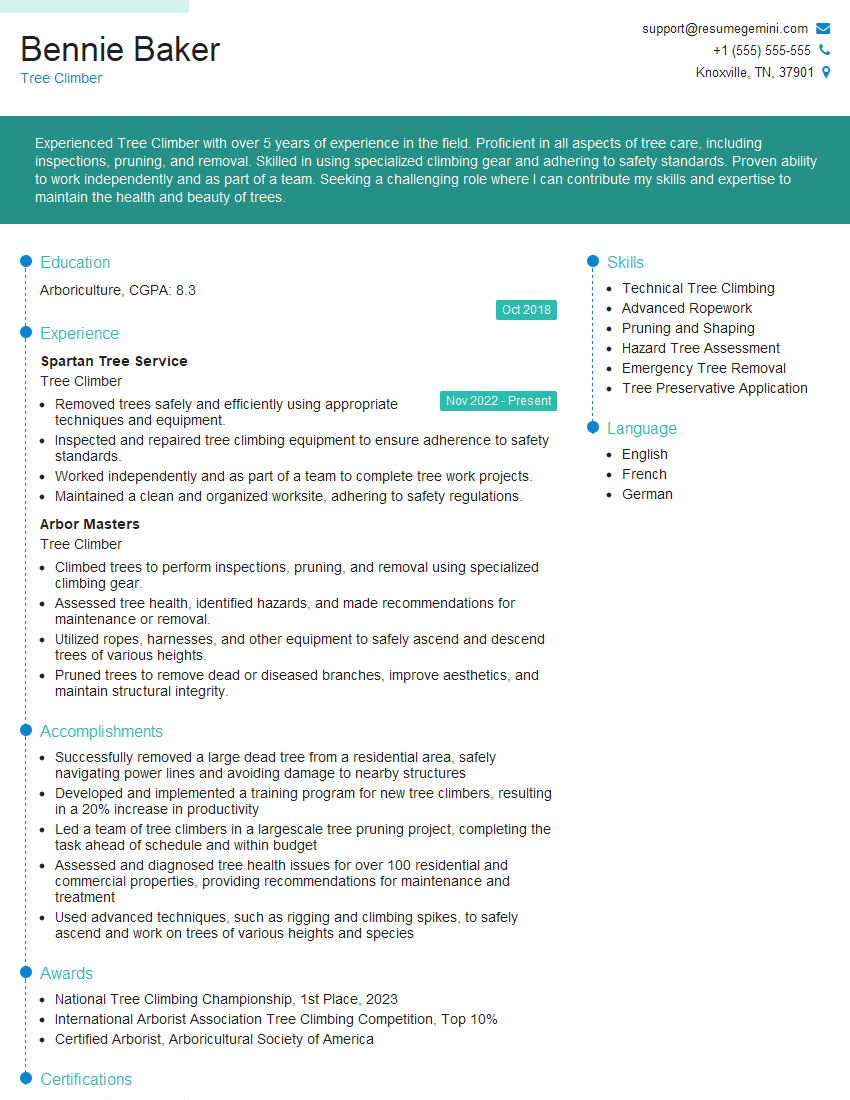
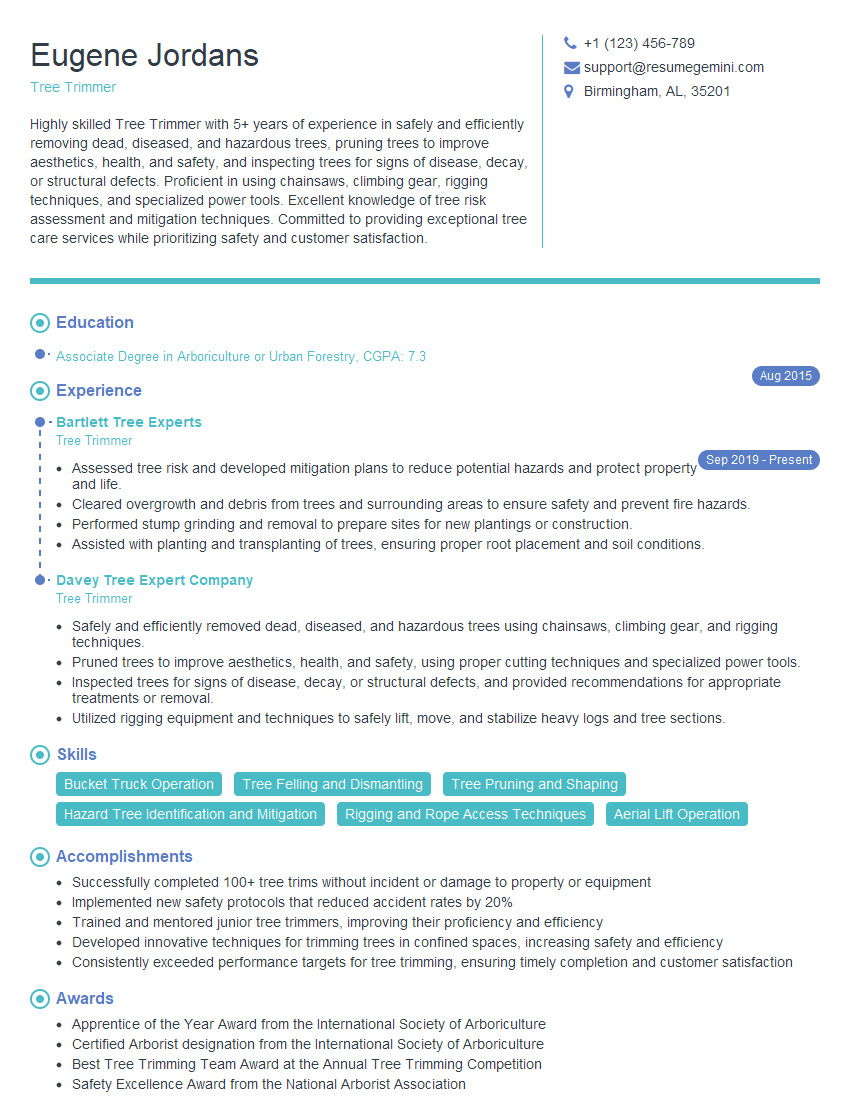
Mastering tree pruning and maintenance opens doors to a rewarding career with excellent growth potential. From improving your technical skills to managing teams, this field offers diverse opportunities for advancement. To stand out, create an ATS-friendly resume that highlights your skills and experience effectively. Use ResumeGemini to build a professional resume that showcases your expertise and increases your chances of landing your dream job. ResumeGemini offers examples of resumes tailored to the Tree Pruning and Maintenance field to help you get started.


Explore more articles
Users Rating of Our Blogs
Share Your Experience
We value your feedback! Please rate our content and share your thoughts (optional).
What Readers Say About Our Blog
Very informative content, great job.
good