Preparation is the key to success in any interview. In this post, we’ll explore crucial Tree Risk Assessment and Management interview questions and equip you with strategies to craft impactful answers. Whether you’re a beginner or a pro, these tips will elevate your preparation.
Questions Asked in Tree Risk Assessment and Management Interview
Q 1. Explain the difference between visual tree assessment (VTA) and more detailed assessment methods.
Visual Tree Assessment (VTA) is a quick, initial inspection of a tree, primarily using visual observation from the ground to identify potential hazards. It’s like a quick health check-up. Think of it as a first impression – you notice obvious signs of decay, broken branches, or leaning. More detailed assessment methods, however, delve much deeper. They involve techniques like using specialized equipment (e.g., resistographs to assess wood density), taking detailed measurements (e.g., branch angles), and potentially employing destructive sampling (e.g., taking core samples) to determine the internal condition of the tree. These more thorough methods are akin to a comprehensive medical examination – they provide a far more accurate diagnosis of the tree’s health and potential risks. For example, a VTA might identify a large cavity, but a detailed assessment would determine its extent, depth, and impact on structural integrity.
The choice between VTA and a more detailed assessment depends on the risk level and the consequences of failure. A high-risk tree near a building would warrant a detailed assessment, while a relatively isolated tree in a park might only need a VTA.
Q 2. Describe the key factors influencing tree failure.
Tree failure, meaning the complete or partial collapse of a tree, is a complex process influenced by several interacting factors. These can be broadly categorized into:
- Biological Factors: These relate to the tree’s internal condition. Decay from fungi, insect infestation, and inherent weaknesses in the wood structure all significantly contribute. A tree weakened by disease will be more prone to failure than a healthy one.
- Environmental Factors: These external forces stress the tree, weakening its ability to resist failure. Strong winds, heavy snow or ice loads, and soil conditions (e.g., compaction, poor drainage) all play a part. Imagine a tree constantly battered by strong winds – it’s more likely to succumb than a tree sheltered from harsh weather.
- Structural Factors: These pertain to the tree’s physical structure. This includes the angle of branches, the presence of large cavities, the overall shape of the crown, and the root system. A tree with a poorly balanced crown or inadequate root support is inherently more vulnerable.
- Human Factors: Actions such as improper pruning, soil compaction around the base, and construction damage near the roots can weaken a tree and increase the risk of failure. Improper pruning techniques, for instance, can leave the tree open to disease and further weakening.
It’s crucial to understand that tree failure is often the result of a combination of these factors, rather than a single cause. A seemingly healthy tree might fail during a severe storm if it has a hidden decay within its trunk, for example.
Q 3. What are the main components of a comprehensive tree risk assessment report?
A comprehensive tree risk assessment report should include the following key components:
- Tree Identification and Location: This includes species, size, location (with GPS coordinates if possible), and any identifying features.
- Visual Assessment Findings: A detailed description of visible defects such as cavities, cracks, leaning, dead branches, and signs of disease or pest infestation.
- Detailed Assessment Findings (if applicable): This section would include results from any specialized tests, such as resistograph readings or core samples, providing quantitative data on wood density and decay extent.
- Risk Assessment Methodology: Clearly stating the risk assessment methodology used (e.g., quantitative risk analysis, matrix-based approach). This ensures transparency and reproducibility.
- Risk Rating: A clear assessment of the likelihood and consequences of tree failure, often expressed as a numerical score or categorized risk level (e.g., low, medium, high). This is crucial for prioritizing management actions.
- Recommendations: Specific recommendations for management actions based on the risk assessment. These may include pruning, cabling, removal, or regular monitoring.
- Photographs and Diagrams: Visual documentation of the tree and its defects. This helps to clearly illustrate the findings.
- Appendices (if applicable): This might include detailed data from testing, maps, or additional supporting information.
The report should be clear, concise, and easy to understand, even for non-technical readers. It should also be legally defensible and suitable for use in insurance claims or legal proceedings if needed.
Q 4. How do you assess the risk posed by decaying wood in a tree?
Assessing decay in a tree involves a multi-pronged approach. Simply seeing a cavity doesn’t tell the whole story; we need to understand the extent and nature of the decay. Visual assessment is the first step, looking for fruiting bodies of fungi, changes in bark texture, discoloration, and the presence of cracks or hollows. However, this only reveals what’s visible. More advanced techniques are essential to understand the internal condition. These include:
- Resistography: A non-destructive method using a small probe that measures the resistance of the wood to penetration. This provides a profile of wood density, indicating areas of decay.
- Sonic Tomography: This uses sound waves to create a cross-sectional image of the trunk, revealing internal voids and decayed areas.
- Increment Borer Sampling: A small core sample is extracted, allowing for microscopic analysis to identify the type of decay organism and the extent of decay.
Once we have a complete picture of the decay extent, its location within the tree, and its rate of progression, we can evaluate its impact on structural integrity and, therefore, the risk of failure. The assessment considers not only the volume of decayed wood but also its position within the trunk, its connection to the supporting structure, and the tree’s overall health. A small amount of decay in a non-critical area might pose a low risk, while extensive decay in a load-bearing part of the trunk would be a significant concern.
Q 5. Explain your understanding of decay resistance and susceptibility in different tree species.
Decay resistance and susceptibility vary significantly between tree species due to differences in wood chemistry, density, and natural defenses. For example, hardwoods like oak and ash generally exhibit higher decay resistance due to their high density and chemical composition. Their heartwood is often impregnated with compounds that inhibit fungal growth. This means they are less susceptible to decay, especially when compared to softer species.
Conversely, species like elm and willow often display greater susceptibility to decay. Their wood might have a lower density and fewer natural defenses, making them more vulnerable to fungal attack. The rate of decay is also influenced by environmental factors like moisture levels. Even resistant species can succumb to decay in excessively wet conditions.
Understanding these differences is crucial when assessing the risk posed by a tree. A cavity in an oak tree might represent a less significant risk than the same-sized cavity in a willow, even though the visual assessment might appear similar. The tree species should always be considered within the overall risk assessment.
Q 6. What are the common signs of root disease and how do you assess its impact on tree stability?
Root diseases can severely compromise a tree’s stability by decaying the root system, reducing its anchorage and ability to uptake water and nutrients. Common signs of root disease include:
- Changes in Foliage: Thinning crown, yellowing or browning of leaves, dieback of branches, reduced vigor.
- Abnormal Growth: Swelling or distortion of the trunk or branches.
- Fruiting Bodies of Fungi: The presence of mushrooms or conks at the base of the tree or on exposed roots.
- Soil Conditions: Presence of unusually wet or dry soil around the base, indicating compromised root function.
- Leaning or Instability: The tree may exhibit an unusual lean or instability that is not easily explained by other factors.
Assessing the impact on stability requires a thorough examination of the root system. This may involve excavation to expose portions of the roots, looking for evidence of decay or discoloration. As root systems are largely underground, it’s often necessary to use non-destructive methods such as ground penetrating radar to get a more complete picture of the root system’s extent and health. The degree of root decay, the proportion of the root system affected, and the tree’s overall health are all considered when evaluating the impact on stability.
Q 7. How do you assess the risk of trees near power lines or other utilities?
Assessing the risk of trees near power lines or other utilities requires a careful consideration of several factors. The key element is the potential for the tree to make contact with the lines due to wind, ice, or its own growth and failure. This assessment goes beyond simple distance measurements. We must consider:
- Tree Species and Health: The species’ growth rate and susceptibility to disease and decay play a significant role. Fast-growing species near lines pose a greater risk.
- Branch and Crown Configuration: Overhanging branches, particularly those that are dead or diseased, are immediate hazards. The crown’s overall size and density must be assessed.
- Leaning or Failure Potential: A leaning tree or one exhibiting signs of instability poses a significantly higher risk. Any structural defects that could precipitate failure need to be carefully examined.
- Proximity to Lines: While distance is a factor, the actual clearance between the tree and lines is paramount. The swing radius of branches in high winds needs careful consideration.
- Environmental Conditions: Factors such as the frequency of high winds and ice storms in the area influence risk significantly. Locations exposed to frequent severe weather events have a higher risk.
The assessment might involve detailed measurements, specialized equipment for assessing branch stability, and simulations to predict branch movement under various conditions. The ultimate aim is to determine the probability of contact and the potential consequences of such contact (e.g., power outage, injury, fire). Based on this risk assessment, recommendations would range from pruning to tree removal, with appropriate mitigation strategies.
Q 8. Describe different tree bracing and cabling techniques and when they are appropriate.
Tree bracing and cabling are crucial techniques in arboriculture for supporting weakened or structurally compromised trees. The goal is to reinforce the tree’s structure, preventing failure and reducing the risk of limb or whole-tree collapse. The choice of technique depends heavily on the specific defect, tree species, and surrounding environment.
- Cable bracing: This involves using galvanized steel cables to connect structurally weak limbs or sections of the tree. The cables are attached to strong, healthy parts of the tree using specialized hardware like eyebolts and cable grips. It’s particularly useful for supporting large, heavy limbs with signs of weakness like decay or large cracks, or for trees with wide crotches prone to splitting. Imagine it like adding extra guy wires to a tent pole – reinforcing the weaker parts.
- Rod bracing: This uses strong, usually threaded, metal rods to internally support weak crotches or splits. The rods are typically inserted into holes drilled into the wood, and secured with specialized bolts. This technique is particularly effective for supporting internal weakness where external cabling may not be practical. It’s like adding a splint to a broken bone.
- Post bracing: This technique involves using a strong, vertical post to support a leaning tree or a significantly weakened branch. The post is usually anchored into the ground and then connected to the tree with cables or rods. This is suitable for trees with severe lean or those showing significant structural damage. This is comparable to propping up a leaning wall.
Choosing the right technique: A thorough visual assessment and potentially more in-depth investigations (e.g., using a sonic tomograph) are necessary. Factors like the tree species’ inherent strength, the location (e.g., near buildings, roadways), and the extent of damage all play a role in determining the best approach. For instance, a small crack in a young tree might only need a simple cable brace, while a large, decaying limb in an old oak might require a more complex system involving rods and cables.
Q 9. How do you determine the appropriate pruning methods to mitigate tree risk?
Pruning is a valuable tool in tree risk management but requires careful consideration to avoid causing further harm. The goal is to remove hazardous branches while promoting long-term tree health. Inappropriate pruning can weaken the tree, inviting decay or making it more vulnerable to future damage.
- Crown reduction: This involves shortening the length of branches to reduce the overall size of the crown. It’s only appropriate for trees that have grown too large for their location or when specific branches pose a high risk due to size or weight. It must be done correctly to avoid creating stubs and promoting decay.
- Crown thinning: This removes selected smaller branches to reduce the density of the canopy, improving airflow and sunlight penetration. This improves the structural integrity of the crown and reduces the chances of large limbs breaking under stress from wind or ice. It’s like pruning a hedge for better shape and structure.
- Crown cleaning: This involves removing dead, dying, or diseased branches from the crown. This is crucial for improving tree health and removing potential hazards. Regular cleaning removes potential sources of rot and insect infestations.
- Crown lifting: This involves raising the lower branches of a tree to increase clearance under the crown. It is useful for ensuring pedestrian and vehicle access without jeopardizing the tree’s stability.
Selecting appropriate methods: The appropriate pruning method is determined by a risk assessment that considers the tree’s species, size, age, health, and the specific hazards it poses. For instance, a tree overhanging a power line would require crown lifting and cleaning, while a tree with large, decaying limbs may necessitate crown reduction or targeted removal of affected branches. Proper pruning technique is crucial to avoiding tree wounds that can become entry points for diseases and pests, thereby increasing the long-term risk.
Q 10. What are the legal and regulatory considerations related to tree risk management?
Legal and regulatory considerations regarding tree risk management vary depending on location. However, common themes often include:
- Liability: Landowners often have a legal responsibility to ensure trees on their property do not pose a danger to the public. Failure to do so can result in legal action if a tree causes damage or injury. This responsibility is often influenced by local ordinances which may define standards for tree maintenance.
- Building codes and regulations: Many jurisdictions have codes that regulate tree planting and maintenance near buildings, power lines, and roadways. These regulations frequently dictate minimum clearances and specify requirements for tree risk assessments. These regulations usually prioritize public safety.
- Insurance: Insurance companies often require evidence of tree risk management measures, especially for high-risk trees near structures. A properly documented tree risk assessment and management plan can help avoid disputes in the event of a tree-related incident.
- Environmental regulations: Permitting might be required for significant tree removal or pruning, especially for protected species or in environmentally sensitive areas. These regulations prioritize environmental protection.
Practical application: Before undertaking any significant tree work, it’s crucial to consult with local authorities and obtain the necessary permits. Maintaining detailed records of assessments, pruning, and other treatments, is essential for demonstrating due diligence and complying with legal requirements. Neglecting these aspects can lead to costly fines or legal battles.
Q 11. Explain the process of developing a tree management plan.
Developing a comprehensive tree management plan involves a systematic approach that prioritizes safety, tree health, and long-term sustainability. The plan acts as a roadmap guiding future actions.
- Inventory and Assessment: Begin by identifying all trees within the area of interest. This includes species, location, size, and visual assessment of their condition. Detailed assessments (including instrumental methods if necessary) should be conducted to identify potential hazards.
- Risk Assessment: Each tree’s condition should be evaluated to determine the likelihood and severity of failure and potential consequences (e.g., damage to property or injury). This assessment helps to prioritize trees that need immediate attention.
- Prioritization: Using a risk matrix, prioritize trees based on the assessed risks. Trees posing the highest risk should be addressed first.
- Management Strategies: Develop a detailed plan of action, outlining specific steps for each tree based on the risk assessment. This plan may include pruning, bracing, cabling, removal, or ongoing monitoring.
- Implementation Schedule: Outline a realistic timetable for implementing the management strategies. Consider weather conditions, resources, and budget constraints.
- Monitoring and Review: Establish a regular inspection program to monitor the effectiveness of the implemented measures and make adjustments as needed. The plan should be periodically reviewed and updated to reflect changes in tree conditions and risk levels.
Example: A university campus with numerous old trees might have a plan that prioritizes trees near buildings and walkways, followed by trees near recreation areas. It might schedule regular crown cleaning and risk assessment for all trees, with more detailed assessments and interventions for high-risk specimens.
Q 12. How do you prioritize tree risk management activities in a large area?
Prioritizing tree risk management in a large area requires a structured and systematic approach. Efficient prioritization ensures resources are allocated to the most critical situations first. A common approach involves a risk matrix.
- Initial Assessment: Conduct a preliminary survey to identify high-risk areas and any obviously hazardous trees (e.g., those leaning heavily, with visible decay, or near structures). This initial walk-through provides a quick overview of potential problem areas.
- Risk Matrix: Create a risk matrix by categorizing trees according to their likelihood of failure and the potential consequences of failure. Assign scores based on factors like tree species, size, location, and proximity to people or property. High-likelihood, high-consequence trees receive top priority.
- Prioritization System: Assign a priority level (e.g., high, medium, low) to each tree based on its risk score. This system ensures the allocation of resources to the trees that pose the most immediate threat. Trees categorized as ‘high’ risk require immediate attention.
- Resource Allocation: Allocate resources (personnel, budget, equipment) based on the prioritized list. This ensures efficient use of time and funds, focusing on the most critical risks.
- Regular Monitoring: Conduct routine inspections to re-evaluate the risks and make adjustments to the priority list as needed. Tree conditions can change over time due to weather, disease, or other factors. This ensures your efforts remain relevant and effective.
Example: A city park with hundreds of trees might prioritize those near playgrounds and picnic areas as ‘high risk,’ followed by those near roads and parking lots as ‘medium risk,’ and finally, those in less-frequented areas as ‘low risk.’ This allows for efficient allocation of arborist time and resources.
Q 13. What are the limitations of visual tree assessment?
Visual tree assessment (VTA) is a crucial initial step in tree risk assessment, but it has limitations. It relies on the arborist’s experience and judgment, and human error can occur.
- Subsurface defects: VTA cannot detect internal decay or defects hidden beneath the bark or within the trunk. These internal problems can significantly weaken a tree without being visible on the surface. It’s like trying to diagnose a medical issue by looking only at the skin.
- Limited accuracy: The accuracy of VTA depends entirely on the skill and experience of the assessor. Subjective judgments can lead to inconsistencies and inaccurate risk assessments. Even experienced assessors can be misled by external appearances.
- Difficult access: In some cases, access to the tree crown may be restricted, limiting the ability to thoroughly assess the condition of upper branches. This limitation often necessitates the use of climbing equipment or specialized technology.
- Lack of quantitative data: VTA primarily provides qualitative data, making it challenging to compare risk levels between different trees objectively. Quantitative data, like that from a sonic tomograph, provides more precise measurements of internal wood strength.
Overcoming limitations: VTA should always be supplemented with other methods, such as using specialized tools or technologies like sonic tomography or resistographs to obtain quantitative data on the tree’s internal structure. This comprehensive approach significantly increases the accuracy and reliability of the risk assessment.
Q 14. Explain the use of technology (e.g., software, instruments) in tree risk assessment.
Technology plays an increasingly significant role in enhancing the accuracy and efficiency of tree risk assessment. Various tools and software provide data that complements visual assessment.
- Sonic tomography: This non-destructive technology uses sound waves to create an image of the tree’s internal structure. It can reveal the extent of decay or internal defects, providing crucial data that VTA alone cannot provide. Think of it as an ultrasound for trees.
- Resistography: This technique measures the resistance of wood to a small drill bit, revealing variations in wood density that indicate decay or other internal weaknesses. It provides a quantitative measure of wood strength along a specific path.
- 3D laser scanning: This technology creates detailed 3D models of the tree crown, enabling precise measurements of branch angles, lengths, and volumes. This data can be used to assess structural stability and calculate the forces acting on different parts of the tree.
- Software programs: Several software packages are available to assist in tree risk assessment. These programs can help analyze data from various sources (e.g., VTA, sonic tomography) and generate quantitative risk scores for individual trees. They also aid in record keeping and report generation.
- Drones: Drones with high-resolution cameras can capture images of the entire tree crown from various angles, improving the quality and detail of the visual assessment, particularly in tall trees or those in difficult-to-access locations.
Practical application: The use of these technologies allows for a more objective and quantitative assessment, improving decision-making regarding tree management. By combining visual assessment with instrumental data, arborists can develop more accurate and reliable risk assessments, ultimately leading to safer and more effective management strategies.
Q 15. How do you handle conflicting stakeholder interests regarding tree risk management?
Handling conflicting stakeholder interests in tree risk management requires a delicate balance of communication, negotiation, and risk prioritization. It’s about finding a solution that addresses everyone’s concerns, while maintaining a safe and responsible approach. I usually start by facilitating a meeting with all stakeholders involved – homeowners, property managers, arborists, and potentially local authorities. Each party will have their own perspectives and priorities; for instance, a homeowner might prioritize aesthetic appeal over complete safety, while a municipality might prioritize public safety above all else.
My approach involves:
- Clearly defining the risks: I present a detailed tree risk assessment outlining potential hazards and their associated probabilities and consequences, using clear, non-technical language.
- Prioritizing risks: We discuss and rank the identified risks, considering the likelihood of failure and potential harm. This helps establish a common understanding of what poses the most immediate threat.
- Exploring options and compromises: We explore various management options, from pruning and cabling to tree removal. This involves openly discussing the pros and cons of each option, considering cost implications, and aesthetics.
- Documenting the agreement: Finally, we document the agreed-upon course of action in a written report that all stakeholders sign, ensuring clear expectations and accountability.
For example, if a large oak tree poses a risk to a nearby building, but is considered a significant landscape feature by the homeowner, we might explore options such as targeted pruning to reduce the crown’s weight and improve its stability, instead of outright removal. This allows for compromise and preservation of the tree, while mitigating risk.
Career Expert Tips:
- Ace those interviews! Prepare effectively by reviewing the Top 50 Most Common Interview Questions on ResumeGemini.
- Navigate your job search with confidence! Explore a wide range of Career Tips on ResumeGemini. Learn about common challenges and recommendations to overcome them.
- Craft the perfect resume! Master the Art of Resume Writing with ResumeGemini’s guide. Showcase your unique qualifications and achievements effectively.
- Don’t miss out on holiday savings! Build your dream resume with ResumeGemini’s ATS optimized templates.
Q 16. Describe your experience with different tree species and their risk profiles.
My experience encompasses a wide range of tree species, each presenting unique risk profiles. For instance, I’ve worked extensively with mature oak trees (Quercus spp.), known for their large size and susceptibility to decay and structural failure. Their strong, often brittle wood can pose a significant risk, especially in windy conditions or after storm damage. I’ve also dealt with willows (Salix spp.), which have a tendency to develop shallow root systems and are more vulnerable to windthrow. On the other hand, some species are naturally more resistant to decay and breakage, such as certain types of maple (Acer spp.).
I assess risk profiles based on several factors, including:
- Species-specific vulnerabilities: Certain species are inherently more prone to particular diseases or structural weaknesses.
- Age and growth rate: Older trees often exhibit more decay and structural defects.
- Site conditions: Poor soil drainage, compaction, or lack of space can weaken a tree’s structure.
I use this knowledge to tailor my assessment to the specific species, taking into account its known vulnerabilities and tendencies. For instance, I might employ more rigorous inspections for oaks, focusing on signs of decay, while for willows, I would pay close attention to the root system’s health and stability.
Q 17. What are your methods for documenting and communicating your tree risk assessments?
Thorough documentation and clear communication are essential for effective tree risk management. My method involves a multi-step process:
- Visual Inspection: Detailed notes, sketches, and photographs are taken during the visual inspection, noting the tree’s condition, location, surrounding structures, and potential hazards.
- Data Collection: Measurements are recorded (e.g., tree height, diameter, crown spread), along with observations on structural defects, disease symptoms, or signs of insect infestation.
- Risk Assessment Report: A formal report is prepared that summarizes findings, including risk scores based on the assessment method used. The report clearly identifies high-risk trees, potential hazards, and recommended management actions.
- Photographs and Maps: High-quality photographs and site maps are included in the report to provide visual context and clarity.
- Recommendations: Specific recommendations are made for management actions such as pruning, cabling, removal, or ongoing monitoring. These recommendations are tailored to the identified risks and stakeholder concerns.
- Communication Plan: Depending on the client and situation, the assessment might include a communication plan to ensure all relevant stakeholders understand the findings and recommendations. This could include presentations, emails, or written reports.
I use a combination of software and paper-based documentation to ensure the reports are complete, accurate, and easily accessible. The information is always organized for easy review and traceability, facilitating future inspections and analyses.
Q 18. How do you stay up-to-date with the latest research and best practices in tree risk management?
Staying current in tree risk management requires continuous learning and engagement with the field’s advancements. I actively participate in several methods to stay abreast of the latest research and best practices:
- Professional Organizations: Membership in organizations like the International Society of Arboriculture (ISA) provides access to publications, conferences, and continuing education opportunities. I regularly attend their workshops and webinars.
- Peer-Reviewed Journals: I regularly read peer-reviewed journals dedicated to arboriculture, forestry, and related fields, keeping me updated on the latest scientific research on tree biology, disease, and risk assessment methods.
- Industry Conferences and Workshops: I actively attend conferences and workshops, networking with other professionals and learning about new techniques and technologies.
- Online Resources: I utilize reputable online resources, such as government agency websites, university research databases and professional organizations to supplement my learning.
This commitment to ongoing professional development ensures I’m equipped with the most current knowledge and best practices to serve my clients effectively and safely.
Q 19. Describe your experience with risk matrices and quantitative risk assessment.
Risk matrices are a valuable tool in quantitative risk assessment, allowing for a structured and visual representation of the likelihood and severity of potential failure. I typically use a matrix with a scale for both likelihood (e.g., low, medium, high) and consequence (e.g., minor damage, significant injury, fatality). Each cell in the matrix represents a risk level, calculated by combining likelihood and consequence.
For example, a tree with a high likelihood of failure and a high consequence (e.g., potential to cause significant damage to a building or injury to people) would fall into the high-risk category, requiring immediate action. This allows for easy prioritization of trees for management.
I often incorporate more sophisticated quantitative methods when dealing with complex projects or high-value assets. This may include using decision trees or probabilistic models to account for the uncertainty of events.
The key is to ensure the matrix aligns with the specific context of the assessment and appropriately reflects the relative risks, based on relevant standards and guidelines. I use established standards in my assessments and clearly document all the metrics and assumptions used in building the matrix.
Q 20. Explain how site conditions impact tree stability and risk.
Site conditions significantly influence tree stability and risk. Poor site conditions can weaken a tree’s structure, making it more susceptible to failure. These conditions can include:
- Soil type and drainage: Compacted or poorly drained soils restrict root growth, reducing the tree’s anchorage and resilience to wind and other stresses.
- Soil depth and compaction: Shallow soils limit root development, increasing vulnerability to windthrow.
- Competition for resources: Overcrowding from neighboring trees or other vegetation can reduce the availability of water and nutrients, weakening the trees.
- Ground disturbances: Construction, grading, or other ground disturbances can damage roots, destabilizing trees.
- Slope and aspect: Steep slopes increase the risk of root failure and windthrow, whereas southerly aspects in hotter climates can cause increased desiccation stress.
I carefully assess site conditions during the inspection, noting any factors that might compromise tree stability. For example, if I find a tree with compromised roots due to nearby construction, I’ll incorporate this information into the risk assessment and recommend appropriate mitigation measures, such as root protection or tree bracing.
Q 21. How do you assess the impact of environmental factors (e.g., wind, snow, ice) on tree risk?
Environmental factors play a crucial role in determining tree risk. I assess the impact of wind, snow, and ice by considering:
- Wind: Wind speed and direction are critical. Trees in exposed locations or with asymmetrical crowns are at higher risk of windthrow. I consider historical wind data and the tree’s wind resistance based on its structure and species.
- Snow and Ice: The weight of snow and ice can cause branch breakage or even whole-tree failure. I assess the tree’s crown density, branch architecture, and the likelihood of snow or ice accumulation based on local weather patterns.
- Combined Effects: I consider the combined impact of multiple environmental factors, such as high winds coupled with heavy snow or ice, which can significantly increase the risk of failure. For example, a tree weakened by decay is more vulnerable to wind damage.
I use various methods to account for these factors in the assessment, including historical weather data, meteorological forecasts, and knowledge of local microclimates. This allows for a more accurate and nuanced evaluation of risk. For instance, a tree with a history of ice damage might require more frequent monitoring or proactive pruning to minimize the risk of future damage.
Q 22. What are the common causes of tree failure and how can they be avoided?
Tree failure, sadly, is often a culmination of several factors rather than a single cause. Think of it like a chain—if one link is weak, the whole chain can break. Common causes include:
- Decay: Fungi and bacteria break down the wood, reducing its strength. This is often hidden, making it crucial to use techniques like Resistograph testing to assess internal wood condition.
- Structural Defects: These can be inherent weaknesses from the tree’s growth, like co-dominant leaders (two main stems competing for dominance), included bark, or weak branch unions.
- Environmental Factors: Strong winds, ice storms, or even heavy snow can exceed a tree’s structural capacity. Soil conditions, such as compaction or poor drainage, also play a significant role.
- Root Damage: Construction, improper planting, or soil erosion can severely weaken a tree’s root system, reducing its ability to anchor itself.
- Pest and Disease Infestation: Insects and diseases weaken the wood, making it more susceptible to breakage. For example, Emerald Ash Borer infestation severely compromises the structural integrity of Ash trees.
Avoiding tree failure requires proactive management. This includes regular inspections by qualified arborists, using appropriate risk assessment tools like the British Standard BS 5837:2012, implementing preventative pruning to remove weak or compromised branches, and addressing soil and environmental issues. Regular monitoring for signs of decay or pest infestation is critical. Think of it like regular check-ups for your own health—preventative care is key.
Q 23. Describe your experience with emergency tree removal procedures.
Emergency tree removal requires swift, safe, and decisive action. My experience involves coordinating with emergency services, assessing the immediate threat (e.g., downed power lines, blocked roads, risk to life and property), and employing techniques that prioritize safety above all else. This often means using specialized equipment like cranes or aerial lifts to safely remove the hazardous sections. For example, I once managed the emergency removal of a large oak tree that had been partially uprooted during a severe storm. The immediate priority was securing the area and preventing further damage, before carefully removing the tree in a controlled manner, ensuring no harm came to public or personnel.
Documentation is crucial in these situations, recording every step taken, including safety precautions employed, the assessment of risks involved, and actions taken to mitigate them. This documentation is vital for insurance purposes and to prevent future accidents.
Q 24. How do you develop a budget for tree risk management activities?
Budgeting for tree risk management is a strategic process that considers both short-term and long-term costs. It begins with a comprehensive tree inventory and risk assessment. This inventory identifies all trees on a property, assesses their risk level, and prioritizes management based on risk. The risk assessment will pinpoint critical trees that need immediate attention and others that may only need less urgent work.
Next, I estimate costs based on the work needed. This includes:
- Inspection and assessment fees: For qualified arborists.
- Pruning and maintenance costs: This can vary greatly based on tree size, accessibility, and complexity of work.
- Removal costs: For trees that need to be completely taken down.
- Equipment rental or purchase: Chainsaws, chippers, aerial lifts, etc.
- Labor costs: Including wages, insurance, and benefits for tree workers.
- Contingency funds: To account for unforeseen events or complexities.
The budget is then presented with a clear justification for each item, showing how the costs relate to risk mitigation. For example, a higher immediate cost for crown reduction on a high-risk tree might prevent a much more expensive emergency removal later.
Q 25. What are your methods for training and supervising tree workers?
Training and supervision are paramount for safe and effective tree work. My approach involves a multi-tiered system. It starts with ensuring all workers possess the necessary qualifications and certifications (e.g., ISA Certified Arborist), regularly updating their skills through continuing education. This includes both theoretical knowledge (tree biology, risk assessment, etc.) and hands-on practical training, including safe use of equipment and emergency procedures.
Supervision includes daily briefings on the tasks planned, monitoring workers’ performance to ensure adherence to safety protocols, and conducting regular toolbox talks to address any safety concerns or refresh best practices. Furthermore, regular performance evaluations provide feedback and opportunities for improvement.
I also employ a system of mentorship where experienced workers train and guide newer team members, fostering a collaborative learning environment.
Q 26. Describe your experience working with tree care equipment and safety procedures.
My experience with tree care equipment is extensive, encompassing a range of tools from hand saws and pruners to advanced machinery such as aerial lifts, cranes, and wood chippers. I am proficient in the safe operation and maintenance of all equipment, adhering strictly to manufacturer’s instructions and all relevant safety regulations.
Safety is always the priority. This includes regular equipment inspections, ensuring that all safety devices are in working order (e.g., harnesses, lanyards, helmets, eye protection), and using appropriate personal protective equipment (PPE) at all times. Pre-job planning includes assessing the worksite to identify potential hazards and selecting the most appropriate equipment for the task.
For example, before using a chainsaw, I would always check the chain sharpness and tension, ensuring the brakes are functioning correctly and wearing proper safety gear including chaps, gloves, and eye protection.
Q 27. How do you ensure the safety of the public during tree risk management operations?
Ensuring public safety during tree risk management operations is a core responsibility. My methods include:
- Site assessment and risk evaluation: Identifying potential hazards and planning work to minimize risks to the public.
- Establishing exclusion zones: Using barriers, signage, and personnel to keep the public at a safe distance from the work area.
- Clear communication: Informing nearby residents or businesses about the planned work, its duration, and potential disruptions.
- Traffic management: If necessary, coordinating with local authorities to manage traffic flow around the work site.
- Emergency procedures: Having clear protocols in place to deal with unexpected events.
Think of it as creating a carefully managed “bubble” of safety around the work site to protect the public from any potential risks. Thorough planning and communication are key.
Q 28. How do you address concerns about liability in tree risk management?
Liability in tree risk management is a serious concern. To address it, I employ a multi-faceted approach:
- Detailed documentation: Maintaining thorough records of inspections, assessments, work performed, and any communication with clients or property owners.
- Compliance with regulations: Adhering to all relevant industry standards, safety regulations, and legal requirements.
- Professional indemnity insurance: Securing appropriate insurance coverage to protect against potential claims.
- Clear contracts: Using well-defined contracts that outline the scope of work, responsibilities, and limitations of liability.
- Risk communication: Openly communicating potential risks to clients and stakeholders, ensuring a shared understanding and agreement on the management strategy.
Proactive risk management, thorough documentation, and appropriate insurance are vital to minimizing liability. It’s about being responsible and transparent in all aspects of the work.
Key Topics to Learn for Tree Risk Assessment and Management Interview
- Tree Biology and Physiology: Understanding tree growth, structure, and common diseases/decay mechanisms is fundamental. This includes recognizing stress factors impacting tree health.
- Visual Tree Assessment (VTA): Master the techniques of visual inspection, including identifying defects, assessing decay, and recognizing signs of instability. Practice describing your assessment methodology and rationale.
- Risk Assessment Methodologies: Familiarize yourself with various risk assessment models (e.g., qualitative, quantitative) and their applications in different scenarios. Be prepared to discuss the limitations of each approach.
- Tree Measurement Techniques: Develop proficiency in using various tools and methods for measuring tree dimensions (height, diameter, crown spread) and assessing tree stability. Understand the importance of accurate measurements in risk assessment.
- Risk Management Strategies: Learn about different mitigation techniques, including pruning, cabling, bracing, and removal. Be able to justify your recommendations based on risk assessment findings.
- Legal and Regulatory Compliance: Understand relevant safety regulations, industry standards, and best practices related to tree work and risk management. This includes worker safety and public liability.
- Report Writing and Communication: Practice clearly and concisely communicating your assessment findings and recommendations to clients and stakeholders in both written and verbal formats.
- Advanced Techniques (for Senior Roles): Explore topics like decay detection technologies (e.g., Resistograph), advanced risk assessment software, and arboricultural best practices relevant to specific tree species or environmental conditions.
Next Steps
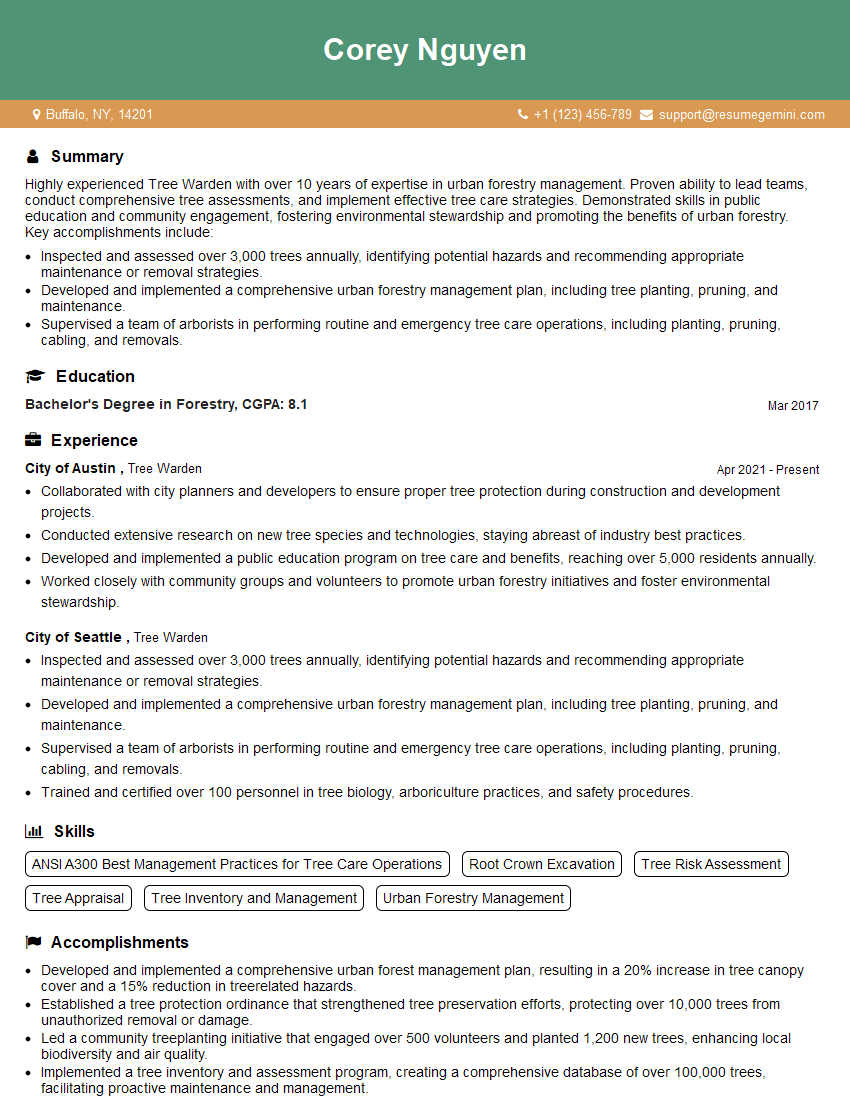
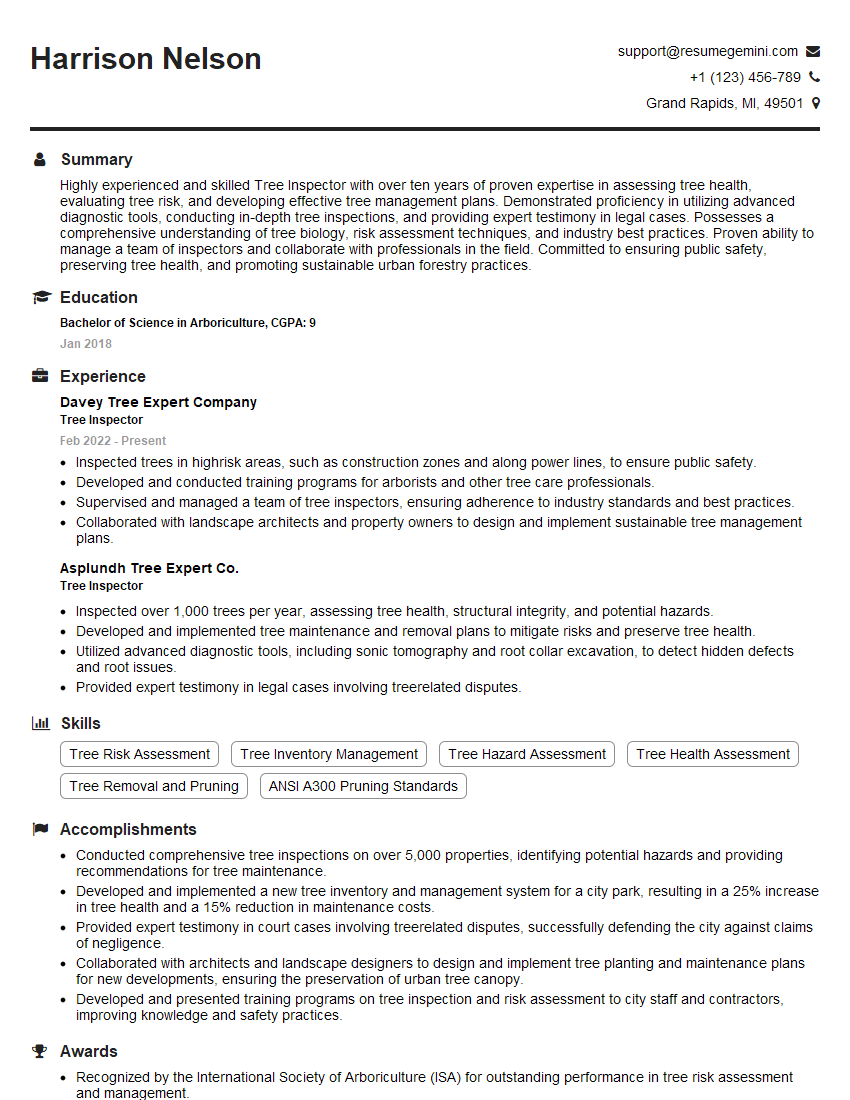
Mastering Tree Risk Assessment and Management opens doors to exciting career advancements, from leading teams to consulting on high-profile projects. To maximize your job prospects, a well-crafted, ATS-friendly resume is crucial. ResumeGemini offers a powerful tool to help you build a professional resume that showcases your skills and experience effectively. Examples of resumes tailored to Tree Risk Assessment and Management are available to guide your creation. Invest time in perfecting your resume – it’s your first impression on potential employers.

Explore more articles
Users Rating of Our Blogs
Share Your Experience
We value your feedback! Please rate our content and share your thoughts (optional).
What Readers Say About Our Blog
Very informative content, great job.
good