The thought of an interview can be nerve-wracking, but the right preparation can make all the difference. Explore this comprehensive guide to Tree Shaping Equipment Operation interview questions and gain the confidence you need to showcase your abilities and secure the role.
Questions Asked in Tree Shaping Equipment Operation Interview
Q 1. Describe your experience operating different types of tree shaping equipment.
My experience encompasses a wide range of tree shaping equipment, from hand tools like loppers and pruning saws to powerful machinery such as chain saws (various sizes and types, including pole saws), aerial lifts, and chippers. I’m proficient in using each tool according to its specifications and the specific needs of the tree and job site. For example, I’ve used small chain saws for intricate pruning of delicate flowering trees, while larger saws were necessary for removing large branches from mature oaks. I’ve also operated aerial lifts to access high branches safely and efficiently, and I’m experienced in using chippers to manage the resulting debris.
Beyond these, I’ve worked with specialized equipment like stump grinders for complete removal of stumps and limbing saws for quicker processing of felled branches. My experience covers a spectrum of tools to allow me to tackle any tree shaping project, regardless of scale or complexity.
Q 2. Explain the safety procedures you follow when using chain saws and other power tools.
Safety is paramount in my work. When using chain saws, I always start with a thorough pre-operation inspection, ensuring the chain is sharp, properly lubricated, and securely fastened. I wear all necessary personal protective equipment (PPE), including chainsaw chaps, safety glasses, hearing protection, and a hard hat. Before making a cut, I assess the surrounding area for hazards, ensuring there are no obstructions or bystanders. I maintain a firm grip on the saw, using both hands, and use proper cutting techniques to avoid kickback. Similar rigorous safety protocols are followed for other power tools. This includes regular maintenance, proper handling, and the use of appropriate PPE, always adhering to manufacturer guidelines.
Furthermore, I regularly undergo refresher training on safety procedures to ensure my skills remain up to date and to incorporate any new safety standards and technologies. Think of it like a pilot undergoing regular simulator training – it’s crucial for maintaining safety standards in a dynamic environment.
Q 3. How do you determine the appropriate pruning techniques for different tree species?
Pruning techniques vary significantly based on tree species and their growth habits. For example, a Japanese Maple requires a more delicate approach, focusing on selective pruning to maintain its unique shape and avoid disrupting its flowering. This may involve removing only dead or crossing branches. In contrast, an oak tree might benefit from more aggressive pruning to remove deadwood, promote strong branch structure, and improve air circulation, possibly involving removing larger, lower branches. I understand the different pruning styles (thinning, heading, crown reduction, etc.) and their impact on individual species.
Understanding the specific growth characteristics of each tree species is key. I consult resources like tree care guides and leverage my own experience to determine the optimal technique. This ensures the health and longevity of the tree while achieving the desired aesthetic outcome.
Q 4. What are the signs of a diseased or damaged tree requiring specialized shaping?
Identifying a diseased or damaged tree requires careful observation. Signs can include dead or dying branches, unusual discoloration of leaves or bark, presence of insects or fungal growths, cankers (sunken areas on the bark), excessive leaf drop outside the normal seasonal shedding, and significant leaning or structural weakness. I’ll also look for signs of root damage, such as exposed roots or areas of soil settling.
Sometimes, the problem may not be immediately visible, so understanding the tree’s history (e.g., recent storms, pest infestations) can help pinpoint the cause. In such cases, professional consultation with an arborist may be needed for a more in-depth assessment and guidance on appropriate treatment and shaping techniques.
Q 5. How do you assess the risks associated with working near power lines or other hazards?
Risk assessment is a critical first step before any work near power lines or other hazards. This involves determining the distance to the lines, considering potential movement of the tree or branches during work, assessing the voltage of the lines, and understanding the weather conditions (wind, rain). I always maintain a safe distance, preferably utilizing equipment like aerial lifts that allow me to work at a safe distance from power lines. I never work near power lines without contacting the power company to ensure the lines are de-energized if necessary.
Other hazards, like uneven terrain or proximity to structures, are also considered. Using appropriate safety equipment, like harnesses and fall protection, is crucial. I develop a detailed plan that includes safe access and egress routes, emergency procedures, and communication protocols. Safety isn’t just a checklist – it’s a continuous process of evaluation and adaptation to the specific circumstances.
Q 6. What are the common maintenance procedures for tree shaping equipment?
Regular maintenance is crucial for the safety and efficiency of tree shaping equipment. For chain saws, this includes sharpening or replacing the chain, cleaning the bar and chain grooves, and lubricating the chain regularly. I also inspect and clean the air filter and spark plug. For other power tools, maintenance procedures vary but generally involve cleaning, lubricating moving parts, and checking for any wear or damage. I keep detailed records of the maintenance performed on each tool, including dates and specifics. This systematic approach ensures that the equipment is in top working condition, reducing the risk of malfunctions and ensuring a long service life.
Think of it like maintaining your car – regular servicing prevents major breakdowns and ensures safe and efficient operation.
Q 7. How do you troubleshoot common malfunctions in tree shaping equipment?
Troubleshooting equipment malfunctions requires a systematic approach. I start by identifying the symptom: is the engine not starting? Is the chain not turning? Is the equipment vibrating excessively? Then, I systematically check the likely causes. For a chain saw, if it won’t start, I’d check the fuel, spark plug, and air filter. If the chain isn’t turning, I’d check the clutch, chain tension, and bar lubrication. If there is excessive vibration, I might check for loose bolts or damage to the equipment.
My approach involves using a combination of practical knowledge, manufacturer manuals, and, if needed, consulting with experienced technicians. I always prioritize safety and will not operate equipment that is malfunctioning until it is properly repaired. Safety is non-negotiable, and I’d rather take the time to fix the equipment properly than risk any injury or damage.
Q 8. Describe your experience using aerial lifts or cranes for tree shaping.
My experience with aerial lifts and cranes in tree shaping is extensive. I’m proficient in operating various types, from boom lifts to knuckle boom cranes, always ensuring they’re correctly positioned and secured before commencing work. Safety is paramount; I meticulously inspect equipment before each use, checking hydraulics, controls, and safety features like outriggers and load limits. For example, when working on a large oak with high branches, I’d use a boom lift for precision pruning, allowing me to reach difficult areas safely. Conversely, for removing large branches from taller trees, a crane with a grapple might be more appropriate, prioritizing efficient and safe removal. I am also familiar with the necessary permits and safety regulations governing the use of such equipment.
Q 9. Explain your understanding of proper tree shaping techniques for promoting healthy growth.
Proper tree shaping, or pruning, promotes healthy growth by directing energy towards the desired form and structure. This involves removing dead, diseased, or crossing branches, improving air circulation and light penetration within the canopy. Techniques focus on making clean cuts that prevent damage to the tree. For example, I make sure to avoid creating stubs by cutting back to a branch collar—the slightly swollen area where a branch joins the trunk. This reduces the risk of disease and decay. Moreover, understanding the tree’s species and its natural growth habit is crucial for effective shaping. Over-pruning can weaken a tree, while neglecting pruning can lead to structural weakness and disease. Think of it like a haircut – you wouldn’t cut all your hair off, only what is necessary to maintain health and shape.
Q 10. What are the different types of pruning cuts and when should each be used?
There are several types of pruning cuts:
- Heading cuts: These cuts remove the terminal portion of a branch, stimulating growth of lateral buds. They’re generally avoided in professional tree shaping except in very specific situations because they can create weak branch unions and damage the tree.
- Thinning cuts: These remove entire branches back to their origin point, improving light penetration and air circulation. They’re essential for maintaining a tree’s health and structure.
- Reduction cuts: These are used to shorten a branch, minimizing stress on the tree while shaping the crown. They involve making two cuts, one slightly outward and another closer to the branch collar, preventing bark tearing.
- Cleaning cuts: These remove dead, diseased, or broken branches, essential for maintaining a tree’s health and structural integrity.
The choice of cut depends on the specific situation and the desired outcome. For instance, thinning cuts are appropriate for dense canopies, while reduction cuts might be necessary to reduce the height or spread of a large branch. Clean cuts are always preferred to minimize the risk of disease.
Q 11. How do you ensure the safety of yourself and others during tree shaping operations?
Safety is my top priority. Before any operation, I perform a thorough site assessment, identifying potential hazards like overhead power lines, underground utilities, and unstable ground. I use appropriate personal protective equipment (PPE), including safety glasses, gloves, hearing protection, and appropriate clothing. When using aerial lifts or cranes, I adhere strictly to manufacturer’s safety guidelines and all relevant regulations. Furthermore, I employ spotters when necessary, especially in challenging situations. Regular equipment checks and maintenance are vital, and I ensure that all team members are aware of safety protocols and communicate effectively throughout the operation. Clear communication is key; if any unforeseen situation arises, work immediately ceases until the hazard is mitigated.
Q 12. What are the environmental considerations when shaping trees?
Environmental considerations are crucial in tree shaping. I avoid excessive pruning, ensuring that the tree retains enough foliage for photosynthesis and maintains its overall health. I use environmentally friendly methods, avoiding chemicals unless absolutely necessary and employing Integrated Pest Management (IPM) principles. I dispose of pruning debris responsibly, often chipping it for mulch to reduce waste and enrich the soil. Proper planning can also help minimize disruption to the surrounding ecosystem, for example by scheduling work during times of minimal animal activity. My focus is on sustainable practices that preserve the health of the tree and its environment.
Q 13. Describe your experience with different types of chippers and their operation.
I have experience with various chippers, including drum chippers, horizontal chippers, and even smaller, hand-fed models. Drum chippers are excellent for larger-scale operations, handling significant volumes of branches efficiently. Horizontal chippers are often preferred for smaller jobs or situations with limited space. Hand-fed models are useful for small projects or when access is limited. Regardless of the type, I understand the importance of safe operation – ensuring the feed chute is clear, the discharge chute is directed appropriately, and the machine is regularly maintained to prevent jams and other hazards. Safety protocols are paramount, including using appropriate PPE and adhering to manufacturer guidelines. Proper blade maintenance is vital for efficient and safe operation.
Q 14. How do you handle unexpected situations or emergencies during tree shaping?
Handling unexpected situations requires quick thinking and a calm approach. For example, if a branch falls unexpectedly, I immediately ensure the safety of myself and others by establishing a clear area. If equipment malfunctions, I shut it down immediately, perform a safety check, and contact qualified personnel for repairs. If I encounter an unforeseen hazard like a nest of endangered birds, work is immediately stopped, and the appropriate authorities are contacted. Risk assessment and planning, combined with clear communication and an understanding of emergency procedures, are key to effectively managing unexpected challenges.
Q 15. Explain your knowledge of various tree species and their pruning requirements.
Understanding tree species and their pruning needs is fundamental to successful tree shaping. Different species have unique growth habits, branch structures, and susceptibility to diseases. For instance, a fast-growing species like a willow requires more frequent, lighter pruning to maintain its shape and prevent overcrowding, while a slower-growing oak might only need pruning every few years to remove dead or diseased branches.
- Evergreens (e.g., Pines, Firs): These generally require minimal pruning, focusing on removing dead, damaged, or crossing branches. Over-pruning can lead to unsightly gaps.
- Deciduous (e.g., Maples, Oaks): These tolerate more substantial pruning, particularly during dormant seasons. However, care must be taken to avoid removing too much live wood at once.
- Fruit Trees: Pruning is crucial for fruit production, focusing on removing competing branches and improving air circulation to prevent disease. Specific pruning techniques vary depending on the type of fruit tree.
I always consult reliable resources, like university extension guides and reputable arborist manuals, to ensure my pruning practices align with the specific needs of each species. This ensures healthy tree growth and longevity.
Career Expert Tips:
- Ace those interviews! Prepare effectively by reviewing the Top 50 Most Common Interview Questions on ResumeGemini.
- Navigate your job search with confidence! Explore a wide range of Career Tips on ResumeGemini. Learn about common challenges and recommendations to overcome them.
- Craft the perfect resume! Master the Art of Resume Writing with ResumeGemini’s guide. Showcase your unique qualifications and achievements effectively.
- Don’t miss out on holiday savings! Build your dream resume with ResumeGemini’s ATS optimized templates.
Q 16. How do you plan and execute a large-scale tree shaping project?
Planning a large-scale tree shaping project involves meticulous preparation and execution. It’s akin to orchestrating a complex symphony – every element needs to harmonize for a successful outcome. First, a thorough site assessment is crucial – identifying every tree, its species, size, health, and surrounding infrastructure. Detailed drawings or digital models are essential for visualizing the final result.
Next, I develop a detailed work plan, outlining tasks, timelines, equipment requirements, and safety protocols. This often includes:
- Tree Inventory and Assessment: Detailed records of each tree’s condition and measurements.
- Risk Assessment: Identifying potential hazards, such as power lines, underground utilities, and difficult terrain.
- Scheduling and Resource Allocation: Planning the sequence of work to optimize efficiency and minimize disruption.
- Crew Briefing: Clearly communicating the plan to the team, emphasizing safety procedures and individual roles.
Throughout the project, regular monitoring and adjustments are vital. Open communication between team members and the client is crucial for addressing unexpected issues and ensuring everyone stays informed.
Q 17. What is your experience with stump grinding equipment?
My experience with stump grinding equipment encompasses various models and sizes, from smaller, towable grinders ideal for residential jobs to larger, self-propelled units for extensive projects. I’m proficient in operating, maintaining, and troubleshooting these machines. This includes:
- Safe Operation: Understanding the machine’s controls, safety features, and proper operating procedures.
- Maintenance: Regular checks of blades, engine, and other components to ensure optimal performance and prevent breakdowns.
- Troubleshooting: Identifying and resolving common issues, such as blade sharpening, engine problems, and hydraulic malfunctions.
- Safety Procedures: Adhering strictly to safety protocols, including wearing appropriate personal protective equipment (PPE) and ensuring the area is clear of obstructions.
I’ve used stump grinders on a wide variety of sites, including residential yards, parks, and commercial properties, adapting my techniques to suit the terrain and access constraints. For example, on a sloped site, I would take extra precautions to prevent the grinder from tipping or becoming unstable.
Q 18. Describe your understanding of fall protection techniques.
Fall protection is paramount in tree shaping. My understanding extends beyond simply knowing how to use a harness; it involves a comprehensive risk assessment, selecting appropriate equipment, and adhering to strict safety procedures. This includes:
- Harness Selection: Choosing the appropriate harness type and size for the task.
- Anchor Points: Identifying secure anchor points for the harness, ensuring they can withstand the necessary weight and forces.
- Rope Systems: Using appropriate ropes, including their inspection and maintenance.
- Rescue Plans: Developing and practicing emergency rescue plans in case of a fall.
- Regular Inspections: Thoroughly inspecting all equipment before each use to identify any potential hazards.
I’ve completed specialized training in arboricultural safety practices, and I always prioritize safety over speed. A fall can be catastrophic; proactive measures are not optional but rather a fundamental necessity.
Q 19. How do you maintain accurate records of tree shaping activities?
Accurate record-keeping is vital for legal compliance, project management, and future reference. I maintain detailed records using a combination of digital and paper-based systems. This includes:
- Client Information: Contact details, project scope, and agreed-upon terms.
- Site Information: Location details, including maps and photographs.
- Tree Inventory: Detailed descriptions of each tree, its condition, and measurements before and after pruning.
- Work Performed: Detailed logs of all activities, including dates, times, personnel involved, and equipment used.
- Photographs: Before-and-after photographs document the work performed.
This documentation is stored securely, both electronically and in hard copy, ensuring accessibility and data integrity. Using a dedicated software system ensures data is easily searchable and shareable.
Q 20. What are the legal and regulatory requirements for tree shaping in your area?
Legal and regulatory requirements for tree shaping vary by location. In my area, I must be aware of and adhere to regulations concerning:
- Permits and Licenses: Obtaining the necessary permits for working on trees, especially those on public land or near protected areas.
- Safety Standards: Complying with all relevant occupational safety and health regulations, including fall protection requirements.
- Environmental Regulations: Protecting natural habitats and minimizing environmental impact during operations.
- Property Lines: Understanding and respecting property boundaries to avoid liability issues.
- Waste Disposal: Proper disposal of tree debris, adhering to local regulations.
I stay updated on changes to local ordinances and regulations through professional organizations and government websites. This is non-negotiable for lawful and responsible operations.
Q 21. How do you communicate effectively with clients and colleagues during tree shaping projects?
Effective communication is essential for successful tree shaping projects. I prioritize clear, concise, and respectful communication with both clients and colleagues. This includes:
- Pre-Project Consultation: Thoroughly discussing the client’s needs and expectations, answering questions clearly and providing realistic estimates.
- Regular Updates: Keeping clients informed of progress, addressing concerns promptly, and providing clear explanations of any unexpected issues.
- Team Communication: Maintaining open and respectful communication within the team, clarifying roles and responsibilities, and providing clear instructions.
- Conflict Resolution: Addressing any conflicts or disagreements professionally and fairly.
- Active Listening: Paying close attention to what others say, seeking clarification when needed.
I believe that fostering strong relationships built on trust and transparency is key to ensuring a smooth and positive experience for everyone involved. Treating everyone with respect goes a long way in building trust and collaboration.
Q 22. What is your experience working with different types of wood?
My experience encompasses a wide range of wood types, from the hardiness of oak and maple to the softer textures of pine and willow. Understanding the specific properties of each wood is crucial for effective tree shaping. For example, oak’s density requires more powerful equipment and careful cuts to avoid damage, while softer woods like willow allow for more intricate shaping with less risk of splitting. I’ve worked extensively with hardwoods used in landscaping projects, requiring precise pruning and shaping for aesthetic purposes, and softwoods used in forestry, often necessitating more aggressive shaping techniques for health and growth management.
I’ve also had experience working with diseased or damaged wood, requiring careful consideration of safety and the need for removal to prevent further spread. Each wood species presents unique challenges and opportunities, and my approach is always tailored to the specific characteristics of the material.
Q 23. Explain your understanding of tree anatomy and physiology.
A solid understanding of tree anatomy and physiology is fundamental to successful tree shaping. Think of a tree like a complex plumbing system. The roots absorb water and nutrients, which are transported through the xylem (wood) to the leaves. The phloem (inner bark) carries sugars produced during photosynthesis back down to the roots and growing areas. Knowing this helps determine where and how to make cuts to minimize damage and stress.
For example, understanding the cambium layer – the thin layer of actively dividing cells between the bark and the wood – is crucial. Damaging the cambium can severely impede the tree’s growth and health. This is why precise cuts, using sharp tools, are essential. I also consider the tree’s branching structure, identifying dominant and subordinate branches to guide shaping choices and maintain structural integrity.
Q 24. How do you manage your time effectively during demanding tree shaping projects?
Effective time management during demanding projects relies on meticulous planning and efficient execution. Before starting any project, I conduct a thorough site assessment, including mapping the trees, identifying the shaping objectives, and estimating the time required for each task. I then create a detailed work schedule, prioritizing tasks based on urgency and dependencies.
For instance, on large-scale projects, I might break down the work into smaller, manageable units, assigning specific times to each phase. I utilize technology, such as project management software, to track progress and allocate resources optimally. Communication is key, regularly updating clients on progress and proactively addressing any potential delays.
Q 25. Describe your experience with different types of brush cutters.
My experience with brush cutters is extensive, covering various types suitable for different applications. I’m proficient with petrol-powered brush cutters for larger areas requiring aggressive clearing, and I’m also skilled in operating battery-powered models for more delicate work, or in areas with noise restrictions. Each type has its own strengths and weaknesses, and my choice depends on the specific job requirements and environmental considerations.
For instance, petrol-powered cutters provide more power but require regular maintenance and fuel handling, while battery-powered options are quieter and cleaner, but might have limited runtime depending on the battery’s charge. Safety protocols are paramount, including using appropriate personal protective equipment (PPE) like eye protection, hearing protection, and sturdy work boots.
Q 26. What is your experience with using GPS technology in tree shaping?
GPS technology has significantly enhanced the precision and efficiency of my tree shaping projects. I use GPS-enabled devices to accurately map tree locations, plan routes for equipment access, and track progress throughout the project. This is particularly useful in large-scale projects where precise positioning is critical.
For example, in a recent project involving shaping trees along a long hedgerow, GPS allowed me to accurately maintain uniform spacing and height, resulting in a perfectly aligned and aesthetically pleasing outcome. The data collected can also be used for future maintenance planning and monitoring the growth and health of the trees over time.
Q 27. How do you handle difficult or challenging tree shaping situations?
Difficult situations in tree shaping often involve unexpected challenges like unforeseen tree diseases, hazardous weather conditions, or complex root systems. My approach is always to prioritize safety. I reassess the situation, seeking expert advice when needed, and adapt my methods to overcome the obstacles.
For instance, if I encounter a tree with a significant lean or decay, I might consult with an arborist to determine the safest and most effective method for shaping or removal. I always communicate clearly with clients about any adjustments needed, ensuring they understand the rationale behind the changes and remain informed throughout the process. I’m prepared to adjust my schedule or even postpone work if safety is compromised.
Q 28. Describe your experience with tree risk assessment.
Tree risk assessment is an integral part of my work. I meticulously examine each tree for signs of disease, decay, structural weaknesses, or other factors that might pose a risk. This involves visual inspection, sometimes supplemented by advanced techniques like using specialized tools to assess the internal condition of wood. Factors such as tree location (near buildings, power lines), species, and surrounding environment are taken into consideration.
Based on the assessment, I develop a management plan, which might involve pruning, removal, or other interventions to mitigate the risk. I document my findings and recommendations in a comprehensive report, clearly outlining potential hazards and proposed solutions. Safety is paramount, and all work is undertaken in accordance with best practices and safety regulations.
Key Topics to Learn for Tree Shaping Equipment Operation Interview
- Equipment Familiarization: Understanding the operation, maintenance, and safety protocols of various tree shaping equipment (e.g., chippers, stump grinders, aerial lifts). This includes knowing the differences between various models and their capabilities.
- Practical Application: Demonstrate your ability to apply theoretical knowledge to real-world scenarios. Be prepared to discuss how you would address specific challenges encountered during tree shaping operations, such as working in confined spaces or dealing with difficult terrain.
- Safety Procedures & Regulations: Thorough understanding of OSHA regulations and best practices for safe equipment operation. This includes pre-operation checks, emergency procedures, and personal protective equipment (PPE) usage.
- Maintenance & Troubleshooting: Knowledge of routine maintenance tasks and troubleshooting common equipment malfunctions. Understanding preventative maintenance schedules and their importance is crucial.
- Tree Biology & Shaping Techniques: A basic understanding of tree biology and growth patterns, coupled with knowledge of various tree shaping techniques and their impact on tree health.
- Environmental Considerations: Awareness of environmental impact and best practices for minimizing disruption during tree shaping operations. This includes waste management and minimizing soil erosion.
- Project Planning & Execution: Ability to interpret plans, assess site conditions, and execute tree shaping projects efficiently and safely.
Next Steps
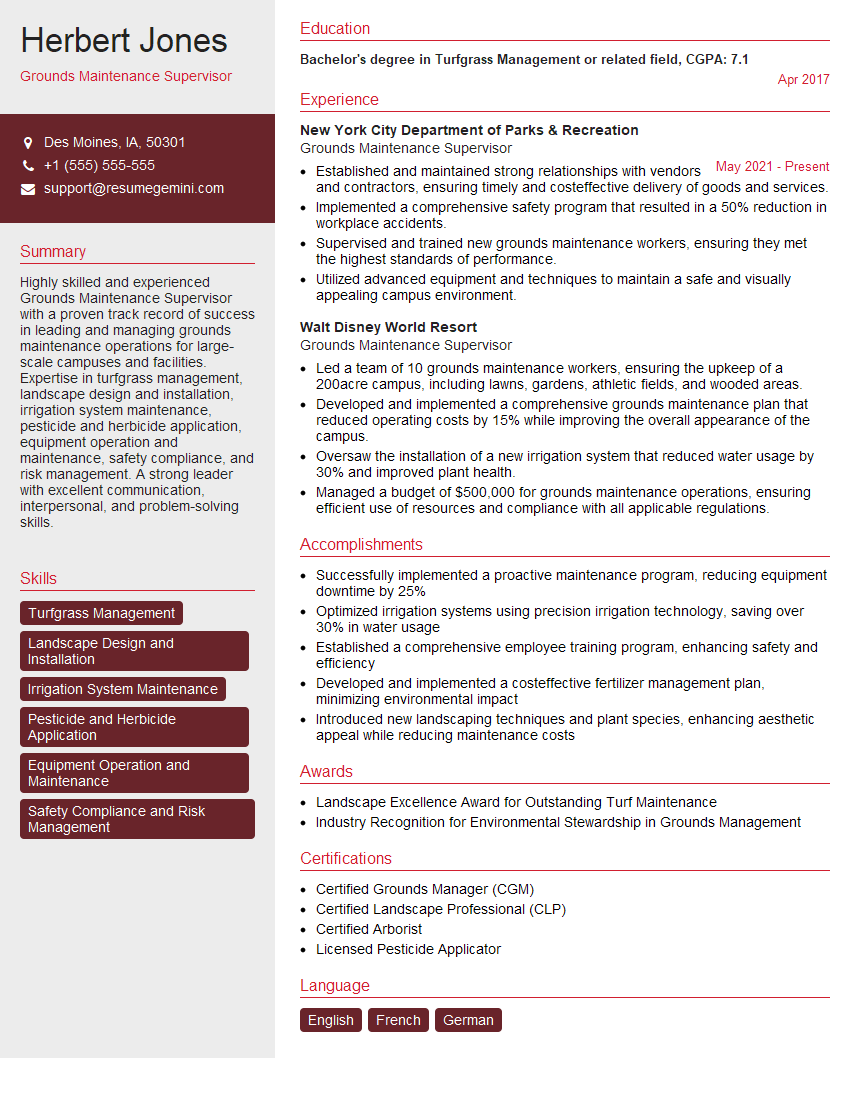
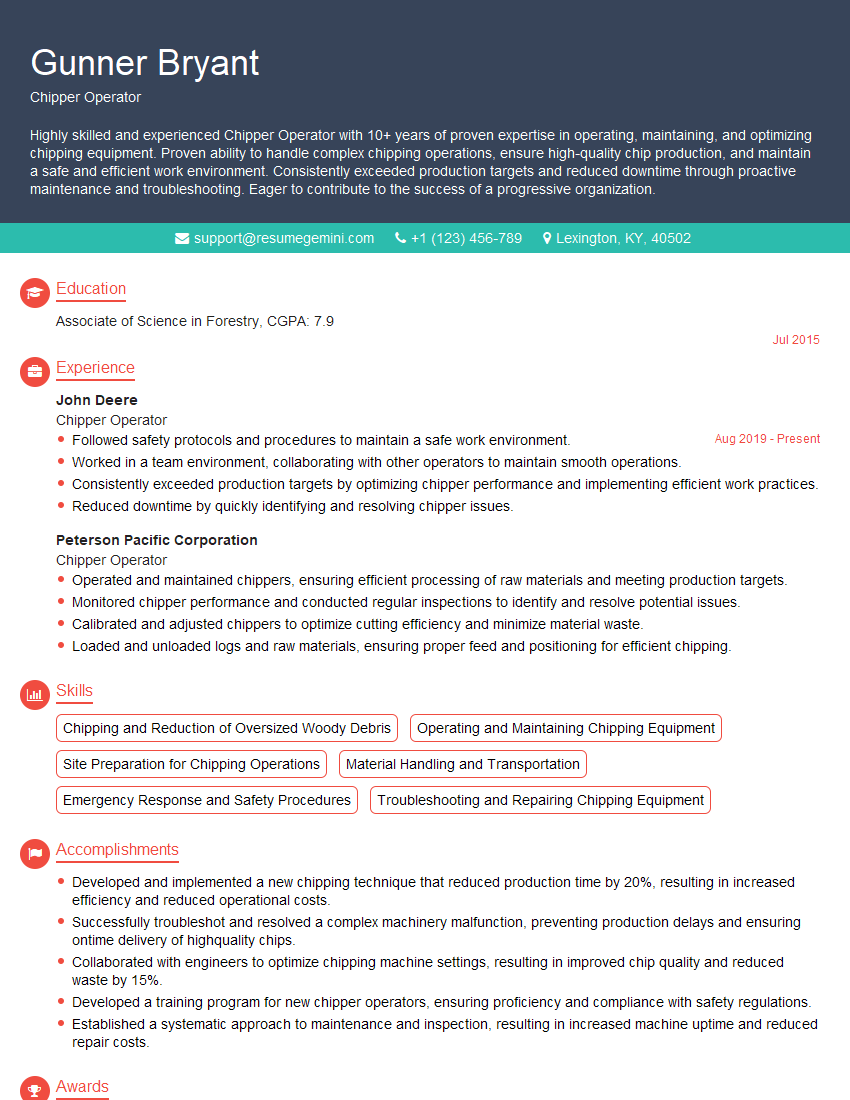
Mastering Tree Shaping Equipment Operation opens doors to rewarding careers with excellent growth potential. Proficiency in this field demonstrates valuable skills in precision, safety, and environmental responsibility, highly sought after in the industry. To significantly boost your job prospects, creating a strong, ATS-friendly resume is essential. ResumeGemini is a trusted resource to help you build a professional and impactful resume that highlights your skills and experience effectively. Examples of resumes tailored to Tree Shaping Equipment Operation are available within ResumeGemini to guide you.


Explore more articles
Users Rating of Our Blogs
Share Your Experience
We value your feedback! Please rate our content and share your thoughts (optional).
What Readers Say About Our Blog
Very informative content, great job.
good