Feeling uncertain about what to expect in your upcoming interview? We’ve got you covered! This blog highlights the most important Troubleshooting Mechanical and Electrical Systems interview questions and provides actionable advice to help you stand out as the ideal candidate. Let’s pave the way for your success.
Questions Asked in Troubleshooting Mechanical and Electrical Systems Interview
Q 1. Explain the troubleshooting process you typically follow.
My troubleshooting process follows a systematic approach, much like a detective investigating a crime scene. It begins with observation: carefully examining the system for any obvious signs of malfunction – unusual noises, smells, leaks, or visible damage. Next comes information gathering: I interview the operators (if applicable) to understand the sequence of events leading to the failure, and review any available documentation like schematics, manuals, or maintenance logs. Then, I formulate a hypothesis based on my observations and gathered information. This leads to testing: I use appropriate tools like multimeters, pressure gauges, and oscilloscopes to verify or refute my hypothesis. Once the fault is identified, I proceed to repair or replacement of the faulty component. Finally, I perform verification testing to ensure the system is functioning correctly before declaring the issue resolved. This iterative process, combining deduction and empirical testing, is crucial for efficient and accurate troubleshooting.
For instance, if a conveyor belt stops unexpectedly, I’d first check for obvious blockages, then examine the motor for signs of overheating, and finally use a multimeter to check the power supply to the motor.
Q 2. Describe your experience with diagnosing electrical faults using multimeters.
Multimeters are indispensable tools in my work. I use them extensively to diagnose electrical faults, measuring voltage, current, and resistance. For example, to check if a circuit breaker is faulty, I’d measure the voltage across its terminals – a lack of voltage with power supplied to the circuit indicates a tripped breaker, while a voltage present with the circuit still off might indicate a faulty breaker itself. I also use a multimeter to check for continuity in wires and identify short circuits by measuring low resistance between unintended points. When troubleshooting a motor, I’d use it to measure the voltage at the motor terminals and the current draw during operation – deviations from expected values often point to winding faults or other internal problems. My experience spans across various applications, from simple low-voltage circuits to complex industrial power systems, always emphasizing safety precautions like de-energizing circuits before making measurements.
Q 3. How do you troubleshoot a motor that won’t start?
Troubleshooting a motor that won’t start requires a methodical approach. First, I’d verify power supply to the motor using a multimeter. Is the correct voltage present at the terminals? Then, I’d check the motor’s control circuit for any faults – are the switches, relays, or other control components functioning properly? I’d also inspect the motor itself for any obvious problems like damaged wiring, loose connections, or mechanical obstructions. If the power supply is good, the control circuit is fine, and there are no obvious physical issues, I might suspect a problem within the motor itself – a faulty winding, a seized bearing, or even a damaged rotor. More advanced diagnostics such as insulation resistance testing might be necessary. Sometimes, a simple loose connection can prevent a motor from starting, while other times it’s a complex internal fault requiring specialized repair techniques.
Q 4. What are the common causes of overheating in electrical equipment?
Overheating in electrical equipment is a serious issue, often leading to equipment failure and even fire hazards. Common causes include excessive current draw due to overloading, short circuits, loose connections causing increased resistance, and inadequate ventilation. Faulty components like failing capacitors or motors can also generate excessive heat. Poor design, improper installation, and environmental factors like ambient temperature can also contribute. For example, a motor running continuously at its maximum load capacity is more likely to overheat compared to one operating at a lower load. Regular maintenance, proper ventilation, and ensuring the equipment operates within its design parameters are crucial for preventing overheating.
Q 5. How do you identify and resolve short circuits?
Short circuits represent a direct, low-resistance path between two points in a circuit, usually resulting in excessive current flow and often causing overheating and damage. I identify short circuits using a multimeter to measure resistance between different points in the circuit. A significantly lower than expected resistance indicates a short. Visual inspection also plays a role, looking for signs of melting, burning, or arcing. Once a short circuit is located, the faulty component or wiring needs replacing. Sometimes, it involves tracing wires to pinpoint the exact location of the short, which can be challenging in complex wiring systems. For example, a short in a building’s electrical wiring might necessitate identifying the affected circuit and replacing the damaged wiring section before restoring power.
Q 6. Describe your experience with preventative maintenance schedules.
Preventative maintenance schedules are vital for the reliable operation of mechanical and electrical systems. My experience includes developing and implementing these schedules tailored to specific equipment and operational needs. A typical schedule would include regular inspections (visual checks, functional testing), lubrication of moving parts, cleaning of components, and replacement of worn-out parts based on manufacturers’ recommendations and historical data. For instance, a preventative maintenance schedule for an industrial motor would include regular checks of its bearings, insulation resistance testing, and cleaning of the motor housing. Implementing such schedules significantly reduces the likelihood of unexpected failures, increases the lifespan of equipment, and ultimately reduces maintenance costs. Proper documentation and tracking of maintenance activities are also key components of an effective preventative maintenance program.
Q 7. How do you troubleshoot hydraulic or pneumatic systems?
Troubleshooting hydraulic and pneumatic systems often involves checking for leaks, pressure drops, and component malfunctions. I begin by visually inspecting the system for leaks, looking for signs of fluid or air escaping. Pressure gauges are crucial for measuring pressures at different points in the system, comparing them to expected values and identifying pressure drops that could indicate blockages or leaks. I would also check for proper operation of valves, actuators, and other components, using appropriate tools like pressure switches and flow meters. In pneumatic systems, air leaks are common and can be detected using soapy water – bubbles will form at points where air is escaping. In hydraulic systems, leaks may be more difficult to detect and could require specialized leak detection equipment. Furthermore, I’d check for contamination in the fluids – it’s a common cause of premature component failure. Understanding the system’s schematic is crucial for effective troubleshooting, guiding me to the most likely sources of the problem.
Q 8. Explain your understanding of safety regulations related to electrical and mechanical systems.
Safety regulations in electrical and mechanical systems are paramount, ensuring worker protection and preventing equipment damage. These regulations vary by location (e.g., OSHA in the US, HSE in the UK) but share common themes. Electrical safety emphasizes lockout/tagout procedures to prevent accidental energization during maintenance. This involves isolating power sources, applying locks and tags to prevent unauthorized access, and verifying the absence of voltage before working on equipment. Proper grounding and insulation are crucial to prevent electrical shocks. Mechanical safety involves guarding moving parts (gears, belts, rotating shafts), using appropriate personal protective equipment (PPE) like safety glasses and gloves, and adhering to safe operating procedures for machinery. Regular inspections and maintenance are essential to identify and address potential hazards. For example, in a manufacturing plant, a machine with exposed gears would require guarding to prevent accidental contact. Similarly, working on high-voltage electrical panels requires strict adherence to lockout/tagout procedures and use of appropriate insulated tools.
- Lockout/Tagout (LOTO): A critical safety procedure to isolate energy sources before maintenance.
- Grounding: Prevents electrical shocks by providing a path for stray current to the earth.
- Personal Protective Equipment (PPE): Includes safety glasses, gloves, hard hats, etc., to minimize risk of injury.
- Regular Inspections: Identify potential hazards before they lead to accidents.
Q 9. What are the different types of sensors and how do they work?
Sensors are devices that detect physical quantities and convert them into electrical signals. Different types exist, each suited to a specific task. For example:
- Temperature Sensors (Thermocouples, RTDs, Thermistors): Measure temperature variations. Thermocouples use the Seebeck effect to generate voltage proportional to temperature difference. RTDs (Resistance Temperature Detectors) use the change in resistance with temperature. Thermistors are also resistance-based, but with a much more significant change in resistance per degree.
- Pressure Sensors (Piezoresistive, Capacitive): Measure pressure changes. Piezoresistive sensors change resistance with applied pressure, while capacitive sensors use changes in capacitance.
- Proximity Sensors (Inductive, Capacitive, Photoelectric): Detect the presence of objects without physical contact. Inductive sensors use electromagnetic fields, capacitive sensors detect changes in capacitance, and photoelectric sensors use light beams.
- Flow Sensors (Turbine, Ultrasonic, Vortex): Measure the flow rate of fluids. Turbine sensors use a small turbine that rotates proportionally to flow rate. Ultrasonic sensors use sound waves to measure velocity, and vortex sensors detect the shedding of vortices behind an obstacle.
- Position Sensors (Potentiometers, Encoders): Measure the position or displacement of objects. Potentiometers use a sliding contact on a resistor to measure position, while encoders use rotating disks with markings to measure angle or linear position.
Think of them as the ‘senses’ of a machine, providing essential feedback to the control system.
Q 10. How do you troubleshoot PLC (Programmable Logic Controller) problems?
Troubleshooting PLCs involves a systematic approach. First, I’d check for obvious issues like power supply failures, communication problems, and loose connections. Then, I’d use the PLC’s diagnostic tools, often built into the programming software. This usually includes monitoring I/O status, examining program execution, checking for errors, and reviewing the PLC’s internal logs. If the problem isn’t immediately apparent, I’d start by narrowing down the source. Is it a problem with the input sensors, the output actuators, the ladder logic, or the communication network? I’d use a multimeter to test sensor signals and actuator voltages. Simulation of the PLC program can also help. I’d try to isolate the faulty section of the program step-by-step. For instance, if a conveyor belt isn’t starting, I might check the sensor indicating the start button is pressed, the output signal to the motor starter, and the motor itself. If the issue isn’t in the wiring, it’s likely in the program logic. If a specific error code is displayed, I would consult the PLC’s manual to understand its meaning. In more complex scenarios, specialized tools like logic analyzers might be needed to capture and analyze the signals across the system.
Q 11. Describe your experience with interpreting electrical schematics and blueprints.
I have extensive experience reading and interpreting electrical schematics and blueprints. I’m proficient in understanding various symbols, notation, and conventions used in these documents. I can trace signal paths, identify components, understand wiring configurations, and determine power distribution. For example, I can easily navigate a complex electrical schematic to find the source of a power failure or trace a signal path to troubleshoot a faulty circuit. My understanding extends to understanding mechanical blueprints, including interpreting dimensions, tolerances, materials specifications, and assembly sequences. This allows me to understand the mechanical interaction with electrical systems, identifying mechanical issues that might trigger electrical faults. This skill is essential for effective troubleshooting. Imagine diagnosing a problem where a motor isn’t functioning – the schematic helps identify wiring issues, while the mechanical blueprint assists in evaluating the motor’s mechanical integrity and its mounting.
Q 12. How do you troubleshoot a system with intermittent faults?
Intermittent faults are notoriously challenging. The key is systematic investigation and careful observation. First, I’d document the conditions under which the fault occurs—is it related to temperature, load, or time of day? Then, I’d employ several techniques. One is to use data loggers to record sensor readings and other relevant data over time. This might reveal a pattern or correlation. Another approach is to use temporary wiring to bypass suspect components or circuits, which can help isolate the problem. I might also use thermal imaging to identify overheating components that might be causing intermittent failures. Sometimes, simply shaking cables or connectors can expose loose connections, which are common culprits. A systematic approach including isolation, testing, and gradual component replacement combined with good documentation are vital in solving intermittent faults. For instance, if a computer intermittently loses network connectivity, I might test cables, network card, and router. Using a data logger to monitor network traffic might pinpoint intermittent packet loss.
Q 13. How familiar are you with various types of relays and their applications?
I am very familiar with various types of relays and their applications. Relays are electromechanical switches that use a small electrical signal to control a larger current. Some common types include:
- Electromechanical Relays: These are the most common type, using an electromagnet to close or open contacts. They’re used in many applications including motor control, overcurrent protection, and switching high voltages.
- Solid-State Relays (SSRs): These use semiconductor devices instead of mechanical contacts, offering advantages such as faster switching speeds, longer lifespan, and no bouncing. They are often preferred for high-speed switching applications.
- Time Delay Relays: These introduce a time delay before switching, useful for sequencing operations or preventing false triggering.
- Overload Relays: Used for motor protection, they trip when the motor draws excessive current.
The choice of relay depends on the specific application. For example, in a motor control circuit, an electromechanical relay might be used to switch the high-current motor, while a solid-state relay might control a smaller pilot light. Understanding the different types and characteristics is crucial for selecting and troubleshooting relay-based systems.
Q 14. Explain your experience with vibration analysis in troubleshooting mechanical systems.
Vibration analysis is a powerful tool for troubleshooting mechanical systems. Excessive vibration can indicate problems such as imbalance, misalignment, bearing wear, resonance, or looseness. I use vibration analysis to diagnose such issues. I typically employ specialized instruments like accelerometers to measure the vibration levels at various points on the equipment. The data is then analyzed using software to identify the frequency and amplitude of vibrations. These characteristics can be correlated with potential problems. For instance, a high amplitude at a specific frequency might indicate a bearing defect. Analyzing the vibration signature over time can also detect changes that indicate deterioration or impending failure. Vibration analysis is important in preventive maintenance, allowing us to detect problems before they lead to catastrophic failures. This saves costs and prevents downtime. Imagine a large industrial fan with a problem: vibration analysis can pinpoint whether the issue is an imbalance in the blades, a problem with the bearings, or another structural issue.
Q 15. Describe your experience with thermal imaging for troubleshooting purposes.
Thermal imaging is an invaluable tool for troubleshooting mechanical and electrical systems. It allows us to visualize temperature differences, revealing potential problems often invisible to the naked eye. Essentially, it translates infrared radiation into a visual image, where hotter areas appear brighter, and cooler areas appear darker. This is incredibly useful for identifying hotspots in electrical connections, indicating potential overheating and impending failure. For example, I once used thermal imaging to pinpoint a loose connection in a high-voltage power distribution panel. The connection was showing a significantly higher temperature than the surrounding components, preventing a potentially catastrophic fire. In mechanical systems, it helps find problems like friction in bearings or imbalances in rotating equipment, which often manifest as localized heat. The non-invasive nature of thermal imaging also speeds up troubleshooting, minimizing downtime and enhancing safety. By quickly identifying the problem areas, targeted repairs can be implemented efficiently.
Career Expert Tips:
- Ace those interviews! Prepare effectively by reviewing the Top 50 Most Common Interview Questions on ResumeGemini.
- Navigate your job search with confidence! Explore a wide range of Career Tips on ResumeGemini. Learn about common challenges and recommendations to overcome them.
- Craft the perfect resume! Master the Art of Resume Writing with ResumeGemini’s guide. Showcase your unique qualifications and achievements effectively.
- Don’t miss out on holiday savings! Build your dream resume with ResumeGemini’s ATS optimized templates.
Q 16. How do you troubleshoot a failed bearing in a rotating machine?
Troubleshooting a failed bearing in a rotating machine involves a systematic approach. Initially, I’d listen for unusual noises. A failing bearing might exhibit grinding, rumbling, or squealing sounds, which provide clues about the nature of the problem. Next, I’d check for excessive vibration using a vibration meter. Increased vibration is a strong indicator of bearing wear or damage. Visual inspection is also critical; I’d check for signs of leakage, overheating (often visible through discoloration or heat warping), or any damage to the bearing housing. If the machine allows, I’d try to feel for abnormal heat or play (movement) in the bearing. Finally, if the above steps don’t definitively identify the problem, I’d consider more advanced techniques like oil analysis (to check for metallic particles indicating wear) or even disassembling the machine to examine the bearing directly for damage like pitting, scoring, or spalling. For instance, I once encountered a bearing failure in a large industrial fan. The initial indication was excessive vibration and a high-pitched squeal. Oil analysis confirmed the presence of metallic particles, confirming bearing wear, which led to a timely replacement and averted a potential equipment breakdown.
Q 17. What are the common causes of pump failure?
Pump failures stem from a variety of causes, often interlinked. Common mechanical issues include wear and tear on the impeller or shaft, bearing failures (similar to the previous question), and seal leaks. These are usually caused by age, inadequate lubrication, misalignment, or excessive load. On the hydraulic side, problems like cavitation (formation of vapor bubbles in the fluid) or suction issues (due to insufficient priming or clogged suction lines) can lead to pump damage or inefficient performance. Electrical failures can occur due to motor problems (overheating, winding failures) or control system malfunctions. For instance, a pump I worked on recently failed due to cavitation. The root cause was a partially clogged inlet strainer, reducing the flow rate and causing the formation of vapor bubbles, which led to impeller erosion and ultimately, pump failure. Careful inspection, including flow rate and pressure measurements, were critical in identifying this issue. Effective troubleshooting involves analyzing the pump’s performance parameters, inspecting its mechanical components, and examining the electrical system to pinpoint the exact cause.
Q 18. How do you troubleshoot problems with variable frequency drives (VFDs)?
Troubleshooting Variable Frequency Drives (VFDs) often involves a systematic check of various parameters. First, I’d verify the input power supply – is it within the VFD’s specifications? Then, I’d check the output voltage and current to the motor. Low voltage could indicate a problem with the drive’s output stage or wiring. High current might signify an overload, a short circuit in the motor, or a mechanical problem with the driven load. Examining the VFD’s control signals and parameters is crucial. Are the commanded frequency and torque consistent with the motor’s actual behavior? Many VFDs display fault codes, which provide a direct indication of the problem. Understanding these codes and their implications is key. For example, an over-current fault could indicate a motor issue or an excessive load. Finally, physical inspection of the VFD’s internal components for any signs of damage, loose connections or overheating is essential. I recall troubleshooting a VFD once where a simple loose connection on the control board caused an intermittent output. A thorough inspection and tightening the connection resolved the issue. Diagnostic software can also be used to analyze the VFD’s operational data.
Q 19. How do you diagnose and repair issues with motor control circuits?
Diagnosing motor control circuits involves systematically checking the various components. I’d start by verifying the power supply to the circuit. Next, I’d check the control signals—are the start/stop commands being received correctly? A multimeter is invaluable for testing voltage, current, and continuity throughout the circuit. I’d check the status of components like contactors, overload relays, and fuses. Are they functioning correctly? If using PLCs, diagnostic software would be used to analyze the program logic and identify any programming errors. Examining wiring for damage or loose connections is essential; many issues stem from simple wiring problems. For instance, I once resolved a motor control problem by simply replacing a damaged relay that was causing an intermittent short circuit. Tracing the wiring back from the problem area usually helps pinpoint the fault. Systematic troubleshooting, good documentation of the circuit, and knowledge of electrical safety practices are critical in this context.
Q 20. Explain your experience with using diagnostic software and tools.
I have extensive experience with various diagnostic software and tools, both hardware and software based. For example, I routinely use motor control diagnostic software that analyzes motor parameters like current, voltage, and frequency to identify potential problems. I’m proficient with vibration analysis software and equipment, which helps diagnose bearing problems or mechanical imbalances. Hardware tools include multimeters, oscilloscopes, thermal imaging cameras, and specialized bearing diagnostic tools. The ability to interpret the data from these tools and correlate it with the observed symptoms is critical for effective diagnosis. Furthermore, familiarity with the manufacturer’s specifications and troubleshooting guides for specific equipment is essential to resolve more complex problems. I remember a situation where a motor exhibited unusual behavior. Using a specialized motor diagnostic software, I was able to pinpoint a developing winding fault in the motor, which could have led to catastrophic failure if left undetected.
Q 21. How do you prioritize troubleshooting tasks in a high-pressure environment?
Prioritizing troubleshooting tasks in a high-pressure environment requires a structured approach. First, I’d identify the criticality of each problem based on its potential impact on production, safety, or other key operations. For instance, a complete power outage is far more critical than a minor leak. Next, I would assess the urgency of each problem – how quickly does it need to be resolved? This is often determined by factors such as potential for escalating damage or safety hazards. Then I’d determine the resources needed for each task – personnel, equipment, and time. This helps me allocate resources efficiently. Finally, I use a combination of urgency and criticality to create a prioritized list, focusing on high-impact, high-urgency problems first. This method allows for effective and timely problem solving, minimizing downtime and ensuring that critical issues are addressed immediately. Good communication and teamwork are essential for effectively coordinating tasks and updates within the team during high-pressure situations. A well-defined escalation path for more challenging problems is also crucial.
Q 22. Describe your experience with documenting troubleshooting procedures.
Thorough documentation is crucial for efficient troubleshooting. I meticulously document every step, from initial symptom observation to the final solution. My documentation typically includes:
- Clear problem description: This includes the observed malfunction, the affected system, and the time of occurrence. For example, ‘Motor #3 on assembly line 2 failed to start at 10:00 AM, resulting in production stoppage.’
- Systematic troubleshooting steps: I detail each test performed, the tools used, and the results obtained. I use numbered lists or flowcharts to maintain clarity. For instance, ‘1. Checked motor power supply: No voltage. 2. Checked power breaker: Tripped. 3. Reset breaker: Motor started.’
- Schematic diagrams and visual aids: Including annotated diagrams helps visualize the system and pinpoint problem areas. I often use images or videos to supplement written documentation.
- Root cause analysis: I go beyond identifying the immediate problem and strive to understand the underlying cause to prevent recurrence. This involves examining components, logs, and system behavior.
- Corrective actions: I detail the repairs or replacements made, along with any preventative maintenance steps taken. This includes part numbers and supplier details where relevant.
This comprehensive approach ensures that anyone can understand the problem, the solution, and replicate the process in the future, minimizing downtime and maximizing efficiency. I utilize various platforms for documentation; from simple company internal databases to more advanced systems like CMMS (Computerized Maintenance Management Systems).
Q 23. How do you ensure the safety of yourself and others during troubleshooting?
Safety is paramount. Before starting any troubleshooting, I always follow a strict safety protocol. This includes:
- Lockout/Tagout (LOTO): For electrical systems, I always perform LOTO procedures to isolate power sources completely, preventing accidental shock or electrocution. This involves locking and tagging circuit breakers, disconnecting power cables, and verifying the absence of voltage with a non-contact voltage tester.
- Personal Protective Equipment (PPE): Appropriate PPE is crucial. This might include safety glasses, gloves (insulated for electrical work), safety shoes, and hearing protection depending on the task. For working at heights or in confined spaces, additional safety measures are implemented.
- Risk Assessment: I assess the potential hazards associated with the specific task. This involves identifying potential dangers (e.g., moving machinery, high voltage, hazardous chemicals) and implementing controls to mitigate those risks.
- Emergency Procedures: I’m always aware of emergency procedures, including how to call for help, the location of emergency equipment (fire extinguishers, first-aid kits), and evacuation routes.
- Teamwork: For complex tasks or if working at heights, I ensure I have another qualified person present for safety and assistance.
My philosophy is that a safe workplace is a productive workplace. By adhering to these safety practices, I ensure not only my safety but the safety of everyone around me.
Q 24. What are your troubleshooting skills related to AC and DC circuits?
My troubleshooting skills in AC and DC circuits encompass a wide range of techniques. For AC circuits, I use multimeters to measure voltage, current, and resistance, checking for phase imbalances, harmonics, and other anomalies. I understand the concepts of impedance, power factor, and reactive power and use this knowledge to diagnose problems. For example, a low power factor might indicate a problem with the reactive components (capacitors or inductors).
In DC circuits, I focus on voltage drops across components, continuity checks, and the identification of shorts or open circuits. I can use oscilloscopes to analyze waveforms and identify any irregularities, such as noise or signal degradation. A sudden voltage drop across a resistor, for instance, often indicates a short circuit. I use my knowledge of various circuit topologies and components like transistors, diodes, and integrated circuits to identify faults.
I also employ diagnostic tools such as motor current analyzers to detect motor winding faults, insulation breakdown, and other problems. I am proficient in interpreting electrical schematics and wiring diagrams to trace signal paths and identify potential problem points.
Q 25. Describe your experience with different types of motor starters.
I have experience with various motor starters, including:
- Across-the-line starters: Simple and cost-effective for smaller motors, but can cause high inrush current. Troubleshooting involves checking the contacts, overload relays, and power supply.
- Reduced-voltage starters: Used for larger motors to reduce inrush current. Types include autotransformer starters, wye-delta starters, and solid-state starters. Troubleshooting includes checking the voltage reduction circuitry and timing elements.
- Soft starters: Use electronic controls to gradually increase motor voltage, reducing mechanical stress. Troubleshooting involves checking control parameters, IGBT modules, and communication interfaces.
- Variable frequency drives (VFDs): Provide precise speed control and can significantly improve motor efficiency. Troubleshooting might involve checking input/output voltages, current readings, and parameters such as frequency and torque. I am proficient in using VFD displays and diagnostic software.
My troubleshooting approach involves systematically checking each component of the starter, verifying power supply, checking control signals, inspecting the motor itself and then using the information from the starter’s built-in diagnostics and/or relevant error codes to guide further investigation. I can interpret fault codes and use this information to quickly identify and resolve the issue.
Q 26. How do you troubleshoot issues related to power distribution systems?
Troubleshooting power distribution systems requires a methodical approach. I typically start by:
- Identifying the scope of the problem: Is it a localized outage, a complete system failure, or a voltage sag? Gathering information from affected areas is crucial.
- Checking protection devices: Inspecting circuit breakers, fuses, and other protective devices to see if they have tripped or blown. This helps pinpoint the location of the fault.
- Measuring voltage and current: Using multimeters or specialized power quality analyzers to check for voltage imbalances, harmonic distortion, or other anomalies. This can reveal underlying issues in the distribution system.
- Inspecting cables and connections: Looking for signs of damage, loose connections, or corrosion, which can cause voltage drops and failures.
- Analyzing power quality: Using power quality analyzers to detect sags, surges, and other voltage fluctuations that might damage equipment. I often employ waveform analysis tools to investigate these anomalies more deeply.
- Checking grounding: Ensuring proper grounding to prevent electrical shocks and equipment damage is important.
For more complex situations, I will utilize specialized software and thermal imaging cameras to identify hotspots in cables and other equipment. A clear understanding of the electrical system’s schematic diagrams and protection schemes are vital for efficient troubleshooting.
Q 27. What are your troubleshooting skills related to industrial control systems?
My experience with industrial control systems (ICS) troubleshooting encompasses various aspects, including Programmable Logic Controllers (PLCs), Human-Machine Interfaces (HMIs), and SCADA systems. My troubleshooting approach is systematic and follows these steps:
- Reviewing alarm logs and historical data: This initial step provides crucial clues about the problem’s timing, frequency, and potential causes. I look for patterns and trends in the data.
- Analyzing PLC program logic: I use PLC programming software to examine the ladder logic or other programming languages to identify potential programming errors or unexpected conditions causing the malfunction. I employ simulation techniques to isolate potential issues.
- Inspecting input/output signals: Verifying that input signals are received correctly by the PLC and that the output signals are generated correctly. This involves checking sensors, actuators, and communication networks.
- Checking communication networks: Troubleshooting network issues like dropped packets, communication delays, and network configurations can greatly influence the functionality of the ICS. I can work with various industrial networks, such as Ethernet/IP, Profinet and Modbus.
- Using diagnostic tools: Many PLCs and HMIs have built-in diagnostic tools that provide valuable information about the system’s status and any errors. I’m familiar with the use of these tools and their interpretation.
My approach is to isolate the problem to a specific module or component, test individually, and repair or replace as needed, always ensuring the safety and integrity of the entire system.
Q 28. Describe a challenging troubleshooting experience and how you overcame it.
One challenging experience involved a sudden shutdown of a critical production line due to a seemingly random PLC failure. Initial diagnostics revealed no clear error codes or obvious hardware faults. The system simply stopped responding. The pressure was immense as downtime was costing the company significantly.
My systematic approach began with carefully reviewing all available data – PLC logs, HMI records, and sensor data. I noticed subtle variations in power quality readings just prior to the failure, something that had previously been overlooked. This led me to investigate the power supply more closely.
Further inspection uncovered a loose connection in the PLC’s power supply wiring, causing intermittent voltage drops. This intermittent voltage drop was severe enough to cause the PLC to crash, but not severe enough to trigger protective shutdowns. It was a subtle, intermittent problem that was difficult to replicate, thus making diagnosis challenging.
Once I identified and fixed the loose connection, the PLC operated normally. This experience underscored the importance of meticulous data analysis and the consideration of seemingly insignificant details during troubleshooting. The fix was simple once the root cause was found, but that required persistence and a refusal to dismiss anomalies.
Key Topics to Learn for Troubleshooting Mechanical and Electrical Systems Interview
- Fundamentals of Electrical Systems: Understanding basic circuit theory, Ohm’s Law, and the behavior of different electrical components (resistors, capacitors, inductors, etc.). Practical application: Diagnosing faults in simple circuits using multimeters.
- Fundamentals of Mechanical Systems: Grasping concepts like mechanics of materials, fluid mechanics, and thermodynamics. Practical application: Analyzing the cause of mechanical failures in machinery, such as pumps or engines.
- Troubleshooting Methodologies: Mastering systematic approaches to fault finding, including the use of diagnostic tools and interpreting sensor data. Practical application: Utilizing a structured troubleshooting process to isolate a problem in a complex system.
- Safety Procedures: Understanding and adhering to relevant safety regulations and procedures for working with electrical and mechanical systems. Practical application: Demonstrating knowledge of lockout/tagout procedures and personal protective equipment (PPE).
- Preventive Maintenance: Knowledge of preventative maintenance schedules and practices to minimize downtime and extend equipment lifespan. Practical application: Describing the importance of regular inspections and lubrication.
- Diagnostic Tools and Equipment: Familiarity with common diagnostic tools, such as multimeters, oscilloscopes, and specialized diagnostic software. Practical application: Explaining how to utilize these tools effectively to identify and resolve problems.
- Data Analysis and Interpretation: Ability to interpret data from various sources (sensors, logs, etc.) to identify trends and potential issues. Practical application: Analyzing sensor readings to pinpoint the source of a malfunction.
- PLC and Programmable Logic Controllers: Understanding basic PLC operation and troubleshooting techniques. Practical application: Explaining how to diagnose issues within a PLC controlled system.
Next Steps
Mastering troubleshooting skills in both mechanical and electrical systems is crucial for a successful and rewarding career. It demonstrates a valuable combination of theoretical knowledge and practical application, making you a highly sought-after candidate in many industries. To significantly enhance your job prospects, creating a strong, ATS-friendly resume is essential. ResumeGemini is a trusted resource that can help you build a professional and effective resume that highlights your skills and experience. We provide examples of resumes tailored to Troubleshooting Mechanical and Electrical Systems to help you get started. Invest time in crafting a compelling resume – it’s your first impression with potential employers!

Maintenance Planner Resume Sample
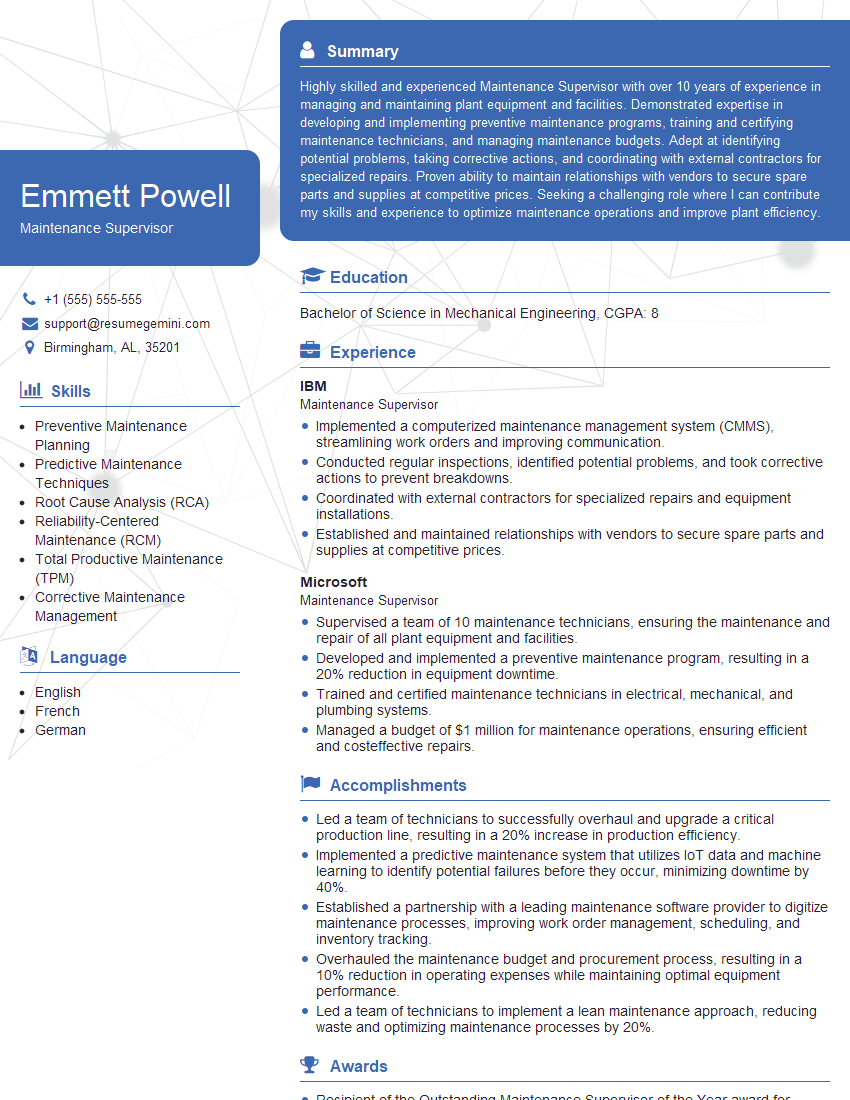
Maintenance Supervisor Resume Sample
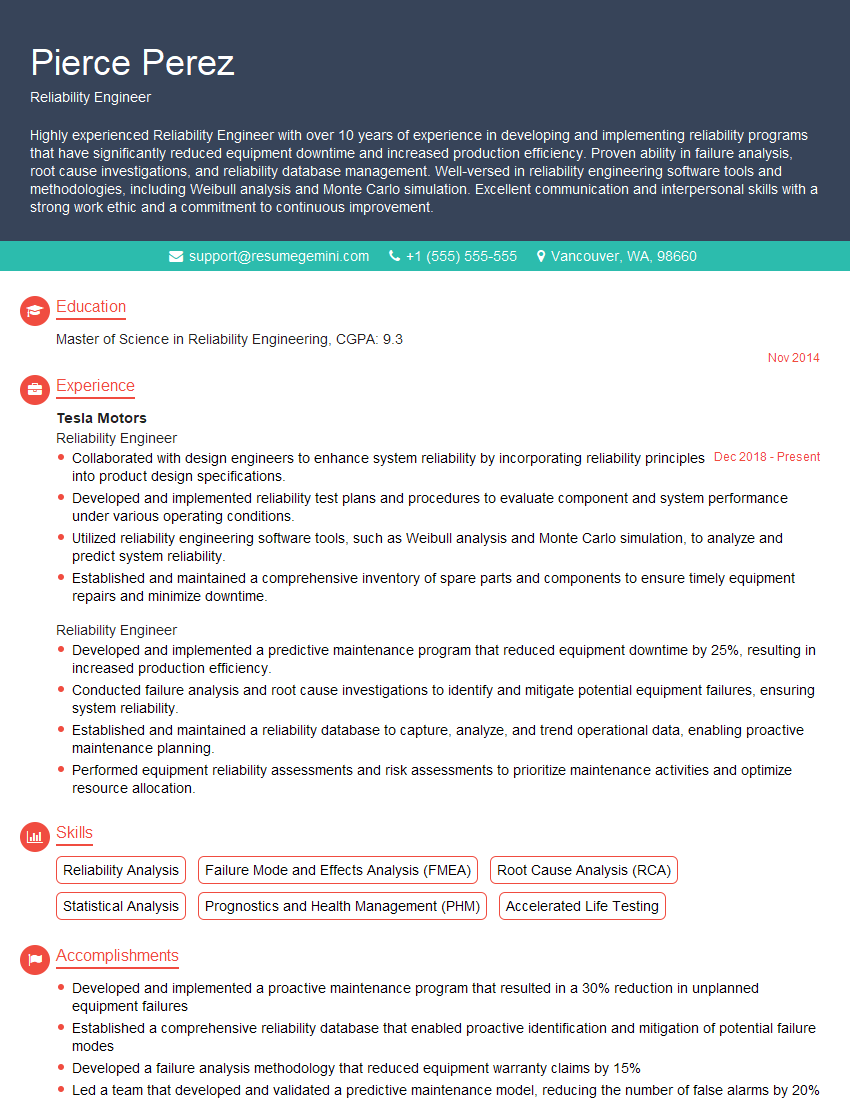
Reliability Engineer Resume Sample
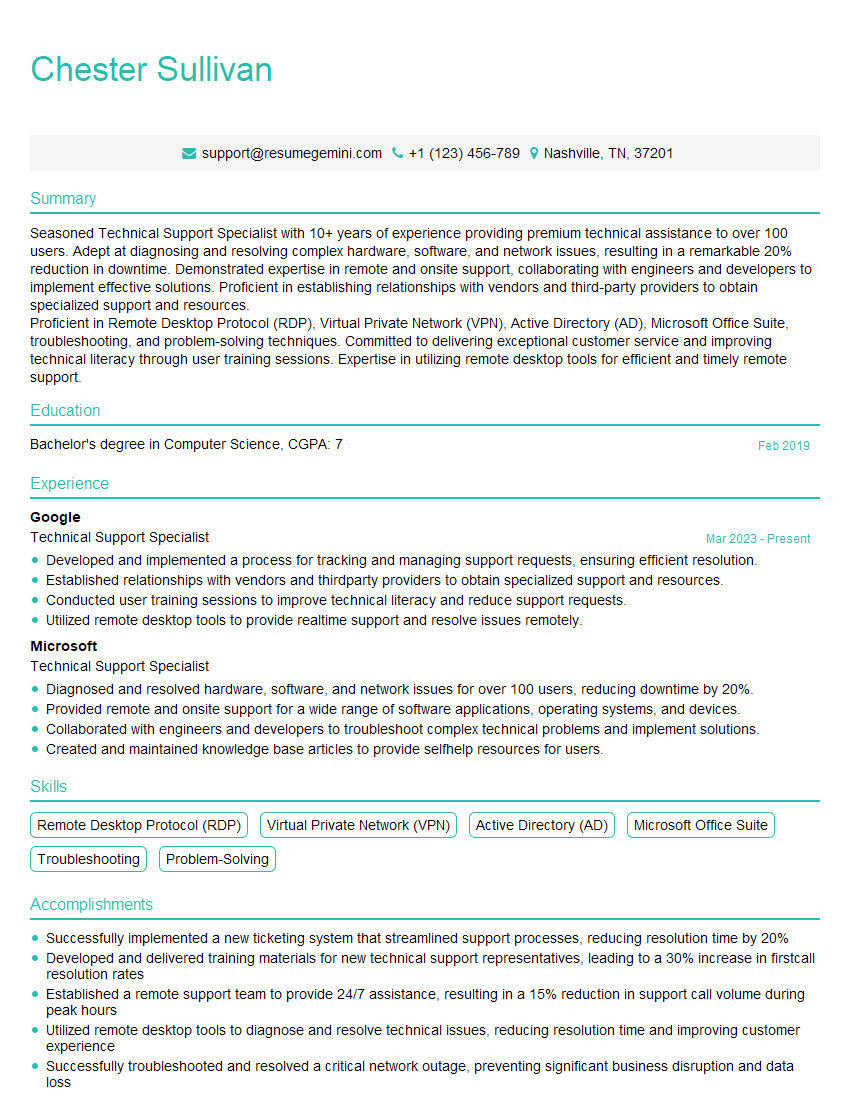
Technical Support Specialist Resume Sample
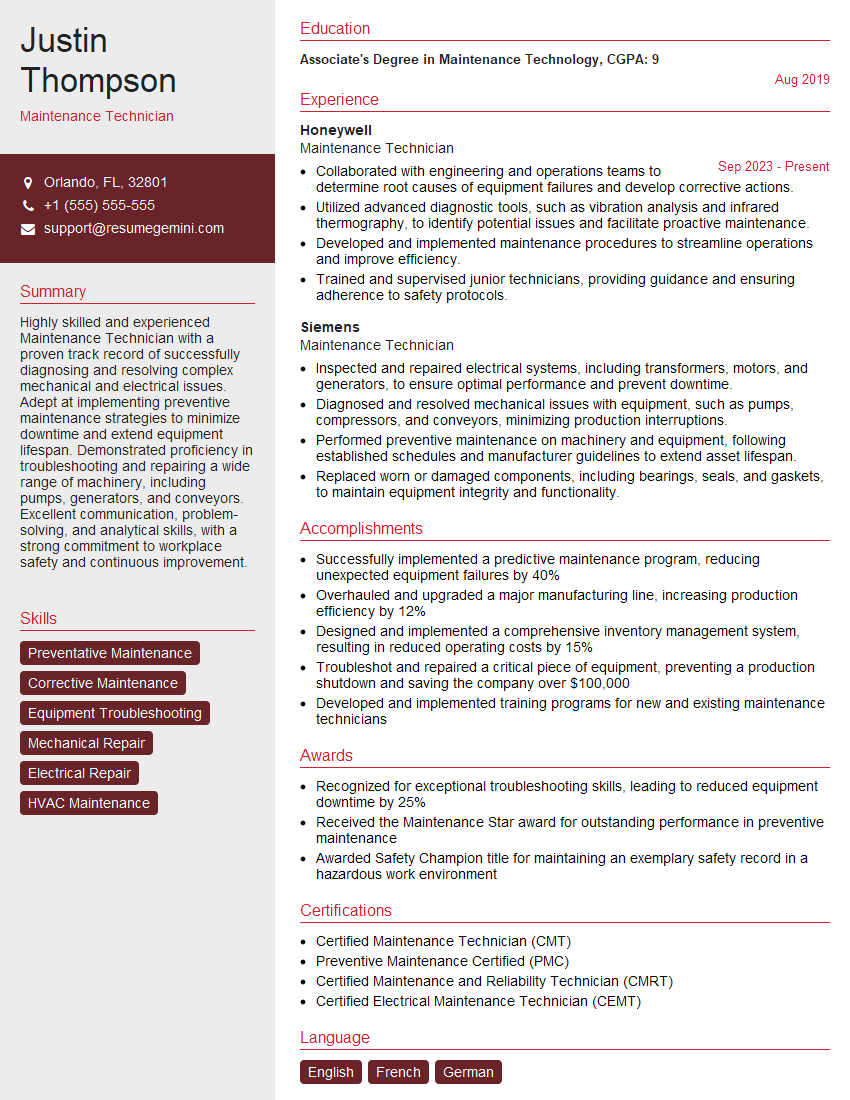
Maintenance Technician Resume Sample

Engineering Technician Resume Sample

Field Service Engineer Resume Sample
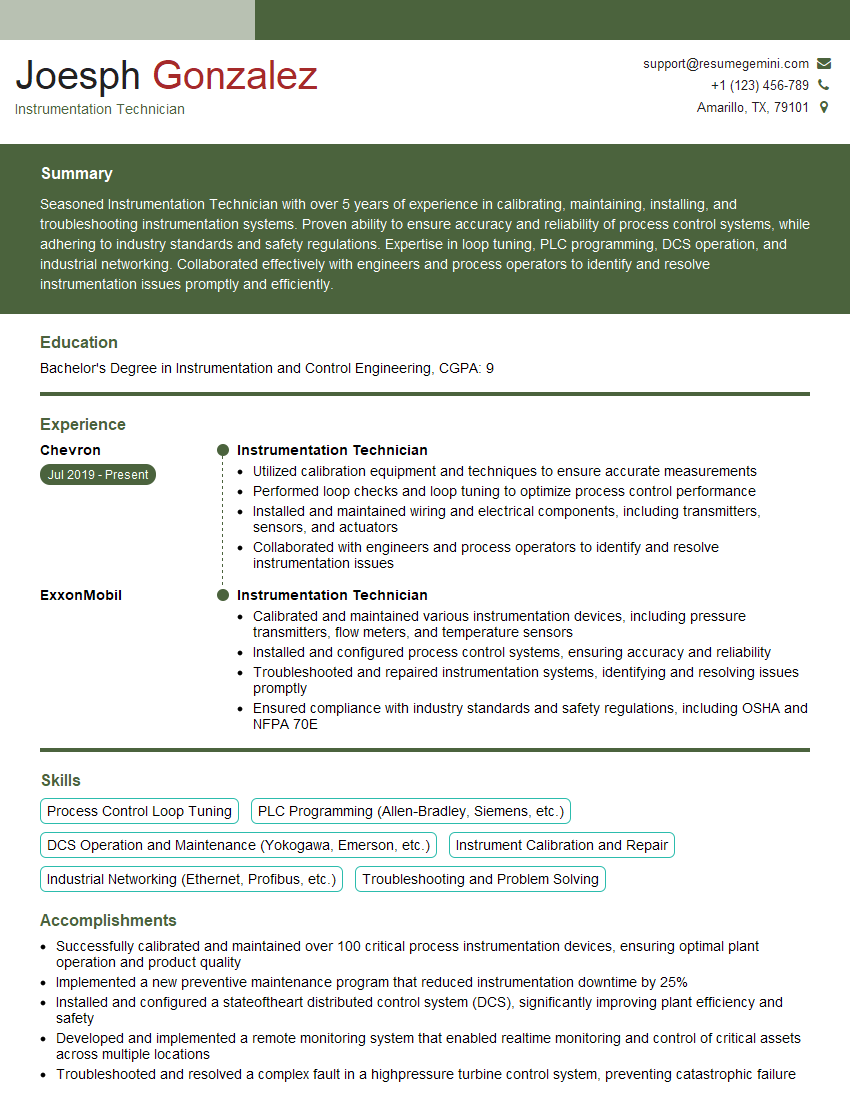
Instrumentation Technician Resume Sample

Automation Technician Resume Sample

Electrical Technician Resume Sample

Mechanical Technician Resume Sample
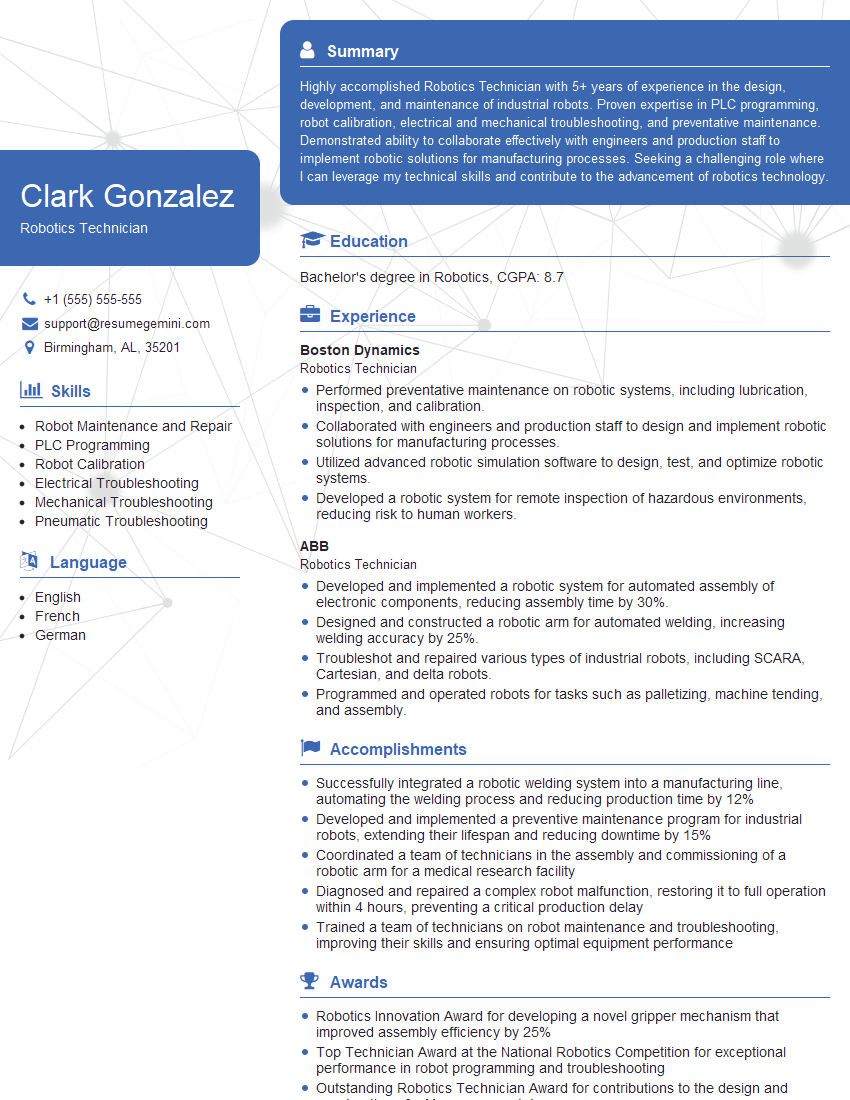
Robotics Technician Resume Sample

Facilities Maintenance Manager Resume Sample
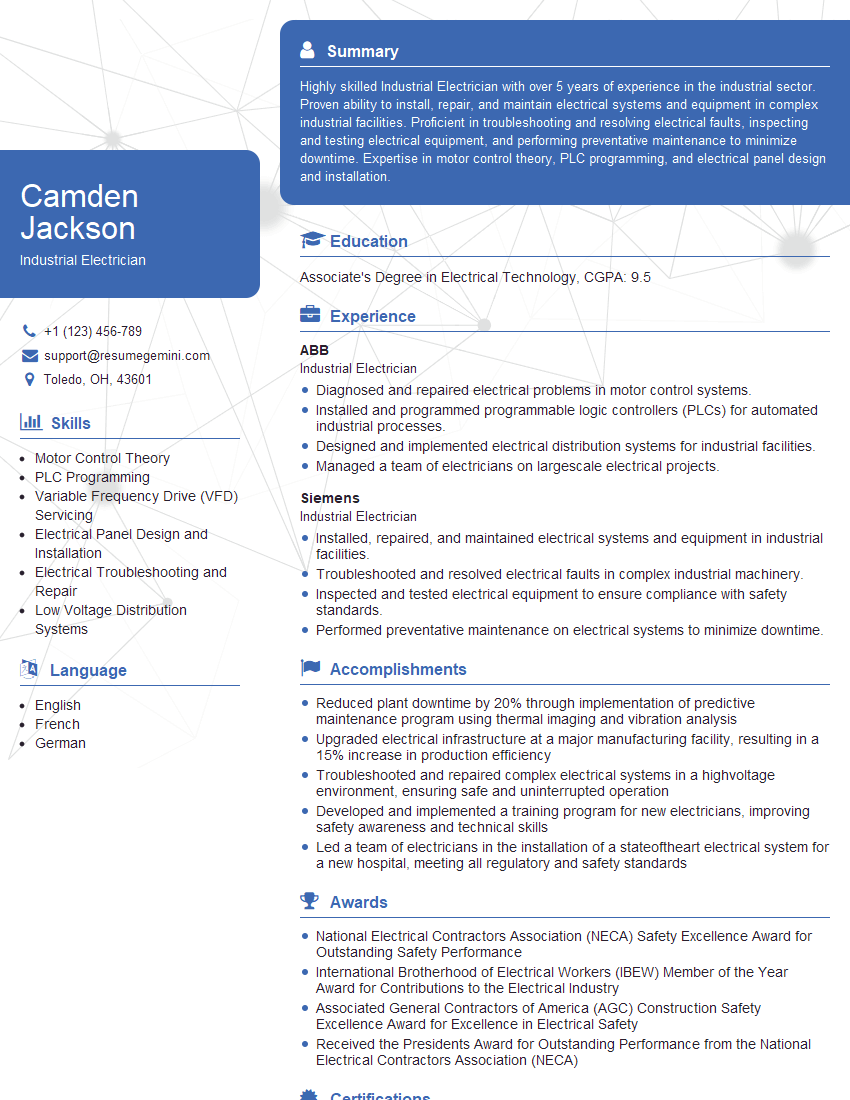
Industrial Electrician Resume Sample
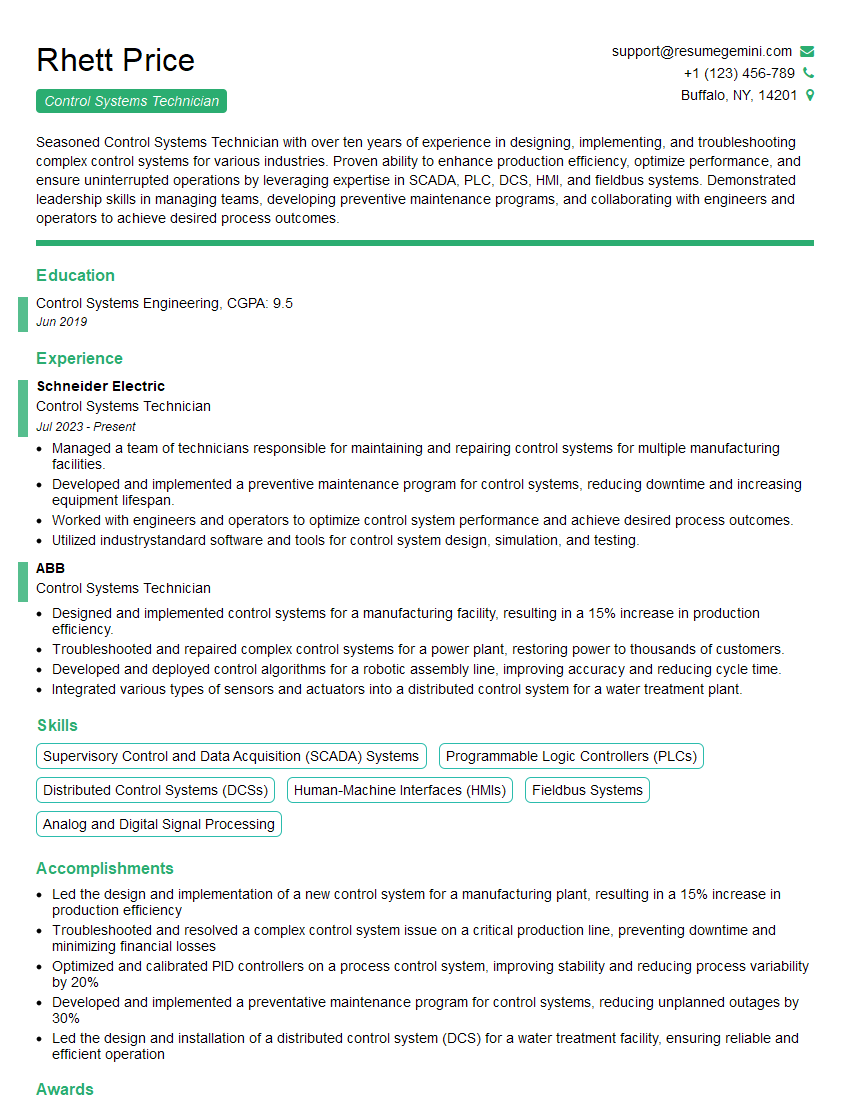
Control Systems Technician Resume Sample
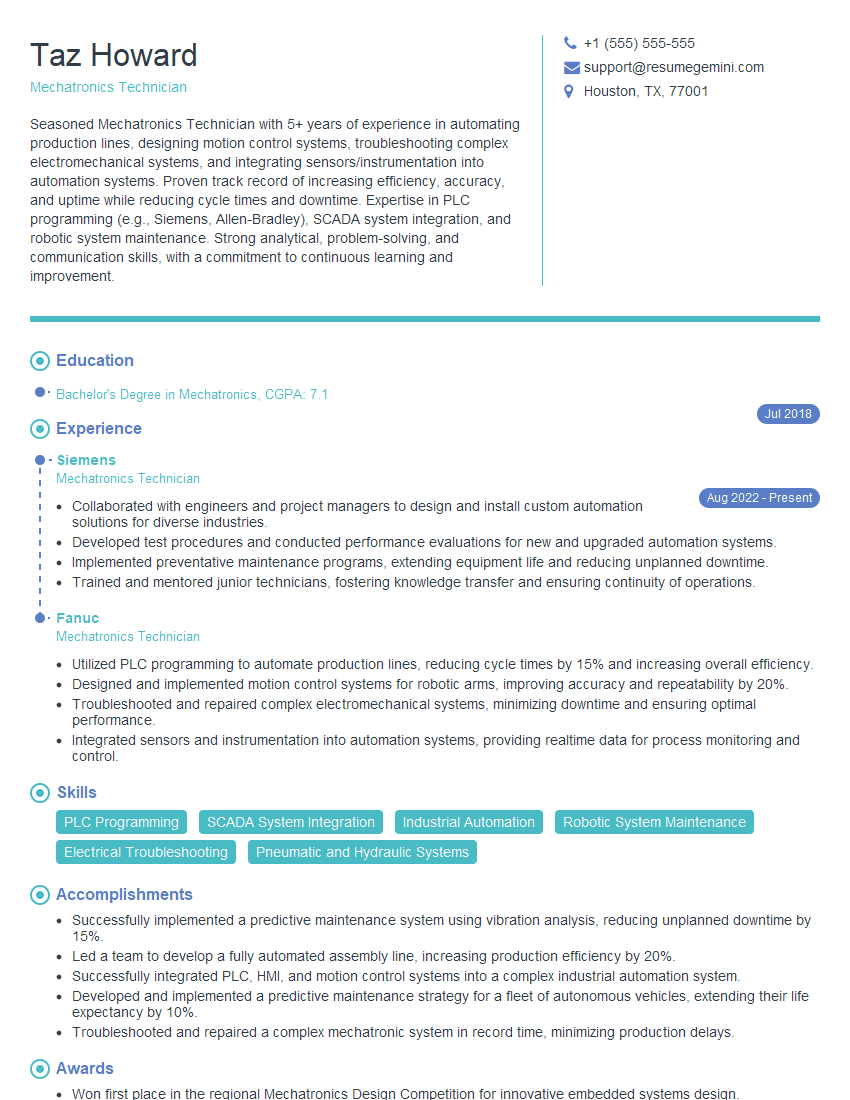
Mechatronics Technician Resume Sample

Electromechanical Technician Resume Sample
- Maintenance Planner
- Maintenance Supervisor
- Reliability Engineer
- Technical Support Specialist
- Maintenance Technician
- Engineering Technician
- Field Service Engineer
- Instrumentation Technician
- Automation Technician
- Electrical Technician
- Mechanical Technician
- Robotics Technician
- Facilities Maintenance Manager
- Industrial Electrician
- Control Systems Technician
- Mechatronics Technician
- Electromechanical Technician
Explore more articles
Users Rating of Our Blogs
Share Your Experience
We value your feedback! Please rate our content and share your thoughts (optional).
What Readers Say About Our Blog
Very informative content, great job.
good