Cracking a skill-specific interview, like one for Troubleshooting Plating Problems, requires understanding the nuances of the role. In this blog, we present the questions you’re most likely to encounter, along with insights into how to answer them effectively. Let’s ensure you’re ready to make a strong impression.
Questions Asked in Troubleshooting Plating Problems Interview
Q 1. Explain the difference between electroplating and electroless plating.
Electroplating and electroless plating are both methods used to deposit a thin layer of metal onto a substrate, but they differ significantly in their mechanisms. Electroplating uses an electric current to drive the deposition process. It requires an anode (the metal source), a cathode (the part to be plated), and an electrolyte solution containing metal ions. The current forces metal ions from the anode to the cathode, where they deposit and form a coating. Think of it like using electricity to ‘paint’ the metal onto the surface.
Electroless plating, on the other hand, is an autocatalytic process that doesn’t require an external electric current. It relies on a chemical reducing agent in the plating solution to reduce metal ions to their metallic state, causing them to deposit on the substrate’s surface. This process is more like a self-sustaining chemical reaction that coats the surface evenly. Electroless plating typically offers more uniform coating thickness, particularly in complex shapes, but it’s often more expensive and has limitations on the types of metals that can be deposited.
For example, chrome plating on car bumpers is typically done via electroplating for its cost-effectiveness and ability to plate large surfaces. However, electroless nickel plating is often chosen for its superior corrosion resistance and ability to coat intricate parts like circuit boards.
Q 2. Describe common causes of poor adhesion in plating.
Poor adhesion in plating is a major problem, leading to peeling or flaking of the coating. Several factors can contribute to this issue:
- Improper surface preparation: This is the most common cause. The substrate must be meticulously cleaned to remove oils, oxides, and other contaminants that prevent proper bonding. Insufficient cleaning, improper degreasing, or inadequate surface roughening will lead to poor adhesion.
- Contamination of the plating bath: Impurities in the plating solution can interfere with the deposition process and hinder adhesion. This includes organic contaminants, metallic impurities, and even dissolved gases.
- Incorrect plating parameters: Factors like current density, temperature, and bath chemistry must be carefully controlled. Deviations from optimal conditions can result in poor adhesion.
- Substrate material incompatibility: Some substrate materials may not be compatible with certain plating solutions, leading to poor adhesion. For instance, a poorly prepared plastic surface may not adhere well to certain metal coatings without proper pre-treatment.
- Stress in the plating: Internal stresses in the deposited layer caused by improper plating conditions can lead to cracking and poor adhesion.
Imagine trying to glue two surfaces together that are dirty or greasy – the glue won’t stick! Similarly, a dirty or improperly prepared surface won’t bond well with the plating.
Q 3. How would you troubleshoot pitting in a chromium plating process?
Pitting in chromium plating manifests as small holes or depressions in the coating. Troubleshooting requires a systematic approach:
- Analyze the pits: Observe their size, shape, and distribution. This can provide clues about the cause. Are they randomly scattered, clustered in specific areas, or aligned in a particular direction?
- Check the plating solution: Analyze the chromium bath’s composition, pH, and temperature. Impurities like chlorides or excessive organic contaminants can cause pitting.
- Examine the pre-plating process: Ensure proper cleaning, etching, and activation of the substrate. Residual contaminants or inadequate surface preparation can lead to localized pitting.
- Assess the current density distribution: Uneven current density distribution can cause pitting. Check anode placement, tank geometry, and the agitation system to ensure uniform current flow. High current density is another known culprit.
- Inspect the anodes: The anodes themselves can introduce contaminants or dissolve unevenly, leading to pitting. Check for wear and proper anode-to-cathode distance.
- Adjust plating parameters: Based on your analysis, make appropriate adjustments to the plating solution composition, current density, temperature, and bath agitation.
Think of pitting like tiny craters on the moon’s surface. Identifying the cause—whether it’s a meteor impact (impurities) or volcanic activity (current density issues)—is key to solving the problem.
Q 4. What are the causes of burning in electroplating?
Burning in electroplating refers to the formation of dark, rough, and uneven deposits, often caused by excessive current density. High current densities force too many metal ions onto the substrate surface, exceeding its ability to incorporate them properly. This leads to the formation of a burnt, porous, and non-adherent coating.
Other factors that can contribute to burning include:
- High temperature: Elevated temperatures can increase the rate of deposition and exacerbate the effects of high current density.
- Poor agitation: Inadequate agitation results in depletion of metal ions near the cathode, leading to localized high current densities and burning.
- Low electrolyte concentration: A low concentration of metal ions in the plating bath can lead to localized high current densities, even with a moderate overall current density.
- Sharp edges and corners: These areas tend to accumulate higher current densities due to geometric effects.
Imagine cooking a steak – too high a heat (current density) will burn it. Similarly, in electroplating, carefully controlling current density and other factors is crucial to prevent burning.
Q 5. How do you identify and resolve hydrogen embrittlement in plated parts?
Hydrogen embrittlement is a phenomenon where hydrogen atoms, generated during the plating process, diffuse into the substrate, making it brittle and prone to cracking. It’s particularly problematic with high-strength steels and other susceptible materials.
Identifying hydrogen embrittlement involves several steps:
- Mechanical testing: Perform tensile or bending tests to assess the material’s ductility and strength. A significant decrease in ductility or strength compared to the unplated material is indicative of hydrogen embrittlement.
- Visual inspection: Look for cracks or fissures in the plated part, especially after bending or other stress testing.
- Measurement of residual stress: High residual stress in the plating itself can exacerbate hydrogen embrittlement.
To resolve hydrogen embrittlement, several techniques can be employed:
- Baking: This involves heating the plated parts to a specific temperature to allow hydrogen to diffuse out of the substrate. The temperature and time depend on the substrate material and plating thickness.
- Electrolytic baking: A more advanced technique where a reverse current is applied to the part while it is baked to help accelerate the removal of hydrogen.
- Plating solution optimization: Reducing the amount of hydrogen generated during plating by modifying the plating parameters can also help. This could involve adjusting the pH, temperature, or additives in the plating bath.
- Proper substrate selection: Choosing less susceptible materials can mitigate the risk.
Think of it like a sponge absorbing too much water (hydrogen). Baking helps the sponge dry out (remove hydrogen), restoring its original strength and flexibility.
Q 6. Explain the role of current density in electroplating.
Current density is a crucial parameter in electroplating, defined as the amount of electric current passing through a unit area of the cathode (the part being plated). It directly influences the plating process’s rate, efficiency, and quality.
A low current density results in a slow deposition rate and may lead to a thin, porous coating. However, it can improve the quality and smoothness of the coating. A high current density speeds up the plating process, but it can lead to burning, uneven deposition, and poor adhesion. It can also increase the risk of hydrogen embrittlement.
Optimal current density depends on many factors including:
- The type of metal being plated
- The plating solution composition
- The temperature of the bath
- The geometry of the part being plated
Therefore, it’s essential to carefully control current density to achieve a balance between plating speed and coating quality. It’s often determined experimentally to find the sweet spot for a specific plating application.
Q 7. What are the effects of temperature variations on the plating process?
Temperature variations significantly impact the electroplating process. The plating solution’s temperature affects the reaction rates, viscosity, conductivity, and the overall efficiency of the plating process.
Higher temperatures generally increase the rate of metal deposition, improve the conductivity of the electrolyte, and reduce the solution’s viscosity. However, excessively high temperatures can lead to increased hydrogen evolution, burning, and a decrease in the plating bath’s stability. It can also increase the risk of stress in the plating layer which could lead to poor adhesion and cracking.
Lower temperatures result in a slower deposition rate, reduced conductivity and increased viscosity. This can lead to uneven coating thickness and the formation of coarse, less adherent deposits. Lower temperatures also increase the risk of impurities settling on the cathode.
Maintaining a consistent and optimal temperature is crucial for consistent and high-quality plating. Precise temperature control is achieved using heating and cooling systems, often integrated into modern electroplating setups. Temperature monitoring throughout the process ensures the quality of the finish.
Q 8. How do you control the thickness of a plated layer?
Controlling the thickness of a plated layer is crucial for achieving the desired functional and aesthetic properties. It’s primarily managed by controlling the plating time and current density. Think of it like painting a wall – the longer you paint and the more paint you apply (higher current density), the thicker the coat will be.
Time: A longer plating time allows for more metal to deposit onto the substrate. This is straightforward; the longer the process, the thicker the plating. We use timers and precise control systems to ensure consistent plating times across batches.
Current Density: This is the rate at which electrical current is applied per unit area of the substrate. A higher current density leads to faster deposition and a thicker layer in a given time. However, excessively high current density can lead to undesirable effects like burning or poor adhesion. It’s a delicate balance. We carefully calculate the optimal current density based on the plating solution, substrate material, and desired thickness. This is often determined via experimentation and using Faraday’s Law of Electrolysis as a guide.
Other factors influencing thickness include solution concentration, temperature, and agitation. These factors affect the rate of metal ion transport to the cathode (the part being plated), thereby influencing the deposition rate and final thickness.
Q 9. Describe different types of plating solutions and their applications.
Plating solutions are tailored to the specific metal being deposited and the desired properties of the final coating. Here are a few common types:
- Acid Copper: Used for its high throwing power (ability to plate uniformly in recesses), excellent conductivity, and good ductility. Commonly used in electronics and printed circuit board manufacturing.
- Alkaline Copper: Offers a higher deposition rate than acid copper but with lower throwing power. Frequently used for decorative purposes or when a thicker coating is needed quickly.
- Nickel: Provides corrosion resistance, hardness, and a bright finish. Used as an undercoat for other metals or as a final finish in various applications.
- Chrome: Known for its exceptional corrosion resistance, hardness, and bright, reflective surface. Often used as a decorative or functional topcoat.
- Gold: Used for its excellent conductivity, corrosion resistance, and attractive appearance. Common in electronics and jewelry.
- Silver: Offers high conductivity and reflectivity, making it suitable for electrical contacts and mirrors.
The choice of plating solution depends entirely on the application’s requirements. For instance, if corrosion resistance is paramount, nickel or chrome might be chosen. If conductivity is key, then gold or silver would be more suitable.
Q 10. How would you troubleshoot a plating process with excessive porosity?
Excessive porosity in a plated layer— essentially, small holes in the coating—is a serious defect that compromises the protective and functional properties of the plating. Troubleshooting it involves a systematic approach.
- Examine the pre-treatment: Insufficient cleaning or surface preparation can leave behind contaminants that prevent proper adhesion of the plating. Check for proper degreasing, etching, and activation steps.
- Analyze the plating solution: Contamination of the plating bath can significantly reduce plating quality. Impurities in the solution interfere with the deposition process, leading to porosity. A bath analysis should be performed to identify and address any contaminants.
- Assess the plating parameters: Incorrect current density, temperature, or agitation can all contribute to porosity. Optimizing these parameters is crucial. Too high a current density can lead to hydrogen embrittlement (which causes porosity), while insufficient agitation can lead to non-uniform plating and subsequent porosity.
- Inspect the substrate material: Porosity can originate from surface imperfections on the base material itself. Ensure the substrate is properly prepared, and consider whether the material is suitable for electroplating.
- Evaluate the plating process: Factors such as anode-to-cathode distance and the overall cleanliness of the plating tank influence the quality of the plating.
Addressing porosity requires identifying the root cause through careful investigation of each stage of the plating process. It often requires a combination of solutions, such as improving cleaning, adjusting plating parameters, or filtering and purifying the plating bath. In some cases, a complete rework of the pre-treatment and plating steps is necessary.
Q 11. Explain the importance of pre-treatment in electroplating.
Pre-treatment in electroplating is absolutely critical. It’s like preparing a canvas before painting – you need a clean, smooth surface for the paint (plating) to adhere properly. Without proper pre-treatment, the plating may be poorly adhered, leading to peeling, flaking, or other defects.
The pre-treatment process typically includes several steps:
- Cleaning: Removing oils, grease, and other contaminants from the surface using solvents or alkaline cleaners.
- Degreasing: A more thorough cleaning step, often using solvents or ultrasonic cleaning, to ensure complete removal of organic materials.
- Etching (or pickling): A chemical process that removes surface oxides or other imperfections, creating a more receptive surface for plating. The type of etchant depends on the base material.
- Activation: A process to further clean and prepare the surface for plating, often using an acid solution to create a more active surface for metal deposition.
Each step is essential for optimal plating adhesion. Skipping or neglecting any of these steps can result in poor adhesion, leading to premature failure of the plated coating in the long run. Imagine trying to paint a wall that’s still dusty and greasy – the paint won’t stick properly.
Q 12. What are the different types of plating defects and their causes?
Plating defects are common, but understanding their causes is key to prevention. Here are some common examples:
- Pitting: Small holes or depressions in the plated surface. Causes include contamination of the plating bath, improper pre-treatment, or localized variations in current density.
- Burning: A rough, uneven, or burned appearance of the plating due to excessive current density.
- Nodules: Small bumps or projections on the plated surface. Caused by localized high current density or contamination.
- Treeing: Needle-like protrusions caused by high current density in specific areas.
- Roughness: An uneven surface texture, often due to excessive current density, agitation issues, or contamination.
- Poor adhesion: The plating peels or flakes off the substrate. Caused by improper cleaning, surface defects, or incompatible plating and substrate materials.
- Streaking: Uneven plating thickness across the part, often caused by variations in current density or insufficient agitation.
- Porosity (already discussed): Holes in the plating, reducing its protective and functional capabilities.
Identifying the specific defect is crucial for pinpointing the source. It requires careful examination of the plated part and a thorough review of the entire plating process.
Q 13. Describe your experience with different plating rack designs and their impact on plating quality.
Plating rack design significantly impacts plating quality. The design dictates current distribution and influences the uniformity of the plating. Poor rack design can lead to uneven plating thickness, burning in certain areas, or even masking parts that should be plated.
I have experience with various rack designs, including:
- Barrel Plating Racks: Ideal for high-volume plating of small parts. Parts are tumbled in a rotating barrel, ensuring relatively uniform plating, but less control over individual parts.
- Hook Racks: Simple and cost-effective for larger parts, but may cause uneven plating due to variations in current distribution.
- Conveyorized Racks: Offer excellent control and uniformity of plating, especially for long, continuous plating processes.
- Custom-designed Racks: These are tailored to specific part geometries to optimize current distribution and achieve maximum plating uniformity. I’ve been involved in designing such racks for intricate components where standard designs wouldn’t suffice.
The key is to design racks that ensure good electrical contact with all the parts, minimize shadowing effects, and allow for even current distribution. It’s a balancing act between efficiency and quality. Incorrectly designed racks can lead to significant waste and inferior product quality, so careful consideration of the part geometry and plating parameters is crucial.
Q 14. How would you troubleshoot a plating process with inconsistent plating thickness?
Inconsistent plating thickness is a common problem and often points to issues with either the plating process itself or the rack design.
- Check current distribution: Uneven current distribution is a prime suspect. This could be due to poorly designed racks, inadequate contact between the parts and the rack, or high resistance in the electrical connections. Using a multimeter to measure current at various points on the rack can help pinpoint these issues.
- Examine the agitation: Insufficient agitation can result in depleted metal ions near the surface of the part, leading to uneven plating. Check the agitation system for proper function.
- Assess the plating solution: Ensure the plating solution is properly mixed and homogenous. Stratification or uneven concentrations can cause uneven plating.
- Inspect the substrate: Surface irregularities or masked areas on the substrate can also affect plating uniformity. Make sure the surface is adequately prepared and unmasked properly.
- Verify the plating parameters: Review the plating time, current density, temperature, and other parameters to ensure they are within the optimal range.
- Analyze rack design (as discussed in the previous question): If the rack design is the culprit, redesigning or replacing the rack is often necessary.
Addressing inconsistent thickness requires a detailed analysis of all aspects of the plating process. It often involves making adjustments to the parameters, improving the rack design, and ensuring the cleanliness and quality of the plating solution.
Q 15. Explain the use of plating bath analysis in troubleshooting.
Plating bath analysis is crucial for troubleshooting because it allows us to identify the root cause of plating defects. Think of it like a blood test for your plating solution – it reveals the health of the bath and pinpoints any imbalances. We analyze various parameters, including metal concentration, pH, conductivity, and the presence of impurities. For example, low metal concentration can lead to thin deposits and poor coverage, while high impurity levels might cause pitting or roughness. By analyzing the bath, we can make informed adjustments to restore optimal plating conditions and prevent further problems. A typical analysis involves using techniques like titration, atomic absorption spectroscopy (AAS), or inductively coupled plasma optical emission spectrometry (ICP-OES) to precisely measure the components in the plating bath.
Career Expert Tips:
- Ace those interviews! Prepare effectively by reviewing the Top 50 Most Common Interview Questions on ResumeGemini.
- Navigate your job search with confidence! Explore a wide range of Career Tips on ResumeGemini. Learn about common challenges and recommendations to overcome them.
- Craft the perfect resume! Master the Art of Resume Writing with ResumeGemini’s guide. Showcase your unique qualifications and achievements effectively.
- Don’t miss out on holiday savings! Build your dream resume with ResumeGemini’s ATS optimized templates.
Q 16. How do you maintain the quality and consistency of a plating bath?
Maintaining consistent plating bath quality is paramount for producing uniform, high-quality plated parts. It’s like baking a cake – you need the right ingredients in the correct proportions. We achieve this through a combination of techniques. Regular analysis (as discussed previously) is key to monitoring the bath’s composition. We also need to regularly replenish the bath with fresh chemicals to account for metal depletion during plating. Filtration helps remove insoluble impurities that can affect plating quality, while periodic adjustments of pH and conductivity ensure optimal operating conditions. Finally, careful control of temperature is essential, as it directly impacts plating efficiency and deposit quality. For instance, maintaining a consistent temperature helps prevent variations in plating thickness across the workpiece.
Q 17. Describe the safety precautions you would take when working with plating chemicals.
Safety is paramount when working with plating chemicals, many of which are corrosive, toxic, or carcinogenic. We always start by following strict safety protocols, including wearing appropriate personal protective equipment (PPE) such as gloves, eye protection, lab coats, and respirators. Proper ventilation is crucial to minimize inhalation of hazardous fumes. Spills must be handled immediately according to established procedures, often involving neutralization and cleanup with specialized materials. Emergency showers and eyewash stations should be readily accessible. We also need to meticulously follow disposal regulations for spent plating solutions and byproducts, as they often contain heavy metals that are harmful to the environment. Regular safety training and adherence to company safety policies are mandatory for all personnel handling plating chemicals.
Q 18. How do you calculate the throwing power of a plating bath?
Throwing power refers to a plating bath’s ability to deposit a relatively uniform coating thickness on a complex-shaped part, even in recessed areas. It’s like trying to evenly paint a deeply carved object – some areas are harder to reach than others. Throwing power is usually determined experimentally using a Haring-Blum cell, a device with two parallel plates of different distances from the anode. By measuring the thickness of the deposited metal on both plates, we can calculate the throwing power. A higher throwing power indicates better uniformity of the coating. Various factors influence throwing power, including bath composition, current density, and temperature. Calculations are typically based on the ratio of the thickness at different distances from the anode, with various standardized equations used depending on the specific application.
Q 19. What are the different methods for measuring plating thickness?
Several methods exist for accurately measuring plating thickness, each with its own advantages and limitations. One common method is cross-sectional microscopy, where a sample is embedded, polished, and examined under a microscope to measure the thickness directly. This is particularly useful for measuring very thin coatings. Electrochemical methods, such as coulometry, measure the charge required to dissolve the plating and calculate the thickness from the mass dissolved. X-ray fluorescence (XRF) spectrometry is a non-destructive method that measures the characteristic X-rays emitted by the plating material to determine its thickness. Beta backscatter is another non-destructive method, useful for measuring the thickness of relatively thick coatings. The choice of method depends on factors like coating thickness, substrate material, and the level of precision required.
Q 20. Explain the concept of anode and cathode in electroplating.
In electroplating, the anode and cathode are the two electrodes in an electrochemical cell. The anode is the positive electrode, where oxidation occurs – meaning metal atoms lose electrons and go into solution. Think of it as the metal source that gets dissolved to replenish the plating bath. The cathode is the negative electrode, where reduction occurs – metal ions from the solution gain electrons and deposit onto the cathode’s surface, forming the plating. This is the part that gets coated. The process is driven by an external current source that forces electrons to flow from the anode to the cathode, causing the metal ions to deposit on the workpiece (cathode).
Q 21. What are the environmental concerns related to electroplating?
Electroplating poses several environmental concerns primarily due to the use of heavy metals and chemicals. Wastewater from the plating process often contains toxic heavy metals like chromium, nickel, cadmium, and cyanide, which can contaminate water sources and harm aquatic life if not properly treated. The air can also be polluted by the release of toxic fumes during the plating process. Responsible electroplating operations employ robust wastewater treatment systems to remove or neutralize these pollutants before discharge. Recycling or proper disposal of spent plating solutions and sludge are also crucial for minimizing environmental impact. Strict adherence to environmental regulations and the adoption of cleaner plating technologies are essential for mitigating these concerns. For example, using less toxic chemicals or closed-loop systems can greatly reduce environmental footprint.
Q 22. How would you address a problem with plating efficiency?
Plating efficiency refers to the amount of metal deposited onto the substrate relative to the theoretical amount expected based on the current and time. Low plating efficiency indicates losses, wasting materials and money. Addressing this involves a systematic approach.
- Analyze the bath chemistry: Impurities, incorrect concentration of plating salts, or pH imbalances significantly impact efficiency. Regular analysis using titration or other methods is crucial. For example, excessive organic contamination in a nickel bath can drastically reduce its efficiency.
- Check the current distribution: Uneven current distribution leads to uneven plating and reduced overall efficiency. This can be due to problems with the anode-cathode geometry, insufficient agitation, or masking issues. Improving anode placement or implementing more robust agitation (like air agitation or ultrasonic agitation) can help.
- Examine the substrate preparation: Poorly cleaned or prepared substrates might not allow for proper adhesion and deposition, leading to low efficiency. Ensure thorough cleaning and pre-treatment steps, including degreasing, etching, and activation, are followed.
- Assess the plating parameters: Temperature, current density, and bath agitation all influence efficiency. Deviation from optimal parameters leads to losses. Careful monitoring and control of these parameters using instrumentation is vital. A simple example is increasing the temperature of a gold plating bath within its operational range; this can sometimes improve efficiency.
- Identify and remove metallic impurities: Impurities like other metals in the bath can interfere with the plating process, hindering deposition. Carbon filtration or other purification techniques can resolve this.
By systematically investigating these aspects, one can pinpoint the cause of low plating efficiency and implement the necessary corrective actions. It often involves a combination of adjustments rather than a single fix.
Q 23. Describe your experience with troubleshooting plating equipment malfunctions.
My experience with troubleshooting plating equipment malfunctions spans several years and various types of equipment. I’ve addressed issues with rectifiers, plating tanks, filtration systems, and heating/cooling systems. A typical approach involves a methodical process:
- Safety first: Before any troubleshooting, ensure the equipment is safely de-energized and locked out. Safety is paramount in this field.
- Visual inspection: Start with a thorough visual inspection to identify any obvious problems – loose connections, leaks, damaged components, etc. A simple loose wire can be the culprit of a major problem.
- Check the operational parameters: Verify the rectifier output voltage and current, temperature of the plating bath, and the operation of the filtration system. Deviations from the set points need to be investigated.
- Systematic testing: If the problem isn’t visually apparent, a systematic approach is needed. For example, if the rectifier is not functioning correctly, I’d check the input power, fuses, and internal components. Similarly, a faulty heater might require checking the thermostat, heating element, and circuitry.
- Diagnostics and repair: Using multimeters, ammeters, and other instruments to diagnose electrical problems. This might involve replacing faulty components or calling in specialized electricians for more advanced repairs.
- Documentation: Maintain thorough records of all troubleshooting steps, repairs, and maintenance activities. This is crucial for future reference and preventative maintenance.
For instance, I once resolved a plating tank malfunction by identifying a corroded connection causing significant voltage drop, affecting the current distribution across the cathode surface. A simple repair solved a significant plating problem.
Q 24. How do you determine the root cause of a plating defect?
Determining the root cause of a plating defect requires a systematic and analytical approach. It’s like detective work for your plating process.
- Visual Inspection: Begin with a thorough visual examination of the defective plating. Note the type, location, and pattern of the defect (e.g., pitting, roughness, blistering, burning, discoloration). Photographs are invaluable.
- Substrate Analysis: Inspect the substrate for cleanliness issues or pre-treatment problems. Insufficient cleaning or improper etching can lead to poor adhesion and defects.
- Plating Bath Analysis: Analyze the plating bath’s chemistry. Impurities, incorrect concentration of plating salts, pH deviation, and the presence of organic contaminants can all contribute to defects. This analysis typically uses titration, spectroscopy, or other analytical techniques.
- Plating Process Parameters Review: Review the plating parameters (current density, temperature, agitation, plating time) to identify deviations from the optimal settings. Even small changes can have a big impact.
- Control Samples: Consider plating control samples under the same conditions to rule out issues with the bath itself. A control sample helps isolate whether the defect stems from the bath or from the part itself.
- Microscopic Examination: Microscopic examination (optical or SEM) can provide detailed information about the nature and cause of the defect, revealing things not visible to the naked eye.
By carefully investigating each aspect, you can often pinpoint the root cause. For example, I once tracked down the cause of pitting in a nickel plating bath to a buildup of metallic impurities. Regular filtration and bath purification resolved the issue.
Q 25. What are the effects of impurities in the plating bath?
Impurities in the plating bath have detrimental effects on the quality and properties of the plated deposit. They act like unwanted guests at a party, disrupting the entire process.
- Reduced plating efficiency: Impurities can inhibit the deposition process, leading to a lower amount of metal deposited for a given amount of electricity.
- Poor plating quality: Impurities can result in various plating defects like pitting, roughness, dullness, and discoloration. The resulting finish may not meet specifications.
- Reduced adhesion: Impurities can interfere with the adhesion of the plated layer to the substrate, leading to peeling or flaking of the coating.
- Changes in physical properties: The presence of impurities can alter the physical properties of the plated layer, such as its hardness, ductility, and corrosion resistance. This could make the plating less durable or less functional.
- Toxicity: Some impurities can be toxic or environmentally harmful, posing safety and disposal challenges.
The type and concentration of impurities determine their specific impact. For example, the presence of organic contaminants in a nickel plating bath can significantly reduce plating efficiency and lead to dull, pitted deposits. Regular bath analysis and purification techniques, such as carbon filtration or ion exchange, are essential for maintaining bath purity and quality.
Q 26. Explain how you would implement a preventative maintenance program for plating equipment.
A preventative maintenance program for plating equipment is crucial for ensuring consistent plating quality, minimizing downtime, and extending the lifespan of the equipment. Think of it as regular checkups for your plating system.
- Regular cleaning: Establish a schedule for cleaning the plating tanks, anodes, and cathodes. Removing buildup prevents contamination and ensures optimal performance.
- Bath analysis and purification: Regularly analyze the plating bath’s chemistry for impurities and adjust its composition as needed. Implement purification techniques, such as carbon filtration, to remove contaminants.
- Equipment inspections: Conduct regular visual inspections of the plating equipment, including rectifiers, pumps, filters, and heating/cooling systems, to identify any potential problems early on.
- Preventive repairs and replacements: Replace worn-out parts or components proactively before they cause major malfunctions. This is cost-effective in the long run.
- Documentation: Maintain detailed records of all maintenance activities, including cleaning schedules, bath analysis results, and repairs. This will track the history and predict potential issues.
- Operator Training: Properly trained operators are vital. They should understand safe operating procedures and recognize signs of potential issues.
A well-structured preventive maintenance program reduces the likelihood of unexpected breakdowns, improves overall plating efficiency, and contributes to producing high-quality, consistent plating.
Q 27. Describe your experience with different types of plating materials (e.g., Nickel, Chrome, Gold).
My experience encompasses various plating materials, each with its unique characteristics and challenges. Let’s consider Nickel, Chrome, and Gold:
- Nickel Plating: I’ve worked extensively with Watts nickel, sulfamate nickel, and electroless nickel plating. Nickel is commonly used for its corrosion resistance, hardness, and ability to provide a base for other plating layers. Troubleshooting often involves managing bath chemistry, ensuring proper pH, and addressing issues like pitting or burning.
- Chrome Plating: Chrome plating is known for its high corrosion resistance and decorative appearance. I’ve worked with both decorative and hard chrome plating. Key aspects are managing the chromic acid concentration, maintaining the correct temperature and current density, and dealing with problems like cracking or pitting in the deposit. The process is more complex than nickel.
- Gold Plating: Gold plating is used for its excellent conductivity, corrosion resistance, and wear resistance. I’ve worked with different types of gold plating baths, including cyanide and non-cyanide solutions. Issues with gold plating can often relate to bath contamination, control of the current density, and achieving the correct gold thickness and color.
Each plating process demands a specific level of expertise to address the unique challenges and optimization opportunities. The principles remain consistent, focusing on bath chemistry, process parameters, and substrate preparation. However, fine-tuning the details to achieve optimal results requires focused knowledge of each material.
Q 28. How would you handle a situation where a plating batch fails to meet specifications?
When a plating batch fails to meet specifications, a thorough investigation is essential. It’s about understanding what went wrong and preventing it from happening again.
- Immediate Containment: First, isolate the failed batch to prevent further processing or use. This prevents wider contamination or defects.
- Detailed Analysis: Conduct a comprehensive analysis of the failed batch, including visual inspection, measurement of thickness, and testing for properties like hardness, corrosion resistance, or conductivity. Determine the exact nature and extent of the failure.
- Root Cause Investigation: Investigate the root cause using the same systematic approach as outlined in question 3. This might involve analyzing bath chemistry, checking process parameters, and evaluating substrate preparation.
- Corrective Actions: Implement the necessary corrective actions to address the root cause(s) identified. This might involve adjusting bath chemistry, modifying process parameters, improving substrate preparation, or replacing faulty equipment.
- Preventive Measures: Implement preventative measures to avoid similar failures in the future. This includes enhancing the preventive maintenance program, improving operator training, or implementing stricter quality control procedures.
- Documentation: Thoroughly document the entire process—from the initial failure identification through the corrective actions and preventative measures—for future reference.
For example, a past issue involved a gold plating batch failing to meet its thickness specification. The root cause was traced to a malfunctioning rectifier, causing inconsistent current delivery. Replacing the rectifier resolved the issue, and a calibration schedule was introduced to prevent this from recurring.
Key Topics to Learn for Troubleshooting Plating Problems Interview
- Fundamentals of Electroplating: Understanding the basic principles of electrodeposition, including Faraday’s laws, current density, and throwing power. This forms the bedrock of effective troubleshooting.
- Common Plating Defects: Become familiar with identifying and classifying various defects like pitting, blistering, burning, and poor adhesion. Practice analyzing visual examples and correlating them to underlying causes.
- Solution Chemistry and its Impact: Master the role of different chemicals (e.g., plating salts, brighteners, additives) in the plating process. Understand how imbalances or contamination affect the final product.
- Process Parameters and Optimization: Explore the influence of parameters like current density, temperature, pH, and agitation on plating quality. Learn how to adjust these parameters to resolve specific problems.
- Troubleshooting Methodology: Develop a systematic approach to troubleshooting, involving problem definition, data collection (e.g., visual inspection, chemical analysis), hypothesis generation, and testing of solutions.
- Equipment Maintenance and Troubleshooting: Gain knowledge of the common issues related to plating equipment (e.g., rectifiers, tanks, filters) and their impact on plating performance. Understand preventative maintenance practices.
- Surface Preparation and its Critical Role: Understand the importance of proper surface cleaning and pre-treatment techniques before plating. Recognize how inadequate preparation contributes to plating defects.
- Quality Control and Testing Methods: Familiarize yourself with various quality control techniques used in electroplating, including thickness measurements, adhesion testing, and corrosion resistance evaluations.
Next Steps
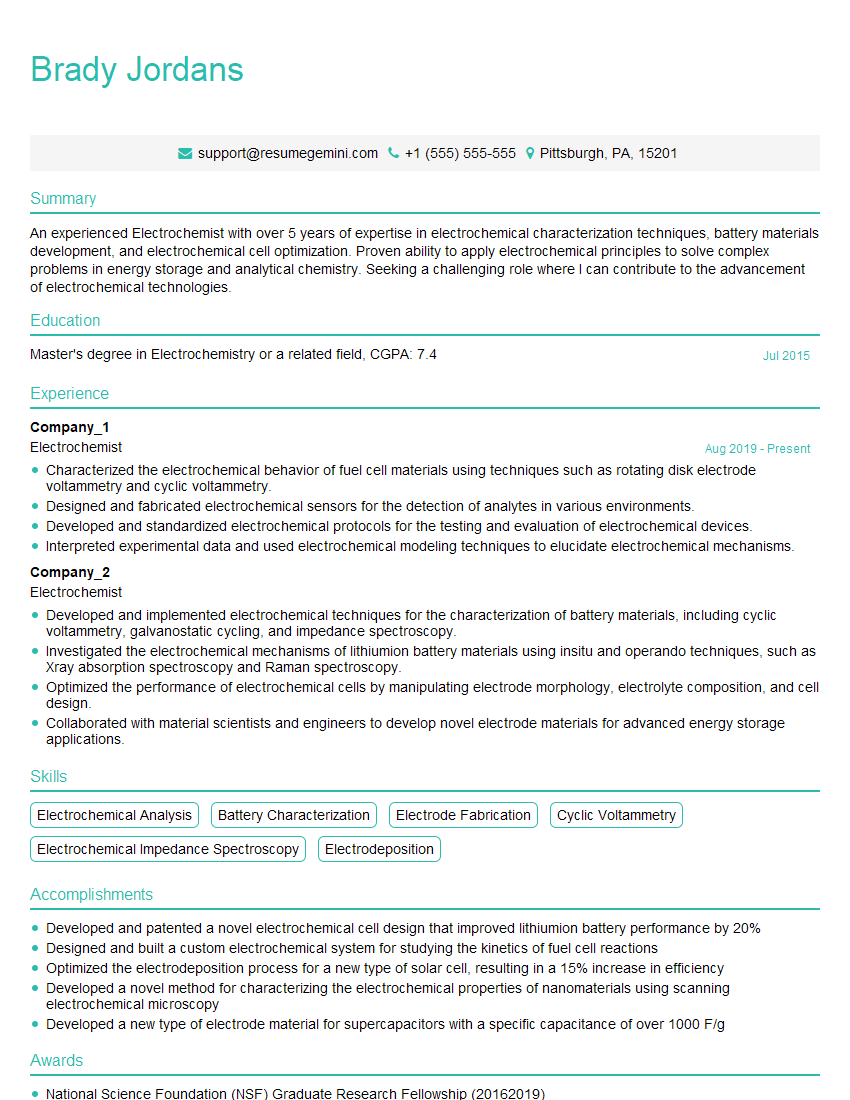
Mastering Troubleshooting Plating Problems is crucial for career advancement in the manufacturing and finishing industries. A strong understanding of these concepts demonstrates your technical expertise and problem-solving abilities, making you a valuable asset to any team. To further enhance your job prospects, create an ATS-friendly resume that highlights your skills and experience effectively. ResumeGemini is a trusted resource that can help you build a professional and impactful resume. They provide examples of resumes tailored to Troubleshooting Plating Problems, ensuring your application stands out from the competition.
Explore more articles
Users Rating of Our Blogs
Share Your Experience
We value your feedback! Please rate our content and share your thoughts (optional).
What Readers Say About Our Blog
Very informative content, great job.
good