The thought of an interview can be nerve-wracking, but the right preparation can make all the difference. Explore this comprehensive guide to TS16949 interview questions and gain the confidence you need to showcase your abilities and secure the role.
Questions Asked in TS16949 Interview
Q 1. Explain the core principles of TS16949.
TS16949, now superseded by IATF 16949, is a quality management system (QMS) standard specific to the automotive industry. Its core principles revolve around continuous improvement, defect prevention, and customer satisfaction. Think of it as a blueprint for building a robust and reliable quality system within an automotive supply chain.
- Customer Focus: Understanding and meeting customer requirements is paramount. This goes beyond just fulfilling the order; it means anticipating needs and proactively addressing potential issues.
- Leadership: Top management must actively champion the QMS, ensuring its implementation and effectiveness throughout the organization. It’s not just a bottom-up initiative.
- Process Approach: Managing processes effectively is crucial. Identifying, monitoring, and controlling each stage of production is essential for consistent quality. Think of an assembly line where each step is carefully defined and monitored.
- System Approach to Management: All the individual processes must work together seamlessly as a unified system. Silos are discouraged; cross-functional communication is critical.
- Continuous Improvement: The core of TS16949 is the constant pursuit of improvement. This involves regularly analyzing processes, identifying areas for enhancement, and implementing corrective actions.
- Fact-Based Decision Making: Decisions should be based on data and analysis, not gut feeling. Regular data collection and analysis are necessary.
- Relationship Management: Strong relationships with suppliers and customers are vital. Open communication and collaborative problem-solving are key.
For example, a company might use statistical process control (SPC) charts to monitor a critical dimension during production, allowing them to identify and correct deviations early, thereby preventing defects from reaching the customer.
Q 2. Describe the difference between IATF 16949 and TS16949.
While functionally very similar, IATF 16949 is the updated and internationally recognized successor to TS16949. TS16949 was a technical specification developed by the International Automotive Task Force (IATF), but IATF 16949 is an international standard, making it more broadly applicable and providing a more unified approach to automotive quality management.
- Structure: IATF 16949 is more aligned with ISO 9001:2015, making integration easier and streamlining auditing processes.
- Scope: IATF 16949 has a broader scope, encompassing more aspects of the automotive supply chain.
- Emphasis on Risk Management: IATF 16949 places a greater emphasis on proactive risk management and preventive actions.
- Global Recognition: IATF 16949 has greater global recognition and acceptance, making it essential for companies operating in the international automotive market.
Essentially, IATF 16949 is a more robust and internationally harmonized version of TS16949, offering enhanced clarity and efficiency for automotive manufacturers.
Q 3. What is the purpose of a Corrective Action Report (CAR)?
A Corrective Action Report (CAR) is a formal document used to document and track the resolution of nonconformities. Think of it as a detective’s case file – outlining the problem, investigation, corrective action, and verification. It’s crucial for ensuring that problems aren’t repeated.
- Problem Definition: Clearly describes the nonconformity or defect.
- Root Cause Analysis: Identifies the underlying cause(s) of the problem using tools like the 5 Whys or Fishbone diagrams.
- Corrective Actions: Outlines the steps taken to prevent recurrence.
- Verification: Confirms the effectiveness of the corrective actions.
- Preventive Actions: Identifies steps to prevent similar issues in other areas.
For instance, if a batch of parts fails a dimensional inspection, the CAR would detail the deviation, investigate the root cause (e.g., faulty tooling), outline the corrective actions (tool repair or replacement), and verify that the issue is resolved before releasing further production.
Q 4. How do you conduct an internal TS16949 audit?
Conducting an internal TS16949 audit is a crucial step in maintaining compliance. It’s a systematic review of the QMS to ensure conformance to the standard and identify areas for improvement. Imagine it as a self-checkup before a major medical examination.
- Planning: Define the audit scope, team members, and schedule. This includes identifying key processes and areas of focus.
- Audit Execution: The audit team reviews documentation, observes processes, interviews employees, and collects evidence. Using checklists helps ensure consistency.
- Findings Documentation: All findings, both conforming and nonconforming, are documented. This includes evidence to support each finding.
- Corrective Action Reporting: Nonconformities are addressed through CARs, ensuring that corrective and preventive actions are implemented and verified.
- Report Generation: A summary report detailing the audit findings and recommendations is prepared for management review.
- Management Review: Top management reviews the audit report, approves corrective actions, and monitors their effectiveness.
During an internal audit, an auditor might review the effectiveness of a specific process, such as control plans for critical processes, looking for evidence of proper implementation and adherence to procedures. Discrepancies would be noted and a CAR initiated if necessary.
Q 5. What is an FMEA and how is it used in TS16949 implementation?
A Failure Mode and Effects Analysis (FMEA) is a systematic method for identifying potential failure modes in a process or design, analyzing their effects, and recommending actions to mitigate risks. It’s a proactive tool used to prevent problems before they occur. Think of it as a preemptive strike against potential quality issues.
- Potential Failure Modes: Identifying what can go wrong.
- Severity: How serious would the failure be?
- Occurrence: How likely is the failure to occur?
- Detection: How likely is the failure to be detected before it reaches the customer?
- Risk Priority Number (RPN): Severity x Occurrence x Detection. Higher RPNs indicate higher-risk areas requiring immediate attention.
- Recommended Actions: Steps to reduce the RPN.
In TS16949, FMEAs are used for design and process validation. For example, an FMEA for a specific part might identify a potential failure mode as a crack in the weld. The team would then assess the severity, occurrence, and detectability of this failure, calculate the RPN, and implement corrective actions such as improving the welding process or adding a non-destructive testing step.
Q 6. Explain the concept of APQP (Advanced Product Quality Planning).
Advanced Product Quality Planning (APQP) is a structured approach to planning for product quality from the initial concept phase through production launch. It’s a roadmap for ensuring a smooth and efficient product launch.
- Planning: Defining the project scope, team, and objectives.
- Product Design and Development: Ensuring the product meets customer requirements.
- Process Design and Development: Designing the manufacturing process to consistently produce high-quality parts.
- Process Validation: Verifying that the process is capable of producing parts that meet specifications.
- Control Plan: Documenting the key process parameters and controls to maintain consistent quality.
- Production Launch: Successfully transitioning from prototype to production.
APQP ensures that quality is built into the product from the start, rather than being addressed as an afterthought. A well-executed APQP reduces the risk of problems during production and launch, saving time and resources.
Q 7. What is PPAP (Production Part Approval Process) and its significance?
The Production Part Approval Process (PPAP) is a set of documents and activities that demonstrate to the customer that the supplier is capable of consistently producing parts that meet specifications. Think of it as a certificate of quality, demonstrating to the customer that you can deliver as promised.
- Design Records: Showing that the design meets requirements.
- Process Flow Diagrams: Illustrating the manufacturing process.
- Control Plans: Detailing how key process parameters will be controlled.
- Measurement System Analysis (MSA): Verifying that the measurement system is accurate and precise.
- Process Capability Studies: Demonstrating the capability of the manufacturing process to produce parts within specifications.
- Sample Parts: Providing physical examples of the produced parts for customer review.
A complete PPAP submission provides a comprehensive demonstration of the supplier’s ability to meet customer requirements, reducing the risk of quality issues and building trust. Submitting an incomplete or inaccurate PPAP can lead to delays and even rejection of the parts.
Q 8. How do you perform a root cause analysis?
Root cause analysis (RCA) is a systematic process for identifying the underlying causes of a problem, not just its symptoms. Think of it like peeling an onion – you keep removing layers until you get to the core issue. In TS16949, effective RCA is crucial for preventing recurrence.
My approach typically involves these steps:
- Define the problem: Clearly state the problem, using data and specific metrics to quantify its impact. For example, instead of saying “high defect rate,” I’d say “15% defect rate on part X exceeding the acceptable limit of 5%.”)
- Gather data: Collect relevant information from various sources – production records, inspection reports, operator feedback, etc. This stage often involves using tools like Pareto charts to identify the vital few contributing factors.
- Identify potential root causes: Use tools like the 5 Whys, fishbone diagrams (Ishikawa diagrams), or fault tree analysis to systematically explore potential causes. For instance, repeatedly asking “Why?” can lead you to the core problem. If a part fails due to cracks (Why?), it’s because of inadequate heat treatment (Why?), because the oven wasn’t properly calibrated (Why?), leading to the root cause of a lack of preventative maintenance.
- Verify the root cause: Once potential root causes are identified, conduct experiments or analysis to validate that these are indeed the root causes. This can include data analysis, process simulations, or even controlled experiments.
- Implement corrective actions: Based on the verified root cause, develop and implement effective corrective actions to prevent recurrence. This might involve changes to the process, training for operators, or improvements in equipment.
- Verify effectiveness: After implementing corrective actions, monitor the process to ensure the problem is resolved and doesn’t reappear. This often involves using control charts as part of SPC (Statistical Process Control).
For example, in a previous role, we experienced an increase in customer returns due to surface scratches on a component. By using the 5 Whys and analyzing the process, we discovered the root cause was improperly lubricated robotic arms. Implementing corrective actions, including improved lubrication schedules and operator training, reduced the defect rate significantly.
Q 9. Describe your experience with 8D problem-solving methodology.
The 8D problem-solving methodology is a structured approach to resolving problems, focusing on containment, corrective actions, and prevention. Each ‘D’ represents a specific step in the process:
- D1: Describe the problem: Clearly define the problem, its impact, and its urgency.
- D2: Implement containment actions: Immediately address the problem to prevent further damage or defects. For example, isolating faulty parts or stopping the production line.
- D3: Implement corrective actions: Identify and implement temporary fixes to address the immediate problem.
- D4: Identify and verify root causes: This step utilizes the RCA techniques described previously.
- D5: Implement permanent corrective actions: Develop and implement permanent solutions to prevent recurrence.
- D6: Prevent recurrence: Implement controls and procedures to prevent the problem from happening again. This could involve process improvements, training, or system changes.
- D7: Document corrective actions: Maintain thorough documentation of the entire process, including causes, solutions, and preventive measures. This is essential for auditing and continuous improvement.
- D8: Congratulate the team: Recognize and appreciate the team’s efforts in resolving the issue. This helps build a culture of problem-solving and accountability.
In my experience, successfully using the 8D methodology requires strong teamwork, clear communication, and a commitment to data-driven decision-making. I’ve led numerous 8D teams, focusing on ensuring thorough investigation and prevention, thereby minimizing future disruptions.
Q 10. Explain the importance of control plans in TS16949.
Control plans in TS16949 are crucial documents that outline the methods used to control critical process parameters to ensure consistent product quality. They are essentially a roadmap for maintaining process stability and preventing defects. They serve as a living document that evolves with process changes.
A well-structured control plan typically includes:
- Process description: A clear and concise explanation of the process being controlled.
- Potential failure modes: Identification of potential problems that could occur in the process.
- Control methods: Methods to prevent or detect potential problems, including preventive measures, monitoring techniques, and corrective actions.
- Responsibilities: Clearly defined roles and responsibilities for monitoring and controlling the process.
- Monitoring frequency: The frequency at which the process will be monitored.
- Measurement methods: Specific techniques for measuring process parameters, including gauge R&R studies and other MSA methods.
- Acceptance criteria: Defined limits for acceptable process variation.
- Corrective actions: Actions to take if the process falls outside the acceptable limits.
Without effective control plans, a company risks producing non-conforming products, leading to customer dissatisfaction, recalls, and significant financial losses. I’ve seen firsthand how robust control plans, when meticulously implemented, can lead to significant improvements in process stability and product quality.
Q 11. What are the key elements of a quality management system (QMS)?
A Quality Management System (QMS) is a collection of interconnected policies, procedures, processes, and resources that work together to achieve an organization’s quality objectives. It provides a framework for consistently meeting customer requirements and improving product and service quality.
Key elements of a robust QMS typically include:
- Customer focus: Understanding and meeting customer needs and expectations.
- Leadership commitment: Top management actively supporting and participating in quality initiatives.
- Engagement of people: Empowering employees at all levels to contribute to quality improvement.
- Process approach: Managing activities as interrelated processes that contribute to overall objectives.
- Improvement: Continuously seeking opportunities to enhance the QMS and its effectiveness.
- Evidence-based decision-making: Making decisions based on data analysis and objective evidence.
- Relationship management: Building and maintaining effective relationships with suppliers and customers.
These elements work synergistically. For example, leadership commitment ensures resources are allocated, while employee engagement fosters innovation and problem-solving, ultimately leading to improvements in processes and customer satisfaction. A well-defined QMS becomes the backbone of a company’s quality culture and performance.
Q 12. How do you manage customer complaints related to quality issues?
Managing customer complaints related to quality issues requires a systematic and proactive approach. My strategy involves these key steps:
- Acknowledge and record the complaint: Promptly acknowledge the customer’s complaint and document all relevant information, including the specific issue, the customer’s contact information, and the date of the complaint.
- Investigate the root cause: Employ RCA techniques to determine the root cause of the problem. This often involves gathering data from various sources, including the customer, production records, and inspection reports.
- Implement corrective actions: Develop and implement corrective actions to address the immediate issue and prevent recurrence. This could involve repairing or replacing defective products, modifying processes, or providing additional training.
- Communicate with the customer: Keep the customer informed throughout the investigation and resolution process. This demonstrates a commitment to customer satisfaction and builds trust.
- Implement preventative actions: Develop and implement preventative actions to prevent similar complaints from occurring in the future. This could involve process improvements, changes in materials, or additional quality checks.
- Monitor and review: Monitor the effectiveness of the corrective and preventative actions implemented. Regularly review the complaint handling process to identify areas for improvement.
Customer satisfaction is paramount. A well-managed complaint process transforms a negative experience into an opportunity for improvement and strengthens the customer relationship. I’ve found that a sincere apology, coupled with decisive and effective action, can often turn a dissatisfied customer into a loyal one.
Q 13. What is your experience with statistical process control (SPC)?
Statistical Process Control (SPC) is a powerful tool for monitoring and controlling process variation. It uses statistical methods to identify trends, patterns, and anomalies in process data, allowing for timely intervention to prevent defects. I have extensive experience in applying SPC techniques in various manufacturing environments.
My experience includes using various control charts, including:
- X-bar and R charts: Used for monitoring the average and range of a continuous variable.
- p-charts: Used for monitoring the proportion of non-conforming units in a sample.
- c-charts: Used for monitoring the number of defects per unit.
- u-charts: Used for monitoring the number of defects per unit of measure.
I’m proficient in interpreting control charts to identify special cause variation (assignable causes) and common cause variation (random causes). For instance, a point outside the control limits signals a special cause that requires immediate investigation. I’ve used SPC to successfully reduce process variation, improve product consistency, and ultimately enhance customer satisfaction. In a previous project, implementing SPC on a critical assembly process reduced the defect rate by 25% in just three months.
Q 14. Describe your experience with MSA (Measurement System Analysis).
Measurement System Analysis (MSA) is a critical process in ensuring the accuracy and reliability of measurement systems used in manufacturing. It determines the capability of a measurement system to accurately and consistently measure a product characteristic. Without a robust MSA, we risk making decisions based on unreliable data.
My experience with MSA includes conducting various studies such as:
- Gauge Repeatability and Reproducibility (GR&R): This study evaluates the variation within a measurement system due to repeatability (variation from repeated measurements by the same operator) and reproducibility (variation due to different operators using the same gauge).
- Bias studies: Assess the systematic error of a measurement system.
- Linearity studies: Evaluate the consistency of measurement across the range of the measurement system.
The results of MSA studies help determine if the measurement system is suitable for its intended use. If a measurement system is deemed inadequate, corrective actions are taken to improve its accuracy and precision. For example, operator training, gauge calibration, or replacement of faulty equipment might be necessary. In one project, a poorly calibrated measuring instrument was identified through MSA, leading to the detection and correction of a subtle process drift. Using MSA is essential for TS16949 compliance as it directly relates to the reliability of data used in process monitoring and quality control.
Q 15. How do you ensure the effectiveness of your corrective and preventive actions?
Ensuring the effectiveness of Corrective and Preventive Actions (CAPA) is crucial for TS16949 compliance. It’s not just about fixing a problem, but preventing it from recurring. My approach involves a structured, five-step process:
- Identify the root cause: This isn’t just about identifying the immediate symptom; we delve deep using tools like the 5 Whys (explained later) to uncover the underlying issues. For instance, if a customer reports a faulty part, we wouldn’t simply replace it. We’d investigate why it failed – was it a material defect, a process flaw, or operator error?
- Implement corrective actions: This involves taking immediate steps to address the immediate problem. This might include replacing faulty parts, retraining operators, or adjusting machinery. We document these actions clearly.
- Implement preventive actions: This is where we prevent recurrence. If the root cause was a machine malfunction, we’d implement preventative maintenance. If it was operator error, we’d improve training materials and processes. These are documented and verified.
- Verification: We verify the effectiveness of both corrective and preventive actions. This might involve monitoring defect rates, conducting process capability studies, or following up with customers. Evidence of effectiveness is documented.
- Documentation and Review: The entire CAPA process is meticulously documented, including the root cause analysis, actions taken, and verification results. Regular reviews of CAPA effectiveness ensure continuous improvement.
For example, in a previous role, we discovered a high defect rate in a specific welding process. Through root cause analysis, we identified inconsistent welder training as the culprit. Our CAPA involved updated training materials, additional practical training sessions, and a competency assessment. Post-implementation, defect rates dropped significantly, proving the effectiveness of our actions. This was documented within our CAPA system and reviewed during our management review meetings.
Career Expert Tips:
- Ace those interviews! Prepare effectively by reviewing the Top 50 Most Common Interview Questions on ResumeGemini.
- Navigate your job search with confidence! Explore a wide range of Career Tips on ResumeGemini. Learn about common challenges and recommendations to overcome them.
- Craft the perfect resume! Master the Art of Resume Writing with ResumeGemini’s guide. Showcase your unique qualifications and achievements effectively.
- Don’t miss out on holiday savings! Build your dream resume with ResumeGemini’s ATS optimized templates.
Q 16. What is your experience with auditing external suppliers to TS16949 standards?
I have extensive experience auditing external suppliers to TS16949 standards. This involves a thorough review of their quality management system, including their processes, documentation, and adherence to the standard’s requirements. I’ve performed both first-party and second-party audits.
My approach is structured and objective. I begin with a review of their quality manual and other relevant documentation. Then, I conduct on-site observations of their processes, interviewing personnel at various levels to gain a comprehensive understanding of their operations and quality practices. I verify the effectiveness of their control plans, process FMEAs, and their capability to consistently produce conforming product.
I pay particular attention to areas such as process control, product traceability, corrective and preventive actions, and customer satisfaction. I use a checklist based on the TS16949 requirements and industry best practices to ensure a consistent and thorough audit. Any non-conformances found are documented clearly, along with the severity and the potential impact on product quality.
Finally, I provide a comprehensive report to management outlining my findings, including any non-conformances and recommendations for improvement. I believe in building a collaborative relationship with suppliers, focusing on improvement rather than solely on identifying deficiencies.
Q 17. How do you handle non-conformances identified during audits?
Handling non-conformances identified during audits is a critical aspect of maintaining TS16949 compliance. My approach focuses on immediate action and effective resolution.
First, I clearly document each non-conformance, specifying its nature, location, and severity. Severity is usually categorized based on its potential impact on product quality or safety. Next, I collaborate with the responsible party (internal or external) to identify the root cause using techniques such as the 5 Whys or fishbone diagrams.
Based on the root cause analysis, we develop a Corrective Action Plan (CAPA). This plan details the specific corrective actions to be taken, the responsible parties, timelines, and methods of verification. We establish clear metrics to measure the effectiveness of the implemented corrective actions. The CAPA process involves regular monitoring and verification to ensure effectiveness. A follow-up audit may be conducted to verify that corrective actions have been successfully implemented and to prevent recurrence. Finally, the entire process including the non-conformance, the root cause, corrective actions, and verification is thoroughly documented.
For example, if an audit reveals a lack of proper calibration records for a critical measuring instrument, the CAPA would involve establishing a calibration schedule, training personnel on proper calibration procedures, and implementing a system for tracking calibration records. Post-implementation, a verification audit would confirm that all instruments are calibrated according to schedule and records are maintained correctly.
Q 18. Explain your understanding of the five whys technique.
The ‘5 Whys’ is a simple yet powerful root cause analysis technique used to identify the root cause of a problem by repeatedly asking ‘why’. It’s an iterative process, peeling back the layers to uncover the underlying issues rather than just addressing the symptoms.
Example: Let’s say a customer returns a product because it’s broken.
- Why? The part failed.
- Why? The weld wasn’t strong enough.
- Why? The welding machine was improperly calibrated.
- Why? The calibration schedule wasn’t followed.
- Why? There was no system in place to track and enforce the calibration schedule.
Through this process, we’ve moved from the initial symptom (broken product) to the root cause (lack of a system to track and enforce calibration). This allows for effective corrective and preventive actions, such as implementing a robust calibration tracking system and operator training. It’s important to note that while the ‘5 Whys’ is a guide, you may need more or fewer ‘whys’ to reach the root cause, depending on the complexity of the issue.
Q 19. What is your experience with implementing continuous improvement initiatives?
I have a strong track record of implementing continuous improvement initiatives, leveraging methodologies like Lean Manufacturing and Six Sigma. In my previous role, we implemented a Lean Manufacturing project focusing on reducing lead times in our production process. This involved mapping the value stream, identifying and eliminating waste, and optimizing workflow.
The project resulted in a significant reduction in lead times, improved efficiency, and reduced inventory costs. We used tools like Value Stream Mapping (VSM), Kaizen events (short, focused improvement projects), and 5S (a workplace organization method) to drive this improvement. Another example involves using DMAIC (Define, Measure, Analyze, Improve, Control), a structured methodology from Six Sigma to reduce defects in our assembly process.
These projects weren’t isolated events; they were embedded in our culture, with regular review meetings and ongoing improvement efforts. Crucially, employee involvement was key to success. We empowered our teams to identify and implement improvements, creating a culture of continuous learning and improvement. Data was used throughout each project to monitor progress and measure the impact of the implemented changes.
Q 20. Describe your experience with process capability analysis.
Process capability analysis is essential for determining whether a process can consistently produce output meeting specified requirements. It’s a statistical method used to evaluate process performance and identify areas for improvement. I’m proficient in using various statistical tools such as Cp, Cpk, and Pp, Ppk indices to assess process capability.
Cp and Cpk measure the process capability relative to the specification limits, considering the process spread and the target value. Pp and Ppk consider the overall process variation over time, including the short-term and long-term variability. A higher Cp and Cpk index indicates a more capable process, capable of meeting customer specifications.
In practice, I’ve used process capability analysis to identify bottlenecks and variations in manufacturing processes. For example, we identified a low Cpk value for a specific machining operation. This analysis helped us pinpoint the source of variability (worn tooling), leading to corrective actions (tool replacement and improved maintenance schedule). Post-implementation, a reassessment showed a significant improvement in Cpk, demonstrating the effectiveness of the changes. This data was documented and used as evidence of continuous improvement and adherence to TS16949 requirements.
Q 21. Explain your knowledge of the requirements for a quality manual.
The quality manual is a cornerstone of a TS16949 compliant quality management system. It serves as a comprehensive document that outlines the organization’s quality policy, objectives, and procedures. It’s the single reference point for all quality-related activities.
According to TS16949, a quality manual should include, but is not limited to:
- Scope: Clearly defining which parts of the organization the quality management system covers.
- Quality Policy: A formal statement outlining the organization’s commitment to quality.
- Organizational Structure: Illustrating the roles and responsibilities related to the quality management system.
- Quality Objectives: Specific, measurable, achievable, relevant, and time-bound goals relating to quality improvements.
- Procedures: Documented procedures for various quality-related activities, including internal audits, corrective and preventive actions, and control of non-conforming product.
- Processes: A description of relevant processes within the organization’s quality management system.
- Document Control: A system for controlling the creation, review, and approval of documents.
- Records Management: A system for managing and maintaining quality records.
The quality manual should be readily accessible to all relevant personnel and should be regularly reviewed and updated to reflect changes in the organization’s operations or requirements. It is a living document, reflecting the dynamic nature of the quality management system. A well-structured quality manual serves as a crucial guide for ensuring consistent application of the quality management system and adherence to TS16949 requirements.
Q 22. How do you manage document control within a TS16949 system?
Document control in a TS16949 system is crucial for maintaining the integrity and traceability of all quality-related records. It ensures everyone is working with the most up-to-date information and that changes are managed effectively. This involves a structured approach covering creation, review, approval, distribution, change control, and archival.
- Creation and Review: Documents are created following pre-defined templates and undergo rigorous review by subject matter experts to ensure accuracy and completeness. For example, a work instruction detailing a specific assembly process would be reviewed by engineers, production personnel, and quality control.
- Approval and Distribution: Approved documents are then released through a controlled distribution system, often using a document management system (DMS). This ensures only authorized personnel have access to the latest versions, preventing the use of outdated procedures. Version control is essential, clearly identifying each revision.
- Change Control: A formal change control process is paramount. Any modifications – whether minor or major – must be documented, reviewed, approved, and implemented in a controlled manner. This includes revision history tracking. Imagine a change to a critical dimension on a part; the change process ensures all affected documents (drawings, work instructions, etc.) are updated and everyone is notified.
- Archival: Obsoleted documents are archived securely to maintain historical records, readily accessible for audits or future reference. We use a combination of physical and electronic archiving to ensure data integrity and longevity.
Think of it like building a house: Each document is a blueprint or instruction. Without controlled access and version management, you risk building with outdated or incorrect plans, leading to costly errors and potentially unsafe outcomes.
Q 23. Explain your experience with training employees on TS16949 requirements.
Training employees on TS16949 requirements is not just a compliance exercise; it’s an investment in the long-term success of the quality management system. My approach combines classroom learning, practical exercises, and on-the-job coaching.
- Needs Assessment: I begin by identifying the specific training needs of each employee based on their role and responsibilities. This ensures the training is relevant and effective.
- Modular Training: Instead of overwhelming employees with a massive amount of information at once, I deliver the training in bite-sized modules, making it easier to digest and retain. For example, one module might focus on the core principles of TS16949, while another could address specific procedures like conducting internal audits.
- Interactive Sessions: I incorporate interactive activities, case studies, and quizzes to reinforce learning. This approach keeps the trainees engaged and helps them apply their knowledge practically. We use real-life examples from our own production challenges and successes.
- On-the-Job Coaching: Post-training, I provide ongoing support and coaching to employees, ensuring they apply their newly acquired knowledge correctly in their daily tasks.
- Assessment & Feedback: I incorporate regular assessments to measure employee understanding and provide tailored feedback. This helps me identify any gaps in their understanding and adjust my training approach accordingly.
Effective training leads to a more engaged and competent workforce that actively contributes to achieving and maintaining the quality management system’s objectives. It’s a continuous process, adapting to evolving needs and organizational changes.
Q 24. How do you ensure effective communication within a quality management system?
Effective communication is the lifeblood of any successful quality management system, especially one adhering to TS16949. Without open and transparent communication, inconsistencies, errors, and misunderstandings can easily creep in, impacting product quality and customer satisfaction.
- Multi-channel Approach: I utilize a variety of communication channels to ensure information reaches everyone effectively. This includes regular team meetings, company-wide newsletters, email updates, and interactive dashboards displaying key performance indicators.
- Formal Communication Protocols: We establish clear communication protocols for handling nonconformances, corrective actions, and improvement initiatives. For example, a documented escalation path is crucial for addressing urgent issues.
- Regular Feedback Mechanisms: We encourage feedback from all levels of the organization through suggestion boxes, employee surveys, and regular performance reviews. This helps identify potential communication bottlenecks and areas for improvement.
- Transparency and Openness: We foster a culture of transparency and openness, where employees feel comfortable raising concerns or sharing ideas without fear of reprisal.
- Defined Roles and Responsibilities: Clear roles and responsibilities ensure everyone understands their communication duties and who to contact for specific information. We maintain a clear organizational chart readily available to all staff.
Imagine a relay race: Clear communication is the baton pass. If the information isn’t passed accurately and efficiently, the whole team suffers. In our quality management system, a smooth flow of information ensures everyone works towards the same goals.
Q 25. Describe your experience with using data to drive quality improvements.
Data-driven quality improvement is fundamental to a robust TS16949 system. I leverage data analysis to identify root causes of defects, optimize processes, and ultimately enhance product quality. My experience involves a structured approach:
- Data Collection: We meticulously collect data from various sources, including production records, inspection reports, customer feedback, and supplier performance data. We use statistical process control (SPC) charts extensively.
- Data Analysis: I employ various statistical tools and techniques, such as Pareto charts, control charts, and process capability analysis (Cpk), to identify trends, patterns, and outliers in the data. For instance, a Pareto chart might reveal that 80% of defects stem from a single process step, allowing us to focus our improvement efforts.
- Root Cause Analysis: Once potential issues are identified, I employ root cause analysis techniques like the 5 Whys or fishbone diagrams to determine the underlying causes of defects. For example, we might discover that inconsistent training is the root cause of a high defect rate in a particular assembly operation.
- Corrective Actions: Based on the findings from the root cause analysis, we implement appropriate corrective and preventive actions (CAPA) to eliminate the root causes and prevent recurrence. This might involve revising work instructions, improving employee training, or upgrading equipment.
- Monitoring and Evaluation: We continuously monitor the effectiveness of the implemented CAPAs by tracking key metrics and assessing whether the corrective actions have led to sustained improvements. This forms the basis of ongoing improvement cycles.
Think of data as a compass guiding our quality improvement journey. By using it effectively, we can navigate around obstacles, reach our destinations faster, and achieve sustainable quality enhancement.
Q 26. What metrics do you use to measure the effectiveness of your quality system?
Measuring the effectiveness of our quality system is crucial for continuous improvement. We use a range of metrics aligned with TS16949 requirements, including:
- Defect Rates (PPM): Parts per million (PPM) defects are a critical indicator of product quality, showing the frequency of nonconforming products. We track this across different production lines and product variations.
- Customer Complaints: The number and nature of customer complaints provide valuable insight into customer satisfaction and product performance. We meticulously analyze these to understand underlying causes.
- Internal Audit Findings: The results of our internal audits highlight the effectiveness of our quality management system, identifying areas of strength and weakness. Trends in audit findings provide data for improvement initiatives.
- Process Capability (Cpk): This metric assesses the ability of a process to meet customer specifications, indicating consistency and performance of critical processes.
- Supplier Performance: We track key performance indicators (KPIs) from our suppliers, such as on-time delivery and defect rates, to assess their contribution to our overall quality objectives.
- Employee Satisfaction: A satisfied and engaged workforce is a critical element in maintaining a robust quality system. Employee feedback surveys help us monitor this aspect.
These metrics provide a comprehensive overview of our quality performance and inform our continuous improvement efforts. Regular monitoring and analysis ensure that we remain focused on achieving excellence in quality.
Q 27. How would you handle a conflict between production demands and quality standards?
Conflicts between production demands and quality standards are inevitable in manufacturing. My approach to handling such situations emphasizes a balanced approach prioritizing quality without compromising the delivery schedule entirely.
- Prioritize Critical Issues: We first identify the critical quality aspects that cannot be compromised under any circumstance. These are typically safety-related or linked to critical customer requirements. These take precedence over production speed.
- Root Cause Analysis: If a conflict arises, we conduct a thorough root cause analysis to identify the root of the issue. Is the conflict due to insufficient capacity, flawed processes, or inadequate resources? Understanding this allows us to address the issue effectively.
- Collaboration and Communication: We establish open communication between production, quality, and engineering teams to find solutions that balance production demands and quality standards. This might involve prioritizing certain tasks, adjusting production schedules, or identifying process improvements.
- Risk Assessment: We assess the risks associated with both compromising quality and delaying production. This helps us make an informed decision that minimizes the overall negative impact on the business.
- Contingency Planning: Having a robust contingency plan in place allows us to deal effectively with unexpected delays or quality issues. This involves having backup plans or resources available.
Resolving such conflicts requires a collaborative and proactive approach. It’s a delicate balancing act; sacrificing quality to meet deadlines may lead to more significant issues later on. Open communication and data-driven decision-making are crucial for finding a practical resolution that keeps both quality and schedule within acceptable parameters.
Key Topics to Learn for TS16949 Interview
Acing your TS16949 interview requires a solid understanding of its core principles and their practical application. Focus your preparation on these key areas:
- Quality Management System (QMS): Understand the structure and implementation of a TS16949 compliant QMS. This includes elements like the quality manual, process maps, and internal audits.
- Customer Focus: Explore how TS16949 emphasizes meeting and exceeding customer requirements. Consider examples demonstrating your understanding of customer-centric approaches to problem-solving.
- Continual Improvement: Learn about different improvement methodologies like PDCA (Plan-Do-Check-Act) and their application within a TS16949 framework. Be prepared to discuss real-world examples of process improvements.
- Process Control: Master the concepts of process capability, statistical process control (SPC), and how these tools ensure consistent product quality. Practice applying these concepts to hypothetical scenarios.
- Corrective and Preventive Actions (CAPA): Understand the complete CAPA process, from identifying root causes to implementing effective corrective actions and preventing recurrence. Think about how you would approach different types of nonconformities.
- Internal Audits: Familiarize yourself with the auditing process, including audit planning, execution, reporting, and follow-up actions. Prepare to discuss your audit experience and how you ensure objectivity and effectiveness.
- Management Review: Understand the purpose and importance of management reviews in ensuring the effectiveness of the QMS. Be ready to discuss key performance indicators (KPIs) and their relevance to the system’s ongoing improvement.
Next Steps
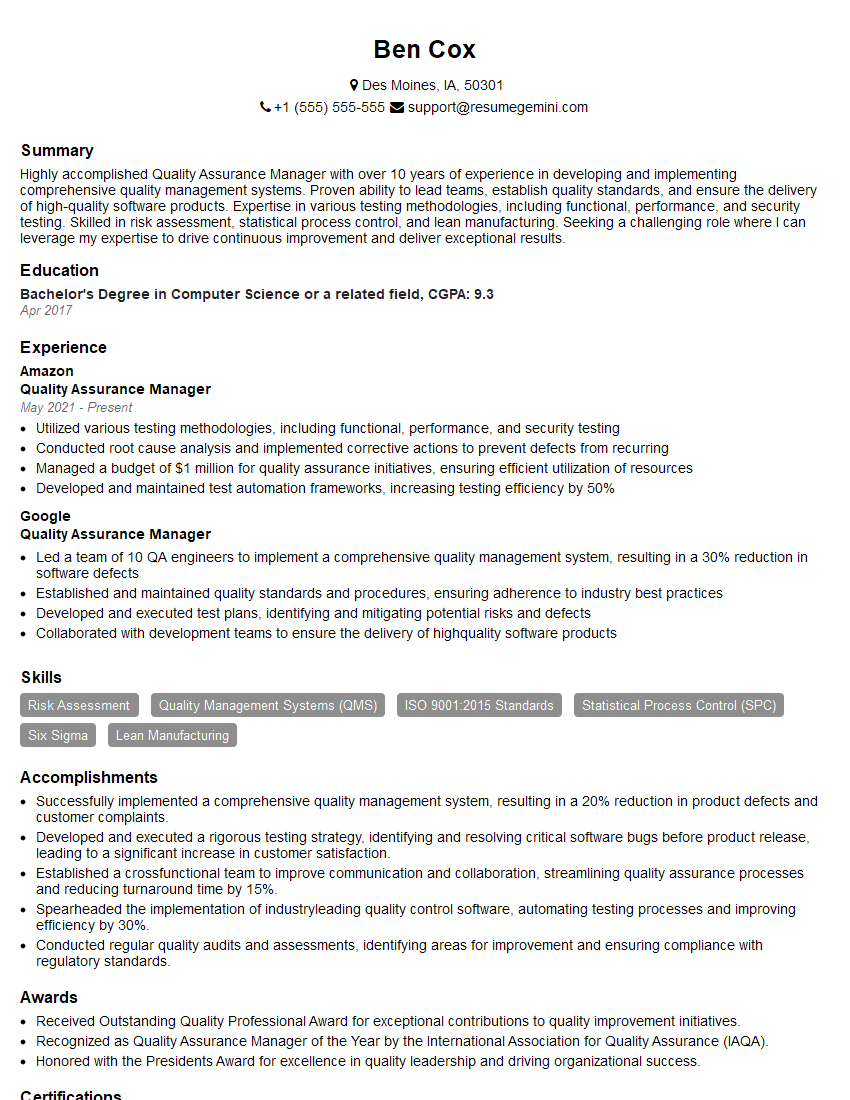
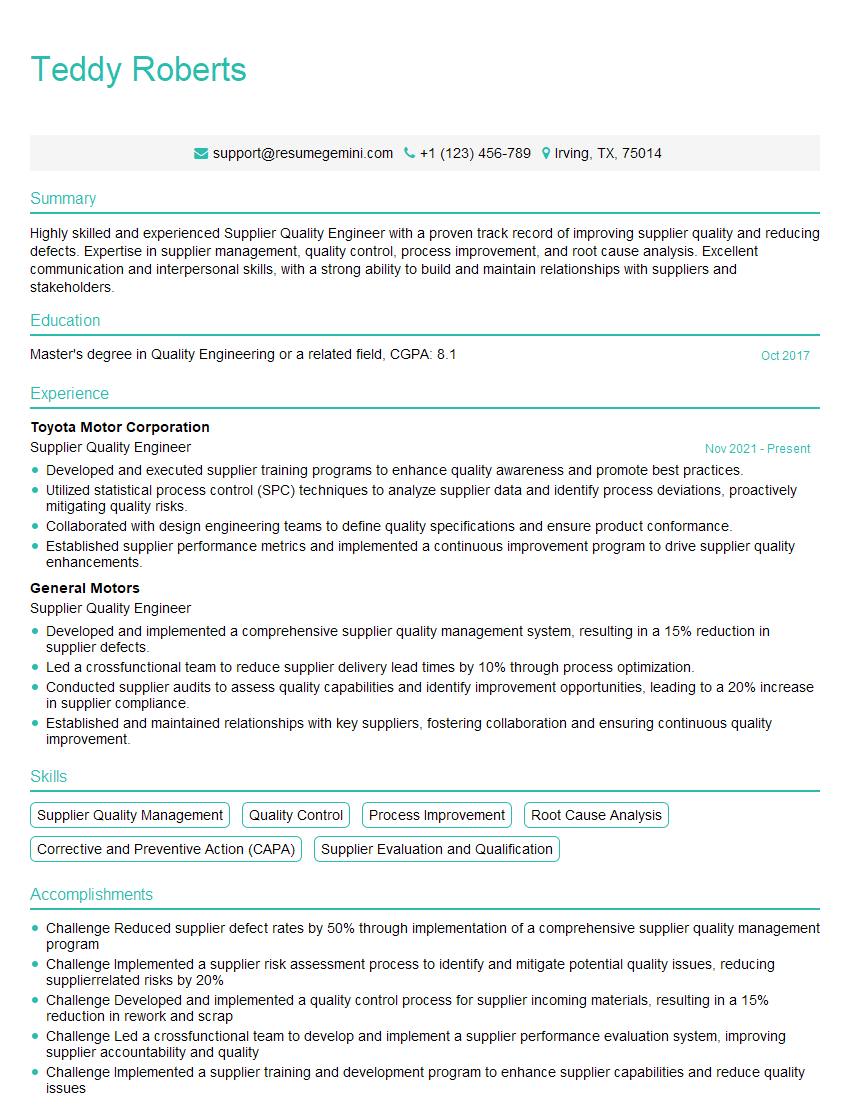
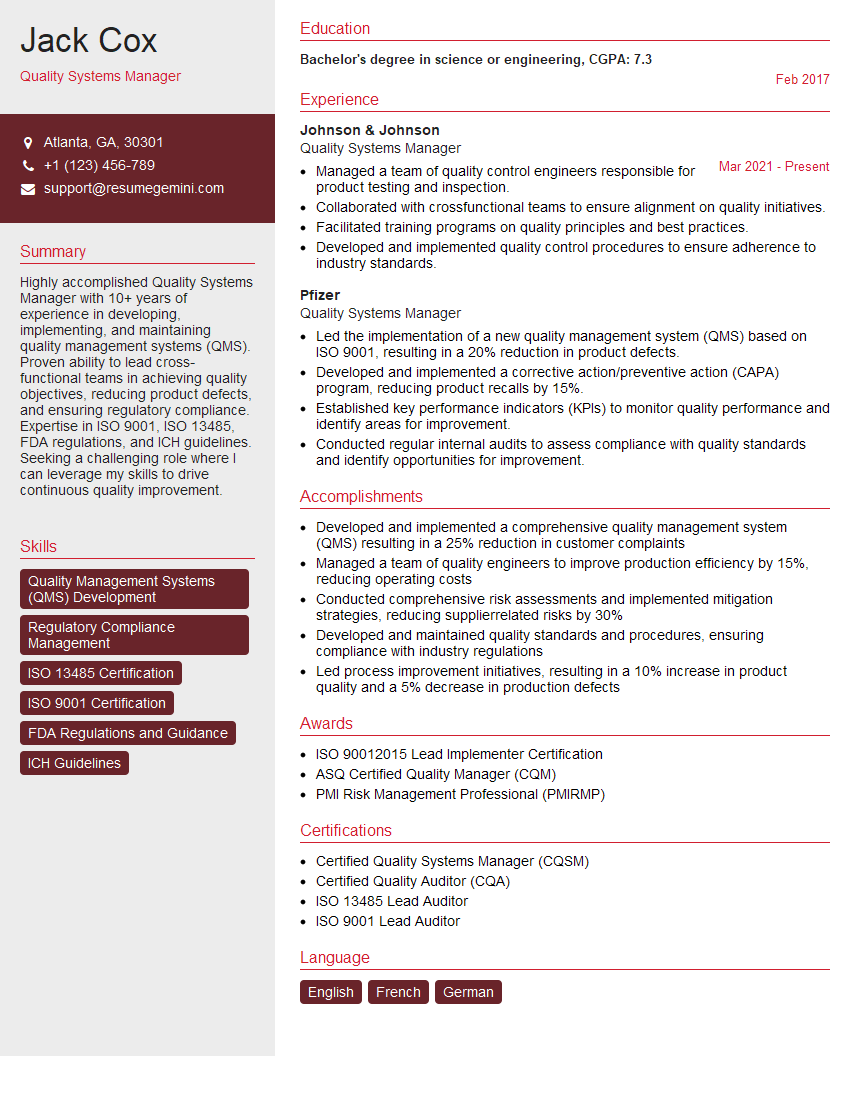
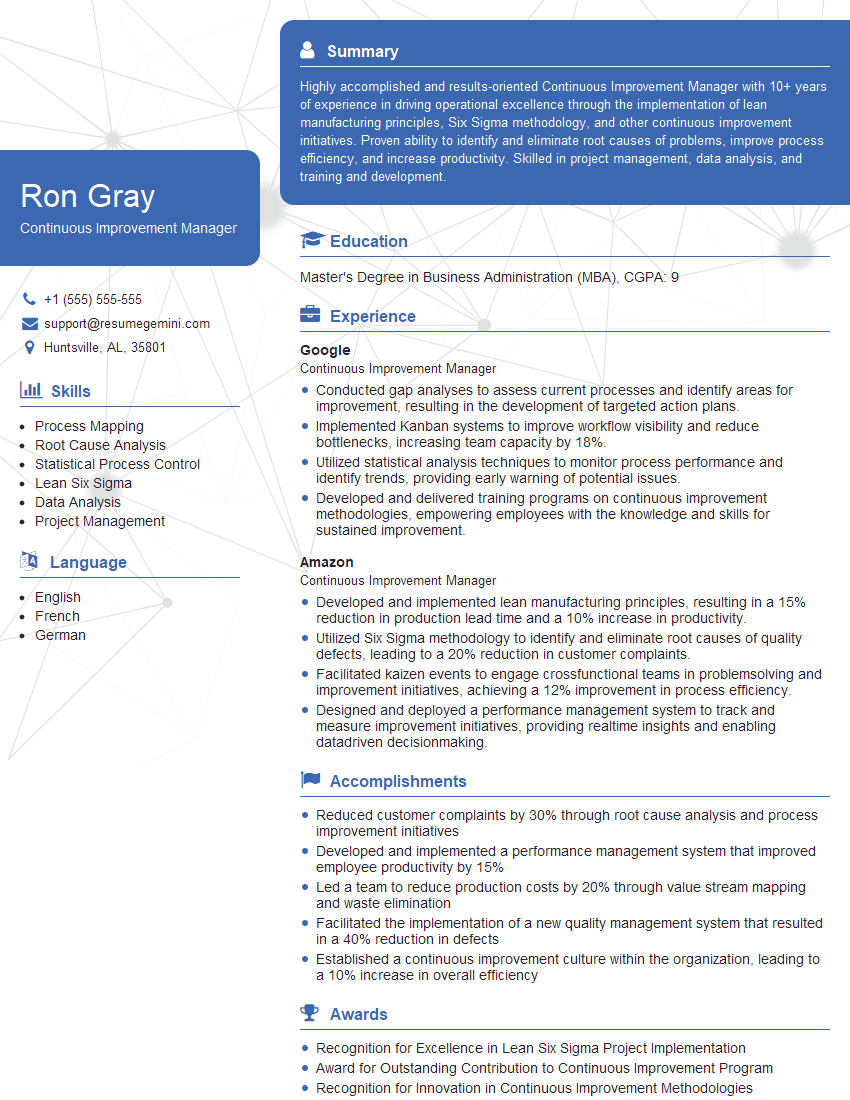
Mastering TS16949 demonstrates a commitment to quality and process improvement, significantly enhancing your career prospects in the automotive and related industries. To maximize your chances of landing your dream job, a well-crafted resume is essential. An ATS-friendly resume ensures your qualifications are effectively communicated to hiring managers. We highly recommend using ResumeGemini to build a professional and impactful resume that highlights your TS16949 expertise. ResumeGemini provides examples of resumes tailored to TS16949 roles, ensuring you present yourself in the best possible light. Invest the time to create a compelling document – it’s an investment in your future.

Explore more articles
Users Rating of Our Blogs
Share Your Experience
We value your feedback! Please rate our content and share your thoughts (optional).
What Readers Say About Our Blog
Very informative content, great job.
good