Cracking a skill-specific interview, like one for Wildlife Disease and Parasite Control, requires understanding the nuances of the role. In this blog, we present the questions you’re most likely to encounter, along with insights into how to answer them effectively. Let’s ensure you’re ready to make a strong impression.
Questions Asked in Wildlife Disease and Parasite Control Interview
Q 1. Explain the life cycle of a common wildlife parasite.
Understanding the life cycle of a parasite is crucial for effective control. Let’s take the common deer tick (Ixodes scapularis) and its Lyme disease-causing bacterium, Borrelia burgdorferi, as an example. This parasite has a complex life cycle involving three hosts.
- Egg Stage: The cycle begins with the female tick laying thousands of eggs on the ground after feeding on a host.
- Larval Stage: These eggs hatch into six-legged larvae, which actively seek out small mammals like mice or shrews. They feed on blood, potentially acquiring Borrelia burgdorferi if their host is infected.
- Nymphal Stage: After feeding, the larva molts into a nymph, still small but larger than the larva. Nymphs also feed on blood, this time potentially from larger animals, including deer and humans. This is the stage where infection transmission to humans is most common.
- Adult Stage: After a second blood meal, the nymph develops into an adult tick, which then seeks a larger host like a deer for mating. The female adult then feeds for a long period, obtaining the blood needed to produce more eggs, thus restarting the cycle.
Understanding these stages allows targeted interventions. For instance, we can focus on reducing tick populations by controlling rodent populations, or using acaricides in areas frequented by ticks.
Q 2. Describe different methods for diagnosing wildlife diseases.
Diagnosing wildlife diseases presents unique challenges due to the difficulty in handling and sampling wild animals. Several methods are employed:
- Clinical Examination: Observing an animal’s behavior, physical condition (weight loss, lethargy, lesions), and taking vital signs provides preliminary clues.
- Necropsy: Examination of a deceased animal allows detailed investigation of internal organs and tissues for signs of disease.
- Sampling: Blood, tissue, fecal, and other samples are collected for laboratory analysis.
- Microscopy: Direct examination of samples under a microscope to identify parasites or microbial agents.
- Serology: Detecting antibodies against specific pathogens in blood serum indicates past or present infection.
- Molecular Techniques: PCR (Polymerase Chain Reaction) and other molecular methods are used to detect specific DNA or RNA sequences of pathogens, even at low concentrations.
- Histopathology: Microscopic examination of tissue sections reveals cellular changes indicative of disease.
The choice of methods depends on the suspected disease, the resources available, and the ethical considerations involved. For example, a relatively non-invasive approach like serology might be preferred over a necropsy, unless a definitive diagnosis requires it.
Q 3. What are the key challenges in controlling wildlife diseases?
Controlling wildlife diseases is extraordinarily complex due to numerous factors:
- Wildlife Mobility: Animals move freely across large areas, making containment difficult. A disease outbreak in one region can quickly spread to others.
- Environmental Factors: Climate, habitat conditions, and the availability of resources influence disease transmission. For instance, drought might lead to increased competition and stress, making animals more susceptible to disease.
- Difficult Access to Animals: Treating or vaccinating wild animals is challenging and often impractical.
- Ethical Concerns: Interventions may have unintended consequences on the animals or their ecosystems.
- Lack of Resources: Effective disease surveillance and control require substantial funding, expertise, and infrastructure which are often limited.
- Disease Complexity: Some diseases involve intricate interactions between pathogens, hosts, and vectors, making it hard to develop effective control strategies.
The control of rabies, for example, illustrates these challenges. Vaccination programs can be effective in certain areas but are severely hampered by the animals’ mobility and the logistical issues of getting vaccines to widely distributed populations.
Q 4. Discuss the role of epidemiology in wildlife disease management.
Epidemiology plays a vital role in understanding and managing wildlife diseases. It involves investigating the distribution, patterns, and determinants of disease in wildlife populations.
Epidemiological studies help us answer key questions:
- What is the prevalence and incidence of the disease? Determining how many animals are infected and how quickly the disease is spreading.
- Who is at risk? Identifying susceptible species, age groups, or populations.
- What are the risk factors? Investigating environmental, behavioral, or genetic factors that influence disease transmission.
- How is the disease transmitted? Understanding the routes of transmission (direct contact, vectors, environmental contamination) is vital for targeted interventions.
- What are the impacts of the disease? Assessing the effects on individual animals, populations, and ecosystems.
Using this information, we can develop evidence-based strategies for disease prevention, control, and mitigation. For instance, understanding the role of specific vectors in transmitting a disease might lead to targeted vector control measures.
Q 5. How do you assess the risk of disease transmission between wildlife and humans?
Assessing the risk of zoonotic disease transmission (from animals to humans) is crucial for public health. A framework incorporating several factors is used:
- Host Factors: The susceptibility of wildlife species to the pathogen and their potential to shed the pathogen in high quantities.
- Pathogen Factors: The pathogen’s ability to infect and cause disease in humans, its route of transmission (e.g., through bites, contact with body fluids, airborne spread), and its virulence.
- Environmental Factors: The degree of overlap between human and wildlife habitats, the presence of environmental reservoirs (e.g., contaminated water or soil), and climatic conditions that might influence pathogen survival.
- Human Factors: Human behavior, proximity to wildlife, and occupation increase the risk of exposure.
Risk assessment is often expressed as a probability, indicating the likelihood of disease transmission occurring. This information guides public health interventions, such as warnings to avoid contact with infected wildlife or educational campaigns on safe handling of wildlife.
For example, the risk of rabies transmission is high when handling bats or other potentially infected animals, whereas the risk of certain tick-borne diseases is higher in areas with high tick density and significant human-wildlife overlap.
Q 6. Explain the importance of wildlife disease surveillance.
Wildlife disease surveillance is essential for early detection and prevention of outbreaks. It involves the ongoing systematic collection and analysis of data on disease occurrence in wildlife populations.
Key aspects of surveillance include:
- Passive Surveillance: Gathering data from various sources like veterinarians, wildlife rehabilitators, hunters, and the public.
- Active Surveillance: Proactive collection of data through targeted sampling and monitoring programs.
- Data Analysis: Analyzing surveillance data to identify trends, outbreaks, and risk factors.
- Communication: Sharing surveillance data with relevant stakeholders (e.g., public health officials, wildlife managers) to support timely interventions.
Effective surveillance allows early warning of potential outbreaks, which enables rapid responses to minimize the impact on wildlife and human health. For example, routine monitoring of avian influenza in bird populations can help detect and control outbreaks before they spread widely and potentially impact poultry or humans.
Q 7. What are the ethical considerations in wildlife disease research and control?
Ethical considerations are paramount in wildlife disease research and control. Key issues include:
- Minimizing Animal Suffering: Research and control methods should be designed to minimize pain, distress, and suffering of animals. The use of anesthesia and analgesics is often necessary.
- Welfare of Animals: Ethical guidelines for animal care and handling must be followed. Studies should be justified by their potential scientific and societal benefits.
- Environmental Impact: Interventions should avoid harming or disrupting the broader ecosystem. The potential consequences of control methods on non-target species should be evaluated.
- Respect for Indigenous Knowledge: Indigenous communities often possess valuable traditional knowledge about wildlife and diseases that should be respected and incorporated into research and control programs.
- Data Transparency and Access: Research data should be readily accessible and transparent to enable scrutiny and collaboration.
Balancing the need to protect wildlife and human health with ethical considerations is essential. Independent ethical review boards play a vital role in ensuring that research and control programs are conducted responsibly and ethically.
Q 8. Describe different techniques for collecting wildlife samples for disease testing.
Collecting wildlife samples for disease testing requires careful consideration of the target species, the suspected disease, and the available resources. The goal is to obtain samples that are representative of the population, of high quality, and collected in a way that minimizes stress and risk to the animal and the collector.
- Non-invasive methods: These are preferred whenever possible, minimizing animal disturbance. Examples include fecal samples (for detecting parasites and pathogens shed in feces), urine samples (for detecting certain viruses or metabolites), hair or feathers (for DNA analysis and detection of certain pathogens), and even saliva samples (using specialized collection methods).
- Minimally invasive methods: These methods involve minor procedures such as blood collection (from a vein or capillary) or oral or cloacal swabs. Strict sterile techniques are crucial to avoid contamination.
- Invasive methods: These are used only when necessary and typically involve euthanasia or the capture and subsequent handling of the animal under appropriate permits and veterinary oversight. This can include tissue biopsies, necropsy samples (post-mortem examination of the animal), and various fluid samples. Ethical considerations are paramount.
For example, when investigating a suspected outbreak of avian influenza in a wild bird population, fecal samples might initially be collected non-invasively. If the results are inconclusive, minimally invasive methods like cloacal swabs could be employed. Only if an animal requires euthanasia due to severe illness would invasive methods be utilized for complete disease investigation.
Q 9. How would you manage an outbreak of a highly contagious wildlife disease?
Managing an outbreak of a highly contagious wildlife disease requires a rapid and coordinated response involving multiple agencies and expertise. It’s like fighting a wildfire – speed and efficiency are critical.
- Rapid detection and confirmation: Prompt disease surveillance is crucial. This involves early detection through monitoring of wildlife populations and confirmation via laboratory testing.
- Containment and control: This phase focuses on limiting the spread of the disease. Strategies might include quarantining affected areas, restricting access to affected populations, culling of severely affected animals (a last resort, used only if other methods are insufficient and with ethical considerations thoroughly addressed), and implementation of strict biosecurity measures.
- Treatment and rehabilitation: If a treatment exists, it should be implemented. Rehabilitation efforts might be necessary for animals that are recovering from the disease.
- Surveillance and monitoring: Even after an apparent decline in the outbreak, continued surveillance is necessary to detect any resurgence or lingering impacts.
- Communication and public awareness: Keeping the public and relevant stakeholders informed is essential to prevent the spread of the disease to domestic animals and humans and to minimize panic.
For instance, during an outbreak of rabies in a bat population, containment strategies might involve educating the public about rabies, promoting safe handling of bats, and implementing programs for post-exposure prophylaxis in humans and livestock.
Q 10. What are the potential impacts of climate change on wildlife diseases?
Climate change significantly impacts wildlife diseases through various mechanisms. Think of it as shifting the playing field for both the wildlife and the pathogens.
- Altered distribution of vectors: Changes in temperature and precipitation can influence the geographic range and abundance of disease vectors such as mosquitoes and ticks, thereby expanding the reach of vector-borne diseases.
- Changes in host-pathogen interactions: Climate change can affect the immune response of wildlife, making them more susceptible to infections. It can also impact pathogen survival and virulence.
- Range shifts in wildlife: As habitats change, wildlife may be forced to migrate to new areas, bringing them into contact with new pathogens or vectors to which they lack immunity.
- Increased frequency of extreme weather events: Floods, droughts, and wildfires can disrupt wildlife populations, increasing stress and making them more vulnerable to disease.
For example, the northward expansion of tick populations due to warmer temperatures could increase the incidence of Lyme disease in wildlife and humans in previously unaffected regions.
Q 11. Explain the use of serological tests in wildlife disease diagnosis.
Serological tests are invaluable tools in wildlife disease diagnosis because they detect antibodies produced by the animal’s immune system in response to an infection. It’s like finding the fingerprints of a past infection.
These tests utilize blood serum (the liquid part of blood after clotting) to detect antibodies. Various techniques exist, including:
- ELISA (Enzyme-Linked Immunosorbent Assay): A widely used technique that’s relatively inexpensive, sensitive, and can be adapted to detect antibodies against many different pathogens.
- Western blot: A more specific technique than ELISA, often used to confirm positive ELISA results. It identifies specific proteins within the pathogen.
- Immunofluorescence assay (IFA): Used to detect specific antigens or antibodies within cells or tissues.
Serological tests provide information about past exposures to a pathogen, even if the animal is no longer actively infected. This information is critical for understanding disease prevalence, tracking the spread of disease, and evaluating vaccination effectiveness.
Imagine investigating a suspected outbreak of brucellosis in deer. Serological testing of blood samples from a representative sample of the deer population allows us to identify individuals that have been exposed to the bacteria, even if they are currently asymptomatic. This information is crucial for implementing appropriate management strategies.
Q 12. Discuss the role of vaccination in wildlife disease prevention.
Vaccination plays a vital role in preventing wildlife diseases, particularly for those with significant economic or public health impacts. However, vaccinating wildlife populations presents unique challenges compared to domestic animals.
Methods include:
- Oral vaccination: Baiting programs, where vaccines are incorporated into food items, are commonly used for wide-scale vaccination. This method is particularly useful for elusive species.
- Injection: This method requires capturing and handling animals, which can be stressful and logistically challenging. It is more suitable for smaller populations or species that are easier to capture.
- Aerial vaccination: Vaccines can be delivered aerially, usually by dart guns, for populations residing in less accessible areas.
Successful vaccination programs require careful consideration of vaccine efficacy, delivery methods, safety, and environmental impact. Ethical considerations are also paramount and require meticulous planning and impact assessment.
For example, rabies vaccination programs in wildlife using oral baits have proven effective in controlling rabies outbreaks in several countries, protecting both wildlife and humans.
Q 13. How do you differentiate between infectious and non-infectious diseases in wildlife?
Differentiating between infectious and non-infectious diseases in wildlife requires a careful approach combining clinical signs, epidemiological investigations, and laboratory testing. It’s like detective work, piecing together clues.
Infectious diseases are caused by pathogens (bacteria, viruses, fungi, parasites) that can be transmitted from one animal to another. Key features include:
- Contagiousness: The ability to spread from one individual to another.
- Clustering of cases: Diseases often appear in groups of animals.
- Presence of a causative agent: Identification of a pathogen through laboratory testing.
Non-infectious diseases result from genetic factors, nutritional deficiencies, toxins, or environmental stressors. They are not transmissible between animals. These might include:
- Nutritional deficiencies: Lack of essential nutrients causing growth retardation or other health problems.
- Toxicosis: Exposure to toxins such as pesticides or heavy metals.
- Congenital defects: Genetic abnormalities present at birth.
- Trauma: Injuries due to accidents or fights.
For example, an outbreak of a highly contagious disease like canine distemper in a fox population will show clustering of cases, spread among fox populations, and identification of the canid distemper virus in affected individuals. In contrast, a population of birds affected by a nutritional deficiency will show more widespread, non-contagious issues like weakened bones and reduced reproduction, without a detectable pathogen.
Q 14. Describe various methods of parasite control in wildlife populations.
Parasite control in wildlife populations is a complex issue. The methods employed depend on several factors including the type of parasite, the host species, the level of infection, and the feasibility of intervention.
Methods include:
- Chemical control: Using anthelmintics (drugs against parasitic worms) or insecticides (for ectoparasites such as ticks and fleas). This requires careful consideration of potential environmental impacts and the development of drug resistance. This method has limitations in wild populations as it’s difficult to treat all individuals.
- Environmental management: Modifying the habitat to reduce parasite transmission. For example, draining wetlands to reduce snail populations (intermediate hosts for certain parasites) or controlling rodent populations that act as reservoirs for parasites. This approach is more sustainable and less prone to developing resistance but effectiveness varies.
- Biological control: Using natural enemies of parasites, such as introducing predators or parasitoids that attack the parasite. For instance, introducing a parasite-specific fungus to control a harmful insect parasite. This method requires careful study and potential unforeseen impacts must be considered.
- Vaccination: In some cases, vaccines are available to protect against parasitic diseases. This would be similar to the vaccination strategies employed against viral and bacterial diseases. It requires understanding the parasite’s lifecycle and development of effective immune responses.
For example, managing gastrointestinal parasites in deer might involve a combination of environmental management (habitat improvement to reduce contamination) and targeted treatment of high-risk individuals. A parasite control program needs to be carefully designed and adapted to the specifics of each situation.
Q 15. What are the limitations of current wildlife disease control strategies?
Current wildlife disease control strategies face several limitations. One major challenge is the difficulty of accessing and treating wildlife populations, especially those in remote or vast habitats. Imagine trying to vaccinate a dispersed population of migratory birds – it’s logistically complex and expensive. Another limitation is the often complex interplay between disease agents, the host animal, and environmental factors. A disease might be influenced by climate change, habitat loss, or even human encroachment, making control measures difficult to target effectively. For example, reducing disease transmission in a deer population might require managing forest density to reduce tick infestations – a complex and multi-faceted approach. Furthermore, the development of effective vaccines and therapeutics specific to wildlife species is often hampered by a lack of research funding and the unique physiological differences between wildlife and domesticated animals. Finally, monitoring disease prevalence across wide geographic areas can be challenging due to resource constraints and the inherent difficulties in observing wildlife populations.
We also often face ethical considerations; intervention might have unintended consequences on the ecosystem or individual animals. For instance, culling infected animals might disrupt the delicate balance of the ecosystem. Therefore, developing effective strategies often necessitates a holistic approach involving experts from various fields including veterinary medicine, ecology, genetics, and even social sciences.
Career Expert Tips:
- Ace those interviews! Prepare effectively by reviewing the Top 50 Most Common Interview Questions on ResumeGemini.
- Navigate your job search with confidence! Explore a wide range of Career Tips on ResumeGemini. Learn about common challenges and recommendations to overcome them.
- Craft the perfect resume! Master the Art of Resume Writing with ResumeGemini’s guide. Showcase your unique qualifications and achievements effectively.
- Don’t miss out on holiday savings! Build your dream resume with ResumeGemini’s ATS optimized templates.
Q 16. How would you design a study to investigate the prevalence of a specific parasite in a wildlife population?
Designing a study to investigate parasite prevalence requires a robust methodology. First, we need to define the target parasite and the specific wildlife population. Next, we’d choose a sampling method suitable for the species and habitat. For example, non-invasive methods like fecal sampling might be appropriate for elusive animals, whereas capturing and examining individuals might be necessary for direct parasite observation. The sample size needs to be sufficiently large to provide statistically reliable results – statistical power analysis helps determine this. We then need to establish clear criteria for parasite detection, using standardized techniques like microscopy or PCR (Polymerase Chain Reaction) to identify and quantify parasites. Geographic location, sex, age, and other relevant factors should also be recorded for each sample. Data analysis will involve statistical methods to calculate prevalence and assess associations with other variables.
Let’s say we’re investigating the prevalence of Echinococcus (a tapeworm) in foxes. We might use a stratified random sampling design to collect fecal samples from different areas within the fox’s habitat. We’d then process these samples in a lab using microscopy to identify Echinococcus eggs. Finally, we’d analyze our data to calculate the prevalence rate and examine if prevalence varies by location or fox demographics. This ensures the study’s findings are accurate, and allows us to develop tailored parasite management strategies, potentially involving environmental modification or targeted interventions.
Q 17. Explain the concept of zoonotic diseases and their importance in wildlife health.
Zoonotic diseases are infectious diseases that can be transmitted between animals and humans. These diseases pose a significant threat to both wildlife and public health. The interaction between wildlife, domestic animals, and humans creates opportunities for pathogens to jump species. Many zoonotic diseases originate in wildlife, often acting as a reservoir host with no apparent clinical signs, but transmitting infection to domestic animals or humans through direct contact, vectors like mosquitoes or ticks, or through contaminated food or water.
For example, rabies, Lyme disease, and avian influenza are all zoonotic diseases. Monitoring wildlife populations for these diseases is crucial for early detection and prevention. Understanding wildlife ecology and behavior is essential in identifying potential transmission routes and developing strategies for controlling zoonotic disease outbreaks. This often involves public health interventions alongside wildlife management strategies, highlighting the importance of collaborative efforts across disciplines.
Q 18. Discuss the role of habitat management in reducing wildlife disease risk.
Habitat management plays a crucial role in reducing wildlife disease risk. By altering environmental conditions, we can influence the distribution and abundance of disease vectors and reservoirs. For example, managing forest density can impact tick populations, reducing the transmission of Lyme disease. Likewise, controlling water sources can limit the breeding of mosquitoes and thus reduce the risk of West Nile virus. Providing sufficient food and resources can improve the overall health and resilience of wildlife populations, making them less susceptible to disease.
Creating buffer zones between wildlife habitats and human settlements can help minimize human-wildlife interaction, thus lowering the chances of zoonotic disease transmission. Improving habitat connectivity can facilitate the movement of wildlife, enhancing genetic diversity and potentially strengthening the population’s ability to withstand disease outbreaks. In essence, proactive habitat management works as a preventative measure, building resilience in wildlife populations and indirectly safeguarding human health. The interconnectedness between wildlife, habitat and human wellbeing is paramount.
Q 19. How do you interpret results from a wildlife health necropsy?
A wildlife health necropsy, or post-mortem examination, is crucial for determining the cause of death and identifying underlying diseases. The process involves a thorough external and internal examination of the carcass, collecting samples for histopathology (microscopic examination of tissues), microbiology (to detect bacteria or viruses), and parasitology (to identify parasites). The results are interpreted holistically, considering all the findings. For instance, lesions in the lungs might suggest pneumonia, but further tests might be needed to identify the specific pathogen. The presence of parasites might be linked to other health issues, like anaemia or organ damage. Veterinary pathologists use their expertise to interpret subtle changes in organ size, color, and consistency, along with the results of laboratory tests, to piece together a comprehensive picture of the animal’s health status before death. This information is critical for disease surveillance, understanding disease ecology, and informing conservation efforts.
Q 20. What are some common diagnostic tools used for wildlife parasite detection?
Several diagnostic tools are used for wildlife parasite detection. Microscopy is a fundamental technique allowing the direct observation of parasites in fecal samples, blood smears, or tissue sections. Molecular techniques, such as PCR, are incredibly sensitive and can detect even minute amounts of parasite DNA or RNA from various samples, offering a powerful tool for both identifying and quantifying the parasites. Serological tests measure antibodies in blood serum, indicating past exposure to a particular parasite. These tests can be useful in epidemiological studies assessing parasite prevalence in a population. Other techniques include ELISA (Enzyme-Linked Immunosorbent Assay) and various immunological assays. The choice of technique depends on the target parasite, sample availability, and laboratory resources. Each approach has its strengths and limitations, and a combination of techniques is often necessary for accurate and comprehensive diagnosis. This helps us improve our understanding of parasite prevalence and distribution in wildlife.
Q 21. Describe the process of developing a wildlife disease management plan.
Developing a wildlife disease management plan involves a multi-step process. It begins with a thorough assessment of the disease situation – identifying the pathogen, its prevalence, and its impact on the affected wildlife population. Next, we identify potential risk factors, including environmental conditions, habitat quality, and interactions with other species. The next phase is developing strategies to control or mitigate the disease. This might include vaccination, habitat management, targeted culling of infected animals (used judiciously and ethically), or public health measures to reduce human-wildlife contact. The plan needs to outline the specific actions required, assigning responsibilities and establishing timelines. It must also involve clear monitoring and evaluation protocols to assess the effectiveness of the chosen strategies. Regular reviews of the plan are critical to adapt to changes in disease prevalence or the emergence of new threats. Collaboration with multiple stakeholders, including government agencies, conservation organizations, local communities, and researchers is crucial for successful implementation. Remember, a comprehensive plan emphasizes ethical considerations alongside sound scientific principles.
Q 22. Discuss the impact of human activities on wildlife disease dynamics.
Human activities significantly alter wildlife disease dynamics, often increasing the risk and severity of outbreaks. Think of it like this: we’re disrupting the natural balance, creating opportunities for diseases to thrive.
- Habitat Loss and Fragmentation: Reducing habitat forces animals closer together, increasing contact rates and the spread of pathogens. Imagine a large, dispersed population of deer suddenly confined to a smaller area – disease transmission becomes much more likely.
- Climate Change: Shifting temperatures and rainfall patterns can expand the range of disease vectors (like mosquitos or ticks) and alter the susceptibility of wildlife to infections. For instance, warmer winters might allow certain parasites to survive and reproduce in areas where they previously couldn’t.
- Wildlife Trade and Movement: The illegal wildlife trade and the movement of animals for farming or pet purposes can introduce novel pathogens into naive populations, leading to devastating outbreaks. The introduction of a new virus into a population lacking immunity is a classic example of this effect.
- Pollution: Environmental pollution can weaken animal immune systems, making them more vulnerable to disease. Imagine the impact of heavy metal contamination on a bird population’s ability to fight off infection.
- Human-Wildlife Conflict: Interactions between humans and wildlife, such as feeding animals or disposing of waste improperly, can increase the risk of disease transmission. Feeding deer in suburban areas, for example, can lead to aggregation and increased disease spread.
Understanding these interactions is crucial for effective disease prevention and management strategies.
Q 23. How do you assess the effectiveness of different disease control interventions?
Assessing the effectiveness of disease control interventions requires a multi-faceted approach, combining epidemiological data with ecological monitoring and statistical analysis. We need to carefully track the impact of our actions.
- Surveillance: Before and after intervention, we conduct regular surveillance to monitor disease prevalence and incidence rates. This might involve collecting samples from wildlife populations and using diagnostic tests to detect pathogens.
- Ecological Monitoring: We assess the impact of our interventions on wildlife populations, their behavior, and their environment. Are animal numbers increasing? Are they exhibiting healthier behaviors? Has the vector population been affected?
- Statistical Analysis: We use statistical methods to compare disease rates before and after the intervention. This helps us determine whether the intervention significantly reduced disease prevalence. We might use techniques like before-after-control-intervention (BACI) designs.
- Economic Evaluation: We assess the cost-effectiveness of the intervention, weighing the cost against the benefits. A successful intervention should not only control disease but also be economically feasible.
For example, evaluating a vaccination program would involve monitoring vaccination rates, antibody levels in vaccinated animals, and disease incidence rates in both vaccinated and unvaccinated populations. A robust statistical analysis would be crucial to determine if the vaccination program significantly impacted disease prevalence.
Q 24. What are the challenges of conducting research on wildlife diseases in remote areas?
Researching wildlife diseases in remote areas presents numerous challenges, demanding resourcefulness and careful planning. Access, logistics, and safety are primary concerns.
- Accessibility: Reaching study sites can be difficult and expensive, requiring specialized vehicles or even aircraft. Consider the challenge of trekking through dense jungle to reach a primate population.
- Logistics: Transporting equipment, supplies, and samples is challenging, often requiring specialized packaging and transport methods. The preservation and transport of samples in hot climates pose a significant hurdle.
- Safety: Researchers face risks from wildlife encounters, hazardous terrain, and potentially infectious diseases. Appropriate safety training and equipment are essential.
- Infrastructure: Limited infrastructure in remote areas hinders data collection, analysis, and communication. Reliable power sources and internet access might be lacking.
- Sample Collection and Preservation: Collecting and preserving samples under challenging field conditions is crucial for accurate diagnoses and analysis. Specialized techniques and equipment might be needed.
Overcoming these challenges requires thorough preparation, strong logistical support, and collaboration with local communities and organizations.
Q 25. Explain the importance of collaboration and communication in wildlife disease management.
Collaboration and communication are essential for effective wildlife disease management. It’s a team effort requiring diverse expertise and coordinated action.
- Interdisciplinary Teams: Effective management requires diverse expertise, including veterinarians, epidemiologists, ecologists, wildlife biologists, and social scientists. Each brings unique skills to the table.
- Stakeholder Engagement: Involving local communities, landowners, government agencies, and other stakeholders is crucial for successful disease control programs. Their insights and cooperation are vital.
- Information Sharing: Open communication and information sharing are necessary to coordinate surveillance, implement control measures, and disseminate research findings. Timely alerts and collaboration are key in containing outbreaks.
- International Cooperation: Wildlife disease outbreaks often transcend national boundaries, requiring international collaboration to monitor spread and coordinate responses. A transboundary disease requires swift and unified actions.
For instance, tackling an avian influenza outbreak requires collaboration between veterinarians, wildlife agencies, and poultry farmers to implement biosecurity measures and prevent further spread.
Q 26. Describe your experience with GIS and its application in wildlife disease mapping.
Geographic Information Systems (GIS) are indispensable tools for wildlife disease mapping and analysis. They allow us to visualize spatial patterns of disease occurrence and identify risk factors.
My experience with GIS encompasses various applications in wildlife disease research, including:
- Disease Mapping: GIS allows visualization of disease outbreaks, revealing spatial clusters and patterns. This helps prioritize control efforts and identify high-risk areas.
- Risk Factor Analysis: By integrating spatial data on environmental factors, land use, and wildlife distribution, GIS helps identify risk factors associated with disease outbreaks. For example, we can map proximity to human settlements and disease occurrence.
- Surveillance Design: GIS aids in designing efficient surveillance programs, optimizing sample collection locations and maximizing the efficiency of monitoring efforts.
- Modeling Disease Spread: GIS-based spatial models can predict the potential spread of diseases, informing proactive interventions and resource allocation.
For example, I’ve used GIS to map the distribution of a specific tick-borne disease in a region, integrating data on tick densities, host animal distributions, and environmental variables. This analysis revealed high-risk areas where interventions, such as tick control measures, should be focused.
I’m proficient in various GIS software packages, including ArcGIS and QGIS, and routinely use spatial analysis tools like kernel density estimation and spatial autocorrelation analysis.
Q 27. What are the potential economic impacts of wildlife diseases?
Wildlife diseases can have significant economic impacts, affecting various sectors and livelihoods.
- Agriculture: Outbreaks of diseases affecting livestock or wildlife that prey on livestock (e.g., rabies in livestock-predating canids) can lead to significant economic losses due to animal deaths, reduced productivity, and trade restrictions.
- Tourism: Widespread wildlife diseases can negatively impact tourism industries that rely on healthy wildlife populations. Think about the impact of a major disease outbreak on wildlife viewing opportunities.
- Human Health: Zoonotic diseases (those that can spread from animals to humans) pose a serious threat to human health, leading to healthcare costs, lost productivity, and potentially fatalities. The economic impact of a pandemic originating from wildlife is substantial.
- Conservation: Wildlife disease outbreaks can significantly impact conservation efforts, potentially driving vulnerable species closer to extinction. The cost of conservation interventions may also increase significantly.
Quantifying these economic impacts is crucial for prioritizing disease control programs and justifying investment in prevention and management efforts. Cost-benefit analyses are increasingly applied to justify funding for wildlife disease management.
Q 28. How do you stay up-to-date on the latest advancements in wildlife disease research?
Staying current with the latest advancements in wildlife disease research requires a multi-pronged approach.
- Scientific Literature: I regularly read peer-reviewed journals, such as the Journal of Wildlife Diseases and the Emerging Infectious Diseases, to keep abreast of new research findings.
- Conferences and Workshops: Attending scientific conferences and workshops allows for direct interaction with leading researchers and exposure to the latest findings and techniques.
- Professional Networks: Participating in professional organizations, such as the Wildlife Disease Association, facilitates networking and information exchange with colleagues.
- Online Resources: Utilizing online databases like PubMed and Google Scholar helps access a vast amount of literature and research findings.
- Collaboration: Collaborating with other researchers working on similar projects provides opportunities for knowledge sharing and the exchange of innovative approaches.
Staying informed ensures my research and interventions remain up-to-date and effective in addressing the complex and evolving challenges of wildlife disease management.
Key Topics to Learn for Wildlife Disease and Parasite Control Interview
- Disease Ecology: Understanding the transmission dynamics of wildlife diseases, including the role of vectors, reservoirs, and environmental factors. Consider practical applications like designing surveillance programs.
- Parasite Life Cycles and Epidemiology: Detailed knowledge of the life cycles of common wildlife parasites and how to apply this knowledge to control strategies. Think about case studies involving specific parasites and their impact on wildlife populations.
- Diagnostic Techniques: Familiarity with various diagnostic methods used to identify pathogens and parasites in wildlife, including molecular techniques, microscopy, and serology. Prepare examples of how you would choose an appropriate diagnostic method based on the situation.
- Control Strategies and Interventions: Understanding different approaches to wildlife disease and parasite control, including vaccination, chemotherapy, habitat management, and biocontrol. Be ready to discuss the pros and cons of various methods and their ethical implications.
- Wildlife Health Surveillance and Data Analysis: Experience with designing and implementing surveillance programs, collecting and analyzing data, and interpreting results to inform management decisions. Practice interpreting epidemiological data and drawing conclusions.
- Legislation and Regulations: Knowledge of relevant laws and regulations pertaining to wildlife health and disease management. Be prepared to discuss how these regulations impact your work.
- Ethical Considerations in Wildlife Management: Understanding the ethical implications of interventions and the importance of balancing human needs with wildlife conservation. Consider discussing real-world ethical dilemmas in wildlife disease management.
- Emerging Infectious Diseases: Familiarity with emerging infectious diseases in wildlife and their potential impact on both wildlife populations and human health. Prepare to discuss the challenges of managing novel diseases.
Next Steps
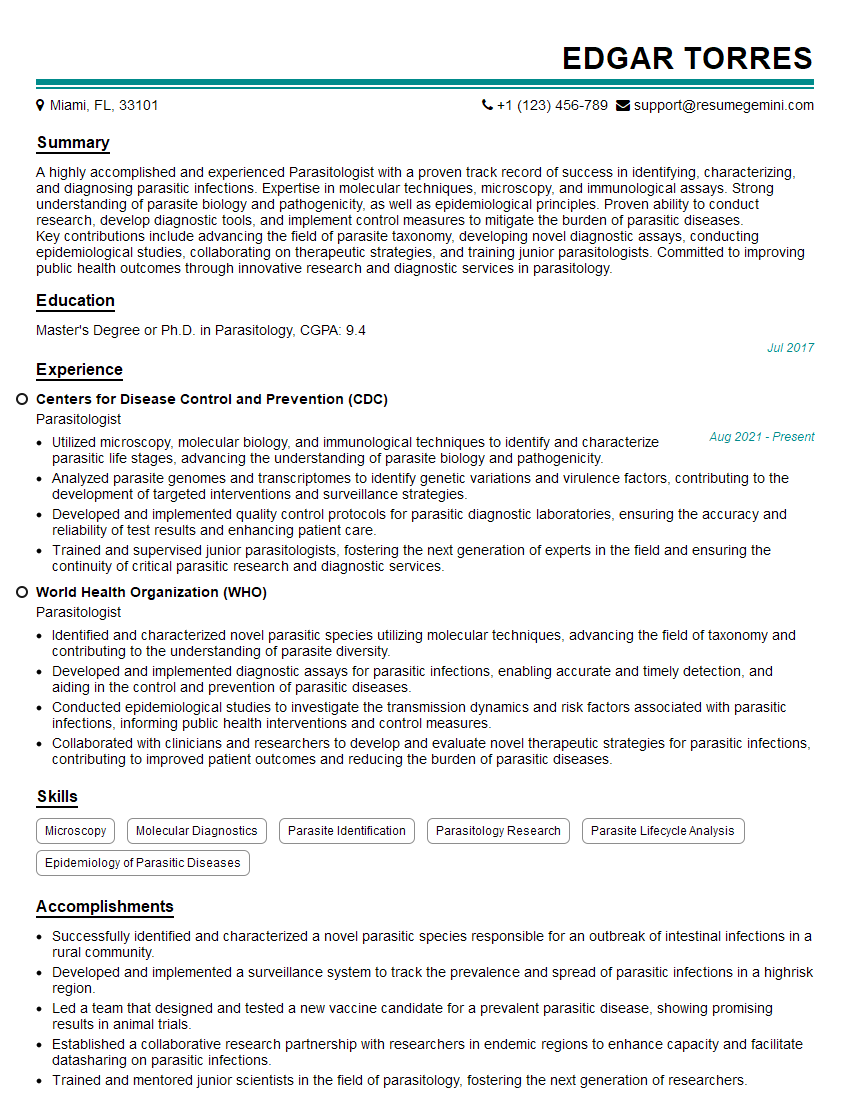
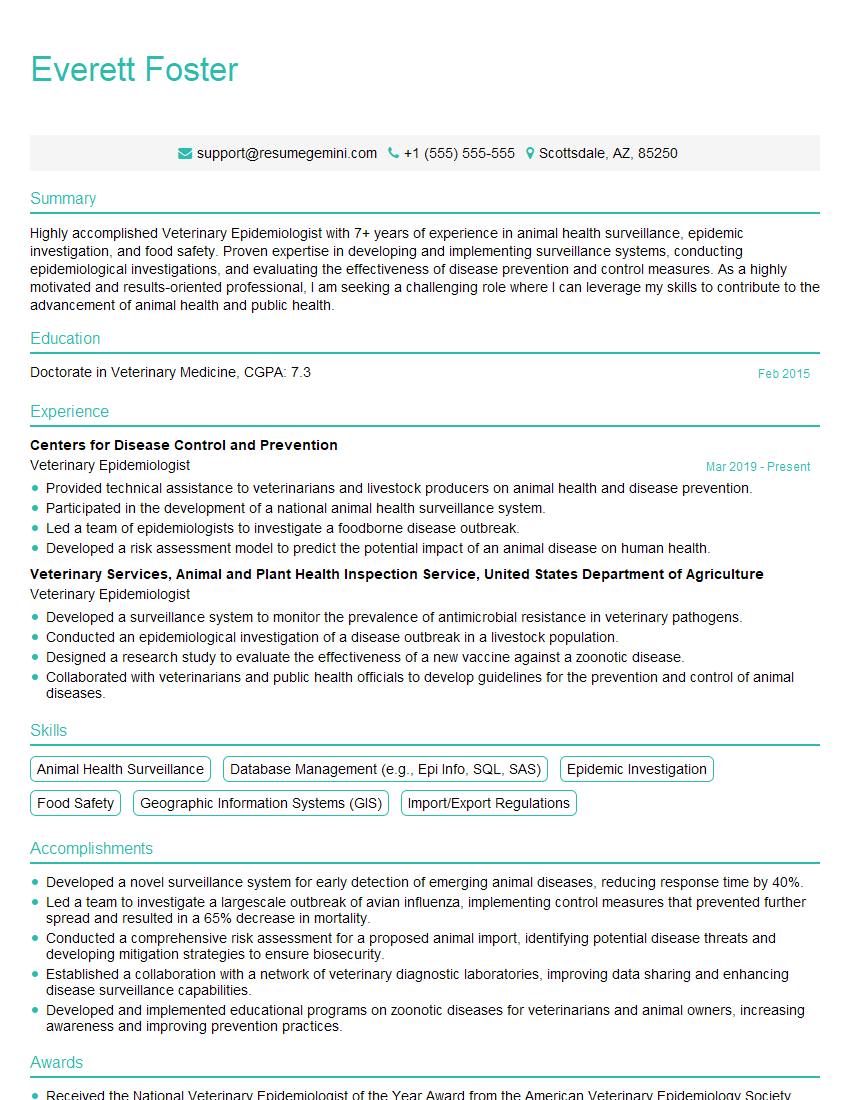
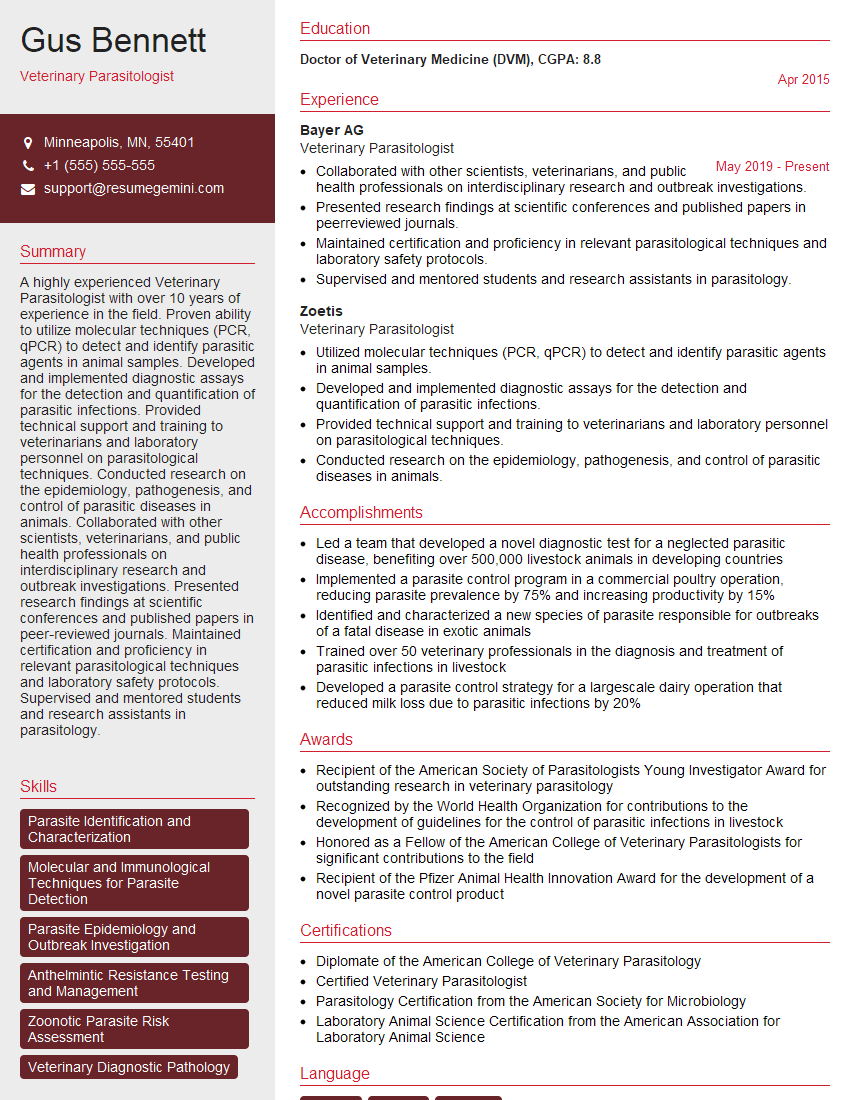
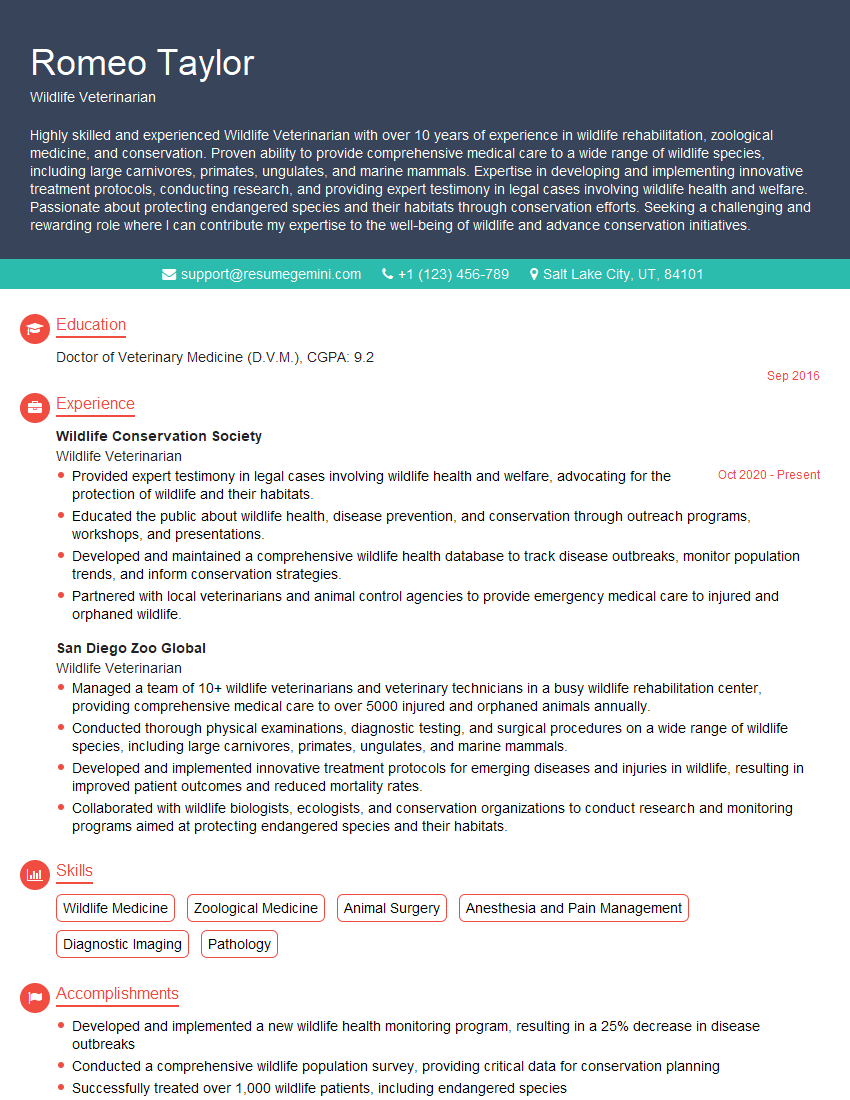
Mastering Wildlife Disease and Parasite Control opens doors to exciting and impactful careers in conservation, public health, and research. A strong understanding of these crucial concepts significantly enhances your job prospects. To further strengthen your application, creating an ATS-friendly resume is essential for getting your qualifications noticed by potential employers. We strongly encourage you to utilize ResumeGemini, a trusted resource for building professional resumes. ResumeGemini offers examples of resumes tailored to Wildlife Disease and Parasite Control, providing you with a valuable template to showcase your skills and experience effectively.

Explore more articles
Users Rating of Our Blogs
Share Your Experience
We value your feedback! Please rate our content and share your thoughts (optional).
What Readers Say About Our Blog
Very informative content, great job.
good