Unlock your full potential by mastering the most common Tube packaging interview questions. This blog offers a deep dive into the critical topics, ensuring you’re not only prepared to answer but to excel. With these insights, you’ll approach your interview with clarity and confidence.
Questions Asked in Tube packaging Interview
Q 1. Explain the different types of tube packaging materials and their applications.
Tube packaging materials are chosen based on the product’s properties and the desired shelf life. The most common materials are:
- Polyethylene (PE): A versatile, flexible, and cost-effective option, often used for cosmetics, food, and pharmaceuticals. Low-density polyethylene (LDPE) is softer and more flexible, while high-density polyethylene (HDPE) is stiffer and more rigid.
- Polypropylene (PP): Provides greater strength and chemical resistance than PE, making it suitable for products needing superior barrier properties or higher temperature resistance. Commonly used for adhesives and some food products.
- Laminates: These combine different materials, such as PE, PP, aluminum foil, or paper, to enhance barrier properties, strength, or printability. A common example is a laminate combining PE for flexibility and aluminum foil for oxygen barrier, protecting sensitive food products or pharmaceuticals.
- Metal Tubes (Aluminum or Tin): Offer excellent barrier properties and are suitable for products requiring long shelf life and protection from light and oxygen. Often used for toothpaste, paints, and pharmaceuticals.
- Paper Tubes: Used for eco-friendly packaging for less sensitive products like confectionery, crayons or some food items. Often require additional coatings for moisture resistance.
The choice depends on factors like product compatibility, cost, barrier requirements, desired aesthetics, and recyclability.
Q 2. Describe the process of tube manufacturing, from raw materials to finished product.
Tube manufacturing is a sophisticated process. It generally involves these steps:
- Raw Material Preparation: The chosen polymer (PE, PP, etc.) is processed into a form suitable for extrusion. This might involve melting and homogenizing the material.
- Extrusion: The molten plastic is forced through a die that shapes it into a continuous tube. The diameter and wall thickness are determined by the die’s design.
- Cooling and Solidification: The extruded tube passes through a cooling system to solidify the plastic. The cooling rate influences the final tube properties.
- Printing (Optional): The tube may be printed with brand labels, product information, and graphics using techniques like flexographic or rotogravure printing.
- Cutting and Finishing: The continuous tube is cut into individual tubes of the desired length. The edges may be sealed or trimmed.
- Bottom Sealing: The bottom of the tube is sealed, often using heat sealing or crimping. This seals the tube and prevents leakage.
- Filling: The tubes are filled with the product using automated filling machines.
- Cap Application: The appropriate closure (cap, screw cap, etc.) is applied to the filled tube.
- Quality Control: Throughout the process, quality checks are conducted to ensure the tubes meet specifications.
This is a simplified overview. Advanced manufacturing techniques might involve co-extrusion (using multiple layers of different polymers) or additional steps like lamination.
Q 3. What are the key considerations for designing a tube for a specific product?
Designing a tube for a specific product requires careful consideration of several factors:
- Product Properties: Viscosity, stability, and reactivity of the product dictate the material choice, wall thickness, and possible need for barrier properties.
- Fill Volume: This determines the tube’s length and diameter. Efficient fill volume is crucial for cost-effectiveness.
- Product Shelf Life: The need for protection from light, oxygen, moisture, or other environmental factors influences material selection and barrier layer considerations.
- Ease of Use: The tube’s shape, size, and closure mechanism should be designed for user-friendliness. Consider the target demographic.
- Branding and Aesthetics: The tube’s shape, color, and printing should align with the brand’s identity and appeal to the target market.
- Sustainability: Consider using recyclable or compostable materials. Choosing materials with minimal environmental impact is increasingly important.
- Cost: Balancing performance and cost is essential. Explore different materials and manufacturing processes to optimize costs without compromising quality.
For example, a sunscreen tube needs UV protection, so it might use a material with UV blocking properties or a layer of aluminum foil in the laminate. A toothpaste tube might prioritize ease of squeezing, requiring a softer, more flexible material and a user-friendly cap.
Q 4. How do you ensure the structural integrity of a tube during filling and transportation?
Ensuring structural integrity during filling and transportation involves several strategies:
- Material Selection: Choosing a material with appropriate strength and flexibility is crucial. HDPE, for example, provides superior strength compared to LDPE.
- Wall Thickness: A thicker wall provides more resistance to collapse during filling and transportation, especially with higher viscosity products or rough handling.
- Tube Design: A well-designed tube with reinforcement points can increase its ability to withstand pressure and impacts. A slightly oval shape can increase strength in comparison to perfectly circular.
- Proper Filling Techniques: Using automated filling machines with precision control minimizes stress on the tubes and reduces the risk of damage.
- Packaging and Transportation: Using appropriate packaging materials, like corrugated boxes with dividers, protects the tubes during transportation. Careful handling is also paramount.
Insufficient consideration of these aspects can lead to tube deformation, leakage, or product damage.
Q 5. What are the common challenges in tube packaging, and how do you address them?
Common challenges in tube packaging include:
- Leakage: Improper sealing or damage to the tube can cause leakage. This is addressed through proper sealing techniques, quality control, and robust tube design.
- Tube Collapse: Soft tubes can collapse under pressure, especially during filling or transportation. Using a stronger material or a thicker wall can mitigate this.
- Printing Defects: Issues with printing quality can impact the product’s appearance and branding. Proper printing techniques and quality control are necessary.
- Material Compatibility: The tube material must be compatible with the product to prevent chemical reactions or degradation. Careful material selection and testing are essential.
- Sustainability Concerns: The industry is facing increasing pressure to use more sustainable materials and reduce waste. This is addressed by using recycled materials, developing biodegradable options, and optimizing packaging design for efficient use of materials.
Addressing these challenges requires a multifaceted approach, involving careful material selection, precise manufacturing processes, rigorous quality control, and a focus on innovation in sustainable packaging solutions.
Q 6. Discuss different tube closure mechanisms and their advantages and disadvantages.
Various tube closure mechanisms exist, each with its pros and cons:
- Screw Caps: Common, secure, and reusable. Can be difficult to open for those with limited dexterity. The threaded design is more expensive to manufacture compared to simpler options.
- Flip-top Caps: Convenient for repeated use, tamper-evident. May not be as secure as screw caps for preventing leakage.
- Press-on Caps: Simple and cost-effective. Not as secure as screw caps and typically not tamper-evident. Requires proper design to prevent accidental opening.
- Spout Caps: Ideal for controlled dispensing of liquids. May be more expensive than simpler caps. The spout can potentially clog.
The choice of closure depends on factors such as product type, target market, desired level of security, and cost considerations.
Q 7. Explain the importance of barrier properties in tube packaging.
Barrier properties are crucial in tube packaging, especially for products sensitive to environmental factors. They prevent the ingress or egress of:
- Oxygen: Oxygen can cause oxidation, rancidity, or degradation of certain products, reducing shelf life.
- Moisture: Moisture can lead to spoilage, clumping, or chemical reactions in sensitive products.
- Light: UV light can damage some products, such as pharmaceuticals or cosmetics. Aluminum foil is a good UV barrier.
- Aroma compounds: Loss of aroma can negatively impact the product’s quality and consumer appeal.
- Microorganisms: Certain materials provide a barrier against microbial contamination.
Adequate barrier properties ensure product quality, extend shelf life, and maintain the product’s integrity. The selection of materials, laminates, and coatings is crucial in achieving the required barrier performance.
Q 8. How do you conduct quality control tests for tube packaging?
Quality control for tube packaging is a multifaceted process ensuring the final product meets specifications and is free from defects. It begins with incoming material inspection, verifying the quality of raw materials like aluminum, plastic, and laminates. We then conduct in-process checks throughout the manufacturing stages, including printing, lamination, and tube forming. This often involves visual inspection for defects like wrinkles, creases, or printing errors, alongside dimensional checks to ensure consistent diameter and length.
Final product testing is crucial and typically includes:
- Leak testing: This verifies the tube’s seal integrity to prevent leakage of the product. Methods include pressure testing, dye penetration testing, and vacuum testing.
- Seal strength testing: This measures the force required to separate the tube’s seal, ensuring it remains intact during handling and use.
- Dimensional stability testing: This evaluates the tube’s resistance to deformation under various conditions, such as temperature and pressure changes.
- Print quality assessment: This ensures the accuracy, sharpness, and color consistency of the printed graphics.
Statistical Process Control (SPC) charts are utilized to monitor these parameters, allowing for early detection of trends and potential issues. Data is analyzed to identify areas for improvement and to maintain consistent quality. For example, if we see a sudden increase in seal failures, we’d investigate the sealing equipment, material properties, or operating parameters to find and rectify the root cause.
Q 9. What are the regulatory requirements for tube packaging in your target market?
Regulatory requirements for tube packaging vary significantly depending on the target market and the product being packaged. However, some common regulations include:
- Food and Drug Administration (FDA) regulations (US): If the tube packaging contains food or pharmaceuticals, it must comply with stringent FDA regulations regarding material safety, migration limits, and labeling requirements. This includes ensuring materials used are non-toxic and won’t leach harmful substances into the contents.
- European Union (EU) regulations: Similar to FDA regulations, the EU has strict directives on food contact materials, ensuring safety and compliance with regulations like REACH (Registration, Evaluation, Authorization and restriction of Chemicals).
- Cosmetic regulations (globally): Regulations exist regarding the safety and labeling of cosmetic products packaged in tubes, often focusing on ingredient declarations and product safety.
- Recycling and waste management regulations: Many regions have regulations concerning recyclability and appropriate disposal of packaging, prompting the use of recyclable materials and clear labeling for proper sorting.
Understanding these regulations is crucial. Non-compliance can result in significant penalties, product recalls, and damage to brand reputation. We consistently update our knowledge and practices to comply with evolving regulations in our target markets.
Q 10. Describe your experience with different printing methods for tube packaging.
My experience encompasses several printing methods for tube packaging, each with its own advantages and limitations.
- Offset printing: This is a widely used method for high-volume production, offering excellent print quality and vibrant colors. However, it involves significant upfront costs for plate creation, making it less suitable for short runs.
- Flexographic printing: This method uses flexible printing plates and is ideal for both high and low-volume runs. It’s known for its speed and cost-effectiveness, but the print quality might not match offset printing for fine details.
- Gravure printing: This offers high-quality print, especially for detailed images and vibrant colors, and is well-suited for long runs. However, the initial setup cost is high.
- Digital printing: This allows for short runs and personalized printing, making it ideal for customized designs or limited-edition products. However, the cost per unit is generally higher compared to other methods.
The choice of printing method depends on factors like production volume, budget, print quality requirements, and the complexity of the design. For example, for a high-volume product with intricate graphics, offset or gravure printing might be preferred, whereas for a smaller run with personalized designs, digital printing would be more appropriate.
Q 11. How do you optimize the design of a tube to minimize material usage?
Optimizing tube design for minimal material usage requires a multi-pronged approach focusing on both the tube’s dimensions and material selection.
- Diameter and length optimization: Analyzing the product volume and desired tube shape allows us to determine the most efficient dimensions, minimizing material waste while maintaining product stability and ease of use. This often involves sophisticated modeling and simulation to identify optimal geometries.
- Material selection: Choosing lighter materials like thinner gauge aluminum or specific types of plastics can significantly reduce material consumption. This, however, needs careful consideration to ensure the tube’s structural integrity and barrier properties meet requirements for product protection.
- Design for recyclability: Incorporating design elements that facilitate easy separation and recycling of materials is crucial for environmental sustainability. Simple designs with minimal layers are preferable.
- Simulation and analysis: Finite element analysis (FEA) is used to simulate the tube’s behavior under various stress conditions, ensuring the optimized design can withstand handling and transportation without compromising structural integrity.
For example, a slight reduction in tube diameter, coupled with a precise adjustment of the length, can lead to considerable material savings without affecting product filling or consumer experience.
Q 12. Explain your understanding of sustainable tube packaging solutions.
Sustainable tube packaging solutions are gaining significant importance. The focus is on reducing environmental impact throughout the product lifecycle.
- Recyclable materials: Utilizing post-consumer recycled (PCR) materials, such as recycled aluminum or plastics, reduces the demand for virgin materials and minimizes waste. PCR content is often a key element for environmentally conscious brands.
- Bio-based materials: Exploring alternatives like plant-based plastics or paper-based tubes can further decrease reliance on fossil fuels and minimize the carbon footprint. However, the barrier properties of these materials need careful evaluation to ensure product protection.
- Reduced material usage: As previously discussed, optimizing tube dimensions and employing lightweight materials significantly reduces resource consumption.
- Lightweighting: Utilizing advanced design and manufacturing techniques to create lighter tubes while maintaining structural integrity reduces material usage and transportation costs, decreasing overall environmental impact.
- Improved recyclability: Design choices, such as reducing the number of material layers, using readily recyclable materials, and clear labeling to facilitate sorting all contribute to enhancing recyclability.
A holistic approach, considering material choice, manufacturing processes, and end-of-life management is crucial for achieving true sustainability in tube packaging. For instance, we’ve worked on projects where we replaced a multi-layered laminate tube with a single-layer PCR-aluminum tube, significantly improving recyclability and reducing material use.
Q 13. How do you manage and resolve issues related to tube packaging defects?
Managing and resolving tube packaging defects requires a systematic approach.
- Defect identification and classification: This involves carefully examining the defective tubes to identify the type and severity of the defect. Is it a printing error, a seal failure, a dimensional issue, or something else?
- Root cause analysis: This is critical. We utilize various tools like Pareto charts, fishbone diagrams, and 5 Whys to identify the underlying cause of the defect. This could involve examining raw materials, equipment malfunction, process parameters, or operator error.
- Corrective actions: Once the root cause is identified, appropriate corrective actions are implemented. This might involve repairing or replacing equipment, adjusting process parameters, retraining personnel, or changing material suppliers.
- Preventive actions: Preventative measures are essential to avoid future occurrences. This could involve implementing stricter quality control checks, improving operator training, or upgrading equipment to enhance reliability.
- Documentation and tracking: All defects, their root causes, corrective actions, and preventive measures are carefully documented and tracked. This allows us to monitor trends and improve our processes continuously.
For example, if we consistently find tubes with uneven printing, we might investigate the printing press settings, the condition of the printing plates, or the consistency of the ink. We may also need to review operator training to ensure correct procedures are followed.
Q 14. Describe your experience with different tube filling and sealing equipment.
My experience includes working with various tube filling and sealing equipment, ranging from simple manual machines to fully automated high-speed lines.
- Plunger fillers: These are commonly used for filling viscous products. They offer good accuracy and control.
- Volume-metric fillers: These are suitable for low-viscosity products, providing rapid filling and high throughput.
- Net-weight fillers: These ensure precise filling based on product weight, minimizing material waste.
- Induction sealing machines: These use electromagnetic fields to create a hermetic seal on the tube’s opening, offering excellent barrier properties and tamper evidence.
- Heat sealing machines: These utilize heat to fuse the tube’s edges together, creating a secure closure. The choice of sealing method depends on the tube material and product characteristics.
Selecting appropriate equipment is critical. The choice depends on factors such as product viscosity, production volume, desired accuracy, and budget. For instance, a high-speed automated line might be justified for large-scale production of low-viscosity products, while a simpler manual setup might suffice for smaller-scale operations with viscous materials. Maintaining and regularly calibrating the equipment is crucial for consistent filling accuracy and seal quality.
Q 15. How do you ensure the accurate labeling of tube packaging?
Accurate labeling in tube packaging is paramount for legal compliance, brand integrity, and consumer safety. It involves a multi-step process ensuring all required information is clearly and correctly displayed. This includes product name, weight or volume, ingredients list (if applicable), manufacturer details, usage instructions, and any relevant warnings or certifications.
We utilize a combination of methods to achieve this. Firstly, we have rigorous quality control checks at every stage of the labeling process, from pre-press design approval to final product inspection. This includes verifying the accuracy of the label design against regulatory requirements and confirming correct label placement on the tube. Secondly, we employ advanced labeling machinery with automated print verification systems, flagging any inconsistencies in printing or application. For example, a vision system might detect a misaligned label or an incorrect color. Finally, we maintain comprehensive documentation and traceability throughout, recording batch numbers, labeling parameters, and operator details. This allows for rapid identification and resolution of any labeling issues, preventing defective products from reaching the market. A recent project for a cosmetic client involved a complex multi-lingual label; using our quality control system, we ensured accuracy across all language versions.
Career Expert Tips:
- Ace those interviews! Prepare effectively by reviewing the Top 50 Most Common Interview Questions on ResumeGemini.
- Navigate your job search with confidence! Explore a wide range of Career Tips on ResumeGemini. Learn about common challenges and recommendations to overcome them.
- Craft the perfect resume! Master the Art of Resume Writing with ResumeGemini’s guide. Showcase your unique qualifications and achievements effectively.
- Don’t miss out on holiday savings! Build your dream resume with ResumeGemini’s ATS optimized templates.
Q 16. What are the key performance indicators (KPIs) for tube packaging production?
Key Performance Indicators (KPIs) for tube packaging production are crucial for monitoring efficiency, quality, and profitability. We track several metrics, broadly categorized into:
- Production Efficiency: This includes Overall Equipment Effectiveness (OEE), which measures the percentage of time the equipment is producing good quality product; production throughput (units per hour/day); and line speed. Low OEE might signal maintenance needs or operator training deficiencies.
- Quality Control: Defect rate (percentage of defective tubes), waste percentage, and customer returns. High defect rates can indicate issues with raw materials, machine settings, or operator errors. We meticulously track these factors, using statistical process control (SPC) charts to monitor trends and detect anomalies early.
- Cost Management: Cost per unit, raw material consumption, and labor costs. Analyzing these helps optimize processes and identify areas for cost reduction. For instance, reducing waste directly impacts material costs.
- Safety: Number of safety incidents and lost-time injuries. A safe work environment is paramount; this KPI is non-negotiable.
Regular review of these KPIs enables proactive adjustments to processes and resources, ensuring optimal production performance and meeting customer expectations.
Q 17. Describe your experience with lean manufacturing principles in tube packaging.
Lean manufacturing principles are integral to our tube packaging operations. We’ve implemented several key lean methodologies including:
- 5S Methodology: This focuses on workplace organization, ensuring a clean, safe, and efficient environment. We’ve seen a direct improvement in production flow and reduced search time for materials following its implementation.
- Value Stream Mapping: Identifying and eliminating non-value-added steps in our production processes. This involved mapping our entire production line to pinpoint bottlenecks and streamline workflow. A recent project involved reducing the number of handling steps for tubes between production stages, shortening lead times significantly.
- Kaizen Events: These continuous improvement workshops involve cross-functional teams to identify and solve production problems. We regularly conduct Kaizen events to address specific issues and develop improvements to existing processes. For example, one event led to a redesign of our tube loading mechanism, increasing efficiency by 15%.
- Just-in-Time (JIT) Inventory Management: Minimizing inventory levels to reduce storage costs and waste, while ensuring timely supply of materials. Efficient inventory management helps us to reduce warehousing costs and avoid obsolescence.
The result of implementing these lean principles has been a substantial increase in productivity, reduced waste, and improved overall efficiency.
Q 18. How do you handle packaging waste and reduce its environmental impact?
Minimizing packaging waste and reducing environmental impact is a critical aspect of our operations. Our approach encompasses several strategies:
- Sustainable Materials: We prioritize the use of recycled and recyclable materials in our tube packaging, opting for post-consumer recycled (PCR) content whenever feasible. We also explore bio-based alternatives to traditional plastics. For example, we recently transitioned a client’s packaging to tubes made from 30% PCR plastic.
- Waste Reduction: We implement rigorous quality control to minimize material defects and waste during production. Improved processes and machine maintenance contribute to reducing scrap material. We also optimize tube design to minimize material usage without compromising product protection.
- Recycling and Waste Management: We work closely with waste management companies to ensure responsible disposal of non-recyclable materials, focusing on waste reduction through recycling programs and proper waste segregation.
- Partnerships: We collaborate with suppliers and clients to promote sustainable packaging practices throughout the supply chain. This involves jointly exploring eco-friendly packaging alternatives and engaging in initiatives to improve the recyclability of our packaging.
Our goal is to continuously strive for more sustainable packaging options, minimizing our environmental footprint while meeting client demands for high-quality packaging.
Q 19. Explain your experience with different types of laminates used in tube packaging.
My experience encompasses a wide range of laminates used in tube packaging, each with its own properties and applications. The choice of laminate depends on factors like product compatibility, barrier requirements, printability, and cost. Some common laminates include:
- Aluminum/Polyethylene (Al/PE): A widely used combination offering excellent barrier properties against moisture and oxygen, ideal for products requiring extended shelf life. The aluminum layer provides a strong barrier while the polyethylene layer ensures tube formability and printability.
- Aluminum/Polypropylene (Al/PP): Similar to Al/PE but with polypropylene offering higher temperature resistance and better chemical compatibility, making it suitable for certain food products or cosmetic applications needing higher heat resistance.
- Metallized Polyester/Polyethylene (MPET/PE): Metallized polyester provides excellent barrier and aesthetic properties, including a glossy, metallic finish. It’s frequently used for high-end products.
- Paper/Polyethylene (Paper/PE): This offers a more sustainable alternative, commonly used for environmentally conscious brands and products. However, its barrier properties are usually lower than aluminum-based laminates.
I have extensive experience in selecting and specifying the appropriate laminate based on the product’s characteristics and client’s requirements. I’ve successfully managed projects involving different laminate structures, ensuring optimal performance and cost-effectiveness.
Q 20. How do you evaluate the cost-effectiveness of different tube packaging options?
Evaluating the cost-effectiveness of different tube packaging options requires a holistic approach. We consider both direct and indirect costs:
- Direct Costs: This includes raw material costs (laminate, caps, labels), manufacturing costs (labor, machine time, energy), and freight. Detailed cost breakdowns are essential to compare options accurately.
- Indirect Costs: These are less obvious but significant. They encompass inventory holding costs, waste disposal costs, potential customer returns (due to packaging failure), and the cost of quality control. For example, a cheaper laminate might result in higher waste due to defects, ultimately increasing overall cost.
We use cost modeling and comparative analysis to evaluate different options. This involves creating detailed spreadsheets to compare the total cost per unit across various laminate and tube designs. It’s important to consider long-term implications. A slightly more expensive laminate might offer superior barrier properties, resulting in extended shelf-life and reduced product waste, offsetting the initial cost difference. We always balance cost with performance, sustainability, and customer requirements to arrive at the optimal solution.
Q 21. Describe your experience with automated tube packaging lines.
I have extensive experience with automated tube packaging lines, having overseen the installation, operation, and optimization of several high-speed lines. These lines typically consist of integrated modules including tube forming, filling, sealing, and labeling machines. The level of automation varies, with some lines incorporating advanced features such as vision systems for quality control, robotic handling, and integrated data acquisition systems for real-time process monitoring.
My experience includes working with different manufacturers’ equipment, troubleshooting malfunctions, and optimizing line parameters for maximum efficiency. For example, I once led a project to improve the efficiency of a tube filling machine by modifying the filling nozzle design and optimizing filling parameters. This resulted in a 10% increase in throughput and a significant reduction in product waste. Understanding PLC programming and HMI interfaces is crucial for managing and troubleshooting these automated systems. Proficiency in these areas ensures effective operation and minimal downtime.
Q 22. How do you troubleshoot issues related to tube printing or labeling?
Troubleshooting printing or labeling issues on tubes involves a systematic approach. First, I’d identify the specific problem: is it blurry print, misaligned labels, incorrect colors, or something else? Then, I’d investigate the potential causes.
- Printing Issues: This could stem from problems with the printing press (worn plates, incorrect ink viscosity, improper pressure), the tube material itself (poor surface quality), or the printing process parameters (incorrect speed, temperature). I would check the print proofs against the master artwork to rule out design errors. If the issue is color inconsistency, I’d examine the ink mixing and calibration.
- Labeling Issues: Misaligned labels often indicate problems with the label applicator’s settings (pressure, speed, positioning). Wrinkled or creased labels suggest problems with the label material, adhesive, or the application process. Poor adhesion could be due to surface contamination on the tube or incorrect temperature/humidity conditions.
My approach is to systematically eliminate possibilities. I’d start by checking the most likely causes first, then move onto more complex troubleshooting steps, which might involve contacting the equipment manufacturer or material supplier for technical support.
For instance, I once had to troubleshoot blurry printing on a batch of cosmetic tubes. After examining the print, the printing plates, and ruling out ink and tube material problems, I discovered that the press’s temperature control system was malfunctioning, causing inconsistent ink drying and leading to blurred print.
Q 23. What are the key factors to consider when selecting a tube supplier?
Selecting a tube supplier requires careful consideration of several key factors. The quality of the tubes themselves is paramount; I’d assess their manufacturing capabilities, quality control processes, and adherence to relevant standards (e.g., FDA compliance for food or pharmaceutical products).
- Manufacturing Capabilities: I’d look at their capacity to meet my production needs in terms of volume and turnaround time, as well as their ability to produce tubes in various sizes, materials (e.g., aluminum, plastic, laminate), and designs (e.g., shapes, colors).
- Quality Control: A robust quality control system is essential to ensure consistent tube quality and minimal defects. I’d ask for evidence of their quality control procedures and their defect rate.
- Cost and Delivery: Pricing should be competitive and transparent, considering not only the tube cost but also transportation and storage costs. Reliable and timely delivery is crucial for efficient production.
- Sustainability: Increasingly, choosing environmentally friendly packaging materials and manufacturing processes is a priority. I’d inquire about their sustainability initiatives and certifications.
- Technical Support: A reliable supplier provides readily available technical support to assist with any issues that may arise.
Ultimately, the best supplier will be a partner who understands my business needs and can provide high-quality tubes reliably and efficiently.
Q 24. How do you ensure the compatibility of the tube with the product it contains?
Ensuring tube compatibility with the product involves several steps. The primary concern is chemical compatibility: will the product react with the tube material, leading to degradation of either the product or the packaging?
- Material Selection: The tube material needs to be inert to the product’s chemical composition. For example, corrosive products would require tubes made of a resistant material like high-density polyethylene (HDPE). For products sensitive to oxygen or moisture, barrier tubes might be necessary.
- Migration Testing: This involves testing whether components of the tube material migrate into the product, potentially affecting its quality or safety. This is especially critical for food, pharmaceutical, or cosmetic products.
- Product Stability: The tube must protect the product from external factors like light, oxygen, and moisture. The selected tube material must offer the necessary barrier properties to maintain product quality and shelf life.
- Leakage Testing: Ensuring the seal integrity of the tube is crucial to prevent leakage and maintain product stability. Different testing methods can be used to assess the seal’s strength.
In my experience, thorough material compatibility testing prior to mass production prevents costly issues later. For example, I once worked with a client whose product reacted with the initial tube material, resulting in discoloration and a change in product viscosity. Switching to a different, compatible material solved the problem.
Q 25. Explain your understanding of the different testing methods for tube seal integrity.
Several methods are used to assess the seal integrity of tubes. The choice depends on factors such as the tube material, product characteristics, and required testing level.
- Visual Inspection: A simple and quick method for initial screening, identifying obvious defects or incomplete seals.
- Destructive Testing: This involves opening the tube and testing the seal’s strength. It provides valuable quantitative data but requires the destruction of samples.
- Leak Detection: This involves submerging the tubes in dye or air-pressure testing to identify any leaks. For high-pressure applications such as aerosols, more rigorous testing is required.
- Vacuum Decay Testing: This method measures the rate at which a vacuum inside the tube is lost, indicating the seal’s ability to maintain the vacuum. It’s particularly useful for products that require airtight packaging.
- Burst Testing: This test applies internal pressure to the tube until failure, assessing its resistance to bursting. It provides important information for products under pressure.
The choice of testing method usually involves a combination of visual inspection and more rigorous methods like leak detection or vacuum decay testing to ensure a high level of confidence in the seal integrity.
Q 26. How do you maintain the hygiene and sterility of tube packaging during production?
Maintaining hygiene and sterility during tube packaging production is crucial, especially for products requiring sterile packaging, like pharmaceuticals or certain cosmetics. This involves a combination of good manufacturing practices (GMP) and appropriate cleaning and sterilization procedures.
- Clean Room Environment: Producing sterile tubes often requires a cleanroom environment with controlled air filtration to minimize contamination.
- Equipment Cleaning and Sanitization: All equipment involved in the process—from tube-filling machines to labeling machines—must be regularly cleaned and sanitized using appropriate agents. This usually involves a multi-step process and validated procedures.
- Operator Hygiene: Operators must follow strict hygiene protocols, including wearing appropriate protective clothing (e.g., gowns, gloves, masks), and regular handwashing.
- Material Handling: Careful handling of materials is crucial to prevent contamination. Tubes and other components should be stored in clean, controlled environments.
- Sterilization Methods: Methods such as gamma irradiation or ethylene oxide sterilization might be used to ensure sterility of the tubes and finished product, depending on the product requirements and stability.
In practice, adherence to strict protocols and regular monitoring is crucial. Any deviation from the established procedures could lead to contamination and jeopardize product quality and safety.
Q 27. Describe your experience with packaging design software and tools.
I have extensive experience with various packaging design software and tools, including Adobe Illustrator, InDesign, and specialized packaging design software such as CAD programs for 3D modeling. I’m proficient in creating and modifying tube designs, generating print-ready artwork, and simulating packaging processes.
I’m familiar with creating technical specifications and artwork for various printing techniques, including flexographic, offset, and digital printing. My skills also encompass developing detailed technical drawings of tubes, including dimensions, material specifications, and design details. I can use this software to create mock-ups and prototypes to visualize the final product, allowing for design adjustments before production. This virtual prototyping can significantly reduce waste and time during physical sample creation.
For example, I once used 3D modeling software to optimize the design of a toothpaste tube, reducing material usage by 15% while maintaining its structural integrity and improving its ergonomics. This allowed the company to significantly reduce packaging costs and their carbon footprint.
Q 28. How do you stay updated on the latest trends and innovations in tube packaging?
Staying updated on the latest trends and innovations in tube packaging is crucial for maintaining a competitive edge. I regularly attend industry conferences and trade shows to network with peers and learn about new technologies.
- Industry Publications and Journals: I subscribe to relevant industry publications and journals to stay informed on current developments and research in tube packaging.
- Online Resources: I regularly browse industry websites, blogs, and online forums for insights into new trends and emerging technologies. This includes exploring packaging material innovations, printing processes, and automation solutions.
- Supplier Relationships: Maintaining strong relationships with tube suppliers keeps me updated on their new product offerings and technological advancements.
- Competitor Analysis: Analyzing competitor packaging helps to identify trends and innovative packaging solutions.
For example, I recently learned about the increased use of sustainable materials like bioplastics and recycled materials in tube manufacturing. This knowledge allows me to explore environmentally friendly options for clients’ packaging needs, aligning with current sustainability goals.
Key Topics to Learn for Tube Packaging Interview
- Tube Materials & Properties: Understanding different materials (plastic, laminate, aluminum) used in tube packaging, their properties (flexibility, barrier properties, printability), and suitability for various products.
- Manufacturing Processes: Familiarity with the different stages of tube manufacturing, including extrusion, printing, lamination, and filling. Understanding potential bottlenecks and quality control measures.
- Design & Engineering: Knowledge of tube design principles, including structural integrity, graphic design considerations, and optimizing for efficient filling and sealing. Experience with CAD software is a plus.
- Filling & Sealing Techniques: Understanding various filling and sealing methods, their suitability for different product types and viscosities, and the importance of hermetic sealing for product preservation.
- Packaging Regulations & Compliance: Awareness of relevant regulations and standards (e.g., FDA, GMP) related to food, pharmaceutical, or cosmetic tube packaging.
- Sustainability & Environmental Impact: Knowledge of sustainable packaging materials and practices, recyclability, and minimizing environmental footprint of tube packaging.
- Cost Optimization & Efficiency: Understanding factors influencing the cost of tube packaging and strategies for optimizing production efficiency and minimizing waste.
- Troubleshooting & Problem-solving: Ability to identify and resolve common issues encountered during tube packaging manufacturing, filling, and sealing processes.
Next Steps
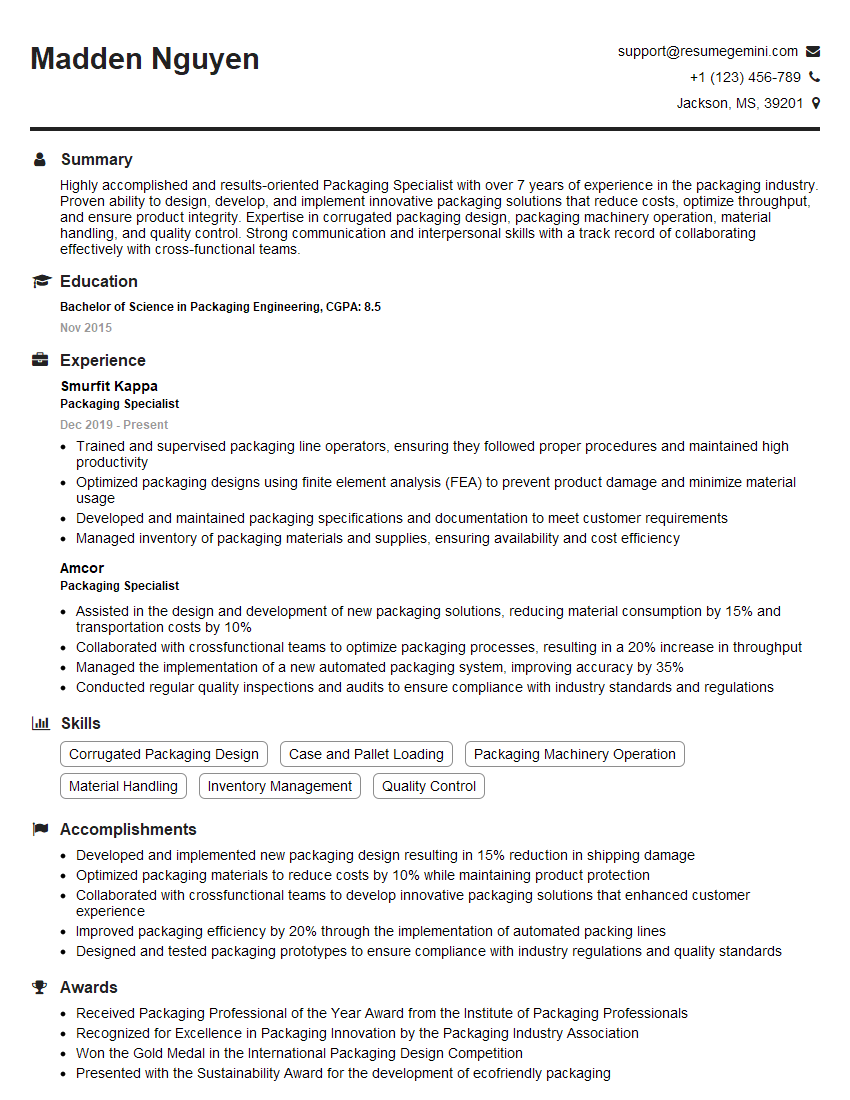
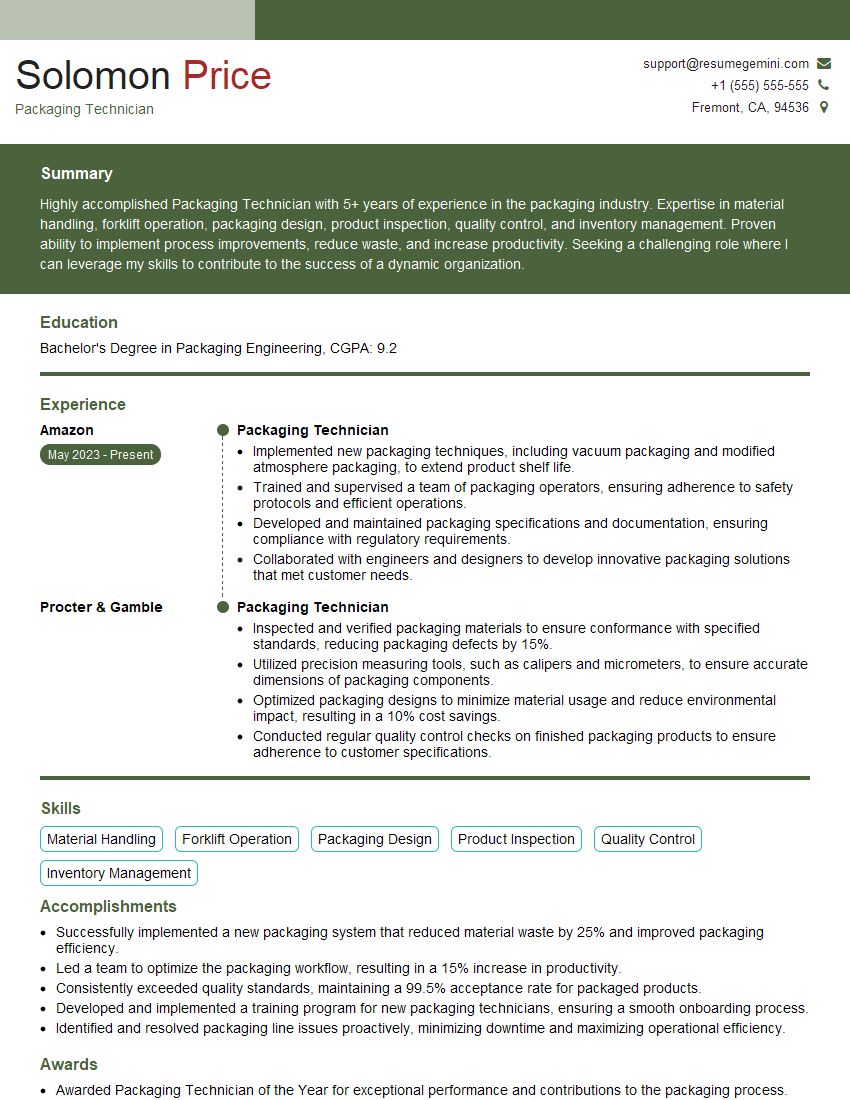
Mastering tube packaging knowledge opens doors to exciting career opportunities in a dynamic industry. A strong understanding of these concepts will significantly enhance your interview performance and increase your chances of securing your dream role. To further strengthen your application, focus on creating an ATS-friendly resume that highlights your relevant skills and experience. ResumeGemini is a trusted resource that can help you build a professional and impactful resume tailored to the specific requirements of tube packaging positions. Examples of resumes optimized for this industry are available to guide you.
Explore more articles
Users Rating of Our Blogs
Share Your Experience
We value your feedback! Please rate our content and share your thoughts (optional).
What Readers Say About Our Blog
Very informative content, great job.
good