The thought of an interview can be nerve-wracking, but the right preparation can make all the difference. Explore this comprehensive guide to UL 508A Standard for Electric Power Equipment for Use in Ordinary Locations interview questions and gain the confidence you need to showcase your abilities and secure the role.
Questions Asked in UL 508A Standard for Electric Power Equipment for Use in Ordinary Locations Interview
Q 1. Explain the scope and application of UL 508A.
UL 508A, Standard for Industrial Control Panels, covers the safety requirements for industrial control equipment used in ordinary locations. Think of it as the rulebook for building safe and reliable control panels that power machinery in factories, processing plants, and other industrial settings. It doesn’t apply to hazardous locations (like those with flammable gases) – that’s covered by other UL standards. The scope is broad, encompassing everything from the design and construction to the testing and labeling of the panel. It’s crucial for ensuring worker safety and preventing equipment failures. A panel built to UL 508A standards undergoes rigorous testing to confirm it meets those safety requirements.
Q 2. Describe the different types of enclosures covered under UL 508A.
UL 508A covers a variety of enclosure types, each designed to protect the internal components from environmental hazards and ensure safety. Common enclosure types include:
- General Purpose Enclosures: These offer basic protection against dust and minor impacts, often seen in controlled environments.
- Type 1 Enclosures: These provide protection against falling dirt and dripping water, suitable for slightly more harsh conditions.
- Type 12 Enclosures: They offer protection against dust, dripping water, and splashing liquids, more common in industrial settings.
- Type 3R Enclosures: These are designed to withstand rain, snow, and sleet, frequently used outdoors.
- Type 4 Enclosures: Provide protection against splashing water, hose-directed water, and dust, ideal for washdown areas.
- Type 4X Enclosures: Similar to Type 4, but with enhanced corrosion resistance, useful in corrosive environments.
The choice of enclosure depends on the specific application and the level of protection required for the equipment and the surrounding environment.
Q 3. What are the requirements for wire sizing and termination in UL 508A?
Wire sizing and termination are critical for safety and reliability. UL 508A mandates that wire sizes must be appropriate for the current carrying capacity, taking into account factors such as ambient temperature, insulation type, and installation methods. The National Electrical Code (NEC) provides guidance on proper wire sizing, and UL 508A requires adherence to these guidelines. Improperly sized wires can overheat and cause fires. Termination methods must also be secure and prevent loose connections, which can lead to arcing and potential hazards. Terminations must be made with appropriate connectors and lugs, and correctly tightened to ensure a strong connection. Examples of accepted termination methods include screw terminals, crimp connectors, and solderless connectors, each needing to meet the standard’s specifications.
Think of it like plumbing – using the right pipe size is crucial to avoid leaks or bursts, and similarly, using the right wire size and termination method prevents electrical issues.
Q 4. How do you ensure proper grounding and bonding according to UL 508A?
Grounding and bonding are paramount for safety in electrical systems. UL 508A requires a continuous, low-impedance path to ground for all metal components of the panel. This path ensures that fault currents are diverted safely to the ground, preventing electric shock hazards and equipment damage. Grounding is typically achieved through a dedicated grounding wire connected to the panel’s grounding lug, and then to the building’s grounding system. Bonding connects all non-current-carrying metal parts of the panel to provide a common ground potential, preventing voltage differences that could cause hazards.
Imagine a building with a lightning rod – the rod (grounding) provides a safe path for the electrical surge, preventing damage to the structure. Similarly, grounding and bonding in a control panel protect the equipment and personnel.
Q 5. Explain the importance of labeling and marking in UL 508A compliance.
Proper labeling and marking are crucial for safety and compliance. UL 508A mandates clear and permanent markings to identify circuits, components, and voltage ratings. Labels should be easily visible, legible, and resistant to damage. This includes labels indicating the panel’s voltage rating, the manufacturer’s name, and any specific warnings or cautions. Incorrect labeling could lead to confusion and potentially dangerous mistakes during maintenance or troubleshooting.
Imagine trying to assemble furniture without instructions – it would be difficult and possibly lead to an incorrect assembly. Similarly, proper labels on a control panel ensure safe and efficient operation and maintenance.
Q 6. What are the requirements for short-circuit and overcurrent protection under UL 508A?
Short-circuit and overcurrent protection are vital to prevent equipment damage and fire hazards. UL 508A mandates the use of appropriate overcurrent protection devices, such as circuit breakers or fuses, sized to protect the wiring and components from excessive currents. These devices should be properly rated and selected according to the NEC and manufacturer’s instructions. Short-circuit protection is crucial to interrupt a fault current quickly, preventing overheating and potential fires. The panel’s design should also include provisions for preventing arcing and ensuring that short circuits are interrupted safely.
Think of a fuse in your home electrical system – it protects your appliances and wiring from overloads. Similar protection mechanisms are crucial in industrial control panels.
Q 7. Describe the process for testing and inspecting a panel built to UL 508A standards.
Testing and inspection are critical steps in ensuring UL 508A compliance. The process typically involves a series of tests and inspections conducted by a qualified testing laboratory or a qualified individual. These tests often include:
- Visual Inspection: A thorough examination of the panel’s construction, wiring, components, and labeling to ensure they meet the standard’s requirements.
- Dielectric Strength Test: Measures the panel’s insulation resistance to prevent electrical shock hazards.
- Ground Continuity Test: Verifies the integrity of the grounding system.
- Operational Test: Checks that the control panel functions correctly.
- Short-Circuit Test: This is often simulated to verify the effectiveness of protective devices.
Once the tests are successfully completed, the panel can receive a UL listing marking, confirming its compliance with the standard. This process ensures that the panel is safe and reliable for its intended application.
Q 8. What are the common causes of non-compliance with UL 508A?
Non-compliance with UL 508A often stems from misunderstandings or oversights during the design, manufacturing, and testing phases. Common culprits include:
- Incorrect wire sizing: Using wire gauges that aren’t sufficient for the amperage load, leading to overheating and fire hazards. Imagine using a thin garden hose to fill a swimming pool – it would take forever and the hose might melt!
- Improper grounding and bonding: Inadequate grounding can result in electric shock hazards. Think of grounding as a safety net; without it, you’re exposed to a potentially lethal voltage.
- Failure to meet clearance and creepage distances: Insufficient spacing between live parts and enclosure surfaces can lead to arcing and short circuits. It’s like leaving flammable materials too close to an open flame.
- Lack of proper labeling and marking: Clear and accurate labeling is crucial for safe operation and maintenance. It’s like having a detailed instruction manual – essential for understanding how to use something safely.
- Ignoring specific requirements for components: Using unlisted or uncertified components that don’t meet UL 508A standards. Think of it like using counterfeit parts in a car – you compromise safety and reliability.
- Inadequate short-circuit protection: Insufficient protection against short circuits can cause catastrophic failures. This is like not having a circuit breaker in your home – a surge could cause a fire.
Addressing these issues requires careful attention to detail throughout the entire lifecycle of the electrical panel.
Q 9. How do you handle discrepancies between design specifications and UL 508A requirements?
Discrepancies between design specifications and UL 508A requirements necessitate a careful evaluation and a prioritized approach. Here’s how I handle them:
- Identify the conflict: Precisely pinpoint where the design deviates from the standard. Document the difference with clear references to both the design and the relevant UL 508A clauses.
- Evaluate the risk: Assess the safety implications of the discrepancy. Is it a minor deviation with minimal risk or a significant one requiring immediate action? A risk matrix can help formalize this process.
- Explore solutions: Develop potential solutions that bring the design into compliance. This could involve design modifications, using alternative components, or implementing additional safety measures.
- Document the resolution: Thoroughly document the identified discrepancy, the chosen solution, and the justification for the approach. This documentation should be readily available for future audits or inspections.
- Verification and testing: After implementing the solution, verify the design’s compliance through testing and inspection. This ensures that the changes effectively address the initial non-compliance.
For example, if the design uses a smaller wire gauge than the standard mandates, a solution might involve replacing the wire with a larger gauge, or re-evaluating the load calculation and possibly adding another circuit to reduce the current on each wire.
Q 10. Explain the difference between a Type 1 and Type 12 enclosure.
UL 508A specifies various enclosure types to protect equipment and personnel from hazards. Type 1 and Type 12 enclosures have distinct characteristics:
- Type 1: These enclosures are designed for indoor use and provide protection against contact with the enclosed equipment, but not necessarily against liquids or dust. They are suitable for general industrial applications where the environment isn’t particularly harsh.
- Type 12: These enclosures offer a higher degree of protection compared to Type 1. They protect against dust, falling dirt, and dripping non-corrosive liquids. They’re suitable for environments where there’s a risk of dust accumulation or occasional spills.
The key difference lies in their ingress protection. Type 12 enclosures have better protection against environmental contaminants than Type 1 enclosures. Think of Type 1 as a basic security door and Type 12 as a more robust, weather-resistant door.
Q 11. What are the requirements for using disconnect switches in UL 508A compliant panels?
Disconnect switches in UL 508A compliant panels must meet specific requirements to ensure safe isolation of the circuit. These include:
- Proper rating: The switch’s rating (voltage, current) must be appropriate for the circuit it’s controlling. Using an undersized switch is a recipe for disaster.
- Accessibility: The switch must be readily accessible for safe disconnection of the circuit in an emergency. It shouldn’t be hidden or difficult to reach.
- Clear marking: The switch must be clearly marked to indicate its function and operational status. Ambiguity is unacceptable.
- Mechanical integrity: The switch must be robust and capable of withstanding repeated operations without failure. It should feel solid and reliable.
- UL listing: The disconnect switch must be listed by a recognized testing laboratory like UL to confirm compliance with the relevant standards. This certification offers a guarantee of quality and safety.
Failure to meet these requirements can lead to unsafe conditions and potential hazards during operation and maintenance.
Q 12. How do you ensure the safety of personnel working on UL 508A panels?
Ensuring personnel safety when working on UL 508A panels is paramount. This involves a multi-pronged approach:
- Lockout/Tagout procedures: Implementing a robust lockout/tagout (LOTO) program is critical to prevent accidental energization during maintenance or repairs. This prevents injuries from unexpected startup.
- Proper training: Electricians and maintenance personnel must receive comprehensive training on safe work practices, including understanding the hazards associated with electrical panels and the proper use of PPE (Personal Protective Equipment).
- Personal Protective Equipment (PPE): Providing and enforcing the use of appropriate PPE, such as insulated gloves, safety glasses, and arc flash suits (where necessary), is essential to mitigate risks.
- Arc flash hazard analysis: Conducting arc flash hazard analysis to determine the appropriate PPE and safety procedures for different tasks. This is especially important for high-voltage panels.
- Regular inspections: Conducting regular inspections of the electrical panels to identify and address potential hazards before they escalate.
A proactive and diligent approach to safety is essential for minimizing risks and protecting personnel.
Q 13. Explain the requirements for arc flash hazard analysis and mitigation in UL 508A.
UL 508A doesn’t explicitly mandate a specific arc flash hazard analysis method, but it strongly implies the need to address arc flash hazards. Compliance requires considering the potential for arc flash incidents and implementing appropriate mitigation strategies. This typically involves:
- Arc flash hazard analysis: Performing a detailed arc flash hazard analysis to determine the incident energy levels at various points in the panel. This helps determine the required PPE.
- Mitigation measures: Implementing suitable mitigation measures based on the analysis, such as using arc flash reduction equipment (like reduced-impedance breakers) or designing the panel to minimize the risk of arcing. This could include better cable management and proper spacing of components.
- Labeling and warnings: Clearly labeling the panel with arc flash hazard information, including incident energy levels and required PPE. This alerts workers to potential dangers.
- Training: Training personnel on arc flash hazards and appropriate safety procedures. Knowing the risks is the first step to preventing accidents.
While UL 508A doesn’t spell out the exact methodology, the underlying principle is that the panel must be designed and operated in a way that minimizes the risk of arc flash incidents. Ignoring this aspect is a significant safety oversight.
Q 14. What are the requirements for using fuses and circuit breakers in UL 508A compliant panels?
Fuses and circuit breakers are critical components in UL 508A compliant panels, offering overcurrent protection. Requirements include:
- Proper rating: Fuses and circuit breakers must have the correct voltage and current ratings for the circuit they are protecting. Oversized protection is as dangerous as undersized protection.
- Coordination: In systems with multiple levels of protection (e.g., fuses upstream and circuit breakers downstream), proper coordination is essential to ensure that the correct protective device operates in the event of a fault. This prevents cascading failures.
- Accessibility: Fuses and circuit breakers must be readily accessible for replacement or maintenance. It’s like having easy access to your home’s circuit breaker box.
- Clear marking: They must be clearly marked with their ratings and other relevant information. This allows for quick identification and proper selection of replacement components.
- UL listing: They must be listed by a recognized testing laboratory (like UL) to guarantee compliance with safety standards. This is a crucial element of ensuring safety and reliability.
Using improperly sized or unlisted fuses and circuit breakers can lead to equipment damage, fire hazards, or even electric shock. Adhering to these guidelines is essential for creating a safe and functional electrical panel.
Q 15. Describe your experience with creating and interpreting UL 508A drawings and documentation.
Creating and interpreting UL 508A drawings and documentation is fundamental to building safe and compliant electrical control panels. I’ve been involved in this process for over [Number] years, working on projects ranging from small, simple panels to large, complex industrial systems. My experience encompasses every stage, from initial schematic design and component selection to final assembly documentation.
When creating drawings, I adhere strictly to UL 508A’s guidelines for clarity and completeness. This includes using standardized symbols, clearly labeling all components and wiring, and providing detailed information on wire sizes, terminations, and routing. For example, I always ensure that the drawings clearly show the location and type of overcurrent protection devices for each circuit. The documentation includes comprehensive bills of materials, wiring diagrams, and test procedures. These documents are critical not only for construction but also for future maintenance and troubleshooting.
Interpreting existing documentation requires a keen eye for detail and a thorough understanding of UL 508A requirements. I regularly review drawings to identify potential compliance issues before construction even begins. This proactive approach saves time and resources by preventing costly rework later on. For example, I’ve caught several instances where improperly sized conductors or incorrect grounding schemes were initially designed, and correcting those errors on paper is far less expensive than on a finished panel.
Career Expert Tips:
- Ace those interviews! Prepare effectively by reviewing the Top 50 Most Common Interview Questions on ResumeGemini.
- Navigate your job search with confidence! Explore a wide range of Career Tips on ResumeGemini. Learn about common challenges and recommendations to overcome them.
- Craft the perfect resume! Master the Art of Resume Writing with ResumeGemini’s guide. Showcase your unique qualifications and achievements effectively.
- Don’t miss out on holiday savings! Build your dream resume with ResumeGemini’s ATS optimized templates.
Q 16. How familiar are you with UL 508A’s requirements for wire management?
UL 508A has specific and stringent requirements for wire management. Poor wire management can lead to overheating, short circuits, and other hazards. My familiarity with these requirements is extensive. I know that proper wire management involves several key aspects:
- Secure routing: Wires must be securely fastened to prevent movement or chafing, using appropriate methods like cable ties, clamps, and strain reliefs. This is especially crucial in areas subject to vibration.
- Clear labeling: Each wire must be clearly identified with its function and destination. This facilitates troubleshooting and maintenance.
- Sufficient spacing: Adequate spacing between wires and other components prevents overheating and arcing. The standard provides specific clearances depending on wire size and ambient temperature.
- Proper bending radii: Wires must be bent to appropriate radii to prevent damage to the insulation.
- Bundling and segregation: Wires should be bundled logically and segregated to prevent interference and ensure good airflow.
I consistently apply these principles to ensure that every control panel I build meets or exceeds UL 508A standards for wire management. In fact, I often go beyond the minimum requirements to improve overall safety and maintainability. For example, I often color-code wires according to function for even better readability.
Q 17. Explain your process for troubleshooting and repairing a non-compliant panel.
Troubleshooting a non-compliant panel starts with a thorough visual inspection, checking for obvious issues like loose connections, damaged wires, or incorrect wiring. I then use a multimeter to test voltages, currents, and resistances to identify faulty components or circuits. Documentation is key – I’ll consult the panel’s drawings and specifications to verify that the panel was built correctly.
Next, I might use specialized test equipment, such as a loop tester or insulation resistance tester, to pinpoint more subtle problems. The process is systematic and often iterative. I’ll systematically test each section of the panel, isolating the problem until the root cause is found. After the fault is diagnosed, the repair involves replacing faulty components and correcting any wiring errors. This process must always follow UL 508A standards to avoid creating new hazards.
Once repairs are complete, I conduct a thorough retest of the entire panel to verify that it’s now fully compliant and operates safely. The entire process is meticulously documented so that any future work can be effectively referenced.
Q 18. What are the limitations of UL 508A?
UL 508A, while comprehensive, has limitations. Primarily, it focuses on the construction of industrial control panels in ordinary locations – it doesn’t cover hazardous locations (requiring UL 508A Hazardous Locations supplements and possibly additional standards like UL 1203), nor does it address the software aspects of programmable logic controllers (PLCs) within those panels; those require separate software compliance and safety certifications. Additionally, UL 508A doesn’t dictate specific design practices beyond safety; optimal efficiency or maintainability, for example, are generally not directly within its scope. This means the user must consider other factors in selecting and configuring the control system’s components.
Another limitation is that UL 508A doesn’t cover every conceivable component or technology. As new technologies emerge, the standard might need revision to address specific safety concerns. Finally, relying solely on UL 508A might overlook important industry-specific best practices or regulatory requirements outside the scope of the standard itself.
Q 19. How do you stay up-to-date on changes and revisions to the UL 508A standard?
Staying current with UL 508A revisions is critical for maintaining compliance and building safe panels. I utilize several strategies: I regularly check the UL website for updates, including notices on revisions and interpretations. I also subscribe to UL’s newsletters and alerts. Additionally, I participate in industry conferences and training courses that focus on UL 508A and related safety standards. Staying connected with other professionals within the industry is crucial for sharing information on emerging best practices and interpreting ambiguous aspects of the standard.
In our company, we have internal systems that track and disseminate relevant UL 508A updates, ensuring that everyone on our team is aware of any changes or new interpretations. This collaborative approach helps to ensure that all our panel builds are continuously compliant with the latest revisions of the standard.
Q 20. Describe your experience with different types of control components (relays, PLCs, etc.) within the context of UL 508A.
My experience with control components like relays, PLCs, and other devices within the context of UL 508A is extensive. I understand the specific requirements for installing and wiring these components to ensure compliance. For example, I know that relays must be selected with appropriate voltage and current ratings and must be properly mounted and wired to prevent overheating. Similarly, I know the importance of selecting appropriately sized power supplies and choosing PLCs compatible with the panel’s intended operating environment, ensuring they are suitable for the application and adhering to all relevant safety standards for their installation.
For PLCs specifically, it’s crucial to understand that UL 508A addresses the *hardware* safety aspects of their installation and interconnection within the panel; the software running on the PLC is usually governed by separate standards relating to functional safety and industrial automation. I always ensure the correct mounting, wiring, and appropriate selection of safety-related components as per the PLC manufacturer’s instructions to integrate them safely and compliantly.
Q 21. How do you ensure the proper installation of components within the panel according to UL 508A?
Ensuring proper component installation within the panel requires meticulous attention to detail and a thorough understanding of UL 508A requirements. This involves several key steps:
- Component selection: Choosing components with appropriate ratings for voltage, current, and environmental conditions is crucial. This ensures that the components will operate reliably and safely in the intended application.
- Mounting: Components must be securely mounted to prevent vibration or movement that could lead to loose connections or other hazards. Appropriate mounting hardware and methods must be used.
- Wiring: Wires must be routed and terminated according to UL 508A requirements, ensuring proper spacing, support, and identification. This prevents shorts, overheating, and other potential hazards.
- Grounding: Proper grounding is essential to prevent electrical shock and equipment damage. All metallic components must be properly grounded.
- Clearances: Adequate spacing must be maintained between components and wires to prevent arcing and overheating. The standard specifies minimum clearances based on voltage and current levels.
- Overcurrent protection: Appropriate overcurrent protection devices, such as circuit breakers or fuses, must be installed for each circuit to prevent damage to components or fire hazards.
I use checklists and standardized procedures during the assembly process to ensure consistency and adherence to these requirements. Regular quality checks throughout the construction process are key for ensuring compliance and safety.
Q 22. What is your experience with using UL 508A certified components?
Throughout my career, I’ve extensively used UL 508A certified components in countless control panel projects. My experience encompasses a wide range of components, including circuit breakers, contactors, relays, and pushbuttons. Selecting UL 508A certified components is not merely a checkbox exercise; it’s crucial for ensuring the safety and reliability of the final product. I meticulously verify the certifications to ensure they align with the specific application requirements, including voltage ratings, amperage, and interrupting capacity. For instance, in a recent project involving a high-power motor control system, selecting appropriately rated UL 508A certified circuit breakers was paramount to prevent potential hazards and system failures. Failure to do so could lead to catastrophic equipment damage or even injury.
Q 23. How do you ensure the proper termination of various cable types?
Proper cable termination is fundamental to UL 508A compliance and overall panel safety. The method varies depending on the cable type and conductor size. For example, stranded conductors typically require the use of wire nuts or ferrules for secure connections, preventing loose strands that could lead to arcing or shorts. Solid conductors, on the other hand, are often connected directly to terminals, ensuring a proper mechanical and electrical connection. I always adhere to the manufacturer’s instructions for each component and connector, often double-checking wire sizes to match terminal ratings. Additionally, I use torque wrenches to ensure consistent tightening of screws to the correct specification, avoiding over-tightening which can damage terminals and under-tightening which can lead to loose connections. This ensures reliable and safe terminations, preventing premature failure.
- Stranded Wire: Ferrules or wire nuts are essential to create a single, solid connection.
- Solid Wire: Proper crimping tools or direct connection to terminals are critical.
- Torque Wrenches: Ensuring connections are appropriately tightened without causing damage.
Q 24. Describe your experience with various wiring methods used in control panel construction.
My experience encompasses various wiring methods, including point-to-point wiring, which is ideal for smaller, less complex panels, and wire routing via wireways or troughs, more suitable for larger and more intricate designs. I’m proficient in using both solid and stranded wire, selecting the appropriate gauge based on ampacity requirements. I also have experience with different types of wire management techniques, such as lacing, zip ties, and adhesive wire mounts, ensuring neat and organized wiring within the control panel. This methodical approach helps prevent short circuits, ensures easy troubleshooting, and contributes to a clean and professional looking installation that meets UL 508A standards. Poor wiring practices can lead to significant issues ranging from nuisance tripping to catastrophic equipment failure. Therefore, adherence to standards and best practices is paramount.
Q 25. How do you handle variations in panel designs and complexity?
Handling variations in panel designs and complexity is a routine part of my work. I adapt my approach by carefully reviewing the electrical schematics and mechanical drawings. For simpler panels, a straightforward point-to-point wiring method might suffice. However, for complex systems, I employ a more structured approach, often using wire lists and terminal strip assignments to maintain organization and prevent errors. Regardless of complexity, I consistently adhere to UL 508A standards and best practices. For instance, in a recent project involving a robotics control system, the complexity demanded a rigorous, detailed approach, carefully numbering and labeling each wire for traceability. Using dedicated CAD software to plan wire routing in advance helped minimize errors and ensure a neat and efficient layout.
Q 26. What are some common mistakes made during UL 508A panel construction, and how can they be avoided?
Common mistakes in UL 508A panel construction include improper wire sizing (resulting in overheating and potential fires), loose or improperly terminated connections (leading to arcing and short circuits), and inadequate grounding (creating shock hazards). Incorrect labeling and documentation also pose significant problems for troubleshooting and future maintenance. These mistakes can be avoided through meticulous planning, adherence to manufacturer’s specifications, and rigorous quality checks. Regular audits during and after construction, including visual inspections and testing, are essential. Training personnel on safety standards and best practices is equally important. Consider this analogy: building a house requires a solid foundation, proper wiring, and regular inspections. Similarly, building a control panel requires careful adherence to standards to ensure safety and longevity. Ignoring these steps can lead to costly and dangerous consequences.
Q 27. Explain your experience with working on complex control systems that require specific UL 508A considerations.
I’ve worked on numerous complex control systems, including automated manufacturing lines and industrial robotics. These often require specific UL 508A considerations, such as using intrinsically safe components in hazardous environments or employing specialized wiring techniques to manage high voltage or currents. For example, I’ve worked on a system with PLC-based control and motor control using VFDs (Variable Frequency Drives). These systems require careful consideration of EMC/EMI compliance, proper grounding and bonding, as well as selecting appropriate components that can handle the specific demands of the application. Each component’s certification and specifications must be rigorously verified to ensure compliance and system safety. Any deviation from the standard could compromise the safety and reliability of the entire system.
Q 28. Describe a time you had to troubleshoot a problem related to UL 508A compliance.
In one project, a motor-control panel experienced intermittent tripping of the overload relay. Initial troubleshooting focused on the motor itself. However, further investigation revealed loose connections at the terminal strip due to insufficient torque applied during the initial wiring phase. This highlights the criticality of proper torque values and consistent quality control checks. We rectified the issue by re-terminating the connections, ensuring they met the appropriate torque specifications. A thorough inspection of all terminals revealed no other issues, and subsequent testing confirmed the problem was resolved. This incident underscored the importance of attention to detail and the rigorous enforcement of safety standards to avoid potentially costly and dangerous equipment malfunctions.
Key Topics to Learn for UL 508A Standard for Electric Power Equipment for Use in Ordinary Locations Interview
- Scope and Application: Understand the types of equipment covered by UL 508A and the limitations of the standard.
- General Requirements: Familiarize yourself with the overall safety requirements, including marking, clearances, and wire sizing.
- Wiring and Connections: Master the rules for wiring methods, terminal connections, and the use of various components (e.g., connectors, disconnects).
- Short-Circuit and Grounding: Grasp the principles of short-circuit protection and proper grounding techniques for ensuring safety.
- Enclosure Requirements: Understand the different enclosure types and their application based on the environment and hazard levels.
- Control Circuits: Know the requirements for designing and implementing safe and reliable control circuits.
- Testing and Inspection: Be prepared to discuss testing procedures, inspection methods, and documentation requirements.
- Practical Application: Be able to explain how the standard applies to real-world scenarios and troubleshoot common problems.
- Interpreting UL 508A: Demonstrate your ability to navigate and understand the standard’s documentation.
- Problem-Solving: Showcase your ability to identify potential hazards and apply the standard to develop solutions.
Next Steps
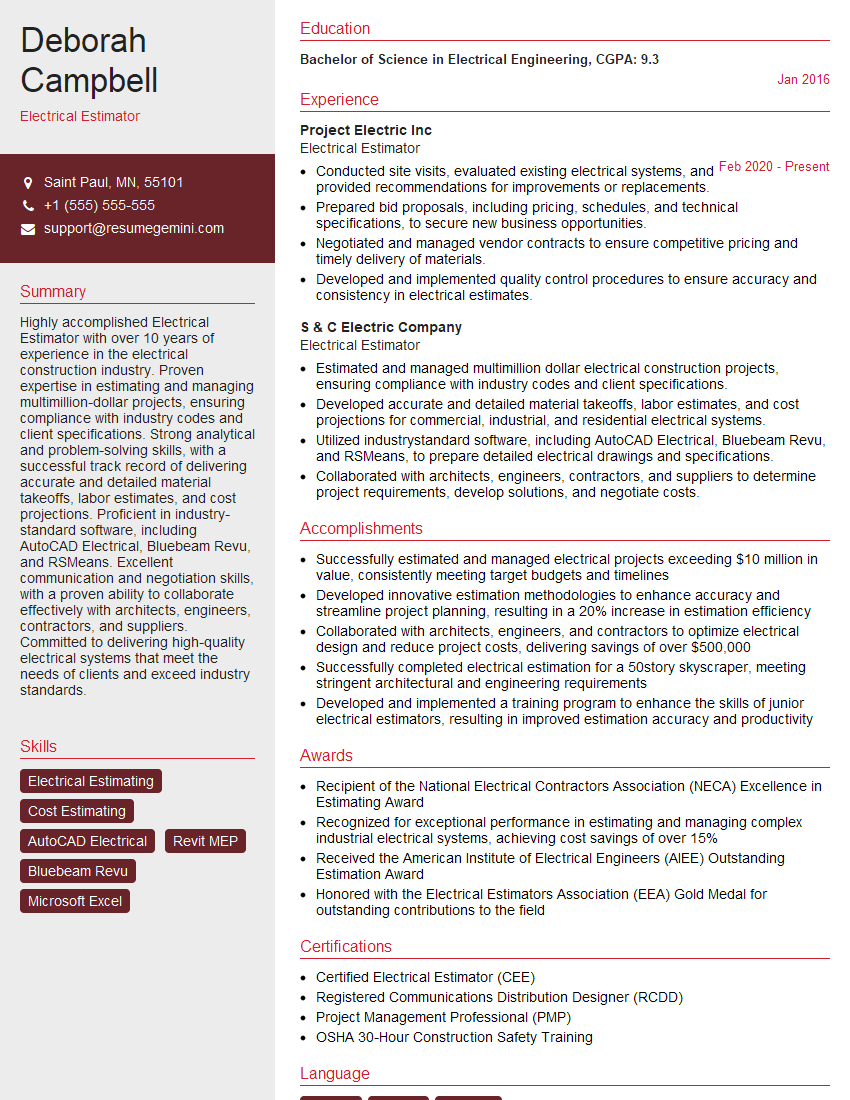
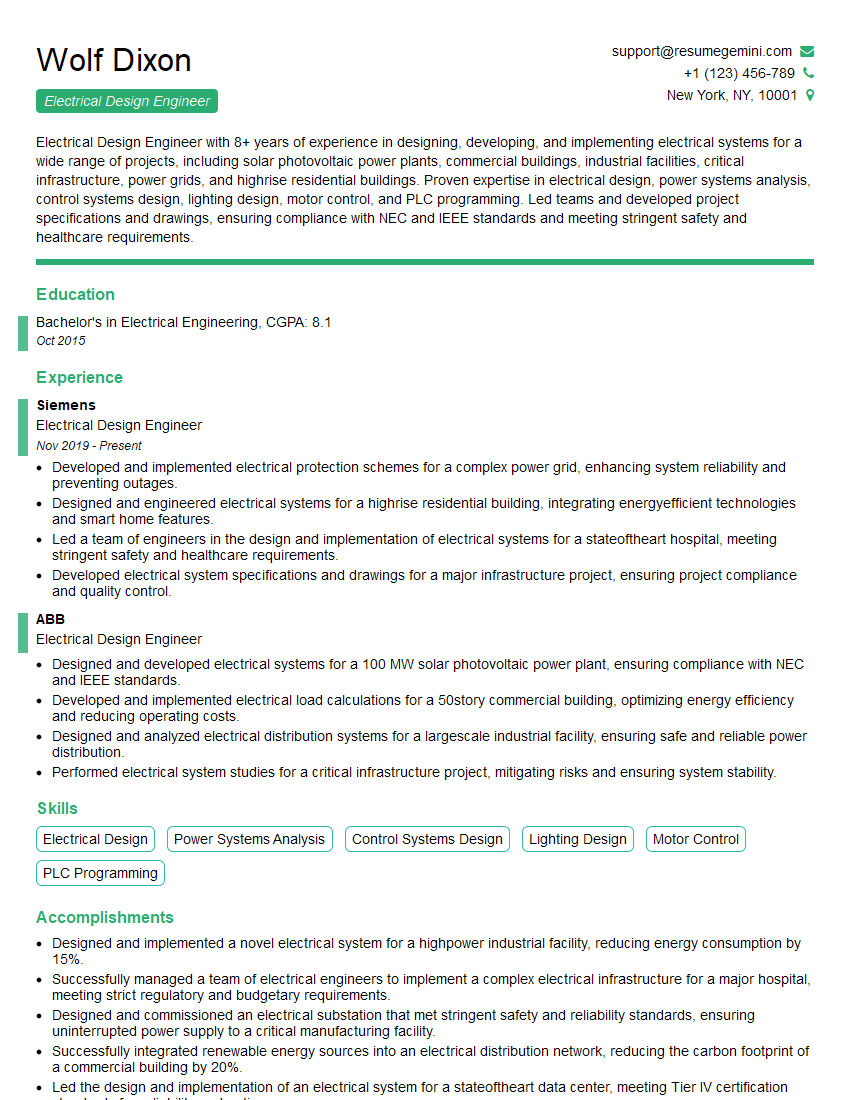
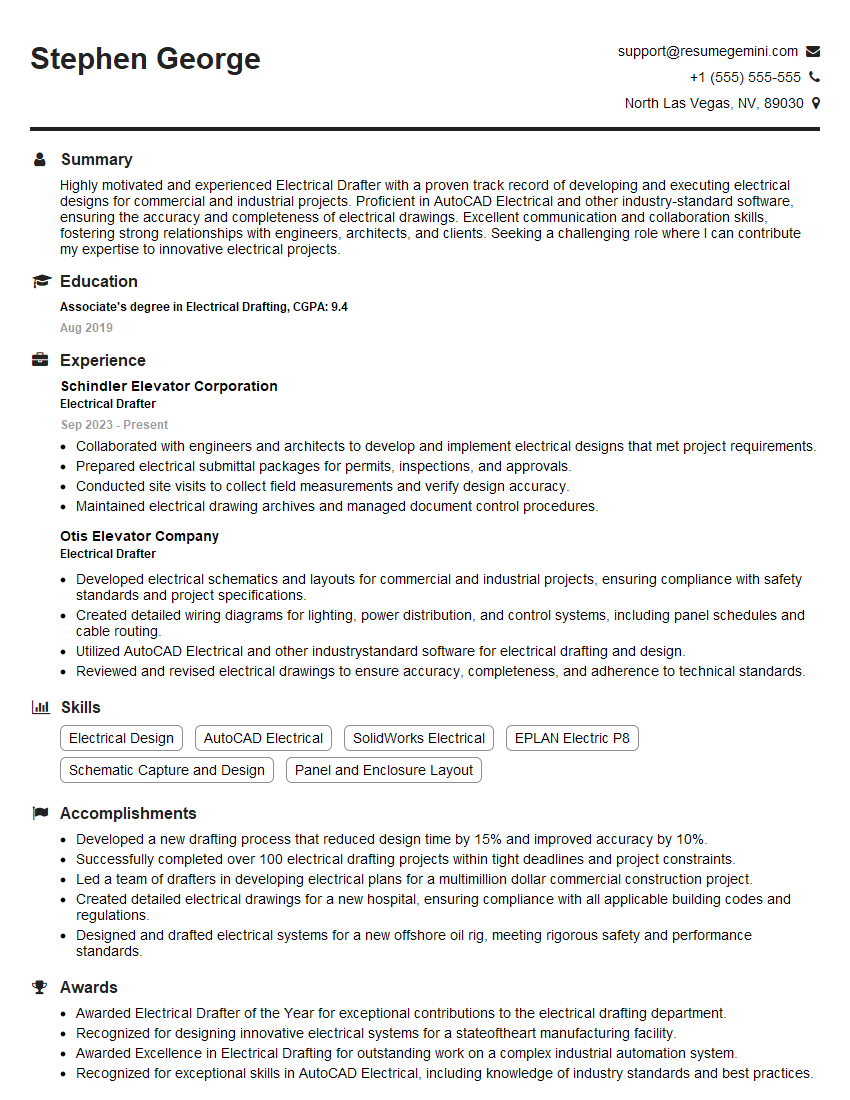
Mastering the UL 508A standard is crucial for advancing your career in electrical engineering and related fields. A strong understanding of these safety regulations will significantly enhance your job prospects and make you a highly sought-after candidate. To further strengthen your application, create an ATS-friendly resume that effectively showcases your skills and experience. We highly recommend using ResumeGemini, a trusted resource for building professional resumes. ResumeGemini can help you craft a compelling narrative that highlights your expertise in UL 508A. Examples of resumes tailored to UL 508A Standard for Electric Power Equipment for Use in Ordinary Locations are available to help you get started.
Explore more articles
Users Rating of Our Blogs
Share Your Experience
We value your feedback! Please rate our content and share your thoughts (optional).
What Readers Say About Our Blog
Very informative content, great job.
good