Feeling uncertain about what to expect in your upcoming interview? We’ve got you covered! This blog highlights the most important Ultrafast Lasers and High-Power Lasers interview questions and provides actionable advice to help you stand out as the ideal candidate. Let’s pave the way for your success.
Questions Asked in Ultrafast Lasers and High-Power Lasers Interview
Q 1. Explain the principle of mode-locking in ultrafast lasers.
Mode-locking is a technique used in ultrafast lasers to generate a train of ultrashort pulses. Instead of the laser emitting light continuously, it emits a series of incredibly short, intense bursts of light. Imagine a crowd of people all trying to leave a stadium at once – chaotic, right? Mode-locking is like orchestrating them to leave in an orderly, synchronized fashion. In a laser, this synchronization is achieved by forcing all the different oscillating modes (different frequencies of light) within the laser cavity to oscillate in phase.
This is done through various mechanisms, such as using a saturable absorber, which transmits only high-intensity light, effectively selecting and strengthening the pulses while suppressing continuous emission. Another technique is active mode-locking, which uses an external modulator to force the modes into phase. The result is a train of pulses with durations ranging from femtoseconds (10-15 seconds) to picoseconds (10-12 seconds), depending on the laser design and mode-locking method. These short pulses are crucial for applications like high-speed optical communication, precision micromachining, and time-resolved spectroscopy.
Q 2. Describe different types of high-power laser resonators and their advantages/disadvantages.
High-power laser resonators come in several designs, each with its own advantages and disadvantages. The choice depends heavily on the desired output power, beam quality, and wavelength.
- Stable Resonators: These are relatively simple, employing mirrors with a specific curvature to create a stable optical path. They’re easy to align but often limit the output power due to thermal lensing effects. Think of it like a well-organized storage room – efficient but limited capacity.
- Unstable Resonators: These use mirrors with a diverging geometry, sacrificing beam quality for higher output power. The larger beam area helps dissipate heat more effectively. It’s like having a massive warehouse, a bit messy but with much greater storage potential.
- Master Oscillator Power Amplifier (MOPA): This configuration separates the oscillator (generating the initial pulses) from the amplifier (increasing power). This allows for excellent beam quality from the oscillator, while the amplifier boosts the power significantly. It’s akin to having a precision instrument (oscillator) paired with a powerful engine (amplifier).
- Slab Lasers: Instead of a rod-shaped gain medium, these use a slab, allowing for better heat dissipation and higher average power. It’s like distributing the load more evenly, preventing overheating.
Choosing the right resonator requires careful consideration of the application and trade-offs between power, beam quality, and complexity.
Q 3. How do you measure the pulse duration of an ultrafast laser?
Measuring the pulse duration of an ultrafast laser is crucial for characterizing its performance. Several techniques are available, each with its own strengths and limitations:
- Autocorrelation: This technique measures the temporal intensity profile of the pulse indirectly by overlapping the pulse with a delayed copy of itself and measuring the resulting intensity. A common variant is intensity autocorrelation, which is relatively easy to implement. This is like taking a blurry photo of a fast-moving object and deducing its speed from the blur.
- Frequency-Resolved Optical Gating (FROG): FROG is a more advanced technique that provides a complete characterization of both the intensity and phase of the pulse, providing more accurate measurements. It’s akin to having multiple cameras from different angles capturing the moving object.
- Streak Camera: This uses an ultra-fast photodetector to measure the intensity as a function of time. However, it has a limited temporal resolution.
The choice of technique depends on the desired accuracy and complexity of the measurement. For many applications, autocorrelation offers a good balance between accuracy and ease of use.
Q 4. What are the safety precautions for working with high-power lasers?
Working with high-power lasers necessitates rigorous safety precautions due to the potential for severe eye and skin damage. Safety measures should be considered a non-negotiable part of operation and should be developed and implemented by a laser safety officer and reviewed annually. Here’s a summary of crucial precautions:
- Eye Protection: Specialized laser safety eyewear is essential, with the optical density (OD) rating appropriate for the specific laser wavelength and power. Never look directly into a high-power laser beam.
- Beam Enclosure and Interlocks: The laser beam should be enclosed as much as possible, with interlocks to shut down the laser if the enclosure is opened.
- Warning Signs: Clear warning signs should be posted in the laser area to alert personnel of potential hazards.
- Personal Protective Equipment (PPE): Appropriate PPE, including laser safety goggles, lab coats, and gloves, should be worn at all times when working with high-power lasers.
- Emergency Procedures: Emergency procedures for laser incidents should be established and well understood by all personnel.
- Training and Competency: Comprehensive training on laser safety procedures is essential before operating high-power lasers.
Ignoring these precautions can lead to serious injury. Always prioritize safety when working with high-power lasers.
Q 5. Explain the concept of chirped pulse amplification.
Chirped pulse amplification (CPA) is a technique used to generate ultra-high-intensity laser pulses. The idea is to stretch the pulse in time before amplification to prevent damage to the amplifier, then compress it back to its original duration after amplification. Imagine stretching a rubber band before pulling it – it’s much easier to stretch and won’t break.
In CPA, the laser pulse is first stretched using a dispersive element, such as a grating pair or a chirped fiber Bragg grating. This stretches the pulse, reducing its peak power. The stretched pulse is then amplified to a high energy level. Finally, the amplified pulse is compressed using a compressor, which mirrors the stretcher, resulting in an ultra-short, high-intensity pulse. CPA has been crucial in the development of petawatt lasers, enabling unprecedented scientific advancements such as laser-driven particle acceleration and inertial confinement fusion research.
Q 6. Describe different techniques for beam shaping and beam delivery in high-power laser systems.
Beam shaping and delivery are critical aspects of high-power laser systems, affecting performance and application suitability. Techniques include:
- Spatial Filters: These remove higher-order modes from the beam, improving beam quality and reducing divergence.
- Beam Expanders: These increase the beam diameter, reducing the intensity and thus preventing damage to optical components.
- Axicons: These create a non-diffracting Bessel beam, which maintains its profile over a long distance, ideal for machining or microscopy.
- Diffractive Optical Elements (DOEs): These can create complex beam shapes such as top-hat profiles or multiple beams.
- Adaptive Optics: These use deformable mirrors to correct for distortions caused by atmospheric turbulence or optical imperfections, ensuring high-quality beam delivery over long distances.
- Fiber Delivery: Using optical fibers to deliver the laser beam is suitable for applications requiring flexible and precise beam delivery.
The optimal approach depends heavily on the specific application and the properties of the laser beam.
Q 7. What are common laser damage mechanisms in high-power laser optics?
Laser damage in high-power laser optics is a significant concern, limiting performance and lifespan. Mechanisms include:
- Avalanche Ionization: Free electrons accelerate in the strong electric field of the laser light, colliding with atoms and creating more free electrons, leading to a cascade effect and damage.
- Multiphoton Absorption: The simultaneous absorption of multiple photons promotes electrons to higher energy levels, which can then ionize or initiate other damage mechanisms.
- Self-Focusing: Nonlinear effects can cause the laser beam to self-focus, leading to extremely high intensities and damage at the focal point.
- Thermal Damage: Absorption of laser light generates heat, potentially leading to melting or cracking of the optic.
- Inclusion Damage: Microscopic inclusions within the optical material can absorb laser light, leading to localized heating and damage.
Understanding these damage mechanisms is crucial for selecting appropriate optical materials and optimizing laser systems to minimize damage and extend component lifespan. Careful selection of high-quality optics with appropriate coatings is key to mitigating these risks.
Q 8. How do you characterize the spatial and temporal coherence of a laser beam?
Characterizing the spatial and temporal coherence of a laser beam is crucial for understanding its performance in various applications. Spatial coherence describes the correlation of the electromagnetic field across the beam’s transverse profile. A highly spatially coherent beam, like that from a single-mode laser, exhibits a nearly uniform wavefront and a narrow diffraction-limited spot size. Conversely, a spatially incoherent beam, such as from a multimode laser or a thermal source, has a rapidly varying phase across its profile, resulting in a broader, less focused spot.
Temporal coherence, on the other hand, describes the correlation of the electromagnetic field over time at a single point in space. It’s directly related to the laser’s spectral linewidth. A highly temporally coherent laser has a narrow linewidth, indicating a long coherence length – the distance over which interference fringes are observable. This translates to a long, well-defined pulse duration in ultrafast lasers. Conversely, a broad linewidth indicates low temporal coherence and a short coherence length, producing short, noisy pulses.
We measure spatial coherence using techniques like the Michelson interferometer, analyzing the fringe visibility. For temporal coherence, we use spectral measurements and interferometry (e.g., Michelson interferometer with a variable delay) to determine the coherence length.
Example: A HeNe laser exhibits high spatial and temporal coherence, making it suitable for holography. In contrast, a superluminescent diode (SLD) possesses high spatial coherence but low temporal coherence, finding applications in optical coherence tomography (OCT) where a broad spectrum is beneficial for depth resolution.
Q 9. Explain the difference between Q-switching and mode-locking.
Both Q-switching and mode-locking are techniques used to generate short pulses from lasers, but they operate through fundamentally different mechanisms.
Q-switching involves temporarily suppressing lasing action and then releasing it suddenly. This is achieved by using a device, such as an acousto-optic modulator or a saturable absorber, to rapidly switch the laser cavity’s Q-factor (a measure of the cavity’s energy storage and loss). While the Q-factor is low, energy builds up in the gain medium. When the Q-factor is suddenly switched high, this stored energy is released as a single, intense pulse. Q-switched pulses are typically in the nanosecond regime.
Mode-locking, on the other hand, involves forcing many longitudinal modes of the laser cavity to oscillate in phase. Each mode has a slightly different frequency, and their constructive interference creates a train of ultrashort pulses. This phase-locking can be achieved using various techniques, including active mode-locking (e.g., using an acousto-optic modulator) or passive mode-locking (e.g., using a saturable absorber). Mode-locked pulses are typically in the picosecond or femtosecond regime, much shorter than Q-switched pulses.
Analogy: Imagine a dam. Q-switching is like suddenly opening the floodgates, releasing a large amount of water (energy) in a short burst. Mode-locking is like carefully controlling the flow of water through multiple channels (modes) so they all reach the outlet at the same time, creating a continuous stream of smaller, well-defined bursts.
Q 10. What are the challenges in scaling the power of ultrafast lasers?
Scaling the power of ultrafast lasers presents numerous challenges, primarily related to thermal management, nonlinear effects, and damage thresholds.
- Thermal effects: High average power leads to significant heat generation within the laser gain medium and optical components. This can cause thermal lensing, which distorts the beam profile, and thermal fracture, ultimately damaging the components. Effective heat dissipation mechanisms are crucial, often involving sophisticated cooling systems.
- Nonlinear effects: As peak power increases, nonlinear optical processes like self-focusing and stimulated Raman scattering become more pronounced. These effects can lead to beam distortions, pulse breakup, and damage to optical components.
- Damage thresholds: Optical components have a limited ability to withstand high intensities. Exceeding these damage thresholds can lead to catastrophic failure of the system, particularly in high-repetition-rate systems where the cumulative effect of damage can become significant. Careful selection of materials and designs is crucial.
- Chirp Management: In high power systems, managing pulse chirp (frequency variation across the pulse) becomes more challenging. This can lead to temporal broadening and reduced peak power. Sophisticated pulse compression techniques are often necessary.
Overcoming these challenges often involves using novel gain media (e.g., Yb:YAG), advanced cooling techniques (e.g., cryogenic cooling), and sophisticated beam shaping and stabilization systems.
Q 11. Discuss different types of nonlinear optical processes relevant to ultrafast lasers.
Nonlinear optical processes are essential in ultrafast lasers, often used for pulse shaping, frequency conversion, and other applications. Some key processes include:
- Second-harmonic generation (SHG): Two photons of the same frequency are converted into one photon with double the frequency. This is widely used for frequency doubling of ultrafast lasers.
- Third-harmonic generation (THG): Three photons of the same frequency combine to create a photon with triple the frequency.
- Optical parametric generation (OPG) and amplification (OPA): A pump photon splits into two photons of different frequencies (signal and idler), conserving energy and momentum. OPAs are used to generate tunable ultrafast pulses over a broad spectral range.
- Self-phase modulation (SPM): The refractive index of a nonlinear medium changes with the intensity of light. This leads to a phase shift across the pulse profile, resulting in spectral broadening.
- Stimulated Raman scattering (SRS): The interaction of light with molecular vibrations generates new frequencies (Stokes and anti-Stokes shifts). This can be used for frequency conversion but also introduces unwanted noise.
- Four-wave mixing (FWM): The interaction of three input photons leads to the generation of a fourth photon with a frequency that depends on the input frequencies and material’s nonlinear susceptibility.
These nonlinear processes are highly intensity-dependent, making them particularly relevant in high-peak-power ultrafast laser systems.
Q 12. What are the limitations of different types of high-power laser materials?
High-power laser materials each have their own limitations that affect their suitability for specific applications. These limitations often stem from their thermal, mechanical, and optical properties.
- Crystalline materials (e.g., Yb:YAG, Ti:sapphire): These exhibit excellent optical properties but can be susceptible to thermal lensing and stress fracture at high power. Their cost can also be significant.
- Glass materials (e.g., Nd:glass): These are typically less expensive than crystals but exhibit lower thermal conductivity, leading to more pronounced thermal effects at high powers. Their gain bandwidth is generally narrower than crystals, limiting pulse duration.
- Fiber lasers (e.g., Yb-doped fiber): These offer excellent heat dissipation due to their large surface area-to-volume ratio. However, nonlinear effects such as stimulated Raman scattering and self-phase modulation can be significant at high powers. Also, the output power is limited by the fiber’s damage threshold.
- Diode lasers: These are highly efficient and compact, but scaling to very high powers requires sophisticated array techniques that can introduce issues of beam quality and consistency.
The choice of laser material depends on the specific application requirements – the desired power, pulse duration, wavelength, beam quality, and cost constraints all play significant roles.
Q 13. How do you design a laser system for a specific application (e.g., material processing, medical treatment)?
Designing a laser system for a specific application requires a systematic approach, considering various factors:
- Define the application requirements: Determine the necessary power, pulse duration, wavelength, repetition rate, beam quality, and processing speed.
- Select the laser source: Choose a laser type (e.g., ultrafast, high-power, continuous wave) and gain medium that meets the power and wavelength requirements. Consider factors like efficiency, cost, and maintenance.
- Design the optical system: This includes beam shaping optics (e.g., lenses, mirrors, spatial filters) to achieve the desired beam profile and size. Consider the need for beam delivery systems, focusing optics, and scanning mechanisms.
- Implement safety measures: High-power lasers pose safety hazards. Include safety interlocks, protective eyewear, and appropriate enclosure designs.
- Integrate control systems: Implement software and hardware to control the laser parameters (e.g., pulse energy, repetition rate, scanning pattern) and monitor system performance.
- Testing and optimization: Thorough testing and optimization are crucial to ensure the laser system meets the specified performance criteria.
Example: For material processing (e.g., laser ablation), an ultrafast laser with high peak power is needed to precisely remove material without causing excessive heat damage. A high average power would enable faster processing. Conversely, in medical treatments, eye-safe wavelengths might be required, and precise control over pulse duration and energy would be critical.
Q 14. Describe different laser cooling techniques.
Laser cooling techniques utilize the interaction of light with atoms or ions to reduce their kinetic energy, leading to lower temperatures. Several techniques exist:
- Doppler cooling: This is based on the Doppler effect. Atoms moving towards a laser beam absorb photons, which reduces their velocity after spontaneous emission in a random direction. Repeating this process with lasers from opposite directions cools the atoms.
- Sisyphus cooling: This technique utilizes the interaction of atoms with light fields in a spatially varying potential. Atoms climb the potential hill, absorbing photons and losing kinetic energy in the process, resulting in cooling.
- Electromagnetically induced transparency (EIT) cooling: This method utilizes coherent interactions to control the absorption and scattering of photons, leading to efficient cooling.
- Evaporative cooling: This technique involves removing the most energetic atoms from a cloud of atoms, leading to a lower overall temperature. It’s often used in conjunction with other cooling methods.
Laser cooling is a powerful technique that finds applications in atomic clocks, quantum computing, and precision measurements. It allows us to reach extremely low temperatures, approaching absolute zero, and create unique quantum states of matter.
Q 15. Explain the concept of thermal lensing in high-power lasers and its mitigation.
Thermal lensing in high-power lasers is a phenomenon where the laser beam heats the gain medium (e.g., crystal, fiber), causing a change in its refractive index. This change acts like a lens, distorting the beam profile and leading to reduced beam quality and potential damage. Imagine a magnifying glass focusing sunlight – the heated region of the laser medium acts similarly.
Mitigation strategies involve several approaches:
- Active cooling: Efficiently removing heat from the gain medium using liquid or gas cooling systems is crucial. This keeps the temperature gradients low, minimizing refractive index variations.
- Thermal management design: The physical design of the laser system, including the heat sink and the gain medium itself, plays a vital role. For instance, optimizing the geometry of the heat sink improves heat dissipation.
- Low-doped gain media: Reducing the doping concentration in the gain medium minimizes the absorption of pump power and thus heat generation. A lower heat load directly translates to less thermal lensing.
- Adaptive optics: Advanced systems might employ deformable mirrors to counteract the distortions introduced by thermal lensing, actively shaping the beam to compensate for the induced aberration. This approach is particularly useful in high-power applications demanding very high beam quality.
- Power scaling techniques: Methods like beam combining or using multiple lower-power lasers can effectively reduce the thermal load on a single gain medium.
For example, in a high-power Yb:YAG laser, implementing a robust water-cooling system combined with a well-designed heat sink is often crucial to mitigating thermal lensing, ensuring stable output power and beam quality.
Career Expert Tips:
- Ace those interviews! Prepare effectively by reviewing the Top 50 Most Common Interview Questions on ResumeGemini.
- Navigate your job search with confidence! Explore a wide range of Career Tips on ResumeGemini. Learn about common challenges and recommendations to overcome them.
- Craft the perfect resume! Master the Art of Resume Writing with ResumeGemini’s guide. Showcase your unique qualifications and achievements effectively.
- Don’t miss out on holiday savings! Build your dream resume with ResumeGemini’s ATS optimized templates.
Q 16. How do you diagnose and troubleshoot laser system malfunctions?
Diagnosing laser system malfunctions is a systematic process. It begins with careful observation of the symptoms – is the laser not producing output, is the beam profile distorted, is there unusual noise or heating?
My troubleshooting approach follows these steps:
- Safety first: Ensure the laser is properly shut down and secured before any physical inspection. Laser safety eyewear is mandatory.
- Check the basics: Verify power supply, cooling system functionality, and interlocks are operating correctly. A simple power outage or cooling failure can cause seemingly complex issues.
- Visual inspection: Examine the optical components for damage (e.g., cracks, scratches on mirrors or lenses). Look for dust or debris that might be causing scattering or beam obstruction.
- Optical measurements: Use tools like beam profilers, power meters, and spectrum analyzers to quantify the laser’s output characteristics. Comparing these measurements to the expected specifications helps pinpoint deviations.
- Systematic component testing: If the problem isn’t immediately obvious, start isolating the issue by testing individual components. For example, if there’s low power, check the pump laser, gain medium, and output coupler one by one.
- Consult documentation: Refer to the laser system’s manuals, schematics, and maintenance logs to identify potential problems and troubleshooting steps specific to your system.
For instance, if the output power of a fiber laser is dropping, I would first check the pump diode’s operational parameters. If they appear normal, I would then inspect the fiber itself for damage or contamination, possibly using an optical time-domain reflectometer (OTDR) to pinpoint any localized loss.
Q 17. What are the key considerations for the selection of laser optics?
Selecting laser optics is critical for optimal laser performance, efficiency, and longevity. Key considerations include:
- Wavelength compatibility: Optics must be designed to operate at the laser’s specific wavelength, minimizing reflection losses and maximizing transmission. A mirror designed for 1064 nm will perform poorly at 532 nm.
- Damage threshold: Optics must withstand the laser’s peak power and average power without damage. This is particularly important for high-power lasers. The damage threshold is typically specified in J/cm² or MW/cm².
- Surface quality: High surface quality reduces scattering losses and improves beam quality. Surface roughness and defects can lead to significant degradation in performance.
- Transmission/reflection characteristics: For specific applications, the desired transmission or reflection characteristics at different angles of incidence must be considered. For example, a dichroic mirror might selectively reflect one wavelength and transmit another.
- Coatings: Optical coatings are crucial for controlling transmission, reflection, and polarization. The choice of coating material will affect the damage threshold and wavelength range of operation.
- Environmental considerations: The operating environment (temperature, humidity) can affect the performance and longevity of the optics. Some materials and coatings are more susceptible to environmental degradation than others.
In a high-energy laser system, choosing optics with a sufficiently high damage threshold is paramount to prevent catastrophic failure. This is achieved through careful consideration of the material and coating type and through maintaining proper alignment and cooling.
Q 18. Describe different types of detectors used for ultrafast laser applications.
Ultrafast laser applications require detectors capable of resolving extremely short pulses and high repetition rates. Several types are commonly used:
- Photodiodes: Fast photodiodes, such as those based on silicon or InGaAs, are suitable for many ultrafast applications. Their speed is limited by the transit time of carriers across the depletion region.
- Photomultiplier tubes (PMTs): PMTs offer high sensitivity and a very fast response time, making them ideal for detecting weak ultrafast signals. However, they are sensitive to magnetic fields and require high voltage supplies.
- Electro-optic sampling (EOS): EOS is a powerful technique that uses the electro-optic effect in a crystal to sample the electric field of an ultrafast optical pulse with another ultrafast pulse. It offers very high temporal resolution but is more complex to implement.
- Streak cameras: Streak cameras are capable of imaging the temporal profile of ultrafast pulses with excellent time resolution. They are often used for characterizing the pulse duration and shape.
- Autocorrelators: These instruments are used to measure the autocorrelation function of an ultrafast pulse, which can be used to estimate its duration. Different types of autocorrelators exist, such as intensity autocorrelation and interferometric autocorrelation.
For instance, measuring the pulse duration of a femtosecond laser using an autocorrelator is a standard procedure in many ultrafast laser laboratories. The choice of detector depends on the specific application and the desired temporal and spectral resolution.
Q 19. What are the advantages and disadvantages of different types of high-power laser sources (e.g., fiber lasers, solid-state lasers)?
High-power laser sources offer various advantages and disadvantages depending on the specific application:
Fiber Lasers:
- Advantages: High beam quality, good efficiency, compact size, ease of thermal management (due to the large surface area to volume ratio), and relatively low cost for high power outputs.
- Disadvantages: Limited wavelength tunability compared to solid-state lasers, potential for nonlinear effects at high powers, and susceptibility to damage from high-power pulses.
Solid-State Lasers (e.g., Yb:YAG, Ti:Sapphire):
- Advantages: Wide range of wavelengths achievable through different gain media, very high peak powers possible, good beam quality (depending on the system design).
- Disadvantages: More complex thermal management requirements, lower efficiency than fiber lasers (especially for high powers), often larger and more expensive, and more prone to thermal lensing.
The choice between a fiber laser and a solid-state laser depends heavily on the specific application. Fiber lasers are often preferred for industrial applications requiring high power and reliability, while solid-state lasers are often chosen for research applications requiring precise control over wavelength and pulse characteristics or very high peak powers.
Q 20. Explain the role of optical isolators and Faraday rotators in laser systems.
Optical isolators and Faraday rotators are crucial for protecting laser systems from back reflections. Back reflections can cause instability, damage to the laser source, or even catastrophic failure. They prevent light from traveling back through the laser cavity.
Optical Isolator: An optical isolator consists of a polarizer and a Faraday rotator. The Faraday rotator rotates the polarization of the light passing through it, while the polarizer only allows light with a specific polarization to pass. Light traveling in the forward direction will pass through the isolator, but light reflecting back will have its polarization rotated by an additional 45 degrees, causing it to be blocked by the polarizer. Think of it as a one-way valve for light.
Faraday Rotator: A Faraday rotator utilizes the Faraday effect, which is the rotation of the polarization of light passing through a magneto-optic material in the presence of a magnetic field. The amount of rotation is proportional to the magnetic field strength and the length of the material. It’s a crucial component of the optical isolator, allowing for unidirectional light propagation.
In many high-power laser systems, optical isolators are essential to protect the delicate components of the laser from damage caused by back-reflected light. They are especially important in master oscillator power amplifier (MOPA) systems, where the final amplifier stage is particularly vulnerable.
Q 21. How do you ensure the stability of an ultrafast laser system?
Ensuring the stability of an ultrafast laser system requires attention to multiple factors:
- Temperature stabilization: Temperature fluctuations can significantly affect the laser’s performance, particularly its wavelength, pulse duration, and repetition rate. Temperature-controlled housings and active cooling are often necessary.
- Vibration isolation: Vibrations can disrupt the laser cavity alignment, leading to instability and output fluctuations. Optical tables with vibration isolation systems are commonly used to minimize these effects.
- Active feedback control: Many ultrafast lasers incorporate feedback mechanisms to actively stabilize the laser parameters. For example, feedback loops can be used to control the cavity length or the pump power to maintain a stable output.
- Environmental control: Controlling the ambient environmental conditions, such as temperature and humidity, plays a vital role in maintaining stability, especially for sensitive systems.
- Careful alignment: Precise alignment of the laser cavity mirrors and other optical components is essential for stable operation. Any misalignment can cause significant instability.
- Regular maintenance: Regular cleaning and maintenance of the optical components are crucial to prevent dust and other contaminants from affecting the laser’s performance.
For instance, in a mode-locked Ti:Sapphire laser, controlling the cavity length with piezoelectric actuators using a feedback loop based on frequency stabilization is a common approach to maintain stable pulse generation. Proper attention to all these factors greatly improves both the short-term and long-term stability of the laser.
Q 22. Discuss the impact of environmental factors on high-power laser performance.
Environmental factors significantly impact high-power laser performance. Think of it like this: a finely tuned engine (the laser) will perform poorly in harsh conditions (the environment).
Temperature fluctuations: Extreme temperatures can affect the gain medium’s properties, leading to instability and power fluctuations. For example, a solid-state laser’s crystal can experience thermal lensing, distorting the beam and reducing output power. Precise temperature control is often critical, using methods like thermoelectric coolers or water cooling.
Humidity: High humidity can lead to condensation on optical components, scattering the beam and reducing efficiency. This is particularly problematic in outdoor applications. Sealed enclosures and desiccant materials are often employed to mitigate this.
Airborne particles and dust: These particles scatter and absorb the laser beam, reducing power and potentially damaging optical components. Cleanroom environments or air filtration systems are necessary for maintaining high performance, particularly for high-power lasers used in precision applications like laser cutting or micromachining.
Atmospheric pressure variations: Changes in atmospheric pressure can affect the refractive index of air, slightly altering the beam’s path and focus. For applications requiring extreme precision, these variations can become significant. Advanced systems may incorporate real-time atmospheric compensation.
Careful consideration and control of these environmental factors are crucial for maintaining consistent and reliable high-power laser performance. In my experience, a well-designed system incorporates robust environmental protection measures that account for the specific operating conditions.
Q 23. What are the common methods used for laser beam alignment and pointing?
Laser beam alignment and pointing are essential for precise applications. Imagine trying to hit a target with a laser pointer – you need accurate aiming and stable positioning. Common methods include:
Autocollimators: These instruments measure small angular deviations by reflecting a beam off a mirror. By aligning the reflected beam with the incident beam, precise alignment can be achieved. They are frequently used in aligning optical components within the laser cavity itself.
HeNe lasers: Helium-Neon lasers offer a visible beam, allowing for easy visual alignment of the main laser beam. They provide a low-cost yet reliable way to trace the path of the high-power beam.
Power meters and beam profilers: Monitoring the beam’s power distribution and profile at different points along its path helps identify misalignments. Variations in power or beam shape indicate problems that require corrective measures.
Automated alignment systems: Advanced systems use sensors and actuators to automatically adjust the laser’s mirrors or other optical components. This is particularly useful for high-power lasers where manual adjustments are impractical or unsafe.
Kinematic mounts: These mounts provide stable and precise adjustments, minimizing any drift in alignment over time. They are particularly crucial in high-vibration environments.
The choice of method depends on the laser’s power, application requirements, and budget. For example, a low-power laser used for marking might require simple visual alignment, while a high-power laser used for surgery demands extremely precise and automated systems.
Q 24. Describe different techniques for pulse shaping in ultrafast laser systems.
Pulse shaping in ultrafast lasers allows for precise control over the temporal and spectral characteristics of the laser pulses. Think of it as sculpting the pulse to fit a particular application.
Spatial Light Modulators (SLMs): These devices use an array of pixels to modulate the phase or amplitude of a laser beam, enabling complex pulse shaping. The principle resembles a digital micromirror device but for controlling the light itself, enabling control over both temporal and spectral properties. By carefully adjusting the pixel values, it’s possible to generate pulses with specific shapes, such as Gaussian, rectangular, or even more complex profiles.
Acousto-optic modulators (AOMs): These devices use sound waves to diffract light, allowing for control of the intensity and phase of the laser pulses. They are very fast and can achieve high modulation frequencies, allowing for fine control over pulse shape. I’ve used them extensively for generating pulse trains and other temporal patterns.
Chirped pulse amplification (CPA): This technique stretches a short pulse in time before amplification, reducing peak power and preventing damage to optical components. After amplification, the pulse is compressed back to its original duration, resulting in a much higher peak power. CPA has revolutionized the field of high-intensity ultrafast lasers.
Nonlinear optical techniques: Techniques like self-phase modulation (SPM) and spectral broadening can be utilized to shape pulses. These techniques often involve propagating the laser pulses through nonlinear optical media, creating changes in the phase and spectrum of the pulse.
The selection of the appropriate pulse shaping technique depends on the specific requirements of the application. For example, generating complex pulse sequences for coherent control of molecular dynamics often requires SLMs, while achieving high peak power for laser micromachining usually benefits from CPA.
Q 25. How do you design a safe and reliable high-power laser system for industrial applications?
Designing a safe and reliable high-power laser system for industrial applications requires a multi-faceted approach. Safety and reliability are paramount, and must be considered from the initial design stages.
Enclosure and Interlocks: The laser system should be housed in a robust enclosure with interlocks to prevent accidental exposure to the laser beam. This often includes safety switches that cut power if the enclosure is opened, ensuring worker safety.
Beam Path Design: The beam path should be carefully designed to minimize the risk of accidental exposure. This might include beam dumps, baffles, and other safety features to prevent stray reflections.
Warning Systems: Audible and visual warning systems should be incorporated to alert personnel to the presence of the laser beam. This is especially crucial for large industrial systems.
Emergency Shut-off Mechanisms: Multiple redundant emergency shut-off mechanisms should be implemented, readily accessible in case of any incident.
Cooling and Thermal Management: High-power lasers generate significant heat. Efficient cooling systems are essential to prevent overheating and maintain stable performance. Overheating can cause both damage to the system and compromise safety.
Redundancy and Fault Tolerance: Critical components should be designed with redundancy to minimize downtime and prevent catastrophic failures. This might involve backup power supplies or alternative cooling paths.
Regular Maintenance and Testing: A comprehensive maintenance schedule, including regular safety checks and system tests, is crucial for ensuring long-term safety and reliability.
In my experience, collaborating with safety engineers during the design phase is vital. Designing for safety isn’t an afterthought; it’s an integral part of creating a reliable high-power laser system.
Q 26. What are your experiences with laser safety standards and regulations?
Laser safety standards and regulations are crucial for protecting both personnel and equipment. My experience encompasses working extensively with standards like ANSI Z136.1 (American National Standards Institute) and IEC 60825 (International Electrotechnical Commission), which define laser safety classifications and recommended practices.
I’m familiar with the various laser safety classes (Class 1 to Class 4), each requiring different safety precautions. For example, Class 4 lasers require stringent safety measures, such as the use of laser safety eyewear, interlocked enclosures, and restricted access areas. Failure to adhere to these standards can lead to severe eye injuries or skin damage.
My work involved creating and implementing safety protocols for high-power laser systems used in industrial settings. This includes conducting laser safety training, performing risk assessments, and ensuring compliance with all relevant regulations. Furthermore, I’ve been actively involved in the documentation process, ensuring that all our systems are equipped with thorough safety manuals and operating procedures.
Staying updated on the latest regulations and best practices is crucial. Safety standards evolve as laser technology advances, and it’s vital to remain abreast of these changes to ensure compliance and maintain a safe working environment.
Q 27. Describe your experience with different laser diagnostic tools and techniques.
Laser diagnostic tools and techniques are indispensable for characterizing laser performance and ensuring optimal operation. Just like a doctor uses various tools to diagnose a patient, we use specialized equipment to understand the intricacies of a laser system.
Power meters: These devices measure the average power or energy of the laser beam. They’re fundamental tools for evaluating laser output and ensuring it meets specifications.
Beam profilers: These instruments provide spatial information about the laser beam, including its size, shape, and intensity distribution. This is critical for identifying beam distortions and optimizing beam quality.
Autocorrelators and spectrometers: These provide temporal and spectral information about ultrafast laser pulses, respectively. Autocorrelators measure the pulse duration, while spectrometers reveal its spectral characteristics, both crucial for pulse shaping and optimization.
Optical spectrum analyzers (OSA): OSAs offer high-resolution spectral analysis, revealing subtle details in the laser output that can reveal system issues or imperfections. They are especially useful for detecting unwanted sidebands or mode hopping.
Wavefront sensors: These advanced instruments measure the wavefront of the laser beam, allowing for quantitative analysis of beam quality and wavefront aberrations. They’re particularly valuable in high-precision applications where even small distortions can be detrimental.
My experience spans the use of all these diagnostic tools in diverse settings. For example, I’ve used beam profilers to optimize the focus of a high-power laser for micromachining, and autocorrelators to characterize the temporal profile of ultrashort pulses generated by a mode-locked Ti:sapphire laser. Selecting the appropriate diagnostic tools is a crucial aspect of system optimization and troubleshooting.
Key Topics to Learn for Ultrafast Lasers and High-Power Lasers Interview
- Ultrafast Laser Fundamentals: Pulse generation techniques (e.g., mode-locking, Q-switching), pulse characterization (e.g., autocorrelation, FROG), and limitations (e.g., chirp, dispersion).
- High-Power Laser Fundamentals: Laser gain media (solid-state, gas, fiber), thermal management, beam quality (M2), and scaling to higher power.
- Nonlinear Optics in Ultrafast Lasers: Second-harmonic generation, optical parametric amplification, self-phase modulation, and their applications in pulse shaping and compression.
- Applications of Ultrafast Lasers: Micromachining, multiphoton microscopy, spectroscopy, time-resolved measurements, and optical communication.
- Applications of High-Power Lasers: Material processing (cutting, welding, ablation), laser surgery, remote sensing, and laser-induced breakdown spectroscopy (LIBS).
- Laser Safety and Regulations: Understanding laser safety classifications, proper handling procedures, and relevant safety regulations.
- Laser Design and Engineering: Optical cavity design, beam delivery systems, and control systems for precise laser operation.
- Problem-Solving in Laser Systems: Troubleshooting common laser problems, diagnosing malfunctions, and implementing solutions.
- Advanced Concepts (depending on role): Adaptive optics, femtosecond filamentation, laser-plasma interactions.
Next Steps
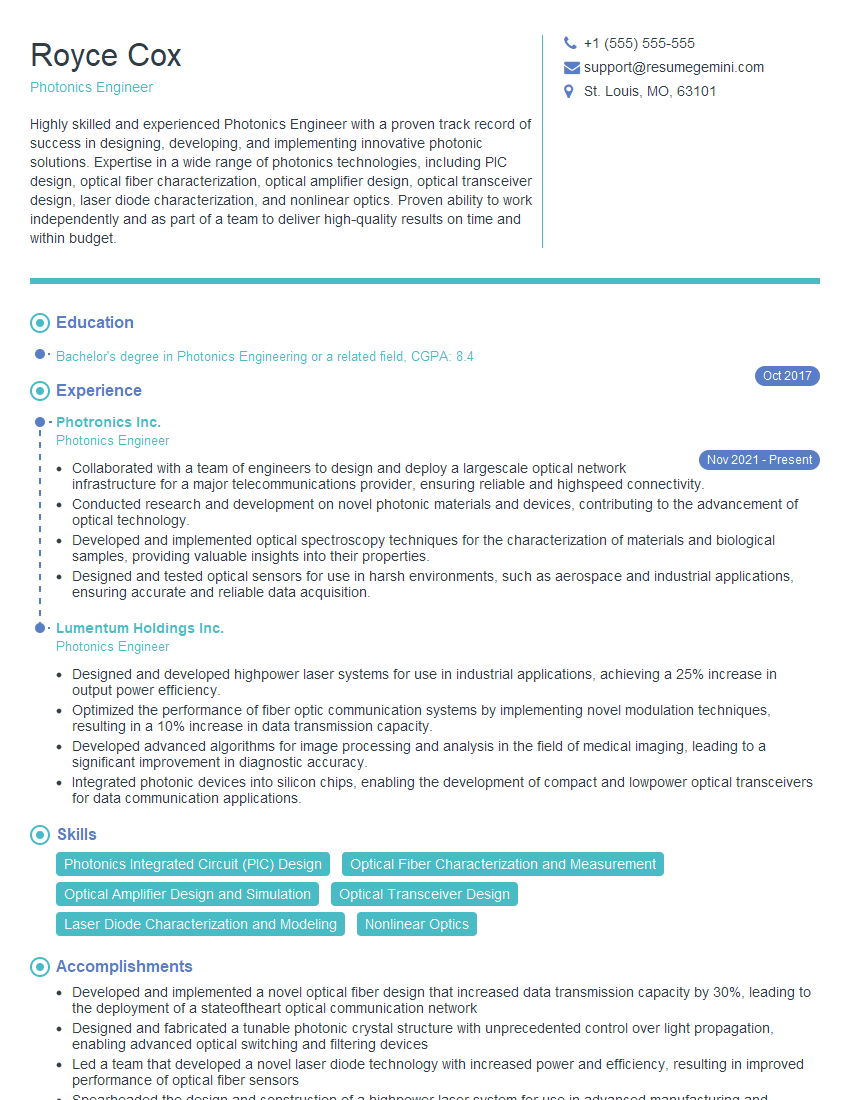
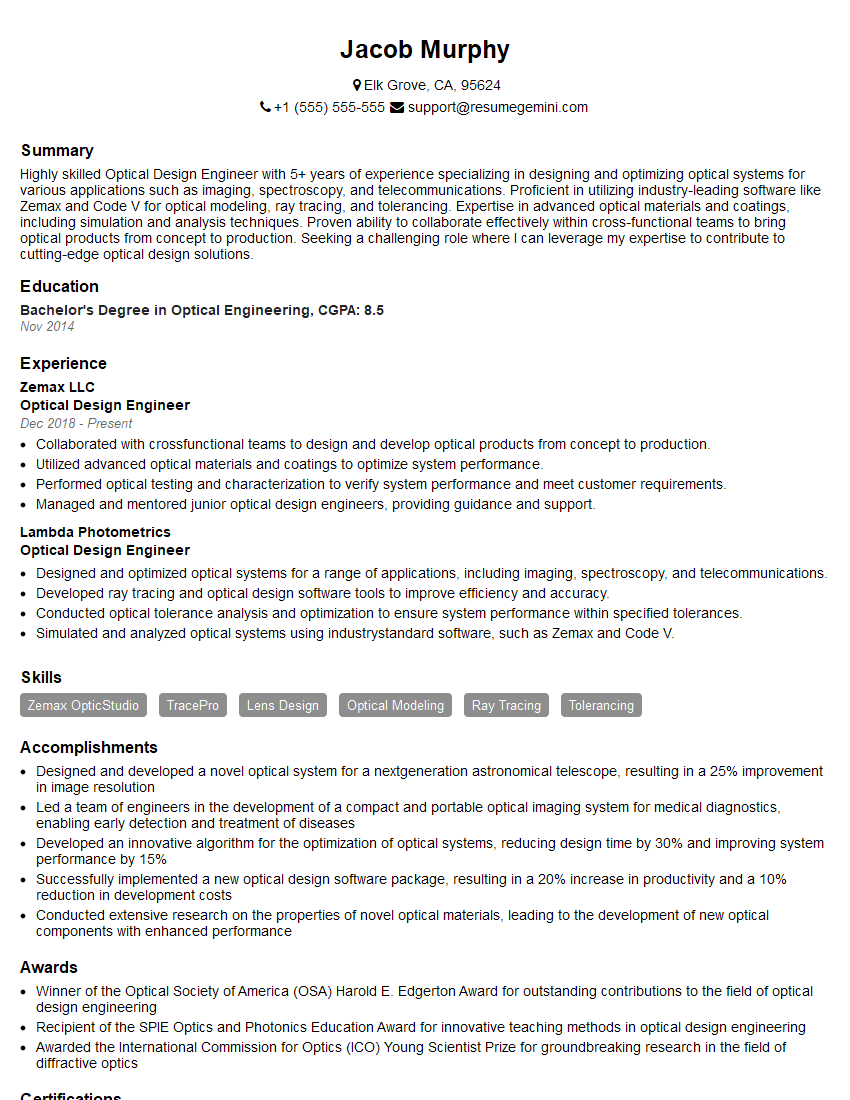
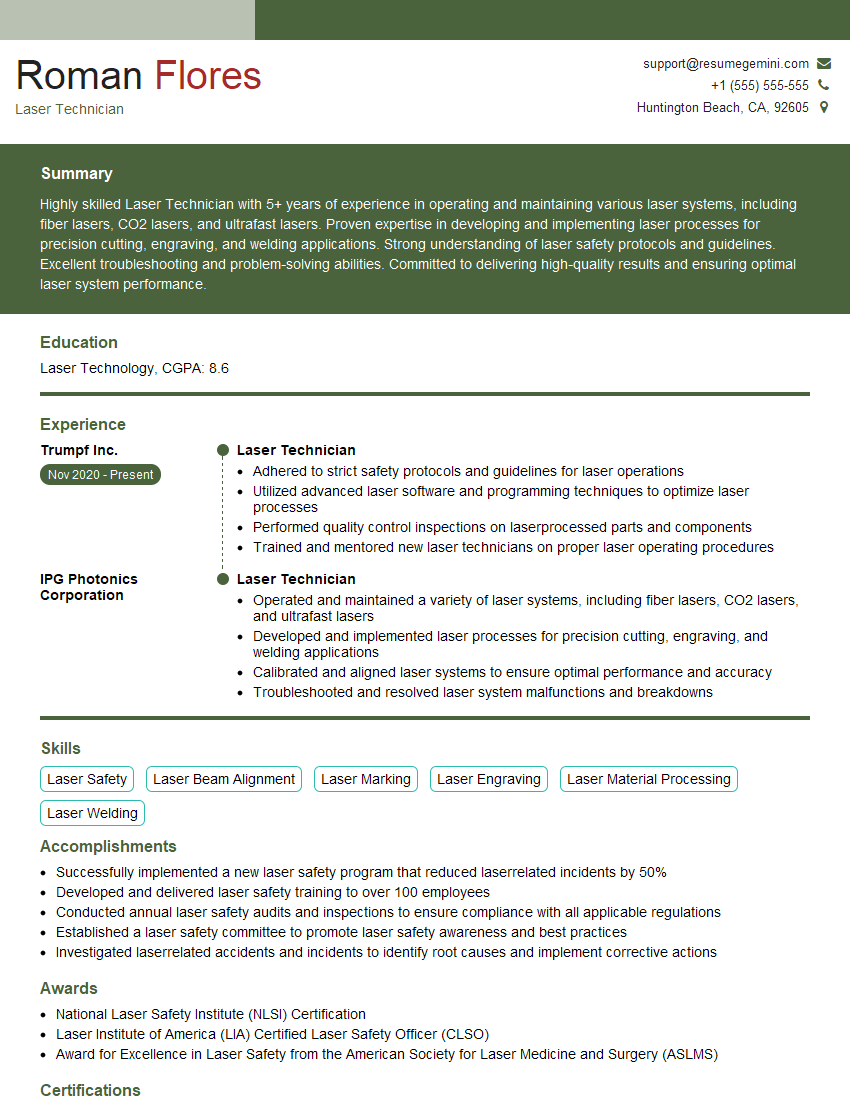
Mastering Ultrafast and High-Power Laser technologies opens doors to exciting careers in research, development, and industrial applications. To maximize your job prospects, a strong resume is crucial. Creating an ATS-friendly resume is essential for getting your application noticed by recruiters. We strongly recommend using ResumeGemini to build a professional and effective resume that highlights your skills and experience in this competitive field. ResumeGemini offers examples of resumes tailored specifically to Ultrafast Lasers and High-Power Lasers positions, helping you present your qualifications in the best possible light.

Explore more articles
Users Rating of Our Blogs
Share Your Experience
We value your feedback! Please rate our content and share your thoughts (optional).
What Readers Say About Our Blog
Very informative content, great job.
good