Are you ready to stand out in your next interview? Understanding and preparing for Underground and Aerial Cable Installation interview questions is a game-changer. In this blog, we’ve compiled key questions and expert advice to help you showcase your skills with confidence and precision. Let’s get started on your journey to acing the interview.
Questions Asked in Underground and Aerial Cable Installation Interview
Q 1. Explain the difference between underground and aerial cable installation methods.
Underground and aerial cable installation differ significantly in their methods, challenges, and safety considerations. Underground installation involves burying cables beneath the surface, offering protection from weather and vandalism but requiring extensive excavation and trenching. Aerial installation, on the other hand, involves suspending cables above ground, typically on poles or towers. This method is faster and less disruptive for established areas but leaves cables vulnerable to environmental damage and requires specialized climbing and rigging techniques.
Think of it like this: underground is like building a secure, hidden tunnel, while aerial is like building a bridge across a valley. Each has its advantages and drawbacks depending on the specific circumstances.
Q 2. Describe the safety procedures you follow when working with underground cables.
Safety is paramount when working with underground cables. Before any excavation begins, we always utilize cable locators to pinpoint the exact location of existing utilities, preventing accidental damage. This is followed by meticulous hand digging around the identified cable routes to avoid accidental severing. Once located, we employ proper grounding techniques to prevent electrical shocks and ensure that the cables are de-energized before any work is performed. Personal protective equipment (PPE), including safety glasses, gloves, and hard hats, is mandatory. We also adhere to strict lockout/tagout procedures to prevent accidental re-energization.
Imagine you’re digging for treasure – you wouldn’t want to accidentally damage a valuable artifact. The same caution applies to underground cables: careful planning and precise execution are essential to avoid potentially hazardous situations and costly repairs.
Q 3. What are the common challenges encountered during aerial cable installation?
Aerial cable installation presents unique challenges. Weather conditions, such as high winds, ice, and rain, can significantly impact safety and efficiency. Navigating obstacles like trees and buildings requires careful planning and specialized equipment. Maintaining proper tension and sag in the cables is crucial to prevent damage and ensure longevity. Furthermore, working at heights introduces significant safety risks that need to be mitigated through proper training, equipment, and adherence to safety protocols. Lastly, access to remote areas can sometimes be difficult and requires careful logistical planning.
Picture yourself stringing a line across a vast field. The wind might try to blow your line off course, trees might block your path, and you need to ensure the line is taut yet flexible enough to withstand different weather conditions. These are just some examples of challenges faced during aerial cable installation.
Q 4. How do you identify different types of cables?
Cable identification is crucial for safety and maintenance. Cables are often marked with color-coded jackets, numbers, or lettering indicating their type, voltage, and ownership. We use cable identification tools like cable testers and marking guides to confirm the cable’s type before initiating any work. Documentation plays a vital role, as as-built drawings and cable records provide critical information about cable routes and specifications. In some cases, we might use specialized equipment like optical time-domain reflectometers (OTDRs) to identify and map fiber optic cables.
Think of it like reading a map: color-coding, labels, and other markers help us understand the cable’s identity and purpose, making our work safer and more efficient.
Q 5. Explain the process of splicing fiber optic cables.
Splicing fiber optic cables requires precision and specialized tools. The process generally involves carefully cleaving the fiber ends to create a smooth, flat surface. Then, using a fusion splicer, the two ends are aligned and fused together using an electric arc. This creates a strong, low-loss connection. The splice is then protected with a heat-shrink sleeve or a mechanical splice protector. After splicing, an OTDR is used to test the quality of the connection, ensuring minimal signal loss.
Imagine it like welding two pieces of glass together: you need to prepare the surface carefully and use a precise technique to create a strong and transparent connection.
Q 6. What tools and equipment are essential for underground cable installation?
Essential tools and equipment for underground cable installation include cable locators, excavators or backhoes, trenchers, hand tools (shovels, picks, etc.), cable reels, pulling equipment (cable drums and winches), protective coatings (conduits, tapes), and testing equipment (ohmmeters, voltmeters). Safety equipment such as hard hats, safety glasses, gloves, and high-visibility vests is also indispensable. The specific tools vary based on the cable type and project requirements.
Imagine building a sophisticated underground railway system: you’d need specialized machinery to dig tunnels, protective materials to safeguard the tracks, and various tools to ensure a smooth, safe, and effective operation.
Q 7. What are the safety regulations for working at heights during aerial cable installation?
Safety regulations for working at heights during aerial cable installation are stringent and often dictated by OSHA or similar national standards. These include mandatory fall protection, such as harnesses and lifelines, along with appropriate safety training and certifications. Workers must use approved climbing equipment and follow established procedures for ascending and descending. Regular equipment inspections and risk assessments are necessary. Furthermore, appropriate communication systems are critical to maintain safety and coordination among workers. Before commencing work, thorough risk assessments should be conducted to identify potential hazards and implement necessary precautions.
Imagine climbing a skyscraper: you wouldn’t start without proper safety gear and training. Working at heights with aerial cables is no different; meticulous adherence to safety regulations is non-negotiable.
Q 8. How do you ensure the integrity of cable connections?
Ensuring the integrity of cable connections is paramount for reliable network performance. It involves a multi-step process starting with proper preparation. This includes cleaning the cable ends to remove any dirt or moisture that could hinder a good connection. We use specialized tools like cable strippers and crimpers to prepare the cable for connection, following the manufacturer’s specifications meticulously.
Next, we utilize high-quality connectors that are compatible with the cable type and application. For example, fiber optic cables require specific connectors like SC, FC, or LC connectors, which must be precisely aligned and cleaned to ensure minimal signal loss. For copper cables, we might use RJ45 connectors for Ethernet or other specialized connectors depending on the application. After the connection is made, we always test the connection using appropriate testing equipment (OTDR for fiber, time-domain reflectometry for copper) to confirm the integrity of the connection and identify any potential faults early on. This proactive approach minimizes downtime and ensures a stable network.
Finally, proper sealing and protection are crucial, especially in outdoor or underground environments. This involves using weatherproof seals and protective jackets to prevent moisture ingress and corrosion, ensuring long-term reliability.
Q 9. What are the different types of cable trenching methods?
Cable trenching methods vary significantly depending on factors such as soil type, cable size, and environmental considerations. Here are a few common techniques:
- Open Cut Trenching: This is the most common method, involving excavating a trench wide and deep enough to accommodate the cable and its protective bedding. It’s straightforward but can be disruptive, requiring road closures or other traffic management measures.
- Trenchless Technology: This group of methods aims to minimize disruption. Examples include horizontal directional drilling (HDD), which uses a steerable drill head to create a path underground, and pipe bursting, where a bursting head breaks up existing pipes while simultaneously installing new conduits. HDD is often favored for crossing roads, rivers, or other obstacles without major excavation.
- Vibratory Plowing: This method uses a plow-like device to create a narrow trench for smaller cables, minimizing surface disruption. It’s particularly suited to areas with sensitive landscaping or where minimal disruption is vital.
The choice of method depends on a thorough site assessment, considering factors like soil conditions, depth requirements, the presence of underground utilities, and environmental protection needs. A detailed site survey is always crucial before undertaking any trenching work.
Q 10. Explain the process of cable testing and fault finding.
Cable testing and fault finding are crucial to ensuring the functionality and longevity of a cable installation. The process typically starts with a visual inspection to identify any obvious damage or inconsistencies. Following this, we employ various testing methods:
- Continuity Testing: Checks the electrical connection end-to-end to ensure there are no breaks in the conductor. A simple ohmmeter can perform this test.
- Time-Domain Reflectometry (TDR): Used to locate faults along the length of the cable by measuring the time it takes for a signal to reflect back from an impedance mismatch (e.g., a break or short circuit). This method provides accurate distance to the fault.
- Optical Time-Domain Reflectometry (OTDR): A similar technique used for fiber optic cables to identify breaks, bends, or other impairments in the fiber optic path.
- Cable Impedance Testing: Measures the impedance of the cable to ensure it matches specifications. Deviation can indicate potential problems.
If a fault is detected, the location is pinpointed based on the test results. Following this, the faulty section is repaired or replaced. Thorough record-keeping and documentation are essential at each step of the testing and repair process.
For instance, in one project, a TDR test revealed a break in an underground cable approximately 50 meters from the termination point. We accurately located and repaired the break using a specialized splicing kit, restoring network functionality efficiently.
Q 11. Describe your experience with various cable pulling techniques.
My experience encompasses a wide range of cable pulling techniques, tailored to specific cable types, conduit sizes, and site conditions. These include:
- Capstan Pulling: This utilizes a motorized winch to pull cables, especially long distances and heavier cables. It provides a controlled and powerful pulling method.
- Hand Pulling: Appropriate for shorter distances and smaller cables, this method involves manually pulling the cable through the conduit using specialized grips and pulling equipment.
- Vacuum Pulling: This technique uses a vacuum system to pull cables through conduits; it’s particularly effective when dealing with tight bends or challenging terrain. It’s gentler on cables and reduces the risk of damage.
- Winch Pulling: Similar to capstan pulling, it involves using a powered winch to pull cables. Different winches are available for various cable sizes and tensions.
Choosing the right technique is critical. For example, we used vacuum pulling to install fiber optic cables in a congested urban area to minimize the risk of damaging the sensitive fibers. In other instances, where the distances were longer and heavier cables were involved, a capstan pulling system provided the required pulling force and control. Safety precautions, such as using appropriate lubricants to reduce friction and employing tension meters, are crucial during any pulling operation to prevent cable damage.
Q 12. How do you handle cable damage during installation?
Handling cable damage during installation requires a methodical approach, emphasizing safety and minimizing downtime. The first step is to assess the extent of the damage, determining whether it is repairable or if the cable needs to be replaced entirely. Minor scratches or abrasions on the outer sheath might be acceptable if the inner conductors remain intact. However, any damage to the conductor requires immediate attention.
If the damage is repairable, it involves carefully cleaning the damaged area, repairing the sheath (if possible using specialized materials), and then testing the cable’s integrity using the appropriate testing methods (as described in Question 3). For severe damage, replacement is necessary. This often requires carefully excavating the damaged section, removing the faulty cable, and then installing a new one. It might also involve rerouting the cable if the damage occurred in an area difficult to access.
In all cases, thorough documentation of the damage, the repair or replacement process, and the subsequent testing results is crucial. This helps with future troubleshooting and allows for comprehensive analysis of potential causes of the damage.
Q 13. What are the environmental considerations for cable installation?
Environmental considerations are paramount in cable installation projects. We must adhere to strict regulations to minimize environmental impact. Key factors include:
- Soil Erosion and Sediment Control: Minimizing soil disturbance during trenching, employing erosion control measures such as silt fences, and proper restoration of the excavated areas after installation are crucial.
- Water Quality Protection: Preventing contamination of groundwater or surface water through proper handling of excavated materials and using environmentally friendly lubricants during cable pulling is necessary.
- Wildlife Habitat Protection: Avoiding disruption to wildlife habitats, minimizing noise pollution, and adhering to permits and guidelines for working in environmentally sensitive areas are important.
- Waste Management: Proper disposal of excavated materials, cable scraps, and packaging, adhering to local waste management regulations, is a must.
- Climate Change Considerations: Selecting cables and materials that minimize environmental impact over their life cycle, considering factors such as durability and energy efficiency, is crucial.
These considerations often involve obtaining necessary permits and approvals from environmental agencies before commencing work. We also engage with environmental consultants where needed to ensure compliance with all relevant regulations and to minimize the project’s overall environmental footprint.
Q 14. Explain your experience with different types of cable termination.
My experience with cable termination covers a variety of techniques and cable types. Proper termination is critical for reliable signal transmission and safety. It involves preparing the cable ends, attaching the appropriate connectors, and ensuring a secure and weatherproof connection (if needed).
- Copper Cable Termination: This often involves using crimp connectors for various applications, such as RJ45 connectors for Ethernet or specialized connectors for other systems. Crimping requires specialized tools to ensure a secure and consistent connection.
- Fiber Optic Cable Termination: This requires precision and specialized tools. It typically involves cleaving the fiber, cleaning the end, and attaching connectors like SC, FC, or LC using an epoxy-based adhesive. Testing with an OTDR ensures proper termination and minimal signal loss.
- Coaxial Cable Termination: Often involves using compression connectors to ensure a proper impedance match, minimizing signal reflections and ensuring optimal signal quality.
Each termination type requires specific tools, techniques, and safety precautions. For example, working with fiber optic cables requires meticulous attention to detail and cleanliness to avoid damage to the fragile fiber. Improper termination could lead to signal loss, poor performance, and potential hazards. Hence, strict adherence to manufacturer’s specifications and the use of quality tools and materials are crucial.
Q 15. How do you manage cable slack during installation?
Managing cable slack is crucial for preventing damage and ensuring the longevity of the cable installation. Too little slack can lead to stress on the cable during thermal expansion and contraction, while excessive slack creates tripping hazards and can complicate future maintenance.
We use several methods to manage slack effectively. First, accurate pre-installation surveying and planning are essential to estimate the required slack. This involves considering factors like temperature variations, ground movement, and the type of cable being used. We often employ a calculation method taking into account the cable’s coefficient of thermal expansion and the expected temperature range.
During installation, we use slack loops at strategic points, typically at bends and termination points. The size of these loops is carefully calculated based on the factors mentioned above. For underground installations, we might use pulling grips and carefully controlled tension to avoid over-stretching. For aerial installations, we use specialized equipment to maintain the correct tension and slack throughout the entire run. Regular inspections after installation are crucial to ensure the slack remains within acceptable limits.
For example, during a recent project involving high-voltage cables across a bridge, we used a sophisticated tensioning system with load cells to precisely control slack, accounting for the expansion and contraction due to temperature changes across different parts of the day.
Career Expert Tips:
- Ace those interviews! Prepare effectively by reviewing the Top 50 Most Common Interview Questions on ResumeGemini.
- Navigate your job search with confidence! Explore a wide range of Career Tips on ResumeGemini. Learn about common challenges and recommendations to overcome them.
- Craft the perfect resume! Master the Art of Resume Writing with ResumeGemini’s guide. Showcase your unique qualifications and achievements effectively.
- Don’t miss out on holiday savings! Build your dream resume with ResumeGemini’s ATS optimized templates.
Q 16. What are the common causes of cable failures?
Cable failures can stem from a variety of factors, broadly categorized into environmental issues, installation flaws, and inherent cable defects.
- Environmental factors: These include water ingress (from ground water, flooding etc.), rodent damage, soil settling, extreme temperatures (both heat and cold), and external physical damage (e.g., from digging or construction activities).
- Installation flaws: Improper cable handling during installation can result in abrasions, kinks, or excessive stress points leading to failure. Inadequate grounding or improper connections also significantly increase the risk of faults. Incorrect conduit selection or installation can also create problems.
- Inherent cable defects: Manufacturing defects, such as compromised insulation or conductor flaws, can also result in premature failure. Sometimes, the cable’s sheath material may degrade over time due to the chemicals present in the soil.
Identifying the root cause requires a thorough investigation, often involving visual inspections, testing equipment (e.g., Time Domain Reflectometry or TDR), and in some cases, laboratory analysis of the failed cable segment.
Q 17. How do you plan and execute a cable installation project?
A successful cable installation project starts long before the first cable is laid. Thorough planning is essential.
- Design and Planning: This involves detailed route surveys, determining the cable type and size, and choosing suitable conduits or support structures. We assess the environmental conditions, potential obstacles, and accessibility limitations. The design stage includes choosing the right pulling equipment and developing a comprehensive safety plan.
- Material Procurement: We source all the necessary materials, including cables, conduits, fittings, and marking equipment, ensuring they meet the required standards. We also consider environmental considerations and might use recycled or sustainable options when possible.
- Installation: This stage follows the planned route and procedures, employing safe and efficient techniques. Regular inspections ensure proper installation, paying close attention to bending radii, stress points, and proper termination.
- Testing and Commissioning: Testing is carried out to ensure the cables meet performance standards. This may include continuity tests, insulation resistance tests, and high-potential tests. Accurate documentation is very important at this stage.
- As-built Documentation: This includes detailed drawings showing the exact cable routes, depths, and locations of all components, including manholes, splice points, and markers. This documentation is crucial for future maintenance and repair.
For instance, in a recent project involving fiber optic cable installation in a busy urban area, careful planning and coordination with other utility companies were essential to minimize disruption and avoid damage to existing infrastructure. We used a ‘dig-before-you-dig’ approach and worked closely with city planning authorities.
Q 18. Describe your experience with working with different types of conduits.
My experience spans a wide range of conduit types, each with its own advantages and disadvantages.
- PVC Conduit: This is a widely used, cost-effective option suitable for less demanding applications. It’s lightweight and relatively easy to install. However, it’s less robust than other types.
- High-Density Polyethylene (HDPE) Conduit: HDPE is more durable and resistant to chemicals and corrosion than PVC, making it a good choice for underground installations. It also has a longer lifespan.
- Metallic Conduit (Steel, Aluminum): Metallic conduits offer superior strength and protection against physical damage, but they are heavier and more expensive. They are often used for high-voltage cables or in areas with a high risk of physical damage.
- Fiber Reinforced Polymer (FRP) Conduit: FRP combines the strength of metallic conduits with the corrosion resistance of plastic materials. It is a good alternative for challenging environments.
The choice of conduit depends on several factors, including the cable type, environmental conditions, installation method, and budget. For example, in a project involving the installation of sensitive fiber optic cables in a corrosive environment, we opted for HDPE conduit for its chemical resistance and durability.
Q 19. How do you manage cable routing in complex environments?
Managing cable routing in complex environments requires meticulous planning and the use of advanced tools. This often involves navigating around existing underground utilities, obstacles like rocks and building foundations, or tight spaces within buildings.
We use several strategies including:
- Detailed Site Surveys: These involve using ground-penetrating radar (GPR) and other detection technologies to identify underground utilities and obstacles before excavation begins.
- 3D Modeling: This helps to visualize the route and identify potential conflicts with other infrastructure. This allows us to plan the optimal path, minimizing bends and potential stress points.
- Specialized Pulling Equipment: For congested areas, we use equipment like micro-trenching machines or directional drilling to install conduits and cables with minimal disruption. We also employ specialized pullers with different pulling heads and lubricants to navigate tight curves and bends.
- Careful Documentation: Detailed as-built drawings are essential for future reference and maintenance. GPS and mapping systems help in accurate documentation and future locating.
For instance, a recent project in a densely populated urban area required us to use micro-trenching techniques and 3D modeling to install conduits beneath existing pavements and utility lines, minimizing disruption to traffic and public services.
Q 20. What are the different types of cable markers and why are they important?
Cable markers are essential for identifying and locating cables, greatly facilitating maintenance and repair activities. They also improve safety by alerting excavators to the presence of underground cables, preventing accidental damage.
- Plastic Cable Markers: These are commonly used and come in various colors and sizes, often with printed identification information.
- Metallic Cable Markers: These are more durable and suitable for harsh environments. They can be engraved or stamped with identification details.
- Electronic Cable Markers: These use passive or active technologies to aid in locating cables using specialized detection equipment.
- Heat-Shrinkable Markers: These are used to identify cables at splice points and other locations where permanent marking is needed.
Different colors and numbering systems are used to identify the cable type (e.g., power, communication, fiber optic), voltage levels, and ownership. The use of standardized marker types ensures clarity and reduces the risk of misidentification.
Properly marking cables is not just a best practice; in many jurisdictions, it’s a legal requirement for safety reasons.
Q 21. Explain your experience with GPS and mapping tools for cable installation.
GPS and mapping tools are indispensable for modern cable installation projects. They significantly improve accuracy, efficiency, and safety.
We use GPS devices to pinpoint the exact location of cables during installation and to create detailed maps of the installed network. This data is integrated into GIS systems (Geographical Information Systems) allowing us to manage and visualize our cable infrastructure effectively. The as-built data collected with GPS is crucial for future maintenance and planning. GIS systems allow us to query location data, such as the distance between splice points or the location of a specific cable type.
In addition to GPS, we may use other mapping tools and technologies like LiDAR (Light Detection and Ranging) for detailed topographical surveys especially in challenging terrains. These tools enable us to plan optimal routes and minimize environmental impact. Using precise GPS coordinates and mapping tools ensures that our records are reliable and accurate, allowing easier location and management of the entire cable network throughout its lifespan.
Q 22. How do you ensure accurate cable documentation?
Accurate cable documentation is paramount for efficient maintenance, repairs, and future upgrades. Think of it as a detailed map of your underground and aerial network. We use a multi-layered approach. Firstly, we employ a robust Geographic Information System (GIS) that precisely maps the cable routes, depths (for underground cables), splice locations, and the type of cable used. This digital map is constantly updated. Secondly, we maintain physical records, including as-built drawings that reflect the final installed configuration. These drawings are cross-referenced with the GIS data. Thirdly, we use unique identifiers, like sequential numbering or barcodes, for each cable segment, allowing for easy tracking and identification. Finally, regular audits are conducted to ensure consistency between the digital and physical records. This ensures everyone, from maintenance crews to project managers, has access to the same, up-to-date information, reducing the risk of errors and potential damage during future work.
Q 23. What is your experience with different types of grounding and bonding techniques?
Grounding and bonding are critical for electrical safety and preventing damage to equipment. My experience encompasses various techniques, including:
- Grounding Rods: Driving copper-clad steel rods into the earth to provide a low-impedance path to ground. The effectiveness depends heavily on soil conductivity; we frequently conduct soil resistivity tests to determine the optimal number and placement of rods.
- Ground Grids: Interconnecting multiple grounding electrodes to create a larger ground area, especially crucial in high-current applications or areas with less conductive soil. The design of the grid is carefully calculated to ensure uniform current distribution.
- Concrete Encasement: Embedding grounding conductors within concrete foundations or structures to provide a reliable ground path. The proper placement and bonding of these conductors are essential.
- Bonding: Connecting metallic parts of the system (like cable sheaths, conduit, and equipment enclosures) to ensure they are at the same electrical potential, preventing voltage differences that could cause dangerous currents or sparks. We use exothermic welding for permanent, high-conductivity connections.
Q 24. How do you maintain the safety of yourself and your team during cable installation?
Safety is our absolute top priority. We implement a comprehensive safety program that includes:
- Pre-job briefings: Thorough discussions about potential hazards, risk mitigation strategies, and emergency procedures.
- Lockout/Tagout procedures: Strict adherence to these protocols when working on energized equipment to prevent accidental energization.
- Personal Protective Equipment (PPE): Mandatory use of appropriate PPE, such as hard hats, safety glasses, gloves, high-visibility clothing, and fall protection equipment. The type of PPE changes based on the environment and the specific task. For example, we use specialized flame-resistant clothing when working near high voltage.
- Traffic control: Implementing traffic control measures at work sites to ensure the safety of both workers and the public, especially when working near roads or other public areas.
- Regular safety inspections: Conducting frequent inspections of equipment and work areas to identify and address potential hazards.
- Competency training: Ensuring all team members receive appropriate training and certification before undertaking any work.
Q 25. Describe a time you had to troubleshoot a complex cable problem.
We once faced a complex issue with an underground fiber optic cable experiencing intermittent signal loss. Initial tests pointed to a potential splice failure, but the location was unknown. We used a combination of techniques to pinpoint the problem. We first deployed a Time Domain Reflectometer (TDR) to identify the approximate location of the fault. Then, we used a tracer wire, which runs alongside the cable, to help narrow down the search area. The location was in a very congested area, causing challenges in excavating. We utilized trenchless technologies to access the fault without causing any major disruption. Once the splice was located, we discovered that moisture had infiltrated the splice due to a damaged protective seal. We replaced the faulty splice and re-sealed the protective housing. The use of the TDR, tracer wire and trenchless methods saved time and significantly minimized the disruption to the surrounding environment and other utilities.
Q 26. How familiar are you with relevant industry standards and codes?
I’m intimately familiar with relevant industry standards and codes, including but not limited to the National Electrical Code (NEC), ANSI/IEEE standards for cable installation, and OSHA regulations regarding workplace safety. We follow guidelines for safe digging practices (like ‘Call Before You Dig’), adhere to strict requirements for cable marking and identification, and understand the specific regulations for working in different environments. For example, the NEC specifies the minimum burial depth for different cable types, and we must adhere to these guidelines to prevent damage and ensure long-term reliability. Staying current with these codes is an ongoing process, involving regular training and review to guarantee compliance and operational excellence.
Q 27. Describe your experience with cable installation in various terrains.
My experience spans diverse terrains, from urban areas with dense underground infrastructure to rugged mountainous regions and open fields. Each terrain presents unique challenges. In urban settings, navigating existing utilities and minimizing disruption to traffic and pedestrian access are key considerations. We use directional boring techniques to avoid damaging other underground services. In mountainous regions, accessing remote locations and dealing with steep slopes and uneven terrain are challenges. We utilize specialized equipment, like aerial lifts and winches, to install cables safely and effectively. In open fields, we need to consider soil conditions, potential for erosion, and the need for proper backfilling and restoration after installation. We adapt our techniques and equipment to the specific requirements of each terrain, ensuring both efficiency and safety.
Q 28. What is your experience with cable installation in hazardous environments?
I have experience installing cables in hazardous environments, including areas with high levels of electromagnetic interference (EMI), underground locations with the potential for gas leaks, and areas prone to flooding. Each environment requires specific precautions and specialized equipment. For EMI-prone areas, we might use shielded cables and specialized grounding techniques. In locations with potential gas leaks, we utilize explosion-proof equipment and maintain strict ventilation procedures. In flood-prone areas, we install cables at higher elevations or use waterproof conduits and sealing techniques. These installations demand stringent safety measures and detailed planning to ensure the safety of personnel and the reliability of the cable system. A thorough risk assessment before starting any work is crucial in these situations.
Key Topics to Learn for Underground and Aerial Cable Installation Interview
- Cable Types and Properties: Understanding the characteristics of different cable types (coaxial, fiber optic, twisted pair) and their suitability for various applications (e.g., high-speed data transmission, power distribution).
- Installation Techniques: Mastering both underground (trenching, plowing, directional drilling) and aerial (pole climbing, stringing) cable installation methods, including safety procedures and best practices.
- Splicing and Termination: Developing proficiency in preparing, splicing, and terminating different cable types, ensuring reliable connections and signal integrity. This includes understanding various splicing techniques and the use of specialized tools.
- Safety Regulations and Compliance: A thorough understanding of OSHA regulations, industry standards (e.g., NEC), and safe work practices related to cable installation, including proper use of personal protective equipment (PPE).
- Troubleshooting and Repair: Developing problem-solving skills to diagnose and repair cable faults, including locating cable breaks, identifying signal degradation, and performing effective repairs.
- Network Design and Planning: Understanding basic network topologies and how cable infrastructure contributes to overall network performance and reliability. This includes familiarity with concepts like cable routing and pathway design.
- Documentation and Record Keeping: Understanding the importance of maintaining accurate as-built drawings, cable records, and other documentation for future maintenance and repairs.
- Equipment and Tool Familiarity: Demonstrating knowledge of common tools and equipment used in cable installation, including trenchers, backhoes, aerial lifts, splicing kits, and testing equipment.
Next Steps
Mastering Underground and Aerial Cable Installation opens doors to a rewarding career with excellent growth potential in the telecommunications, utilities, and energy sectors. To maximize your job prospects, it’s crucial to create a resume that highlights your skills and experience effectively. An ATS-friendly resume is key to getting your application noticed by recruiters. We strongly encourage you to use ResumeGemini, a trusted resource, to build a professional and impactful resume that showcases your expertise. Examples of resumes tailored to Underground and Aerial Cable Installation are available to help guide your resume creation.

Cable Supervisor Resume Sample

Field Technician Resume Sample
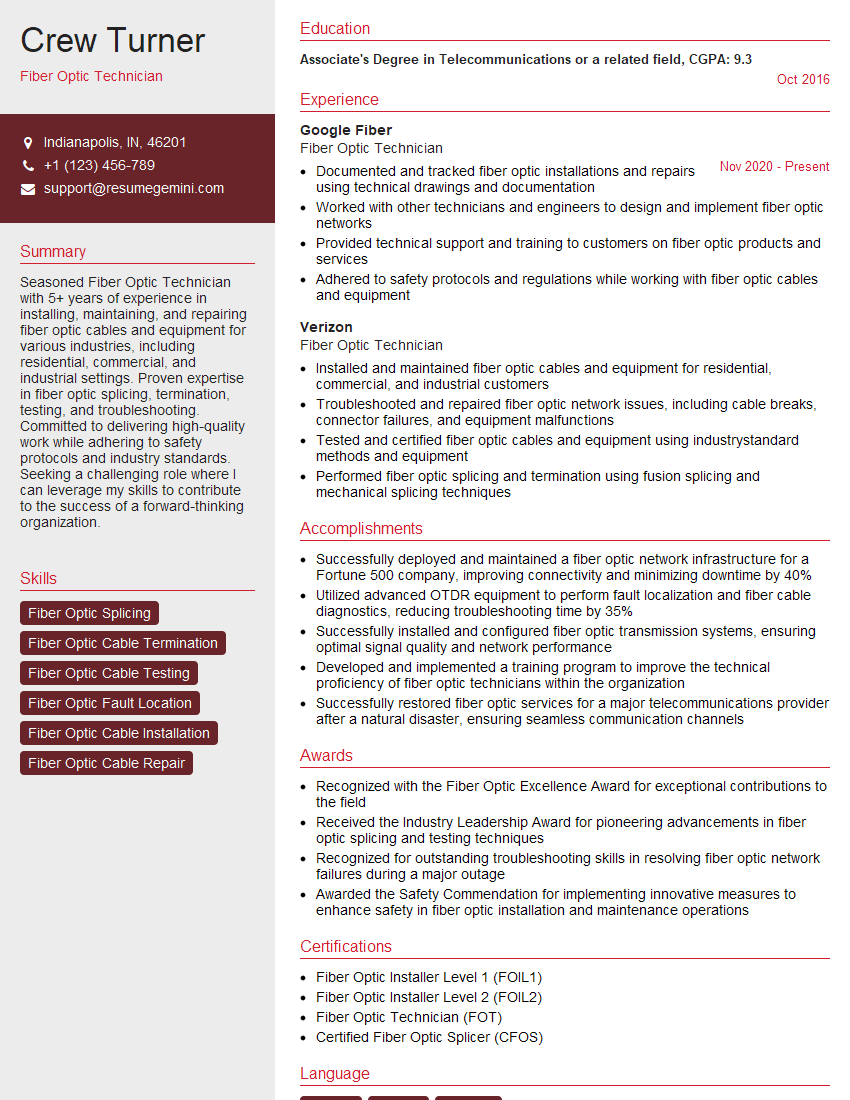
Fiber Optic Technician Resume Sample
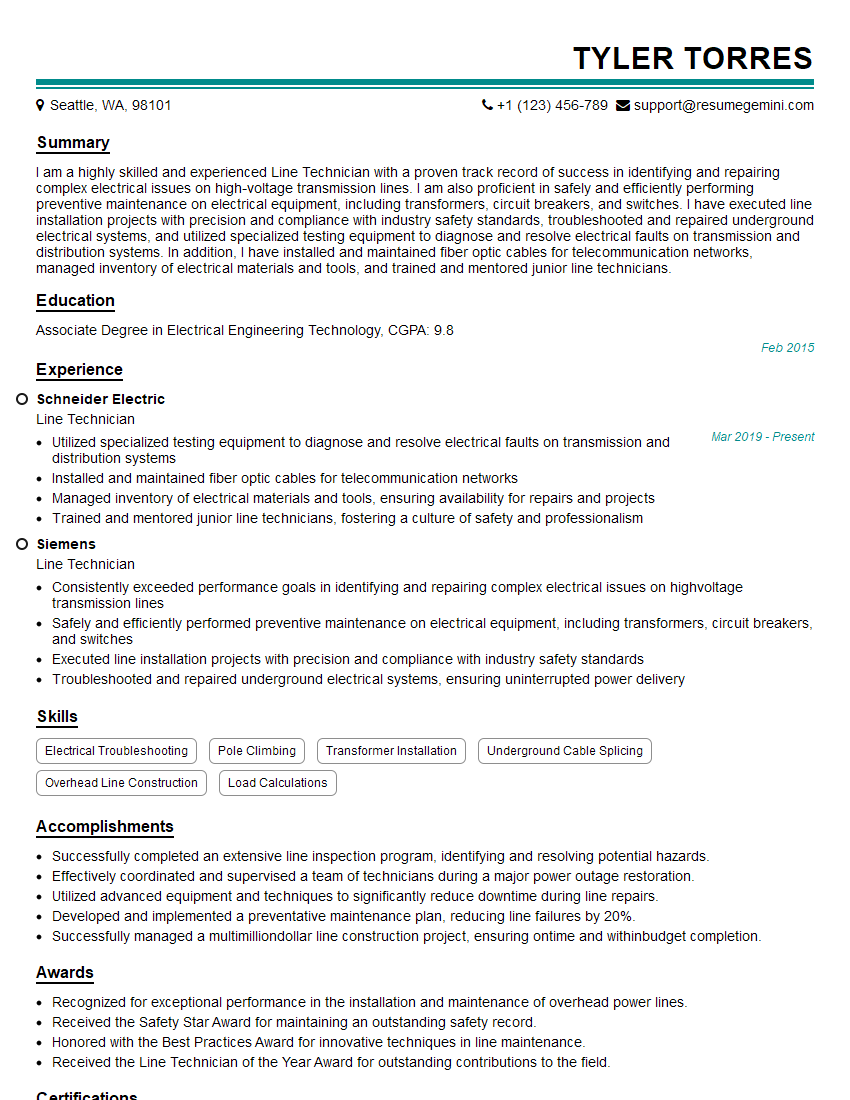
Line Technician Resume Sample
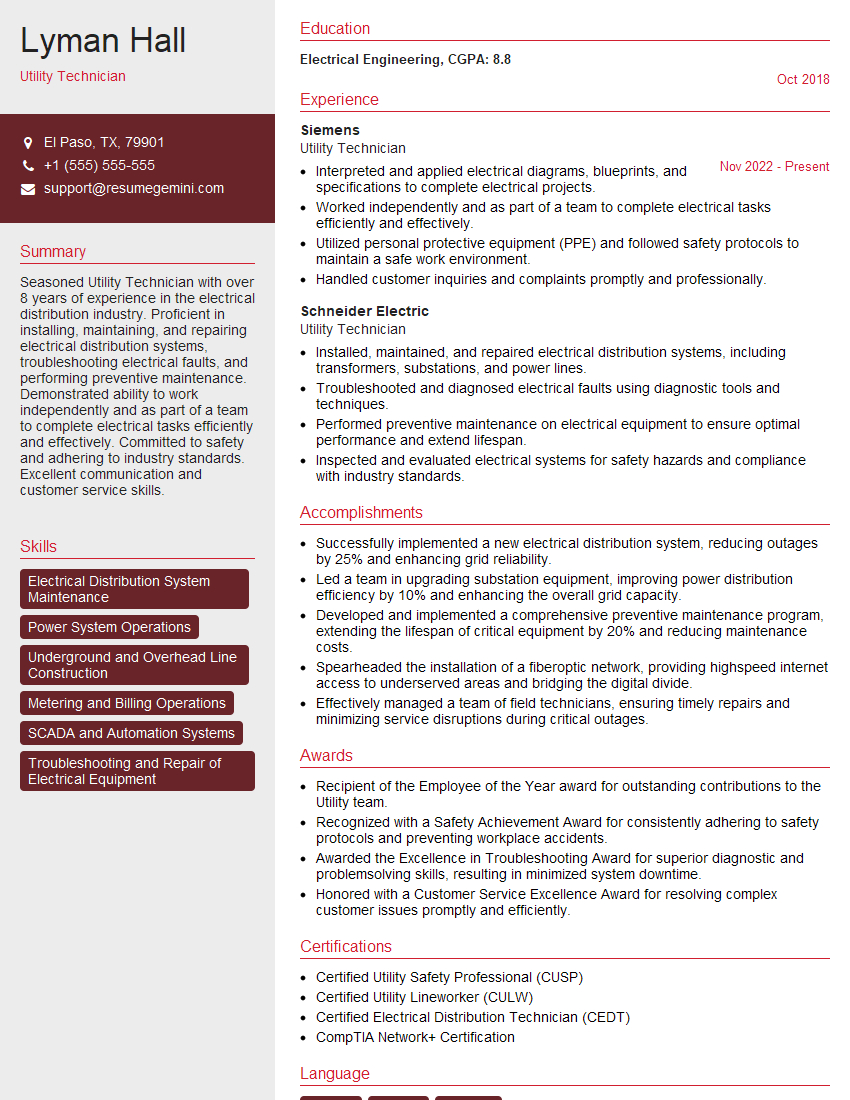
Utility Technician Resume Sample
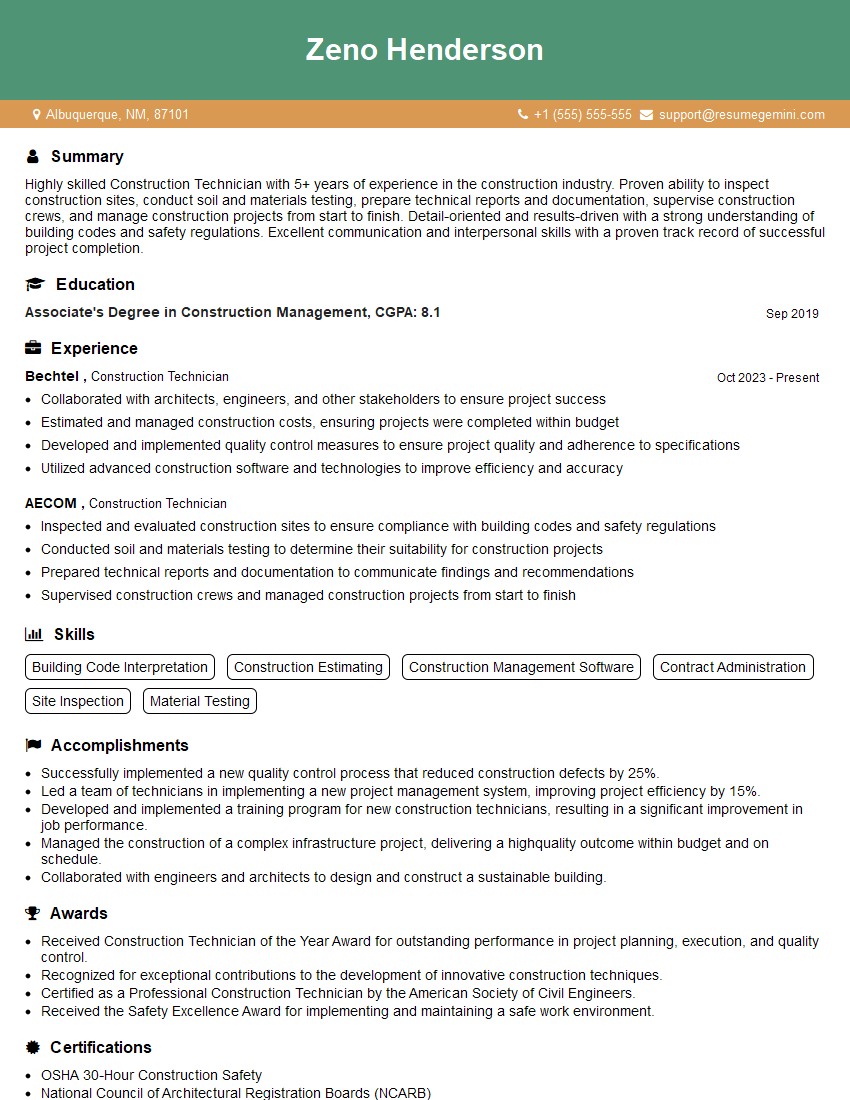
Construction Technician Resume Sample
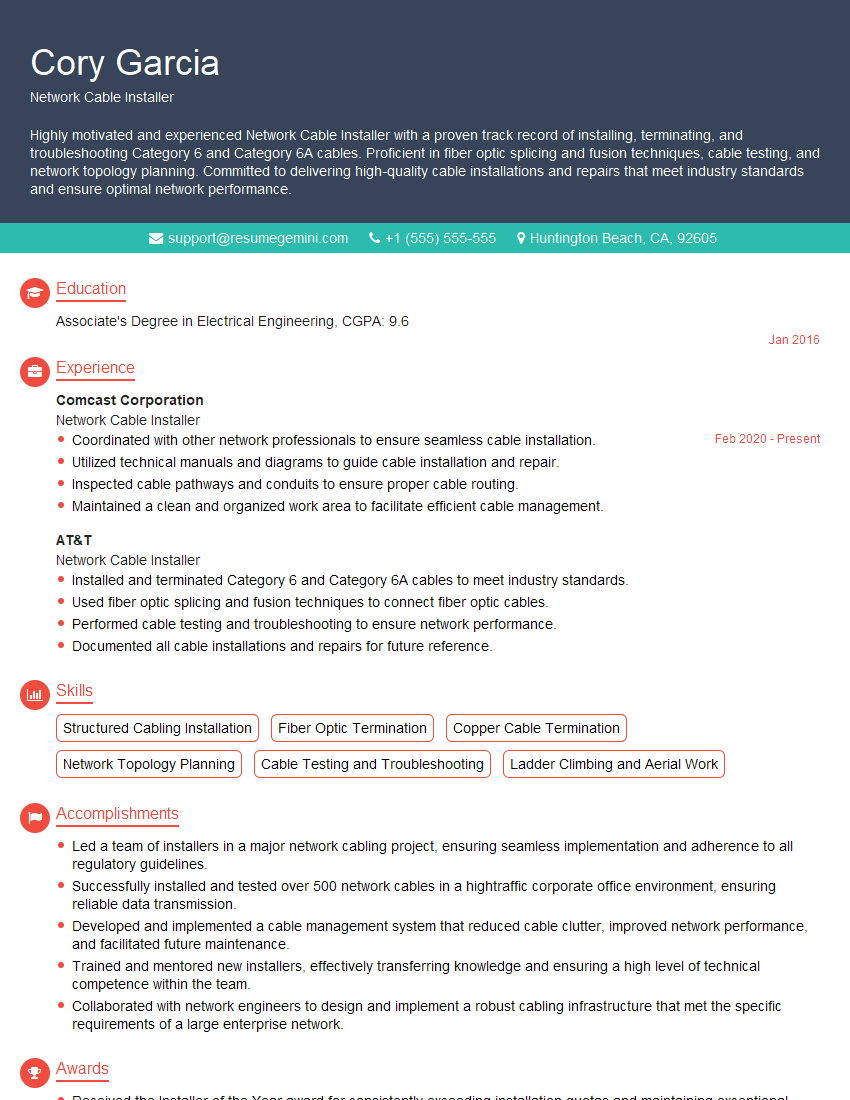
Network Cable Installer Resume Sample
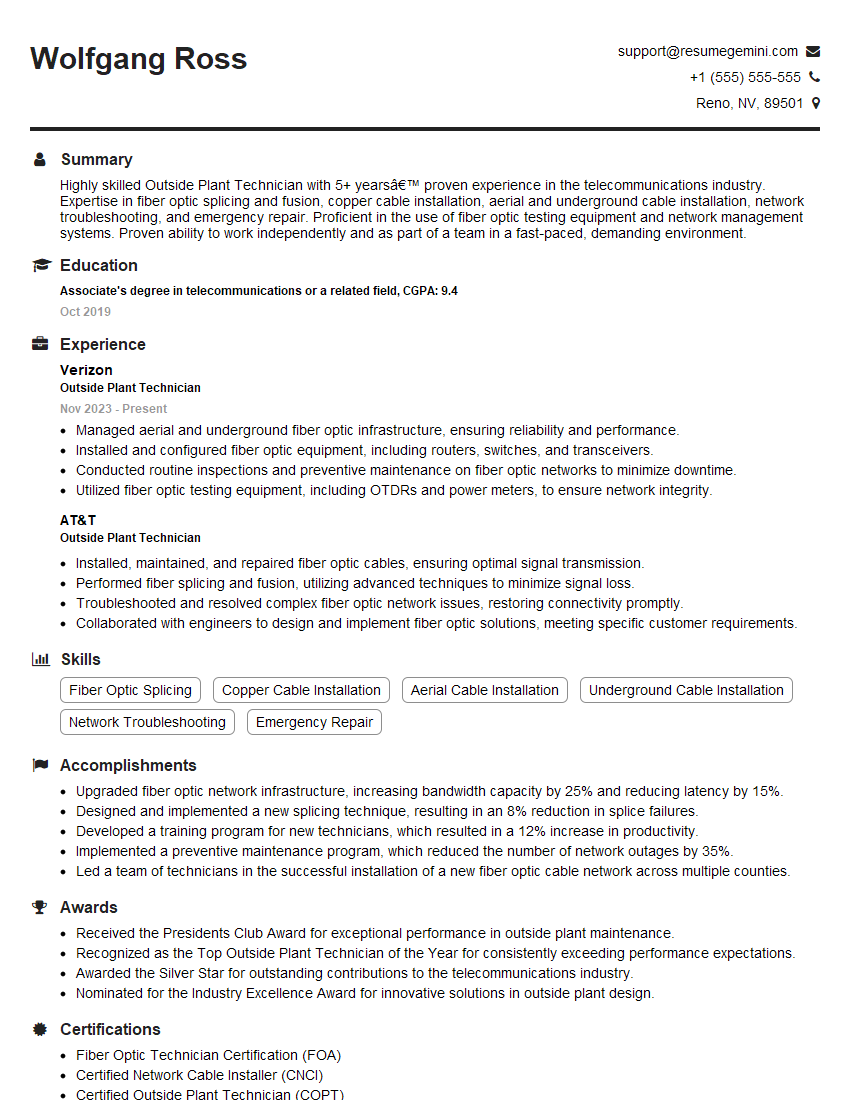
Outside Plant Technician Resume Sample
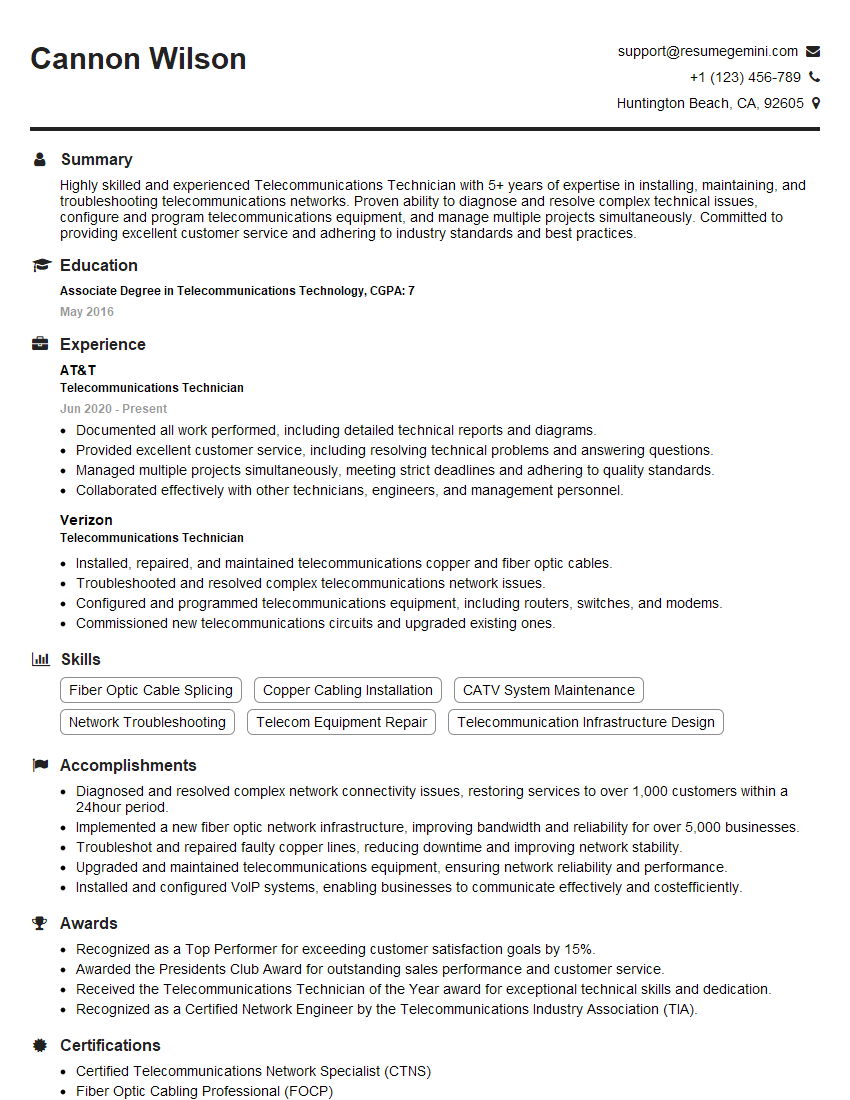
Telecommunications Technician Resume Sample

Cable Splicer Resume Sample
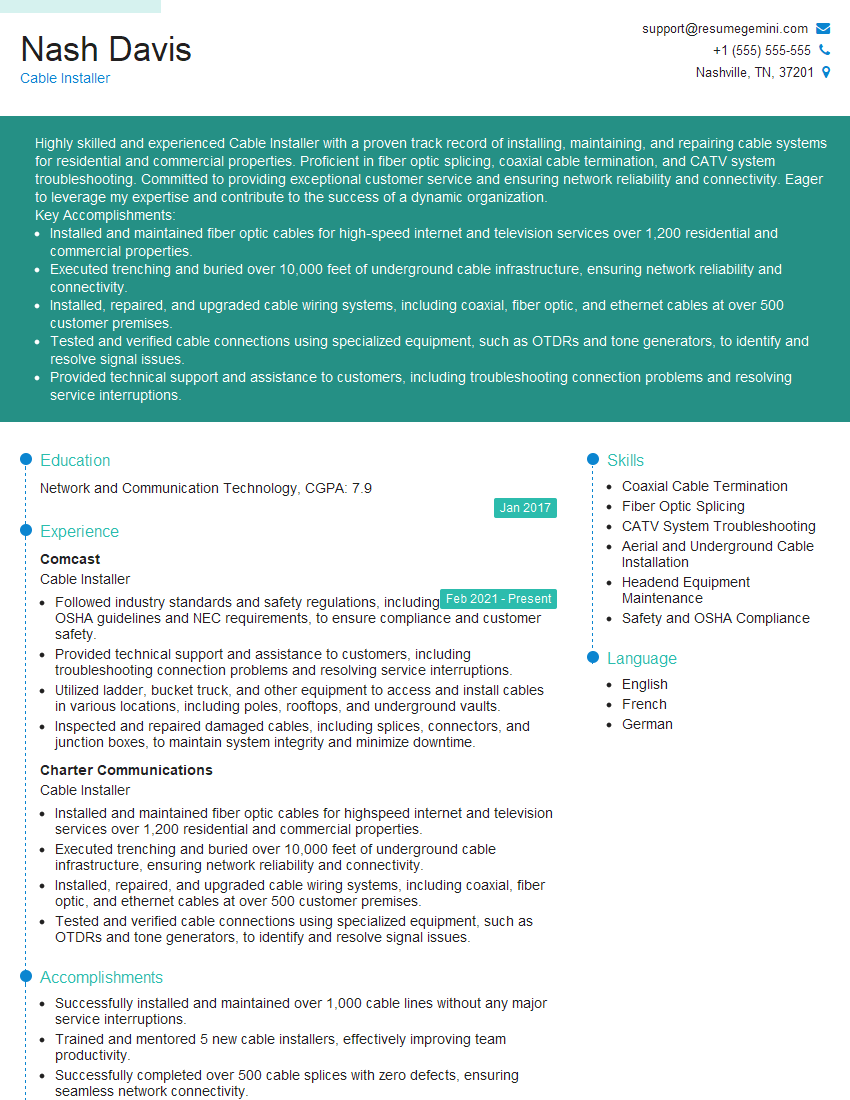
Cable Installer Resume Sample
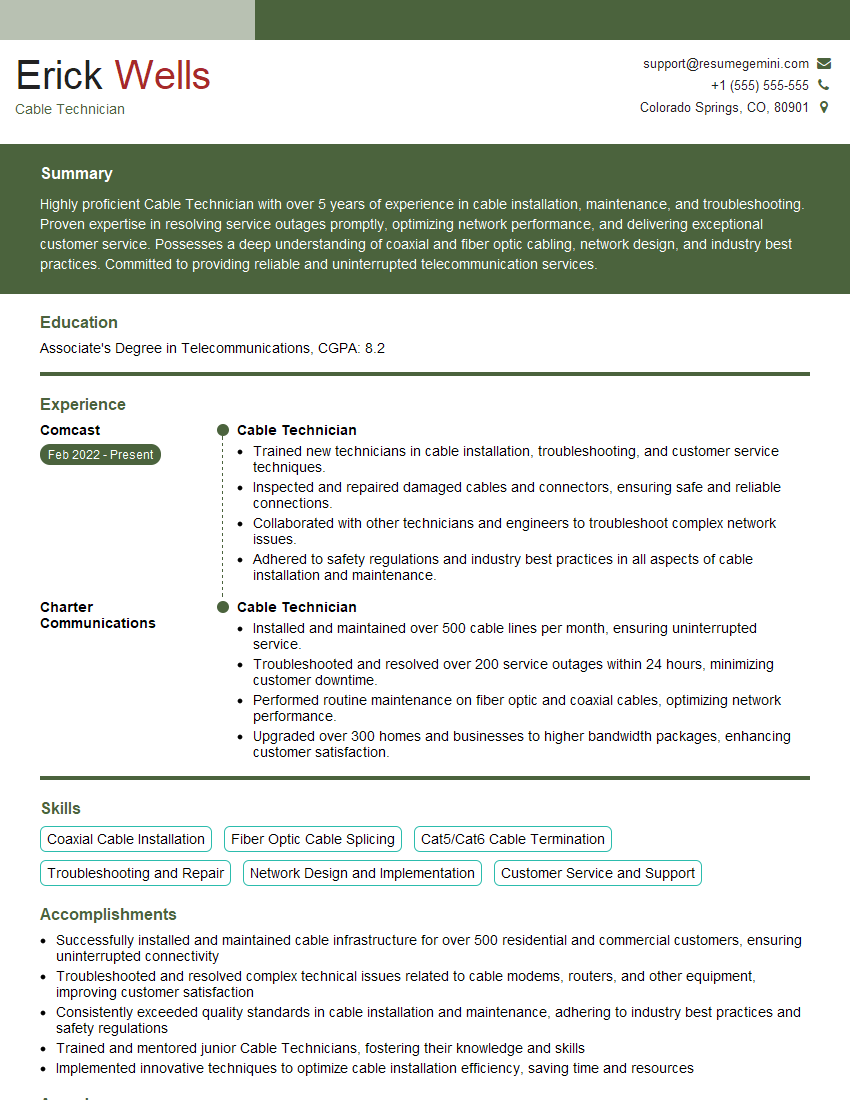
Cable Technician Resume Sample

Fiber Optic Splicer Resume Sample
Explore more articles
Users Rating of Our Blogs
Share Your Experience
We value your feedback! Please rate our content and share your thoughts (optional).
What Readers Say About Our Blog
Very informative content, great job.
good