Every successful interview starts with knowing what to expect. In this blog, we’ll take you through the top Understanding of Music History and Styles interview questions, breaking them down with expert tips to help you deliver impactful answers. Step into your next interview fully prepared and ready to succeed.
Questions Asked in Understanding of Music History and Styles Interview
Q 1. Define the Baroque period in music and name three prominent composers.
The Baroque period in music, spanning roughly from 1600 to 1750, is characterized by grandeur, ornamentation, and emotional intensity. It’s a period of significant contrasts – between contrasting sections within a piece, between loud and soft dynamics (terrace dynamics), and between major and minor keys which were explored far more than in the Renaissance.
Think of it as the musical equivalent of a lavishly decorated palace: ornate, complex, and powerful. Composers utilized counterpoint, a technique of combining independent melodic lines, to create rich textures. A defining feature is the use of the basso continuo, a foundational bass line played by a keyboard instrument (like the harpsichord) and a bass instrument (like the cello), which provided harmonic support and improvisation opportunities.
- Johann Sebastian Bach: Master of counterpoint, known for his intricate fugues, organ works, and vocal masterpieces like the Mass in B Minor.
- George Frideric Handel: Famous for his operas (like Giulio Cesare), oratorios (like Messiah), and instrumental suites.
- Antonio Vivaldi: Celebrated for his violin concertos, particularly The Four Seasons, showcasing virtuosity and descriptive musical imagery.
Q 2. Compare and contrast the musical characteristics of the Classical and Romantic periods.
The Classical and Romantic periods represent a fascinating evolution in musical thought. While both periods produced masterpieces, their approaches differed significantly.
Classical Period (roughly 1730-1820): This era emphasized clarity, balance, and structure. Think of a well-organized garden, carefully planned and aesthetically pleasing. Composers focused on elegant melodies, homophonic textures (where a melody is supported by chords), and well-defined forms like sonata form, minuet and trio, and rondo. Dynamics were more smoothly varied than in the Baroque, and the orchestra became more standardized in its composition.
Romantic Period (roughly 1820-1900): In contrast, the Romantic period is characterized by emotional expressiveness, individualism, and a greater emphasis on subjective experience. Think of a wild, untamed landscape full of passion and drama. Composers explored a wider range of dynamics, harmonies, and instrumental colors, often using the orchestra in a more expansive and expressive way. Program music, music intended to evoke specific images or stories, became popular. Large-scale works, like symphonies and operas, often explored expansive narratives.
Comparison Table:
| Feature | Classical | Romantic |
|---|---|---|
| Emphasis | Clarity, balance, structure | Emotional expressiveness, individualism |
| Melody | Elegant, simple | Lyrical, passionate, complex |
| Harmony | Diatonic, simple | Chromatic, complex, unexpected |
| Form | Strict, formal | More flexible, less structured |
| Instrumentation | Smaller orchestra, standardized | Larger orchestra, wider range of instruments |
| Dynamics | Gradual changes | Dramatic contrasts, sudden shifts |
Q 3. Explain the development of opera from its origins to the present day.
Opera’s journey is a captivating story of evolution. It began in the late 16th and early 17th centuries in Florence, Italy, as a fusion of music, drama, poetry, and spectacle. Early forms, like opera in stile rappresentativo, focused on realistic dramatic expression through music.
The Baroque era saw the rise of prominent opera composers like Monteverdi, whose works incorporated complex harmonies and dramatic contrasts. The 18th century brought the flourishing of opera seria (serious opera) and opera buffa (comic opera) in Italy and other parts of Europe. Composers like Handel and Mozart shaped opera’s style during this time.
The Romantic era brought greater emotional depth and individualism to opera, with composers like Verdi and Wagner pushing boundaries with innovative harmonies, orchestration, and dramatic scope. Wagner’s works, in particular, were known for their integration of music, drama, and stagecraft, influencing the development of music drama.
The 20th and 21st centuries have witnessed a diversity of styles, from the expressionism of Schoenberg to the minimalism of Glass. Opera continues to evolve, incorporating new musical languages and technological advancements. Contemporary opera often engages with social and political issues, reflecting the ever-changing nature of the art form.
Q 4. Discuss the influence of jazz on popular music in the 20th century.
Jazz, born in the late 19th and early 20th centuries in African American communities in the United States, exerted a profound influence on popular music. Its improvisational nature, syncopated rhythms, and unique harmonic vocabulary revolutionized musical expression.
The influence can be seen across numerous genres. Swing, a dominant style in the 1930s and 40s, incorporated jazz rhythms and instrumentation into popular dance music. Bebop, a complex and virtuosic style from the 1940s, influenced many later jazz styles, and its harmonies found their way into other forms of music. Rock and roll, emerging in the 1950s, drew heavily from blues and jazz, adopting its rhythmic energy and emotional intensity. R&B and soul, which developed alongside rock and roll, incorporated jazz elements into their soulful sound.
Even today, jazz continues to leave its mark. Many contemporary pop, hip-hop, and R&B artists incorporate jazz elements such as improvisation, sophisticated harmony, and syncopated rhythms in their works, maintaining the genre’s enduring legacy.
Q 5. Analyze the harmonic structure of a given musical excerpt (provided).
To analyze the harmonic structure of a musical excerpt, I would need the excerpt itself. However, I can outline the process. First, I would identify the key. Next, I’d analyze the chord progression, noting the function of each chord (tonic, dominant, subdominant, etc.) within the key. I would look for any modulations (changes of key) and their purpose in creating musical tension and release. I’d also analyze the use of non-diatonic chords (chords that are not part of the main key) to add color or create dissonance. Finally, I’d consider the overall harmonic context, examining the relationship between different sections and their role in the piece’s structure. This analysis would provide insight into the emotional effect and stylistic features of the piece.
Q 6. Identify the different forms of musical notation used throughout history.
Musical notation has evolved dramatically throughout history, reflecting technological advances and changing musical aesthetics. Early forms were often rudimentary, relying on simple neumatic notation (small symbols representing melodic contours) in the medieval era. The development of staff notation, with its lines and spaces representing pitches, represented a major breakthrough. This evolved further into the system we use today, with added symbols for rhythm, dynamics, articulation, and other expressive nuances.
Notable forms include:
- Neumatic notation: Used in Gregorian chant, it offered a basic representation of melody without precise rhythm.
- Mensural notation: Developed in the late medieval and Renaissance periods, it added more precise rhythmic information.
- Modern staff notation: The highly developed system using a staff, clef signs, note heads, and various symbols for rhythm, dynamics, and other performance details.
The evolution of notation mirrors the development of musical understanding and technology. As music became more complex, notation had to become more precise and expressive.
Q 7. Describe the evolution of musical instruments from the medieval period to the modern era.
The evolution of musical instruments is a fascinating reflection of technological and artistic developments across history. Medieval instruments were often simple in construction, with instruments like the vielle (a bowed string instrument) and the crumhorn (a double-reed woodwind) representing common sounds. These instruments were gradually refined through the Renaissance.
The Baroque period saw the rise of new instrument families, particularly the development of the violin family and improved keyboard instruments like the harpsichord and clavichord. The orchestra began to take shape during this period.
The Classical and Romantic periods brought further refinements and innovations in instrument making. The piano replaced the harpsichord as the dominant keyboard instrument. The Romantic period saw the expansion of the orchestra, with greater emphasis on the expressive capabilities of individual instruments. The development of the valve trumpet allowed for more chromatic possibilities.
The 20th and 21st centuries have witnessed the rise of electronic instruments and the widespread use of amplification and recording technologies. Synthesisers, electric guitars, and other electronic instruments have drastically expanded the range of musical sounds and techniques available to composers and musicians.
Q 8. Explain the concept of tonality and its significance in Western music.
Tonality, in Western music, refers to the organization of pitches around a central note, the tonic. Think of it like a home base for a melody – it provides a sense of stability and direction. The tonic establishes a key, a system of major or minor scales that dictate which notes are considered consonant (harmonious) and dissonant (creating tension). The significance of tonality is profound; it shapes the emotional impact of music, creating feelings of resolution, expectation, and surprise. For centuries, tonality was the bedrock of Western composition, providing a framework for structuring musical ideas and creating coherent musical narratives. Composers used tonal relationships to build harmonic progressions, creating tension and release, ultimately leading to a satisfying conclusion.
For example, a simple song in C major will primarily use notes from the C major scale (C, D, E, F, G, A, B, C). The C note will feel like ‘home,’ while other notes will create a sense of movement towards or away from that home. The use of the dominant (G in this case) creates a strong pull towards the tonic (C), creating a satisfying resolution.
Q 9. Discuss the impact of technology on music composition and production.
Technology has revolutionized music composition and production in countless ways. Before the advent of recording technology, music was ephemeral; performances were live events, and the only record was often a written score. The invention of recording technology (from cylinder phonographs to digital audio workstations) allowed for the preservation and dissemination of music on a scale never before imaginable. This broadened the reach of composers and performers, leading to a democratization of music-making.
Further, the development of synthesizers, samplers, and digital audio workstations (DAWs) has expanded the sonic palette for composers, offering incredible creative control. Composers can now manipulate sound in ways unimaginable to previous generations, creating entirely new timbres and textures. Software allows for easy manipulation of tempo, pitch, and rhythm, often allowing for spontaneous experimentation and innovative compositional techniques.
However, it’s important to note that technology also poses challenges. The ease of access to technology sometimes leads to a homogenization of sound, and the emphasis on technological proficiency can overshadow musicality. Finding a balance between technology and artistic vision remains a crucial aspect of contemporary music creation.
Q 10. Analyze the social and cultural context of a specific musical movement.
Let’s analyze the social and cultural context of the Romantic period in music (roughly 1820-1900). Romanticism was a reaction against the Enlightenment’s emphasis on reason and order. It prioritized emotion, individualism, and the subjective experience. The Industrial Revolution was transforming society, leading to rapid urbanization and social upheaval. This backdrop fueled the emotional intensity and expressive power characteristic of Romantic music.
Composers like Beethoven, Schubert, Chopin, and Liszt reflected this through their music. Their works explored a wider range of emotions, from intense joy and passion to profound melancholy and despair. Nationalism also played a significant role, with composers drawing inspiration from folk music and national myths to express their cultural identity. For example, Chopin’s nocturnes evoke a sense of longing and introspection, reflecting the emotional turmoil of the era, while nationalist composers like Smetana and Dvořák utilized folk melodies and rhythms to create distinctly national musical identities. This period witnessed the rise of the virtuoso performer and the concert hall as a space for artistic expression and social gathering, reflecting the growing middle class’s influence and appreciation for music.
Q 11. Compare and contrast the musical styles of two composers from different eras.
Comparing and contrasting J.S. Bach (Baroque era) and Igor Stravinsky (20th century) reveals a fascinating evolution in musical style. Bach, known for his intricate counterpoint, complex harmonies, and overall adherence to Baroque structures, focused on creating a sense of order and mathematical precision. His music often features multiple independent melodic lines woven together, forming a rich tapestry of sound. Think of his Brandenburg Concertos or the Well-Tempered Clavier – their complexity and formal rigor epitomize the Baroque aesthetic.
Stravinsky, on the other hand, challenged traditional tonality and embraced dissonance and rhythmic complexity. He was a key figure in modernism, incorporating elements of folk music and primitivism into his compositions. His works, such as The Rite of Spring, are characterized by jarring rhythmic shifts, unconventional harmonies, and a forceful, almost primal energy. His music often challenges the listener, pushing the boundaries of musical language.
In short, Bach represents the structured elegance of the Baroque, while Stravinsky embodies the radical experimentation of the 20th century. While both were masters of their craft, their approaches to harmony, rhythm, and form reflect the vastly different cultural and musical landscapes of their respective eras.
Q 12. Discuss the relationship between music and literature in a particular historical period.
The relationship between music and literature in the Victorian era (roughly 1837-1901) is richly intertwined. The era saw a flourishing of both art forms, often reflecting similar social and aesthetic concerns. The popularity of the novel mirrored the growing popularity of large-scale orchestral works and the rise of the art song (Lied). Many composers set poems to music, creating a powerful synergy between word and tone. This collaboration wasn’t just about illustrating a poem musically; it was about exploring the emotional depth and nuance of the text through musical means.
For example, Schubert’s Lieder, frequently based on poems by Goethe and other prominent poets, intimately blended the musical and poetic expressions. The music often emphasized and intensified the emotions expressed in the poem, creating a holistic work of art. Similarly, orchestral works often alluded to literary narratives or themes, drawing on the common cultural touchstones of the time. The popularity of literary themes in music further underscores the rich interconnectedness of art forms during the Victorian period.
Q 13. Explain the concept of musical form and analyze a given piece using formal analysis.
Musical form refers to the structure or architecture of a musical piece. Just as a building has a blueprint, a musical piece follows a predetermined or implied plan. Common forms include sonata form, rondo form, and theme and variations. Analyzing a piece using formal analysis involves identifying these sections and examining how they interact to create the overall structure.
Let’s analyze a simple example: a piece in ternary (three-part) form (ABA). The ‘A’ section establishes a main theme; the ‘B’ section contrasts with the ‘A’ section, often in a different key or mood; and the ‘A’ section returns, often with slight variations, providing a sense of closure. Formal analysis involves identifying the boundaries of each section, analyzing the thematic material within each section, and explaining how these sections relate to each other in terms of harmony, melody, rhythm, and overall structure. This systematic approach allows for a deeper understanding of the composer’s intentions and the overall design of the work. One might use a chart to visually represent the sections and their relationships, facilitating a clear and concise understanding of the music’s architecture.
Q 14. Discuss the influence of different cultures on Western music.
Western music has been profoundly shaped by the influence of diverse cultures throughout history. From the incorporation of elements of ancient Greek music theory to the profound impact of African rhythms and melodies on jazz and blues, the story of Western music is one of continuous exchange and transformation. The Renaissance saw the adoption of musical styles from the Middle East and Byzantine Empire, enriching the harmonic and melodic vocabulary of European composers. The Baroque era witnessed the influx of musical ideas from the Americas, particularly through the Spanish colonies.
The 20th century saw an explosion of cross-cultural influences, particularly with the rise of world music and global interconnectedness. Composers drew inspiration from various cultures, resulting in hybrid styles that blended Western compositional techniques with elements from diverse musical traditions. Examples include the use of gamelan music in the compositions of Debussy and other Impressionists or the incorporation of African rhythms and blues scales in the development of jazz. This continuous interaction reflects the ongoing evolution of Western music and its openness to global influences. Understanding these influences is crucial for a comprehensive understanding of Western musical history.
Q 15. Describe the development of music theory from its origins to the present day.
Music theory’s journey is a fascinating reflection of humanity’s evolving understanding of sound and structure. It began with rudimentary systems, primarily focusing on the organization of pitch and rhythm, often found in ancient cultures’ oral traditions and simple melodic patterns. Think of the pentatonic scales prevalent in many folk musics – a fundamental building block that predates formal written theory.
Ancient Greek thinkers like Pythagoras explored the mathematical relationships between musical intervals, laying the groundwork for understanding consonance and dissonance. The development of notation in the medieval period allowed for the standardization and preservation of musical ideas, leading to the sophisticated polyphony of the Renaissance. This era saw the rise of counterpoint, the art of combining independent melodic lines, and the development of modes, distinct scales with characteristic melodic flavors.
The Baroque period (roughly 1600-1750) witnessed the blossoming of tonality – the organization of music around a central key – and the evolution of figured bass, a shorthand notation that allowed composers to express harmonic complexity concisely. The Classical period (roughly 1730-1820) brought about a greater emphasis on formal structure and clarity, with established forms like sonata form and the symphony becoming dominant. Romanticism (roughly 1780-1910) saw an expansion of harmonic vocabulary, often embracing more chromaticism and dissonance, expressing heightened emotionality.
The 20th and 21st centuries brought radical shifts. Attonality and serialism challenged the foundations of tonality, exploring new ways of organizing pitch and rhythm. Minimalism, with its repetitive structures, and electronic music, with its limitless sonic possibilities, further broadened the landscape of musical expression. Today, music theory continues to evolve, grappling with the complexities of contemporary music while also drawing upon and reinterpreting historical approaches.
Career Expert Tips:
- Ace those interviews! Prepare effectively by reviewing the Top 50 Most Common Interview Questions on ResumeGemini.
- Navigate your job search with confidence! Explore a wide range of Career Tips on ResumeGemini. Learn about common challenges and recommendations to overcome them.
- Craft the perfect resume! Master the Art of Resume Writing with ResumeGemini’s guide. Showcase your unique qualifications and achievements effectively.
- Don’t miss out on holiday savings! Build your dream resume with ResumeGemini’s ATS optimized templates.
Q 16. Analyze a given piece of music in terms of its melody, harmony, rhythm, and form.
To analyze a piece, let’s consider a hypothetical example: a simple folk song in a major key. We’ll break down its elements.
Melody: The melody is the principal tune, typically memorable and singable. In our folk song, it might consist of a stepwise progression with occasional leaps, staying within the diatonic scale of the key. It could feature a clear phrase structure, with sections that repeat or contrast.
Harmony: Harmony refers to the accompanying chords that create a richer sonic texture. Our folk song might utilize simple diatonic chords – I, IV, and V chords in the major key – to support the melody. The harmonic rhythm (how often the chords change) would likely be relatively slow and steady.
Rhythm: Rhythm encompasses the temporal organization of the music. Our folk song might have a simple, duple meter (like 4/4 time), with a steady beat and predictable rhythmic patterns. The rhythmic variation might be subtle, perhaps using syncopation sparingly to add interest.
Form: Form describes the overall structure of the piece. The folk song could follow a simple verse-chorus structure (AABB), with the verses presenting new melodic material and the chorus offering a recurring refrain. More complex forms, such as ternary (ABA) or rondo (ABACA), are also possible depending on the piece’s length and complexity.
Analyzing a specific piece requires careful listening and notation, identifying these elements and understanding how they interact to create the overall musical effect.
Q 17. Discuss the role of improvisation in various musical genres.
Improvisation, the spontaneous creation of music, plays vastly different roles across genres. In jazz, it’s central to the art form, with musicians building upon a harmonic framework (often chord changes) and creating unique melodic and rhythmic variations. Think of legendary solos by Charlie Parker or John Coltrane – breathtaking examples of improvisational mastery.
In classical music, while not as pervasive, improvisation existed in earlier periods, particularly in ornamentation and embellishment of melodies. However, the emphasis shifted towards written scores in later periods. Contemporary classical composers sometimes incorporate elements of improvisation into their compositions, blending structured and spontaneous elements.
In world music traditions, improvisation is often integral to performance. Think of Indian classical music’s raga system, where musicians weave intricate melodic lines based on a given melodic framework, adapting to the other musicians’ contributions. Similar improvisational practices exist in various African, Middle Eastern, and Latin American genres.
In popular music genres like rock, blues, and hip-hop, improvisation might appear in solos or riffs, offering opportunities for musical expression and creativity within a structured song form. The role of improvisation depends heavily on the genre’s traditions and stylistic preferences.
Q 18. Explain the concept of musical texture and its significance in musical composition.
Musical texture refers to the layering and interaction of musical lines, creating a diverse sonic landscape. It’s how different musical parts combine to create the overall sound. Think of it as the fabric of the music.
Monophony is the simplest texture, consisting of a single melodic line. Plainchant, a style of monophonic Gregorian chant, exemplifies this.
Homophony features a dominant melody accompanied by chords. Most popular music and many folk songs fall into this category.
Polyphony involves multiple independent melodic lines occurring simultaneously. Renaissance motets and Baroque fugues are excellent examples of polyphonic textures.
Heterophony presents slight variations of the same melody played simultaneously. This is common in some folk traditions.
The choice of texture significantly impacts the musical expression. A thick polyphonic texture can evoke grandeur or complexity, while a simple homophonic texture might convey intimacy or directness. Composers skillfully manipulate texture to create contrast, build tension, or convey specific emotions throughout a piece.
Q 19. Describe the different types of musical instruments and their historical development.
The world of musical instruments is vast and diverse, spanning centuries of innovation. We can categorize instruments in several ways: by the material they’re made of, how the sound is produced, or by their cultural context.
String Instruments: From the ancient lyre to the modern violin family (violin, viola, cello, double bass), string instruments have evolved significantly, incorporating advancements in construction, playing techniques, and sound production. The development of the bow revolutionized string playing, allowing for sustained and nuanced sounds.
Woodwind Instruments: Early woodwinds, like flutes made from bone or wood, gradually evolved into complex systems, incorporating keys and valves to expand their pitch ranges and expressive capabilities. The clarinet, oboe, and bassoon are examples of highly developed woodwind instruments.
Brass Instruments: Trumpets, trombones, and tubas, initially made from natural materials, evolved with the introduction of valves and improved materials, allowing for greater flexibility and range. The development of the slide trombone provided unique expressive possibilities.
Percussion Instruments: Percussion instruments, encompassing instruments from simple drums to complex xylophones, marimbas, and timpani, exhibit wide diversity across cultures. Their development reflects cultural practices and advancements in materials and construction techniques. The use of tuned percussion broadened the rhythmic and harmonic possibilities within orchestral and other ensembles.
Keyboard Instruments: The evolution of keyboard instruments, from the harpsichord to the piano, reflects major advancements in both mechanics and expressive capability. The piano’s ability to control dynamics and sustain notes transformed musical possibilities. Electronic keyboards and synthesizers expanded the possibilities further, offering vast sonic landscapes previously unimaginable.
Understanding the history of instruments provides valuable insight into musical evolution and the cultural contexts in which music developed.
Q 20. Discuss the importance of music education in society.
Music education plays a vital role in fostering individual development and enriching society as a whole. It contributes to cognitive development, enhancing skills in critical thinking, problem-solving, and memory. Learning an instrument cultivates discipline, perseverance, and fine motor skills.
Beyond individual benefits, music education strengthens communities. Participation in bands, choirs, and orchestras promotes teamwork, collaboration, and a sense of belonging. Exposure to diverse musical styles broadens cultural understanding and fosters appreciation for different traditions.
Music education also boosts creativity and self-expression. It provides a non-verbal outlet for emotions and ideas, enriching the emotional lives of individuals. It can also enhance communication skills and build self-confidence. Furthermore, it can lead to diverse career pathways within and related to the music industry.
In a broader societal context, investing in music education strengthens our cultural heritage and ensures that future generations have access to the power and joy of music.
Q 21. Explain the concept of musical expression and its role in conveying emotions.
Musical expression is the conveyance of emotion and meaning through music. It encompasses a range of elements, including melody, harmony, rhythm, dynamics, timbre, and articulation. Composers and performers use these elements to shape the emotional impact of a piece of music.
A slow tempo, minor key, and somber melody might evoke sadness, whereas a fast tempo, major key, and bright timbre might suggest joy. Dynamics (loudness and softness) can amplify or subdue emotional intensity. The choice of instruments and their arrangement contributes to the overall emotional atmosphere.
Articulation (how notes are played – legato, staccato, etc.) shapes the expressive character of a musical line. A performer’s interpretation, including their phrasing, dynamics, and emotional investment, significantly impacts the audience’s experience. The context in which music is heard further shapes its emotional resonance.
Ultimately, musical expression is a complex interplay of artistic choices and listener interpretation, creating a powerful and evocative experience. The ability to understand and communicate through music enriches human life immensely.
Q 22. Analyze the use of musical symbolism in a given piece of music.
Musical symbolism is the use of musical elements to represent or evoke specific ideas, emotions, or imagery. It’s not a literal translation, but rather a suggestive and evocative process. Composers use various techniques to create symbolic meaning. For example, a descending chromatic scale might symbolize sorrow or decline, while a triumphant fanfare could represent victory or power. The specific meaning, however, is often open to interpretation, dependent on cultural context and the listener’s experience.
Let’s analyze the use of symbolism in the opening of Modest Mussorgsky’s Pictures at an Exhibition. The piece uses a recurring theme, ‘Promenade,’ which represents the composer walking through an art exhibition. The different sections that follow depict various paintings. The ‘Promenade’ theme itself is symbolic; its recurring nature reflects the composer’s movement between artworks, acting as a narrative thread. The character of the ‘Promenade’ theme – sometimes stately, sometimes hurried – further enhances the emotional narrative, reflecting the composer’s feelings towards each painting. Each subsequent section then uses different musical textures and harmonies to symbolically represent the subject matter of the individual painting. For instance, the section ‘The Old Castle’ uses a somber, modal melody, evoking a feeling of age and melancholy, symbolically representing the visual elements of the painting. This multi-layered use of musical symbolism creates a powerful and evocative listening experience.
Q 23. Discuss the impact of music on society throughout history.
Music’s impact on society throughout history is immense and multifaceted. It has served as a powerful tool for social commentary, political propaganda, religious expression, and cultural identity formation. From ancient chants used in religious ceremonies to the protest songs of the Civil Rights Movement, music has consistently reflected and shaped societal values and beliefs.
- Ancient Civilizations: Music played a vital role in rituals and ceremonies, reflecting spiritual and societal structures. Ancient Greek music, for example, was closely tied to philosophy and education.
- Medieval Period: Gregorian chant unified religious practices across Europe, while troubadours and minstrels spread stories and ideas through song.
- Renaissance: The rise of opera and the development of complex musical forms reflected the intellectual and artistic flourishing of the period.
- Modern Era: Music became increasingly accessible through technological advancements, influencing fashion, social movements, and political discourse. Think of the impact of rock and roll on youth culture or the power of protest songs during the Vietnam War.
Today, music continues to shape our lives – from the background music in stores influencing our mood to the way music streaming services curate playlists reflecting our personal tastes. Its pervasive influence makes it a critical element for understanding societal shifts and trends throughout history.
Q 24. Describe your experience with music analysis software or tools.
I have extensive experience with a variety of music analysis software and tools. My proficiency spans both commercially available software like Sibelius and Finale for score notation and analysis, and specialized tools for audio analysis such as Audacity and Praat. I’m also familiar with various plugin functionalities for audio editing software that offer advanced tools like spectral analysis and pitch detection.
For instance, I’ve used Sibelius’s built-in analysis tools to assess harmonic progressions, identify melodic motifs, and analyze rhythmic structures within complex scores. Audacity, on the other hand, is invaluable for analyzing the audio signal itself; identifying subtle nuances in timbre and texture which are not always apparent in the score. The combination of these tools allows for a comprehensive approach to music analysis, combining both notational and sonic perspectives. This integrated approach is crucial for a deep understanding of a musical work.
Q 25. Explain your understanding of music copyright and licensing.
Music copyright and licensing are crucial aspects of the music industry, protecting the intellectual property rights of composers, songwriters, and performers. Copyright grants creators exclusive rights to reproduce, distribute, display, and perform their work. These rights are generally protected for the lifetime of the author plus 70 years after their death.
Licensing allows others to use copyrighted music under specific conditions, with the creator retaining control over how their work is used. Different types of licenses exist, including mechanical licenses (for recordings), synchronization licenses (for use in film or video), and performance licenses (for public performances). The terms of a license dictate how the music can be used, where it can be used, and the fee payable to the copyright holder. Understanding these different licensing types is vital, particularly when working with copyrighted music in research, educational settings, or any commercial context. Unauthorized use constitutes copyright infringement, which can lead to legal repercussions.
Q 26. Describe your familiarity with various music databases and archives.
My familiarity with music databases and archives is extensive. I regularly utilize resources such as the International Music Score Library Project (IMSLP), which provides a vast collection of public domain scores. I’m also proficient in navigating specialized archives like those held by national libraries (such as the Library of Congress) and university music libraries, which often house unique and valuable collections of manuscripts, recordings, and scholarly materials. Furthermore, I am experienced in using online databases dedicated to specific composers or musical genres, accessing information on biographical details, performance history, and critical analyses.
The ability to effectively search and retrieve information from diverse sources is vital for any serious music research endeavor. Understanding the different cataloging systems and search functionalities of these archives is key to efficient and effective research.
Q 27. Discuss the ethical considerations involved in music research and preservation.
Ethical considerations in music research and preservation are paramount. Respect for intellectual property rights, ensuring proper attribution, and acknowledging sources are foundational ethical principles. Researchers must also address issues of cultural sensitivity when working with music from diverse cultures. This requires careful consideration of context, avoiding misrepresentation or appropriation of musical traditions.
Furthermore, the preservation of fragile musical materials necessitates ethical decision-making regarding digitization, conservation techniques, and access control. Balancing the need for widespread access with the need to protect vulnerable materials requires careful consideration of long-term preservation strategies. Finally, issues of data privacy must be considered when working with digital music archives, ensuring the responsible handling of any personal information that may be associated with musical works or their creators.
Q 28. Explain how your understanding of music history informs your current musical pursuits.
My understanding of music history profoundly informs my current musical pursuits in several ways. Firstly, it provides a broad framework for understanding musical styles and conventions. Knowing the historical context of a musical piece allows me to appreciate its innovations and influences more deeply. For example, understanding the development of tonality and harmony from the Baroque period to the 20th century greatly enhances my comprehension of contemporary compositional techniques.
Secondly, studying music history has sharpened my analytical skills. By examining the works of master composers, I’ve learned to identify recurring patterns, formal structures, and compositional techniques, which allows for a more nuanced and critical approach to my own musical compositions and analyses. Finally, the historical perspective provided by studying music history encourages creativity and experimentation. By understanding the evolution of musical ideas, I’m better equipped to push boundaries and explore new musical possibilities, drawing inspiration from past innovations while forging my own path.
Key Topics to Learn for Understanding of Music History and Styles Interview
- Major Eras and Periods: Develop a strong understanding of the chronological development of music, from Gregorian chant to contemporary styles. Be prepared to discuss key characteristics and influential composers of each era.
- Musical Forms and Structures: Master the analysis of various musical forms (sonata form, rondo, etc.) and understand how they function within different historical periods. Practice identifying these structures in musical examples.
- Genres and Styles: Familiarize yourself with the evolution and defining characteristics of various genres, including Baroque, Classical, Romantic, and 20th/21st-century styles. Consider the social and cultural contexts that shaped these genres.
- Key Composers and their Works: Study the lives and major works of influential composers from different eras. Be ready to discuss their stylistic innovations and contributions to music history. Focus on connecting their work to broader historical and cultural trends.
- Theoretical Concepts: Review fundamental music theory concepts like harmony, counterpoint, melody, rhythm, and form. Understand how these elements evolved throughout history and how they contribute to the overall style of a piece.
- Instrumentation and Technology: Explore the evolution of musical instruments and technologies throughout history and how they impacted musical composition and performance. Understand the limitations and possibilities offered by different instruments and technologies in various periods.
- Cultural and Social Contexts: Analyze the relationship between music and its socio-cultural environment. Understand how historical events, social structures, and artistic movements influenced musical styles and trends.
- Analytical Skills: Practice analyzing musical scores and recordings, identifying stylistic features, and articulating your observations clearly and concisely. Develop the ability to support your interpretations with evidence from the music itself.
Next Steps
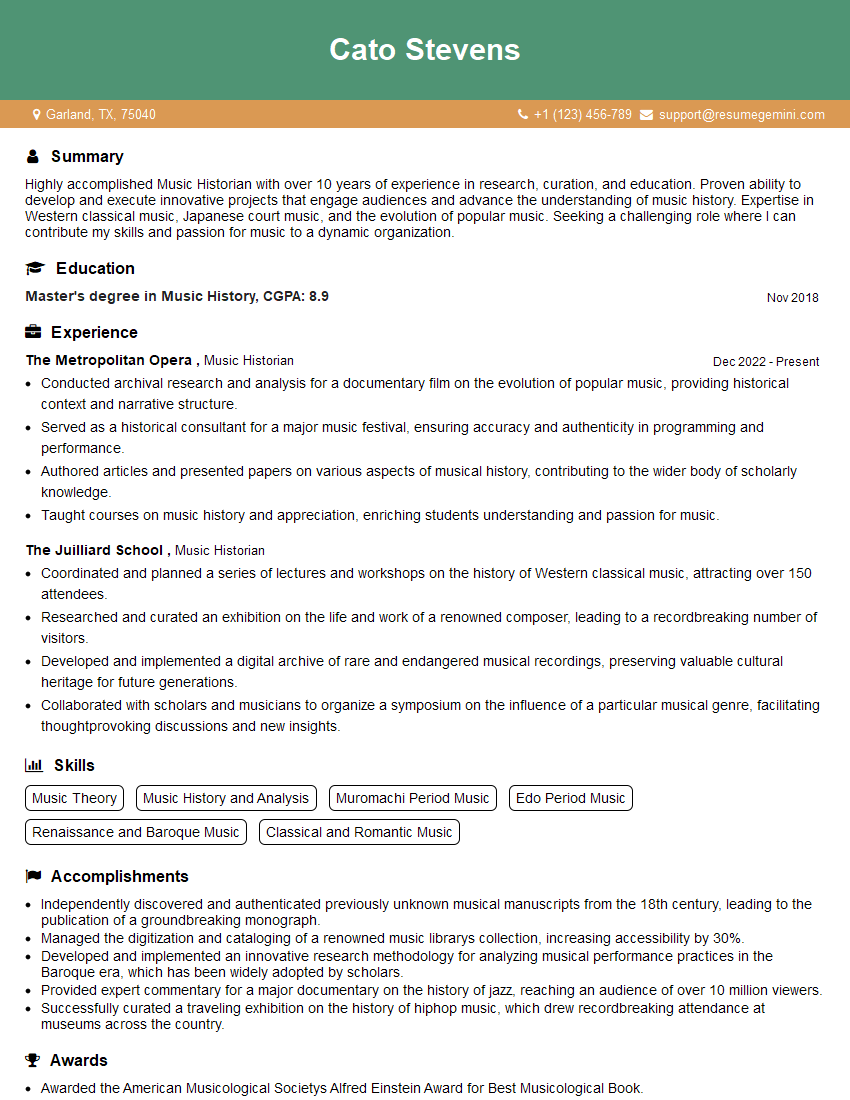
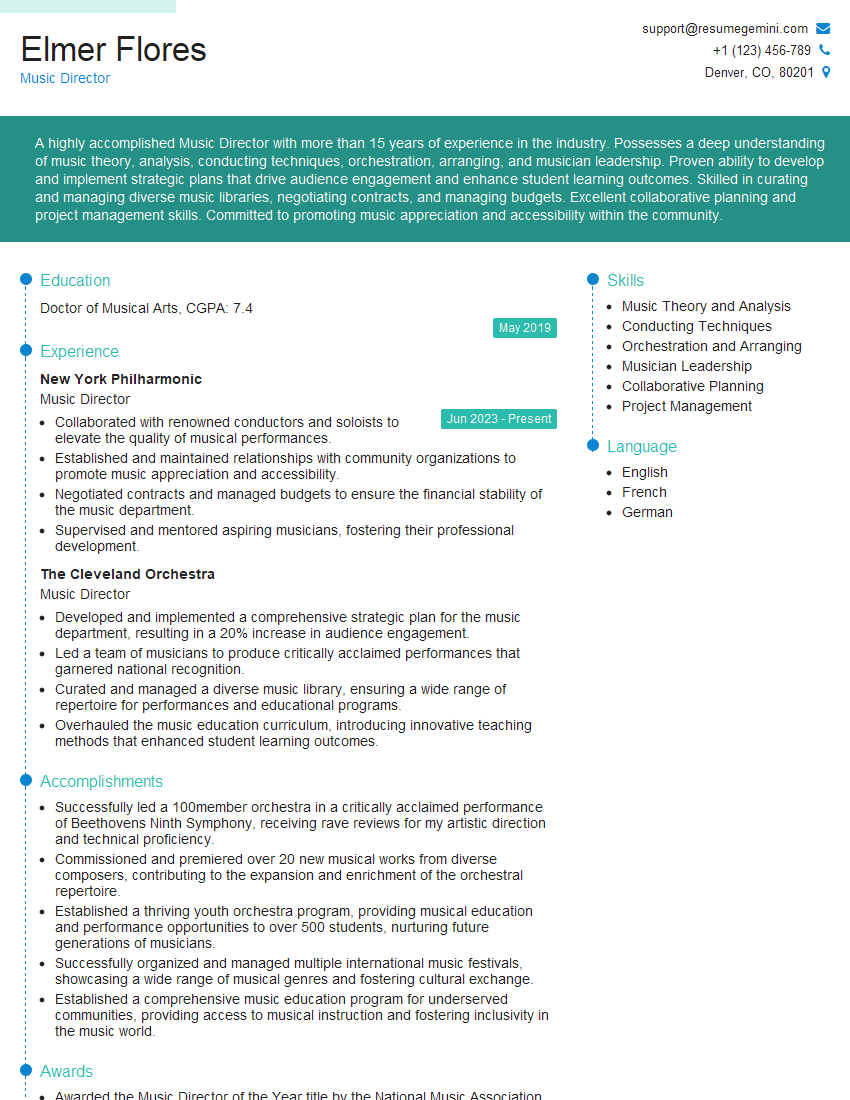
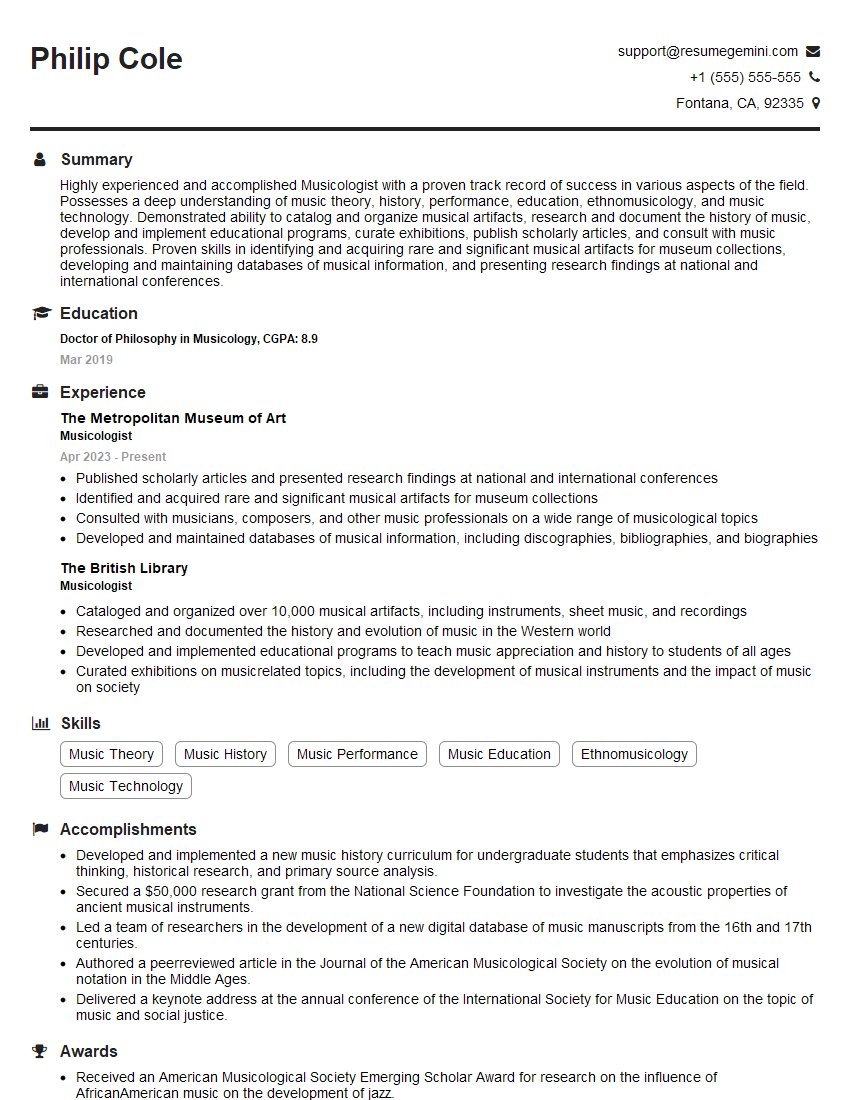
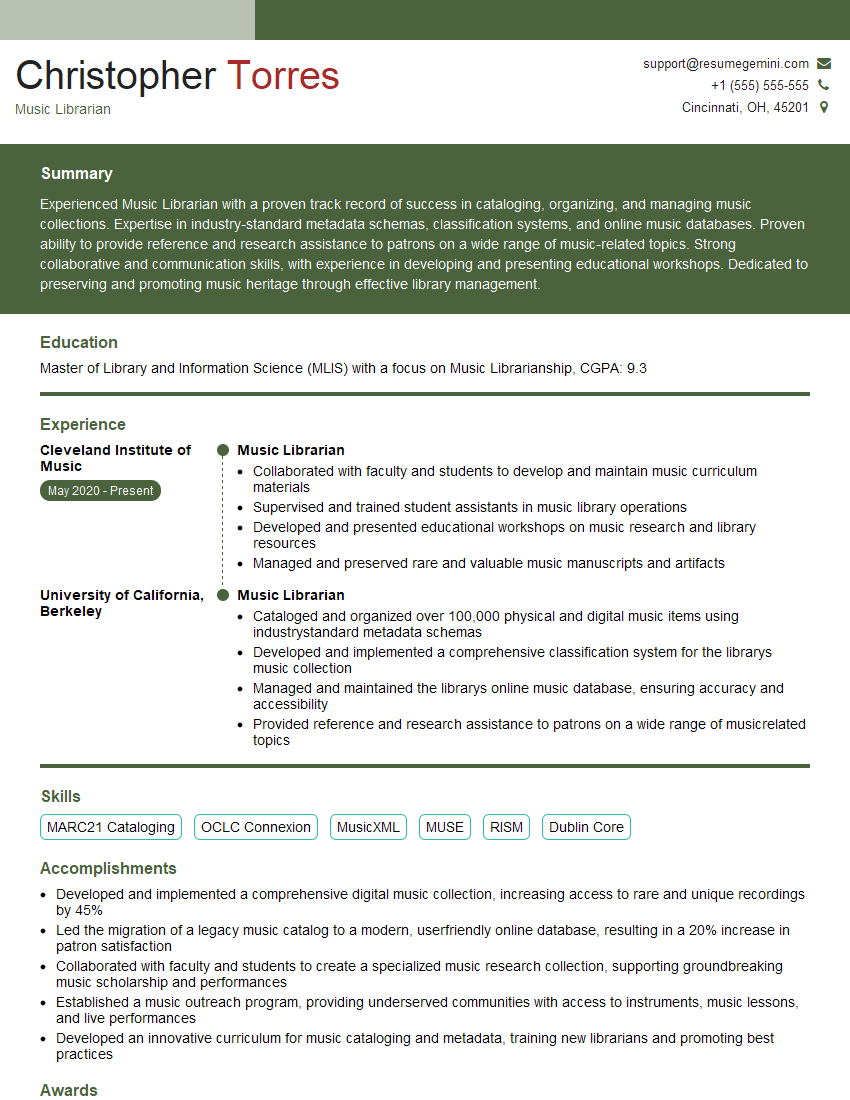
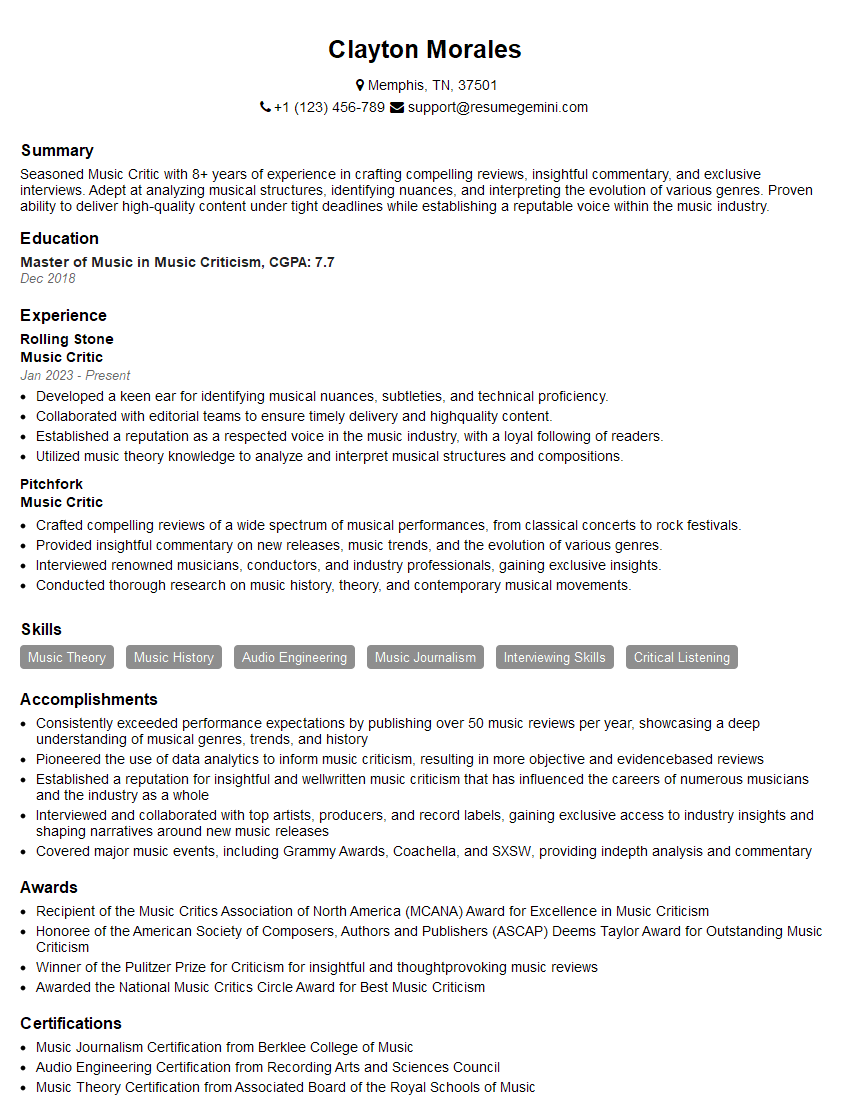
A strong understanding of music history and styles is crucial for career advancement in many music-related fields, enhancing your analytical skills, historical awareness, and ability to communicate effectively about music. To maximize your job prospects, it’s essential to create a professional, ATS-friendly resume that highlights your relevant skills and experience. ResumeGemini is a trusted resource that can help you build a compelling resume tailored to your specific qualifications. Examples of resumes specifically crafted for candidates with expertise in Understanding of Music History and Styles are available to help you get started.




Explore more articles
Users Rating of Our Blogs
Share Your Experience
We value your feedback! Please rate our content and share your thoughts (optional).
What Readers Say About Our Blog
Very informative content, great job.
good