Interviews are more than just a Q&A session—they’re a chance to prove your worth. This blog dives into essential Understanding Building Codes interview questions and expert tips to help you align your answers with what hiring managers are looking for. Start preparing to shine!
Questions Asked in Understanding Building Codes Interview
Q 1. What are the key differences between IBC and IRC?
The International Building Code (IBC) and the International Residential Code (IRC) are both model building codes, meaning they serve as templates for individual jurisdictions to adopt and adapt. However, they target different building types. The IBC is a comprehensive code covering all building types except one- and two-family dwellings (and some other limited exceptions). Think of skyscrapers, hospitals, commercial buildings – they fall under the IBC. The IRC, on the other hand, focuses specifically on one- and two-family dwellings. It simplifies certain provisions relevant to larger, more complex structures addressed in the IBC. The key difference lies in scope and complexity. IBC is much broader and more detailed, necessitating a deeper understanding of engineering and construction principles. The IRC streamlines the process for simpler residential buildings.
For instance, IBC might have detailed sections on structural fire protection for high-rise buildings which are not present (or are significantly simplified) in the IRC. Similarly, IBC will have intricate requirements for complex mechanical, electrical, and plumbing systems that IRC covers in a more condensed manner.
Q 2. Explain the process of obtaining a building permit.
Obtaining a building permit is a crucial step in any construction project. The process typically begins with submitting a complete set of construction documents to the local building department. These documents include architectural drawings, structural engineering plans, mechanical, electrical, and plumbing (MEP) drawings, and specifications. The building department then reviews these plans to ensure they comply with all applicable codes and regulations. This review process can take several weeks, depending on the complexity of the project and the workload of the department.
Once the plans are approved, the applicant pays the necessary fees, and the building permit is issued. The permit authorizes the start of construction, but regular inspections are required throughout the process to verify adherence to the approved plans and building codes. Failure to obtain a permit or to comply with inspection requirements can lead to hefty fines and potential stop-work orders.
Imagine it like getting a driver’s license. You must prove your knowledge of the rules of the road (building codes) and demonstrate your ability to operate a vehicle (build according to the plans) before receiving permission to drive (permit to build).
Q 3. Describe your experience reviewing construction plans for code compliance.
Throughout my career, I’ve reviewed countless construction plans for code compliance, ranging from small residential additions to large commercial complexes. My review process involves a thorough examination of all submitted documents, paying close attention to details like fire safety systems, structural integrity, accessibility, and compliance with energy efficiency standards. I utilize checklists and cross-reference the plans against the relevant sections of the adopted building codes to identify potential discrepancies or areas needing clarification.
For example, I recently reviewed plans for a multi-story apartment building. I meticulously checked the fire-rated separation between units, the location and design of emergency exits, and the adequacy of the sprinkler system to ensure compliance with the IBC’s fire safety requirements. I also carefully checked the structural calculations to make sure they met load requirements and utilized appropriate materials. This process is critical to ensuring public safety and preventing costly rework during construction.
Q 4. How do you handle discrepancies between design plans and building codes?
Discrepancies between design plans and building codes necessitate careful consideration and resolution. My approach involves first clearly identifying the discrepancy. Is it a minor omission, a design flaw, or a fundamental conflict with code requirements?
For minor discrepancies, I might request clarifications or minor revisions from the designer. However, for significant conflicts, a more involved process is required, often involving consultations between the designer, the contractor, and the building department. We might explore alternative designs or solutions that satisfy both the design intent and code requirements. For instance, if a proposed window size doesn’t meet egress requirements, we might need to change the window size, add an additional exit, or even alter the room layout.
Documentation throughout the process is paramount, ensuring a clear record of the identified issues, the proposed solutions, and the final resolution. The goal is to achieve a safe and code-compliant design without compromising the overall project goals.
Q 5. What are the common violations you’ve encountered during inspections?
During my inspections, I’ve encountered a wide range of violations. Common issues include inadequate fire protection, improper electrical wiring, insufficient structural support, lack of accessibility features, and non-compliance with energy efficiency standards.
For example, I’ve seen instances where fire-rated walls were improperly installed, compromising fire safety. I’ve also encountered situations where electrical work wasn’t performed to code, creating a potential electrical hazard. Unprotected openings in fire-rated assemblies, lack of proper smoke detectors, and missing or inadequate guardrails are other recurring problems. The consequences of these violations can range from minor corrections to costly repairs and potential legal repercussions.
Q 6. How do you prioritize your inspection tasks?
Prioritizing inspection tasks involves a multi-faceted approach. I typically prioritize inspections based on several factors, including the stage of construction, potential safety risks, and the complexity of the work involved.
High-risk activities like structural work or the installation of critical life-safety systems receive priority. I also prioritize inspections at critical stages of construction, such as foundation inspections, framing inspections, and final inspections, to identify and address potential problems early on. Inspections of projects that are nearing deadlines are also a priority to prevent delays. This ensures that the most significant risks are addressed proactively, minimizing potential hazards and ensuring timely project completion.
Q 7. Explain your understanding of accessibility requirements in building codes.
Accessibility requirements in building codes are crucial for ensuring buildings are usable by people with disabilities. These requirements address a wide range of features, including ramps, elevators, accessible restrooms, clear floor space, and proper signage. The codes aim to provide equal access to facilities and opportunities for everyone, regardless of their physical limitations.
For example, the Americans with Disabilities Act (ADA) and its associated standards play a significant role in shaping accessibility requirements. They specify minimum requirements for things like the slope of ramps, the width of doorways, and the height of grab bars in restrooms. Compliance with these requirements is vital, not just for legal reasons, but also for creating inclusive and welcoming environments for all members of society. It’s about creating a built environment that considers the needs of everyone, ensuring functionality and safety for all users.
Q 8. What are the implications of non-compliance with building codes?
Non-compliance with building codes carries significant implications, ranging from minor inconveniences to severe legal and financial repercussions. Think of building codes as a safety net, ensuring structures are safe, accessible, and meet minimum standards. Ignoring them jeopardizes public safety and can lead to a cascade of problems.
- Legal Penalties: Fines, stop-work orders, and even court injunctions are common consequences. The severity of the penalty depends on the nature and extent of the violation.
- Insurance Issues: Insurance companies may refuse to cover damages or losses resulting from code violations, leaving you financially responsible for any repairs or incidents.
- Structural Instability: Non-compliance can compromise the structural integrity of a building, leading to costly repairs, potential collapse, and risk of injury or death.
- Liability Issues: Owners and contractors can face lawsuits if injuries or deaths occur due to code violations. This can result in substantial legal fees and settlements.
- Property Value Diminishment: A building with known code violations will likely have a significantly lower market value, making it difficult to sell or refinance.
- Demolition Orders: In extreme cases of severe and uncorrected violations, authorities can order the demolition of a non-compliant structure.
For instance, a building lacking proper fire exits might face hefty fines and potentially a demolition order. The cost of correcting the violation will far outweigh the initial cost of compliance.
Q 9. Describe your experience with code enforcement procedures.
My experience with code enforcement spans over 15 years, encompassing various roles from plan review to field inspection. I’ve worked extensively with multiple jurisdictions, familiarizing myself with their specific interpretations and enforcement styles. I understand the process intimately, from initial permit applications to final inspections.
I’ve been involved in numerous projects, from small residential renovations to large-scale commercial developments. This has given me experience dealing with a wide spectrum of code violations – from minor discrepancies in documentation to more serious structural and safety issues. I’m adept at identifying violations, explaining their implications to contractors, and facilitating compliance through collaborative problem-solving.
For example, I once worked on a project where a contractor had deviated from the approved plans regarding electrical wiring. I worked closely with them to rectify the issue, explaining the potential safety hazards and outlining the required corrections. This involved providing detailed documentation and photographs, ensuring the revised plans met code and were duly approved before work resumed.
Q 10. How familiar are you with the latest updates and amendments to building codes?
I actively track updates and amendments to building codes through various channels. I subscribe to professional journals and attend industry conferences to stay abreast of the latest changes. Furthermore, I regularly check the websites of the International Code Council (ICC) and relevant local authorities for code updates and notifications. This ensures I’m consistently informed about changes impacting my work and that my recommendations and actions are current and compliant.
Staying updated on these changes is crucial to avoid potential issues. For example, recent amendments in many jurisdictions focus on increased energy efficiency and sustainable building practices. Being aware of these changes allows me to recommend materials and techniques to ensure a project’s compliance and optimal performance.
Q 11. How do you determine the appropriate building code for a particular project?
Determining the appropriate building code for a project involves several key steps. It’s not a one-size-fits-all scenario.
- Jurisdictional Authority: The first and most critical step is identifying the governing jurisdiction. This will typically be the city, county, or state where the project is located.
- Code Adoption: Once the jurisdiction is identified, determine the specific building code adopted by that jurisdiction. Many jurisdictions follow the International Building Code (IBC) or a modified version, but it’s crucial to check local ordinances.
- Project Type: The type of building significantly influences the applicable codes. Residential, commercial, industrial, and institutional buildings have different requirements. Specific codes may apply depending on factors such as building height, occupancy, and use.
- Date of Construction/Permit Issuance: The applicable code is often tied to the date the permit is issued or the date of construction. Older buildings may not be subject to the latest code unless significant renovations are underway.
Imagine building a multi-family dwelling. You would need to consult the city’s building department to ascertain the adopted code (e.g., IBC 2021), then review specific sections related to multi-family dwelling construction, including fire safety, accessibility (ADA compliance), and structural requirements.
Q 12. Explain the process of issuing a stop-work order.
Issuing a stop-work order is a serious step taken when code violations pose immediate safety risks or threaten public welfare. It’s not done lightly.
The process typically involves:
- Inspection and Violation Identification: An inspector identifies a violation during a routine inspection or in response to a complaint.
- Formal Notification: The contractor and/or owner are formally notified of the violation and given a chance to rectify it.
- Failure to Comply: If the violation isn’t addressed within the stipulated timeframe, a stop-work order is issued.
- Order Documentation: The order is documented in writing and clearly states the nature of the violation, the corrective actions required, and the consequences of non-compliance.
- Enforcement: The site is monitored to ensure work ceases until the violation is rectified. Continued work can result in additional penalties.
- Reinspection and Clearance: Once the violation is corrected to the inspector’s satisfaction, the stop-work order is lifted and work can resume.
For example, if a contractor is improperly installing gas lines without following safety protocols, a stop-work order would be issued immediately due to the potential for a serious gas leak or explosion.
Q 13. How do you handle disagreements with contractors regarding code compliance?
Disagreements with contractors over code compliance are a common occurrence. I approach these situations by prioritizing open communication and collaboration.
My strategy typically involves:
- Review of Documentation: I carefully examine the approved plans, specifications, and relevant code sections to identify the point of contention.
- Open Communication: I engage in a professional discussion with the contractor to understand their perspective and reasoning.
- Evidence-Based Argumentation: I present evidence-based arguments supported by code requirements, industry standards, and relevant case law to explain why the contractor’s approach is non-compliant.
- Alternative Solutions: I collaborate with the contractor to explore alternative solutions that meet code requirements and maintain project goals.
- Documentation: All discussions, agreements, and decisions are meticulously documented to prevent future misunderstandings.
- Escalation: If consensus can’t be reached, I escalate the matter to relevant authorities such as the building department for further review and resolution.
My aim is always to find a mutually acceptable solution that ensures compliance without unnecessarily delaying the project.
Q 14. What are some common fire safety code requirements?
Common fire safety code requirements are crucial for protecting lives and property. They are comprehensive and cover various aspects of building design and operation.
- Means of Egress: Adequate and properly marked exit routes, including stairwells and fire escapes, are essential for safe evacuation. The number and location of exits depend on the building’s size and occupancy.
- Fire Detection and Suppression Systems: Buildings often require smoke detectors, sprinklers, and fire alarms, depending on their size and use. Regular maintenance and testing are crucial.
- Fire-Resistant Materials: Many codes mandate the use of fire-resistant materials in structural components and interior finishes to slow fire spread and limit damage.
- Fire-Rated Assemblies: Walls, floors, and doors between different occupancy areas often need to meet fire-resistance ratings to contain fire and smoke.
- Fire Extinguishers: Properly placed and appropriately rated fire extinguishers are necessary to allow for early fire suppression.
- Emergency Lighting: Emergency lighting systems are crucial to ensure safe evacuation during power outages.
For instance, a high-rise building will have considerably stricter fire safety requirements than a small residential home. Compliance with these requirements is paramount for the building’s safety certificate.
Q 15. Explain your understanding of structural code requirements.
Structural code requirements are the backbone of safe and stable buildings. They dictate the minimum standards for the design, materials, and construction of structural elements like foundations, walls, columns, beams, and roofs. These requirements ensure a building can withstand anticipated loads such as its own weight (dead load), the weight of occupants and furnishings (live load), snow, wind, and earthquakes (environmental loads). The goal is to prevent collapse, structural failure, and ensure the safety of occupants.
For example, codes specify minimum concrete compressive strength for foundations based on soil bearing capacity and anticipated loads. They also define requirements for the size and spacing of structural members, ensuring they are adequately sized to resist bending and shear forces. These requirements often vary based on factors such as building height, occupancy type, and geographic location (seismic zones, wind speeds).
- Dead Load: The weight of the building itself (structural elements, finishes).
- Live Load: The weight of people, furniture, and movable equipment.
- Environmental Loads: Wind, snow, seismic activity, etc.
Non-compliance with structural codes can lead to severe consequences, including building collapse, injury, and even death. Regular inspections and adherence to stringent quality control measures are crucial for ensuring compliance.
Career Expert Tips:
- Ace those interviews! Prepare effectively by reviewing the Top 50 Most Common Interview Questions on ResumeGemini.
- Navigate your job search with confidence! Explore a wide range of Career Tips on ResumeGemini. Learn about common challenges and recommendations to overcome them.
- Craft the perfect resume! Master the Art of Resume Writing with ResumeGemini’s guide. Showcase your unique qualifications and achievements effectively.
- Don’t miss out on holiday savings! Build your dream resume with ResumeGemini’s ATS optimized templates.
Q 16. Describe your experience with energy efficiency codes.
My experience with energy efficiency codes encompasses several aspects, including plan review, field inspections, and assisting developers in achieving code compliance. I’m familiar with codes like ASHRAE 90.1 and IECC, which set standards for building envelope performance (insulation, windows, air sealing), HVAC systems (heating, ventilation, and air conditioning), and lighting. This includes understanding and applying techniques for calculating energy loads, analyzing building systems, and verifying that proposed systems meet the required energy performance levels.
For example, I’ve worked on projects where we’ve optimized building orientation to minimize solar heat gain, specified high-performance windows with low U-values (measure of heat transfer), and implemented efficient HVAC systems with variable-speed drives to reduce energy consumption. I also have experience with the use of building performance simulation software to model energy consumption and identify areas for improvement.
The importance of energy efficiency codes goes beyond reducing utility bills. They contribute to environmental sustainability by reducing greenhouse gas emissions and promoting the use of renewable energy resources. They also lead to improved occupant comfort and a healthier indoor environment.
Q 17. How do you stay updated on changes to building codes?
Staying updated on building code changes is paramount. I utilize several methods to ensure I remain current. I am a member of professional organizations such as the International Code Council (ICC), which provides access to the latest code updates, publications, and training opportunities. I actively subscribe to industry newsletters and journals, and attend conferences and seminars focused on building codes and related topics. Online resources from governmental agencies (e.g., state and local building departments) provide access to recently adopted code amendments and interpretations. Furthermore, I maintain a network of contacts within the industry – architects, engineers, and other building code professionals – for sharing information and insights on recent changes.
This continuous learning process allows me to stay abreast of emerging technologies and best practices, improving my ability to guide projects towards efficient and safe code compliance.
Q 18. Explain the importance of documenting inspection findings.
Documenting inspection findings is crucial for several reasons. Thorough documentation provides a verifiable record of the building’s compliance with the codes. This documentation serves as a legal record that can be used to resolve disputes, protect all parties involved, and ensure accountability. It allows for tracking of deficiencies and their timely resolution, preventing potential safety hazards and future legal challenges.
My documentation typically includes: detailed descriptions of observed conditions, photographic evidence of non-compliances, clear descriptions of required corrective actions, and dates of inspections and follow-up actions. I use digital tools to create comprehensive reports that can be easily shared and archived.
This systematic approach to documentation ensures that all parties have a clear understanding of the inspection outcomes and are aware of their responsibilities in addressing identified issues. Without proper documentation, it becomes very difficult to demonstrate that a building was inspected or that any deficiencies were effectively addressed.
Q 19. How do you communicate complex code requirements to non-technical individuals?
Communicating complex code requirements to non-technical individuals requires clear, concise, and relatable language. I avoid jargon whenever possible, opting for simple terms and analogies to explain technical concepts. Visual aids like diagrams and illustrations can greatly improve comprehension. For example, instead of saying “The building must meet the requirements of Section 1004.11.1 of the IBC for egress,” I’d explain: “The building needs enough safe exits to allow everyone to get out quickly and easily in case of an emergency. We have to make sure there are enough exits, and that they are wide enough and not blocked.”
I often use storytelling to illustrate complex code concepts. I might share real-world examples of code violations and their consequences to highlight the importance of compliance. I also focus on explaining the underlying principles of the codes—why a particular requirement exists, and how it relates to safety and functionality—rather than simply reciting the code verbatim.
Active listening and patience are also vital. I allow individuals to ask clarifying questions, and I reiterate key points in different ways to ensure understanding. The goal is to establish a shared understanding of the requirements so that everyone can work together to achieve compliance.
Q 20. What software or tools do you use for plan review or code compliance?
For plan review and code compliance, I utilize a variety of software and tools. This includes Computer-Aided Design (CAD) software for reviewing architectural and structural drawings, and specialized software for energy modeling, such as EnergyPlus or eQUEST. I also use spreadsheet software to perform calculations related to load bearing, fire resistance, and energy performance. Furthermore, I rely on code compliance software which helps to automate certain aspects of code review, such as checking for compliance with specific sections of the code. In the field, I often use mobile devices equipped with photo and video recording capabilities for documenting inspection findings.
These tools allow me to efficiently analyze building plans, identify potential code violations, and communicate findings effectively. They enhance accuracy and streamline the review process, ultimately leading to better project outcomes and ensuring compliance with all relevant building codes.
Q 21. Describe a situation where you had to resolve a complex code issue.
During a recent project, we encountered a complex issue involving the integration of a new elevator system into an existing historical building. The building’s structural capacity and existing load-bearing elements presented challenges in accommodating the weight and vibration requirements of the modern elevator. The original design did not adequately address these challenges, resulting in a potential violation of several structural and accessibility codes.
To resolve this, I collaborated with the structural engineer and elevator contractor. We jointly conducted a thorough structural analysis of the building to identify load-bearing capacities. Then, we explored different solutions, including reinforcing existing structural elements and optimizing the elevator’s design to minimize load and vibration. We ultimately arrived at a revised design that addressed the code violations and met both structural and accessibility requirements, ensuring the safety and usability of the building.
This situation demonstrated the importance of a collaborative, multi-disciplinary approach to resolving complex code issues. It also highlighted the value of careful planning, thorough analysis, and a willingness to explore innovative solutions while ensuring full code compliance.
Q 22. Explain your experience with different types of building materials and their code compliance.
My experience encompasses a wide range of building materials, from traditional lumber and concrete to more modern options like cross-laminated timber (CLT) and insulated concrete forms (ICFs). Understanding code compliance for each material involves knowing the specific requirements outlined in the International Building Code (IBC) and local amendments. For instance, lumber needs to meet specific grading standards for strength and moisture content, often specified in the IBC’s tables. Concrete strength must meet minimum compressive strength requirements, usually tested via cylinders. CLT, a newer material, has specific design considerations and fire-resistance requirements, often needing detailed engineering calculations to ensure code compliance. Similarly, ICFs require detailed attention to thermal bridging and proper connections to ensure the building envelope performs as designed and meets energy efficiency codes.
I’ve worked on projects involving extensive use of sustainable materials such as recycled steel and reclaimed wood. In these cases, demonstrating code compliance often involves providing additional testing reports or engineering calculations to show these materials meet or exceed the performance requirements of their conventional counterparts. For example, using reclaimed wood often necessitates testing to ensure it meets the necessary strength and pest-resistance criteria before being accepted in the building structure.
- Lumber: Meeting grading requirements per the IBC and local amendments.
- Concrete: Achieving specified compressive strength.
- CLT: Meeting design and fire-resistance requirements.
- ICFs: Addressing thermal bridging and connection details.
- Sustainable Materials: Providing supplementary testing and engineering reports to demonstrate code compliance.
Q 23. How familiar are you with sustainable building practices and their relation to codes?
I am very familiar with sustainable building practices and their growing influence on building codes. Many codes now incentivize or mandate sustainable strategies, such as energy efficiency measures (through energy codes like IECC), water conservation, and the use of recycled materials. For example, LEED (Leadership in Energy and Environmental Design) certification is increasingly influencing design and construction decisions. While LEED itself isn’t a code, many local jurisdictions incorporate its principles into their codes or offer incentives for achieving certain LEED levels.
My experience includes working on projects aiming for LEED certification, where we meticulously documented sustainable design features to ensure both code compliance and LEED point attainment. This involves selecting building materials with low embodied carbon, optimizing building orientation for passive solar heating and cooling, and implementing high-performance building envelopes. Often, demonstrating compliance with sustainable building codes involves meticulous documentation of material selection, energy modeling, and waste management practices.
Understanding the interplay between sustainable practices and building codes is crucial. For example, implementing a green roof (a sustainable practice) may require structural engineering calculations to ensure it meets the load requirements defined in the building code.
Q 24. Explain the process of appealing a code enforcement decision.
Appealing a code enforcement decision typically involves a multi-step process. First, you need to formally request an appeal within the timeframe specified by the local jurisdiction. This often involves submitting a written appeal outlining the reasons for disagreement with the decision, supported by evidence and documentation. This might include engineering reports, alternative interpretations of the code, or other relevant information challenging the enforcement officer’s interpretation.
Next, the appeal generally goes to a higher authority, such as a board of appeals or a similar body within the jurisdiction. This board reviews the appeal, considers the evidence, and may hold a hearing where both parties can present their case. They may consult experts to get clarification on code interpretations. The board’s decision is usually final, though in some cases, further legal action may be pursued. The exact process varies depending on the jurisdiction; it’s critical to carefully review the local procedures and ordinances.
Think of it like a court case – you need to present your case clearly and persuasively with strong evidence. Preparation is key, and engaging legal counsel is sometimes advisable, especially in complex cases.
Q 25. What are the common challenges faced in ensuring building code compliance?
Ensuring building code compliance presents various challenges. One common hurdle is interpreting ambiguous or complex code language. Codes can be lengthy and technical, leading to different interpretations among professionals. Another challenge is keeping up with code updates and amendments, which occur regularly at the local, state, and national levels. Staying current requires continuous professional development and access to up-to-date code resources.
Furthermore, balancing code compliance with budget and project deadlines is always a challenge. Strict adherence to codes can sometimes increase costs and project duration. Finding cost-effective solutions that still meet code requirements requires careful planning and coordination among design and construction teams. Lastly, effective communication and collaboration among all project stakeholders (architects, engineers, contractors, inspectors) is crucial for preventing misunderstandings and conflicts regarding code compliance.
Finally, navigating the varying code interpretations between different municipalities adds another layer of complexity. A design compliant in one location might not comply in another, so understanding local requirements is essential.
Q 26. How do you balance code compliance with project deadlines and budgets?
Balancing code compliance with project deadlines and budgets requires proactive planning and strategic decision-making. Early engagement with code officials during the design phase is crucial. By getting preliminary reviews of the design plans, potential code conflicts can be identified and addressed early, preventing costly revisions later. This often involves value engineering, where cost-effective alternatives are explored that still satisfy code requirements.
Effective communication with contractors and subcontractors is also crucial. Clear specifications and detailed drawings are essential to ensure everyone understands the code requirements and how to meet them. Regular inspections and proactive problem-solving minimize delays and unexpected costs caused by code-related issues. In some cases, using prefabricated components can accelerate construction and reduce errors, ensuring code compliance and staying within schedule.
Consider this analogy: building a house without a blueprint is risky. Similarly, neglecting code compliance upfront introduces significant delays and cost overruns. Proactive planning is the key.
Q 27. Describe your experience with working with multiple stakeholders on code-related issues.
Working with multiple stakeholders on code-related issues necessitates excellent communication and collaboration skills. I have extensive experience coordinating among architects, engineers, contractors, subcontractors, code officials, and building owners. This often involves facilitating meetings, clarifying code requirements, and resolving conflicting interpretations. Effective communication channels, such as regular progress meetings and detailed documentation, are key to maintaining transparency and avoiding misunderstandings.
For instance, on a recent project, a disagreement arose between the architect and structural engineer regarding the interpretation of seismic design requirements. By facilitating a meeting with both parties and the code official, we were able to reach a consensus that satisfied both the code and the project’s design intent. This often involves clear and concise documentation of decisions made and approvals obtained, creating an audit trail for future reference.
Q 28. How do you ensure accuracy and consistency in your code interpretations?
Ensuring accuracy and consistency in code interpretations involves a multi-pronged approach. Firstly, continuous professional development is crucial to stay updated on code changes and best practices. I regularly attend workshops, conferences, and training sessions to enhance my understanding of the latest code requirements and interpretations. This also involves subscribing to relevant publications and staying informed about updates and interpretations issued by code authorities.
Secondly, I meticulously review and reference the relevant code sections for each project. This involves cross-referencing different sections and consulting supplementary materials when necessary. When ambiguity exists, I seek clarification from code officials or qualified experts to ensure consistent and accurate interpretations. Finally, clear and detailed documentation is crucial. This minimizes misinterpretations and promotes efficient problem-solving among stakeholders.
It’s like being a detective – you need to be thorough, meticulous, and have access to the right resources to get to the correct interpretation. And that means continuing to learn and refine my skills and knowledge.
Key Topics to Learn for Understanding Building Codes Interview
- Building Code Basics: Understanding the purpose and structure of building codes (e.g., IBC, local codes), including their legal implications and enforcement.
- Safety Regulations: Analyzing fire safety regulations, structural requirements, accessibility standards (ADA compliance), and life safety systems within building codes.
- Plan Review and Interpretation: Interpreting building plans and specifications to ensure compliance with relevant building codes and identifying potential discrepancies.
- Material Specifications and Compliance: Understanding material properties and how they relate to code requirements, including sustainability and environmental considerations.
- Permitting and Inspections: The process of obtaining building permits, navigating inspections, and addressing code violations.
- Problem-Solving and Critical Thinking: Applying knowledge of building codes to solve practical problems, make informed decisions, and propose solutions to code-related challenges.
- Specific Code Applications (Examples): Focusing on practical applications of codes in areas like residential construction, commercial buildings, or specialized structures.
- Code Updates and Amendments: Staying informed about changes and updates to building codes and their impact on projects.
- Sustainable Building Practices and Codes: Understanding the integration of green building principles and energy efficiency standards within building codes.
- Health and Environmental Considerations: Analyzing how building codes address indoor air quality, mold prevention, and other environmental factors.
Next Steps
Mastering building codes opens doors to rewarding careers in construction, engineering, and design. A strong understanding of these codes is highly valued by employers and demonstrates your commitment to safety and compliance. To significantly boost your job prospects, create an ATS-friendly resume that highlights your skills and experience effectively. ResumeGemini is a trusted resource to help you build a professional and impactful resume. Examples of resumes tailored to showcasing expertise in Understanding Building Codes are available to guide you. Invest time in crafting a compelling resume—it’s your first impression on potential employers.
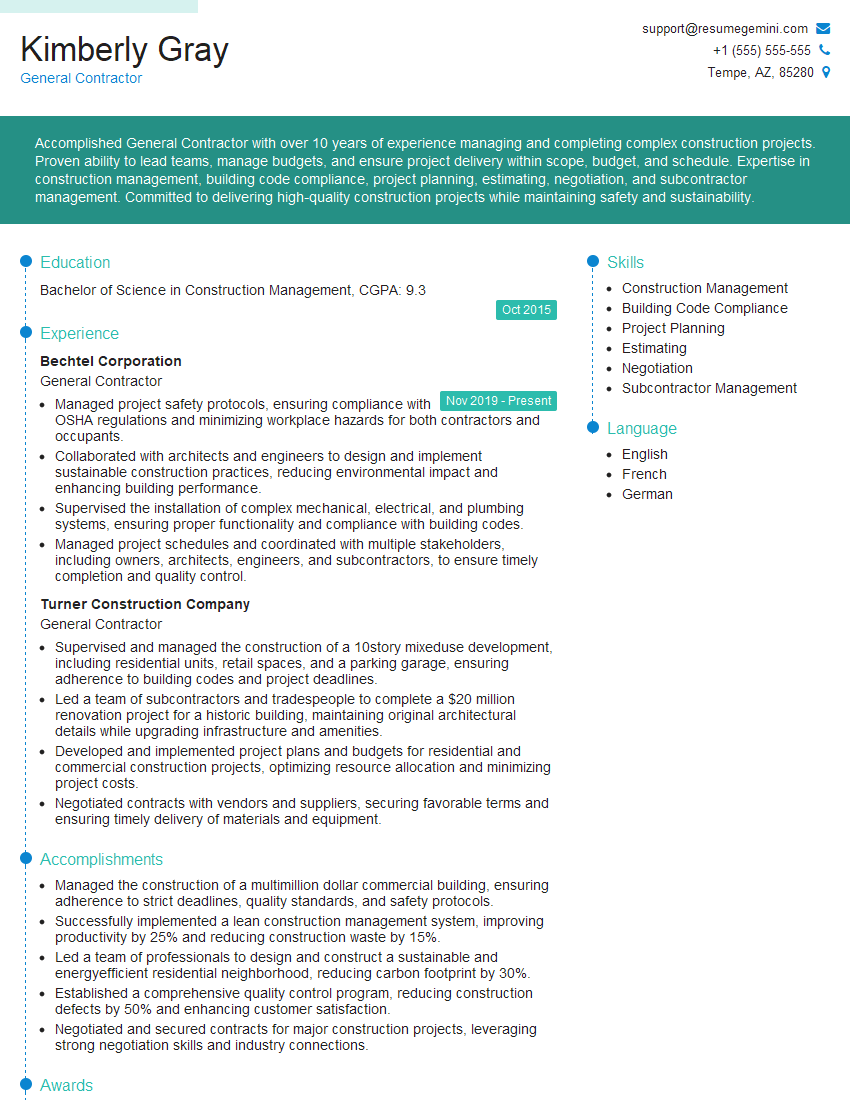
General Contractor Resume Sample

Project Superintendent Resume Sample
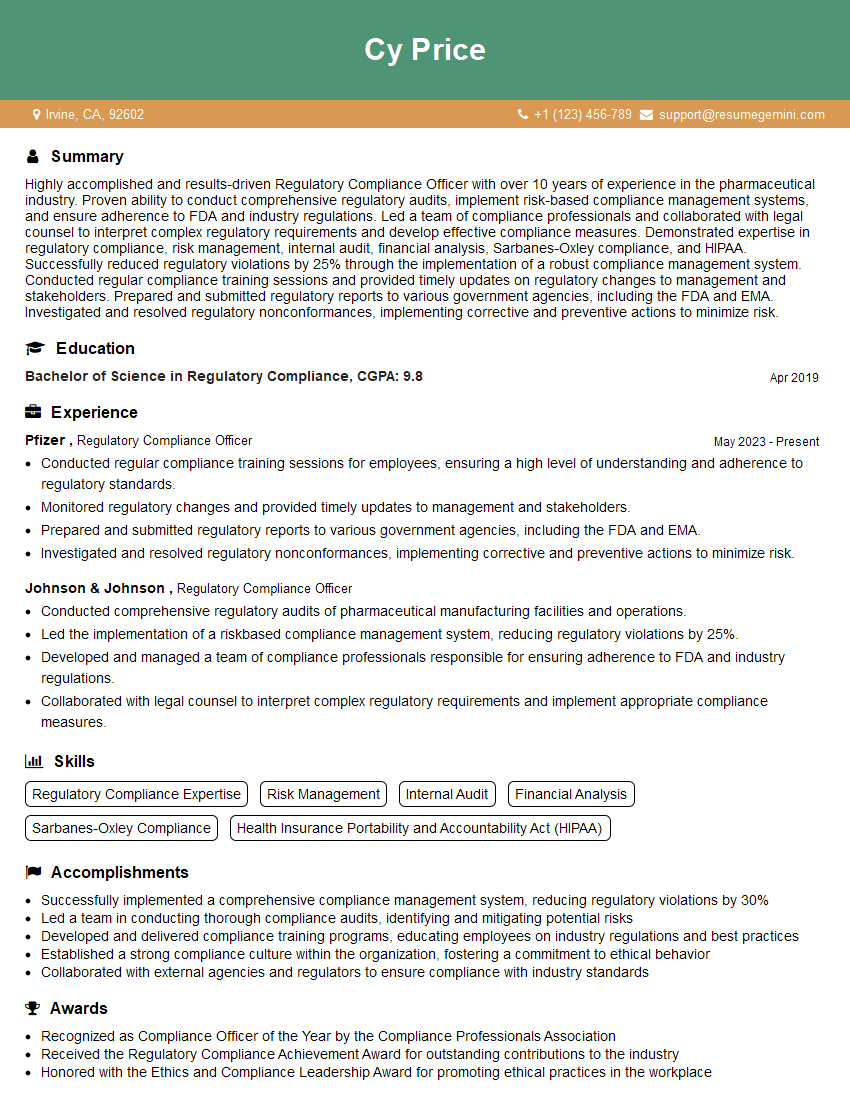
Regulatory Compliance Officer Resume Sample
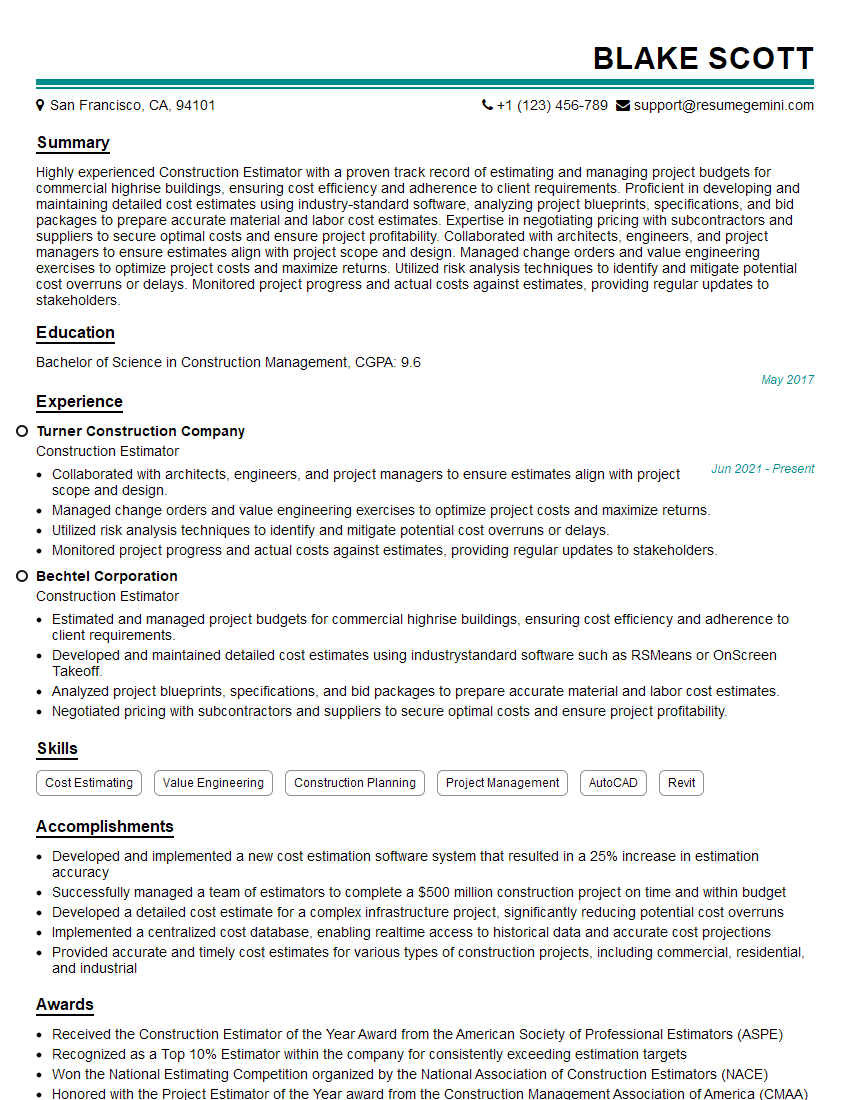
Construction Estimator Resume Sample

Architectural Designer Resume Sample
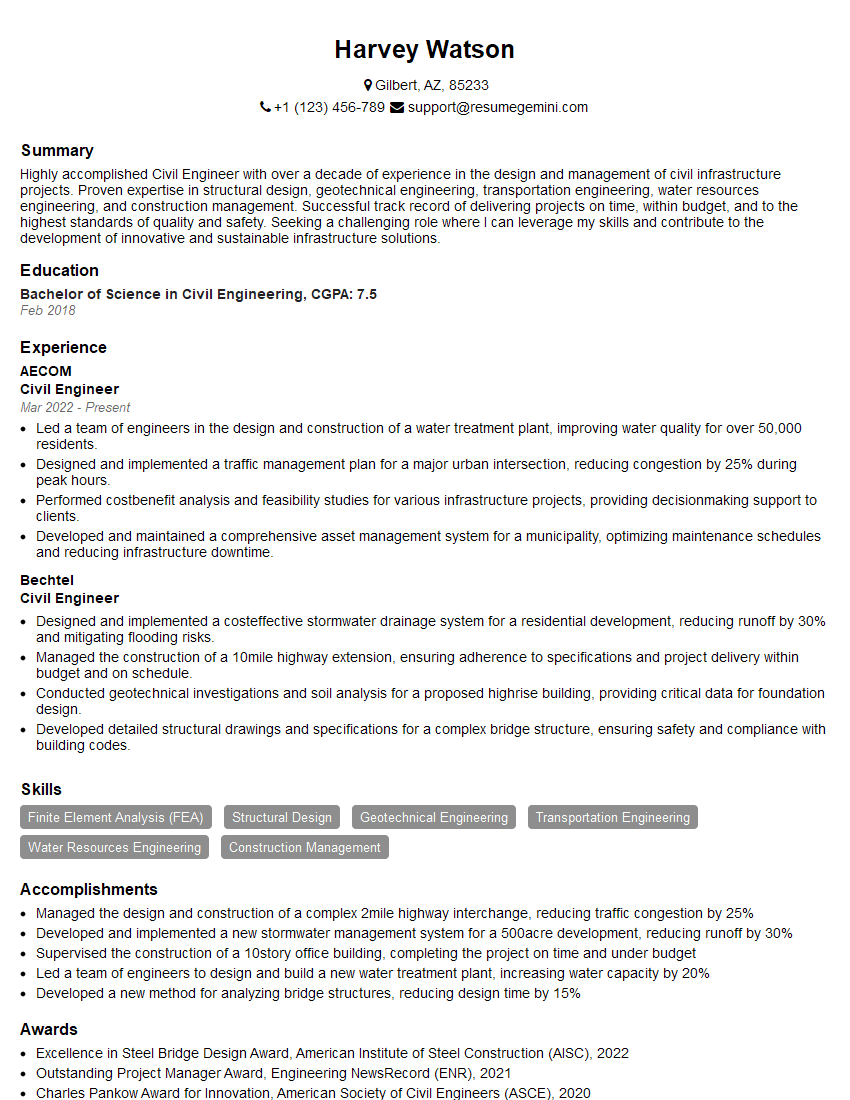
Civil Engineer Resume Sample
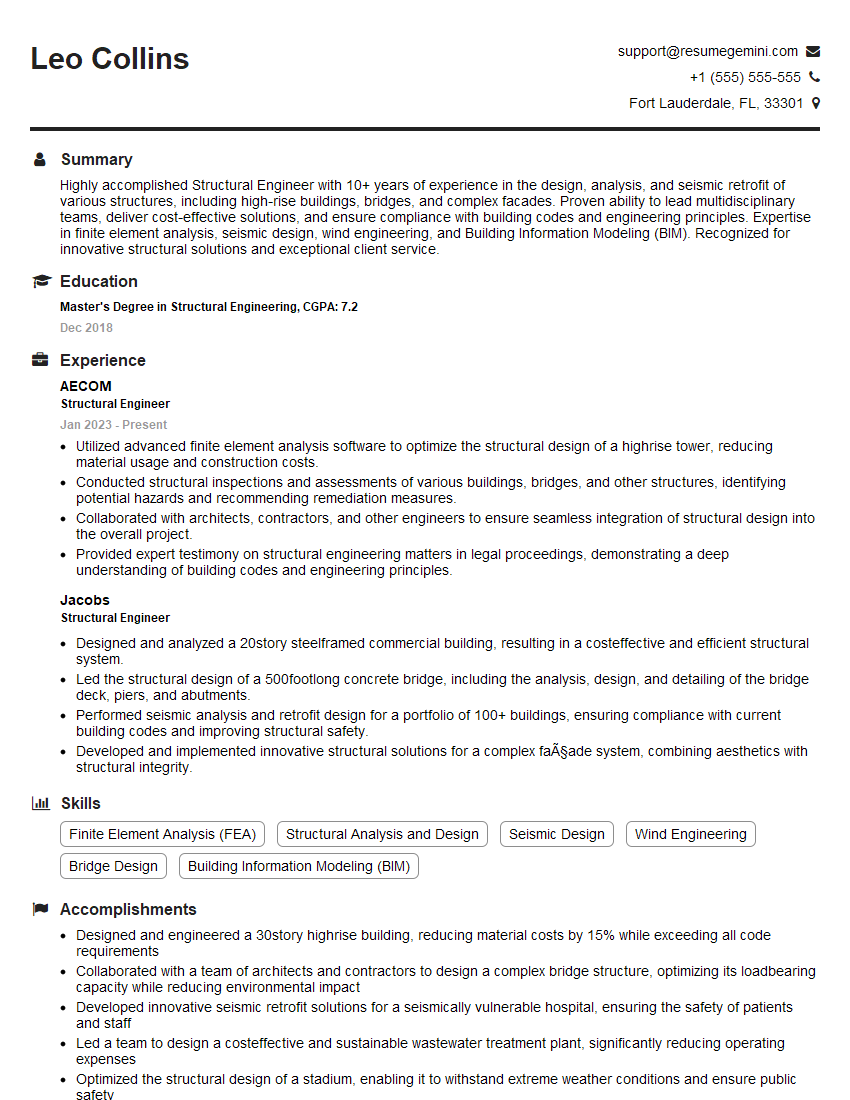
Structural Engineer Resume Sample
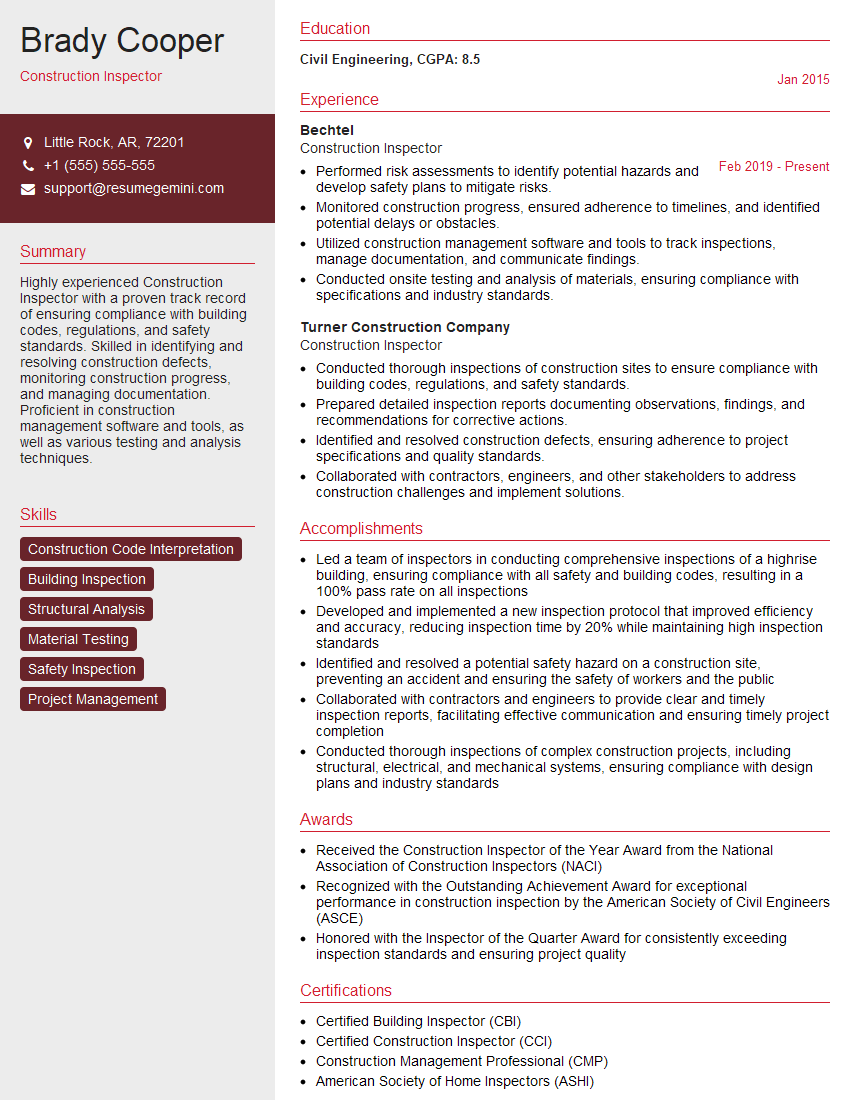
Construction Inspector Resume Sample
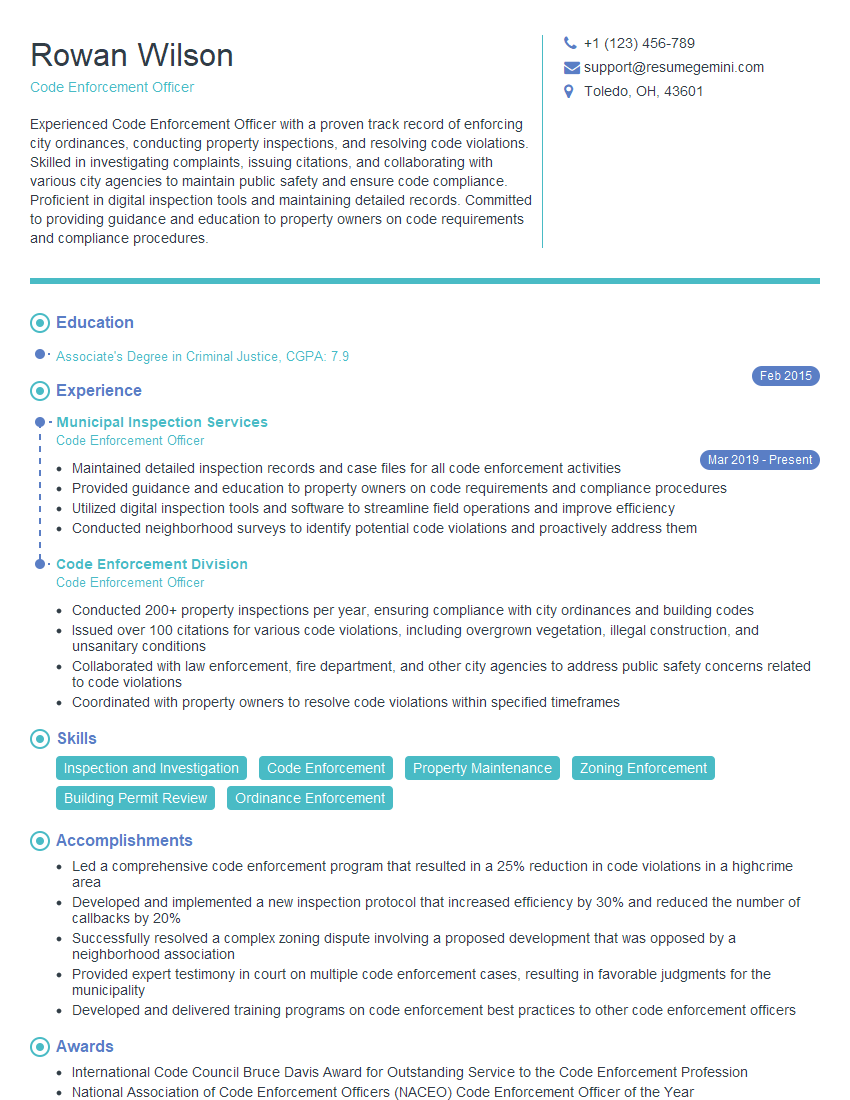
Code Enforcement Officer Resume Sample
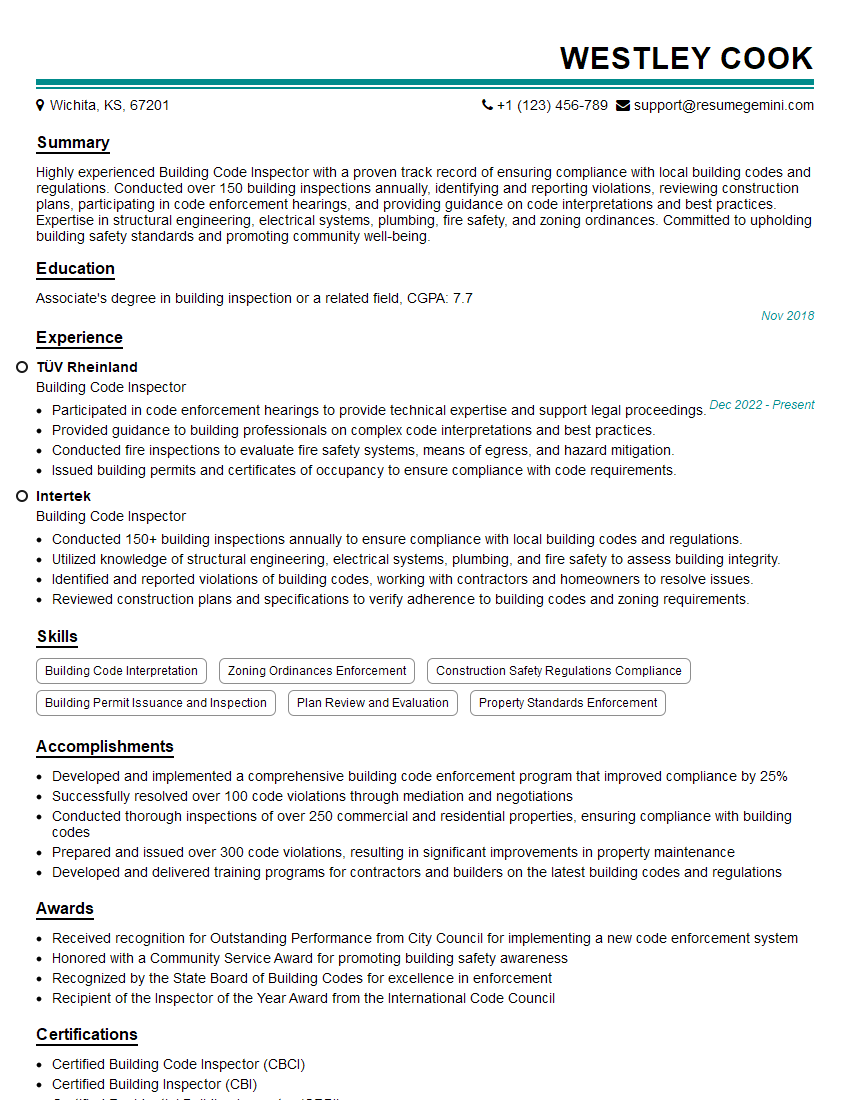
Building Code Inspector Resume Sample
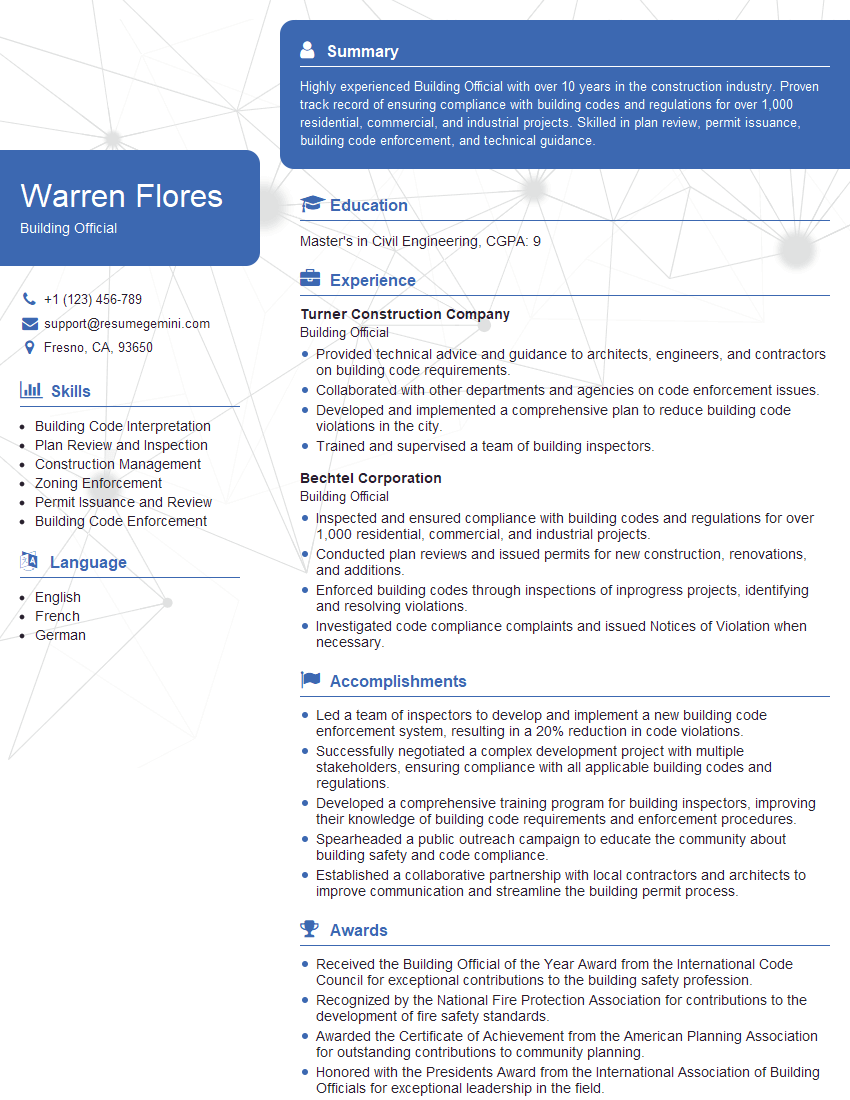
Building Official Resume Sample
Explore more articles
Users Rating of Our Blogs
Share Your Experience
We value your feedback! Please rate our content and share your thoughts (optional).
What Readers Say About Our Blog
Very informative content, great job.
good