The thought of an interview can be nerve-wracking, but the right preparation can make all the difference. Explore this comprehensive guide to Understanding of ASHRAE, HVAC, and Refrigeration Principles interview questions and gain the confidence you need to showcase your abilities and secure the role.
Questions Asked in Understanding of ASHRAE, HVAC, and Refrigeration Principles Interview
Q 1. Explain the difference between sensible and latent heat.
Sensible heat and latent heat are two forms of heat transfer that affect the temperature and moisture content of air. Sensible heat is the heat that causes a change in temperature without changing the phase of a substance. Think of heating water on a stove – the temperature rises, but it remains water. Latent heat, on the other hand, is the heat absorbed or released during a phase change, such as melting ice (absorbing latent heat) or condensing steam (releasing latent heat). The temperature remains constant during a phase change. In HVAC systems, sensible heat is responsible for changes in dry-bulb temperature, while latent heat is responsible for changes in moisture content (humidity).
Example: Heating a room with a radiator increases the sensible heat, raising the air temperature. Dehumidifying the same room removes latent heat, reducing the moisture content without necessarily changing the temperature significantly.
Q 2. Describe the refrigeration cycle and its key components.
The refrigeration cycle is a thermodynamic cycle that moves heat from a low-temperature area to a high-temperature area, creating a cooling effect. It’s the heart of most refrigeration and air conditioning systems. The key components are:
- Evaporator: A heat exchanger where the refrigerant absorbs heat from the space to be cooled, changing from a low-pressure liquid to a low-pressure gas.
- Compressor: This raises the pressure and temperature of the refrigerant gas.
- Condenser: Another heat exchanger where the high-pressure, high-temperature refrigerant gas releases heat to the surrounding environment (usually outdoors), changing from a gas to a high-pressure liquid.
- Expansion Valve (or Metering Device): This reduces the pressure of the refrigerant, causing it to flash evaporate and cool as it enters the evaporator. This completes the cycle.
Think of it like a pump moving refrigerant through a closed loop. This constant circulation and phase changes create the cooling effect.
Q 3. What are the different types of refrigeration systems?
There are various refrigeration system types, categorized by the refrigerant used, the cycle’s design, and the application. Some common types include:
- Vapor-Compression Refrigeration: This is the most common type used in residential and commercial HVAC systems, using a compressor to increase the refrigerant’s pressure. This is what we described in the previous answer.
- Absorption Refrigeration: This uses heat energy (such as solar or waste heat) to drive the refrigeration cycle instead of electricity. It’s often employed in applications where electricity is scarce or expensive.
- Air Refrigeration: This system utilizes air as the refrigerant, often found in aircraft and some specialized applications.
- Thermoelectric Refrigeration: This uses the Peltier effect to create cooling, suitable for small-scale applications like portable coolers.
The choice of system depends greatly on factors like cost, energy efficiency, environmental impact, and the specific cooling requirements.
Q 4. Explain the principles of psychrometrics.
Psychrometrics is the study of the thermodynamic properties of moist air. It helps us understand the relationship between temperature, humidity, pressure, and other factors affecting air’s condition. Psychrometric charts are essential tools, graphically representing these relationships. These charts allow us to determine properties like:
- Dry-bulb temperature: The air temperature measured by a regular thermometer.
- Wet-bulb temperature: The temperature of air when it is cooled to saturation by evaporation of water.
- Relative humidity: The ratio of the actual water vapor pressure to the saturation water vapor pressure at a given temperature.
- Dew point temperature: The temperature at which water vapor in the air begins to condense.
Understanding psychrometrics is crucial for designing and optimizing HVAC systems, ensuring proper comfort levels and efficient operation. For instance, knowing the wet-bulb temperature and humidity helps us accurately design air conditioning systems to achieve the desired indoor climate.
Q 5. What are the common refrigerants used in HVAC systems and their environmental impact?
Many refrigerants have been used historically in HVAC systems, but concerns about environmental impact have led to significant changes. Common refrigerants and their impacts:
- Chlorofluorocarbons (CFCs): These were widely used but are now phased out due to their severe ozone depletion potential (ODP).
- Hydrochlorofluorocarbons (HCFCs): These are transitional refrigerants with lower ODP than CFCs, but still have some ozone-depleting effects and high global warming potential (GWP).
- Hydrofluorocarbons (HFCs): These have zero ODP but contribute significantly to global warming due to their high GWP.
- Natural Refrigerants: These include ammonia (NH3), carbon dioxide (CO2), propane (R-290), and others, offering low or zero ODP and GWP, but they often require specialized handling and safety measures.
- HFO Refrigerants (Hydrofluoroolefins): These refrigerants are being increasingly adopted due to their very low GWP, offering a balance between efficiency and environmental impact.
The trend is towards refrigerants with low GWP and ODP to minimize the environmental footprint of HVAC systems. ASHRAE standards play a crucial role in guiding the selection and use of environmentally friendly refrigerants.
Q 6. Describe different types of HVAC systems (e.g., VRF, chillers, split systems).
Several HVAC system types cater to different needs and scales:
- Variable Refrigerant Flow (VRF) Systems: These systems use a single outdoor unit connected to multiple indoor units, providing individual temperature control for different zones. They are highly efficient and suitable for large buildings.
- Chillers: These are large-scale refrigeration systems that cool water, which is then circulated throughout a building to provide cooling. They are commonly used in large commercial and industrial applications.
- Split Systems: These consist of an outdoor unit and one or more indoor units, with refrigerant lines connecting them. They are commonly found in residential and small commercial buildings.
- Packaged Units: These are self-contained units that combine the evaporator, condenser, compressor, and other components in a single cabinet. They are often used for smaller applications where space is limited.
- Air-Source Heat Pumps: These systems can provide both heating and cooling using a refrigerant cycle, utilizing outdoor air as the heat source or sink. They are becoming increasingly popular due to their energy efficiency.
The choice of system depends on factors like building size, energy efficiency requirements, budget, and specific climate conditions.
Q 7. How do you troubleshoot a malfunctioning HVAC system?
Troubleshooting a malfunctioning HVAC system involves a systematic approach. It usually starts with safety precautions (turning off power) and then follows these steps:
- Gather Information: What are the symptoms? Is the system not cooling, not heating, making unusual noises, or showing error codes?
- Visual Inspection: Check for obvious problems – loose connections, leaks, debris, damaged components.
- Check Controls: Verify thermostats, sensors, and control circuits are functioning correctly. A simple thermostat issue can sometimes be the cause.
- Test Refrigerant Levels: Low refrigerant charge can significantly impact cooling capacity. This often requires specialized tools and knowledge.
- Measure Airflow: Insufficient airflow can reduce efficiency. Check filters, coils, and fans for obstructions or malfunctions.
- Analyze Electrical Components: Inspect wiring, capacitors, contactors, and other electrical components for signs of damage or malfunction.
- Consult Documentation: Refer to system manuals, schematics, and diagnostic guides for specific troubleshooting steps and error code interpretations.
If the problem is beyond a simple fix, calling a qualified HVAC technician is essential. Incorrect diagnosis and repair can lead to safety hazards and further damage.
Q 8. Explain the concept of air handling units (AHUs).
An Air Handling Unit (AHU) is essentially the heart of an HVAC system. Think of it as a large, sophisticated box that conditions air – heating, cooling, humidifying, dehumidifying, and filtering it – before distributing it throughout a building via a network of ductwork. It’s a centralized system, often located in mechanical rooms, responsible for maintaining comfortable indoor environmental conditions.
AHUs typically include components such as:
- Fans: To circulate air through the system.
- Heating Coils: Usually hot water or steam coils to warm the air.
- Cooling Coils: Often chilled water coils or direct expansion (DX) coils using refrigerant to cool the air.
- Filters: To remove dust, pollen, and other airborne contaminants.
- Humidifiers/Dehumidifiers: To control the moisture content of the air, ensuring occupant comfort and preventing damage to building materials.
- Dampers: To control airflow and direct it to different zones within the building.
- Controls: To monitor and regulate the AHU’s operation, ensuring it meets the desired conditions.
For example, a large office building might have multiple AHUs, each serving a different section or floor, allowing for zoned climate control and energy efficiency. A smaller building might only require a single AHU.
Q 9. What are the key components of a ductwork system?
A ductwork system is the network of pipes that transports conditioned air from the AHU to various locations within a building. Imagine it as the circulatory system of a building’s HVAC system.
Key components include:
- Ducts: These are the pipes themselves, typically made of sheet metal, fiberglass, or flexible materials. They come in various shapes and sizes, depending on the airflow requirements.
- Fittings: These connect different sections of ductwork, including elbows, tees, and transitions.
- Dampers: These regulate airflow within the system, allowing for zoning and control of air distribution.
- Registers/Grilles: These are the openings in the walls or ceilings that allow conditioned air to enter the occupied space. Registers allow for airflow adjustment, while grilles are typically fixed.
- Diffusers: These are specialized registers designed to distribute air more evenly and reduce air drafts.
- Insulation: To minimize heat loss or gain in the ducts, improving efficiency.
Properly designed ductwork is crucial for efficient air distribution and maintaining even temperatures throughout the building. Leaks in the ductwork can lead to energy waste and inconsistent climate control.
Q 10. What are the different types of air filters and their applications?
Air filters are essential for maintaining good indoor air quality by removing pollutants from the air stream. There are many types, each with its own application:
- Flat Panel Filters (Standard): These are the most common and least expensive, typically made of fibrous material. They’re effective at removing larger particles but offer lower efficiency.
- Pleated Filters: These offer more surface area than flat panel filters, resulting in higher efficiency and longer life. They’re effective in removing smaller particles.
- HEPA (High-Efficiency Particulate Air) Filters: These are extremely efficient at removing even microscopic particles, including bacteria and viruses. They are often used in healthcare facilities and cleanrooms.
- Electrostatic Filters: These use an electrostatic charge to attract and trap airborne particles, offering relatively high efficiency.
- Activated Carbon Filters: These are used to absorb odors and gases, improving air quality in environments with significant odor issues.
The choice of filter depends on the specific needs of the building and the desired level of air filtration. For example, a hospital might use HEPA filters in operating rooms to maintain a sterile environment, whereas a typical office might use pleated filters for general air cleaning.
Q 11. Explain the importance of proper ventilation in building design.
Proper ventilation is crucial for building design because it directly impacts occupant health, comfort, and the overall building’s performance. It’s all about providing a continuous supply of fresh, clean air while removing stale, potentially harmful air.
Importance includes:
- Improved Indoor Air Quality (IAQ): Removing pollutants, odors, and moisture to prevent health problems and improve comfort.
- Reduced Risk of Sick Building Syndrome (SBS): SBS is a condition characterized by a range of symptoms related to poor indoor air quality. Proper ventilation helps mitigate the risks.
- Energy Efficiency: By properly managing air exchange, ventilation systems can reduce energy consumption associated with heating and cooling.
- Moisture Control: Ventilation helps control humidity levels, preventing mold growth and structural damage.
- Safety: Ventilation systems can remove potentially hazardous gases or fumes.
Consider a classroom: adequate ventilation is essential to remove carbon dioxide exhaled by students and teachers and provide sufficient oxygen. Poor ventilation in this case can lead to drowsiness and decreased cognitive function.
Q 12. What are some common causes of indoor air quality problems?
Several factors can contribute to poor indoor air quality (IAQ) problems:
- Inadequate Ventilation: Insufficient fresh air intake leads to a buildup of pollutants and stale air.
- Building Materials: Certain construction materials can release volatile organic compounds (VOCs), such as formaldehyde, which can cause health problems.
- Biological Contaminants: Mold, mildew, bacteria, and viruses can thrive in damp or poorly ventilated spaces.
- Outdoor Air Pollution: Pollutants from outside can infiltrate buildings through inadequate sealing or ventilation systems.
- HVAC System Issues: Dirty filters, leaks in ductwork, or malfunctioning equipment can reduce air quality.
- Occupant Activities: Smoking, cooking, cleaning products, and pets can all introduce pollutants into the air.
For instance, a poorly maintained HVAC system with dirty filters can recirculate dust and allergens, impacting occupants with allergies or respiratory conditions. Similarly, inadequate ventilation in a kitchen can cause cooking odors to linger, affecting air quality.
Q 13. Describe the role of building automation systems (BAS).
A Building Automation System (BAS) is a centralized control system for managing a building’s various systems, including HVAC, lighting, security, and fire protection. Think of it as the brain of the building, optimizing its operation and efficiency.
Its role includes:
- Monitoring and Control of HVAC Systems: The BAS monitors temperature, humidity, and other parameters and adjusts HVAC equipment accordingly to maintain optimal conditions.
- Energy Management: The BAS can optimize energy consumption by scheduling systems, adjusting setpoints, and identifying inefficiencies.
- Fault Detection and Diagnostics: The BAS can detect malfunctions in HVAC equipment and other systems, alerting maintenance personnel to potential problems.
- Remote Access and Control: The BAS allows operators to monitor and control building systems remotely, from a central location or even a mobile device.
- Data Logging and Reporting: The BAS collects data on building performance, providing insights that can be used to improve efficiency and reduce costs.
A large office building might utilize a BAS to monitor and control temperature in different zones based on occupancy levels, leading to significant energy savings. It can also automate night setback, lowering temperatures when the building is unoccupied.
Q 14. How does a thermostat control HVAC operation?
A thermostat is the interface between the building occupants and the HVAC system. It acts as a sensing device and control mechanism, allowing users to set their desired temperature and trigger the HVAC equipment to operate accordingly.
Here’s how it works:
- Sensing Temperature: The thermostat contains a sensor that constantly monitors the ambient temperature of the space.
- Comparing to Setpoint: The thermostat compares the sensed temperature with the setpoint (the temperature the user has set).
- Controlling HVAC Equipment: If the sensed temperature is lower than the setpoint, the thermostat activates the heating system. If it’s higher, it activates the cooling system.
- Maintaining Temperature: The thermostat continuously monitors and adjusts the HVAC system to maintain the desired temperature within a specified tolerance.
- Various Modes: Modern thermostats offer various operational modes, such as heating, cooling, fan only, and auto, allowing occupants to customize climate control based on their needs.
For example, if you set your thermostat to 72°F (22°C) and the room temperature drops below that, the thermostat will turn on the furnace. Once the room reaches 72°F, the furnace will turn off. This cycle continues, maintaining the desired temperature.
Q 15. What are the key aspects of HVAC system design considerations?
HVAC system design is a multifaceted process requiring careful consideration of numerous factors to ensure optimal performance, energy efficiency, and occupant comfort. Key aspects include:
- Load Calculation: Accurately determining heating and cooling loads based on building characteristics, climate, and occupancy. This involves considering factors like solar gain, internal heat generation, and infiltration.
- Equipment Selection: Choosing appropriate HVAC equipment (e.g., chillers, boilers, air handling units, and terminal units) with the right capacity, efficiency ratings (like SEER and EER for cooling), and features to meet the calculated loads and project requirements.
- Air Distribution System Design: Designing an efficient system to deliver conditioned air throughout the building. This includes ductwork sizing, fan selection, and diffuser placement to ensure uniform temperature and airflow.
- Refrigerant Selection: Choosing a refrigerant that balances performance, safety, and environmental impact. ASHRAE standards play a crucial role in guiding this selection, moving away from ozone-depleting substances and towards lower global warming potential refrigerants.
- Controls Integration: Incorporating building automation systems (BAS) for effective control and monitoring of HVAC equipment, optimizing energy consumption and enhancing comfort.
- Indoor Air Quality (IAQ): Designing for adequate ventilation to maintain acceptable levels of fresh air and reduce pollutants, considering factors like filtration, humidity control, and air changes per hour.
- Energy Efficiency: Designing for optimal energy performance through measures such as high-efficiency equipment, proper insulation, and energy-recovery ventilation.
- Building Envelope Considerations: The building’s exterior envelope (walls, roof, windows) plays a vital role in determining the heating and cooling loads. Proper insulation, window selection, and air sealing are crucial for energy efficiency.
For example, designing an HVAC system for a hospital requires meticulous attention to IAQ, with more stringent filtration and ventilation requirements compared to an office building.
Career Expert Tips:
- Ace those interviews! Prepare effectively by reviewing the Top 50 Most Common Interview Questions on ResumeGemini.
- Navigate your job search with confidence! Explore a wide range of Career Tips on ResumeGemini. Learn about common challenges and recommendations to overcome them.
- Craft the perfect resume! Master the Art of Resume Writing with ResumeGemini’s guide. Showcase your unique qualifications and achievements effectively.
- Don’t miss out on holiday savings! Build your dream resume with ResumeGemini’s ATS optimized templates.
Q 16. Explain the importance of ASHRAE standards in HVAC design and operation.
ASHRAE (American Society of Heating, Refrigerating and Air-Conditioning Engineers) standards are essential for HVAC design and operation. They provide guidelines and best practices for various aspects, ensuring safety, efficiency, and consistency. These standards address:
- Energy Efficiency: ASHRAE standards, such as 90.1, set minimum energy efficiency requirements for building systems, encouraging the use of high-performance equipment and design strategies.
- Safety: Standards cover safety aspects related to refrigerant handling, electrical systems, and equipment operation, minimizing risks to personnel and the environment.
- Indoor Air Quality (IAQ): Standards like 62.1 provide guidelines for ventilation rates and air filtration, ensuring acceptable IAQ levels.
- Refrigerant Selection: ASHRAE standards guide the selection of refrigerants based on their environmental impact and safety. The phasing out of ozone-depleting substances and the focus on refrigerants with lower global warming potentials is directly influenced by ASHRAE.
- Testing and Commissioning: ASHRAE standards provide guidance on testing and commissioning procedures to ensure that HVAC systems are operating as designed and meeting performance requirements.
Adhering to ASHRAE standards is often a requirement for building codes and certifications like LEED (Leadership in Energy and Environmental Design), demonstrating a commitment to sustainable and efficient building design.
Q 17. What is the significance of the psychrometric chart?
The psychrometric chart is a graphical representation of the thermodynamic properties of moist air. It’s a crucial tool for HVAC engineers and technicians. It shows the relationships between:
- Dry-bulb temperature: The temperature of the air measured by a standard thermometer.
- Wet-bulb temperature: The temperature of the air after it’s been cooled by evaporation.
- Relative humidity: The ratio of the actual water vapor present in the air to the maximum amount it can hold at a given temperature.
- Enthalpy: The total heat content of the air.
- Specific volume: The volume occupied by a unit mass of air.
Using the chart, engineers can determine the air’s properties and track changes during processes like heating, cooling, humidification, and dehumidification. For example, by knowing the initial and final states of air, you can determine the amount of heat or moisture needed to be added or removed.
Imagine you’re trying to cool and dehumidify air. The chart allows you to visually see the path the air will take as it moves from its initial state to the desired conditions, allowing for accurate equipment sizing and control strategy design.
Q 18. Describe different types of heat exchangers used in HVAC systems.
HVAC systems utilize various heat exchangers to transfer heat between fluids (air and water or refrigerant). Common types include:
- Plate Heat Exchangers: These consist of thin, corrugated plates stacked together, with fluids flowing through alternating channels. They are compact, efficient, and easy to clean. Commonly used in smaller systems.
- Shell and Tube Heat Exchangers: One fluid flows through a bundle of tubes inside a shell, while the other fluid flows around the tubes. They are robust and suitable for large flow rates, often found in larger chillers and boilers.
- Finned-Tube Heat Exchangers: These are commonly found in air conditioning and refrigeration systems. Fins are attached to tubes to increase the surface area for heat transfer, enhancing efficiency.
- Air-to-Air Heat Exchangers (Energy Recovery Ventilators): These are used in ventilation systems to transfer heat from the exhaust air to the incoming fresh air, improving energy efficiency. Examples include rotary and plate heat exchangers.
- Evaporators and Condensers (in refrigeration cycles): These are specialized heat exchangers where the refrigerant undergoes phase change (evaporation or condensation), transferring heat to or from the surroundings.
The selection of a heat exchanger depends on factors like the fluids involved, flow rates, temperature differences, pressure drops, and space constraints. For instance, a plate heat exchanger might be ideal for a small air conditioning system, while a shell and tube exchanger would be preferred for a large industrial chiller.
Q 19. How do you calculate the cooling load of a building?
Calculating the cooling load of a building is a complex process, involving many factors. A simplified approach often uses Manual J (or similar methods) which accounts for:
- Transmission Loads: Heat transfer through the building envelope (walls, roof, windows, etc.) due to temperature differences. This is calculated using U-values (overall heat transfer coefficients).
- Solar Loads: Heat gain from solar radiation penetrating through windows and other surfaces. This is calculated using solar heat gain coefficients (SHGC).
- Internal Loads: Heat generated inside the building from occupants, lighting, equipment, and other sources. This is calculated using estimates based on occupancy, equipment wattage, and other factors.
- Infiltration Loads: Heat gain or loss due to air infiltration through cracks and openings in the building envelope. This is often calculated using air change rates.
- Ventilation Loads: Heat gain or loss associated with bringing in outside air through ventilation systems. This is calculated based on ventilation rates and temperature differences.
The cooling load calculation involves adding all these individual loads to determine the total cooling load, expressed in BTUs per hour (or kilowatts). Software tools and specialized engineers often conduct these calculations to account for the complexities and variations involved.
For example, a south-facing office building in a hot climate will have a significantly higher cooling load compared to a north-facing building in a temperate climate, due to differences in solar gain and transmission loads.
Q 20. Explain the concept of thermal comfort.
Thermal comfort refers to the condition of mind that expresses satisfaction with the thermal environment. It’s a subjective feeling influenced by factors like:
- Air temperature: The temperature of the surrounding air.
- Radiant temperature: The average temperature of the surrounding surfaces.
- Air velocity: The speed of air movement.
- Relative humidity: The amount of moisture in the air.
- Metabolic rate: The rate at which the body produces heat.
- Clothing level: The amount of clothing worn.
ASHRAE Standard 55 provides guidelines for acceptable thermal comfort conditions, considering the interplay of these factors. Designing for thermal comfort is important because it significantly affects productivity, health, and overall well-being. A thermally uncomfortable environment can lead to reduced productivity, headaches, and other health problems.
Think of it like this: a room might have a comfortable air temperature, but if the walls are radiating a lot of heat (high radiant temperature), you might still feel uncomfortable. Conversely, a slightly cooler air temperature can feel comfortable if there’s a gentle breeze (low air velocity).
Q 21. What are the different types of HVAC controls?
HVAC controls regulate the operation of HVAC equipment to maintain desired conditions. Different types exist:
- On-Off Controls: The simplest type, where the equipment is either fully on or fully off. These are least efficient but inexpensive.
- Proportional Controls: These adjust the equipment output proportionally to the error between the desired and actual conditions. More efficient than on-off controls.
- Proportional-Integral-Derivative (PID) Controls: These advanced controls offer more precise control by considering the rate of change of the error (derivative) in addition to the error itself (proportional) and the accumulated error (integral). They provide the most precise control and are common in modern systems.
- Building Automation Systems (BAS): Centralized systems controlling multiple HVAC equipment and other building systems. They allow for sophisticated control strategies, energy optimization, and remote monitoring. Many modern buildings use networked BAS, providing data and control through computer interfaces.
- Direct Digital Controls (DDC): These use digital controllers and microprocessors to provide precise control over HVAC equipment. They are commonly integrated with BAS.
The choice of control system depends on factors like the size and complexity of the system, budget, and desired level of control. A small residential system might use simple on-off controls, while a large commercial building typically uses a sophisticated BAS with DDC controllers.
Q 22. Describe the principles of energy efficiency in HVAC systems.
Energy efficiency in HVAC systems boils down to maximizing the desired output (heating or cooling) while minimizing energy consumption. This involves optimizing various components and processes to reduce waste and improve overall system performance. Think of it like driving a car – you want to get to your destination using the least amount of fuel possible.
Improving System Design: Properly sized equipment is crucial. An oversized system cycles on and off frequently, wasting energy. A well-designed system also incorporates features like variable-speed drives (VSDs) for motors and variable refrigerant flow (VRF) systems for precise temperature control in different zones.
Utilizing High-Efficiency Components: Choosing equipment with high SEER (Seasonal Energy Efficiency Ratio) ratings for air conditioners and high AFUE (Annual Fuel Utilization Efficiency) ratings for furnaces significantly reduces energy use. This is similar to choosing fuel-efficient appliances in your home.
Effective Ductwork Design: Leaky or poorly designed ductwork can lead to significant energy loss. Proper sealing, insulation, and sizing are paramount to prevent air leaks and ensure efficient air distribution throughout the building. Imagine a leaky water pipe—you’re losing water (energy in this case) before it even reaches its destination.
Building Envelope Optimization: The building’s construction plays a key role. Proper insulation, airtight construction, and energy-efficient windows reduce the load on the HVAC system, decreasing its energy consumption. This is like wearing a winter coat – you need less heat from your furnace if you’re already well-insulated.
Q 23. What are some common energy-saving strategies for HVAC systems?
Energy-saving strategies are multifaceted and often require a combination of approaches. Here are some common ones:
Regular Maintenance: Cleaning air filters, checking refrigerant levels, and lubricating motors can drastically improve efficiency. Think of it like changing your car’s oil – it keeps the engine running smoothly and efficiently.
Smart Thermostats: Programmable or smart thermostats allow for optimized temperature scheduling based on occupancy and preferences, significantly reducing energy consumption during unoccupied periods. This is similar to turning off lights when leaving a room.
Zone Control: Dividing a building into zones allows for independent temperature control in different areas, minimizing energy waste in unused spaces. This is like having separate heating controls for individual rooms in a house.
Demand-Controlled Ventilation (DCV): DCV systems adjust ventilation rates based on actual needs, unlike constant-volume systems which might waste energy by over-ventilating. Think of it like only turning on the exhaust fan in your kitchen when necessary.
Energy Recovery Ventilation (ERV): ERV systems recapture heat or coolness from exhaust air and transfer it to incoming fresh air, further reducing energy use for heating and cooling.
Q 24. How do you perform a safety check on an HVAC system?
A safety check on an HVAC system is crucial to prevent accidents and ensure proper operation. It should always be conducted by qualified personnel. Here’s a breakdown:
Gas Leaks (if applicable): Checking for gas leaks using a calibrated leak detector is paramount for gas-fired systems. Leaks can lead to fire or asphyxiation.
Electrical Safety: Inspecting wiring, connections, and circuit breakers for any damage or loose connections is essential to prevent electrical shocks or fires. Proper grounding is critical.
Refrigerant Leaks: Checking for refrigerant leaks using electronic leak detectors is essential to prevent environmental damage and ensure efficient system operation. Refrigerant leaks can also damage equipment components.
Proper Ventilation: Ensuring adequate ventilation in the area around the equipment prevents the buildup of harmful gases or lack of oxygen.
Pressure Checks: Checking the pressure of refrigerant and water in the system as per manufacturers’ specifications helps prevent dangerous overpressurization.
Safe Operation of Controls: Ensuring that safety switches, thermostats, and other controls function correctly prevents unintended operation or dangerous conditions.
Documentation is key; a detailed log of all safety checks, including dates and findings, should be maintained.
Q 25. Explain the importance of regular maintenance for HVAC systems.
Regular maintenance is the cornerstone of ensuring HVAC system longevity, efficiency, and safety. Neglecting maintenance leads to increased energy consumption, premature equipment failure, and potential safety hazards.
Improved Efficiency: Clean filters, properly lubricated motors, and optimal refrigerant levels improve the system’s performance, directly translating to lower energy bills.
Extended Lifespan: Regular maintenance helps prevent premature component wear and tear, leading to a longer lifespan for the entire system. This reduces the need for costly replacements.
Reduced Repair Costs: Addressing minor issues during maintenance prevents them from escalating into major, expensive repairs. It’s like fixing a small crack in a wall before it becomes a large hole.
Improved Indoor Air Quality (IAQ): Clean filters and regular coil cleaning improve IAQ by removing dust, allergens, and other contaminants. This is crucial for occupant health and comfort.
Enhanced Safety: Regular inspections identify potential safety hazards, such as gas leaks or electrical issues, before they cause accidents.
A scheduled maintenance plan, following manufacturer’s recommendations, is vital for maximizing the benefits.
Q 26. What are some common troubleshooting techniques for refrigeration systems?
Troubleshooting refrigeration systems requires a systematic approach. Here are some common techniques:
Visual Inspection: Start by visually inspecting the system for any obvious problems like leaks, loose connections, or frost buildup. This is your first clue to understanding the issue.
Pressure and Temperature Readings: Using pressure gauges and thermometers, measure the pressures and temperatures at various points in the refrigeration cycle. These readings provide critical information about the system’s operation. Deviations from normal operating parameters indicate potential problems.
Refrigerant Charge Check: An accurate refrigerant charge is crucial for optimal performance. Using specialized equipment, you can determine if the refrigerant charge is too high, too low, or if there’s a leak. This is fundamental to refrigeration system efficiency.
Component Testing: Individual components like compressors, condensers, evaporators, and expansion valves can be tested using various methods to identify malfunctions.
Electrical Checks: Verify voltage, amperage, and resistance using a multimeter to ensure that electrical components are functioning correctly.
Understanding the refrigeration cycle is crucial for effective troubleshooting. By systematically analyzing pressures, temperatures, and electrical readings, you can pinpoint the source of the malfunction.
Q 27. Describe your experience working with different HVAC equipment.
Throughout my career, I’ve worked extensively with a wide range of HVAC equipment, including:
Chillers: I have experience with both absorption and centrifugal chillers, including troubleshooting, maintenance, and commissioning.
Air Handling Units (AHUs): I’m proficient in working with AHUs of various sizes and configurations, encompassing fan selection, filter changes, and control system adjustments.
Packaged Units: I’ve worked extensively with rooftop units and split systems, undertaking installations, maintenance, and repairs.
Refrigeration Systems: My experience extends to ammonia, CO2, and HFC refrigerants, encompassing industrial and commercial applications.
Variable Refrigerant Flow (VRF) Systems: I have a strong understanding of VRF systems, including their design, installation, and troubleshooting, particularly focusing on efficiency and zone control.
I am comfortable working with both traditional and modern control systems, including Direct Digital Controls (DDC) and Building Management Systems (BMS).
Q 28. Explain your understanding of HVAC codes and regulations.
Understanding HVAC codes and regulations is paramount to ensuring safe and efficient system design and operation. My knowledge encompasses various codes, including:
ASHRAE Standards: I’m familiar with relevant ASHRAE standards, such as those concerning thermal comfort, ventilation, and energy efficiency (e.g., ASHRAE 55, 62.1, 90.1).
International Mechanical Code (IMC): I’m proficient in the IMC’s requirements for HVAC system design, installation, and testing.
Local Codes and Ordinances: I understand the importance of adhering to local codes and regulations, which often supplement national standards.
Safety Regulations: I’m well-versed in safety regulations concerning refrigerant handling, electrical safety, and gas safety.
Building Codes: I understand how HVAC systems integrate with overall building codes for fire safety and accessibility.
Staying updated on the latest code changes is an ongoing process, ensuring compliance and the implementation of best practices.
Key Topics to Learn for Understanding of ASHRAE, HVAC, and Refrigeration Principles Interview
- ASHRAE Standards and Codes: Understanding key standards like 62.1 (Ventilation), 90.1 (Energy Efficiency), and 55 (Thermal Environmental Conditions) and their practical implications in design and operation.
- Psychrometrics: Mastering the relationships between temperature, humidity, pressure, and enthalpy. Apply this knowledge to solve problems related to air conditioning and dehumidification.
- Refrigeration Cycles: Deep understanding of vapor-compression, absorption, and other refrigeration cycles, including their components, efficiency calculations, and troubleshooting.
- HVAC System Types: Familiarize yourself with various HVAC system types (e.g., split systems, VRF, chilled water systems) and their applications in different building types.
- Load Calculations: Practice performing heating and cooling load calculations using manual J or equivalent software, understanding the factors influencing these calculations.
- Energy Efficiency and Sustainability: Explore energy-efficient design strategies, renewable energy integration (solar, geothermal), and sustainable building practices in HVAC systems.
- Control Systems: Gain a working knowledge of building automation systems (BAS), programmable logic controllers (PLCs), and their role in optimizing HVAC system performance.
- Troubleshooting and Diagnostics: Develop problem-solving skills for identifying and resolving common HVAC and refrigeration system issues.
- Indoor Air Quality (IAQ): Understand the factors affecting IAQ, strategies for improving IAQ, and relevant ASHRAE standards.
- Safety Procedures and Regulations: Familiarize yourself with relevant safety regulations and best practices for working with refrigerants and HVAC equipment.
Next Steps
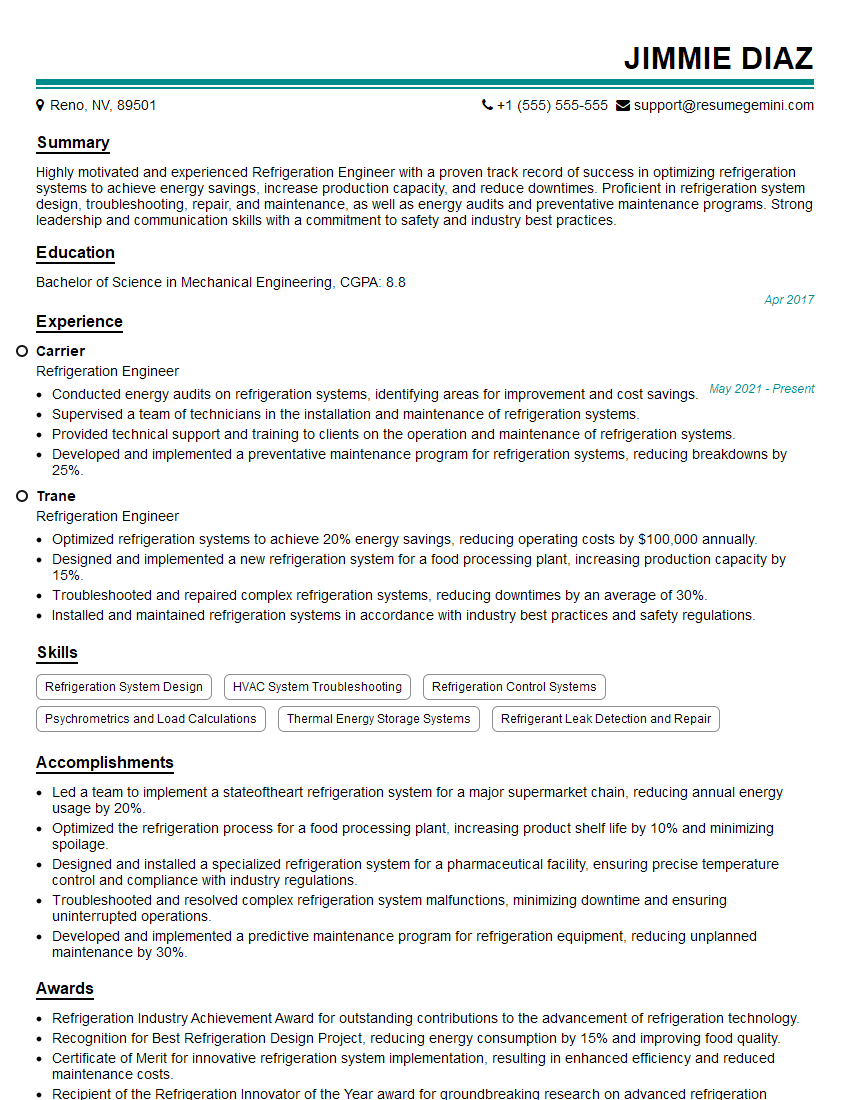
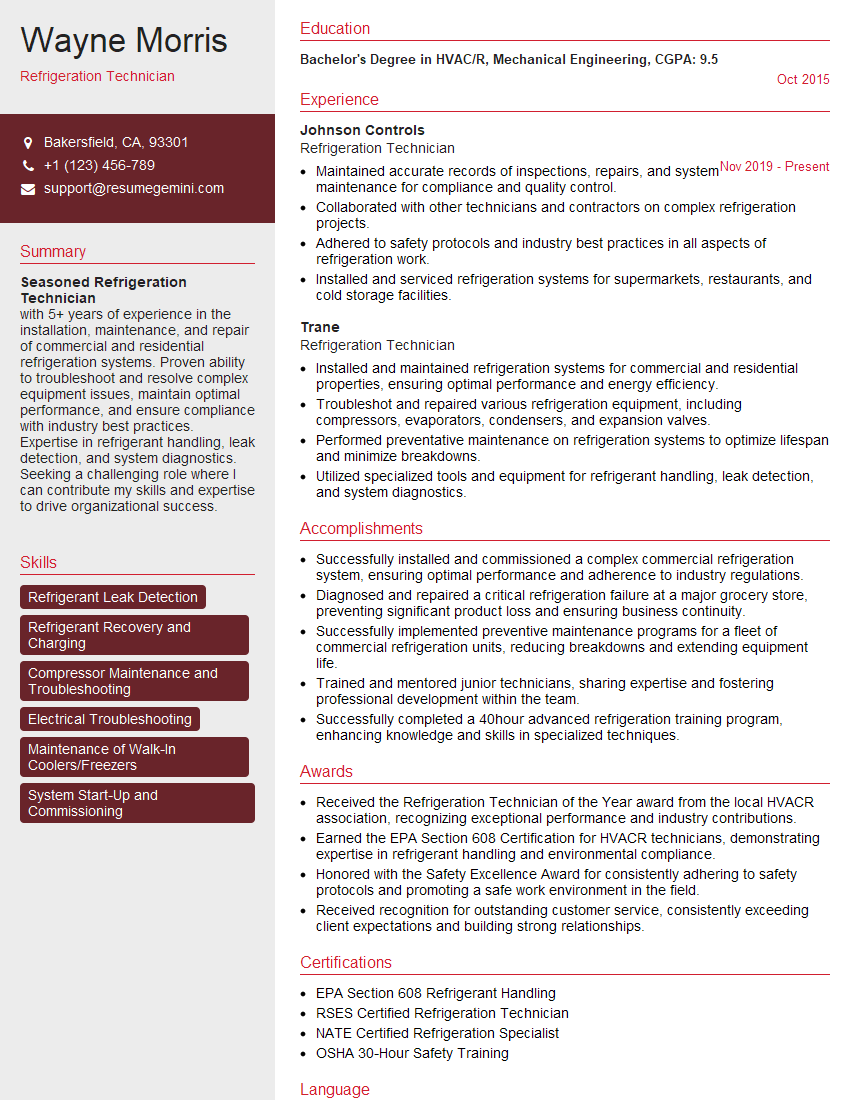
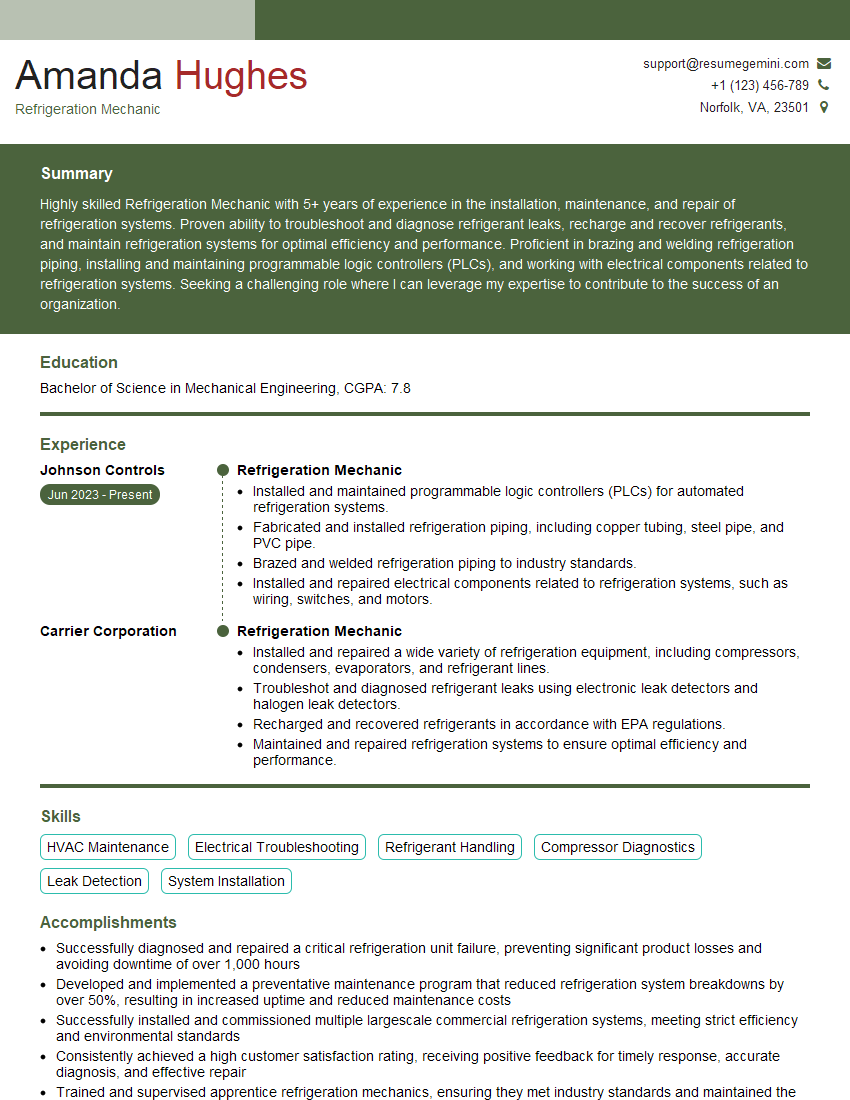
Mastering the principles of ASHRAE, HVAC, and refrigeration is crucial for career advancement in this dynamic field. A strong understanding of these concepts will significantly enhance your interview performance and open doors to exciting opportunities. To further strengthen your job prospects, focus on creating a compelling and ATS-friendly resume that highlights your skills and experience. ResumeGemini is a trusted resource that can help you build a professional and effective resume. Examples of resumes tailored to showcasing expertise in ASHRAE, HVAC, and Refrigeration Principles are available to guide you.
Explore more articles
Users Rating of Our Blogs
Share Your Experience
We value your feedback! Please rate our content and share your thoughts (optional).
What Readers Say About Our Blog
Very informative content, great job.
good