Preparation is the key to success in any interview. In this post, we’ll explore crucial Understanding of carbon markets interview questions and equip you with strategies to craft impactful answers. Whether you’re a beginner or a pro, these tips will elevate your preparation.
Questions Asked in Understanding of carbon markets Interview
Q 1. Explain the difference between compliance and voluntary carbon markets.
Compliance and voluntary carbon markets are two distinct approaches to reducing greenhouse gas emissions. Think of it like this: compliance markets are mandatory, like paying taxes, while voluntary markets are more like charitable donations.
- Compliance markets operate under a regulatory framework. Governments set emission reduction targets for companies, and those companies must acquire carbon credits to offset their emissions. This is often driven by a ‘cap-and-trade’ system, where a limited number of emission allowances are issued, creating a market for trading those allowances. Failure to comply results in penalties. Examples include the European Union Emissions Trading System (EU ETS).
- Voluntary markets are driven by corporate social responsibility (CSR) initiatives and a desire to achieve net-zero emissions beyond regulatory requirements. Companies purchase carbon credits to neutralize their emissions footprint, often to improve their brand image and meet stakeholder expectations. There’s no legal obligation, only a commitment to environmental stewardship. Projects under this market are often verified by independent organizations, aiming to promote transparency and credibility.
The key difference lies in the mandatory nature of compliance markets versus the voluntary nature of the voluntary markets. Both play a vital role in reducing emissions, but they operate under different drivers and regulatory frameworks.
Q 2. Describe the Kyoto Protocol and its impact on carbon markets.
The Kyoto Protocol, adopted in 1997, was a landmark international treaty aimed at combating climate change. It established legally binding emission reduction targets for developed countries, paving the way for the development of international carbon markets. Essentially, it created a framework where countries could trade emission allowances, incentivizing emission reductions.
Its impact on carbon markets was significant:
- Established a global carbon market framework: The Protocol’s Clean Development Mechanism (CDM) and Joint Implementation (JI) allowed developed countries to invest in emission reduction projects in developing countries (CDM) or other developed countries (JI) and receive certified emission reduction (CER) credits that could count towards their emission reduction targets. This fostered international collaboration and investment in climate mitigation projects.
- Increased demand for carbon credits: The targets set under the Kyoto Protocol created a substantial demand for carbon credits, driving the growth of the compliance carbon market and providing funding for numerous emission reduction projects globally.
- Highlighted complexities and challenges: The Protocol also exposed the challenges inherent in carbon accounting, monitoring, verification, and ensuring the additionality (i.e., ensuring the project would not have happened without the carbon finance) of projects. These issues continued to be refined in subsequent climate agreements.
While the Kyoto Protocol had limitations, its contribution to the development and understanding of carbon markets was undeniable. It laid the groundwork for subsequent climate agreements and the evolution of carbon markets as a tool for climate change mitigation.
Q 3. What are the main types of carbon offset projects?
Carbon offset projects aim to reduce or remove greenhouse gases from the atmosphere, typically measured in tonnes of CO2 equivalent (tCO2e). They fall into several broad categories:
- Renewable energy: Projects like building wind farms or solar power plants reduce reliance on fossil fuels and thus lower overall emissions. These projects often generate Renewable Energy Certificates (RECs).
- Forestry and land use: Afforestation (planting trees), reforestation (replanting forests), and reducing deforestation are key strategies. These projects store carbon in biomass, sequestering it from the atmosphere.
- Energy efficiency: Projects improving energy efficiency in buildings, industries, or transportation systems reduce the overall energy consumption and associated emissions.
- Waste management: Initiatives like methane capture from landfills or biogas production from organic waste prevent potent greenhouse gases from entering the atmosphere.
- Agriculture: Sustainable agricultural practices can reduce emissions from livestock and improve soil carbon sequestration.
The specific type of project depends on local conditions, available resources, and emission reduction potential. Effective projects are meticulously designed and rigorously monitored to accurately quantify their environmental impact.
Q 4. How are carbon credits verified and validated?
Verification and validation are crucial steps ensuring the environmental integrity of carbon offset projects. They confirm that projects are real, generate genuine emission reductions, and meet established standards. Imagine buying a used car—you’d want to make sure it’s not a lemon, right? This is analogous to verifying a carbon credit.
- Validation is the initial assessment of a project design. Independent experts review the project proposal to determine if it meets methodological requirements and is likely to achieve its emission reduction goals. It’s like a pre-purchase inspection.
- Verification occurs after the project’s completion. Independent auditors check the project’s actual performance against its planned outcomes, verifying the amount of emission reductions achieved. This is similar to a mechanic’s post-purchase inspection.
Standard setting organizations such as the Verified Carbon Standard (VCS) and the Gold Standard develop methodologies for validating and verifying projects. These methodologies specify data collection requirements, quality control procedures, and criteria for assessing the additionality and permanence of emission reductions. Registered carbon offset projects undergo these procedures to be eligible for issuance of carbon credits which are traded on carbon markets.
Q 5. What are the challenges associated with carbon offsetting?
Despite the potential benefits, carbon offsetting faces several challenges:
- Additionality concerns: Ensuring that a project wouldn’t have happened without carbon finance is critical. If a project would have proceeded anyway, the claimed emission reductions are not additional and the offset is less valuable.
- Leakage: Emission reductions in one area might be offset by increased emissions elsewhere. For instance, if a forest preservation project reduces deforestation in one region, logging might simply shift to another area.
- Permanence: Some projects, like afforestation, rely on long-term carbon storage. If the stored carbon is released (e.g., through forest fires), the offset’s effectiveness is compromised. This underscores the importance of long-term monitoring.
- Monitoring and verification costs: Rigorous monitoring and verification are essential but can be expensive, potentially limiting participation from smaller projects.
- Methodological inconsistencies: Differences in methodologies and standards between various carbon market registries can lead to inconsistencies in the quality and credibility of carbon credits.
- Double-counting: There is a risk that emission reductions from a single project are claimed multiple times by different actors, leading to inaccurate accounting of overall reductions. This risk requires careful tracking and robust reporting.
Addressing these challenges requires continuous improvements in methodologies, stronger monitoring and verification mechanisms, and increased transparency and accountability within the carbon offsetting industry.
Q 6. Explain the concept of carbon pricing mechanisms (e.g., carbon tax, cap-and-trade).
Carbon pricing mechanisms aim to internalize the environmental cost of carbon emissions, making polluters pay for the damage they cause. They aim to incentivize emission reductions by increasing the cost of emitting greenhouse gases. Think of it like a pollution tax.
- Carbon tax: A direct tax on greenhouse gas emissions, usually levied per ton of CO2 equivalent emitted. The tax revenue can be used for various purposes, such as funding climate mitigation or adaptation projects or returning revenue to households. Examples include carbon taxes in Sweden and Canada.
- Cap-and-trade: A market-based approach where a government sets a cap on total allowable emissions. Companies are allocated or auctioned emission allowances (permits to emit), and they can trade these allowances amongst themselves. If a company emits less than its allowance, it can sell the surplus; if it emits more, it must purchase additional allowances. The EU ETS is a prominent example of a cap-and-trade system.
Both mechanisms aim to reduce emissions, but they differ in their approach. A carbon tax directly increases the cost of emissions, while cap-and-trade creates a market for emission allowances, potentially leading to more flexible emission reduction pathways. Both have their strengths and weaknesses and the optimal choice depends on specific policy objectives and economic conditions.
Q 7. What are the key differences between various carbon market registries?
Several carbon market registries exist, each with its own standards, methodologies, and operating procedures. Key differences include:
- Methodologies: Registries might use different methodologies for validating and verifying carbon offset projects, leading to variations in the quality and credibility of issued credits.
- Standards: Registries adhere to different standards (e.g., VCS, Gold Standard, American Carbon Registry), which affect the level of stringency in project assessment and monitoring.
- Transparency and data availability: The level of transparency and the availability of data on registered projects vary across registries. Some provide more detailed information on project performance and emission reductions.
- Geographic focus: Some registries may focus on specific regions or types of projects, affecting the types of carbon credits available.
- Governance and oversight: The governance structures and oversight mechanisms differ among registries, influencing the level of assurance provided to buyers.
These differences highlight the importance of careful due diligence when selecting carbon credits, ensuring that they originate from credible projects and meet established standards for environmental integrity. Buyers should check the registry’s reputation and the standards employed to ensure the trustworthiness of the offsets they are purchasing.
Q 8. How does the carbon market contribute to climate change mitigation?
The carbon market contributes to climate change mitigation by creating a financial incentive for reducing greenhouse gas emissions. It works on the principle of cap-and-trade or emissions trading schemes. Governments or regulatory bodies set a cap on the total allowable emissions for a specific period. Companies are then allocated allowances representing the amount of greenhouse gases they can emit. If a company emits less than its allocated allowance, it can sell the surplus allowances to other companies that exceed their limit. This creates a market where the price of carbon emissions reflects the scarcity of allowances, driving companies to invest in emission reduction technologies and practices to reduce their emissions and increase their profitability. Essentially, it internalizes the external cost of pollution, making polluters pay for their impact on the environment.
For example, a power plant that invests in renewable energy sources and reduces its emissions significantly can sell its excess allowances, generating additional revenue. This revenue can then be reinvested in further emission reduction projects, creating a positive feedback loop.
Q 9. Discuss the role of technology in monitoring and managing carbon emissions.
Technology plays a crucial role in monitoring and managing carbon emissions across various stages, from measurement to verification. Remote sensing technologies, such as satellites, monitor deforestation and land-use changes, providing data on carbon sequestration in forests. Ground-based sensors measure emissions from industrial facilities and power plants directly. Geographic Information Systems (GIS) are used to map emissions sources and analyze spatial patterns. Blockchain technology can enhance the transparency and security of carbon credits, preventing fraud and ensuring accurate record-keeping. Artificial intelligence (AI) and machine learning can be employed for more accurate emission modeling, prediction, and optimizing emission reduction strategies.
Consider a large industrial facility: Sensors monitor emissions in real-time, feeding data to a central system that uses AI to optimize energy efficiency and identify leaks. This data is then verified through independent audits and used to generate accurate emission reports for compliance with regulations and carbon market participation.
Q 10. What are some of the ethical considerations in carbon markets?
Ethical considerations in carbon markets are significant. One major concern is the risk of ‘carbon leakage,’ where emissions reductions in one region are offset by increased emissions elsewhere. For example, if a company reduces emissions in a developed country but relocates its high-emission production to a country with less stringent environmental regulations, the overall global impact might not be positive. Another challenge is ensuring the ‘additionality’ of carbon offset projects – guaranteeing that the emission reductions wouldn’t have occurred anyway. The potential for fraud and double-counting of emission reductions is another ethical dilemma. Finally, concerns exist regarding the distribution of benefits from carbon markets, ensuring equitable access to resources and avoiding exploitation of vulnerable communities.
Robust monitoring, verification, and validation systems are crucial to mitigate these ethical issues. Transparent and well-defined standards are essential to prevent fraud and ensure the credibility of the market.
Q 11. How does the Paris Agreement influence carbon market development?
The Paris Agreement significantly influences carbon market development by providing a framework for international cooperation on climate change mitigation. Article 6 of the Paris Agreement establishes a framework for internationally transferred mitigation outcomes (ITMOs), essentially creating a global carbon market that allows countries to cooperate in achieving their nationally determined contributions (NDCs). This framework aims to promote the integrity and environmental benefits of carbon markets while preventing double-counting of emission reductions. The agreement promotes transparency and accountability in carbon trading, encouraging the development of robust methodologies and standards to ensure environmental integrity.
The Paris Agreement’s focus on transparency and robust accounting mechanisms helps prevent the exploitation of loopholes and encourages the development of credible, high-quality carbon offset projects, ultimately leading to increased trust and efficiency in the carbon markets.
Q 12. What is the role of a carbon market analyst in a company?
A carbon market analyst in a company plays a vital role in helping the organization understand and manage its carbon footprint and participate effectively in carbon markets. Their responsibilities typically include analyzing emissions data, identifying opportunities for emissions reduction, evaluating the financial implications of carbon pricing mechanisms, and developing strategies for compliance with carbon regulations. They might also evaluate carbon offset projects, negotiate carbon credits, and manage the company’s carbon portfolio. The analyst’s work is crucial for ensuring compliance with regulations, reducing the company’s environmental impact, and potentially generating revenue from carbon credit trading.
For instance, a carbon market analyst at a manufacturing company might analyze the company’s energy consumption data, identify energy-efficient technologies, and estimate the potential cost savings from reducing emissions. They could also explore potential carbon offset projects to compensate for unavoidable emissions and assist in the overall corporate sustainability strategy.
Q 13. Explain the concept of additionality in carbon offset projects.
Additionality in carbon offset projects refers to the requirement that the emission reductions generated by the project would not have occurred in the absence of the project. In simpler terms, the project must demonstrably create *additional* emission reductions beyond what would have happened under a business-as-usual scenario. This is critical for preventing double-counting and ensuring environmental integrity. Without additionality, a project might be claiming credit for emission reductions that would have happened regardless, undermining the effectiveness of the carbon market.
For example, a reforestation project only receives carbon credits if it demonstrably leads to additional carbon sequestration beyond what would have happened naturally or through existing government policies. Rigorous methodologies and independent verification are essential to confirm the additionality of projects.
Q 14. Describe the methodologies used to calculate carbon emissions.
Methodologies for calculating carbon emissions vary depending on the source and the level of detail required. For organizations, various accounting standards and frameworks are used, such as the Greenhouse Gas Protocol, which provides widely accepted methodologies for quantifying emissions from different sources (e.g., Scope 1, 2, and 3 emissions). These methods typically involve collecting data on energy consumption, fuel use, waste generation, and other emission sources. Emission factors, which represent the amount of greenhouse gases emitted per unit of activity (e.g., tons of CO2 per kilowatt-hour of electricity), are then applied to calculate total emissions. For specific projects or activities, more detailed life cycle assessments (LCAs) can be conducted, examining emissions from cradle to grave.
Example: Calculating Scope 1 emissions (direct emissions from owned or controlled sources) for a company might involve collecting data on natural gas consumption for heating, multiplying it by the associated emission factor, and summing up the emissions from all relevant sources.
Q 15. What are the risks associated with investing in carbon credits?
Investing in carbon credits, while contributing to environmental sustainability, carries several risks. Think of it like any other investment – it has potential for both gains and losses. One key risk is price volatility. The carbon credit market is relatively young and susceptible to fluctuations based on supply, demand, and regulatory changes. A sudden drop in price can significantly impact your investment.
Another significant risk is methodology risk. The accuracy and integrity of carbon offset projects are crucial. If a project’s methodology is flawed or the emissions reductions are overstated (a risk known as ‘additionality’), the credits may be deemed invalid, rendering your investment worthless. This is why due diligence on project validation and verification is paramount.
Liquidity risk is also a factor. Carbon credits aren’t always easily traded, making it challenging to sell your holdings quickly if needed. Certain markets might lack sufficient liquidity, potentially limiting your ability to cash out your investment when desired. Finally, regulatory risk is ever-present. Changes in government policies and regulations can significantly impact the carbon market, potentially devaluing your holdings.
Career Expert Tips:
- Ace those interviews! Prepare effectively by reviewing the Top 50 Most Common Interview Questions on ResumeGemini.
- Navigate your job search with confidence! Explore a wide range of Career Tips on ResumeGemini. Learn about common challenges and recommendations to overcome them.
- Craft the perfect resume! Master the Art of Resume Writing with ResumeGemini’s guide. Showcase your unique qualifications and achievements effectively.
- Don’t miss out on holiday savings! Build your dream resume with ResumeGemini’s ATS optimized templates.
Q 16. Discuss the impact of policy changes on carbon markets.
Policy changes have a profound impact on carbon markets, often acting as the primary driver of both supply and demand. For example, the introduction of a cap-and-trade system, like the EU Emissions Trading System (ETS), immediately creates a demand for carbon credits as companies need to acquire them to comply with emission limits. Conversely, changes that weaken regulations or reduce emission reduction targets can lead to a decrease in demand and consequently, lower prices.
Imagine a scenario where a government decides to significantly increase its carbon tax. This would immediately boost demand for carbon credits as businesses seek to offset their tax liability. Conversely, if a government weakens its commitment to climate change and reduces its carbon reduction goals, this would likely lead to a decrease in the demand for carbon credits. Furthermore, changes to methodologies for validating and verifying carbon credits can affect the supply and perception of quality within the market. The introduction of stricter standards may reduce the supply of credits but could increase their overall value.
Q 17. What are the trends shaping the future of carbon markets?
Several key trends are shaping the future of carbon markets. Increased demand is a major factor, driven by growing corporate sustainability goals, government regulations, and increased consumer awareness. We’re seeing a shift towards more stringent verification and validation of carbon offset projects, aiming to enhance the credibility and transparency of the market. This means more robust standards and better monitoring of offset projects.
The rise of innovative technologies, such as carbon capture and storage (CCS) and direct air capture (DAC), is also creating new opportunities within the market, offering potentially significant emissions reduction potential. Furthermore, the integration of carbon markets with other environmental initiatives, such as biodiversity conservation, is gaining traction, leading to a more holistic approach to sustainability. Finally, the increasing use of blockchain technology to enhance the transparency and traceability of carbon credits is expected to significantly boost market integrity.
Q 18. How do you assess the quality and credibility of carbon offset projects?
Assessing the quality and credibility of carbon offset projects requires a rigorous approach. It’s not just about looking at the numbers; it’s about understanding the entire project lifecycle. Firstly, I look for projects that are verified by reputable third-party organizations. These organizations use standardized methodologies to ensure the accuracy and reliability of the emissions reduction claims. I also check for additionality. This means that the emission reductions wouldn’t have occurred without the project. A project that simply replaces an existing practice isn’t considered additional.
Permanence is another crucial factor. We need to ensure that the emission reductions are long-lasting. For example, a forest conservation project needs to guarantee the long-term protection of the forest. I would look at factors such as the project’s monitoring system, its governance structure, and its financial sustainability. Transparency is paramount. I need access to detailed project documentation and data, including information on the methodology, the emission reductions achieved, and any potential risks.
Think of it like buying a used car – you wouldn’t buy it without a thorough inspection. Similarly, we need to carefully examine every aspect of a carbon offset project before investing in it. A good starting point is checking if the project is registered with established registries and follows recognized standards like the Gold Standard or the Verified Carbon Standard.
Q 19. What are the main drivers of demand for carbon credits?
The demand for carbon credits is driven by several factors. Corporations are increasingly adopting corporate social responsibility (CSR) initiatives and setting ambitious emissions reduction targets, often leading them to purchase carbon credits to offset their unavoidable emissions. This is particularly prevalent in sectors with difficulty in directly reducing emissions quickly. Regulatory compliance is another significant driver. Governments worldwide are implementing carbon pricing mechanisms, including cap-and-trade systems and carbon taxes, that mandate the use of carbon credits.
Furthermore, growing consumer awareness and pressure from investors and stakeholders are pushing companies to demonstrate their commitment to environmental sustainability. Purchasing carbon credits is frequently used as a public relations tactic to display commitment to emission reduction efforts. The rise of voluntary carbon markets has also contributed to increased demand, allowing organizations to voluntarily offset their emissions beyond regulatory requirements. This is a growing area particularly within the scope of sustainability and green initiatives.
Q 20. Describe your experience with carbon accounting software.
I have extensive experience working with various carbon accounting software packages, including ClimateCare, Carbon Tracker, and Plan A. My experience encompasses data entry, verification, and analysis of emissions data from diverse sources, including energy consumption, transportation, waste management, and supply chain emissions. I’m proficient in using these platforms to generate detailed emissions reports, track progress towards emission reduction targets, and prepare compliance reports for regulatory bodies. This experience allows me to effectively analyze and interpret complex emission data, ensuring accuracy and compliance.
For instance, I’ve used ClimateCare to develop comprehensive carbon footprints for several large corporations, integrating data from different company divisions and subsidiaries. I have employed Carbon Tracker to model different emission reduction scenarios and evaluate the financial implications of different climate change policies. My familiarity with these various platforms allows for a broad and effective solution depending on the needs of the client.
Q 21. How do you evaluate the potential for carbon emission reductions?
Evaluating the potential for carbon emission reductions requires a multi-faceted approach. It begins with a thorough understanding of the baseline emissions of the organization or project under consideration. This involves careful data collection and analysis of energy consumption, transportation, waste generation, and other emission sources. Accurate baseline data is the foundation for any meaningful evaluation.
Next, we need to identify potential emission reduction opportunities. This might involve energy efficiency improvements, switching to renewable energy sources, implementing waste reduction strategies, or adopting more sustainable transportation methods. We need to assess the feasibility and cost-effectiveness of each option, including the upfront investment required, the expected emission reductions, and the return on investment. Detailed modeling, often using specialized software, helps simulate different scenarios and predict potential outcomes.
Finally, we need to consider the long-term impact and sustainability of the proposed emission reduction measures. This involves assessing their resilience to various factors, including technological advancements, economic changes, and policy shifts. A robust evaluation considers not only the immediate impact but also the long-term environmental and economic sustainability of the proposed solutions.
Q 22. Explain your understanding of the different carbon pricing mechanisms.
Carbon pricing mechanisms are government policies designed to put a price on carbon emissions, incentivizing businesses and individuals to reduce their environmental impact. There are two main types: carbon taxes and emissions trading systems (ETS).
Carbon Taxes: A direct tax levied on each ton of carbon dioxide (CO2) or equivalent greenhouse gas emitted. This is a straightforward approach, providing a predictable price signal. For example, Sweden has a relatively high and successful carbon tax.
Emissions Trading Systems (ETS): Also known as cap-and-trade systems, these create a market for carbon allowances. A government sets a cap on total emissions, then issues allowances representing the right to emit a certain amount. Businesses can buy and sell these allowances, creating a market-based price. The European Union Emissions Trading System (EU ETS) is a prominent example, covering a wide range of industries.
Hybrid Approaches: Some jurisdictions combine elements of both, using a carbon tax as a baseline price and supplementing it with an ETS to provide flexibility.
The effectiveness of each mechanism depends on factors such as the level of the tax or cap, the design of the allowance allocation system (in ETS), and the overall policy landscape.
Q 23. How do you stay updated on changes in the carbon market regulations?
Staying updated on carbon market regulations requires a multi-faceted approach. I regularly monitor several key sources:
Official Government Websites: I check the websites of relevant ministries and regulatory bodies in key jurisdictions (e.g., the European Commission for the EU ETS, the Environmental Protection Agency in the US). These often have news sections, policy documents, and upcoming rule changes.
Specialized Publications and Databases: I subscribe to industry publications and databases (like BloombergNEF, IHS Markit) that provide in-depth analysis and updates on regulatory changes.
Industry Conferences and Webinars: Attending conferences and webinars allows me to network with experts and learn about the latest developments directly from policymakers and industry leaders.
Legal and Consulting Firms: Many specialized legal and consulting firms provide regular updates and analysis of carbon market regulations; I follow their insights.
This combination of approaches ensures I’m always abreast of the latest developments and their potential impact on carbon market operations.
Q 24. Discuss your familiarity with relevant international standards (e.g., ISO 14064).
I’m familiar with several relevant international standards, most notably ISO 14064, which focuses on greenhouse gas (GHG) accounting and reporting. This standard provides a framework for:
ISO 14064-1: Quantifying and reporting organization-wide GHG emissions.
ISO 14064-2: Verifying GHG emissions and reductions.
ISO 14064-3: Validating GHG emission reduction claims.
Understanding ISO 14064 is crucial for ensuring the credibility and accuracy of carbon offset projects and corporate sustainability reporting. It provides a common language and methodology for measuring and reporting GHG emissions, improving transparency and comparability across different organizations and projects. Compliance with ISO 14064 is often a prerequisite for participation in many carbon markets.
Beyond ISO 14064, I’m also aware of other relevant standards related to carbon accounting, project design, and verification, ensuring best practice is followed.
Q 25. Describe a situation where you had to analyze complex carbon data to inform a decision.
In a recent project, we were advising a large energy company on their carbon emissions reduction strategy. They had invested in several renewable energy projects and carbon offset schemes, but needed to understand the overall impact on their carbon footprint and compliance with future regulations. We had complex data from different sources – including their internal emissions data, carbon offset project documentation, and government regulations – often in inconsistent formats.
Our analysis involved:
Data Cleaning and Harmonization: We standardized the data formats and corrected inconsistencies to ensure accuracy.
Emissions Quantification and Allocation: We used various methodologies to calculate the company’s GHG emissions across different scopes (Scope 1, 2, and 3).
Offsetting Potential Assessment: We evaluated the quality and additionality of the company’s carbon offset projects and estimated their contribution to emission reductions.
Scenario Modeling: We created different scenarios to assess the impact of different emission reduction strategies on the company’s future compliance and cost.
This analysis informed the company’s decision to invest further in renewable energy and improve their carbon accounting practices, helping them develop a comprehensive strategy aligned with net-zero ambitions.
Q 26. What are your thoughts on the role of carbon markets in achieving net-zero targets?
Carbon markets play a vital, albeit complex, role in achieving net-zero targets. They provide a crucial mechanism for driving emissions reductions and facilitating investment in climate-friendly technologies through market incentives.
However, their effectiveness hinges on several critical factors:
Price Signal: The carbon price needs to be sufficiently high to stimulate meaningful emission reductions.
Integrity and Transparency: The system must be robust and transparent to prevent fraud and ensure the environmental integrity of offset projects.
Global Cooperation: Effective carbon markets require international collaboration to establish consistent standards and avoid carbon leakage (emissions shifting to jurisdictions with weaker regulations).
Addressing Social and Environmental Concerns: Projects should be designed to avoid or minimize adverse social and environmental impacts in local communities.
While carbon markets are not a silver bullet, they are a valuable tool when used effectively within a broader policy framework that includes other measures like regulations, technological innovation, and public awareness campaigns. They offer a cost-effective approach to achieving significant emission reductions across various sectors.
Q 27. How would you assess the potential success of a new carbon offset project?
Assessing the potential success of a new carbon offset project requires a rigorous evaluation process that considers several key aspects:
Additionality: Will the project lead to emission reductions that wouldn’t have occurred otherwise? We must demonstrate that it is not just business-as-usual.
Permanence: How long will the emission reductions last? Projects must demonstrate long-term impacts and mitigate risks of reversals.
Measurability: Can the emission reductions be accurately measured and verified using established methodologies?
Leakage: Will the project cause emissions to increase elsewhere (e.g., deforestation in one area leading to increased emissions in another)? This is a critical risk to address.
Environmental and Social Safeguards: Does the project comply with social and environmental standards, avoiding negative impacts on local communities and ecosystems?
Cost-effectiveness: Is the cost of reducing emissions through this project competitive compared to other options?
A thorough assessment involving independent verification and robust monitoring is crucial to ensure the project’s environmental integrity and compliance with relevant standards (e.g., Gold Standard, Verified Carbon Standard).
Q 28. Describe your experience with carbon market data analysis and reporting.
My experience encompasses the entire lifecycle of carbon market data analysis and reporting. This involves:
Data Collection and Processing: Gathering data from diverse sources (internal company records, project documents, government databases) and cleaning, validating, and processing it to ensure accuracy.
Emissions Calculation and Reporting: Using appropriate methodologies (e.g., IPCC guidelines) to calculate and report GHG emissions according to established standards and reporting frameworks.
Data Visualization and Analysis: Creating clear and insightful visualizations (charts, graphs, dashboards) to communicate complex carbon data effectively to both technical and non-technical audiences.
Compliance Reporting: Preparing compliance reports for regulatory bodies, ensuring adherence to relevant standards and regulations.
Carbon Footprint Assessment: Conducting comprehensive carbon footprint assessments for organizations to identify emission reduction opportunities.
Offsetting Strategy Development: Helping organizations develop and implement effective carbon offsetting strategies.
I am proficient in using various software tools for data analysis and visualization. My expertise allows me to translate complex data into actionable insights that support informed decision-making in the carbon market.
Key Topics to Learn for Understanding of Carbon Markets Interview
- Carbon Pricing Mechanisms: Understand the different types of carbon pricing (e.g., cap-and-trade, carbon tax), their strengths and weaknesses, and real-world examples of their implementation.
- Offsetting and Reduction Projects: Familiarize yourself with methodologies for verifying carbon reductions (e.g., Gold Standard, Verified Carbon Standard) and the different types of projects that generate carbon credits (e.g., renewable energy, reforestation).
- Market Regulations and Compliance: Grasp the regulatory landscape surrounding carbon markets, including compliance requirements and potential challenges in different jurisdictions.
- Carbon Accounting and Reporting: Learn the principles of carbon accounting, including measuring, reporting, and verifying emissions. Understand the role of standards like GHG Protocol.
- Market Volatility and Price Forecasting: Analyze the factors influencing carbon prices and develop an understanding of how to forecast future market trends.
- Investment and Financial Aspects: Explore the investment opportunities within carbon markets, including the trading of carbon credits and investment in carbon reduction projects.
- Technological Innovations and their Impact: Understand how technological advancements (e.g., carbon capture, utilization, and storage) are shaping the carbon market landscape.
- Ethical and Social Considerations: Discuss the social and environmental implications of carbon markets, including potential risks and opportunities for equitable development.
- Case Studies and Examples: Analyze successful and unsuccessful carbon market initiatives to understand the practical challenges and opportunities.
- Problem-Solving Scenarios: Prepare to discuss potential challenges and solutions in carbon market implementation and trading strategies.
Next Steps
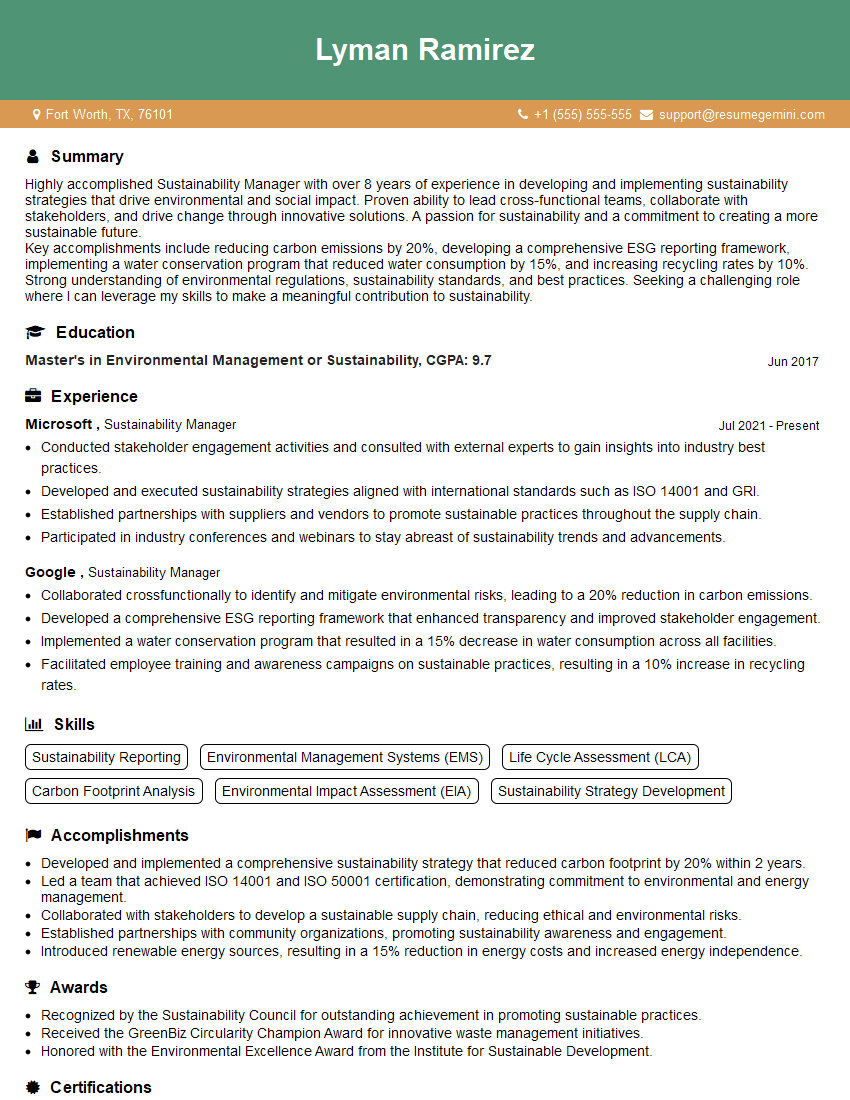
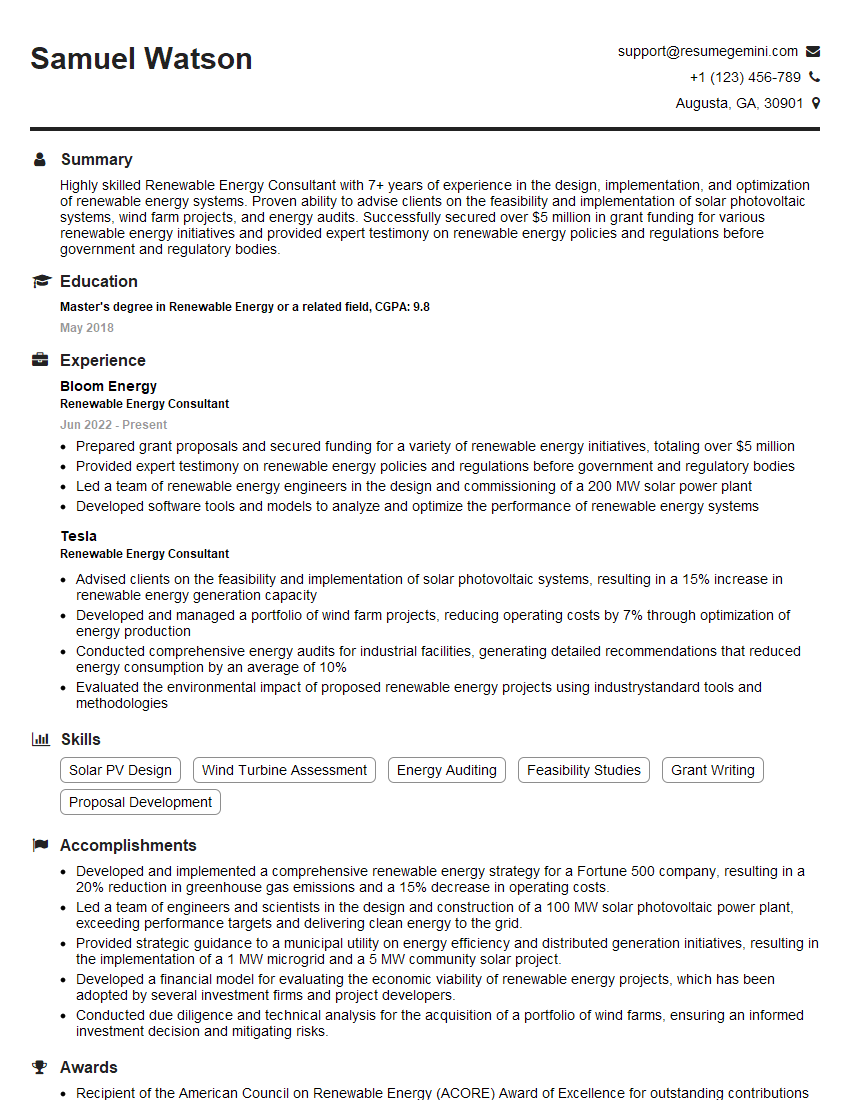
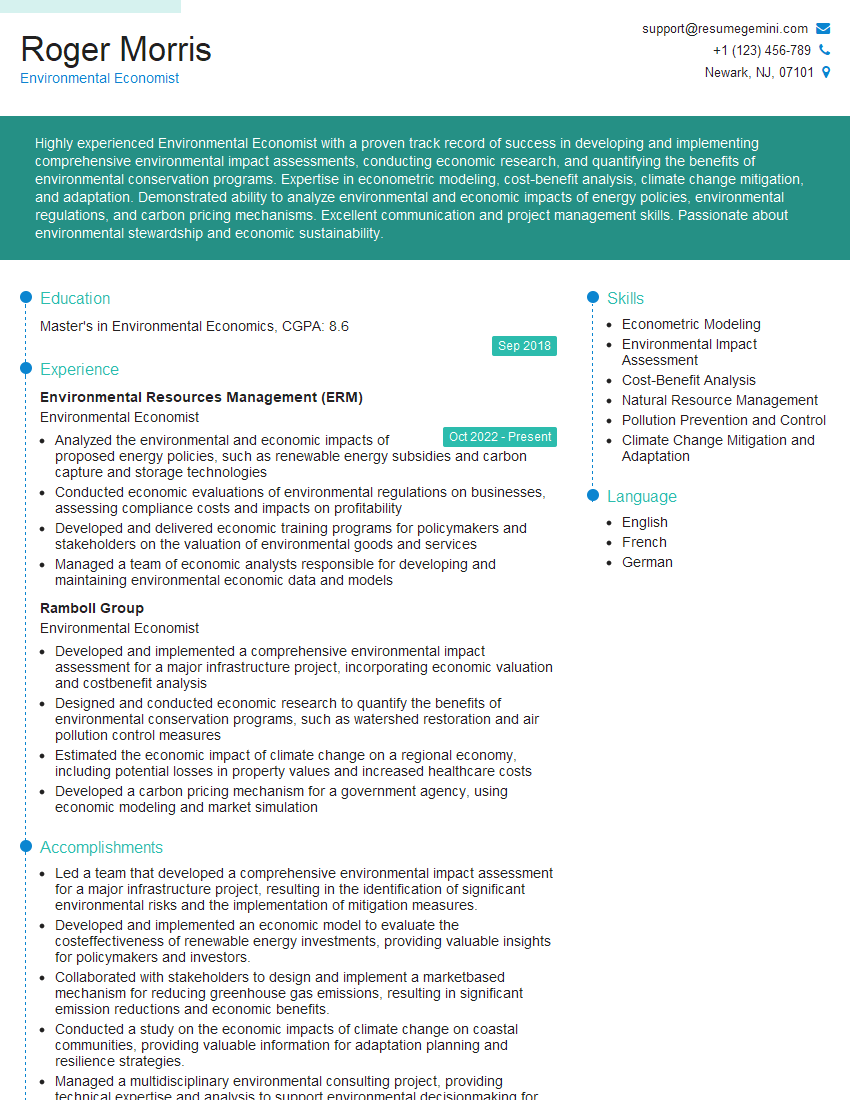
Mastering the intricacies of carbon markets is crucial for a successful career in sustainability, finance, and environmental consulting. A strong understanding of these markets significantly enhances your value to prospective employers. To maximize your job prospects, invest time in creating an ATS-friendly resume that highlights your relevant skills and experience. ResumeGemini is a trusted resource to help you build a professional and impactful resume, ensuring your application stands out. Examples of resumes tailored to the understanding of carbon markets are available to provide you with additional guidance.

Explore more articles
Users Rating of Our Blogs
Share Your Experience
We value your feedback! Please rate our content and share your thoughts (optional).
What Readers Say About Our Blog
Very informative content, great job.
good