The right preparation can turn an interview into an opportunity to showcase your expertise. This guide to Understanding of Chemical Processes interview questions is your ultimate resource, providing key insights and tips to help you ace your responses and stand out as a top candidate.
Questions Asked in Understanding of Chemical Processes Interview
Q 1. Explain the difference between batch and continuous chemical processes.
Batch and continuous processes are two fundamental modes of operation in chemical manufacturing, differing significantly in their approach to production.
Batch processes operate in distinct cycles. Reactants are added to a reactor, the reaction proceeds, and then the products are removed before the next batch begins. Think of baking a cake – you mix ingredients, bake, and then take the cake out. The process repeats for each cake. Batch processes are ideal for small-scale production, specialized products, or when high product flexibility is required. They are often easier to set up and control for complex reactions.
Continuous processes, conversely, operate continuously without interruptions. Reactants are fed into the reactor constantly, and products are withdrawn simultaneously. This is like a conveyor belt in a factory – materials continuously enter and products continuously exit. Continuous processes are preferred for large-scale production of commodity chemicals due to higher efficiency and lower labor costs. However, they require more complex and expensive equipment and often less flexibility in product variations.
Example: Pharmaceutical drug synthesis often employs batch processes for smaller-scale production and rigorous quality control, while the production of polyethylene (plastic) relies heavily on continuous processes for mass production.
Q 2. Describe your experience with process safety management systems.
My experience with Process Safety Management (PSM) systems is extensive. I’ve worked in facilities adhering to OSHA’s PSM standard and other internationally recognized safety guidelines. This includes hands-on involvement in developing and implementing PSM elements such as:
- Hazard Identification and Risk Assessment (HIRA): Conducting thorough HAZOP (Hazard and Operability) studies and other risk assessments to identify potential hazards and quantify their risks.
- Process Safety Information (PSI): Developing and maintaining comprehensive documentation, including process flow diagrams (P&IDs), safety data sheets (SDS), and operating procedures.
- Operating Procedures: Creating and reviewing detailed Standard Operating Procedures (SOPs) to ensure safe and consistent operation. This includes emergency response procedures and shut-down protocols.
- Training: Designing and delivering training programs for operators and maintenance personnel on safe operating procedures, emergency response, and hazard recognition.
- Mechanical Integrity: Participating in the development and implementation of programs for equipment inspection, testing, maintenance, and repair.
- Management of Change (MOC): Establishing robust procedures to manage changes to processes, equipment, or procedures to prevent unintended consequences.
- Emergency Planning and Response: Developing and practicing emergency response plans for various scenarios, including fires, spills, and releases.
In one project, I led the implementation of a new MOC system that significantly improved the process and reduced the time to evaluate and approve proposed changes, ultimately enhancing process safety.
Q 3. How do you identify and troubleshoot process deviations?
Identifying and troubleshooting process deviations involves a systematic approach. It starts with monitoring key process parameters (temperature, pressure, flow rate, composition, etc.). A deviation is typically signaled by an alarm or a significant drift from the setpoint. My approach involves the following steps:
- Data Acquisition: Gather all available data, including historical process data, instrument readings, and operator logs.
- Deviation Analysis: Analyze the deviation, identifying the parameter(s) outside the normal operating range and the timing of the event. This often involves constructing deviation plots or using statistical process control (SPC) charts.
- Root Cause Identification: Use a systematic troubleshooting method such as a fishbone diagram (Ishikawa diagram) to identify potential root causes. This might involve examining equipment malfunction, human error, or changes in feedstock quality.
- Hypothesis Testing: Develop and test hypotheses regarding the root cause. This may involve simulations or experiments to verify the proposed cause.
- Corrective Action: Implement appropriate corrective actions to address the root cause. This could involve repairing equipment, retraining personnel, or adjusting process parameters.
- Preventive Action: Develop and implement preventive measures to avoid future occurrences of the same deviation. This might involve improving process control, enhancing equipment reliability, or modifying operating procedures.
Example: If a reactor temperature suddenly increases, I’d investigate potential causes such as a malfunctioning cooling system, an increase in the feed rate, or a reaction runaway. Using the steps above, I would systematically pinpoint the cause and then implement corrective actions (e.g., fixing the cooling system, adjusting the feed rate) and preventive actions (e.g., installing a temperature safety interlock).
Q 4. What are the key performance indicators (KPIs) for a chemical process?
Key Performance Indicators (KPIs) for a chemical process vary depending on the specific process and business objectives, but some common examples include:
- Yield: The percentage of desired product obtained from the reactants. A high yield indicates efficient resource utilization.
- Selectivity: The ratio of the desired product to undesired byproducts. High selectivity minimizes waste and simplifies purification.
- Conversion: The percentage of reactants converted to products. High conversion indicates efficient reactant utilization.
- Production Rate/Capacity: The amount of product produced per unit of time. This is critical for meeting production targets.
- Purity: The concentration of the desired product in the final product stream. High purity is crucial for meeting product specifications.
- Energy Consumption: The amount of energy used per unit of product. Minimizing energy use reduces operational costs and environmental impact.
- Downtime: The amount of time the process is not producing product. Minimizing downtime is essential for maximizing productivity.
- Safety Incidents: The number of safety incidents (near misses, accidents, etc.). Low rates demonstrate effective safety management.
- Waste Generation: The amount of waste produced per unit of product. Minimizing waste is important for environmental sustainability and cost reduction.
Monitoring these KPIs allows for continuous improvement and ensures efficient and safe operation.
Q 5. Explain your understanding of mass and energy balances in chemical processes.
Mass and energy balances are fundamental principles in chemical engineering. They are based on the laws of conservation of mass and energy, respectively. Mass balance states that the mass entering a system equals the mass leaving the system plus any accumulation within the system. Energy balance states that the energy entering a system equals the energy leaving the system plus any change in the system’s internal energy. These balances are crucial for designing, operating, and optimizing chemical processes.
Mass Balance Equation: Input - Output + Accumulation = 0
Energy Balance Equation: Energy In - Energy Out + Energy Accumulation = 0
These equations can be applied to individual units within a process flowsheet or the entire process. For example, in a reactor, we’d account for the mass of reactants entering, the mass of products and unreacted reactants leaving, and any mass accumulating within the reactor. Similarly, an energy balance would consider heat input (from heating elements), heat output (to cooling jackets), work done by or on the system, and the change in the internal energy of the system. Accurate mass and energy balances are crucial for designing efficient processes and predicting process behavior.
Q 6. Describe different types of chemical reactors and their applications.
Chemical reactors are vessels where chemical reactions take place. Different reactor types are chosen based on reaction kinetics, product specifications, and economic considerations. Some common types include:
- Batch Reactors: Reactants are charged, the reaction proceeds, and products are removed at the end of the reaction cycle. Suitable for small-scale production and reactions with complex kinetics.
- Continuous Stirred Tank Reactors (CSTRs): Reactants are continuously fed, and products are continuously withdrawn. Well-mixed, relatively easy to control, but can have lower conversion for some reactions.
- Plug Flow Reactors (PFRs): Reactants flow through a tube or pipe with minimal mixing. Can achieve higher conversions than CSTRs for some reactions but are more difficult to control.
- Fluidized Bed Reactors: Solid catalysts are suspended in a gas or liquid stream. Suitable for gas-solid reactions, offering high surface area for catalysis and good heat transfer.
- Fixed Bed Reactors: Solid catalysts are packed in a bed through which reactants flow. Commonly used in heterogeneous catalysis, offering good conversion but potentially facing issues with pressure drop and catalyst deactivation.
Applications: Batch reactors are used in pharmaceutical synthesis, CSTRs in polymerization reactions, PFRs in many gas-phase reactions, fluidized bed reactors in cracking processes, and fixed bed reactors in ammonia production.
Q 7. How do you ensure the quality control of a chemical product?
Ensuring the quality control of a chemical product is critical for meeting specifications, maintaining product consistency, and ensuring customer satisfaction. My approach involves a multi-pronged strategy:
- In-process Monitoring: Continuous monitoring of critical process parameters (temperature, pressure, concentration, etc.) during the manufacturing process. This provides early warning of potential quality issues.
- Sampling and Analysis: Regularly sampling the process stream and the final product to analyze its physical and chemical properties (composition, purity, particle size, etc.). Techniques used might include titration, chromatography, spectroscopy, and mass spectrometry.
- Statistical Process Control (SPC): Using statistical methods to monitor process variability and identify trends that could indicate quality issues. Control charts help to maintain consistent quality over time.
- Quality Audits: Regular audits of the manufacturing process and quality control procedures to ensure compliance with standards and identify areas for improvement.
- Documentation: Meticulous record keeping, including batch records, analytical results, and deviations from standard operating procedures. This ensures traceability and facilitates root-cause analysis when problems arise.
- Calibration and Maintenance: Ensuring instruments and equipment used for quality control are properly calibrated and maintained to guarantee accuracy and reliability.
Example: In a pharmaceutical setting, stringent quality control is vital. Every batch of drug product is rigorously tested to verify purity, potency, and the absence of impurities. This might involve multiple analytical techniques and extensive documentation to meet regulatory requirements.
Q 8. Explain the principles of process control and instrumentation.
Process control and instrumentation are the heart of efficient and safe chemical processing. Process control focuses on maintaining desired operating conditions (temperature, pressure, flow rate, composition) within specified limits, while instrumentation provides the tools to measure these variables and implement control actions. Think of it like driving a car: the process is the car’s journey, the control system is the steering wheel and accelerator/brake, and the instrumentation are the speedometer, fuel gauge, and other indicators.
Principles of Process Control: This involves using feedback loops. A sensor measures the process variable (e.g., temperature), a controller compares the measurement to a setpoint (the desired value), and an actuator (e.g., valve) adjusts the process to minimize the difference. Common control strategies include Proportional-Integral-Derivative (PID) control, which adjusts the actuator based on the current error, the accumulated error, and the rate of change of the error. Advanced control techniques involve model predictive control (MPC) and cascade control for more complex systems.
Principles of Instrumentation: This covers the selection, installation, calibration, and maintenance of devices used to measure and control process variables. This includes sensors (thermocouples, pressure transducers, flow meters, analyzers), transmitters to convert sensor signals, and actuators (valves, pumps, motors). Proper calibration and maintenance are crucial for accurate measurements and reliable control.
Example: In a reactor, a thermocouple measures temperature, a transmitter sends this data to a PID controller, and a control valve adjusts the flow of cooling water to maintain the desired reaction temperature. A malfunctioning thermocouple would lead to inaccurate temperature control and potentially damage the reactor or produce an off-spec product.
Q 9. What are the common hazards associated with chemical processing?
Chemical processing presents a wide range of hazards, broadly categorized into:
- Fire and Explosion Hazards: Many chemicals are flammable or explosive. This risk is heightened by the presence of oxygen, ignition sources, and the generation of flammable vapors. Examples include handling solvents, using compressed gases, and reactions that produce heat.
- Toxicity Hazards: Chemicals can be toxic by inhalation, ingestion, or skin contact. Exposure to toxic substances can cause a wide range of health problems, from mild irritation to serious illness or death. Examples range from simple irritants to highly toxic compounds like cyanide.
- Reactivity Hazards: Some chemicals react violently with each other, air, or water, potentially leading to fires, explosions, or the release of toxic substances. Improper mixing or storage can lead to runaway reactions.
- Physical Hazards: These include the risk of burns from hot surfaces or chemicals, injuries from moving machinery or equipment, and slips, trips, and falls. Pressure vessels and piping systems pose risks if not properly maintained.
- Environmental Hazards: Accidental releases of chemicals can cause significant environmental damage, impacting air, water, and soil quality. Proper waste disposal and environmental protection are crucial.
Mitigation: Effective hazard mitigation involves a combination of engineering controls (process design, safety systems), administrative controls (safe work practices, training), and personal protective equipment (PPE).
Q 10. How do you calculate the yield and selectivity of a chemical reaction?
Yield and selectivity are key metrics in evaluating the effectiveness of a chemical reaction. They quantify how much of the desired product is formed compared to the amount of reactant consumed and the amount of unwanted byproducts produced.
Yield: The yield of a reaction is the ratio of the actual amount of product obtained to the theoretical maximum amount that could be obtained based on stoichiometry, expressed as a percentage. It represents the efficiency of the reaction in converting reactants into the desired product.
Yield (%) = (Actual amount of product obtained / Theoretical maximum amount of product) x 100
Selectivity: Selectivity is the ratio of the amount of desired product formed to the amount of other products formed (byproducts). It indicates how effectively the reaction produces the desired product without generating unwanted byproducts. A high selectivity is desirable for minimizing waste and increasing the overall efficiency of the process.
Selectivity = (Moles of desired product / Moles of undesired product)
Example: Consider a reaction where A is the reactant, B is the desired product, and C is an undesired byproduct. If 100 moles of A react, and 80 moles of B and 20 moles of C are formed, the yield of B is 80% (80/100 x 100), and the selectivity of B over C is 4 (80/20).
Q 11. Explain your experience with process simulation software (e.g., Aspen Plus, ChemCAD).
I have extensive experience using Aspen Plus for steady-state and dynamic process simulation, particularly for the design and optimization of chemical reactors, distillation columns, and other unit operations. I’ve used it to model various processes including polymerization, petrochemical processes, and gas processing.
My work with Aspen Plus included developing flowsheets, defining process parameters, running simulations, analyzing results, and optimizing process designs to meet specific targets (e.g., maximize yield, minimize energy consumption). I am proficient in using Aspen Plus’s various property packages and specialized modules for specific applications. I’ve also used it to conduct sensitivity analysis to understand the impact of process variables on product quality and overall process performance.
While I’m highly proficient in Aspen Plus, I also have familiarity with ChemCAD and understand their comparative strengths and weaknesses in different contexts. For example, while Aspen Plus boasts a vast property database, ChemCAD offers strong capabilities in certain specialized areas. The choice of software often depends on the specific project needs and available resources.
Q 12. Describe your experience with process optimization techniques.
My experience with process optimization techniques involves a blend of both theoretical knowledge and practical application. I’ve employed several techniques, including:
- Data-driven optimization: Utilizing process historical data (e.g., via statistical process control (SPC)) to identify areas for improvement and to build empirical models for process optimization.
- Design of Experiments (DOE): Employing DOE methodologies such as factorial designs or response surface methodology to systematically investigate the effects of multiple process variables on product quality and process performance.
- Nonlinear Programming (NLP): Applying NLP techniques to solve optimization problems, such as maximizing yield or minimizing cost, subject to constraints such as equipment limitations or safety requirements. This often involves utilizing specialized software.
- Model-based optimization: Leveraging process models (developed using simulation software like Aspen Plus) to identify optimal operating conditions before implementing them in a real-world setting. This minimizes risks and costs associated with direct experimentation.
A specific example from my experience involved optimizing the operating parameters of a distillation column to maximize the purity of the desired product while minimizing energy consumption. By using a combination of Aspen Plus simulations and DOE, we were able to identify a set of operating conditions that significantly improved both yield and energy efficiency.
Q 13. How do you handle process upsets and emergencies?
Handling process upsets and emergencies requires a calm, systematic approach. My strategy involves:
- Immediate Actions: Prioritize safety. Shut down the process if necessary to prevent further damage or risk to personnel. Activate emergency response procedures (e.g., alarms, emergency shutdown systems).
- Diagnostics: Identify the root cause of the upset using available data (sensors, alarms, historical data). This often involves analyzing process trends, reviewing operating procedures, and possibly investigating the equipment involved.
- Corrective Actions: Implement appropriate corrective actions based on the identified root cause. This might involve adjusting process parameters, repairing equipment, or replacing faulty components.
- Documentation and Reporting: Thoroughly document the event, including the cause, the actions taken, and the outcome. This is crucial for learning from mistakes, preventing future occurrences, and complying with regulatory requirements.
- Post-Incident Review: Conduct a post-incident review to identify areas for improvement in the process, operating procedures, or safety systems. Implementing changes to prevent similar occurrences in the future is critical.
For example, during an unexpected pressure surge in a reactor, I would immediately activate the emergency shutdown system, investigate the pressure rise using sensor data, and implement corrective actions such as adjusting the feed rate or replacing a faulty valve. A thorough investigation would then be carried out to determine the root cause and prevent recurrence.
Q 14. What are the environmental regulations relevant to chemical processing?
Environmental regulations concerning chemical processing are extensive and vary depending on the location and the specific chemicals involved. Key aspects generally include:
- Air Emissions: Regulations limit the release of pollutants such as volatile organic compounds (VOCs), hazardous air pollutants (HAPs), and greenhouse gases (GHGs) into the atmosphere. This frequently involves the use of pollution control equipment, such as scrubbers and incinerators.
- Water Discharges: Strict limits exist on the discharge of pollutants into waterways, encompassing parameters such as pH, temperature, and concentrations of various chemicals. Wastewater treatment plants are often used to meet these standards.
- Waste Management: Regulations govern the generation, storage, transportation, and disposal of hazardous waste, often requiring specialized treatment or disposal facilities.
- Risk Management Plans: Many jurisdictions require chemical facilities to develop and implement comprehensive risk management plans to prevent accidents and minimize environmental impacts. These plans typically include prevention, preparedness, response, and recovery strategies.
- Permitting: Operating a chemical processing facility typically requires obtaining various permits and licenses from relevant environmental agencies.
Specific regulations vary widely, for example, the Clean Air Act and Clean Water Act in the US, and the REACH regulation in the European Union. Staying abreast of these regulations and ensuring compliance is crucial for the responsible operation of any chemical processing facility.
Q 15. Explain your understanding of different separation techniques (e.g., distillation, filtration).
Separation techniques are crucial in chemical processes for isolating desired products from mixtures. They exploit differences in physical or chemical properties of the components. Let’s look at two common methods:
- Distillation: This relies on the difference in boiling points. A liquid mixture is heated, and the component with the lower boiling point vaporizes first. The vapor is then condensed back into a liquid, separating it from the other components. Think of a simple home still used to make distilled water – the water boils and the vapor is collected, leaving behind impurities.
- Filtration: This separates solids from liquids or gases using a porous medium. The liquid or gas passes through the filter, leaving behind the solid particles. A coffee filter is a perfect example; it separates the coffee grounds from the brewed coffee.
Other common separation techniques include crystallization (based on solubility), chromatography (based on differential adsorption), centrifugation (based on density), and extraction (based on solubility in different solvents).
Career Expert Tips:
- Ace those interviews! Prepare effectively by reviewing the Top 50 Most Common Interview Questions on ResumeGemini.
- Navigate your job search with confidence! Explore a wide range of Career Tips on ResumeGemini. Learn about common challenges and recommendations to overcome them.
- Craft the perfect resume! Master the Art of Resume Writing with ResumeGemini’s guide. Showcase your unique qualifications and achievements effectively.
- Don’t miss out on holiday savings! Build your dream resume with ResumeGemini’s ATS optimized templates.
Q 16. How do you design and implement a chemical process?
Designing and implementing a chemical process is a multi-step procedure. It begins with clearly defining the objective – what product are we aiming for and in what quantity? Next comes process development, involving:
- Defining the reaction: Understanding the stoichiometry, kinetics, and thermodynamics of the reaction.
- Material and energy balances: Calculating the amounts of reactants and products, and energy requirements (heating, cooling).
- Reactor design: Selecting the appropriate reactor type (batch, continuous stirred tank, plug flow) based on reaction kinetics and desired production rate.
- Separation and purification: Choosing suitable separation techniques to isolate the product and remove impurities. This often involves multiple stages.
- Process control: Designing a system to monitor and control key process variables (temperature, pressure, flow rates) to ensure consistent product quality and safety.
- Safety and environmental considerations: Incorporating safety measures (e.g., pressure relief valves) and minimizing waste generation.
Implementation involves building the process plant, commissioning it, and then optimizing the process to maximize yield and efficiency. Throughout, rigorous testing and data analysis are essential.
Q 17. Explain your experience with different types of chemical pumps and valves.
Chemical pumps and valves are vital for controlling fluid flow in chemical processes. The choice depends heavily on the fluid properties (viscosity, corrosiveness, temperature) and the process requirements.
- Pumps: Examples include centrifugal pumps (ideal for low-viscosity liquids), positive displacement pumps (suitable for viscous fluids), and diaphragm pumps (for corrosive or abrasive fluids).
- Valves: Different valves control flow in different ways: Globe valves offer precise control, gate valves provide on/off control, ball valves are quick-acting, and check valves prevent backflow.
Selecting the wrong pump or valve can lead to inefficiencies, equipment damage, or safety hazards. For instance, using a centrifugal pump for a highly viscous fluid would be inefficient and could damage the pump.
Q 18. What are the different types of chemical unit operations?
Chemical unit operations are the individual steps in a chemical process. They can be categorized broadly as:
- Fluid flow operations: Pumping, piping, mixing, filtration.
- Heat transfer operations: Heating, cooling, evaporation, condensation.
- Mass transfer operations: Distillation, absorption, extraction, drying.
- Reaction operations: Carrying out chemical reactions in reactors of various types.
- Solid handling operations: Crushing, grinding, conveying, screening.
These operations are combined in various sequences to achieve the overall process goal. Understanding each operation’s principles is crucial for process design and optimization.
Q 19. How do you calculate the residence time in a chemical reactor?
Residence time in a chemical reactor is the average time a fluid element spends within the reactor. It’s crucial for reaction efficiency. For a continuous stirred tank reactor (CSTR), the calculation is relatively straightforward:
Residence time (τ) = Reactor volume (V) / Volumetric flow rate (Q)
For example, if a CSTR has a volume of 10 m³ and a volumetric flow rate of 2 m³/min, the residence time is 5 minutes. In plug flow reactors (PFR), the residence time is equivalent to the time required for the fluid element to travel the length of the reactor.
Accurate residence time calculation is critical because it directly impacts the extent of reaction. Too short a residence time may lead to incomplete conversion, while too long a time might cause undesirable side reactions or product degradation.
Q 20. Describe your understanding of heat transfer in chemical processes.
Heat transfer is fundamental to chemical processes because many reactions are either exothermic (releasing heat) or endothermic (absorbing heat). Effective heat transfer is essential for maintaining desired reaction temperatures, controlling reaction rates, and preventing runaway reactions.
Mechanisms include:
- Conduction: Heat transfer through direct contact, like heat flowing through the walls of a reactor.
- Convection: Heat transfer through fluid motion, like heating a liquid in a stirred tank.
- Radiation: Heat transfer through electromagnetic waves, important in high-temperature processes.
Heat exchangers are commonly used to control temperature, transferring heat between process streams or between a process stream and a utility (like steam or cooling water). Understanding heat transfer principles is crucial for designing efficient and safe chemical processes.
Q 21. Explain the concepts of reaction kinetics and thermodynamics.
Reaction kinetics and thermodynamics are intertwined concepts vital for understanding and controlling chemical reactions:
- Reaction kinetics deals with the *rate* of a reaction. It explores factors that influence how quickly reactants are converted to products, such as temperature, concentration, and catalysts. Kinetics often involves rate laws and activation energies.
- Reaction thermodynamics deals with the *feasibility* and *equilibrium* of a reaction. It determines whether a reaction will occur spontaneously and what the relative amounts of reactants and products will be at equilibrium. This involves concepts like enthalpy, entropy, and Gibbs free energy.
For example, a reaction might be thermodynamically favorable (spontaneous), but kinetically slow (requiring a catalyst or high temperature to proceed at a reasonable rate). A deep understanding of both aspects is necessary for optimizing reaction conditions and achieving high yields.
Q 22. How do you conduct process safety assessments?
Process safety assessments are crucial for preventing accidents in chemical plants. They involve a systematic evaluation of potential hazards and risks associated with a chemical process, from raw material handling to final product disposal. My approach involves a multi-step process:
- Hazard Identification: This stage uses techniques like HAZOP (Hazard and Operability Study), What-If analysis, and Failure Mode and Effects Analysis (FMEA) to identify potential hazards. For example, in a reactor system, we’d consider scenarios like runaway reactions, equipment failures (e.g., pump failure), and human errors.
- Risk Assessment: Once hazards are identified, we assess the likelihood and severity of each hazard. This usually involves assigning probabilities and consequences, often quantified using risk matrices. A high probability and high consequence scenario would warrant immediate attention.
- Risk Reduction: Based on the risk assessment, we develop and implement control measures to mitigate the identified risks. These could include engineering controls (e.g., installing safety relief valves, implementing interlocks), administrative controls (e.g., standard operating procedures, training programs), and personal protective equipment (PPE).
- Monitoring and Review: The process safety assessment isn’t a one-time event. Regular monitoring and review are vital to ensure the effectiveness of implemented controls and to address any changes in the process or operating conditions.
I have extensive experience in applying these techniques across various chemical processes, ensuring that safety is integrated into every stage of design, operation, and maintenance.
Q 23. Describe your experience with HAZOP studies.
HAZOP studies are a powerful tool for identifying potential hazards and operability problems in a chemical process. My experience with HAZOPs spans several large-scale projects, including the design of a new polymerization plant and the optimization of an existing petrochemical process. During a HAZOP, we systematically review the process flow diagram (PFD) and piping and instrumentation diagram (P&ID), using guide words (e.g., ‘no,’ ‘more,’ ‘less,’ ‘part of’) to challenge each parameter and identify deviations from the intended design or operation. For example, in a reactor, we might use the guide word ‘more’ with the parameter ‘temperature’ to explore the consequences of exceeding the design temperature. This could lead to a runaway reaction, necessitating the installation of a sophisticated temperature control system and emergency shutdown mechanisms. The outcome of a HAZOP is a documented list of identified hazards, along with proposed recommendations for mitigation. I’m proficient in facilitating HAZOP sessions, documenting findings, and guiding the implementation of corrective actions.
Q 24. Explain your understanding of different types of chemical reactors.
Chemical reactors are the heart of many chemical processes. They come in various types, each suited to different reaction conditions and chemistries. Here are some examples:
- Batch Reactors: These reactors are charged with reactants, allowed to react, and then discharged. They are simple and versatile but not ideal for large-scale production. Imagine making a small batch of soap – it’s a batch process.
- Continuous Stirred Tank Reactors (CSTRs): These reactors maintain a constant volume and composition through continuous feed and discharge. They offer good mixing but are less efficient than tubular reactors for some reactions.
- Tubular Reactors: These are long tubes where reactants flow continuously, offering excellent control over residence time and temperature gradients. They are ideal for reactions requiring specific temperature profiles, like many catalytic reactions.
- Fluidized Bed Reactors: These reactors use a gas stream to suspend solid catalyst particles, providing excellent heat and mass transfer. This type of reactor is commonly used in catalytic cracking in the petroleum industry.
- Plug Flow Reactors (PFRs): These reactors approximate piston-like flow, offering good control over residence time. Imagine a toothpaste tube – the material moves through it in a plug-like flow.
The choice of reactor type depends on factors like reaction kinetics, heat transfer requirements, and production scale. My experience encompasses design, operation, and optimization of various reactor types, ensuring efficient and safe operation.
Q 25. How do you optimize chemical processes for efficiency and sustainability?
Optimizing chemical processes for efficiency and sustainability is a key focus in modern chemical engineering. My approach integrates several strategies:
- Process Intensification: Reducing equipment size and energy consumption by using innovative technologies like microreactors or membrane reactors.
- Waste Minimization: Designing processes that generate less waste and utilizing waste streams as feedstocks for other processes (a circular economy approach).
- Energy Efficiency: Improving energy efficiency through process integration, heat recovery, and the use of renewable energy sources.
- Green Chemistry Principles: Incorporating principles of green chemistry, such as using less hazardous materials and solvents, designing safer chemicals, and minimizing energy consumption.
- Process Simulation and Modeling: Utilizing process simulation software to explore different process designs and operating conditions, optimizing for efficiency and sustainability.
For example, in a previous project, we implemented a heat integration scheme that recovered waste heat from an exothermic reaction to preheat the reactants, resulting in significant energy savings. We also investigated the use of bio-based solvents to reduce the environmental impact of the process.
Q 26. Describe your experience with data analysis and interpretation in chemical processing.
Data analysis and interpretation are crucial for understanding and optimizing chemical processes. I have extensive experience in using statistical methods, process control techniques, and advanced data analytics to extract valuable insights from process data. This includes using software like Aspen Plus and MATLAB for modeling and simulation, and statistical packages like R or Python for data analysis. For example, I once used multivariate statistical analysis to identify the key process variables affecting product quality in a polymerization reactor. This allowed us to develop a more robust and efficient control strategy. I also use process control techniques like PID control and advanced control algorithms (e.g., model predictive control) to maintain optimal operating conditions and improve process performance.
Q 27. How do you ensure the safe handling and storage of chemicals?
Safe handling and storage of chemicals are paramount. My approach adheres strictly to regulations and best practices. This includes:
- Proper Labeling and Identification: Ensuring all chemicals are clearly labeled with their chemical name, hazards, and handling instructions.
- Compatibility Assessment: Storing incompatible chemicals separately to prevent dangerous reactions. For example, strong acids and strong bases should never be stored together.
- Appropriate Containment: Using suitable containers and secondary containment to prevent spills and leaks.
- Ventilation and Environmental Controls: Providing adequate ventilation in storage areas and using appropriate personal protective equipment (PPE) to minimize exposure to hazardous chemicals.
- Emergency Response Plan: Developing and regularly testing emergency response plans to deal with spills, leaks, or other accidents.
- Regular Inspections: Conducting regular inspections of storage areas to identify and address any potential hazards.
I’ve worked extensively with Safety Data Sheets (SDS) to ensure compliance with all regulations and best practices. This ensures that safe handling procedures are implemented throughout the entire lifecycle of the chemical.
Q 28. What are your strengths and weaknesses in relation to chemical process engineering?
Strengths: My strengths lie in my deep understanding of chemical process principles, coupled with practical experience in process design, optimization, and safety. I am proficient in using process simulation software, statistical analysis techniques, and various process safety assessment methods. I am a strong problem-solver and possess excellent communication and teamwork skills. I am also a highly motivated and results-oriented individual, committed to continuous learning and improvement. For example, I successfully led a team to optimize a complex chemical process, resulting in a 15% increase in production and a 10% reduction in waste generation.
Weaknesses: While I have a broad understanding of various chemical processes, my experience with specific niche areas like biochemical engineering or advanced materials synthesis is relatively limited. I am always seeking opportunities to expand my knowledge and expertise in these areas. I am also working on improving my ability to delegate tasks more effectively in larger projects. I recognize that efficient delegation allows for better team utilization and potentially faster project completion.
Key Topics to Learn for Understanding of Chemical Processes Interview
- Stoichiometry and Chemical Reactions: Mastering mole calculations, balancing chemical equations, and understanding reaction yields is fundamental. Consider practical applications like calculating reactant amounts for a specific product yield.
- Thermodynamics of Chemical Processes: Develop a strong understanding of enthalpy, entropy, Gibbs free energy, and their implications for reaction spontaneity and equilibrium. Think about how these concepts relate to process efficiency and optimization.
- Chemical Kinetics and Reaction Mechanisms: Learn to interpret reaction rate laws, understand the factors affecting reaction rates (temperature, concentration, catalysts), and explore different reaction mechanisms. Consider practical applications in areas like catalyst design and process control.
- Chemical Equilibrium and its Applications: Understand Le Chatelier’s principle and its implications for manipulating reaction conditions to maximize product yield or shift equilibrium. Relate this to industrial processes like ammonia synthesis.
- Phase Equilibria: Grasp the concepts of phase diagrams and their importance in understanding phase transitions and separations. Consider applications in distillation, extraction, and crystallization processes.
- Process Control and Instrumentation: Familiarize yourself with basic process control strategies, feedback loops, and common instrumentation used in chemical processes. This demonstrates practical understanding beyond theoretical knowledge.
- Reactor Design and Operation: Understand the different types of chemical reactors (batch, continuous, etc.) and their applications. Analyze factors influencing reactor performance, such as residence time and mixing.
- Material and Energy Balances: Master the application of material and energy balances to analyze and design chemical processes. This is a core skill applicable across various chemical engineering disciplines.
Next Steps
A strong understanding of chemical processes is crucial for career advancement in many chemical-related fields. It opens doors to roles with greater responsibility and higher earning potential. To maximize your job prospects, it’s vital to present your skills effectively. Create an ATS-friendly resume that highlights your expertise in these key areas. ResumeGemini is a trusted resource that can help you build a compelling and professional resume. We offer examples of resumes tailored specifically to professionals with expertise in Understanding of Chemical Processes to help you craft the perfect application.

Operations Manager Resume Sample
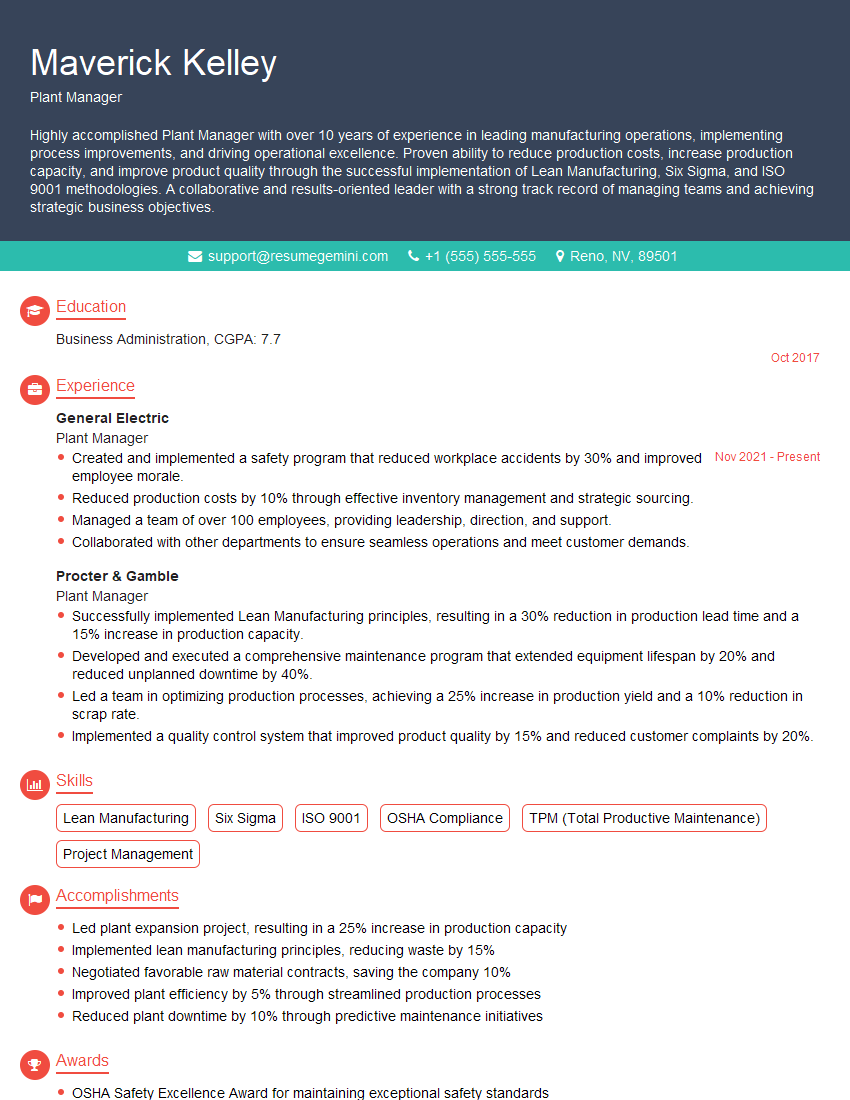
Plant Manager Resume Sample

Project Engineer Resume Sample
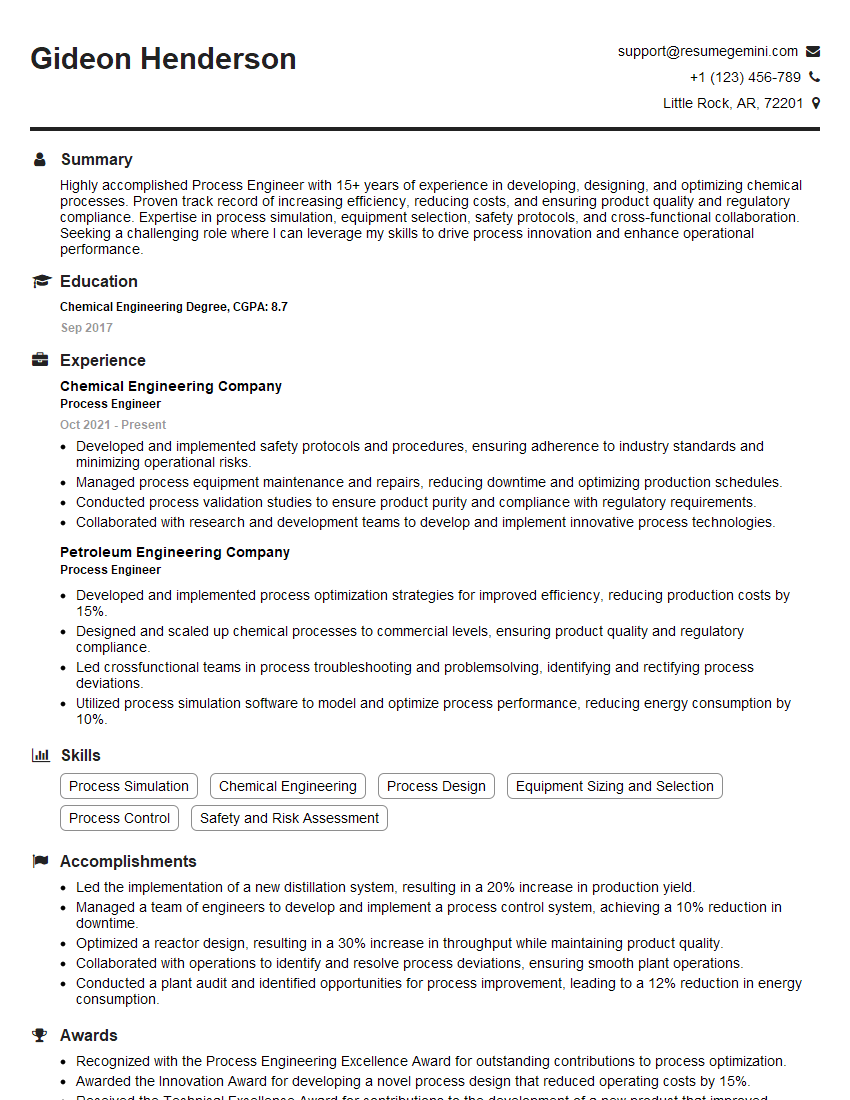
Process Engineer Resume Sample

Research Scientist Resume Sample
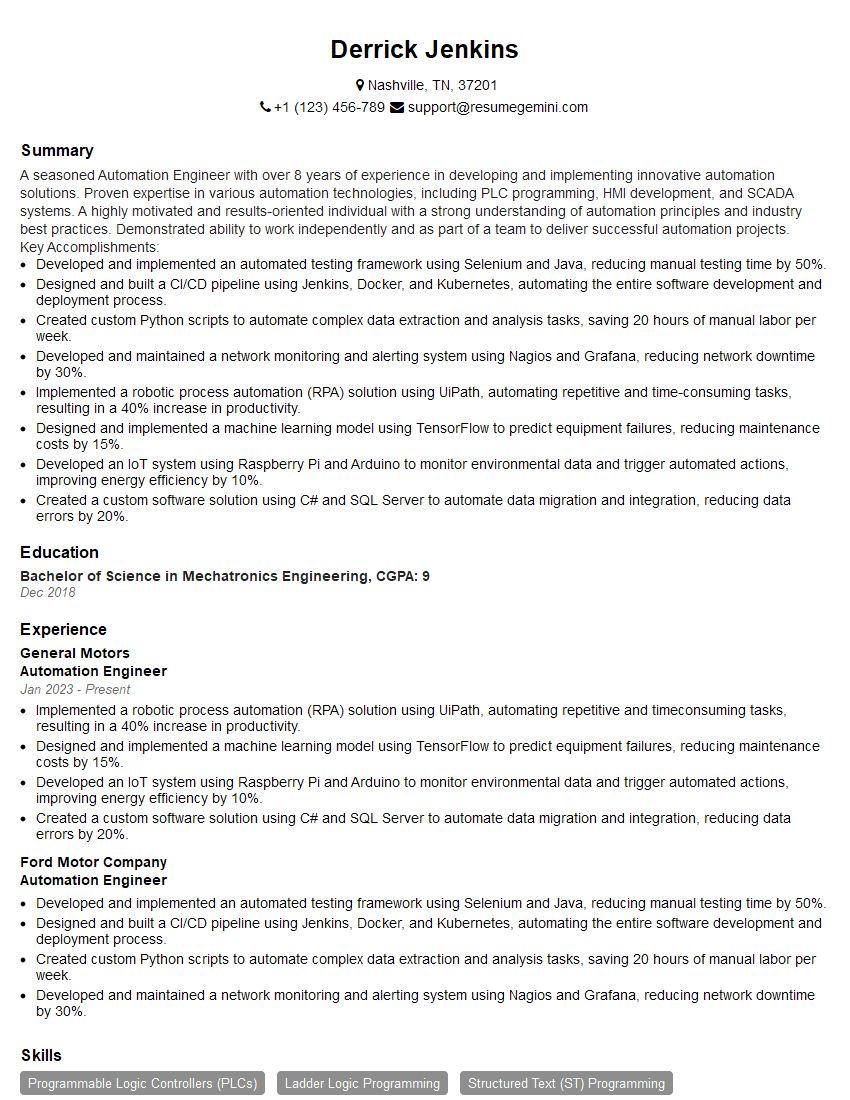
Automation Engineer Resume Sample
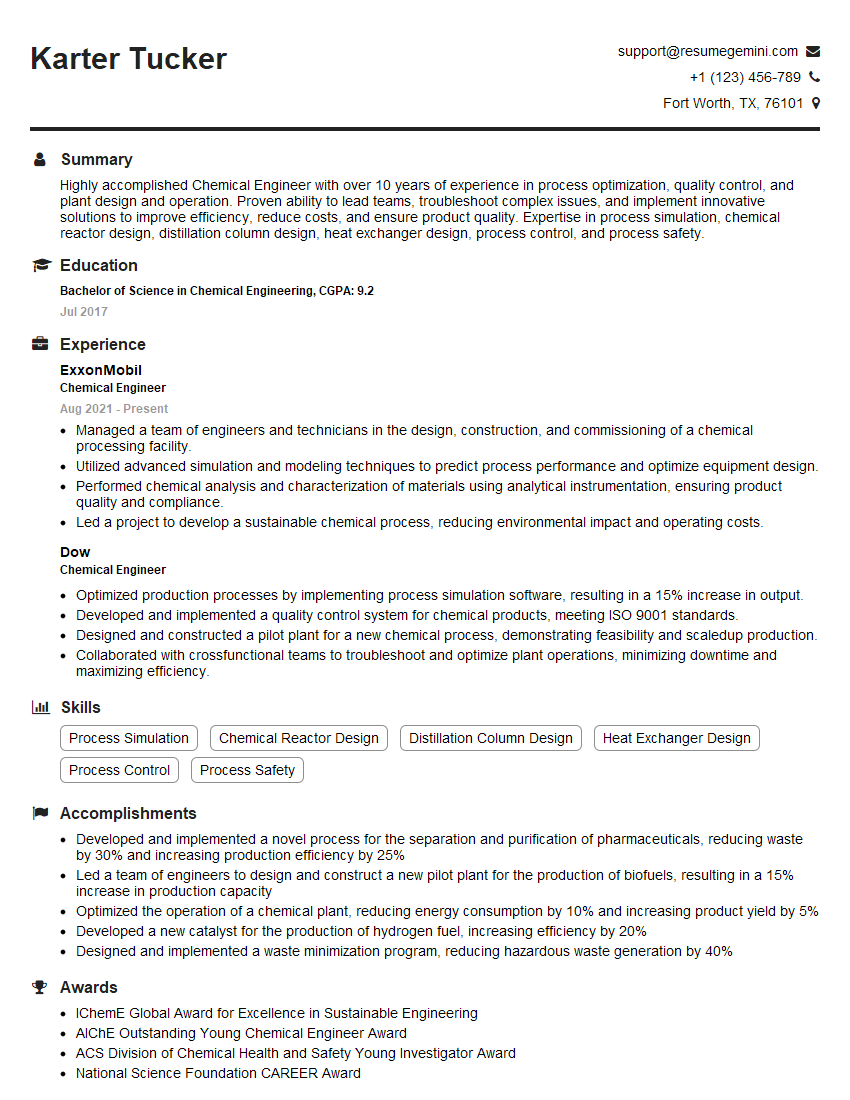
Chemical Engineer Resume Sample
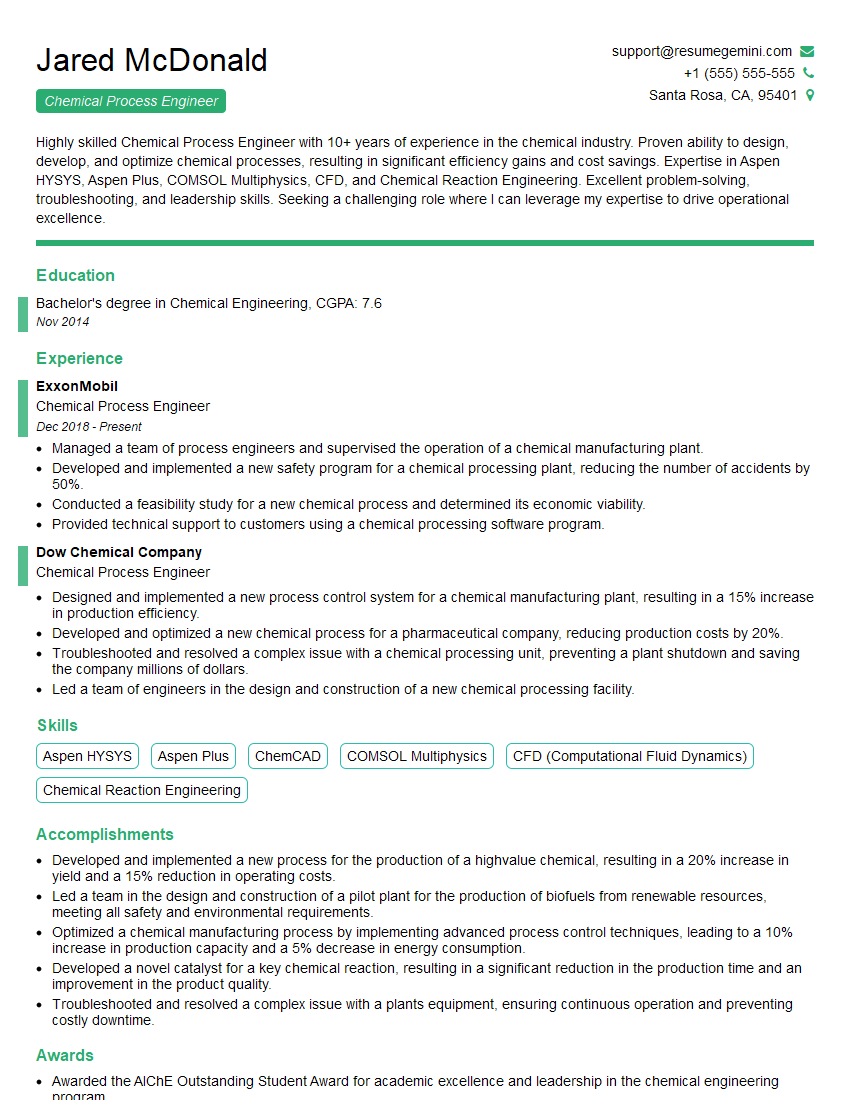
Chemical Process Engineer Resume Sample
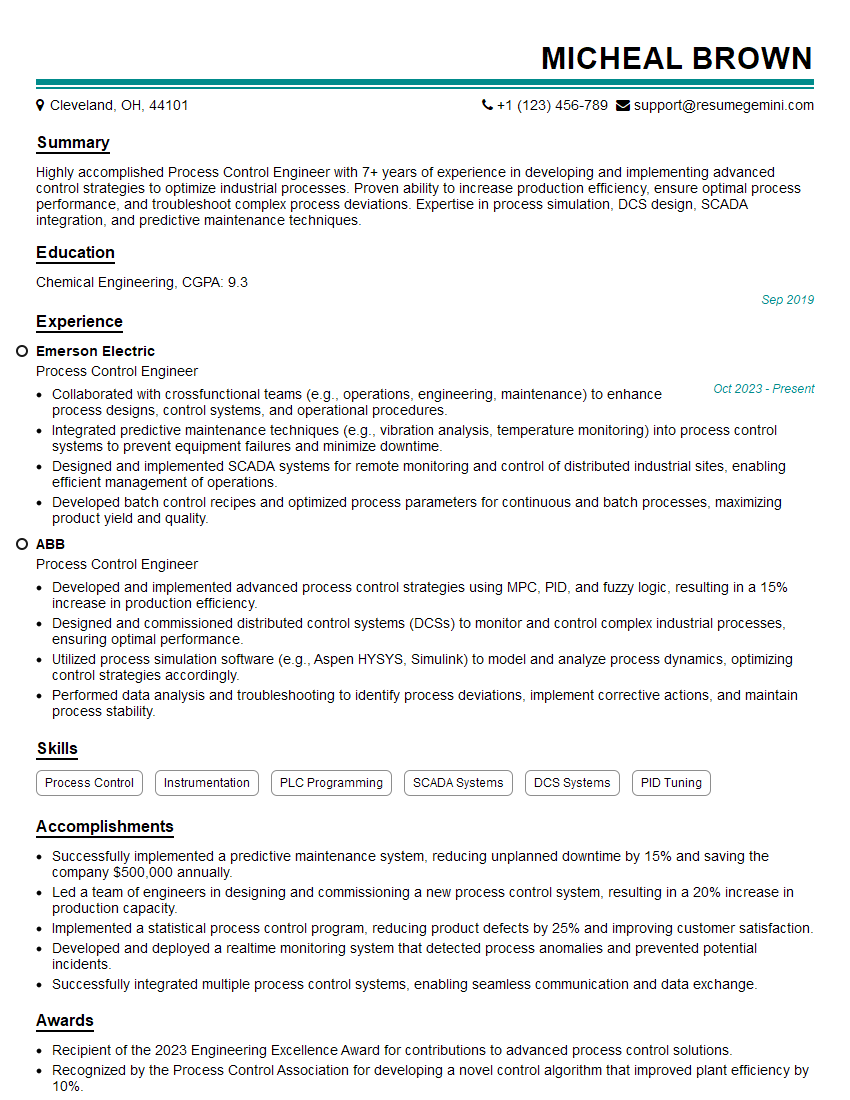
Process Control Engineer Resume Sample
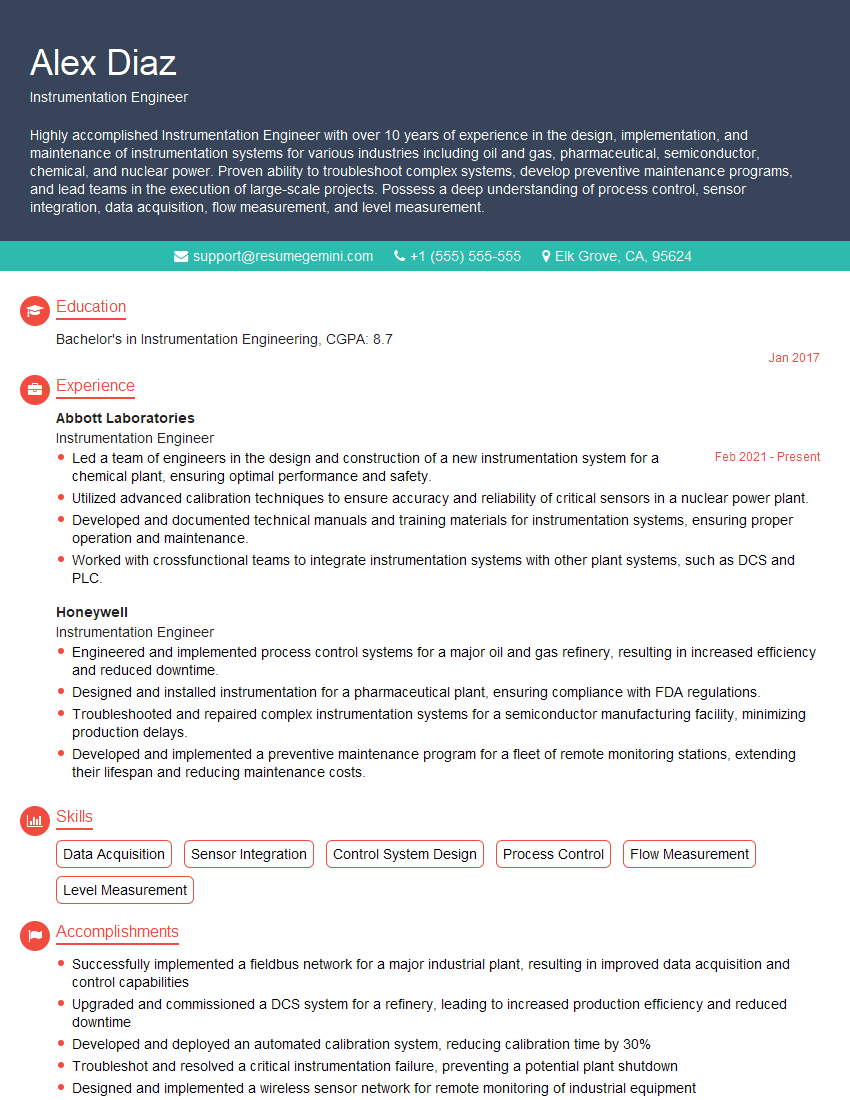
Instrumentation Engineer Resume Sample
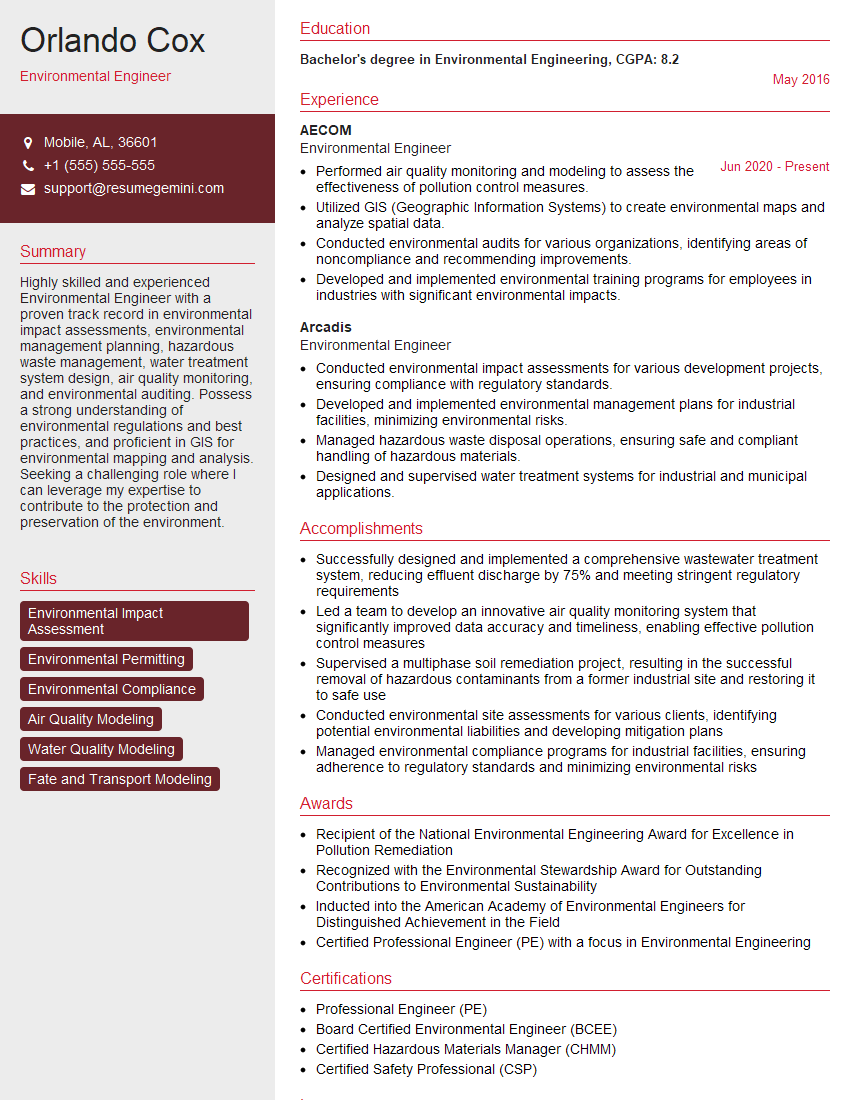
Environmental Engineer Resume Sample
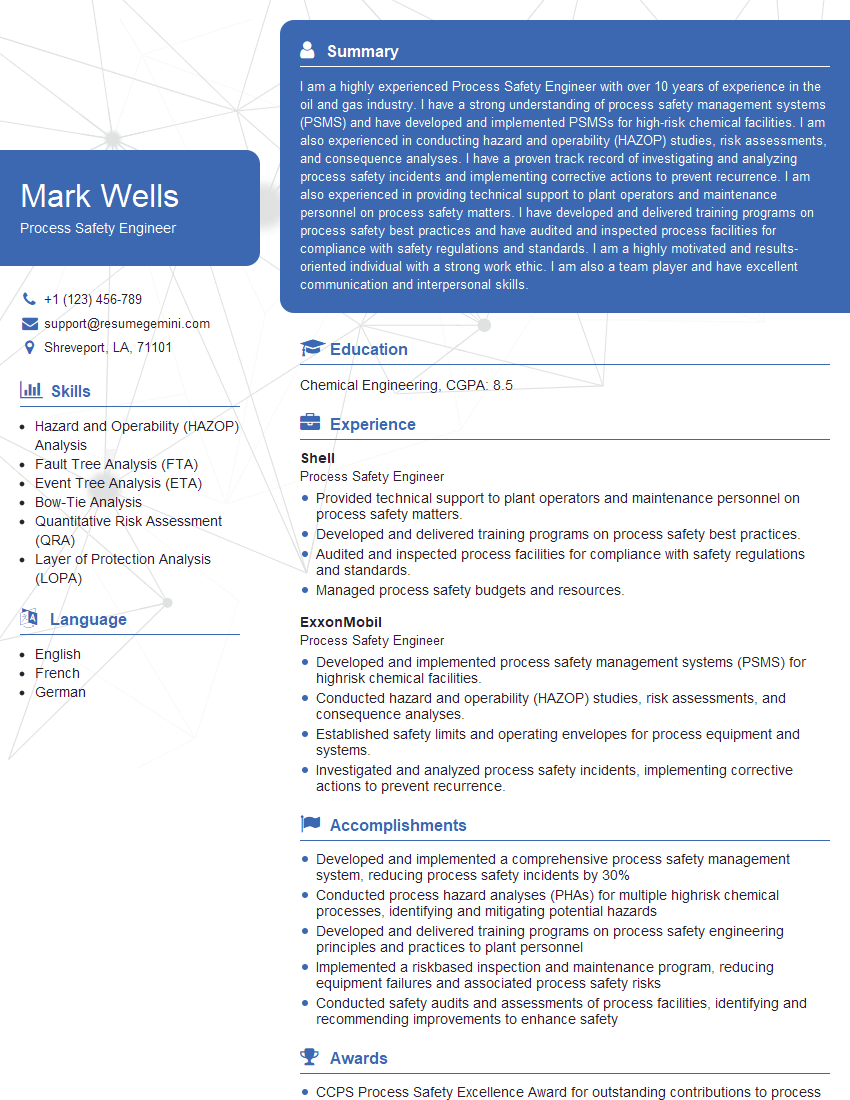
Process Safety Engineer Resume Sample
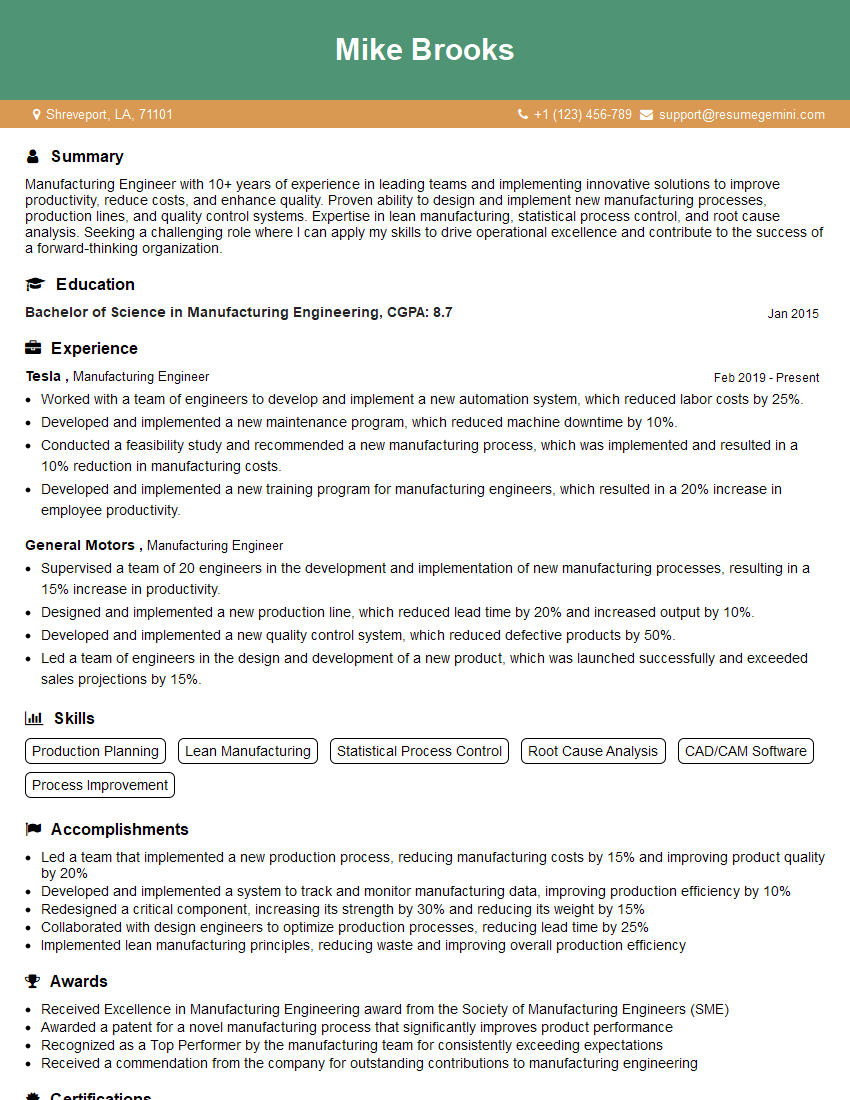
Manufacturing Engineer Resume Sample
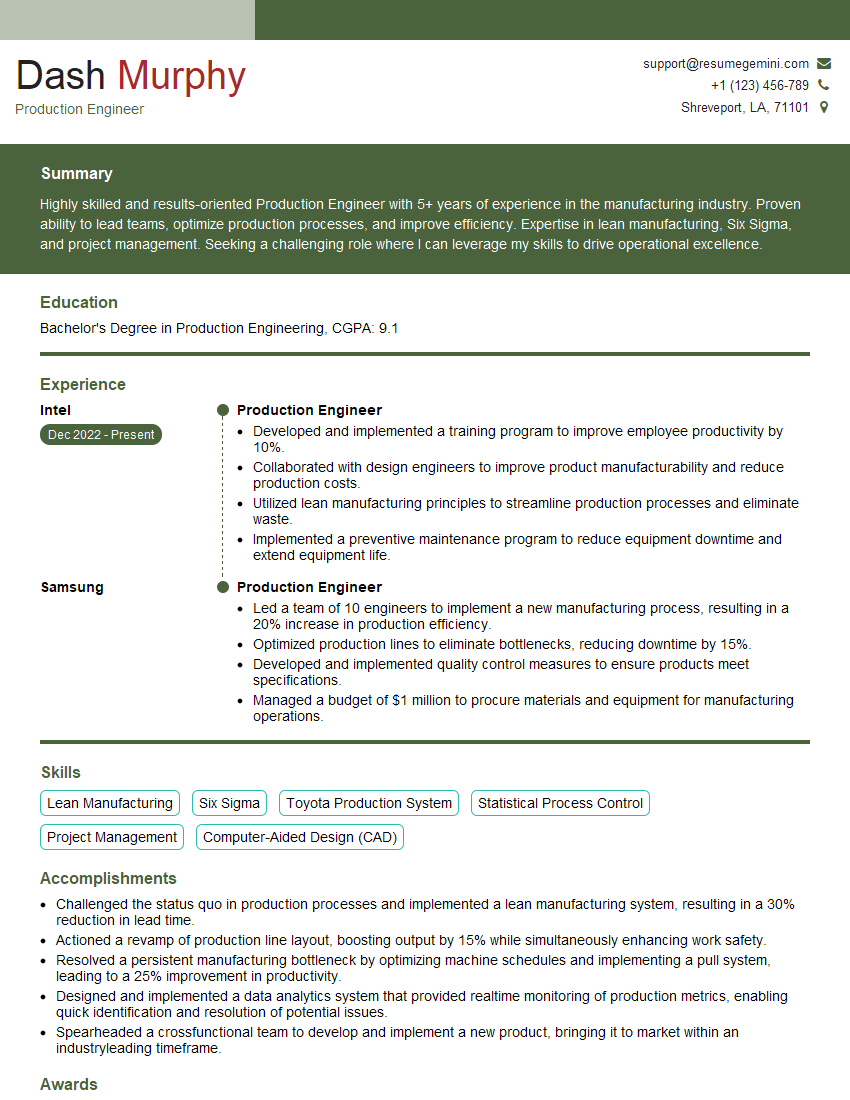
Production Engineer Resume Sample

Quality Assurance Engineer Resume Sample

Analytical Chemist Resume Sample
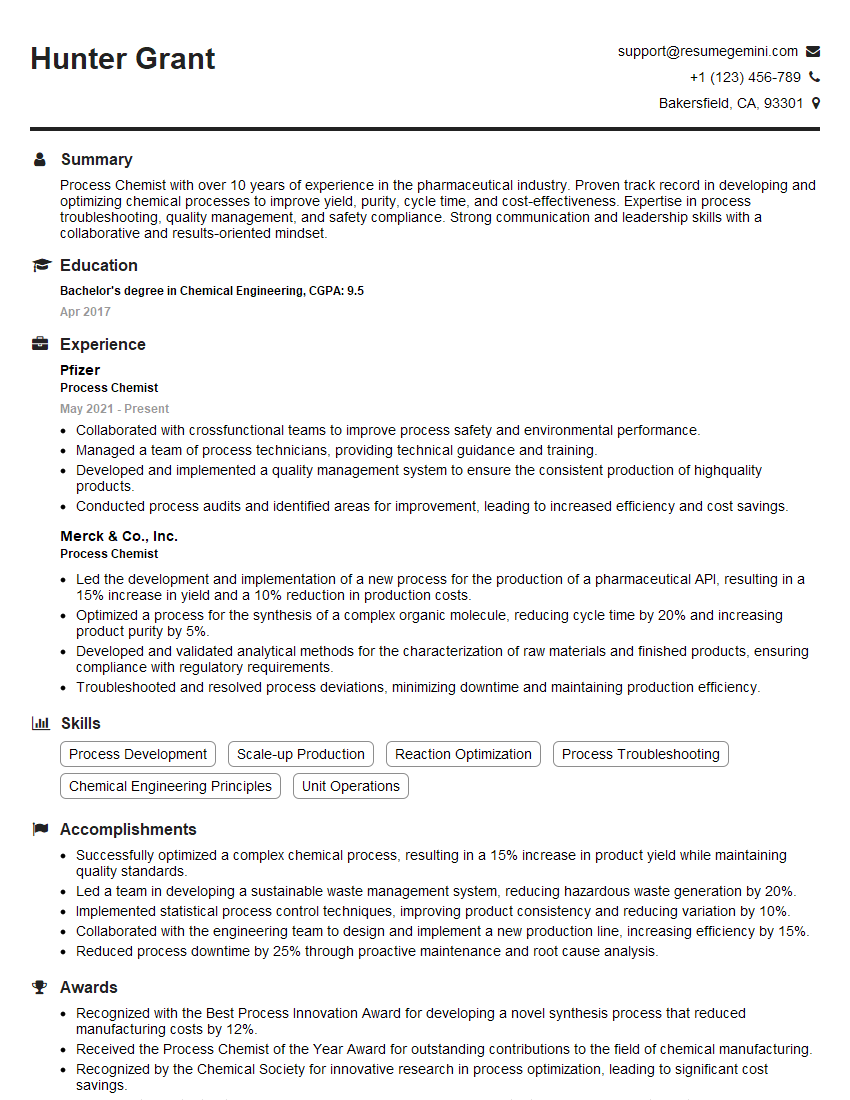
Process Chemist Resume Sample
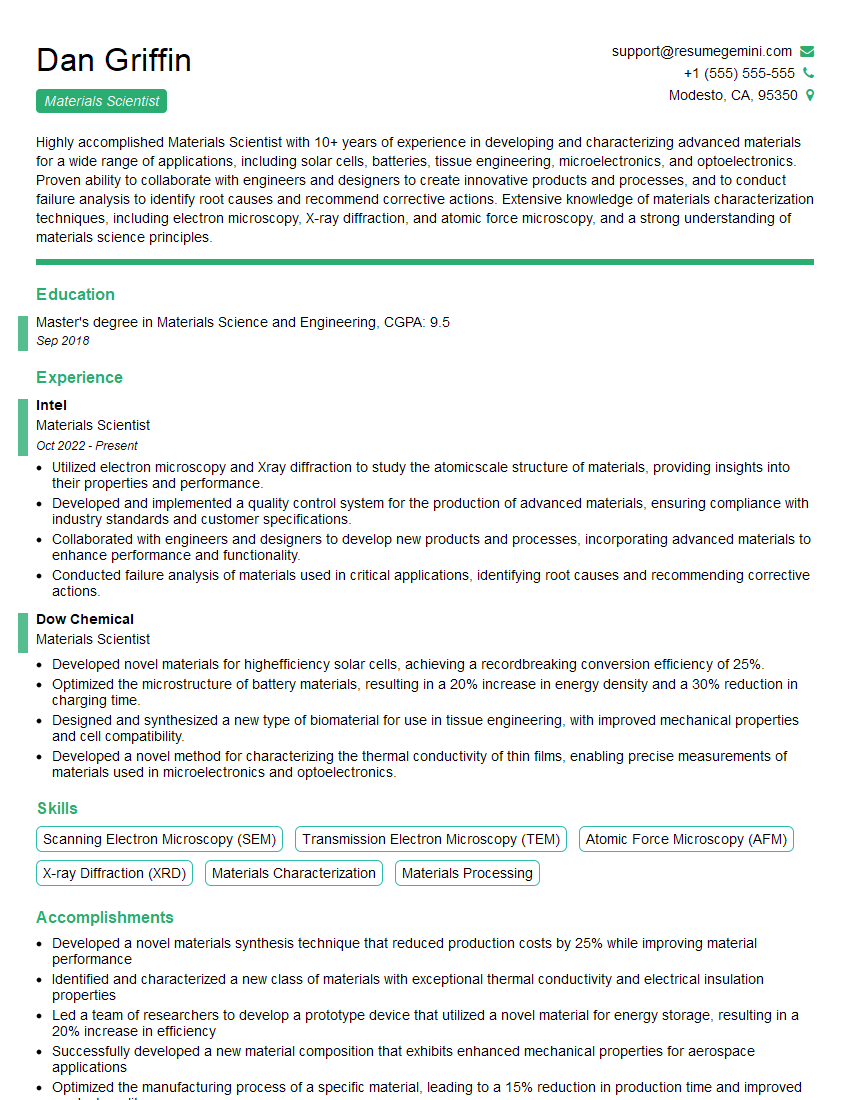
Materials Scientist Resume Sample
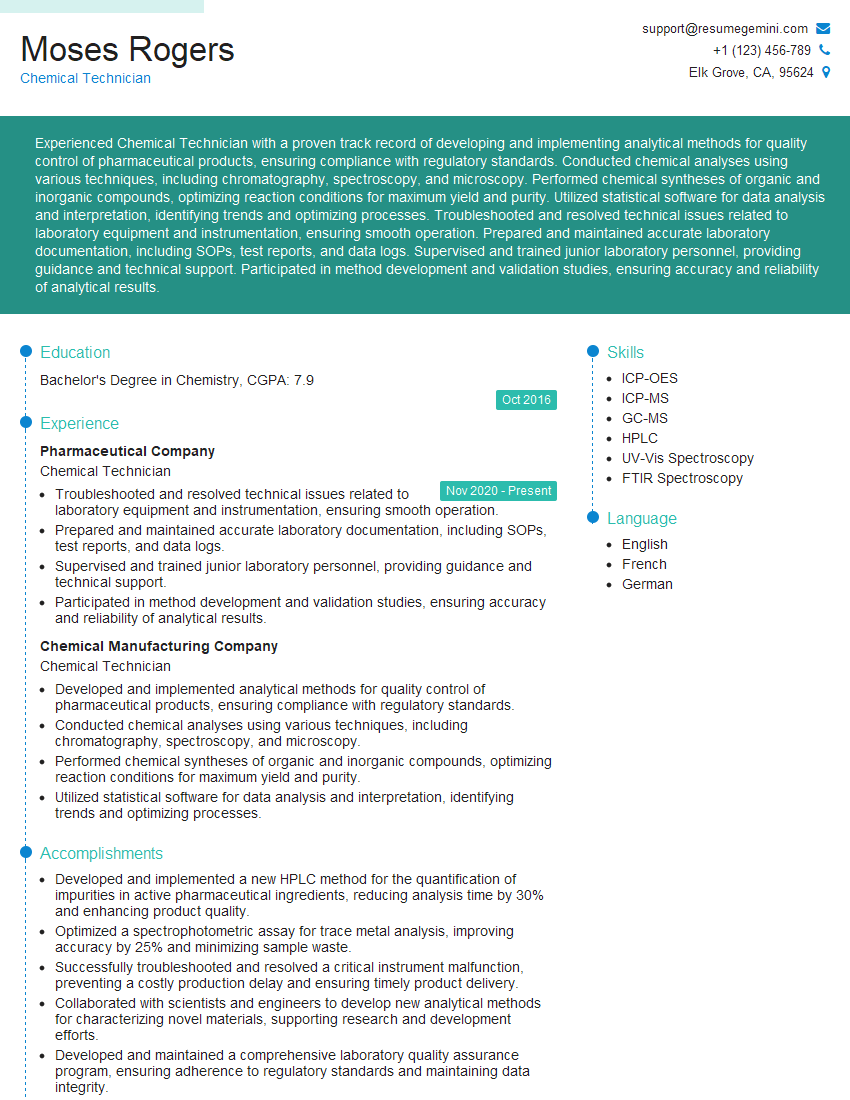
Chemical Technician Resume Sample
- Operations Manager
- Plant Manager
- Project Engineer
- Process Engineer
- Research Scientist
- Automation Engineer
- Chemical Engineer
- Chemical Process Engineer
- Process Control Engineer
- Instrumentation Engineer
- Environmental Engineer
- Process Safety Engineer
- Manufacturing Engineer
- Production Engineer
- Quality Assurance Engineer
- Analytical Chemist
- Process Chemist
- Materials Scientist
- Chemical Technician
Explore more articles
Users Rating of Our Blogs
Share Your Experience
We value your feedback! Please rate our content and share your thoughts (optional).
What Readers Say About Our Blog
Very informative content, great job.
good