Every successful interview starts with knowing what to expect. In this blog, we’ll take you through the top Understanding of Color Theory and Design Principles interview questions, breaking them down with expert tips to help you deliver impactful answers. Step into your next interview fully prepared and ready to succeed.
Questions Asked in Understanding of Color Theory and Design Principles Interview
Q 1. Explain the difference between additive and subtractive color mixing.
Additive and subtractive color mixing are two fundamentally different ways to create colors. Think of it like this: additive is like adding light, while subtractive is like subtracting light (or pigment).
- Additive Color Mixing: This occurs when light sources are combined. The primary colors are red, green, and blue (RGB). When you combine them, you get different colors. Mixing all three at maximum intensity creates white light. This is the system used in screens, like your computer or phone. For example, if you mix red and green light, you get yellow.
- Subtractive Color Mixing: This occurs when pigments or dyes are mixed. The primary colors are cyan, magenta, and yellow (CMY). When combined, they absorb certain wavelengths of light, resulting in a different color perception. Mixing all three at maximum intensity creates black. (A key difference, though in practice, a black pigment—K—is often added to improve the darkness of the mix, hence CMYK).
Imagine a painter mixing paints (subtractive) versus a lighting designer mixing spotlights (additive). The results, even with the same apparent color, are fundamentally different processes.
Q 2. Describe the principles of color harmony (e.g., complementary, analogous, triadic).
Color harmony refers to using colors together in a way that’s visually pleasing. Several principles guide this:
- Complementary Colors: These are colors opposite each other on the color wheel (e.g., red and green, blue and orange). They create a vibrant contrast. Used well, they can make a design pop. Overused, however, they might appear jarring.
- Analogous Colors: These are colors that are next to each other on the color wheel (e.g., blue, blue-green, and green). They create a calm and harmonious feel. Think of a sunset’s gradual color shift.
- Triadic Colors: These are three colors equally spaced on the color wheel (e.g., red, yellow, and blue). They provide a balanced and dynamic feel. However, careful consideration of value and saturation is important for visual harmony. A poorly implemented triadic scheme can be chaotic.
- Tetradic Colors: These use four colors forming a rectangle on the color wheel. They are complex, and generally one color should be dominant for visual harmony.
- Split Complementary: A base color and the two colors adjacent to its complement. It adds more nuance than simply using complementary colors.
The best color harmony depends on the desired mood and effect for your design. A website aiming for calm might use analogous colors, while a vibrant advertisement could use complementary ones.
Q 3. How does understanding color psychology impact design choices?
Color psychology explores how colors evoke emotions and affect behavior. Understanding this is crucial for design. For instance:
- Red: Often associated with energy, passion, excitement, but also anger or danger. Used effectively, red can grab attention (e.g., a ‘sale’ button); poorly used, it can feel aggressive.
- Blue: Usually calming, trustworthy, and associated with security and stability. Ideal for corporate branding or healthcare contexts.
- Green: Often symbolizes nature, growth, freshness, and harmony. Used for environmentally friendly brands or to suggest relaxation.
- Yellow: Represents joy, optimism, and happiness but can also be associated with caution or cheapness. It is often used for playful products or to draw attention.
By consciously using color psychology, designers can create emotionally resonant designs that guide user behavior. A website using calming blues might encourage longer browsing, while one using energetic reds might spur quick purchases.
Q 4. What are some common color palettes and when would you use each?
Many color palettes exist, each suitable for different purposes:
- Monochromatic: Uses variations of a single color (e.g., different shades and tints of blue). This provides a cohesive and sophisticated look, ideal for branding or minimalist designs.
- Analogous: Uses colors adjacent on the color wheel. Creates a harmonious and natural feel, perfect for nature-inspired projects or websites emphasizing serenity.
- Complementary: Uses colors opposite each other on the color wheel. Offers high contrast and vibrancy, suited for attention-grabbing designs like advertisements or product packaging.
- Triadic: Uses three colors equally spaced on the color wheel. Provides visual interest and balance, suitable for varied applications, but requires careful balance to avoid clashing.
- Neutral: Uses black, white, gray, beige, and brown. Provides a clean, timeless, and versatile backdrop, especially useful for sophisticated design contexts.
The choice depends on the overall design goal. A children’s website might employ bright, contrasting colors, whereas a corporate website might prefer a more muted, sophisticated palette.
Q 5. Explain the concept of color temperature and its effect on mood.
Color temperature refers to the warmth or coolness of a color, measured in Kelvin (K). It significantly influences mood:
- Warm Colors (low Kelvin): Reds, oranges, and yellows evoke feelings of warmth, comfort, excitement, and energy. They can create a friendly or inviting atmosphere. Think of a cozy fireplace or a sunny day.
- Cool Colors (high Kelvin): Blues, greens, and purples are often associated with calmness, serenity, professionalism, and coolness. They can create a feeling of tranquility or sophistication. Imagine a serene beach or a clear night sky.
Consider a website design. A website selling luxury goods might use cool colors to convey sophistication, while a food blog might use warm colors to evoke feelings of comfort and appetite.
Q 6. How do you ensure color accessibility in your designs (e.g., for color blindness)?
Color accessibility is crucial for inclusivity. Many people have color vision deficiencies, such as color blindness. Here’s how to ensure accessibility:
- Sufficient Contrast: Use tools like WebAIM’s contrast checker to ensure enough contrast between text and background colors. This is essential for readability.
- Avoid Relying Solely on Color: Don’t use color alone to convey information (e.g., using only red to indicate an error). Use clear icons or text labels in conjunction with color for redundancy.
- Consider Color Blindness Simulators: Use online simulators to see how your design appears to people with different types of color blindness. This helps identify potential problems before release.
- Follow WCAG Guidelines: The Web Content Accessibility Guidelines (WCAG) provide detailed standards for accessible design, including color contrast requirements.
By adhering to these guidelines, you create designs usable by a much broader audience.
Q 7. Discuss the importance of color contrast in user interface design.
Color contrast is vital in user interface (UI) design because it significantly impacts usability and readability. Sufficient contrast makes information easier to scan, read, and understand. Poor contrast, conversely, leads to eye strain, difficulty reading text, and a generally unpleasant user experience.
- Text and Background: Sufficient contrast is essential between text and its background color. Dark text on a light background is generally preferred, but other options work if the contrast ratio is high enough (check WCAG guidelines for specifics).
- Interactive Elements: Buttons, links, and other interactive elements should have a clear visual distinction from the surrounding elements. This allows users quickly identify clickable areas and improve their interaction with the application.
- Visual Hierarchy: Using color contrast helps establish a visual hierarchy, guiding users’ eyes to the most important information first. For example, headings might be a darker or bolder color than body text.
A lack of contrast can result in usability issues such as missed calls to action, strained eyes, and poor comprehension, leading to user frustration and potentially lost business.
Q 8. How would you choose colors for a website aimed at a specific target audience?
Choosing colors for a website targeting a specific audience is crucial for establishing brand identity and user engagement. It’s not just about aesthetics; it’s about understanding the psychology of color and how it affects perception. The process begins with thorough audience research. Who are they? What are their demographics, interests, and values? What emotions do you want to evoke?
For example, a website targeting young adults interested in sustainable fashion might use earthy tones like greens and browns, evoking nature and responsibility. A website for a financial institution, on the other hand, might lean towards blues and grays, suggesting stability and trustworthiness. Consider using color psychology resources and conducting A/B testing to refine your color choices based on user response.
- Understand your audience: Conduct thorough research to define their age, interests, and cultural background.
- Define your brand personality: What feeling should your website convey? (e.g., playful, sophisticated, trustworthy).
- Select colors accordingly: Choose colors that align with your brand personality and resonate with your target audience. Use color psychology as a guide.
- Test and iterate: A/B test different color schemes to see which performs best.
Q 9. Describe your process for creating a cohesive color palette for a brand.
Creating a cohesive color palette for a brand is a strategic process that involves more than just picking pretty colors. It’s about developing a visual language that consistently represents your brand’s identity across all platforms. I usually start with a mood board, gathering images and textures that inspire me and reflect the brand’s personality. From this, I identify core colors, usually 2-4, establishing a primary, secondary, and accent color.
I then leverage color harmony principles – such as analogous (colors next to each other on the color wheel), complementary (opposite colors), or triadic (three equally spaced colors) – to create a balanced palette. I also consider color contrast to ensure readability and accessibility. Once the palette is finalized, I create a style guide that documents all the chosen colors (using hex codes and color names) to maintain consistency.
For example, I once worked on a brand for a yoga studio. The mood board included images of serene landscapes, natural textures, and calming imagery. This led to a palette centered around soft greens, calming blues, and earthy browns, all complemented by a warm accent color. This palette accurately reflects the tranquility and natural connection associated with yoga.
Q 10. Explain how color can be used to guide the user’s eye through a design.
Color is a powerful tool to guide the user’s eye. We can use color contrast and saturation to draw attention to specific elements, creating a visual hierarchy that dictates the order in which users perceive information. High-contrast elements, typically brighter or more saturated colors, immediately grab attention, guiding users to key areas like call-to-action buttons or important headlines.
Imagine a website with a predominantly neutral background. A vibrant call-to-action button in a contrasting color (e.g., a bright orange on a white background) will naturally attract the user’s gaze, encouraging interaction. Similarly, using a subtle color gradient can subtly lead the user’s eye through a series of steps, guiding them through a complex process.
For example, a step-by-step tutorial might use progressively saturated colors to highlight the current step, making the user’s progression clear and intuitive.
Q 11. How do you use color to create hierarchy and visual weight in a design?
Color plays a significant role in establishing visual hierarchy and weight. Darker and more saturated colors appear heavier and more prominent than lighter, less saturated ones. This allows us to create visual order and importance. Headlines in a darker, bolder color will stand out, signifying their importance over body text in a lighter hue.
For instance, a website featuring multiple product categories might use a darker, bolder color for the most important category, while subtly highlighting less important categories using lighter shades. This guides users towards the primary offering while still providing clear visual indicators for the other options. Think of a website showcasing different product lines; the most important or featured product will likely be displayed with stronger colors and larger font sizes compared to other products in the same catalog.
Q 12. What are some tools or software you use to manage and select colors?
Several tools aid in color management and selection. Adobe Color (formerly Adobe Kuler) is a fantastic resource for exploring color harmonies and generating palettes. It allows you to create, save, and share color palettes, and it provides options for different color models (RGB, CMYK, LAB).
Other tools include: Coolors.co, a popular website for generating and experimenting with palettes. I also frequently use image editing software like Adobe Photoshop or Illustrator which allows precise color selection, modification, and management through color pickers, swatches, and color libraries. For digital projects, I primarily work with RGB (Red, Green, Blue), and for print, I use CMYK (Cyan, Magenta, Yellow, Key/Black) keeping in mind color profiles and potential variations in printing.
Q 13. Describe a time you had to resolve a color-related conflict in a design project.
In a recent project for a tech startup, the client initially insisted on using a vibrant, almost neon green as the primary brand color. While visually striking, it clashed with the brand’s intended sophisticated and professional image, making the website appear jarring and unprofessional.
To resolve the conflict, I presented data from color psychology studies demonstrating how neon green is often associated with cheapness or inexperience, contradicting the brand’s goal. I then proposed alternative, sophisticated color options — deep blues and calming greens, which were better suited to the brand’s values. We collaborated, exploring different shades and hues within these options until a color palette was agreed upon which maintained the vibrancy but conveyed the professionalism the client desired.
Q 14. How do you approach color selection for print versus digital media?
Color selection for print versus digital media differs significantly due to the different color models and production processes involved. Digital media uses the RGB color model, while print uses CMYK. RGB colors are produced by combining red, green, and blue light, while CMYK colors are created through subtractive mixing of cyan, magenta, yellow, and black inks. This leads to significant differences in color appearance.
A color that appears vibrant on screen might appear dull in print, and vice-versa. Therefore, I always design for print using the CMYK color model, ensuring that colors will translate accurately. I often create a proof or mock-up to preview the print colors before proceeding. I also utilize color management profiles and software to maintain consistency between digital and print outputs, minimizing discrepancies as much as possible.
Q 15. Explain the concept of color saturation and its impact on a design.
Color saturation refers to the intensity or purity of a color. Think of it like this: a highly saturated color is vibrant and bold, while a low-saturated color is dull and muted. Imagine a bright, sunny red versus a dusty, brownish-red – the difference lies in their saturation.
In design, saturation significantly impacts the mood and visual weight of an element. High saturation grabs attention and can evoke strong emotions, while low saturation creates a more subtle and calming effect. For example, a website using highly saturated colors might feel energetic and exciting, whereas a website with desaturated colors might appear sophisticated and calming. Consider a logo: a highly saturated logo will stand out, while a desaturated one might blend into the background. The choice depends on the desired effect and brand personality.
Career Expert Tips:
- Ace those interviews! Prepare effectively by reviewing the Top 50 Most Common Interview Questions on ResumeGemini.
- Navigate your job search with confidence! Explore a wide range of Career Tips on ResumeGemini. Learn about common challenges and recommendations to overcome them.
- Craft the perfect resume! Master the Art of Resume Writing with ResumeGemini’s guide. Showcase your unique qualifications and achievements effectively.
- Don’t miss out on holiday savings! Build your dream resume with ResumeGemini’s ATS optimized templates.
Q 16. How does color impact brand perception and identity?
Color is a powerful tool in shaping brand perception and identity. Different colors evoke different feelings and associations. For instance, blue often represents trust and stability, making it a popular choice for banks and corporate entities. Red, on the other hand, can signify excitement and urgency, frequently used in marketing campaigns for sales or promotions. Green often suggests nature, health, and eco-friendliness.
Consistent use of brand colors across all platforms (website, social media, packaging) reinforces brand recognition and helps consumers connect with the brand’s values and personality. For example, Tiffany & Co.’s iconic robin’s egg blue is instantly recognizable and strongly associated with luxury and elegance. A well-chosen color palette helps a brand stand out and communicate its message effectively.
Q 17. What are some common color trends in current design?
Current design trends often showcase a blend of bold and subtle colors. We’re seeing a resurgence of earthy tones like terracotta, olive green, and muted browns, often paired with vibrant accent colors. Pastel shades remain popular, offering a soft and gentle feel. Additionally, there’s a growing trend towards incorporating nature-inspired palettes and utilizing analogous color schemes for a harmonious and balanced look. The use of vibrant, unexpected color combinations is also prevalent, showcasing a move away from overly predictable palettes.
However, it’s important to note that color trends are cyclical; classic color schemes always maintain their relevance. The key is to understand the psychology of color and choose a palette that effectively communicates the message and aligns with the brand’s identity rather than blindly following fleeting trends.
Q 18. Explain the difference between hue, saturation, and value.
Hue, saturation, and value are the three main properties that define a color. Hue is simply the pure color – the name we give it (red, blue, green, etc.). Saturation refers to the intensity or purity of the hue (as explained above). Value refers to the lightness or darkness of the color. It’s often represented on a scale from black (lowest value) to white (highest value).
Imagine a red apple. Its hue is red. A brightly colored, vivid red apple has high saturation, while a dull, brownish-red apple has low saturation. A dark red apple has a low value, while a light, pinkish-red apple has a high value. Understanding these three properties allows designers to precisely control the appearance and impact of color in their work.
Q 19. Discuss the use of color in creating different emotional responses.
Color significantly impacts emotional responses. Warm colors like red, orange, and yellow are often associated with energy, excitement, and passion. They can stimulate appetite (think red in restaurants) and evoke feelings of warmth and comfort. Conversely, cool colors like blue, green, and purple are often associated with calmness, tranquility, and trust. They can create a feeling of serenity and relaxation.
Consider a website selling relaxation products: a cool color palette would enhance the desired feeling of calm and tranquility. In contrast, a website for a sports brand might use warm, energetic colors to reflect the dynamism of the sport. Understanding these associations allows designers to manipulate color to elicit specific emotional responses from their audience.
Q 20. How do you evaluate the effectiveness of your color choices?
Evaluating the effectiveness of color choices involves considering several factors. First, I’d assess how well the color palette communicates the brand’s message and identity. Does it align with the target audience’s expectations and preferences? Secondly, I’d gather feedback through user testing and surveys to understand how users perceive the colors and whether they evoke the intended emotions. A/B testing different color schemes can also provide valuable insights.
Finally, I would analyze the data – website analytics, user engagement metrics, and sales figures – to determine if the color choices have a positive impact on key performance indicators (KPIs). For example, if a change in color improves click-through rates or conversion rates, it’s a good indication that the choices are effective. Continuous monitoring and iteration are crucial for optimizing color schemes.
Q 21. Explain the concept of the color wheel and its applications in design.
The color wheel is a visual representation of color relationships, typically arranged in a circle. It’s based on the primary colors (red, yellow, blue), secondary colors (green, orange, purple – created by mixing primary colors), and tertiary colors (created by mixing primary and secondary colors). The color wheel helps designers understand color harmonies and create visually appealing color palettes.
Applications include identifying complementary colors (opposite each other on the wheel), analogous colors (adjacent to each other), and triadic colors (equally spaced). For example, using complementary colors can create high contrast and visual interest, while analogous colors create a more harmonious and unified feel. Understanding the color wheel is foundational for making informed and effective color choices in design.
Q 22. How can color be used to enhance readability in a design?
Color significantly impacts readability. The key is contrast – sufficient difference between the foreground (text) and background colors. Poor contrast makes text hard to read, causing eye strain and frustration. Think of trying to read white text on a light beige background – nearly impossible!
Here’s how to enhance readability using color:
- Sufficient Contrast Ratio: Use tools to measure the contrast ratio between your text and background. WCAG (Web Content Accessibility Guidelines) recommends a minimum contrast ratio of 4.5:1 for normal text and 3:1 for large text. Many online tools can calculate this for you.
- Color Combinations: Choose color combinations that provide strong contrast. Classic pairings like black text on white, or white text on a dark background, are reliable. However, you can also explore other effective combinations, keeping contrast in mind. For example, a deep blue background with light yellow or cream text can be quite readable.
- Font Size & Weight: Larger font sizes and bolder weights improve readability, especially with lower contrast ratios. This provides visual cues even if the color difference isn’t massive.
- Background Considerations: Avoid busy backgrounds that compete with the text. A clean, simple background allows the text to stand out.
Example: A website with dark gray text on a light gray background will be difficult to read. Switching to black text on a white background immediately improves readability dramatically.
Q 23. What are some considerations for using color in different cultural contexts?
Color carries cultural significance; what’s appealing in one culture might be offensive in another. Ignoring this can lead to misinterpretations and damage your brand.
- Color Symbolism: Research the symbolism of colors in your target audience’s cultures. For instance, white signifies purity in many Western cultures, but it’s associated with mourning in some Asian countries. Red can symbolize luck and celebration in some cultures, but anger or danger in others.
- Cultural Preferences: Color preferences vary across cultures. Certain colors might be favored or avoided depending on the context and audience.
- Religious Considerations: Religious beliefs can also influence color preferences and associations. Be mindful of these aspects, particularly in religious contexts or when designing for a specific religious group.
- Globalization & Localization: If your design targets a global audience, adapting color palettes to resonate with specific cultural preferences is crucial for effective communication and brand perception.
Example: A marketing campaign using a predominantly white color scheme might not be well-received in East Asian markets where white is linked to funerals.
Q 24. How do you stay up-to-date with current color trends and best practices?
Staying current is essential in design. Color trends are constantly evolving. Here’s my approach:
- Trend Reports: I regularly follow trend forecasting websites and publications. Sites like Pantone, Adobe Color, and various design blogs provide valuable insights into current and upcoming color palettes.
- Industry Publications: Design magazines, online publications, and newsletters keep me informed about color trends and new applications.
- Design Communities: Participating in online design forums, attending workshops and conferences, and networking with other designers expose me to different perspectives and emerging trends.
- Social Media: Platforms like Instagram and Pinterest are great for visual inspiration and observing how other designers are using color.
- Client Research: Understanding my clients’ target audience and brand identity guides my color choices. Color is rarely a standalone decision; it must align with the overall brand strategy.
By combining these methods, I ensure my designs reflect current aesthetics while remaining relevant and effective.
Q 25. Describe your understanding of Pantone Matching System (PMS).
The Pantone Matching System (PMS) is a standardized color reproduction system. It uses proprietary color formulas to ensure accurate color matching across different printing processes. Each PMS color has a unique number that represents its specific ink formula. This is crucial for maintaining brand consistency across various printed materials like logos, packaging, and marketing collateral.
Unlike RGB or CMYK, which are device-dependent, PMS offers greater control and accuracy, especially in print. While digital designs often use RGB, designers often specify PMS colors when preparing artwork for print to guarantee accurate color reproduction.
Example: If a logo is designed using PMS 186 C (a specific shade of blue), a printer anywhere in the world using the PMS system can accurately reproduce that exact shade of blue.
Q 26. How do you use color to create visual interest and avoid monotony?
Monotony is the enemy of visual interest. Strategic use of color avoids this. Here are some techniques:
- Color Harmonies: Employing color harmonies – like analogous (colors next to each other on the color wheel), complementary (colors opposite each other), or triadic (three evenly spaced colors) – creates pleasing and visually interesting combinations.
- Color Temperature: Mixing warm and cool colors adds depth and dynamism. Warm colors (reds, oranges, yellows) evoke feelings of energy and excitement, while cool colors (blues, greens, purples) often feel calming and serene.
- Color Hierarchy: Use color to guide the viewer’s eye. More prominent colors highlight important elements, while less saturated colors recede into the background.
- Accent Colors: Introduce a small amount of a contrasting accent color to draw attention to specific areas or elements.
- Gradients and Shades: Subtle color gradients or variations in shade add visual interest without being overwhelming.
Example: A website with a mostly neutral background can be enlivened with a pop of a vibrant color in the call-to-action button, drawing attention to that crucial element.
Q 27. Explain the principles of Gestalt psychology and how they relate to color.
Gestalt psychology explores how we perceive visual information as a whole rather than individual parts. Several Gestalt principles directly relate to color:
- Proximity: Colors grouped closely together are perceived as a unit. This can be used to create visual organization and hierarchy.
- Similarity: Similar colors are seen as belonging together. This helps to group elements and establish visual relationships.
- Closure: We tend to complete incomplete shapes or patterns. Using color strategically can guide the eye towards a complete form, even if some parts are missing.
- Continuity: Our eyes follow lines and curves naturally. Color can reinforce this principle by creating visual paths through a design.
- Figure-Ground: This principle describes how we distinguish the main focus (figure) from the background (ground). Color contrast is crucial for effective figure-ground separation.
Example: Using a consistent color for a series of icons creates a sense of unity (similarity). Placing similar colored objects near each other creates a visual group (proximity).
Q 28. How would you approach designing a color palette for a logo?
Designing a logo’s color palette requires careful consideration of the brand’s identity and target audience. Here’s my approach:
- Brand Research: Thorough research is crucial. Understand the brand’s values, mission, and target audience. What emotions and feelings should the logo evoke?
- Mood Board: Create a mood board to visually explore potential color palettes. This includes gathering images, color swatches, and texture samples that reflect the brand’s desired image.
- Color Palette Selection: Based on the mood board and brand research, choose a color palette that aligns with the brand’s personality. Consider using color harmonies and choosing colors that are both visually appealing and memorable.
- Testing & Iteration: Test the chosen palette on different backgrounds and in various contexts to ensure it remains effective and readable. Iterate and refine the palette until you achieve the desired visual impact.
- PMS or RGB: Decide whether to use PMS colors (for print) or RGB (for digital). If the logo will have print applications, PMS is essential for consistent color reproduction.
Example: A technology company might choose a palette featuring blues and greens to convey trustworthiness and innovation, while a food company might select warmer tones like oranges and yellows to suggest warmth and appetite.
Key Topics to Learn for Understanding of Color Theory and Design Principles Interview
- Color Models (RGB, CMYK, HSV): Understanding the differences and when to use each model in various design contexts. Practical application: Explaining your choice of color model for a specific project and justifying it.
- Color Harmonies (Complementary, Analogous, Triadic, etc.): Knowing how to create visually appealing color palettes and the psychological impact of different color combinations. Practical application: Designing a mock-up website using a specific color harmony and explaining your choices.
- Color Psychology and its Application: Understanding how colors evoke emotions and influence user behavior. Practical application: Analyzing a brand’s color palette and explaining its effectiveness in communicating brand values.
- Principles of Design (Contrast, Balance, Proximity, Repetition, Alignment): How these principles interact with color theory to create effective and aesthetically pleasing designs. Practical application: Critiquing existing designs and suggesting improvements based on these principles.
- Accessibility and Color Contrast: Understanding WCAG guidelines and ensuring sufficient color contrast for accessibility. Practical application: Explaining how you would test for and improve color contrast in a design.
- Color Trends and Current Design Styles: Staying updated on current trends and understanding their application in different design fields. Practical application: Discussing current design trends and their influence on color palettes.
Next Steps
Mastering color theory and design principles is crucial for career advancement in many creative fields. A strong understanding of these concepts showcases your expertise and ability to create visually compelling and effective designs. To maximize your job prospects, invest time in crafting an ATS-friendly resume that highlights your skills and experience. ResumeGemini is a trusted resource to help you build a professional and impactful resume. We offer examples of resumes tailored to showcase expertise in Understanding of Color Theory and Design Principles to help guide your process.
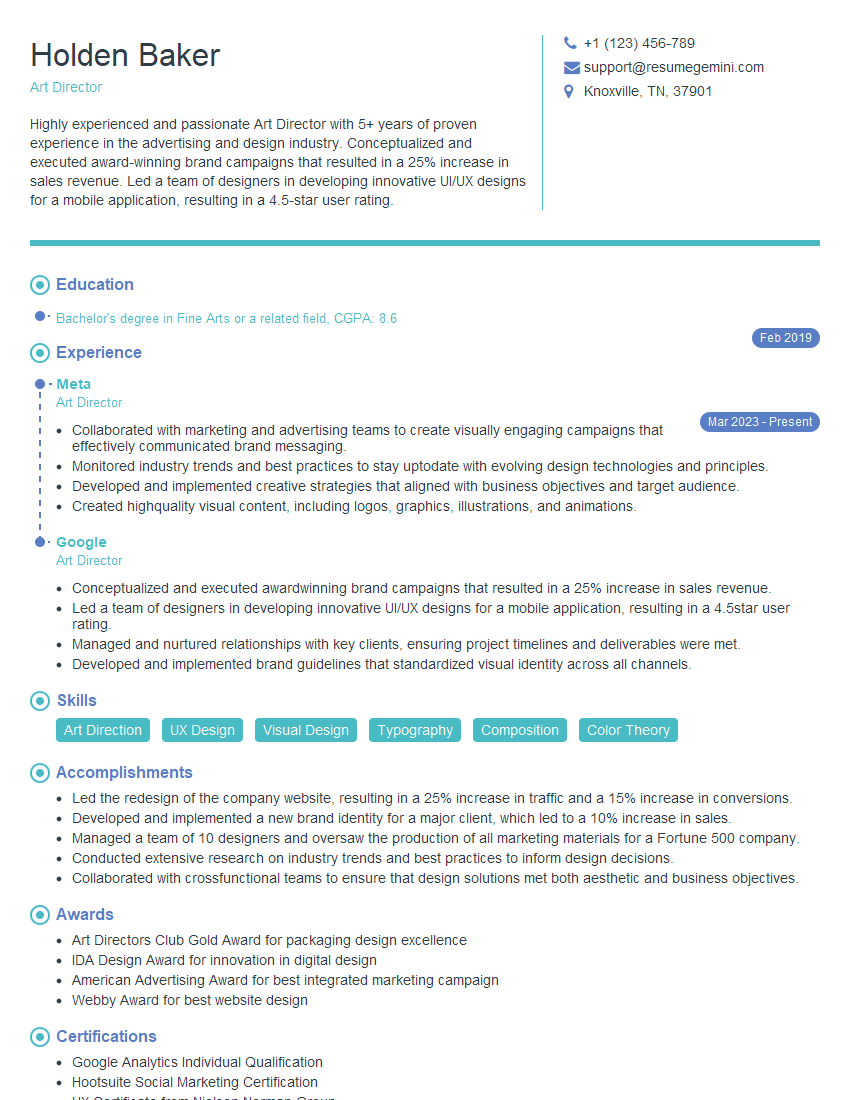
Art Director Resume Sample

Creative Director Resume Sample
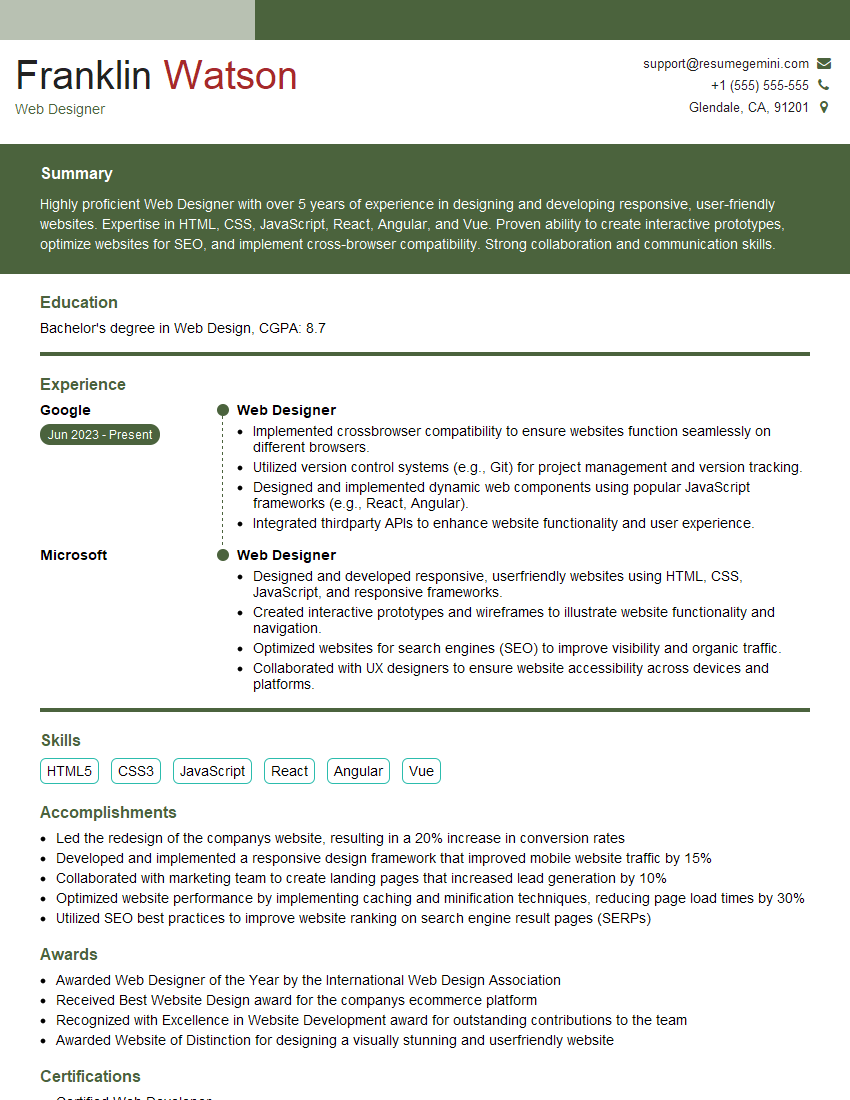
Web Designer Resume Sample
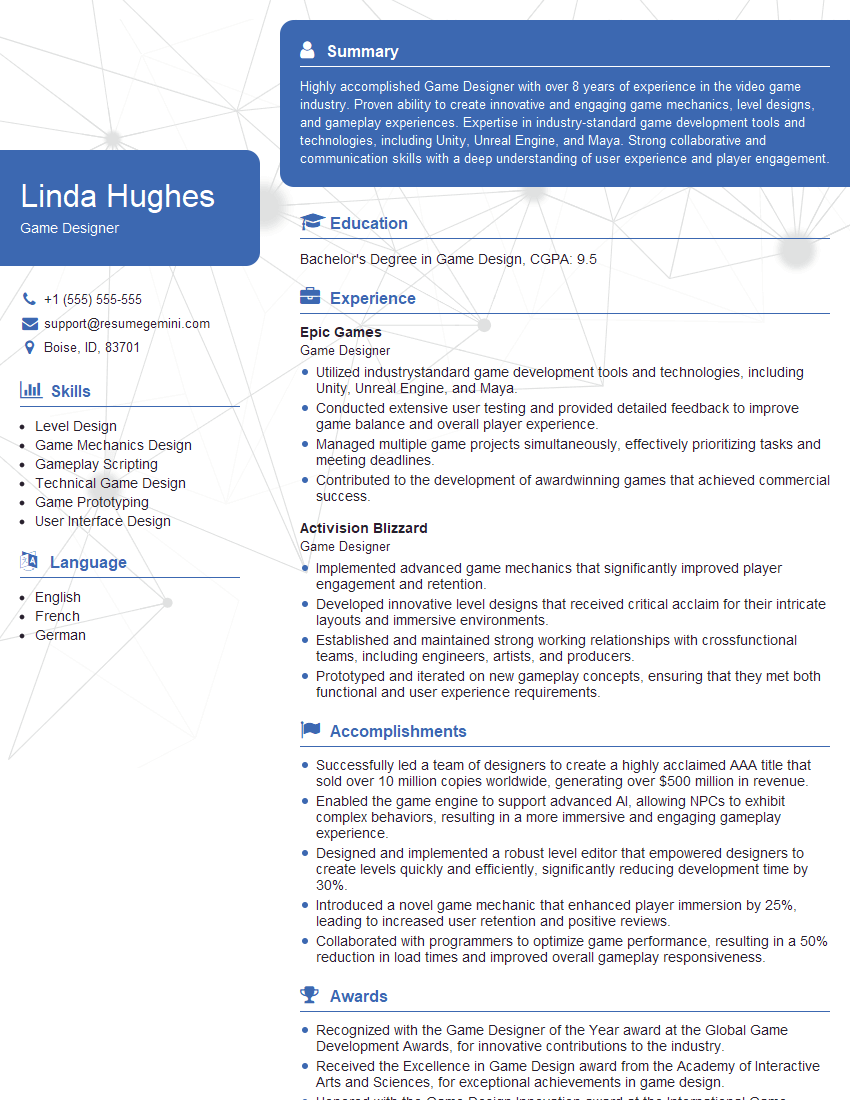
Game Designer Resume Sample
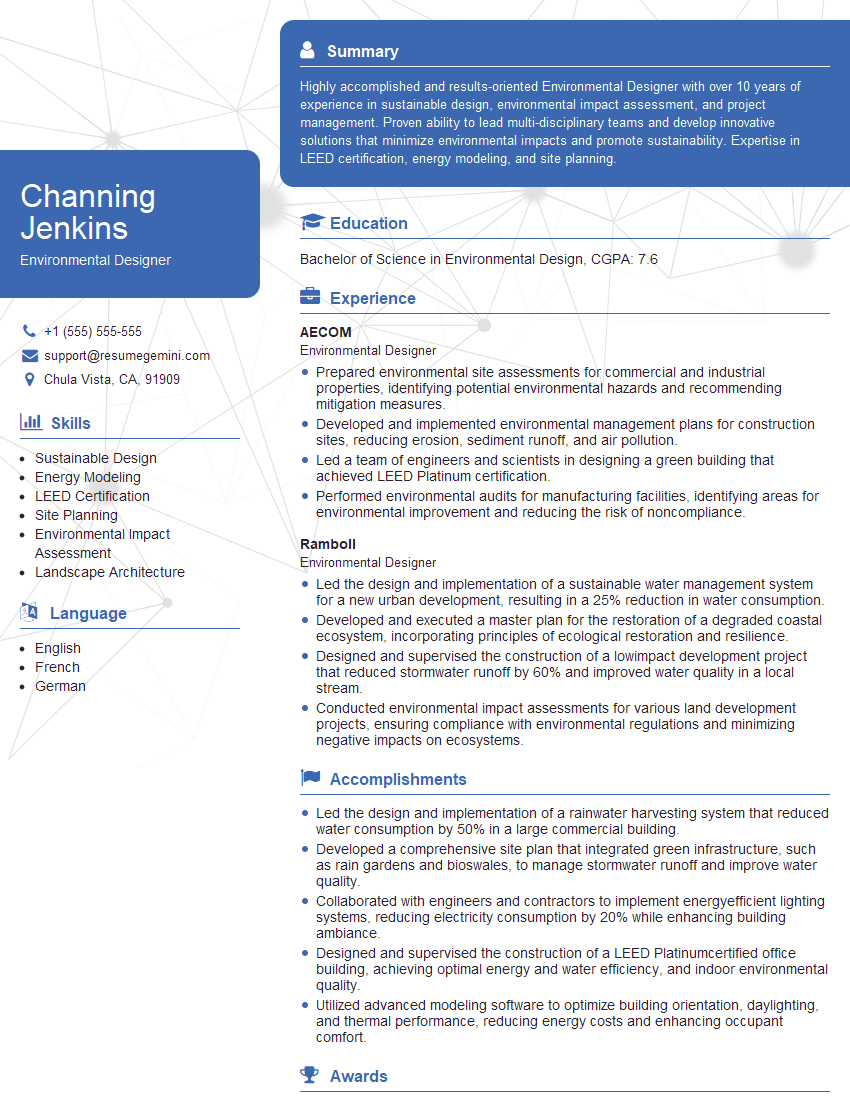
Environmental Designer Resume Sample
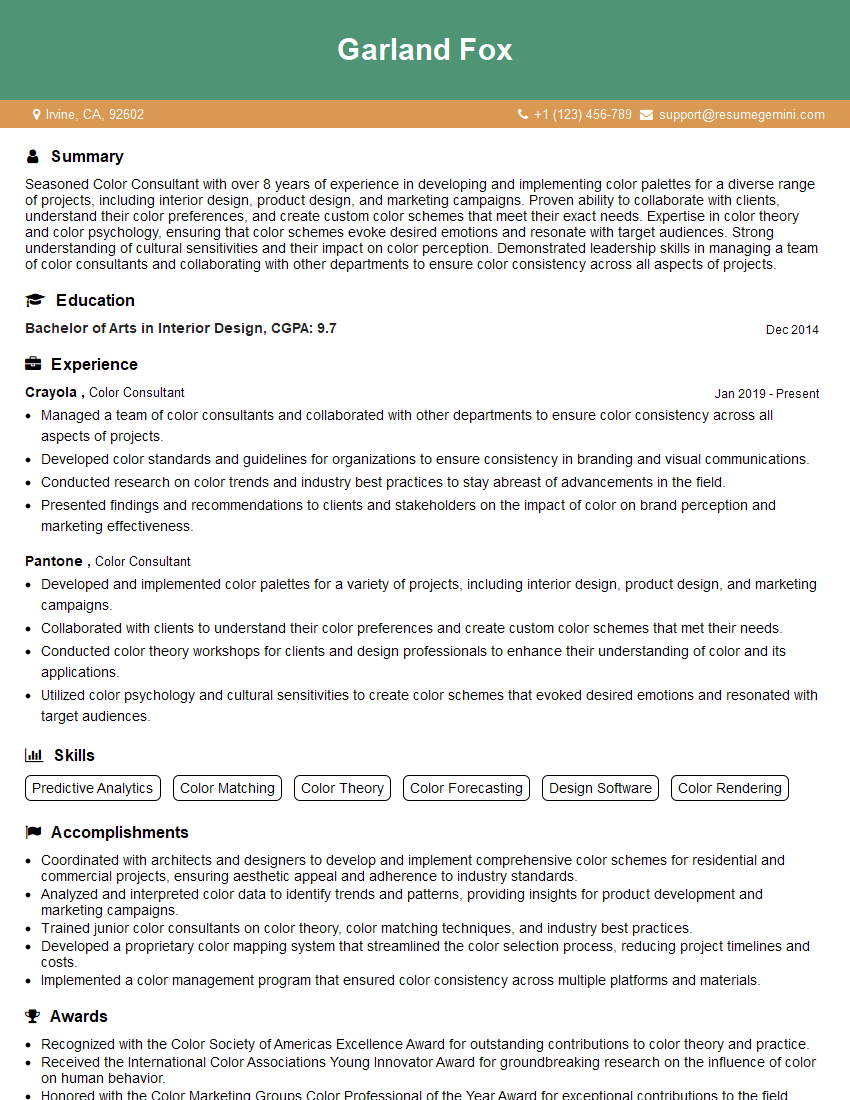
Color Consultant Resume Sample
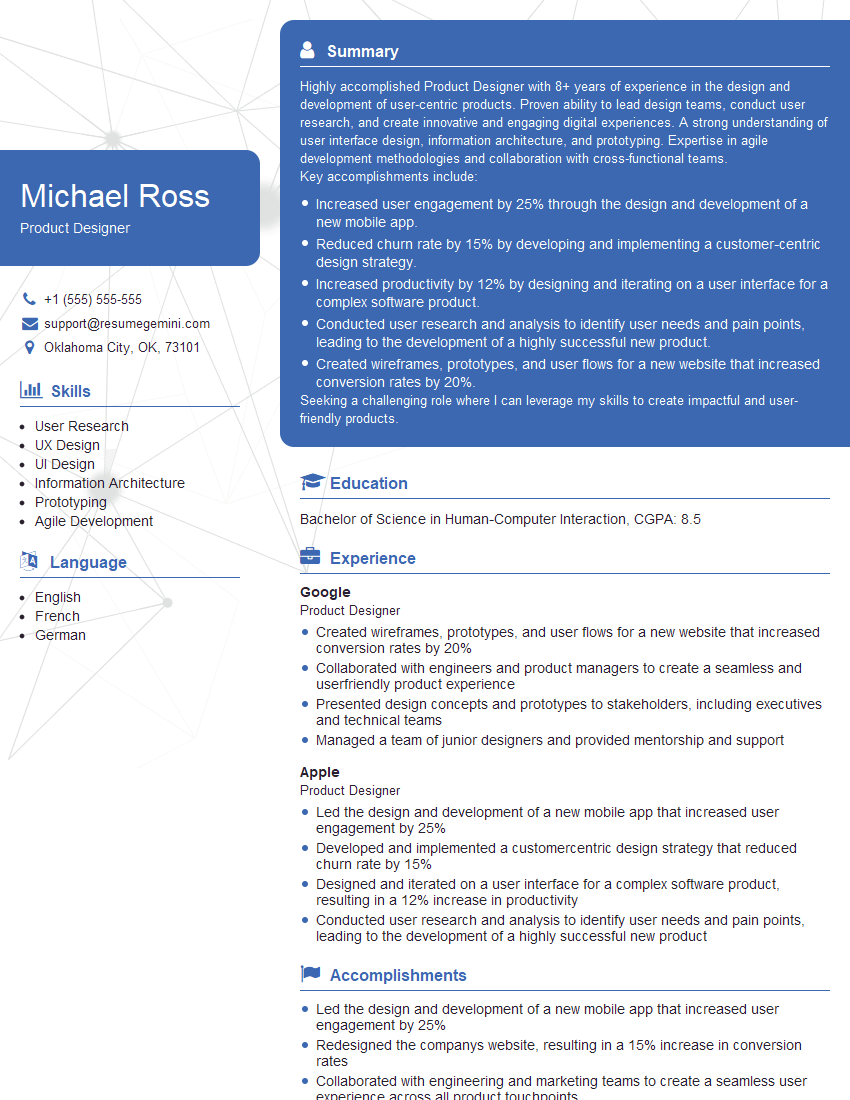
Product Designer Resume Sample
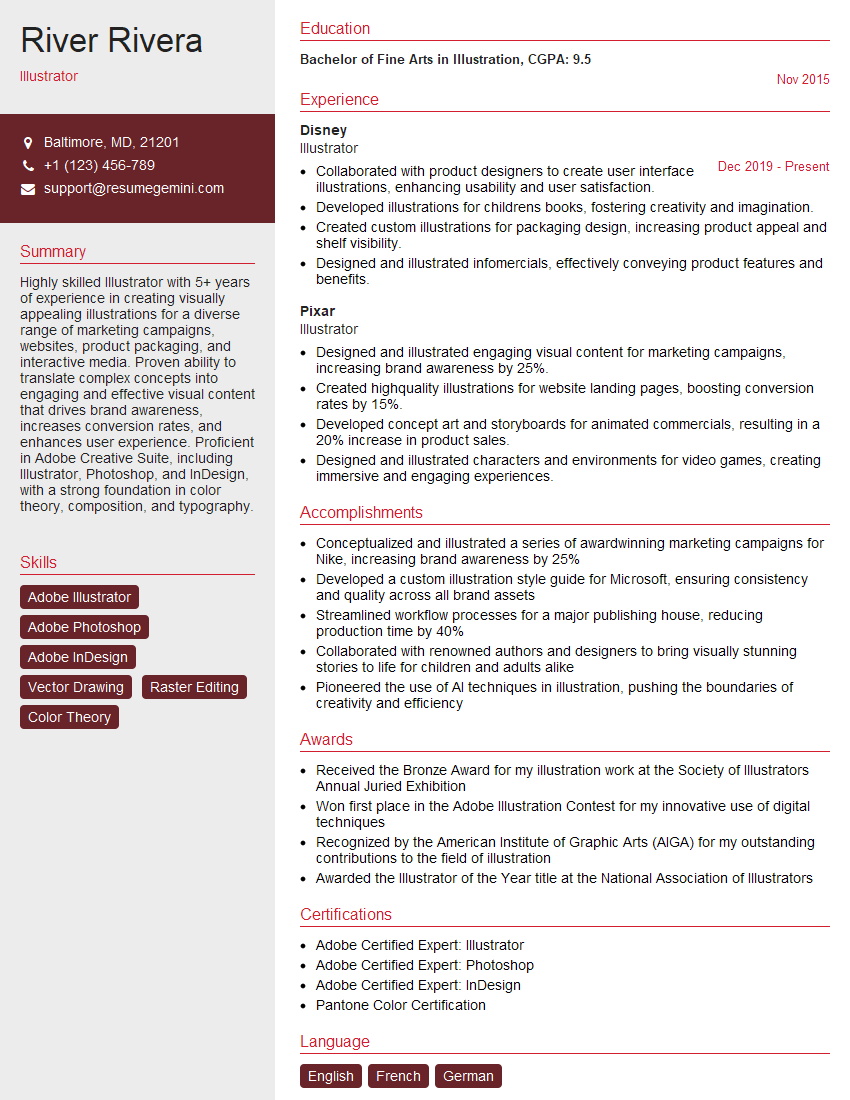
Illustrator Resume Sample
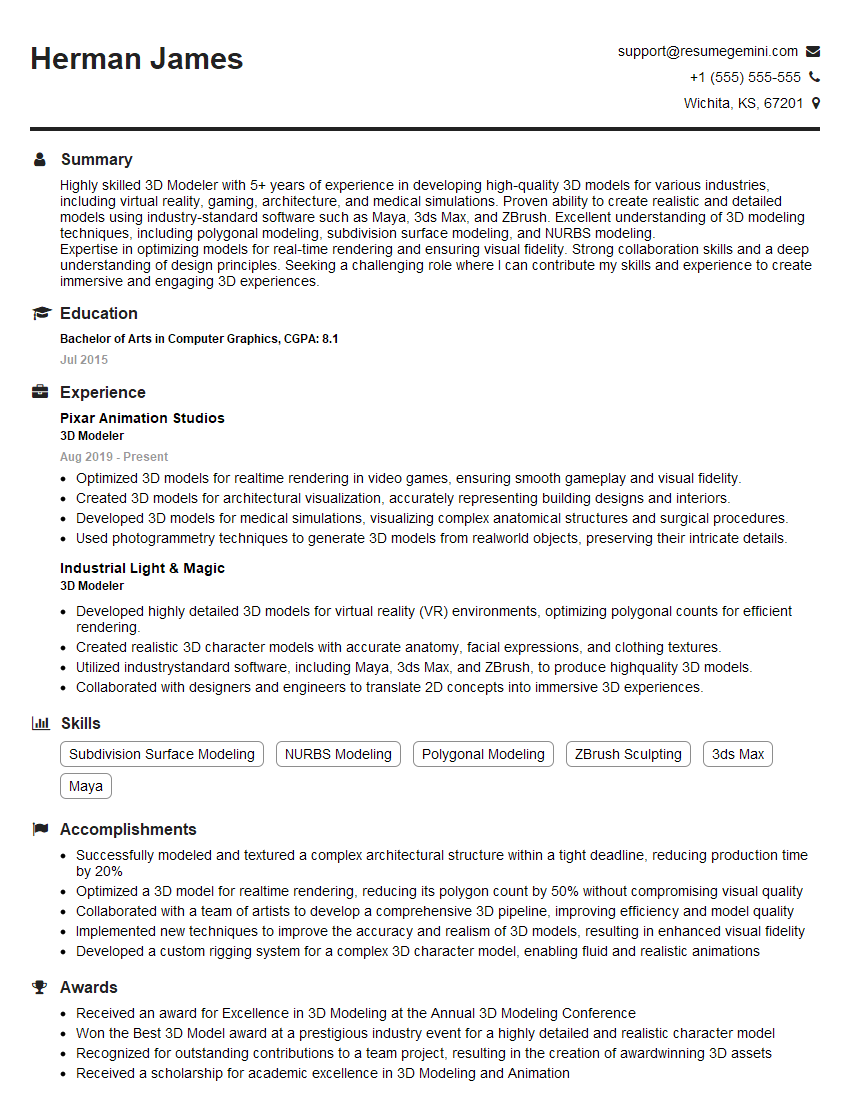
3D Modeler Resume Sample
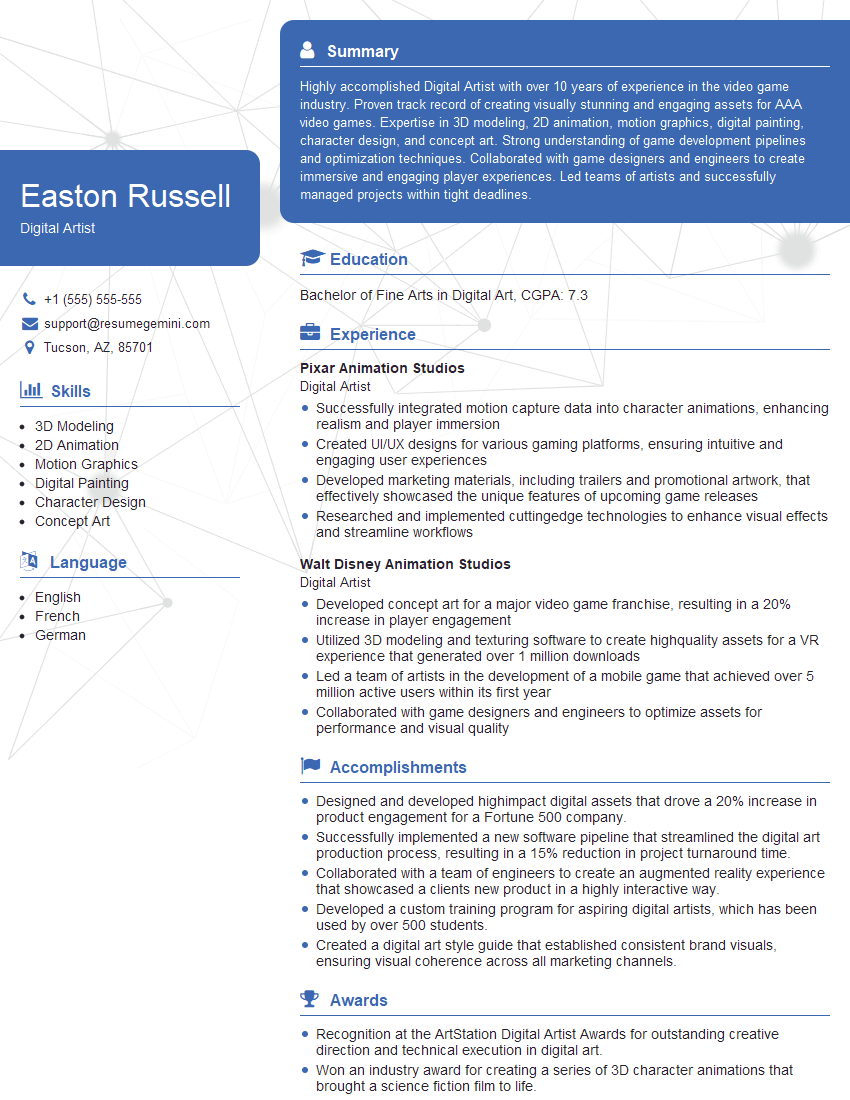
Digital Artist Resume Sample
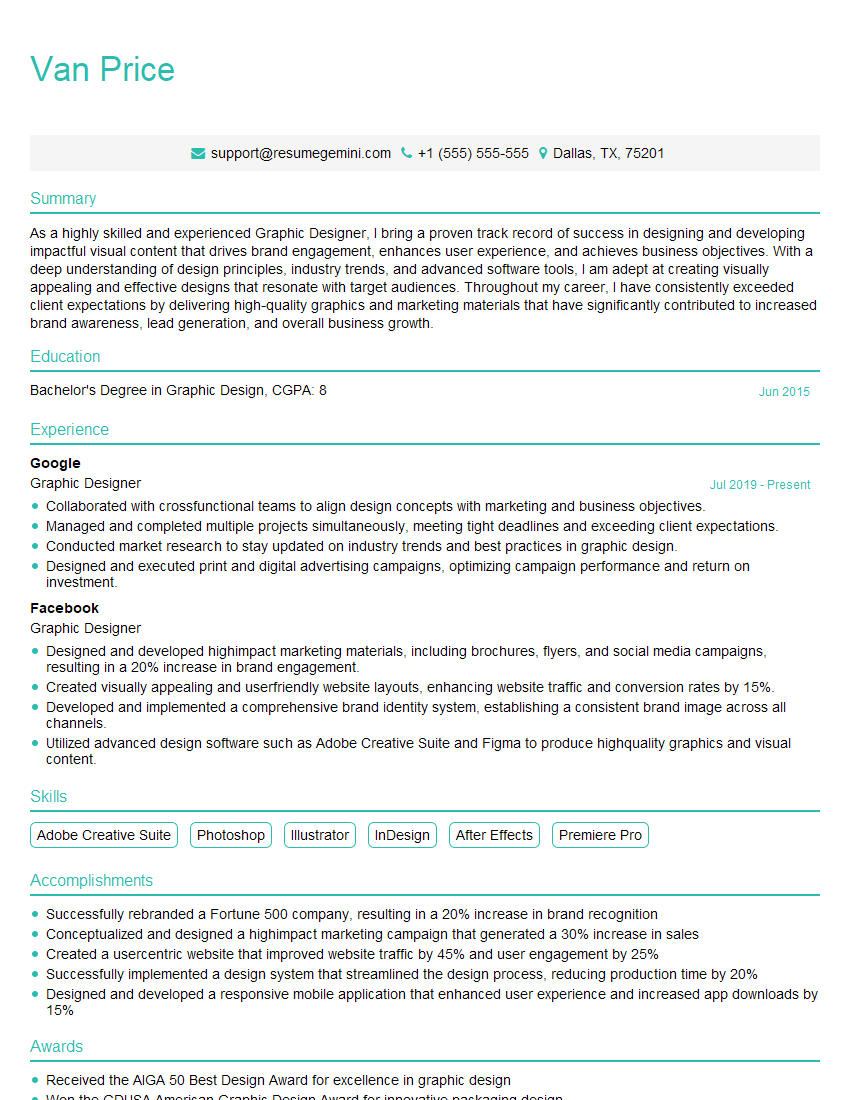
Graphic Designer Resume Sample
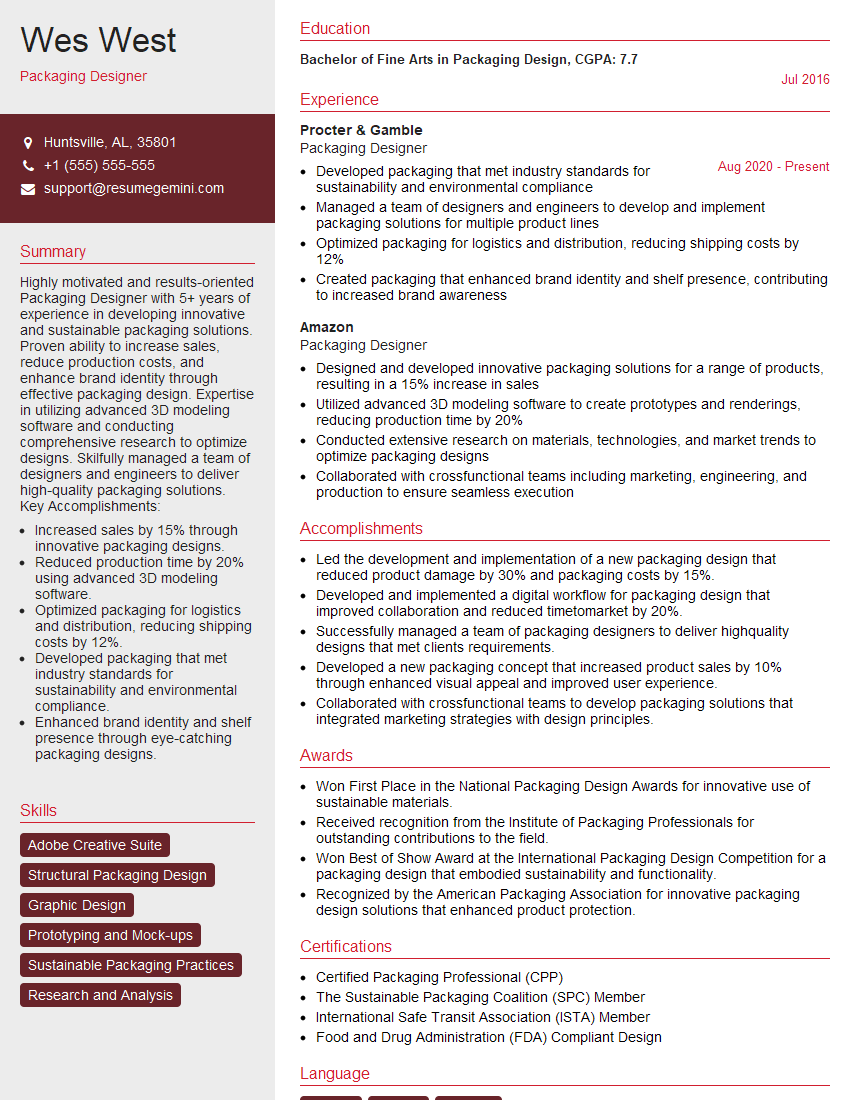
Packaging Designer Resume Sample
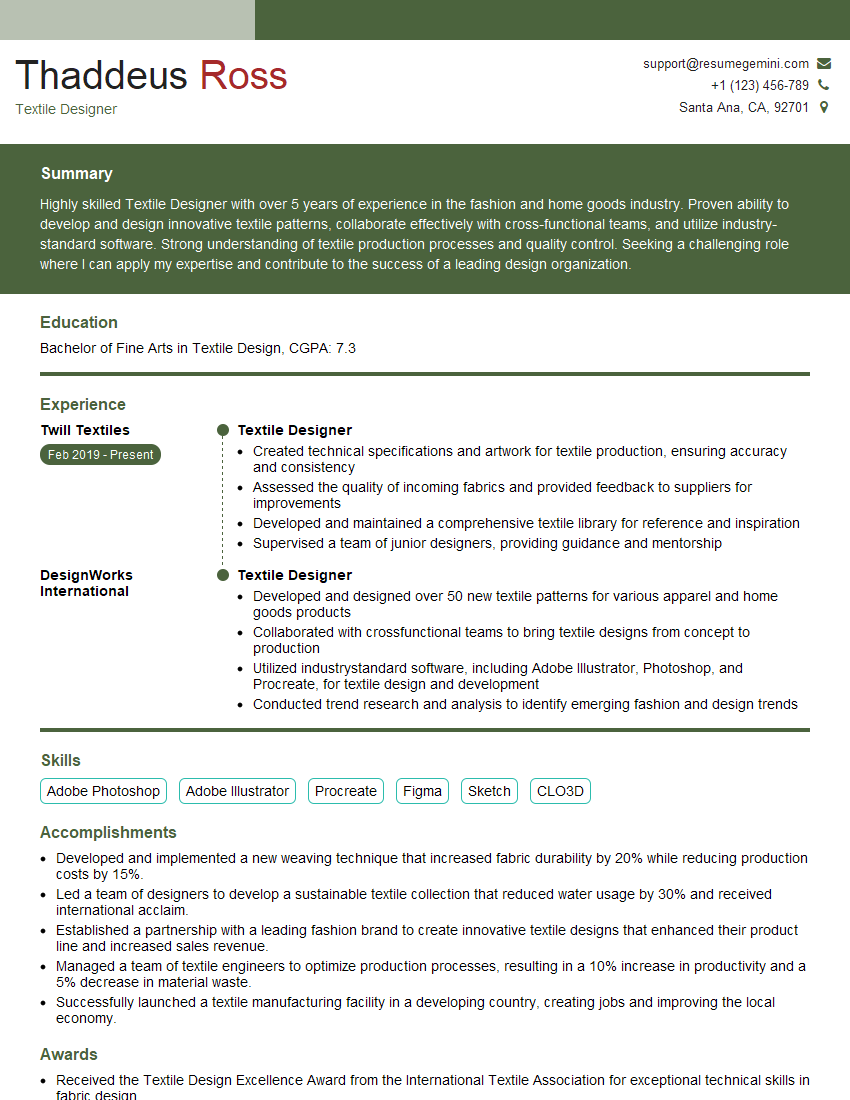
Textile Designer Resume Sample
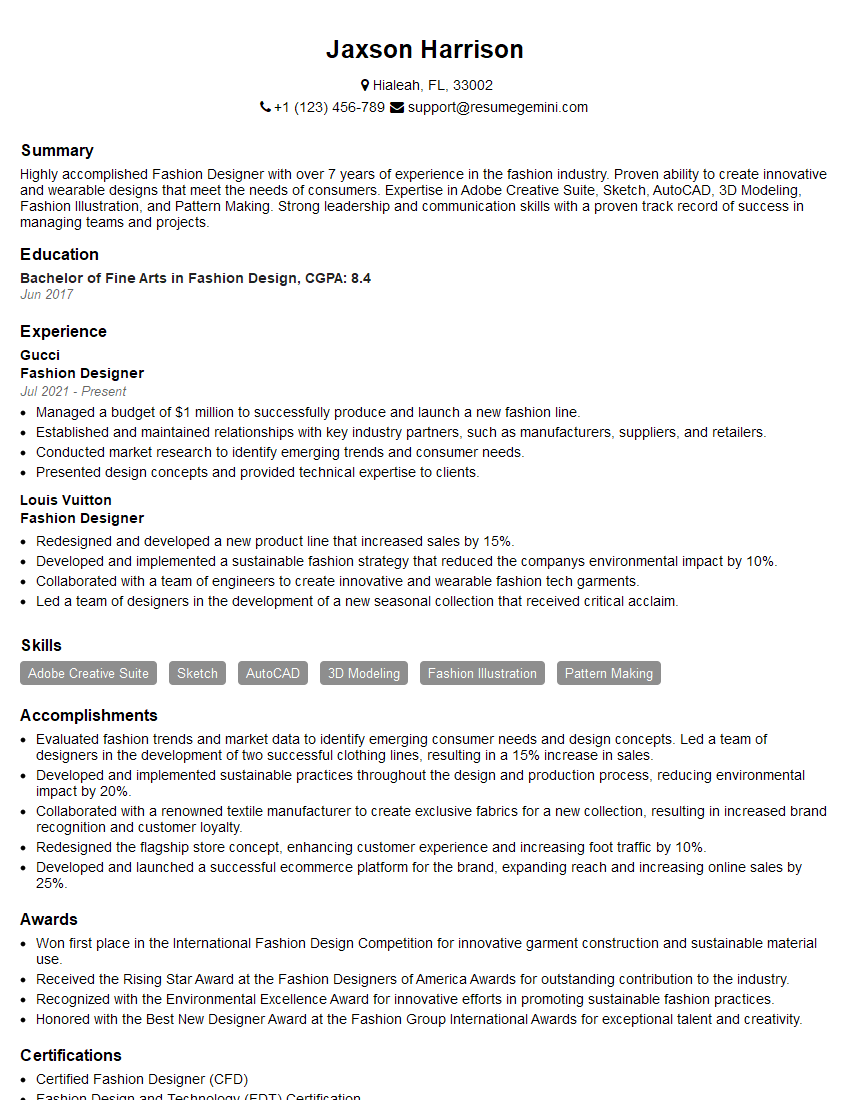
Fashion Designer Resume Sample
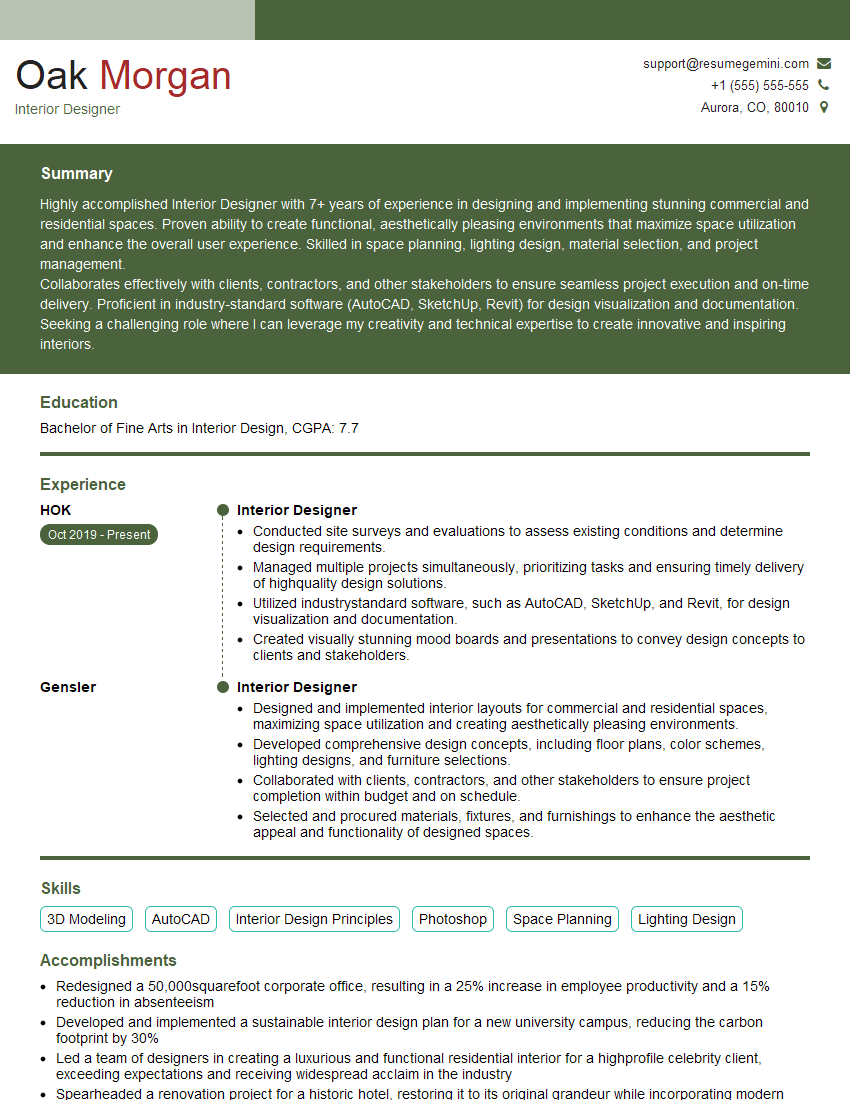
Interior Designer Resume Sample
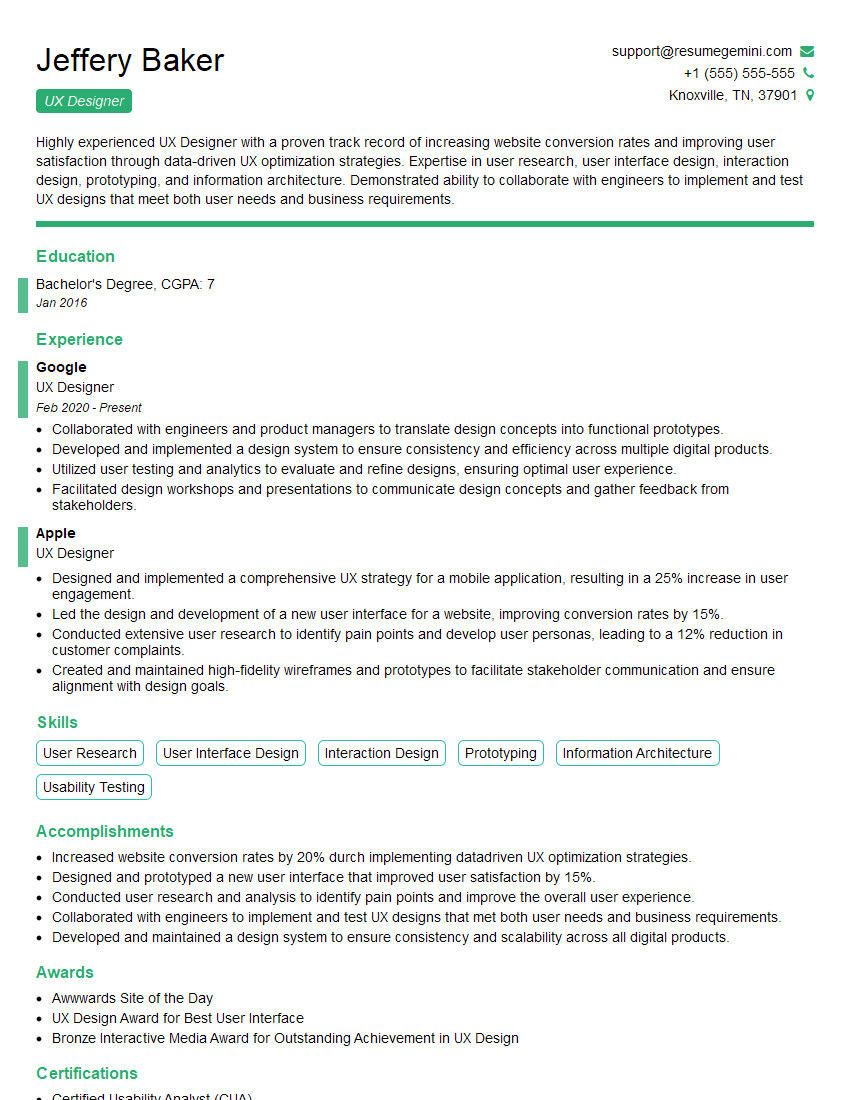
UX Designer Resume Sample
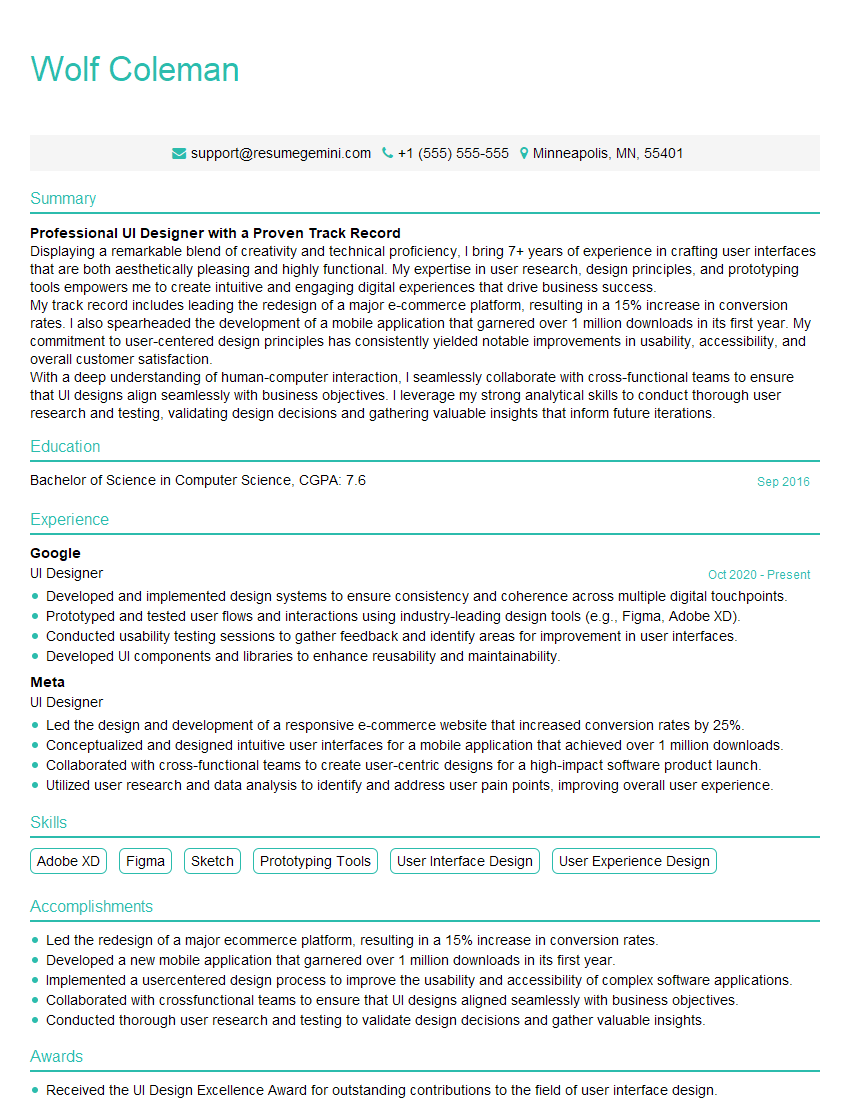
UI Designer Resume Sample
Explore more articles
Users Rating of Our Blogs
Share Your Experience
We value your feedback! Please rate our content and share your thoughts (optional).
What Readers Say About Our Blog
Very informative content, great job.
good