The thought of an interview can be nerve-wracking, but the right preparation can make all the difference. Explore this comprehensive guide to Understanding of Environmental Engineering Regulations interview questions and gain the confidence you need to showcase your abilities and secure the role.
Questions Asked in Understanding of Environmental Engineering Regulations Interview
Q 1. Explain the Clean Water Act (CWA) and its key provisions.
The Clean Water Act (CWA) is a comprehensive federal law enacted in 1972 to restore and maintain the chemical, physical, and biological integrity of the nation’s waters. Think of it as the cornerstone of water pollution control in the US. Its key provisions revolve around setting water quality standards, regulating pollutant discharges, and protecting wetlands.
- Water Quality Standards: The CWA mandates states to establish water quality standards, defining acceptable levels of pollutants for various water bodies. These standards guide pollution control efforts and ensure waters are suitable for designated uses like fishing, swimming, or drinking water.
- National Pollutant Discharge Elimination System (NPDES): This permits program regulates point source discharges of pollutants into waters. Any entity discharging pollutants – industrial facilities, wastewater treatment plants, even construction sites – needs an NPDES permit, detailing the allowed discharge limits and monitoring requirements. Imagine it as a license to pollute, but only within strictly defined limits.
- Wetland Protection: The CWA protects wetlands, vital ecosystems that filter pollutants, control flooding, and provide habitat. Activities affecting wetlands often require permits under Section 404 of the CWA.
- Non-point Source Pollution: While the NPDES focuses on point sources, the CWA also addresses non-point source pollution (like runoff from agricultural fields or urban areas). Management plans are often developed at the state and local levels to minimize these diffuse pollution sources.
For example, a manufacturing plant releasing wastewater into a river must obtain an NPDES permit specifying the maximum allowable concentration of various pollutants, such as heavy metals or organic chemicals. Failure to comply can result in significant penalties.
Q 2. Describe the National Environmental Policy Act (NEPA) and its role in environmental projects.
The National Environmental Policy Act (NEPA) of 1969 is a landmark environmental law that establishes a national policy for the environment and requires federal agencies to integrate environmental considerations into their decision-making processes. It’s essentially a framework for ensuring that environmental impacts are considered before major federal actions are taken.
NEPA’s core function is to ensure informed decision-making by requiring federal agencies to prepare Environmental Assessments (EAs) or Environmental Impact Statements (EISs) for proposed major federal actions significantly affecting the quality of the human environment.
An Environmental Assessment (EA) is a concise public document that briefly provides sufficient evidence and analysis for determining whether to prepare an EIS or finding of no significant impact. An Environmental Impact Statement (EIS) is a much more detailed document that thoroughly analyzes the potential environmental consequences of a proposed project, explores alternatives, and recommends mitigation measures. NEPA’s goal is to prevent environmental damage before it occurs, not just clean up after it.
For instance, the construction of a new highway by a federal agency would trigger NEPA review. The agency would need to conduct an EA or EIS assessing the project’s potential impacts on air and water quality, wildlife habitats, and human communities. The public has the opportunity to comment on these documents, ensuring transparency and stakeholder involvement.
Q 3. What are the key components of an environmental impact assessment (EIA)?
A comprehensive Environmental Impact Assessment (EIA) typically includes these key components:
- Project Description: A detailed description of the proposed project, including its location, scale, and intended purpose. Think of this as the project’s blueprint.
- Baseline Environmental Conditions: An assessment of the existing environmental conditions at the project site, including air and water quality, noise levels, flora and fauna, and socio-economic factors. This sets the stage for comparing before and after conditions.
- Impact Assessment: A prediction of the potential environmental impacts of the project, both positive and negative. This often involves modeling, data analysis, and expert judgment.
- Mitigation Measures: Strategies to reduce or eliminate negative environmental impacts. This is crucial for demonstrating environmental responsibility.
- Alternatives Analysis: An evaluation of alternative project designs or locations to minimize environmental impacts. Showing that you considered other options is key.
- Public Consultation: Opportunities for public participation and feedback throughout the EIA process. Public opinion matters and should be considered.
- Monitoring Plan: A plan to monitor the project’s environmental impacts during and after construction. Ensures accountability and adaptive management.
A well-structured EIA doesn’t just identify problems but offers concrete solutions. For example, a proposed dam project might identify potential impacts on downstream water flow and fish habitats. The EIA would then suggest mitigation measures like fish ladders or flow release strategies to minimize those impacts.
Q 4. How do you ensure compliance with environmental regulations during a project’s lifecycle?
Ensuring compliance with environmental regulations throughout a project’s lifecycle is crucial. My approach involves a multi-faceted strategy:
- Proactive Planning: Integrating environmental considerations into every stage of project planning, from initial design to decommissioning. This includes conducting thorough due diligence, environmental site assessments, and identifying potential environmental risks early on.
- Permitting and Approvals: Obtaining all necessary environmental permits and approvals before commencing any activities. This involves navigating complex regulatory requirements and demonstrating compliance.
- Environmental Management System (EMS): Implementing an EMS, such as ISO 14001, to provide a structured framework for managing environmental aspects and impacts. This establishes clear procedures, responsibilities, and targets for environmental performance.
- Monitoring and Reporting: Regularly monitoring environmental performance against established standards and reporting findings to regulatory agencies. This helps ensure continuous improvement and compliance.
- Training and Awareness: Providing thorough environmental training to all project personnel. This ensures everyone understands their role in environmental protection and compliance.
- Incident Response Plan: Having a detailed plan for responding to environmental incidents or emergencies. This shows preparedness and minimizes the environmental damage from unexpected events.
For example, during a construction project, regular monitoring of soil erosion, water discharge, and noise levels would be carried out, comparing findings against permitted limits. Any non-compliance would trigger corrective action, which is duly reported to regulatory bodies.
Q 5. What is your experience with environmental permitting processes?
I have extensive experience with various environmental permitting processes, including NPDES, air permits, stormwater permits, and wetlands permits. My experience encompasses all phases of the permitting process, from initial application development and agency coordination to permit issuance and compliance monitoring. I’ve successfully navigated complex regulatory requirements for projects ranging from industrial facilities to infrastructure developments, working closely with regulatory agencies to ensure timely and efficient permit acquisition. A significant portion of my work involves anticipating potential permitting issues early in project planning, often saving clients time and resources by preventing costly delays. I am particularly adept at interpreting and applying the intricate nuances of various regulations to achieve successful permit approvals while minimizing environmental impacts. I’m accustomed to working with various permit types including individual and general permits, demonstrating a thorough understanding of the specific regulations and procedures relevant to each permit category.
Q 6. Explain the difference between NPDES and SPCC permits.
Both NPDES and SPCC permits are designed to prevent water pollution, but they apply to different types of discharges:
- National Pollutant Discharge Elimination System (NPDES) permits regulate the discharge of pollutants from point sources into surface waters (like rivers, lakes, and oceans). Point sources are discrete conveyances, such as pipes or ditches, that discharge pollutants into waters. Industrial facilities, wastewater treatment plants, and stormwater discharges from construction sites are common examples requiring NPDES permits.
- Spill Prevention, Control, and Countermeasure (SPCC) plans are required for facilities that store certain amounts of oil (above specified thresholds) above ground or underground to prevent oil spills that could reach navigable waters. They require facilities to develop a plan to prevent and respond to potential oil spills, including measures for containment, cleanup, and emergency response. This focuses on preventing accidental releases, rather than routine discharges.
Think of it this way: NPDES permits handle routine discharges, while SPCC plans prevent accidental spills. A refinery would likely need both permits: an NPDES permit to manage wastewater discharges and an SPCC plan to prevent and respond to potential oil spills.
Q 7. Describe your understanding of hazardous waste management regulations.
Hazardous waste management regulations are complex and designed to protect human health and the environment from the dangers of hazardous waste. These regulations cover the entire lifecycle of hazardous waste, from its generation to its ultimate disposal. Key aspects include:
- Hazardous Waste Identification: Determining if a waste is hazardous based on its characteristics (ignitability, corrosivity, reactivity, toxicity) or its listing in federal or state regulations. This is often complex and requires specialized knowledge.
- Waste Minimization and Recycling: Prioritizing waste reduction, reuse, and recycling to minimize the generation of hazardous waste in the first place. This is a proactive approach to environmental protection.
- Storage and Transportation: Strict rules govern the storage, labeling, and transportation of hazardous waste, ensuring proper containment and preventing accidents. These regulations ensure the safety of workers and the public.
- Treatment, Storage, and Disposal (TSD) Facilities: Only permitted TSD facilities can manage hazardous waste, requiring rigorous environmental controls and monitoring. This ensures proper handling of hazardous waste.
- Manifest System: A tracking system (the manifest) that documents the movement of hazardous waste from its point of generation to its final disposal, providing traceability and accountability.
- Closure and Post-Closure Care: Regulations dictate the procedures for closing hazardous waste facilities and ensuring long-term environmental protection at the site.
Failure to comply with hazardous waste regulations can result in significant fines and environmental damage. For example, improper disposal of asbestos could lead to contamination of soil and groundwater, posing serious health risks. A thorough understanding of these regulations is critical for responsible hazardous waste management.
Q 8. How do you handle non-compliance situations?
Handling non-compliance situations requires a systematic approach prioritizing prompt action, accurate assessment, and collaborative problem-solving. My first step is to thoroughly investigate the nature and extent of the non-compliance. This involves reviewing permits, operational records, and potentially conducting site inspections. Once the root cause is identified, I develop a corrective action plan, which might include operational changes, equipment upgrades, or employee retraining. This plan needs to be documented and submitted to the relevant regulatory agency, often with a timeline for implementation and verification of effectiveness.
For example, if a wastewater treatment plant exceeds its permitted discharge limits for a particular pollutant, we might first review maintenance logs to see if equipment malfunction was a factor. If so, repairs are prioritized. If not, we’d examine operational practices and potentially adjust chemical treatments or flow rates. Throughout, transparent and open communication with regulatory agencies is crucial – proactive engagement helps mitigate potential penalties and fosters a cooperative relationship. Finally, ongoing monitoring is essential to ensure compliance going forward, often involving implementing a robust environmental management system.
Q 9. What are the main differences between federal, state, and local environmental regulations?
Environmental regulations are a complex layered system. Federal regulations, like those from the EPA (Environmental Protection Agency), set national minimum standards. Think of these as the baseline protections for things like air and water quality, hazardous waste management, and endangered species. State regulations can be more stringent than federal rules, often adapting the federal framework to address specific local environmental issues or concerns. For instance, a state might have stricter emission limits for certain pollutants based on its unique geography or population density. Local regulations, at the county or city level, often address site-specific issues, such as zoning restrictions impacting development near wetlands or noise pollution ordinances. The interplay can be intricate; a facility must comply with all three tiers of regulations – federal, state, and local – that apply to its operations.
Q 10. Explain your experience with environmental auditing.
My experience in environmental auditing spans various industries, from manufacturing to energy production. I’ve conducted both internal and third-party audits, following established protocols and standards, such as ISO 14001. Audits typically involve a review of environmental permits and compliance records, site inspections to assess operational practices, and interviews with personnel. A key part of my role is identifying gaps in compliance, potential environmental risks, and areas for improvement. I then prepare a detailed audit report documenting my findings, and I work with clients to develop corrective action plans to address deficiencies identified. For example, in one audit of a chemical plant, we discovered improper storage of hazardous waste, leading to a corrective action plan which involved upgrading storage facilities and implementing a new waste management protocol. This significantly reduced the plant’s environmental risk profile.
Q 11. How do you stay updated on changes in environmental regulations?
Staying updated on the ever-changing landscape of environmental regulations requires a multi-pronged approach. I regularly subscribe to professional journals like Environmental Science & Technology and Environmental Engineering Science. I actively participate in professional organizations, such as the American Academy of Environmental Engineers and Scientists (AAEES), attending conferences and webinars to learn about the latest regulatory changes and best practices. I also utilize online resources provided by regulatory agencies like the EPA, tracking updates to their websites and subscribing to relevant email alerts. Additionally, I maintain strong professional networks, leveraging contacts within the regulatory community and other environmental professionals to share information and stay informed.
Q 12. Describe your knowledge of environmental risk assessment methodologies.
Environmental risk assessment is a critical process I use to identify and evaluate potential environmental hazards, assessing the probability and severity of negative consequences. Common methodologies include qualitative and quantitative approaches. Qualitative approaches utilize expert judgment and historical data to establish relative risk levels. Quantitative approaches, such as probabilistic risk assessments, utilize statistical data and models to quantify risks with a higher degree of precision. This often involves a four-step process: hazard identification, exposure assessment, dose-response assessment, and risk characterization. For example, assessing the potential risk of groundwater contamination from a leaking underground storage tank would involve determining what contaminants are present, how much could leak, how quickly they might spread, what are the potential health effects on exposure, and ultimately calculating a risk level. This helps to prioritize remediation efforts and inform decision-making.
Q 13. What is your experience with environmental remediation projects?
I possess significant experience with environmental remediation projects, encompassing various contaminant types and project scopes. My work has involved soil and groundwater remediation, addressing issues such as petroleum hydrocarbon contamination, heavy metal contamination, and chlorinated solvent contamination. This has ranged from smaller projects, like addressing localized soil contamination at a gas station, to large-scale projects involving extensive site investigation, remediation design, and implementation. The approach often begins with a thorough site characterization to define the extent of contamination. Then, a remediation strategy is designed and implemented, employing techniques such as pump-and-treat systems, bioremediation, or soil excavation and disposal. Post-remediation monitoring is crucial to verify the effectiveness of the chosen methods and ensure long-term environmental protection. A key aspect is regulatory compliance throughout the entire project lifecycle, ensuring the selected remediation approach satisfies all applicable standards and permits.
Q 14. Explain the concept of environmental due diligence.
Environmental due diligence is the process of identifying and assessing potential environmental liabilities associated with a property or business transaction. It’s a critical aspect of risk management, particularly in mergers and acquisitions, real estate purchases, and financing transactions. The process usually involves a review of historical environmental records, site inspections, and potentially environmental sampling and analysis. The goal is to uncover potential issues, such as past contamination, violations of environmental regulations, or the presence of hazardous materials. This information helps inform decision-making, allowing potential buyers or lenders to negotiate terms, allocate funds for remediation, or even withdraw from the transaction if the risks are deemed unacceptable. Failure to conduct proper due diligence can result in significant financial and legal liabilities in the future. Think of it as a comprehensive environmental background check before making a significant investment.
Q 15. How familiar are you with the Resource Conservation and Recovery Act (RCRA)?
The Resource Conservation and Recovery Act (RCRA) is the cornerstone of US federal law regulating the management of hazardous and non-hazardous solid waste. My familiarity extends to its core components, including the cradle-to-grave tracking of hazardous waste, the permitting of hazardous waste treatment, storage, and disposal facilities (TSDFs), and the regulation of underground storage tanks (USTs). I understand the complexities of RCRA Subtitle C, which governs hazardous waste, and Subtitle D, which addresses non-hazardous waste. I’ve worked extensively with RCRA’s requirements for waste characterization, generator responsibilities, manifest systems, and closure plans. For example, in a previous role, I was instrumental in guiding a manufacturing client through a RCRA compliance audit, identifying and rectifying several violations related to improper waste labeling and manifest completion. This involved not only understanding the regulations but also collaborating with the client to implement effective corrective actions and prevent future non-compliance.
- Hazardous Waste Identification: I’m proficient in identifying hazardous waste using the characteristic and listed waste methods, understanding the implications of different waste codes.
- Permitting and Compliance: I possess a strong understanding of the permitting process for TSDFs and the ongoing compliance requirements, such as inspections and reporting.
- Closure and Post-Closure Care: I have experience developing and implementing closure and post-closure care plans for hazardous waste facilities, ensuring long-term environmental protection.
Career Expert Tips:
- Ace those interviews! Prepare effectively by reviewing the Top 50 Most Common Interview Questions on ResumeGemini.
- Navigate your job search with confidence! Explore a wide range of Career Tips on ResumeGemini. Learn about common challenges and recommendations to overcome them.
- Craft the perfect resume! Master the Art of Resume Writing with ResumeGemini’s guide. Showcase your unique qualifications and achievements effectively.
- Don’t miss out on holiday savings! Build your dream resume with ResumeGemini’s ATS optimized templates.
Q 16. Describe your understanding of air quality regulations.
My understanding of air quality regulations encompasses both federal and state-level legislation. At the federal level, the Clean Air Act (CAA) is paramount, establishing National Ambient Air Quality Standards (NAAQS) for criteria pollutants like ozone, particulate matter, carbon monoxide, sulfur dioxide, nitrogen dioxide, and lead. I’m familiar with the permitting requirements for stationary sources of air pollution under Title V of the CAA, including the development and implementation of emission control plans. I’ve also worked with regulations concerning mobile sources, understanding the impact of vehicle emissions and the various control strategies implemented to mitigate them. State-level regulations often add further specificity and may be more stringent than federal standards. For instance, I’ve helped clients navigate California’s stringent air quality regulations, which include unique requirements for volatile organic compound (VOC) emissions.
Beyond regulatory knowledge, I understand the technical aspects of air quality monitoring, modeling, and data analysis. This includes using dispersion modeling software to predict the impact of emissions on ambient air quality and employing various statistical methods to analyze monitoring data. In one project, I used air dispersion modeling to demonstrate that proposed modifications to a manufacturing plant would not result in NAAQS violations.
Q 17. What is your experience with water quality monitoring and reporting?
My experience with water quality monitoring and reporting is extensive, covering various aspects from sample collection and analysis to data interpretation and regulatory reporting. I’m proficient in using various analytical methods to determine parameters such as pH, dissolved oxygen, turbidity, and various contaminants. I understand the different regulatory frameworks governing water quality, including the Clean Water Act (CWA) and the Safe Drinking Water Act (SDWA). My experience also includes working with various monitoring programs, including the National Pollutant Discharge Elimination System (NPDES) permit process, where I’ve helped clients develop and implement comprehensive monitoring plans, ensuring compliance with permit limits. Furthermore, I’ve prepared numerous water quality reports for regulatory agencies, ensuring accurate and timely reporting of monitoring data. One project involved developing a comprehensive water quality monitoring program for a large industrial facility, leading to a significant reduction in wastewater discharge pollutants.
I am also experienced in using different water quality modeling software to predict the fate and transport of pollutants in surface and groundwater systems. This allows for proactive mitigation of potential water quality issues.
Q 18. How do you ensure data accuracy and integrity in environmental compliance?
Ensuring data accuracy and integrity in environmental compliance is paramount. My approach involves implementing a robust quality assurance/quality control (QA/QC) program that covers all aspects of data collection, analysis, and reporting. This includes:
- Chain of Custody: Maintaining a meticulous chain of custody for all samples, ensuring proper labeling, handling, and transportation.
- Calibration and Maintenance: Regular calibration and maintenance of all monitoring and analytical equipment.
- Data Validation: Implementing data validation procedures to identify and correct errors or inconsistencies.
- Data Management Systems: Utilizing secure and reliable data management systems to store and manage environmental data.
- Audits and Reviews: Conducting regular internal audits and peer reviews to identify weaknesses and improve data quality.
For example, in a previous project, I implemented a QA/QC program that significantly reduced data errors and improved the credibility of our environmental reports. This involved developing detailed standard operating procedures (SOPs) and providing training to field and laboratory personnel.
Q 19. Explain your experience with environmental management systems (EMS) like ISO 14001.
I possess significant experience with Environmental Management Systems (EMS), specifically ISO 14001. I understand the requirements for establishing, implementing, maintaining, and continually improving an EMS. This includes conducting environmental aspects and impact assessments, developing environmental objectives and targets, and implementing appropriate environmental controls. I’ve guided numerous clients through the ISO 14001 certification process, assisting them in documenting their EMS, conducting internal audits, and preparing for external certification audits. My experience also includes integrating EMS principles into overall business operations, ensuring a holistic approach to environmental sustainability. For example, I recently helped a manufacturing company implement an ISO 14001 compliant EMS, leading to significant reductions in waste generation and energy consumption.
I understand that successful EMS implementation requires a commitment from all levels of the organization. It’s not just about documentation but about fostering a culture of environmental responsibility and continuous improvement.
Q 20. Describe your understanding of environmental liability and insurance.
Environmental liability and insurance are critical considerations for any organization that handles hazardous materials or engages in activities with environmental implications. Understanding environmental liability involves recognizing the potential for financial responsibility for environmental damage or contamination. This liability can stem from past activities, current operations, or even from third-party actions. I understand the different types of environmental insurance policies available, such as pollution liability insurance, professional liability insurance for environmental consultants, and general liability insurance with environmental endorsements. I’ve assisted clients in assessing their environmental liability risks and selecting appropriate insurance coverage to mitigate potential financial losses. A key aspect of this is understanding the nuances of different policies and ensuring adequate coverage for specific environmental risks.
Proper insurance is crucial, not just for financial protection, but also to demonstrate due diligence and responsible environmental stewardship.
Q 21. What are the common challenges in environmental compliance and how do you overcome them?
Common challenges in environmental compliance include keeping up with constantly evolving regulations, managing the costs associated with compliance, integrating environmental considerations into business decisions, and securing buy-in from all stakeholders. Another major challenge is addressing legacy environmental issues, such as contaminated sites. Overcoming these challenges requires a multifaceted approach:
- Proactive Monitoring and Reporting: Regular monitoring and reporting help identify potential problems early, before they escalate into significant issues.
- Technological Advancements: Embracing new technologies can help streamline compliance efforts and reduce environmental impacts. Examples include using data analytics to optimize waste management and employing advanced monitoring equipment for improved accuracy.
- Stakeholder Engagement: Building consensus among stakeholders, including employees, management, and regulatory agencies, is crucial for successful compliance.
- Effective Training: Training employees on environmental regulations and procedures is vital to prevent violations and ensure accountability.
- Continuous Improvement: Regularly reviewing and updating environmental management practices ensures ongoing compliance and identifies opportunities for improvement.
For instance, I helped one client facing a legacy contamination issue by developing a comprehensive remediation plan, coordinating with regulatory agencies, and securing the necessary funding for cleanup. This involved not only technical expertise but also strong communication and negotiation skills.
Q 22. Explain your experience with environmental modeling and simulation software.
My experience with environmental modeling and simulation software spans several years and various platforms. I’m proficient in using software like EPA’s Better Assessment Science Integrating Point and Non-point Sources (BASINS) for watershed modeling, ArcGIS for Geographic Information Systems (GIS) analysis and mapping pollution sources, and MIKE 11 for hydrodynamic and water quality modeling. I’ve used these tools extensively for projects involving everything from assessing the impact of industrial discharges on receiving waters to predicting the fate and transport of contaminants in groundwater. For example, in one project, we used BASINS to model the nitrogen load from agricultural runoff into a local river, allowing us to identify key sources and recommend best management practices to reduce pollution. In another project, I used MIKE 11 to simulate the effects of a proposed dam on downstream water quality, which proved invaluable in the environmental impact assessment.
Beyond specific software, I’m comfortable with the underlying principles of environmental modeling, including model calibration, validation, and uncertainty analysis. I understand the limitations of different models and can select the most appropriate tool for a given task. This includes familiarity with various types of models, such as deterministic and stochastic models, and their applications in different environmental contexts.
Q 23. Describe a time you had to interpret complex environmental regulations.
Interpreting complex environmental regulations often requires a multi-faceted approach. For instance, I once had to navigate the intricacies of the Clean Water Act (CWA) Section 404 permitting process for a large-scale development project. This involved not only understanding the general requirements for wetlands permitting, but also deciphering specific state and local regulations that added layers of complexity. The challenge was to determine how to satisfy the permit requirements without compromising the project’s feasibility.
My approach involved a thorough review of all applicable federal, state, and local regulations, consultation with legal counsel specializing in environmental law, and engagement with regulatory agencies to clarify ambiguities. We compiled a comprehensive analysis of the project’s potential impacts on wetlands, developed a mitigation plan to minimize adverse effects, and prepared a detailed permit application that addressed all regulatory concerns. The successful negotiation and acquisition of the 404 permit was a testament to careful interpretation and proactive engagement with regulatory bodies. This project highlighted the importance of understanding the context and the potential cumulative impacts of regulations.
Q 24. How do you communicate complex environmental information to non-technical audiences?
Communicating complex environmental information to non-technical audiences demands clear, concise, and relatable language. I avoid jargon and technical terms whenever possible, opting instead for simple analogies and visual aids. For instance, explaining the concept of groundwater contamination, I might use the analogy of a sponge to illustrate how pollutants can spread through the soil.
I frequently employ visual tools such as charts, graphs, and maps to present data effectively. Storytelling is also a powerful tool; I often frame complex issues within a narrative that engages the audience and makes the information more memorable. For example, when presenting information about climate change, I might start with a personal anecdote about witnessing extreme weather events, followed by a presentation of the scientific data in an accessible manner. Active listening and incorporating audience feedback are crucial to ensure that the information is understood and retained.
Q 25. What are your strategies for effectively managing environmental projects within budget and timelines?
Effective environmental project management requires a proactive and organized approach. My strategies include meticulous planning, detailed budgeting, and rigorous scheduling. I start by clearly defining project objectives, deliverables, and timelines. This is followed by a detailed budget breakdown that accounts for all anticipated costs, including personnel, equipment, materials, and permits. I use project management software such as Microsoft Project or Primavera P6 to track progress, manage resources, and identify potential risks and delays.
Regular communication and collaboration with team members, clients, and regulatory agencies are crucial. This ensures everyone is informed and aligned on project goals. Proactive risk management is also vital; we identify potential challenges early on and develop mitigation strategies to minimize their impact. For example, we might conduct contingency planning to account for potential permit delays or unforeseen environmental conditions. By implementing these strategies, I have consistently delivered projects within budget and on schedule, while adhering to all environmental regulations.
Q 26. Describe your experience with environmental reporting and documentation.
My experience with environmental reporting and documentation is extensive. I’m proficient in preparing various types of reports, including environmental impact assessments (EIAs), environmental management plans (EMPs), and compliance reports. These reports often include detailed data analysis, maps, figures, and technical summaries. I pay close attention to detail and ensure that all reports are clear, concise, and comply with all applicable regulations and guidelines.
I am also adept at using specialized software for report generation and data management. I understand the importance of maintaining accurate and up-to-date records, including field data, lab results, and regulatory correspondence. This detailed record-keeping ensures that we meet all compliance requirements and can readily respond to inquiries from regulatory agencies. Proper documentation is critical for demonstrating compliance and protecting against potential legal liabilities.
Q 27. How do you balance environmental regulations with project cost and schedule considerations?
Balancing environmental regulations with project cost and schedule considerations requires a strategic approach that prioritizes compliance while minimizing financial and time constraints. My strategy often involves identifying and addressing potential environmental challenges early in the project lifecycle, during the planning and design phases. This allows us to incorporate environmentally friendly solutions and avoid costly modifications later on.
This might include using innovative technologies to reduce environmental impacts or selecting alternative project designs that minimize environmental footprint. We also proactively engage with regulatory agencies to clarify requirements and explore options for streamlining the permitting process. This early engagement can often lead to more efficient and cost-effective solutions. Transparency and open communication with clients and stakeholders are key to ensuring that everyone understands the trade-offs and the rationale behind the decisions made.
Q 28. What are your professional development goals related to environmental engineering regulations?
My professional development goals center on staying current with evolving environmental regulations and technological advancements in the field. I plan to pursue specialized training in emerging areas like climate change adaptation and mitigation, circular economy principles, and advanced environmental modeling techniques.
I also aim to expand my knowledge of specific regulations, such as the National Environmental Policy Act (NEPA) and its application to large infrastructure projects. Networking and professional development opportunities, such as attending conferences and workshops, will be key to achieving these goals. Continuous learning is essential for maintaining my expertise and effectively addressing the ever-changing challenges in environmental engineering.
Key Topics to Learn for Understanding of Environmental Engineering Regulations Interview
- Clean Water Act (CWA) and Safe Drinking Water Act (SDWA): Understanding the key provisions, permitting processes, and enforcement mechanisms of these foundational regulations. Consider practical applications like wastewater treatment design and compliance monitoring.
- National Environmental Policy Act (NEPA): Grasping the environmental impact assessment process, including scoping, analysis, and mitigation strategies. Think about how to practically apply NEPA principles in project planning and development.
- Resource Conservation and Recovery Act (RCRA) and Comprehensive Environmental Response, Compensation, and Liability Act (CERCLA): Familiarize yourself with hazardous waste management, remediation techniques, and liability considerations. Explore case studies demonstrating practical application of these regulations in site assessment and cleanup.
- Air Quality Regulations (Clean Air Act): Understand emission standards, permitting requirements, and air pollution control technologies. Consider practical applications such as designing air pollution control systems for industrial facilities.
- Environmental Permitting and Compliance: Develop a strong understanding of the permitting process, including application preparation, regulatory compliance monitoring, and reporting. Practice problem-solving scenarios related to permit violations and corrective actions.
- Environmental Risk Assessment and Management: Master the principles of risk assessment, including hazard identification, exposure assessment, and risk characterization. Explore the application of risk management strategies in various environmental settings.
- Environmental Auditing and Due Diligence: Understand the process of conducting environmental audits to identify potential liabilities and ensure compliance. Consider the practical implications of environmental due diligence in real estate transactions.
Next Steps
Mastering Understanding of Environmental Engineering Regulations is crucial for career advancement in this vital field. A strong understanding of these regulations demonstrates your commitment to environmental protection and opens doors to challenging and rewarding roles. To maximize your job prospects, creating an ATS-friendly resume is essential. ResumeGemini is a trusted resource that can help you build a professional and effective resume tailored to highlight your expertise in environmental engineering regulations. Examples of resumes tailored to this specific area of expertise are available through ResumeGemini, showcasing successful approaches to presenting your skills and experience.
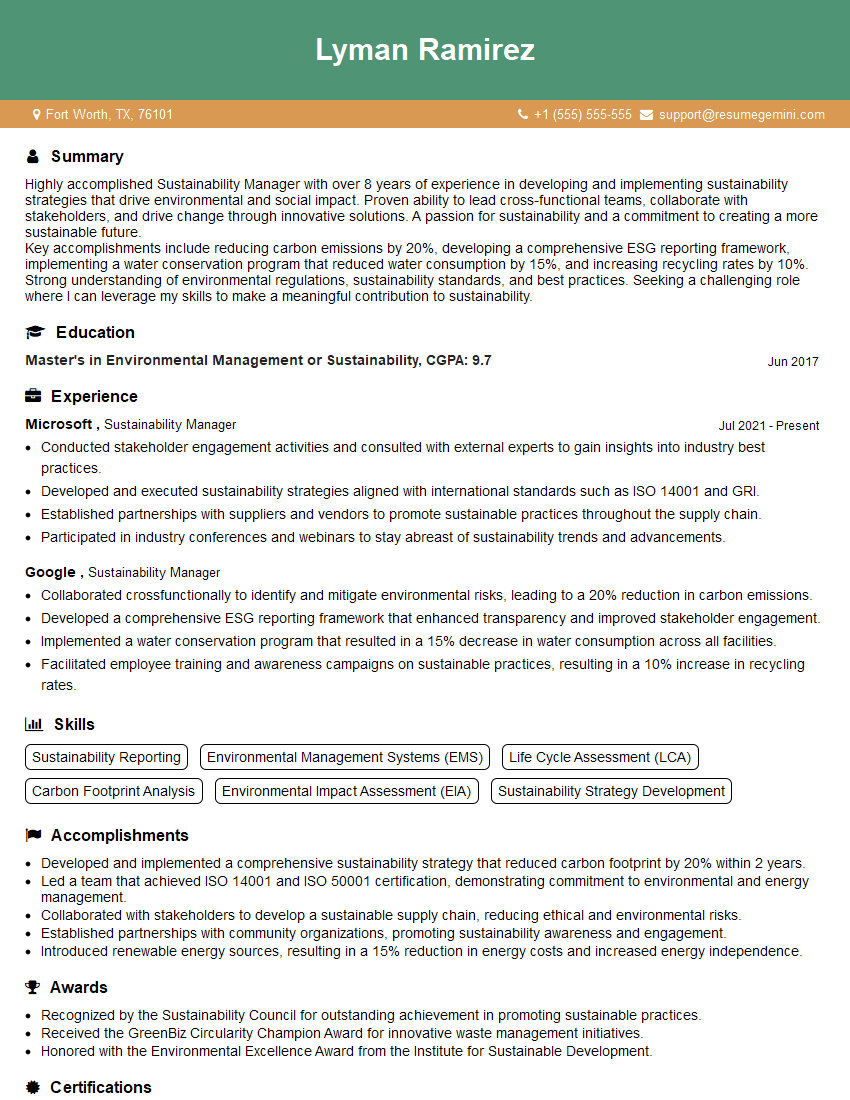
Sustainability Manager Resume Sample
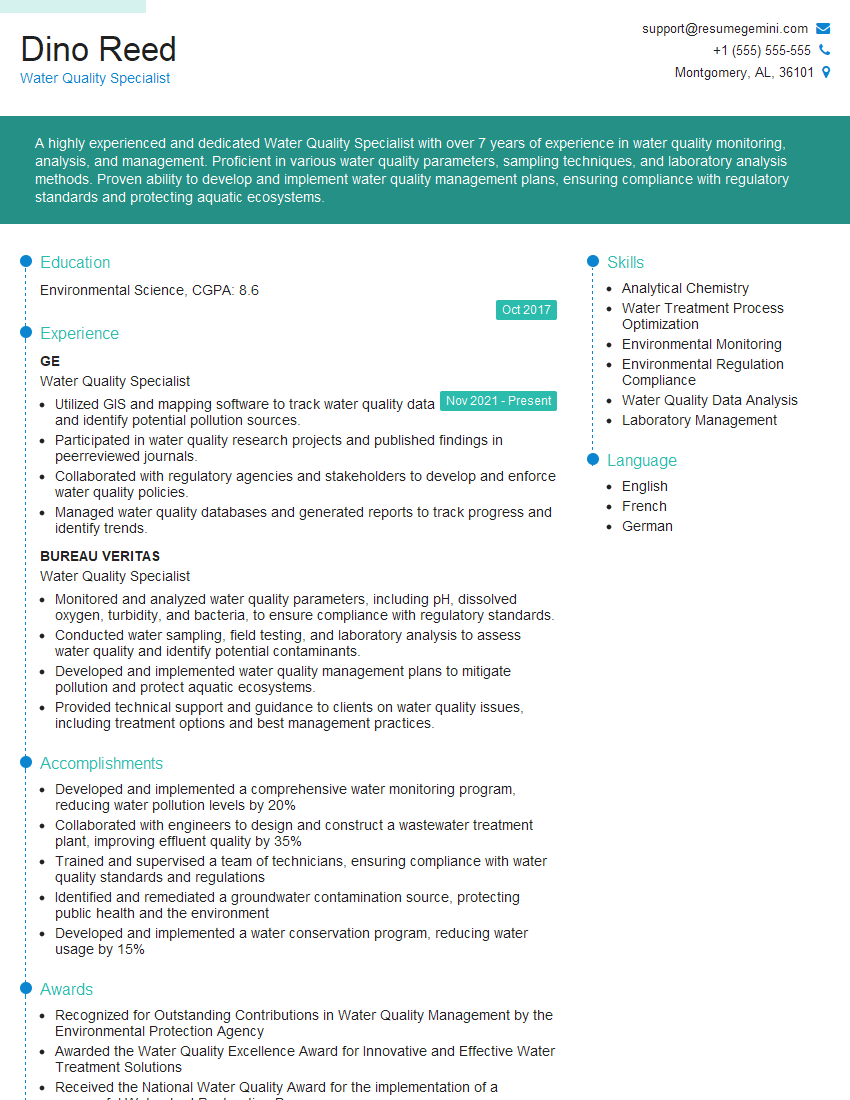
Water Quality Specialist Resume Sample
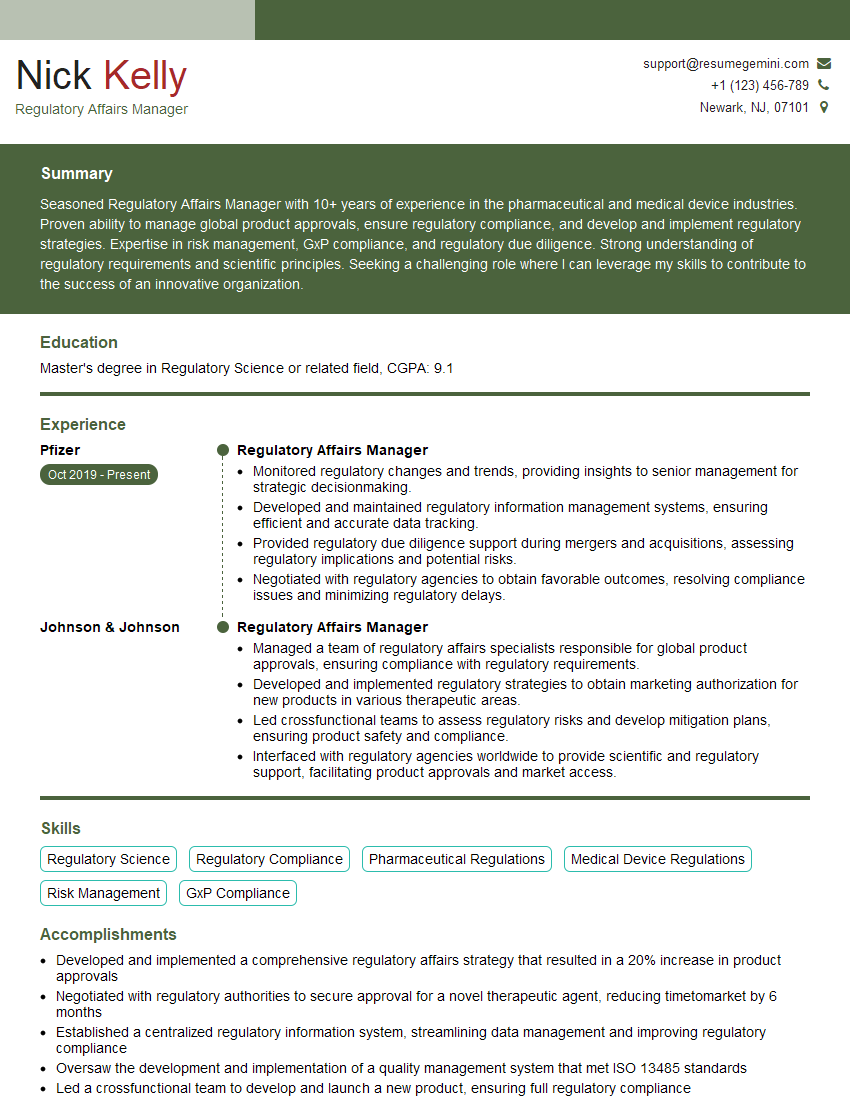
Regulatory Affairs Manager Resume Sample
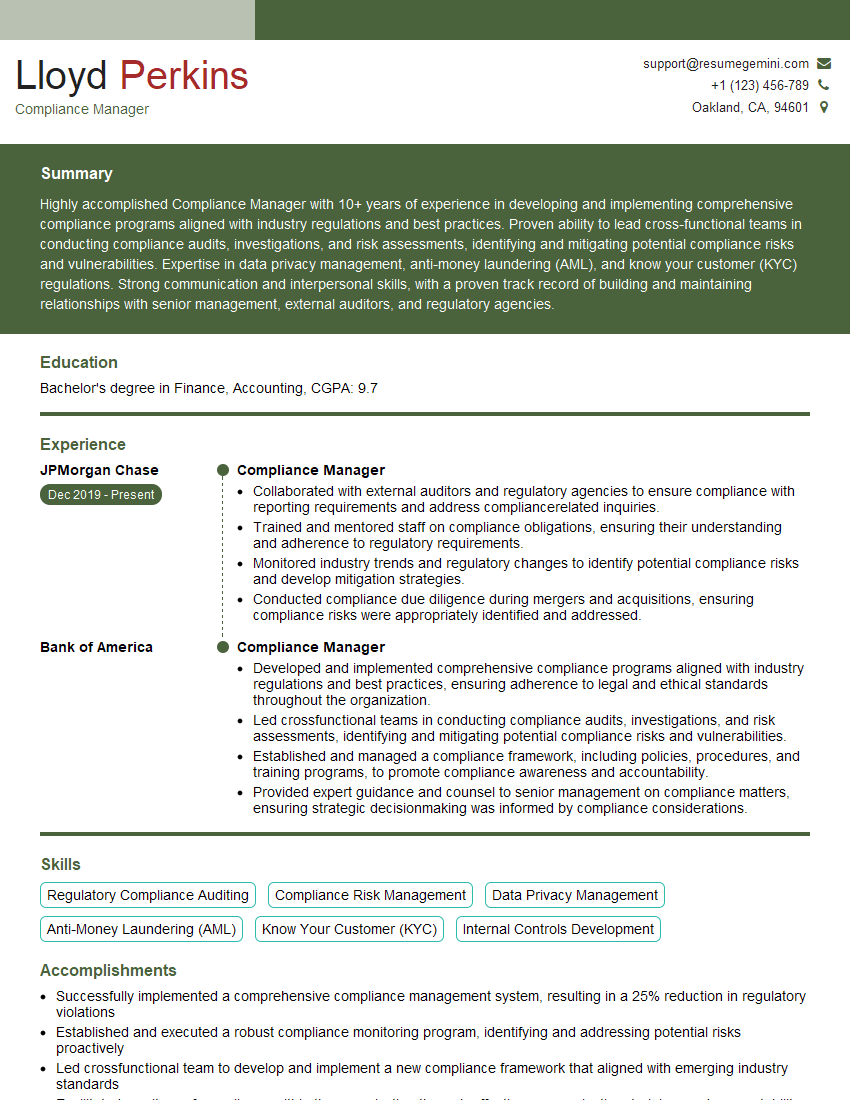
Compliance Manager Resume Sample
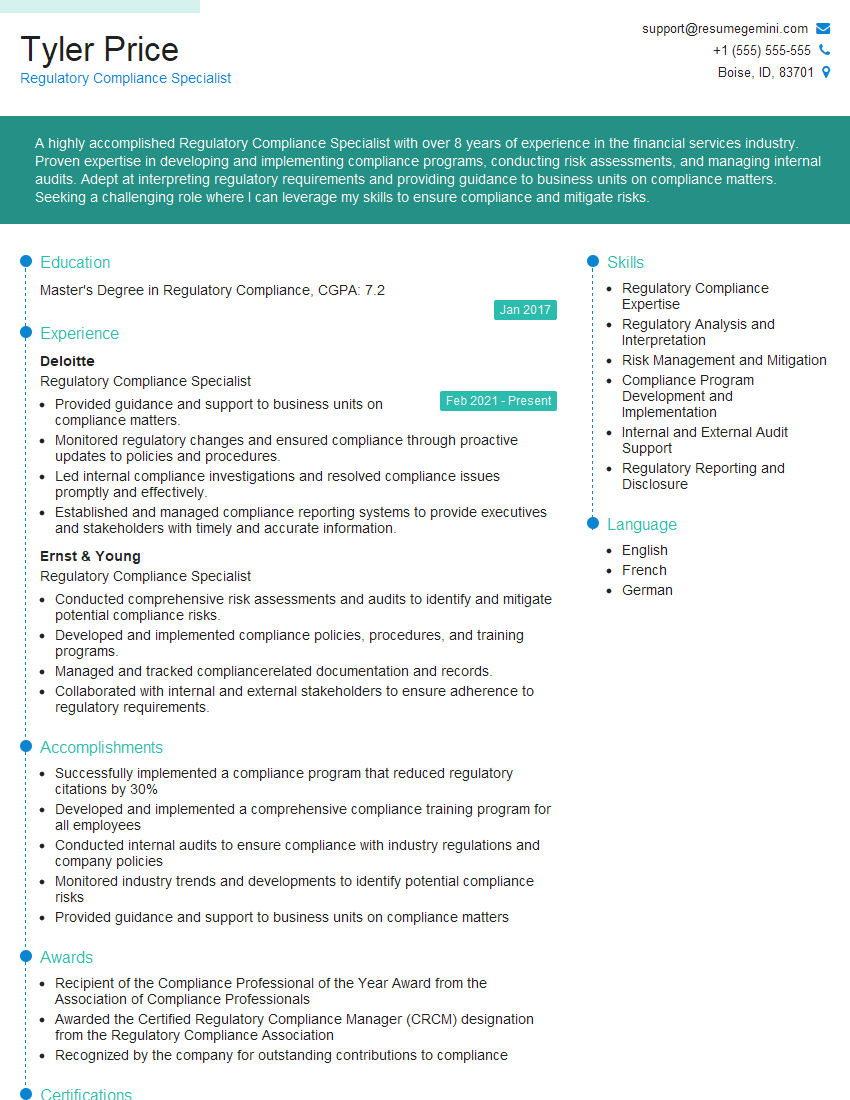
Regulatory Compliance Specialist Resume Sample
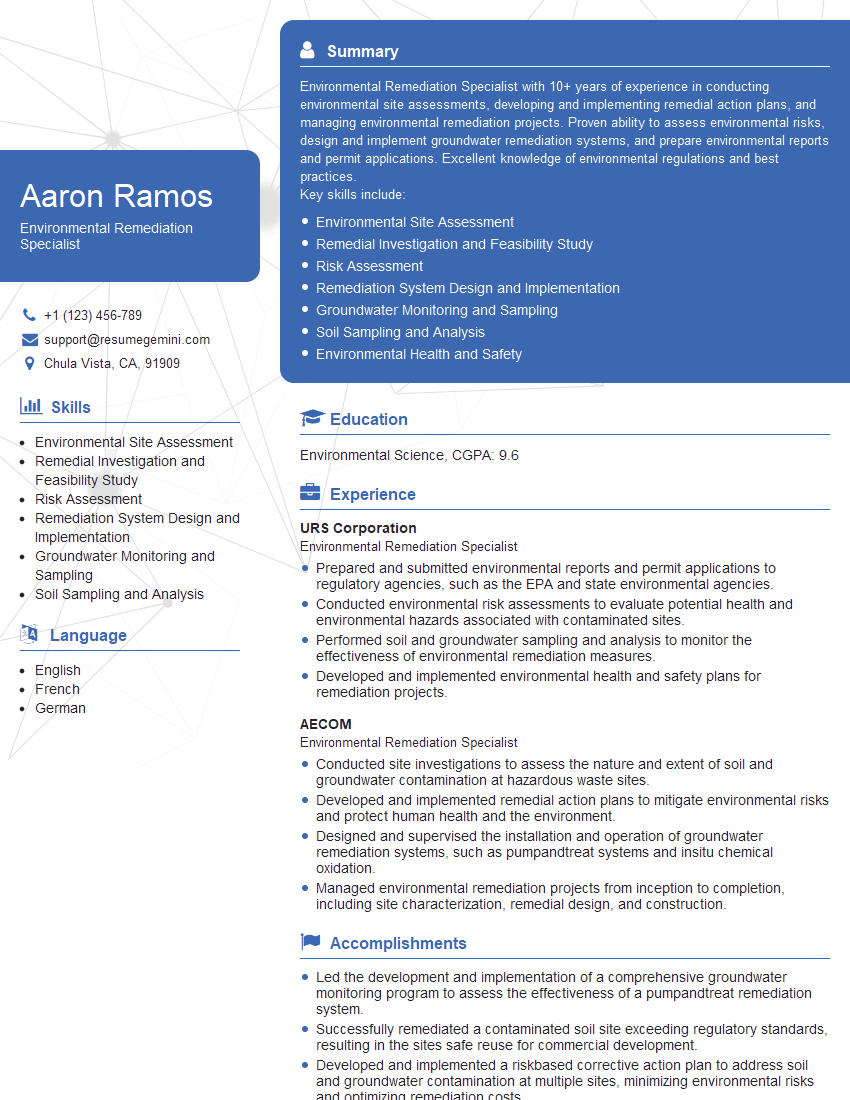
Environmental Remediation Specialist Resume Sample
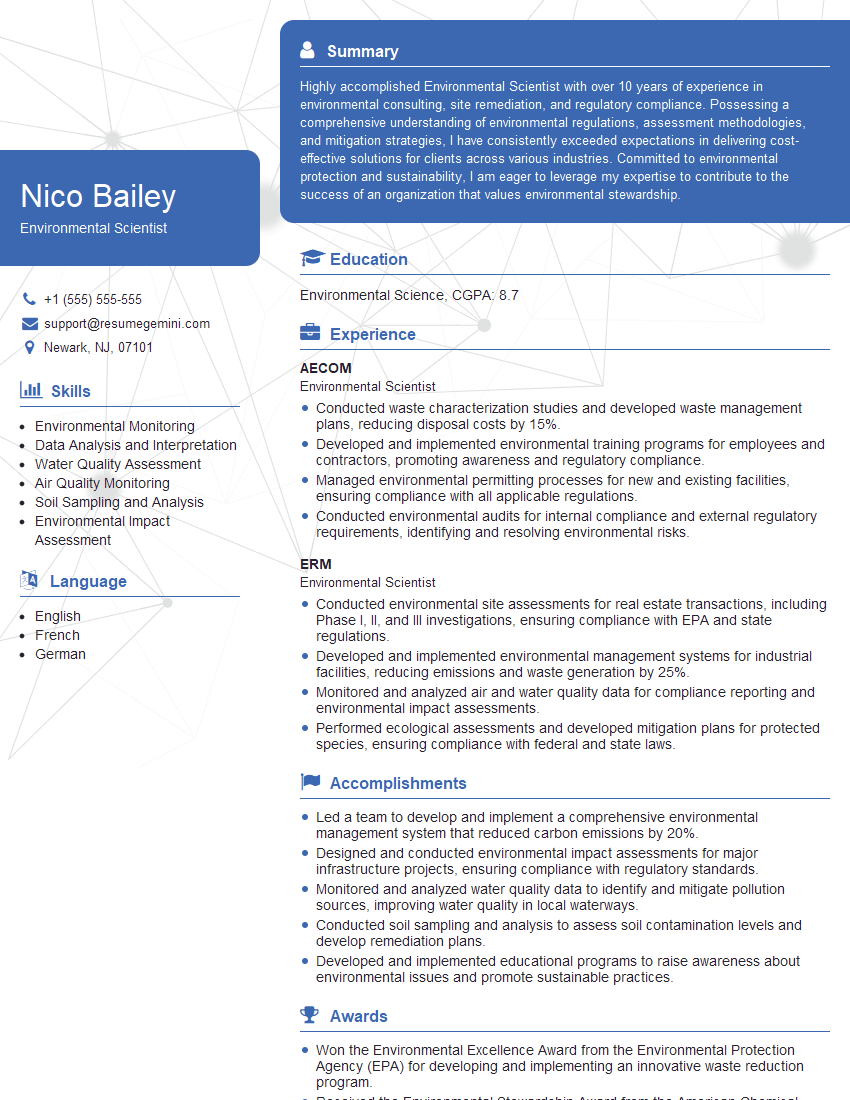
Environmental Scientist Resume Sample
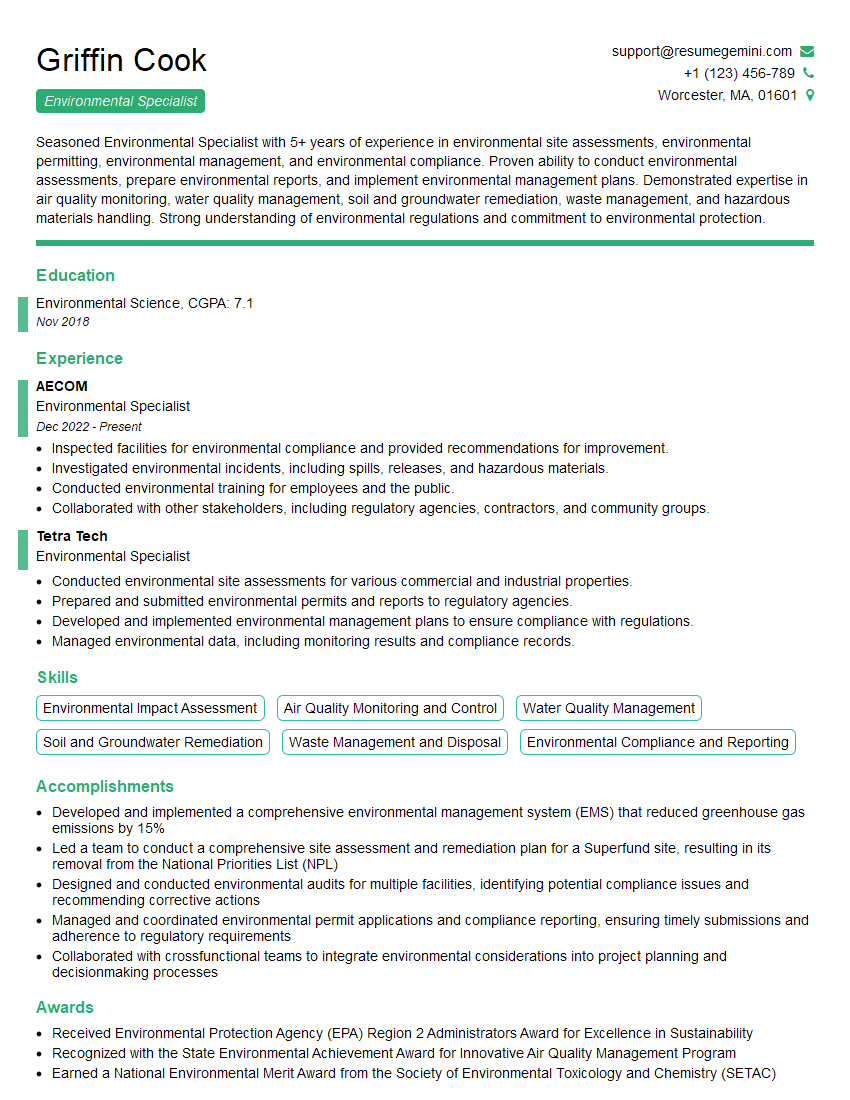
Environmental Specialist Resume Sample
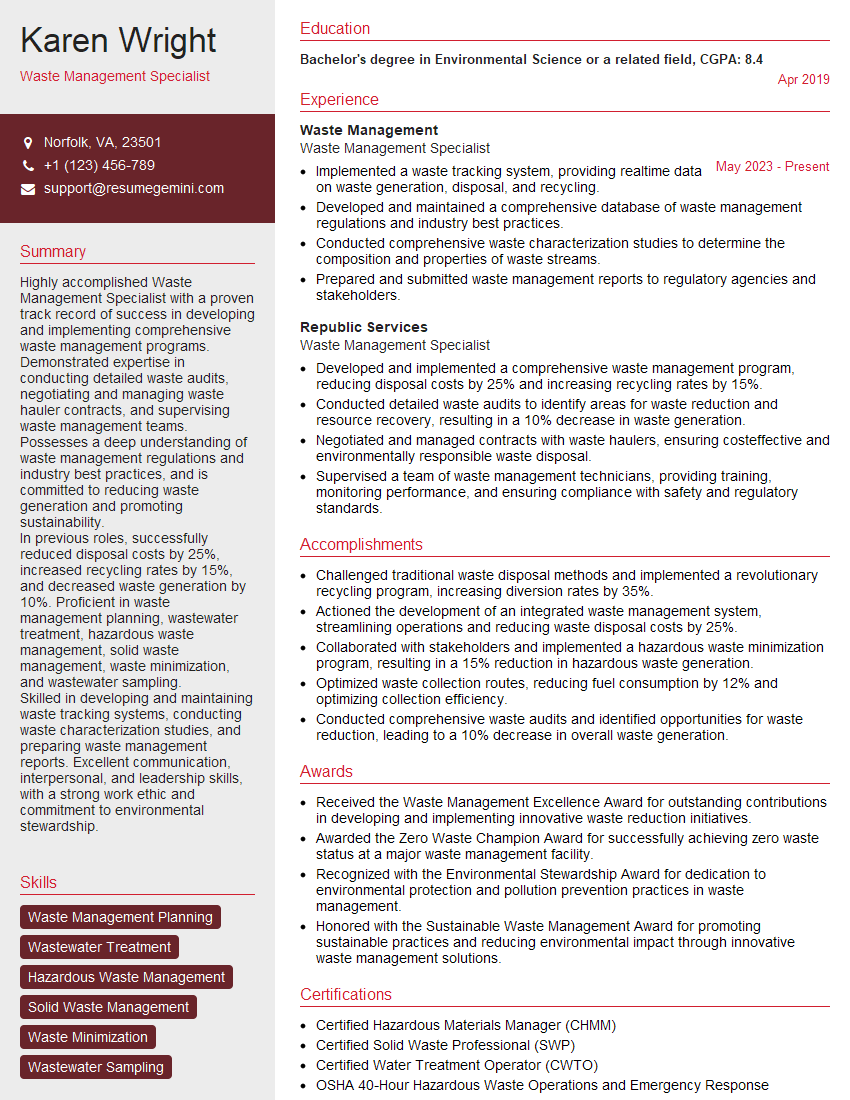
Waste Management Specialist Resume Sample

Sustainability Consultant Resume Sample
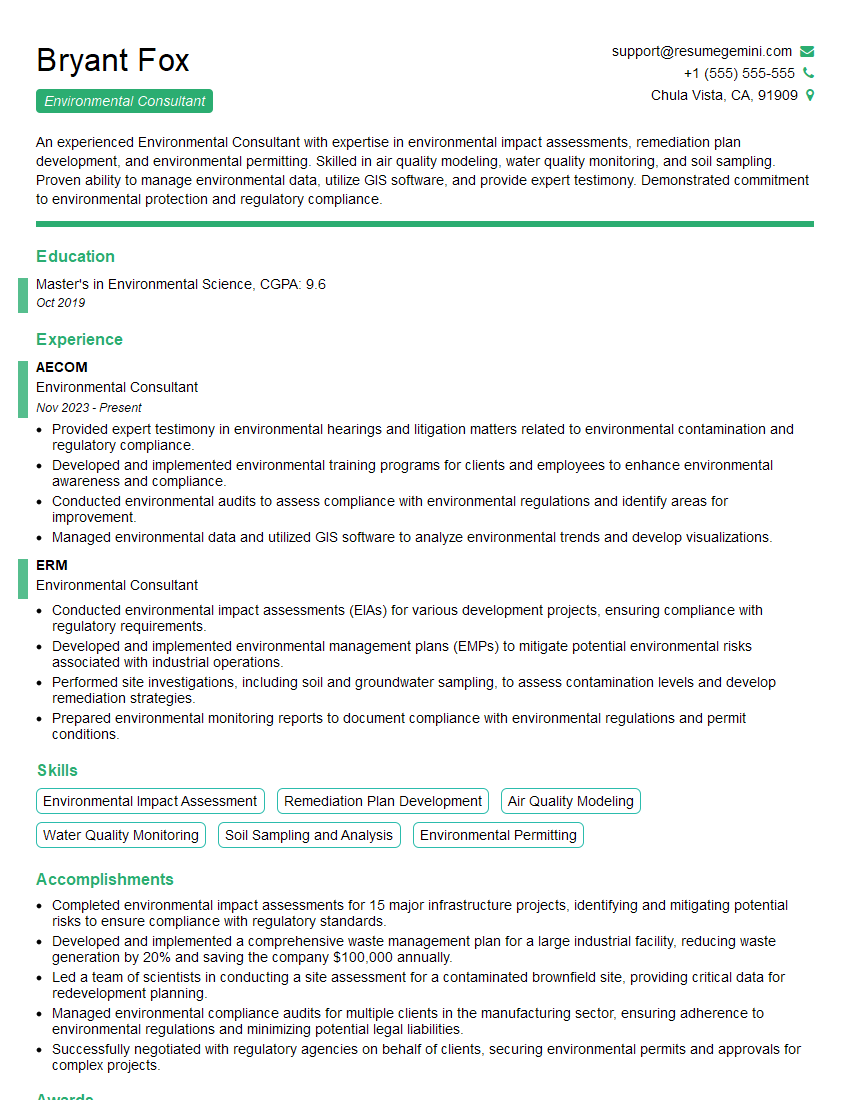
Environmental Consultant Resume Sample
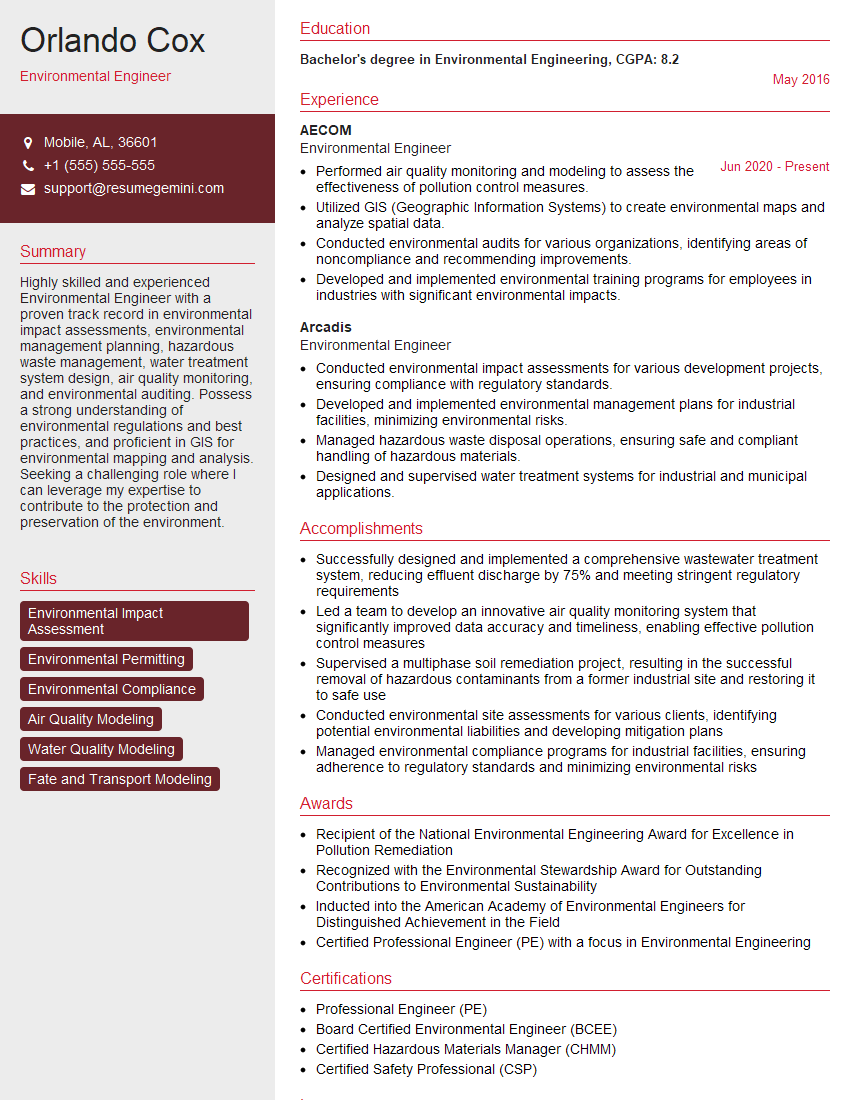
Environmental Engineer Resume Sample
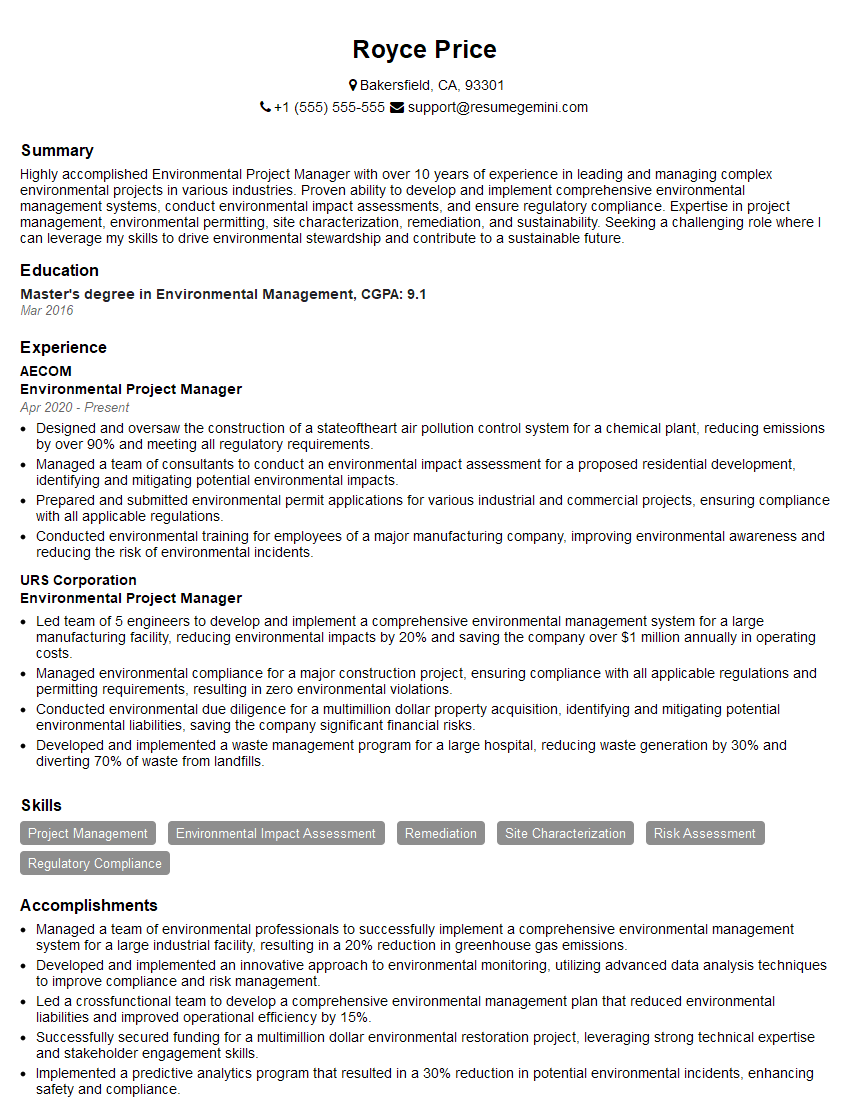
Environmental Project Manager Resume Sample
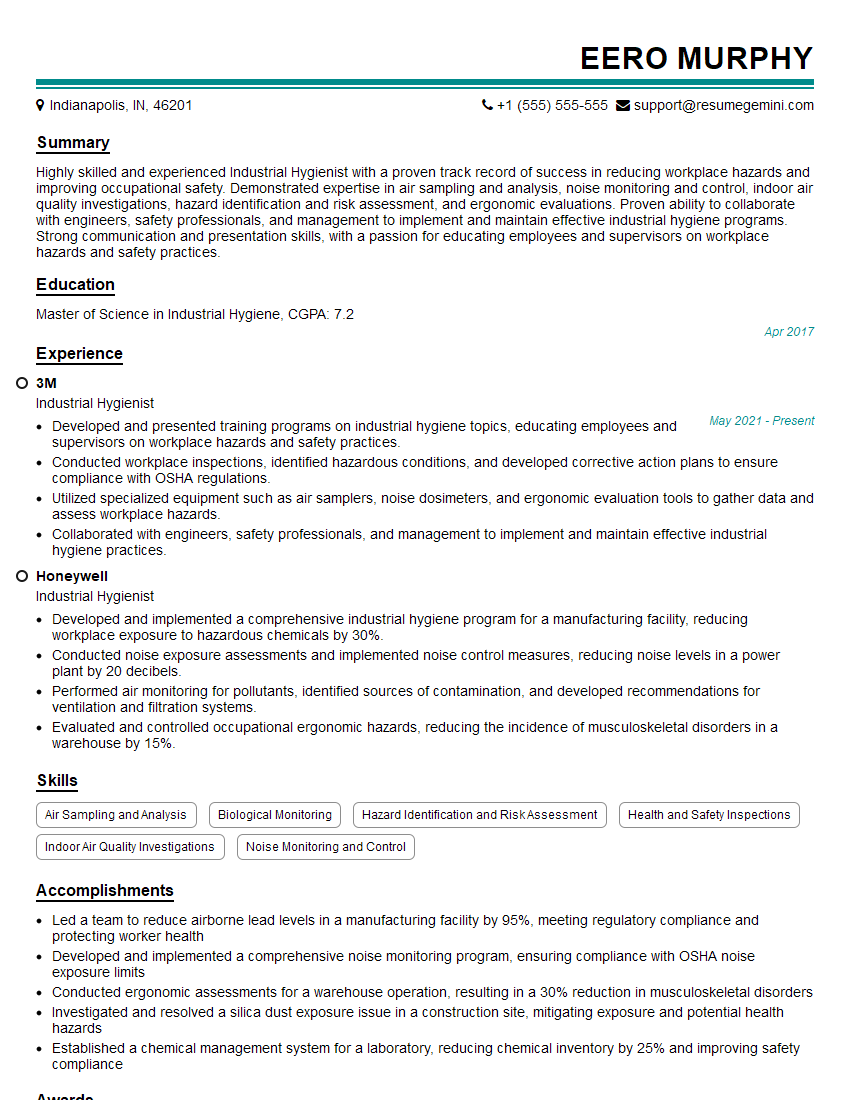
Industrial Hygienist Resume Sample
- Sustainability Manager
- Water Quality Specialist
- Regulatory Affairs Manager
- Compliance Manager
- Regulatory Compliance Specialist
- Environmental Remediation Specialist
- Environmental Scientist
- Environmental Specialist
- Waste Management Specialist
- Sustainability Consultant
- Environmental Consultant
- Environmental Engineer
- Environmental Project Manager
- Industrial Hygienist
Explore more articles
Users Rating of Our Blogs
Share Your Experience
We value your feedback! Please rate our content and share your thoughts (optional).
What Readers Say About Our Blog
Very informative content, great job.
good