Are you ready to stand out in your next interview? Understanding and preparing for Understanding of Film and TV Industry interview questions is a game-changer. In this blog, we’ve compiled key questions and expert advice to help you showcase your skills with confidence and precision. Let’s get started on your journey to acing the interview.
Questions Asked in Understanding of Film and TV Industry Interview
Q 1. Explain the differences between a narrative film and a documentary.
The core difference between a narrative film and a documentary lies in their approach to storytelling and the nature of their subject matter. Narrative films are fictional stories, crafted by screenwriters and brought to life through actors and creative filmmaking techniques. Their primary purpose is entertainment and exploring themes through a constructed reality. Think of films like The Shawshank Redemption or Parasite – compelling narratives with invented characters and situations.
Documentaries, on the other hand, aim to present factual information and perspectives on real-world events, people, or issues. They may employ various storytelling techniques, but the foundation is always grounded in reality. The filmmaker’s role is more observational and analytical, presenting evidence and arguments to shape the audience’s understanding. Examples include My Octopus Teacher or Free Solo, both presenting real-life events and subjects.
In short: Narrative films create worlds; documentaries explore existing ones.
Q 2. Describe the three-act structure and its importance in storytelling.
The three-act structure is a fundamental storytelling framework, dividing a narrative into three distinct parts: Setup, Confrontation, and Resolution. It’s not a rigid formula, but a flexible guideline applicable to various narrative forms.
- Act I: Setup – This introduces the protagonist, their world, and the central conflict or inciting incident that sets the story in motion. We learn about the character’s goals and motivations, and the stakes are established. Think of the opening scenes of Star Wars: A New Hope, introducing Luke Skywalker, his mundane life, and the arrival of the droids that change everything.
- Act II: Confrontation – This is where the protagonist actively pursues their goals, facing obstacles and challenges. This is the longest act, full of rising action, twists, and setbacks. The central conflict intensifies, leading to a major turning point or climax. The Lord of the Rings: The Fellowship of the Ring‘s journey to Mordor exemplifies this – a series of escalating challenges for Frodo and his companions.
- Act III: Resolution – The final act ties up loose ends, showing the consequences of the confrontation and revealing the outcome of the conflict. This might be a happy ending, a tragic one, or something more ambiguous. The protagonist’s transformation is often highlighted, and themes are reinforced. Casablanca’s ending, with Rick’s sacrifice, neatly wraps up the emotional journey.
The three-act structure’s importance lies in its ability to provide a clear and satisfying narrative arc, making it easy for the audience to follow and engage with the story. It offers a natural rhythm for building tension and releasing it, creating emotional impact.
Q 3. What are the key roles and responsibilities of a film producer?
A film producer’s role is multifaceted and crucial to a film’s success. They are the central orchestrator of the entire production, responsible for overseeing various aspects from pre-production to post-production. Key responsibilities include:
- Securing Funding: This involves pitching the project to investors, studios, or distributors and managing the budget.
- Assembling the Creative Team: Producers hire and manage the director, writers, actors, crew, and other key personnel.
- Overseeing Production: This includes scheduling, location scouting, managing logistics, and ensuring the film stays on track and within budget.
- Post-Production: Producers also handle aspects of editing, marketing, and distribution.
- Legal and Business Affairs: Handling contracts, rights, and legal aspects related to the film’s production and distribution.
Think of the producer as the captain of a ship, ensuring all departments work together seamlessly to achieve the common goal of bringing the film to life. A successful producer brings not only financial acumen but also creative vision and problem-solving skills to the table.
Q 4. Discuss the various stages of film production.
Film production is typically divided into several key stages:
- Development: This involves writing the script, securing funding, and assembling the creative team. This stage can last for months or even years.
- Pre-production: This is where the planning and preparation take place. The producer and director collaborate with various departments (casting, art department, location scouting, etc.) to prepare for filming.
- Production (Principal Photography): This is the actual filming of the movie. The crew works together to capture the footage according to the script and director’s vision.
- Post-production: This stage includes editing, sound design, visual effects, music scoring, and color correction. The film is refined and assembled into its final form.
- Distribution and Marketing: This involves getting the film to its audience through theaters, streaming services, or other channels. Marketing campaigns are crucial for generating awareness and attracting viewers.
Each stage is critical, and a problem in one can significantly impact the others. Effective coordination and communication are essential throughout the entire process.
Q 5. Explain the difference between a shot, a scene, and a sequence.
These three terms describe different levels of filmmaking structure:
- Shot: A shot is a single, uninterrupted recording of a scene from a camera. It’s the basic building block of filmmaking. A shot can be long or short, static or moving, depending on the director’s choices.
- Scene: A scene is a continuous segment of the film, typically occurring in one location at one time. A scene is comprised of multiple shots, edited together to create a coherent unit of action. For example, a conversation in a coffee shop might be one scene consisting of several shots of the characters.
- Sequence: A sequence is a series of scenes that together form a larger narrative unit. Sequences often represent a significant change in time, location, or plot development. A sequence might cover an entire day in a character’s life, or a major turning point in the story.
Think of it like building with LEGOs: the shot is a single brick, the scene is a mini-model constructed from multiple bricks, and the sequence is a larger structure built from many mini-models.
Q 6. What are some common camera angles and their effects on storytelling?
Camera angles significantly impact the storytelling by influencing the viewer’s perspective and emotional response. Some common angles and their effects are:
- Eye Level: A neutral and objective perspective, creating a sense of normalcy and connection with the subject.
- High Angle: Shot from above, looking down at the subject. This can make the subject appear vulnerable, weak, or insignificant.
- Low Angle: Shot from below, looking up at the subject. This can make the subject appear powerful, imposing, or heroic.
- Over-the-Shoulder Shot: Shot from behind one character, looking over their shoulder at another character. This is often used in conversations to create intimacy and show the interaction between two people.
- Extreme Close-Up: Focuses on a specific detail, such as an eye or a hand. This can heighten emotion and create a sense of intimacy or suspense.
The use of these angles, combined with other cinematic techniques, can greatly enhance the storytelling and emotional impact of a scene. Consider the iconic low-angle shots of Darth Vader in Star Wars, emphasizing his power and menace.
Q 7. Describe the different types of editing techniques used in filmmaking.
Film editing is the art of assembling shots into a coherent and meaningful narrative. Various techniques exist, including:
- Continuity Editing: Aims to create a seamless and believable flow of actions by using techniques like matching action, eyeline matches, and jump cuts (which are sometimes used for deliberate effect).
- Montage: A series of short shots used to condense time, convey a feeling, or show a change in character. Think of the famous training montage in Rocky.
- Parallel Editing (Cross-Cutting): Cutting between two or more scenes simultaneously to create tension, suspense, or compare and contrast different events.
- Jump Cut: An abrupt transition between two shots of the same subject, creating a jarring effect. Often used stylistically to emphasize a change in mood or create a sense of disorientation.
- Dissolve: One shot gradually fades out while another fades in, creating a smooth transition often used to suggest the passage of time or a change in location.
The choice of editing techniques significantly affects the pace, rhythm, and emotional impact of a film. A skilled editor can use these tools to create a powerful and engaging cinematic experience.
Q 8. What is the role of sound design in enhancing a film’s impact?
Sound design is far more than just adding music to a film; it’s the art of crafting an auditory landscape that profoundly impacts the viewer’s emotional and psychological experience. It’s about creating a cohesive soundscape that supports the narrative, enhances the atmosphere, and elevates the overall impact of the film.
Consider the difference between a quiet, suspenseful scene with only subtle footsteps and creaking doors versus the same scene with bombastic music. The subtle sounds create a more intense, personal sense of dread, leaving the audience to fill in the blanks and build their own tension. The music, on the other hand, often dictates the emotional response, lessening the audience’s active participation.
- Dialogue and Voice-Overs: Clear, well-recorded dialogue is essential. Voice-overs are used to provide narration or insights from a particular character.
- Sound Effects (SFX): These encompass everything from the rustle of leaves to the roar of a jet engine. Well-designed SFX enhance realism and immersion. For example, the distinct ‘whoosh’ sound of a lightsaber in Star Wars is iconic and inextricably linked to the film’s visual spectacle.
- Music: The score is crucial in setting the mood, highlighting emotional peaks, and guiding the audience’s understanding of the narrative. The score for ‘The Godfather’ is a prime example of how music can be used to establish a particular tone and enhance the emotional weight of scenes.
- Ambient Sound: This includes background noises that contribute to the atmosphere. It might be the gentle hum of a city, the crashing of waves, or the sounds of a bustling marketplace. Ambient sounds add layers of realism and depth to the soundscape.
In essence, a skilled sound designer carefully orchestrates all these elements to create a seamless auditory experience that works in harmony with the visuals, ultimately amplifying the film’s overall impact and leaving a lasting impression on the viewer.
Q 9. How does visual effects contribute to filmmaking?
Visual effects (VFX) are integral to modern filmmaking, pushing the boundaries of what’s visually possible and enhancing storytelling in countless ways. They can range from subtle enhancements to complete transformations of the visual landscape.
- Creating Impossible Shots: VFX allows filmmakers to create shots that would be physically impossible or too dangerous to film in real life. Think of the epic battle sequences in Lord of the Rings or the fantastical creatures in Avatar.
- Enhancing Realism: VFX can subtly enhance realism, cleaning up imperfections, adding digital details, or improving environmental elements. Removing distracting wires or cranes from shots is a common example.
- World-Building: VFX is fundamental in creating believable and immersive worlds, from detailed environments to intricate creature designs. The landscapes in ‘Game of Thrones’ are a powerful example of world-building through VFX.
- Character Enhancement: This includes everything from creating digital characters to enhancing existing ones. Adding CGI creatures, improving actor performances, or digitally aging or de-aging actors are all common VFX applications.
- Special Effects (SFX): While sometimes used interchangeably with VFX, SFX typically refers to practical effects created on set (like explosions or prosthetics), while VFX is post-production digital manipulation.
The synergy between practical effects and VFX is often crucial for achieving the desired aesthetic. For example, a scene might use practical fire for a base effect, then enhanced and extended using CGI fire for a more spectacular result. The careful integration of both is key to a believable and engaging final product.
Q 10. Explain the process of developing a film script.
Developing a film script is an iterative process that requires creativity, meticulous planning, and a deep understanding of storytelling. It’s rarely a linear progression; it’s more like a constantly evolving puzzle.
- Idea Generation and Concept Development: This initial stage involves brainstorming ideas, developing a central theme or premise, and fleshing out the core concept. What’s the story about? What’s at stake? Who are the main characters?
- Outlining: This stage structures the narrative, laying out the main plot points, character arcs, and key scenes. A detailed outline helps to ensure a cohesive and compelling story.
- Drafting: Here the writer puts pen to paper (or fingers to keyboard), transforming the outline into a full script. This involves dialogue writing, scene description, character development, and pacing.
- Revisions: This critical step involves multiple rewrites and revisions to refine the story, improve dialogue, deepen character development, and enhance the narrative flow. Feedback from peers, agents, or script consultants is invaluable.
- Polishing: The final stage focuses on fine-tuning the script, ensuring clarity, readability, and proper formatting. Correcting grammatical errors, improving transitions, and perfecting the dialogue are all part of this phase.
Throughout the process, the writer needs to continuously assess whether the story is engaging, believable, and ultimately delivers on its central premise. Think of it like building a house: the initial idea is the blueprint, the outline is the structural framework, drafting is building the walls, revisions are renovations, and polishing is the final touch-up before moving in.
Q 11. What are some common challenges faced in film production?
Film production is fraught with challenges; even the most meticulously planned productions face unexpected hurdles. Some common challenges include:
- Budget Constraints: Balancing artistic vision with financial realities is a constant struggle. Unexpected costs can derail a project.
- Scheduling Issues: Tight deadlines, weather delays, equipment malfunctions, and actor availability can all disrupt the production schedule.
- Creative Differences: Conflicts between the director, producers, actors, and crew can lead to creative disagreements and production delays.
- Technical Difficulties: Equipment failures, unforeseen technical issues, and post-production setbacks can create significant obstacles.
- Logistical Challenges: Coordinating a large crew, managing locations, securing permits, and arranging transportation are complex logistical challenges.
- Casting Challenges: Finding the right actors to portray the characters can be difficult, and casting changes can impact the production timeline and budget.
Effective problem-solving, adaptability, and strong communication are crucial for navigating these challenges. A well-structured production plan with contingency plans for various scenarios is essential to mitigate some of these risks.
Q 12. How do you manage a film’s budget effectively?
Managing a film’s budget effectively requires meticulous planning, precise tracking, and proactive decision-making. It’s a continuous process that begins long before production starts and continues throughout post-production.
- Detailed Budgeting: Create a comprehensive budget that outlines every aspect of the production, from pre-production costs (scriptwriting, location scouting) to production (crew salaries, equipment rental) and post-production (editing, VFX, sound design, marketing).
- Regular Monitoring: Track expenses closely throughout the production process. Use accounting software or spreadsheets to monitor spending against the budget and identify potential overruns early on.
- Contingency Planning: Allocate a percentage of the budget for unforeseen expenses. This ‘cushion’ can help absorb unexpected costs and prevent major budget overruns.
- Value Engineering: Continuously assess whether costs can be reduced without compromising the quality of the film. For instance, exploring alternative locations or negotiating better rates with vendors.
- Efficient Resource Allocation: Allocate resources effectively, prioritizing essential elements and making informed decisions about where to spend and where to save.
Effective budget management is crucial to the success of a film project. It ensures that the film is completed within the allocated budget, minimizing financial risks and ensuring the project’s sustainability.
Q 13. How do you handle conflicts within a film crew?
Conflicts within a film crew are inevitable given the high-pressure, collaborative nature of filmmaking. However, proactive conflict resolution is vital for maintaining a positive and productive work environment.
- Open Communication: Establish open lines of communication from the outset. Encourage team members to express concerns and feedback openly and respectfully.
- Mediation: If conflicts arise, try to mediate between the parties involved. A neutral third party can help facilitate a productive conversation and find common ground.
- Clear Roles and Responsibilities: Define roles and responsibilities clearly to avoid overlapping tasks and potential misunderstandings.
- Respectful Workplace Culture: Foster a workplace culture that values mutual respect, collaboration, and professional conduct.
- Conflict Resolution Training: Consider providing conflict resolution training for crew members to equip them with the skills to address conflicts constructively.
Remember, early intervention is key. Addressing minor disagreements before they escalate can prevent major disruptions to the production schedule and maintain team morale.
Q 14. Explain the importance of storyboarding in filmmaking.
Storyboarding is a crucial pre-production process that visually outlines the film’s scenes, shot by shot. It’s essentially a comic book version of the film, helping to visualize the story’s flow, camera angles, and composition.
- Visualizing the Story: Storyboards bring the script to life visually, allowing filmmakers to see how the story unfolds before shooting begins.
- Planning Camera Angles and Movement: They allow for planning camera angles, movement, and composition, ensuring that each shot contributes to the overall visual narrative.
- Improving Efficiency: Storyboarding reduces time spent on set figuring out shots, making the filming process more efficient.
- Facilitating Communication: Storyboards serve as a communication tool, enabling the director to share their vision with the crew, actors, and other stakeholders.
- Pre-visualization of VFX and Special Effects: Complex shots involving VFX can be planned and pre-visualized in the storyboards, making the integration of VFX smoother during post-production.
Storyboards are not just for visual effects-heavy films; they benefit all productions by offering a detailed roadmap for the shooting process. A well-executed storyboard can save time, money, and reduce creative friction during filming, leading to a more polished final product. Think of it as a director’s blueprint for capturing the film’s visual story.
Q 15. Describe your experience with different film genres.
My experience spans a wide range of film genres, from independent dramas to large-scale action productions. Understanding genre conventions is crucial; each has its own audience expectations, narrative structures, and visual styles. For instance, a romantic comedy relies on witty dialogue and relatable characters, while a horror film leverages suspense and jump scares. I’ve worked on projects that demanded a deep understanding of these differences. For example, in a recent independent drama, we focused on realistic character development and nuanced performances, while in a previous action film, the emphasis was on high-octane stunts and visual effects. This broad exposure allows me to adapt my approach to any project, ensuring a cohesive and engaging final product.
- Drama: Experience directing and editing emotionally resonant narratives, focusing on character arcs and realistic dialogue.
- Action: Proficient in action scene choreography, visual effects integration, and fast-paced editing techniques.
- Comedy: Understanding of comedic timing, character dynamics, and the use of visual gags.
- Horror: Experience in building suspense, utilizing sound design effectively, and creating jump scares.
Career Expert Tips:
- Ace those interviews! Prepare effectively by reviewing the Top 50 Most Common Interview Questions on ResumeGemini.
- Navigate your job search with confidence! Explore a wide range of Career Tips on ResumeGemini. Learn about common challenges and recommendations to overcome them.
- Craft the perfect resume! Master the Art of Resume Writing with ResumeGemini’s guide. Showcase your unique qualifications and achievements effectively.
- Don’t miss out on holiday savings! Build your dream resume with ResumeGemini’s ATS optimized templates.
Q 16. What software are you proficient in for film editing or post-production?
My post-production workflow relies heavily on industry-standard software. I’m highly proficient in Adobe Premiere Pro for non-linear editing, DaVinci Resolve for color grading and visual effects, and After Effects for motion graphics and compositing. I’m also familiar with audio editing software like Audacity and Pro Tools, ensuring a comprehensive approach to post-production. For example, in a recent project, I used Premiere Pro’s multi-cam editing features to efficiently assemble footage from multiple cameras, then used DaVinci Resolve to achieve a consistent and visually stunning look. My proficiency in these tools allows me to streamline the post-production process, manage large amounts of footage, and achieve high-quality results even under tight deadlines.
Q 17. Discuss your understanding of different film distribution models.
Film distribution models have evolved significantly. Traditionally, theatrical release was dominant, followed by home video and television. Now, streaming platforms like Netflix and Amazon Prime Video play a major role, alongside transactional video-on-demand (TVOD) and subscription video-on-demand (SVOD) services. Each model presents unique challenges and opportunities. Theatrical release requires significant marketing investment but provides prestige and initial revenue. Streaming services offer wider reach but often involve licensing agreements and revenue sharing. Understanding these nuances is crucial for strategic planning. For instance, a low-budget independent film might prioritize a festival run and streaming distribution to maximize reach, while a big-budget blockbuster would target a wide theatrical release followed by home video and streaming.
Q 18. How do you ensure the quality of a film’s production values?
Maintaining high production values involves meticulous planning and execution at every stage. This starts with pre-production, where a detailed budget is crucial, along with careful location scouting and casting. During filming, adhering to the shot list, using quality equipment, and ensuring proper lighting and sound recording are paramount. Post-production requires skilled editors, colorists, and sound designers to refine the visuals and audio. Regular quality control checks throughout the process are essential, including dailies reviews and feedback sessions with the director and producers. For example, I once noticed a subtle lighting inconsistency in dailies; addressing it early prevented larger issues later on. A strong understanding of the technical aspects, a keen eye for detail, and proactive problem-solving are crucial for achieving consistent high production values.
Q 19. Explain your understanding of film marketing and distribution strategies.
Film marketing and distribution are intertwined. Strategies must align with the film’s genre, target audience, and distribution channels. A theatrical release might involve trailers, posters, social media campaigns, and partnerships with media outlets. For streaming releases, targeted advertising on social media and search engines is essential. Building audience anticipation is crucial, using teasers and behind-the-scenes content. Data analytics plays a significant role in tracking campaign effectiveness and adjusting strategies accordingly. For example, a successful campaign for a horror film might leverage online communities and social media influencers to generate buzz and build anticipation. A flexible and data-driven approach is necessary to optimize marketing efforts across different platforms.
Q 20. Describe your experience with working on tight deadlines.
Working under tight deadlines is commonplace in the film industry. My approach involves prioritizing tasks effectively, establishing clear communication within the team, and embracing a flexible and adaptable mindset. I utilize project management tools to track progress, set realistic goals, and identify potential bottlenecks early on. For example, I once successfully delivered a film’s edit within a highly compressed timeline by delegating tasks effectively and working extended hours when necessary, while ensuring team morale remained high through open communication and recognition of individual efforts. Efficient workflow, clear communication, and proactive problem-solving are essential for delivering high-quality work under pressure.
Q 21. How do you collaborate effectively with different creative teams?
Effective collaboration is paramount in filmmaking. I foster open communication and actively seek input from various creative teams, including directors, cinematographers, editors, and sound designers. I believe in creating a collaborative environment where everyone feels valued and their expertise is respected. Regular meetings, shared online platforms for feedback, and a clear understanding of individual roles and responsibilities are essential. For example, on a recent project, I facilitated open discussions between the editor and the composer to ensure the music complemented the visuals effectively. Respect, clear communication, and a willingness to incorporate diverse perspectives are crucial for successful team collaboration.
Q 22. What are your strengths and weaknesses as a filmmaker?
My greatest strength as a filmmaker lies in my ability to visualize a story and translate that vision into a compelling narrative. I excel at collaborative filmmaking, fostering a positive and productive environment on set. I’m adept at problem-solving, particularly in navigating the logistical complexities of production. I also possess strong technical skills in cinematography and editing. However, I recognize that my weakness is sometimes getting overly invested in the details, which can occasionally slow down the overall process. I am actively working on improving my time management skills and delegation to better balance attention to detail with project efficiency.
Q 23. Describe a time you had to solve a complex problem during film production.
During the production of my short film, “Ephemeral Echoes,” we faced a significant challenge when our lead actor fell ill a week before the shoot. This threatened to derail the entire production schedule and budget. To solve this, I immediately assembled a team to brainstorm solutions. We explored alternative casting options, considered rescheduling, and even looked into adapting the script to minimize the affected scenes. Ultimately, we found a talented understudy who closely matched the original actor’s physicality and acting style. Through intense rehearsals and quick adjustments to the shooting schedule, we successfully completed the film without significant delays or compromising the quality of the final product. This experience highlighted the importance of adaptability, resourcefulness, and effective team communication in navigating unforeseen challenges.
Q 24. How do you stay up-to-date with current trends in the film industry?
Staying current in the film industry requires a multi-faceted approach. I regularly attend industry events, conferences, and workshops to network with other professionals and learn about the latest technologies and trends. I subscribe to relevant industry publications and follow prominent filmmakers, studios, and critics on social media. Additionally, I dedicate time each week to watching both critically acclaimed and commercially successful films and TV shows, paying close attention to their narrative structures, cinematography, editing styles, and marketing strategies. By actively engaging with various resources, I ensure I remain informed about the dynamic changes and evolving landscapes of the filmmaking world.
Q 25. What are your career aspirations in the film and television industry?
My career aspirations center around directing feature films that explore complex human stories with a focus on compelling visuals and character development. I envision building a strong reputation for crafting unique and impactful cinematic narratives. I aspire to collaborate with talented actors, crew members, and producers to create films that resonate with audiences and contribute meaningfully to the cinematic landscape. I am also keen to mentor aspiring filmmakers, sharing my knowledge and experience to nurture the next generation of storytellers. Ultimately, I want to leave a lasting contribution to the world of cinema.
Q 26. Describe your understanding of intellectual property rights in filmmaking.
Intellectual property (IP) rights in filmmaking are crucial for protecting the creative works involved. This includes copyrights for scripts, music, and other original creative content; trademarks for titles and logos; and potentially patents for unique technologies used in production. Understanding IP is vital for securing funding, negotiating contracts, and avoiding legal disputes. For example, a filmmaker must ensure they have secured the rights to use any pre-existing music or literary works in their film to avoid copyright infringement. Similarly, trademarks help prevent others from using a film’s title or logo without permission. Thoroughly understanding and respecting IP laws is essential for ethical and legal filmmaking.
Q 27. Explain the impact of streaming services on the film and TV industry.
Streaming services have profoundly reshaped the film and TV industry. The rise of platforms like Netflix, Hulu, and Amazon Prime has disrupted the traditional model of theatrical releases and cable television, offering viewers on-demand access to a vast library of content. This has led to increased competition, new avenues for content creation, and a shift in how films and shows are produced, distributed, and consumed. For instance, streaming services commission original series and films, often bypassing traditional studios and networks. This has empowered independent filmmakers and expanded the range of stories being told. However, it has also led to challenges, such as the changing economics of the industry and the need for filmmakers to adapt to the demands of streaming platforms.
Q 28. Discuss the ethical considerations in film production.
Ethical considerations in film production are paramount. These encompass various aspects, including fair labor practices, ensuring safe working conditions for the cast and crew, responsible portrayal of sensitive topics, and avoiding cultural appropriation or misrepresentation. For instance, ensuring fair wages and appropriate working hours for all crew members is crucial. When depicting sensitive themes like violence, mental illness, or social injustice, filmmakers must approach the topic with responsibility and avoid perpetuating harmful stereotypes. Moreover, honesty and transparency in all aspects of production, from casting to marketing, is essential for maintaining ethical standards within the industry. Ethical filmmaking involves considering the potential impact of the film on audiences and society at large.
Key Topics to Learn for Understanding of Film and TV Industry Interview
- Genre Conventions and Tropes: Understanding the established conventions and recurring motifs within various genres (e.g., horror, comedy, drama) and their impact on storytelling and audience expectations. Practical application: Analyzing a film’s success or failure based on its adherence to or subversion of genre conventions.
- Film & TV Production Process: A comprehensive grasp of pre-production, production, and post-production stages, including roles and responsibilities within each phase. Practical application: Troubleshooting potential problems in a given production scenario and suggesting solutions.
- Narrative Structure & Storytelling: Mastering different narrative structures (linear, non-linear, episodic), including plot development, character arcs, and theme exploration. Practical application: Critically evaluating the effectiveness of a film’s storytelling techniques.
- Audience Reception & Analysis: Understanding how audiences engage with film and TV, considering factors like target demographics, critical reception, and box office/viewership data. Practical application: Developing marketing strategies based on audience insights.
- Industry Trends & Technologies: Staying abreast of current trends in film and TV production, distribution, and consumption, including the impact of streaming services and new technologies. Practical application: Identifying opportunities and challenges presented by emerging technologies.
- Legal & Ethical Considerations: Familiarizing yourself with copyright, intellectual property, and ethical concerns within the film and TV industry. Practical application: Analyzing a scenario involving potential copyright infringement and suggesting appropriate courses of action.
Next Steps
Mastering the intricacies of the film and television industry is crucial for career advancement, opening doors to exciting and rewarding opportunities. A strong understanding of the topics above will significantly enhance your interview performance. To further boost your job prospects, crafting an ATS-friendly resume is essential. ResumeGemini is a trusted resource to help you build a professional and effective resume that highlights your skills and experience. Examples of resumes tailored to the Understanding of Film and TV Industry are provided to guide you.
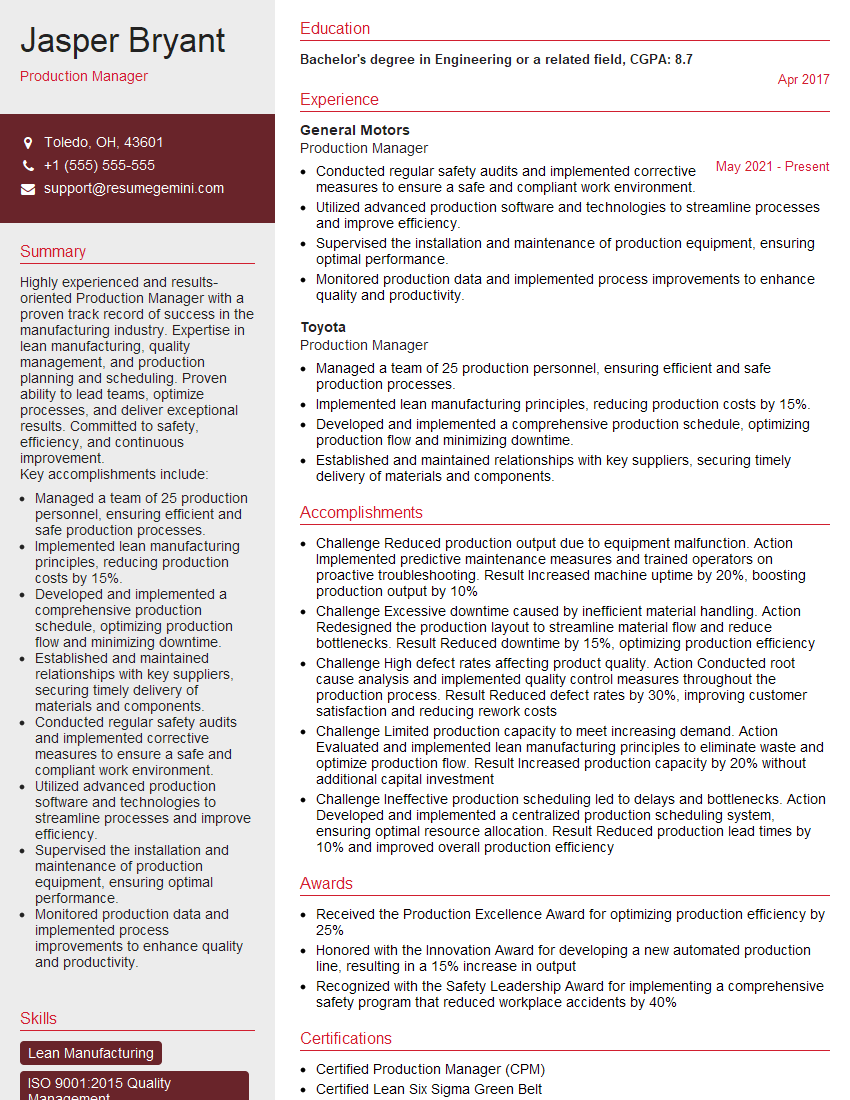
Production Manager Resume Sample
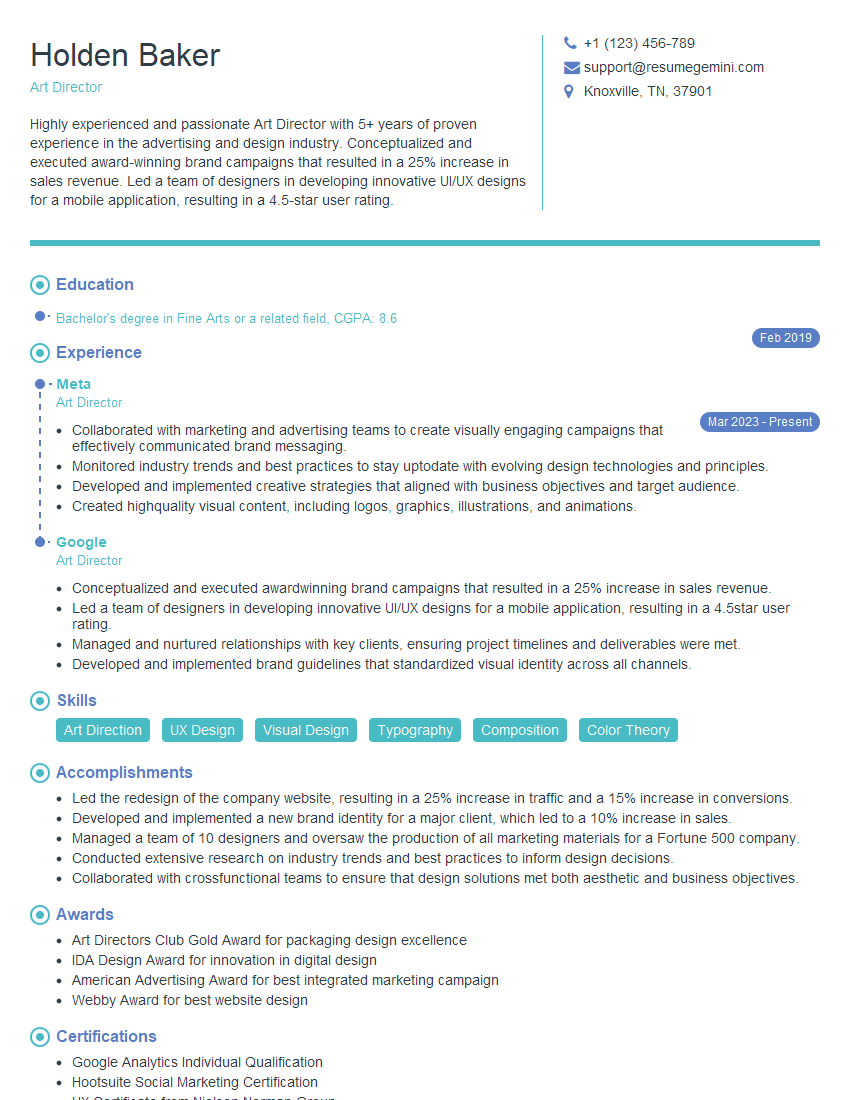
Art Director Resume Sample
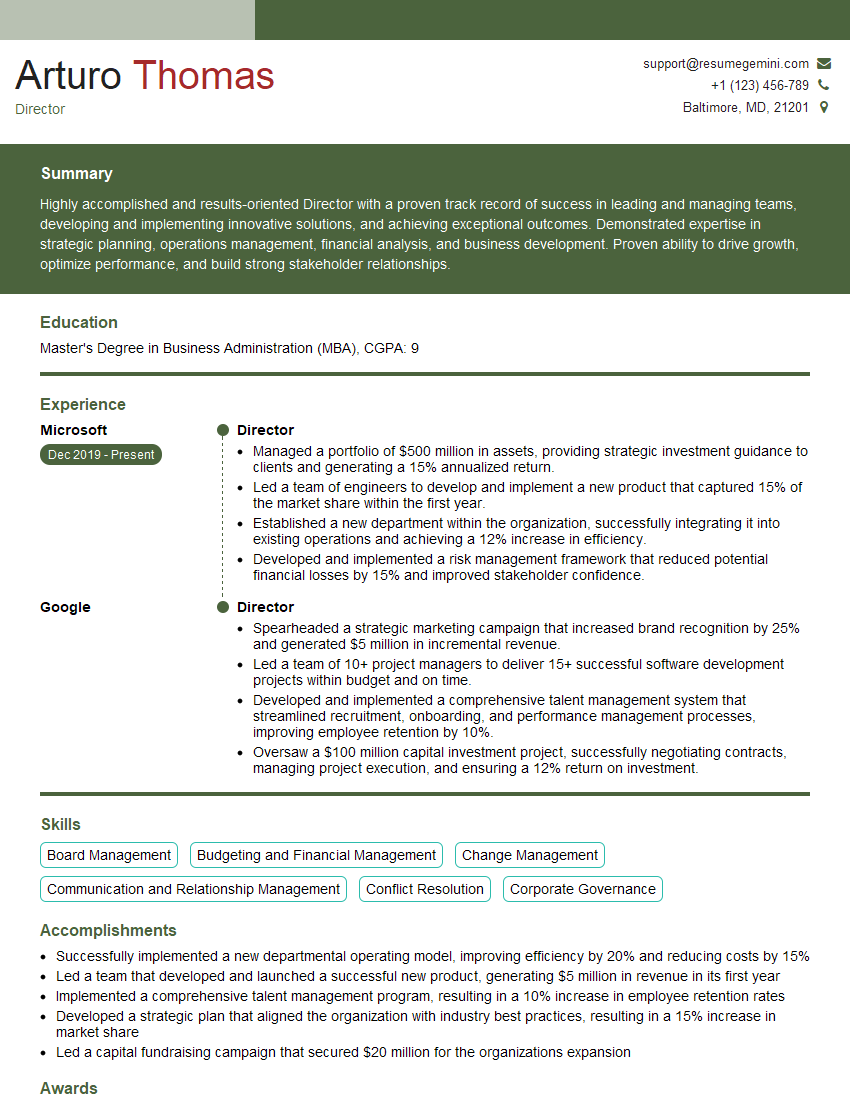
Director Resume Sample
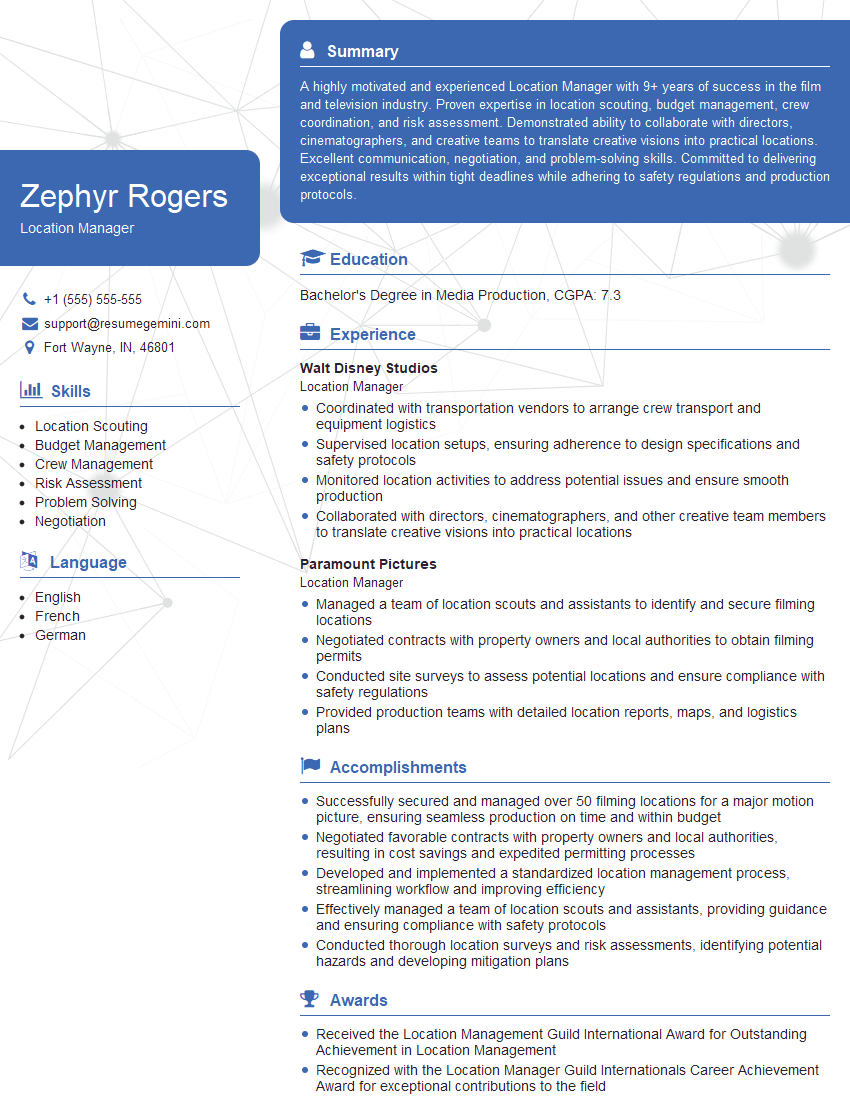
Location Manager Resume Sample
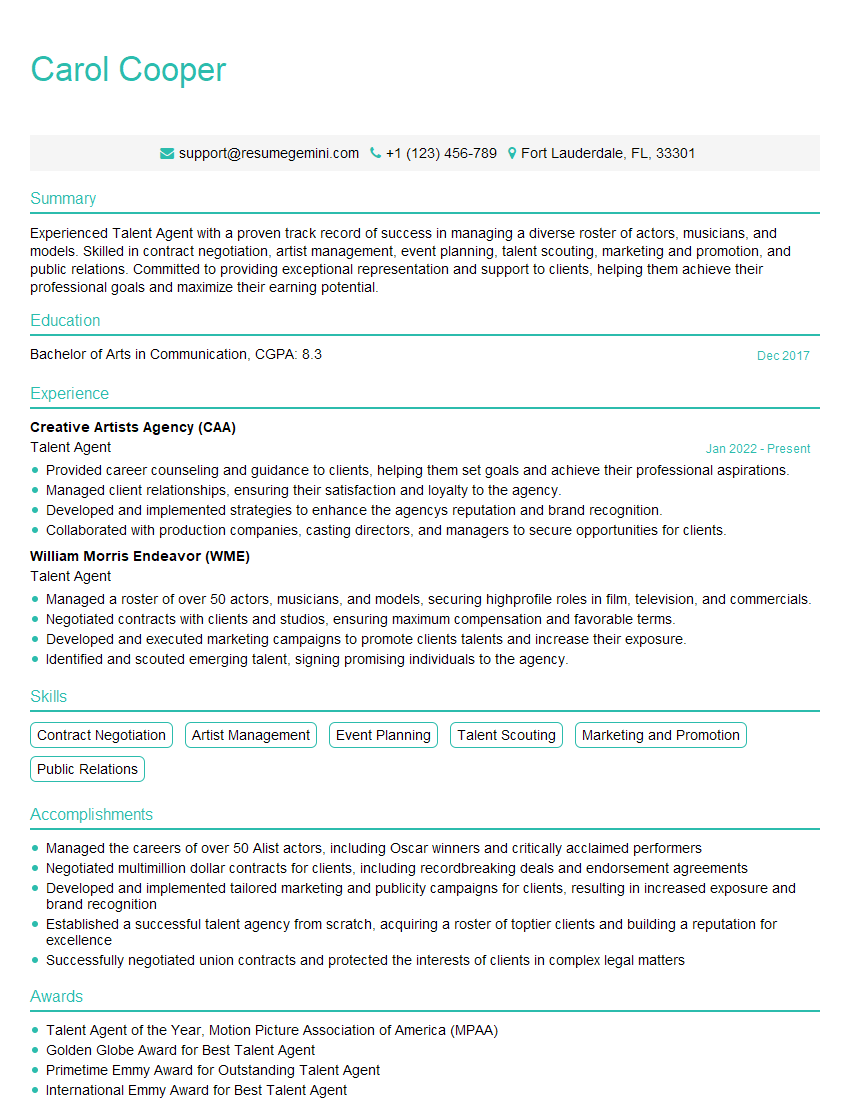
Talent Agent Resume Sample
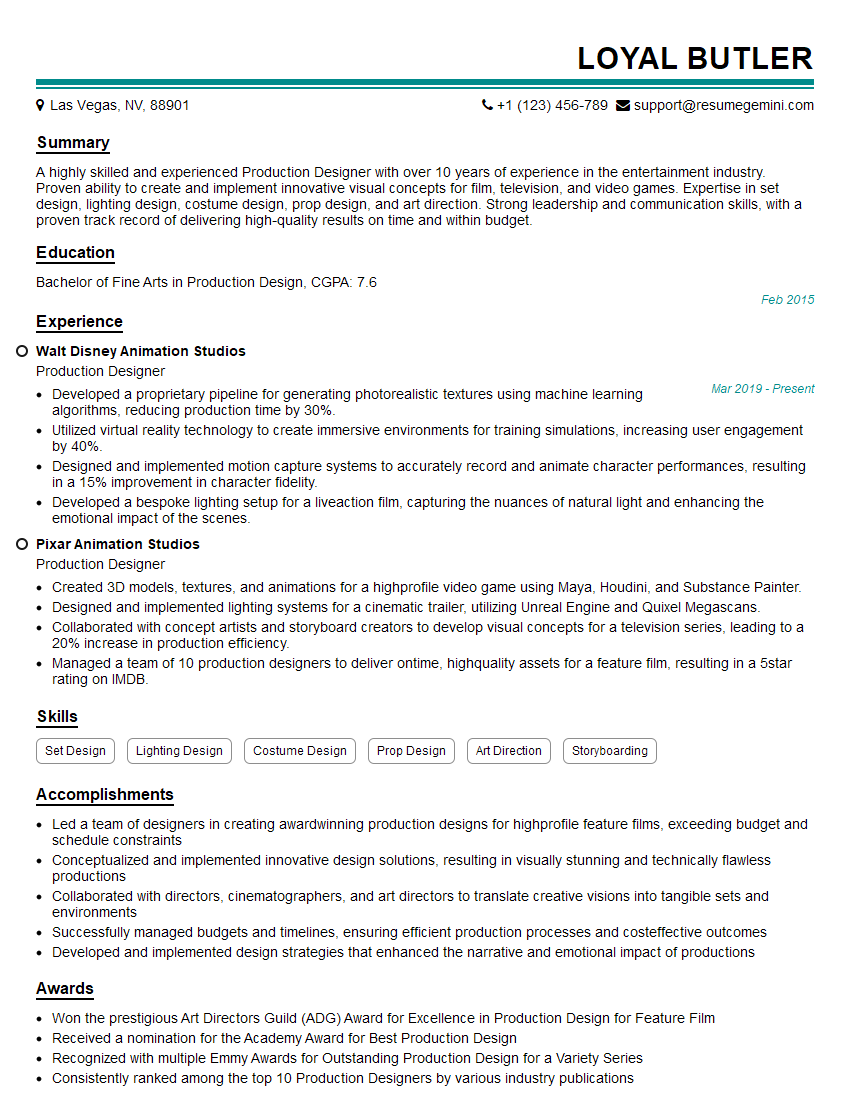
Production Designer Resume Sample
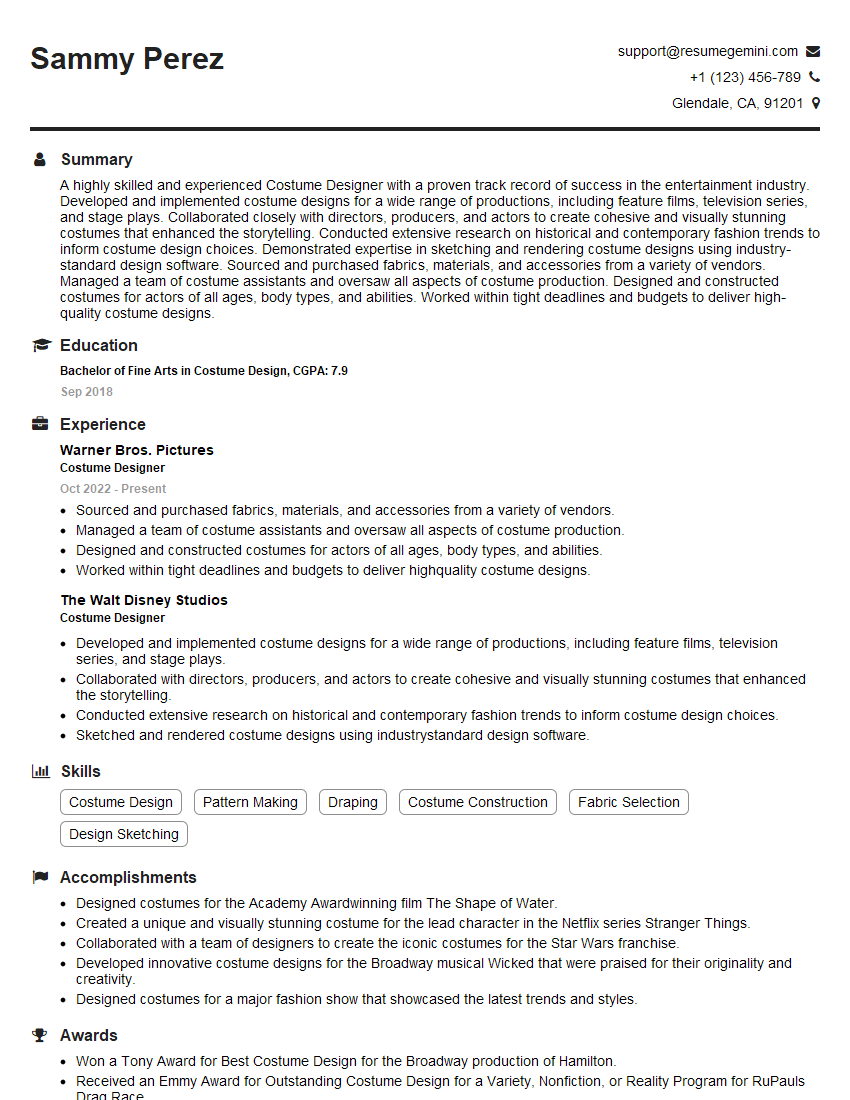
Costume Designer Resume Sample
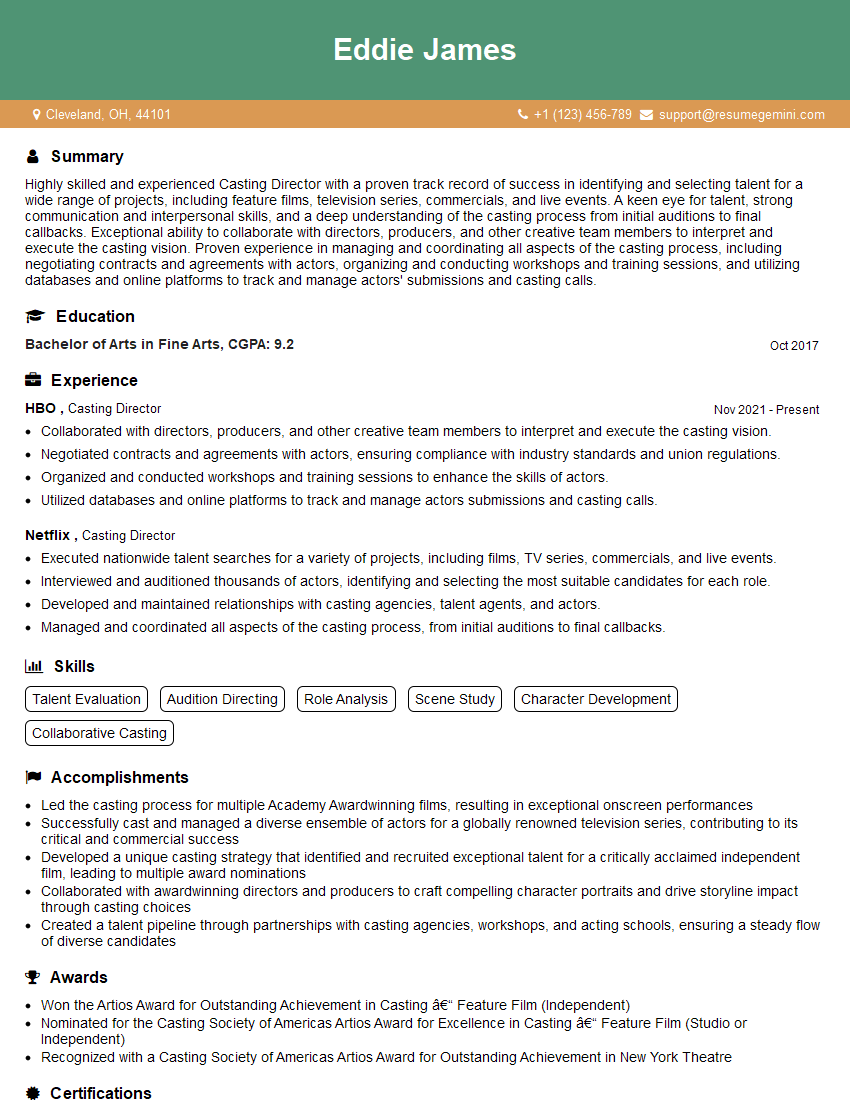
Casting Director Resume Sample
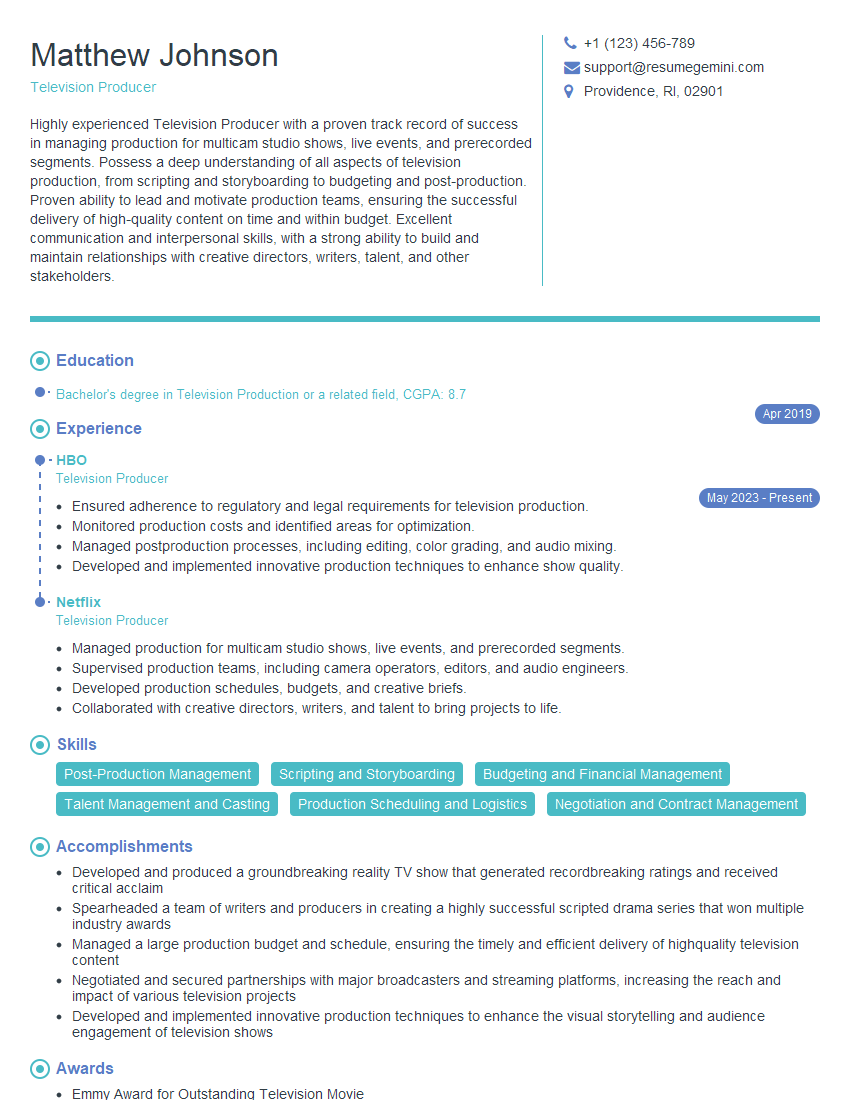
Television Producer Resume Sample
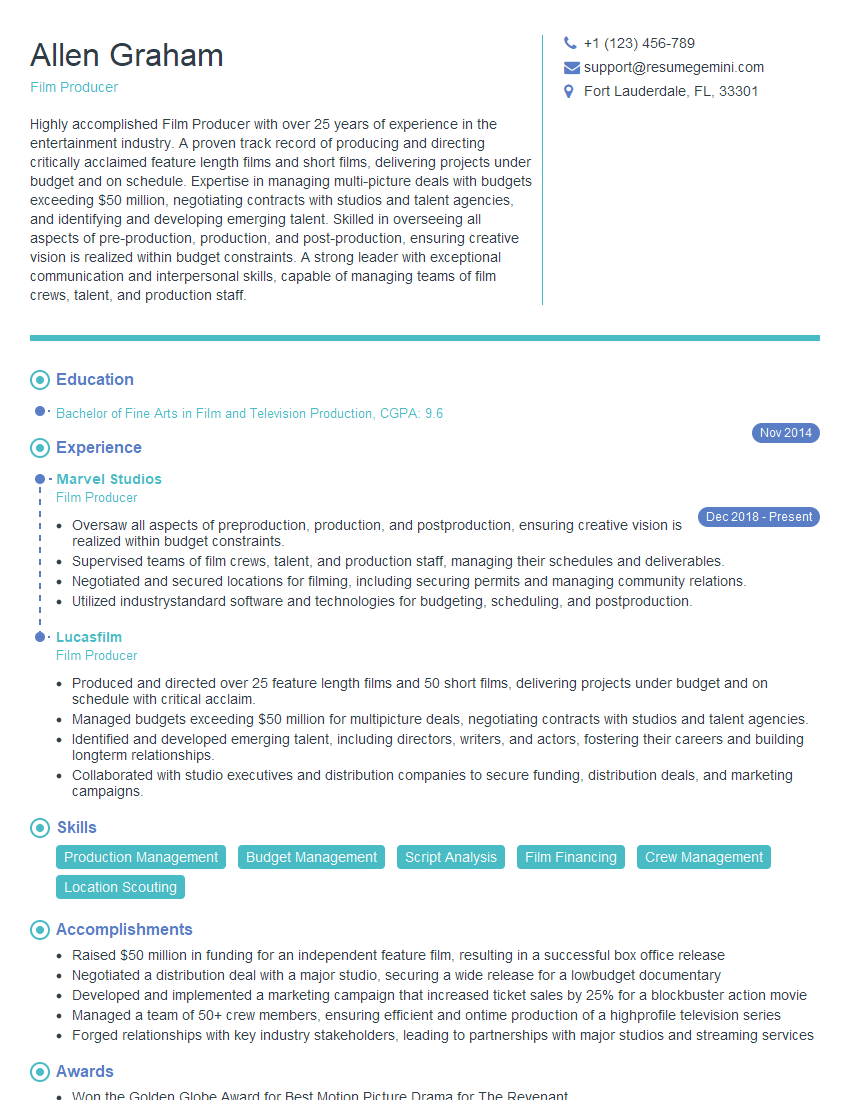
Film Producer Resume Sample
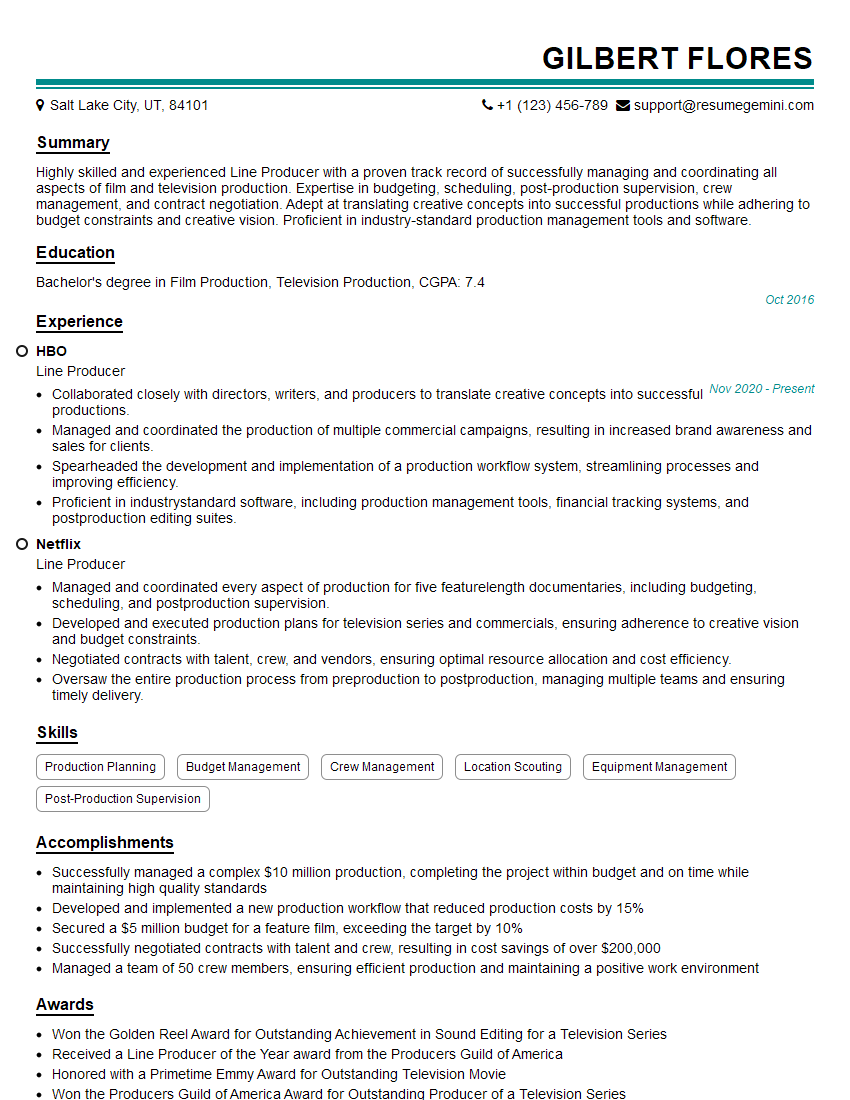
Line Producer Resume Sample
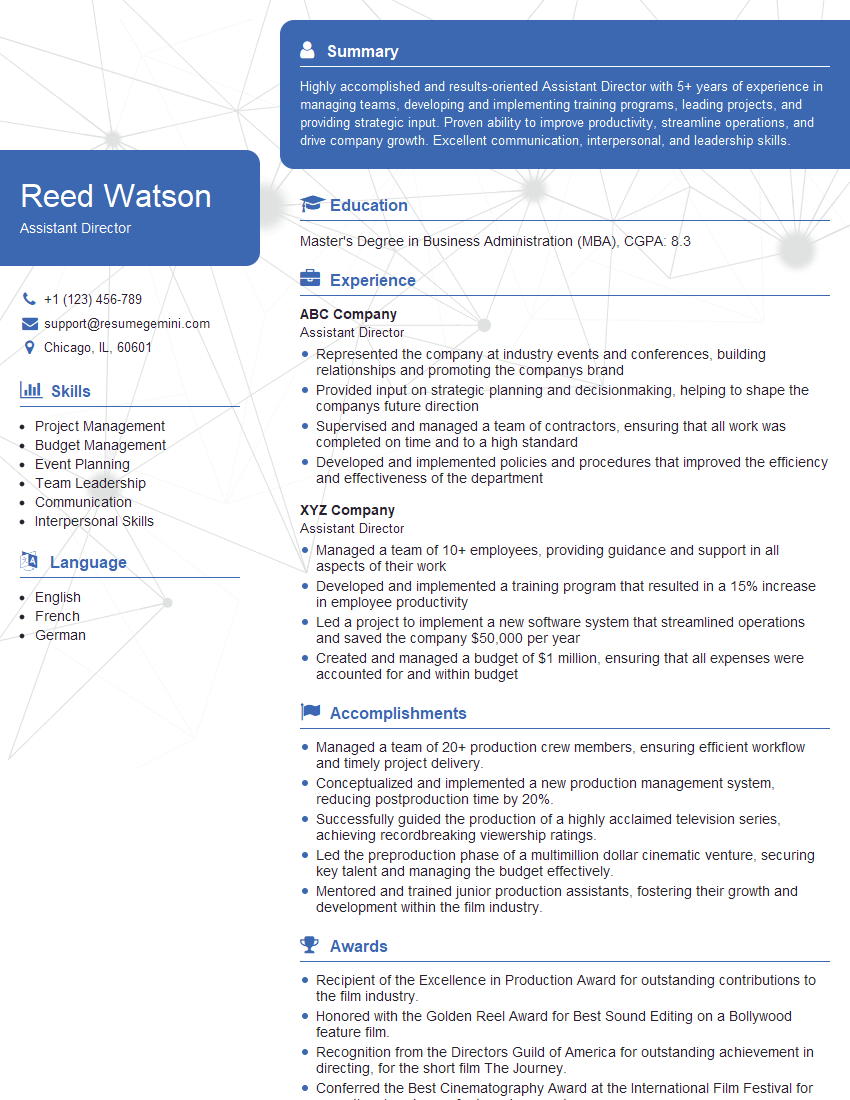
Assistant Director Resume Sample
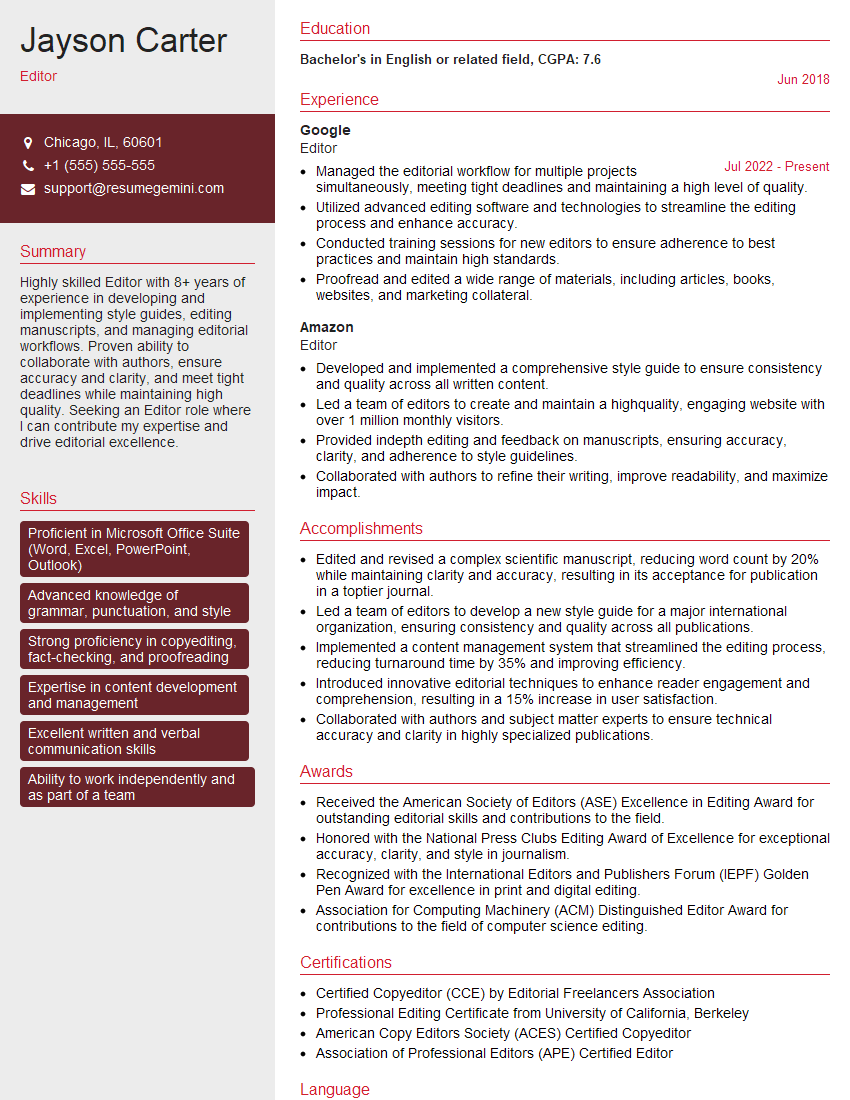
Editor Resume Sample
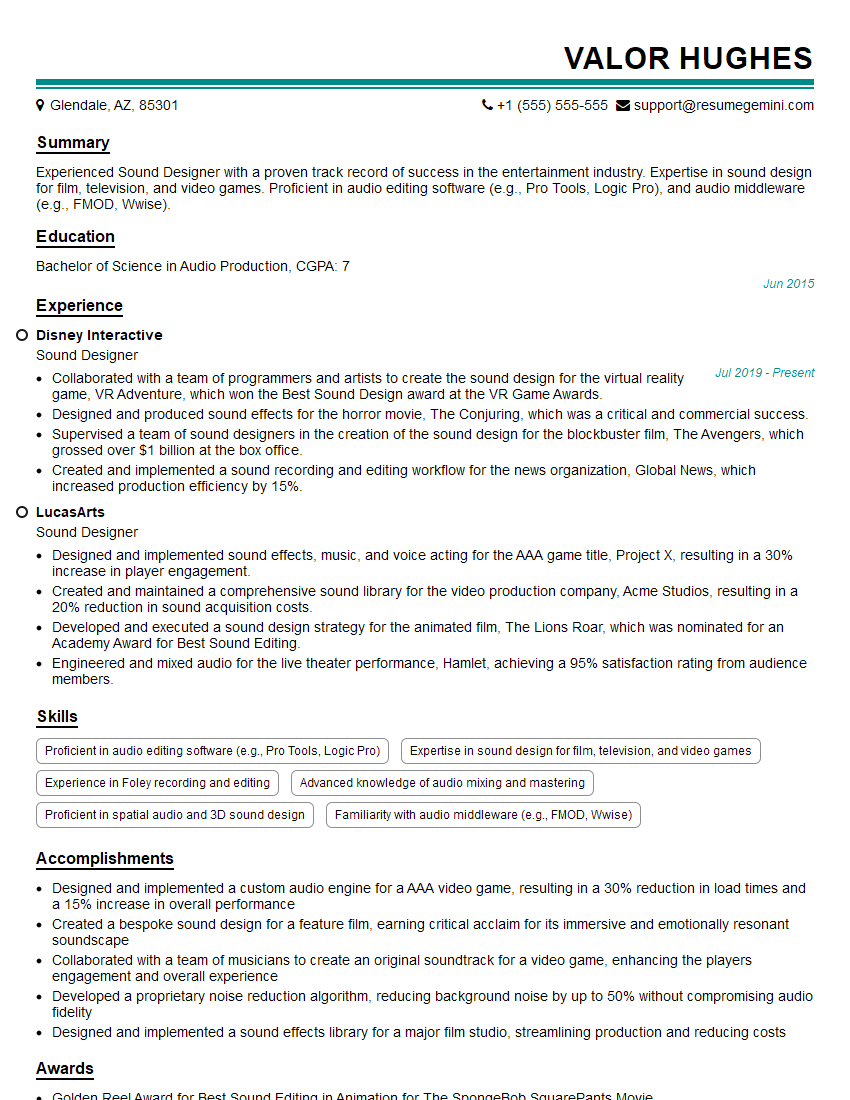
Sound Designer Resume Sample
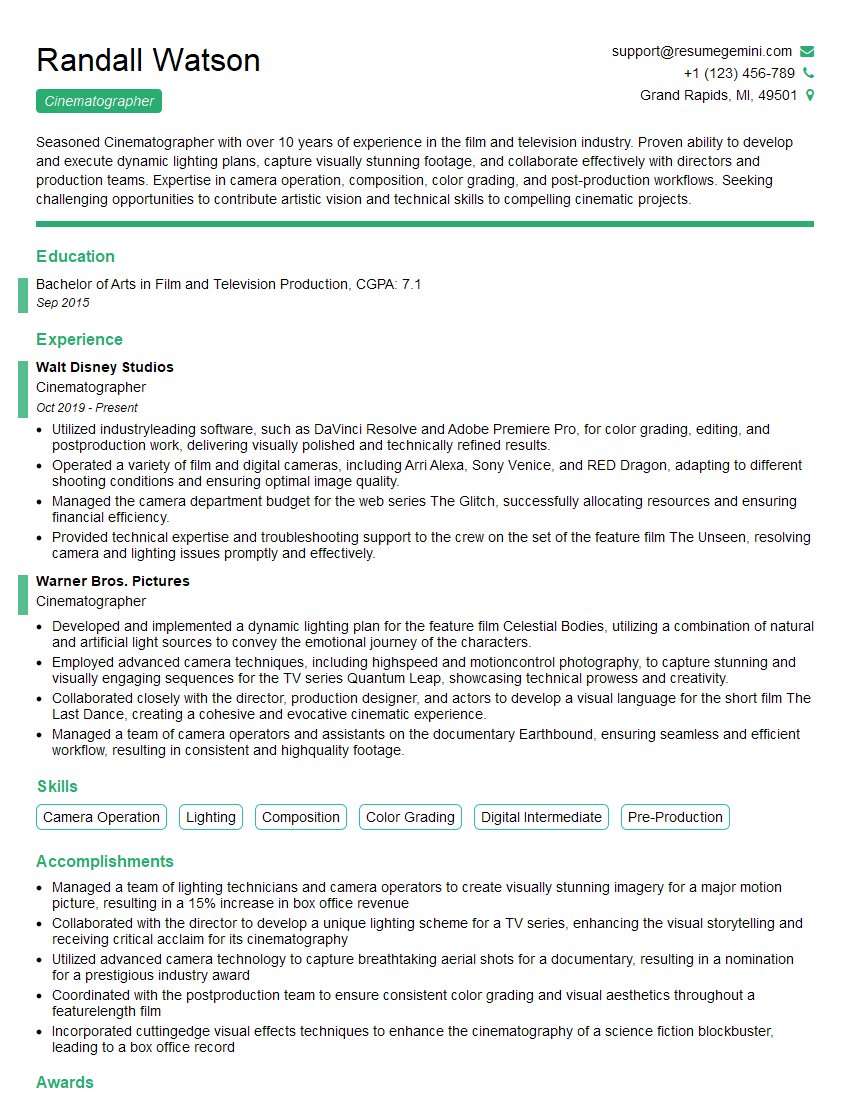
Cinematographer Resume Sample
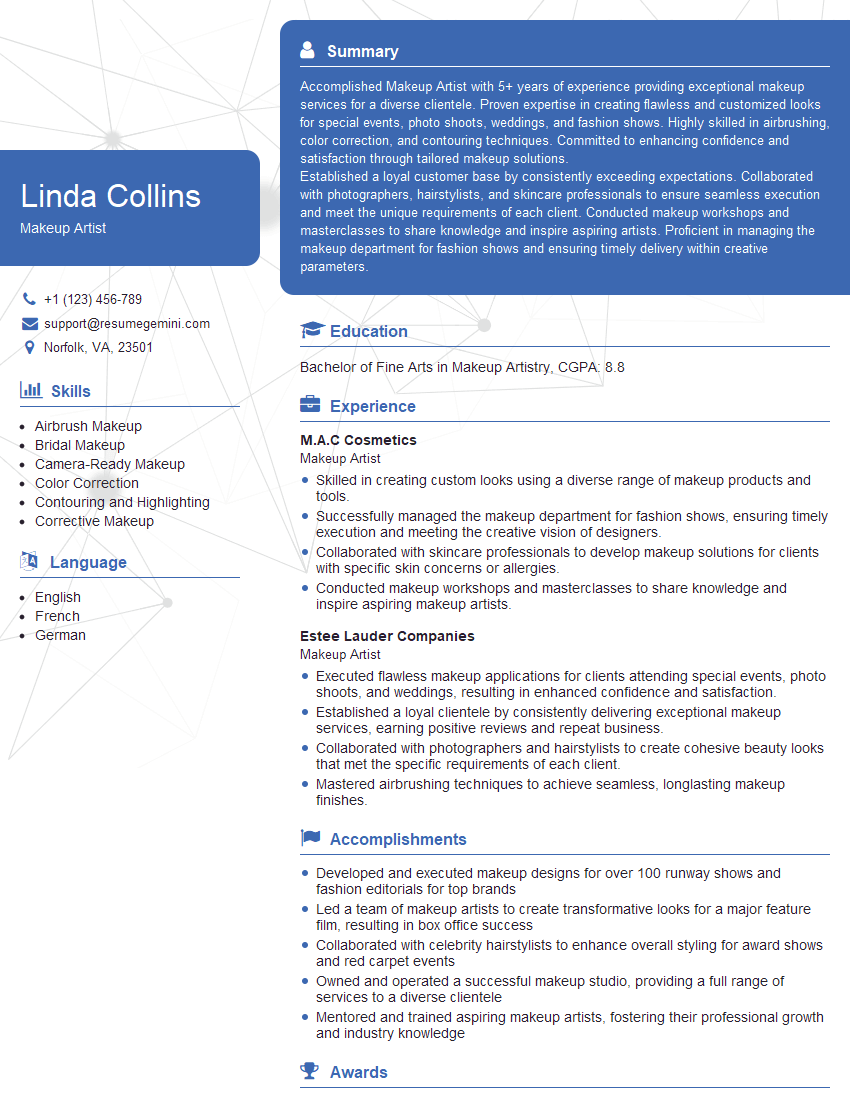
Makeup Artist Resume Sample
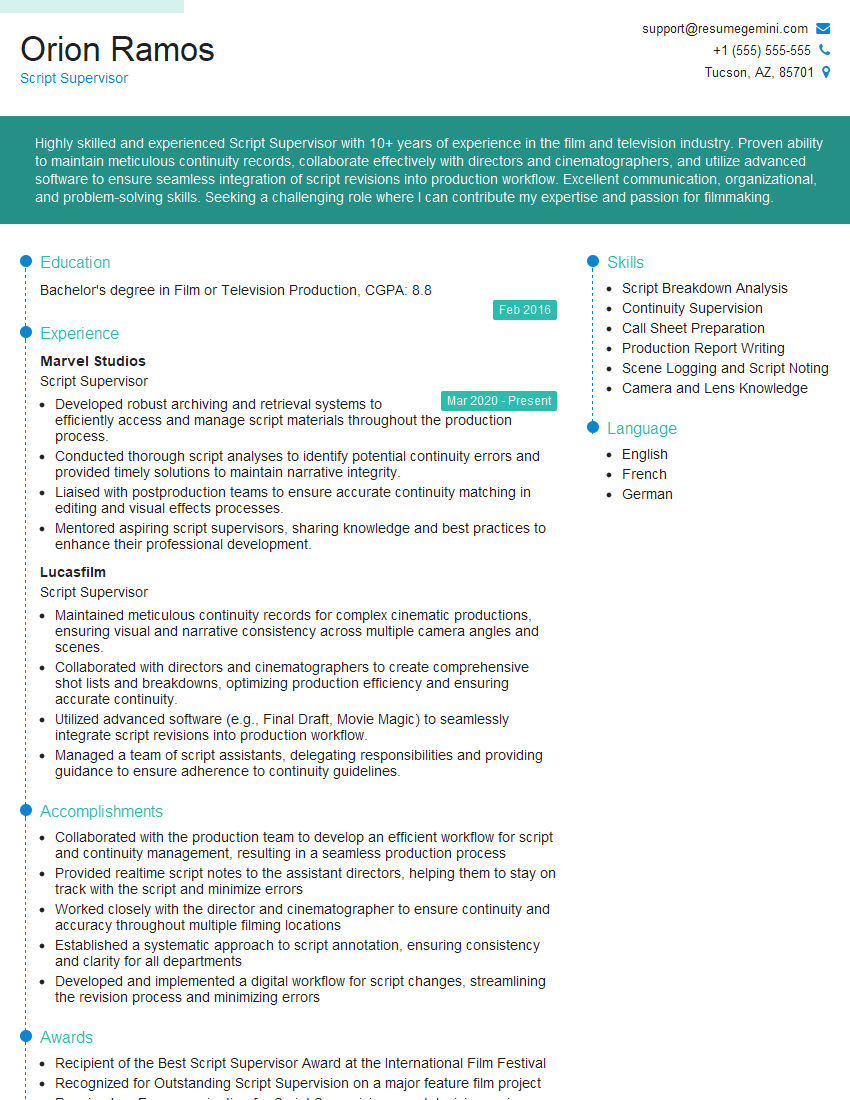
Script Supervisor Resume Sample
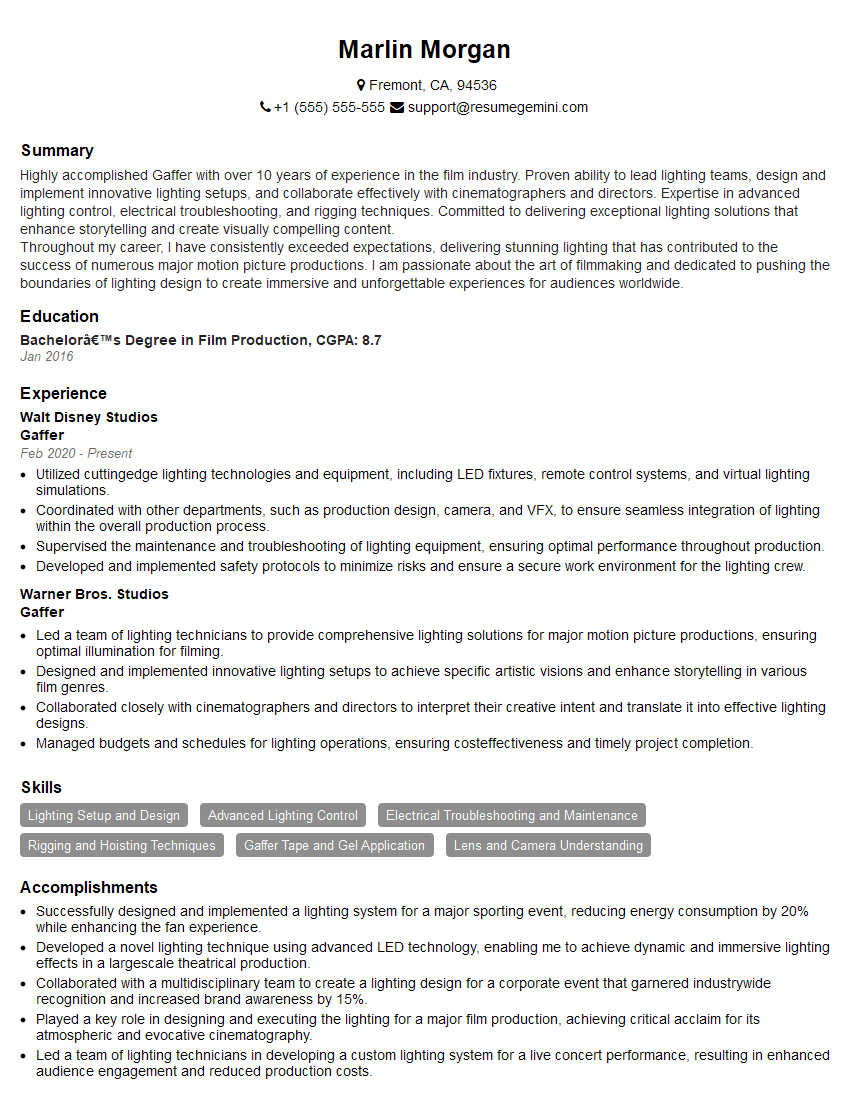
Gaffer Resume Sample
Explore more articles
Users Rating of Our Blogs
Share Your Experience
We value your feedback! Please rate our content and share your thoughts (optional).
What Readers Say About Our Blog
Very informative content, great job.
good